
SpeedMaxPc: what it is and how to remove it
SpeedMaxPc is a program, which is presented as a PC optimization tool. According to its owners, this program is designed for 'everyday PC user that enjoys productivity at an enjoyable pace'.
Facts checked October 7, 2026. Removal steps tested on Windows 11 (26H2) and checked against Microsoft's and the browser makers' current documentation. Sections marked as our earlier report are the original text: they describe the threat as it was then and have not been reviewed since. The 2026 status, the removal steps and the questions are current.
Automatic
Get a free scan and check if your PC is infected.
Fortect finds malware, unwanted programs and the Windows damage they leave behind, and repairs it in one pass.
If SpeedMaxPc keeps coming back after uninstalling, a scan can find what reinstalls it.
Do it yourself · free Remove SpeedMaxPc yourself 4 steps, about 12 minutes, no software needed.
Start the steps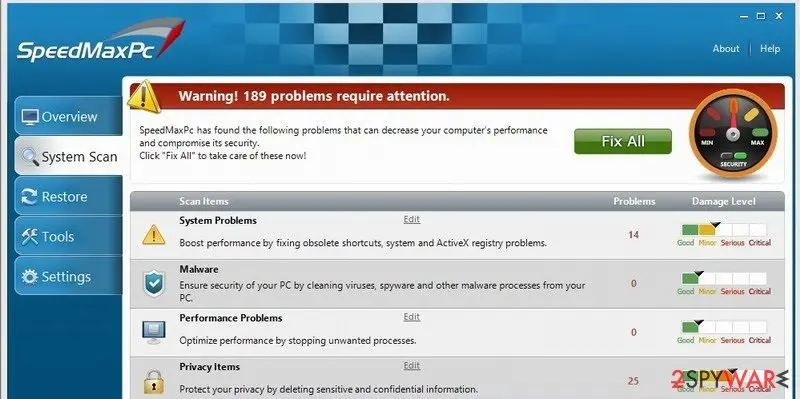
SpeedMaxPc: summary
| Detection names | No Microsoft detection name is known |
|---|---|
| Distribution | Not recorded in the old report |
| Damage | Not recorded in the old report |
| Name | SpeedMaxPc |
| Type | System optimizer |
| Symptoms | An unknown program in Installed apps |
| Removal | Scan the PC with security software to find and remove the malware and anything installed with it. Fortect scans Windows for malware and repairs the system files and settings it damaged. Remove it nowTo use the full-featured product, you have to purchase a license for Fortect. The scan is free. |
Show 4 more facts
| Evidence | One write-up by a security site; details still limited |
|---|---|
| Program | SpeedMaxPc |
| First seen | 8 January 2021 |
| Facts checked | 7 October 2026 |
Is SpeedMaxPc safe? Why it is flagged
From our report of Jan 2021 · not reviewed since
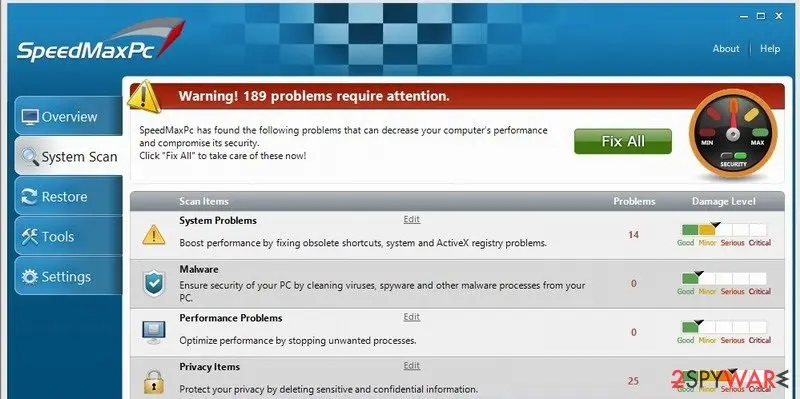
SpeedMaxPc is a program that can show fake errors and slow down your computer
SpeedMaxPc is a program, which is presented as a PC optimization tool.
According to its owners, this program is designed for 'everyday PC user that enjoys productivity at an enjoyable pace'. However, the reason why we have included this program into our database is very simple - just like many other PC optimization tools, this one fails to find the biggest part of the PC bugs that can be found on it and sometimes even reports about invented errors.
We can say that it hasn't been very successful when we were testing it on our hard drive and registry some days ago. Besides, this program clearly slows the system down instead of making it faster.
However, according to some of its unhappy customers, it may be almost impossible to contact the company for a refund.
Also, you should remove SpeedMaxPc from your computer as soon as possible, as it is unlikely to be useful. It should be easy to delete the program manually, so just use the explanations below.
However, after successful SpeedMaxPc removal, you should note that it is best to use only truly reliable programs in the future. It would also be a good idea to use , , or another powerful antivirus program to protect against various infections.
From our report of Jan 2021 · not reviewed since
More from our earlier report on SpeedMaxPc
- It seems that this program just seeks to create a need for its licensed version by showing its questionable reports about junk files and other unwanted components.
How SpeedMaxPc got installed
From our report of Jan 2021 · not reviewed since
SpeedMaxPc can be downloaded on the computer manually as a very promising tool.
However, it's not the only way how can you install this program on your computer. Beware that it has also been promoted by questionable pop-up advertisements that can appear either on legitimate or on suspicious websites.
No matter that most SpeedMaxPC ads claim that it's an easy to use application with amazing results, you may be disappointed after some time because it may start causing suspicious scanners as soon as you start using your computer. In addition, it won't fix your computer without your payment.
In order to stay safe, you should look for a more reliable application. We do not recommend using this program if you really want to have your computer fixed. However, that's our personal opinion only. It's not a virus, so you can keep it on your computer as well.
How to uninstall SpeedMaxPc
How to remove SpeedMaxPc
Uninstall it, then remove what keeps it starting with Windows.
Nothing it flagged needs fixing.
Step 1: Uninstall SpeedMaxPc
Open Settings > Apps > Installed apps in Windows 11, or Settings > Apps > Apps & features in Windows 10. Sort the list by install date and find SpeedMaxPc, then choose Uninstall from the three-dot menu next to it (in Windows 10, click the entry and then Uninstall).
Remove anything else installed on the same day that you do not recognise, because such programs usually arrive together in one installer. If the uninstaller opens a browser page with an offer or a survey, close it: the program is removed either way.
Full procedure with screenshots: Uninstall a program or app in Windows On uGetFix
Step 2: Remove it from startup
Whatever SpeedMaxPc installed usually starts with Windows. Open Task Manager with Ctrl + Shift + Esc, go to Startup apps in Windows 11 or the Startup tab in Windows 10, and disable what you do not know, starting with entries that have an empty Publisher column.
Open file location on the right-click menu shows the file, which helps you decide and tells you what to delete later. Disabling is safe: if something you need stops working, switch it back on.
Full procedure with screenshots: Stop apps from opening at startup On uGetFix
Step 3: Delete the folders left behind
What the uninstaller leaves behind is usually in the user folders. Open File Explorer, switch on View > Show > Hidden items (in Windows 10 View > Hidden items), and go through
%LocalAppData%,%AppData%, %ProgramData% and the two Program Files folders.Sort by Date modified and delete folders that appeared together with the problem and belong to no program you use. Folders with random names that hold
.exe,.dll, .js or .ps1 files are the strongest sign.Full procedure with screenshots: Remove what malware leaves behind in Windows
Step 4: Scan the PC, then run the offline scan
Open Windows Security > Virus & threat protection > Scan options, run a Full scan and remove everything it finds. Then select Microsoft Defender Antivirus (offline scan) and click Scan now: the PC restarts and scans before Windows loads, which finds files that hide while Windows runs.
Save your work first, because the offline scan takes about 15 minutes. Both scans are built into Windows 11 and Windows 10, and a second scanner from another vendor is a useful extra opinion.
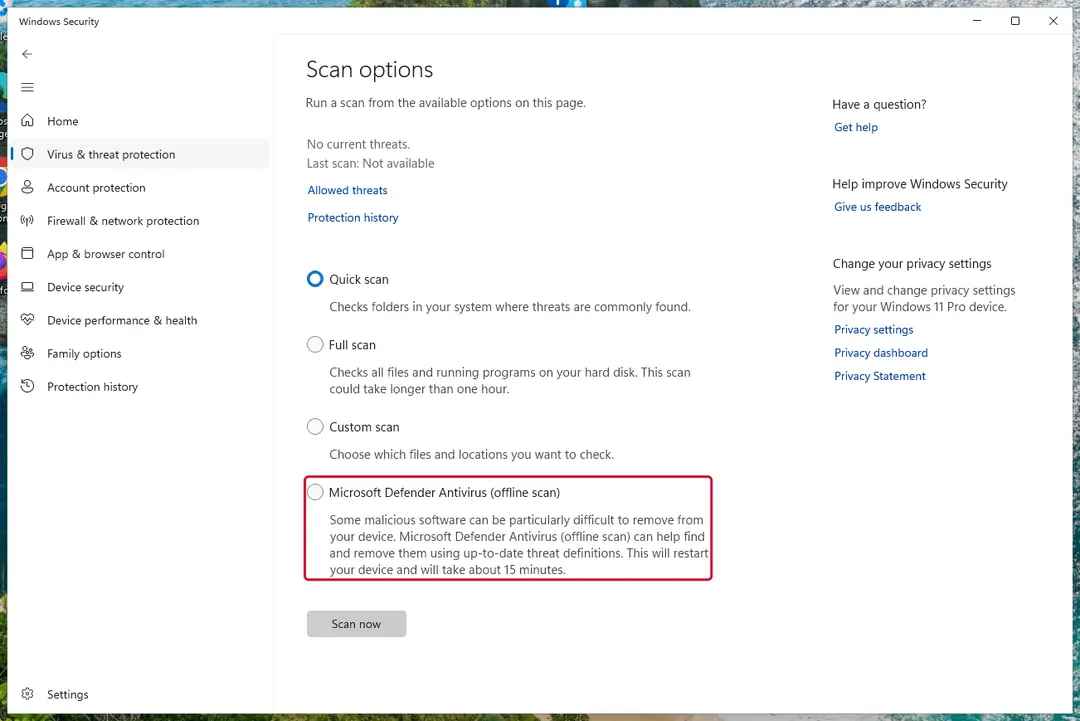
Windows 11: Windows Security > Virus & threat protection > Scan options. Full procedure with screenshots: Run a Microsoft Defender Offline scan
Instructions for each browser and system
The detailed steps for every browser and system this guide covers. Open the one you use.
Manual removal using Safe Mode
Important! →
Manual removal guide might be too complicated for regular computer users. It requires advanced IT knowledge to be performed correctly (if vital system files are removed or damaged, it might result in full Windows compromise), and it also might take hours to complete. Therefore, we highly advise using the automatic method provided above instead.
Step 1. Access Safe Mode with Networking
Manual malware removal should be best performed in the Safe Mode environment.
Windows 7 / Vista / XP
- Click Start > Shutdown > Restart > OK.
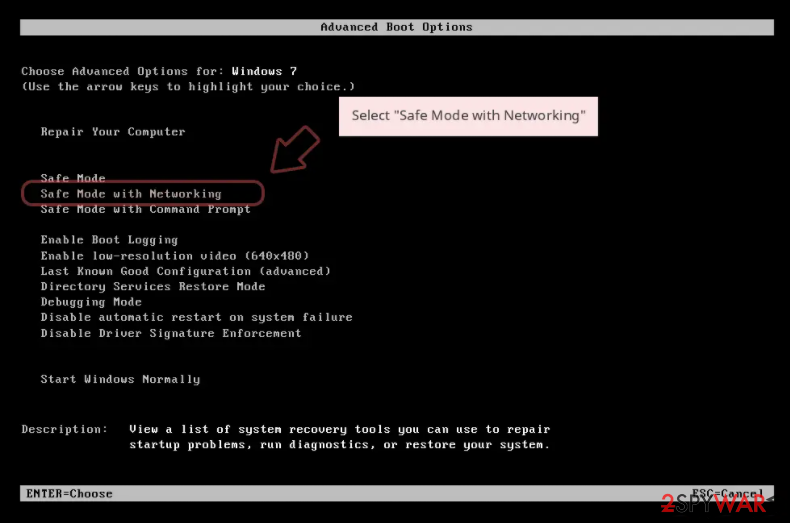
- When your computer becomes active, start pressing F8 button (if that does not work, try F2, F12, Del, etc. - it all depends on your motherboard model) multiple times until you see the Advanced Boot Options window.
- Select Safe Mode with Networking from the list.
Windows 10 / Windows 8
- Right-click on Start button and select Settings.
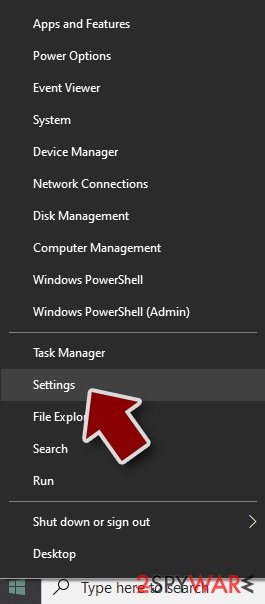
- Scroll down to pick Update & Security.
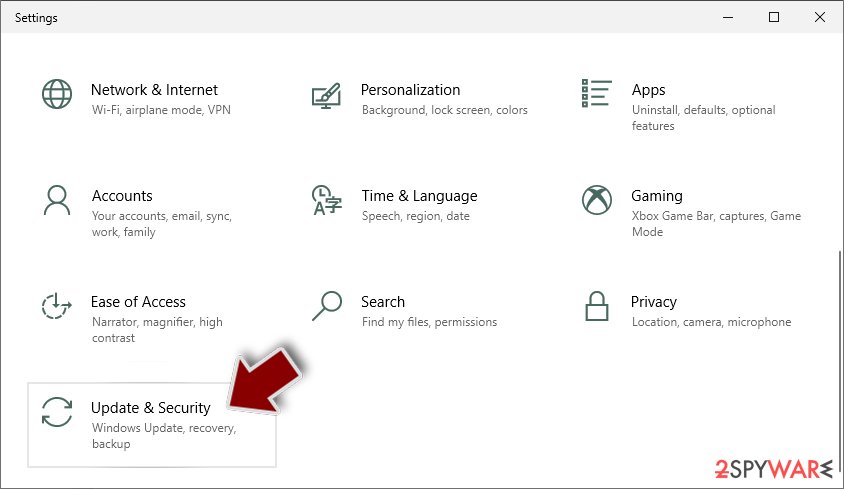
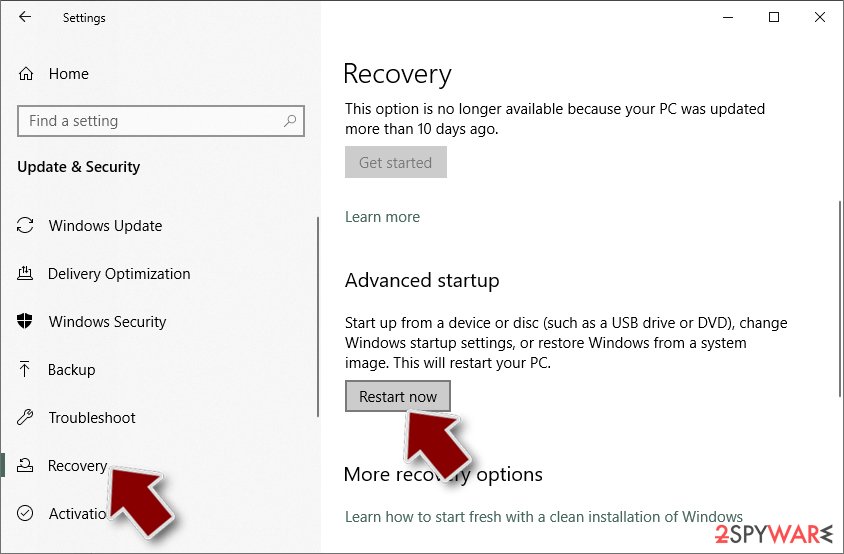
- On the left side of the window, pick Recovery.
- Now scroll down to find Advanced Startup section.
- Click Restart now.
- Select Troubleshoot.
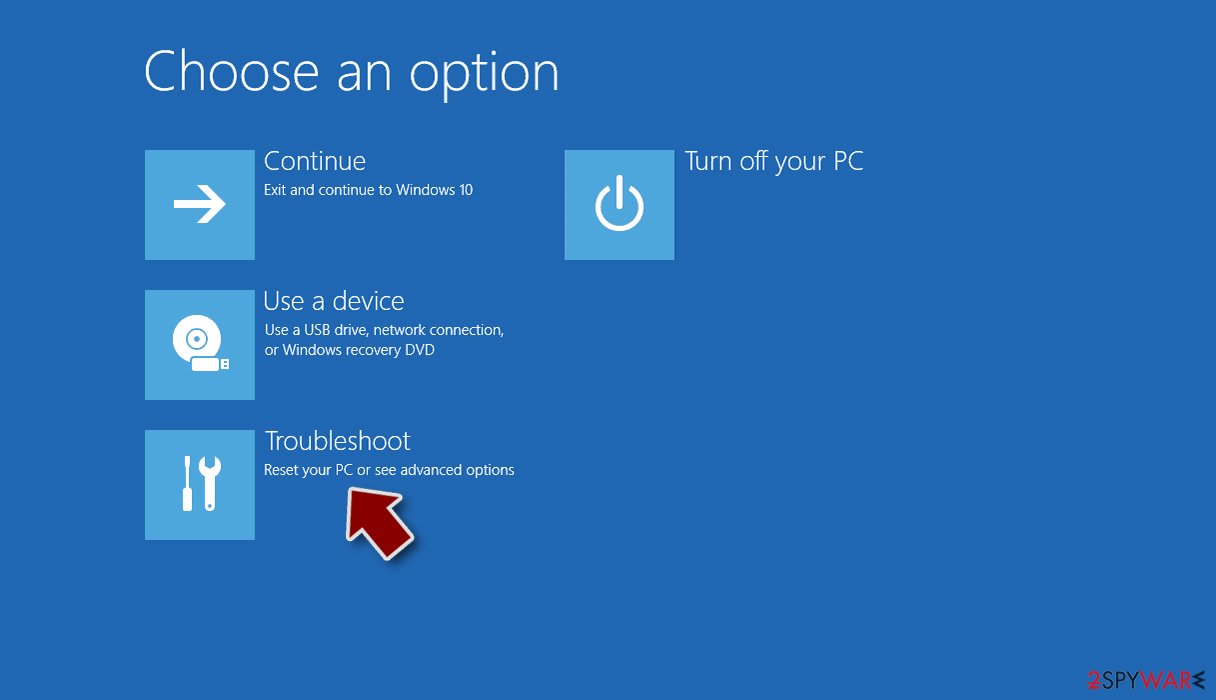
- Go to Advanced options.
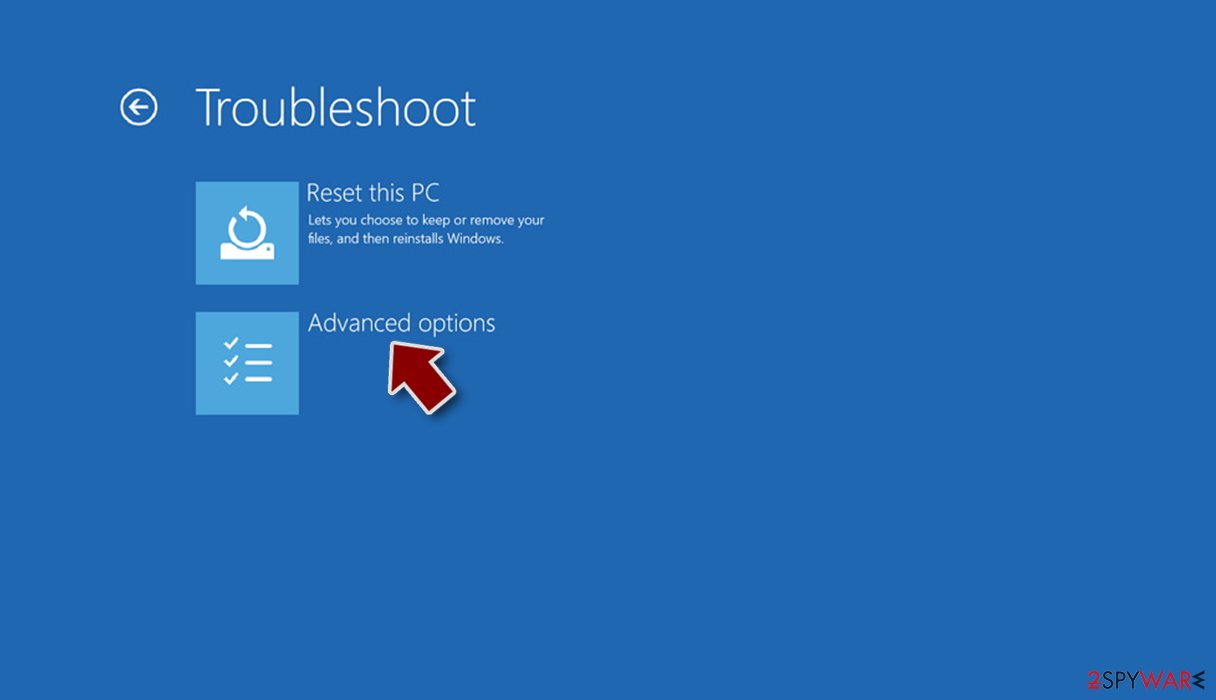
- Select Startup Settings.
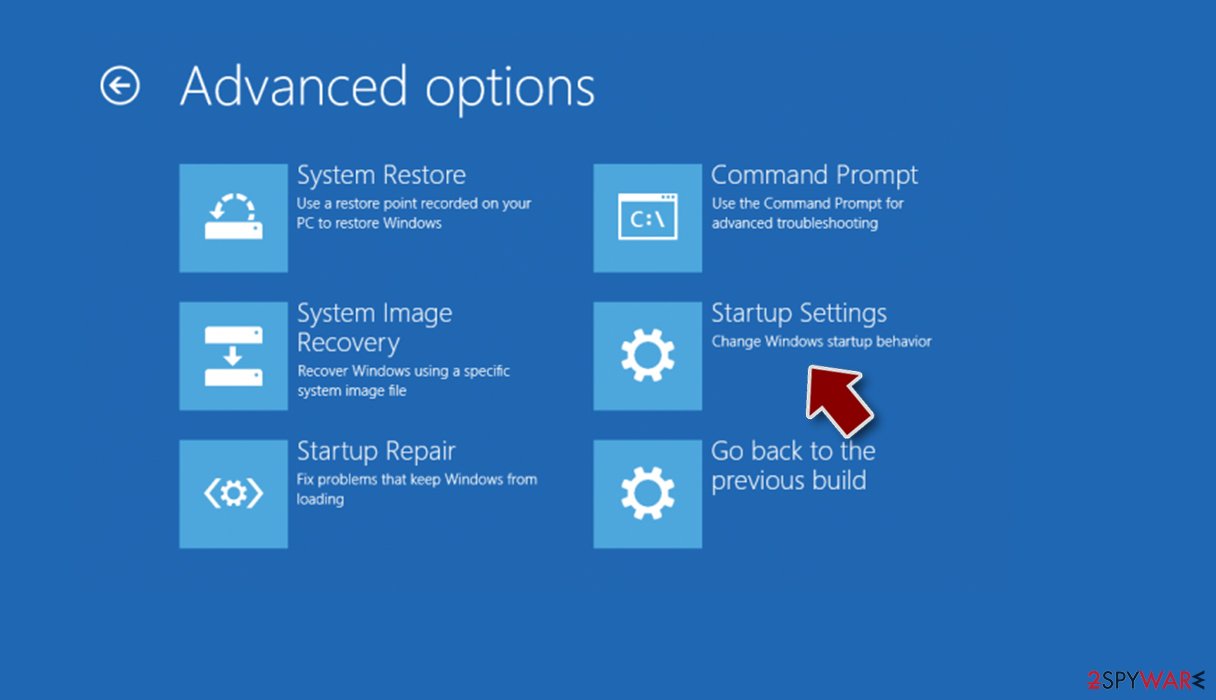
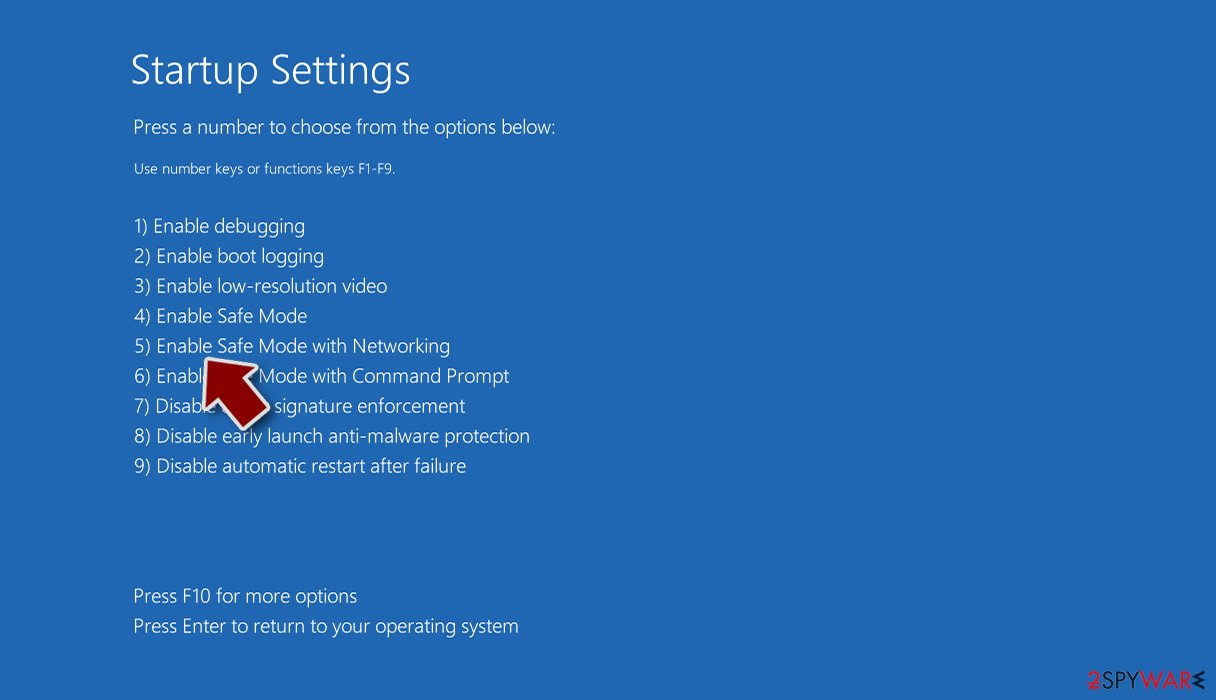
- Press Restart.
- Now press 5 or click 5) Enable Safe Mode with Networking.
Step 2. Shut down suspicious processes
Windows Task Manager is a useful tool that shows all the processes running in the background. If malware is running a process, you need to shut it down:
- Press Ctrl + Shift + Esc on your keyboard to open Windows Task Manager.
- Click on More details.
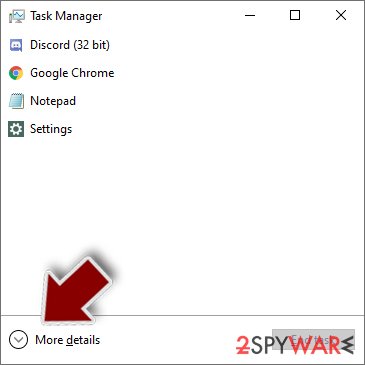
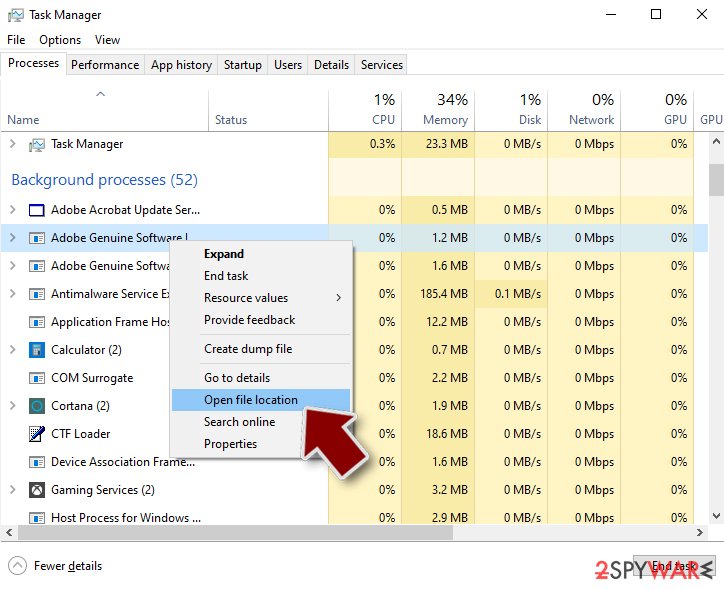
- Scroll down to Background processes section, and look for anything suspicious.
- Right-click and select Open file location.
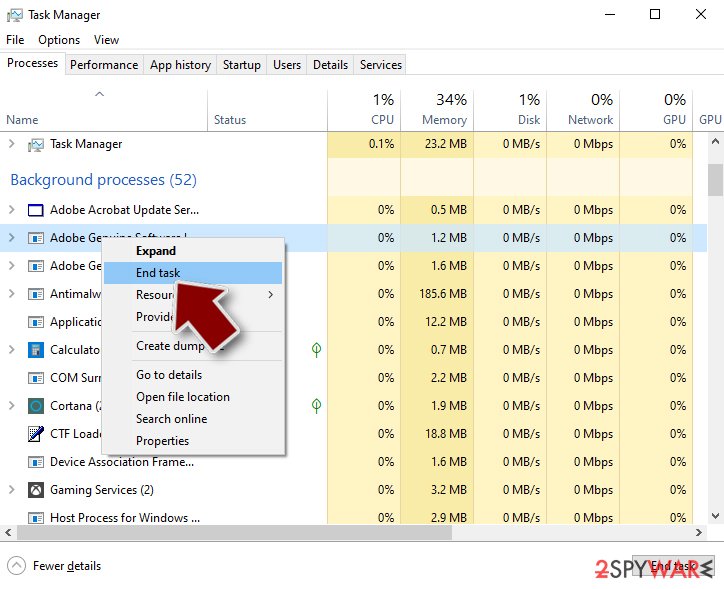
- Go back to the process, right-click and pick End Task.
- Delete the contents of the malicious folder.
Step 3. Check program Startup
- Press Ctrl + Shift + Esc on your keyboard to open Windows Task Manager.
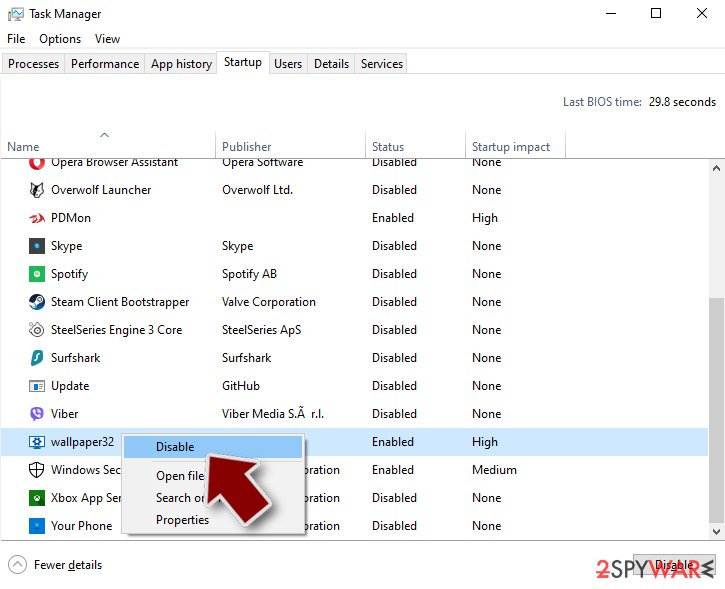
- Go to Startup tab.
- Right-click on the suspicious program and pick Disable.
Step 4. Delete virus files
Malware-related files can be found in various places within your computer. Here are instructions that could help you find them:
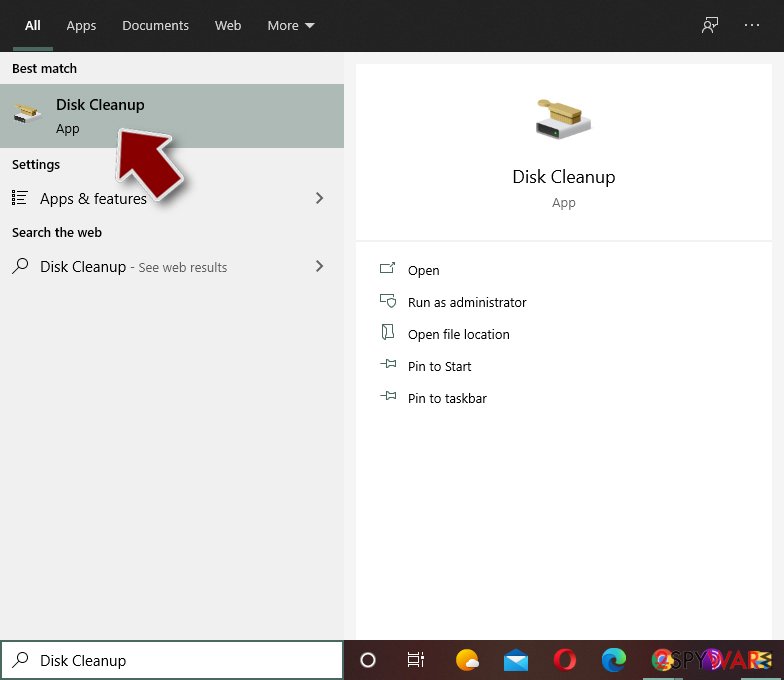
- Type in Disk Cleanup in Windows search and press Enter.
- Select the drive you want to clean (C: is your main drive by default and is likely to be the one that has malicious files in).
- Scroll through the Files to delete list and select the following:
Temporary Internet Files
Downloads
Recycle Bin
Temporary files - Pick Clean up system files.
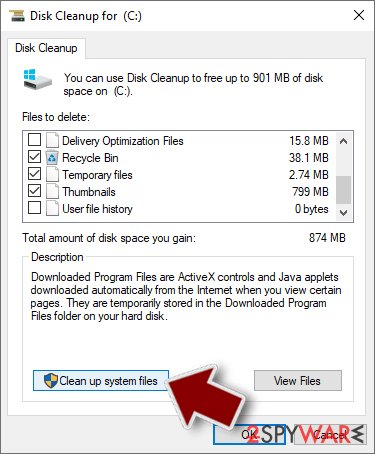
- You can also look for other malicious files hidden in the following folders (type these entries in Windows Search and press Enter):
%AppData%
%LocalAppData%
%ProgramData%
%WinDir%
After you are finished, reboot the PC in normal mode.
Choose a proper web browser and improve your safety with a VPN tool
Online spying has got momentum in recent years and people are getting more and more interested in how to protect their privacy online.
One of the basic means to add a layer of security - choose the most private and secure web browser. Although web browsers can't grant full privacy protection and security, some of them are much better at sandboxing, HTTPS upgrading, active content blocking, tracking blocking, phishing protection, and similar privacy-oriented features.
However, if you want true anonymity, we suggest you employ a powerful VPN - it can encrypt all the traffic that comes and goes out of your computer, preventing tracking completely.
Lost your files? Use data recovery software
While some files located on any computer are replaceable or useless, others can be extremely valuable.
Family photos, work documents, school projects - these are types of files that we don't want to lose. Unfortunately, there are many ways how unexpected data loss can occur:
- power cuts
- Blue Screen of Death errors
- hardware failures
- crypto-malware attack
- even accidental deletion
To ensure that all the files remain intact, you should prepare regular data backups. You can choose cloud-based or physical copies you could restore from later in case of a disaster. If your backups were lost as well or you never bothered to prepare any, can be your only hope to retrieve your invaluable files.
From our report of Jan 2021 · not reviewed since
If you want to remove SpeedMaxPC, you can do it manually
If you have been bothered by SpeedMaxPc alters telling you that your computer needs to be optimized, you should think about whether it can be done without any payment.
Beware that this tool is a commercial optimizer that seeks to create a need for its license.
However, it's not a virus, so you can keep the tool if you think that you need it. But if you are interested in how to remove SpeedMaxPc from your computer, you should follow the steps below.
After the SpeedMaxPc removal, we would like to recommend you to run a full system scan with updated anti-spyware and make sure that it is totally safe and free of junk files and other unwanted components.
For making sure that your PC is free of viruses that may have been causing the system's slowdowns and other problems, you can use , , or any other anti-spyware tool. Also, can be helpful too because this program will fix system files and other errors.
[GI=method-1]In case SpeedMaxPc is blocking security software from working properly, enter Safe Mode with Networking the following way:
[GI=method-2]To stop the SpeedMaxPc from operating, use System Restore function:
Questions about SpeedMaxPc
Can I safely uninstall SpeedMaxPc?
If you did not install SpeedMaxPc yourself and it is not part of your hardware or a program you rely on, yes. Uninstalling an unwanted program does not harm Windows. Before you do, search the exact name and publisher to be sure it is not a driver tool, a printer utility or a game launcher with an odd name.
Then remove it from Settings, Apps, Installed apps. Ignore any offers or warnings in its uninstaller about losing protection or performance. Afterwards check Startup apps and your browsers for leftovers, and restart once to confirm that it does not reinstall itself.
SpeedMaxPc will not uninstall. What can I do?
First restart the PC and try again, because the program may have been running and locked its own files. If the uninstaller is missing or fails, start Windows in Safe Mode, where most third-party programs do not start, and remove SpeedMaxPc from Installed apps there.
If it still refuses, delete its startup entry and its scheduled task, restart, and try once more. A program that actively prevents removal is behaving like malware, so finish with a Microsoft Defender offline scan. Avoid third-party uninstallers offered on search ads; several of them are unwanted programs themselves.
The uninstaller for SpeedMaxPc keeps asking me to stay. Is that normal?
It is a common tactic, not a technical requirement. Uninstallers of unwanted programs often show discounts, warnings that the PC will be at risk, or a choice between "repair" and "remove" designed to confuse.
Choose the option that removes the program completely and decline everything else. If the uninstaller closes without removing anything, end its processes in Task Manager and try again, or use Safe Mode. Check Installed apps afterwards; if SpeedMaxPc is still listed, the uninstall did not finish.
Why does my antivirus call SpeedMaxPc a PUA or PUP?
These labels mean potentially unwanted application or program. They are used for software that is legal but uses deceptive distribution, aggressive ads, misleading claims or a hard removal. Microsoft's PUA categories include advertising software, bundlers, download managers, torrent clients, marketing software and miners.
A PUA detection is a warning, not proof of infection, and you decide whether to keep SpeedMaxPc. Other vendors use their own labels for the same idea, such as PUP.Optional or not-a-virus. Read more in our guide to potentially unwanted programs.
Can Windows block unwanted programs automatically?
Yes, with one setting. Windows Security has Potentially unwanted app blocking under App & browser control > Reputation-based protection settings. Block apps stops flagged programs from installing, and Block downloads works in Microsoft Edge.
On some PCs this was not switched on, which is how programs like SpeedMaxPc got through. It does not catch everything, so read installer screens, choose Custom setup and decline offers. Removing free tools you no longer use also helps, because their updates are a common route for new bundles.
Can SpeedMaxPc see my passwords?
There is no report of that. Unwanted programs make money from ads, offers, data about your browsing or the use of your connection, not from stealing passwords, and the sign reported here is speedMaxPc in the list of installed apps.
That said, a bundle can contain more than one program, and you cannot be sure what else ran on the day it arrived. After removing SpeedMaxPc, run a full scan in Windows Security.
If it finds a password stealer or a trojan, change your passwords from another device. If the scan is clean and you see no unknown sign-ins, there is no need to change them.
Will removing SpeedMaxPc speed up Windows?
It often helps a little and sometimes a lot, depending on how many programs came in the same bundle. Every unwanted program that starts with Windows adds to boot time and uses memory. The one behind speedMaxPc in the list of installed apps is no exception.
Remove it, check the Startup list for others, restart and compare. If the PC is still slow, look at disk space, Windows updates and the processes at the top of Task Manager. A clean PC should sit almost idle when no programs are open.
Is it safe to remove SpeedMaxPc?
Yes. Removing an unwanted program does not damage Windows, because programs like this are not part of the system. Before uninstalling, make sure it is not something you rely on: if the publisher is a company you know and you use the program, keep it.
If not, uninstall it from Installed apps, restart and check that speedMaxPc in the list of installed apps is gone. If something you need stops working afterwards, reinstall that program from its official website, choosing the custom installation so that the unwanted extra is not added again.
SpeedMaxPc has no uninstall option. What now?
Some unwanted programs leave no entry in Installed apps on purpose. Find the program's files instead:
- open Task Manager while speedMaxPc in the list of installed apps is visible
- right-click the process
- choose Open file location
End the process, then look in that folder for an uninstall file. If there is none, delete the folder after checking that it holds nothing you need.
Before deleting, remove the startup entry and any scheduled task that points to it, otherwise it may be recreated. A restart and a full scan in Windows Security finish the job and catch files stored elsewhere.
Will Fortect remove SpeedMaxPc?
Fortect scans Windows for malware and unwanted programs and repairs the system files and settings they change, and its free scan shows what it finds on your PC before you decide anything.
For SpeedMaxPc, follow the plan above as well: the browser steps take back permissions and settings that no scanner treats as a threat, and uninstalling the program that brought it removes the source.
Run Microsoft Defender's full scan and, if anything was found, its offline scan as a second opinion. If the symptoms are gone after the plan and both scans are clean, there is nothing more to do.
Sources
- FTC: How to recognize, remove and avoid malware (read October 7, 2026)
- Microsoft Learn: Microsoft Defender Offline (read October 7, 2026)
- Microsoft Learn: How Microsoft names malware (read October 7, 2026)