
Activesafe.site e-mail scam: how to spot it and what to do
site is a deceptive website created by scammers to exploit unsuspecting users for financial gain. People rarely come across this site through trustworthy search engines, as it is often accessed via high-risk websites or redirects caused by hidden adware running on their devices.
Facts checked October 4, 2026. Removal steps tested on Windows 11 (26H2) and checked against Microsoft's and the browser makers' current documentation. Sections marked as our earlier report are the original text: they describe the threat as it was then and have not been reviewed since. The 2026 status, the removal steps and the questions are current.
Automatic
Get a free scan and check if your PC is infected.
Fortect finds malware, unwanted programs and the Windows damage they leave behind, and repairs it in one pass.
Do it yourself · free Remove Activesafe.site e-mail scam yourself 4 steps, about 12 minutes, no software needed.
Start the steps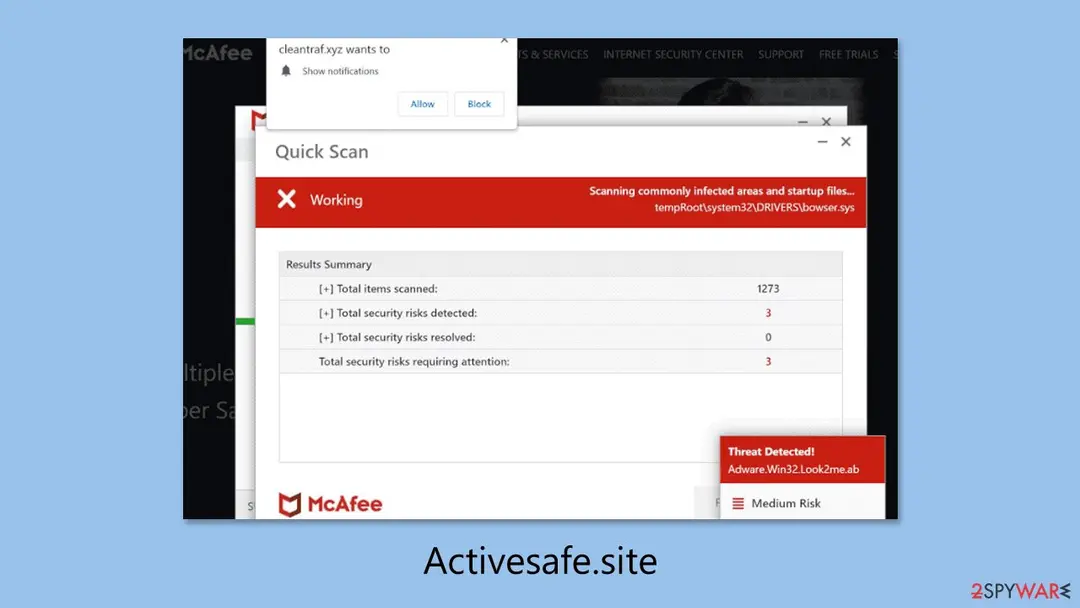
Activesafe.site: summary
| Name | Activesafe.site |
|---|---|
| Type | Phishing message |
| Symptoms | A phishing e-mail asking you to sign in |
| Evidence | One write-up by a security site; details still limited |
| Arrives as | |
| Pretends to be | A well-known company |
| Removal | Scan the PC with security software to find and remove the malware and anything installed with it. Fortect scans Windows for malware and repairs the system files and settings it damaged. Remove it nowTo use the full-featured product, you have to purchase a license for Fortect. The scan is free. |
Show 5 more facts
| Claim | Your account needs urgent attention |
|---|---|
| Asks for | Your password |
| First seen | 26 November 2024 |
| Distribution | Redirects, misleading ads, software bundling |
| Facts checked | 4 October 2026 |
Activesafe.site in short
The claim that your account needs urgent attention is invented.
The message is not from a well-known company; scammers copied the name and the look to borrow its trust.
Its purpose is your password. The rest, the deadline, the warning and the friendly sign-off, exists to make you act before you check.
If you only read it, nothing has happened. Keep a copy if you want to report it, then delete it. More on the tricks these messages use: our guide to phishing e-mails and texts.
Why this matters
An e-mail with the subject "Your McAfee subscription has expired!" is a warning, not a disaster.
It tells you that your details are being used or tested by someone else, and that you have time to lock them out.
Do not reply to messages that follow it and do not share codes with anyone who calls. Secure the account yourself, through the official app or website. What to check first: account security after a scam.
From our report of Nov 2024 · not reviewed since
What Activesafe.site is
site is a deceptive website created by scammers to exploit unsuspecting users for financial gain.
People rarely come across this site through trustworthy search engines, as it is often accessed via high-risk websites or redirects caused by hidden adware running on their devices.
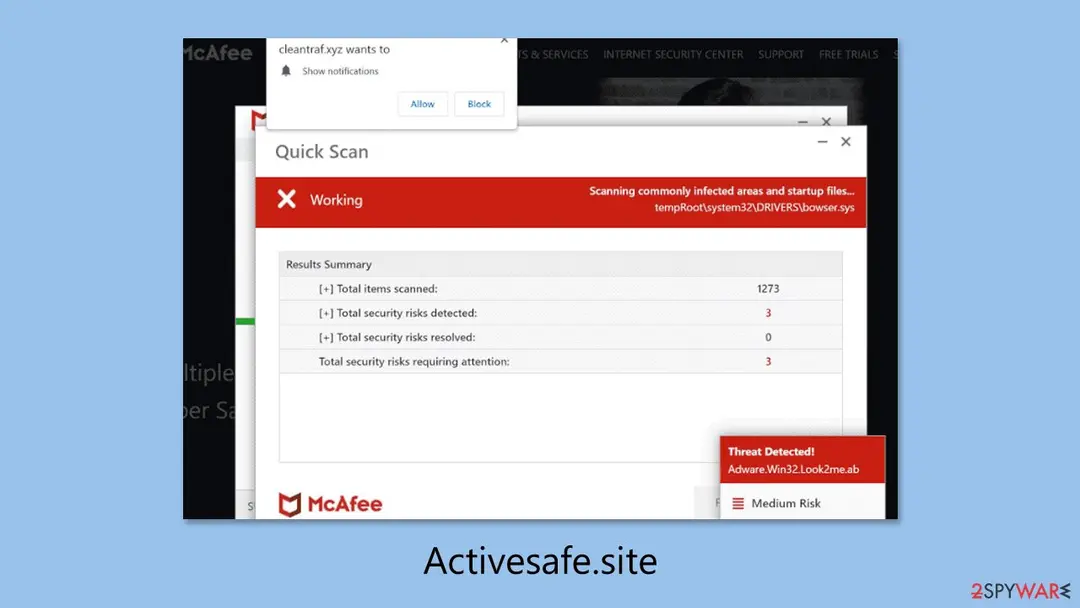
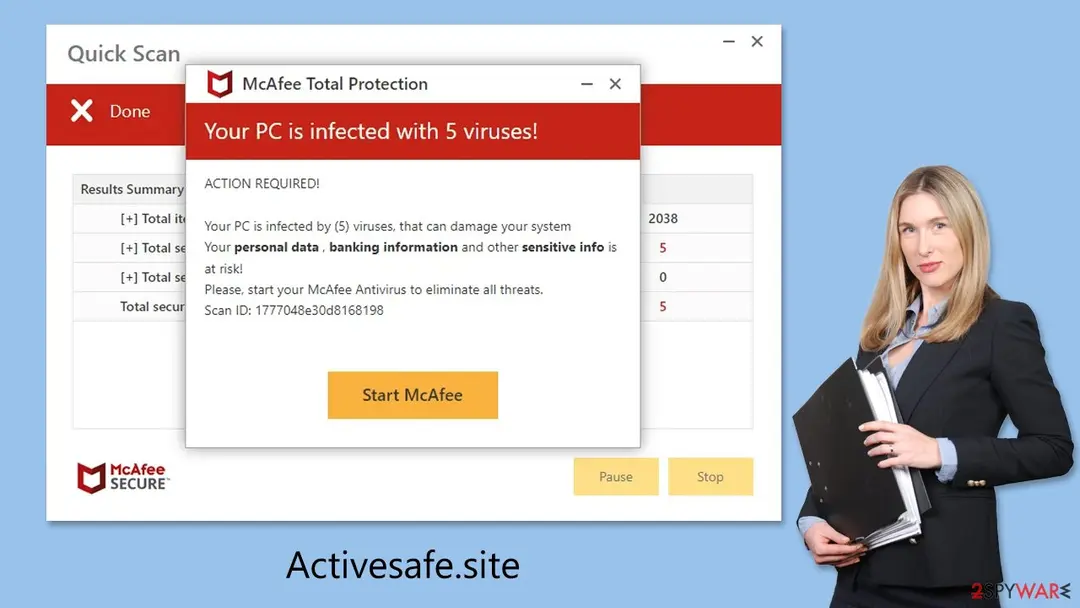
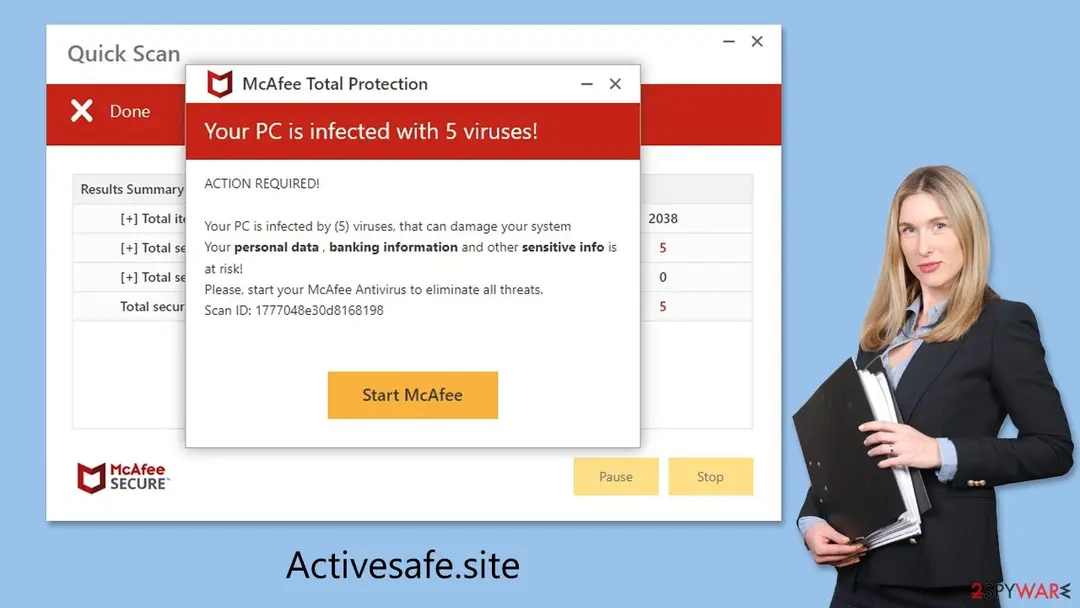
site, they are typically greeted with an animation mimicking a security scan. This simulation displays several pop-up alerts that resemble notifications from a reputable antivirus provider, falsely indicating that their device has been compromised by malicious threats. Within moments, visitors are bombarded with urgent messages pressuring them to take immediate action.
site is not affiliated with any antivirus company.
What the Activesafe.site e-mail looks like
What Activesafe.site looks like on screen
Information on Activesafe.site is still thin: one write-up by a security site, checked on 4 October 2026.
We explain what that one observation means and what to do about it, without guessing the rest.
- People received a message that opened with "Your McAfee subscription has expired!" and a sign-in button.
Text of a phishing e-mail asking you to sign in, as people saw it
IMMEDIATE ACTION REQUIRED!
Your McAfee subscription has expired!
Renew now to keep your PC protected.
Viruses found on this PC most likely track internet activity to collect banking details and login credentials. Unprotected PCs are 93% more vulnerable to suffer from malware.
Did someone hack you?
Almost certainly not.
The e-mail carrying Activesafe.site went to a long list of recipients at once.
If the message contains something personal, such as an old password or your phone number, that detail comes from a breach of a site you once used. Check your address on a breach-notification service and change any password that appears there. How these lists are built and reused: phishing e-mails and texts.
How to tell the Activesafe.site e-mail is fake
Why Activesafe.site is fake
Check these signs; any one of them is enough to stop:
- Urgency: a deadline or a threat to close something.
- Greeting: "Dear user" or your e-mail address instead of your name.
- Request: it asks for your password, which a well-known company does not request this way.
When in doubt, use nothing in the message. Open the service the way you normally do and check there. More warning signs: how to spot phishing.
What to check after "Your McAfee subscription has expired!"
First, did you click and type anything?
If you only read the message "Your McAfee subscription has expired!", you only need to delete and report it.
If you typed a password, check that account now from a clean device:
- recent sign-ins
- recovery e-mail and phone
- mail forwarding rules
- connected apps
How to spot the next one
- Read the full sender address, not only the name.
- Hover over links and compare the domain with the real one.
- Treat deadlines, threats, prizes and unexpected invoices as warning signs.
- Never call a number from an unexpected message; use the one on the official site or your card.
- Never open attachments you did not expect, even from people you know.
The next message will use a different brand than a well-known company, but the same tricks. Two-step verification limits the damage when one gets through. More checks: how to spot phishing.
Is Activesafe.site dangerous? What the senders want
What the "Your McAfee subscription has expired!" e-mail means
An e-mail with the subject "Your McAfee subscription has expired!" is a phishing message.
Its job is to bring you to a copy of a sign-in page and collect the password you type there.
Opening the e-mail did not harm the PC. The risk starts with the link. How these messages are built and why they work: phishing e-mails explained.
Inside the fake sign-in
Credential phishing like Activesafe.site relies on a familiar brand and a reason to sign in now.
Here the brand is a well-known company, and the reason is that your account needs urgent attention.
The page asks for your e-mail address and password, sometimes in two steps to look more convincing. Newer kits pass everything to the real site in real time, so even a two-step code typed into the fake page can be used once.
Passkeys and authenticator prompts that show the site name resist this best. Why, and how to recognise a fake login page, is covered in our phishing guide.
If it is not phishing message
These observations do not always come from a phishing message.
Other causes we see with the same signs:
- Scam alerts (malspam): If the same message carries an attachment or a download link, it may deliver malware instead.
- Scam alerts (fake invoice and callback): When it shows a phone number rather than a link, it is a callback scam built on the same lure.
What is at stake
The aim of Activesafe.site is your password.
Nothing else in the message is real.
Passwords typed into the fake page are tried on the real service within minutes, then on other sites with the same address.
If you gave nothing, you lost nothing. If you did, act in the order shown in account security after a scam.
From our report of Nov 2024 · not reviewed since
What you should and shouldn't do to avoid scam websites
site are often accessed through unsafe online platforms, such as torrent sites, unauthorized streaming services, adult content pages, or YouTube converters.
These types of websites operate in poorly regulated areas of the internet, making them a hotspot for cybercriminal activities and malicious schemes.
Within these environments, harmful content can be distributed in the form of deceptive downloads that silently install malware, including ransomware or adware, on your device. By the time the issue becomes noticeable, significant damage may already have occurred. site.
If you find yourself frequently encountering scam websites or intrusive pop-ups, it might indicate that malicious software or adware has already been installed on your device. Such programs are often bundled with downloads from unreliable sources, embedding themselves without your awareness. Conducting regular system scans can help detect and remove these threats, protecting your device and reducing exposure to scams.
From our report of Nov 2024 · not reviewed since
Crooks use similar look and feel of a legitimate anti-malware software
site uses this tactic to manipulate unsuspecting users.
Alarmed by intimidating warnings about supposed viruses on their devices, individuals unfamiliar with how malware actually operates may fall prey to such schemes. To enhance credibility, scammers often misuse the names of trusted companies like Microsoft, Amazon, or Google to appear legitimate.
People unfamiliar with such tactics may mistakenly believe the warnings are genuine and from legitimate antivirus providers.
site is a ruse. The scan results are entirely fake, and the claims about infections are fabricated to create fear. Such deceptive strategies are widely used by various scam websites, many of which share similarities in appearance and content, likely pointing to the same group of cybercriminals operating multiple fraudulent platforms.
From our report of Nov 2024 · not reviewed since
Why and how you should check your system for infections
site after visiting other unsafe websites.
Pages associated with torrents, peer-to-peer networks, or software cracks are often riddled with hidden links that trigger redirects. Even a single accidental click on these sites can lead to an unexpected visit to a scam page. To reduce the risk, it's best to avoid such platforms altogether.
Alternatively, your device may already be compromised by adware or other unwanted programs. These types of malicious software can result in frequent pop-up ads or redirects to questionable websites while you browse. site.
Using robust security tools like SpyHunterCombo Cleaner or MalwarebytesMalwarebytes is essential for detecting and eliminating harmful components from your device. Running a thorough system scan will help remove adware and other threats. Additionally, employing tools like FortectIntego can clear leftover tracking files, such as cookies, further enhancing your system's security and overall performance.
From our report of Nov 2024 · not reviewed since
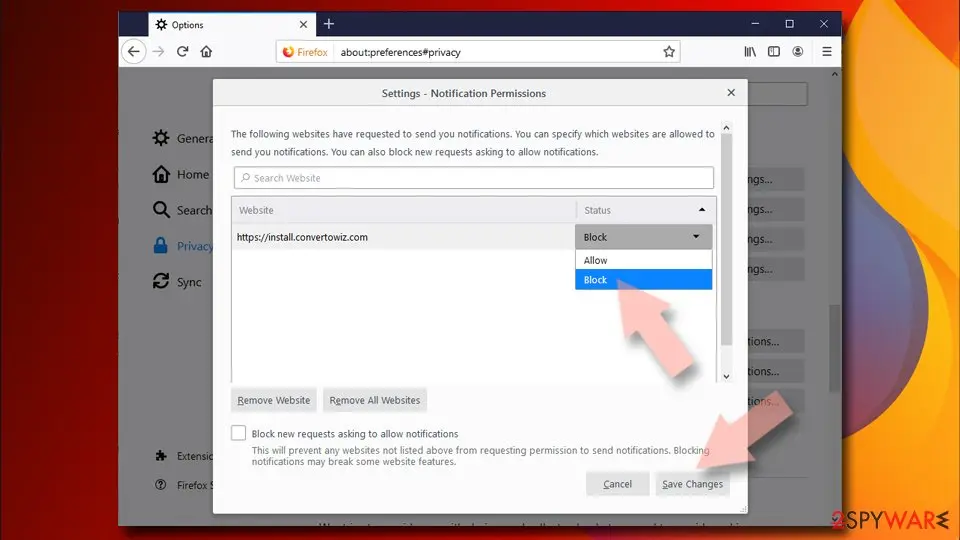
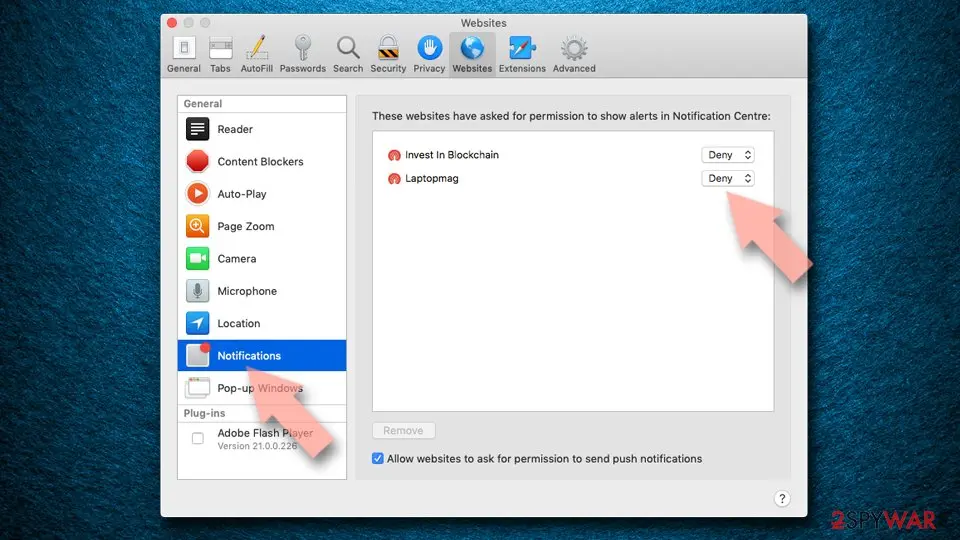
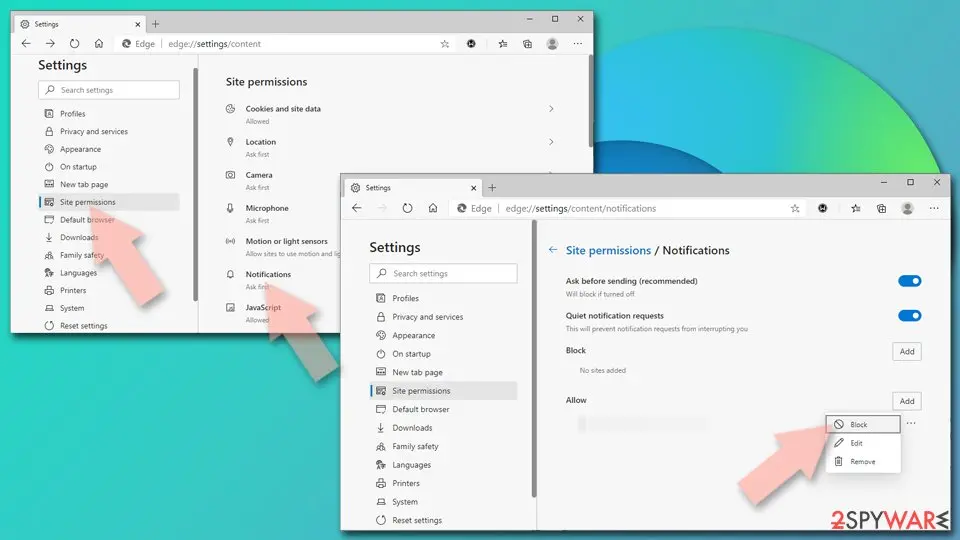
Make sure that you didn't accidentally allow push notifications from Activesafe.site
Since scam websites want to achieve the full potential, asking to allow push notifications is a clear benefit.
Since these sites don't use secure ad networks, it often results in users receiving inappropriate and even malicious ads. In addition, since most people are not aware about push ads, they don't know how to deal with them, either.
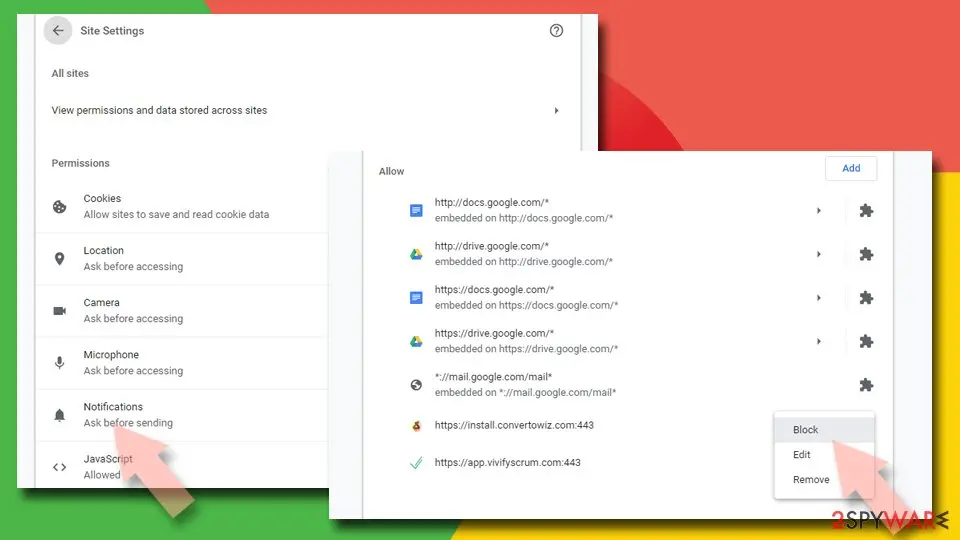
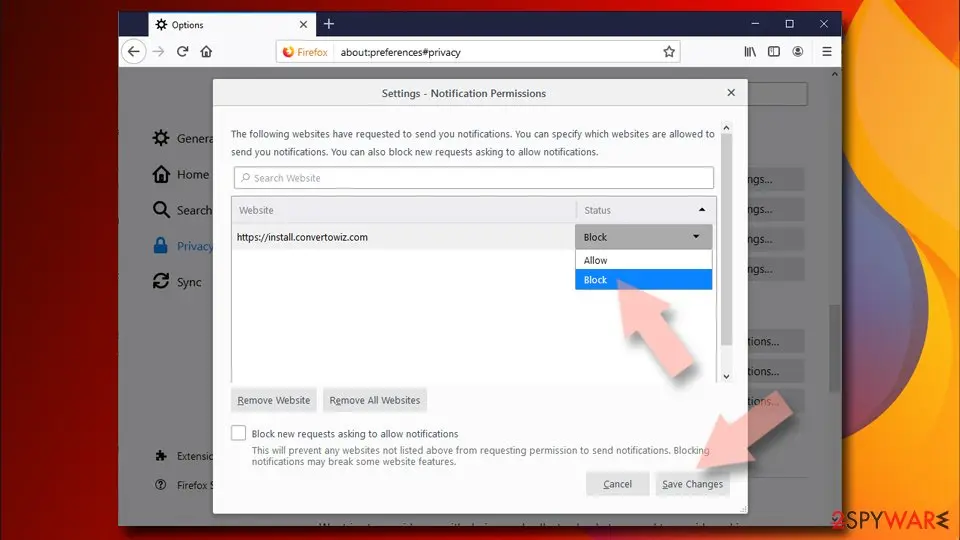
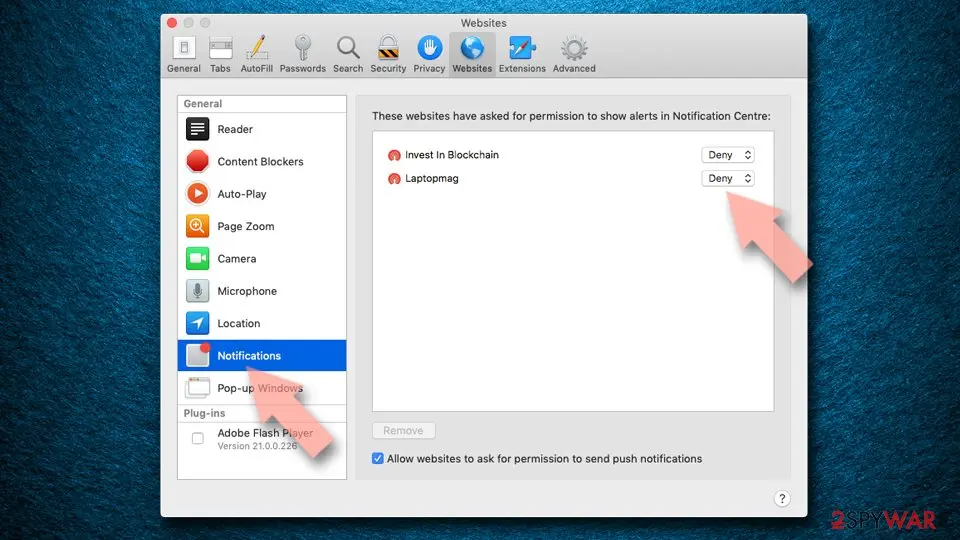
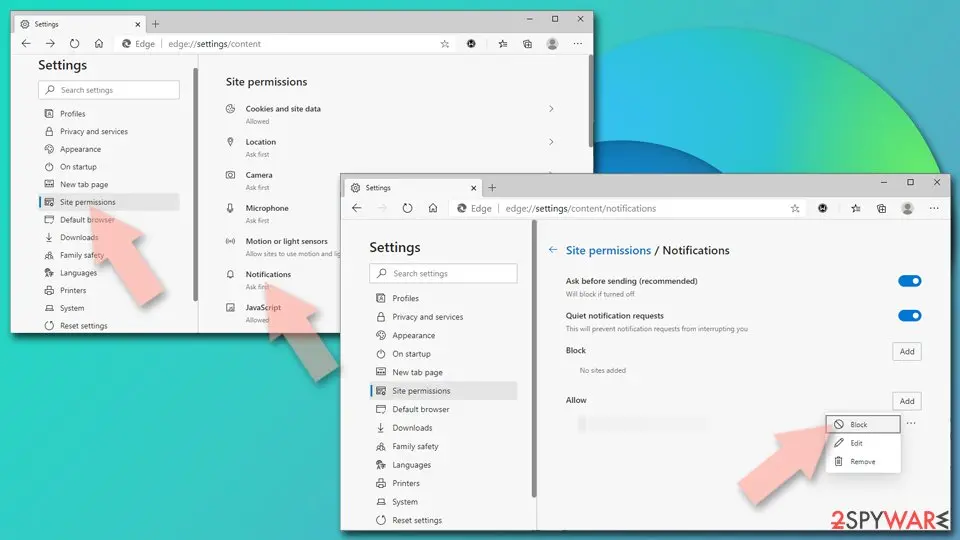
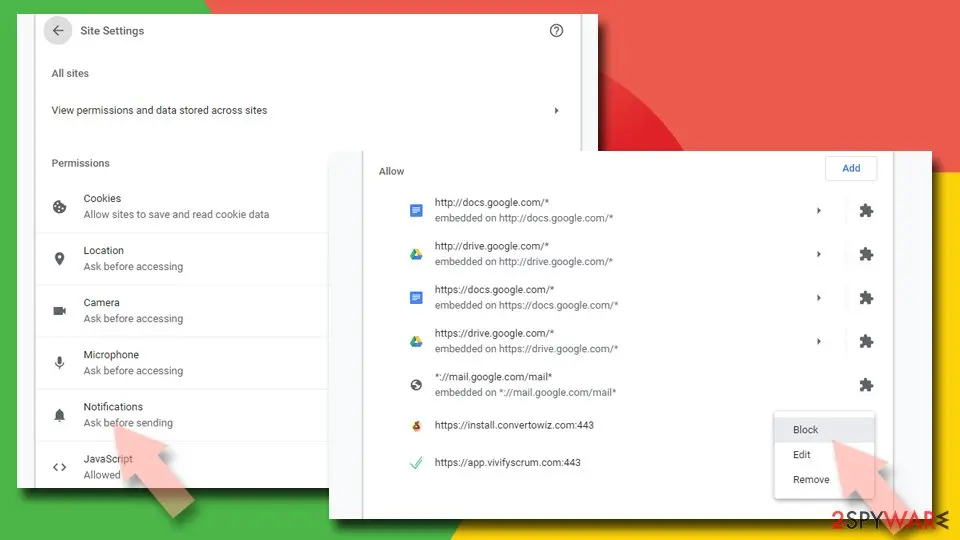
site ads is to block access to push notification feature. To do so, you need to access browser settings – pick the instructions for your particular browser below.
- Open the Google Chrome browser and go to Menu > Settings.
- Locate the Privacy and security section and pick Site Settings > Notifications.
- Look at the Allow section and look for a suspicious URL.
- Click the three vertical dots next to it and pick Block. This should remove unwanted notifications from Google Chrome.
If you clicked the link or replied
Damage control
- Report the message to your mail provider or carrier: Report a phishing e-mail.
- If you typed a password, change it and end all sessions: Turn on two-step verification / secure a hacked account.
- If you gave card or bank details, block the card and ask about a chargeback.
- If money left your account: What to do after paying a scammer.
- If you sent ID copies: Freeze your credit after a breach.
- If you ran a file: Run a Microsoft Defender Offline scan.
The scam asked for your password; anything you did not give is safe. If the e-mail account itself was affected, start with securing your accounts in the right order.
Locked out or still in?
If you can still sign in to a well-known company, change the password, end all sessions and add two-step verification: Turn on two-step verification / secure a hacked account.
Look through sent mail and settings for anything you did not do.
If the password no longer works, the scammers changed it. Use the official account recovery page, never a recovery service that contacts you. Recovery is faster when you still control the backup phone number or e-mail.
Then change every other account that shared the password. Why e-mail comes first in that list: securing accounts in the right order.
What to do after the Activesafe.site e-mail
If you signed in after "Your McAfee subscription has expired!"
Change the password of the account the e-mail "Your McAfee subscription has expired!" imitated, sign out of all sessions and check the recovery details.
Do it from the real site, never from the link.
Turn on two-step verification with an app or a passkey: Turn on two-step verification / secure a hacked account.
Report the message so filters learn it: Report a phishing e-mail. If a card number was typed too, call the bank and block the card.
If you only received the message and clicked nothing, step 3 is all you need.
If you clicked the link or typed anything on the page it opened, do every step, starting with the password.
Step 1: Change the password you typed on the fake page
If you typed a password on the page the Activesafe.site message opened, assume the sender has it. Go to the real site by typing its address yourself and change the password there, choosing one you have never used.
Change it anywhere else the same password was used, and sign out all other sessions if the service offers it. Any browser on Windows 11 or Windows 10 will do, as long as you do not follow the e-mail's link.
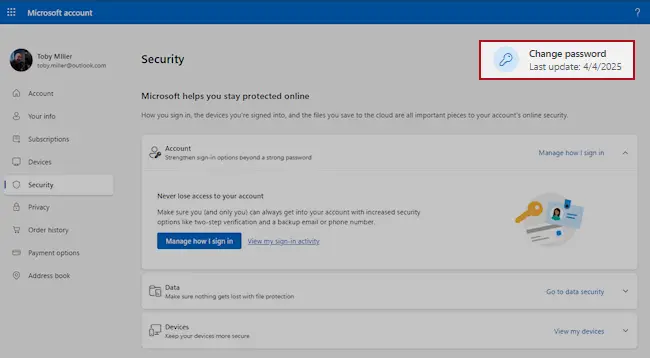
Microsoft account, Security page (account.microsoft.com/security): Change password. Full procedure with screenshots: Turn on two-step verification / secure a hacked account
Step 2: Turn on two-step verification
With two-step verification on, a stolen password alone no longer opens the account, because a sign-in from a new device also needs a code from your phone.
Switch it on for the e-mail account first, then for banking, shopping and social accounts that use that address.
Check the recovery phone, the recovery e-mail and any forwarding rules while you are in the settings, since attackers change them to come back. The pages are the same on Windows 11 and Windows 10.
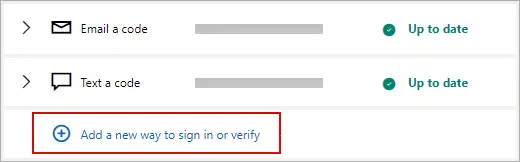
Microsoft account: Manage how I sign in, where two-step verification and the sign-in methods are. Full procedure with screenshots: Turn on two-step verification / secure a hacked account
Step 3: Report the e-mail and delete it
Do not reply and do not click anything else in the message. In Outlook select the e-mail and choose Report > Report phishing; in Gmail open the three-dot menu next to Reply and pick Report phishing.
That trains the filter for everyone on the service, and the message goes to the junk folder. If the e-mail came to a work address, forward it to your IT team as an attachment first.
The steps are the same in the web mail and the mail apps on Windows 11 and Windows 10.
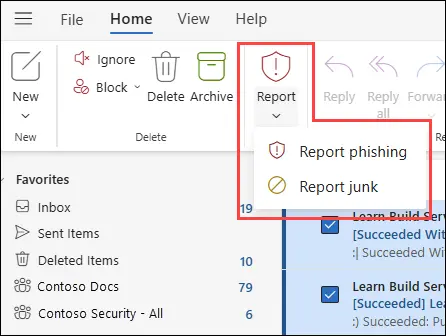
New Outlook for Windows and Outlook on the web: Report > Report phishing. Full procedure with screenshots: Report a phishing e-mail
Step 4: Scan the PC if you opened a file from the message
A fake sign-in page only steals what you type, so most readers can skip this step. If the Activesafe.site e-mail made you download or open a file, delete it and scan the PC.
In Windows Security > Virus & threat protection > Scan options, run a Full scan and then Microsoft Defender Antivirus (offline scan) > Scan now. The offline scan restarts Windows 11 or Windows 10 and takes about 15 minutes.
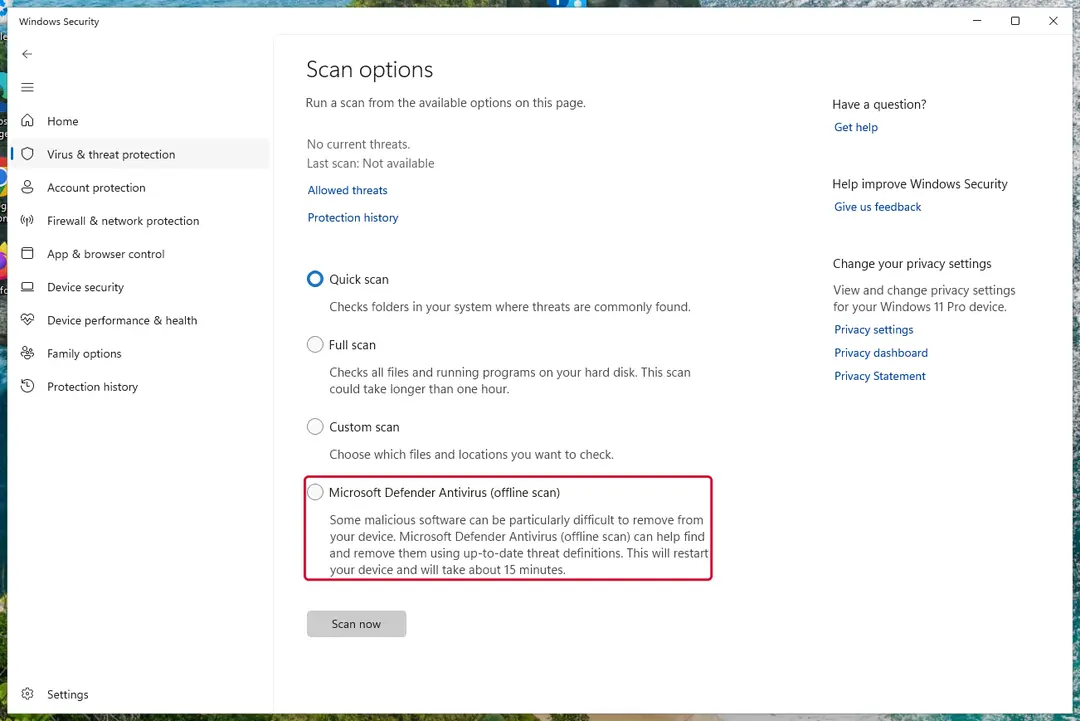
Windows 11: Windows Security > Virus & threat protection > Scan options. Full procedure with screenshots: Run a Microsoft Defender Offline scan
How to report Activesafe.site
Reporting is worth it even when nothing can be recovered.
Keep evidence first: an e-mail with the subject "Your McAfee subscription has expired!", the messages or notes, transaction IDs and the exact times.
United States: IC3 (ic3.gov) for cybercrime, the FTC for fraud. United Kingdom: Report Fraud, plus report@phishing.gov.uk for suspicious e-mails.
Canada: the Canadian Anti-Fraud Centre and local police. Australia: ReportCyber and Scamwatch. If you lost money, call your bank before anything else.
Addresses for EU countries and what each agency asks for are in our country-by-country reporting guide.
Questions about Activesafe.site
I opened the "Your McAfee subscription has expired!" e-mail. Am I hacked?
No. Opening and reading a phishing e-mail does not give anyone access to your account or your PC. Modern mail programs block scripts and remote content by default, so reading the message "Your McAfee subscription has expired!" only showed you text and pictures.
The danger comes from clicking the button and typing your password on the page it opens, or from opening an attached file. If you did neither, report the message as phishing and delete it.
If you clicked but closed the page without typing anything, there is also nothing to fix. If you did type a password, change it from another device and turn on two-step verification.
The "Your McAfee subscription has expired!" page asked for my code too. Is two-step verification enough?
Not when you typed the code yourself. Some phishing pages pass your password and the one-time code to the real site in real time, which lets the attacker sign in once. Change the password immediately, then sign out of all sessions so the stolen session ends.
Check the account's security page for new devices, app passwords and recovery details, and remove anything you did not add. A passkey or a hardware key is the strongest protection against this trick, because it cannot be typed into a fake page. Keep the e-mail "Your McAfee subscription has expired!" for your report, then delete it.
Could Activesafe.site be a genuine message?
We checked it, and it is not. A well-known company is only the costume. The message exists to get your password, and real companies handle that inside your account, after you sign in normally, not through links, attachments or phone numbers in a message you did not expect.
Scammers copy logos and footers perfectly, so the design proves nothing. The sender address, the link target and the request are the reliable signs, and all three point to a scam here. Delete it, and if you are worried, check your account directly.
Why does Activesafe.site say that your account needs urgent attention?
Because that story works. A problem that needs fixing, a deadline and a simple solution make people act before they check.
The claim that your account needs urgent attention is the same for everyone who received Activesafe.site; it was written once and sent in bulk. Nothing about your own situation triggered it.
If you are unsure, look at the real account or service the normal way, without using the message. The claim will not be there, which settles the question. Then report the message.
What does Activesafe.site want from me?
In the end, your password. Everything else in Activesafe.site, from the logo to the deadline, is there to get you to that point without stopping to think. Knowing the goal helps you judge your risk.
If you did not give it, you lost nothing and can delete the message. If you did, the steps in this guide are ordered by what you handed over:
- passwords first
- then card and bank details
- then documents and anything you installed
- ran
Act on the highest item on that list first.
How do I contact the real a well-known company?
Not through anything in Activesafe.site. Type the official website address into the browser yourself, use the app you already have, or use the phone number printed on your card, contract or a previous genuine invoice. Search results can be risky too, because scammers buy ads for support numbers.
Once you reach the real a well-known company, you can ask whether there is any problem with your account and report the scam message; many companies have a dedicated address for phishing reports on their security page.
Can I trick the scammers or waste their time?
Better not. Replying to Activesafe.site confirms that your address or number is live and puts it on lists that sell for more. Scammers who are teased sometimes switch to harassment or try to use any detail you reveal, such as your name, employer or location.
Playing along also risks a slip, like opening a link or a file they send. Report the message, block the sender and delete it. Your report does more damage to the operation than a conversation would.
Could malware on my computer cause Activesafe.site?
It can, but it is not the most common cause. Information stealers copy saved passwords and session cookies from browsers, which can lead to an e-mail with the subject "Your McAfee subscription has expired!". More often, the password came from a breach or a phishing page.
To be sure, run a full scan in Windows Security and check Installed apps and browser extensions. If anything is found, clean the PC first and change passwords afterwards from a clean device, because changing them on an infected PC lets the malware take the new ones too.
Why did I receive Activesafe.site?
Scam messages go to millions of addresses and numbers collected from data breaches, public websites and simple guessing. Receiving Activesafe.site does not mean your PC is infected or that an account of yours was hacked.
If the message includes an old password of yours, it comes from a breach of some website; change that password wherever you still use it. Mark the message as spam or phishing so your provider blocks similar ones. Never reply to ask to be removed from the list: the sender treats a reply as proof that the address works.
Will Fortect remove Activesafe.site?
Fortect scans Windows for malware and unwanted programs and repairs the system files and settings they change, and its free scan shows what it finds on your PC before you decide anything.
For Activesafe.site, follow the plan above as well: the browser steps take back permissions and settings that no scanner treats as a threat, and uninstalling the program that brought it removes the source.
Run Microsoft Defender's full scan and, if anything was found, its offline scan as a second opinion. If the symptoms are gone after the plan and both scans are clean, there is nothing more to do.
Sources
- FTC: How to recognize and avoid phishing scams (read October 4, 2026)
- CISA: Recognize and report phishing (read October 4, 2026)
- Microsoft Support: Protect yourself from phishing (read October 4, 2026)
- NCSC: Phishing attacks, dealing with suspicious e-mails and messages (read October 4, 2026)
- FTC: How to recognize, remove and avoid malware (read October 4, 2026)