
MyStart.Space virus: what it is and how to remove it
MyStart.Space is a potentially unwanted program (PUP) that adds a homepage-changing browser extension to Chrome and possibly other web browsers. Once installed, it sets MyStart Search as default start page and search provider.
Facts checked October 7, 2026. Removal steps tested on Windows 11 (26H2) and checked against Microsoft's and the browser makers' current documentation. Sections marked as our earlier report are the original text: they describe the threat as it was then and have not been reviewed since. The 2026 status, the removal steps and the questions are current.
Automatic
Get a free scan and check if your PC is infected.
Fortect finds malware, unwanted programs and the Windows damage they leave behind, and repairs it in one pass.
Not sure what changed your search to mystart.space? An automatic scan checks extensions, programs and browser settings in one pass.
Do it yourself · free Remove MyStart.Space virus yourself 5 steps, about 15 minutes, no software needed.
Start the steps
MyStart.Space virus: summary
| Detection names | No Microsoft detection name is known |
|---|---|
| Distribution | Not recorded in the old report |
| Damage | Not recorded in the old report |
| Name | MyStart.Space virus |
| Type | Fake search engine |
| Symptoms | A changed search engine |
| Removal | Scan the PC with security software to find and remove the malware and anything installed with it. Fortect scans Windows for malware and repairs the system files and settings it damaged. Remove it nowTo use the full-featured product, you have to purchase a license for Fortect. The scan is free. |
Show 5 more facts
| Evidence | 4 write-ups by security sites; details still limited |
|---|---|
| Search page | mystart.space |
| Browsers | Chrome, Edge and Firefox |
| First seen | 28 September 2017 |
| Facts checked | 7 October 2026 |
Is MyStart.Space virus dangerous? What it collects
From our report of Sep 2017 · not reviewed since
MyStart Space search tool sneaks into users' computers to serve sponsored results
MyStart.Space is a potentially unwanted program (PUP) that adds a homepage-changing browser extension to Chrome and possibly other web browsers.
Once installed, it sets MyStart Search as default start page and search provider. As a consequence, the victim has to run into the search site promoted by this program on a daily basis.
While the MyStart virus isn't a malicious program , it is better to stay away from it and use a regular search engine. Such search engines are hardly developed for user's benefit. Most of the time, they aim to generate revenue for their developers. For this purpose, they use pay-per-click advertising model and inject third-party ads into search results.
Despite being called similarly to MyStart.com redirect virus (by Visicom Media), My Start Space hijacker is a different program. The extension that changes victim's browser's settings asks for permissions to "replace the page you see when opening a new tab" and also "read and change your browsing history" as well as "data on websites you visit."
These statements sound suspicious and inform about unpleasant changes soon to be made to your browser. So if you run into an extension that asks you to provide similar permissions, better refuse to do it. Otherwise, your web browsing sessions can become a nightmare as you are going to experience redirects , encounter ads and deal with system slowdowns daily.
We strongly recommend you to remove MyStart.Space as it is a hardly trustworthy Chrome extension. It clearly was developed for monetization purposes.
From our report of Sep 2017 · not reviewed since
Ways to stop browser hijacking
To prevent unwanted programs from changing your browser's settings without your knowledge, you should watch what programs you choose to install offer to you.
Their installation wizards tend to promote extra programs you did not even plan to install. Remember that Default or Standard installation settings will plant these additions on your computer without questioning anything.
To refuse to install unwanted programs, consider choosing Custom or Advanced settings in the software installer. This will expand the settings menu and show you additional items. Deselect the suggested items and proceed with the installation then. Diviren.de experts advise reading privacy policy document carefully to find more about the program you are willing to install.
Check your browser and PC
- Address:
mystart.space
How to remove MyStart.Space virus
How to stop MyStart.Space virus from opening
The search page is only the end point.
These steps remove what sends the browser there, then put the search engine back.
Step 1: Put the search engine back and delete mystart.space
In Chrome open Settings > Search engine > Manage search engines and site search, make an engine you trust the default, and delete
mystart.spacefrom the list.In Edge type
search engineinto the search box at the top of Settings and open Manage search engines; in Firefox use Settings > Search. Then check the homepage and the new tab page in the same settings, because hijackers change all three.If mystart.space is back after a restart, an extension, a program or a policy still sets it, so finish the other steps and check again. The settings are the same on Windows 11 and Windows 10.
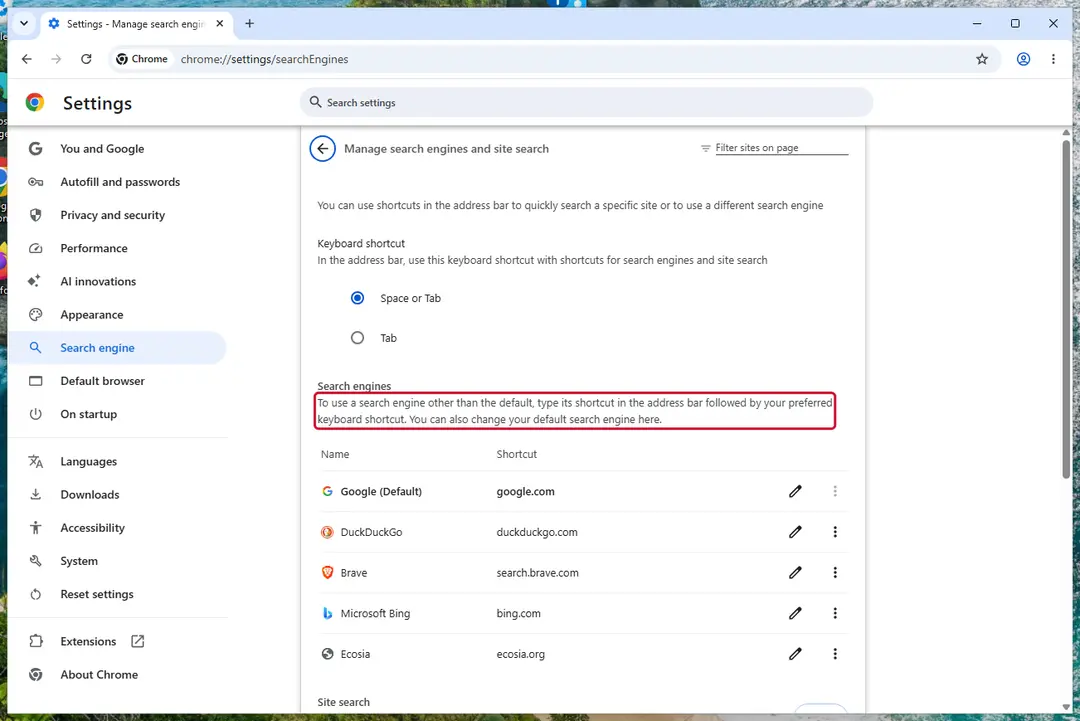
Chrome on Windows 11: check Search engine and On startup. Full procedure with screenshots: Reset a browser and fix a hijacked search engine
Step 2: Remove extensions you did not add
In Chrome open
chrome://extensions, in Edgeedge://extensions, and in Firefox the menu > Extensions and themes.Remove every extension you do not remember adding, especially search, new tab, coupon, PDF, weather or video downloader add-ons. Check every browser and every profile, because each keeps its own list.
If an extension has no Remove button or comes back, a browser policy holds it (see "Managed by your organization" in the procedure below). The pages are the same on Windows 11 and Windows 10.
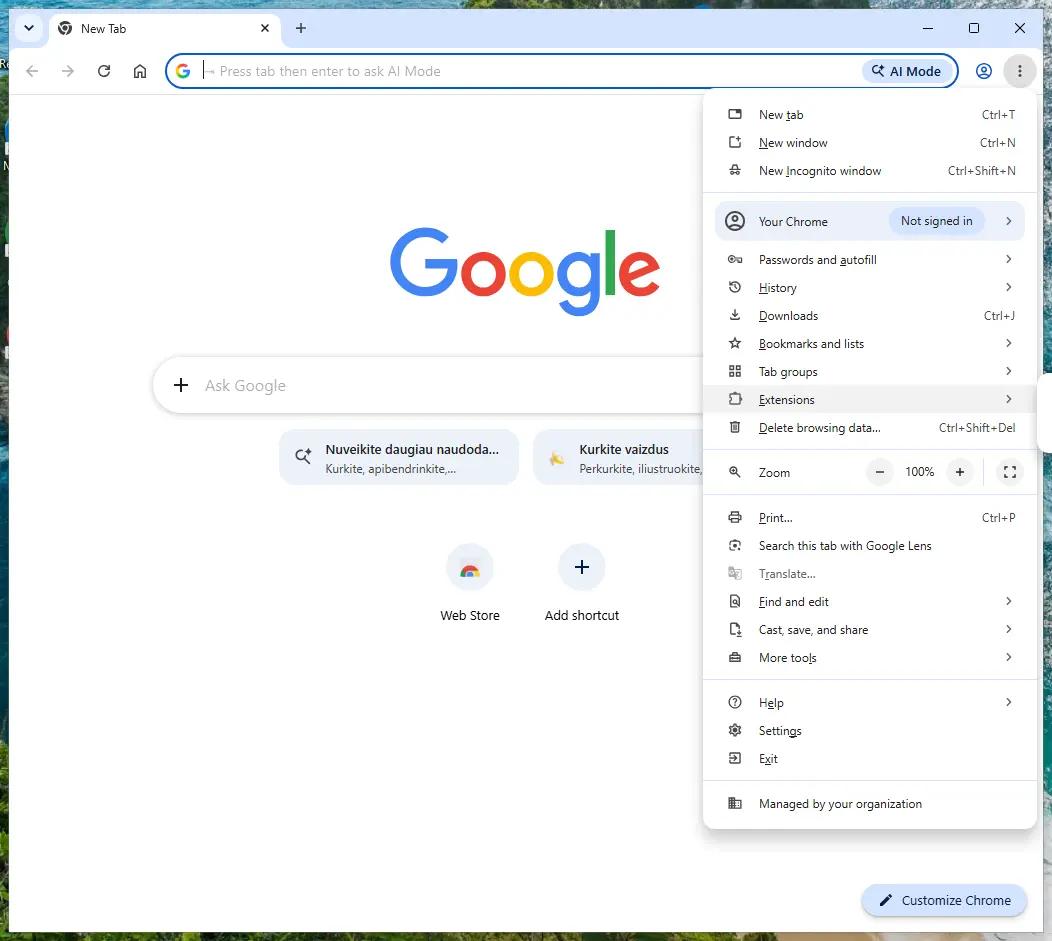
Chrome on Windows 11: More > Extensions > Manage extensions. Full procedure with screenshots: Remove a browser extension
Step 3: Uninstall programs you did not mean to install
MyStart.Space virus rarely comes alone: it is usually installed by, or together with, a free program. In Windows 11 open Settings > Apps > Installed apps, in Windows 10 Settings > Apps > Apps & features, and sort by install date.
Uninstall every entry from the day the trouble began that you did not install on purpose, for example a download manager, a converter or a browser you never chose.
Keep drivers and entries from Microsoft, Intel, AMD, NVIDIA or your PC's maker unless you are sure.
Full procedure with screenshots: Uninstall a program or app in Windows On uGetFix
Step 4: Reset the browser
A reset removes what the steps above could miss:
- changed start pages
- site permissions
- hidden settings
In Chrome open Settings > Reset settings > Restore settings to their original defaults; in Edge Settings > Reset settings; in Firefox Help > More troubleshooting information > Refresh Firefox.
Tip: Bookmarks and saved passwords stay, while extensions are turned off and the search engine and start page return to the defaults.
Reset every browser on the PC, including Edge, which Windows 11 and Windows 10 always have.
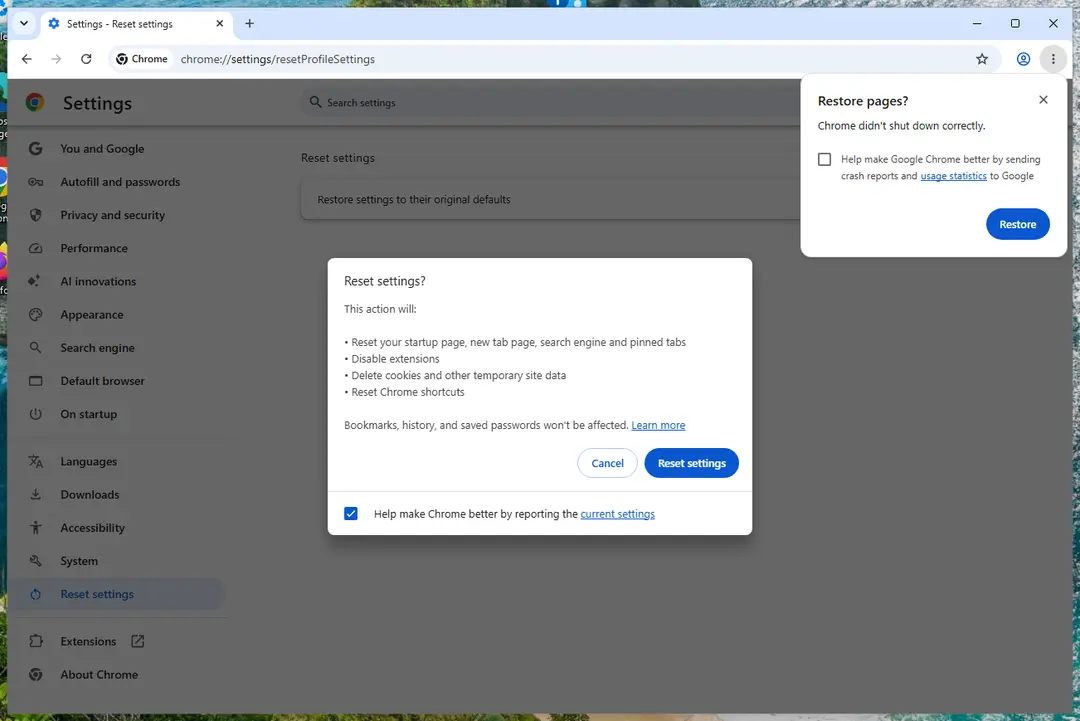
Chrome on Windows 11: Settings > Reset settings. Full procedure with screenshots: Reset a browser and fix a hijacked search engine
Step 5: Scan the PC, then run the offline scan
A scan finds the parts of MyStart.Space virus that the manual steps cannot see. In Windows Security > Virus & threat protection > Scan options, start a Full scan and quarantine what it reports.
Follow it with Microsoft Defender Antivirus (offline scan) > Scan now, which restarts the PC and checks the disk while Windows and the malware are not running.
It takes about 15 minutes and works the same in Windows 11 and Windows 10. If either scan finds something, run the full scan again after removal until it comes back clean.
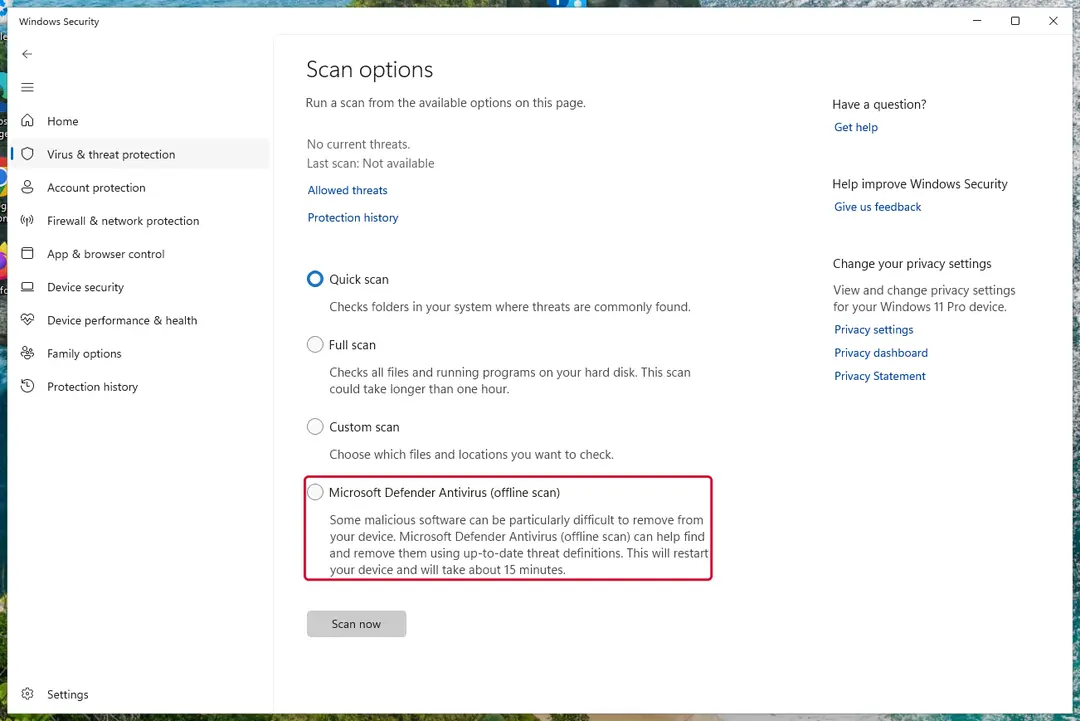
Windows 11: Windows Security > Virus & threat protection > Scan options. Full procedure with screenshots: Run a Microsoft Defender Offline scan
Instructions for each browser and system
The detailed steps for every browser and system this guide covers. Open the one you use.
Uninstall from Windows
The following guide explains how to stop mystart.space redirects.
Uninstall from Windows 10/8:
- Type Control Panel into the Windows search box and open the result.
- Under Programs, select Uninstall a program.
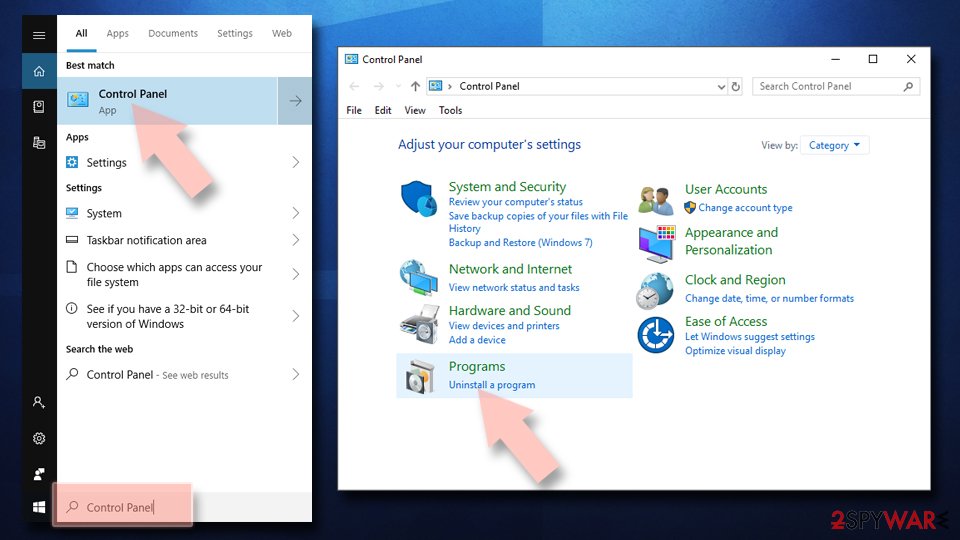
Uninstall from Windows 7/XP:
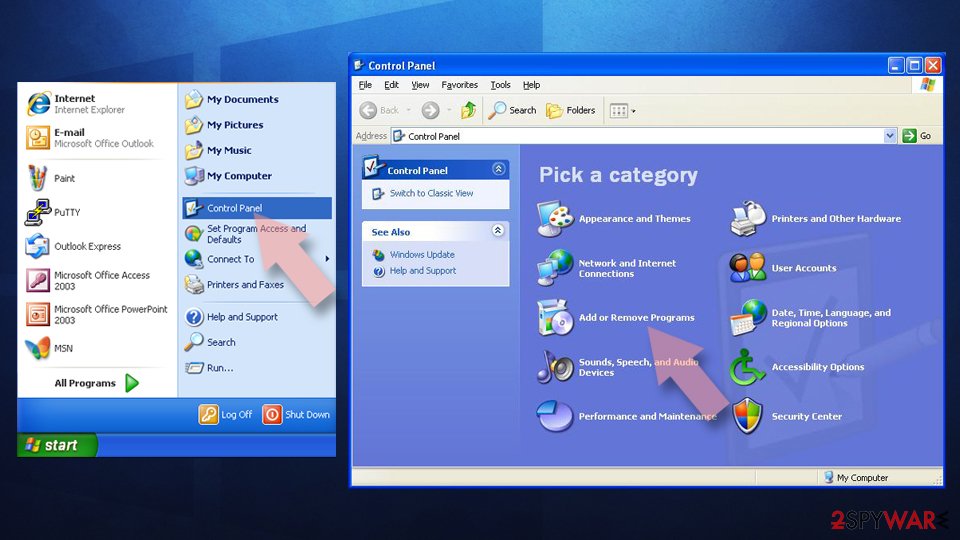
- Click on Windows Start > Control Panel (Windows XP users should click on Add/Remove Programs).
- In Control Panel, select Programs > Uninstall a program.
Remove the unwanted program:
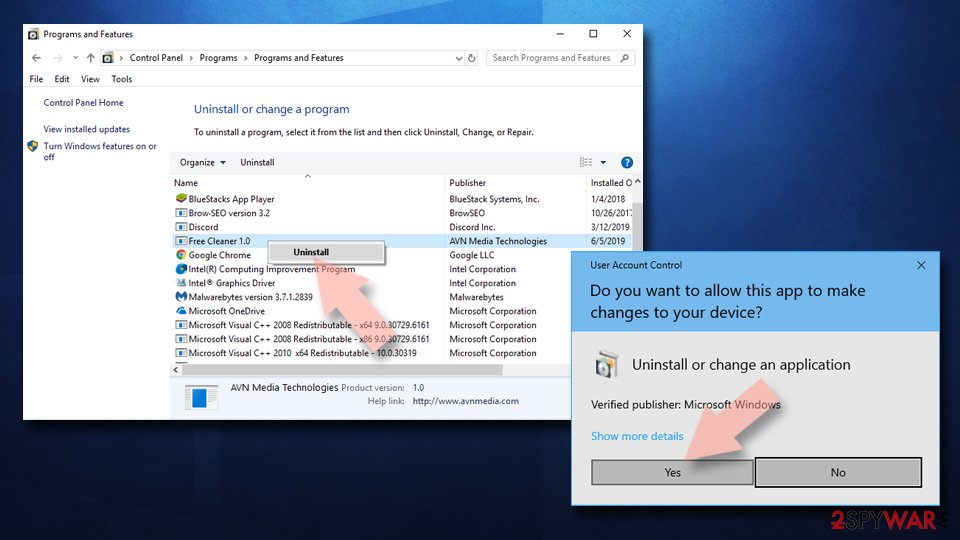
- In the Programs and Features window, look for any recently installed suspicious entries, select them, and click Uninstall.
- If User Account Control appears, click Yes to confirm, then complete the removal.
Remove from Google Chrome
Delete MyStart Space extension using the provided guidelines.
Delete malicious extensions from Google Chrome:
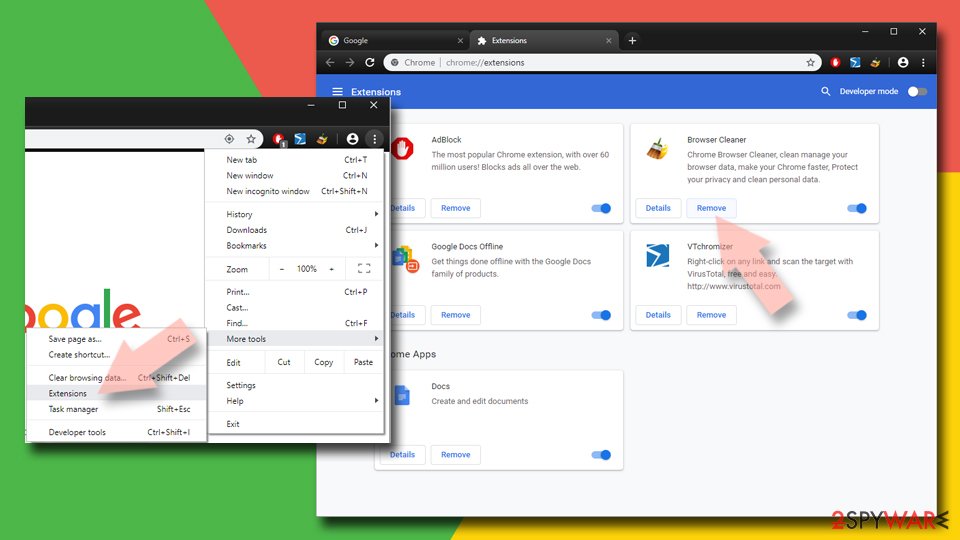
- Open Google Chrome, click on the Menu (three vertical dots at the top-right corner) and select More tools > Extensions.
- In the newly opened window, you will see all the installed extensions. Uninstall all suspicious extensions related to the unwanted program by clicking Remove.
Clear cache and web data from Chrome:
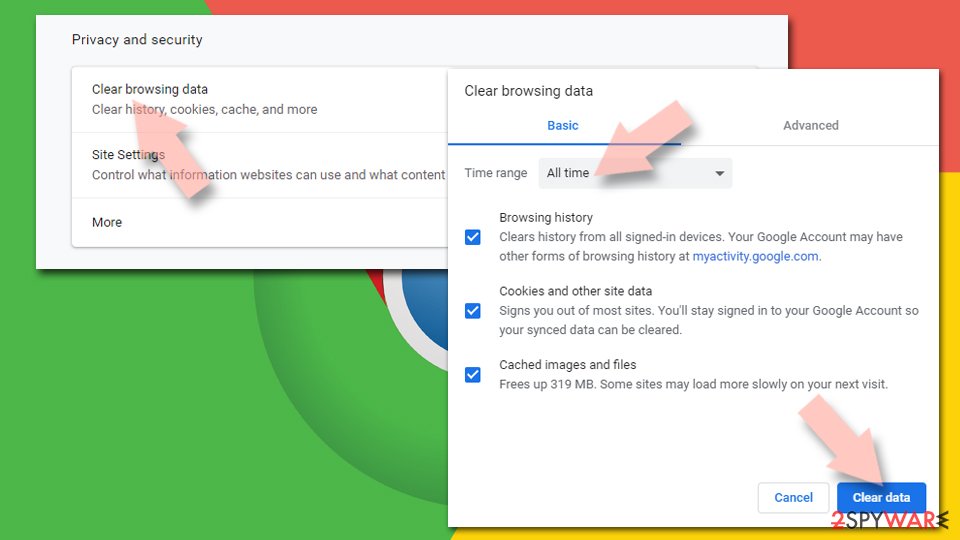
- Click on Menu and pick Settings.
- Under Privacy and security, select Clear browsing data.
- Select Browsing history, Cookies and other site data, as well as Cached images and files.
- Click Clear data.
Change your homepage:
- Click menu and choose Settings.
- Look for a suspicious site in the On startup section.
- Click on Open a specific or set of pages and click on three dots to find the Remove option.
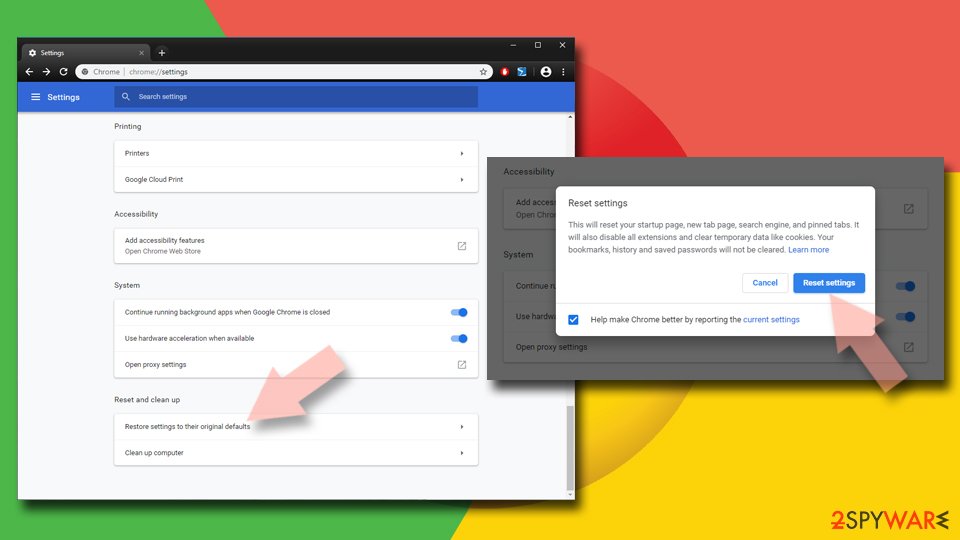
Reset Google Chrome:
If the previous methods did not help you, reset Google Chrome to eliminate all the unwanted components:
- Click on Menu and select Settings.
- In the Settings, scroll down and click Advanced.
- Scroll down and locate Reset and clean up section.
- Now click Restore settings to their original defaults.
- Confirm with Reset settings.
Remove from Microsoft Edge
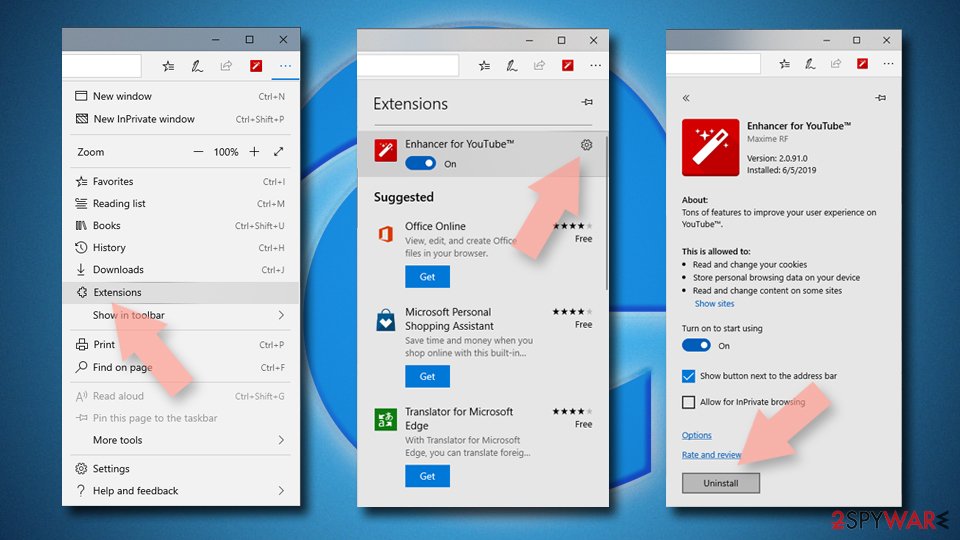
Delete unwanted extensions from MS Edge:
- Select Menu (three horizontal dots at the top-right of the browser window) and pick Extensions.
- From the list, pick the extension and click on the Gear icon.
- Click Remove.
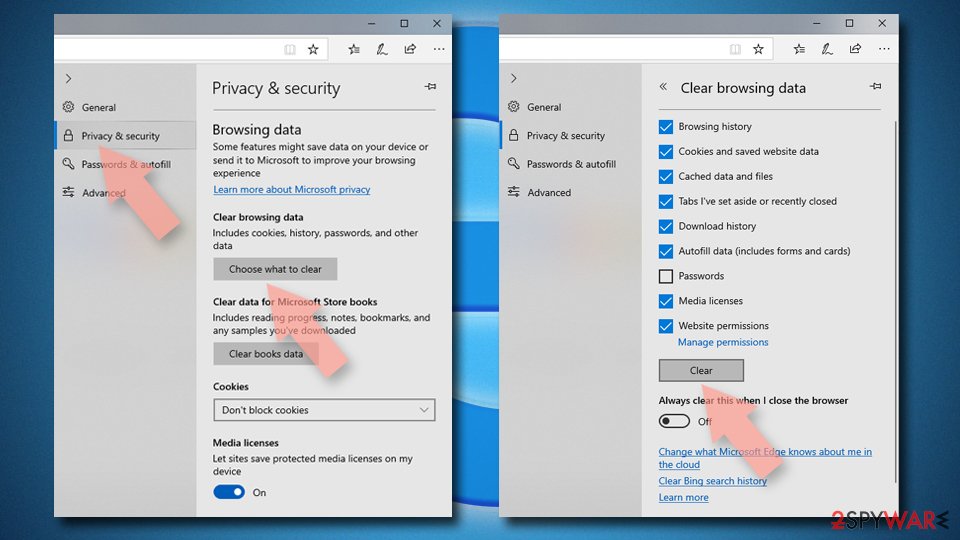
Clear cookies and other browser data:
- Click on the Menu (three horizontal dots at the top-right of the browser window) and select Settings > Privacy, search, and services..
- Under Clear browsing data, pick Choose what to clear.
- Select Cookies and other site data and Cached images and files. (apart from passwords, although you might want to include Media licenses as well, if applicable) and click on Clear.
Restore new tab and homepage settings:
- Click the menu icon and choose Settings.
- Then find On startup section.
- Click Remove next to any suspicious startup page.
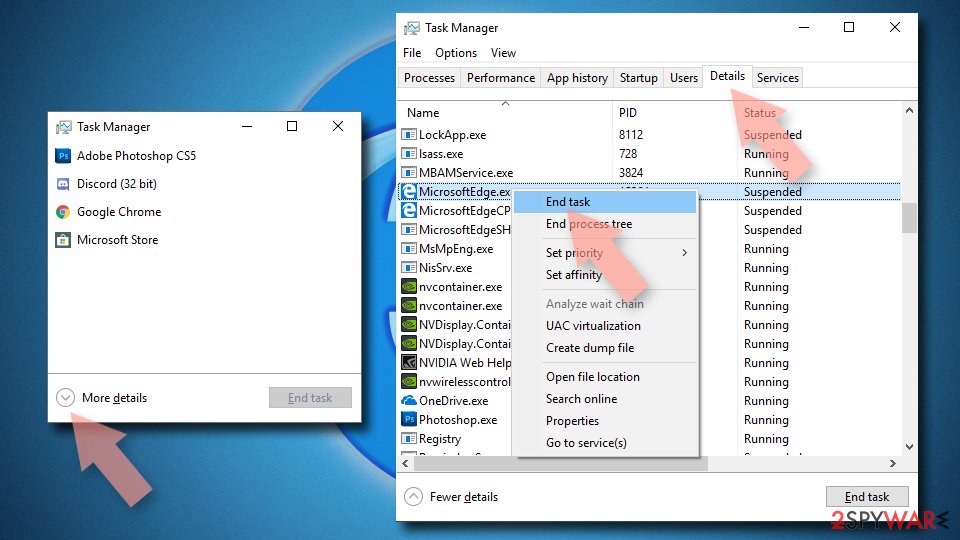
Reset MS Edge if the above steps did not work:
- Press on Ctrl + Shift + Esc to open Task Manager.
- Click on More details arrow at the bottom of the window.
- Select Details tab.
- Now scroll down and locate every entry with Microsoft Edge name in it. Right-click on each of them and select End Task to stop MS Edge from running.
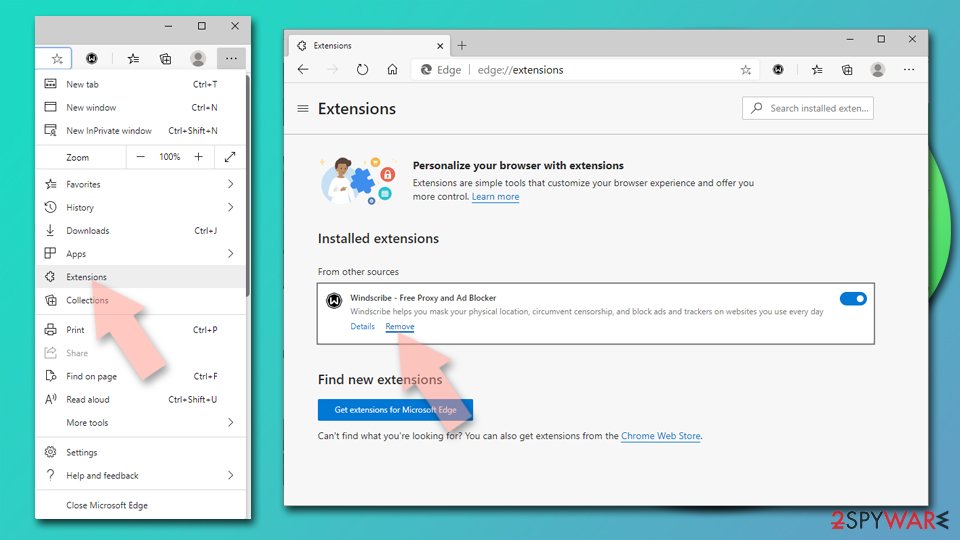
Delete extensions from MS Edge (Chromium):
- Open Edge and click select Settings > Extensions.
- Delete unwanted extensions by clicking Remove.
Clear cache and site data:
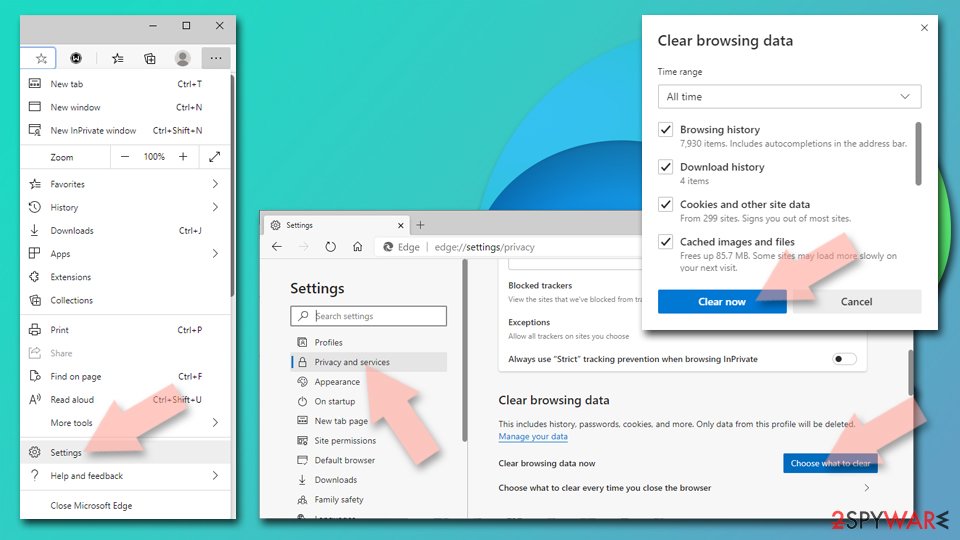
- Click on Menu and go to Settings.
- Select Privacy, search and services.
- Under Clear browsing data, pick Choose what to clear.
- Under Time range, pick All time.
- Select Clear now.
Reset Chromium-based MS Edge:
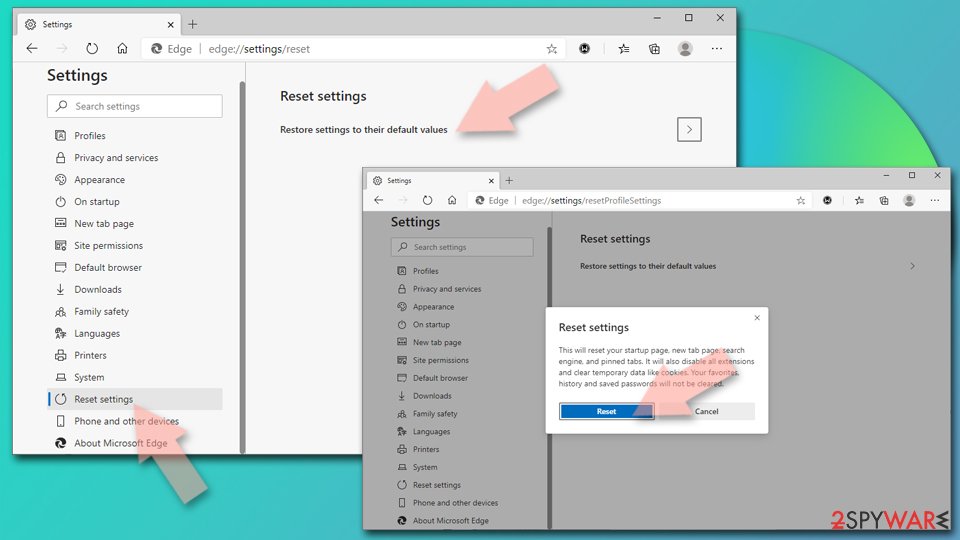
- Click on Menu and select Settings.
- On the left side, pick Reset settings.
- Select Restore settings to their default values.
- Confirm with Reset.
- This will disable extensions and reset startup pages but will not delete bookmarks, saved passwords, or browsing history.
Remove from Mozilla Firefox (FF)
Remove dangerous extensions:
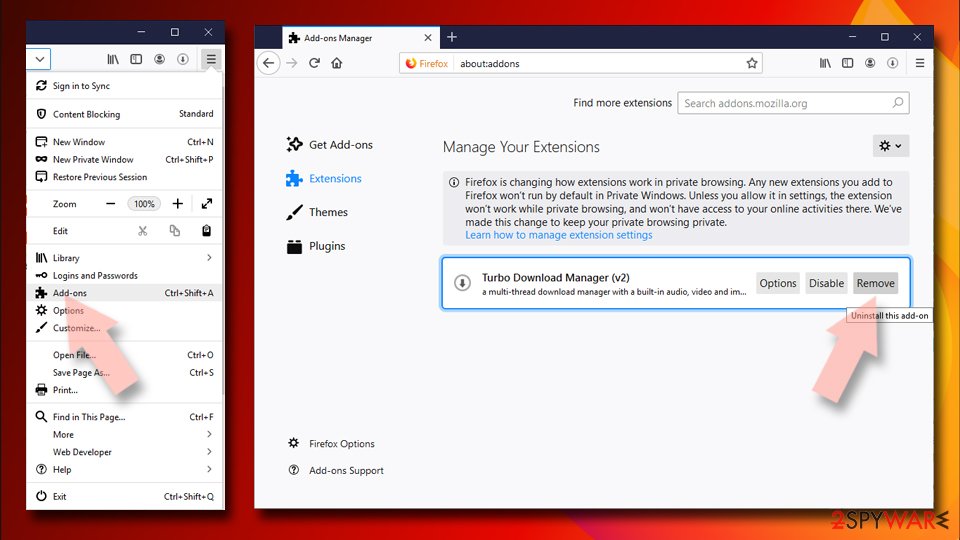
- Open Mozilla Firefox browser and click on the Menu (three horizontal lines at the top-right of the window).
- Select Add-ons.
- In here, select the unwanted extension and click Remove.
Reset the homepage:
- Click three horizontal lines at the top right corner to open the menu.
- Choose Settings.
- Under Home, set your preferred homepage and new tab settings.
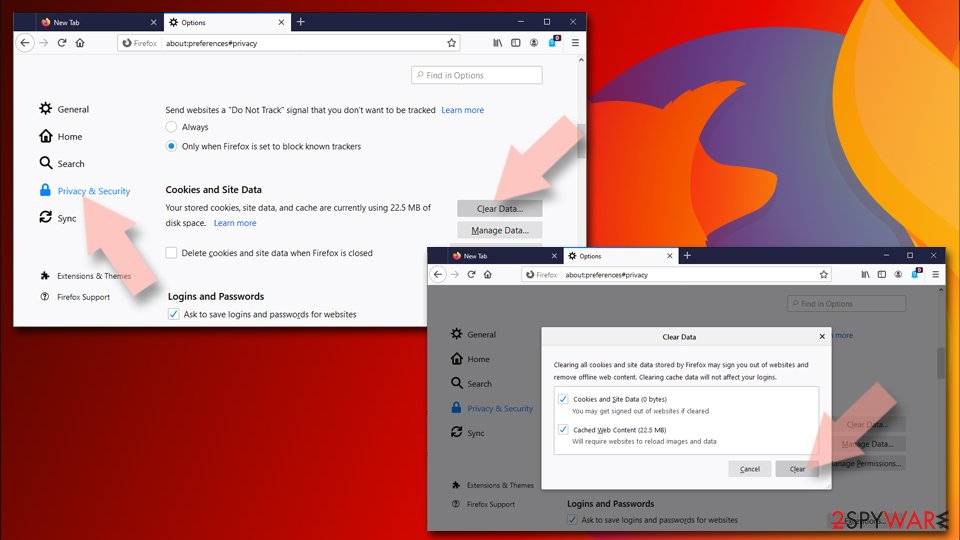
Clear cookies and site data:
- Click Menu and pick Settings.
- Go to Privacy & Security section.
- Scroll down to locate Cookies and Site Data.
- Click on Clear Data...
- Select Cookies and Site Data and Temporary cached files and pages, then click Clear.
Reset Mozilla Firefox
If clearing the browser as explained above did not help, reset Mozilla Firefox:
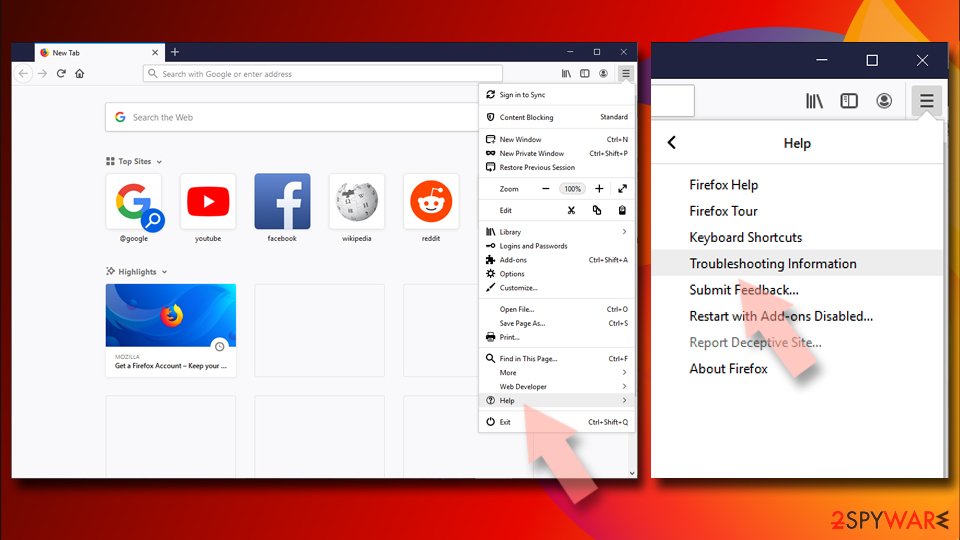
- Open Mozilla Firefox browser and click the Menu.
- Go to Help and then choose Troubleshooting Information.
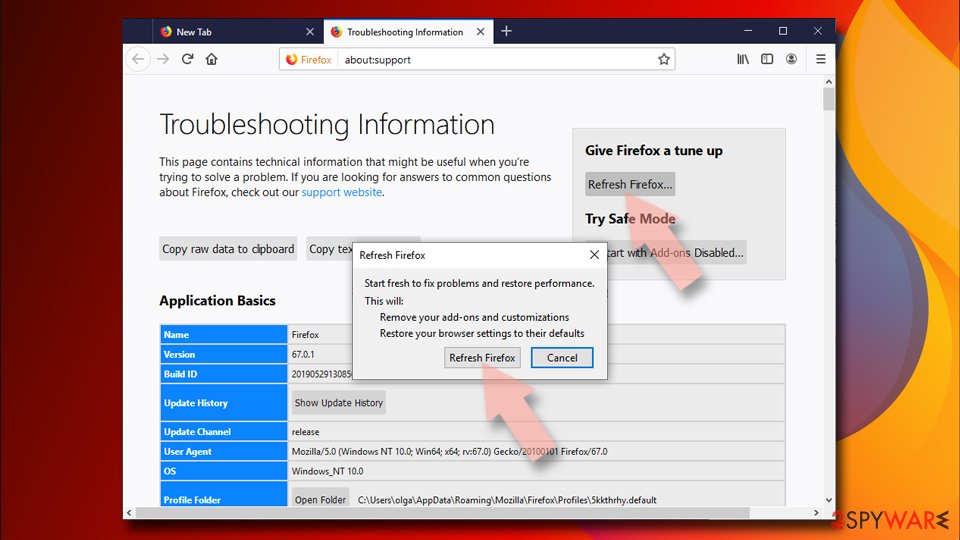
- Under Give Firefox a tune up section, click on Refresh Firefox...
- Once the pop-up shows up, confirm the action by pressing on Refresh Firefox.
Delete from Safari
Remove dangerous extensions:
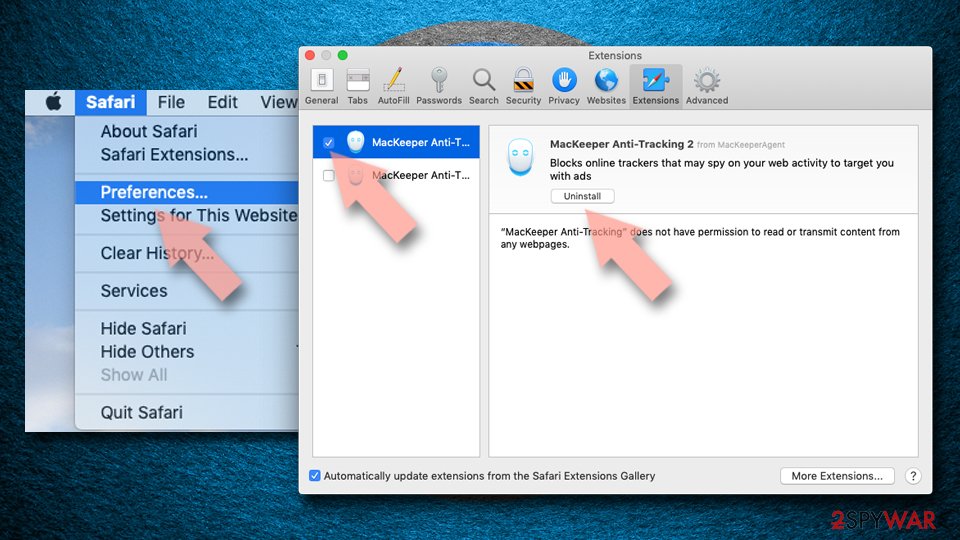
- Open Safari, click Safari in the menu at the top-left of the screen, and select Preferences.
- Go to the Extensions tab, look for any suspicious entries, and click Uninstall to remove them.
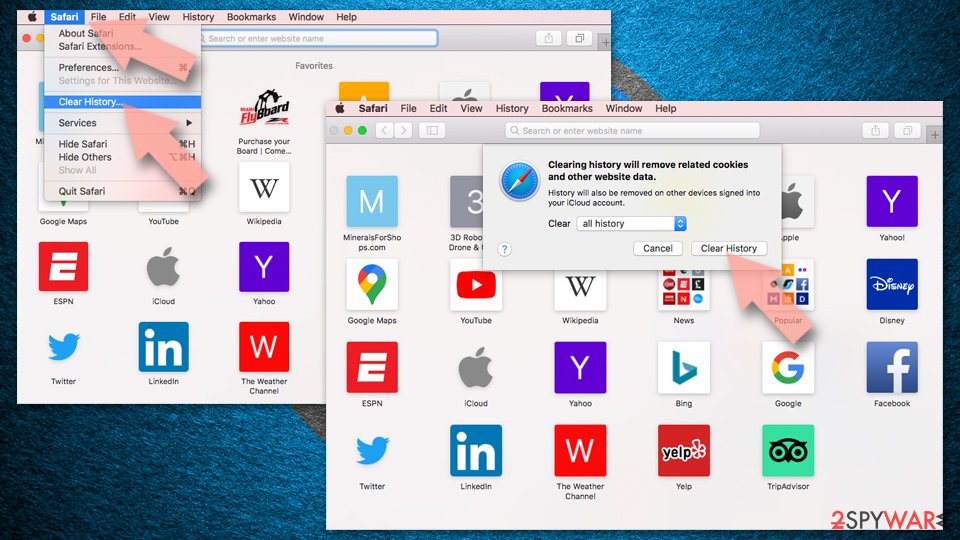
Clear history and website data:
- Click Safari in the menu and pick Clear History.
- Set Clear to all history and confirm with Clear History.
Reset Safari:
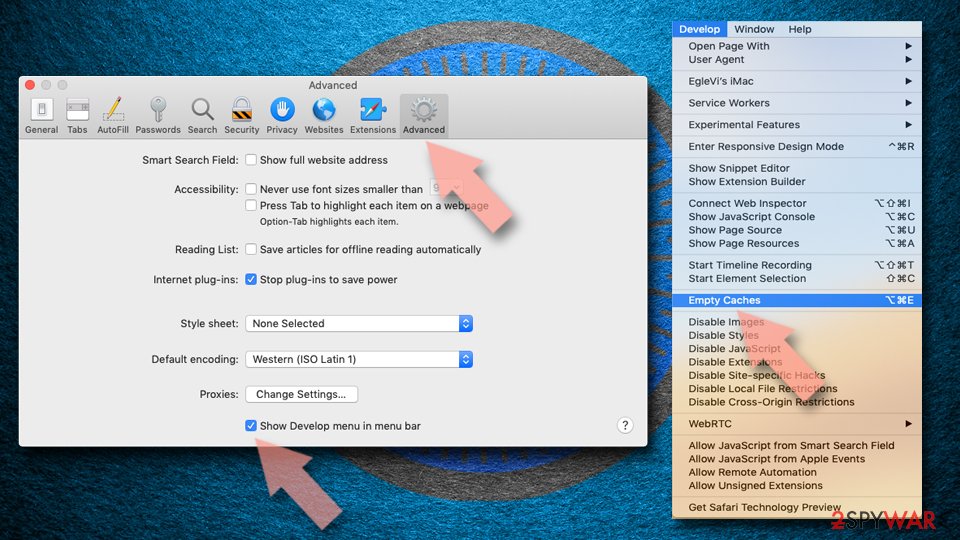
- Click Safari in the menu and select Preferences > Advanced.
- Enable Show Develop menu in menu bar.
- From the menu bar, click Develop and select Empty Caches.
Delete from macOS
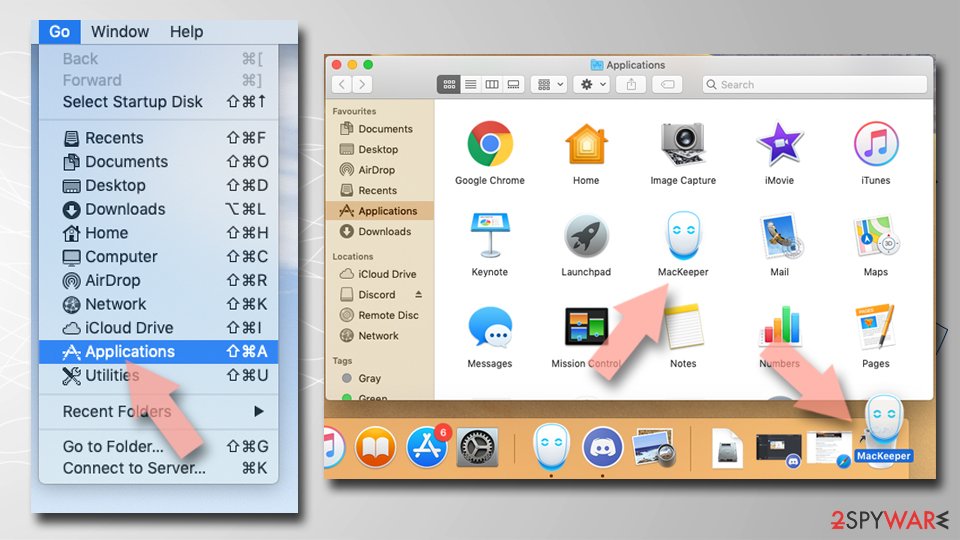
Remove the unwanted application:
- From the menu bar, select Go > Applications.
- In the Applications folder, look for any suspicious entries, then drag them to Trash (or right-click and pick Move to Trash).
Delete leftover files and folders:
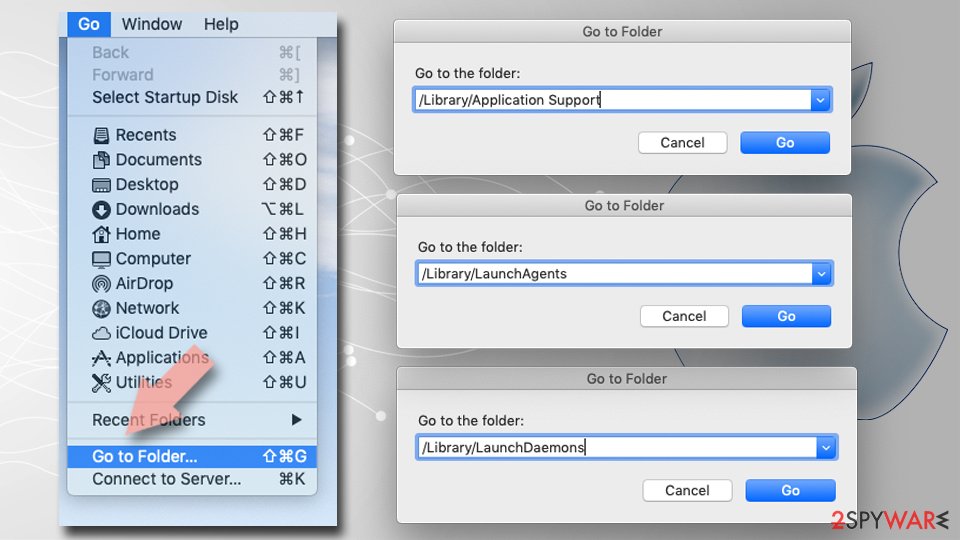
- Select Go > Go to Folder.
- Enter /Library/Application Support and remove any suspicious folders related to the unwanted program.
- Repeat the same check in the /Library/LaunchAgents and /Library/LaunchDaemons folders, deleting any suspicious entries.
- Finally, empty the Trash to permanently remove the leftovers.
Reset Internet Explorer
Remove dangerous add-ons:
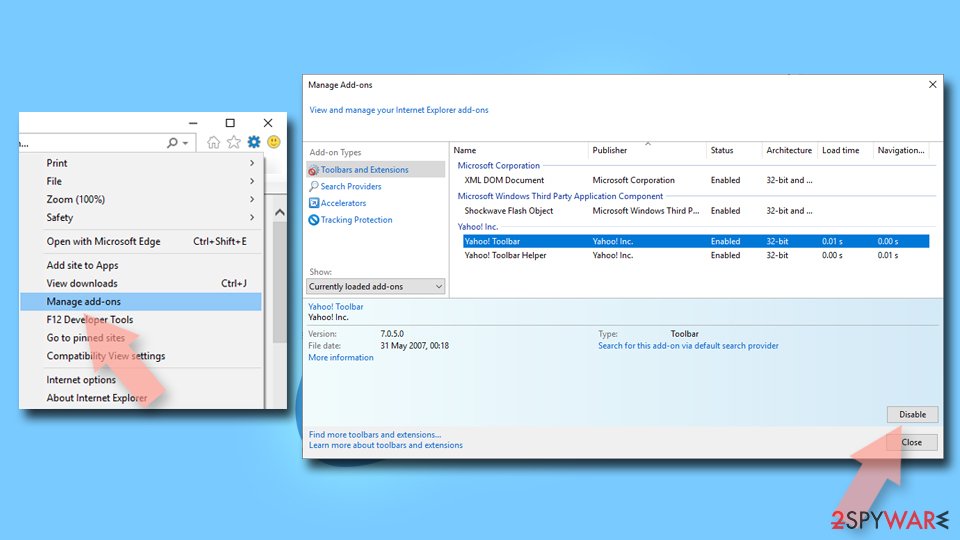
- Open Internet Explorer, click on the Gear icon (IE menu) on the top-right corner of the browser
- Pick Manage Add-ons.
- You will see a Manage Add-ons window. Here, look for suspicious plugins. Click on these entries and select Disable.
Change your homepage if it was altered:
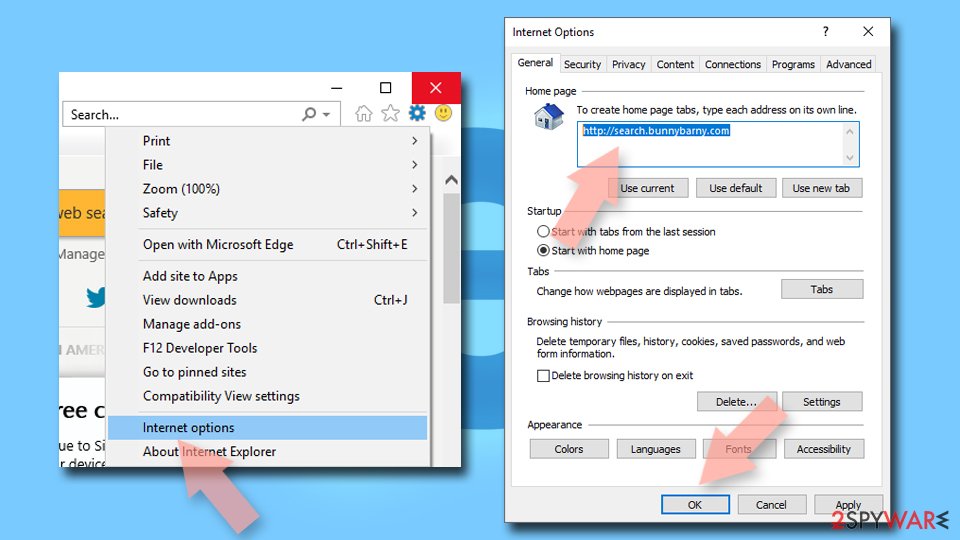
- Open IE and click on the Gear icon.
- Select Internet Options.
- In the General tab, delete the Home page address and replace it by your preferred one (for example, Google.com).
- Click Apply and then select OK.
Delete temporary files:
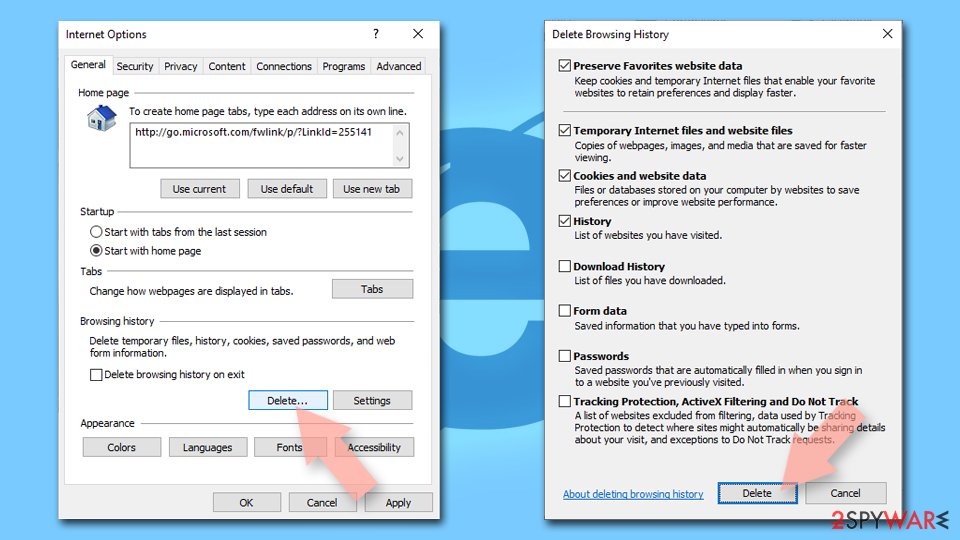
- Press on the Gear icon and select Internet Options.
- Under Browsing history, click Delete...
- Select relevant fields and press Delete.
Reset Internet Explorer:
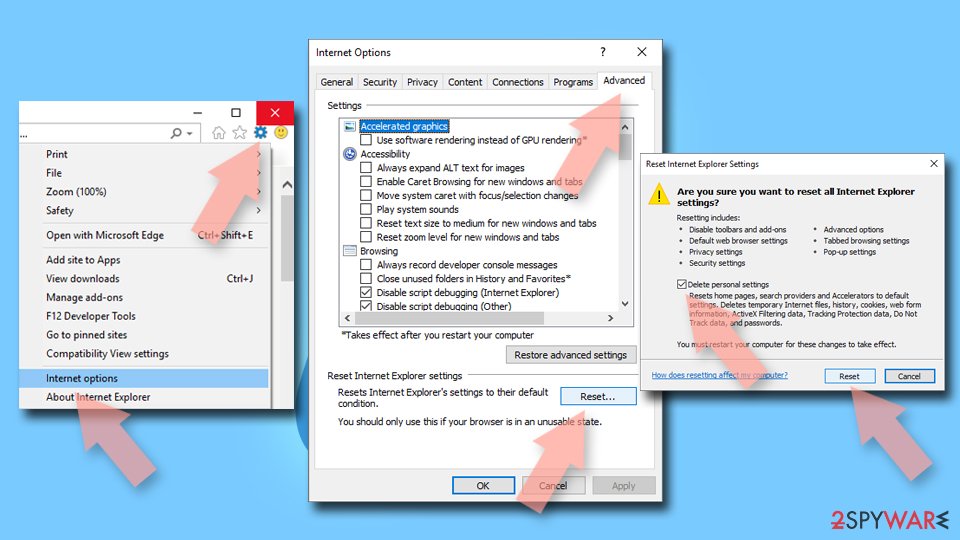
- Click on Gear icon > Internet options and select Advanced tab.
- Select Reset.
- In the new window, check Delete personal settings and select Reset.
Protect your privacy - employ a VPN
There are several ways how to make your online time more private - you can access an incognito tab.
However, there is no secret that even in this mode, you are tracked for advertising purposes. There is a way to add an extra layer of protection and create a completely anonymous web browsing practice with the help of VPN. This software reroutes traffic through different servers, thus leaving your IP address and geolocation in disguise.
Besides, it is based on a strict no-log policy, meaning that no data will be recorded, leaked, and available for both first and third parties. The combination of a secure web browser and VPN will let you browse the Internet without a feeling of being spied or targeted by criminals.
No backups? No problem. Use a data recovery tool
If you wonder how data loss can occur, you should not look any further for answers - human errors, malware attacks, hardware failures, power cuts, natural disasters, or even simple negligence.
In some cases, lost files are extremely important, and many straight out panic when such an unfortunate course of events happen. Due to this, you should always ensure that you prepare proper data backups on a regular basis.
If you were caught by surprise and did not have any backups to restore your files from, not everything is lost. is one of the leading file recovery solutions you can find on the market - it is likely to restore even lost emails or data located on an external device.
From our report of Sep 2017 · not reviewed since
Remove MyStart.Space Search from your browser
If you no longer want to use MyStart Search, just remove MyStart.Space virus from your browser.
You need to find the extension in Chrome, Firefox and whichever other browser redirects you to the described search page and delete it.
MyStart.Space removal can be completed quickly. Simply remove MyStart Space extension and also check your computer for similar search tools installed on it. You can do so using the tutorial we provided. We also suggest checking your computer with automatic spyware/malware elimination software which can identify and uninstall programs that operate so silently that you may haven't noticed it yet.
Questions about MyStart.Space virus
How do I change my search engine back from mystart.space?
Open the browser's search engine settings, choose the search engine you want and set it as default, then remove mystart.space from the list.
If the option is greyed out or a note says it is controlled by an extension, remove that extension first and try again. If the browser says it is managed by your organization, a policy holds the setting, and the policy steps in this guide apply.
When the change will not stick, reset the browser: it restores the default search engine and start page and turns off extensions, but keeps bookmarks and saved passwords. Then check Installed apps for a program that may put mystart.space back.
Can mystart.space see my searches?
Yes. Every search typed into the address bar goes to mystart.space first, which is how it earns money. It can log the query, the time and an identifier for your browser, and some hijackers also collect the pages you visit through their extension.
The privacy policy of such sites usually allows sharing that data with partners. Once the hijacker is removed and your own search engine is set again, new searches no longer reach it. Searches already sent cannot be taken back, so avoid entering sensitive information until the clean-up is finished, and clear cookies afterwards.
What is mystart.space?
It is the search page used by the browser hijacker MyStart.Space virus. It has no search index of its own: it forwards your queries to another search engine and adds ads and tracking along the way.
People rarely choose it on purpose; it becomes the default search engine, home page or new tab after an extension, program or policy changes the browser settings. The page itself is not malware, but it should not be in your browser if you did not set it. The steps above remove the source and restore your settings.
Is mystart.space dangerous?
It is not designed to infect the PC, but it is not neutral either. It logs searches, adds sponsored results that are hard to tell apart from real ones, and its ad partners are not checked as strictly as those of major search engines.
Some hijacker pages have shown ads for fake updates, tech support scams and unwanted software. The main harm is to privacy. Remove MyStart.Space virus, and if you entered personal data on sites reached through its results, check those sites carefully.
Do I have to fix every browser?
Yes, every one where the search engine or start page changed. In the cases we checked, MyStart.Space virus affected Chrome, Edge and Firefox.
Each browser stores its own search settings and extensions, so fixing one does not fix the others, and Windows-level changes such as shortcuts can affect each browser differently. Work through them one at a time:
- remove the extension
- check the policies
- restore the search engine
- start page
If you sync a browser, stay signed in so the fix spreads to your other computers.
Did mystart.space record my searches?
Almost certainly. Logging is the point of a hijacker search page: each query, with your IP address, browser details and the result you clicked, is valuable to advertisers.
The operators of mystart.space can store and share that data under their own privacy policy, which you never agreed to knowingly. There is no way to delete it from their side. What you can do is stop the flow:
- remove MyStart.Space virus
- clear cookies and site data for mystart.space
- treat sensitive searches made in the meantime as known to a third party
What do I lose if I reset Chrome or Edge?
Less than you might think. A reset turns off all extensions, which you can turn back on one by one, restores the default search engine, home page, new tab and pinned tabs, and clears cookies, so you are signed out of most sites.
Bookmarks, history, saved passwords and autofill data stay. Firefox's equivalent, Refresh Firefox, keeps the same essentials but removes add-ons completely. Before you reset, make sure you know your main passwords or have them saved, since you will need to sign in again.
Why can't I change my search engine back?
Because something keeps setting it. If an extension controls the search engine, Chrome and Edge show a note that an extension is controlling this setting, and your change is reverted. If a policy controls it, the field is greyed out and the browser shows Managed by your organization.
Remove the extension first, then the policies, and only then change the search engine; the change will stay. If it still reverts, look for a program in Installed apps or a scheduled task that reinstalls the extension.
Why does my search page look slightly different?
Because it is not your search engine's own page. MyStart.Space virus sends searches to mystart.space, which may copy the colours and layout of a known search engine while adding its own ads and tracking. Small differences give it away:
- an unfamiliar address
- more ads than usual
- a different logo
- a search box with a brand name you do not recognise
Remove the hijacker and set your search engine again from the browser's settings to get the real page back. Then delete the hijacker's entry from the saved search engines list.
Will Fortect remove MyStart.Space virus?
Fortect scans Windows for malware and unwanted programs and repairs the system files and settings they change, and its free scan shows what it finds on your PC before you decide anything.
For MyStart.Space virus, follow the plan above as well: the browser steps take back permissions and settings that no scanner treats as a threat, and uninstalling the program that brought it removes the source.
Run Microsoft Defender's full scan and, if anything was found, its offline scan as a second opinion. If the symptoms are gone after the plan and both scans are clean, there is nothing more to do.
Sources
- Securelist: Malicious Programs (read October 7, 2026)
- Wikipedia: URL redirection (read October 7, 2026)
- DieViren: DieViren (read October 7, 2026)
- FTC: How to recognize, remove and avoid malware (read October 7, 2026)
- Microsoft Learn: Microsoft Defender Offline (read October 7, 2026)