
SuperEasy Registry Cleaner: what it is and how to remove it
SuperEasy Registry Cleaner is advertised as a useful tool for software optimization. According to its developers, this program can scan the user's device for registry errors, defragment registry, and back it up.
Facts checked October 7, 2026. Removal steps tested on Windows 11 (26H2) and checked against Microsoft's and the browser makers' current documentation. Sections marked as our earlier report are the original text: they describe the threat as it was then and have not been reviewed since. The 2026 status, the removal steps and the questions are current.
Automatic
Get a free scan and check if your PC is infected.
Fortect finds malware, unwanted programs and the Windows damage they leave behind, and repairs it in one pass.
If you want to confirm nothing else came with PUA:Win32/Caypnamer.A!ml, a full scan checks the usual places in one pass.
Do it yourself · free Remove SuperEasy Registry Cleaner yourself 4 steps, about 12 minutes, no software needed.
Start the steps
SuperEasy Registry Cleaner: summary
| Distribution | Free software distributors, PUPs, fake Flash Player installers, deceptive pop-up ads |
|---|---|
| Name | SuperEasy Registry Cleaner |
| Type | System tools |
| Category | Potentially unwanted application |
| Claims | To optimize and clean the system |
| Developers | SuperEasy GmbH & Co |
| Removal | Scan the PC with security software to find and remove the malware and anything installed with it. Fortect scans Windows for malware and repairs the system files and settings it damaged. Remove it nowTo use the full-featured product, you have to purchase a license for Fortect. The scan is free. |
Show 7 more facts
| Detection | The application is recognized by multiple AV vendors as: Trojan/Win32.SGeneric A Variant Of Win32/Systweak.AB Potentially Unwanted Microsoft: PUA:Win32/Caypnamer.A!ml Riskware/Registry_Cleaner, etc. |
|---|---|
| Damage | Not recorded in the old report |
| Symptoms | A Windows Security "Threats found" notification |
| Evidence | 4 write-ups by security sites; details still limited |
| First seen | 8 October 2020 |
| Microsoft Defender name | PUA:Win32/Caypnamer.A!ml |
| Facts checked | 7 October 2026 |
Is SuperEasy Registry Cleaner safe? Why it is flagged
From our report of Oct 2020 · not reviewed since
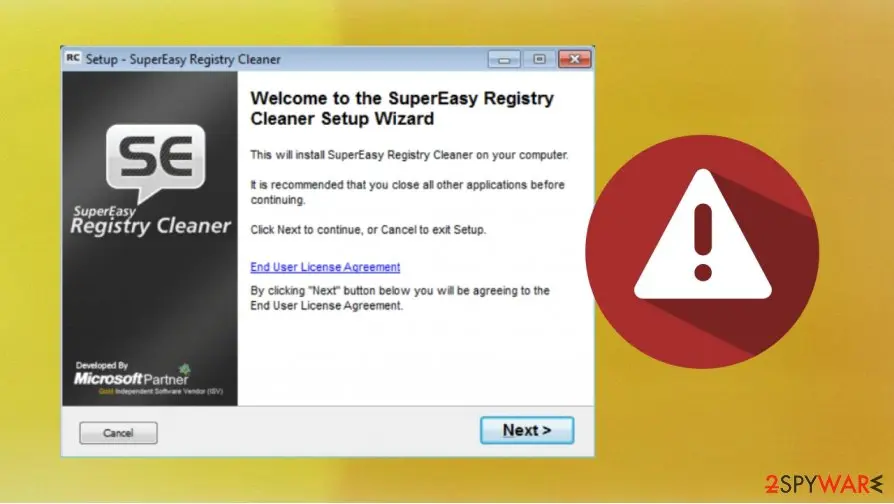
SuperEasy Registry Cleaner is a tool that claims to fix registry errors and other problems while it is categorized as a potentially unwanted app
SuperEasy Registry Cleaner is advertised as a useful tool for software optimization.
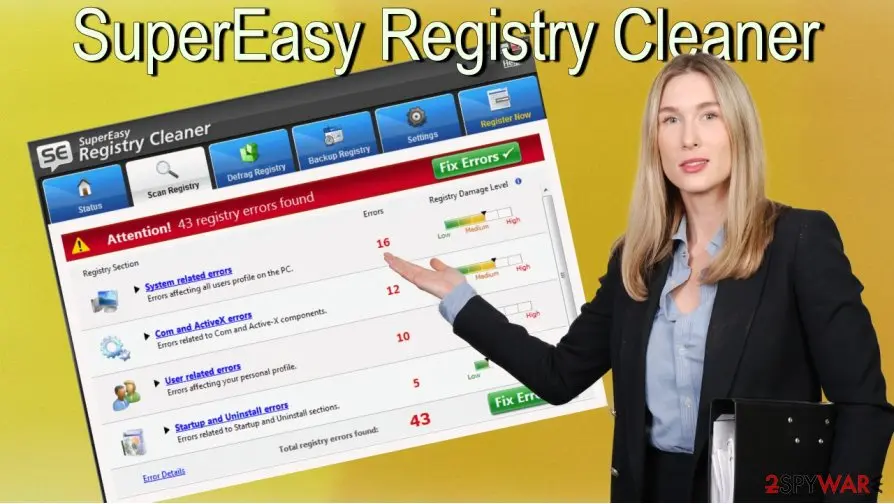
According to its developers, this program can scan the user's device for registry errors, defragment registry, and back it up. Nevertheless, this tool is categorized as a potentially unwanted application.
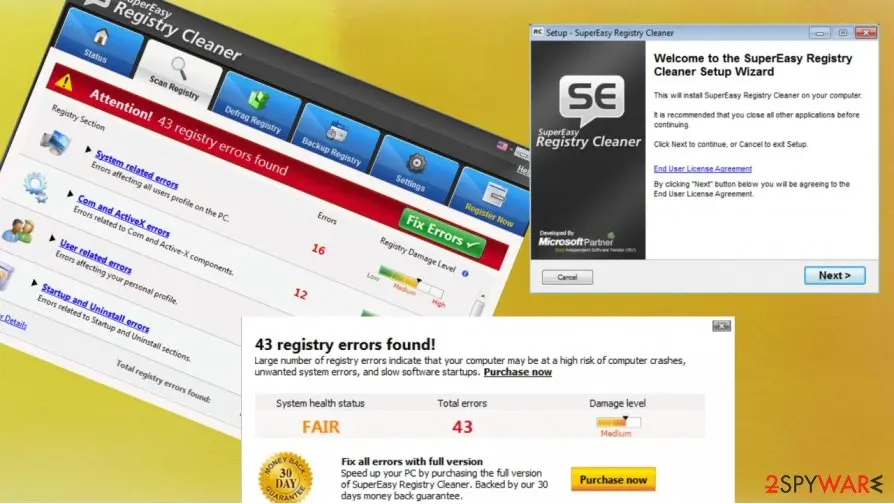
The main reason why SuperEasy Registry Cleaner is PUA lies in its deceptive methods to trick people into buying this product. Applications like this one allow users to scan the device for errors and/or issues but do not fix them.
They simply show fake scan results to make users believe that their computer has various problems and the best possible way to fix everything is to buy a paid version of the program.
Experts do not recommend trusting such tools, and you should consider the possibility to remove SuperEasy Registry Cleaner from your device. We provide instructions on how to do it manually at the bottom of this article.
It is important to note that SuperEasy Registry Cleaner is not a virus, despite people calling it as such. This tool is categorized as a potentially unwanted application. But you should remember that PUAs often try to trick you - and this particular registry cleaner finds hundreds of entries that are actually harmless.
Moreover, very often potentially unwanted programs are distributed together with other tools of this type. It is likely that if you downloaded SuperEasy Registry Cleaner yourself, you also installed additional PUAs too. Keep in mind that adware, browser hijackers, and/or other threats are distributed in the same way.
Adware is a potentially unwanted program that shows annoying ads on your browser or even on your desktop. If the user chooses to click on such ads, he/she is redirected to suspicious, insecure pages.
In some cases, those advertisements even cause unwanted downloads. Browser hijackers change web browser settings and, like adware, can be useful to gather information about your browsing activities. Maybe you will find adware or browser hijackers too.
If you decided to get rid of SuperEasy Registry Cleaner, the easiest way to do so is by relying on powerful anti-malware software. You can use , , or any other reliable program that will delete the suspicious tool without any hassle in just a few minutes.
Of course, you can try to eliminate it yourself too but it will take away your precious time and this process may require advanced computer skills.
This program will scan the entire system and will find any errors or corrupted files.
If you decided not to repair the operating system, there is a chance that you will experience various problems: the computer will run slower than usual, the system will be forced to restart, etc.
From our report of Oct 2020 · not reviewed since
Users install fake registry cleaners manually but sometimes they sneak into your PC using deceptive methods
In most cases, potentially unwanted applications enter the computer without the user noticing it at all.
Such things happen because developers of PUAs often use deceptive methods to spread their applications. The most common distribution method is known as bundling. It means that when users try to download free software from an unsafe website, they get not only one but additional apps too. As a result, they might not notice the infiltration of multiple PUPs.
Many users are unaware of this, but installing optional programs can be easily avoided. You just need to choose the "Advanced/Custom" installation and uncheck all unwanted apps. We also recommend that you stop visiting suspicious sites. Keep in mind that downloading free software from an unsafe source is not the best option.
In addition, sometimes people download such potentially unwanted applications intentionally rather than through other programs, mistakenly believing that they are safe and useful. These apps' ads look attractive, and they promise that you will use them for free. But in reality, developers of PUAs are trying to trick you into buying a paid version that will probably still be ineffective.
Check your PC and browser
Microsoft Defender reports SuperEasy Registry Cleaner as PUA:Win32/Caypnamer.A!ml.
In a Defender name, the part before the colon is the category, the part after it is the platform, and the part after the slash is the family Microsoft assigned. A suffix after ! is an internal Microsoft marker, not a different threat.
Generic labels such as Agent, GenericKD or Malware.AI only say that a file looks malicious, not what it does; our guide to antivirus detection names shows how to read them.
How to uninstall SuperEasy Registry Cleaner
How to remove SuperEasy Registry Cleaner
Uninstall it, then remove what keeps it starting with Windows.
Nothing it flagged needs fixing.
Step 1: Uninstall programs you did not mean to install
Open Settings > Apps > Installed apps in Windows 11, or Settings > Apps > Apps & features in Windows 10, and sort the list by install date. Look at what appeared around the day the problem started and uninstall every program you do not recognise or did not choose.
Free converters, PDF and video tools, "system optimizers" and unknown browsers are the usual carriers of SuperEasy Registry Cleaner. If a name is unclear, search for it before you remove it, so you do not uninstall a driver or a Windows component.
Full procedure with screenshots: Uninstall a program or app in Windows On uGetFix
Step 2: Remove it from startup
Whatever SuperEasy Registry Cleaner installed usually starts with Windows.
Open Task Manager with Ctrl + Shift + Esc, go to Startup apps in Windows 11 or the Startup tab in Windows 10, and disable what you do not know, starting with entries that have an empty Publisher column.
Open file location on the right-click menu shows the file, which helps you decide and tells you what to delete later. Disabling is safe: if something you need stops working, switch it back on.
Full procedure with screenshots: Stop apps from opening at startup On uGetFix
Step 3: Delete the folders left behind
What the uninstaller leaves behind is usually in the user folders. Open File Explorer, switch on View > Show > Hidden items (in Windows 10 View > Hidden items), and go through
%LocalAppData%,%AppData%, %ProgramData% and the two Program Files folders.Sort by Date modified and delete folders that appeared together with the problem and belong to no program you use. Folders with random names that hold
.exe,.dll, .js or .ps1 files are the strongest sign.Full procedure with screenshots: Remove what malware leaves behind in Windows
Step 4: Scan the PC, then run the offline scan
Open Windows Security > Virus & threat protection > Scan options, run a Full scan and remove everything it finds. Then select Microsoft Defender Antivirus (offline scan) and click Scan now: the PC restarts and scans before Windows loads, which finds files that hide while Windows runs.
Save your work first, because the offline scan takes about 15 minutes. Both scans are built into Windows 11 and Windows 10, and a second scanner from another vendor is a useful extra opinion.
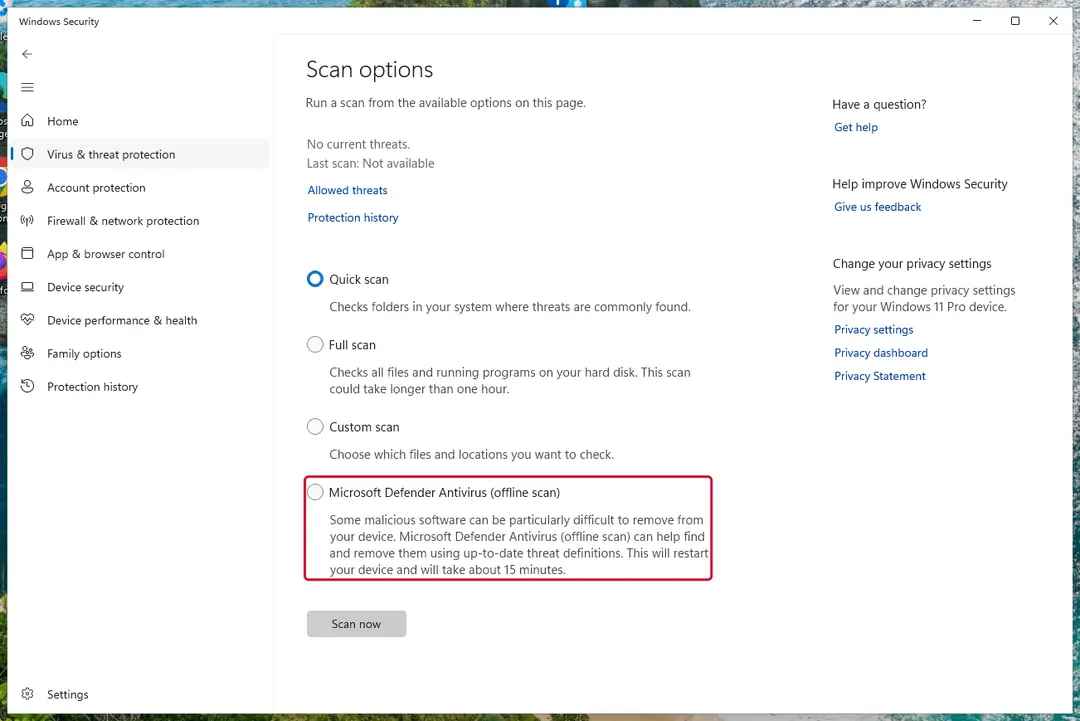
Windows 11: Windows Security > Virus & threat protection > Scan options. Full procedure with screenshots: Run a Microsoft Defender Offline scan
Instructions for each browser and system
The detailed steps for every browser and system this guide covers. Open the one you use.
Uninstall from Windows
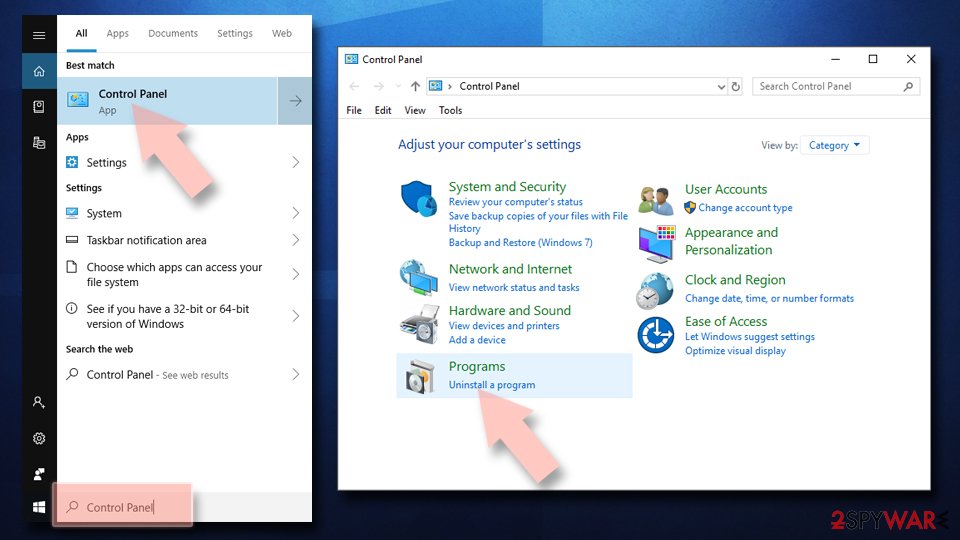
If you want to eliminate SuperEasy Registry Cleaner and all additional suspicious products, you should use these instructions for Windows:
Uninstall from Windows 10/8:
- Type Control Panel into the Windows search box and open the result.
- Under Programs, select Uninstall a program.
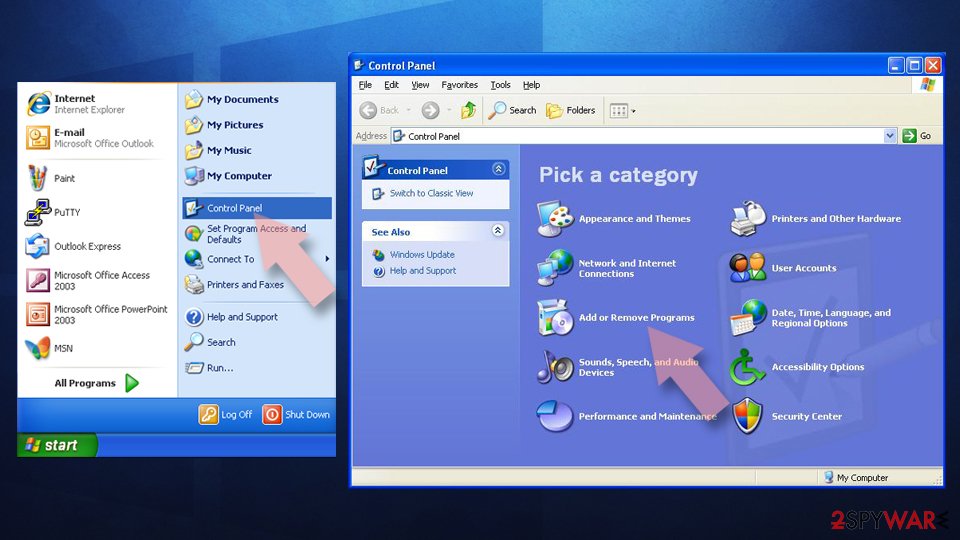
Uninstall from Windows 7/XP:
- Click on Windows Start > Control Panel (Windows XP users should click on Add/Remove Programs).
- In Control Panel, select Programs > Uninstall a program.
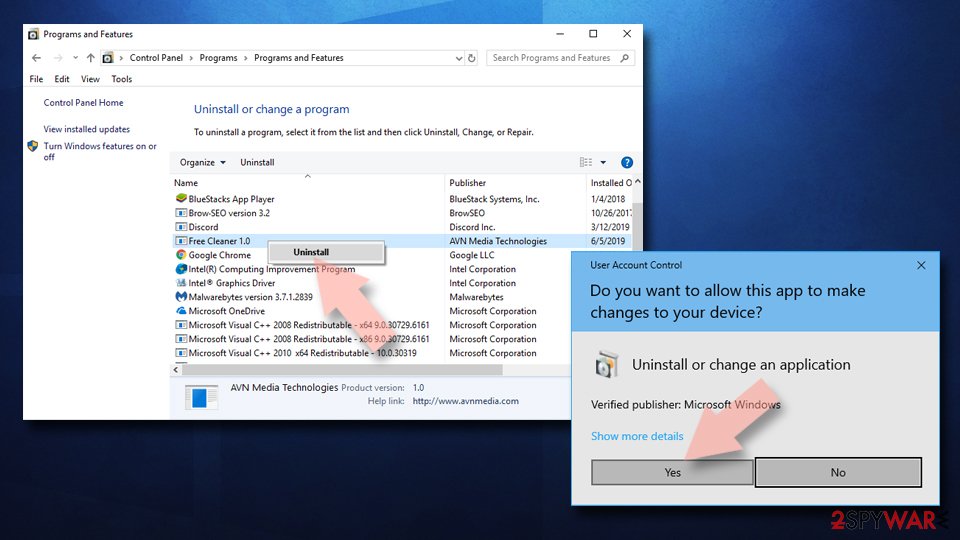
Remove the unwanted program:
- In the Programs and Features window, look for any recently installed suspicious entries, select them, and click Uninstall.
- If User Account Control appears, click Yes to confirm, then complete the removal.
Choose a proper web browser and improve your safety with a VPN tool
Online spying has got momentum in recent years and people are getting more and more interested in how to protect their privacy online.
One of the basic means to add a layer of security - choose the most private and secure web browser. Although web browsers can't grant full privacy protection and security, some of them are much better at sandboxing, HTTPS upgrading, active content blocking, tracking blocking, phishing protection, and similar privacy-oriented features.
However, if you want true anonymity, we suggest you employ a powerful VPN - it can encrypt all the traffic that comes and goes out of your computer, preventing tracking completely.
Lost your files? Use data recovery software
While some files located on any computer are replaceable or useless, others can be extremely valuable.
Family photos, work documents, school projects - these are types of files that we don't want to lose. Unfortunately, there are many ways how unexpected data loss can occur:
- power cuts
- Blue Screen of Death errors
- hardware failures
- crypto-malware attack
- even accidental deletion
To ensure that all the files remain intact, you should prepare regular data backups. You can choose cloud-based or physical copies you could restore from later in case of a disaster. If your backups were lost as well or you never bothered to prepare any, can be your only hope to retrieve your invaluable files.
From our report of Oct 2020 · not reviewed since
Instructions on how to uninstall SuperEasy Registry Cleaner
As we already mentioned, you should not rely on potentially unwanted programs.
If you have installed this application and it warns you about many system errors or other problems, do not rush to buy the full version. Of course, you should think about the SuperEasy Registry Cleaner removal process too.
If you decided to remove SuperEasy Registry Cleaner from your device, we can offer you two ways to do it. You can try to follow our manual guide that you will find at the end of this article.
The instructions should help you to remove this PUA by yourself. It will be much easier to get rid of unwanted or potentially dangerous programs using the tool that was designed for this purpose.
Questions about SuperEasy Registry Cleaner
What does the name PUA:Win32/Caypnamer.A!ml tell me?
Microsoft builds names in a fixed order:
- category
- then platform
- then family
- sometimes followed by a variant letter
- a suffix
The category is the most useful part for you. Trojan, Backdoor and PWS mean real malware that can download more, give remote access or steal passwords. PUA means unwanted software.
Ransom means ransomware. Suffixes such as !ml or !MTB mean the detection came from machine learning or behaviour analysis. Search for the family part of PUA:Win32/Caypnamer.A!ml together with the word Microsoft to find its entry in Microsoft's security encyclopedia.
Should I change my passwords after PUA:Win32/Caypnamer.A!ml?
It depends on the category and on whether the file ran. If the name begins with PWS, Spy, Backdoor or Trojan and the file sat in AppData, ProgramData or Temp, assume it ran and change your important passwords from a different device, starting with e-mail, then banking.
Sign out of all sessions too. If PUA:Win32/Caypnamer.A!ml is a PUA or was caught in Downloads before you opened anything, a password change is a precaution rather than a must. When in doubt, change the e-mail password and turn on two-step verification; it is quick and protects everything else.
Will Windows Security detect SuperEasy Registry Cleaner?
Yes, current Microsoft Defender definitions name it PUA:Win32/Caypnamer.A!ml. Make sure the definitions are up to date first: open Windows Security > Virus & threat protection > Protection updates and click Check for updates. Then run a full scan and the Microsoft Defender offline scan.
If the detection comes back after you remove it, look for the program, task or extension that brings it back, using the plan above. Detection removes files and startup entries, but it does not reverse changes SuperEasy Registry Cleaner already made, so follow the other steps in this guide as well.
How long does removing SuperEasy Registry Cleaner take?
Usually ten to twenty minutes. Uninstalling takes a minute; checking the Startup list, Task Scheduler and the browsers takes the rest. A full scan in Windows Security can add half an hour on a large drive, but you can keep using the PC while it runs.
Restart at the end and watch for the Windows Security detection PUA:Win32/Caypnamer.A!ml. If it is gone after a day of normal use, you are finished. If it returns, plan for an offline scan, which restarts the PC and takes around fifteen minutes.
How do I remove SuperEasy Registry Cleaner completely?
Work in three steps. First uninstall it from Settings > Apps > Installed apps, together with anything installed on the same day. Second, remove what restarts it: unknown entries under Settings > Apps > Startup and tasks in Task Scheduler with matching names.
Third, clean the browsers: extensions you did not add and changed search settings. Restart and watch for the Windows Security detection PUA:Win32/Caypnamer.A!ml; if it does not come back within a day, the removal is complete. If it does, run a Microsoft Defender offline scan, which works before Windows starts and finds helpers that hide while the PC runs.
Does SuperEasy Registry Cleaner use a lot of resources?
It depends on the program, and no measurements have been published for SuperEasy Registry Cleaner. The sign reported is the Windows Security detection PUA:Win32/Caypnamer.A!ml. Check for yourself: open Task Manager, find its process and watch the CPU, memory and network columns for a minute while the PC is otherwise idle.
Steady use with nothing open is a strong reason to remove it. Even if it seems light, it may run more processes under other names, so sort Installed apps by date and remove anything else from the same day. Then restart and compare.
Is my privacy at risk because of SuperEasy Registry Cleaner?
A little, not dramatically. Unwanted programs tend to report what you install, which sites you visit or how you use the program back to their publisher. That data is sold or used for ads.
The sign people noticed, the Windows Security detection PUA:Win32/Caypnamer.A!ml, is consistent with such a program, and nothing reported suggests access to your files, camera or passwords.
Remove it, delete its leftovers and clear the browser data if it touched the browser. From then on, keep Potentially unwanted app blocking switched on in Windows Security, which stops many of these programs before they install.
Is it safe to remove SuperEasy Registry Cleaner?
Yes. Removing an unwanted program does not damage Windows, because programs like this are not part of the system. Before uninstalling, make sure it is not something you rely on: if the publisher is a company you know and you use the program, keep it.
If not, uninstall it from Installed apps, restart and check that the Windows Security detection PUA:Win32/Caypnamer.A!ml is gone. If something you need stops working afterwards, reinstall that program from its official website, choosing the custom installation so that the unwanted extra is not added again.
Is SuperEasy Registry Cleaner a virus?
Not in the strict sense. Nothing reported so far shows SuperEasy Registry Cleaner copying itself, encrypting files or stealing passwords, which is what security companies mean by a virus.
What people see is the Windows Security detection PUA:Win32/Caypnamer.A!ml, which fits an unwanted program: software that arrives bundled with something else and keeps running without being asked for. Many antivirus programs label such software PUP or PUA rather than malware.
That label does not make it harmless. It still uses your PC and connection, may collect data and is often bundled with other programs, so removing it is the right call. Uninstall it from Installed apps, then check startup items and browser settings for its companions.
Will Fortect remove SuperEasy Registry Cleaner?
Fortect scans Windows for malware and unwanted programs and repairs the system files and settings they change, and its free scan shows what it finds on your PC before you decide anything.
For SuperEasy Registry Cleaner, follow the plan above as well: the browser steps take back permissions and settings that no scanner treats as a threat, and uninstalling the program that brought it removes the source.
Run Microsoft Defender's full scan and, if anything was found, its offline scan as a second opinion. If the symptoms are gone after the plan and both scans are clean, there is nothing more to do.
Sources
- Wikipedia: Adware (read October 7, 2026)
- FTC: How to recognize, remove and avoid malware (read October 7, 2026)
- Microsoft Learn: Microsoft Defender Offline (read October 7, 2026)
- Microsoft Learn: How Microsoft names malware (read October 7, 2026)