
TicketXplorer Toolbar: what it is and how to remove it
TicketXplorer Toolbar is a browser hijacker, which can slither into your system without your knowledge. It claims to be a reliable and useful tool to search for tickets online, but in reality it only aims to promote and advertise questionable sources that sponsor TicketXplorer Toolbar.
Facts checked October 7, 2026. Removal steps tested on Windows 11 (26H2) and checked against Microsoft's and the browser makers' current documentation. Sections marked as our earlier report are the original text: they describe the threat as it was then and have not been reviewed since. The 2026 status, the removal steps and the questions are current.
Automatic
Get a free scan and check if your PC is infected.
Fortect finds malware, unwanted programs and the Windows damage they leave behind, and repairs it in one pass.
A quick scan confirms nothing else was installed alongside the ask.com search hijacker.
Do it yourself · free Remove TicketXplorer Toolbar yourself 5 steps, about 15 minutes, no software needed.
Start the steps
TicketXplorer Toolbar: summary
| Detection names | No Microsoft detection name is known |
|---|---|
| Distribution | Not recorded in the old report |
| Damage | Not recorded in the old report |
| Name | TicketXplorer Toolbar |
| Type | Search hijacker extension |
| Symptoms | A changed search engine |
| Removal | Scan the PC with security software to find and remove the malware and anything installed with it. Fortect scans Windows for malware and repairs the system files and settings it damaged. Remove it nowTo use the full-featured product, you have to purchase a license for Fortect. The scan is free. |
Show 5 more facts
| Evidence | One write-up by a security site; details still limited |
|---|---|
| Search page | ask.com |
| Browsers | Chrome, Edge and Firefox |
| First seen | 28 October 2015 |
| Facts checked | 7 October 2026 |
From our report of Oct 2015 · not reviewed since
What TicketXplorer Toolbar is
TicketXplorer Toolbar is a browser hijacker, which can slither into your system without your knowledge.
It claims to be a reliable and useful tool to search for tickets online, but in reality it only aims to promote and advertise questionable sources that sponsor TicketXplorer Toolbar. If you have noticed this toolbar on your Internet browser menu bar, or if you have experienced ''TicketXplorer Toolbar ads'' pop-ups, please read this report to find out what kind of a computer parasite is running on your PC.
Is TicketXplorer Toolbar dangerous? What it collects
From our report of Oct 2015 · not reviewed since
TicketXplorer Toolbar – what kind of program is it?
TicketXplorer Toolbar is a browser hijacker, which is also labeled as a potentially unwanted program (PUP).
Our research team has investigated this program, and we have found out that it can act like an adware type program as well. TicketXplorer Toolbar hijacker can enter your computer seamlessly, and do its activities silently. It can modify your computer and your browser settings and cause vulnerability to potential computer risks.
Moreover, this unpleasant application can install its extensions to your web browser and track your activities online, for example, what websites do you visit, what keywords do you enter in the search boxes, what files do you download and so on. It can even find out you e-mail address, IP address, and your computer's location! This program already seems dangerous, but it is not the last activity that it does.
TicketXplorer Toolbar is developed by the infamous Mindspark group, which specializes in the production of potentially unwanted programs. Once this browser hijacker enters your system, it replaces your default homepage with Ask Search engine (ask.com). You should take note that this search engine can display modified search results that can be inaccurate.
Most of these outcomes can contain hyperlinks, so if you would click on an ad by TicketXplorer Toolbar, you can experience TicketXplorer Toolbar redirects to questionable third-party websites. Moreover, TicketXplorer Toolbar can send you many ads that can appear in a form of pop-ups, in-text links or banners. These ads also do not show any real deals; they only aim to attract you to click on them.
Same as TicketXplorer Toolbar redirects, these ads may also lead you to unreliable websites. It is known that such websites usually promote suspicious software, which we do not recommend installing. Sometimes such free software can contain infectious files. Therefore, you should eliminate TicketXplorer Toolbar with no delay if you wish to avoid redirects and pop-up ads.

From our report of Oct 2015 · not reviewed since
How could TicketXplorer Toolbar hijack my computer without my permission?
TicketXplorer Toolbar cannot be downloaded from the official website anymore because it states that ''after a number of good years, this product has gone into retirement.''
However, this application is still being distributed via bundling method. It is being spread attached to other legitimate programs as an optional download. The majority of computer users fail to reject such unwanted apps because they choose ''default/standard'' installation modes.
You should not make such mistake, and you should choose ''advanced/custom'' modes instead. These options allow to review extra attachments and reject them. You can simply untick the unfamiliar statements, and that is all you need to do to avoid potentially unwanted programs.
Check your browser and PC
- Address:
ask.com
How to remove TicketXplorer Toolbar
How to remove TicketXplorer Toolbar and get your search engine back
Remove the extension first.
The search settings only stay fixed once nothing on the PC can change them again.
Step 1: Remove extensions you did not add
TicketXplorer Toolbar often works through an extension, so go through the extension list of each browser:
chrome://extensionsedge://extensions- Extensions and themes in Firefox
Switch suspicious extensions off one at a time and reload the page where the problem shows, then remove the one that stops it, and any other you did not add.
Remember the other browsers and profiles on the PC. If Remove is missing or greyed out, a policy forces the extension, which the policy step deals with. Windows 11 and Windows 10 show the same pages.
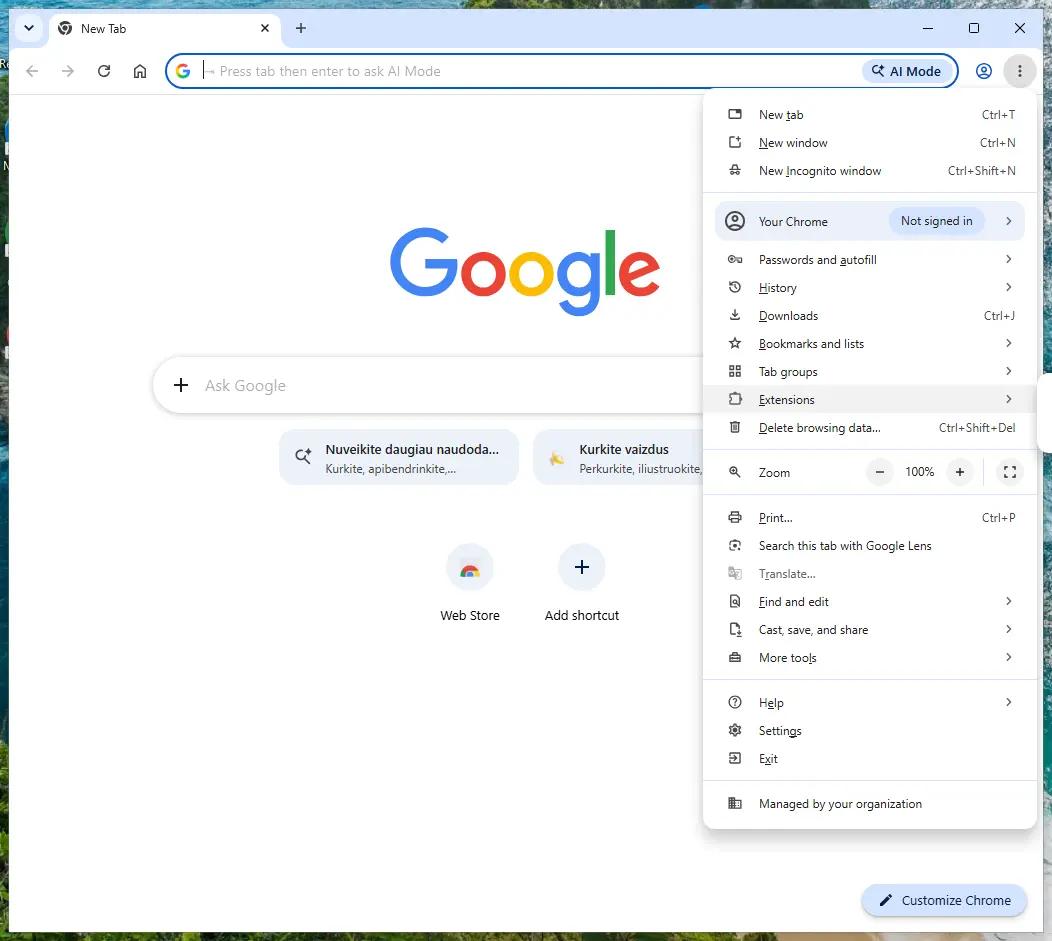
Chrome on Windows 11: More > Extensions > Manage extensions. Full procedure with screenshots: Remove a browser extension
Step 2: Put the search engine back and delete ask.com
Searches that pass through
ask.commean the browser's default search engine was replaced. Chrome: Settings > Search engine > Manage search engines and site search, then Make default on Google, Bing or another engine you chose, and Delete on ask.com.Edge has the same list under Manage search engines (search the Settings page for it), and Firefox under Settings > Search.
Look at On startup and the homepage settings too and remove the hijacker's address there. Nothing in this step differs between Windows 11 and Windows 10.
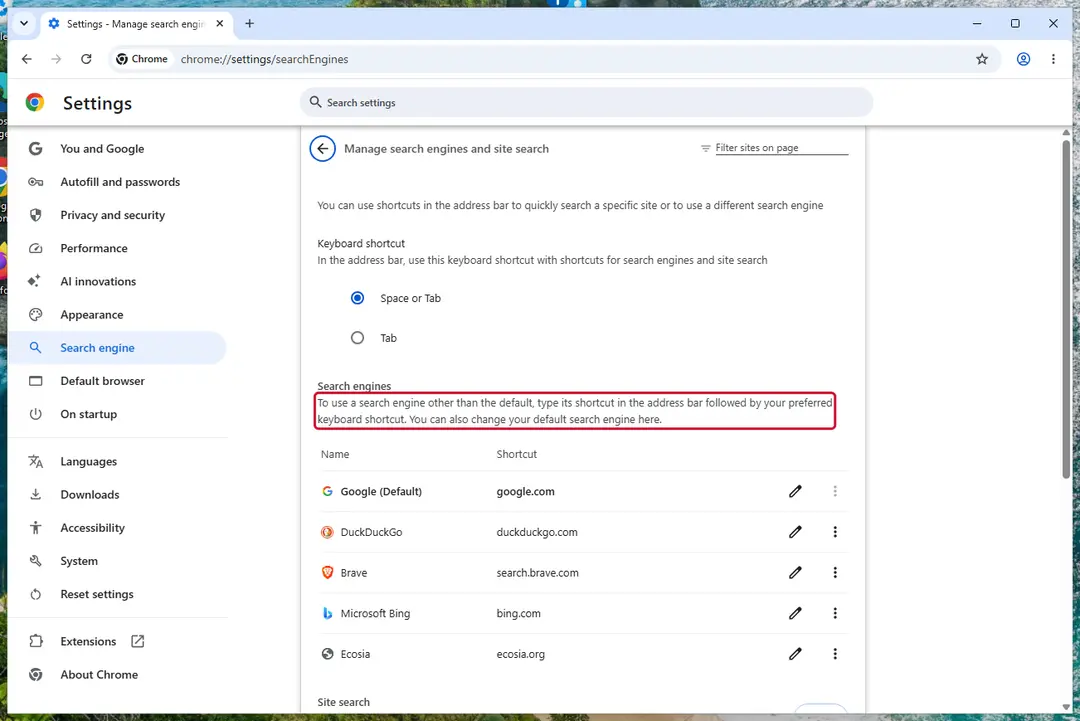
Chrome on Windows 11: check Search engine and On startup. Full procedure with screenshots: Reset a browser and fix a hijacked search engine
Step 3: Uninstall programs you did not mean to install
Open Settings > Apps > Installed apps in Windows 11, or Settings > Apps > Apps & features in Windows 10, and sort the list by install date. Look at what appeared around the day the problem started and uninstall every program you do not recognise or did not choose.
Free converters, PDF and video tools, "system optimizers" and unknown browsers are the usual carriers of TicketXplorer Toolbar. If a name is unclear, search for it before you remove it, so you do not uninstall a driver or a Windows component.
Full procedure with screenshots: Uninstall a program or app in Windows On uGetFix
Step 4: Reset the browser
Finish the browser part with a reset, which puts the search engine, start page, new tab page and site permissions back to their defaults and switches extensions off. Chrome: Settings > Reset settings > Restore settings to their original defaults.
Edge: Settings > Reset settings. Firefox: Help > More troubleshooting information > Refresh Firefox, which also removes its extensions. Your bookmarks and saved passwords are kept, and the menus are the same on Windows 11 and Windows 10.
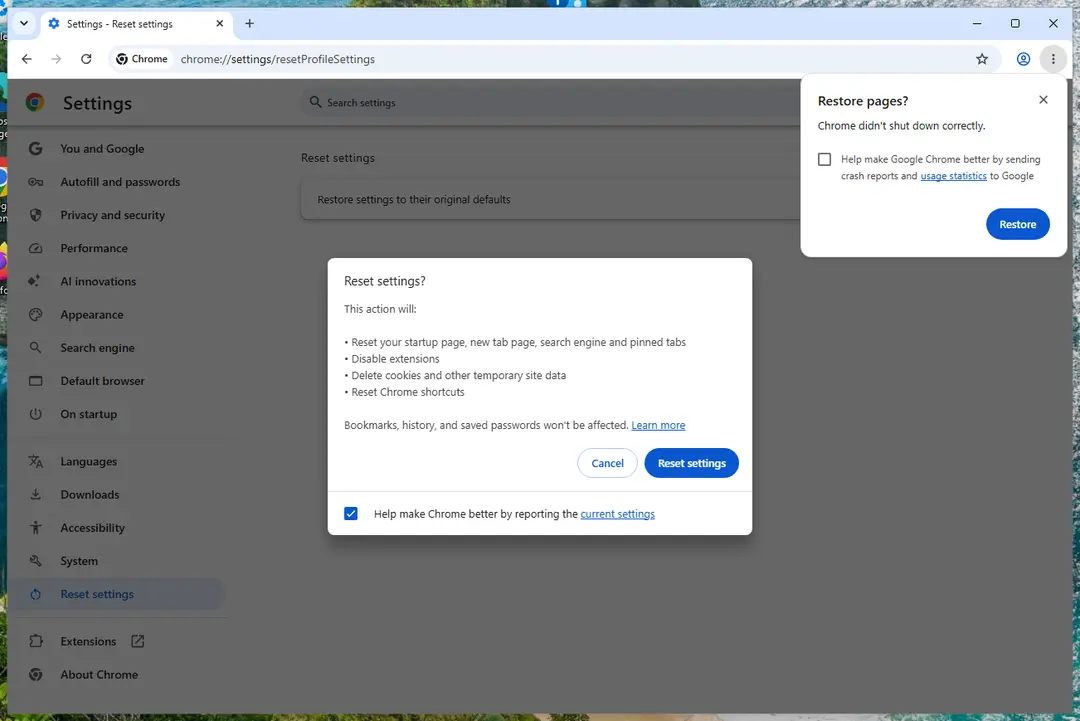
Chrome on Windows 11: Settings > Reset settings. Full procedure with screenshots: Reset a browser and fix a hijacked search engine
Step 5: Scan the PC, then run the offline scan
Open Windows Security > Virus & threat protection > Scan options, run a Full scan and remove everything it finds. Then select Microsoft Defender Antivirus (offline scan) and click Scan now: the PC restarts and scans before Windows loads, which finds files that hide while Windows runs.
Save your work first, because the offline scan takes about 15 minutes. Both scans are built into Windows 11 and Windows 10, and a second scanner from another vendor is a useful extra opinion.
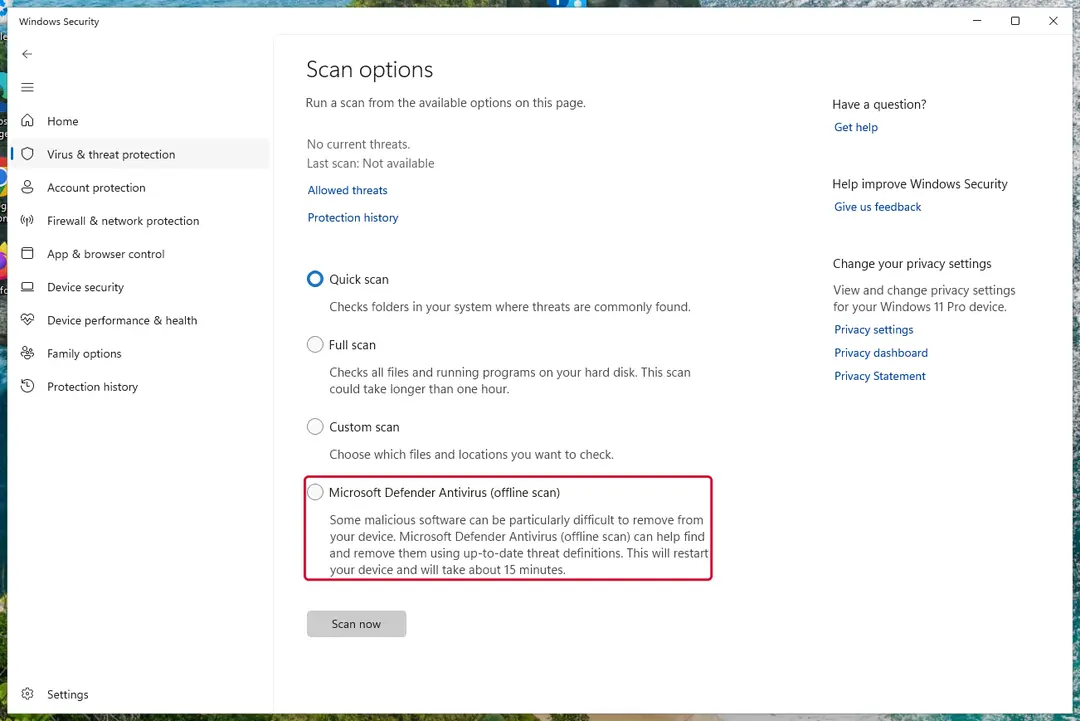
Windows 11: Windows Security > Virus & threat protection > Scan options. Full procedure with screenshots: Run a Microsoft Defender Offline scan
Instructions for each browser and system
The detailed steps for every browser and system this guide covers. Open the one you use.
Uninstall from Windows
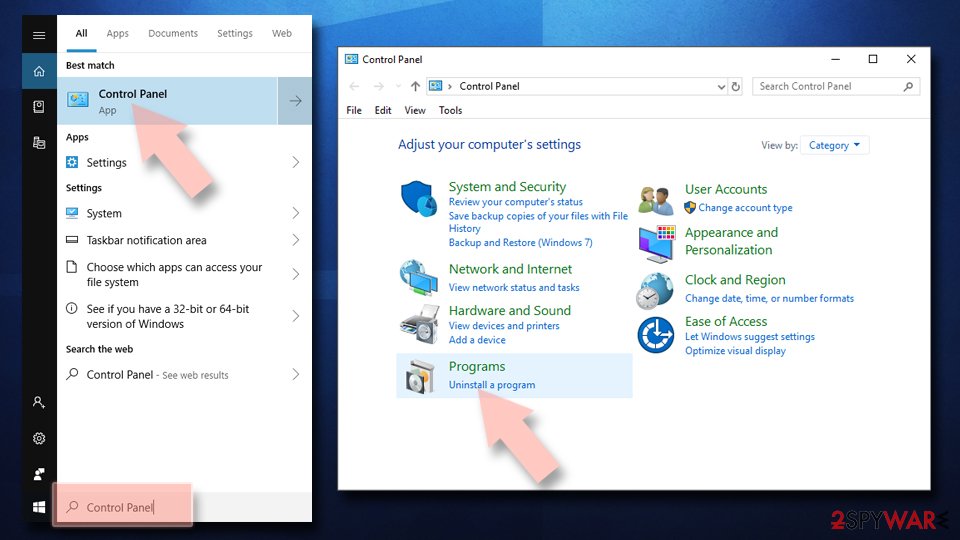
Uninstall from Windows 10/8:
- Type Control Panel into the Windows search box and open the result.
- Under Programs, select Uninstall a program.
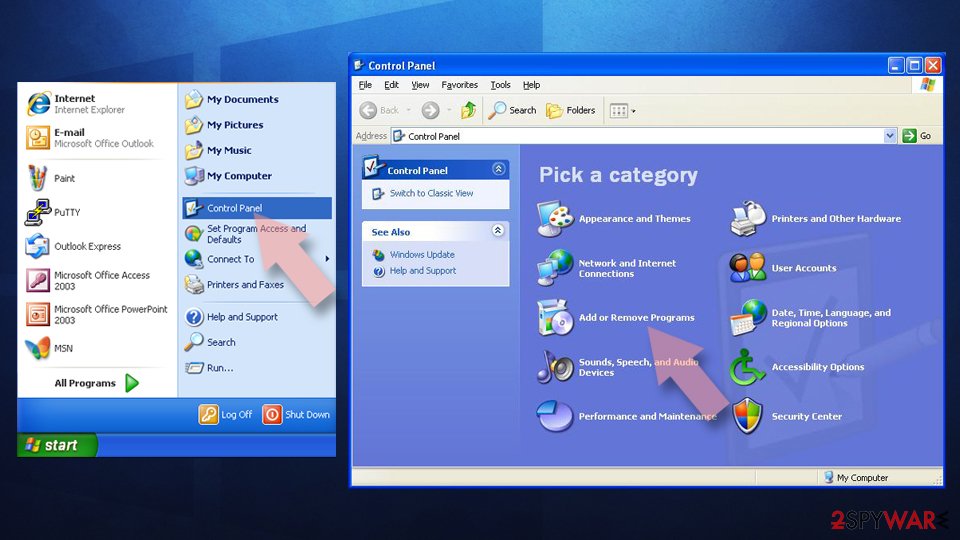
Uninstall from Windows 7/XP:
- Click on Windows Start > Control Panel (Windows XP users should click on Add/Remove Programs).
- In Control Panel, select Programs > Uninstall a program.
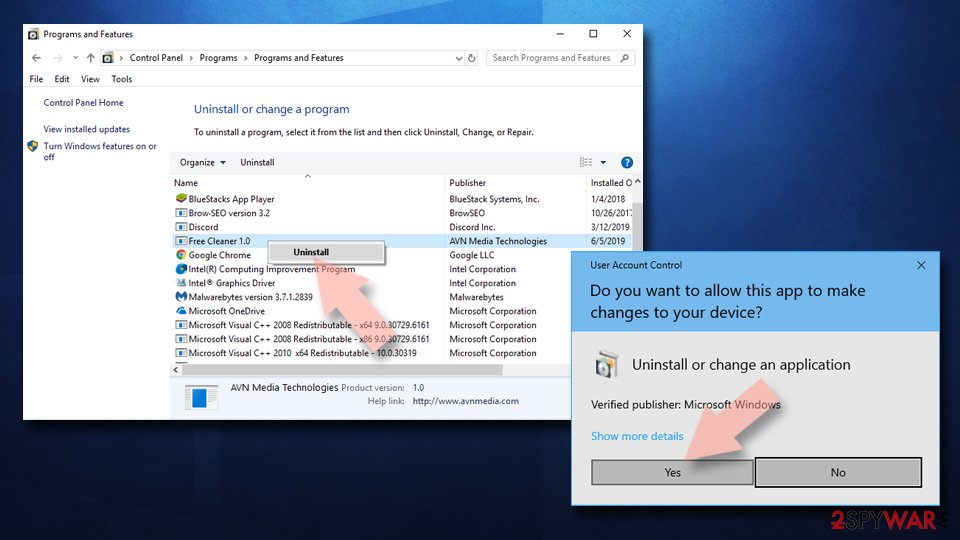
Remove the unwanted program:
- In the Programs and Features window, look for any recently installed suspicious entries, select them, and click Uninstall.
- If User Account Control appears, click Yes to confirm, then complete the removal.
Remove from Google Chrome
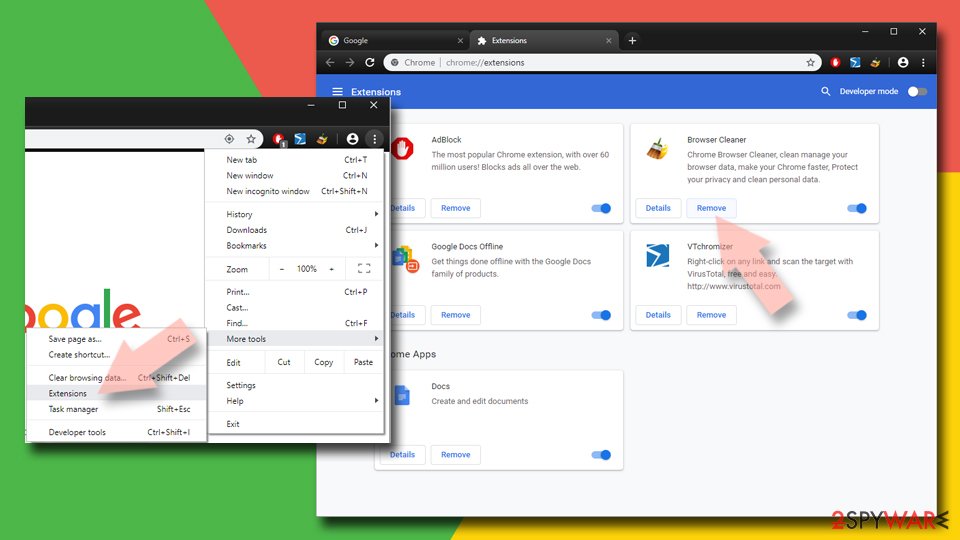
Delete malicious extensions from Google Chrome:
- Open Google Chrome, click on the Menu (three vertical dots at the top-right corner) and select More tools > Extensions.
- In the newly opened window, you will see all the installed extensions. Uninstall all suspicious extensions related to the unwanted program by clicking Remove.
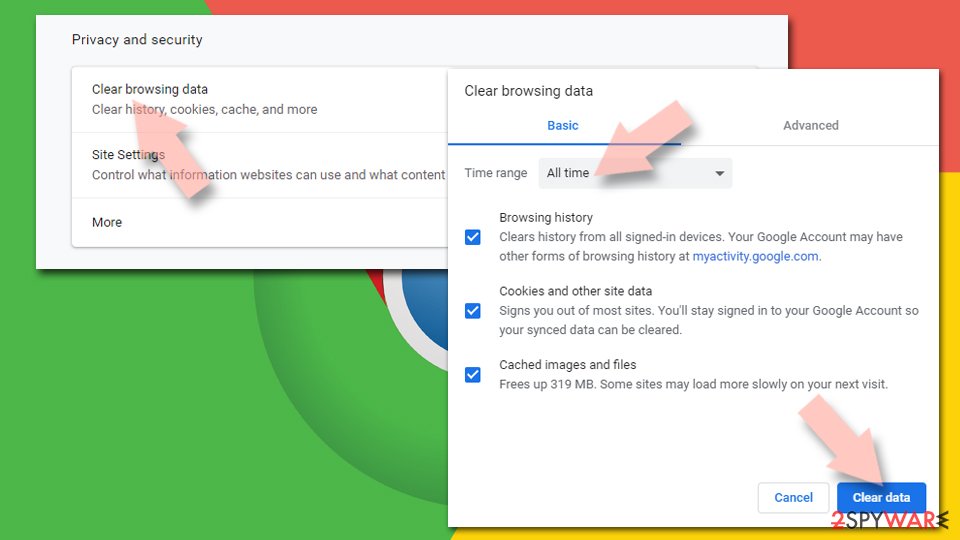
Clear cache and web data from Chrome:
- Click on Menu and pick Settings.
- Under Privacy and security, select Clear browsing data.
- Select Browsing history, Cookies and other site data, as well as Cached images and files.
- Click Clear data.
Change your homepage:
- Click menu and choose Settings.
- Look for a suspicious site in the On startup section.
- Click on Open a specific or set of pages and click on three dots to find the Remove option.
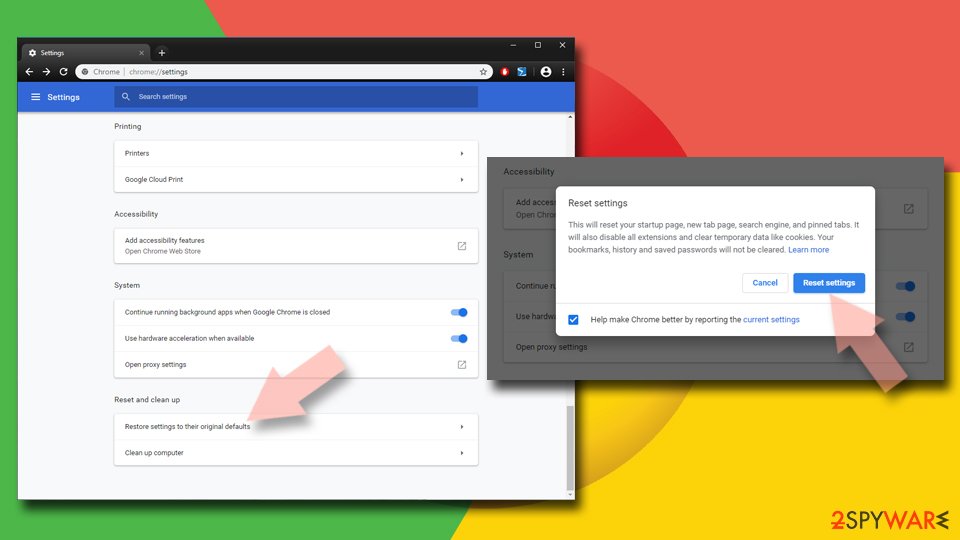
Reset Google Chrome:
If the previous methods did not help you, reset Google Chrome to eliminate all the unwanted components:
- Click on Menu and select Settings.
- In the Settings, scroll down and click Advanced.
- Scroll down and locate Reset and clean up section.
- Now click Restore settings to their original defaults.
- Confirm with Reset settings.
Remove from Microsoft Edge
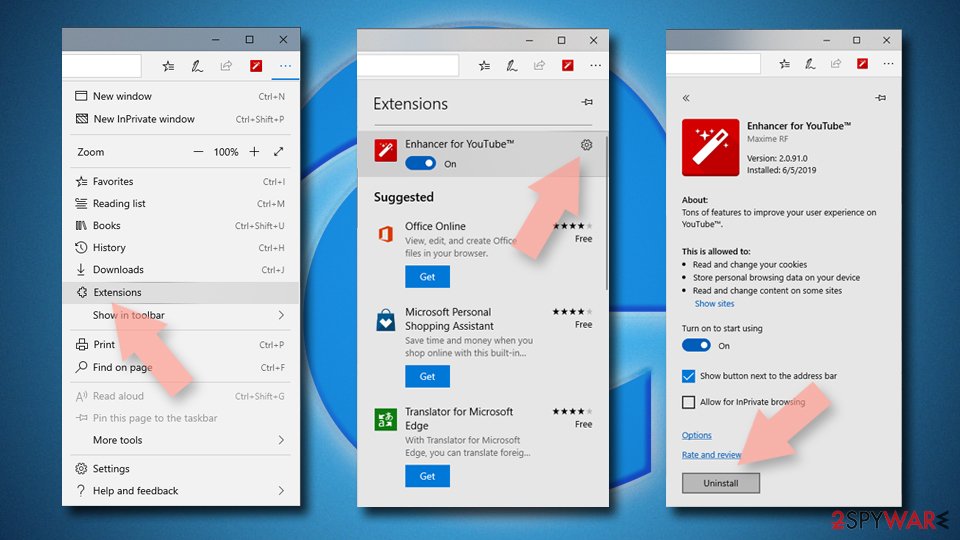
Delete unwanted extensions from MS Edge:
- Select Menu (three horizontal dots at the top-right of the browser window) and pick Extensions.
- From the list, pick the extension and click on the Gear icon.
- Click Remove.
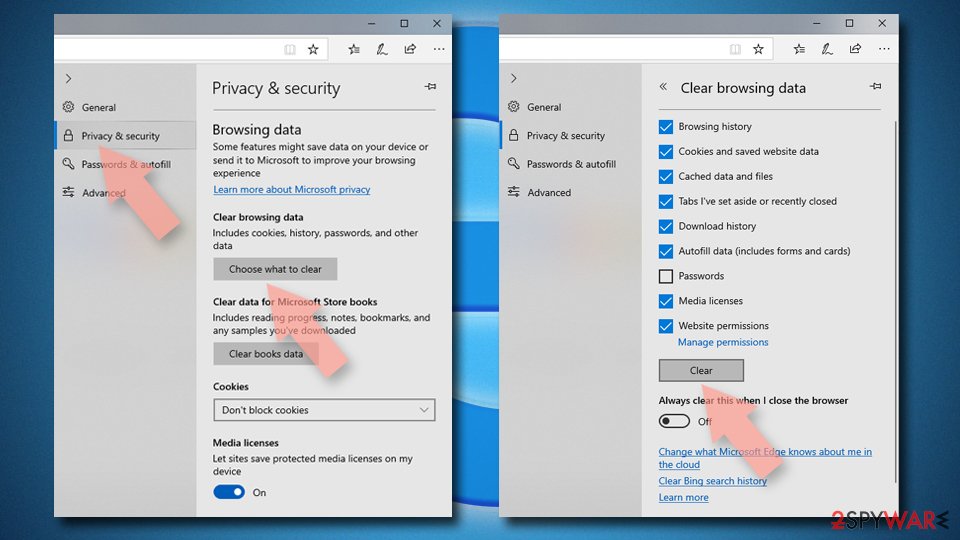
Clear cookies and other browser data:
- Click on the Menu (three horizontal dots at the top-right of the browser window) and select Settings > Privacy, search, and services..
- Under Clear browsing data, pick Choose what to clear.
- Select Cookies and other site data and Cached images and files. (apart from passwords, although you might want to include Media licenses as well, if applicable) and click on Clear.
Restore new tab and homepage settings:
- Click the menu icon and choose Settings.
- Then find On startup section.
- Click Remove next to any suspicious startup page.
Reset MS Edge if the above steps did not work:
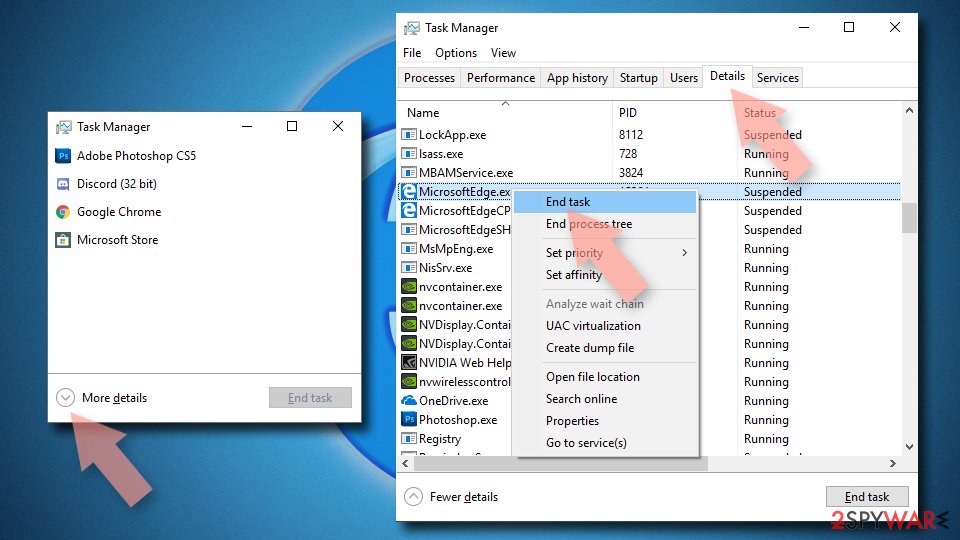
- Press on Ctrl + Shift + Esc to open Task Manager.
- Click on More details arrow at the bottom of the window.
- Select Details tab.
- Now scroll down and locate every entry with Microsoft Edge name in it. Right-click on each of them and select End Task to stop MS Edge from running.
Delete extensions from MS Edge (Chromium):
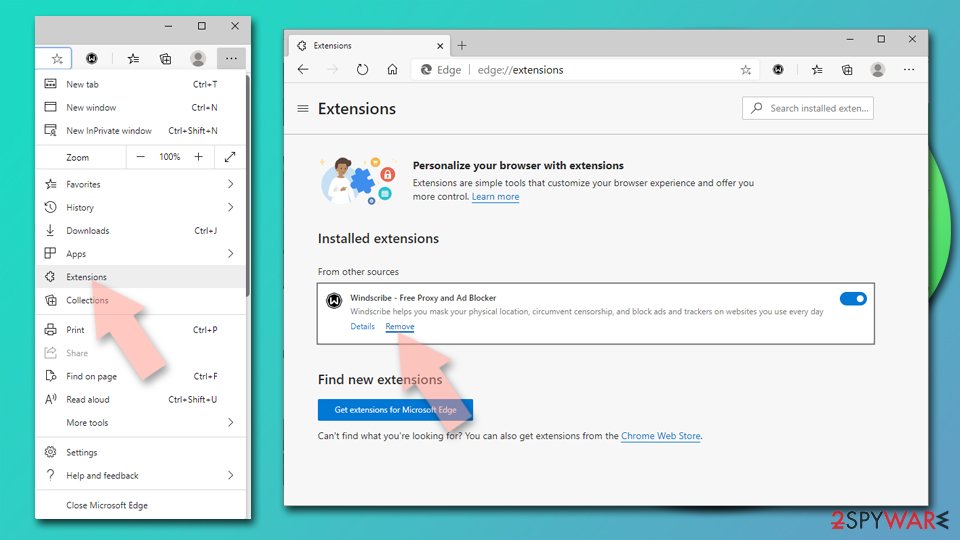
- Open Edge and click select Settings > Extensions.
- Delete unwanted extensions by clicking Remove.
Clear cache and site data:
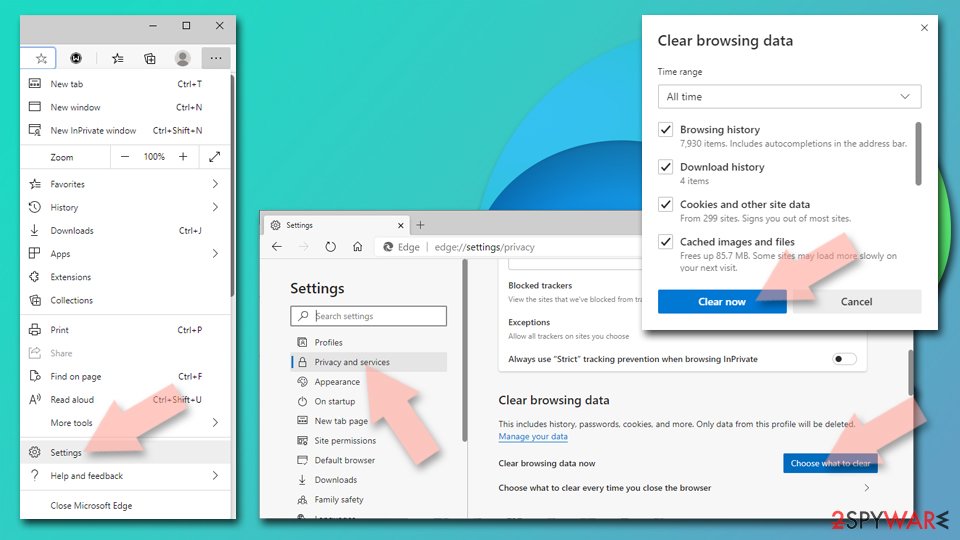
- Click on Menu and go to Settings.
- Select Privacy, search and services.
- Under Clear browsing data, pick Choose what to clear.
- Under Time range, pick All time.
- Select Clear now.
Reset Chromium-based MS Edge:
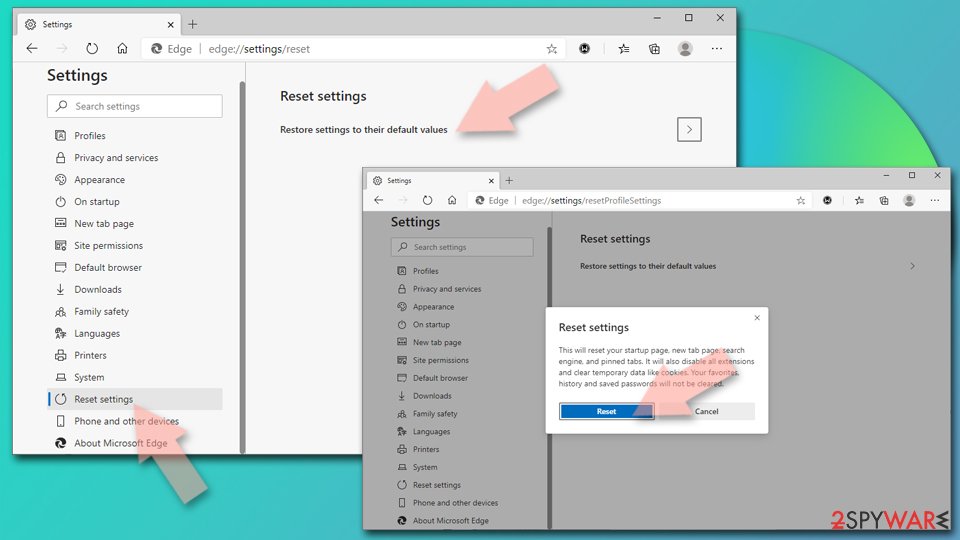
- Click on Menu and select Settings.
- On the left side, pick Reset settings.
- Select Restore settings to their default values.
- Confirm with Reset.
- This will disable extensions and reset startup pages but will not delete bookmarks, saved passwords, or browsing history.
Remove from Mozilla Firefox (FF)
Remove dangerous extensions:
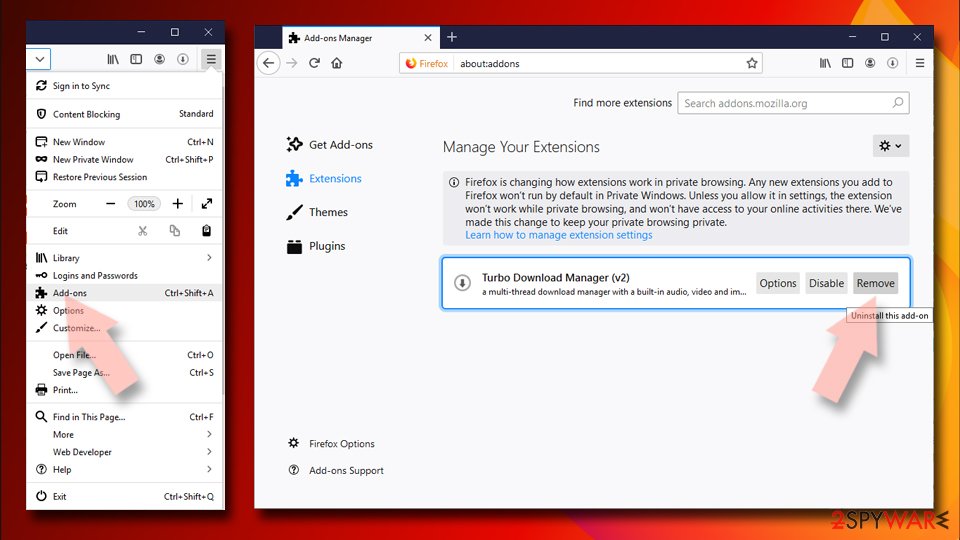
- Open Mozilla Firefox browser and click on the Menu (three horizontal lines at the top-right of the window).
- Select Add-ons.
- In here, select the unwanted extension and click Remove.
Reset the homepage:
- Click three horizontal lines at the top right corner to open the menu.
- Choose Settings.
- Under Home, set your preferred homepage and new tab settings.
Clear cookies and site data:
- Click Menu and pick Settings.
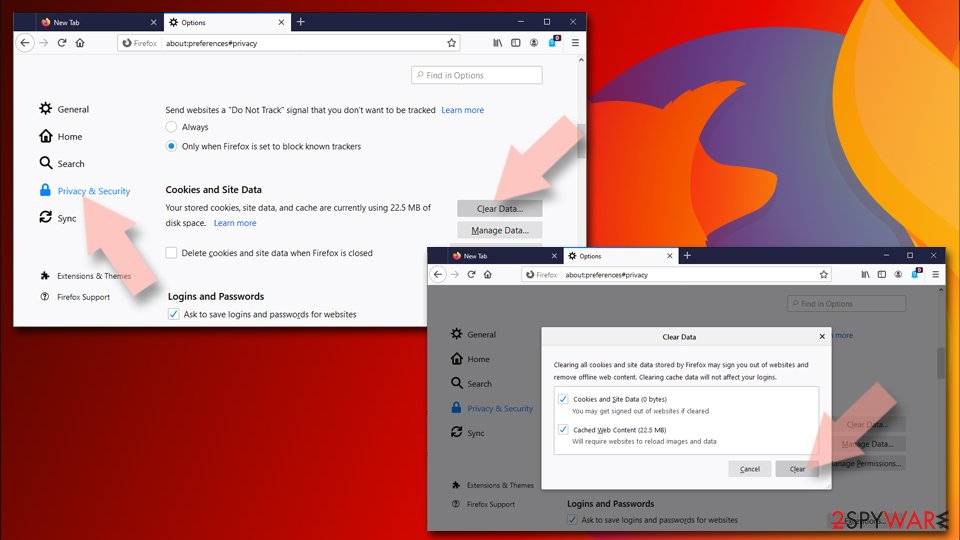
- Go to Privacy & Security section.
- Scroll down to locate Cookies and Site Data.
- Click on Clear Data...
- Select Cookies and Site Data and Temporary cached files and pages, then click Clear.
Reset Mozilla Firefox
If clearing the browser as explained above did not help, reset Mozilla Firefox:
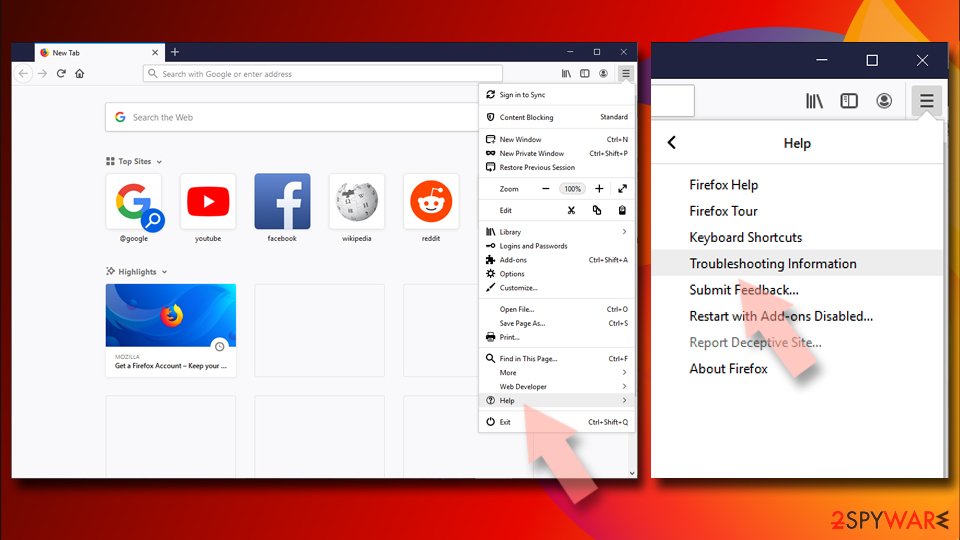
- Open Mozilla Firefox browser and click the Menu.
- Go to Help and then choose Troubleshooting Information.
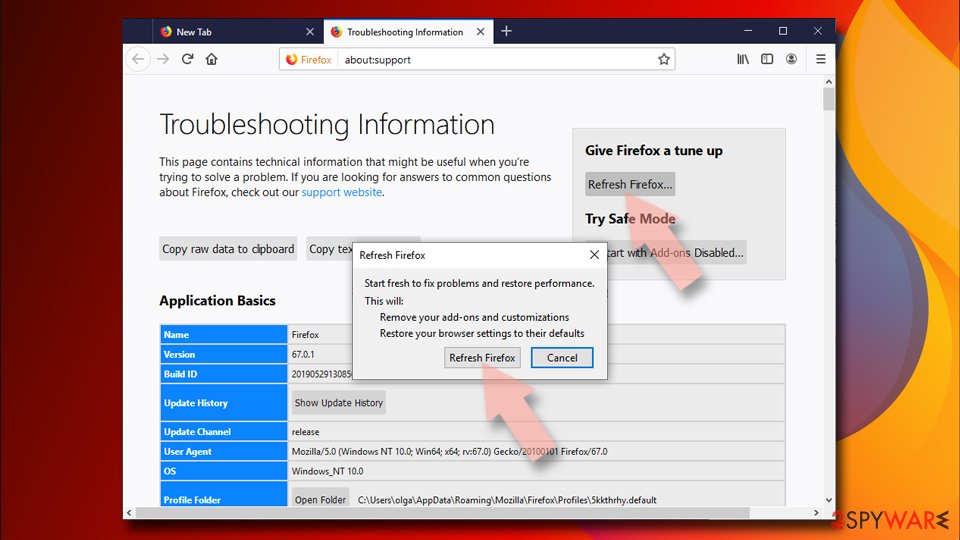
- Under Give Firefox a tune up section, click on Refresh Firefox...
- Once the pop-up shows up, confirm the action by pressing on Refresh Firefox.
Delete from Safari
Remove dangerous extensions:
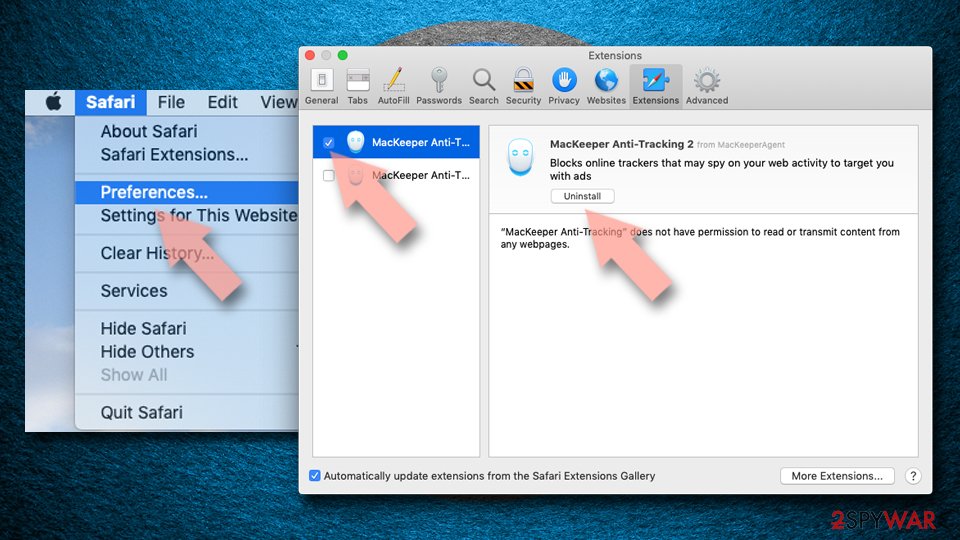
- Open Safari, click Safari in the menu at the top-left of the screen, and select Preferences.
- Go to the Extensions tab, look for any suspicious entries, and click Uninstall to remove them.
Clear history and website data:
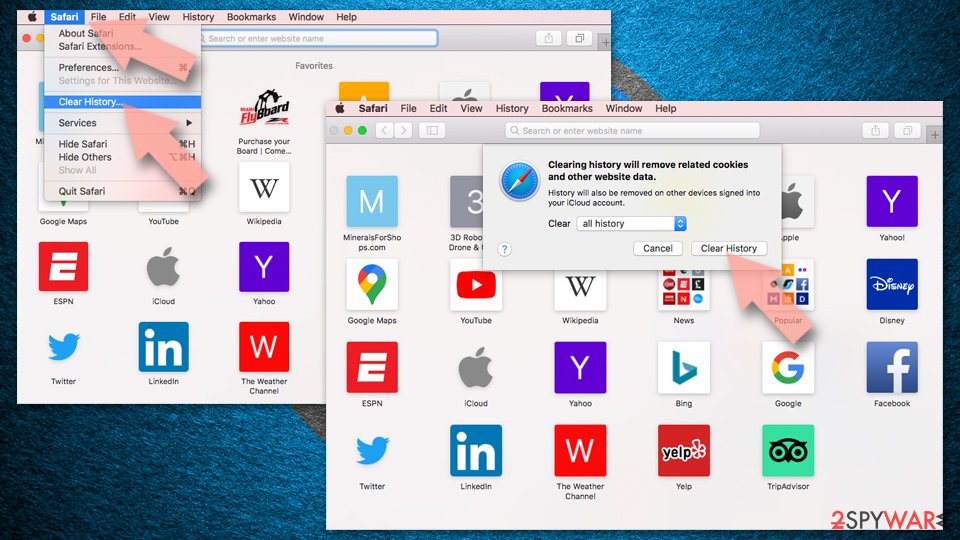
- Click Safari in the menu and pick Clear History.
- Set Clear to all history and confirm with Clear History.
Reset Safari:
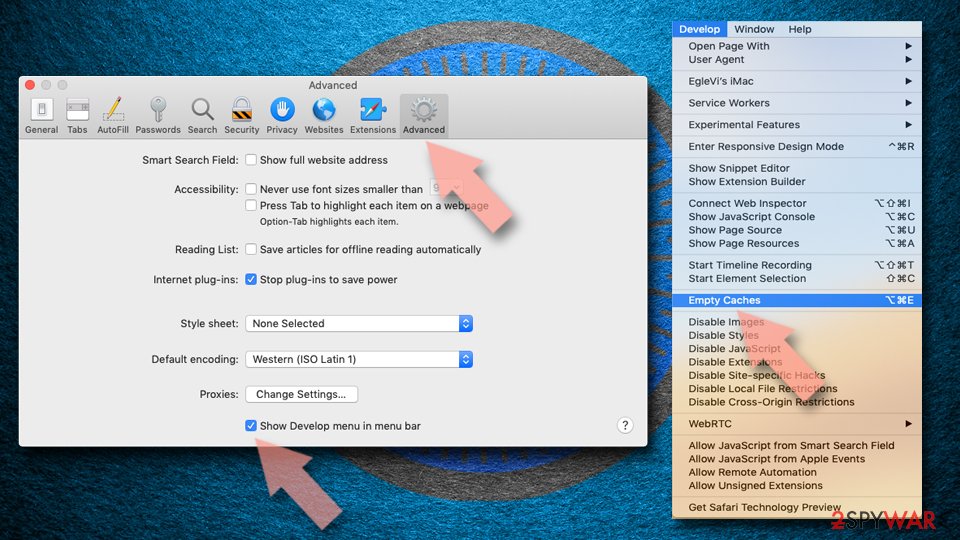
- Click Safari in the menu and select Preferences > Advanced.
- Enable Show Develop menu in menu bar.
- From the menu bar, click Develop and select Empty Caches.
Delete from macOS
Remove the unwanted application:
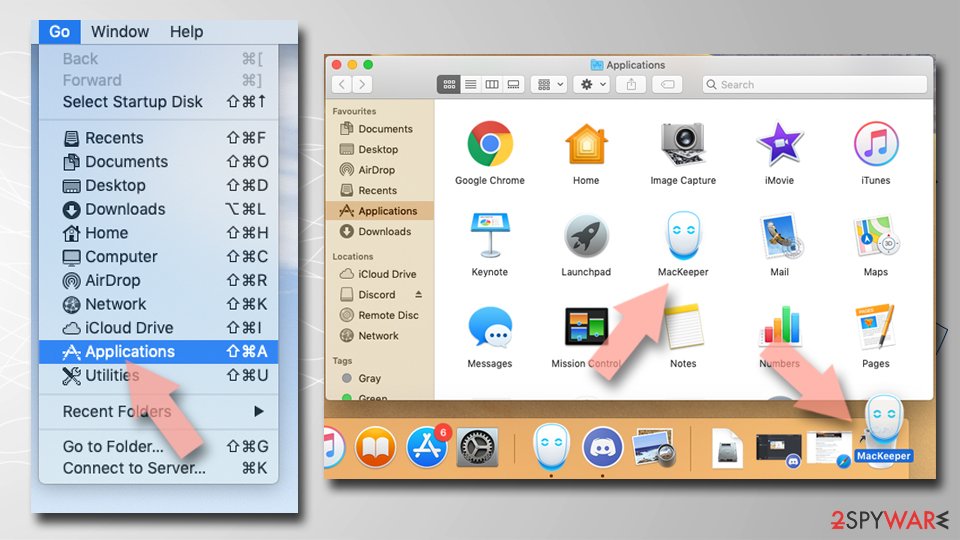
- From the menu bar, select Go > Applications.
- In the Applications folder, look for any suspicious entries, then drag them to Trash (or right-click and pick Move to Trash).
Delete leftover files and folders:
- Select Go > Go to Folder.
- Enter /Library/Application Support and remove any suspicious folders related to the unwanted program.
- Repeat the same check in the /Library/LaunchAgents and /Library/LaunchDaemons folders, deleting any suspicious entries.
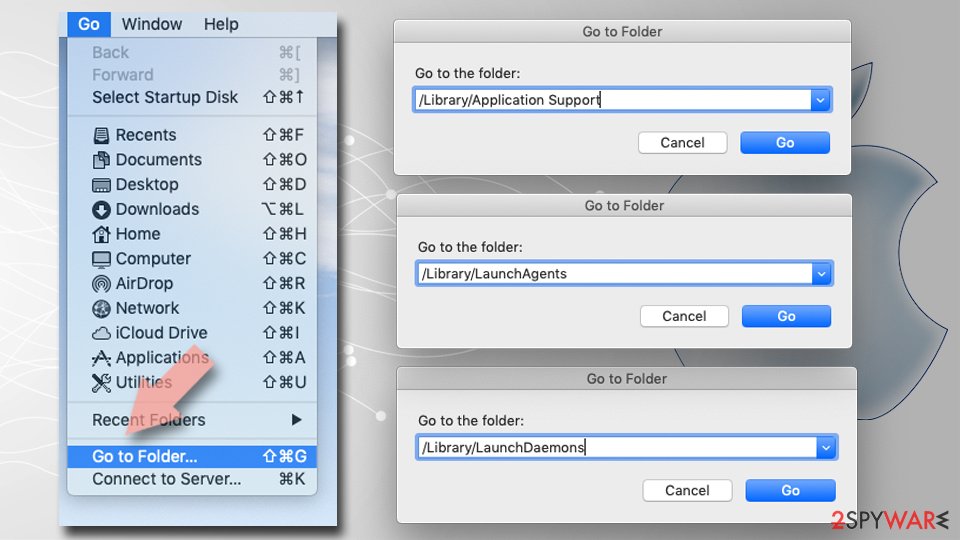
- Finally, empty the Trash to permanently remove the leftovers.
Choose a proper web browser and improve your safety with a VPN tool
Online spying has got momentum in recent years and people are getting more and more interested in how to protect their privacy online.
One of the basic means to add a layer of security - choose the most private and secure web browser. Although web browsers can't grant full privacy protection and security, some of them are much better at sandboxing, HTTPS upgrading, active content blocking, tracking blocking, phishing protection, and similar privacy-oriented features.
However, if you want true anonymity, we suggest you employ a powerful VPN - it can encrypt all the traffic that comes and goes out of your computer, preventing tracking completely.
Lost your files? Use data recovery software
While some files located on any computer are replaceable or useless, others can be extremely valuable.
Family photos, work documents, school projects - these are types of files that we don't want to lose. Unfortunately, there are many ways how unexpected data loss can occur:
- power cuts
- Blue Screen of Death errors
- hardware failures
- crypto-malware attack
- even accidental deletion
To ensure that all the files remain intact, you should prepare regular data backups. You can choose cloud-based or physical copies you could restore from later in case of a disaster. If your backups were lost as well or you never bothered to prepare any, can be your only hope to retrieve your invaluable files.
From our report of Oct 2015 · not reviewed since
How to remove this browser hijacker?
There is no doubt that TicketXplorer Toolbar is an unnecessary program, and it does not provide any useful services.
TicketXplorer Toolbar virus can be eliminated either automatically or manually. For the manual method, use the removal instructions provided by the 2-spyware team. You can find them below this article.
Questions about TicketXplorer Toolbar
Why does my search engine keep changing to ask.com?
Because something keeps setting it. An extension can change the search engine every time the browser starts, and an ad-supported program in Windows can do it for every browser and re-add the extension after you remove it. Some hijackers also add a policy that locks the setting.
Changing the search engine back only works once the source is gone. Remove extensions you do not recognise, uninstall programs installed around the time ask.com first appeared, and then set the search engine again. If it still returns, check the browser for the Managed by your organization message and follow the policy steps in this guide.
Did ask.com come with a program I installed?
Most likely, yes. Search hijackers such as ask.com usually arrive with free software, where an extra offer is pre-ticked in the installer, or as an extension that promises something useful, such as file conversion, maps, recipes or streaming.
Look at Settings, Apps, Installed apps sorted by install date: whatever was installed just before the search engine changed is the main suspect. Uninstall it, then remove any extension you do not recognise. In future, choose the custom or advanced option in installers and untick extra offers, and install extensions only from the official store pages of publishers you know.
Why do my searches go to ask.com?
Because the browser's default search engine was changed to it. TicketXplorer Toolbar did that through an extension, a program or a browser policy, and as long as that source remains, the setting points to ask.com.
The page then passes your query to a real search provider, so the results look almost normal, with extra sponsored links on top. Changing the search engine back on its own does not last, because the source resets it. Remove the extension or program first, then the policies if any, then set your own search engine.
Is it safe to keep searching with ask.com?
We would not. Every query you type is logged by its operators and shared with their advertising partners, and the sponsored links at the top are chosen for payment, not relevance. Results that look like a download page or a support site may lead to scams.
The page will not damage Windows by itself, but there is no benefit in keeping it: the results come from another search engine anyway. Remove TicketXplorer Toolbar and use that search engine directly, by typing its address or choosing it in the browser settings.
Which browsers does TicketXplorer Toolbar affect?
We saw it in Chrome, Edge and Firefox. That does not mean the other browsers on your PC are safe: hijacker installers usually change every browser they find, and browser sync can carry an extension to other computers signed in to the same account.
Check the search engine, home page, new tab, extensions and policies in each browser you have, including ones you rarely open. Chrome and Edge profiles count separately, so switch to each profile and check it as well before you call the job done.
What does ask.com know about me?
It knows what you searched for while it was your search engine, when, from which IP address and with which browser, and usually which results you opened. Tracking cookies let it connect those searches into a profile. It does not see your saved passwords or files.
After removing TicketXplorer Toolbar, delete the cookies and site data for ask.com so the profile cannot be continued, and remove it from the browser's list of saved search engines. Signing out of important sites and back in also replaces session cookies.
Will resetting the browser remove TicketXplorer Toolbar?
A reset disables extensions, restores the default search engine, start page and new tab, and clears temporary data and cookies. It keeps bookmarks, history and saved passwords. For many hijackers that is enough.
It does not remove a program installed in Windows, policies in the registry, changes to the hosts file or DNS, or edited shortcuts, so TicketXplorer Toolbar can come back after a reset if one of those remains. Do the reset after removing the program and policies, not instead of it.
The results look like Google or Bing. Is that real?
Partly. Many hijacker search pages pass your query to a real search engine and show its results, so the list looks familiar. What changes is the frame around it:
- extra sponsored links at the top
- the hijacker's own tracking
- sometimes a design that copies a known search engine
You can tell by the address bar. If it shows ask.com or another unfamiliar domain instead of the search engine you know, the results come through a middleman. Remove TicketXplorer Toolbar and search directly.
Should I just switch to another browser?
It may not help. Installers that add hijackers usually target every browser on the PC, and system-level changes such as the hosts file, DNS or proxy affect all browsers at once. A new browser also leaves the hijacker's program and extension in place, collecting data in the old one.
Remove TicketXplorer Toolbar properly first. After that, use whichever browser you prefer; Chrome, Edge and Firefox all let you set and protect your own search engine. Import your bookmarks only after the old browser is clean.
Will Fortect remove TicketXplorer Toolbar?
Fortect scans Windows for malware and unwanted programs and repairs the system files and settings they change, and its free scan shows what it finds on your PC before you decide anything.
For TicketXplorer Toolbar, follow the plan above as well: the browser steps take back permissions and settings that no scanner treats as a threat, and uninstalling the program that brought it removes the source.
Run Microsoft Defender's full scan and, if anything was found, its offline scan as a second opinion. If the symptoms are gone after the plan and both scans are clean, there is nothing more to do.
Sources
- FTC: How to recognize, remove and avoid malware (read October 7, 2026)
- Microsoft Learn: Microsoft Defender Offline (read October 7, 2026)
- Microsoft Learn: How Microsoft names malware (read October 7, 2026)