
Apex Legends virus: what it is and how to remove it
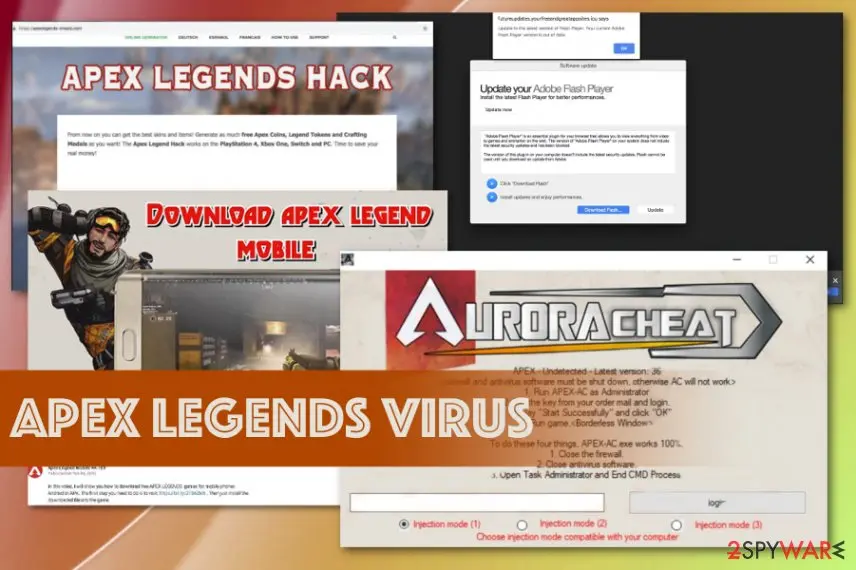
Apex Legends virus is the term used to describe viruses, scamming campaigns, and other malware-related activities that disguise their malicious purposes with Apex Legends video game name. A trojan is used to infect computers with other malware like spyware or let hackers control the system from a distance.
Facts checked October 6, 2026. Removal steps tested on Windows 11 (26H2) and checked against Microsoft's and the browser makers' current documentation. Sections marked as our earlier report are the original text: they describe the threat as it was then and have not been reviewed since. The 2026 status, the removal steps and the questions are current.
Automatic
Get a free scan and check if your PC is infected.
Fortect finds malware, unwanted programs and the Windows damage they leave behind, and repairs it in one pass.
If Mesyeas.exe returns after removal, a full scan can find the entry that brings it back.
Do it yourself · free Remove Apex Legends virus yourself 5 steps, about 15 minutes, no software needed.
Start the steps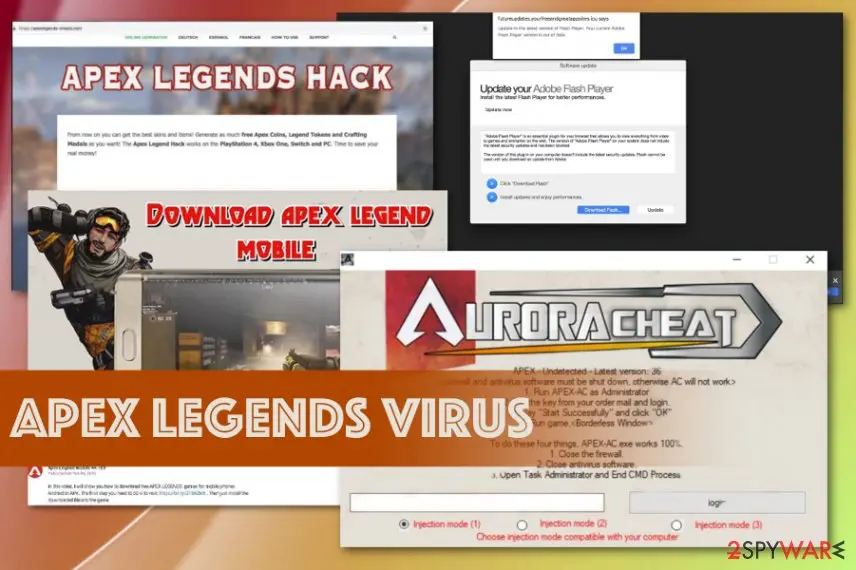
Apex Legends virus: summary
| Distribution | Infected file attachments from emails, malicious advertisements, and other scamming campaigns, direct malware payload can get on the PC from torrent services and pirated software sites |
|---|---|
| Name | Apex Legends virus |
| Type | Trojan/ remote access trojan[2] This malware can be set to perform different activities and act like spyware, banking virus, and keylogger |
| Payload file | Mesyeas.exe is the main payload file associated with the infection that is dropped during infiltration, but APEX-AC.exe also runs on the system when the trojan is on the computer |
| Function | It infiltrates the system and steals users' credentials, creates the backdoor for attackers, infects the machine with additional malware and promotes fake updates like Adobe Flash and other software |
| Causes issues | Records personal data, secret credentials, can share that private information with third-parties and malicious people. Malware that this trojan spreads can be set to extort money from you or damage the machine significantly |
| Removal | Scan the PC with security software to find and remove the malware and anything installed with it. Fortect scans Windows for malware and repairs the system files and settings it damaged. Remove it nowTo use the full-featured product, you have to purchase a license for Fortect. The scan is free. |
Show 7 more facts
| Detection names | No Microsoft detection name is known |
|---|---|
| Damage | Not recorded in the old report |
| Symptoms | An unknown process in Task Manager |
| Evidence | 4 write-ups by security sites; details still limited |
| File name | Mesyeas.exe |
| First seen | 27 September 2019 |
| Facts checked | 6 October 2026 |
What Apex Legends virus does
From our report of Sep 2019 · not reviewed since
Apex Legends virus is the remote access tool that disguises as Apex Legends video game cheats and related files online
Apex Legends virus is the term used to describe viruses, scamming campaigns, and other malware-related activities that disguise their malicious purposes with Apex Legends video game name.
A trojan is used to infect computers with other malware like spyware or let hackers control the system from a distance. The malicious program is associated with Aurora Cheat tool that should be an injector for the video game but is used to spread data-stealing malware.
The initial Apex Legends virus infiltration starts with the file download from either a pirated torrent pack or malicious email campaigns, and once the payload file Mesyeas.exe is launched, your machine can be corrupted or even damaged permanently.
There are lots of different campaigns spreading malware or performing different malicious activities, that involve Apex Legends video game name. Probably the most prominent one was the YouTube video campaign that promoted a mobile version of the game with shady files instead of the game.
Apex Legends is one of the most popular games nowadays, so it is not that surprising that the fame of the game made it more attractive for malicious actors to misues the name and achieve their money-making goals. Taking advantage of names and other popular terms is not new. We already know about Fortnite virus and other threats disguised by social media platform names.
However, Apex Legends virus involves more that one type of malware and the capabilities of the virus are mainly endless. Virus developers rely on player movement predictions, distance control, and information that is common, so scam campaigns and malware promoted as tools that provide useful-looking features gets successfully spread around.
Apex Legends virus can be set to:
Cybercriminals trick people into downloading malicious files and executing the payload that affects the machine significantly. Apex Legends virus targets people on social media and torrent sites, developers use search engines to employ methods and steps needed for these shady activities.
You should note that once the malware gets installed it is not that easy to remove Apex Legends virus from the machine. Malicious domains targeting fans and gamers surfaces and researchers have talked about such campaigns. Unfortunately, these are still actively trying to get people into installing malware.
If Apex Legends virus is set to steal data from your machine it can use different techniques because of a handful of modules for such behavior that exist nowadays. Keyloggers can record every keyboard input and stole data like banking credentials, logins, or passwords. Such techniques cause serious issues with users' privacy and can lead to loss of data or money directly from the accounts.
You need to avoid any downloads from shady services, hyperlinks from videos, other social media platforms, or even promotional ads found online. If you ignore such expert notes, you may need more serious help for Apex Legends virus removal.
Unfortunately, due to the shady distribution and many possible techniques that Apex Legends virus developers can use, you need a full system scan and proper anti-malware tool that can check the system and possibly remove the trojan, other types of malware. Perfectly, anti-malware programs like should also fix virus damage and improve the performance besides eliminating those threats.
- run as remote access trojan;
- spyware;
- data-stealing virus;
- keylogger;
- banking virus;
- cryptocurrency mining malware.

From our report of Sep 2019 · not reviewed since
Threat actors rely on the popularity of games and services
Distribution of such viruses always involves more than one technique because malicious actors try to ensure the persistent and transmittable feature of the malware.
Freeware and shareware installations often include the malicious installer file and once the user skips through steps everything gets loaded on the machine at the same time as the program intended to install.
Unfortunately, p2p sharing sites, pirated software providers also include malicious codes of such malware. To tackle such infiltrations, you should get a powerful anti-malware and scan the machine more often. Needless to say, illegal activities, torrent sites, shady domains, and freeware sites hide more than you can know.
Go for official providers, developers for software and games, use licensed versions of tools. Otherwise, you risk of getting PUPs or even malware from one insecure installation. At least try to choose Advanced or Custom installations each time you download applications, tools or software.
From our report of Sep 2019 · not reviewed since
More from our earlier report on Apex Legends virus
- Use anti-malware tool to remove all traces of Apex Legends virus and get rid of oh malware installed as a secondary payload
How to check the PC for Apex Legends virus
- File:
Mesyeas.exe
How to remove Apex Legends virus
Remove the keylogger first, then change every password typed on this PC since the infection, from another device.
Step 1: Check where Mesyeas.exe runs from and stop it
In Task Manager (Ctrl + Shift + Esc) find
Mesyeas.exeon Processes, right-click it and choose Open file location before ending anything.Windows' own files live in
C:\Windows\System32; the same name in%AppData%, %Temp% or C:\Users\Public is an impostor. If the folder is wrong, right-click the process again, choose End task and delete the file.If it starts again within seconds, a task or another process restarts it, so run the scan step in Safe Mode. Task Manager works the same in Windows 11 and Windows 10.
Full procedure with screenshots: Close a frozen app (Task Manager, Force Quit) On uGetFix
Step 2: Remove it from startup
Press Ctrl + Shift + Esc to open Task Manager and select Startup apps (Windows 11) or the Startup tab (Windows 10). Disable entries you do not recognise, especially ones with no publisher or with a name that copies a Windows component.
Right-click an entry and choose Open file location to see where it runs from: programs in
%AppData%or%Temp%deserve a closer look. Some entries are not listed there but in the registry Run keys, which the procedure below shows how to check.Full procedure with screenshots: Stop apps from opening at startup On uGetFix
Step 3: Delete scheduled tasks that bring it back
Programs like Apex Legends virus add a scheduled task so they return after an uninstall or reopen a page at every sign-in. Start Task Scheduler, open Task Scheduler Library and sort by Last Run Time to see what ran recently.
On the Actions tab, a program in a user folder, a script or a web address is a warning sign; right-click such a task and choose Delete.
Tasks with names copying Google, Edge or Windows updaters but pointing to an odd folder are typical. The tool looks the same in Windows 11 and Windows 10.

Windows 11: Task Scheduler Library, the task selected, the Actions tab shows the file it runs. Full procedure with screenshots: Remove what malware leaves behind in Windows
Step 4: Scan the PC, then run the offline scan
A scan finds the parts of Apex Legends virus that the manual steps cannot see. In Windows Security > Virus & threat protection > Scan options, start a Full scan and quarantine what it reports.
Follow it with Microsoft Defender Antivirus (offline scan) > Scan now, which restarts the PC and checks the disk while Windows and the malware are not running.
It takes about 15 minutes and works the same in Windows 11 and Windows 10. If either scan finds something, run the full scan again after removal until it comes back clean.

Windows 11: Windows Security > Virus & threat protection > Scan options. Full procedure with screenshots: Run a Microsoft Defender Offline scan
Step 5: Change passwords from another device and sign out other sessions
Apex Legends virus can copy saved passwords, cookies and session tokens and send them out in seconds, so cleaning the PC does not undo the theft.
Change your passwords on a device that was never infected, starting with the e-mail account, since every other reset goes through it. On each account, end all other sessions and check the recovery e-mail, phone number and forwarding rules.
Then turn on two-step verification. Sign in on the Windows 11 or Windows 10 PC again only after the offline scan is clean.
Full procedure with screenshots: Turn on two-step verification / secure a hacked account
Instructions for each browser and system
The detailed steps for every browser and system this guide covers. Open the one you use.
Manual removal using Safe Mode
Important! →
Manual removal guide might be too complicated for regular computer users. It requires advanced IT knowledge to be performed correctly (if vital system files are removed or damaged, it might result in full Windows compromise), and it also might take hours to complete. Therefore, we highly advise using the automatic method provided above instead.
Step 1. Access Safe Mode with Networking
Manual malware removal should be best performed in the Safe Mode environment.
Windows 7 / Vista / XP
- Click Start > Shutdown > Restart > OK.
- When your computer becomes active, start pressing F8 button (if that does not work, try F2, F12, Del, etc. - it all depends on your motherboard model) multiple times until you see the Advanced Boot Options window.
- Select Safe Mode with Networking from the list.

Windows 10 / Windows 8
- Right-click on Start button and select Settings.

- Scroll down to pick Update & Security.

- On the left side of the window, pick Recovery.
- Now scroll down to find Advanced Startup section.
- Click Restart now.

- Select Troubleshoot.

- Go to Advanced options.

- Select Startup Settings.

- Press Restart.
- Now press 5 or click 5) Enable Safe Mode with Networking.

Step 2. Shut down suspicious processes
Windows Task Manager is a useful tool that shows all the processes running in the background. If malware is running a process, you need to shut it down:
- Press Ctrl + Shift + Esc on your keyboard to open Windows Task Manager.
- Click on More details.

- Scroll down to Background processes section, and look for anything suspicious.
- Right-click and select Open file location.

- Go back to the process, right-click and pick End Task.

- Delete the contents of the malicious folder.
Step 3. Check program Startup
- Press Ctrl + Shift + Esc on your keyboard to open Windows Task Manager.
- Go to Startup tab.
- Right-click on the suspicious program and pick Disable.

Step 4. Delete virus files
Malware-related files can be found in various places within your computer. Here are instructions that could help you find them:
- Type in Disk Cleanup in Windows search and press Enter.

- Select the drive you want to clean (C: is your main drive by default and is likely to be the one that has malicious files in).
- Scroll through the Files to delete list and select the following:
Temporary Internet Files
Downloads
Recycle Bin
Temporary files - Pick Clean up system files.

- You can also look for other malicious files hidden in the following folders (type these entries in Windows Search and press Enter):
%AppData%
%LocalAppData%
%ProgramData%
%WinDir%
After you are finished, reboot the PC in normal mode.
Stream videos without limitations, no matter where you are
There are multiple parties that could find out almost anything about you by checking your online activity.
While this is highly unlikely, advertisers and tech companies are constantly tracking you online. The first step to privacy should be a secure browser that focuses on tracker reduction to a minimum.
Even if you employ a secure browser, you will not be able to access websites that are restricted due to local government laws or other reasons. In other words, you may not be able to stream Disney+ or US-based Netflix in some countries. To bypass these restrictions, you can employ a powerful VPN, which provides dedicated servers for torrenting and streaming, not slowing you down in the process.
Data backups are important - recover your lost files
Ransomware is one of the biggest threats to personal data.
Once it is executed on a machine, it launches a sophisticated encryption algorithm that locks all your files, although it does not destroy them. The most common misconception is that anti-malware software can return files to their previous states. This is not true, however, and data remains locked after the malicious payload is deleted.
While regular data backups are the only secure method to recover your files after a ransomware attack, tools such as can also be effective and restore at least some of your lost data.
From our report of Sep 2019 · not reviewed since
Rely on professional tools and eliminate the shady Apex Legends virus
Tons of different domains promote this malware and can lead to total system corruption, so you need to remove Apex Legends virus as soon as possible.
Once you notice the activity that is caused by this threat or any shady program, you need to fully check the machine for malware.
There is no reliable method that could be recommended as a manual solution for trojan infection. Anti-malware tools can indicate malicious files, scripts, programs, and direct malware that lures on the machine. You cannot achieve such results manually. So rely on , , and clean the machine.
[GI=method-1]You may need to use Safe Mode with Networking to remove Apex Legends virus fully from the machine
[GI=method-2]System Restore feature can also help to recover the machine in a previous state before this infection and terminate Apex Legends virus thoroughly
Questions about Apex Legends virus
Is Mesyeas.exe safe?
It depends on where the file is and who signed it, not on the name. Open Task Manager, go to the Details tab, right-click Mesyeas.exe and choose Open file location. A file inside Program Files or System32 with a valid digital signature from a known company is usually part of a legitimate program.
A file in AppData, Temp or ProgramData with no signature, especially one that restarts itself after you end it, is suspicious. If you cannot tie the process to anything you installed, uninstall recent unfamiliar programs and run a Microsoft Defender Offline scan.
Mesyeas.exe keeps coming back. What should I do?
A process that returns after you end it has a restart mechanism, and that is a reason to treat Mesyeas.exe as unwanted. Check Settings > Apps > Startup, Task Scheduler and the Services list for entries pointing to its folder, and disable them.
Look in Installed apps for anything added the same day and uninstall it. Then delete the folder and run a Microsoft Defender Offline scan, which works before Windows starts and can remove files that are locked or hidden while the system is running.
I deleted Mesyeas.exe. Am I safe now?
Your PC may be, but your accounts are not yet. Deleting Mesyeas.exe stops Apex Legends virus from running again, if nothing else on the PC restarts it, yet it does nothing about data that was already collected and sent.
Run the offline scan to make sure no other component or second payload remains. Then change passwords from a clean device, sign out of all sessions, move crypto and turn on two-step verification. Those steps, not the deletion, are what protect you from the stolen data.
Who should I tell about Apex Legends virus?
Start with the companies that can act quickly:
- your bank
- card issuer and payment services if money is involved
- crypto exchanges if coins were moved
- the providers of any account that was taken over
Each has a fraud or account-recovery process. Then file a police or national cybercrime report if you lost money or your identity was misused. If the PC is used for work, tell your employer's IT team, because work accounts and data may be affected as well.
Is Apex Legends virus a known stealer?
Not as a named family yet. The sign, an unfamiliar process called Mesyeas.exe in Task Manager, is typical of information stealers, keyloggers or clippers, but no analysis links Apex Legends virus to a specific one. That is common:
- victims notice the effects
- such as lost accounts or swapped addresses
- before anyone sees the file
You do not need the family name to act. Change passwords from a clean device, sign out of all sessions, move crypto to a new wallet and run a Microsoft Defender offline scan on the PC. If a scan gives a detection name, note it for the report.
I have two-step verification. Am I protected?
Partly. Two-step verification stops an attacker who has only your password. But stealers also take session cookies, which represent a login that already passed the second step.
With a cookie, an attacker can open the account until the session expires or you sign out of all devices. So, after an infection, end all sessions as well as changing passwords.
Passkeys and hardware security keys resist phishing better, but a stolen session still needs to be ended. Review trusted devices and remove any you do not recognise.
Can I change my passwords on the infected PC?
Not while the spyware may still be running. A keylogger or stealer would capture the new passwords too. Use a phone or another computer that was never infected, or wait until the Microsoft Defender offline scan on this PC comes back clean.
Start with your main e-mail account, because it can reset every other password, then banking and payment accounts. When you return to this PC, sign in to the browser again only after the scans are clean and you have ended old sessions.
Do I need to tell my bank about Apex Legends virus?
Yes, if any card was saved in a browser on the affected PC or if you did online banking there while an unfamiliar process called Mesyeas.exe in Task Manager was going on.
Call the number on the back of the card, explain that malware may have copied the card details, and ask for a replacement and a check of recent payments. Banks act faster when you call early. Also change the online banking password from another device and look for new payees, changed contact details or unfamiliar devices in the banking app.
How can I tell if a keylogger is installed?
There are rarely visible signs. Check Installed apps and Startup apps for names you do not know, look in Task Manager's Details tab for processes with no description or publisher, and run a full and offline scan.
On a shared or work PC, also ask whether monitoring software was installed by IT or a family member. If you suspect a keylogger, use another device for logins until the PC is checked. Hardware keyloggers, small plugs between a desktop keyboard and the PC, also exist.
Will Fortect remove Apex Legends virus?
Fortect scans Windows for malware and unwanted programs and repairs the system files and settings they change, and its free scan shows what it finds on your PC before you decide anything.
For Apex Legends virus, follow the plan above as well: the browser steps take back permissions and settings that no scanner treats as a threat, and uninstalling the program that brought it removes the source.
Run Microsoft Defender's full scan and, if anything was found, its offline scan as a second opinion. If the symptoms are gone after the plan and both scans are clean, there is nothing more to do.
Sources
- Technadu: Technadu. Territory of Tech (read October 6, 2026)
- ZDNet: This remote access trojan just popped up on malware's most wanted list (read October 6, 2026)
- Virusai: Virusai (read October 6, 2026)
- FTC: How to recognize, remove and avoid malware (read October 6, 2026)
- Microsoft Learn: Microsoft Defender Offline (read October 6, 2026)