
Facebook Stalker virus: how to spot it and what to do
Facebook Stalker is a phishing malware posing as an app showing profile visitors, stealing login credentials and security questions. Once activated, it gives scammers complete access to compromise the victim's account permanently.
Facts checked October 5, 2026. Removal steps tested on Windows 11 (26H2) and checked against Microsoft's and the browser makers' current documentation. Sections marked as our earlier report are the original text: they describe the threat as it was then and have not been reviewed since. The 2026 status, the removal steps and the questions are current.
Automatic
Get a free scan and check if your PC is infected.
Fortect finds malware, unwanted programs and the Windows damage they leave behind, and repairs it in one pass.
Do it yourself · free Remove Facebook Stalker virus yourself 4 steps, about 12 minutes, no software needed.
Start the steps
Facebook Stalker virus: summary
| Damage | Loss of the social media account, malware infections |
|---|---|
| name | Facebook Stalker virus |
| Type | Malware |
| Name | Facebook Stalker virus |
| Symptoms | A phishing e-mail asking you to sign in |
| Evidence | One write-up by a security site; details still limited |
| Removal | Scan the PC with security software to find and remove the malware and anything installed with it. Fortect scans Windows for malware and repairs the system files and settings it damaged. Remove it nowTo use the full-featured product, you have to purchase a license for Fortect. The scan is free. |
Show 6 more facts
| Arrives as | |
|---|---|
| Pretends to be | |
| Claim | Your account needs urgent attention |
| Asks for | Your password |
| First seen | 26 April 2021 |
| Facts checked | 5 October 2026 |
What the Facebook Stalker virus message looks like
From our report of Apr 2021 · not reviewed since
If you fall for Facebook Stalker virus, you are immediately redirected to the FBStalker26.com website, which looks like a normal Facebook login page.
This site asks you to enter your login details in order to get the ability to use the app and offer it to your friends.
However, in reality, this portal is a phishing site, which must be avoided. If you fall for entering your user name and password, scammers would immediately get the ability to log in to your account and use it for malicious purposes. In most cases, you won't be able to access your account again.
How to tell the Facebook Stalker virus message is fake
From our report of Apr 2021 · not reviewed since
- If you were tricked into clicking any malicious links, change your Facebook password and security questions immediately.
- Then run a full system scan with reliable anti-malware software
- To ensure that your device in question runs without any hiccups, perform system diagnostics with the system tune-up tool
Is Facebook Stalker virus dangerous? What the senders want
From our report of Apr 2021 · not reviewed since
Facebook Stalker virus – a fake app that could lead to account loss
Facebook Stalker virus (also known as FB Stalker virus) is dangerous malware, which belongs to the group of Facebook virus.
While it may seem like a normal FB application, which could give you the ability to take a look at who has been viewing your Facebook profile, in reality, it must be avoided.
After checking this app on our computers, we have discovered that it can be easily used to steal sensitive information from its victims. Typically, FB Stalker virus collects Facebook's login, password, security questions, and their answers, so if you fall for such a scam, its developers could easily access your account and finally steal it from you.
Please, do NOT fall for this Facebook app-offering scheme, which keeps spreading around for some time. Finally, change your FB password if you have been tricked by this virus to enter your login information.
What to do after the Facebook Stalker virus e-mail
If you only received the message and clicked nothing, step 3 is all you need.
If you clicked the link or typed anything on the page it opened, do every step, starting with the password.
Step 1: Change the password you typed on the fake page
If you entered a password after clicking the link in the Facebook Stalker virus message, treat that account as known to the sender.
Open the provider's real site by typing its address yourself, not through any link in the e-mail, and change the password there. Choose a new one you have never used before, and change it on every other account that shared the old one.
Then use the option to sign out of all other sessions or devices, if the provider has one. This works the same in any browser on Windows 11 and Windows 10.
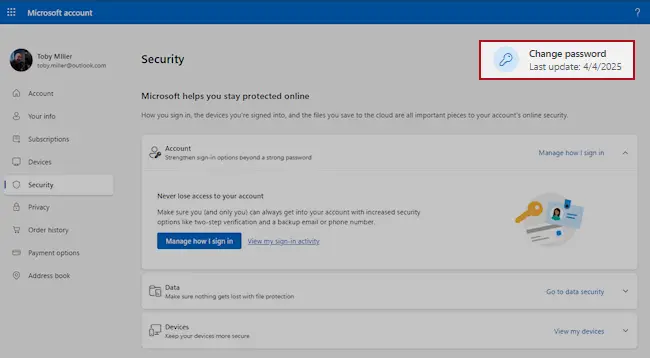
Microsoft account, Security page (account.microsoft.com/security): Change password. Full procedure with screenshots: Turn on two-step verification / secure a hacked account
Step 2: Turn on two-step verification
Two-step verification asks for a code from your phone or an authenticator app whenever someone signs in from a new device. A stolen password alone is then not enough to open the mailbox.
Turn it on in the security settings of the e-mail account first, then for the bank, shop and social accounts that send their reset links to that address.
While you are there, check the recovery e-mail and phone number and the forwarding rules, which attackers sometimes change to keep access. The settings pages look the same on Windows 11 and Windows 10.
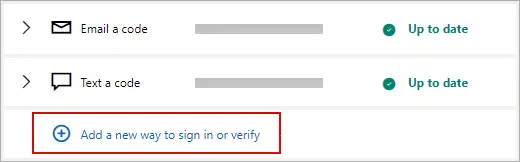
Microsoft account: Manage how I sign in, where two-step verification and the sign-in methods are. Full procedure with screenshots: Turn on two-step verification / secure a hacked account
Step 3: Report the e-mail and delete it
Report the message instead of only deleting it. In Outlook choose Report > Report phishing, in Gmail the three-dot menu > Report phishing; the provider then blocks the same message for other people.
Do not reply and do not click anything else in it. On a work account, forward it to your IT team as an attachment first. Web mail and the mail apps on Windows 11 and Windows 10 offer the same options.
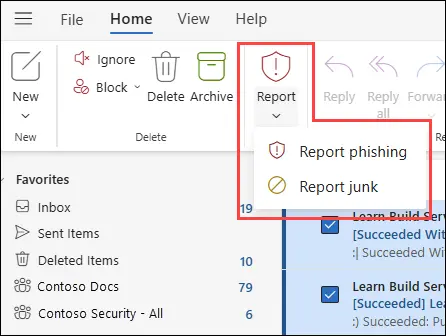
New Outlook for Windows and Outlook on the web: Report > Report phishing. Full procedure with screenshots: Report a phishing e-mail
Step 4: Scan the PC if you opened a file from the message
A page that only asked for a password installs nothing, so most readers can skip this step.
If the Facebook Stalker virus e-mail or the page it opened made you download or open a file, delete it and run a full scan, then a Microsoft Defender Offline scan.
In Windows 11 and Windows 10 open Windows Security > Virus & threat protection > Scan options, select Microsoft Defender Antivirus (offline scan) and click Scan now. The PC restarts and the scan takes about 15 minutes, so save your work first.

Windows 11: Windows Security > Virus & threat protection > Scan options. Full procedure with screenshots: Run a Microsoft Defender Offline scan
Instructions for each browser and system
The detailed steps for every browser and system this guide covers. Open the one you use.
Repair damaged system components
Once a computer is infected with malware, its system is changed to operate differently. For example, an infection can alter the Windows registry database, damage vital bootup and other sections, delete or corrupt DLL files, etc. Once a system file is damaged by malware, antivirus software is not capable of doing anything about it, leaving it just the way it is. Consequently, users might experience performance, stability, and usability issues, to the point where a full Windows reinstall is required.
Therefore, we highly recommend using a one-of-a-kind, patented technology of repair. Not only can it fix virus damage after the infection, but it is also capable of removing malware that has already broken into the system thanks to several engines used by the program. Besides, the application is also capable of fixing various Windows-related issues that are not caused by malware infections, for example, Blue Screen errors, freezes, registry errors, damaged DLLs, etc.
- Download the application by clicking on the link above
- Click on the ReimageRepair.exe
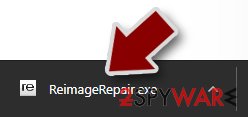
- If User Account Control (UAC) shows up, select Yes
- Press Install and wait till the program finishes the installation process
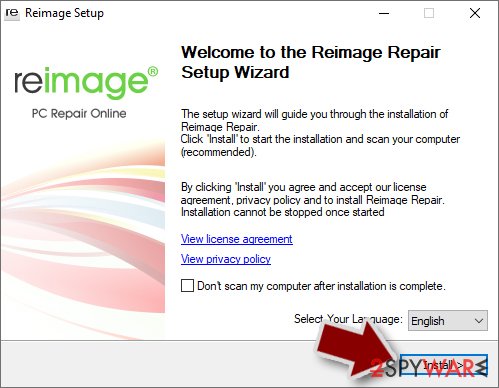
- The analysis of your machine will begin immediately
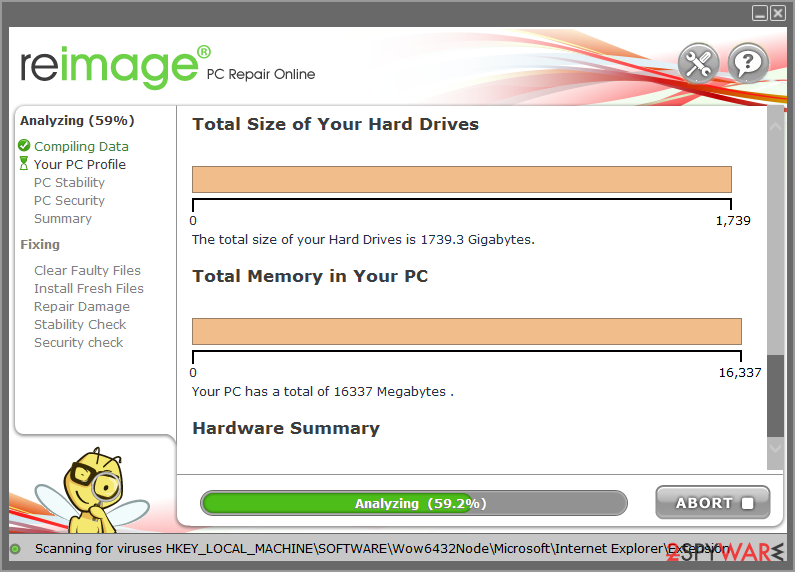
- Once complete, check the results - they will be listed in the Summary
- You can now click on each of the issues and fix them manually
- If you see many problems that you find difficult to fix, we recommend you purchase the license and fix them automatically.
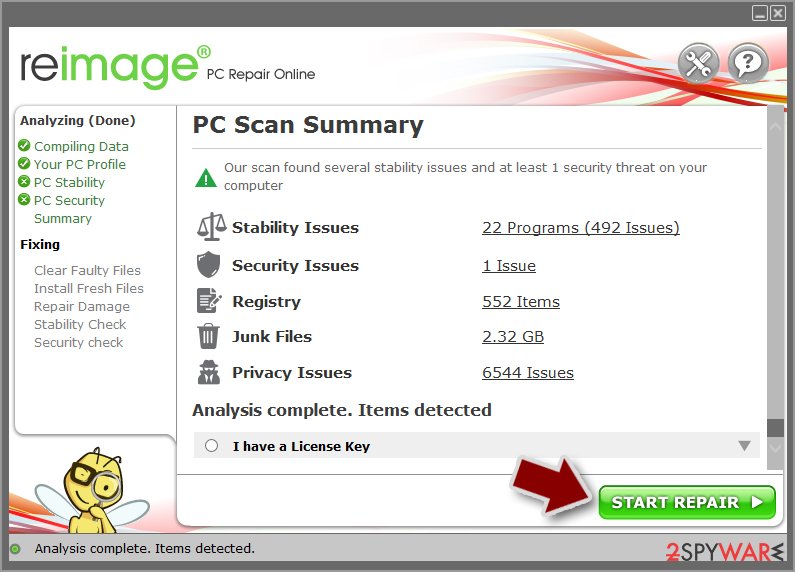
By employing , you would not have to worry about future computer issues, as most of them could be fixed quickly by performing a full system scan at any time. Most importantly, you could avoid the tedious process of Windows reinstallation in case things go very wrong due to one reason or another.
Do not let government spy on you
The government has many issues in regards to tracking users' data and spying on citizens, so you should take this into consideration and learn more about shady information gathering practices.
Avoid any unwanted government tracking or spying by going totally anonymous on the internet.
You can choose a different location when you go online and access any material you want without particular content restrictions. You can easily enjoy internet connection without any risks of being hacked by using VPN.
Control the information that can be accessed by government any other unwanted party and surf online without being spied on. Even if you are not involved in illegal activities or trust your selection of services, platforms, be suspicious for your own security and take precautionary measures by using the VPN service.
Backup files for the later use, in case of the malware attack
Computer users can suffer from data losses due to cyber infections or their own faulty doings.
Ransomware can encrypt and hold files hostage, while unforeseen power cuts might cause a loss of important documents. If you have proper up-to-date backups, you can easily recover after such an incident and get back to work. It is also equally important to update backups on a regular basis so that the newest information remains intact - you can set this process to be performed automatically.
When you have the previous version of every important document or project you can avoid frustration and breakdowns. It comes in handy when malware strikes out of nowhere. Use for the data restoration process.
From our report of Apr 2021 · not reviewed since
Facebook Stalker virus removal options
When trying to protect your personal information, you should avoid such fake applications as FB Stalker or Facebook Stalker.
Better yet, don't use any app that offers to find out who has been visiting your profile, as these apps are fake and created with ill intentions.
If you have already been tricked by this malicious app, you must change your password and security questions as soon as possible. Finally, scan the PC with updated anti-malware software such as the or to rest assured that no other infections are present.
Questions about Facebook Stalker virus
What is the Facebook Stalker virus?
Facebook Stalker (also known as FB Stalker) is dangerous malware presented as a legitimate Facebook application claiming to show which users have viewed your profile. In reality, it's a phishing application designed to steal sensitive information from victims.
The malware operates through a fake application that tricks users into entering login credentials, security questions, and their answers. Once it captures this information, scammers gain full access to your Facebook account and steal it from you. The threat has been spreading for some time despite security awareness efforts, continuing to deceive users seeking profile visitor information.
How does Facebook Stalker trick users?
The malware exploits a common desire among Facebook users to know who views their profiles. FB Stalker presents itself as a legitimate app offering this feature through official-looking application interfaces. Users click to authorize the app, unaware they're actually entering credentials on a phishing site (FBStalker26.com) that mimics Facebook's login page.
The fake site requests username and password under the pretense of enabling app functionality or offering to share it with friends. Immediately after entry, scammers gain account access. Users receive no notifications the account has been compromised and often don't discover the theft until friends report unusual activity or the account is used for spam.
What information does Facebook Stalker steal?
Facebook Stalker specifically collects your Facebook login credentials, password, and security questions along with their answers. This complete credential set gives scammers full account access equivalent to owning your account. Once they gain entry, they can change the password, preventing you from logging in and regaining control.
They can access all your personal information, message history, photos, and friend list. Scammers use compromised accounts to spread the malware to your friends, conduct phishing campaigns, or perform identity theft.
In most cases, victims cannot access their accounts again without intervention from Facebook support. The stolen security questions are particularly dangerous because they're used to reset passwords on other accounts.
How do I know if I've been infected with Facebook Stalker?
The primary indication is losing access to your Facebook account after using an alleged profile-viewer app. You won't be able to log in because the scammer changed your password.
Friends may report your account sending spam messages or friend requests, or performing unusual activity. You might receive emails from Facebook about account activity in locations you've never visited. Some users notice their password no longer works before realizing their account has been compromised.
If you attempted to use a profile-viewer app and your account access stopped working immediately afterward, you were definitely victimized. Check your account's login history for suspicious entries if you still have access.
What should I do if I fell for Facebook Stalker?
Change your Facebook password and security questions immediately from a different device. If you can't access your account to change the password, use Facebook's account recovery options to regain access. Contact Facebook's Help Center and report your account as compromised.
Scan your computer or mobile device with reputable anti-malware software to ensure no additional malware was installed. Change passwords for all other important accounts, especially email, since compromised email enables attackers to reset credentials elsewhere.
Monitor your accounts for unauthorized activity. Run system diagnostics with reputable system optimization tools to check for additional damage. Inform your friends that your account was compromised and may have sent malicious messages.
Should I trust any app that claims to show Facebook profile visitors?
No, avoid all apps claiming to reveal who viewed your Facebook profile. Facebook does not provide this information through third-party applications, and any app making this claim is fraudulent.
Legitimate Facebook features don't require separate authorization through external apps. All such applications are designed to steal credentials through phishing. Even if an app appears official or has positive reviews, it's dangerous.
Facebook has repeatedly warned users about these scams. The desire to know profile visitors is a psychological vulnerability scammers exploit. If you're curious about profile views, check Facebook's official help center for any legitimate features Facebook itself offers.
How can I protect my Facebook account from stalker-type attacks?
Never authorize third-party apps requesting permission to access your Facebook account unless absolutely necessary and from trusted, well-known services. Verify apps through Facebook's official app center before installing. Be suspicious of apps claiming abilities Facebook doesn't officially support, like showing profile visitors.
Use a strong, unique password with uppercase and lowercase letters, numbers, and symbols. Enable two-factor authentication requiring a verification code on your phone before login. Regularly review authorized applications in your App Settings and remove any you don't actively use.
Never enter Facebook credentials on websites other than facebook.com. Be cautious of links to Facebook login pages even from seemingly legitimate sources. Educate yourself about common Facebook scams.
How is Facebook Stalker different from other malware?
Facebook Stalker is specifically designed as a phishing attack targeting social media account credentials rather than installing malware files on your computer. Unlike many threats that damage system files or steal financial information, FB Stalker focuses solely on capturing Facebook login details.
It doesn't require computer system access or browser vulnerabilities—it exploits human psychology and trust in social media platforms. The damage is account-specific rather than system-wide, though a compromised Facebook account can have severe consequences.
Account takeover enables the attacker to spread malware to your friend network. Remediation requires account recovery rather than system cleaning, though you should still scan for additional malware once recovered.
Will Fortect remove Facebook Stalker virus?
Fortect scans Windows for malware and unwanted programs and repairs the system files and settings they change, and its free scan shows what it finds on your PC before you decide anything.
For Facebook Stalker virus, follow the plan above as well: the browser steps take back permissions and settings that no scanner treats as a threat, and uninstalling the program that brought it removes the source.
Run Microsoft Defender's full scan and, if anything was found, its offline scan as a second opinion. If the symptoms are gone after the plan and both scans are clean, there is nothing more to do.
Sources
- FTC: How to recognize and avoid phishing scams (read October 5, 2026)
- CISA: Recognize and report phishing (read October 5, 2026)
- Microsoft Support: Protect yourself from phishing (read October 5, 2026)
- NCSC: Phishing attacks, dealing with suspicious e-mails and messages (read October 5, 2026)
- FTC: How to recognize, remove and avoid malware (read October 5, 2026)