
Si-chao.cstools.facebook.com: what it is and how to remove it
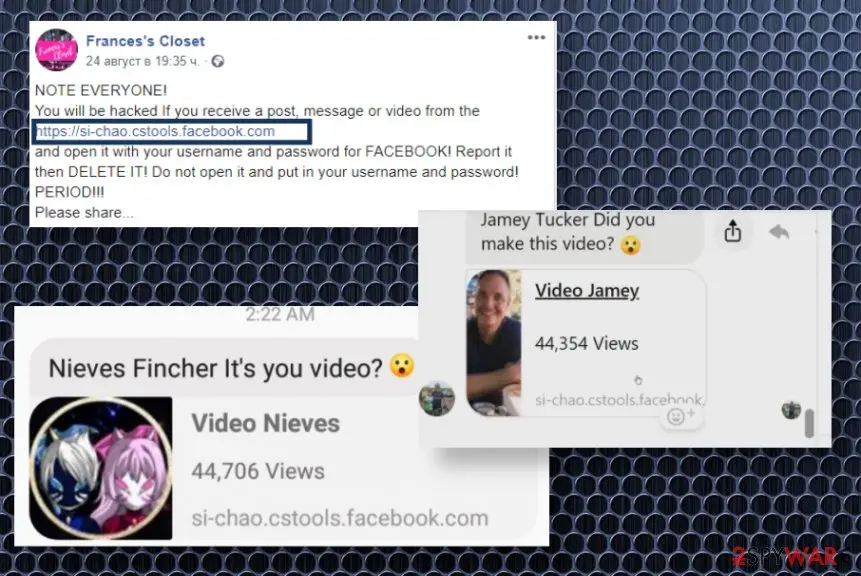
Si-chao.cstools.facebook.com is the site that is possibly malicious and leading to serious identity issues. The suspicious link appears in the Facebook Messenger alongside the message that states about a video of yours or redirects to a different Facebook page.
Facts checked October 7, 2026. Removal steps tested on Windows 11 (26H2) and checked against Microsoft's and the browser makers' current documentation. Sections marked as our earlier report are the original text: they describe the threat as it was then and have not been reviewed since. The 2026 status, the removal steps and the questions are current.
Automatic
Get a free scan and check if your PC is infected.
Fortect finds malware, unwanted programs and the Windows damage they leave behind, and repairs it in one pass.
If Si-chao.cstools.facebook.com keeps coming back after uninstalling, a scan can find what reinstalls it.
Do it yourself · free Remove Si-chao.cstools.facebook.com yourself 5 steps, about 15 minutes, no software needed.
Start the steps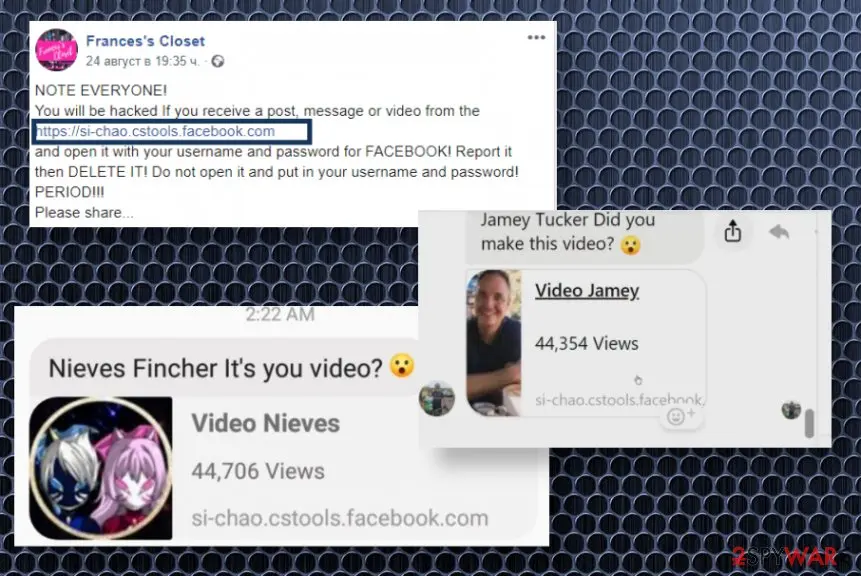
Si-chao.cstools.facebook.com: summary
| Distribution | Social media messages can be sent from random accounts or even from hacked accounts of your friends. These scams may spread further when people enter their logins or even via deceptive sites and PUPs |
|---|---|
| Name | Si-chao.cstools.facebook.com |
| Type | Scam/ malware |
| Family | Facebook virus/ Facebook Messenger virus |
| Targets | Facebook users because the malicious link appears in the messages and triggers redirect to scam page where your credentials, login information gets collected |
| Danger | The site is associated with scammers or other malicious actors who can collect, track, and misuse information about you, your personal credentials. Continuous redirects can reroute your traffic to more suspicious sites and expose to advertising material and dangerous online pages where malware is distributed |
| Removal | Scan the PC with security software to find and remove the malware and anything installed with it. Fortect scans Windows for malware and repairs the system files and settings it damaged. Remove it nowTo use the full-featured product, you have to purchase a license for Fortect. The scan is free. |
Show 6 more facts
| Detection names | No Microsoft detection name is known |
|---|---|
| Damage | Not recorded in the old report |
| Symptoms | An unknown program in Installed apps |
| Evidence | 4 write-ups by security sites; details still limited |
| First seen | 27 April 2020 |
| Facts checked | 7 October 2026 |
What Si-chao.cstools.facebook.com does on an infected PC
From our report of Apr 2020 · not reviewed since
Si-chao.cstools.facebook.com is the scam that tricks people into revealing their information for questionable scammers
Si-chao.cstools.facebook.com is the site that is possibly malicious and leading to serious identity issues.
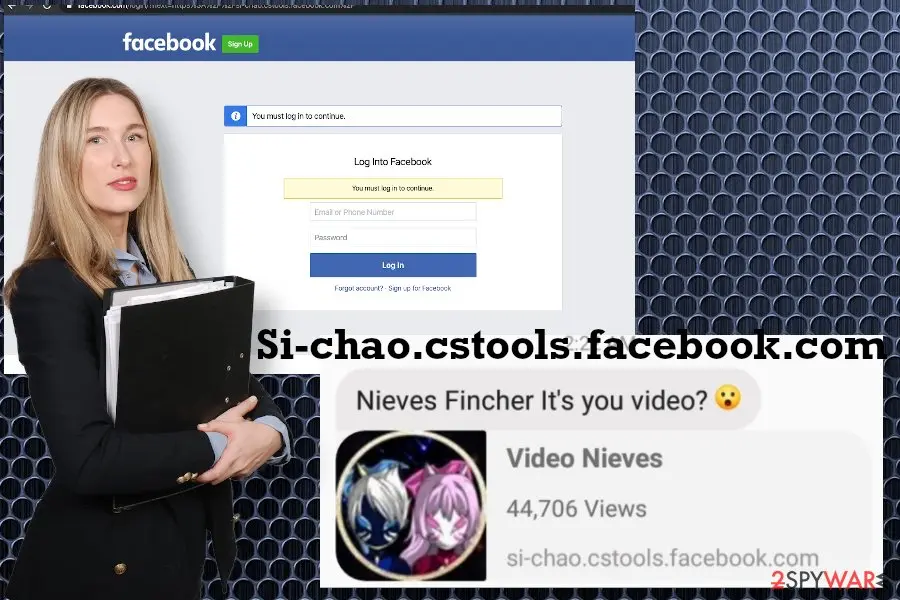
The suspicious link appears in the Facebook Messenger alongside the message that states about a video of yours or redirects to a different Facebook page. These sites require to login to your account and put in credentials to follow with the procedure.
However, this is not advisable because you may end up revealing those credentials to malicious actors who rely on scamming you and can steal identity or even hack your account or device using that information.
Users complain about such a Facebook virus all the time. And in most of the cases, these scams involve claims about the supposed video of you that is considered shameful or raises other concerns, so you are not questioning to open the link or not.
You need to note that even though the site looks like a Facebook login form and redirects to a legitimate-looking facebook.com page, this Si-chao.cstools.facebook.com virus can be used as a hacking tool and other methods that rely on data collection.
It is important not to click on anything that this site delivers and triggers because you may get redirected to another shady site that modifies or deletes files on the system directly besides affecting the time online alone.
Si-chao.cstools.facebook.com Facebook virus and other scammy messages raised the attention of various institutions and cybersecurity researchers, malware experts. Social media scams are more common and more aggressive these days, so you need to take that into consideration and avoid downloading anything, clicking on suspicious material because you may end up downloading malware or unwanted apps on the device.
Si-chao.cstools.facebook.com is the site that may not seem as causing any issues with the machine because, in the first place, it shows up as a link to the Facebook platform.
Unfortunately, this form of login is the worst thing that can happen since your password and account details can be used in other scams or help malicious actors to make your account as a tool to spread further by seeing those supposed video links to your friends.
When the Si-chao.cstools.facebook.com manages to trigger the additional pop-ups, redirects, or other content possibly related to commercial material creators, advertisers, and other sites like this one, you get exposed to possibly damaging pages. Visiting pages related to questionable creators and sites that promote tools or applications can lead to issues with the performance of your device.
Si-chao.cstools.facebook.com can be associated with PUP creators or malicious advertisers, so you should think about the possibilities to install malware by only clicking on something harmful. You may not even notice that one click on a link or pop-up ad allowed the download to get started.
These Facebook virus phishing links to Si-chao.cstools.facebook.com are not related to legitimate servers, even though it seems like it. The person who sends you these links is not aware of the campaign, in most cases, because his or her account is used int he background without any indications. Unless you answer the message and ask them what this is.
This is one of the methods that allow getting rid of a Facebook virus or at least checking if the link is suspicious for a reason.
Before you react to the message and click on the link write an answer t your friend or colleague that included the link on their message and make sure to remove Si-chao.cstools.facebook.com, link, and the message itself from your messenger application, so you will not click on it in the future.
However, the process of Si-chao.cstools.facebook.com removal as malware is more complex than exiting the window or deleting the message. When the intruder gets on your device it can send out messages to your contacts, capture other details from your account or even change passwords and other information, hijacked the account by logging you out.
Si-chao.cstools.facebook.com is the threat that can be capable of changing settings of the system itself and affecting preferences like a startup and adding registry entries, disabling functions. These alterations cause issues with more crucial features, so you need to clean the system as soon as possible and repair this damage. could help you with these changes and at least indicate affected parts or settings.
From our report of Apr 2020 · not reviewed since
More from our earlier report on Si-chao.cstools.facebook.com
- Si-chao.cstools.facebook.com removal requires anti-malware programs because with a full system scan can find and delete those infections that trigger redirects and other symptoms
- For the damage that PUPs can cause and other alterations that happen behind your back, use and check affected files.
- System optimizers and PC repair tools can indicate and fix corrupted programs and other data
What Si-chao.cstools.facebook.com can steal or download
From our report of Apr 2020 · not reviewed since
There are many types of cyber threats, and methods for distribution can differ depending on the purpose of the threat.
You should pay close attention to details like senders of emails or messages, reliability of sources when you download anything from the web. These things can make a huge difference because you can avoid getting the virus by reading about the site or choosing the official freeware distributor.
If you receive any suspicious message on any platform online, you need to check for some red flags and pay attention to details:
- delete any messages that you were not expected to get, especially when there is any additional content;
- contact the sender before opening the attachment or clicking on the link because these messages may be automated and users are not aware of the scam from heir account;
- do not open shortened links that do not show what website you will be visiting;
- update your security software and keep the system clear by running more occasional AV scans.
How to remove Si-chao.cstools.facebook.com
A loader's job is to install other malware, so treat the PC as infected with more than one program until the scans are clean.
Step 1: Delete scheduled tasks that bring it back
Programs like Si-chao.cstools.facebook.com add a scheduled task so they return after an uninstall or reopen a page at every sign-in. Start Task Scheduler, open Task Scheduler Library and sort by Last Run Time to see what ran recently.
On the Actions tab, a program in a user folder, a script or a web address is a warning sign; right-click such a task and choose Delete.
Tasks with names copying Google, Edge or Windows updaters but pointing to an odd folder are typical. The tool looks the same in Windows 11 and Windows 10.
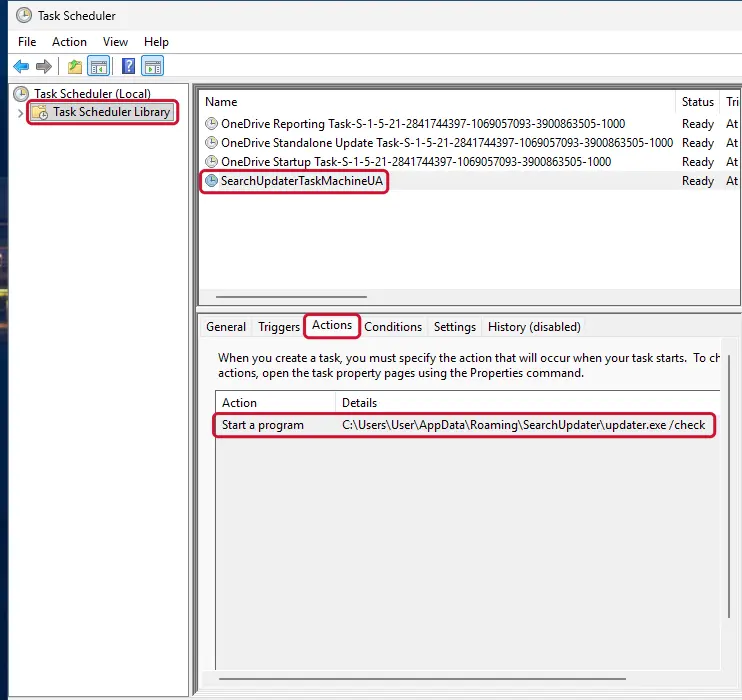
Windows 11: Task Scheduler Library, the task selected, the Actions tab shows the file it runs. Full procedure with screenshots: Remove what malware leaves behind in Windows
Step 2: Remove it from startup
Press Ctrl + Shift + Esc to open Task Manager and select Startup apps (Windows 11) or the Startup tab (Windows 10). Disable entries you do not recognise, especially ones with no publisher or with a name that copies a Windows component.
Right-click an entry and choose Open file location to see where it runs from: programs in
%AppData%or%Temp%deserve a closer look. Some entries are not listed there but in the registry Run keys, which the procedure below shows how to check.Full procedure with screenshots: Stop apps from opening at startup On uGetFix
Step 3: Delete the folders left behind
Uninstalling often leaves the program's folders, and some threats reinstall themselves from them.
Press Windows + R, type
%LocalAppData%and press Enter, then do the same for%AppData%and %ProgramData%, and look for folders named after Si-chao.cstools.facebook.com, its publisher or created on the day the problem started. Delete those folders, and check C:\Program Files and C:\Program Files (x86) too.If Windows says a file is in use, end it in Task Manager or delete the folder after a restart in Safe Mode. The folders are the same in Windows 11 and Windows 10.
Full procedure with screenshots: Remove what malware leaves behind in Windows
Step 4: Scan the PC, then run the offline scan
A scan finds the parts of Si-chao.cstools.facebook.com that the manual steps cannot see. In Windows Security > Virus & threat protection > Scan options, start a Full scan and quarantine what it reports.
Follow it with Microsoft Defender Antivirus (offline scan) > Scan now, which restarts the PC and checks the disk while Windows and the malware are not running.
It takes about 15 minutes and works the same in Windows 11 and Windows 10. If either scan finds something, run the full scan again after removal until it comes back clean.
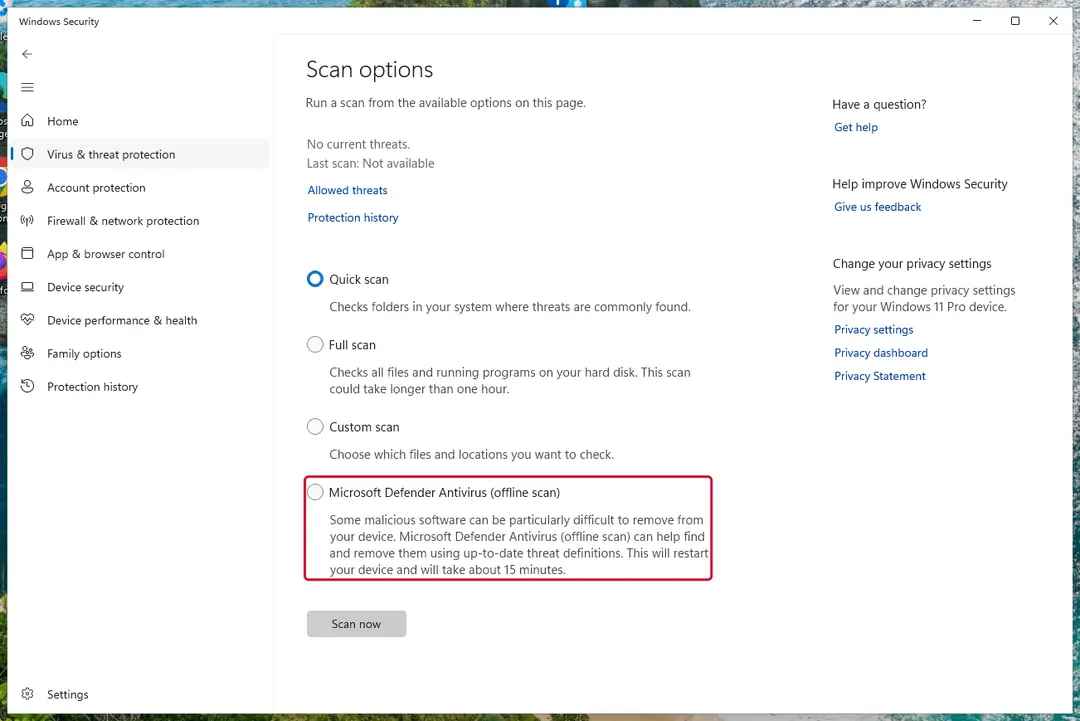
Windows 11: Windows Security > Virus & threat protection > Scan options. Full procedure with screenshots: Run a Microsoft Defender Offline scan
Step 5: Change passwords from another device and sign out other sessions
Si-chao.cstools.facebook.com can copy saved passwords, cookies and session tokens and send them out in seconds, so cleaning the PC does not undo the theft.
Change your passwords on a device that was never infected, starting with the e-mail account, since every other reset goes through it. On each account, end all other sessions and check the recovery e-mail, phone number and forwarding rules.
Then turn on two-step verification. Sign in on the Windows 11 or Windows 10 PC again only after the offline scan is clean.
Full procedure with screenshots: Turn on two-step verification / secure a hacked account
Instructions for each browser and system
The detailed steps for every browser and system this guide covers. Open the one you use.
Uninstall from Windows
Clear the system from malware and eliminate Si-chao.cstools.facebook.com
Uninstall from Windows 10/8:
- Type Control Panel into the Windows search box and open the result.
- Under Programs, select Uninstall a program.
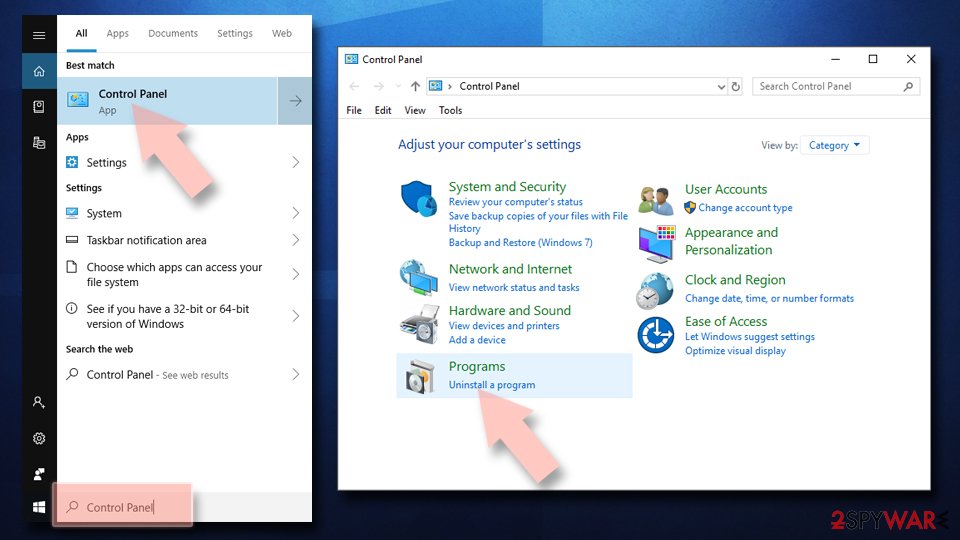
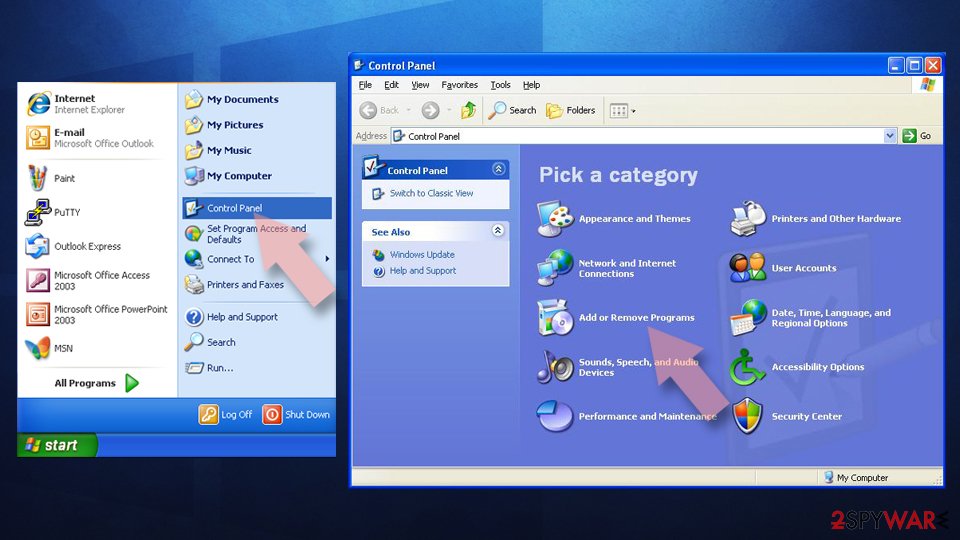
Uninstall from Windows 7/XP:
- Click on Windows Start > Control Panel (Windows XP users should click on Add/Remove Programs).
- In Control Panel, select Programs > Uninstall a program.
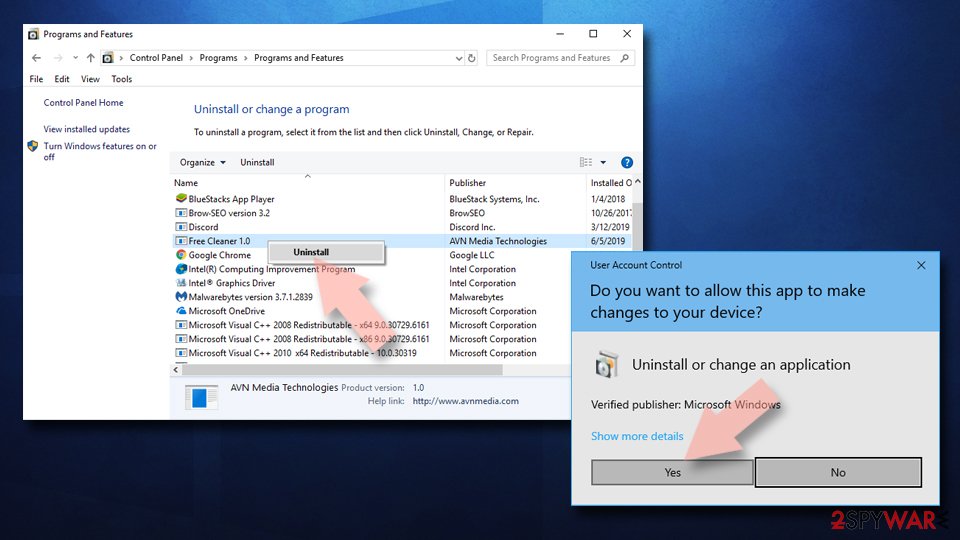
Remove the unwanted program:
- In the Programs and Features window, look for any recently installed suspicious entries, select them, and click Uninstall.
- If User Account Control appears, click Yes to confirm, then complete the removal.
Delete from macOS
Remove the unwanted application:
- From the menu bar, select Go > Applications.
- In the Applications folder, look for any suspicious entries, then drag them to Trash (or right-click and pick Move to Trash).
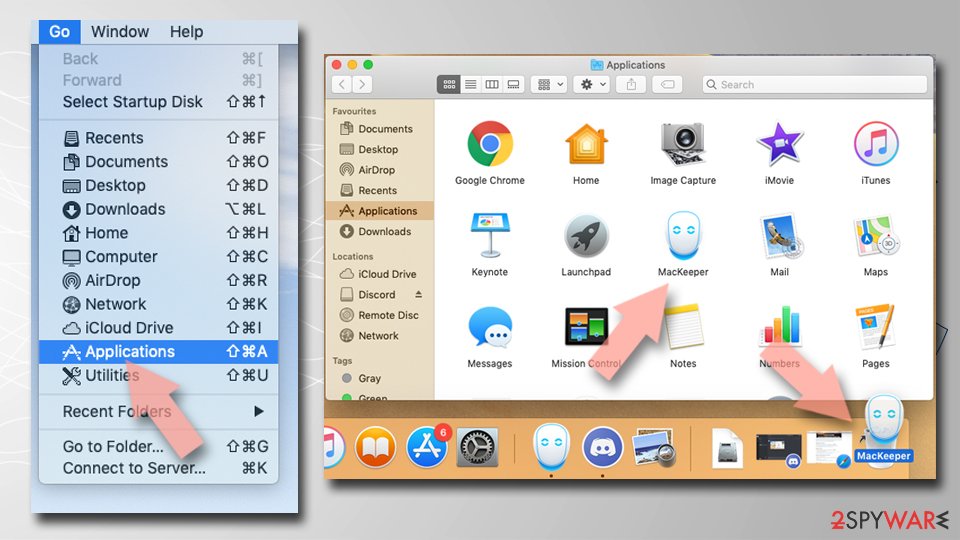
Delete leftover files and folders:
- Select Go > Go to Folder.
- Enter /Library/Application Support and remove any suspicious folders related to the unwanted program.
- Repeat the same check in the /Library/LaunchAgents and /Library/LaunchDaemons folders, deleting any suspicious entries.
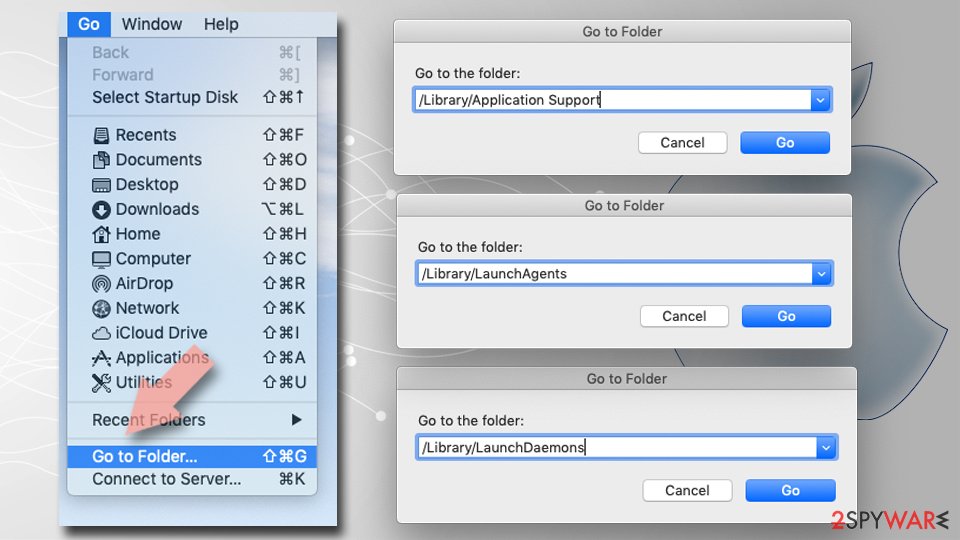
- Finally, empty the Trash to permanently remove the leftovers.
From our report of Apr 2020 · not reviewed since
Si-chao.cstools.facebook.com virus removal steps
Since the threat like Si-chao.cstools.facebook.com virus or any other version of the Facebook virus can interfere with browsing processes, online traffic and damage the machine if the particular threat lands on the system. Mainly threats like this focus on getting your data and gathering information that can be valuable.
These data tracking functions can also be used by advertisers and content, that appear out of nowhere, creators. You need to remove Si-chao.cstools.facebook.com as soon as possible, so you can take care of the possible damage in advance. The best method for quick and thorough cleaning - AV tools.
Rely on professional anti-malware tools for the Si-chao.cstools.facebook.com removal and run the full system scan to get a list of all possible intruders and malicious files or programs. This way, you can clear any possibly damaging traces of cyber infections and repair the computer.
After removal: passwords, accounts and prevention
Accounts come next
Because the PC showed si-chao.cstools.facebook.com in the list of installed apps, a sign of a program that could read browser data, the clean-up is only half of the work.
The other half happens in your online accounts.
Change passwords from a clean device, beginning with e-mail; sign out of all sessions; check forwarding rules and recovery phone numbers; and turn on two-step verification with an authenticator app or a passkey. Ask your bank to replace cards saved in the browser.
Why the order matters and what to check in each account: secure your accounts after malware.
Choose a proper web browser and improve your safety with a VPN tool
Online spying has got momentum in recent years and people are getting more and more interested in how to protect their privacy online.
One of the basic means to add a layer of security - choose the most private and secure web browser. Although web browsers can't grant full privacy protection and security, some of them are much better at sandboxing, HTTPS upgrading, active content blocking, tracking blocking, phishing protection, and similar privacy-oriented features.
However, if you want true anonymity, we suggest you employ a powerful VPN - it can encrypt all the traffic that comes and goes out of your computer, preventing tracking completely.
Lost your files? Use data recovery software
While some files located on any computer are replaceable or useless, others can be extremely valuable.
Family photos, work documents, school projects - these are types of files that we don't want to lose. Unfortunately, there are many ways how unexpected data loss can occur:
- power cuts
- Blue Screen of Death errors
- hardware failures
- crypto-malware attack
- even accidental deletion
To ensure that all the files remain intact, you should prepare regular data backups. You can choose cloud-based or physical copies you could restore from later in case of a disaster. If your backups were lost as well or you never bothered to prepare any, can be your only hope to retrieve your invaluable files.
Questions about Si-chao.cstools.facebook.com
What is Si-chao.cstools.facebook.com and why is it on my PC?
Si-chao.cstools.facebook.com is a program that was installed on the PC, most likely together with something else you downloaded. Free software sites and many installers add extra programs on setup pages with pre-ticked boxes, so the extra install looks like your choice even though nobody read the page.
Check the install date in Settings, Apps, Installed apps: the program you installed that day is the probable carrier. If you do not need Si-chao.cstools.facebook.com, uninstall it. If it belongs to your hardware or to a program you use, search its exact name and publisher first, because drivers and their tools can have unfamiliar names.
Si-chao.cstools.facebook.com came back after I uninstalled it. Why?
Something else is reinstalling it. Common causes are a second program from the same publisher, a scheduled task that downloads it again, or a browser extension that keeps prompting for it. Sort Installed apps by install date and uninstall each entry from the same day that you did not choose.
Then open Task Scheduler and look in the Task Scheduler Library for tasks with updater-style names that you do not recognise. Check Startup apps in Task Manager too. If Si-chao.cstools.facebook.com still returns, start Windows in Safe Mode, uninstall it there and run a Microsoft Defender offline scan, which looks for loaders that ordinary scans can miss.
Can I keep using the PC while Si-chao.cstools.facebook.com is on it?
Not for anything that matters. As long as the program behind si-chao.cstools.facebook.com in the list of installed apps runs, it can see what you type and what the browser stores, and it may download more malware. Disconnect the PC from the internet while you remove it, and do your banking, e-mail and password changes from another device.
Once the offline scan finds nothing and the sign does not return after a few restarts, normal use is fine. If the scan keeps finding new items, or you cannot remove the startup entry, a reset of Windows is the safer choice.
I found AnyDesk or ScreenConnect that I did not install. Is that Si-chao.cstools.facebook.com?
Not necessarily Si-chao.cstools.facebook.com, but it is a warning sign. These are legitimate remote support tools, and criminals use them as ready-made backdoors, especially after tech support scams or fake invoice calls.
If you did not install it and no one you trust set it up, uninstall it, change passwords from a clean device and check your bank account. If someone connected to your PC through it, follow the steps for remote access trojans and consider a Windows reset. Installed apps sorted by date shows when it appeared.
Should I report Si-chao.cstools.facebook.com?
Report it if you lost money, if accounts were taken over, if you are a business, or if the trojan came through a scam call. A police or national cybercrime report gives you a reference number for your bank and insurer and helps link cases.
You do not need to report a trojan that antivirus blocked before it ran. Before reporting, write down the dates, the detection name, file names and any messages or transactions linked to the attack; screenshots of antivirus alerts are useful evidence. The country list is in the report section above.
Do I need to reinstall Windows to get rid of Si-chao.cstools.facebook.com?
Usually not. A thorough clean-up is enough when the offline scan finds nothing afterwards and you do not see si-chao.cstools.facebook.com in the list of installed apps again. A reset is the safer choice if an attacker had remote control, if security tools were switched off, or if detections come back after every clean-up.
Windows 11 can reset itself without a USB stick under Settings > System > Recovery > Reset this PC. Copy documents and photos out first and scan the copies. A reset does not change passwords or undo stolen data, so the account steps still apply.
Should I check my other computers too?
Yes, it takes little time and removes doubt. Si-chao.cstools.facebook.com itself usually stays on one PC, but the download that carried it may have been copied to other computers, shared drives may hold the same installer, and an attacker who had access could have tried saved passwords on other devices.
Run a full scan on every Windows PC in the home or office, check shared folders for the original download, and change Wi-Fi and router passwords if they were stored on the infected machine.
How do I know if my PC has Si-chao.cstools.facebook.com?
Often you do not, which is the point of a trojan. Possible signs are an antivirus alert naming Si-chao.cstools.facebook.com or a generic trojan detection, unknown programs or scheduled tasks, processes with random names in Task Manager, browser extensions you did not add, security settings turned off, slower performance, or account alerts about logins from unknown places.
The reliable check is a full scan followed by Microsoft Defender's offline scan. If you recently ran a crack, a fake installer or a command a website told you to paste, scan even without symptoms.
My antivirus was on. How did a trojan get past it?
Antivirus programs see a file only when it is written or run, and criminals test each new build against popular scanners before release. Detection catches up within hours or days, which is often after the first victims ran it.
Archives with passwords, installers that fetch the malware later, and scripts run through PowerShell make the job harder. That is why behaviour such as downloading cracks or pasting commands matters more than any setting. Keep Windows and Defender updated, and turn on Reputation-based protection in App & browser control.
Will Fortect remove Si-chao.cstools.facebook.com?
Fortect scans Windows for malware and unwanted programs and repairs the system files and settings they change, and its free scan shows what it finds on your PC before you decide anything.
For Si-chao.cstools.facebook.com, follow the plan above as well: the browser steps take back permissions and settings that no scanner treats as a threat, and uninstalling the program that brought it removes the source.
Run Microsoft Defender's full scan and, if anything was found, its offline scan as a second opinion. If the symptoms are gone after the plan and both scans are clean, there is nothing more to do.
Sources
- Wtvr: Don't click the link!' BBB warns of Facebook video scam 'Is this you? (read October 7, 2026)
- FTC: How to recognize, remove and avoid malware (read October 7, 2026)
- Microsoft Learn: Microsoft Defender Offline (read October 7, 2026)
- Microsoft Learn: How Microsoft names malware (read October 7, 2026)