
Trusted-stream.life e-mail scam: how to spot it and what to do
Trusted-stream.life is one of many potentially malicious websites created by scammers to mislead users into subscribing to push notifications so that intrusive advertisements could be shown directly on their desktops later.
While most people do not engage with this page intentionally (they are usually redirected here after visiting a software crack distributor or peer-to-peer network), sometimes the reason for redirects could be attributed to adware or other malware infection, so it is vital to make thorough checks of the operating system.
Facts checked October 7, 2026. Removal steps tested on Windows 11 (26H2) and checked against Microsoft's and the browser makers' current documentation. Sections marked as our earlier report are the original text: they describe the threat as it was then and have not been reviewed since. The 2026 status, the removal steps and the questions are current.
Automatic
Get a free scan and check if your PC is infected.
Fortect finds malware, unwanted programs and the Windows damage they leave behind, and repairs it in one pass.
Do it yourself · free Remove Trusted-stream.life e-mail scam yourself 4 steps, about 12 minutes, no software needed.
Start the steps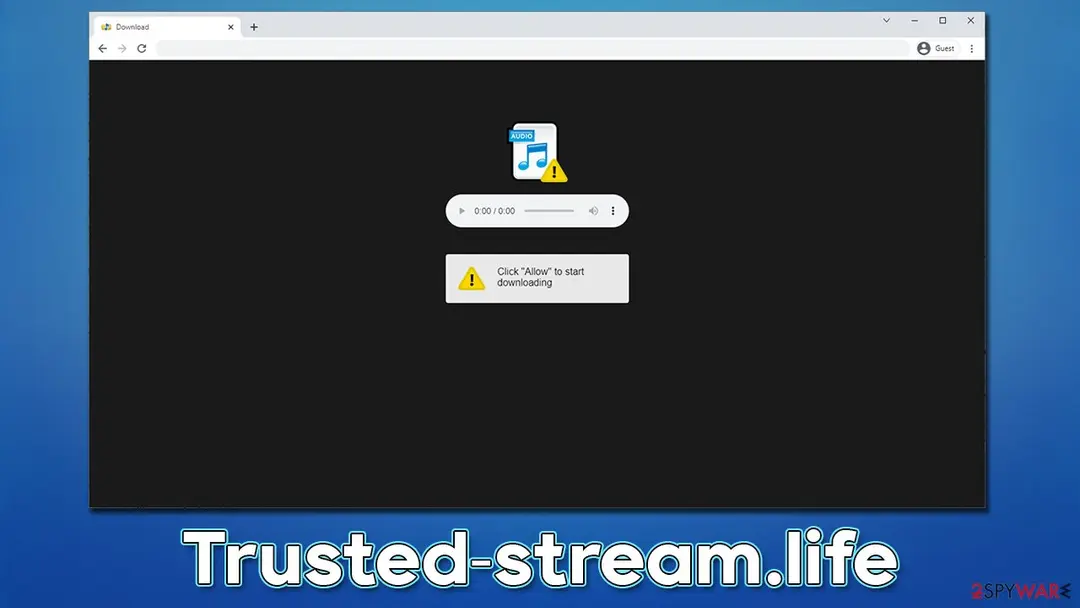
Trusted-stream.life e-mail scam: summary
| Distribution | The website can begin to show ads at any point after the "Allow" button within the notification prompt is clicked |
|---|---|
| Name | Trusted-stream.life |
| Type | Scam, phishing, adware |
| Symptoms | Push notifications show on the desktop at random time intervals. These pop-ups show fake notices and push scams. Links can also lead to malware-laden sites |
| Dangers | Shown pop-ups incorporate fake notices and push scams. Links can also lead to websites filled with malware |
| Evidence | 4 write-ups by security sites; details still limited |
| Removal | Scan the PC with security software to find and remove the malware and anything installed with it. Fortect scans Windows for malware and repairs the system files and settings it damaged. Remove it nowTo use the full-featured product, you have to purchase a license for Fortect. The scan is free. |
Show 6 more facts
| Arrives as | |
|---|---|
| Pretends to be | Microsoft |
| Claim | Your account needs urgent attention |
| Asks for | Your password |
| First seen | 20 July 2022 |
| Facts checked | 7 October 2026 |
What the Trusted-stream.life e-mail scam e-mail looks like
From our report of Jul 2022 · not reviewed since
As already mentioned, most people end up on Trusted-stream.life or a similar website by accident.
When using reliable search providers and browsing preferences, people are unlikely to access this or another site of this type. Therefore, the crooks behind it need to come up with different methods of distribution, and the easiest way of doing so is to associate with insecure advertising networks.
These advertising networks do not use properly check the security level of websites they place advertisements on, and neither do they check how secure that promoted material is, making it much easier for cybercriminals to spread malicious links.
Of course, the booby-trapped links on high-risk websites, placed there by site authors, could also result in the same outcome - users click a seemingly innocent link and are redirected to a scam site instead.
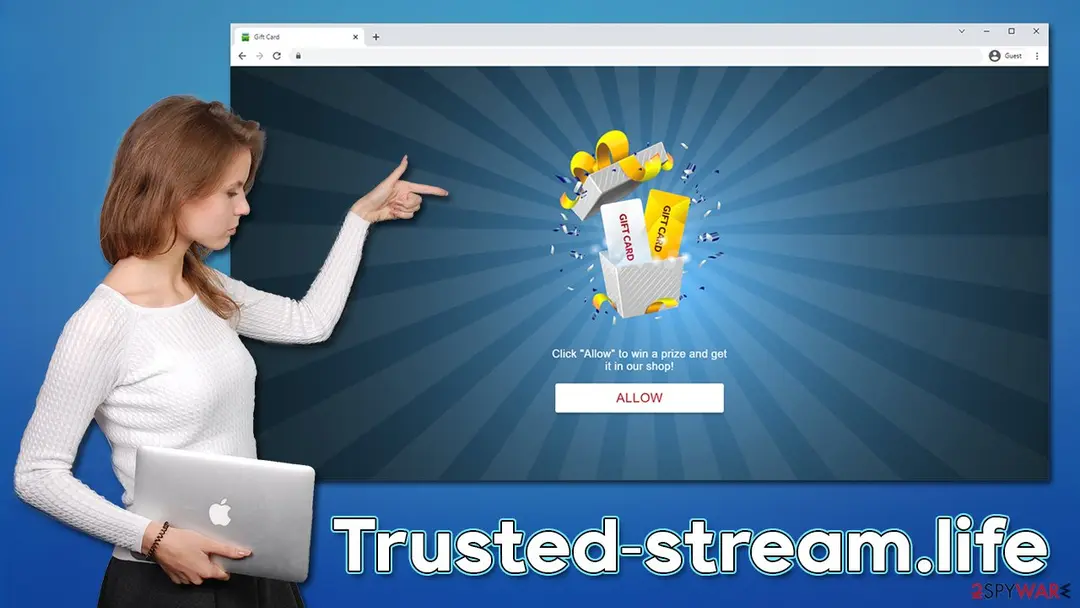
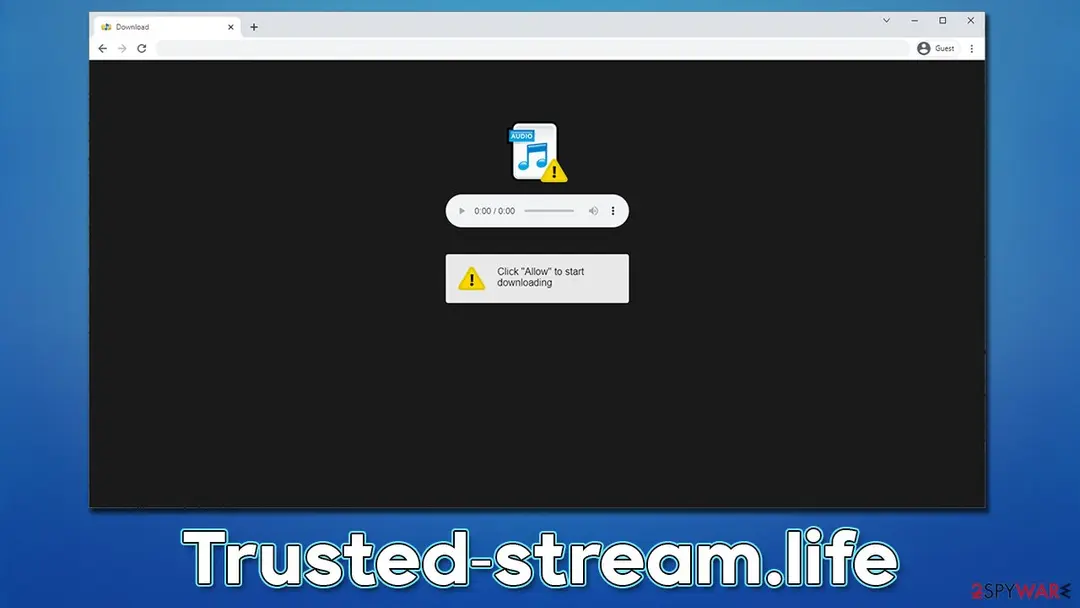
Once on the Trusted-stream.life page, they are presented with one of the following statements:
If they sound familiar, you are not wrong, as crooks simply use legitimate requests in a completely different manner. For example, confirming your age might imply that there's X-rated content ahead; robot check is ingrained in users' memories as many legitimate websites use captcha and similar procedures to prevent DDoS attacks against them.
In a few other cases, people are simply promised some type of reward, such as a movie stream or a fake prize.
In any case, all of these messages are misleading, to say the least, and all you would do by pressing the "Allow" button is enable push notification from this malicious website, resulting in unending ads directly on your desktop, even if the browser is not actively used. The only way to remove this is by accessing the browser settings, as we explain in the next paragraph.
- Click "Allow" to win the prize and get it in our shop!
- Click Allow to start downloading
- If you are 18+, click Allow
- Click Allow to confirm that you are not a robot
- Press "Allow" to watch the video
How to tell the Trusted-stream.life e-mail scam e-mail is fake
From our report of Jul 2022 · not reviewed since
- To get rid of notifications, you should access your web browser settings.
- and bloc the website in question.
Is Trusted-stream.life e-mail scam dangerous? What the senders want
From our report of Jul 2022 · not reviewed since
Trusted-stream.life is a push notification scam that shows misleading and intrusive ads once subscribed to
Trusted-stream.life is one of many potentially malicious websites created by scammers to mislead users into subscribing to push notifications so that intrusive advertisements could be shown directly on their desktops later.
While most people do not engage with this page intentionally (they are usually redirected here after visiting a software crack distributor or peer-to-peer network), sometimes the reason for redirects could be attributed to adware or other malware infection, so it is vital to make thorough checks of the operating system.
Trusted-stream.life ads can also carry all kinds of misleading information and even malicious links, so it is vital not to interact with anything shown within these prompts.
Those affected described the activity as particularly intrusive, as the pop-ups show up without prior warning, regardless of which websites users are visiting at the time. In order to stop this malicious activity, you have to access browser settings and block the site from doing so - check below for more details.
From our report of Jul 2022 · not reviewed since
What are push notifications?
There are a lot of misconceptions about the push notification feature for numerous reasons.
First of all, it was implemented on desktop browsers only in 2015, which is not enough time for the general population knows much about it. The second factor is that most users are sort of familiar with them - they just view it as another annoying pop-up they need to deal with, so they often dismiss the request to show notifications immediately.
In reality, the push notification feature is a part of the browser known as an API (Application Programming Interface) , which website developers can use to trigger a request for everyone who visits a particular site. Unfortunately, malicious actors can create fake websites, such as Trusted-stream.life, Adsandcomputer.com, Lpnotworld.com, Cleancaptcha.top, or others, to mislead users and make them subscribe to push notifications.
What to do after the Trusted-stream.life e-mail
If you only received the message and clicked nothing, step 3 is all you need.
If you clicked the link or typed anything on the page it opened, do every step, starting with the password.
Step 1: Change the password you typed on the fake page
If you typed a password on the page the Trusted-stream.life message opened, assume the sender has it. Go to the real site by typing its address yourself and change the password there, choosing one you have never used.
Change it anywhere else the same password was used, and sign out all other sessions if the service offers it. Any browser on Windows 11 or Windows 10 will do, as long as you do not follow the e-mail's link.
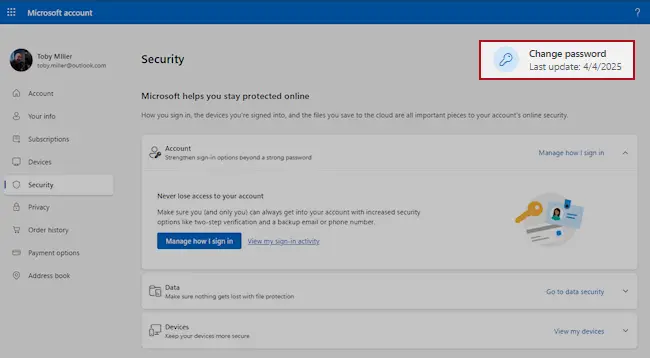
Microsoft account, Security page (account.microsoft.com/security): Change password. Full procedure with screenshots: Turn on two-step verification / secure a hacked account
Step 2: Turn on two-step verification
With two-step verification on, a stolen password alone no longer opens the account, because a sign-in from a new device also needs a code from your phone.
Switch it on for the e-mail account first, then for banking, shopping and social accounts that use that address.
Check the recovery phone, the recovery e-mail and any forwarding rules while you are in the settings, since attackers change them to come back. The pages are the same on Windows 11 and Windows 10.
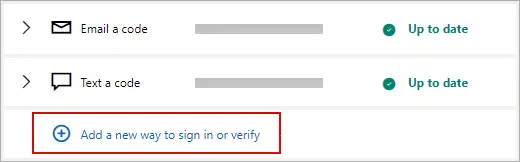
Microsoft account: Manage how I sign in, where two-step verification and the sign-in methods are. Full procedure with screenshots: Turn on two-step verification / secure a hacked account
Step 3: Report the e-mail and delete it
Do not reply and do not click anything else in the message. In Outlook select the e-mail and choose Report > Report phishing; in Gmail open the three-dot menu next to Reply and pick Report phishing.
That trains the filter for everyone on the service, and the message goes to the junk folder. If the e-mail came to a work address, forward it to your IT team as an attachment first.
The steps are the same in the web mail and the mail apps on Windows 11 and Windows 10.
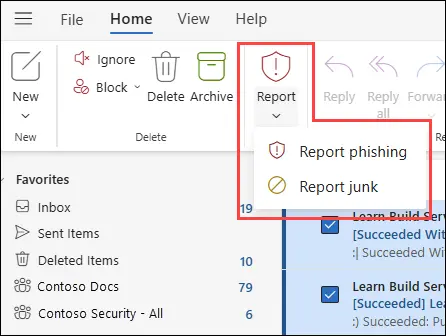
New Outlook for Windows and Outlook on the web: Report > Report phishing. Full procedure with screenshots: Report a phishing e-mail
Step 4: Scan the PC if you opened a file from the message
A fake sign-in page only steals what you type, so most readers can skip this step. If the Trusted-stream.life e-mail made you download or open a file, delete it and scan the PC.
In Windows Security > Virus & threat protection > Scan options, run a Full scan and then Microsoft Defender Antivirus (offline scan) > Scan now. The offline scan restarts Windows 11 or Windows 10 and takes about 15 minutes.
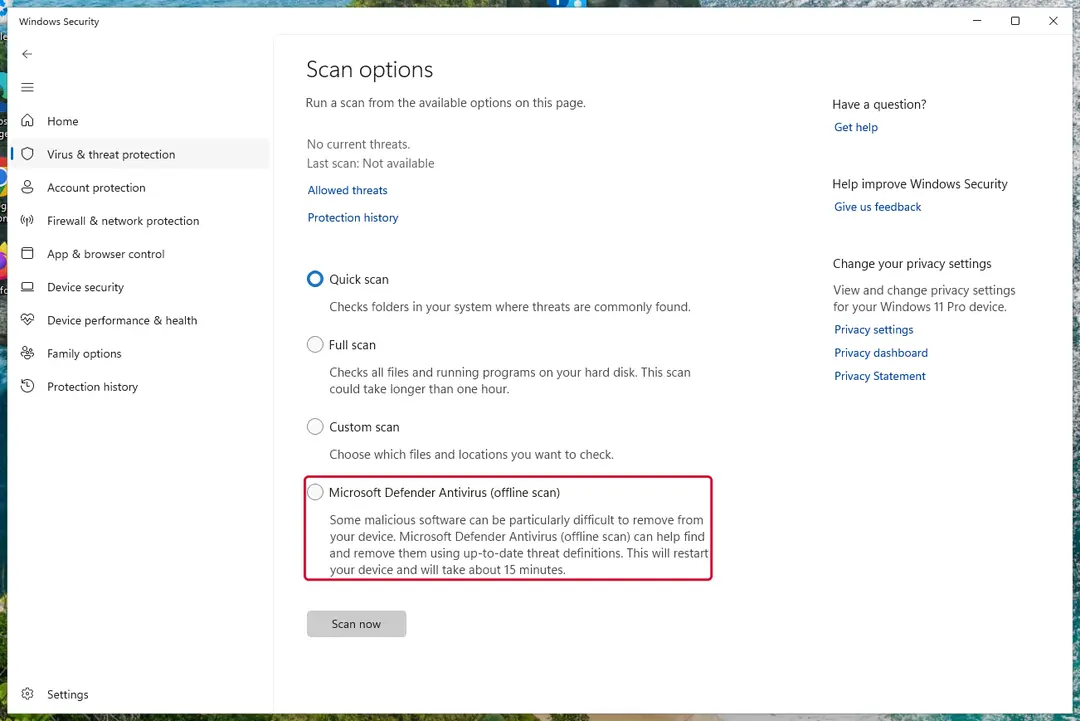
Windows 11: Windows Security > Virus & threat protection > Scan options. Full procedure with screenshots: Run a Microsoft Defender Offline scan
Protect your privacy - employ a VPN
There are several ways how to make your online time more private - you can access an incognito tab.
However, there is no secret that even in this mode, you are tracked for advertising purposes. There is a way to add an extra layer of protection and create a completely anonymous web browsing practice with the help of VPN. This software reroutes traffic through different servers, thus leaving your IP address and geolocation in disguise.
Besides, it is based on a strict no-log policy, meaning that no data will be recorded, leaked, and available for both first and third parties. The combination of a secure web browser and VPN will let you browse the Internet without a feeling of being spied or targeted by criminals.
No backups? No problem. Use a data recovery tool
If you wonder how data loss can occur, you should not look any further for answers - human errors, malware attacks, hardware failures, power cuts, natural disasters, or even simple negligence.
In some cases, lost files are extremely important, and many straight out panic when such an unfortunate course of events happen. Due to this, you should always ensure that you prepare proper data backups on a regular basis.
If you were caught by surprise and did not have any backups to restore your files from, not everything is lost. is one of the leading file recovery solutions you can find on the market - it is likely to restore even lost emails or data located on an external device.
From our report of Jul 2022 · not reviewed since
Trusted-stream.life ads removal
While one might initially believe that the system has been infected with some kind of virus, the push notifications themselves are not a sign of infection.
After the elimination of potentially unwanted programs and malware, you should use , which would clear browsers from cookies and fix any damage that could have been sustained due to the infection. To stop the annoying Trusted-stream.life ads, please proceed with the following instructions:
Google Chrome (desktop)
Google Chrome (Android)
MS Edge (Chromium)
- Open the Google Chrome browser and go to Menu > Settings.
- Locate the Privacy and security section and pick Site Settings > Notifications.
- Look at the Allow section and look for a suspicious URL.
- Click the three vertical dots next to it and pick Block. This should remove unwanted notifications from Google Chrome.
- Open Google Chrome and tap on Settings (three vertical dots).
- Select Notifications.
- Locate the unwanted URL and toggle the button to the left (Off setting).
- Open Mozilla Firefox and go to Menu > Options.
- Click on Privacy & Security section.
- Under Permissions, you should be able to see Notifications. Click the Settings button next to it.
- In the Settings – Notification Permissions window, click on the drop-down menu by the URL in question.
- Select Block and then click on Save Changes. This should remove unwanted notifications from Mozilla Firefox.
- Open Microsoft Edge, and go to Settings.
- Select Site permissions.
- Go to Notifications on the right.
- Under Allow, you will find the unwanted entry.
- Click on More actions and select Block.
- Click on Safari > Preferences...
- Go to the Websites tab and, under General, select Notifications.
- Select the web address in question, click the drop-down menu and select Deny.
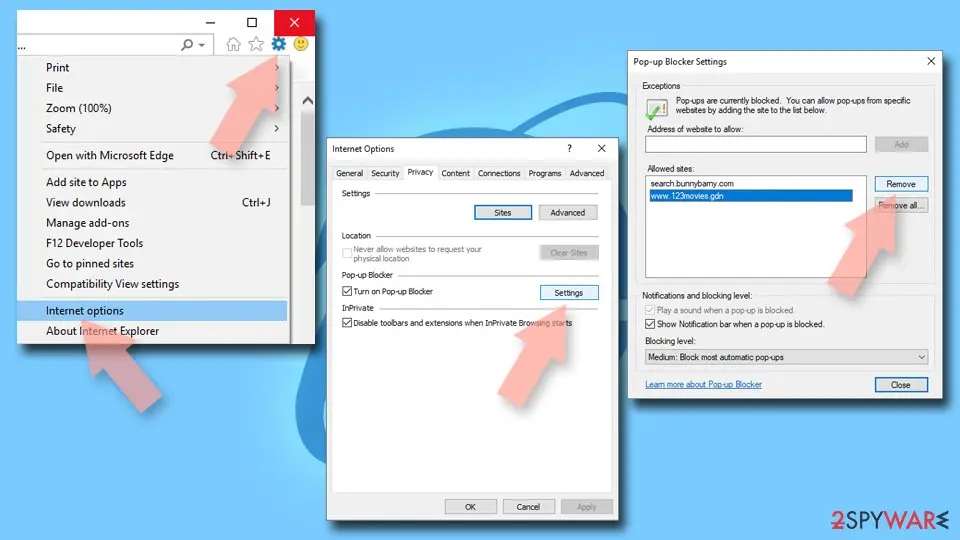
- Open Internet Explorer, and click on the Gear icon at the top-right of the window.
- Select Internet options and go to the Privacy tab.
- In the Pop-up Blocker section, click on Settings.
- Locate the web address in question under Allowed sites and pick Remove.
Questions about Trusted-stream.life e-mail scam
Could Trusted-stream.life be a genuine message?
We checked it, and it is not. Microsoft is only the costume. The message exists to get your password, and real companies handle that inside your account, after you sign in normally, not through links, attachments or phone numbers in a message you did not expect.
Scammers copy logos and footers perfectly, so the design proves nothing. The sender address, the link target and the request are the reliable signs, and all three point to a scam here. Delete it, and if you are worried, check your account directly.
Why does Trusted-stream.life say that your account needs urgent attention?
Because that story works. A problem that needs fixing, a deadline and a simple solution make people act before they check.
The claim that your account needs urgent attention is the same for everyone who received Trusted-stream.life; it was written once and sent in bulk. Nothing about your own situation triggered it.
If you are unsure, look at the real account or service the normal way, without using the message. The claim will not be there, which settles the question. Then report the message.
What does Trusted-stream.life want from me?
In the end, your password. Everything else in Trusted-stream.life, from the logo to the deadline, is there to get you to that point without stopping to think. Knowing the goal helps you judge your risk.
If you did not give it, you lost nothing and can delete the message. If you did, the steps in this guide are ordered by what you handed over:
- passwords first
- then card and bank details
- then documents and anything you installed
- ran
Act on the highest item on that list first.
How do I contact the real Microsoft?
Not through anything in Trusted-stream.life. Type the official website address into the browser yourself, use the app you already have, or use the phone number printed on your card, contract or a previous genuine invoice.
Search results can be risky too, because scammers buy ads for support numbers. Once you reach the real Microsoft, you can ask whether there is any problem with your account and report the scam message; many companies have a dedicated address for phishing reports on their security page.
Can I trick the scammers or waste their time?
Better not. Replying to Trusted-stream.life confirms that your address or number is live and puts it on lists that sell for more. Scammers who are teased sometimes switch to harassment or try to use any detail you reveal, such as your name, employer or location.
Playing along also risks a slip, like opening a link or a file they send. Report the message, block the sender and delete it. Your report does more damage to the operation than a conversation would.
Is it worth reporting a scam if I lost nothing?
Yes. Reports from people who did not fall for Trusted-stream.life are how blocklists, mail filters and hosting companies find new scam pages quickly, often before most recipients open the message. Reporting the message as phishing in your mail app is enough for most people.
If the message impersonates a company, its security or abuse team usually accepts forwarded copies too. Police reports matter mainly when money or documents were lost, but national fraud centres also collect reports without losses to spot campaigns.
What is the single best habit against scams like this?
Never act on a message through the message itself. If something claims to be from Microsoft and asks you to sign in, pay, call or open a file, close it and go to the service the way you always do:
- a bookmark
- the app
- the number on your card
Real problems will be visible there. This one habit defeats almost every phishing, invoice, delivery and account-suspension scam, regardless of how convincing the design is, because the scammers can copy the look but not the real account.
I entered my password on the fake page. What should I do?
Change the password on the real site right away, through its own website or app, and sign out of all sessions.
If you use the same password anywhere else, change it there too. Turn on two-step verification with an authenticator app or a passkey. Check the account for changes:
- recovery e-mail
- phone number
- forwarding rules
- recently sent messages
If you can no longer sign in, use the provider's account recovery page. Tell your contacts if the account sent messages in your name.
Why did I receive Trusted-stream.life?
Scam messages go to millions of addresses and numbers collected from data breaches, public websites and simple guessing. Receiving Trusted-stream.life does not mean your PC is infected or that an account of yours was hacked.
If the message includes an old password of yours, it comes from a breach of some website; change that password wherever you still use it. Mark the message as spam or phishing so your provider blocks similar ones. Never reply to ask to be removed from the list: the sender treats a reply as proof that the address works.
Will Fortect remove Trusted-stream.life?
Fortect scans Windows for malware and unwanted programs and repairs the system files and settings they change, and its free scan shows what it finds on your PC before you decide anything.
For Trusted-stream.life, follow the plan above as well: the browser steps take back permissions and settings that no scanner treats as a threat, and uninstalling the program that brought it removes the source.
Run Microsoft Defender's full scan and, if anything was found, its offline scan as a second opinion. If the symptoms are gone after the plan and both scans are clean, there is nothing more to do.
Sources
- How-to Geek: What Is an API, and How Do Developers Use Them? (read October 7, 2026)
- Wikipedia: Phishing (read October 7, 2026)
- FTC: How to recognize and avoid phishing scams (read October 7, 2026)
- CISA: Recognize and report phishing (read October 7, 2026)
- Microsoft Support: Protect yourself from phishing (read October 7, 2026)