
Spchlpr on Mac: what it is and how to remove it
Spchlpr is the application causing pop-up error messages and suspicious processes appearing out of nowhere. This is the version of Mac malware related to Similar Photo Cleaner and other PCVARK products based on shady advertising networks and promotional content delivery.
Facts checked October 7, 2026. Removal steps checked against Apple's current documentation and the security vendors' reports. We have not run the malware on a Mac. Sections marked as our earlier report are the original text: they describe the threat as it was then and have not been reviewed since. The 2026 status, the removal steps and the questions are current.
Automatic
Get a free scan and check if your Mac is infected.
Fortect for Mac scans for malware and unwanted programs, and its free scan shows what it finds before you decide anything.
If Spchlpr keeps coming back after uninstalling, a scan can find what reinstalls it.
Do it yourself · free Remove Spchlpr yourself 7 steps, about 21 minutes, no software needed.
Start the steps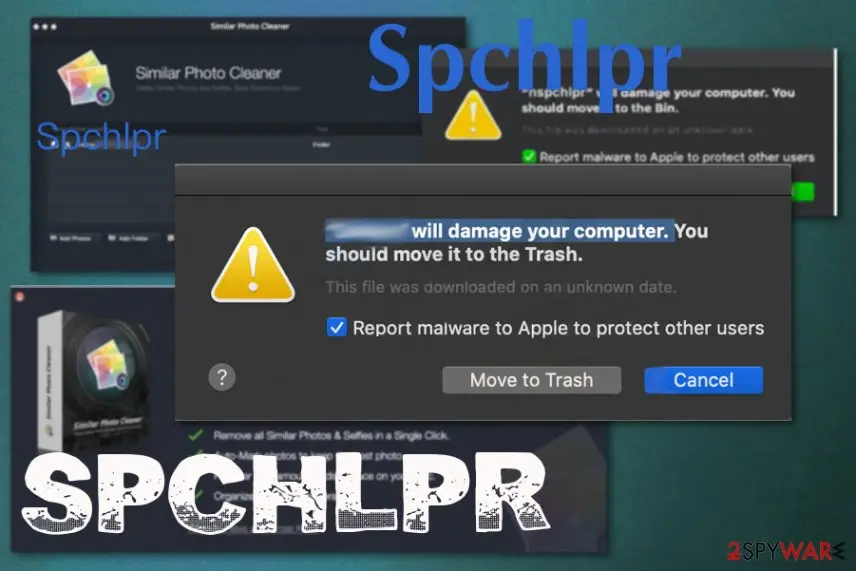
Spchlpr: summary
| Damage | Any potentially unwanted application can access the browsing data and cause issues with privacy. Various alterations to system preferences, files and programs can cause damage to the machine itself, content the user gets exposed to due to the online traffic redirects leads to malware infiltrations without even noticing |
|---|---|
| Name | Spchlpr |
| Type | Mac malware/ unwanted application |
| Symptoms | The system starts running slow, and the browsing process becomes difficult due to additional redirects and pop-ups with commercial content, promotional material. False error messages convince people to eliminate some files that may not even be related to hazardous programs |
| Distribution methods | Other rogue application and deceptive pages can lead to the installation of the shady app, freeware installation processes when you skip through important steps can allow PUPs |
| Detection names | No Microsoft detection name is known |
| Removal | Scan the Mac with security software to find the malware and anything installed with it. Fortect for Mac scans for malware and unwanted programs. Remove it nowTo use the full-featured product, you have to purchase a license for Fortect. The scan is free. |
Show 3 more facts
| Evidence | 4 write-ups by security sites; details still limited |
|---|---|
| First seen | 12 November 2019 |
| Facts checked | 7 October 2026 |
What Spchlpr does on an infected Mac
From our report of Nov 2019 · not reviewed since
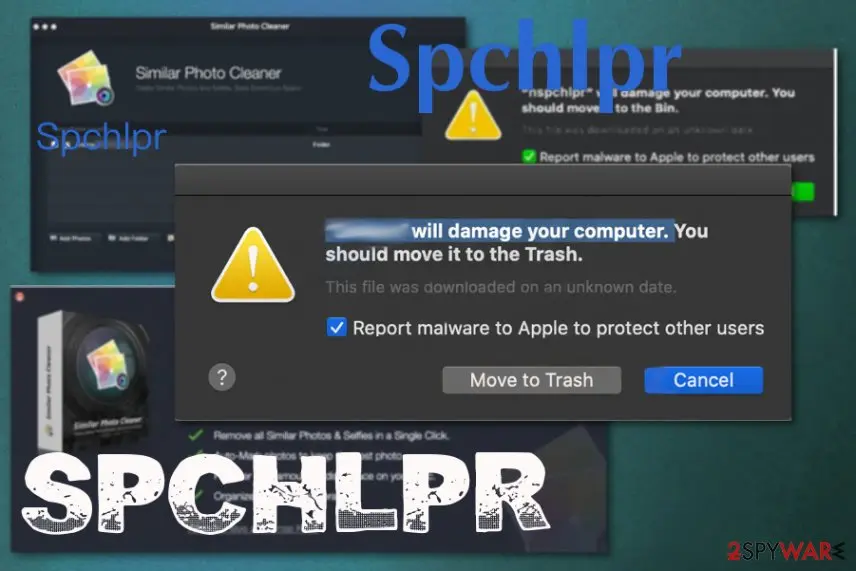
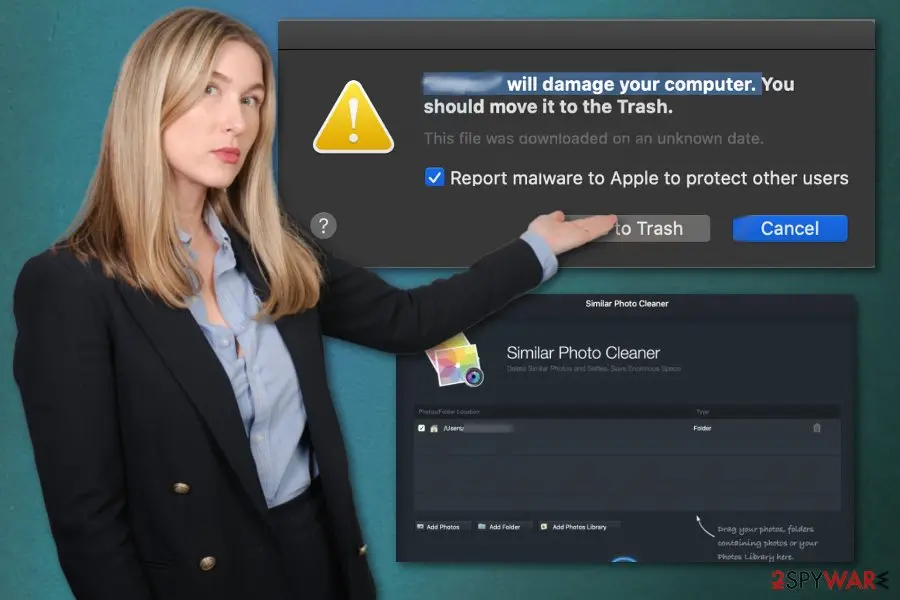
Spchlpr is the unwanted macOS application that appears in error messages claiming that it is blocked
Spchlpr is the application causing pop-up error messages and suspicious processes appearing out of nowhere.
This is the version of Mac malware related to Similar Photo Cleaner and other PCVARK products based on shady advertising networks and promotional content delivery. People encounter the annoying message and cannot associate a specific application with the questionable "spchlpr will damage your computer" pop-up.
The message is fake, and it indicates PUP infiltration, not the actual system damage. The message can include other processes or names of rogue applications like Maftask, Ummhlpr, Helpermcp.
This is not a malicious program, but users call it an Spchlpr virus due to unexplainable occurrence and shady symptoms. Application itself cannot damage the system nor is designed to corrupt the system or files, but this is a potentially unwanted program that has a goal of spying on users' online behavior, tracking, and collecting information useful in advertising campaigns.
Often online advertising pages involve additional layers that trigger direct downloads and installations of tools, browser-based applications, and even malware, so the pop-up may cause more than you think.
Spchlpr is related to ad-supported applications that should help with duplicate photos and pictures on the system. This is a pointless tool that has low functionality when compared to the promotional material delivered online. It is useless for the user, but it also leads to severe computer and privacy problems. Besides installing without permission and users' consent, PUP can load browser extensions, add-ons, and plugins behind your back.
Unfortunately, the consequences of Spchlpr infiltration means that your time online gets annoying due to intrusive pop-up ads, redirect, unwanted programs installed, and so on. Some users complain that they cannot quit Similar Photo Cleaner itself and those pop-ups, as it displays windows, that cannot be closed. All these intrusive features make the program fall into the category of potentially unwanted apps.
Spchlpr.App pop-up errors can show different versions of the false system warning like:
Many people believe that Mac devices cannot get any type of malware. That may be somewhat true since ransomware and trojans are not based on this operating system and more often designed to target Windows OS only.
However, unwanted programs, adware, hijackers, rogue tools are especially active and annoying when it comes to macOS malware. You shouldn't ignore this fact and remove Spchlpr as soon as it shows any suspicious symptoms on your machine. Such applications less than often gets blacklisted, so the installer can run freely and infect the targeted machine.
Google Chrome, Safari, Mozilla Firefox, or other browsers can block sites that distribute PUPs themselves, but that is not happening commonly. Unfortunately, the low detection rate also means that it is more difficult to quickly and efficiently perform Spchlpr removal.
You may need to delete the rogue tool itself from the machine, so check the Application folder, Activity Monitor.
Note that Spchlpr also responsible for:
Since this is a possibly more persistent threat than you can think, you should go through the automatic elimination process. Also, relying on or a different system tool, data repair application, the optimizer might give you the advantage. Spchlpr affected files can get repaired or deleted without damaging the device itself.
- Fake software update notifications;
- Freeware applications installed out of nowhere;
- Corrupted/shady websites appearing on the screen;
- Bundled packages promoted on those pop-ups.
From our report of Nov 2019 · not reviewed since
Media players, readers and free utilities get pre-packed with PUPs
Anything distributed online for free should immediately raise questions for you, especially when normal versions of the applications cost money.
Any phishing sites with promotional content that pushes optimization programs shouldn't be trusted as a source of the software.
Adware, potentially unwanted programs, or rogue tools can be dropped on the system by another potentially unwanted program. In this case, the application is associated with an infection with the shady program developed by the company PCVARK. The company is known to have many PUPs that get to be advertised on and delivered from deceptive pages.
Such downloads often start automatically, and the user cannot notice the extra installation since it is not fully disclosed. For that, you need to go for Advanced, or Custom installation options instead of recommended default installs. Experts also recommend using security and ad-blocking software designed for Mac to defend from these stealthy infiltrations int he future.
From our report of Nov 2019 · not reviewed since
More from our earlier report on Spchlpr
- You need a professional anti-malware tool that can detect and remove Spchlpr completely
- You should rely on cleaning the system from virus damage or any suspicious content like corrupted or affected files, so repair those with optimization software like
- "nspcuninstall" will damage your computer.
- You should move it to the Bin.
- This file was downloaded on an unknown date.
- Report malware to apple to protect other users.
- or "nspchlpr" will damage your computer.
How to remove Spchlpr
How to remove Spchlpr from a Mac
Start with the passwords and crypto, from another device: a stealer copies them in seconds.
Then clean the Mac, or erase it.
Step 1: Change passwords from another device first
If you pasted a command into Terminal or opened a downloaded file from Spchlpr, assume the passwords saved in the browsers and in Keychain on this Mac are known to the attacker.
From a phone or a clean computer, change the e-mail password first, then banking, shopping, social and work accounts, and sign out of all other sessions on each one.
Move any cryptocurrency to a new wallet created on a clean device, because a seed phrase that was stored on this Mac is compromised. Do this before cleaning the Mac: cleaning does not undo the theft.
Full procedure with screenshots: Turn on two-step verification / secure a hacked account
Step 2: Quit what is running that you do not recognize
Open Activity Monitor (in Applications > Utilities, or search for it with Command + Space).
In the CPU or Network tab, look for a process you did not install or whose name is random, select it, click the stop button (the octagon with an X) and choose Quit or Force Quit.
Note the name first: you will look for the same name in the next steps. Malware that comes back after a restart is handled in the next two steps.
Step 3: Remove unknown login items and background items
Open System Settings > General > Login Items & Extensions. Under Open at Login and Allow in the Background, switch off or remove anything you do not recognize, especially items whose developer is shown as an unknown name or that appeared on the day you ran the command.
Then open Finder, choose Go > Go to Folder and check
~/Library/LaunchAgents,/Library/LaunchAgentsand /Library/LaunchDaemons for property list (.plist) files you did not add. Drag suspicious ones to the Bin, then restart the Mac.Step 4: Delete apps and downloads you did not intend to install
Open the Applications folder and your Downloads folder. Drag any app you did not install, and any disk image (
.dmg), installer (.pkg) or archive (.zip) that came from Spchlpr or a site you do not trust, to the Bin, then empty the Bin.Also check
~/Library/Application Supportfor a folder with the same name as the app you removed.Step 5: Check the browsers for extensions and changed settings
In Safari open Settings > Extensions and General (homepage). In Chrome open
chrome://extensions, in Firefoxabout:addons.Remove any extension you did not add, and reset the homepage and search engine if they changed. Browsers hold saved passwords and cookies, which is why the password step comes first.
Step 6: If it was an infostealer, erase and reinstall macOS
Stealers copy data and often leave persistence you cannot be sure you found.
The only complete fix is to back up your personal files only (documents, photos, not apps or settings), then open System Settings > General > Transfer or Reset > Erase All Content and Settings, or use macOS Recovery to erase the disk and reinstall macOS, as Apple describes in its support articles.
Restore only your files afterwards, and install apps again from their official sources.
Step 7: Report it and watch your accounts
Report the site and the command to the authorities in your country, and tell your bank if any card was saved in a browser or in Keychain.
Over the next weeks watch your e-mail, bank and exchange accounts for sign-ins and transfers you did not make. Keep the notes you made, such as the process names and the file dates, in case a bank or the police ask for them.
Full procedure with screenshots: Report a cyber attack or scam to the authorities
Instructions for each browser and system
The detailed steps for every browser and system this guide covers. Open the one you use.
Remove from Google Chrome
Your browser may get affected by the Spchlpr when it installs programs and apps on Chrome without asking for permission
Delete malicious extensions from Google Chrome:
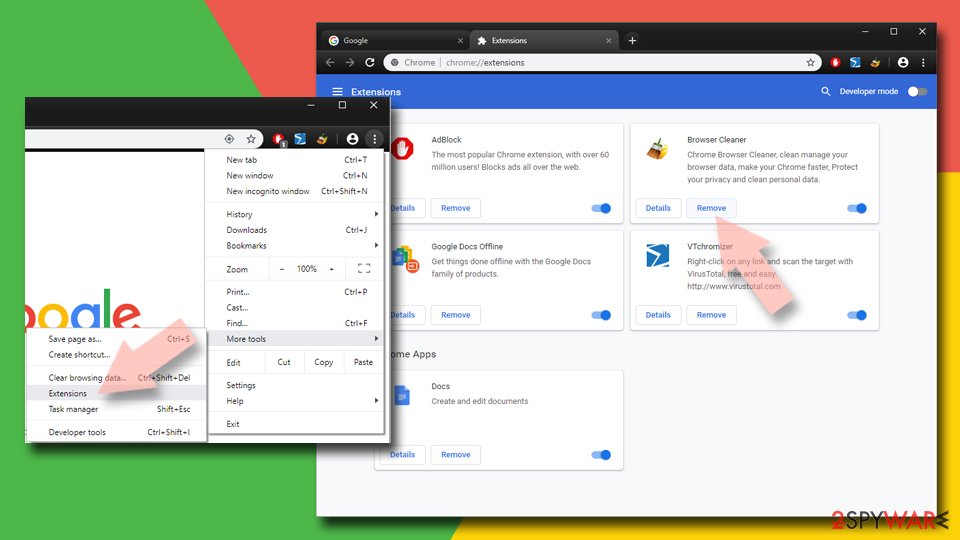
- Open Google Chrome, click on the Menu (three vertical dots at the top-right corner) and select More tools > Extensions.
- In the newly opened window, you will see all the installed extensions. Uninstall all suspicious extensions related to the unwanted program by clicking Remove.
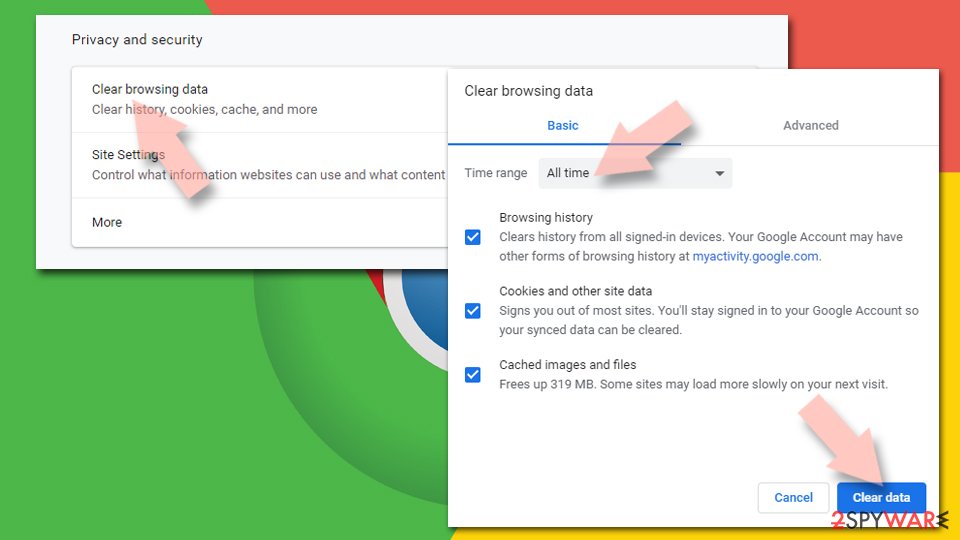
Clear cache and web data from Chrome:
- Click on Menu and pick Settings.
- Under Privacy and security, select Clear browsing data.
- Select Browsing history, Cookies and other site data, as well as Cached images and files.
- Click Clear data.
Change your homepage:
- Click menu and choose Settings.
- Look for a suspicious site in the On startup section.
- Click on Open a specific or set of pages and click on three dots to find the Remove option.
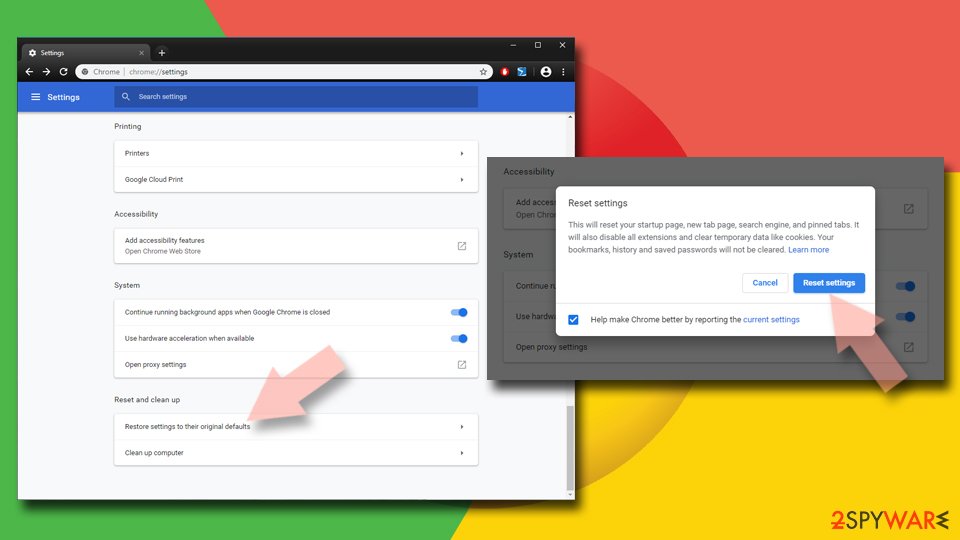
Reset Google Chrome:
If the previous methods did not help you, reset Google Chrome to eliminate all the unwanted components:
- Click on Menu and select Settings.
- In the Settings, scroll down and click Advanced.
- Scroll down and locate Reset and clean up section.
- Now click Restore settings to their original defaults.
- Confirm with Reset settings.
Remove from Mozilla Firefox (FF)
Get rid of the unwanted application and other suspicious extensions, add-ons installed without your permission
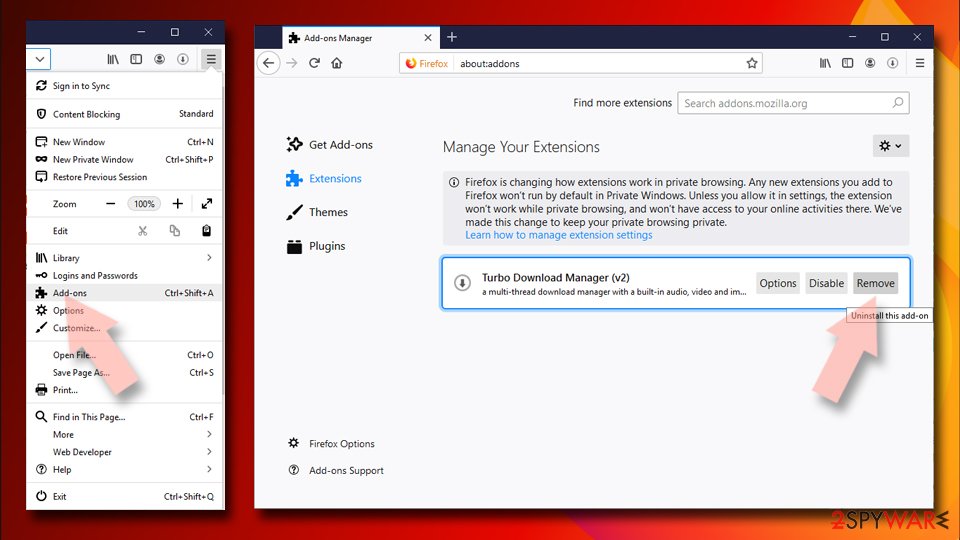
Remove dangerous extensions:
- Open Mozilla Firefox browser and click on the Menu (three horizontal lines at the top-right of the window).
- Select Add-ons.
- In here, select the unwanted extension and click Remove.
Reset the homepage:
- Click three horizontal lines at the top right corner to open the menu.
- Choose Settings.
- Under Home, set your preferred homepage and new tab settings.
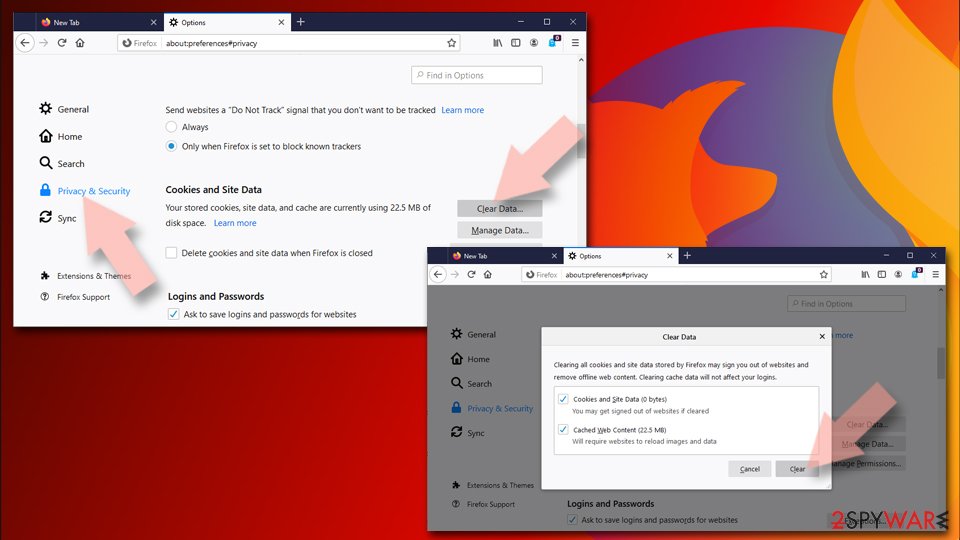
Clear cookies and site data:
- Click Menu and pick Settings.
- Go to Privacy & Security section.
- Scroll down to locate Cookies and Site Data.
- Click on Clear Data...
- Select Cookies and Site Data and Temporary cached files and pages, then click Clear.
Reset Mozilla Firefox
If clearing the browser as explained above did not help, reset Mozilla Firefox:
- Open Mozilla Firefox browser and click the Menu.
- Go to Help and then choose Troubleshooting Information.
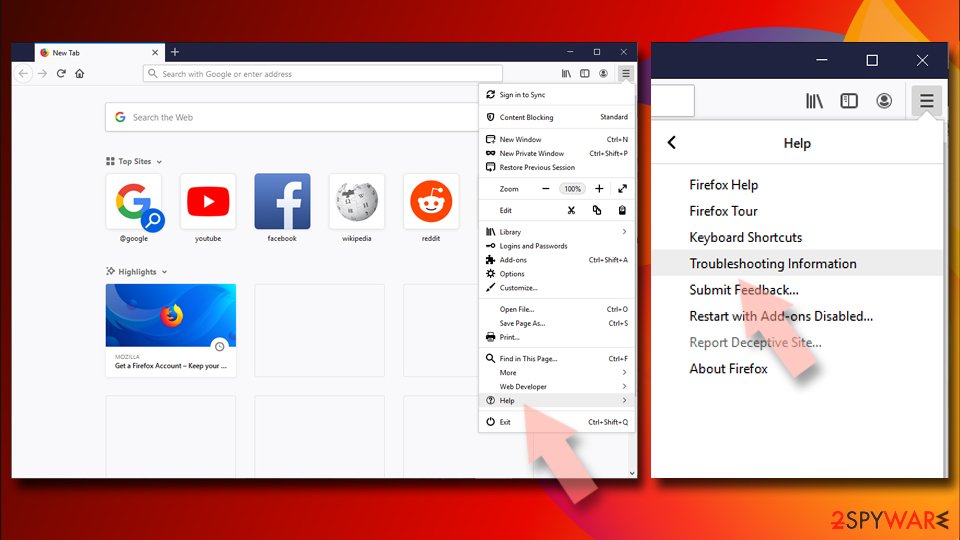
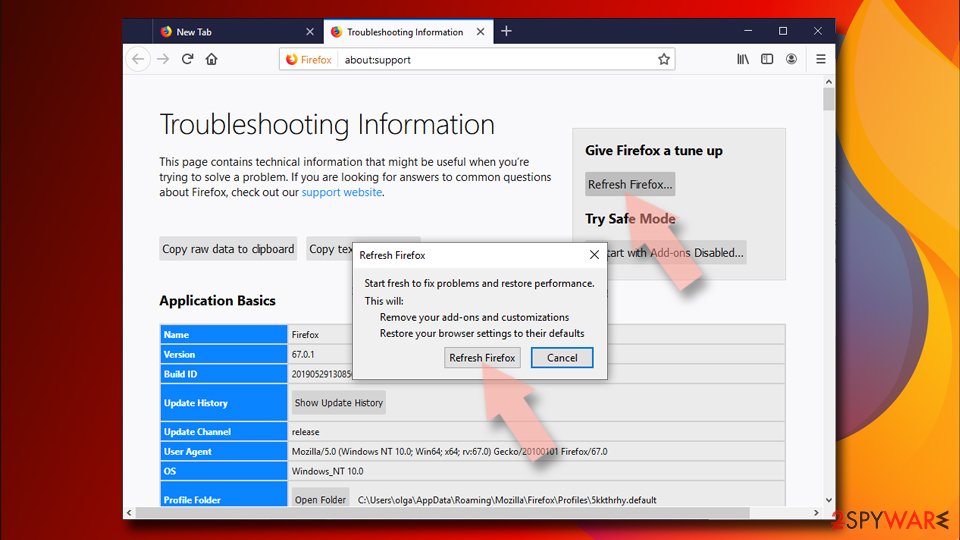
- Under Give Firefox a tune up section, click on Refresh Firefox...
- Once the pop-up shows up, confirm the action by pressing on Refresh Firefox.
Delete from Safari
Remove dangerous extensions:
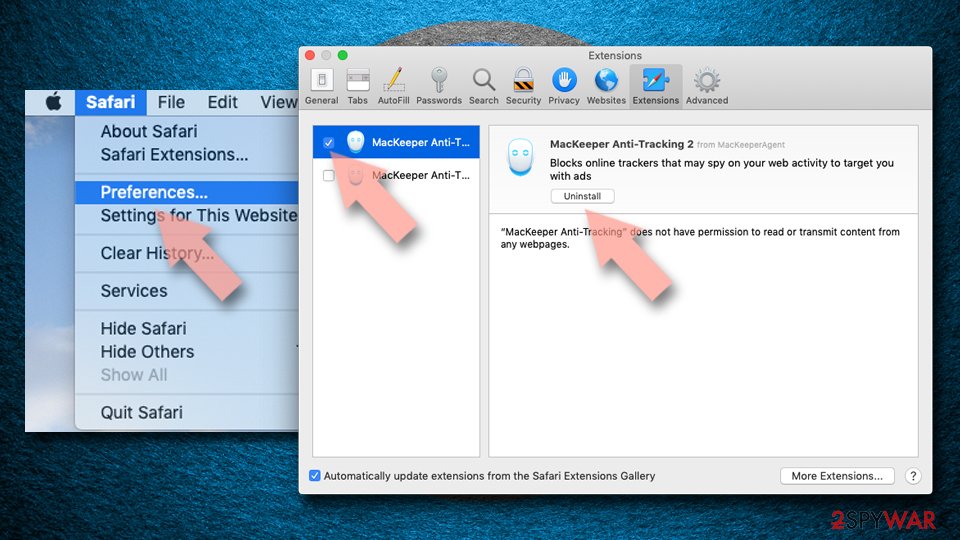
- Open Safari, click Safari in the menu at the top-left of the screen, and select Preferences.
- Go to the Extensions tab, look for any suspicious entries, and click Uninstall to remove them.
Clear history and website data:
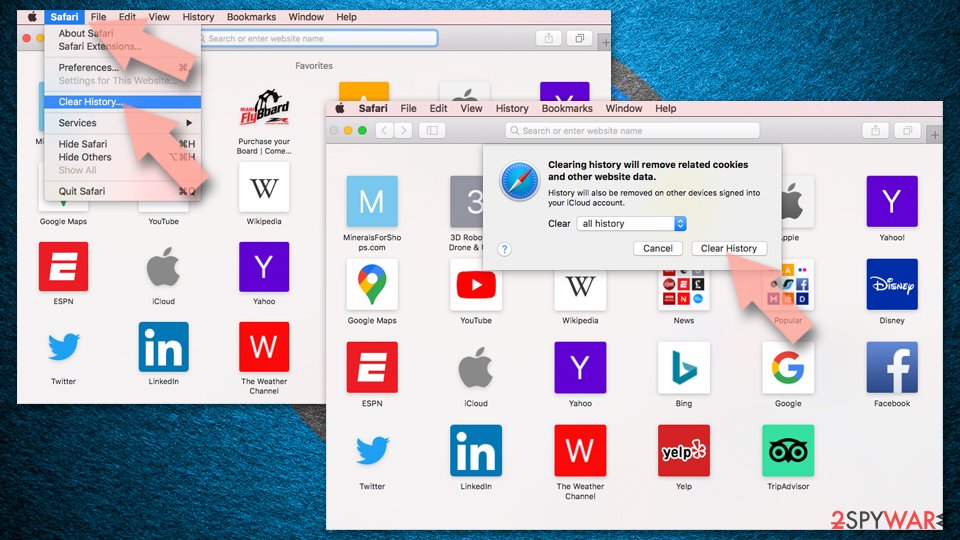
- Click Safari in the menu and pick Clear History.
- Set Clear to all history and confirm with Clear History.
Reset Safari:
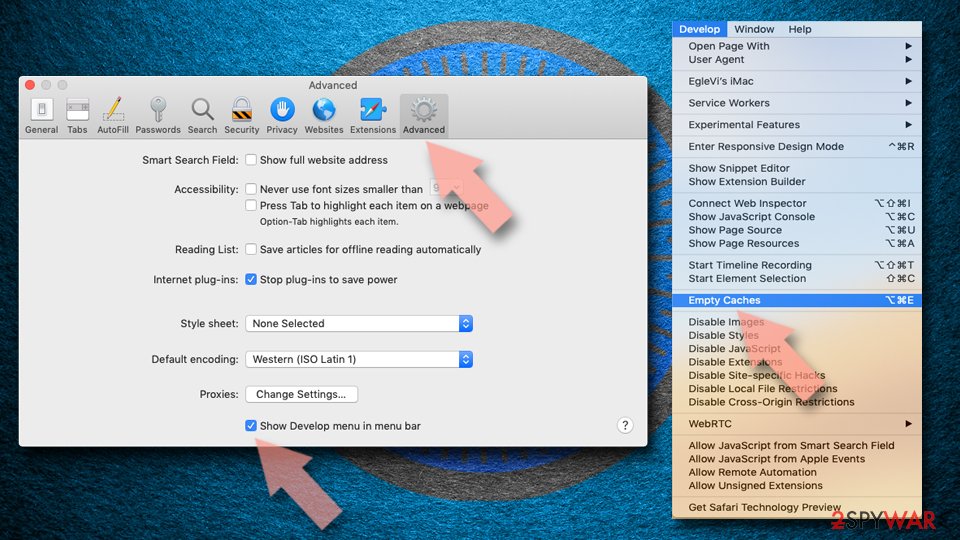
- Click Safari in the menu and select Preferences > Advanced.
- Enable Show Develop menu in menu bar.
- From the menu bar, click Develop and select Empty Caches.
Delete from macOS
Remove Spchlpr application from the system and make sure to clean the machine additionally
Remove the unwanted application:
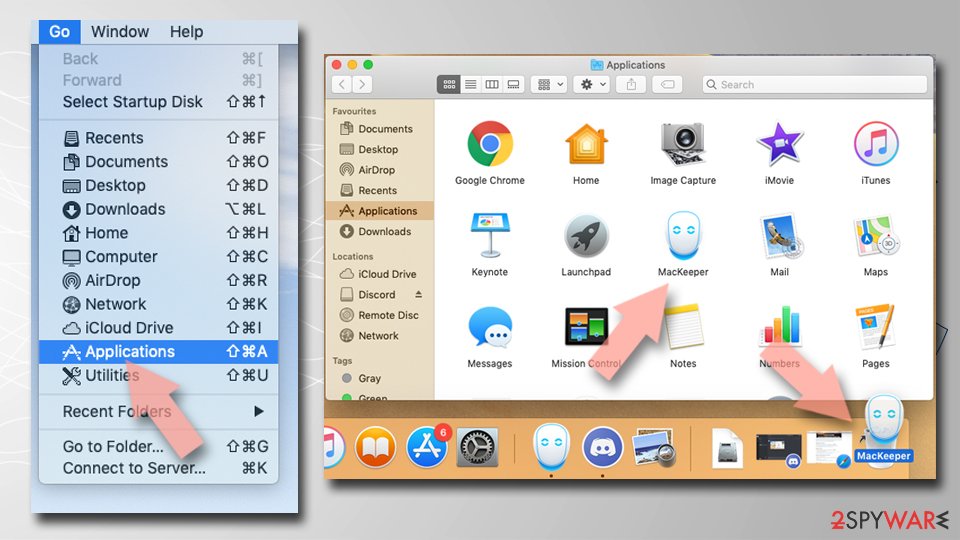
- From the menu bar, select Go > Applications.
- In the Applications folder, look for any suspicious entries, then drag them to Trash (or right-click and pick Move to Trash).
Delete leftover files and folders:
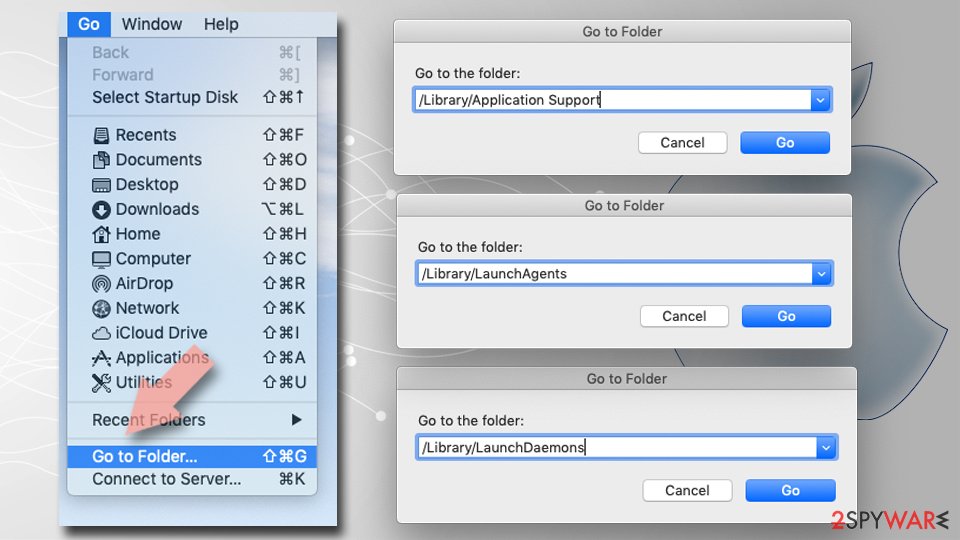
- Select Go > Go to Folder.
- Enter /Library/Application Support and remove any suspicious folders related to the unwanted program.
- Repeat the same check in the /Library/LaunchAgents and /Library/LaunchDaemons folders, deleting any suspicious entries.
- Finally, empty the Trash to permanently remove the leftovers.
From our report of Nov 2019 · not reviewed since
Get rid of associated files and end the annoying Spchlpr App behavior
Beware that as long as there is some kind of unwanted or possibly malicious program that is running on your PC, it can activate various tracking technologies to collect your online behavior-related data. Running anti-malware software can help remove Spchlpr completely. And using apps that are not from trustworthy developers may expose your machine and personal information to malicious content.
Data collecting and sharing that can compromise your privacy. So it is important to consider the Spchlpr removal ASAP. Also, you may need to think about the damage virus leaves behind and fix that, delete associated files from the affected Mac. You can try to achieve that with PC repair tools or macOS optimizers.
Run through web browsers on your machine and look for Spchlpr virus installed materials to ensure that infection is not repeating itself later on. You can clean undesired extensions, add-ons by resetting tools to default completely.
After removal: passwords, accounts and prevention
Secure your accounts after the clean-up
Assume that whatever was saved in the browsers on this PC while the PC showed spchlpr in the list of installed apps has been copied:
- passwords
- cookies
- autofill data
Work from a clean device, or from this PC once the offline scan finds nothing.
Start with your main e-mail account, because it can reset everything else, then banking and payment, then social and gaming accounts. Change each password, sign out of all sessions and turn on two-step verification: Turn on two-step verification / secure a hacked account.
The full order, including crypto wallets and card replacement, is in securing your accounts after malware.
Protect your privacy - employ a VPN
There are several ways how to make your online time more private - you can access an incognito tab.
However, there is no secret that even in this mode, you are tracked for advertising purposes. There is a way to add an extra layer of protection and create a completely anonymous web browsing practice with the help of VPN. This software reroutes traffic through different servers, thus leaving your IP address and geolocation in disguise.
Besides, it is based on a strict no-log policy, meaning that no data will be recorded, leaked, and available for both first and third parties. The combination of a secure web browser and VPN will let you browse the Internet without a feeling of being spied or targeted by criminals.
No backups? No problem. Use a data recovery tool
If you wonder how data loss can occur, you should not look any further for answers - human errors, malware attacks, hardware failures, power cuts, natural disasters, or even simple negligence.
In some cases, lost files are extremely important, and many straight out panic when such an unfortunate course of events happen. Due to this, you should always ensure that you prepare proper data backups on a regular basis.
If you were caught by surprise and did not have any backups to restore your files from, not everything is lost. is one of the leading file recovery solutions you can find on the market - it is likely to restore even lost emails or data located on an external device.
Questions about Spchlpr
What is Spchlpr and why is it on my PC?
Spchlpr is a program that was installed on the PC, most likely together with something else you downloaded. Free software sites and many installers add extra programs on setup pages with pre-ticked boxes, so the extra install looks like your choice even though nobody read the page.
Check the install date in Settings, Apps, Installed apps: the program you installed that day is the probable carrier. If you do not need Spchlpr, uninstall it. If it belongs to your hardware or to a program you use, search its exact name and publisher first, because drivers and their tools can have unfamiliar names.
Spchlpr came back after I uninstalled it. Why?
Something else is reinstalling it. Common causes are a second program from the same publisher, a scheduled task that downloads it again, or a browser extension that keeps prompting for it. Sort Installed apps by install date and uninstall each entry from the same day that you did not choose.
Then open Task Scheduler and look in the Task Scheduler Library for tasks with updater-style names that you do not recognise. Check Startup apps in Task Manager too. If Spchlpr still returns, start Windows in Safe Mode, uninstall it there and run a Microsoft Defender offline scan, which looks for loaders that ordinary scans can miss.
Why can't I find Spchlpr in antivirus databases?
Because it is new or because it is listed under a different name. Antivirus companies name threats after the family they belong to, and a program that appears as Spchlpr on your PC may carry a generic or unrelated label in their databases.
Many new samples are first detected only by behaviour, without a family name. What you saw, spchlpr in the list of installed apps, is enough to act on:
- end the program
- remove its startup entry
- run a Microsoft Defender offline scan
- secure your accounts
A detection name from a scan is worth noting for later.
Should I reset my PC because of Spchlpr?
Only if the signs point to deeper access. Reset when you see spchlpr in the list of installed apps again after removal, when Windows Security cannot start or update, when remote access tools you did not install keep appearing, or when you simply cannot trust the PC any more.
Otherwise, the plan in this guide plus an offline scan is enough. If you do reset, choose Remove everything and Cloud download for a fresh copy of Windows, restore only documents and photos, and reinstall programs from their official sites. Change important passwords from the clean system afterwards.
Is a trojan infection worth reporting to the police?
If there was harm, yes. Unauthorised payments, accounts used for fraud, blackmail or a remote session during a scam call all belong in a report, and banks often ask for its reference number before they refund anything.
If antivirus caught Spchlpr before it ran and nothing was misused, there is nothing to report. Keep the evidence anyway:
- protection history
- the original download
- the dates
Businesses may also have to notify a data protection authority if personal data could have been accessed.
Is it safe to do online banking after seeing spchlpr in the list of installed apps?
Not on that PC until it is clean. A program that produces spchlpr in the list of installed apps runs with your rights and could read what you type or what the browser shows. Use a phone or another computer for banking and for changing passwords.
When the offline scan of the affected PC is clean and nothing suspicious starts with Windows any more, you can go back to using it. Check your bank statements for the past weeks either way, and call the bank if anything looks unfamiliar; banks can block cards and reset access quickly.
Why didn't my antivirus stop Spchlpr?
New trojan builds are packed and changed often so that signatures do not match, and some are signed with stolen or bought certificates. Many arrive inside password-protected archives, which scanners cannot open until you extract them.
Some downloads also tell the user to turn off the antivirus "because it gives false alarms", a common line in cracked software instructions. Keep real-time protection on, never disable it for an installer, and run the offline scan whenever you suspect something slipped through.
Can Spchlpr spread to other devices on my network?
Most trojans aimed at home users stay on the PC they infected, but an attacker with remote access can look at the network, open shared folders and try passwords on other devices. Loaders sometimes deliver worms or ransomware that do spread.
Disconnect the PC while cleaning, run a full scan on other Windows PCs, change the router's admin password and the Wi-Fi password if they were saved on the infected PC, and update the router's firmware. If other PCs show the same detection, treat them as infected too.
What are the signs of a trojan infection?
Most trojans try to leave no visible signs, so look for side effects. Common ones:
- Windows Security turned off or unable to update
- new entries in Startup apps or Task Scheduler
- programs in Installed apps you did not install
- browser settings that changed by themselves
- unusual network activity while the PC is idle
- password-reset or login-alert e-mails you did not trigger
None of these proves an infection on its own. Together with an antivirus alert naming Spchlpr, they are a strong reason to follow the full plan.
Will Fortect remove Spchlpr?
Fortect for Mac scans for malware and unwanted programs, and its free scan shows what it finds on your Mac before you decide anything.
For Spchlpr, follow the plan on this page as well: removing a launch item or an app is done in macOS itself, and a scanner cannot undo what was typed or entered on the infected Mac, such as saved passwords that were copied.
Change your passwords from another device first, and if the page tells you to erase the Mac, a scan is not a substitute. The free scan costs nothing and the full-featured product needs a license.
Sources
- Apple: remove similar photo cleaner/ Spchlpr virus (read October 7, 2026)
- Sentinelone: MacOS malware outbreaks 2019 (read October 7, 2026)
- FTC: How to recognize, remove and avoid malware (read October 7, 2026)
- Microsoft Learn: Microsoft Defender Offline (read October 7, 2026)
- Microsoft Learn: How Microsoft names malware (read October 7, 2026)