
Bestantius.com: what it is and how to remove it
Bestantius.com is a questionable domain that provides a scam message claiming that somebody might be spying on your browsing activities. The bogus pop-up offers users to download VPN - Best Unlimited VPN Proxy, developed by Hi Security Lab, as a way to ensure security.
Facts checked October 6, 2026. Removal steps tested on Windows 11 (26H2) and checked against Microsoft's and the browser makers' current documentation. Sections marked as our earlier report are the original text: they describe the threat as it was then and have not been reviewed since. The 2026 status, the removal steps and the questions are current.
Automatic
Get a free scan and check if your PC is infected.
Fortect finds malware, unwanted programs and the Windows damage they leave behind, and repairs it in one pass.
Programs like Bestantius.com usually arrive in groups; a free scan lists the companions that are easy to miss.
Do it yourself · free Remove Bestantius.com yourself 4 steps, about 12 minutes, no software needed.
Start the steps
Bestantius.com: summary
| Name | Bestantius.com |
|---|---|
| Type | iPhone virus/Mac virus/PUP/scam |
| IP number | According to research, this domain is linked to the 104.248.118.186 IP address |
| Promoted app | The main goal of this website is to push an app named VPN – Best Unlimited VPN Proxy that is supposed to ensure safe browsing for the user |
| Target | This domain provides scam messages on iPhone devices mostly but suspicious pop-up might also appear on macOS machines |
| Detection names | No Microsoft detection name is known |
| Removal | Scan the PC with security software to find and remove the malware and anything installed with it. Fortect scans Windows for malware and repairs the system files and settings it damaged. Remove it nowTo use the full-featured product, you have to purchase a license for Fortect. The scan is free. |
Show 7 more facts
| Distribution | Not recorded in the old report |
|---|---|
| Damage | Not recorded in the old report |
| Symptoms | An unknown program in Installed apps |
| Evidence | 5 write-ups by security sites; details still limited |
| Program | Bestantius.com |
| First seen | 21 October 2019 |
| Facts checked | 6 October 2026 |
Is Bestantius.com safe? Why it is flagged
From our report of Oct 2019 · not reviewed since
Bestantius.com - a tricky website that urges to install an unknown VPN application to achieve secure browsing
Bestantius.com is a questionable domain that provides a scam message claiming that somebody might be spying on your browsing activities.
The bogus pop-up offers users to download VPN - Best Unlimited VPN Proxy, developed by Hi Security Lab, as a way to ensure security. However, you should not trust anything that comes from Bestantius.com (IP 104.248.118.186) as this website is considered to be a deceptive one.
It supports rogue products and shows bogus pop-ups on iPhones to encourage users to download particular apps. Nevermind the fact that the VPN app is put up for download on the official App Store, no trust should be put in Bestantius.com as no reliable website would pop out randomly and encourage software downloads.
Bestantius.com virus is a term used to describe this website as it produces unknown content. Even though its pop-ups mostly appear on iPhone mobile phone devices, there is a possibility to encounter a bogus message on macOS too. While dealing with a notification from the questionable domain, you might be provided with this kind of text:
Bestantius.com pop-up gives the user approximately six minutes to install the VPN product and secure browsing. You should not fall for believing in such information as it is most likely to be a scam. Avoid clicking on the "Install Now" button as you cannot not to what types of potentially infectious sources you might be redirected to.
If Bestantius.com includes the nature of an adware app, you might start experiencing intrusive advertising during browsing sessions that might decrease the quality of your browsing process. Additionally, the PUP might start redirecting you to affiliate pages some of which might force you to land on a malware-laden website.
Furthermore, if Bestantius.com has been on your device screen for long, it might add bogus products to your web browsers such as Mozilla Firefox, Internet Explorer, or Safari. Your app might end up filled with questionable extensions, plug-ins, or add-ons. If you spot such bogus objects, an adware program might have been placed on your phone/computer.
Remove Bestantius.com from your device or machine to avoid trouble in the future. You can employ a tool such as to complete a full mobile phone or computer check-up. Once the product provides you scan results, you can proceed with the elimination process that can be carried out with the help of automatical software also.
In addition, step-by-step Bestantius.com removal has been displayed at the end of this article. Here you will find simple instructing steps on how to clean your iPhone or macOS device/machine. Besides, there will be guiding lines for cleaning browsing apps that might also have ended up with suspicious content in their settings.


From our report of Oct 2019 · not reviewed since
More from our earlier report on Bestantius.com
- Use software to find potentially suspicious products on your device/machine
- You can get rid of unwanted content automatically or manually.
- Someone May Be Watching What You Browse Your IP 104.236.233.182 could be exposed.
- Browse web and apps anonymously.
- 5 minutes 57 seconds Install Now Cancel
How Bestantius.com got installed
From our report of Oct 2019 · not reviewed since
Technology experts from LesVirus.fr claim that PUAs and PUPs are commonly distributed via unsafe downloading sources such as Softonic, Cnet, The Pirate Bay, etc. Suspicious content from these networks ends up on the user's computer system when the Quick/Recommended configuration is chosen.
To prevent unwanted downloads and installations, you should change your settings to Custom or Advanced. Here you will be able to take full control of all incoming objects and deselect any product that looks questionable to you. However, the best thing to do here would be to download products and services only from their original developers.
Continuously, install reputable antimalware protection on all of your machines and devices. AV tools will give you full-time protection that includes safe browsing, malware detection, threat prevention, and regular system scans. Also, do not forget to update your antimalware software once in a while.
How to uninstall Bestantius.com
How to remove Bestantius.com
Uninstall the bundle first, then everything it added:
- programs
- extensions
- changed browser settings
Step 1: Uninstall Bestantius.com
Open Settings > Apps > Installed apps in Windows 11, or Settings > Apps > Apps & features in Windows 10. Sort the list by install date and find Bestantius.com, then choose Uninstall from the three-dot menu next to it (in Windows 10, click the entry and then Uninstall).
Remove anything else installed on the same day that you do not recognise, because such programs usually arrive together in one installer. If the uninstaller opens a browser page with an offer or a survey, close it: the program is removed either way.
Full procedure with screenshots: Uninstall a program or app in Windows On uGetFix
Step 2: Remove it from startup
Whatever Bestantius.com installed usually starts with Windows. Open Task Manager with Ctrl + Shift + Esc, go to Startup apps in Windows 11 or the Startup tab in Windows 10, and disable what you do not know, starting with entries that have an empty Publisher column.
Open file location on the right-click menu shows the file, which helps you decide and tells you what to delete later. Disabling is safe: if something you need stops working, switch it back on.
Full procedure with screenshots: Stop apps from opening at startup On uGetFix
Step 3: Delete the folders left behind
What the uninstaller leaves behind is usually in the user folders. Open File Explorer, switch on View > Show > Hidden items (in Windows 10 View > Hidden items), and go through
%LocalAppData%,%AppData%, %ProgramData% and the two Program Files folders.Sort by Date modified and delete folders that appeared together with the problem and belong to no program you use. Folders with random names that hold
.exe,.dll, .js or .ps1 files are the strongest sign.Full procedure with screenshots: Remove what malware leaves behind in Windows
Step 4: Scan the PC, then run the offline scan
Open Windows Security > Virus & threat protection > Scan options, run a Full scan and remove everything it finds. Then select Microsoft Defender Antivirus (offline scan) and click Scan now: the PC restarts and scans before Windows loads, which finds files that hide while Windows runs.
Save your work first, because the offline scan takes about 15 minutes. Both scans are built into Windows 11 and Windows 10, and a second scanner from another vendor is a useful extra opinion.
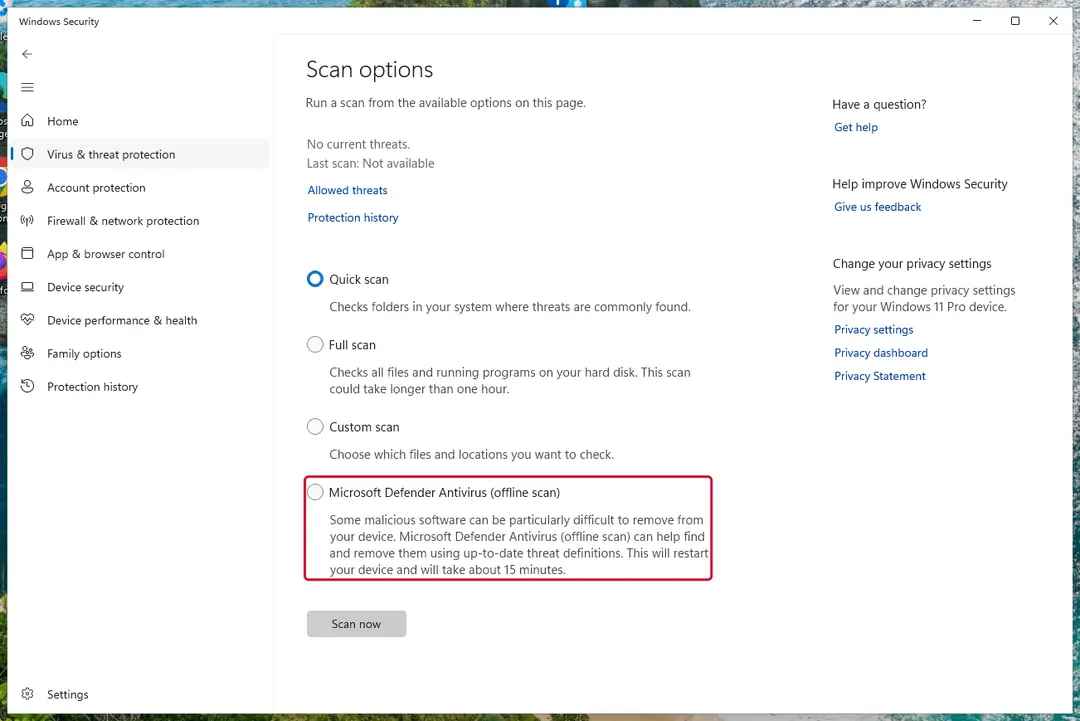
Windows 11: Windows Security > Virus & threat protection > Scan options. Full procedure with screenshots: Run a Microsoft Defender Offline scan
Instructions for each browser and system
The detailed steps for every browser and system this guide covers. Open the one you use.
Remove from Google Chrome
To reverse Google Chrome back to its starter position, carry out these instructions.
Delete malicious extensions from Google Chrome:
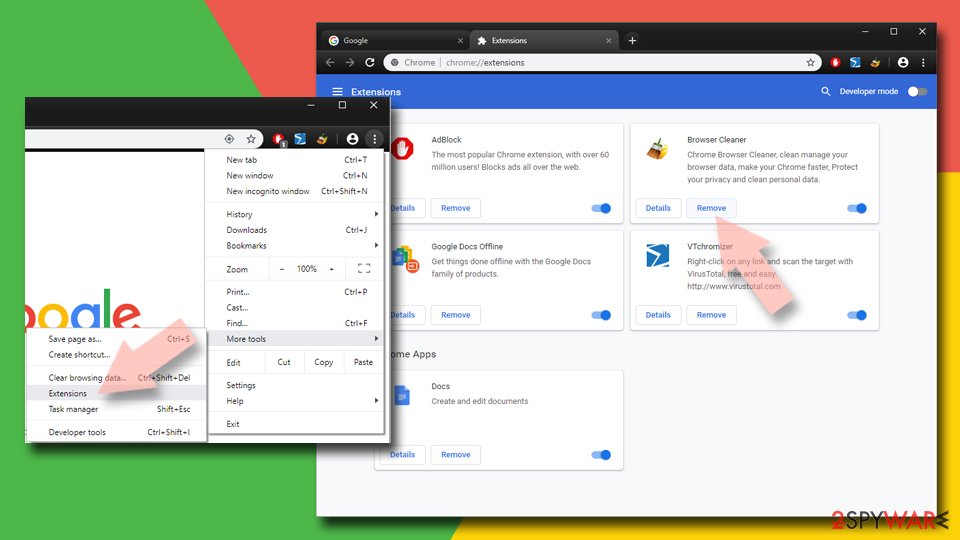
- Open Google Chrome, click on the Menu (three vertical dots at the top-right corner) and select More tools > Extensions.
- In the newly opened window, you will see all the installed extensions. Uninstall all suspicious extensions related to the unwanted program by clicking Remove.
Clear cache and web data from Chrome:
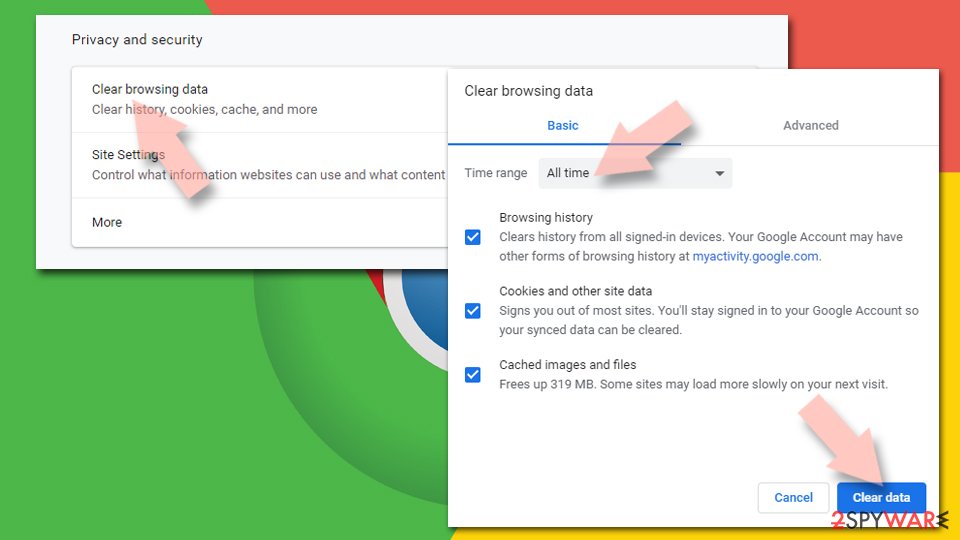
- Click on Menu and pick Settings.
- Under Privacy and security, select Clear browsing data.
- Select Browsing history, Cookies and other site data, as well as Cached images and files.
- Click Clear data.
Change your homepage:
- Click menu and choose Settings.
- Look for a suspicious site in the On startup section.
- Click on Open a specific or set of pages and click on three dots to find the Remove option.
Reset Google Chrome:
If the previous methods did not help you, reset Google Chrome to eliminate all the unwanted components:
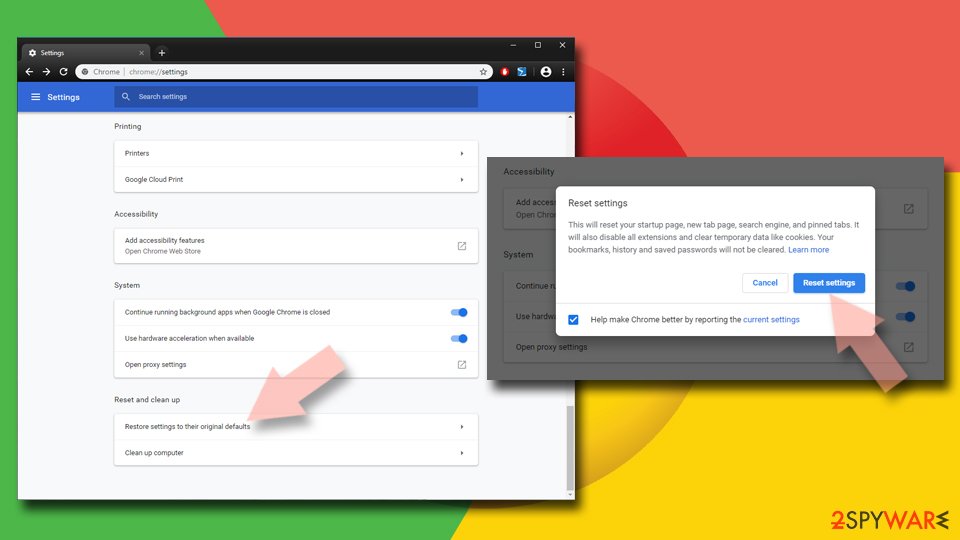
- Click on Menu and select Settings.
- In the Settings, scroll down and click Advanced.
- Scroll down and locate Reset and clean up section.
- Now click Restore settings to their original defaults.
- Confirm with Reset settings.
Remove from Mozilla Firefox (FF)
To eliminate any suspicious extensions and plug-ins from the Mozilla Firefox web browser, carry out these tasks.
Remove dangerous extensions:
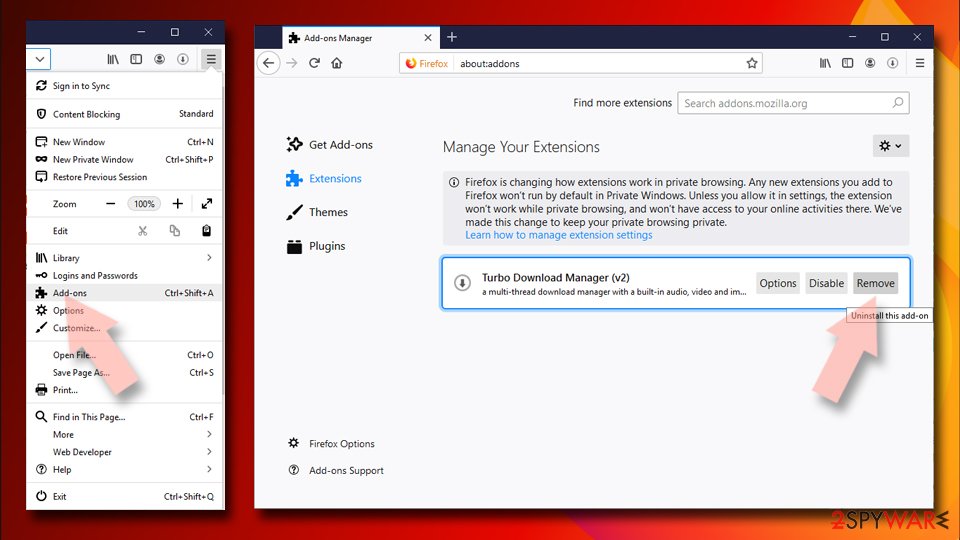
- Open Mozilla Firefox browser and click on the Menu (three horizontal lines at the top-right of the window).
- Select Add-ons.
- In here, select the unwanted extension and click Remove.
Reset the homepage:
- Click three horizontal lines at the top right corner to open the menu.
- Choose Settings.
- Under Home, set your preferred homepage and new tab settings.
Clear cookies and site data:
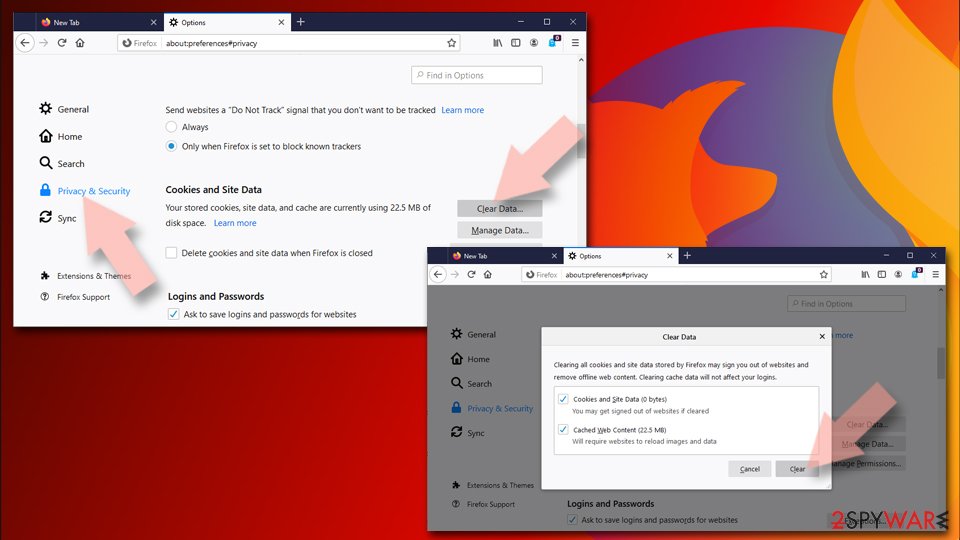
- Click Menu and pick Settings.
- Go to Privacy & Security section.
- Scroll down to locate Cookies and Site Data.
- Click on Clear Data...
- Select Cookies and Site Data and Temporary cached files and pages, then click Clear.
Reset Mozilla Firefox
If clearing the browser as explained above did not help, reset Mozilla Firefox:
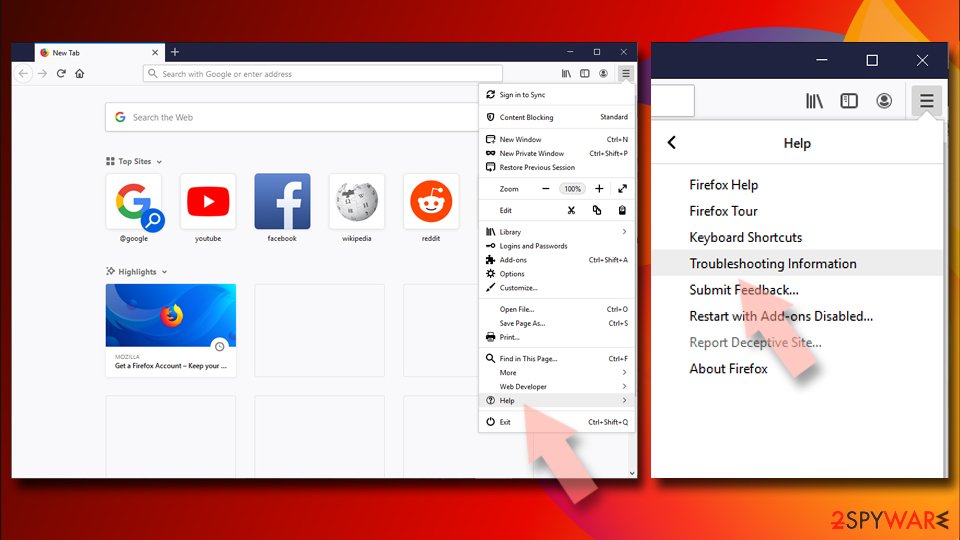
- Open Mozilla Firefox browser and click the Menu.
- Go to Help and then choose Troubleshooting Information.
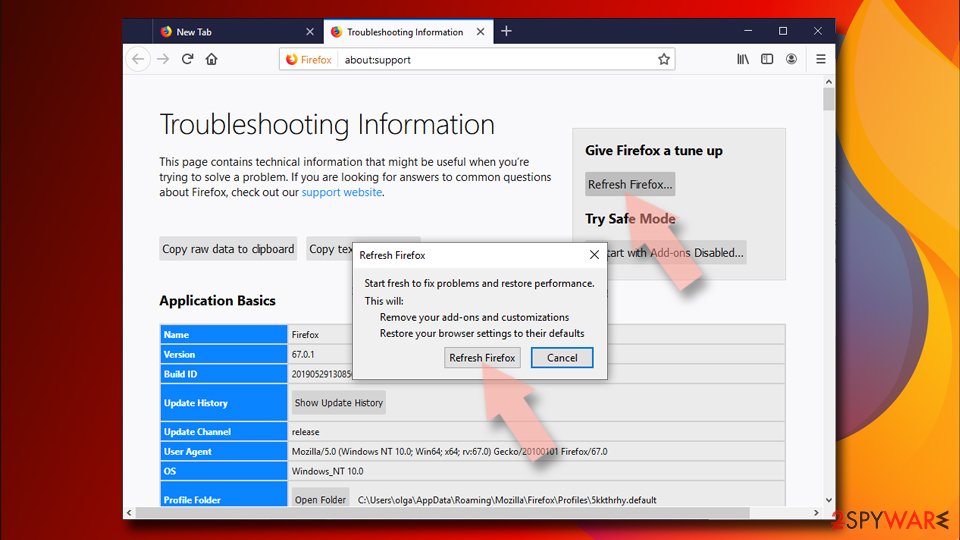
- Under Give Firefox a tune up section, click on Refresh Firefox...
- Once the pop-up shows up, confirm the action by pressing on Refresh Firefox.
Delete from Safari
To clean Safari from bogus components, use the following guide.
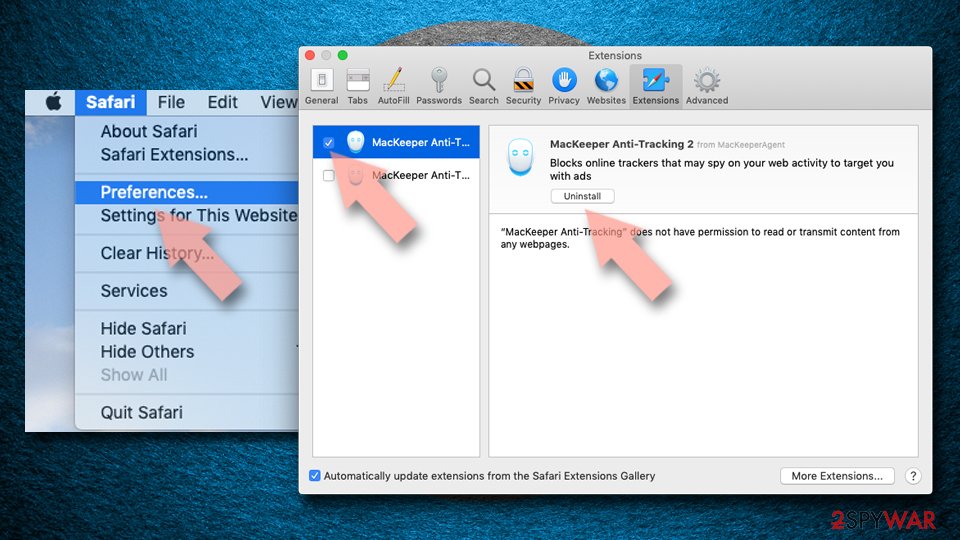
Remove dangerous extensions:
- Open Safari, click Safari in the menu at the top-left of the screen, and select Preferences.
- Go to the Extensions tab, look for any suspicious entries, and click Uninstall to remove them.
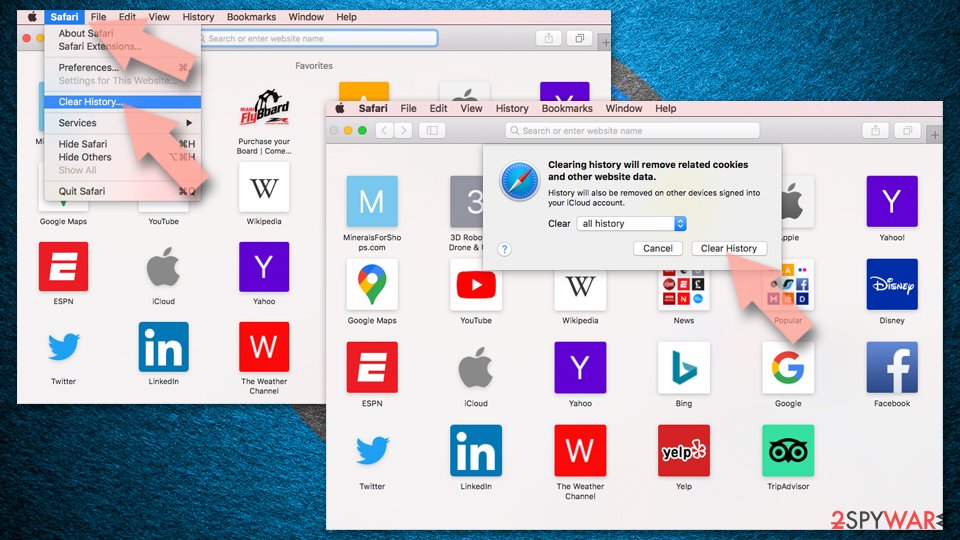
Clear history and website data:
- Click Safari in the menu and pick Clear History.
- Set Clear to all history and confirm with Clear History.
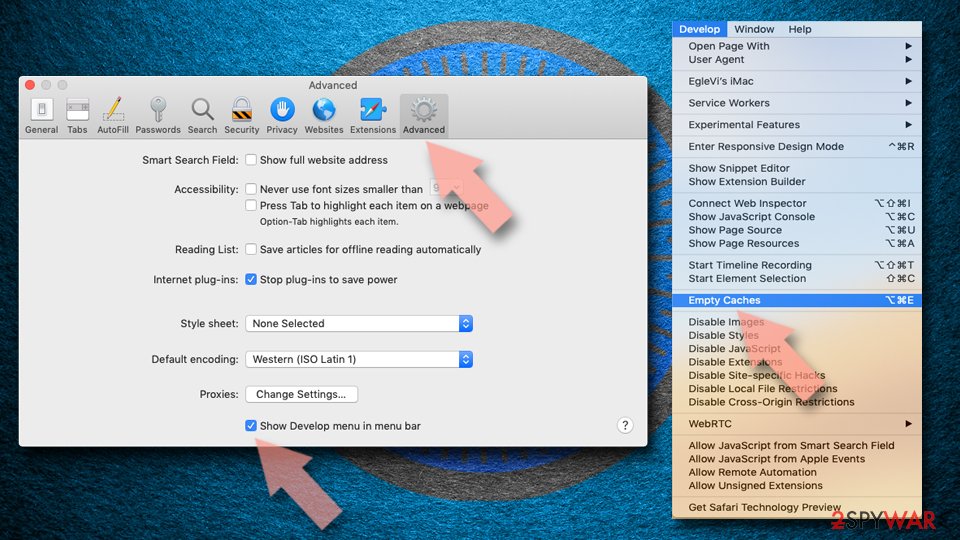
Reset Safari:
- Click Safari in the menu and select Preferences > Advanced.
- Enable Show Develop menu in menu bar.
- From the menu bar, click Develop and select Empty Caches.
Delete from macOS
To get rid of suspicious programs and products from Macs, use these below-provided guiding steps.
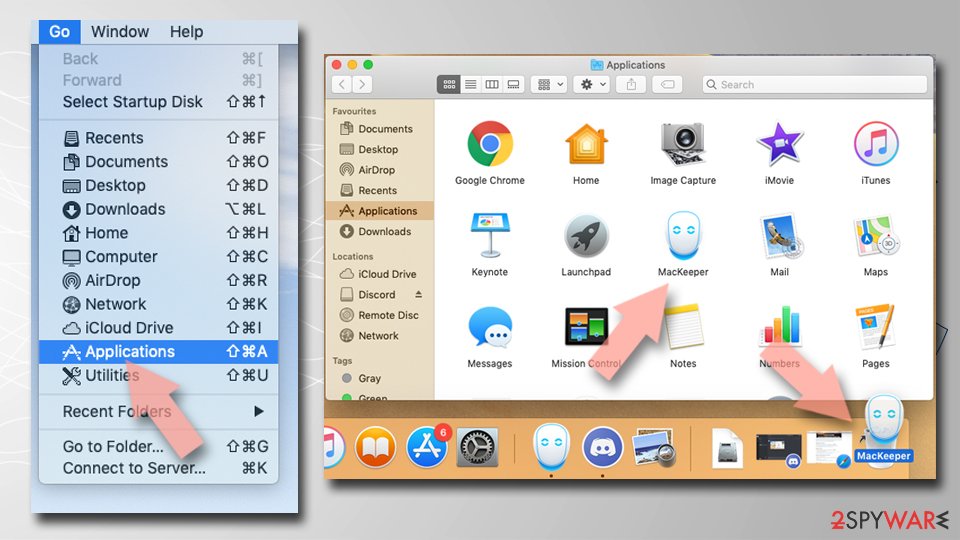
Remove the unwanted application:
- From the menu bar, select Go > Applications.
- In the Applications folder, look for any suspicious entries, then drag them to Trash (or right-click and pick Move to Trash).
Delete leftover files and folders:
- Select Go > Go to Folder.
- Enter /Library/Application Support and remove any suspicious folders related to the unwanted program.
- Repeat the same check in the /Library/LaunchAgents and /Library/LaunchDaemons folders, deleting any suspicious entries.
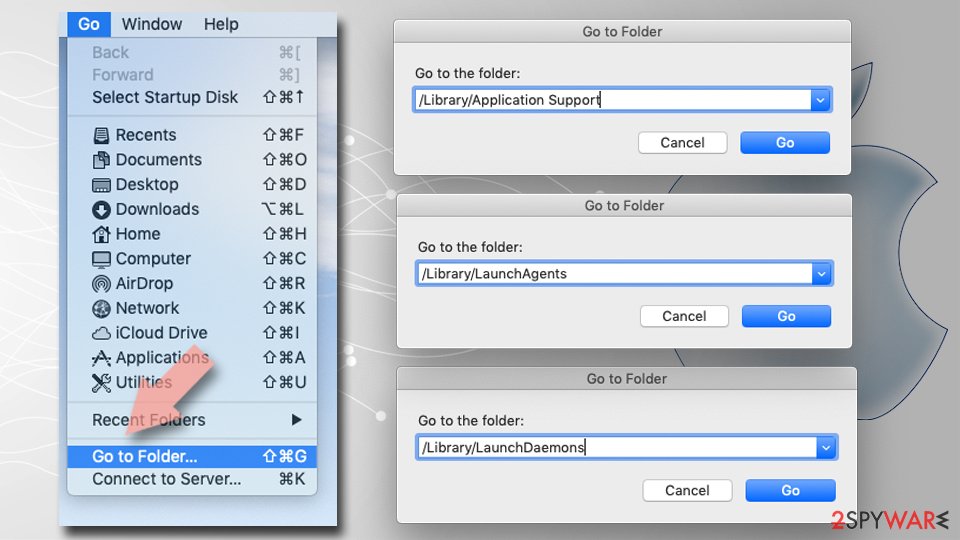
- Finally, empty the Trash to permanently remove the leftovers.
Protect your privacy - employ a VPN
There are several ways how to make your online time more private - you can access an incognito tab.
However, there is no secret that even in this mode, you are tracked for advertising purposes. There is a way to add an extra layer of protection and create a completely anonymous web browsing practice with the help of VPN. This software reroutes traffic through different servers, thus leaving your IP address and geolocation in disguise.
Besides, it is based on a strict no-log policy, meaning that no data will be recorded, leaked, and available for both first and third parties. The combination of a secure web browser and VPN will let you browse the Internet without a feeling of being spied or targeted by criminals.
No backups? No problem. Use a data recovery tool
If you wonder how data loss can occur, you should not look any further for answers - human errors, malware attacks, hardware failures, power cuts, natural disasters, or even simple negligence.
In some cases, lost files are extremely important, and many straight out panic when such an unfortunate course of events happen. Due to this, you should always ensure that you prepare proper data backups on a regular basis.
If you were caught by surprise and did not have any backups to restore your files from, not everything is lost. is one of the leading file recovery solutions you can find on the market - it is likely to restore even lost emails or data located on an external device.
From our report of Oct 2019 · not reviewed since
Eliminate anything related to Bestantius.com virus from your iPhone device
As we have already mentioned, Bestantius.com drops pop-up scams on iPhone mobile phone devices, so it can be categorized as an iPhone virus.
Regarding this point, we decided to provide users with detailed removal guidelines for their mobile phones. If you want to eliminate any suspicious apps from your phone, follow these guidelines:
Continuously, if anything bogus from Bestantius.com managed to slip into your Safari web browser, you can remove the suspicious content from there also. To prevent pop-up scams and redirects from repeated appearance on your browser app, complete the following instructing steps with your mobile phone device:
- Navigate to Settings.
- Continue with the General option.
- Select Erase all Contents.
- Locate Settings.
- Find and tap the Safari icon.
- Choose the option that says "Clear History and Website Data".
From our report of Oct 2019 · not reviewed since
Bestantius.com virus removal from computers and different browsers
If the pop-up scam keeps appearing again and again on your macOS computer and web browser apps, you can remove Bestantius.com with the help of reputable antimalware software or by following the below-provided guidelines.
Bestantius.com removal might be more effective if you employ automatical products. AV programs can deal with the entire job in a couple of minutes of times when the user might take a much longer time, for example, 10-15 minutes.
However, it all depends on you what type of elimination technique you will choose for Bestantius.com virus. The most important is that you evaluate your skills and experience in the cybersecurity field. Additionally, never forget to check web browsers when dealing with potentially unwanted programs as they might have planted BHOs in your browser settings.
Questions about Bestantius.com
What is Bestantius.com and why is it on my PC?
Bestantius.com is a program that was installed on the PC, most likely together with something else you downloaded. Free software sites and many installers add extra programs on setup pages with pre-ticked boxes, so the extra install looks like your choice even though nobody read the page.
Check the install date in Settings, Apps, Installed apps: the program you installed that day is the probable carrier. If you do not need Bestantius.com, uninstall it. If it belongs to your hardware or to a program you use, search its exact name and publisher first, because drivers and their tools can have unfamiliar names.
Bestantius.com will not uninstall. What can I do?
First restart the PC and try again, because the program may have been running and locked its own files. If the uninstaller is missing or fails, start Windows in Safe Mode, where most third-party programs do not start, and remove Bestantius.com from Installed apps there.
If it still refuses, delete its startup entry and its scheduled task, restart, and try once more. A program that actively prevents removal is behaving like malware, so finish with a Microsoft Defender offline scan. Avoid third-party uninstallers offered on search ads; several of them are unwanted programs themselves.
Does Bestantius.com use a lot of resources?
It depends on the program, and no measurements have been published for Bestantius.com. The sign reported is bestantius.com in the list of installed apps. Check for yourself: open Task Manager, find its process and watch the CPU, memory and network columns for a minute while the PC is otherwise idle.
Steady use with nothing open is a strong reason to remove it. Even if it seems light, it may run more processes under other names, so sort Installed apps by date and remove anything else from the same day. Then restart and compare.
Does Bestantius.com collect my data?
Nobody has analysed Bestantius.com yet, so there is no confirmed answer. Programs in this category often collect usage data, browsing history or device details and share them with advertisers, and their privacy policies usually allow it.
The sign reported, bestantius.com in the list of installed apps, does not by itself show data theft, and nothing points to passwords or files being taken.
If you want to be careful, clear the browser's cookies after removal and review which apps may run in the background. Change passwords only if you also see signs of something more serious, such as unknown sign-ins or messages sent from your accounts.
Why does my antivirus call Bestantius.com a PUA or PUP?
These labels mean potentially unwanted application or program. They are used for software that is legal but uses deceptive distribution, aggressive ads, misleading claims or a hard removal. Microsoft's PUA categories include advertising software, bundlers, download managers, torrent clients, marketing software and miners.
A PUA detection is a warning, not proof of infection, and you decide whether to keep Bestantius.com. Other vendors use their own labels for the same idea, such as PUP.Optional or not-a-virus. Read more in our guide to potentially unwanted programs.
Why can't I uninstall Bestantius.com?
Usually because it is still running or because a helper reinstalls it. Close it from the notification area first, then end its process in Task Manager and try Settings > Apps > Installed apps again. If there is no uninstall entry, look for a folder under Program Files or AppData with the same name and an uninstaller inside.
If the program comes back after removal, the cause of bestantius.com in the list of installed apps is a scheduled task, a startup entry or the program it was bundled with. Remove those, restart and check again. Starting Windows in Safe Mode stops most helpers and makes stubborn programs easier to remove.
Can Windows block unwanted programs automatically?
Yes, with one setting. Windows Security has Potentially unwanted app blocking under App & browser control > Reputation-based protection settings. Block apps stops flagged programs from installing, and Block downloads works in Microsoft Edge.
On some PCs this was not switched on, which is how programs like Bestantius.com got through. It does not catch everything, so read installer screens, choose Custom setup and decline offers. Removing free tools you no longer use also helps, because their updates are a common route for new bundles.
Can I use Bestantius.com safely?
Yes, if you installed it on purpose and control its settings. Download it only from the publisher's own site, never through a bundle or a portal. After installing, disable automatic start, offers and telemetry, and check that it did not change your search engine or add extensions.
Watch for renewals if you bought a licence, and turn on PUA blocking in Windows Security so that anything it tries to add during updates is stopped. If Bestantius.com keeps pushing payments or offers, it is not worth the trouble.
How do I know if I need Bestantius.com?
Ask three questions. Did you install it on purpose? Have you ever opened it?
Does anything you use depend on it? If the answers are no, you do not need it. The sign that brought you here, bestantius.com in the list of installed apps, suggests it arrived without a clear choice.
Programs bundled with free software rarely do anything their host program needs. Uninstall it, restart, and see whether anything you rely on stops working. If nothing does, which is the usual outcome, you can forget about it.
Will Fortect remove Bestantius.com?
Fortect scans Windows for malware and unwanted programs and repairs the system files and settings they change, and its free scan shows what it finds on your PC before you decide anything.
For Bestantius.com, follow the plan above as well: the browser steps take back permissions and settings that no scanner treats as a threat, and uninstalling the program that brought it removes the source.
Run Microsoft Defender's full scan and, if anything was found, its offline scan as a second opinion. If the symptoms are gone after the plan and both scans are clean, there is nothing more to do.
Sources
- Wikipedia: App Store (iOS) (read October 6, 2026)
- LesVirus: LesVirus.fr (read October 6, 2026)
- FTC: How to recognize, remove and avoid malware (read October 6, 2026)
- Microsoft Learn: Microsoft Defender Offline (read October 6, 2026)
- Microsoft Learn: How Microsoft names malware (read October 6, 2026)