
Putlocker virus: is it safe, and how to stop the ads and notifications
Putlocker is the name of a family of film streaming websites and their copies, not a program, and opening a page installs nothing by itself. On 6 October 2026 putlocker.is showed only a "domain may be for sale" page, so the risk to weigh sits in the look-alike sites, their notification requests, ads and fake updates.
Facts checked October 13, 2026. Removal steps tested on Windows 11 (26H2) and checked against Microsoft's and the browser makers' current documentation.
Automatic
Get a free scan and check if your PC is infected.
Fortect finds malware, unwanted programs and the Windows damage they leave behind, and repairs it in one pass.
Clicked a notification from putlocker.is and installed something? A free scan checks programs and browsers in one pass.
Do it yourself · free Remove Putlocker virus yourself 2 steps, about 6 minutes, no software needed.
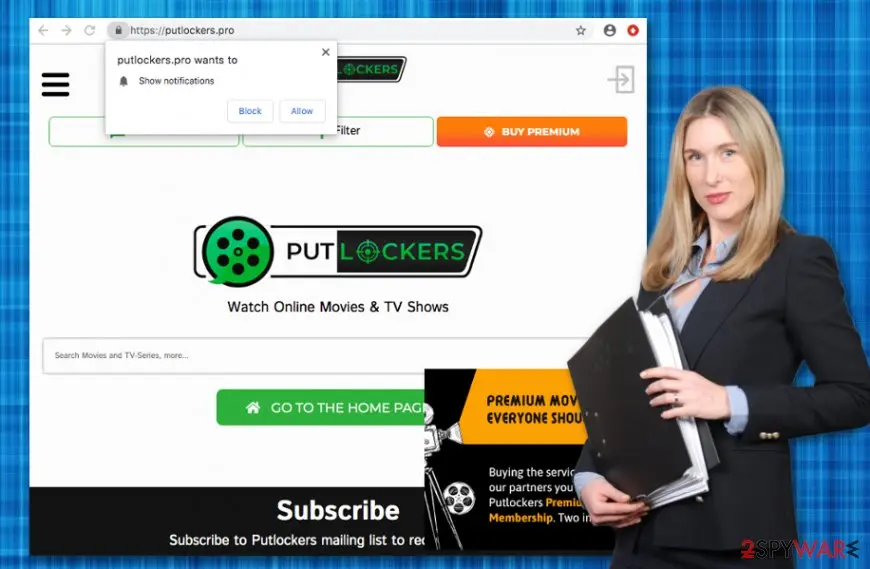
Putlocker virus: summary
| Type | A group of film and series streaming index websites and their look-alikes, with notification requests, ads and redirects; not a program and not malware as such |
|---|---|
| Risk | Medium: nothing is installed by visiting; the risk is Allow clicks, redirects, fake updates and files run from ads on the many copies |
| Symptoms | Notification adverts on the desktop from a Putlocker-named address, banner and slide-in ads, new tabs, redirects and "Premium Membership" offers |
| How to get rid of it | Block the address in your browser's notification list, remove extensions and programs you did not choose, run a Microsoft Defender full and offline scan if you ran a file, reset the browser |
| Our check (6 October 2026) | putlocker.is showed a parked "domain may be for sale" page; no notification request, pop-up or redirect on this one visit, which clears nothing and says nothing about other addresses |
| Running since / first seen | Putlocker began in 2011; the address putlocker.is was registered again on 10 December 2019; first reported by us in 2020 |
| Removal | Scan the PC with security software to find and remove the malware and anything installed with it. Fortect scans Windows for malware and repairs the system files and settings it damaged. Remove it nowTo use the full-featured product, you have to purchase a license for Fortect. The scan is free. |
Show 12 more facts
| Installed on the PC | Nothing: visiting a website installs no program; files from ads or fake updates that sent you there are what to remove |
|---|---|
| Detection | Microsoft: no Microsoft detection name is known for the website, because nothing is installed by visiting it. Our 2020 guide named HTML/ScrInject.B, which we could not confirm |
| First reported by us | 30 September 2020 |
| Evidence | Our test of the site, our 2020 report and its five pictures, Wikipedia, Malwarebytes and The Independent, and the Krebs on Security, FTC, Microsoft and Google help pages |
| Name | Putlocker virus |
| Domains | putlocker.is |
| Ads shown as | Desktop notifications |
| Browsers | Chrome, Edge and Firefox |
| First seen | 30 September 2020 |
| Distribution | Typically redirects from streaming and download sites, fake "click Allow" checks and fake video players |
| Damage | Notification ads that lead to scam pages, fake virus alerts and unwanted downloads |
| Facts checked | 6 October 2026 |
Facts checked on 6 October 2026 against our own test of putlocker.is in desktop Chromium from Lithuania (one visit, a parked page), our 2020 report and its pictures, Wikipedia, Malwarebytes, The Independent, and the Krebs on Security, FTC, Microsoft and Google help pages. Not confirmed: the HTML/ScrInject.B detection name from the 2020 guide.
What Putlocker is, and what "the Putlocker virus" means
Putlocker is the name of a set of websites that list links to films and television series streamed from other hosts, not a program, and opening one installs nothing by itself. The original service began in the United Kingdom in 2011. Over the years its name was copied by many unrelated sites, and the "Putlocker virus" that people search for is the pop-ups, redirects and notification adverts those sites show, plus whatever they lead you to run.
- 1
You open a site with the name on it
Some visitors type it to find a free film. Many others arrive from a search result for a film title, an ad on another page or a link in a forum, and meet one of dozens of look-alikes.
- 2
The page asks for something
The first thing a visitor often sees is the browser's own box saying that the site wants to show notifications, with Block and Allow buttons. Our 2020 pictures show this on five different Putlocker-named addresses.
- 3
The adverts do the rest
A click on Allow lets the site send adverts to the desktop later. A click on the page can open another tab. Neither the film list nor the player is what hurts; the advertisers' pages and the files they offer are.
- What it is
- A group of film and series streaming index websites; not an installed program and not a Windows file
- What people call the virus
- Notification adverts on the desktop, banner ads and pop-ups, redirects to other sites and "Premium Membership" offers
- Where the harm starts
- At a click on Allow, on an ad, or on a file or update that a page offers; not when a page merely loads on an updated computer
- What we saw in 2026
- On 6 October 2026 putlocker.is showed a "domain may be for sale" page and nothing else; details in the next chapter
Our 2020 guide headed the page with a detection name, HTML/ScrInject.B, which is an antivirus label for a malicious script inside a web page. None of the sources we read for this update ties that label to Putlocker, so we cannot confirm it; the sections below keep to what we could check.
What www2.putlocker.digital and putlocker.mx are
Both are addresses that use the Putlocker name, and neither is the original site, which no longer has one official address.
Putlocker is a family of film streaming sites and copies, so a new ending such as .digital or .mx usually means one more copy, not a new program. We did not test either address.
The address www2[.]putlocker[.]digital is, in our reading, a copy of a streaming index site. The "www2" part is a common label for a mirror or second front page. We found no reliable source that says who runs it, when it was registered or whether it is online today, so treat it as unknown and unverified.
The address putlocker[.]mx ends in .mx, the country code for Mexico, which anyone can register for a Putlocker look-alike. We found no primary source that describes it, so we cannot say if it shows ads, asks for notifications or offers files. Do not assume it is harmless because it looks clean once.
Visiting either address installs nothing by itself, and the risk is the same as on any Putlocker copy: Allow clicks on notification requests, redirects, fake player or update downloads and "Premium Membership" offers. If you already allowed notifications from one of them, open your browser's notification list, remove the address and follow the steps above.
Is Putlocker virus dangerous?
Our test on 6 October 2026
We loaded https://putlocker.is/ in a clean desktop Chromium browser from Lithuania, with no extension and no account, and did not click anything. The address answered, but it showed a parked-domain page, not a film site.
putlocker.is home page · desktop Chromium · Lithuania (EU) · 6 October 2026
- The page we sawA dark page titled "putlocker.is" with the text "Find information, resources and relevant links for putlocker.is. This domain may be for sale", links to terms and privacy, and a banner "putlocker.is may be for sale, click to inquire". No film list and no player.
- Notification requestNone on this one visit.
- Pop-ups and redirectsNo extra window or tab opened and the address did not change on this one visit.
- Ad networksNone identified. The only other host our browser contacted was
assets.abovedomains.com, which served files for the parked page; we did not follow it or find out who runs it. - Domain recordThe registry record for
putlocker.isgives a registration date of 10 December 2019 and a last change on 3 December 2025. Wikipedia describes putlocker.is as a Putlocker address in 2014 to 2017, so this address has changed hands or was registered again since then; we cannot say by whom. - What we did not testEvery other address that carries the name. The mirrors in our 2020 list were not opened, so nothing here speaks for them.
Parked page, one visit This is one visit from one country with an automated browser, and it clears nothing. Sites that sell traffic show different things by country, device, referrer, a delay, a second visit or a click, and parked domains are sold on and switched to other uses. What we can say is that on 6 October 2026 this address did not show the Putlocker notification request or redirect that our 2020 pictures show on other addresses.
How Putlocker got here, and what changed since our 2020 report
The name has a long history of blocks, seizures and copies, and the copies are the reason this guide exists. Dates below come from Wikipedia and the Malwarebytes and Independent articles listed in the sources, not from our own testing.
2011
A film index appears under putlocker.com
Putlocker began in the United Kingdom as a file-hosting index: a site that listed links to films and television series that visitors could stream for free, paid for by advertising. It carried no registration.
January 2012
Megaupload closes and Putlocker's audience doubles
Our 2020 guide dated the Megaupload closure to 2016, which was wrong: it was shut down in January 2012. Wikipedia reports about 800,000 daily visitors to Putlocker in early January 2012 and about 1.6 million after the closure.
2012 to 2014
Film studios name it, and its address moves
In March 2012 a Paramount Pictures executive called Putlocker one of the "top 5 rogue cyberlocker services". Its address then changed to putlocker.bz, which UK police seized in June 2014, and the site moved to putlocker.is.
28 October 2015
Malwarebytes finds a copy that serves a PUP
Malwarebytes described putlocker9.com, a replica of the real site with small differences and a hidden owner. Clicking anywhere on it opened a new tab with random offers and a fake Java update, and a "Free Download" button handed out a setup.exe that Malwarebytes classed as a potentially unwanted program. Our 2020 guide dated this report to 2016; the article is from October 2015.
May 2016
UK High Court order
In May 2016 a High Court order made UK internet providers block Putlocker, and the Motion Picture Association (called MPAA in 2016) listed it as a major piracy threat. Our 2020 guide wrote that the order was "three years ago"; in 2026 it is ten.
October 2016 to 2017
Offline, back, seized, copied
putlocker.is stopped working in early October 2016 and came back on 2 November 2016, redirecting to putlockers.ch. A Luxembourg court order suspended putlockers.ch in February 2017. By May 2017 at least three sites with the name were running, and Wikipedia counts at least fifty mirror or proxy sites. Some later redirected visitors to a scamming site.
10 December 2019
putlocker.is registered again
The registry record for putlocker.is shows this date, which is before our 2020 guide and after the site's 2014 to 2017 use of the address. It was the address we opened in 2026.
2020
Our first guide: notification adverts on many Putlocker names
We published the guide in 2020 and did not update it afterwards. Its pictures show look-alikes such as putlockers.me and 123putlocker.info, Chrome asking to show notifications for putlocker.style, ww2.putlockerfree.sc, putlockers.pro and www2.putlocker.vip, and adverts for a "Premium Membership".
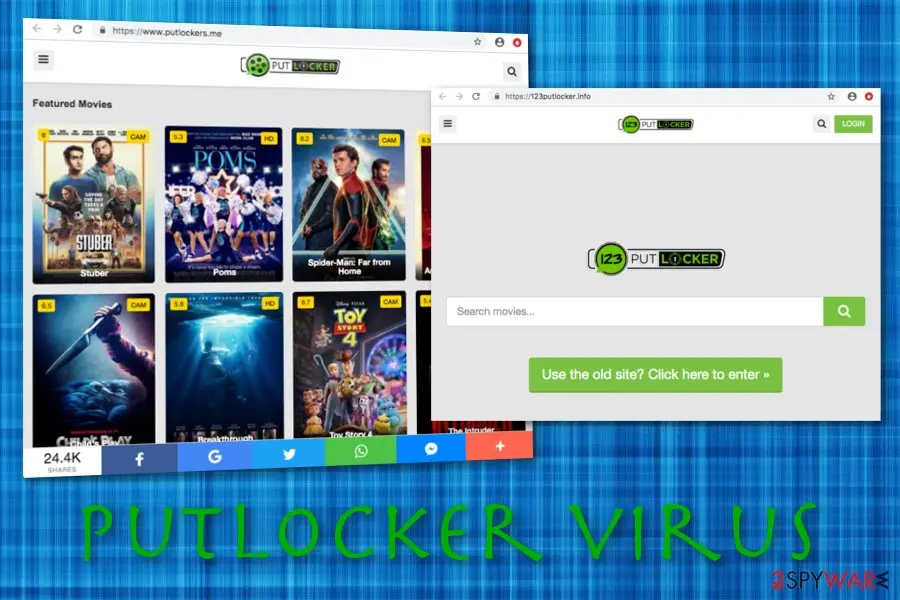
Two Putlocker look-alike sites from our 2020 guide: putlockers.me and 123putlocker.info. Neither is the original; the name is copied across many unrelated addresses. 6 October 2026
Our new check: a parked page
putlocker.is shows a "domain may be for sale" page, as the previous chapter describes. Wikipedia's infobox gives the original Putlocker's status as offline, with clones and copy sites available.
Putlocker notifications, ads and "Premium Membership" offers
Our readers' reports and our 2020 pictures describe the same few things: a request to show notifications, banner and slide-in ads on every browser, redirects after a click, and an offer of a "Premium Membership". All of them come from the page and the advertisers behind it, not from a program on the PC, unless the reader also installed something.
- 1
The site asks, the browser shows the box
The "Show notifications" box is the browser's own dialog, and the site decides when to ask. It tries to convince the visitor to click Allow so that adverts can be sent later. This is a website permission, not a PUP; the old guide called it one.
- 2
Allow turns into desktop adverts
After Allow, the site can push adverts to the desktop even when the browser is closed, on every browser that was given the permission. Our 2020 guide described them as intrusive advertising on any type of browser, and readers saw them on Chrome.
- 3
A click sends you to another domain
Besides banners and pop-ups, the page can redirect: when you visit a third-party site that relates to the service and click somewhere on the page, you can be taken to another domain. Usually that is a sponsored page without recommended protection, and it can include malicious objects.
- 4
The "Premium Membership" offer
In the pictures below the offer appears as a banner that says buying the services from the partners gets you a Putlocker Premium Membership, "two in one", and as an "Ultimate offer" that promises it free. It is an advert for a sponsor's service. We did not follow it or find out who runs it.
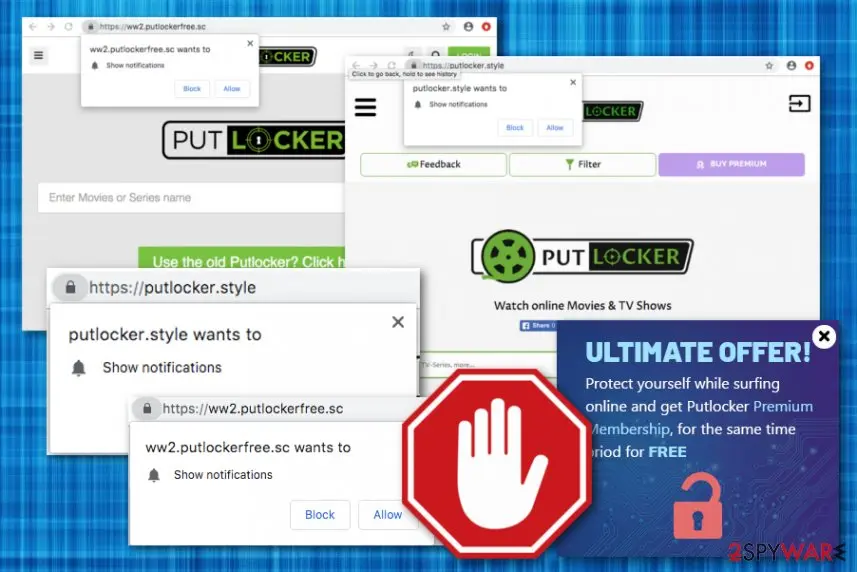
One person reported that Putlocker ads kept appearing on Google Chrome constantly and that he or she had major problems getting rid of them.
A macOS user also complained about annoying sliding ads while using Chrome.
These are the two reports named in our 2020 guide, as summarised there. We have no further details about them.
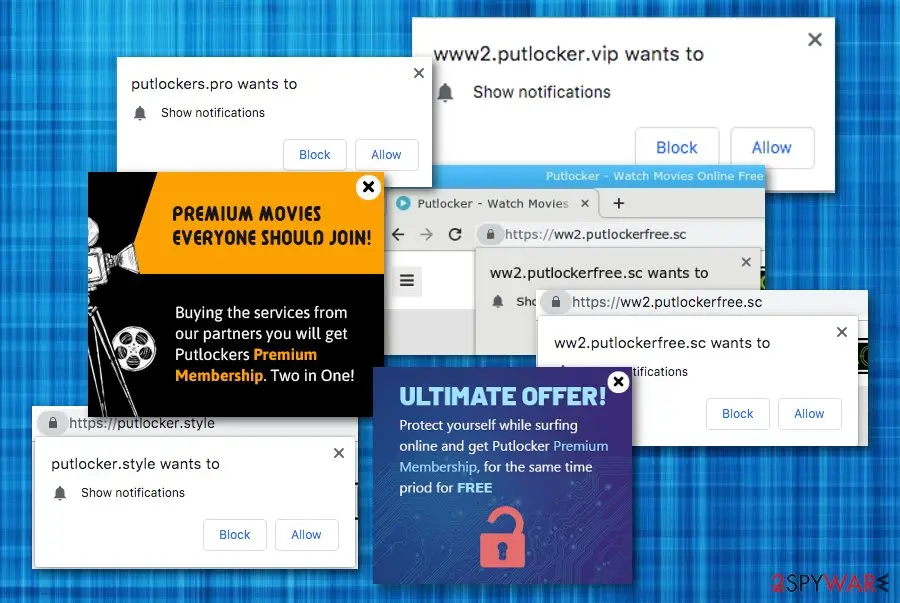
Our 2020 guide said the ads appeared on Chrome, Internet Explorer, Mozilla Firefox and other browsers. Internet Explorer was retired in June 2022, so for Windows today read Chrome, Edge and Firefox, and Safari on a Mac.
One name on many addresses
The developers behind the original are known to have changed domains often after blocks and seizures, and anyone can register a name that looks like it. That produced the many copy-cat sites, some injected with malware or intrusive and possibly dangerous ads. Which of them is "the real one" is not publicly known.
Putlocker-named addresses listed in our 2020 guide (not opened in 2026, except putlocker.is)
- www0.putlocker.cl
- putlocker.co
- putlocker.is
- www5.putlockers.net
- ww2.putlockerfree.sc
- putlockertv.to
- 123putlocker.info
- www.putlockers.me
- putlockers.pro
- putlocker.style
- www2.putlocker.vip
- putlocker.vc
- putlockers.bz
A 2020 list is out of date by now: such addresses are blocked, sold or replaced within months. It is a record of where our readers saw the notification requests and adverts, not a list to visit or to trust.
| Address you see | What we know |
|---|---|
putlocker.is | The address we tested. On 6 October 2026 it showed a parked-domain page. In 2014 to 2017 it was a Putlocker address, according to Wikipedia. |
putlocker9.com | Described by Malwarebytes in October 2015 as a replica that opened new tabs, showed a fake Java update and offered a PUP. We did not open it. |
putlocker.style, ww2.putlockerfree.sc, putlockers.pro, www2.putlocker.vip | The addresses that asked to show notifications in our 2020 pictures. We did not open them in 2026. |
putlockers.me, 123putlocker.info | Look-alikes in our 2020 picture, with a green "Use the old site" button on one of them. We did not open them in 2026. |
| Any other name that contains "putlocker" | Not proof of anything. A look-alike can show different ads and serve different files than any other site with the name. |
| A page that reached you from an ad, pop-up or notification | Treat it as unknown, however much it looks like the site. |
The FTC explains that fake pages copy a real brand to collect passwords or card numbers or to push a download. Read the address bar before you type a password or any card detail, and do not reuse a password on a streaming site.
The real risks, from most to least serious
"Putlocker virus" is not an accurate name: loading a page installs nothing on a computer with up-to-date software. These are the ways a visit can still go wrong, in the order we would worry about them.
- High
Running a file or update that a page or ad offers
The Malwarebytes example is the model: a copy of Putlocker opened a fake Java update tab and a "Free Download" button that gave away a setup.exe, which Malwarebytes classed as a PUP. Our 2020 guide said that the same pages can lead to remote access trojans and other trojans, and that visiting odd sites can end in a successful malware installation. A fake player, codec or "update" from a streaming page is the same trap. Which malware you get depends on what you ran, so nothing here is certain for a visit alone.
- Medium
Ads that are not what they look like
Sites like this live on advertising, and the ad networks that accept them are often of poor quality. The old guide said the ads are often inserted illegally and exploit known vulnerabilities. In practice criminals buy ad space like anyone else, and an advert that exploits a hole needs a browser, plug-in or system that is out of date, which is why updating comes first. We could not test any of it on this site.
- Medium
Clicking Allow on a notification request
One click lets that site send adverts to the desktop, outside the browser window, until the permission is removed. The adverts keep coming after you leave the site and often link to scam pages.
- Medium
Redirects and "membership" offers
A redirect goes to whatever the advertiser paid for that day. A "Premium Membership" offer can lead to a page that asks for personal details or a card number, or to a subscription that is charged until you cancel it by hand.
- Medium
Look-alike sites
Our 2020 guide said that even the original version of this domain might cause trouble for you and your computer, and that copy-cats are injected with malware or intrusive ads. Wikipedia counts at least fifty mirrors. A site that looks like the original may be run by someone else entirely.
- Low
Copyright
Downloading copyrighted content from such a site is illegal in many countries and can be punished by local law, and Putlocker was blocked in the UK, Australia and India on copyright grounds. Streaming from a site that has no licence for the film is a legal risk in some countries as well. We are not lawyers and this is not legal advice.
Malware kinds our 2020 guide named for such sites
- Remote access trojan
- Trojan
- PUP (unwanted program)
- Adware
A remote access trojan lets an attacker control the PC from afar. A PUP is a program you did not mean to install that shows adverts or changes settings. Having visited a site or opened an ad does not by itself mean any of these are on the computer.
How to remove Putlocker virus
How to stop Putlocker virus notifications
Do this in every browser you use, and in every profile inside it: each keeps its own list of sites allowed to send notifications.
Nothing has to be uninstalled for the notifications themselves.
Which browser shows the ads?
Step 1: Remove putlocker.is from Chrome's notification list
Chrome keeps a list of every site you once allowed to send notifications, and
putlocker.isis on it. Pastechrome://settings/content/notificationsinto the address bar, find putlocker.is under Allowed to send notifications, open the three-dot menu next to it and pick Remove.Then click Add next to Not allowed to send notifications and type putlocker.is, so the site cannot ask a second time. Repeat it in every Chrome profile you use on Windows 11 or Windows 10, since each profile has its own list.
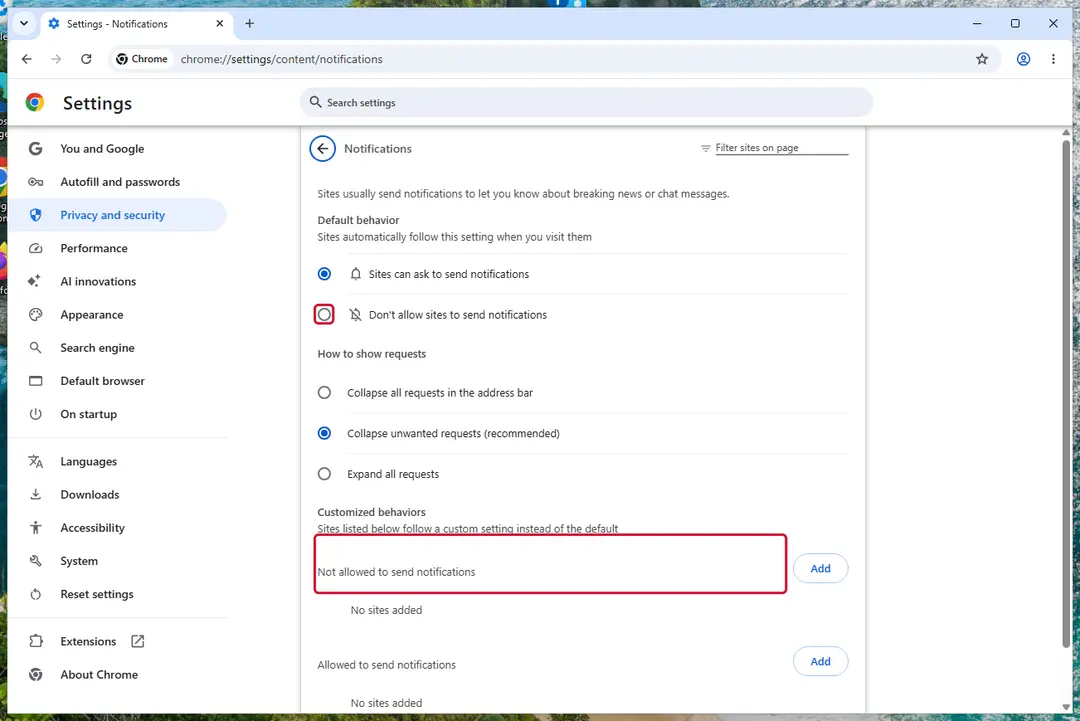
Chrome on Windows 11: Settings > Privacy and security > Site settings > Notifications. Full procedure with screenshots: Stop website notifications and pop-ups
Still there? More for Google Chrome
Remove extensions you do not recognise
Paste
chrome://extensionsinto the address bar and click Remove on anything you did not install yourself, especially film players, video downloaders, "search" or PDF helpers added recently.Full procedure with screenshots: Remove a browser extension
Clear the site data
Press Ctrl + Shift + Delete, choose All time, tick Cookies and other site data and Cached images and files, and click Delete data.
Reset Chrome
Open Settings > Reset settings > Restore settings to their original defaults and confirm with Reset settings. This resets the start page, search engine and pinned tabs and turns off extensions; bookmarks and saved passwords stay. To stop notifications after you close Chrome, also turn off Settings > System > Continue running background apps when Google Chrome is closed.
Full procedure with screenshots: Reset a browser and fix a hijacked search engine
Step 1: Remove putlocker.is from Edge's notification list
Open Settings and more (the three dots) > Settings > Privacy, search, and services > Site permissions > All permissions > Notifications. Remove
putlocker.isfrom the Allowed list, then click Add site next to Not allowed to send notifications and enter it there.Edge is built into both Windows 11 and Windows 10, so check it even if you normally use another browser. If the notifications came with the Edge logo, this is the browser that holds the permission.
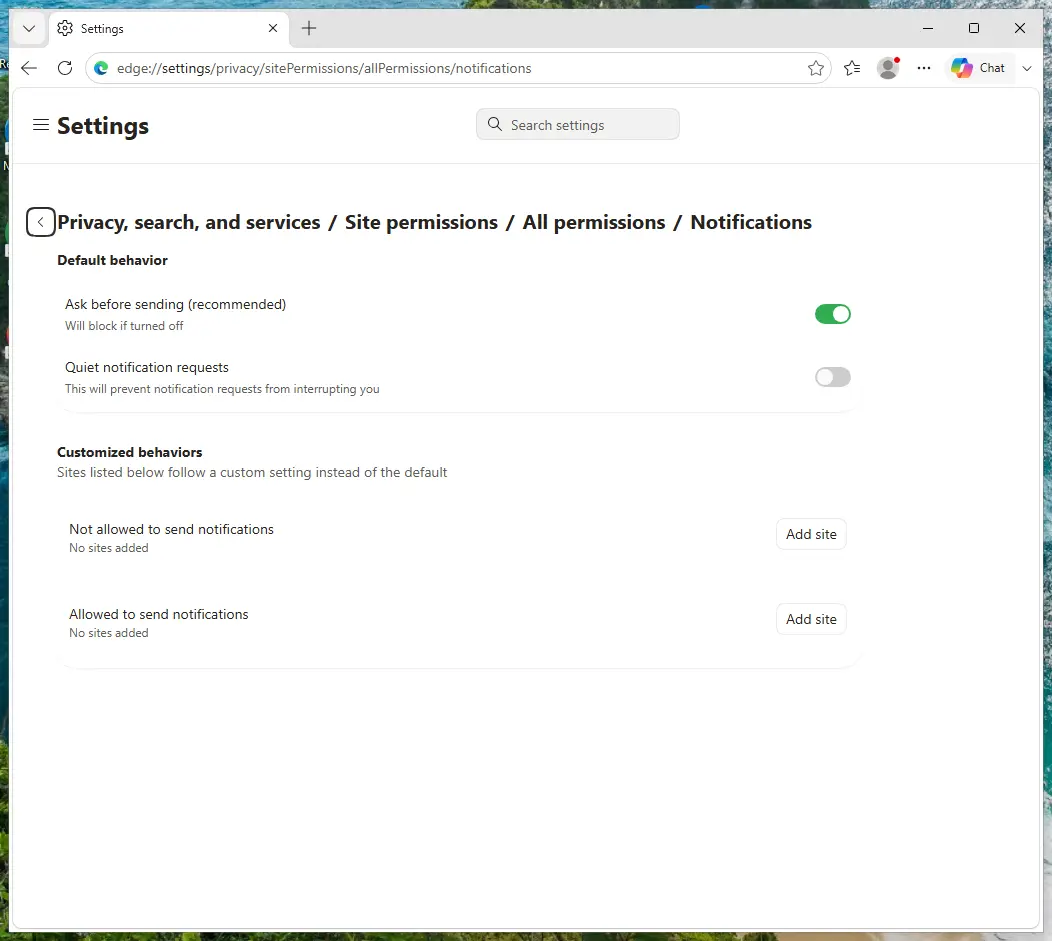
Edge on Windows 11: Site permissions > All permissions > Notifications. Full procedure with screenshots: Stop website notifications and pop-ups
Still there? More for Microsoft Edge
Remove extensions you do not recognise
Paste
edge://extensionsinto the address bar and click Remove under anything you did not install yourself.Full procedure with screenshots: Remove a browser extension
Clear the site data
Open Settings > Privacy, search, and services > Delete browsing data > Choose what to clear, set All time, tick Cookies and other site data and Cached images and files, and click Clear now.
Reset Edge
Open Settings > Reset settings > Restore settings to their default values and confirm with Reset. Extensions are turned off and the start page goes back to default; favourites, history and saved passwords stay. To stop notifications after you close Edge, turn off Settings > System and performance > Continue running background extensions and apps when Microsoft Edge is closed.
Full procedure with screenshots: Reset a browser and fix a hijacked search engine
Step 1: Remove putlocker.is from Firefox's notification permissions
Open the menu (three lines) > Settings and click Permissions and data in the left list, then Notifications. Select
putlocker.is, click Remove Website and confirm with Save Changes.In versions older than Firefox 152 the same list sits under Privacy & Security, behind a Settings button next to Notifications. Firefox shows these notifications only while it is running, on Windows 11 and Windows 10 alike.
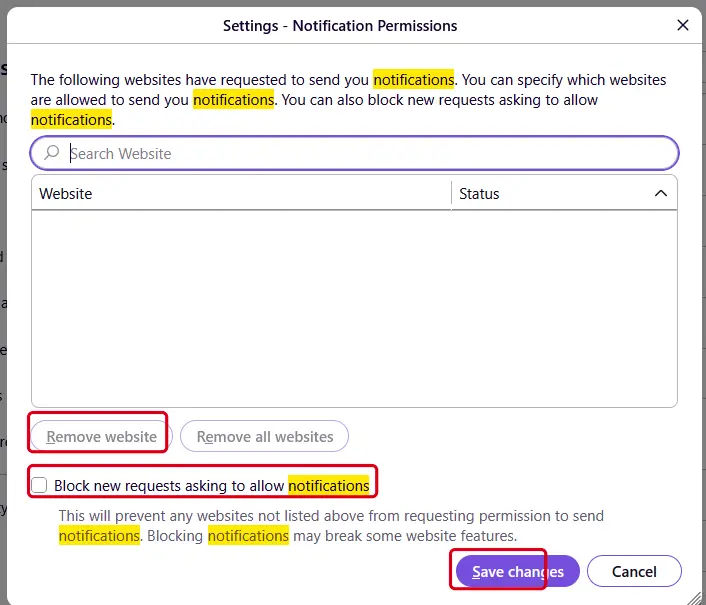
Firefox on Windows 11: the Notification Permissions window. Full procedure with screenshots: Stop website notifications and pop-ups
Still there? More for Mozilla Firefox
Remove add-ons you do not recognise
Paste
about:addonsinto the address bar, open Extensions, and choose Remove from the three-dot menu of anything you did not install yourself.Full procedure with screenshots: Remove a browser extension
Clear cookies and site data
Open Settings > Privacy & Security > Cookies and Site Data > Clear Data, tick both boxes and click Clear.
Refresh Firefox
Open the menu > Help > More troubleshooting information and click Refresh Firefox. Add-ons and custom settings are removed and the home page goes back to default; bookmarks, history and passwords stay.
Full procedure with screenshots: Reset a browser and fix a hijacked search engine
Take back the notification permission
Safari 18 and later on macOS: open Safari > Settings > Websites > Notifications, select any Putlocker address or other site you do not recognise and set it to Deny, or click Remove. Untick Allow websites to ask for permission to send notifications at the bottom so no site can ask again.
Remove extensions you do not recognise
In Safari > Settings > Extensions, select anything you did not install yourself and click Uninstall.
Clear the site data
In Safari > Settings > Privacy > Manage Website Data, remove the site's data, or use History > Clear History > all history. To empty the cache as well, turn on Show features for web developers in Settings > Advanced and choose Develop > Empty Caches.
Check the Mac for apps from the ads
Ads also target Mac users with fake players and "cleaners". In Finder > Applications, move anything unknown to the Bin. In System Settings > General > Login Items & Extensions, remove unknown items. Then use Go > Go to Folder to check
/Library/LaunchAgents,~/Library/LaunchAgents,/Library/LaunchDaemonsand/Library/Application Supportfor folders and files with the same unknown names, and empty the Bin.
Then, whichever browser you use
Step 2: Scan the PC if you downloaded anything from the ads
If you only saw the notifications and clicked nothing, you can stop before this step. If a notification led you to download or run something, delete that file, then scan Windows.
In Windows Security > Virus & threat protection > Scan options, run a Full scan, then choose Microsoft Defender Antivirus (offline scan) and Scan now. The offline scan restarts the PC and takes about 15 minutes on Windows 11 and Windows 10.
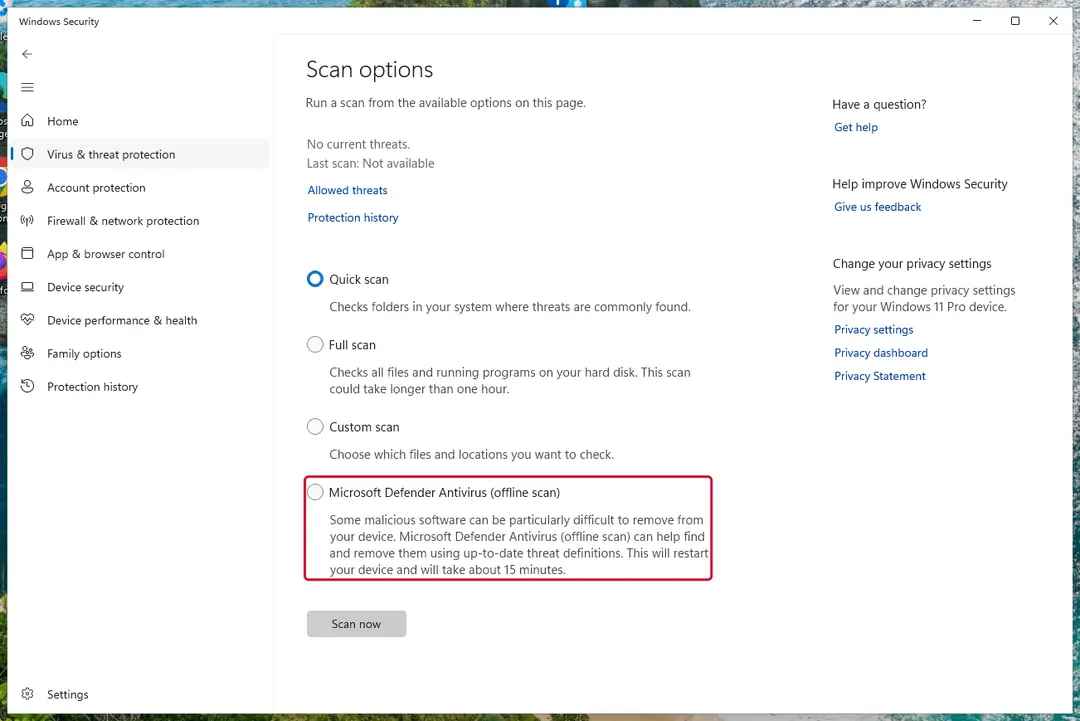
Windows 11: Windows Security > Virus & threat protection > Scan options. Full procedure with screenshots: Run a Microsoft Defender Offline scan
After removal: keep the ads from coming back
If you allowed notifications from a Putlocker address
The adverts that appear on the desktop, outside any browser window, come from a permission that was given to a website, not from a program. If you have only been receiving ads from Putlocker occasionally or some offers to use its services, try an ad blocker first; if that does not help, take the permission back. Nothing needs uninstalling for this.
- 1
Open the browser that shows the adverts
Launch the browser that has been troubling you, and find its notification list in the settings: the three-dot or menu button in the upper right corner of the window leads to Settings.
- 2
Find the Putlocker entry
Look at the list of sites allowed to send notifications for anything named Putlocker,
putlockers,putlockerfreeor any address you do not recognise, and check the list of blocked ones too. - 3
Block or remove it
Remove the dubious websites from the list: choose Block or Remove, or in Safari Deny. The exact menus are in the table below.
- 4
Do the same in every browser and profile
A permission is kept per browser and per profile, so a second browser or profile can keep showing adverts.
| Browser | Where the list is |
|---|---|
| Google Chrome | Settings > Privacy and security > Site settings > Notifications. Under Allowed to send notifications find the Putlocker address, open the three-dot menu on its line and choose Block or Remove. Paste chrome://settings/content/notifications to go there directly. |
| Microsoft Edge | Settings > Cookies and site permissions > Notifications. Open the three-dot menu next to the address under Allow and choose Block or Remove. Direct address: edge://settings/content/notifications. |
| Mozilla Firefox | Menu > Settings > Privacy & Security > Permissions > Notifications > Settings. Choose the Putlocker entry, set it to Block in the drop-down and click Save Changes. In 2020 the menu item was called Options, as the picture below shows. |
| Safari on macOS | Safari > Settings > Websites > Notifications. Choose the Putlocker entry and set it to Deny, or click Remove. In 2020 this was Preferences. |
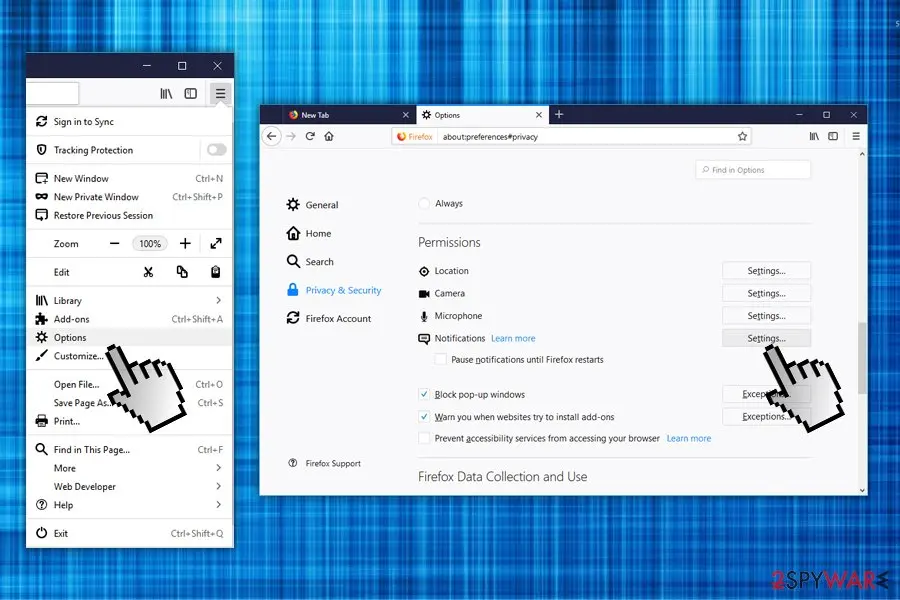
To stop pages from asking again, in Chrome use Settings > Privacy and security > Site settings > Notifications > Don't allow sites to send notifications.
If you clicked an ad or ran a file
The steps above are enough if all you saw were notifications or redirects. If a page, an ad or a download led you to run something, or your browser's start page or search engine changed, do these as well. You should use a security scan for this, and the steps below work with the one already built into Windows.
- 1
Uninstall what came with it
A potentially unwanted program can be a malicious extension or a standalone application. Open Settings > Apps > Installed apps in Windows 11 (Apps & features in Windows 10), sort by install date and uninstall anything you installed on the day the problem began and anything you do not remember choosing (Uninstall a program or app in Windows On uGetFix).
- 2
Scan, then scan offline
Run a Microsoft Defender Full scan, then the Microsoft Defender Antivirus (offline scan), which restarts the PC and checks it before Windows starts, where trojans that hide in a running system are easier to see. A scan checks the whole system in one pass, but no scan finds everything.
- 3
If a security program will not start
Malware can tamper with the security program. Restart Windows in Safe Mode with Networking (Settings > System > Recovery > Advanced startup > Restart now > Troubleshoot > Advanced options > Startup Settings > Restart, then press 5 or F5) and scan from there.
- 4
Clean every browser
Adware can leave extensions and plug-ins in each browser, so look at each of Chrome, Firefox, Edge and Safari that you use, then use the reset step in the plan above for each one. After the scan, check the browsers once more by hand: the start page, search engine and extension list.
If you typed a password, card number or other details into a page an ad opened, change that password now from a clean device and call your bank about the card. If the PC lags or crashes after the scan, look at Startup apps in Task Manager and at the installed apps again; a separate repair program is not needed for that.
How to keep it from happening again
Adware is spread by the sites and bundles around it. Our 2020 guide quoted tech experts from LesVirus.fr that having adware on a system is no surprise for a common visitor of third-party networks such as piracy websites, adult pages or online gaming services. We could not check that attribution, but the advice holds.
Do
- Stay away from unknown content and enter only official and trustworthy pages; free-to-use streaming sites are often illegal and do not always mean anything good.
- Keep Windows, your browser and your other programs updated; automatic installation of malware only works on software with a known hole.
- Use an ad blocker in the browser to stop malicious ads from reaching the page, and keep Microsoft Defender SmartScreen or Chrome's Enhanced protection switched on.
- Download software only from the maker's own site, and in an installer choose Custom or Advanced instead of Quick or Recommended, so you can untick the extras that were bundled.
- Keep an antivirus program on the PC. The one built into Windows is enough for most people; you do not need to pay for protection, but do not run without any.
- Turn off notification requests: in Chrome, Settings > Privacy and security > Site settings > Notifications > Don't allow sites to send notifications.
- Keep a current backup of your files on an external drive or in cloud storage (File History or OneDrive), so an infection or a failed disk does not cost you your documents.
- On public networks, a VPN hides your IP address from the sites and ad networks you visit; it does not block ads or malware and does not make a download safe.
Don't
- Click Allow on a page that says you must allow notifications to continue, to prove you are not a robot or to see a film.
- Install a player, codec, "update" or "cleaner" that a streaming page offers.
- Run an
.exe,.msior.scrfile that was handed to you with a film or show. - Click the large "Download", "Play" or "Start" buttons around a film listing: they are often ads, not the video.
- Trust a site only because it carries the Putlocker logo: copycats are often malicious or ask for money.
- Pay for a "Premium Membership" or enter a card number on a streaming page.
Ways to watch without the risk
If you are interested in watching films online, search for a trustworthy network and avoid piracy websites. The shortest safe path is the owner's own service, with no third-party ads between you and the film.
| You want | Where to get it |
|---|---|
| A new film | A cinema, or the studio's or a licensed service's rental or purchase page |
| A series that is still running | The broadcaster's own site or app, or a licensed streaming service that carries the show |
| An older film or series | A licensed streaming service, or buy or rent it from a store; your public library may lend it free |
| Free and legal | Ad-supported services run by broadcasters and studios, and the Internet Archive for public-domain films |
| To check whether a service is licensed | Look for the studio's or the broadcaster's name on the page and in the terms, and for a company address you can look up |
If you still visit such a site, use a browser profile with notifications blocked and an ad blocker, close every ad instead of clicking it, and never run a file the page gives you.
Questions about Putlocker virus
Is Putlocker safe?
No, we would not call Putlocker safe. The name covers many unrelated sites, and the ones in our 2020 pictures asked to show notifications, ran ads and offered a "Premium Membership".
On 6 October 2026 our test of putlocker.is showed only a page saying the domain may be for sale, but that was one visit and says nothing about other addresses. In 2015 Malwarebytes found a copy that opened new tabs, showed a fake Java update and offered a setup.exe that it classed as an unwanted program.
The films are also unlicensed in most cases, so using such a site can break copyright law where you live. If you still open one, do not click Allow, install anything or pay for anything.
Does Putlocker have a virus?
No, a Putlocker website is not a virus, and opening one installs nothing on a computer with up-to-date software. What people call the Putlocker virus are the pop-ups, redirects and notification adverts around it, and the files and fake updates it can lead to.
Malware only arrives if you click a bad ad, run a downloaded program or have software that is badly out of date. Our 2020 guide named the detection HTML/ScrInject.B, which we could not tie to Putlocker.
If you ran a file you did not trust, uninstall what you do not remember installing, run a Microsoft Defender full scan and then the offline scan, and reset your browser.
How do I stop Putlocker notifications?
Block the site in your browser's list of sites that can send notifications. In Chrome open Settings, Privacy and security, Site settings, Notifications, find the Putlocker address under Allowed, open its three-dot menu and choose Block or Remove.
In Edge the list is under Cookies and site permissions, in Firefox under Privacy & Security, Permissions, Notifications, Settings, and in Safari under Settings, Websites, Notifications, where you choose Deny.
Do the same in every browser and profile, because the permission is kept for each one. If the adverts keep coming after that, scan the PC and reset the browser, because an extension may be sending them.
Is putlocker.is the real Putlocker?
We cannot say, and nobody can promise it. Putlocker.is was an address of the service in 2014 to 2017, according to Wikipedia, which also says it is not publicly known whether an official site run by the original team is still online.
The registry record for putlocker.is shows a registration date of 10 December 2019, so the address has changed hands or was registered again since then.
On 6 October 2026 it showed a parked page that said the domain may be for sale. Treat any site that uses the name as unknown, and check who runs it before you type a password or a card number.
Why does Putlocker keep changing its domain?
The domain changes after blocks, seizures and copies. UK police seized putlocker.bz in June 2014, and the site moved to putlocker.is. A UK High Court order in May 2016 made internet providers block it, and a Luxembourg court suspended putlockers.ch in February 2017.
Each time, new addresses appeared, and many of them were run by other people who copied the name. Wikipedia counts at least fifty mirror or proxy sites.
That is why a list of working addresses is out of date within months, and why we do not give one. An address you were sent to by an ad is not the original.
What is the Putlocker Premium Membership offer?
It is an advert, not a membership of a known service. Our 2020 pictures show a banner saying that buying the services of the partners gets you a Putlocker Premium Membership, "two in one", and an "Ultimate offer" that promises it free. It is shown as a notification or a banner after you allow the site's requests.
We did not follow it or find out who runs it. An offer like this can lead to a page that asks for personal details or a card number, or to a subscription that is charged every month until you cancel it by hand. Do not enter a card number on such a page.
Can I get a virus from a fake Putlocker site?
Yes, it is possible, although a page load alone should not infect an updated computer. Malwarebytes described putlocker9.com in 2015: any click opened a new tab with random offers or a fake Java update, and a Free Download button gave away a setup.exe, which it classed as a potentially unwanted program.
Other copies may send visitors to scam pages, as Wikipedia reports for a Putlocker address in 2017. The risk starts at a click on an ad, at Allow on a notification request, or at a file you run. Keep Windows and your browser updated and never run a file that a streaming page gives you.
What should I do if I clicked an ad or downloaded a file?
First take back any notification permission, then check the computer. Open Settings, Apps, Installed apps in Windows 11, sort by install date and uninstall anything you installed on the day and do not remember choosing. Run a Microsoft Defender full scan, then the offline scan, which restarts the PC and checks it before Windows starts.
Reset the browser you used and check the start page and search engine by hand. If you typed a password or card number on a page an ad opened, change the password from a clean device and call your bank about the card. If the security program will not start, try Safe Mode with Networking.
Is it illegal to use Putlocker?
It can be, depending on your country, and we are not lawyers. Our 2020 guide said that downloading copyrighted content from the site is illegal and even punishable by local laws. Putlocker was blocked on copyright grounds by a UK High Court order in 2016, by an Australian court order in 2017 and in India since 2011, according to Wikipedia.
We did not find a source that reports arrests of its operators in that time. Many countries treat the operators and the uploaders more harshly than a viewer, but the rules differ. Licensed services avoid the question and the ads that come with it.
Will Fortect remove Putlocker virus?
No program removes Putlocker virus itself, because there is nothing on the PC to remove: the notifications come through a permission saved in the browser, and only the browser's settings take it away, as the steps above show.
What Fortect can do is check the rest of Windows. Its free scan looks for malware, unwanted programs and damaged system files, which is useful if you clicked the ads, downloaded something from the pages they opened, or are not sure what else changed on the PC.
If the scan finds nothing and the notifications stopped after you removed the permission, this problem is solved. Use Microsoft Defender as a second opinion whenever you have downloaded files from pages like these.
Sources
- Wikipedia: Putlocker (read October 6, 2026)
- Malwarebytes Labs: Imitation Putlocker Site Unlocks Path to PUP (28 October 2015) (read October 6, 2026)
- The Independent: Putlocker blocked in the UK by internet service providers after High Court order (26 May 2016) (read October 6, 2026)
- Krebs on Security: Software Cracks: A Great Way to Infect Your PC (read October 6, 2026)
- Google Chrome Help: Use notifications to get alerts (no longer online) (read October 6, 2026)
- FTC: Malware: How To Protect Against, Detect, and Remove It (read October 6, 2026)
- Microsoft Learn: Microsoft Defender Offline (read October 6, 2026)
- Microsoft Support: Windows startup settings (Safe Mode) (read October 6, 2026)