
Flipper Zero in Brazil 2026: Anatel Ban and Legal Status
- Flipper Zero in Brazil in 2026: the short answer
- Timeline: from seizures to a standing ban
- What changed since 2023
- Risks and scams around Flipper Zero (our analysis)
- How to get or use Flipper Zero legally in Brazil
- What is still unknown
- Our original 2023 report
- Anatel flags Flipper Zero as a tool used for criminal purposes
- The Implications of Flipper Zero's Seizure
- Related guides on 2-Spyware
Flipper Zero in Brazil in 2026: the short answer
Flipper Zero is still not legal to sell in Brazil. Anatel, the national telecom regulator, has not certified the device, so shops and marketplaces cannot offer it, and unauthorized imports can be seized at post offices, ports and airports.[4][5] A Brazilian security school wrote in October 2025 that sales remain suspended with no date for approval.[5]
There is one legal route. A company or researcher can import the device for scientific use if Anatel authorizes it. The applicant gives personal data, explains the purpose and signs a commitment form.[4] We found no Anatel decision as of 2026 that opened normal retail sales.
| Question | Answer |
|---|---|
| Can shops sell it? | No. Sale without Anatel homologation is irregular[5] |
| Can I import one? | Only with Anatel authorization for research or institutional use[4][5] |
| Are seizures still happening? | Anatel said in 2023 that seizures continue as imports are found[4] |
| What would Anatel need? | Lower transmit power and lower signal sensitivity, among other changes[4] |
| Marketplaces | Mercado Livre and OLX removed listings after the March 2023 seizures[4] |
| Other countries | Canada announced plans in February 2024 to ban such devices[6][7] |
Timeline: from seizures to a standing ban
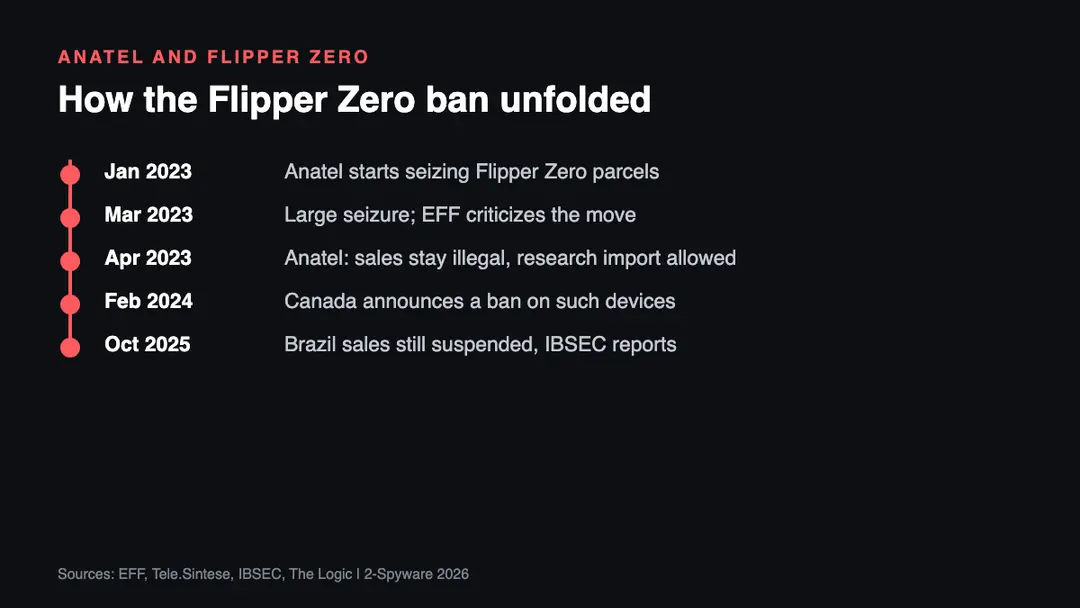
| Date | Event |
|---|---|
| January 2023 | Seizures of Flipper Zero shipments start in Brazil, as our original report describes[3] |
| March 2023 | A large seizure by Anatel; marketplaces pull listings[4] |
| April 6, 2023 | Anatel's inspection chief says sales stay illegal but research imports can be authorized[4] |
| February 2024 | Canada's innovation minister announces a ban on consumer hacking devices like Flipper[6][7] |
| October 7, 2025 | IBSEC reports that sales in Brazil remain suspended[5] |
What changed since 2023
Anatel explained its position soon after our original report. Its inspection superintendent, Hermano Tercius, told Tele.Síntese that the device needs lower power and lower sensitivity before it could be sold. With that change, he said, cloning car keys from a distance would no longer work.[4]
He also said Anatel accepts that the device has legitimate uses, such as testing security controls, but that its sale stays illegal and seizures go on.[4] The publication later corrected one point: users, not the maker, had asked Anatel how to certify it.[4]
Brazil is not the only country that acted. In February 2024 Canada's innovation minister, François-Philippe Champagne, said Canada would ban the import, sale and use of consumer hacking devices like Flipper to fight car theft.[6] Flipper Devices asked the minister for evidence that its device had been used in such crimes.[6][7] The EFF also criticized the plan.[3]
Risks and scams around Flipper Zero (our analysis)
The points below are our own analysis for buyers in Brazil and elsewhere.
- Seized parcels and lost money. An import without Anatel approval can be held and sent back, as buyers reported in 2023.[4]
- Fake shops. Since big marketplaces removed listings, unknown sites and social media sellers fill the gap. Some may take payment and ship nothing.[4]
- Used or modified units. A second-hand device may carry custom firmware you cannot check.
- Legal trouble from misuse. Opening cars, gates or access systems you do not own is a crime regardless of the tool.
- Illegal radio use. Transmitting on regulated bands without a certified device breaks Brazilian telecom rules.[5]
How to get or use Flipper Zero legally in Brazil
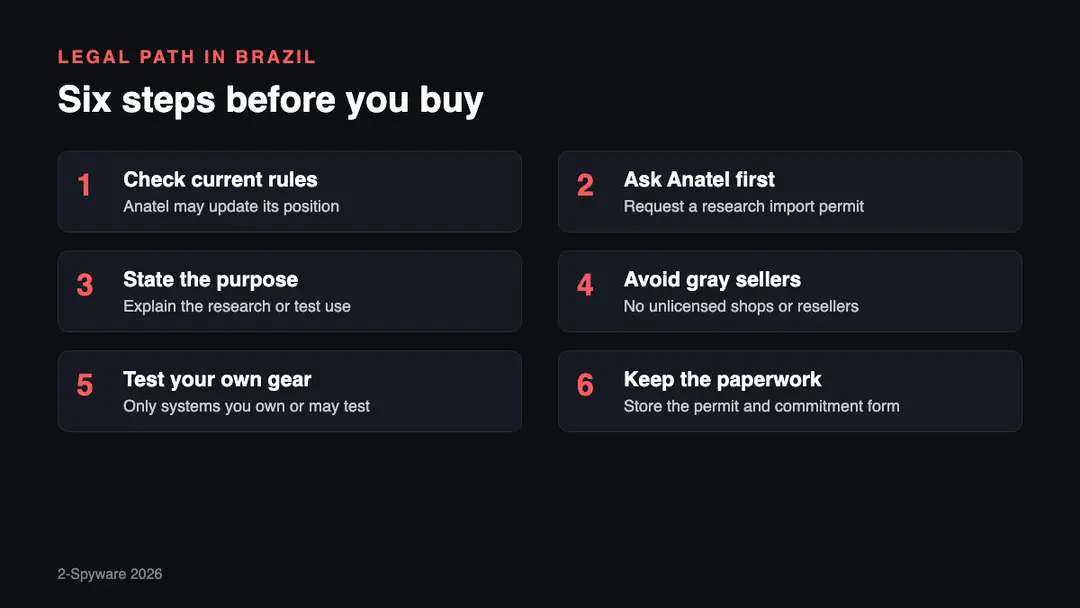
1. Check current rules. Look for any new Anatel statement before buying, since the agency may still define technical requirements.[5]
2. Ask Anatel first. A company or researcher can request authorization to import the device for scientific purposes.[4]
3. State the purpose. The process asks for your data, the purpose of use and a signed commitment form.[4]
4. Avoid gray sellers. Do not pay unknown shops or social media resellers. Parcels without approval can be seized.[4]
5. Test your own gear. Use the device only on systems you own or have written permission to test.
6. Keep the paperwork. Store the authorization and commitment form in case customs or the police ask.
What is still unknown
- Whether Anatel will ever publish technical rules that allow a reduced-power version to be sold. We found no such decision as of 2026.
- Whether Flipper Devices plans to certify a model for Brazil.
- How Canada's announced ban was put into law. The pages we read describe the February 2024 announcement, not a final rule.[6][7]
Our original 2023 report
The text below is our report as first published in 2023. We keep it unchanged for the record; the sections above bring it up to date.
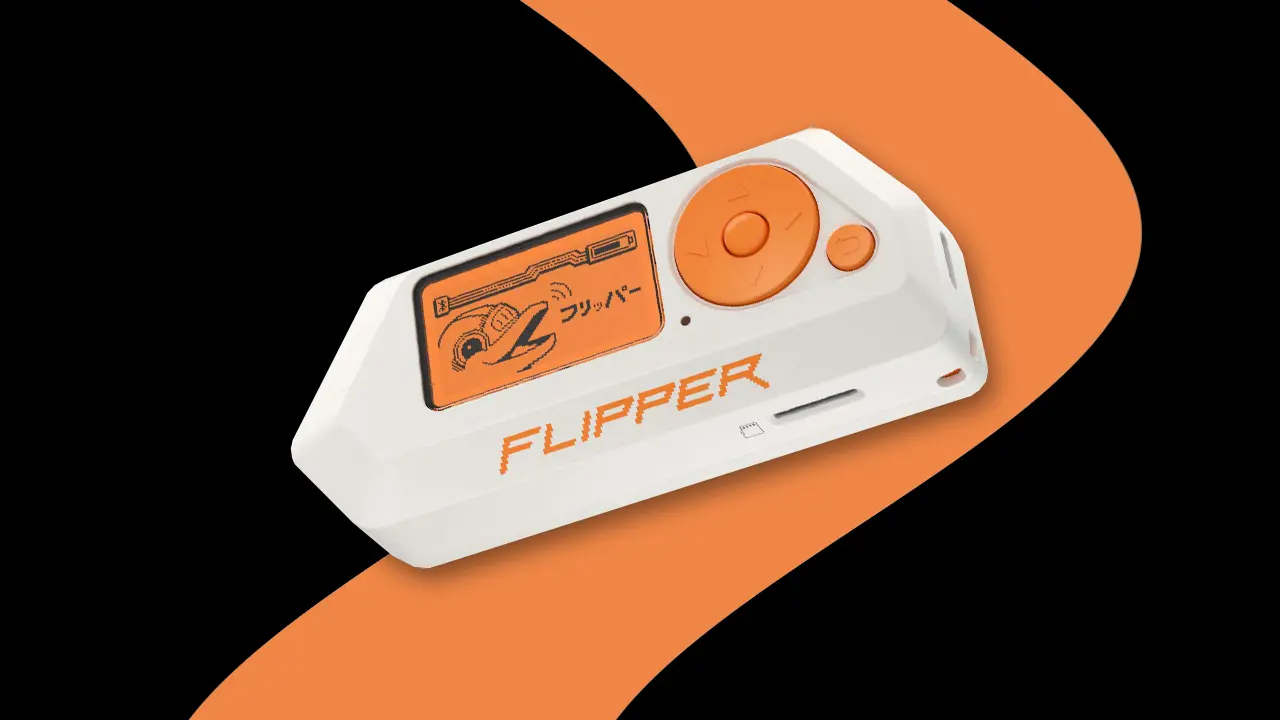
The Brazilian National Telecommunications Agency (Anatel) has been seizing incoming Flipper Zero purchases due to alleged criminal use, dealing a significant blow to the reputation of the portable multi-function cybersecurity tool. Flipper Zero is a device that allows pen-testers and hackers to experiment with a variety of hardware, including RFID emulation, digital access key cloning, radio communications, NFC, infrared, Bluetooth, and more.
Anatel has flagged the device as a tool for criminal purposes, complicating clearance and preventing it from reaching its intended destination. Despite the fact that the device does not use hardware that is illegal or difficult to obtain elsewhere, its market success fueled a wave of negative media attention portraying it as a threat to society. The Brazilian government has been accused of outright banning Flipper Zero in the country, limiting security researchers' access to powerful portable cybersecurity tools, harming their work, and harming the field.
Seizures of the $169 portable multi-functional tool designed for pen-testers and hacking enthusiasts began in January and are still ongoing. Several Brazilians who bought the Flipper Zero hacking tool have reported that their shipments are being redirected to Anatel due to a lack of certification with the country's Radio Frequencies department. This type of seizure is usually associated with devices emitting radio signals meeting the country's electronic and telecommunications standards.
Anatel flags Flipper Zero as a tool used for criminal purposes
Buyers from Brazil have been exchanging tips on Reddit[1] in recent months in order to get their items cleared by Anatel. A user has posted analytical instructions[2] for applying to Anatel for a personal homologation certificate for Flipper Zero, which should allow the buyer to use it while prohibiting resells to others in Brazil. Many buyers, however, report that the agency has rejected this certification procedure because Flipper Zero is allegedly used to facilitate crime. A letter received by Flipper Zero customers in Brazil says that Anatel rejects all requests for the homologation of a telecommunications product called Flipper Zero.
According to Anatel, this product has been used by malicious users in committing crimes or misdemeanors in the country. The rejection of homologation requests is based on Article 60, item II of the Regulation for Conformity Assessment and Homologation of Telecommunications Products, which is an annex to Resolution No. 715 of October 23, 2019. Anatel's decision is aimed at protecting Brazilian citizens from potential criminal actions facilitated by the use of the device.
Anatel concludes the message by stating that the item will be returned to the post office with the recommendation that it be returned to the sender. Those who bought the devices from Joomf and had their Flipper Zero seized were told they would be reimbursed.
The Implications of Flipper Zero's Seizure
The Electronic Frontier Foundation (EFF) argues that the Brazilian authorities' outright banning of Flipper Zero in the country will limit the security researchers' access to powerful portable cybersecurity tools, harming their work and negatively impacting the field. According to EFF,[3] Flipper Zero has legitimate uses, including penetration testing to improve the security of home networks or organizational infrastructure, hardware research, security research, protocol development, and use by radio hobbyists, among others.
The organization argues that the creation, possession, or distribution of tools related to security research should not be criminalized or restricted. The EFF believes that such tools can be used for lawful purposes and can help improve cybersecurity and that laws or regulations that criminalize or restrict their use can have negative consequences for security research and the public interest.
Flipper Devices INC is not certified in Brazil under the country's electronic and telecommunications standards for radio signal-emitting devices. As a result, it is not permitted to freely circulate in the Brazilian market. However, the company's reputation has suffered as a result of users who used its hacking capabilities to perform illegal activities such as car unlocking on social media.
Related guides on 2-Spyware
Frequently asked questions
Is Flipper Zero illegal in Brazil?
Selling it is illegal in Brazil because Anatel has not certified it. Shops and marketplaces cannot offer it, and unauthorized imports can be seized. A company or researcher can still import one for scientific use with Anatel authorization and a signed commitment form.{4}{5}
Why did Anatel ban Flipper Zero?
Anatel said the device had been used to commit crimes and treated it as a threat to telecom network security. It cited uses such as cloning cards and electronic keys, and it refused to certify the device for sale.{4} Our original report quotes the letter buyers received.
Can I buy a Flipper Zero in Brazil?
Not through normal shops. Mercado Livre and OLX removed listings after the March 2023 seizures, and an October 2025 report says sales remain suspended.{4}{5} The only legal route we found is an Anatel-authorized import for research or institutional use.
Which countries have banned Flipper Zero?
Brazil blocks its sale through Anatel's refusal to certify it.{4} Canada announced in February 2024 that it would ban the import, sale and use of consumer hacking devices like Flipper.{6} We did not confirm a full list of other countries from the sources we read.
Is a deauth attack illegal in Brazil?
Interfering with other people's wireless networks is not something the sources we read address directly. Brazilian rules do require radio-emitting devices to be certified, and using any tool to disrupt networks you do not own can break the law. Check with a local lawyer before testing.
Could Flipper Zero become legal in Brazil?
It could, if the device met Anatel's technical rules. Anatel said in 2023 that it would need lower transmit power and lower sensitivity so that it could not clone car keys from a distance.{4} We found no approved version as of 2026.
Log in to comment
No comments yet. Be the first.