
Bart v2.0 ransomware virus: what it is and how to remove it
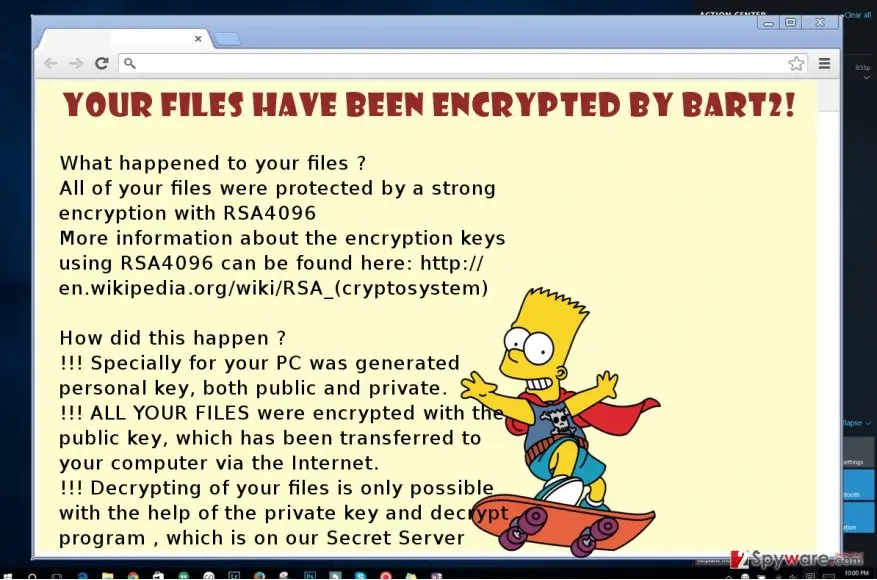
Bart v2.0 is a file-encrypting ransomware from 2016 that uses network-based distribution and password-protected encryption. Recovery is possible through backups and shadow copy recovery, though no free decryption tool currently exists.
Facts checked October 5, 2026. Removal steps tested on Windows 11 (26H2) and checked against Microsoft's and the browser makers' current documentation. Sections marked as our earlier report are the original text: they describe the threat as it was then and have not been reviewed since. The 2026 status, the removal steps and the questions are current.
Automatic
Get a free scan and check if your PC is infected.
Fortect finds malware, unwanted programs and the Windows damage they leave behind, and repairs it in one pass.
Make sure nothing will rename more files to .bart2: an automatic scan checks the PC first.
Do it yourself · free Remove Bart v2.0 ransomware virus yourself 6 steps, about 18 minutes, no software needed.
Start the steps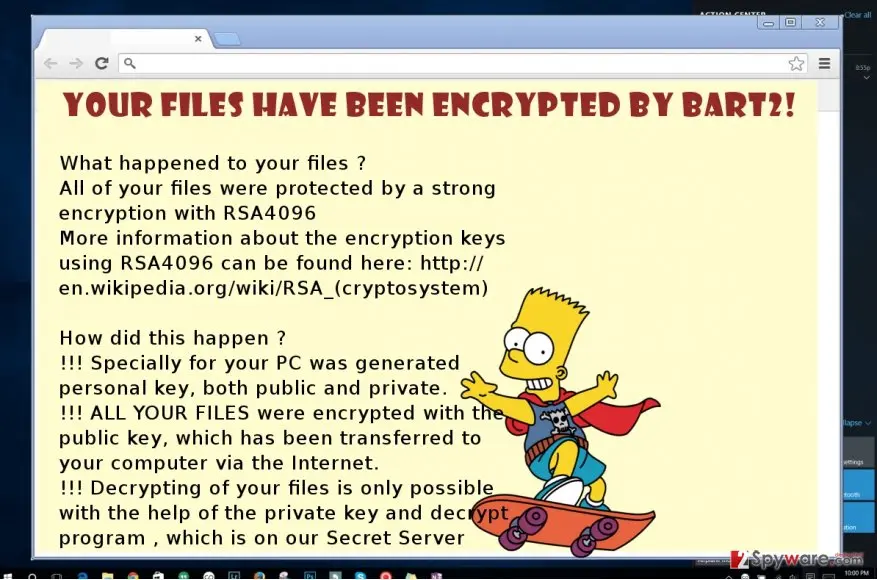
Bart v2.0 ransomware virus: summary
| Detection names | No Microsoft detection name is known |
|---|---|
| Ransom note | Not recorded in our earlier report |
| Contact | Not recorded in our earlier report |
| Encrypted file extension | .bart2 |
| Decryptor | No free decryptor is known for this variant; check No More Ransom (nomoreransom.org) for updates |
| Distribution | Not recorded in the old report |
| Removal | Scan the PC with security software to find and remove the malware and anything installed with it. Fortect scans Windows for malware and repairs the system files and settings it damaged. Remove it nowTo use the full-featured product, you have to purchase a license for Fortect. The scan is free. |
Show 9 more facts
| Damage | Not recorded in the old report |
|---|---|
| Name | Bart v2.0 ransomware virus |
| Type | File-encrypting ransomware |
| Symptoms | Files renamed with a new extension |
| Evidence | One write-up by a security site; details still limited |
| Encrypted files | .bart2 |
| Free decryptor | No free decryptor is known (checked 5 October 2026) |
| First seen | 2 September 2016 |
| Facts checked | 5 October 2026 |
What to search your PC and browser for
- File extension:
.bart2
How Bart v2.0 ransomware virus behaves
From our report of Sep 2016 · not reviewed since
Bart's return – Bart v2.0 starts terrorizing the virtual community
The new ransomware – Bart v2.0 virus – has been released and reported to make its first encryptions.
The virtual community might not have recovered from its predecessor yet, but the hackers seem to be ruthless. However, if you happen to be a victim of this cyber mischief as well, do not worry as there is a way to remove Bart v2.0 from the device.
IT professionals observe that the ransomware walked into the daylight with several updated features. Most likely, the cyber criminals decided to counterattack the "good guys" after they published the decryption tool for the first version of Bart ransomware at the end of June. Certainly, they improved the encryption method.
Now it will require more effort to decode the files affected by the ransomware. Let us proceed to the operation peculiarities. In the final section, you will find explicit Bart v2 removal instructions. One of the options is to run the system scan launching .
The IT experts obtained the sample and noticed some distinctive features of this new ransomware. First of all, now the threat attaches .bart2 extension to the affected files. Likewise, the threat obtained its alternative title – .bart2 extension virus.
Besides this feature, it seems that the hackers did not deviate from their previous habits. Unlike the majority of hackers, who prefer using AES and RSA encryption codes, the developers of Bart v2.0 malware still use its previous method. After the invasion, the virus compiles the possibly important files into .zip folders.
Certainly, you cannot access them because they are locked with a specific password. Similar to the mischievous character of the virus name's bearer, Bart Simpson, the ransomware might not be regarded as powerful as Cerber 3.0. Nonetheless, it still causes a great deal of trouble.
Though in the previous cases Bart used the same password for all locked data folder, now some samples of Bart v2.0 malware apply several passwords for different folders. It seems that the hackers learned their lesson after the IT experts released a free decrypter for Bart virus.
From our report of Sep 2016 · not reviewed since
The transmission peculiarities of the file-encrypting malware
Another distinctive feature Bart 2.0 ransomware is that it prefers spreading like its former version – via a botnet.
It is a network of machines which automatically send a large quantity infections to different users all around the world. They are likely to break through the security protection if your computer has a number of vulnerabilities. Outdated system and security applications might be also at fault for Bart v2.0 to sneak into the computer. Thus, it is of utmost importance to install and update a proper security application.
It also serves to block ransomware-distributing trojans. Lastly, you should pay attention to received spam emails. Do not fall into scammers' trap by recklessly opening an email. There has been a trend to fool users with infected text refund and customs declarations emails.
How to remove Bart v2.0 ransomware virus
Tools you'll need
All of these are free except where noted. Download them on a clean device if the infected PC is offline.
- A USB stick: to keep the ransom note, two or three encrypted files and screenshots off the infected PC.
- Microsoft Defender Offline: built into Windows 11 and Windows 10; scans before Windows starts, so running malware cannot hide.
- Microsoft Safety Scanner: a second, portable scanner with current signatures; each download works for 10 days.
- ID Ransomware: identifies the family from the note and one encrypted file and says whether a decryptor exists.
- No More Ransom: the free decryptors from police and security companies; check it again every few months.
- Fortect (optional): scans Windows for malware and repairs the system files and settings it damaged. The free scan is in the box above.
How to remove Bart v2.0 ransomware virus and get your files back
Work in this order.
Disconnecting comes first, removal comes before any restore, and nothing here asks you to contact the attackers.
Step 1: Disconnect the PC and unplug backup drives
Bart v2.0 ransomware virus encrypts everything it can reach, including drives and shares you connect later. Cut the network first: cable out, or Wi-Fi off from the taskbar.
Then unplug every USB stick and backup disk and pause cloud sync, so the encrypted versions do not replace your online copies. Do not reconnect any of them until the ransomware is removed from the Windows 11 or Windows 10 PC.
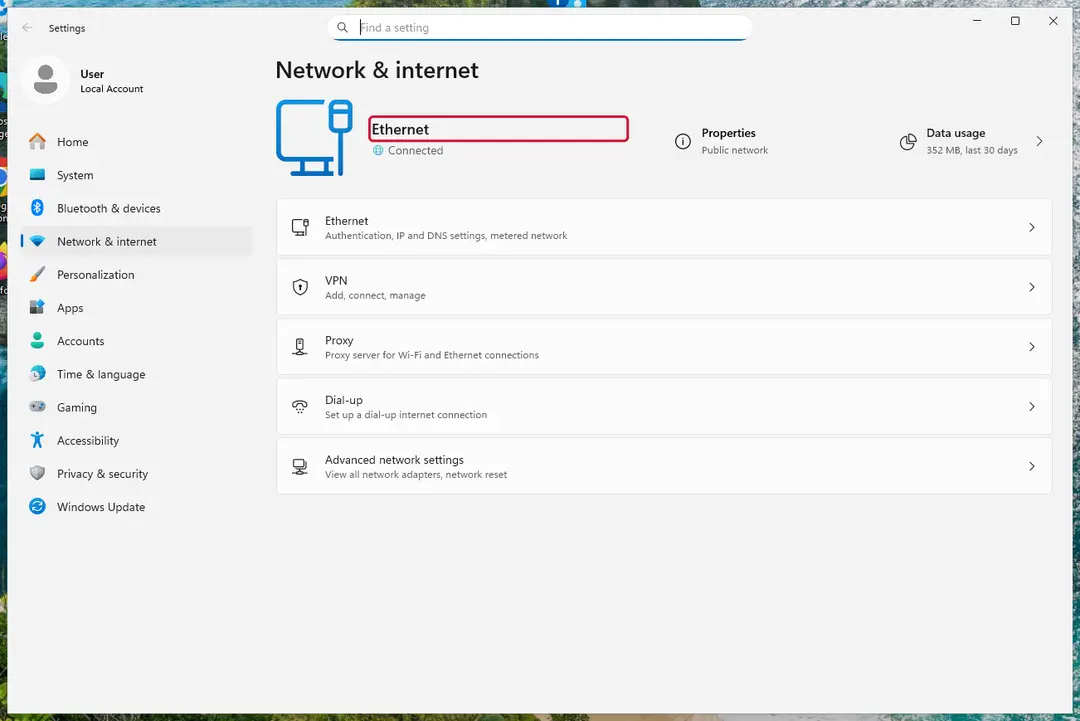
Windows 11: turn off Wi-Fi to take the PC offline. Full procedure with screenshots: Ransomware: first steps, finding a decryptor and recovering files
Step 2: Save the ransom note and identify the family
Find the ransom note, usually a
.txt,.htmlor .hta file in every folder or on the desktop, and copy it with one or two encrypted files to a USB stick.From another device, upload them to ID Ransomware or No More Ransom's Crypto Sheriff, which name the family from the note and the file extension. Write down the contact address and your personal ID from the note for the report.
Warning: Never contact the attackers from the infected Windows 11 or Windows 10 PC.
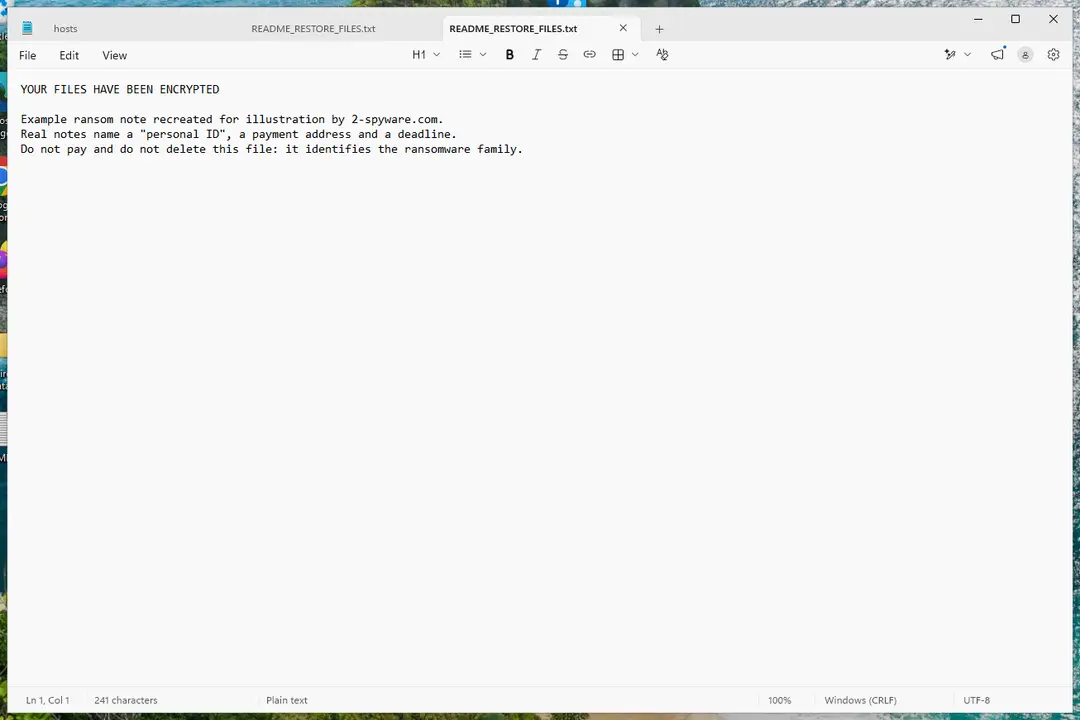
Windows 11: the ransom note and encrypted files to copy for identification. Full procedure with screenshots: Ransomware: first steps, finding a decryptor and recovering files
Step 3: Check for a free decryptor
For Bart v2.0 ransomware virus, no free decryptor is known (checked 5 October 2026). Search the family name in the No More Ransom decryption tools list and in the free decryptors of Emsisoft, Avast and Kaspersky, because new tools appear years after an attack.
Important: Keep the encrypted files even if nothing works today, and do not pay before every free option is ruled out: payment does not guarantee a working key.
Decryptors run on Windows 11 and Windows 10, but only after the ransomware itself is removed.
Full procedure with screenshots: Ransomware: first steps, finding a decryptor and recovering files
Step 4: Remove the ransomware before you restore or decrypt
Restoring or decrypting files while Bart v2.0 ransomware virus still runs lets it encrypt them again. Run a Full scan in Windows Security > Virus & threat protection > Scan options, then the Microsoft Defender Antivirus (offline scan).
If the ransomware blocks Windows Security, start Safe Mode with Networking and scan from there. Some families install a password stealer as well, so let both scans finish on Windows 11 or Windows 10.
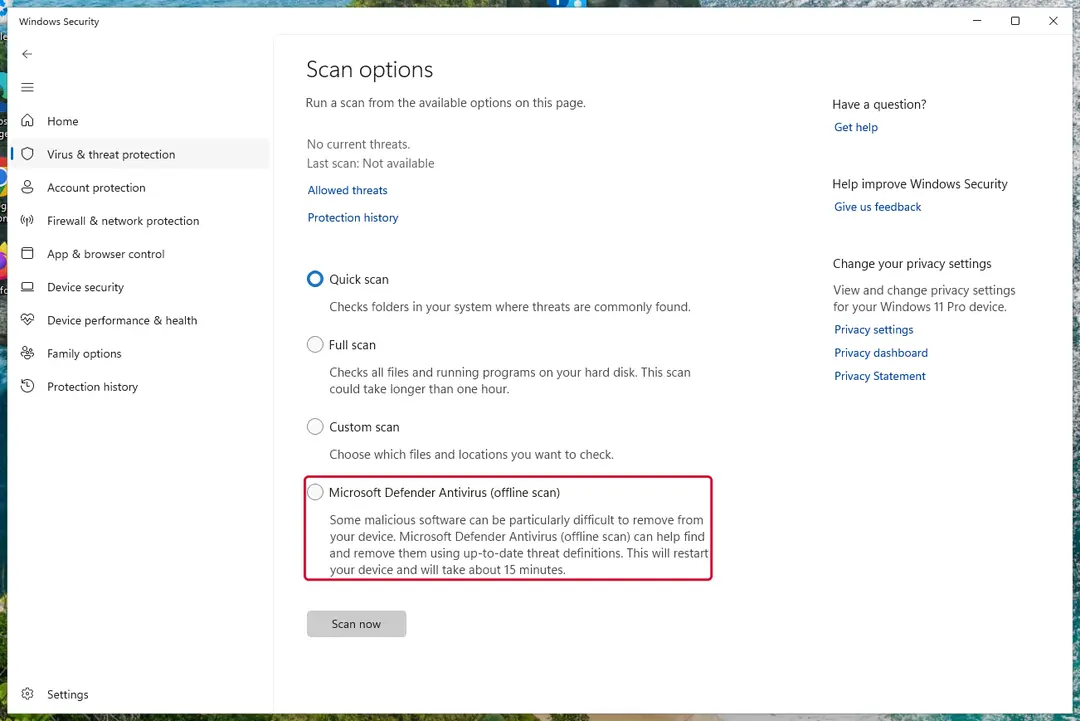
Windows 11: Windows Security > Virus & threat protection > Scan options. Full procedure with screenshots: Run a Microsoft Defender Offline scan
Step 5: Look for shadow copies of the files
Open Command Prompt as administrator and run
vssadmin list shadows. If it lists copies dated before the attack, right-click a folder with encrypted files in File Explorer, choose Properties > Previous Versions, and open or restore a version from before that date.ShadowExplorer, a free tool, shows the same copies when the tab is empty or hidden. Most current families delete shadow copies, so an empty list is normal, but the check takes two minutes on Windows 11 or Windows 10.
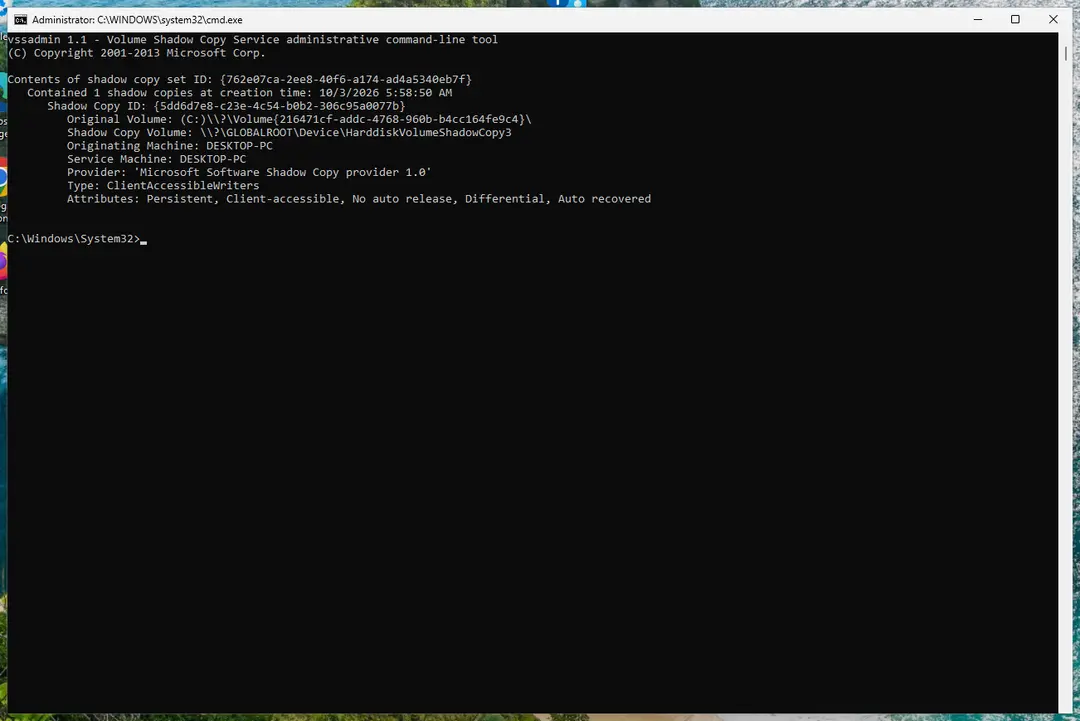
Windows 11: vssadmin list shadows shows whether shadow copies exist. Full procedure with screenshots: Ransomware: first steps, finding a decryptor and recovering files
Step 6: Restore the files from a backup or recover deleted originals
Restore from an external backup, File History or OneDrive's version history, choosing a date before the attack. Connect the backup drive only after the scans are clean, or the ransomware encrypts it too.
If there is no backup, file recovery software can sometimes find the deleted originals, because some ransomware writes an encrypted copy and deletes the original file.
Stop writing to the drive and try recovery on Windows 11 or Windows 10 before new files overwrite the space.
Full procedure with screenshots: Recover deleted files (Recycle Bin, backups, OneDrive) On uGetFix
Instructions for each browser and system
The detailed steps for every browser and system this guide covers. Open the one you use.
Manual removal using Safe Mode
Important! →
Manual removal guide might be too complicated for regular computer users. It requires advanced IT knowledge to be performed correctly (if vital system files are removed or damaged, it might result in full Windows compromise), and it also might take hours to complete. Therefore, we highly advise using the automatic method provided above instead.
Step 1. Access Safe Mode with Networking
Manual malware removal should be best performed in the Safe Mode environment.
Windows 7 / Vista / XP
- Click Start > Shutdown > Restart > OK.
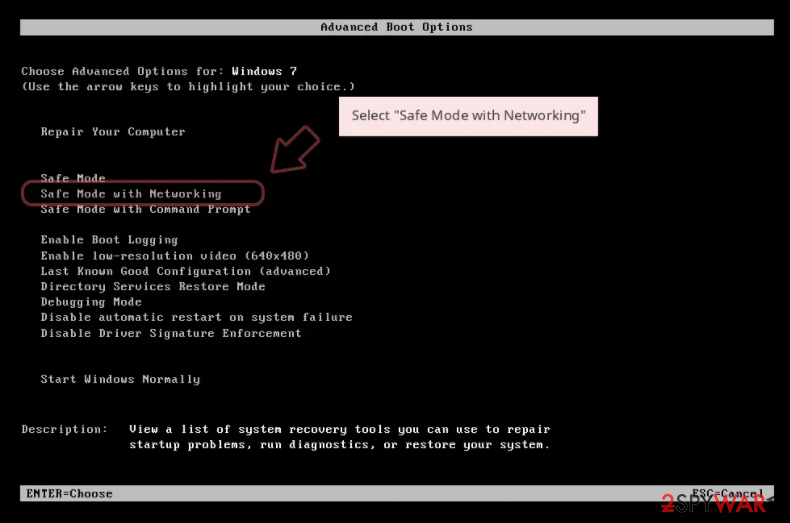
- When your computer becomes active, start pressing F8 button (if that does not work, try F2, F12, Del, etc. - it all depends on your motherboard model) multiple times until you see the Advanced Boot Options window.
- Select Safe Mode with Networking from the list.
Windows 10 / Windows 8
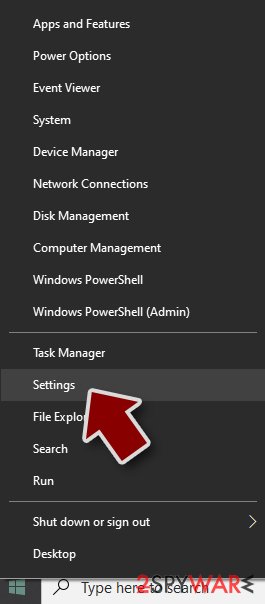
- Right-click on Start button and select Settings.
- Scroll down to pick Update & Security.
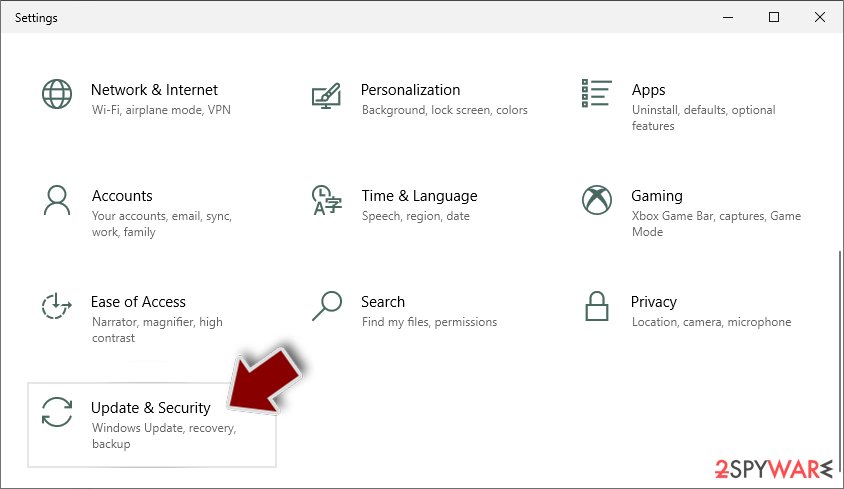
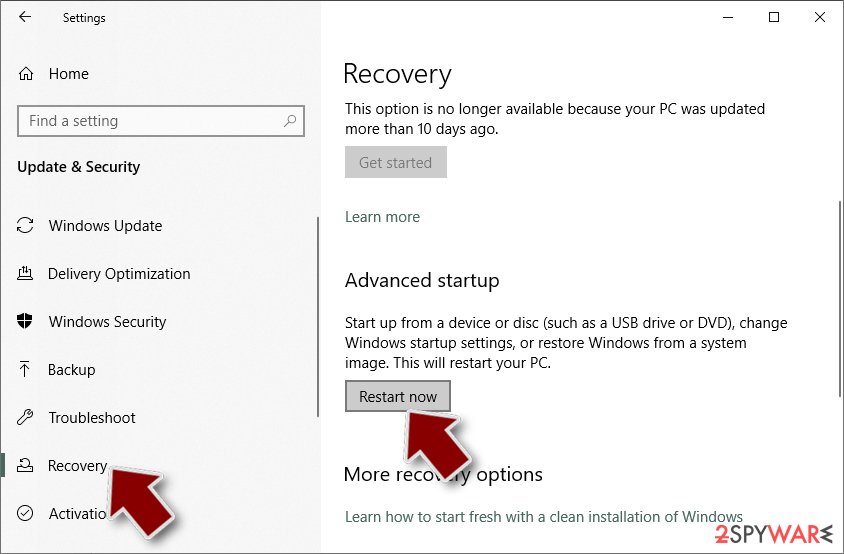
- On the left side of the window, pick Recovery.
- Now scroll down to find Advanced Startup section.
- Click Restart now.
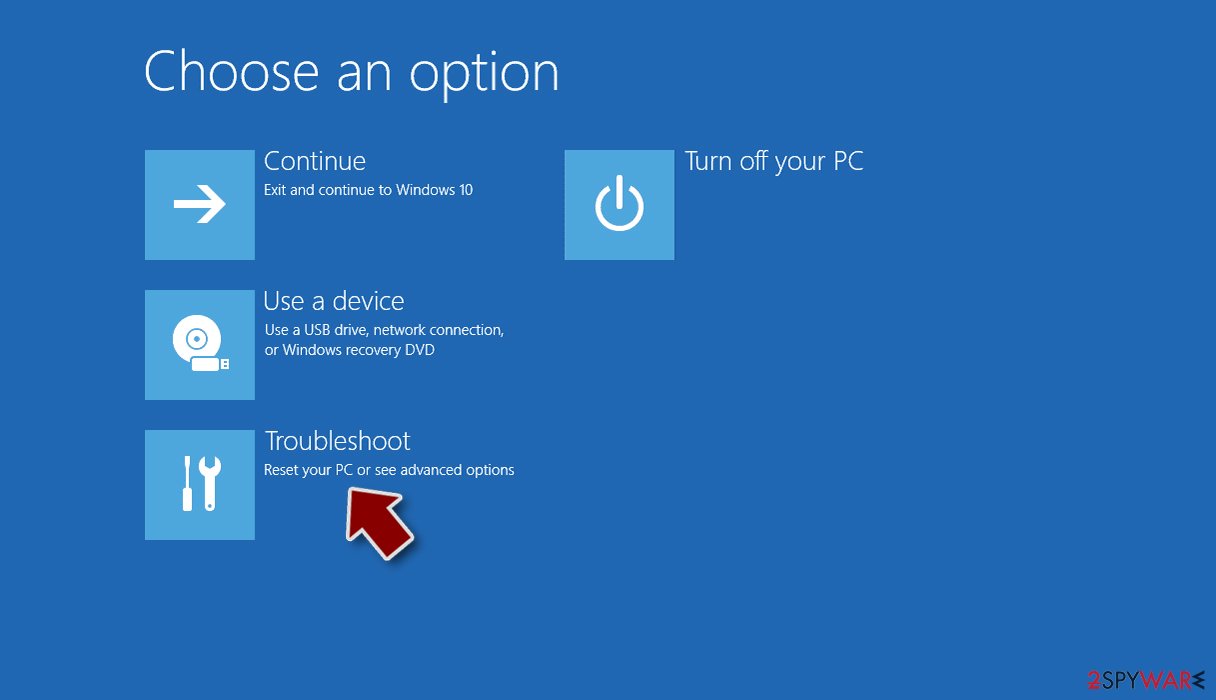
- Select Troubleshoot.
- Go to Advanced options.
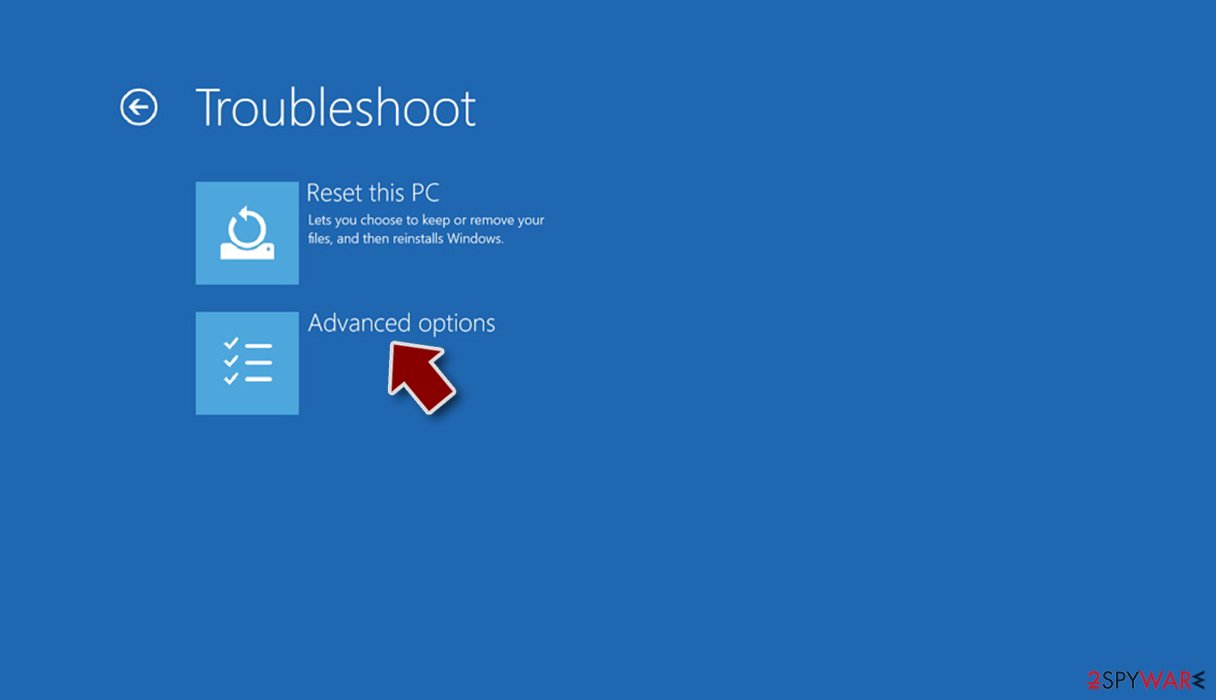
- Select Startup Settings.
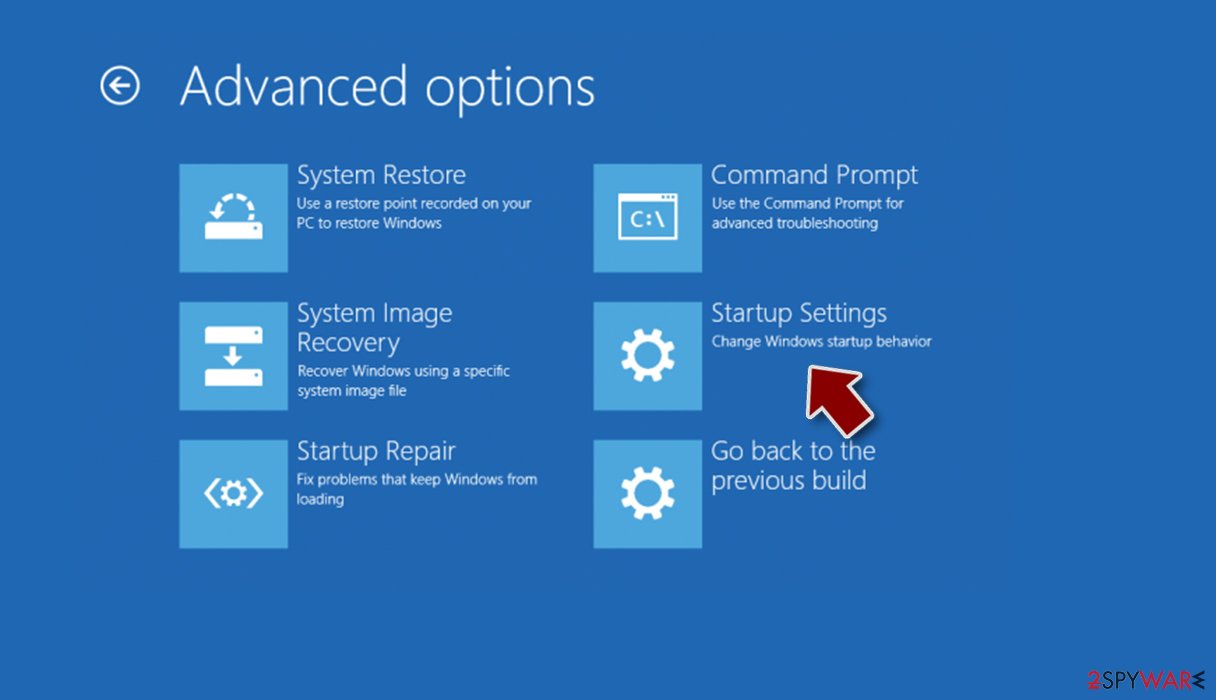
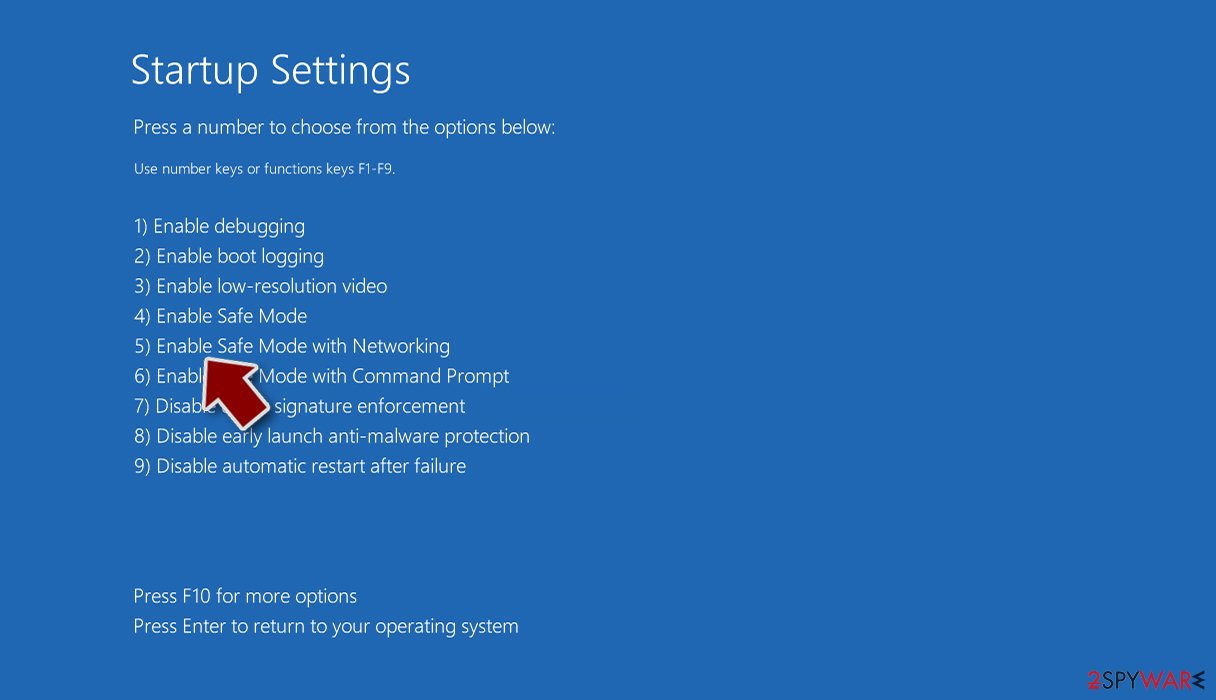
- Press Restart.
- Now press 5 or click 5) Enable Safe Mode with Networking.
Step 2. Shut down suspicious processes
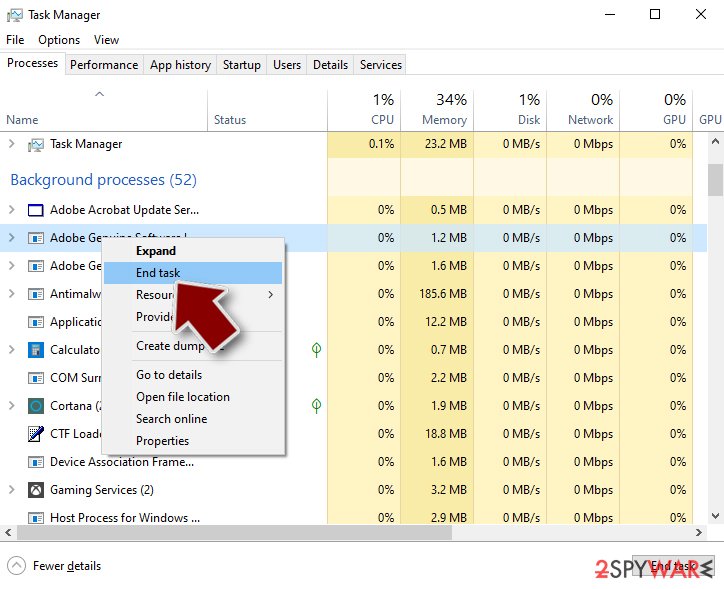
Windows Task Manager is a useful tool that shows all the processes running in the background. If malware is running a process, you need to shut it down:
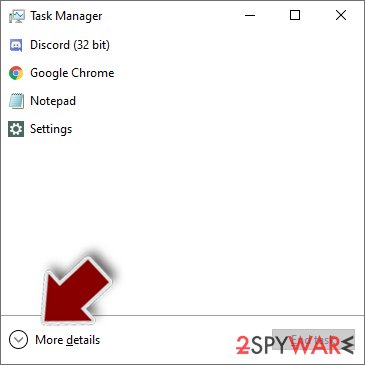
- Press Ctrl + Shift + Esc on your keyboard to open Windows Task Manager.
- Click on More details.
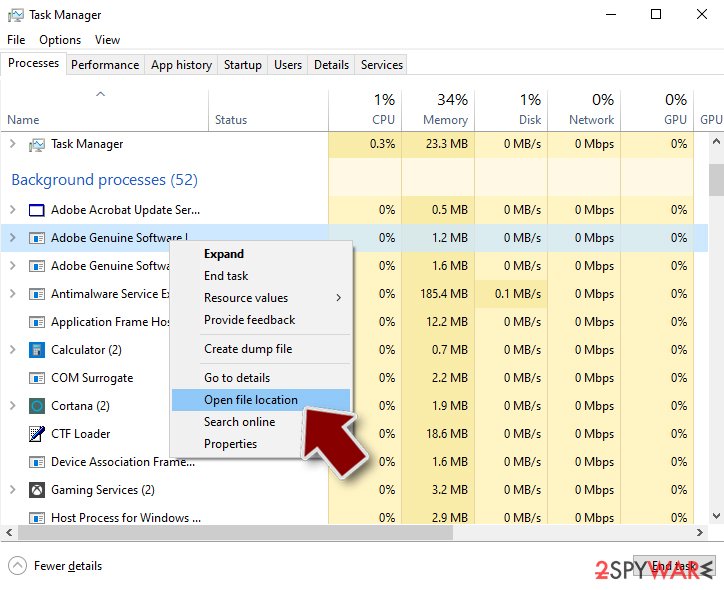
- Scroll down to Background processes section, and look for anything suspicious.
- Right-click and select Open file location.
- Go back to the process, right-click and pick End Task.
- Delete the contents of the malicious folder.
Step 3. Check program Startup
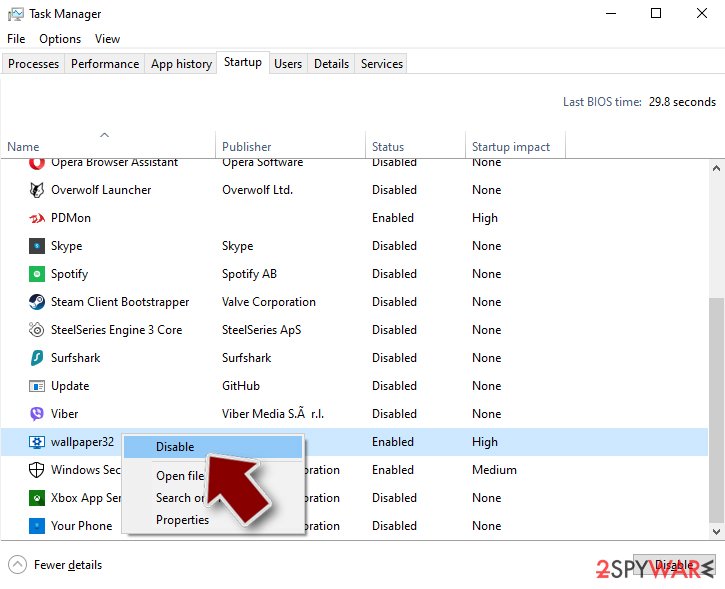
- Press Ctrl + Shift + Esc on your keyboard to open Windows Task Manager.
- Go to Startup tab.
- Right-click on the suspicious program and pick Disable.
Step 4. Delete virus files
Malware-related files can be found in various places within your computer. Here are instructions that could help you find them:
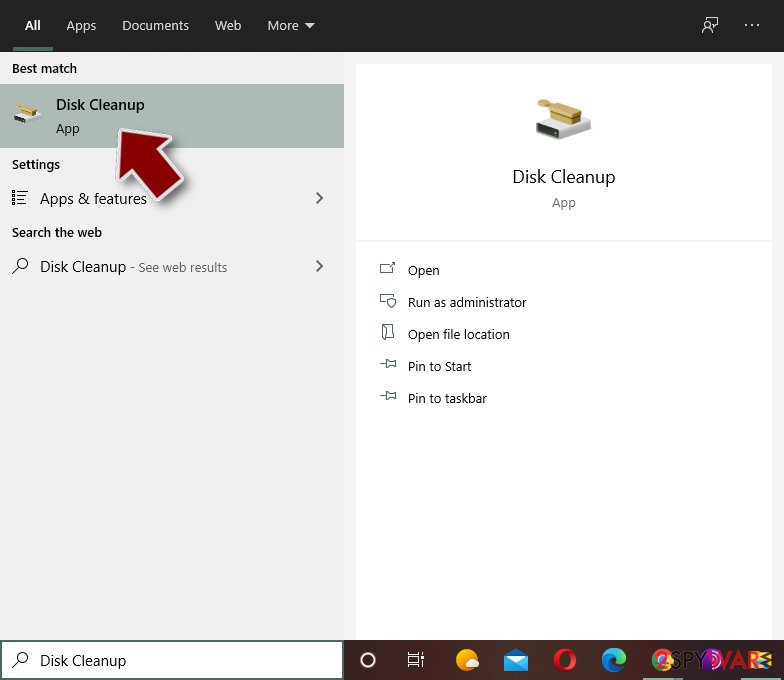
- Type in Disk Cleanup in Windows search and press Enter.
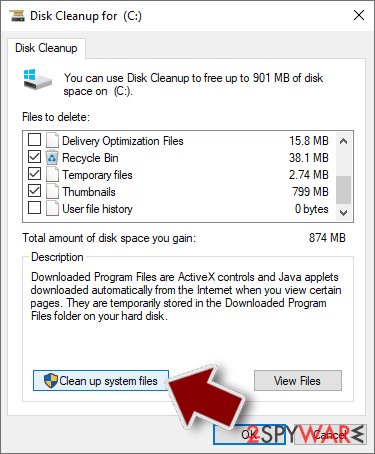
- Select the drive you want to clean (C: is your main drive by default and is likely to be the one that has malicious files in).
- Scroll through the Files to delete list and select the following:
Temporary Internet Files
Downloads
Recycle Bin
Temporary files - Pick Clean up system files.
- You can also look for other malicious files hidden in the following folders (type these entries in Windows Search and press Enter):
%AppData%
%LocalAppData%
%ProgramData%
%WinDir%
After you are finished, reboot the PC in normal mode.
From our report of Sep 2016 · not reviewed since
The ransomware elimination guidelines
Do not think that Bart v2 virus does not pose such a threat like more complex ransomware viruses, such as Locky.
As you can see, it is perfectly able to drive users' mad by messing up with their important files. The fastest and most efficient Bart v2 removal option would be the automatic one.
Install an anti-spyware application, such as or , to perform the elimination of the malware. In case you encounter problems, and cannot remove Bart v2 because the virus meddled with your computer, feel free to employ the recovery instructions. Beside them, find data recovery suggestions as well.
Since Bart v2 ransomware applies a different method to lock data, the software might help you recover the files. The threat does not delete the files so there are bigger chances that the data recovery application succeeds retrieving important files. In any case, this method might at least retrieve a portion of the files until the virus researchers come up with the new decrypter for this particular Bart version.
This tool is the alternative to the previously recommended data recovery applicatio. It is able to access shadow volume copies and, likewise, recover the affected files.
Bart Decrypter method
It never hurts to try free decrypters created for other ransomware threats. Since both, Bart and Bart v2, are interrelated this free decrypter might be of use.
Report it and recover your files
Report it
Report the attack even if you do not expect the files back: insurers and banks ask for the report number, and police use the contacts in the note to link cases.
- United States
- FBI IC3 · FTC ReportFraud
- United Kingdom
- Report Fraud (formerly Action Fraud) · NCSC
- Australia
- ReportCyber (ASD)
- EU countries
- Europol: national reporting sites
Give the victim ID, the note and the date the files were encrypted. A business that holds personal data may also have to notify its data protection authority, in the EU within 72 hours.
Make the next attack harmless
Bart v2.0 ransomware virus could only hurt the files that had no second copy, and the signs (files that end in .bart2 and no longer open) showed exactly which ones those were. The 3-2-1 rule fixes that:
- three copies
- two media
- one disconnected
A practical version for a home PC: OneDrive or another cloud backup with version history, plus an external disk that you plug in once a week for File History and then unplug. Test a restore now and then by opening a few files from the backup on another device.
Details, schedules and what not to back up are in our 3-2-1 backup guide for Windows.
Choose a proper web browser and improve your safety with a VPN tool
Online spying has got momentum in recent years and people are getting more and more interested in how to protect their privacy online.
One of the basic means to add a layer of security - choose the most private and secure web browser. Although web browsers can't grant full privacy protection and security, some of them are much better at sandboxing, HTTPS upgrading, active content blocking, tracking blocking, phishing protection, and similar privacy-oriented features.
However, if you want true anonymity, we suggest you employ a powerful VPN - it can encrypt all the traffic that comes and goes out of your computer, preventing tracking completely.
Lost your files? Use data recovery software
While some files located on any computer are replaceable or useless, others can be extremely valuable.
Family photos, work documents, school projects - these are types of files that we don't want to lose. Unfortunately, there are many ways how unexpected data loss can occur:
- power cuts
- Blue Screen of Death errors
- hardware failures
- crypto-malware attack
- even accidental deletion
To ensure that all the files remain intact, you should prepare regular data backups. You can choose cloud-based or physical copies you could restore from later in case of a disaster. If your backups were lost as well or you never bothered to prepare any, can be your only hope to retrieve your invaluable files.
Questions about Bart v2.0 ransomware virus
What is Bart v2.0 ransomware?
Bart v2.0 is a file-encrypting ransomware that emerged in 2016 as an updated version of the original Bart virus. IT professionals observed it arrived with several new features and an improved encryption method compared to its predecessor.
The malware spreads primarily through botnets—networks of infected machines that automatically send infections to users worldwide. Unlike more advanced ransomware, Bart v2.0 uses a simpler encryption approach rather than standard AES or RSA methods, making it somewhat less sophisticated than other threats like Cerber.
How do I open .bart2 files after infection?
Files encrypted by Bart v2.0 are marked with a .bart2 extension and cannot be opened without a decryption key. The malware compiles encrypted files into password-protected .zip folders, making direct access impossible. The ransom message provides no legitimate decryption method or email contact for payment.
Your only realistic recovery options are to restore files from backups created before infection, use volume shadow copies if System Recovery was enabled, or attempt data recovery tools that access recovered file fragments.
Is there a decryptor available for Bart v2.0?
No official decryptor exists for the current Bart v2.0 strain, though researchers created a free decryptor for the original Bart version in June 2016. Since Bart v2.0 uses an improved encryption method, that older tool will not work.
However, some victims have successfully recovered files using volume shadow copy recovery because the malware does not consistently delete these backups. Security experts continue researching whether a decryption solution will emerge for this variant.
Should I pay the ransom to recover my files?
No. Paying the ransom is not recommended and offers no guarantee of file recovery. The ransom message is poorly constructed with offensive remarks and no clear payment instructions, suggesting the perpetrators are inexperienced.
Paying funds only encourages further attacks and supports criminal activity. Instead, focus on using legitimate recovery methods like restoring from backups, attempting shadow copy recovery, or using specialized data recovery tools to retrieve encrypted files without giving money to attackers.
Do paid decryption services or data recovery companies actually work?
Legitimate data recovery companies may successfully retrieve some files from encrypted drives by accessing unrecovered sectors and shadow copies before the malware destroyed them. However, their success depends on how thoroughly Bart v2.0 damaged your file system and whether you kept System Recovery backups enabled.
Paid services charge substantial fees with no guarantee of complete recovery. Free alternatives like volume shadow copy recovery may work first before investing in professional recovery services.
How did Bart v2.0 get on my PC?
Bart v2.0 spreads through botnets—automated networks of compromised machines that send infections to computers worldwide, especially those with security vulnerabilities. Outdated operating systems and unpatched security applications create entry points for the malware.
The malware also spreads through spam emails containing infected attachments, often disguised as package delivery notifications, customs declarations, or tax refund documents. Users who open suspicious email attachments or visit compromised websites face the highest infection risk.
Was my data stolen by the attacker?
Bart v2.0 does not include advanced data-stealing functionality like modern ransomware. Its primary purpose is file encryption rather than data exfiltration. The malware focuses on locking files and demanding payment, not harvesting personal information.
However, if your system was compromised before Bart installed, other malware present on your machine may have already stolen passwords or sensitive data. Run a full system scan to check for additional threats beyond the ransomware.
Is Bart v2.0 different from other ransomware with similar names?
Yes, Bart v2.0 differs significantly from similar-sounding ransomware like Cerber 3.0. Though less powerful than Cerber, Bart still causes substantial damage through file encryption.
Unlike the original Bart strain that used a single password for all encrypted folders, Bart v2.0 applies multiple passwords to different folders, making manual decryption impossible. The ransomware's simpler encryption method means it's somewhat easier to reverse than military-grade ransomware, but no public decryption tool has emerged yet.
What removal steps should I take after infection?
First, disconnect your computer from the network to prevent further spread through botnets. Boot into Safe Mode to limit active processes and improve malware detection. Run Microsoft Defender's full and offline scans to identify and remove Bart v2.0 and any associated malware files.
After removal, use data recovery tools to attempt file restoration from shadow copies, and restore files from clean backups if available. Professional data recovery services may be necessary if automated tools fail.
Will Fortect remove Bart v2.0 ransomware virus?
Fortect scans Windows for malware and unwanted programs and repairs the system files and settings they change, and its free scan shows what it finds on your PC before you decide anything.
For Bart v2.0 ransomware virus, follow the plan above as well: the browser steps take back permissions and settings that no scanner treats as a threat, and uninstalling the program that brought it removes the source.
Run Microsoft Defender's full scan and, if anything was found, its offline scan as a second opinion. If the symptoms are gone after the plan and both scans are clean, there is nothing more to do.
Sources
- CISA: StopRansomware (read October 5, 2026)
- No More Ransom (read October 5, 2026)
- FTC: How to recognize, remove and avoid malware (read October 5, 2026)
- Microsoft Learn: Microsoft Defender Offline (read October 5, 2026)
- Microsoft Learn: How Microsoft names malware (read October 5, 2026)