
Omniboxes: what it is and how to remove it
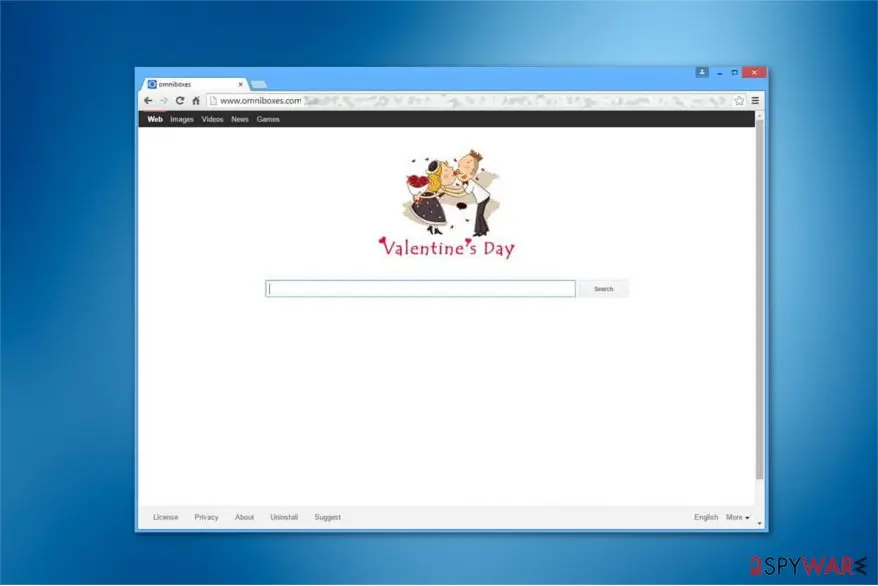
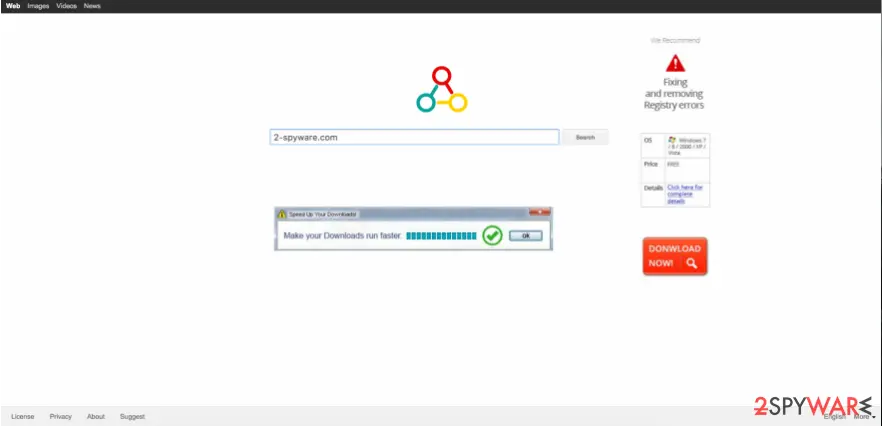
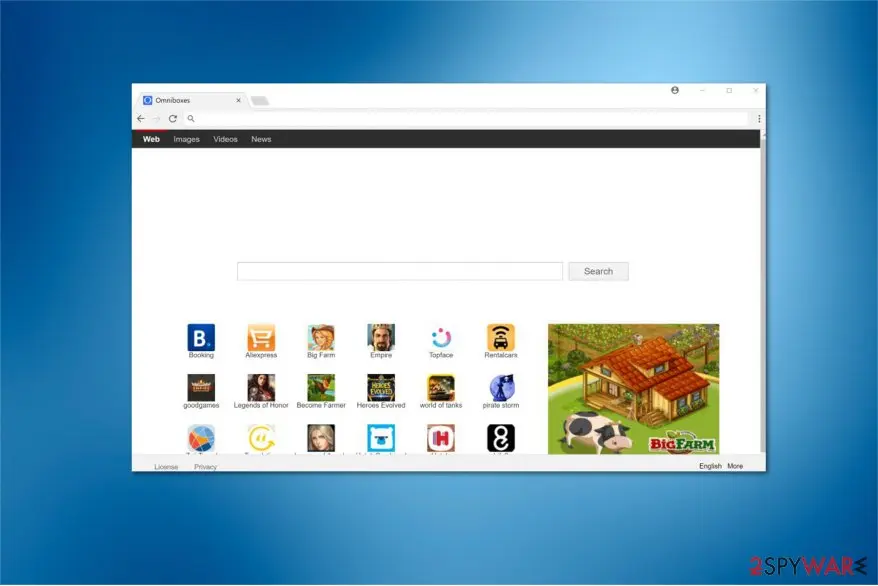
Omniboxes is a fraudulent search directory which is also classified as a browser hijacker by IT experts. Developers, SuperNet Technology Limited, has created this potentially unwanted program (PUP) to take over regular browsers, like Google Chrome, Internet Explorer, Mozilla Firefox, etc.
Facts checked October 6, 2026. Removal steps tested on Windows 11 (26H2) and checked against Microsoft's and the browser makers' current documentation. Sections marked as our earlier report are the original text: they describe the threat as it was then and have not been reviewed since. The 2026 status, the removal steps and the questions are current.
Automatic
Get a free scan and check if your PC is infected.
Fortect finds malware, unwanted programs and the Windows damage they leave behind, and repairs it in one pass.
Not sure what changed your search to omniboxes.com? An automatic scan checks extensions, programs and browser settings in one pass.
Do it yourself · free Remove Omniboxes yourself 5 steps, about 15 minutes, no software needed.
Start the steps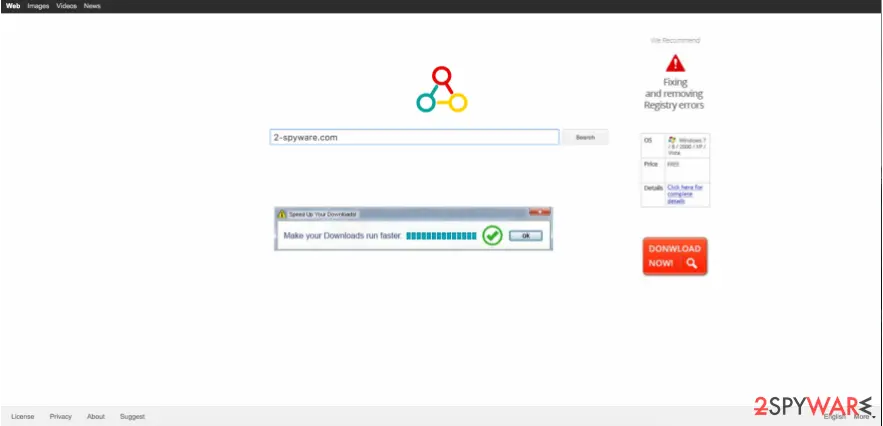
Omniboxes: summary
| Damage | Can deliver potentially dangerous ads or redirect to shady websites and help infiltrate malware |
|---|---|
| Name | Omniboxes |
| Type | Browser Hijacker |
| Symptoms | Sneaks into the system via software-bundles and assigns itself to homepage, new tab URL and default search directory |
| Detection names | No Microsoft detection name is known |
| Distribution | Not recorded in the old report |
| Removal | Scan the PC with security software to find and remove the malware and anything installed with it. Fortect scans Windows for malware and repairs the system files and settings it damaged. Remove it nowTo use the full-featured product, you have to purchase a license for Fortect. The scan is free. |
Show 5 more facts
| Evidence | 4 write-ups by security sites; details still limited |
|---|---|
| Search page | omniboxes.com |
| Browsers | Chrome, Edge and Firefox |
| First seen | 2 January 2021 |
| Facts checked | 6 October 2026 |
Is Omniboxes dangerous? What it collects
From our report of Jan 2021 · not reviewed since
Browser hijackers appear on the system after incorrect freeware download
If you are suffering from system hijack event though you have never installed this suspicious program, you might have let it in during the installation of other third-party applications.
Unfortunately, there are two deceptive techniques which help the developers to distribute various potentially unwanted programs:
We want to add that Omniboxes uninstall is a complicated procedure, so you should take all precautions to stop it from entering your system. In this case, avoid all unauthorized programs which are offered online or in advertisements, such as WPM, Wsys Control. Usually, they are the carriers of this potentially unwanted program.
- Misleading advertising. Nowadays, hundreds of websites are used for promoting questionable applications and services. They look like professional sites seeking to help people with their issues. However, the main aim that they seek is to trick them into installing potentially unwanted programs. According to the latest reports, Omniboxes virus has been actively promoted with the help of misleading websites. Please, stay away from them as far as you can!
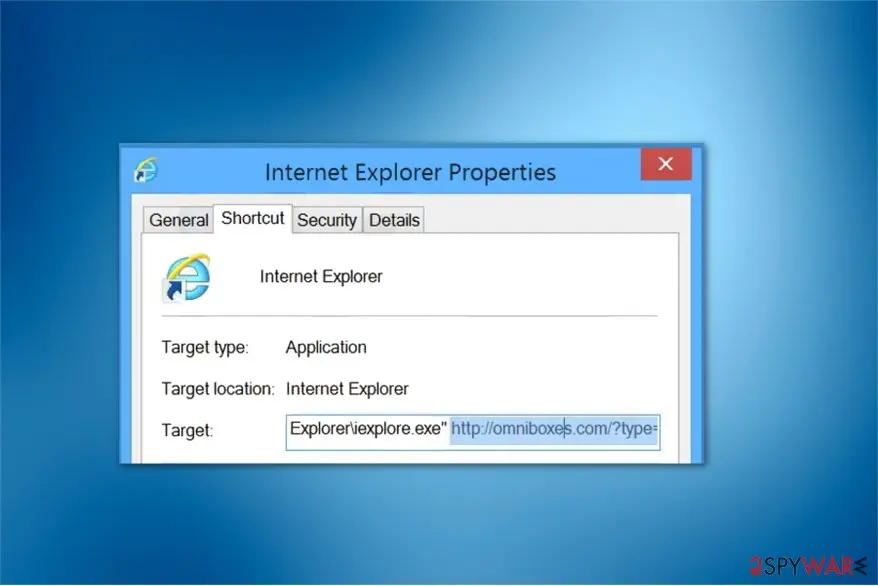
- Bundling. Thousands of browser hijackers, adware-type programs, and similar applications have been spread with the help of bundling. This method is closely related to freeware/shareware that is involved in such activity in exchange for money. How can you avoid bundling? Don't worry, this is not a complicated task. You just need to select Custom or Advanced installation method when downloading such programs as download managers, PDF creators, video streaming software and so on. Once you do so, make sure you untick the checkbox that claims: "Make Omniboxes.com my start page" or "I agree to set Omniboxes.com as the default search engine."
From our report of Jan 2021 · not reviewed since
Omniboxes FAQ
Question: My default search engine was always set to be Google from the time I have bought my computer.
Although, now I am forced to use some Omnibox search. What happened?
Answer: Omniboxes.com is known to be a browser hijacker. Computer experts also label it as a potentially unwanted program (PUP). It is not surprising that it has replaced your previous default page on your Internet browser - this is how all browser hijackers act. You have probably installed some freeware or shareware recently, which happened to be a software bundle and included it as an attachment.
Also, if you have installed new software using Default or Standard installation mode, there are no hesitations that it has appeared on your computer due to the careless installation process. It is not a safe web search site - and you should remove application ASAP.
Question: Hello, I have a question. I tried to use this never-seen search engine called Omniboxes.com. My computer was working fine all the time before this website appeared on my web browser's first page.
Plus, I tried to search for some relevant information using it, but I was unexpectedly redirected to another website that claimed my computer was badly infected and that I need to clean it ASAP by installing a computer optimization tool. Should I believe it? My computer was actually acting strange for the last few weeks…
Answer: You should NOT use this search engine because this website is considered a PUP (potentially unwanted program). Search outcomes on this site are meant to redirect its victims' to its sponsors' web pages.
The purpose of such Omniboxes redirect activity is to promote affiliate marketing and boost their web traffic rates. You should not believe these fake ads that promote suspicious optimization tools - such unreliable programs can include infectious components.
Question: This page keeps redirecting me to shady looking websites filled with promotional content and suggestions to install programs for free. I want to know if this redirect occurs because this website is unsafe? Or is Omnibox a virus, which keeps redirecting me to random sites that are not related to my search queries?
Answer: The main reason why are you suffering from these redirects is the suspicious browser extension, which probably has been installed in a bundle with other software. Some people call this search engine virus due to its silent installation and arbitrary activities.
Technically, it is not a virus so that you can perform Omniboxes removal without a help of security experts. All you need to do is to follow a guide below.
Question: My homepage has been replaced by Omniboxes, which provides Yahoo search results. This website seems to be completely safe to me. However, some Internet sources call it malware. Can you explain to me why?
Answer: People often misplace browser hijackers and adware programs with malware. In reality, these two kinds of programs are not considered malicious. They belong to the PUP group, which describes low-level computer threats. Some people may think that they need to remove Omniboxes.com malware because this search engine can display misleading search results, and these search results CAN possibly lead PC users to malicious websites.
Question: Please help me! Ever since Omniboxes.com appeared as my Internet browser the main page, my computer works really slow. I tried to change my homepage, but the site keeps coming back. Also, the computer still works slow no matter what… Can you tell me how can I get rid of this issue that is badly affecting my computer's functionality?
Answer: Your observations are correct - Omniboxes is responsible for your computer slowdowns. It is so, because it is a browser hijacker, and such program should not be kept on the computer system.
You are not going to get rid of this new homepage until you remove this search provider from your computer. You can do that automatically with an anti-malware program, or you can uninstall it manually. We have provided step-by-step removal tutorial for you.
From our report of Jan 2021 · not reviewed since
More from our earlier report on Omniboxes
- You can uninstall Omniboxes with by making merely a few clicks
How Omniboxes got into your browser
From our report of Jan 2021 · not reviewed since
Omniboxes is a fraudulent search directory which is also classified as a browser hijacker by IT experts.
Developers, SuperNet Technology Limited, has created this potentially unwanted program (PUP) to take over regular browsers, like Google Chrome, Internet Explorer, Mozilla Firefox, etc. In other terms, this unreliable program alters browser settings to make sure that you will be forced to use its services on a daily basis.
You should stay away from this search engine as far as you can. No matter how persuasively the developer of this program claims that it as a reputable search tool, the reality is quite different.
Instead of bringing the best online search experience, Omnibox search can start interrupting you with continuous redirects to suspicious websites trying to increase their popularity. Beware that it is an ad-supported application that seeks to earn money for its contrivers by filling its search results with commercial content.
If Omniboxes redirect issue doesn't seem like a dangerous thing, you should know that this search site can also cause continuous pop-up notifications in your search results. Typically, they recommend people to update some of their programs, use coupons and discounts or participate in various contests.
No matter how good they look, we highly recommend you to stay away from such domains because they may try to steal your personal information or infect your computer with other malware.
According to the latest data, the most of PC users has discovered http://omniboxes.com/ instead of the start page and the default search engine without downloading it to the system. After testing this browser hijacker, it becomes obvious that it has mostly been spread in a bundle with other programs as an additional component.
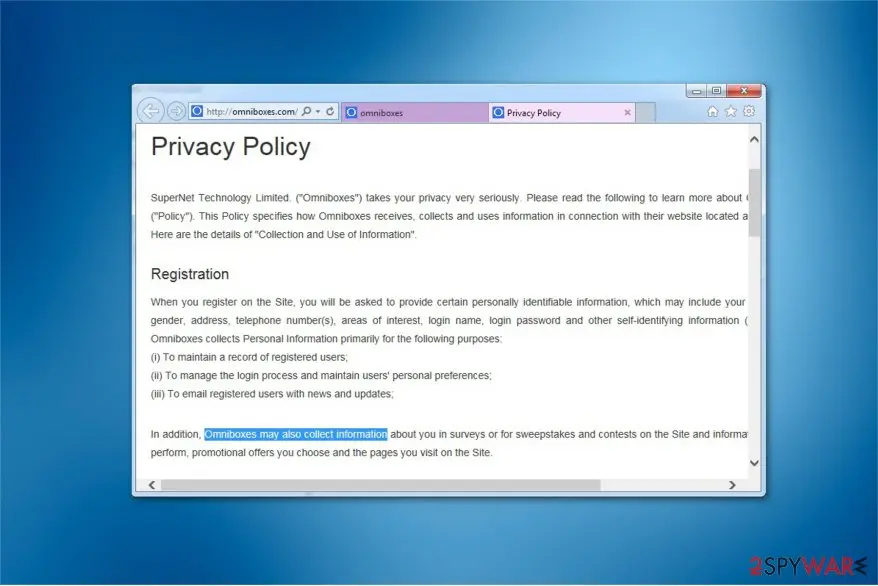
Beware that such programs have been actively spread in one pack with cookies, so they can also collect the non-personally information. Once you make Omniboxes.com your default search provider, it can quickly start gathering such information:
As you can see, you have to remove Omniboxes virus without dedicating your time for thinking whether it is a useful search site or not.
can help you with Omniboxes removal since it is developed to make sure that novice computer users would be able to use it without any complications. Although, you can get rid of this cyber threat with another antivirus as well.
- Search terms and most visited websites;
- Information that is added when visiting each of sites;
- User's email address;
- Computer's IP address, geolocation, etc.
Check your browser and PC
- Address:
omniboxes.com
How to remove Omniboxes
How to remove Omniboxes and get your search engine back
Remove the extension first.
The search settings only stay fixed once nothing on the PC can change them again.
Step 1: Remove extensions you did not add
Omniboxes often works through an extension, so go through the extension list of each browser:
chrome://extensionsedge://extensions- Extensions and themes in Firefox
Switch suspicious extensions off one at a time and reload the page where the problem shows, then remove the one that stops it, and any other you did not add.
Remember the other browsers and profiles on the PC. If Remove is missing or greyed out, a policy forces the extension, which the policy step deals with. Windows 11 and Windows 10 show the same pages.
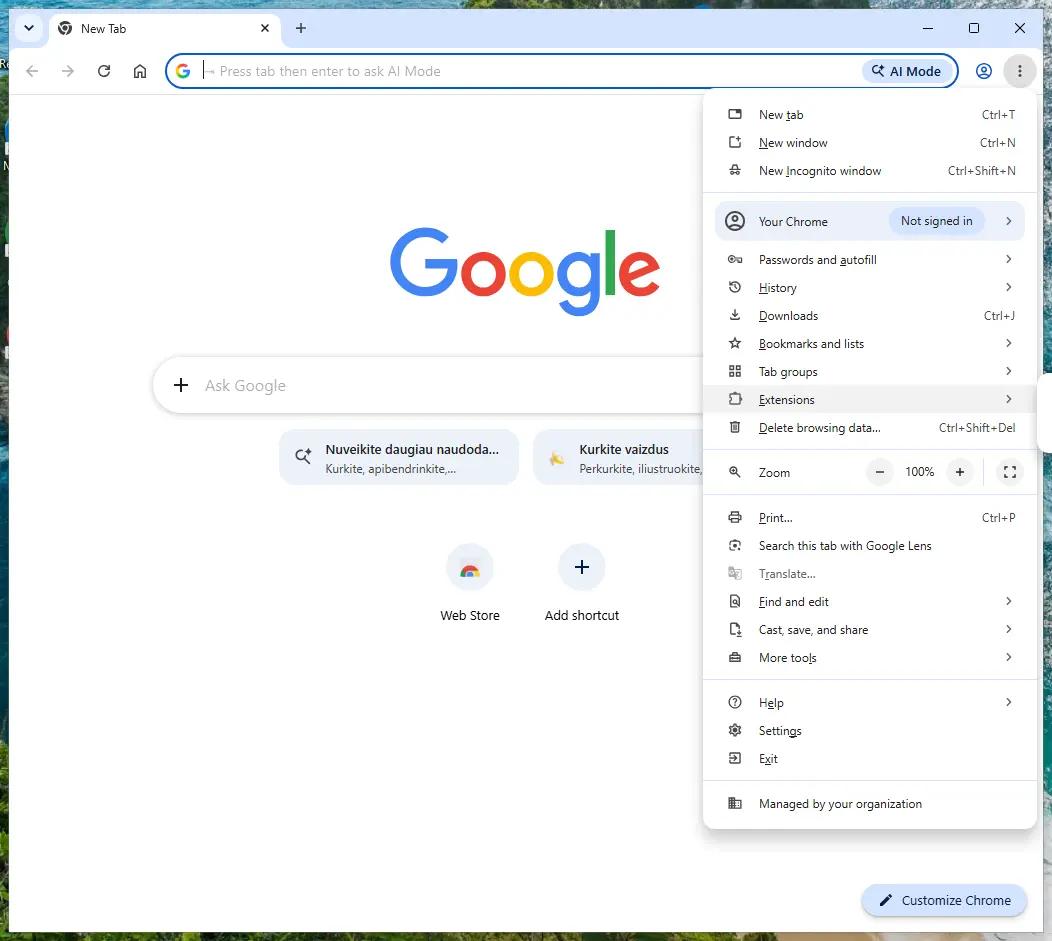
Chrome on Windows 11: More > Extensions > Manage extensions. Full procedure with screenshots: Remove a browser extension
Step 2: Put the search engine back and delete omniboxes.com
Searches that pass through
omniboxes.commean the browser's default search engine was replaced. Chrome: Settings > Search engine > Manage search engines and site search, then Make default on Google, Bing or another engine you chose, and Delete on omniboxes.com.Edge has the same list under Manage search engines (search the Settings page for it), and Firefox under Settings > Search.
Look at On startup and the homepage settings too and remove the hijacker's address there. Nothing in this step differs between Windows 11 and Windows 10.
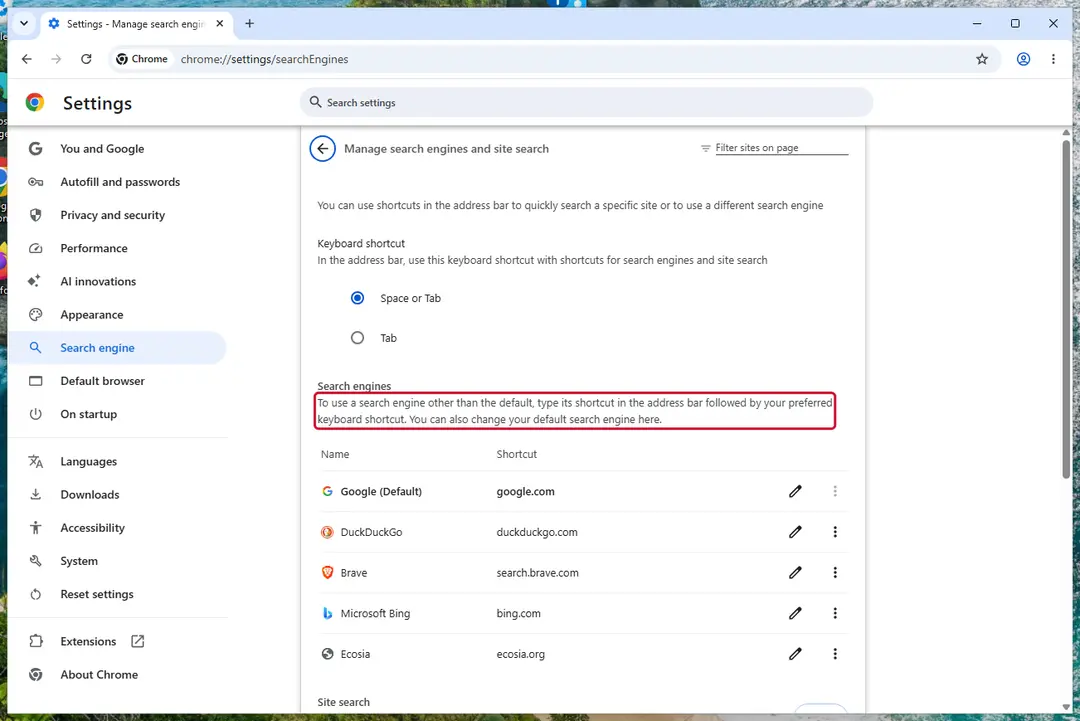
Chrome on Windows 11: check Search engine and On startup. Full procedure with screenshots: Reset a browser and fix a hijacked search engine
Step 3: Uninstall programs you did not mean to install
Open Settings > Apps > Installed apps in Windows 11, or Settings > Apps > Apps & features in Windows 10, and sort the list by install date. Look at what appeared around the day the problem started and uninstall every program you do not recognise or did not choose.
Free converters, PDF and video tools, "system optimizers" and unknown browsers are the usual carriers of Omniboxes. If a name is unclear, search for it before you remove it, so you do not uninstall a driver or a Windows component.
Full procedure with screenshots: Uninstall a program or app in Windows On uGetFix
Step 4: Reset the browser
Finish the browser part with a reset, which puts the search engine, start page, new tab page and site permissions back to their defaults and switches extensions off. Chrome: Settings > Reset settings > Restore settings to their original defaults.
Edge: Settings > Reset settings. Firefox: Help > More troubleshooting information > Refresh Firefox, which also removes its extensions. Your bookmarks and saved passwords are kept, and the menus are the same on Windows 11 and Windows 10.
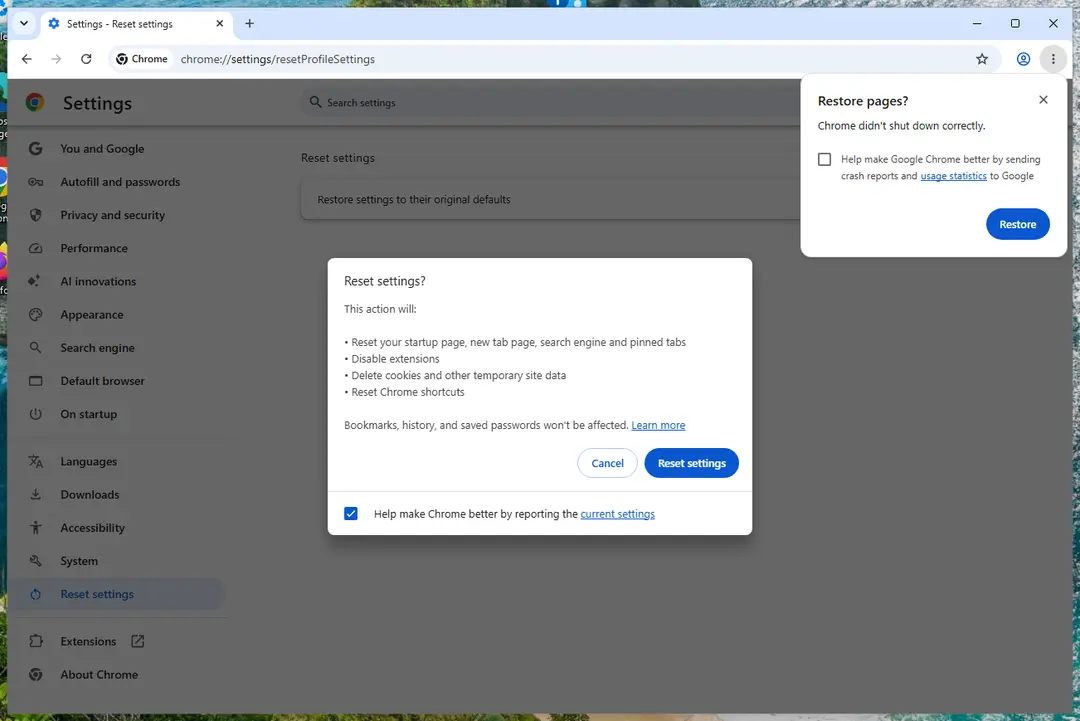
Chrome on Windows 11: Settings > Reset settings. Full procedure with screenshots: Reset a browser and fix a hijacked search engine
Step 5: Scan the PC, then run the offline scan
Open Windows Security > Virus & threat protection > Scan options, run a Full scan and remove everything it finds. Then select Microsoft Defender Antivirus (offline scan) and click Scan now: the PC restarts and scans before Windows loads, which finds files that hide while Windows runs.
Save your work first, because the offline scan takes about 15 minutes. Both scans are built into Windows 11 and Windows 10, and a second scanner from another vendor is a useful extra opinion.
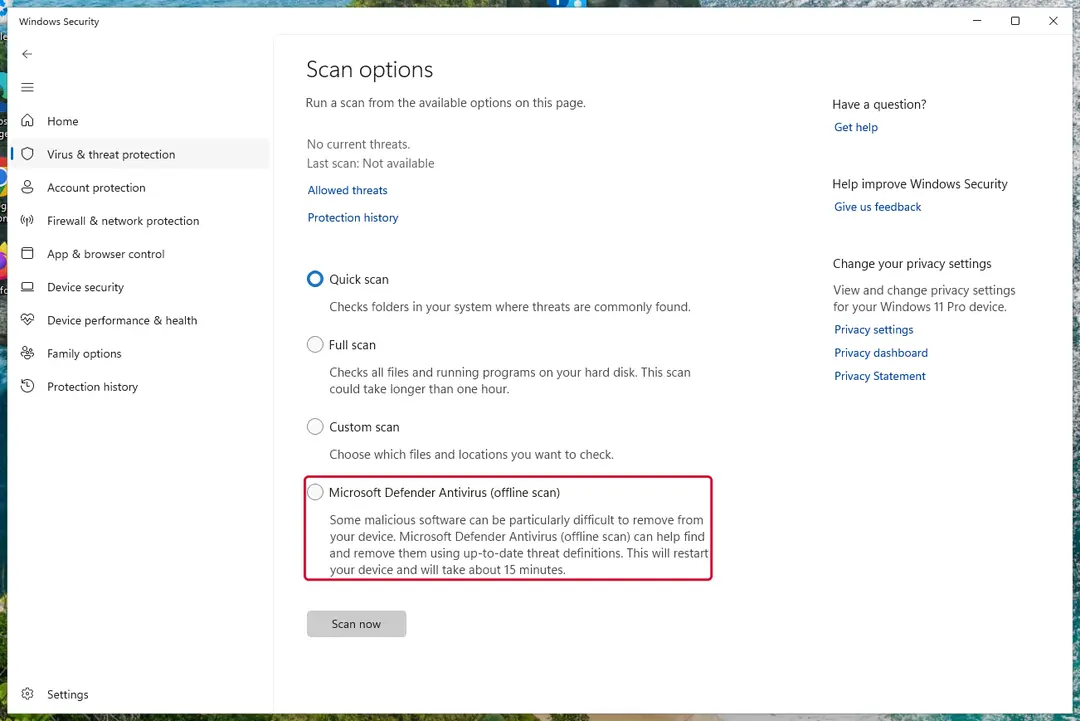
Windows 11: Windows Security > Virus & threat protection > Scan options. Full procedure with screenshots: Run a Microsoft Defender Offline scan
Instructions for each browser and system
The detailed steps for every browser and system this guide covers. Open the one you use.
Uninstall from Windows
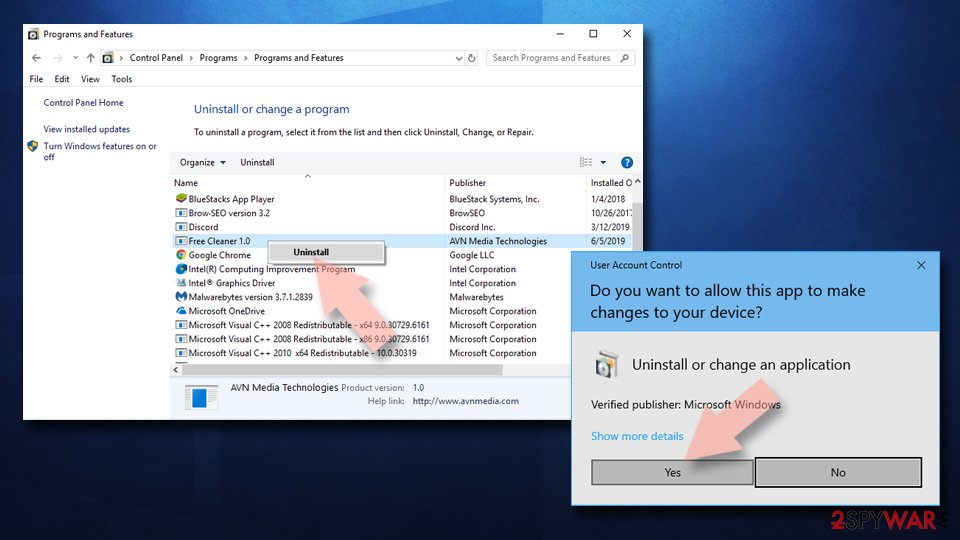
The first step you should take in Omniboxes removal is to uninstall the program itself if you want to clean your Windows system. The guide below will explain you how to do it in detail:
Uninstall from Windows 10/8:
- Type Control Panel into the Windows search box and open the result.
- Under Programs, select Uninstall a program.
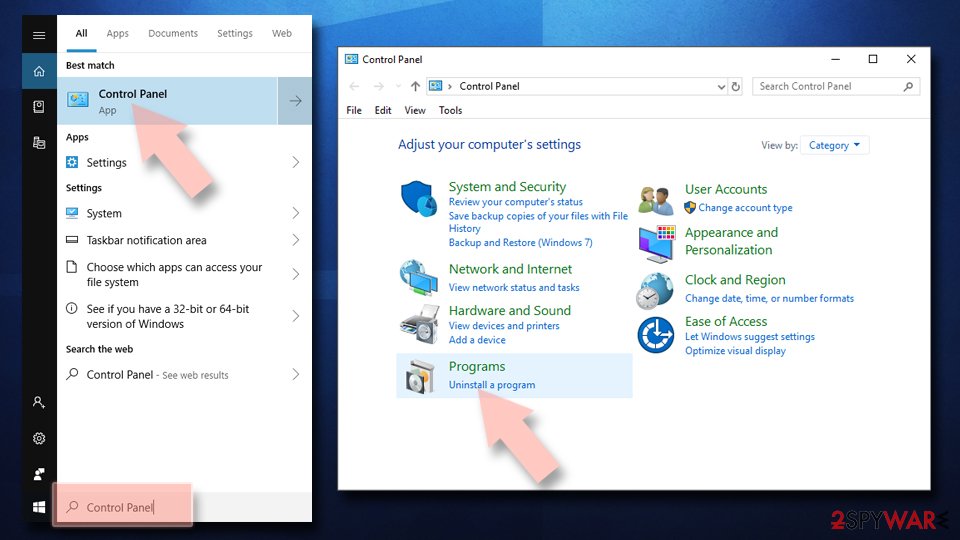
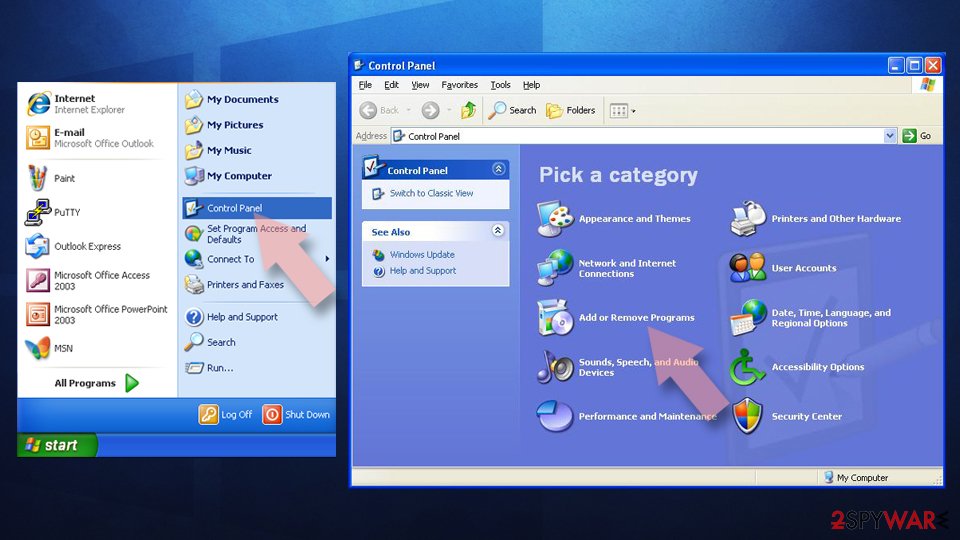
Uninstall from Windows 7/XP:
- Click on Windows Start > Control Panel (Windows XP users should click on Add/Remove Programs).
- In Control Panel, select Programs > Uninstall a program.
Remove the unwanted program:
- In the Programs and Features window, look for any recently installed suspicious entries, select them, and click Uninstall.
- If User Account Control appears, click Yes to confirm, then complete the removal.
Remove from Google Chrome
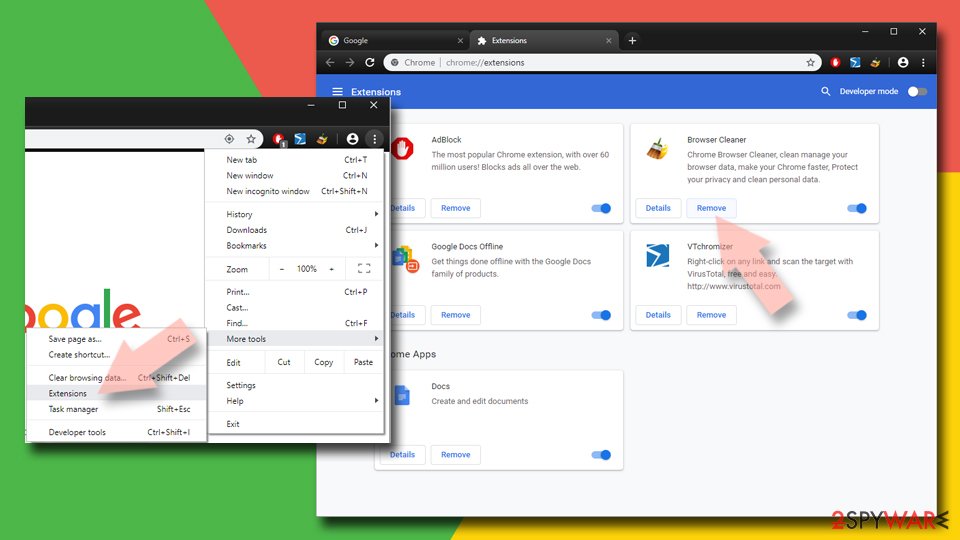
Before resetting Chrome, you should uninstall all unreliable extensions or this potentially unwanted program will reappear.
Delete malicious extensions from Google Chrome:
- Open Google Chrome, click on the Menu (three vertical dots at the top-right corner) and select More tools > Extensions.
- In the newly opened window, you will see all the installed extensions. Uninstall all suspicious extensions related to the unwanted program by clicking Remove.
Clear cache and web data from Chrome:
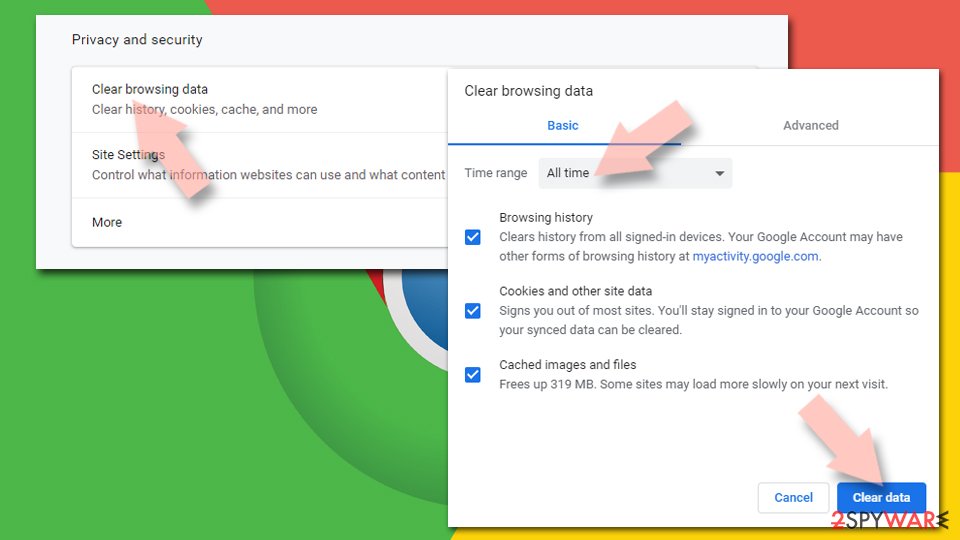
- Click on Menu and pick Settings.
- Under Privacy and security, select Clear browsing data.
- Select Browsing history, Cookies and other site data, as well as Cached images and files.
- Click Clear data.
Change your homepage:
- Click menu and choose Settings.
- Look for a suspicious site in the On startup section.
- Click on Open a specific or set of pages and click on three dots to find the Remove option.
Reset Google Chrome:
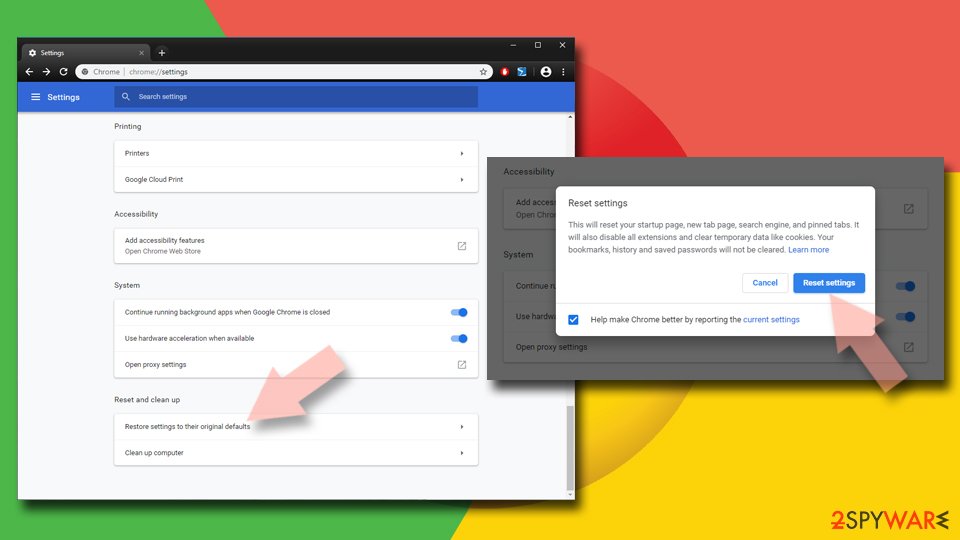
If the previous methods did not help you, reset Google Chrome to eliminate all the unwanted components:
- Click on Menu and select Settings.
- In the Settings, scroll down and click Advanced.
- Scroll down and locate Reset and clean up section.
- Now click Restore settings to their original defaults.
- Confirm with Reset settings.
Remove from Microsoft Edge
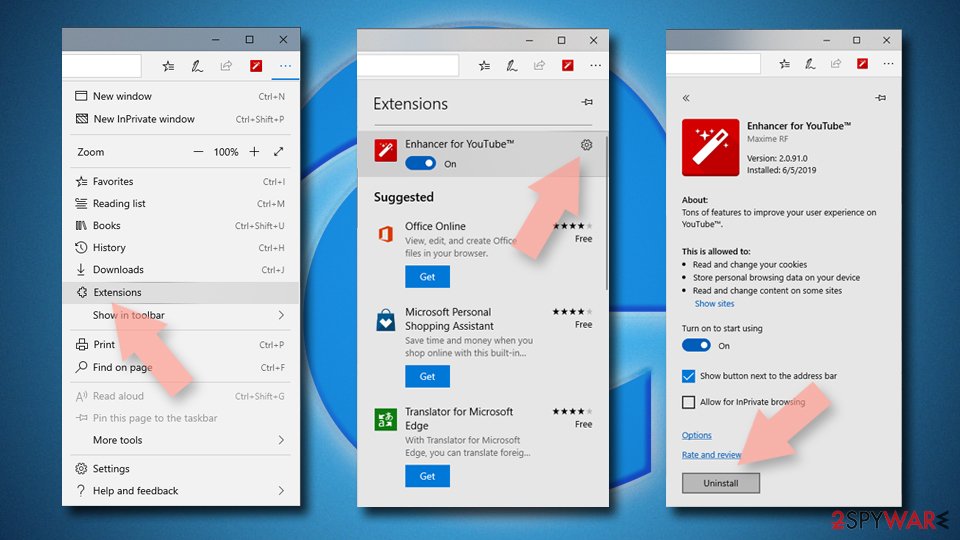
Delete unwanted extensions from MS Edge:
- Select Menu (three horizontal dots at the top-right of the browser window) and pick Extensions.
- From the list, pick the extension and click on the Gear icon.
- Click Remove.
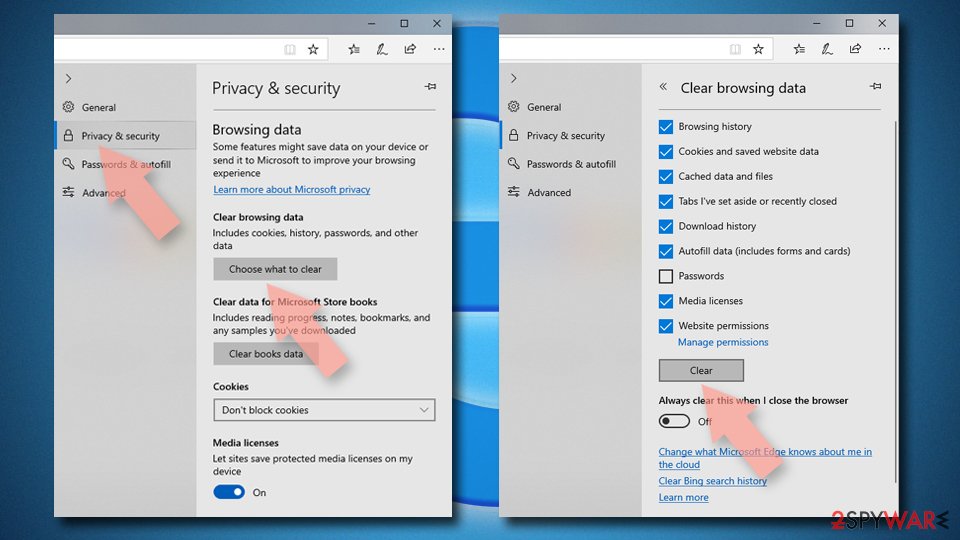
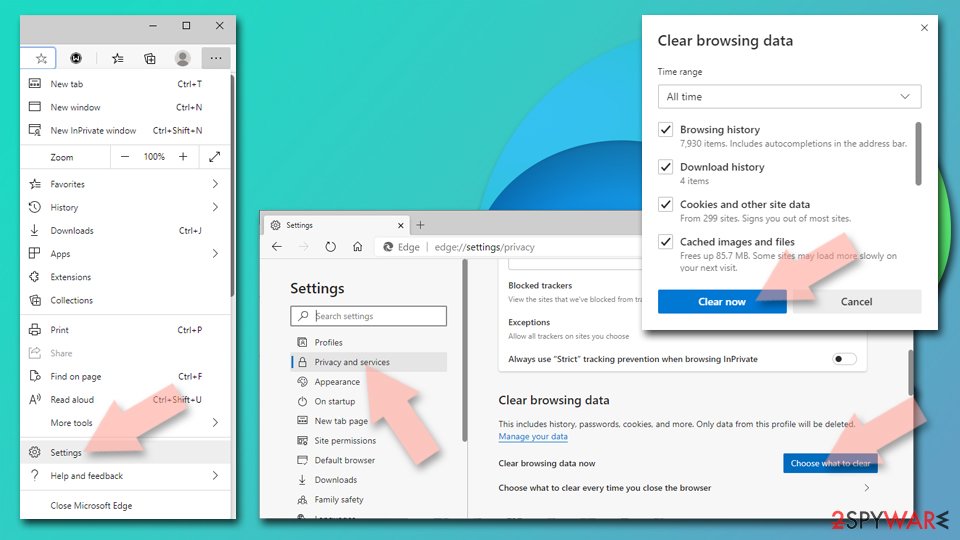
Clear cookies and other browser data:
- Click on the Menu (three horizontal dots at the top-right of the browser window) and select Settings > Privacy, search, and services..
- Under Clear browsing data, pick Choose what to clear.
- Select Cookies and other site data and Cached images and files. (apart from passwords, although you might want to include Media licenses as well, if applicable) and click on Clear.
Restore new tab and homepage settings:
- Click the menu icon and choose Settings.
- Then find On startup section.
- Click Remove next to any suspicious startup page.
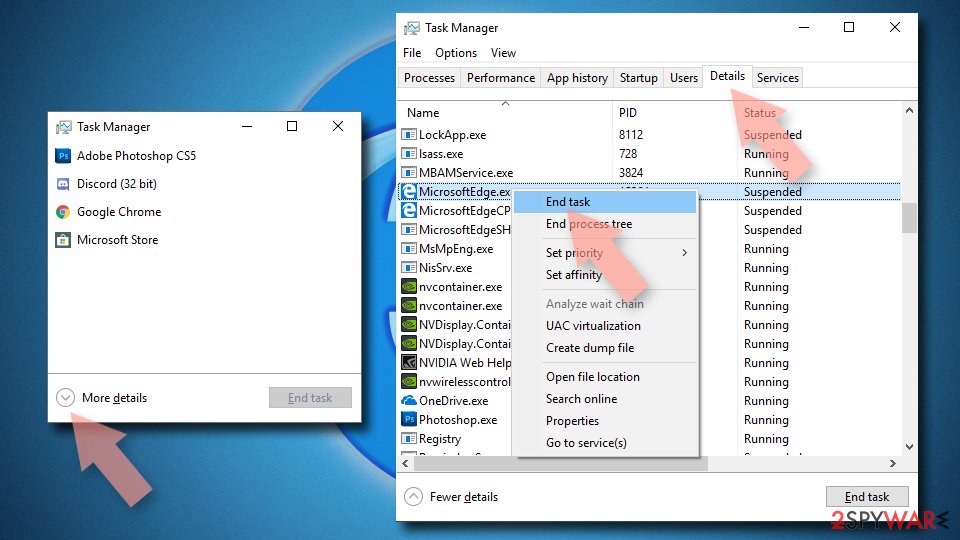
Reset MS Edge if the above steps did not work:
- Press on Ctrl + Shift + Esc to open Task Manager.
- Click on More details arrow at the bottom of the window.
- Select Details tab.
- Now scroll down and locate every entry with Microsoft Edge name in it. Right-click on each of them and select End Task to stop MS Edge from running.
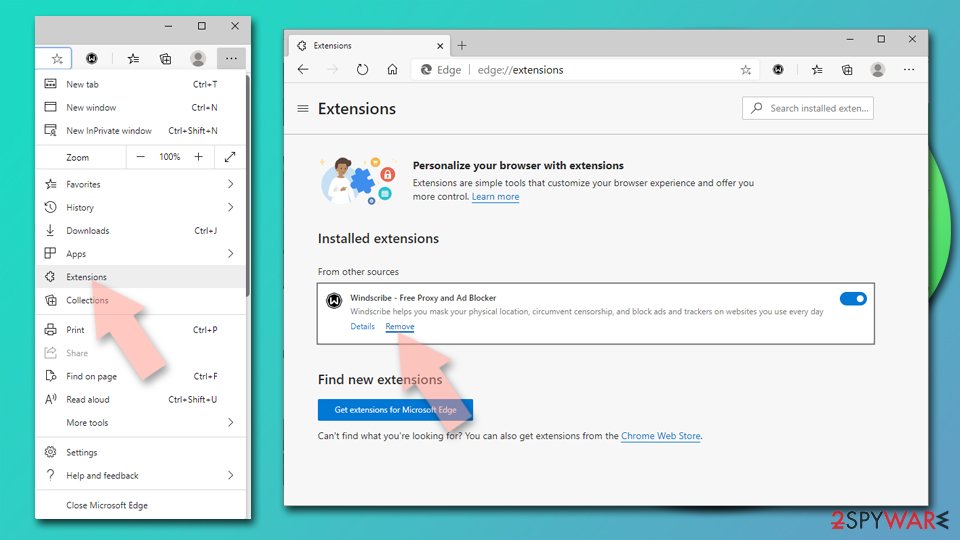
Delete extensions from MS Edge (Chromium):
- Open Edge and click select Settings > Extensions.
- Delete unwanted extensions by clicking Remove.
Clear cache and site data:
- Click on Menu and go to Settings.
- Select Privacy, search and services.
- Under Clear browsing data, pick Choose what to clear.
- Under Time range, pick All time.
- Select Clear now.
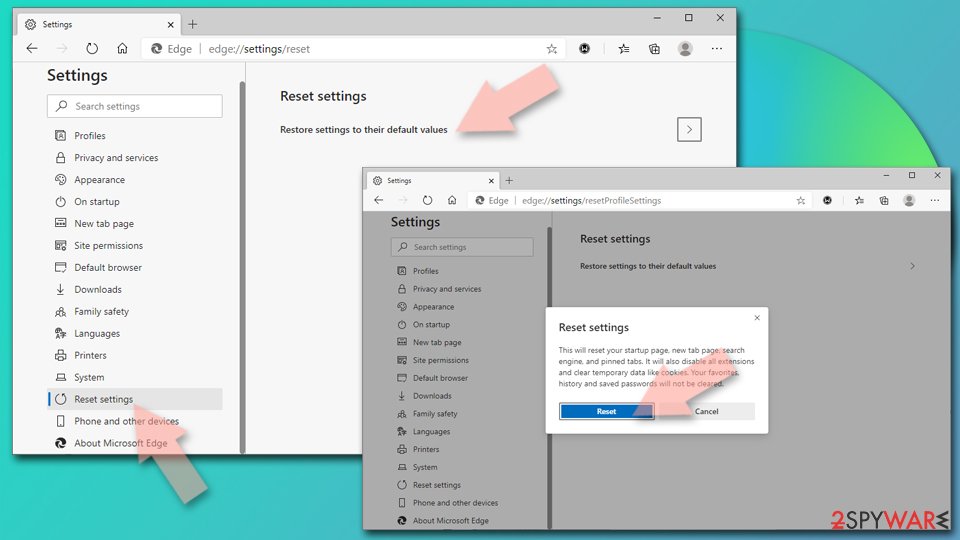
Reset Chromium-based MS Edge:
- Click on Menu and select Settings.
- On the left side, pick Reset settings.
- Select Restore settings to their default values.
- Confirm with Reset.
- This will disable extensions and reset startup pages but will not delete bookmarks, saved passwords, or browsing history.
Remove from Mozilla Firefox (FF)
If you notice that Omniboxes has taken over Mozilla, try to delete shady entries which might be supporting such activity.
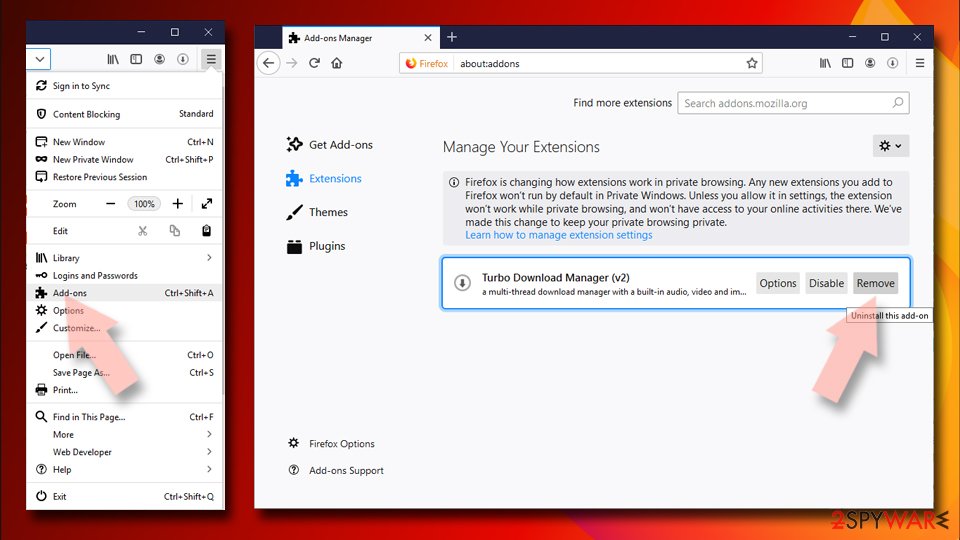
Remove dangerous extensions:
- Open Mozilla Firefox browser and click on the Menu (three horizontal lines at the top-right of the window).
- Select Add-ons.
- In here, select the unwanted extension and click Remove.
Reset the homepage:
- Click three horizontal lines at the top right corner to open the menu.
- Choose Settings.
- Under Home, set your preferred homepage and new tab settings.
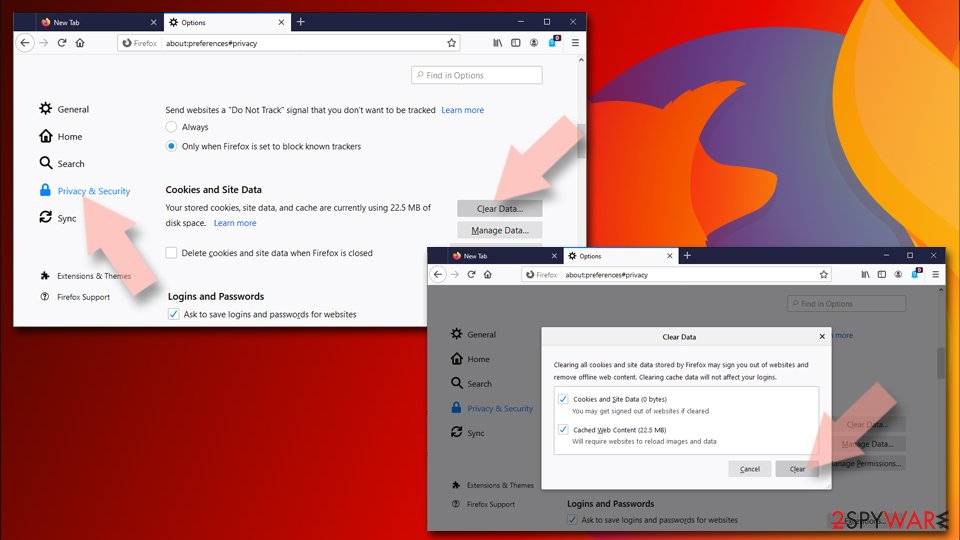
Clear cookies and site data:
- Click Menu and pick Settings.
- Go to Privacy & Security section.
- Scroll down to locate Cookies and Site Data.
- Click on Clear Data...
- Select Cookies and Site Data and Temporary cached files and pages, then click Clear.
Reset Mozilla Firefox
If clearing the browser as explained above did not help, reset Mozilla Firefox:
- Open Mozilla Firefox browser and click the Menu.
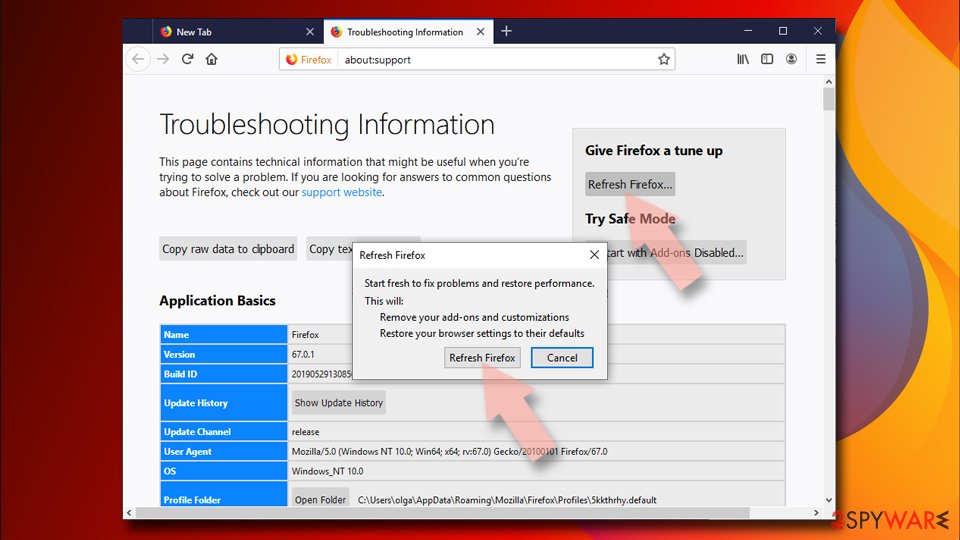
- Go to Help and then choose Troubleshooting Information.
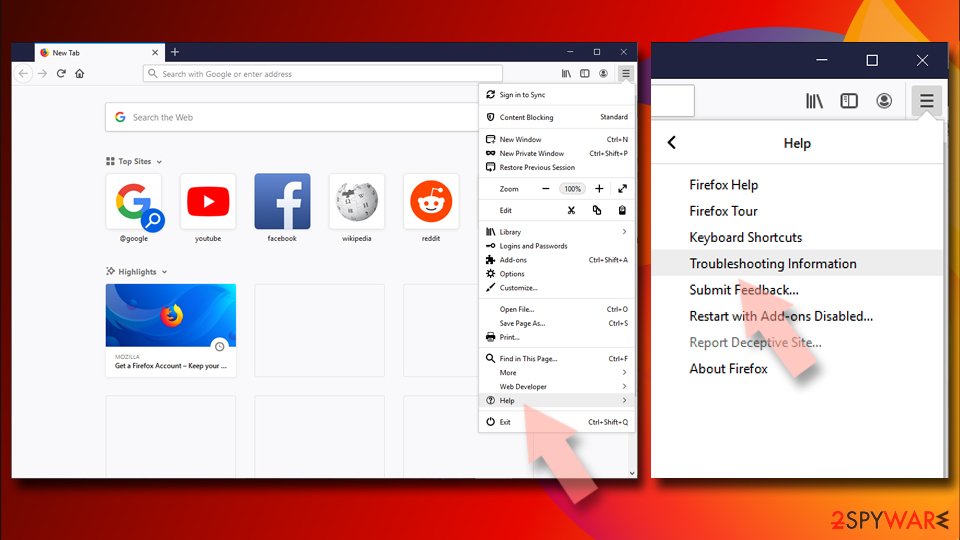
- Under Give Firefox a tune up section, click on Refresh Firefox...
- Once the pop-up shows up, confirm the action by pressing on Refresh Firefox.
Delete from Safari
Remove dangerous extensions:
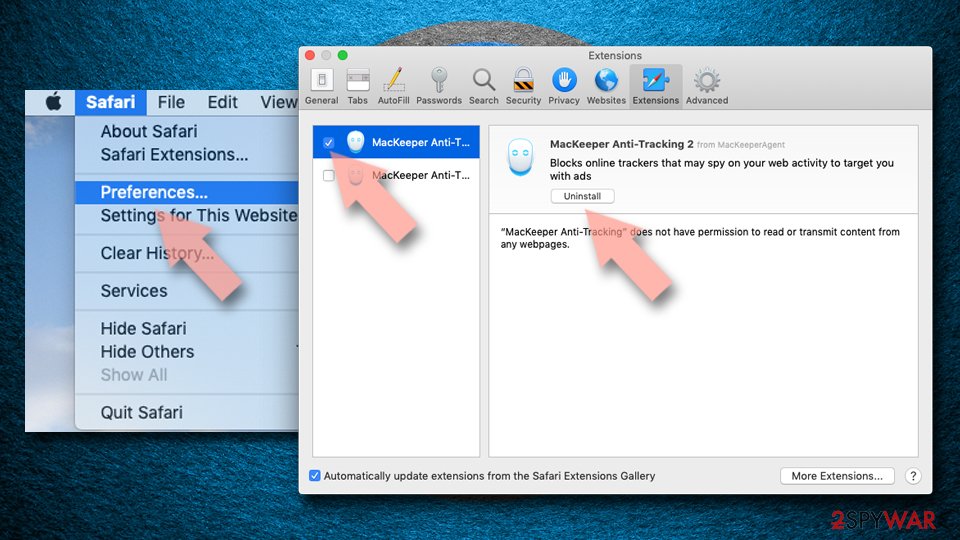
- Open Safari, click Safari in the menu at the top-left of the screen, and select Preferences.
- Go to the Extensions tab, look for any suspicious entries, and click Uninstall to remove them.
Clear history and website data:
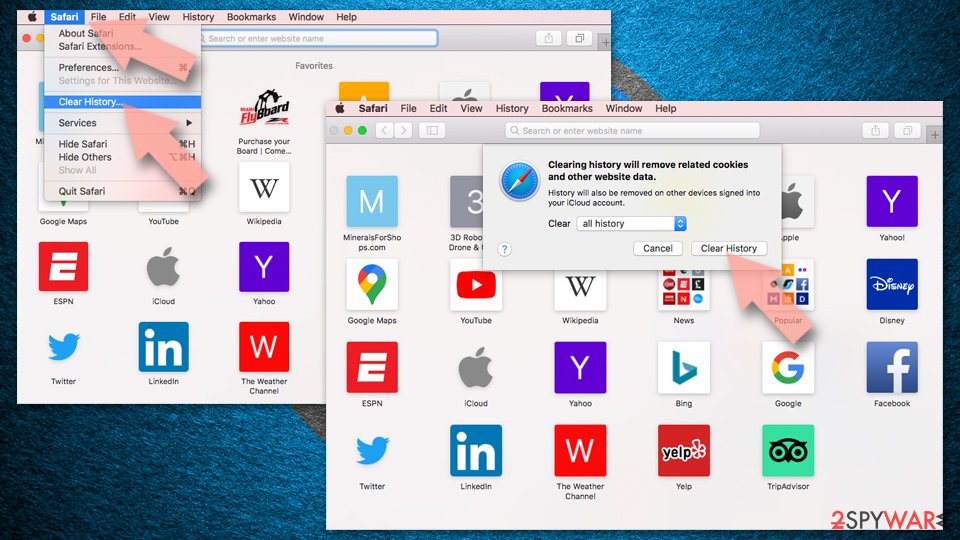
- Click Safari in the menu and pick Clear History.
- Set Clear to all history and confirm with Clear History.
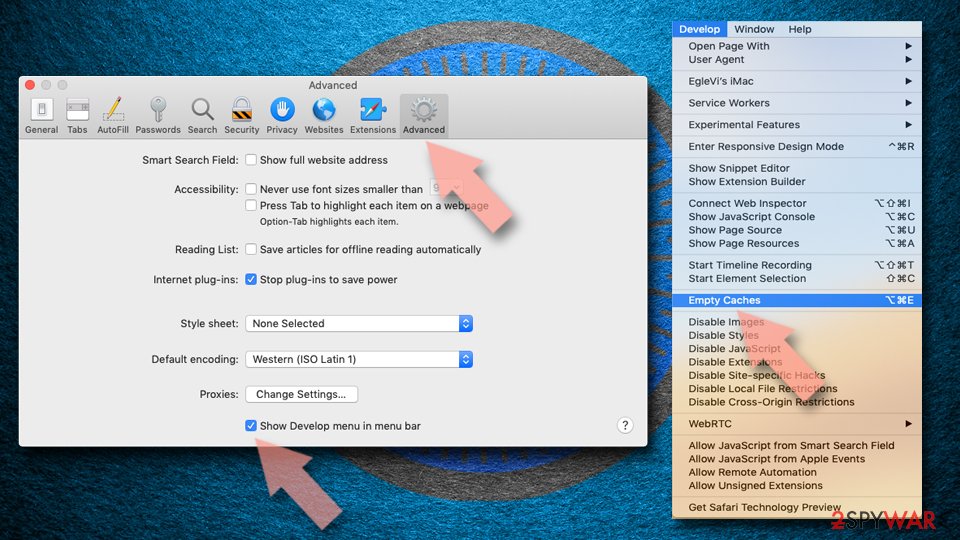
Reset Safari:
- Click Safari in the menu and select Preferences > Advanced.
- Enable Show Develop menu in menu bar.
- From the menu bar, click Develop and select Empty Caches.
Delete from macOS
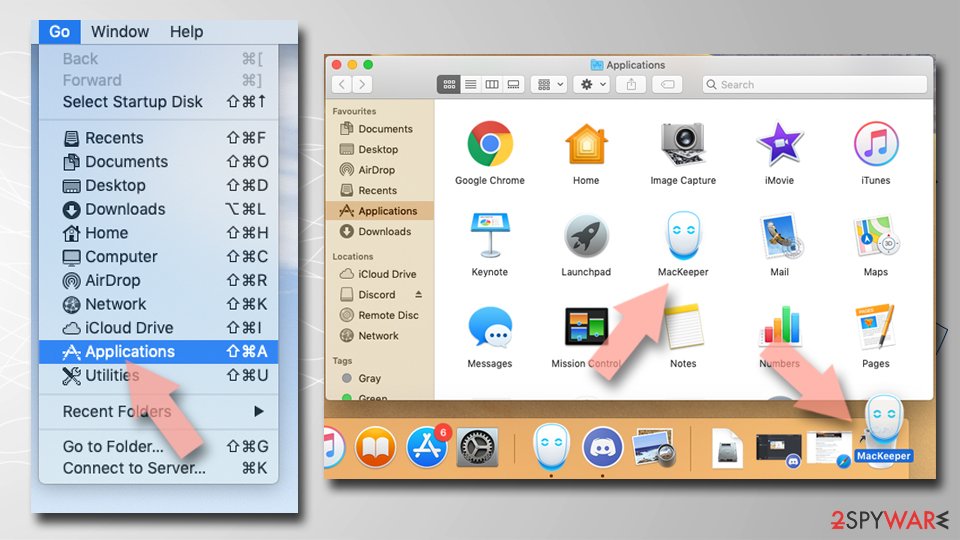
Remove the unwanted application:
- From the menu bar, select Go > Applications.
- In the Applications folder, look for any suspicious entries, then drag them to Trash (or right-click and pick Move to Trash).
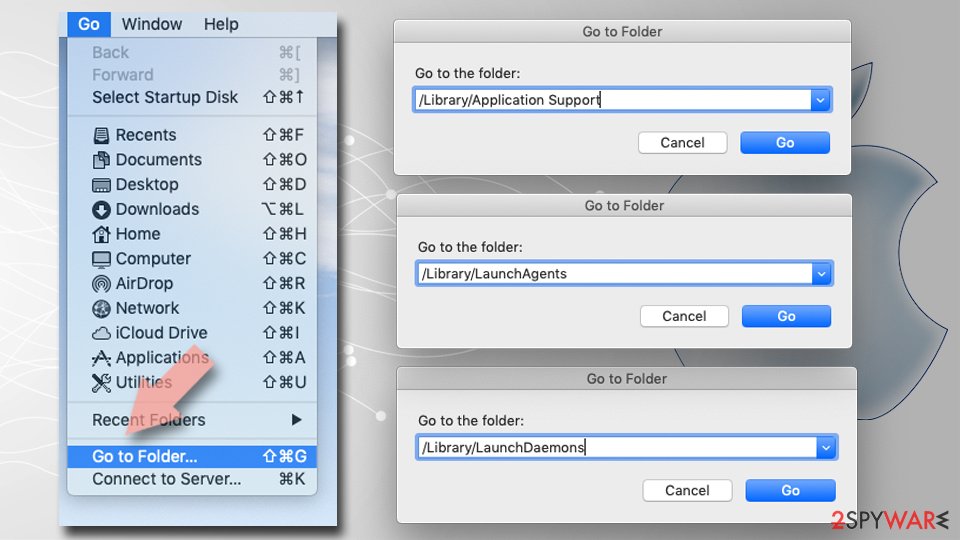
Delete leftover files and folders:
- Select Go > Go to Folder.
- Enter /Library/Application Support and remove any suspicious folders related to the unwanted program.
- Repeat the same check in the /Library/LaunchAgents and /Library/LaunchDaemons folders, deleting any suspicious entries.
- Finally, empty the Trash to permanently remove the leftovers.
Reset Internet Explorer
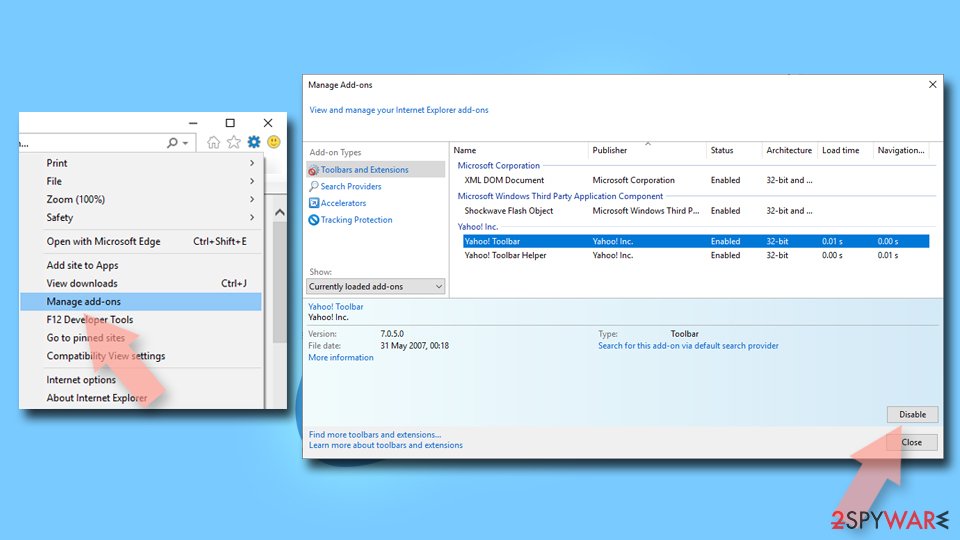
Remove dangerous add-ons:
- Open Internet Explorer, click on the Gear icon (IE menu) on the top-right corner of the browser
- Pick Manage Add-ons.
- You will see a Manage Add-ons window. Here, look for suspicious plugins. Click on these entries and select Disable.
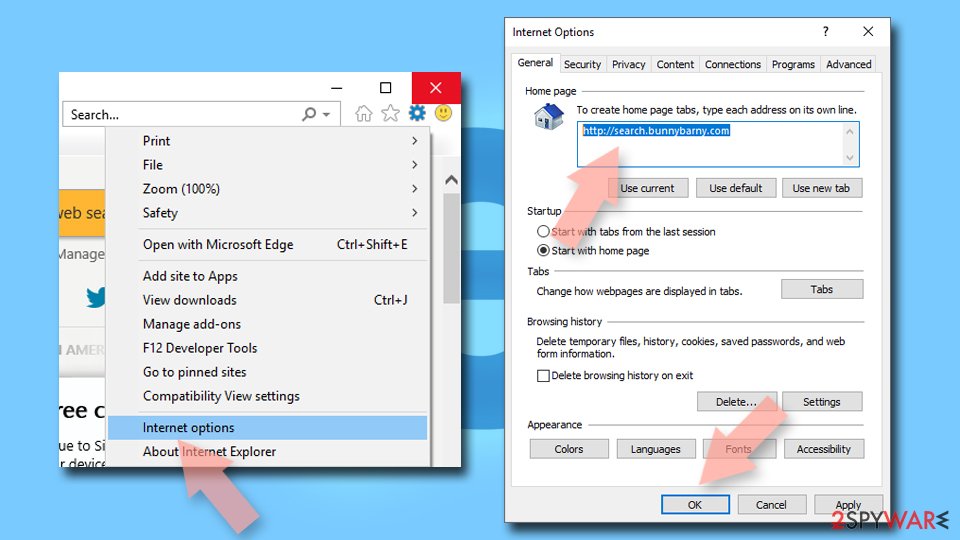
Change your homepage if it was altered:
- Open IE and click on the Gear icon.
- Select Internet Options.
- In the General tab, delete the Home page address and replace it by your preferred one (for example, Google.com).
- Click Apply and then select OK.
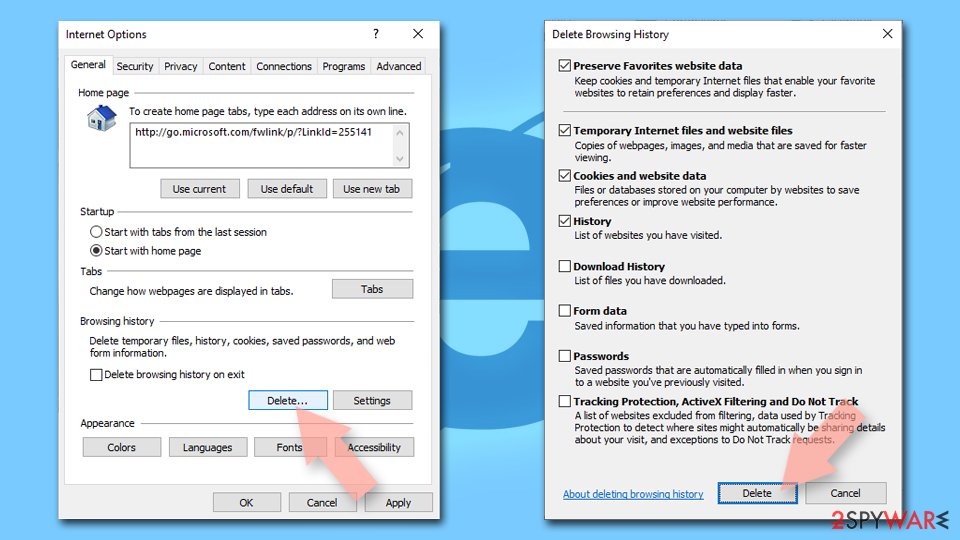
Delete temporary files:
- Press on the Gear icon and select Internet Options.
- Under Browsing history, click Delete...
- Select relevant fields and press Delete.
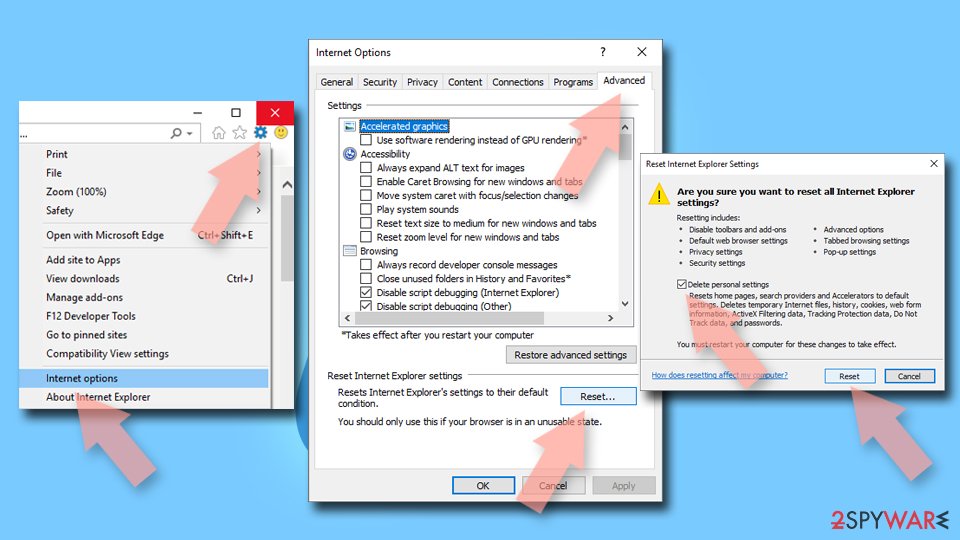
Reset Internet Explorer:
- Click on Gear icon > Internet options and select Advanced tab.
- Select Reset.
- In the new window, check Delete personal settings and select Reset.
Do not let government spy on you
The government has many issues in regards to tracking users' data and spying on citizens, so you should take this into consideration and learn more about shady information gathering practices.
Avoid any unwanted government tracking or spying by going totally anonymous on the internet.
You can choose a different location when you go online and access any material you want without particular content restrictions. You can easily enjoy internet connection without any risks of being hacked by using VPN.
Control the information that can be accessed by government any other unwanted party and surf online without being spied on. Even if you are not involved in illegal activities or trust your selection of services, platforms, be suspicious for your own security and take precautionary measures by using the VPN service.
Backup files for the later use, in case of the malware attack
Computer users can suffer from data losses due to cyber infections or their own faulty doings.
Ransomware can encrypt and hold files hostage, while unforeseen power cuts might cause a loss of important documents. If you have proper up-to-date backups, you can easily recover after such an incident and get back to work. It is also equally important to update backups on a regular basis so that the newest information remains intact - you can set this process to be performed automatically.
When you have the previous version of every important document or project you can avoid frustration and breakdowns. It comes in handy when malware strikes out of nowhere. Use for the data restoration process.
From our report of Jan 2021 · not reviewed since
Omniboxes uninstall guide
Since the activity of a browser hijacker can be not only annoying but also harmful, we suggest you remove Omniboxes as soon as you notice its presence.
We understand that some people might have no idea how to do that or they tried and failed. Thus, we can offer you to ways to uninstall this potentially unwanted program.
Even though both methods recommended to uninstall Omniboxes are useful, they can require different IT skills. Thus, novice PC users are advised to delete this browser hijacker by employing a professional security software. You can find a list of our recommended ones just below.
However, DieViren.de team says that automatic termination is also a safer elimination technique for everyone. A robust antivirus will help to delete all components which might disrupt your browsing experience and put your security at risk. So, we highly advise everyone to rely on automatic Omniboxes removal tool.
They will ensure that you will get rid of this cyber threat the right way without damaging your system.
Questions about Omniboxes
Is it safe to keep omniboxes.com as my search engine?
It is not recommended. Searches through omniboxes.com usually still return results, but the operator sees every query, often stores it with an identifier for your browser and shows extra ads or paid links. Some hijacked results lead to fake downloads or scam pages.
You also did not choose it, which means something changed your settings without asking and may still be installed. Set your own search engine back, remove the extension or program that set omniboxes.com, and check the browser's other settings, such as the start page and notification permissions, for further changes made at the same time.
Can omniboxes.com see my searches?
Yes. Every search typed into the address bar goes to omniboxes.com first, which is how it earns money. It can log the query, the time and an identifier for your browser, and some hijackers also collect the pages you visit through their extension.
The privacy policy of such sites usually allows sharing that data with partners. Once the hijacker is removed and your own search engine is set again, new searches no longer reach it. Searches already sent cannot be taken back, so avoid entering sensitive information until the clean-up is finished, and clear cookies afterwards.
Why do my searches go to omniboxes.com?
Because the browser's default search engine was changed to it. Omniboxes did that through an extension, a program or a browser policy, and as long as that source remains, the setting points to omniboxes.com.
The page then passes your query to a real search provider, so the results look almost normal, with extra sponsored links on top. Changing the search engine back on its own does not last, because the source resets it. Remove the extension or program first, then the policies if any, then set your own search engine.
Is it safe to keep searching with omniboxes.com?
We would not. Every query you type is logged by its operators and shared with their advertising partners, and the sponsored links at the top are chosen for payment, not relevance. Results that look like a download page or a support site may lead to scams.
The page will not damage Windows by itself, but there is no benefit in keeping it: the results come from another search engine anyway. Remove Omniboxes and use that search engine directly, by typing its address or choosing it in the browser settings.
Which browsers does Omniboxes affect?
We saw it in Chrome, Edge and Firefox. That does not mean the other browsers on your PC are safe: hijacker installers usually change every browser they find, and browser sync can carry an extension to other computers signed in to the same account.
Check the search engine, home page, new tab, extensions and policies in each browser you have, including ones you rarely open. Chrome and Edge profiles count separately, so switch to each profile and check it as well before you call the job done.
What does omniboxes.com know about me?
It knows what you searched for while it was your search engine, when, from which IP address and with which browser, and usually which results you opened. Tracking cookies let it connect those searches into a profile. It does not see your saved passwords or files.
After removing Omniboxes, delete the cookies and site data for omniboxes.com so the profile cannot be continued, and remove it from the browser's list of saved search engines. Signing out of important sites and back in also replaces session cookies.
Should I just switch to another browser?
It may not help. Installers that add hijackers usually target every browser on the PC, and system-level changes such as the hosts file, DNS or proxy affect all browsers at once. A new browser also leaves the hijacker's program and extension in place, collecting data in the old one.
Remove Omniboxes properly first. After that, use whichever browser you prefer; Chrome, Edge and Firefox all let you set and protect your own search engine. Import your bookmarks only after the old browser is clean.
The results look like Google or Bing. Is that real?
Partly. Many hijacker search pages pass your query to a real search engine and show its results, so the list looks familiar. What changes is the frame around it:
- extra sponsored links at the top
- the hijacker's own tracking
- sometimes a design that copies a known search engine
You can tell by the address bar. If it shows omniboxes.com or another unfamiliar domain instead of the search engine you know, the results come through a middleman. Remove Omniboxes and search directly.
Will resetting the browser remove Omniboxes?
A reset disables extensions, restores the default search engine, start page and new tab, and clears temporary data and cookies. It keeps bookmarks, history and saved passwords. For many hijackers that is enough.
It does not remove a program installed in Windows, policies in the registry, changes to the hosts file or DNS, or edited shortcuts, so Omniboxes can come back after a reset if one of those remains. Do the reset after removing the program and policies, not instead of it.
Will Fortect remove Omniboxes?
Fortect scans Windows for malware and unwanted programs and repairs the system files and settings they change, and its free scan shows what it finds on your PC before you decide anything.
For Omniboxes, follow the plan above as well: the browser steps take back permissions and settings that no scanner treats as a threat, and uninstalling the program that brought it removes the source.
Run Microsoft Defender's full scan and, if anything was found, its offline scan as a second opinion. If the symptoms are gone after the plan and both scans are clean, there is nothing more to do.
Sources
- Trend Micro: Potentially unwanted application (read October 6, 2026)
- Wikipedia: Pop-up ad (read October 6, 2026)
- DieViren: DieViren (read October 6, 2026)
- FTC: How to recognize, remove and avoid malware (read October 6, 2026)
- Microsoft Learn: Microsoft Defender Offline (read October 6, 2026)