
Web Safety browser extension: how to remove it and reset your search
Web Safety is a Chrome extension that changes your default search engine to search.privatesearch.online, which hands your searches on to Yahoo; the Web Store now lists it as Family Search. Remove the extension, then set your own search engine and start page.
Facts checked October 6, 2026. Removal steps tested on Windows 11 (26H2) and checked against Microsoft's and the browser makers' current documentation.
Automatic
Get a free scan and check if your PC is infected.
Fortect finds malware, unwanted programs and the Windows damage they leave behind, and repairs it in one pass.
If search.privatesearch.online returns after you change the search engine back, a free scan can find the program that keeps setting it.
Do it yourself · free Remove Web Safety browser extension yourself 2 steps, about 6 minutes, no software needed.
Web Safety browser extension: summary
| Type | Browser extension that changes the default search engine (browser hijacker); potentially unwanted program, not a virus |
|---|---|
| Risk | Medium: searches pass through the operator and Yahoo; what the extension reads and shows inside a browser we did not test |
| Symptoms | The default search engine is search.privatesearch.online; an extension called Web Safety or Family Search; ads and pop-ups reported in 2021 |
| How to get rid of it | Remove the extension, set your own search engine and start page, uninstall programs added the same day, then scan |
| Our check (6 October 2026) | No notification request, no pop-ups, no service worker on one visit; a hand-made search was passed to Yahoo in one redirect; the extension itself was not installed |
| Running since | Domain websafety.live registered 12 June 2018, privatesearch.online 23 December 2018; our first report 6 August 2021 |
| Removal | Scan the PC with security software to find and remove the malware and anything installed with it. Fortect scans Windows for malware and repairs the system files and settings it damaged. Remove it nowTo use the full-featured product, you have to purchase a license for Fortect. The scan is free. |
Show 10 more facts
| Installed on the PC | Nothing from the website itself. Only the Chrome extension you add, and whatever came with it |
|---|---|
| Detection | No Microsoft detection name is known: the extension is listed in the Chrome Web Store and installs nothing by itself |
| Damage | No harm to files; changes the search engine; searches, IP address and an ID are collected according to its privacy policy |
| Distribution | The Chrome Web Store and the extension's own site; software bundles, cracked programs and deceptive ads according to our 2021 report, not confirmed today |
| Evidence | Our test, the Web Store listing, the extension's privacy policy, terms and FAQ, the registry records, our 2021 pictures |
| Name | Web Safety |
| Search page | search.privatesearch.online |
| Browsers | Chrome, Edge and Firefox |
| First seen | 6 August 2021 |
| Facts checked | 6 October 2026 |
Facts checked on 6 October 2026 against our own test of the search domain and the extension's site in desktop Chromium from Europe, its Chrome Web Store listing, its privacy policy, terms and FAQ, and the domain registry records. Not tested: the extension itself (we did not install it), other countries, other browsers and any installer.
What the Web Safety extension is and what it does to a browser
Web Safety is a Chrome extension that replaces your default search engine with search.privatesearch.online. Its description in 2021 promised protection from "suspicious websites"; the Web Store listing at the same address now sells it as a way to keep a family's searches apart, and says openly that the search change is part of the deal.
- What it is
- A Chrome extension. The Chrome Web Store address ending
web-safety/fpckohnjiaonmklkjnlplokplhhijalmis titled "Family Search": two search profiles, one for parents and one for children. It shows 100,000 users, a 4.2 rating from 66 ratings, version 3.0.6, updated 12 July 2025 - What it changes
- The default search engine, to
search.privatesearch.online, "powered by Yahoo" according to the listing. The extension's terms call the result "a sponsored search engine". Our 2021 report also said it changed the home page; today's listing does not mention that - What it asks for today
- Three permissions according to the listing: context menus, cookies and changing your default search engine. It declares that it handles "User activity" and "Website content"
- What it asked for in 2021
- Our 2021 picture of its details page shows version 1.0.0, 2.0 MB, the permission "Read your browsing history" and site access to read and change your data on sites
- Who runs it
- The "websafety.live team" according to its privacy policy; the Web Store lists the developer as a non-trader. The domain websafety.live was registered on 12 June 2018 through NameCheap and paid until 12 June 2027. We could not identify the people behind it
- How it earns
- Its own FAQ says: "We get the payment as an affiliate partner when our users use this search engine"
Is Web Safety browser extension dangerous? What it collects
Our test on 6 October 2026
We opened search.privatesearch.online as a visitor would (clean desktop Chromium, Europe), read the extension's site, privacy policy and terms, read its Chrome Web Store listing and followed one search by hand. We did not install the extension.
search.privatesearch.online and websafety.live · desktop Chromium · Europe · 6 October 2026
- Notification requestNone on this one visit.
- Pop-ups and new tabsNone on this one visit.
- Redirects on loading the page
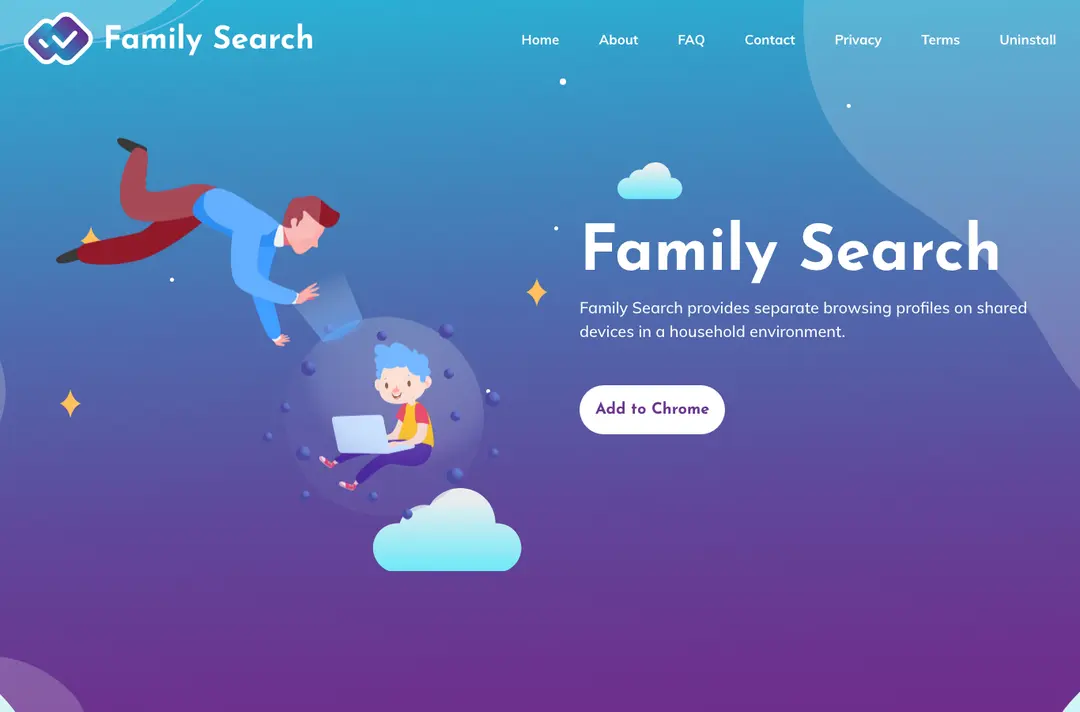
search.privatesearch.onlinesent us on towww.websafety.live, a page for "Family Search" with an Add to Chrome button. The page installed nothing by itself. - Service workerNone registered, so nothing keeps running in the browser after you leave.
- Where a search goesA search requested by hand at
search.privatesearch.online/search?q=testwas answered with one redirect to a Yahoo results address,search.yahoo.com/yhs/search, with our search word inside it. One request from Lithuania, without the extension; we did not open the Yahoo page. - TrackingThe page code sends a page-load report to
get.websafety.live. The privacy policy names Cloudflare, Google Cloud, Zoho Forms, FreshDesk, Hotjar, Google Analytics and Yahoo's search feed; we did not see the Hotjar or Google Analytics scripts load on our visit. - The extension itselfThe Web Store listing is live and says the search change is part of the extension. We read the listing but did not install it, so we have not seen what it does inside a browser, including the pop-up ads and redirects our 2021 report described.
Medium risk The site asked for nothing and opened nothing on this one visit, and the extension's own pages say it changes your search engine to a sponsored one. What we cannot say: whether the pop-up ads and tech support redirects from our 2021 report still happen, what the extension does once installed, or whether today's version is the 2021 build. One visit, one country, one browser: sites and extensions like this can act differently by country, device, delay or a second visit, so "nothing seen" clears nothing.
What our 2021 report showed, and what changed
August 2021
Our first report: a protection extension that hijacks search
Chrome's extensions page showed Web Safety with the description "Stay protected while searching and surfing the Web. Never worry about suspicious websites again." Our report said the opposite was true and called it a browser hijacker. The picture shows the extension switched off; a security promise like that one is exactly what a search changer uses as cover.
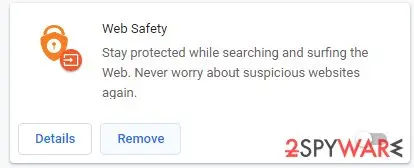
The Web Safety card on Chrome's extensions page in our 2021 report, with the switch at the right set to off. August 2021
What its details page asked for
Version 1.0.0, 2.0 MB. The permission list read "Read your browsing history" and site access said it "can read and change your data on sites". The "Allow in incognito" switch in the picture is off, so our 2021 text that it also works in incognito mode was wrong for this screenshot; you can check your own switch in the extension's Details.
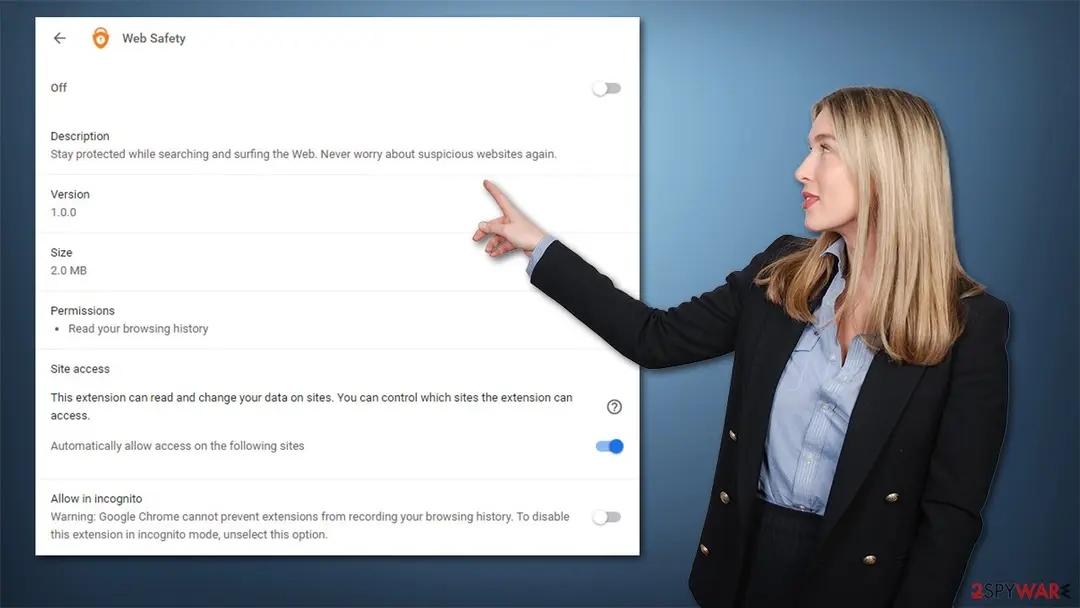
The details page of Web Safety from 2021: permissions, site access and the incognito switch. The woman in the picture is a stock illustration. 2025 to 2026
Same address, new name and a plainer message
The Web Store item whose address still says web-safety is titled "Family Search", last updated 12 July 2025 (version 3.0.6). The promise about suspicious websites is gone; the listing now says it changes your search engine to
search.privatesearch.online, powered by Yahoo, and the extension's terms say the new engine is sponsored.October 2026
The search domain now leads to the extension's site
Opening
search.privatesearch.onlinein a browser takes you towebsafety.live, and a hand-made search request is passed to Yahoo in one redirect. We saw no pop-ups or notification request on that one visit.
What can go wrong
A search-changing extension is a nuisance and a privacy question more than a catastrophe. These are the real concerns, from most to least likely.
- Medium
Your searches pass through the extension's operator and Yahoo
Search words sit in the web address at each step. The privacy policy says the service collects search queries, your IP address and a user ID, and that data goes to service providers such as Yahoo's search feed. The Web Store says the data is not sold outside approved use cases.
- Medium
Results are chosen for someone's income
The terms call the engine "sponsored" and the FAQ says the operator is paid when you use it. Expect paid results among the first ones. We did not open the Yahoo results page, so we cannot say how many.
- Medium
What the extension can read in your browser
Our 2021 picture shows it could read your browsing history and your data on sites. Today's listing is shorter, but it still says it handles user activity and website content. We did not install it, so we cannot say what any build reads.
- Medium
Pop-up ads and redirects to scam pages
Our 2021 report said the extension showed pop-up ads and banners and that they could lead to unsafe sites. We did not see any on our one visit, and we did not run the extension; treat the ads as reported, not as confirmed for today's version.
- Low
Whatever installed it may have installed more
If an installer or an ad put it there, it may have added other adware, extensions or search changers. That, not Web Safety, is the part that needs cleaning.
What the extension's privacy policy says it collects
- IP address
- Browser and device details
- Operating system
- User ID
- Pages served and referring addresses
- Mouse movement on its own sites
- Approximate location from the IP address
- Your search queries
Listed in its policy dated 1 May 2025. We could not check what is really collected.
If a pop-up says Windows found a virus and gives a phone number
Our 2021 report said the extension could send you to tech support scam pages. We did not see one in our test, but the scam is real and costs real money, so know how it looks. A technical support scam claims to come from Microsoft or another well-known company and aims to get your card details or remote access to your computer.
| What the page says | Why it is false | What to do |
|---|---|---|
| Windows Defender found a virus, call this number | Microsoft states that its error and warning messages never include a phone number | Do not call. Close the tab or the browser |
| Your browser is locked, the pop-up will not go away | Scam pages go full screen and repeat pop-ups to look like a lock | Close the browser and reopen it; do not restore the previous session |
| Pay a fee or buy gift cards or Bitcoin to fix it | Microsoft says it never asks for payment for support in cryptocurrency or gift cards | Pay nothing. Do not install remote access software |
How Web Safety browser extension got into your browser
Browser extensions are useful: they convert files, show traffic information or block ads. That makes them easy to trust, and an extension that changes your search engine rides on the same trust. Check the routes below in this order, because the first two are the quickest to see.
| Route | What you would see | How to check |
|---|---|---|
| You or someone on the computer added it from the Chrome Web Store or from websafety.live (the Add to Chrome button) | A search engine you did not choose and an extension called Web Safety or Family Search, usually with a parents and kids profile icon | chrome://extensions |
| A free or "cracked" program installed it, or it was added during an installation you rushed | The change appeared right after you installed software from a third-party website | Settings > Apps > Installed apps, sorted by install date |
| A page or ad that said the extension was needed to browse safely | A Chrome Web Store window opened after you clicked a pop-up or banner | Your browser history for the day it began |
| Another browser or profile | Edge or a second Chrome profile showing the same search engine | edge://extensions, or each Chrome profile's own extensions page |
- 1
You type a search
In the address bar, with Web Safety installed. Chrome now sends it to the engine the extension set.
- 2
The request goes to search.privatesearch.online
The domain belongs to the extension; the Web Store listing names it as the search domain.
- 3
One redirect passes it to Yahoo
In our by-hand try the answer was a redirect to
search.yahoo.com/yhs/search, with the search word in the address. Both sites receive your words. - 4
A results page opens
Yahoo's, according to the listing and our try. The extension's operator is paid when you use it, according to its FAQ.
How to remove Web Safety browser extension
How to remove Web Safety and get your search engine back
Remove the extension first.
The search settings only stay fixed once nothing on the PC can change them again.
Which browser shows the ads?
Remove the extension
Paste
chrome://extensionsinto the address bar, find Web Safety or Family Search, click Remove and confirm. Remove anything else you did not install yourself, especially anything added the day your search engine changed.Full procedure with screenshots: Remove a browser extension
Check the extension's ID
On
chrome://extensionsswitch on Developer mode and read the ID under each extension. The Web Store item that says web-safety has the IDfpckohnjiaonmklkjnlplokplhhijalm; an extension with that ID is the one in the listing. The 2021 build may have had another ID, so go by the name as well.Check the incognito switch
Click Details under the extension and look at Allow in Incognito. In our 2021 screenshot it was off. If you keep any extension you trust, switch it off there too unless you need it in private windows.
Set another search engine
Open Settings > Search engine, click Change next to the search engine used in the address bar and pick the one you want. Then open Manage search engines and site search and delete the entry for
search.privatesearch.onlineand any other you did not add.Clear the site data
Press Ctrl + Shift + Delete, choose All time, tick Browsing history, Cookies and other site data and Cached images and files, and click Delete data.
Reset Chrome
Open Settings > Reset settings > Restore settings to their original defaults and confirm with Reset settings. This resets the start page, search engine and pinned tabs and turns off extensions; bookmarks and saved passwords stay.
Full procedure with screenshots: Reset a browser and fix a hijacked search engine
Set another search engine
Open Settings > Privacy, search, and services > Address bar and search and choose the search engine used in the address bar. Check Manage search engines for entries you did not add.
Remove extensions you do not recognise
Paste
edge://extensionsinto the address bar and click Remove under Web Safety, Family Search and anything else you did not install yourself.Full procedure with screenshots: Remove a browser extension
Clear the site data
Open Settings > Privacy, search, and services > Delete browsing data > Choose what to clear, set All time, tick Cookies and other site data and Cached images and files, and click Clear now.
Reset Edge
Open Settings > Reset settings > Restore settings to their default values and confirm with Reset. Extensions are turned off and the start page goes back to default; favourites, history and saved passwords stay.
Full procedure with screenshots: Reset a browser and fix a hijacked search engine
Set another search engine
Open Settings > Search and pick another engine under Default Search Engine. Under Search Shortcuts, remove any entry you did not add.
Remove add-ons you do not recognise
Paste
about:addonsinto the address bar, open Extensions, and choose Remove from the three-dot menu of anything you did not install yourself.Full procedure with screenshots: Remove a browser extension
Clear cookies and site data
Open Settings > Privacy & Security > Cookies and Site Data > Clear Data, tick both boxes and click Clear.
Refresh Firefox
Open the menu > Help > More troubleshooting information and click Refresh Firefox. Add-ons and custom settings are removed and the home page goes back to default; bookmarks, history and passwords stay.
Full procedure with screenshots: Reset a browser and fix a hijacked search engine
Set another search engine
Open Safari > Settings > Search and choose a different Search engine. Then check Settings > Extensions for anything you do not recognise and click Uninstall.
Remove extensions you do not recognise
In Safari > Settings > Extensions, select anything you did not install yourself and click Uninstall. Move any program you did not install on purpose from Finder > Applications to the Bin.
Clear the site data
In Safari > Settings > Privacy > Manage Website Data, remove the site's data, or use History > Clear History > all history. To empty the cache as well, turn on Show features for web developers in Settings > Advanced and choose Develop > Empty Caches.
Check the Mac for apps from the ads
Search changers can arrive on a Mac with fake players, "cleaners" and other free downloads. In Finder > Applications, move anything unknown to the Bin. In System Settings > General > Login Items & Extensions, remove unknown items. Then use Go > Go to Folder to check
/Library/LaunchAgents,~/Library/LaunchAgents,/Library/LaunchDaemonsand/Library/Application Supportfor folders and files with the same unknown names, and empty the Bin.
Then, whichever browser you use
Step 1: Uninstall programs you did not mean to install
Open Settings > Apps > Installed apps in Windows 11, or Settings > Apps > Apps & features in Windows 10, and sort the list by install date. Look at what appeared around the day the problem started and uninstall every program you do not recognise or did not choose.
Free converters, PDF and video tools, "system optimizers" and unknown browsers are the usual carriers of Web Safety. If a name is unclear, search for it before you remove it, so you do not uninstall a driver or a Windows component.
Full procedure with screenshots: Uninstall a program or app in Windows On uGetFix
Step 2: Scan the PC, then run the offline scan
Open Windows Security > Virus & threat protection > Scan options, run a Full scan and remove everything it finds. Then select Microsoft Defender Antivirus (offline scan) and click Scan now: the PC restarts and scans before Windows loads, which finds files that hide while Windows runs.
Save your work first, because the offline scan takes about 15 minutes. Both scans are built into Windows 11 and Windows 10, and a second scanner from another vendor is a useful extra opinion.

Windows 11: Windows Security > Virus & threat protection > Scan options. Full procedure with screenshots: Run a Microsoft Defender Offline scan
After removal: keep your search engine and start page
If it came with a program or an ad
The browser steps are enough if only the extension and the settings changed. If you installed something just before it started, do these three things as well.
- 1
Uninstall what came with it
Open Settings > Apps > Installed apps in Windows 11 (Apps & features in Windows 10), sort by install date and uninstall anything installed the day the search changed. If User Account Control asks, click Yes (Uninstall a program or app in Windows On uGetFix).
- 2
Scan, then scan offline
Run a Microsoft Defender Full scan, then the Microsoft Defender Antivirus (offline scan), which finds programs that hide while Windows runs.
- 3
Check the browser again
Restart, then open the extensions page and the search engine settings once more. If search.privatesearch.online returns, an extension or program is still putting it back, and the install-date list is where to look.
How to keep it from happening again
Do
- Choose Custom or Advanced setup in installers and untick extra programs, extensions and pre-ticked search settings.
- Download programs from their makers' sites or the Microsoft Store, not from third-party download portals or cracked-software sites.
- Install browser extensions only from the browser's official store, from publishers you recognise, and read the permission list, especially "Change your default search engine" and "Read your browsing history".
- After installing free software, open the browser's search engine and start-up page settings and check them once.
- Clear cookies now and then, and keep Microsoft Defender running and Chrome's Enhanced protection or Edge's SmartScreen on.
- Keep a current backup of your files (File History or OneDrive), so an infection or a failed disk does not cost you your documents.
- A VPN hides your IP address from the sites you visit on public networks; it does not remove extensions.
Don't
- Click through Quick or Recommended setup without reading it.
- Accept "change your search engine" prompts you did not go to install.
- Install an extension because a page says it is needed to browse safely or to see results.
- Skip the installation steps to start using a program faster.
Questions about Web Safety browser extension
How do I remove the Web Safety extension from Chrome?
Open chrome://extensions, find Web Safety (the Web Store listing now calls it Family Search), click Remove and confirm. Then open Settings > Search engine and choose the engine you want, because the extension replaced it with search.privatesearch.online, and delete any entry for that address under Manage search engines and site search.
Clear cookies and cached files for All time and restart Chrome. If the extension returns, or Remove is greyed out, a program or a policy is putting it back: look for Managed by your organization in the Chrome menu and for programs added the same day in Settings > Apps > Installed apps.
Is Web Safety a virus?
No, it is an unwanted search changer, not a virus: nothing we read says it damages files or copies itself. Its own pages say it changes your default search engine to a sponsored one, powered by Yahoo, and the Web Store lists it as Family Search with 100,000 users.
Our 2021 report also described pop-up ads and redirects to scam pages. On our one visit on 6 October 2026 the site asked for no notifications and opened no pop-ups, but we did not install the extension, so that proves little about what it does inside a browser. If you did not choose it, remove it.
Why did my search engine change to search.privatesearch.online?
An extension changed it. The Chrome Web Store listing for Web Safety, now named Family Search, asks permission to change your default search engine to search.privatesearch.online, and its terms call the result a sponsored search engine. Our old report said it also changed the home page; the listing does not mention that, so check both.
Someone may have added it on purpose, for example a parent setting up a kids profile on a shared computer, or it may have come with a free program or an ad that said it was needed. Open chrome://extensions and look for items added the day it began.
Is Web Safety the same as Family Search?
The Web Store address that says web-safety is now titled Family Search, and it uses the search domain our 2021 report named, search.privatesearch.online. That domain now sends you to websafety.live, which presents the extension as Family Search with a parents profile and a kids profile.
Whether today's version 3.0.6, updated 12 July 2025, is the same code as the 1.0.0 build in our 2021 pictures we cannot confirm, because the old build is no longer available to us. Look for either name in chrome://extensions and remove whichever you find.
Does Web Safety read my browsing history?
In 2021 the details page of the extension showed the permission Read your browsing history and site access to read and change your data on sites. Today's Web Store listing names three permissions, context menus, cookies and changing the default search engine, and says it handles user activity and website content.
Its privacy policy lists your IP address, a user ID, referring addresses and search queries. We did not install it, so we cannot say what any build reads. In our 2021 screenshot the Allow in incognito switch was off; check yours under chrome://extensions > Details.
Is Web Safety a tech support scam?
Not on what we saw, but our 2021 report said the extension could send people to tech support scam pages through redirects and pop-ups.
We could not reproduce that: on 6 October 2026 neither the search domain nor the extension's site opened a pop-up, although one visit never clears a site. If you meet a page that says Windows Defender found a virus and shows a phone number, it is a scam.
Microsoft states that its error and warning messages never include a phone number, and that it never asks you to pay support in gift cards or cryptocurrency. Close the tab, do not call, and do not install remote access software.
Where do my searches go with Web Safety installed?
They go to search.privatesearch.online, which in our by-hand try answered with one redirect to a Yahoo results address, search.yahoo.com/yhs/search, with the search word inside it. That means the extension's operator and Yahoo can both see what you type.
Its privacy policy lists Yahoo's search feed as a monetization partner and says it collects search queries and your IP address; the Web Store says data is not sold outside approved use cases. We tried once from Lithuania without the extension, so another country, browser or build may behave differently.
Web Safety keeps coming back after I remove it. What now?
Something else is still adding it. Check each Chrome profile and each browser you use, because the extension may be installed in more than one. Open Settings > Apps > Installed apps and sort by install date to find a program added when the problem began, then uninstall it.
Run a Microsoft Defender Full scan and then an offline scan. In Chrome or Edge look for a Managed by your organization message, which means a policy is holding the extension in place. As a last resort reset the browser to its defaults, then choose the search engine again.
How do I remove it from Firefox, Edge or Safari?
The Web Store item is a Chrome extension, and we found no Firefox or Safari version. If your search changed in another browser, look at that browser's own list anyway. In Firefox open about:addons, remove unfamiliar add-ons, then Settings > Search to pick your engine and Settings > Home to reset the start page.
In Edge open edge://extensions, remove anything you did not install, then Settings > Privacy, search, and services > Address bar and search. In Safari on a Mac open Settings > Extensions and uninstall unknown ones, then Settings > Search. Clear site data afterwards in each browser.
Will Fortect remove Web Safety?
Fortect scans Windows for malware and unwanted programs and repairs the system files and settings they change, and its free scan shows what it finds on your PC before you decide anything.
For Web Safety, follow the plan above as well: the browser steps take back permissions and settings that no scanner treats as a threat, and uninstalling the program that brought it removes the source.
Run Microsoft Defender's full scan and, if anything was found, its offline scan as a second opinion. If the symptoms are gone after the plan and both scans are clean, there is nothing more to do.
Sources
- Our own test of search.privatesearch.online and websafety.live: desktop Chromium from Europe, page code and one search followed by hand (read October 6, 2026)
- Chrome Web Store: Family Search (address web-safety), version 3.0.6, updated 12 July 2025 (read October 6, 2026)
- Family Search: Privacy Policy (last updated 1 May 2025) (read October 6, 2026)
- Family Search: EULA / Terms of Use (last updated 1 May 2025) (read October 6, 2026)
- Family Search: FAQ on the extension's home page (read October 6, 2026)
- Domain registration record (RDAP) for websafety.live (read October 6, 2026)
- Domain registration record (RDAP) for privatesearch.online (read October 6, 2026)
- Microsoft Support: Protect yourself from tech support scams (read October 6, 2026)
- Chrome Web Store Help: Install and manage extensions (no longer online) (read October 6, 2026)
- Google Chrome Help: Set default search engine and site search shortcuts (no longer online) (read October 6, 2026)
- Microsoft Support: Change your default search engine in Microsoft Edge (read October 6, 2026)
- Mozilla Support: Change your default search settings in Firefox (read October 6, 2026)
- Apple Support: Change your search settings in Safari on Mac (read October 6, 2026)