
Broforyou.me ads: what it is and how to remove it
Broforyou.me is a malicious website created by fraudsters that serve intrusive push notifications containing ads to unsuspecting users. Generally, people don't access this domain intentionally but are instead redirected from shady links on torrents, cracks, and online streaming sites which have been booby-trapped with malignant codes.
Facts checked October 7, 2026. Removal steps tested on Windows 11 (26H2) and checked against Microsoft's and the browser makers' current documentation. Sections marked as our earlier report are the original text: they describe the threat as it was then and have not been reviewed since. The 2026 status, the removal steps and the questions are current.
Automatic
Get a free scan and check if your PC is infected.
Fortect finds malware, unwanted programs and the Windows damage they leave behind, and repairs it in one pass.
If notifications from broforyou.me led you to download something, a free scan can check the PC for anything that came with it.
Do it yourself · free Remove Broforyou.me ads yourself 2 steps, about 6 minutes, no software needed.
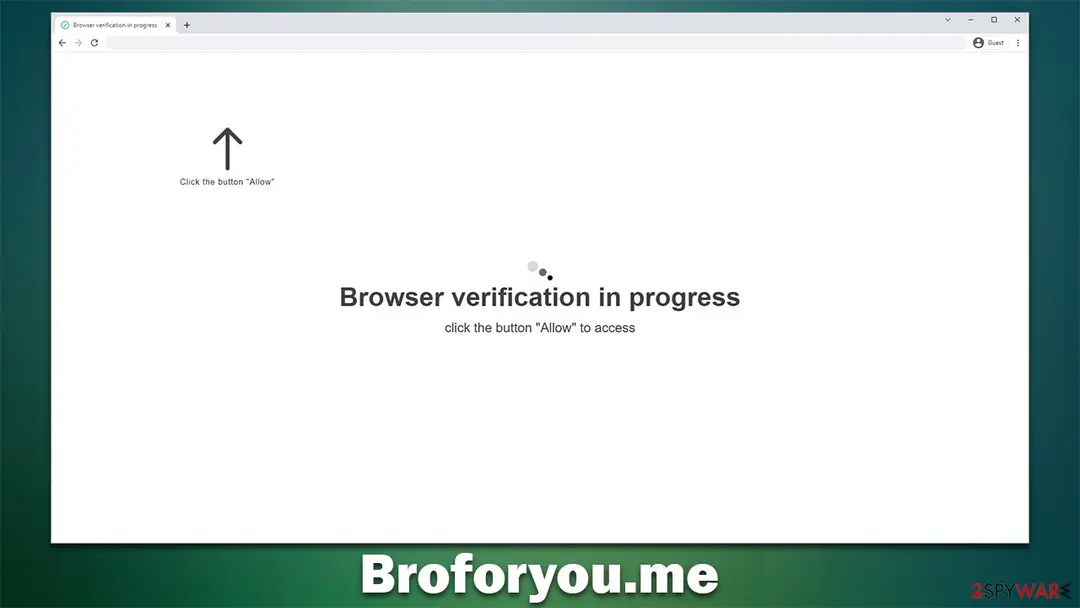
Broforyou.me ads: summary
| Distribution | Intrusive pop-ups can start showing up at some point after the "Allow" button is pressed within the notification prompt |
|---|---|
| Damage | Shown pop-ups incorporate fake notices and push scams. Links can also lead to websites filled with malware |
| Name | Broforyou.me |
| Type | Push notifications, ads, pop-ups, scam |
| Symptoms | You may start seeing intrusive pop-ups on your desktop – clicking these may lead to insecure or even malicious websites |
| Detection names | No Microsoft detection name is known |
| Removal | Scan the PC with security software to find and remove the malware and anything installed with it. Fortect scans Windows for malware and repairs the system files and settings it damaged. Remove it nowTo use the full-featured product, you have to purchase a license for Fortect. The scan is free. |
Show 7 more facts
| Evidence | One write-up by a security site; details still limited |
|---|---|
| Domains | broforyou.me |
| Ads shown as | Desktop notifications |
| Browsers | Chrome, Edge and Firefox |
| Installed on the PC | Nothing; a browser notification permission only |
| First seen | 25 January 2023 |
| Facts checked | 7 October 2026 |
Is Broforyou.me ads dangerous?
From our report of Jan 2023 · not reviewed since
Broforyou.me shows fake messages only to send you intrusive ads later
Broforyou.me is a malicious website created by fraudsters that serve intrusive push notifications containing ads to unsuspecting users.
Generally, people don't access this domain intentionally but are instead redirected from shady links on torrents, cracks, and online streaming sites which have been booby-trapped with malignant codes. Moreover, some forms of adware may be the cause of these redirects alongside an increase in pop-ups, banners auto play videos, and so forth appearing on your screen without your consent or knowledge.
When visiting the Broforyou.me website, users can fall victim to accidentally pressing the "Allow" button in the push notification prompt, thereby allowing it to send notifications straight to their screens without warning. These pop-ups will appear at any time and take precedence over any other app running on your device.
Broforyou.me ads can be hazardous since their links may lead to malicious websites that attempt to lure you into fraudulent surveys and get-rich-quick schemes. To stay safe online, we implore you not to engage in such suspicious activity - instead, take the necessary steps for the removal of these unwanted advertisements.
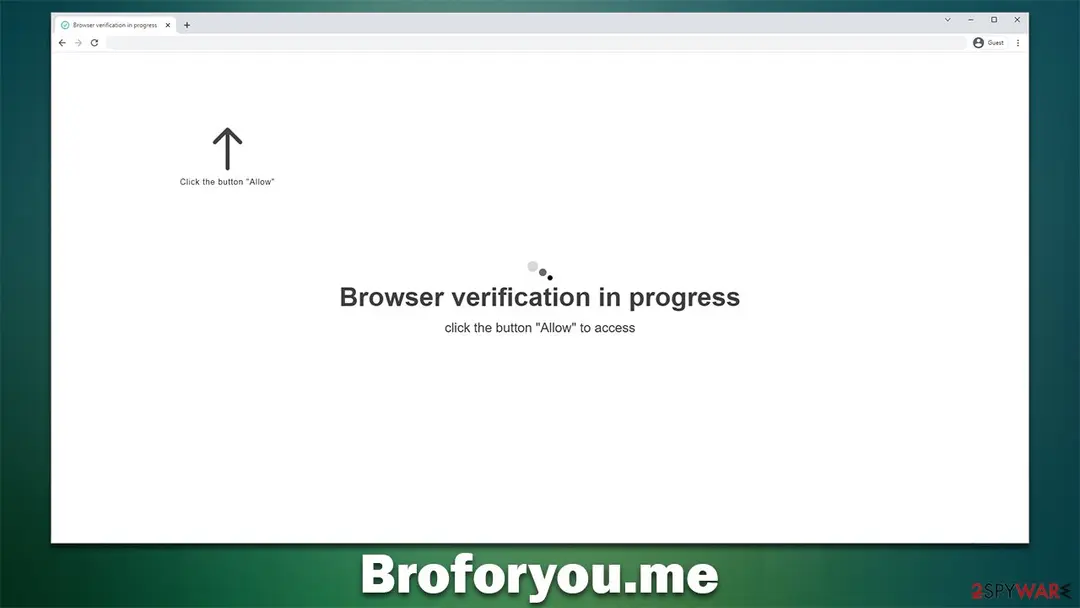
From our report of Jan 2023 · not reviewed since
How do scammers behind Broforyou.me operate
The push notification feature is both legitimate and commonly utilized by websites to send useful information directly to users.
Unfortunately, scammers are aware of this as well and may try to convince individuals to subscribe so that they can receive ads or sponsored content- which would provide them with steady income via advertising. Therefore it is important for everyone to be mindful when engaging in such activities.
To entice users to sign up for push notifications, scammers often misrepresent the feature and mask it as something else. For instance, they might deceive individuals into believing that robot verification is essential in order to advance. Since some customers may have encountered a captcha previously, they can hastily believe this claim and click Allow. A few other messages you should watch out for include the following:
Phishing methods are a common occurrence in the digital world, but if you have ever encountered one of these scams before, it is easy to detect them when they arrive again. Genuine websites will never lock their content behind push notifications' consent - regardless of what is written on the page.
Clicking the "Allow" button would lead to an unrestricted delivery of information from that particular website straight onto your screen. Therefore be vigilant and remember: no respectable site employs this method.
- If you are 18+ tap Allow
- Click Allow to confirm you're not a robot
- Can't play this video! Perhaps, your browser doesn't allow video playback. Click "Allow" button to play video
- Click "Allow" to continue streaming
- Just one more step! "Allow" to continue, etc.
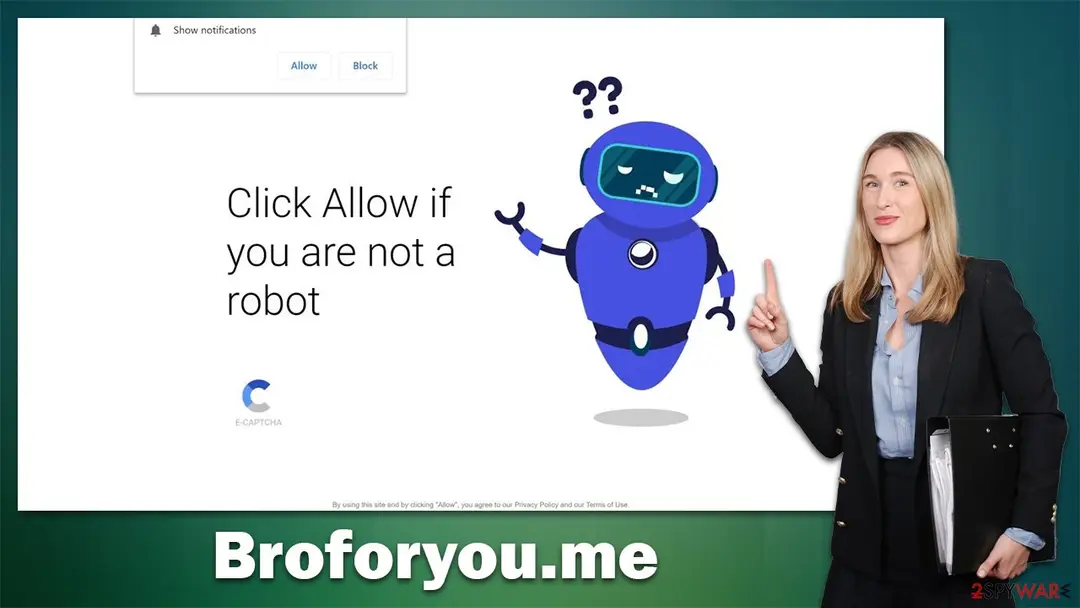
From our report of Jan 2023 · not reviewed since
More from our earlier report on Broforyou.me
- You can stop unwanted notifications by accessing web browser settings.
- If you suspect adware infection, you should use security software to get rid of it
Check your browser and PC
- Address:
broforyou.me
How to remove Broforyou.me ads
How to stop Broforyou.me notifications
Do this in every browser you use, and in every profile inside it: each keeps its own list of sites allowed to send notifications.
Nothing has to be uninstalled for the notifications themselves.
Which browser shows the ads?
Step 1: Remove broforyou.me from Chrome's notification list
Chrome keeps a list of every site you once allowed to send notifications, and
broforyou.meis on it. Pastechrome://settings/content/notificationsinto the address bar, find broforyou.me under Allowed to send notifications, open the three-dot menu next to it and pick Remove.Then click Add next to Not allowed to send notifications and type broforyou.me, so the site cannot ask a second time. Repeat it in every Chrome profile you use on Windows 11 or Windows 10, since each profile has its own list.
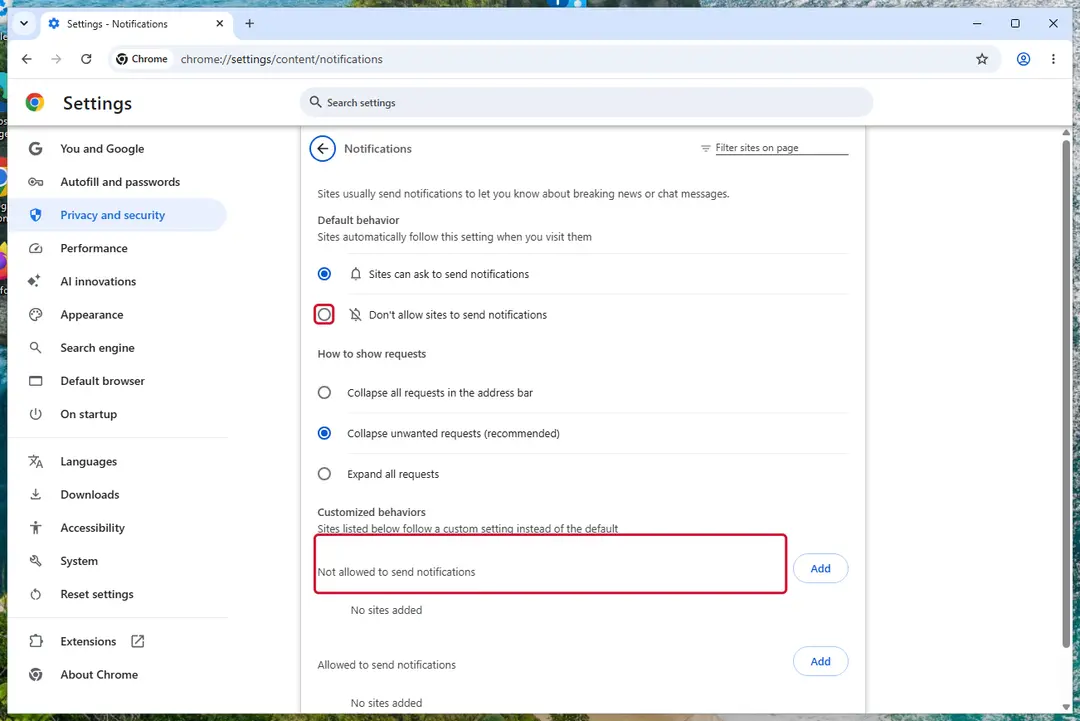
Chrome on Windows 11: Settings > Privacy and security > Site settings > Notifications. Full procedure with screenshots: Stop website notifications and pop-ups
Step 1: Remove broforyou.me from Edge's notification list
Open Settings and more (the three dots) > Settings > Privacy, search, and services > Site permissions > All permissions > Notifications. Remove
broforyou.mefrom the Allowed list, then click Add site next to Not allowed to send notifications and enter it there.Edge is built into both Windows 11 and Windows 10, so check it even if you normally use another browser. If the notifications came with the Edge logo, this is the browser that holds the permission.
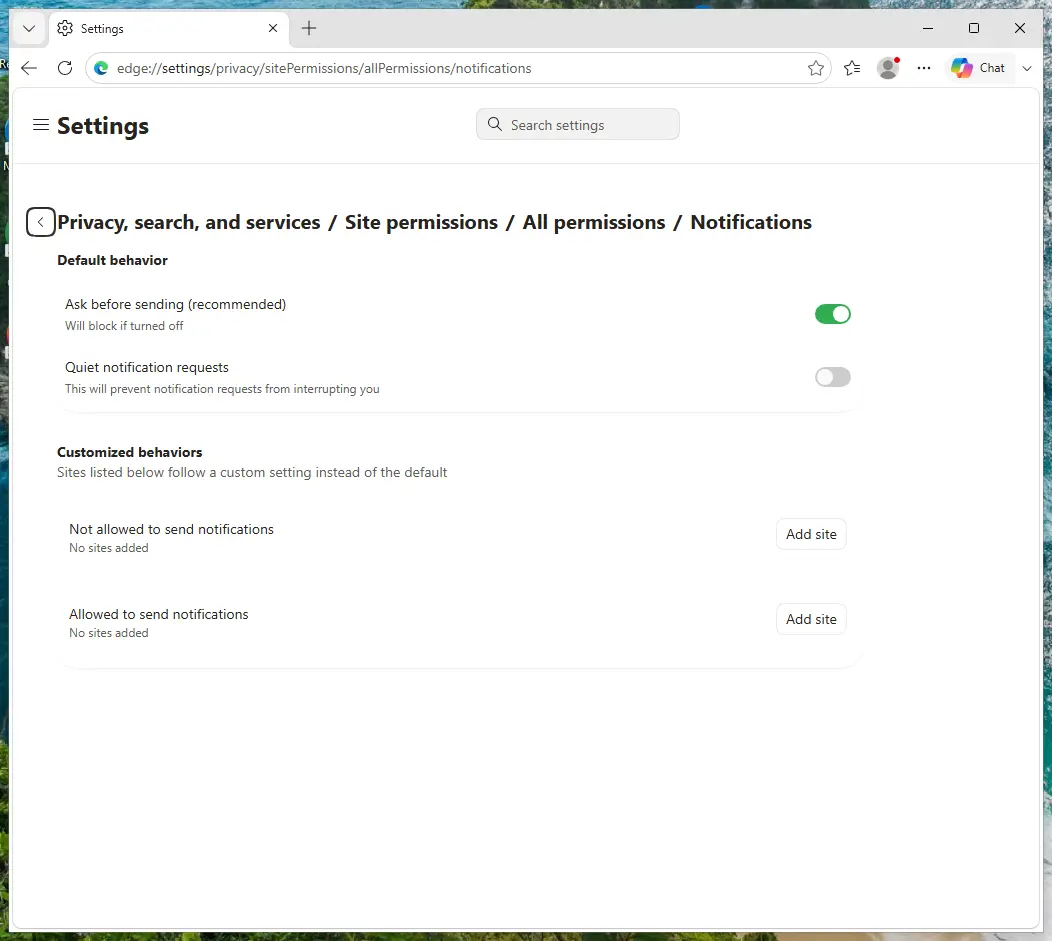
Edge on Windows 11: Site permissions > All permissions > Notifications. Full procedure with screenshots: Stop website notifications and pop-ups
Step 1: Remove broforyou.me from Firefox's notification permissions
Open the menu (three lines) > Settings and click Permissions and data in the left list, then Notifications. Select
broforyou.me, click Remove Website and confirm with Save Changes.In versions older than Firefox 152 the same list sits under Privacy & Security, behind a Settings button next to Notifications. Firefox shows these notifications only while it is running, on Windows 11 and Windows 10 alike.
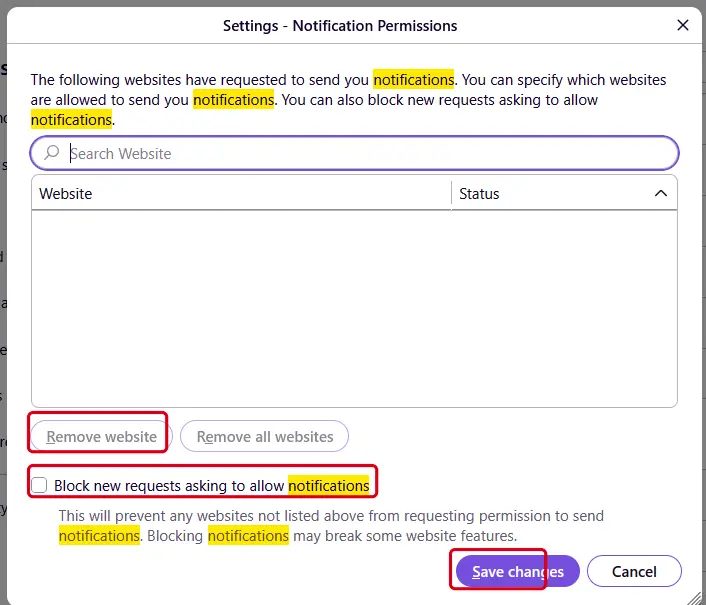
Firefox on Windows 11: the Notification Permissions window. Full procedure with screenshots: Stop website notifications and pop-ups
Then, whichever browser you use
Step 2: Scan the PC if you downloaded anything from the ads
If you only saw the notifications and clicked nothing, you can stop before this step. If a notification led you to download or run something, delete that file, then scan Windows.
In Windows Security > Virus & threat protection > Scan options, run a Full scan, then choose Microsoft Defender Antivirus (offline scan) and Scan now. The offline scan restarts the PC and takes about 15 minutes on Windows 11 and Windows 10.
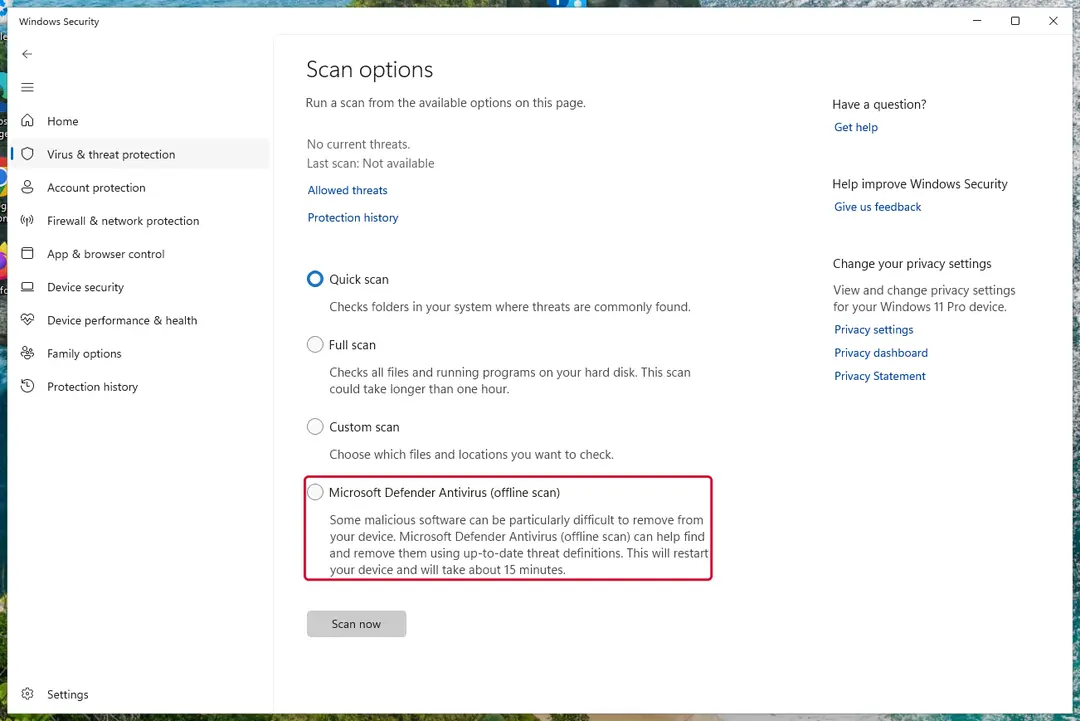
Windows 11: Windows Security > Virus & threat protection > Scan options. Full procedure with screenshots: Run a Microsoft Defender Offline scan
More removal instructions
For programs installed on the PC and older browsers. Open the one you need.
How to remove adware and Broforyou.me pop-ups
Although it may seem daunting if you have enabled notifications from a malicious website, do not fear.
You can disable this activity with ease via your browser settings. It is imperative that you don't interact with links sent by these untrustworthy websites, as doing so could leave you vulnerable to malware infections, data breaches, or even financial scams.
Google Chrome (desktop)
Google Chrome (Android)
MS Edge (Chromium)
After you have managed those pesky notifications, take a few more minutes to investigate the presence of any adware on your system. Usually installed by unwitting users through bundling or similar strategies, this type of unwanted software can be an unwelcome surprise if not identified and removed promptly.
This can ensure that no malicious programs have infiltrated your device and will give you peace of mind. In addition, it is critical to clear browser caches as persistent trackers remain even after PUPs are eradicated - using would be the most efficient way for this task.
- Open the Google Chrome browser and go to Menu > Settings.
- Locate the Privacy and security section and pick Site Settings > Notifications.
- Look at the Allow section and look for a suspicious URL.
- Click the three vertical dots next to it and pick Block. This should remove unwanted notifications from Google Chrome.
- Open Google Chrome and tap on Settings (three vertical dots).
- Select Notifications.
- Locate the unwanted URL and toggle the button to the left (Off setting).
- Open Mozilla Firefox and go to Menu > Options.
- Click on Privacy & Security section.
- Under Permissions, you should be able to see Notifications. Click the Settings button next to it.
- In the Settings – Notification Permissions window, click on the drop-down menu by the URL in question.
- Select Block and then click on Save Changes. This should remove unwanted notifications from Mozilla Firefox.
- Open Microsoft Edge, and go to Settings.
- Select Site permissions.
- Go to Notifications on the right.
- Under Allow, you will find the unwanted entry.
- Click on More actions and select Block.
- Click on Safari > Preferences...
- Go to the Websites tab and, under General, select Notifications.
- Select the web address in question, click the drop-down menu and select Deny.
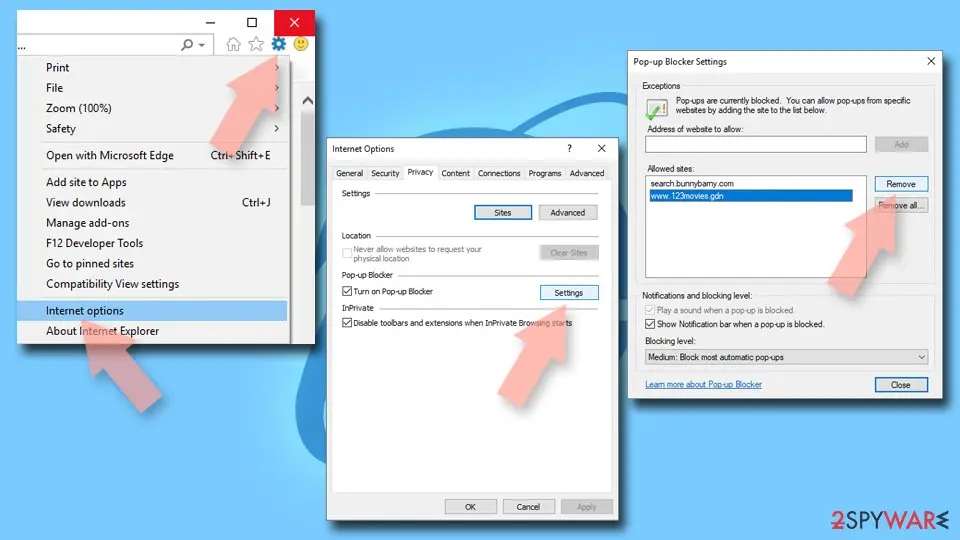
- Open Internet Explorer, and click on the Gear icon at the top-right of the window.
- Select Internet options and go to the Privacy tab.
- In the Pop-up Blocker section, click on Settings.
- Locate the web address in question under Allowed sites and pick Remove.
General tips on online protection from phishing content
One of the most important ways to avoid being redirected to phishing websites is to always be vigilant about the web pages you are visiting.
Be sure to double-check the URL for any suspicious characters or misspellings, and be aware that some scammers may use authentic-looking URLs to trick unsuspecting users.
Warning: Additionally, it's prudent to never click on links that have been sent to you via email or social media, as these could be malicious.
When in doubt, always type the URL manually into your browser.
You can also take extra security measures by avoiding public Wi-Fi whenever possible and enabling two-factor authentication for any accounts that offer it. Additionally, regularly updating your software and keeping antivirus programs enabled can help protect you from potential threats.
Be aware of recent updates to the Terms of Service for any websites or services you use. If a service begins logging more data all of a sudden, this could be a warning sign that your information is vulnerable. Stay up-to-date, and be sure to read any changes in the ToS before agreeing.
If you believe you may have been redirected to a phishing website, take immediate steps to protect yourself. Contact the website or service in question and report any suspicious activity. Change any passwords associated with the website or service, and consider turning on two-factor authentication for extra security.
Finally, closely monitor your accounts and credit report in the coming months to ensure that no fraudulent activity has taken place. Any suspicious activity should be reported to the appropriate authorities.
Protect your privacy - employ a VPN
There are several ways how to make your online time more private - you can access an incognito tab.
However, there is no secret that even in this mode, you are tracked for advertising purposes. There is a way to add an extra layer of protection and create a completely anonymous web browsing practice with the help of VPN. This software reroutes traffic through different servers, thus leaving your IP address and geolocation in disguise.
Besides, it is based on a strict no-log policy, meaning that no data will be recorded, leaked, and available for both first and third parties. The combination of a secure web browser and VPN will let you browse the Internet without a feeling of being spied or targeted by criminals.
No backups? No problem. Use a data recovery tool
If you wonder how data loss can occur, you should not look any further for answers - human errors, malware attacks, hardware failures, power cuts, natural disasters, or even simple negligence.
In some cases, lost files are extremely important, and many straight out panic when such an unfortunate course of events happen. Due to this, you should always ensure that you prepare proper data backups on a regular basis.
If you were caught by surprise and did not have any backups to restore your files from, not everything is lost. is one of the leading file recovery solutions you can find on the market - it is likely to restore even lost emails or data located on an external device.
Questions about Broforyou.me ads
broforyou.me keeps sending notifications. Is it a virus?
No. Notifications from broforyou.me come from a permission stored in the browser, not from a program installed in Windows. Someone clicked Allow on a prompt from that site, usually without realising what it meant, and the site now sends ads through the browser's notification system.
Antivirus scans often find nothing because there is nothing to find on the disk. Removing broforyou.me from the browser's list of allowed sites stops the messages for good. A scan is still useful if you clicked a notification and downloaded or ran something from the page it opened, because those downloads can be unwanted programs.
Did a notification from broforyou.me infect my computer?
A notification cannot infect a PC. It is a short text with a link that the browser displays. Clicking it opens a page, and a page cannot install anything unless you agree to a download and run the file.
So the answer depends on what you did after clicking. Looked and closed: you are fine. Downloaded but did not open: delete the file.
Opened a downloaded file: uninstall what it added and scan the PC. Typed card or login details: contact the bank and change the password. In every case, remove broforyou.me from the browser's allowed notifications so the messages stop.
Why does Broforyou.me show me ads?
Because that is its whole purpose. Broforyou.me is a push-notification spam site, and its operators are paid for every ad it displays and every click it gets. In this case the ads take the form of desktop notifications.
They are chosen by ad networks that accept almost any advertiser, which is why so many look like warnings or prizes. The ads are not a sign that your PC is broken or infected with something worse; they are a sign that something on it, or in the browser, has permission to advertise. Removing that permission or program stops them.
Is broforyou.me safe to visit?
No. The site broforyou.me exists to push visitors towards ads, and the pages it leads to include fake virus warnings, fake updates, prize scams and notification prompts. Visiting it once does not infect an up-to-date PC, but anything you click or download there is a gamble.
Do not enter personal details, do not allow notifications and do not call phone numbers it shows. If it opens by itself, close the tab and check the browser's extensions and notification permissions. Blocking the single domain helps little, because the operators register new names regularly.
Which browser is sending the broforyou.me notifications?
Each notification shows the name of the browser and the site in its small print. In the cases we saw, the messages from broforyou.me came through Chrome, Edge and Firefox. Permissions are stored per browser and per profile, so removing the site in one browser does not affect another.
If you use several Chrome or Edge profiles, check each one. If you sync the browser with an account, remove the permission while signed in, otherwise another computer may still hold it and keep receiving the same messages.
How do I know the ads come from Broforyou.me?
Look for notifications from broforyou.me. That is the trace Broforyou.me leaves, and it shows up as desktop notifications. Ads that appear on every site, including ones that never carried ads before, point to something on your PC or in the browser rather than to the sites themselves.
A quick test is a private window, where extensions are off by default: if the ads disappear there, an extension is responsible. If they appear even with the browser closed, the source is a notification permission or a program in Windows.
Did clicking Allow install anything on my PC?
No. Allowing notifications stores a permission in the browser and nothing else. No file is downloaded and no program is added to Windows, which is also why antivirus scans find nothing. The risk comes later, from the notifications themselves: they lead to scam pages, fake updates and phishing forms.
Remove the permission in each browser where you allowed it. If you clicked a notification and downloaded something afterwards, delete that file and run a Microsoft Defender full scan and offline scan.
Will Focus or Do not disturb stop the notifications?
Only for as long as it is on. Do not disturb in Windows 11 holds back notifications from all apps, including browsers, and releases them to the notification centre later. The site still has permission and the messages still arrive.
Use the browser's notification settings to remove the site instead: once its permission is gone, it cannot send anything, whatever Windows is set to. Keep Do not disturb for what it is meant for, such as meetings, presentations and quiet hours.
I clicked on one of the ads. Am I infected?
Probably not. Clicking an ad usually only opens a page, and a page cannot install programs on an up-to-date Windows PC without your help.
You are at risk only if you then downloaded and ran a file, allowed notifications, entered card or login details, or called a phone number shown on the page. Delete any download and run a full and offline scan.
Change passwords you typed, from a clean device. Call your bank if you gave card details. If you called a number or allowed remote access, see the next question.
Will Fortect remove Broforyou.me?
No program removes Broforyou.me itself, because there is nothing on the PC to remove: the notifications come through a permission saved in the browser, and only the browser's settings take it away, as the steps above show.
What Fortect can do is check the rest of Windows. Its free scan looks for malware, unwanted programs and damaged system files, which is useful if you clicked the ads, downloaded something from the pages they opened, or are not sure what else changed on the PC.
If the scan finds nothing and the notifications stopped after you removed the permission, this problem is solved. Use Microsoft Defender as a second opinion whenever you have downloaded files from pages like these.
Sources
- Google Chrome Help: Use notifications to get alerts (no longer online) (read October 7, 2026)
- FTC: How to recognize, remove and avoid malware (read October 7, 2026)
- Microsoft Learn: Microsoft Defender Offline (read October 7, 2026)
- Microsoft Learn: How Microsoft names malware (read October 7, 2026)