
Cash-App-Transfer is pending your confirmation scam: how to spot it and what to do
Cash-App-Transfer is pending your confirmation scam - the message that is sent to various people with the aim to trick them into clicking on the provided link that, in most cases, leads to the malicious page, malware distributing platform. Often these SMS alerts can include the number.
Facts checked October 7, 2026. Removal steps tested on Windows 11 (26H2) and checked against Microsoft's and the browser makers' current documentation. Sections marked as our earlier report are the original text: they describe the threat as it was then and have not been reviewed since. The 2026 status, the removal steps and the questions are current.
Automatic
Get a free scan and check if your PC is infected.
Fortect finds malware, unwanted programs and the Windows damage they leave behind, and repairs it in one pass.
Do it yourself · free Remove Cash-App-Transfer is pending your confirmation scam yourself 4 steps, about 12 minutes, no software needed.
Start the steps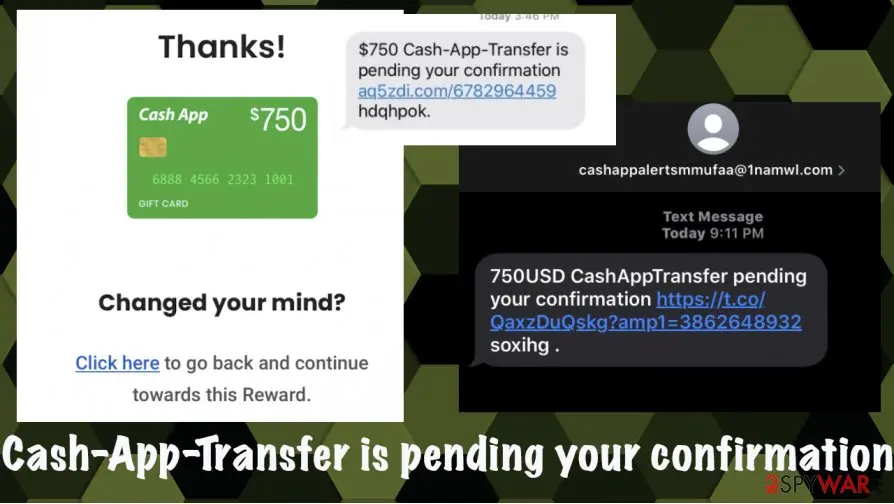
Cash-App-Transfer is pending your confirmation scam: summary
| Distribution | The main virus can be spread via shady, deceptive sites, other ways that PUPs are distributed around. The message is sent to contacts from lists of leaked or breached information |
|---|---|
| Name | Cash-App-Transfer is pending your confirmation scam |
| Type | Scam campaign/ Adware-type mobile malware |
| Issues | The SMS with encouragement to click on a link or call the provided number shows up on the phone and aims to get users information or trick them into transferring money |
| Affects | It mainly appears on macOS devices and iOS running phones |
| Aims to | Trick people into visiting shady sites where credentials, sensitive information can be collected |
| Removal | Scan the PC with security software to find and remove the malware and anything installed with it. Fortect scans Windows for malware and repairs the system files and settings it damaged. Remove it nowTo use the full-featured product, you have to purchase a license for Fortect. The scan is free. |
Show 8 more facts
| Symptoms | A phishing e-mail asking you to sign in |
|---|---|
| Evidence | 4 write-ups by security sites; details still limited |
| Arrives as | |
| Pretends to be | A well-known company |
| Claim | Your account needs urgent attention |
| Asks for | Your password |
| First seen | 26 August 2020 |
| Facts checked | 7 October 2026 |
What the Cash-App-Transfer is pending your confirmation scam message looks like
Cash-App-Transfer is pending your confirmation scam
How to tell the Cash-App-Transfer is pending your confirmation scam message is fake
From our report of Aug 2020 · not reviewed since
- You need to remove Cash-App-Transfer is pending your confirmation scam by clearing the system from any viruses that might trigger unwanted activities and scammy messages from the background
Is Cash-App-Transfer is pending your confirmation scam dangerous? What the senders want
From our report of Aug 2020 · not reviewed since
Cash-App-Transfer is pending your confirmation scam is the mobile malware campaign that claims to inform about awaiting money transfer
Cash-App-Transfer is pending your confirmation scam - the message that is sent to various people with the aim to trick them into clicking on the provided link that, in most cases, leads to the malicious page, malware distributing platform.
Often these SMS alerts can include the number. If you decide to call the number like this, you may suffer money losses from the account or get tricked into communicating with scammers directly. The message can include the ransom URL and a phone number.
This phishing scam can lead to pretty much anything if you follow the suggested steps and do what deceptive message recommends. Various malicious sites can aim to get your banking information, sensitive material, credentials, personal information. Scammers mainly target random people, use emails or phone numbers leaked in separate breaches and security incidents.
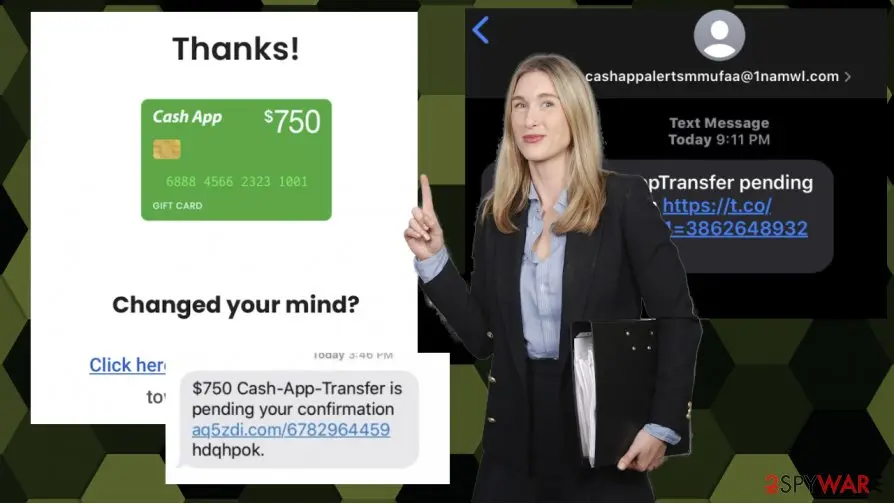
Cash-App-Transfer is pending your confirmation scam might have a few variants, but the message should resemble the same technique that scams people into doing the needed operation. The text mainly states about 750 USD transaction and pending confirmation. The link provided on the SMS redirects straight to a phishing site where scammers try to directly collect log-in credentials, digital wallet, and banking account passwords.
Trusting these claims displayed by Cash-App-Transfer is pending your confirmation virus message can definitely leave you as a victim. Severe privacy issues, identity theft, and major financial losses as risks should encourage you to remove the message as soon as you get it.
Cash-App-Transfer is pending your confirmation scam mainly appears on the iOS devices, but also can occur in other macOS running machines. This is not the targeted campaign, so all the regions in the world are possibly at risk.
Cash-App-Transfer is pending your confirmation scam relies on the Cash-App program that is a useful service used by many users. Also, we can confirm that Cash App will never ask to put sign-in code via SMS and over the phone, on social media. You need to be aware of such scams and false messages that do not resemble a real service and are not associated with particular platforms.
Such scams and malware campaigns diminish the particular reputation of the application and make impressions that the service is not trustworthy or reliable. Unfortunately, Cash-App-Transfer is pending your confirmation scam is not the only one related to such apps and programs designed for money transfers.
You need to remove Cash-App-Transfer is pending your confirmation scam messages and the program that triggers the appearance of those SMS. It is not the easiest task because the program might run in the background, or trigger more changes on the device. Experts note that you need to rely on anti-malware tools to ensure proper termination. Some of them have mobile versions and are compatible with macOS, so try or .
Cash-App-Transfer is pending your confirmation scam removal results can depend on the program you use and even on the fact how quickly you start the process. PUPs can infect machines with other programs, change some settings, so you need to react as soon as possible.
This way, you can terminate the PUP, clear those associated programs off of the machine, and get rid of the Cash-App-Transfer is pending your confirmation scam itself. Also, checking for affected programs, functions, or files can be crucial, so run and find corrupted files and fix them automatically to get rid of the virus damage.
From our report of Aug 2020 · not reviewed since
Popular programs and platforms do not send direct messages
You should keep in mind that ransom emails, text messages, or direct phone calls are not common for money transferring app support or OS providers.
There are no instances that such services would contact you. If that happens- consider that a scam and aim to get something from you.
Enable additional security settings when you create particular accounts, so you can be sure that there is nothing that could happen without your knowledge. Also, always keep the Advanced and Custom installation options in mind, so you can keep the machine secure and PUP-free even when you download applications from the internet.
What to do after the Cash-App-Transfer is pending your confirmation scam e-mail
If you only received the message and clicked nothing, step 3 is all you need.
If you clicked the link or typed anything on the page it opened, do every step, starting with the password.
Step 1: Change the password you typed on the fake page
If you entered a password after clicking the link in the Cash-App-Transfer is pending your confirmation scam message, treat that account as known to the sender.
Open the provider's real site by typing its address yourself, not through any link in the e-mail, and change the password there. Choose a new one you have never used before, and change it on every other account that shared the old one.
Then use the option to sign out of all other sessions or devices, if the provider has one. This works the same in any browser on Windows 11 and Windows 10.
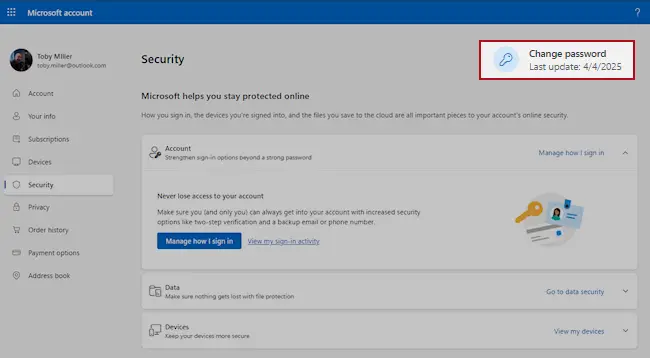
Microsoft account, Security page (account.microsoft.com/security): Change password. Full procedure with screenshots: Turn on two-step verification / secure a hacked account
Step 2: Turn on two-step verification
Two-step verification asks for a code from your phone or an authenticator app whenever someone signs in from a new device. A stolen password alone is then not enough to open the mailbox.
Turn it on in the security settings of the e-mail account first, then for the bank, shop and social accounts that send their reset links to that address.
While you are there, check the recovery e-mail and phone number and the forwarding rules, which attackers sometimes change to keep access. The settings pages look the same on Windows 11 and Windows 10.
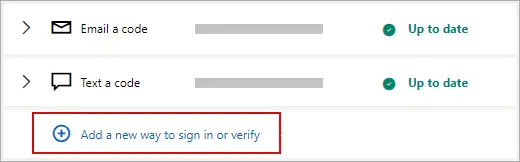
Microsoft account: Manage how I sign in, where two-step verification and the sign-in methods are. Full procedure with screenshots: Turn on two-step verification / secure a hacked account
Step 3: Report the e-mail and delete it
Report the message instead of only deleting it. In Outlook choose Report > Report phishing, in Gmail the three-dot menu > Report phishing; the provider then blocks the same message for other people.
Do not reply and do not click anything else in it. On a work account, forward it to your IT team as an attachment first. Web mail and the mail apps on Windows 11 and Windows 10 offer the same options.
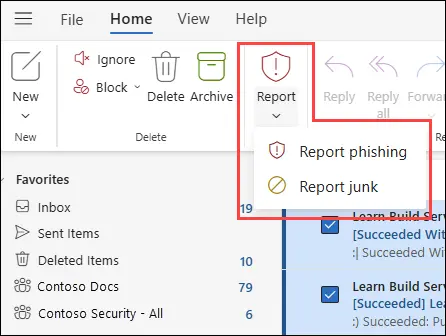
New Outlook for Windows and Outlook on the web: Report > Report phishing. Full procedure with screenshots: Report a phishing e-mail
Step 4: Scan the PC if you opened a file from the message
A page that only asked for a password installs nothing, so most readers can skip this step.
If the Cash-App-Transfer is pending your confirmation scam e-mail or the page it opened made you download or open a file, delete it and run a full scan, then a Microsoft Defender Offline scan.
In Windows 11 and Windows 10 open Windows Security > Virus & threat protection > Scan options, select Microsoft Defender Antivirus (offline scan) and click Scan now. The PC restarts and the scan takes about 15 minutes, so save your work first.
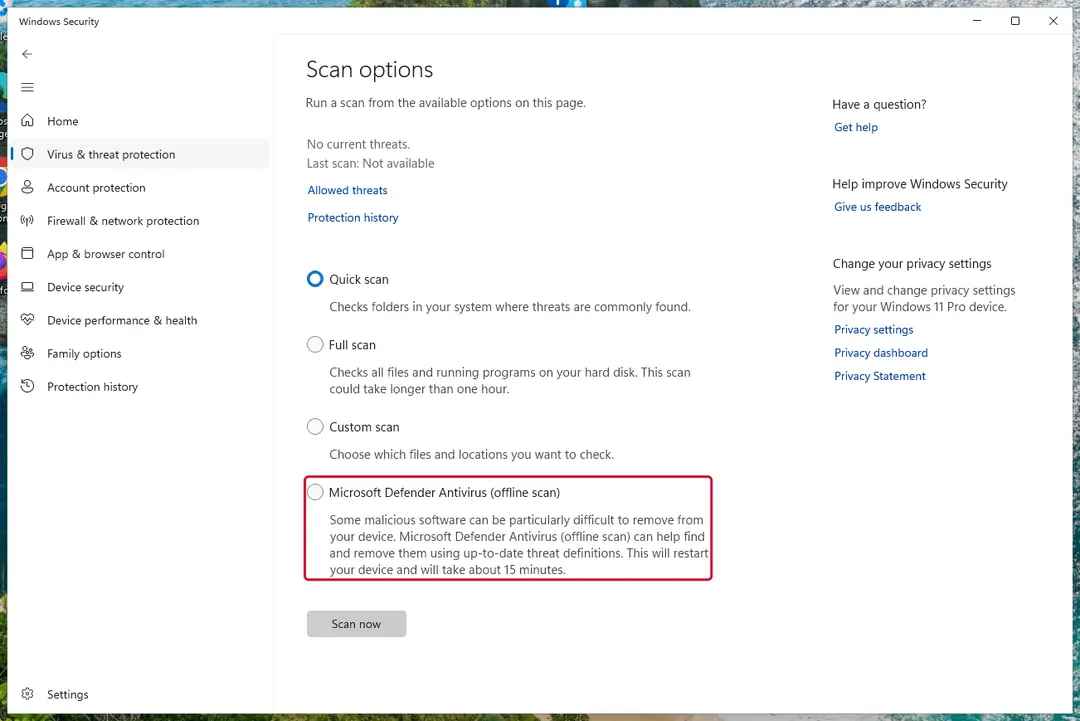
Windows 11: Windows Security > Virus & threat protection > Scan options. Full procedure with screenshots: Run a Microsoft Defender Offline scan
Instructions for each browser and system
The detailed steps for every browser and system this guide covers. Open the one you use.
Delete from macOS
Remove the unwanted application:
- From the menu bar, select Go > Applications.
- In the Applications folder, look for any suspicious entries, then drag them to Trash (or right-click and pick Move to Trash).
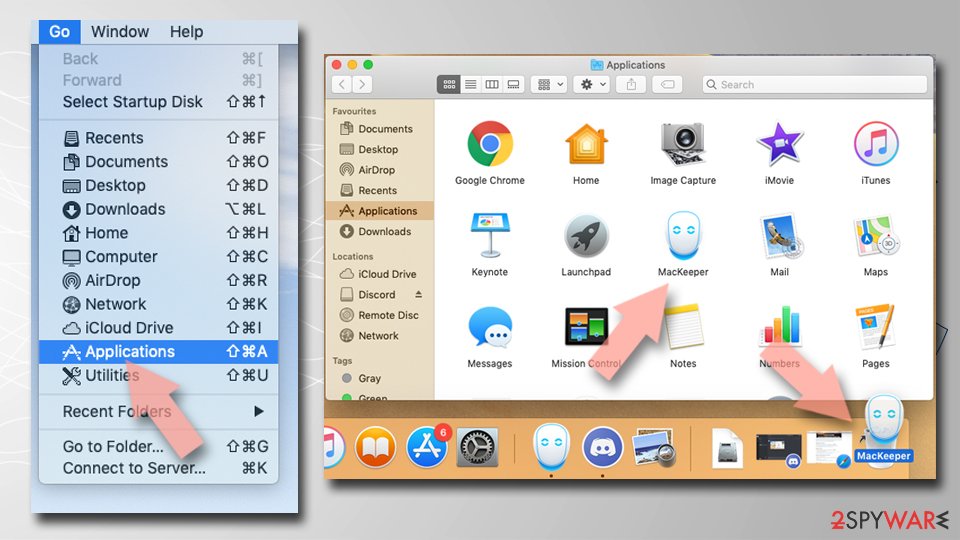
Delete leftover files and folders:
- Select Go > Go to Folder.
- Enter /Library/Application Support and remove any suspicious folders related to the unwanted program.
- Repeat the same check in the /Library/LaunchAgents and /Library/LaunchDaemons folders, deleting any suspicious entries.
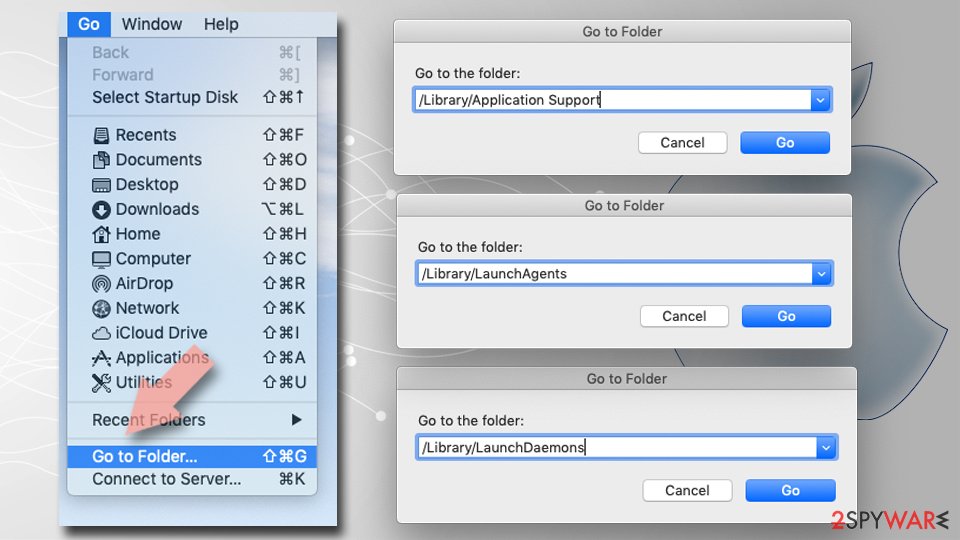
- Finally, empty the Trash to permanently remove the leftovers.
Stream videos without limitations, no matter where you are
There are multiple parties that could find out almost anything about you by checking your online activity.
While this is highly unlikely, advertisers and tech companies are constantly tracking you online. The first step to privacy should be a secure browser that focuses on tracker reduction to a minimum.
Even if you employ a secure browser, you will not be able to access websites that are restricted due to local government laws or other reasons. In other words, you may not be able to stream Disney+ or US-based Netflix in some countries. To bypass these restrictions, you can employ a powerful VPN, which provides dedicated servers for torrenting and streaming, not slowing you down in the process.
Data backups are important - recover your lost files
Ransomware is one of the biggest threats to personal data.
Once it is executed on a machine, it launches a sophisticated encryption algorithm that locks all your files, although it does not destroy them. The most common misconception is that anti-malware software can return files to their previous states. This is not true, however, and data remains locked after the malicious payload is deleted.
While regular data backups are the only secure method to recover your files after a ransomware attack, tools such as can also be effective and restore at least some of your lost data.
From our report of Aug 2020 · not reviewed since
Get rid of the threat that creates messages with Cash-App-Transfer is pending your confirmation scam
Cash-App-Transfer is pending your confirmation virus is the campaign involving many risks regarding
Remove Cash-App-Transfer is pending your confirmation scam by running the proper anti-malware tool. The antivirus engine-based programs can check the system fully and indicate suspicious, potentially dangerous, or unwanted applications and help to remove them.
Remember to check for virus damage and repair corrupted parts that PUPs, the main adware-type programs, and other threats might trigger. This should be done after Cash-App-Transfer is pending your confirmation scam removal, to ensure that the device is safe to use.
Questions about Cash-App-Transfer is pending your confirmation scam
Does getting "Cash-App-Transfer is pending your confirmation scam" mean my account was compromised?
Not by itself. Phishing waves are sent to long lists of addresses collected from old breaches, websites and guessing, and the sender does not know whether you even have the account the message mentions. Getting "Cash-App-Transfer is pending your confirmation scam" only means your address is on such a list.
It becomes a problem if you sign in through the link. To be sure, open the real service from a bookmark and check recent activity and security alerts. If you see nothing unusual and you did not type your password into the fake page, your account is fine.
I typed my password after "Cash-App-Transfer is pending your confirmation scam". What now?
Act within the hour. From another device, open the real site of the account the message "Cash-App-Transfer is pending your confirmation scam" imitated and change the password. If the same password is used anywhere else, change it there too.
Sign out of all other sessions, check the recovery e-mail and phone number, and look for mail forwarding rules or filters you did not create. Then turn on two-step verification with an authenticator app or a passkey.
If the fake page also asked for a card number or a bank login, call your bank and ask them to block the card. Finally, report the e-mail so others are warned.
Is Cash-App-Transfer is pending your confirmation scam really from a well-known company?
No. It is sent by scammers who copy the name and look of a well-known company. The sender address and the links do not belong to it, and the message asks for your password, which a real company does not request through an unexpected message.
If you want to be sure about your account, open the website or app of a well-known company the way you normally do, not through the message, and look for notices there. Then delete the message and report it as phishing. If you already followed its instructions, use the steps in this guide for your case.
Is it true that your account needs urgent attention?
No. The claim that your account needs urgent attention is the hook of Cash-App-Transfer is pending your confirmation scam, invented to give you a reason to act quickly. Scammers pick a story that could plausibly apply to many people, so it may feel relevant to you, but nothing in the message is based on your real accounts or devices.
If the claim concerns a service you use, check it there directly, by opening the website or app yourself. You will find no such problem. Then delete the message and report it as phishing.
What happens if I do what Cash-App-Transfer is pending your confirmation scam asks?
The scammers get your password, and they use it quickly. Passwords are tried on the real service within minutes, cards are charged or added to phone wallets, remote access is used to open your bank, and crypto is moved on at once.
Documents surface later as accounts in your name. If you already did what the message asked, do not wait to see what happens; follow the steps in this guide for your case today. Speed matters more than anything else here.
Will a well-known company refund me if I fell for Cash-App-Transfer is pending your confirmation scam?
A well-known company did not send the message and is not responsible for it, so a refund usually comes from your bank or card issuer, not from the brand. Call the bank first if you paid.
It still helps to tell the real company: they can secure your account, add notes for their fraud team and take down pages that use their name. Contact them through their official website or app only, never through the message or a search ad. Keep the message as evidence.
Should I reply or unsubscribe?
No. A reply confirms that your address is active and read, which leads to more scams. The unsubscribe link in a scam message is part of the scam and may lead to a phishing page. Mark the message as spam or phishing and delete it.
Block the sender if your mail app allows it, though scammers change addresses often. If the scam came by text message, do not reply STOP either. If it came through social media, use the platform's report function and block the account.
How quickly do scammers use a phished password?
Often within minutes. Phishing kits send each password to the operators as soon as it is typed, and many test it automatically on the real service. Some kits also pass the two-step code through in real time.
That is why the first hour matters: change the password, end all sessions and check that the recovery details are still yours. If nothing has changed by then, you were probably fast enough, but keep watching for login alerts and password-reset e-mails for a few weeks.
Does receiving Cash-App-Transfer is pending your confirmation scam mean I was hacked?
No. A e-mail like this is sent to huge lists at once, and your address or number is on one of them, most likely because it appeared in a data breach or on a public page. Nothing on your PC caused it.
What would matter is whether anyone signed in to your accounts; check recent sign-in activity in your e-mail and bank accounts if you are worried. Turn on two-step verification for the important ones, then delete the message and report it as phishing.
Will Fortect remove Cash-App-Transfer is pending your confirmation scam?
Fortect scans Windows for malware and unwanted programs and repairs the system files and settings they change, and its free scan shows what it finds on your PC before you decide anything.
For Cash-App-Transfer is pending your confirmation scam, follow the plan above as well: the browser steps take back permissions and settings that no scanner treats as a threat, and uninstalling the program that brought it removes the source.
Run Microsoft Defender's full scan and, if anything was found, its offline scan as a second opinion. If the symptoms are gone after the plan and both scans are clean, there is nothing more to do.
Sources
- Wikipedia: Phishing scam (read October 7, 2026)
- Discussions: cash-app-transfer text message (read October 7, 2026)
- Virusai: Virusai (read October 7, 2026)
- FTC: How to recognize and avoid phishing scams (read October 7, 2026)
- CISA: Recognize and report phishing (read October 7, 2026)