
Com.system.update ads: what it is and how to remove it
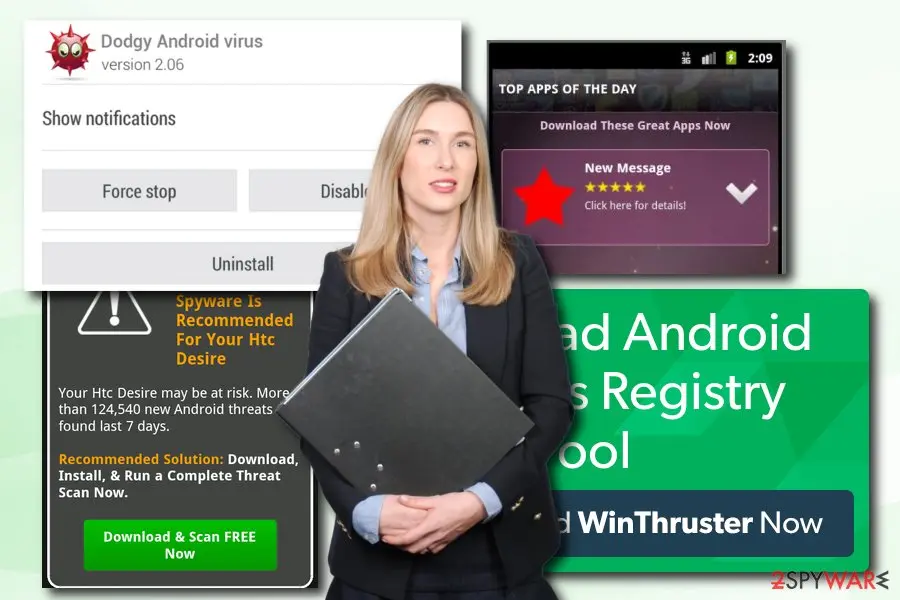
Com.system.update is a malicious domain that shows users unending ads, redirects them to questionable realms, displays bogus pop-ups about the supposedly outdated Android device, or shows fake security warnings. These type of disturbances are typically caused by an adware program that got into your machine without you noticing.
Facts checked October 7, 2026. Removal steps tested on Windows 11 (26H2) and checked against Microsoft's and the browser makers' current documentation. Sections marked as our earlier report are the original text: they describe the threat as it was then and have not been reviewed since. The 2026 status, the removal steps and the questions are current.
Automatic
Get a free scan and check if your PC is infected.
Fortect finds malware, unwanted programs and the Windows damage they leave behind, and repairs it in one pass.
Programs like Com.system.update usually arrive in groups; a free scan lists the companions that are easy to miss.
Do it yourself · free Remove Com.system.update ads yourself 4 steps, about 12 minutes, no software needed.
Start the steps
Com.system.update ads: summary
| Detection names | No Microsoft detection name is known |
|---|---|
| Distribution | Not recorded in the old report |
| Damage | Not recorded in the old report |
| Name | Com.system.update |
| Type | Adware extension |
| Symptoms | An unknown program in Installed apps |
| Removal | Scan the PC with security software to find and remove the malware and anything installed with it. Fortect scans Windows for malware and repairs the system files and settings it damaged. Remove it nowTo use the full-featured product, you have to purchase a license for Fortect. The scan is free. |
Show 4 more facts
| Evidence | 5 write-ups by security sites; details still limited |
|---|---|
| Program | Com.system.update |
| First seen | 10 July 2020 |
| Facts checked | 7 October 2026 |
Is Com.system.update ads dangerous?
From our report of Jul 2020 · not reviewed since
Com.system.update is a fraudulent app that shows undesired advertisements on your Android device
Com.system.update is a malicious domain that shows users unending ads, redirects them to questionable realms, displays bogus pop-ups about the supposedly outdated Android device, or shows fake security warnings.
These type of disturbances are typically caused by an adware program that got into your machine without you noticing.
Com.system.update has stopped pop-up is the one that shows up screens and frustrates people about questionable source and application that is reportedly not working or triggering the issues, int e first place. Thi malware can run and trigger serious corruption if you do not pay attention or clear the infection fully in time.
You need to clear disabled, possibly malicious apps, and anything that is suspicious or can trigger problems with the performance. Clear such programs and affected files automatically with proper optimizers or try to follow factory reset steps below.
Adware is a relatively harmless piece of software that is created to expose users to an excessive advertisement in the form of pop-ups, deals, banners, coupons, offers, and similar. These ads are generated whenever users browse the internet via Google Chrome, Internet Explorer, Firefox, or other browsers.
Com.system.update android virus generates ads to boost the traffic of less known domains and increase their sales. This way, developers of adware benefit financially for even click made - even an accidental ones. Thus, it is in the authors' best interest to get as many clicks as possible.
Unfortunately, Com.system.update creators do not check the content they are redirecting users to. Thus, the content might sometimes be appealing (as well as legitimate), but other times it can be dangerous, leading to porn, fake software, fake update, illegal or even malware-ridden websites. To avoid that, remove Com.system.update virus from your Android using .
Adware multiplies quickly and can result in deterioration of the system performance of your tablet or mobile phone. If Com.system.update virus is not removed from the device soon, it will result in slow loading times of web pages, multiple error messages, slow boot up or shut down. Thus, using your Android device might become a total nightmare.
In addition to Com.system.update advertising tendencies, the adware spies on each of the users that are using the malicious app. Typically, the ad-supported software collects a variety of non-personally identifiable information about users. This is done to monitor their behavior online and display targeted advertisements.
The collected data might include:
Additionally, Com.system.update might also collect personal information that you enter on dodgy websites. Therefore, if you clicked on a shady add or got redirected to a suspicious realm, do not interact with it in any way! Simply close down your browser and proceed with Com.system.update removal. We explain the procedure below this article.
- IP address;
- Geo-location;
- Browser used;
- Installed apps;
- Search queries;
- Websites visited, etc.
From our report of Jul 2020 · not reviewed since
Ways you can avoid unwanted applications on your device
Adware programs are typically not installed intentionally.
Therefore, it is essential to be vigilant while installing new apps or browsing the internet on your device. Security experts advise to never use third-party sources for new apps. Instead, it is recommended to pick trusted sources, such as Google Play Store.
Nevertheless, some of the applications on Google Play, Amazon, or another legitimate source might also contain malicious code. It does not happen often; however, some of the dubious apps can even get past Google's security checks. Thus, we advise users to read reviews before downloading the new app and never pick one with very few downloads.
Additionally, we advise users to be careful while browsing the internet. We suggest avoiding websites of suspicious content. These pop-ups can show up in relation to other programs or cyber intruders and trigger permanent damage, other issues on the machine.
From our report of Jul 2020 · not reviewed since
More from our earlier report on Com.system.update
- Intrusive advertisements, redirects, the slowdown of the device operation, etc.
- Third-party app sites, unknown web sites, software bundling
How to remove Com.system.update ads
How to remove the Com.system.update extension
Do the browser steps in every browser and profile on the PC, then check Windows for the program that installed the extension.
Step 1: Remove extensions you did not add
In Chrome open
chrome://extensions, in Edgeedge://extensions, and in Firefox the menu > Extensions and themes.Remove every extension you do not remember adding, especially search, new tab, coupon, PDF, weather or video downloader add-ons. Check every browser and every profile, because each keeps its own list.
If an extension has no Remove button or comes back, a browser policy holds it (see "Managed by your organization" in the procedure below). The pages are the same on Windows 11 and Windows 10.
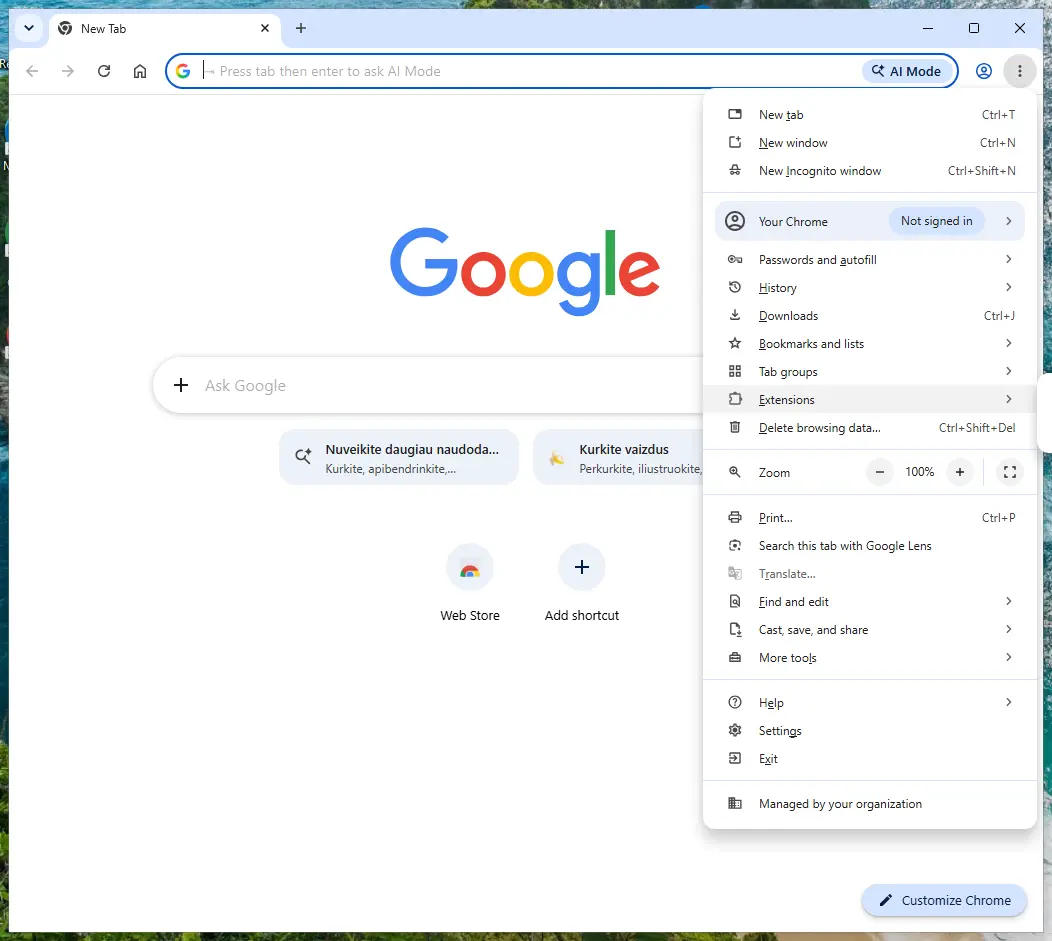
Chrome on Windows 11: More > Extensions > Manage extensions. Full procedure with screenshots: Remove a browser extension
Step 2: Uninstall Com.system.update
Com.system.update is removed like any other program, from the list of installed apps. In Windows 11 that is Settings > Apps > Installed apps, in Windows 10 Settings > Apps > Apps & features, and in both you can also use Control Panel > Programs and Features.
Select Com.system.update, click Uninstall and follow the uninstaller to the end. Then look at the entries just above and below it when the list is sorted by date: bundled programs install at the same minute.
Full procedure with screenshots: Uninstall a program or app in Windows On uGetFix
Step 3: Reset the browser
A reset removes what the steps above could miss:
- changed start pages
- site permissions
- hidden settings
In Chrome open Settings > Reset settings > Restore settings to their original defaults; in Edge Settings > Reset settings; in Firefox Help > More troubleshooting information > Refresh Firefox.
Tip: Bookmarks and saved passwords stay, while extensions are turned off and the search engine and start page return to the defaults.
Reset every browser on the PC, including Edge, which Windows 11 and Windows 10 always have.
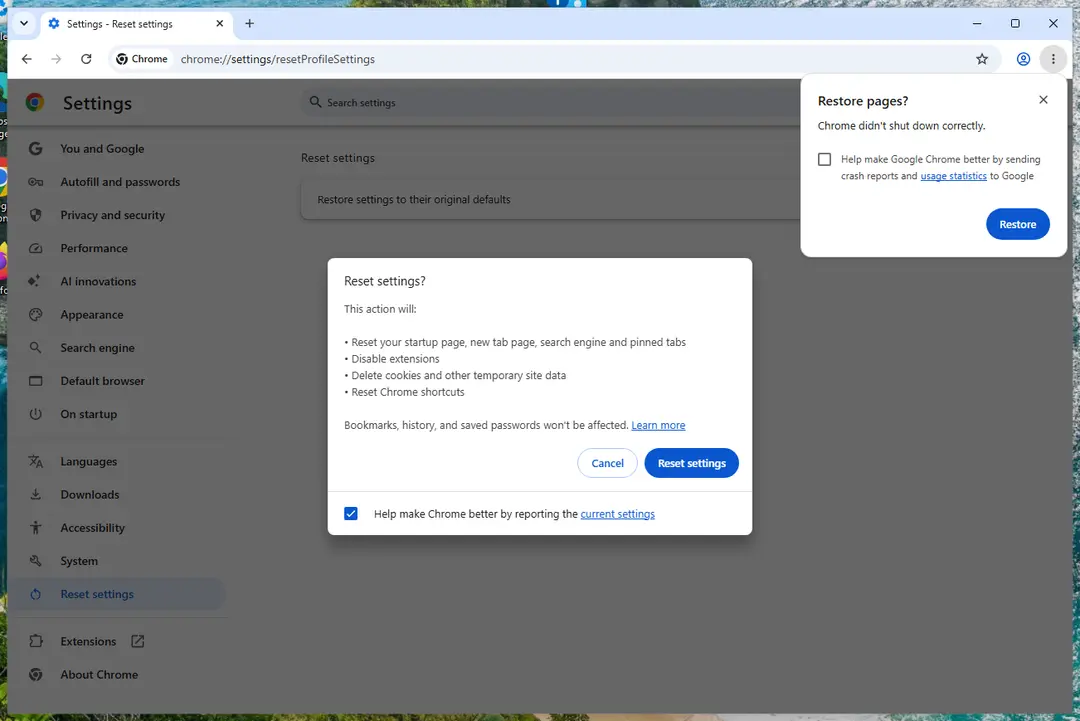
Chrome on Windows 11: Settings > Reset settings. Full procedure with screenshots: Reset a browser and fix a hijacked search engine
Step 4: Scan the PC, then run the offline scan
A scan finds the parts of Com.system.update that the manual steps cannot see. In Windows Security > Virus & threat protection > Scan options, start a Full scan and quarantine what it reports.
Follow it with Microsoft Defender Antivirus (offline scan) > Scan now, which restarts the PC and checks the disk while Windows and the malware are not running.
It takes about 15 minutes and works the same in Windows 11 and Windows 10. If either scan finds something, run the full scan again after removal until it comes back clean.
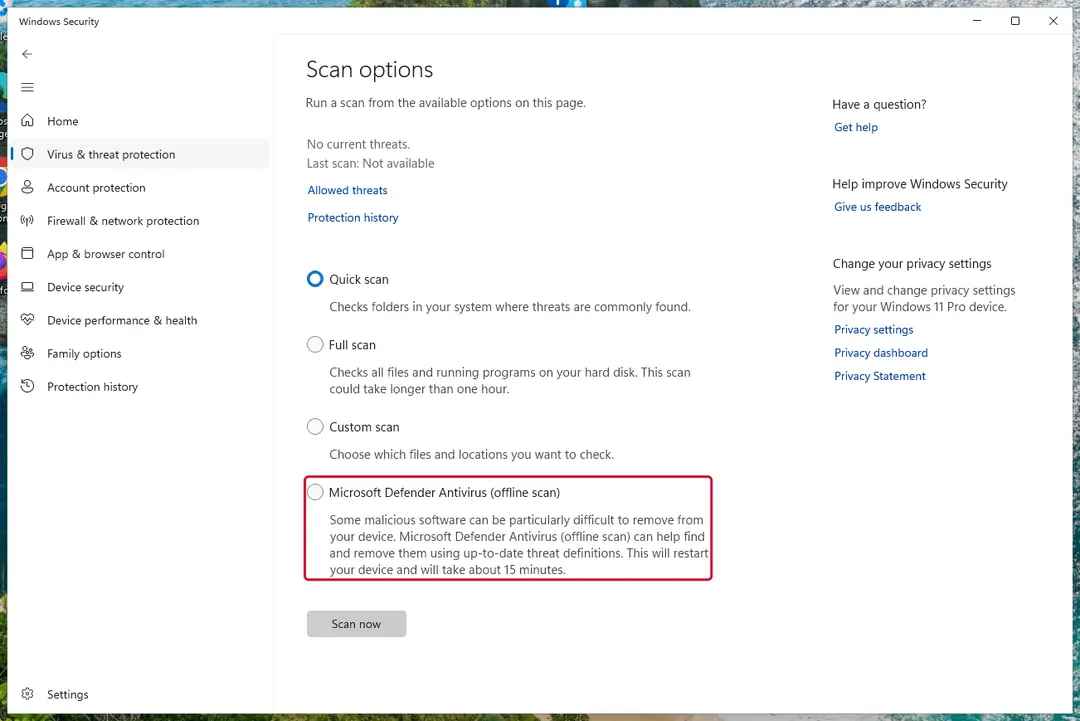
Windows 11: Windows Security > Virus & threat protection > Scan options. Full procedure with screenshots: Run a Microsoft Defender Offline scan
Stream videos without limitations, no matter where you are
There are multiple parties that could find out almost anything about you by checking your online activity.
While this is highly unlikely, advertisers and tech companies are constantly tracking you online. The first step to privacy should be a secure browser that focuses on tracker reduction to a minimum.
Even if you employ a secure browser, you will not be able to access websites that are restricted due to local government laws or other reasons. In other words, you may not be able to stream Disney+ or US-based Netflix in some countries. To bypass these restrictions, you can employ a powerful VPN, which provides dedicated servers for torrenting and streaming, not slowing you down in the process.
Data backups are important - recover your lost files
Ransomware is one of the biggest threats to personal data.
Once it is executed on a machine, it launches a sophisticated encryption algorithm that locks all your files, although it does not destroy them. The most common misconception is that anti-malware software can return files to their previous states. This is not true, however, and data remains locked after the malicious payload is deleted.
While regular data backups are the only secure method to recover your files after a ransomware attack, tools such as can also be effective and restore at least some of your lost data.
From our report of Jul 2020 · not reviewed since
Com.system.update removal procedure
There is no doubt that you should remove Com.system.update the virus as soon as possible.
This way you can avoid such dangers as stolen personal information or infiltration of other unwanted apps/viruses.
To make sure that your device is not infected with malware, you should scan it with an anti-malware tool or other reputable security software. Such tools should have compatible programs with your OS. Try or for the Com.system.update removal.
Before you can eliminate the threat, you need to boot your device in Safe Mode. To secure safe operation, proceed with the following Com.system.update removal steps:
Tip: never give administration rights to any app. If you do, it will gain removal protection, and it will be extremely complicated to eliminate.
- The Press Power button on your phone/tablet and hold it. The pop-up window will appear - click on Reboot
- As soon as startup animation starts, press and hold Volume Down button - you will be able to enter Safe Mode
- Next, go to Settings and click Apps
- Go through the list of all applications and check for anything suspicious. Click on the undesired app and press Uninstall
Questions about Com.system.update ads
Is Com.system.update a virus?
Most programs that appear the way Com.system.update did are not viruses in the strict sense. They are potentially unwanted programs:
- real software that arrives bundled with other downloads and then shows offers
- changes browser settings
- starts with Windows
Some are harmless, some are annoying and a few carry adware. What makes it worth removing is that you did not choose it.
Uninstall it from Installed apps and check the startup list and the browsers for anything added the same day. If it refuses to uninstall or returns after a restart, treat it as more serious and run a Microsoft Defender offline scan.
Com.system.update will not uninstall. What can I do?
First restart the PC and try again, because the program may have been running and locked its own files. If the uninstaller is missing or fails, start Windows in Safe Mode, where most third-party programs do not start, and remove Com.system.update from Installed apps there.
If it still refuses, delete its startup entry and its scheduled task, restart, and try once more. A program that actively prevents removal is behaving like malware, so finish with a Microsoft Defender offline scan. Avoid third-party uninstallers offered on search ads; several of them are unwanted programs themselves.
An ad showed a phone number and I called it. What now?
The number belongs to scammers, not to Microsoft or an antivirus company. If you only talked, hang up and do not call back. If you let them connect to the PC, disconnect it from the internet, uninstall the remote access program they used, such as AnyDesk, TeamViewer, ScreenConnect or UltraViewer, and run a full and offline scan.
If you paid or gave bank details, call your bank at once on the number printed on your card. Change any passwords you typed while they were connected, and report the call.
I clicked on one of the ads. Am I infected?
Probably not. Clicking an ad usually only opens a page, and a page cannot install programs on an up-to-date Windows PC without your help.
You are at risk only if you then downloaded and ran a file, allowed notifications, entered card or login details, or called a phone number shown on the page. Delete any download and run a full and offline scan.
Change passwords you typed, from a clean device. Call your bank if you gave card details. If you called a number or allowed remote access, see the next question.
Can adware slow down my PC?
Yes. Adware runs in the background, loads ad scripts, opens extra tabs and contacts its servers, all of which use processor time, memory and bandwidth. Ad-heavy extensions also slow down every page, because they inspect and change it before you see it.
The effect is strongest on older PCs and when several adware programs arrived together. After removal, restart the PC and check Task Manager for anything still using a lot of resources that you do not recognise. Speed usually returns to normal once the ads stop.
Does adware steal passwords?
Ordinary adware is built to show ads, not to steal logins, and most of it never touches saved passwords. The line is blurry, though. Extensions that can read every page could capture what you type, and adware ads sometimes lead to phishing pages that ask for passwords directly.
If you entered credentials on a page reached through an ad, change that password from a clean device and turn on two-step verification. Otherwise, removing adware extension and clearing cookies is usually enough.
Why didn't my antivirus catch Com.system.update?
Many security products do not block adware or notification sites by default, because users often agreed to them, even through a misleading prompt. Notification spam installs nothing at all, so there is no file to detect.
In Windows 11 you can make Microsoft Defender block potentially unwanted apps: open Windows Security > App & browser control > Reputation-based protection settings and turn on Potentially unwanted app blocking. If notifications caused the pop-ups, no scanner will report them; the fix is in the browser's site settings.
Does Com.system.update collect my data?
Our report does not list what Com.system.update records, but software of this kind commonly tracks browsing data. Typical data includes the sites you visit, your searches, your approximate location and the device type.
Never enter passwords or card numbers into pages that appear after a redirect you did not expect. After removal, clear cookies and site data, and check your saved passwords.
Will Fortect remove Com.system.update?
Fortect scans Windows for malware and unwanted programs and repairs the system files and settings they change, and its free scan shows what it finds on your PC before you decide anything.
For Com.system.update, follow the plan above as well: the browser steps take back permissions and settings that no scanner treats as a threat, and uninstalling the program that brought it removes the source.
Run Microsoft Defender's full scan and, if anything was found, its offline scan as a second opinion. If the symptoms are gone after the plan and both scans are clean, there is nothing more to do.
Sources
- Tech Terms: Adware (read October 7, 2026)
- Androidcentral: Com.system.update has stopped - Android 7.0 (read October 7, 2026)
- Micalsons: What is Personal Information defined as? (read October 7, 2026)
- LesVirus: LesVirus (read October 7, 2026)
- Google Chrome Help: Use notifications to get alerts (no longer online) (read October 7, 2026)