
FindSmartResults: what it is and how to remove it
FindSmartResults is a browser hijacker that changes the main settings, like the homepage, new tab address, and search engine. Once it is added, the appearance and user experience are completely different and can cause a lot of frustration.
Facts checked October 7, 2026. Removal steps tested on Windows 11 (26H2) and checked against Microsoft's and the browser makers' current documentation. Sections marked as our earlier report are the original text: they describe the threat as it was then and have not been reviewed since. The 2026 status, the removal steps and the questions are current.
Automatic
Get a free scan and check if your PC is infected.
Fortect finds malware, unwanted programs and the Windows damage they leave behind, and repairs it in one pass.
Programs like FindSmartResults usually arrive in groups; a free scan lists the companions that are easy to miss.
Do it yourself · free Remove FindSmartResults yourself 5 steps, about 15 minutes, no software needed.
Start the steps
FindSmartResults: summary
| Distribution | Shady websites, deceptive ads, bundled software |
|---|---|
| NAME | FindSmartResults |
| TYPE | Browser hijacker |
| SYMPTOMS | A different homepage, new tab address, search engine are added |
| DANGERS | Promotional content injected sponsored links in the search results can lead to dangerous websites where people can get tricked into providing their personal information, downloading PUPs and malware |
| Detection names | No Microsoft detection name is known |
| Removal | Scan the PC with security software to find and remove the malware and anything installed with it. Fortect scans Windows for malware and repairs the system files and settings it damaged. Remove it nowTo use the full-featured product, you have to purchase a license for Fortect. The scan is free. |
Show 8 more facts
| Damage | Not recorded in the old report |
|---|---|
| Name | FindSmartResults |
| Type | Search hijacker extension |
| Symptoms | An unknown program in Installed apps |
| Evidence | 6 write-ups by security sites; details still limited |
| Program | FindSmartResults |
| First seen | 1 December 2021 |
| Facts checked | 7 October 2026 |
Is FindSmartResults dangerous? What it collects
From our report of Dec 2021 · not reviewed since
FindSmartResults manipulates the search results and injects promotional links
FindSmartResults is a browser hijacker that changes the main settings, like the homepage, new tab address, and search engine.
Once it is added, the appearance and user experience are completely different and can cause a lot of frustration. In the past years, browser hijackers have really infiltrated the web.
There are many reasons why these types of apps are developed. Firstly, they are easy to create. Fraudsters can just create one app, and then keep recreating them with different names. Secondly, they generate revenue for the developers through ads, promotional links, and other types of commercial content.
Web store owners find it hard to determine which add-ons are potentially unwanted programs because one plugin can be useful to one person, and the other one might think that the computer is infected with a virus. For these reasons, these extensions are created not only by individuals but mass-produced by companies that get huge profits from them.
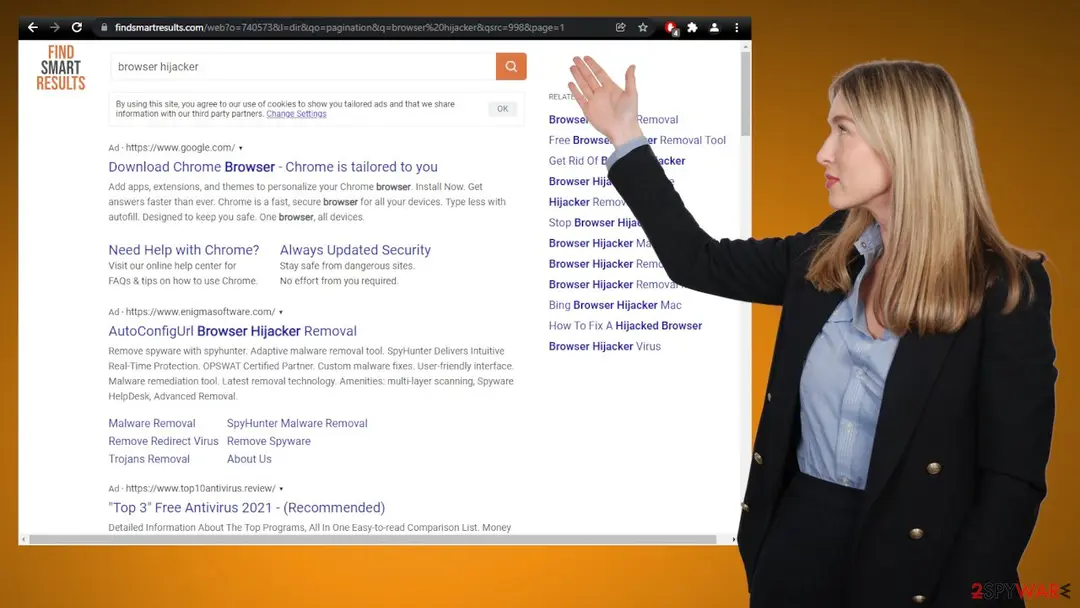
When you type something into the search of FindSmartResults, no matter how many pages you will click through, every one of them will have sponsored links. Because the developers have implemented their own search engine (which is rare for browser hijackers), they can inject any advertisements they want.
These links might be unsafe and lead to dangerous websites where people can get fooled by social engineering techniques into providing their personal information, downloading other PUPs, or even malware. Personal information disclosure to untrustworthy sources can lead to monetary losses and identity theft.
These methods are executed through various schemes like fake software updates, surveys, giveaways, virus infection warnings, and many others. That is why it is very important not to believe everything you see on the Internet, as scammers prey on less IT-savvy people.
From our report of Dec 2021 · not reviewed since
More from our earlier report on FindSmartResults
- Remove the extension via browser settings; performing a scan with professional security tools is recommended
How FindSmartResults got into your browser
From our report of Dec 2021 · not reviewed since
Even though we always tell our readers to download programs only from official sources, they are not completely safe too.
Many hijackers slip through the cracks during the review process and get listed on marketplaces like the chrome web store. That is why this is not enough anymore. Users have to do their own research, look for reviews, press releases, number of users and analyze the functionality of the app and decide if they really need it.
The issue is that extensions are very easy to add and users do that without thinking, looking into them more. It is only when the plugins are added it is sometimes hard to undo the changes depending on the severity. Of course, the main places where hijackers are spread are still shady websites that often engage in illegal activities.
For example, illegal streaming sites are rarely regulated so they are full of deceptive ads and sneaky redirects. Fake "Download" and "Play" buttons still exist even though a couple of years ago, Google said it would get rid of them. If users are careless and just click on them they can get redirected to scam sites or promotional pages for these types of add-ons.
How to remove FindSmartResults
How to remove FindSmartResults and get your search engine back
Remove the extension first.
The search settings only stay fixed once nothing on the PC can change them again.
Step 1: Remove extensions you did not add
In Chrome open
chrome://extensions, in Edgeedge://extensions, and in Firefox the menu > Extensions and themes.Remove every extension you do not remember adding, especially search, new tab, coupon, PDF, weather or video downloader add-ons. Check every browser and every profile, because each keeps its own list.
If an extension has no Remove button or comes back, a browser policy holds it (see "Managed by your organization" in the procedure below). The pages are the same on Windows 11 and Windows 10.
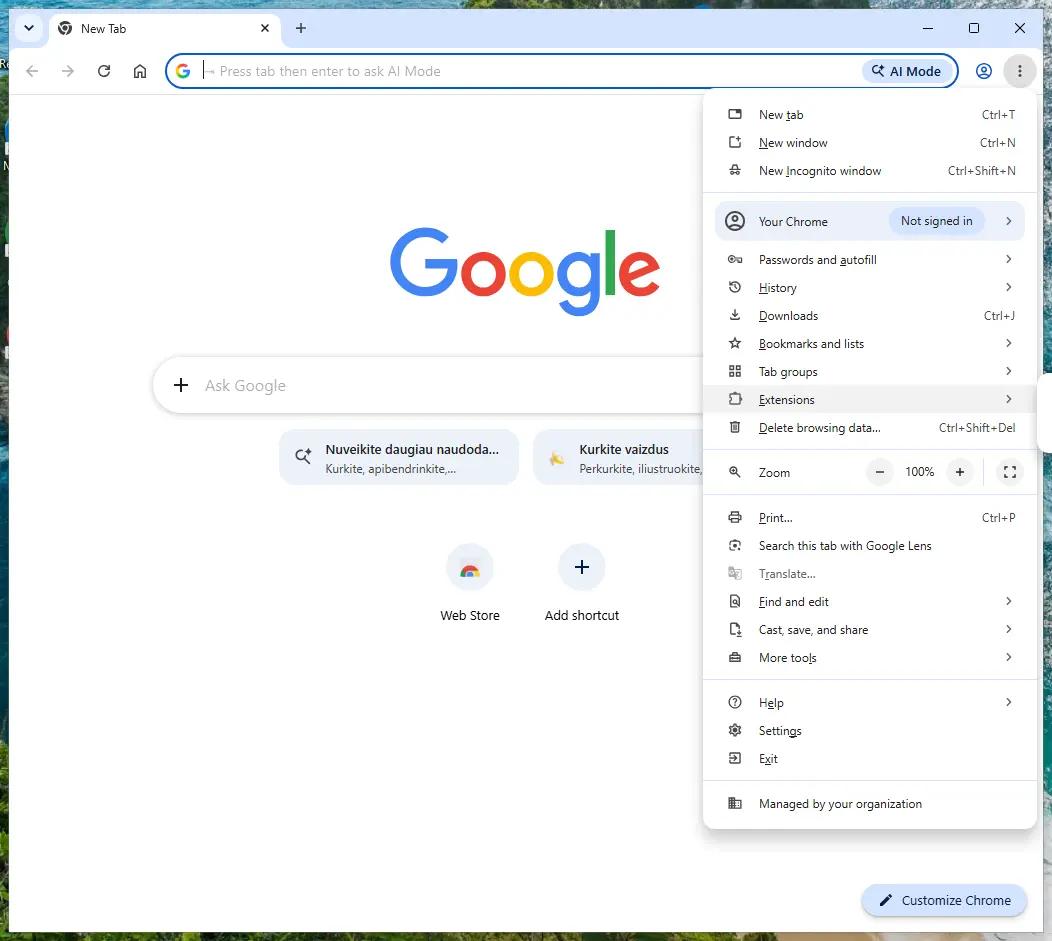
Chrome on Windows 11: More > Extensions > Manage extensions. Full procedure with screenshots: Remove a browser extension
Step 2: Put the search engine back
In Chrome open Settings > Search engine > Manage search engines and site search, make an engine you trust the default, and delete entries you did not add.
In Edge type
search engineinto the search box at the top of Settings and open Manage search engines; in Firefox use Settings > Search. Then check the homepage and the new tab page in the same settings, because hijackers change all three.If the wrong engine is back after a restart, an extension, a program or a policy still sets it, so finish the other steps and check again. The settings are the same on Windows 11 and Windows 10.
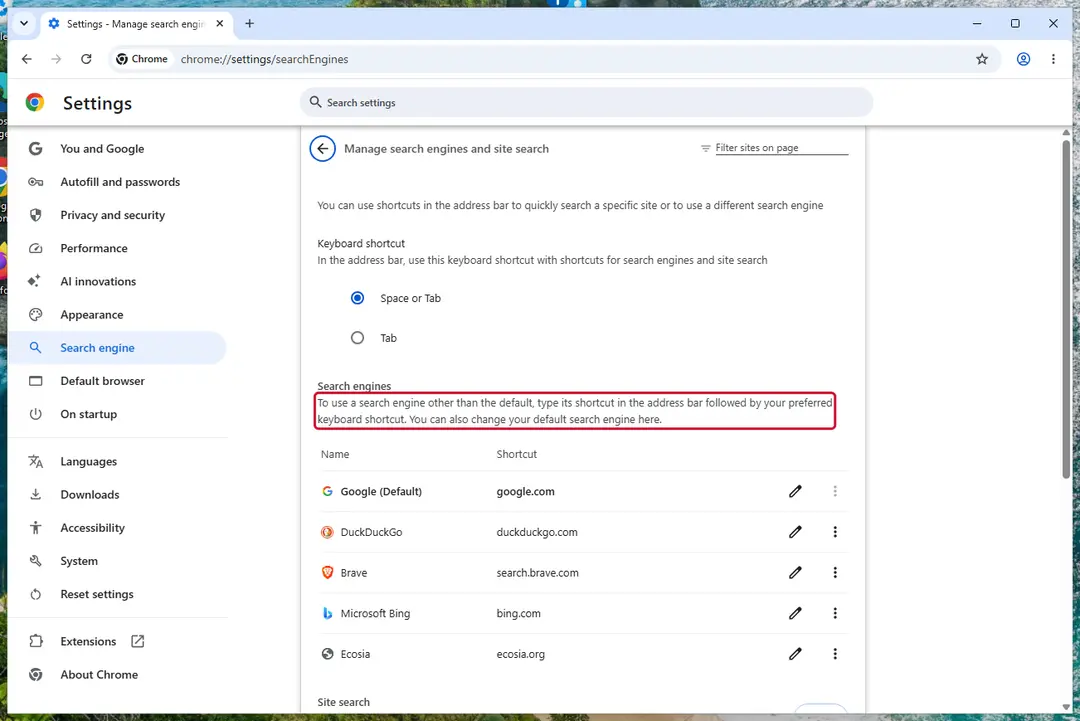
Chrome on Windows 11: check Search engine and On startup. Full procedure with screenshots: Reset a browser and fix a hijacked search engine
Step 3: Uninstall FindSmartResults
FindSmartResults is removed like any other program, from the list of installed apps. In Windows 11 that is Settings > Apps > Installed apps, in Windows 10 Settings > Apps > Apps & features, and in both you can also use Control Panel > Programs and Features.
Select FindSmartResults, click Uninstall and follow the uninstaller to the end. Then look at the entries just above and below it when the list is sorted by date: bundled programs install at the same minute.
Full procedure with screenshots: Uninstall a program or app in Windows On uGetFix
Step 4: Reset the browser
A reset removes what the steps above could miss:
- changed start pages
- site permissions
- hidden settings
In Chrome open Settings > Reset settings > Restore settings to their original defaults; in Edge Settings > Reset settings; in Firefox Help > More troubleshooting information > Refresh Firefox.
Tip: Bookmarks and saved passwords stay, while extensions are turned off and the search engine and start page return to the defaults.
Reset every browser on the PC, including Edge, which Windows 11 and Windows 10 always have.
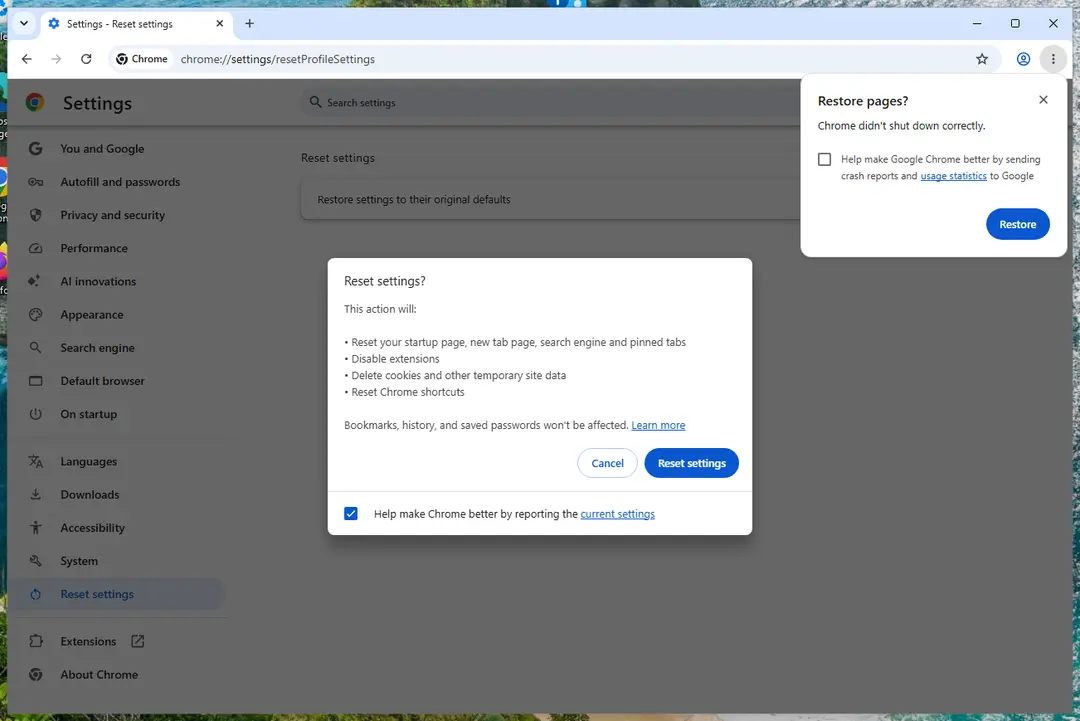
Chrome on Windows 11: Settings > Reset settings. Full procedure with screenshots: Reset a browser and fix a hijacked search engine
Step 5: Scan the PC, then run the offline scan
A scan finds the parts of FindSmartResults that the manual steps cannot see. In Windows Security > Virus & threat protection > Scan options, start a Full scan and quarantine what it reports.
Follow it with Microsoft Defender Antivirus (offline scan) > Scan now, which restarts the PC and checks the disk while Windows and the malware are not running.
It takes about 15 minutes and works the same in Windows 11 and Windows 10. If either scan finds something, run the full scan again after removal until it comes back clean.
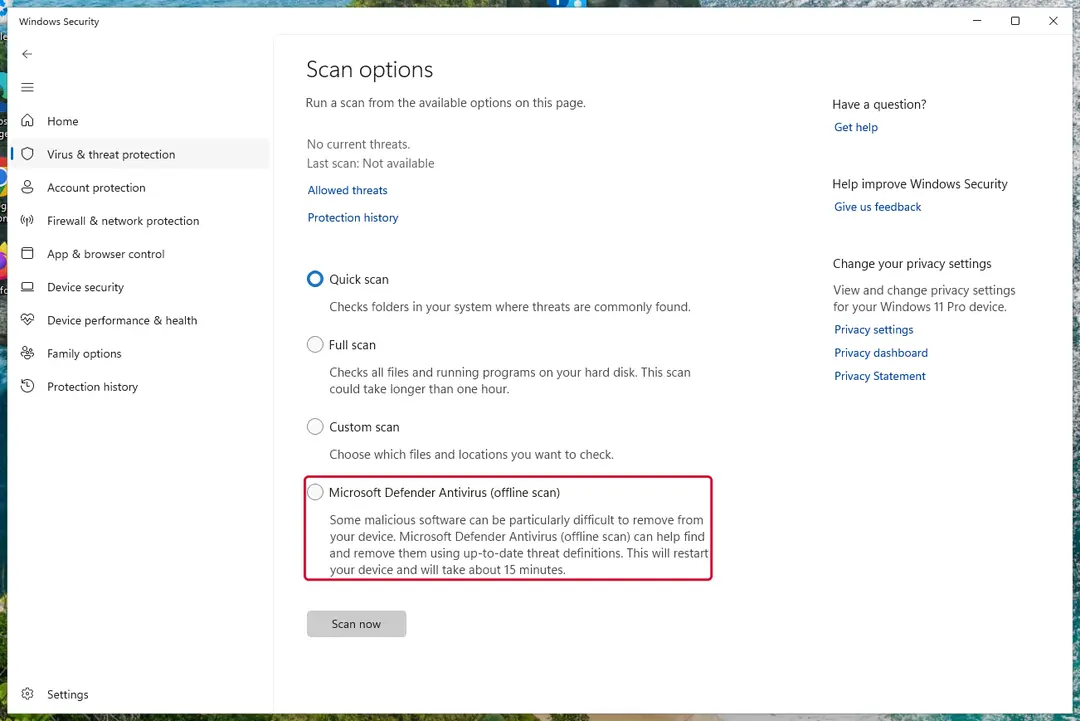
Windows 11: Windows Security > Virus & threat protection > Scan options. Full procedure with screenshots: Run a Microsoft Defender Offline scan
Do not let government spy on you
The government has many issues in regards to tracking users' data and spying on citizens, so you should take this into consideration and learn more about shady information gathering practices.
Avoid any unwanted government tracking or spying by going totally anonymous on the internet.
You can choose a different location when you go online and access any material you want without particular content restrictions. You can easily enjoy internet connection without any risks of being hacked by using VPN.
Control the information that can be accessed by government any other unwanted party and surf online without being spied on. Even if you are not involved in illegal activities or trust your selection of services, platforms, be suspicious for your own security and take precautionary measures by using the VPN service.
Backup files for the later use, in case of the malware attack
Computer users can suffer from data losses due to cyber infections or their own faulty doings.
Ransomware can encrypt and hold files hostage, while unforeseen power cuts might cause a loss of important documents. If you have proper up-to-date backups, you can easily recover after such an incident and get back to work. It is also equally important to update backups on a regular basis so that the newest information remains intact - you can set this process to be performed automatically.
When you have the previous version of every important document or project you can avoid frustration and breakdowns. It comes in handy when malware strikes out of nowhere. Use for the data restoration process.
From our report of Dec 2021 · not reviewed since
Remove the extension
You can remove the add-on the manual way, so you have to go to your browser settings.
We have provided instructions for the most frequently used browsers. Keep in mind that this removal method might not work if the changes are made by a potentially unwanted program hiding in your system. If this method does not work, proceed further:
MS Edge (Chromium)
- Open Google Chrome, click on the Menu (three vertical dots at the top-right corner) and select More tools > Extensions.
- In the newly opened window, you will see all the installed extensions. Uninstall all the suspicious plugins that might be related to the unwanted program by clicking Remove.
- Select Menu (three horizontal dots at the top-right of the browser window) and pick Extensions.
- From the list, pick the extension and click on the Gear icon.
- Click on Uninstall at the bottom.
- Open Edge and click select Settings > Extensions.
- Delete unwanted extensions by clicking Remove.
- Open Mozilla Firefox browser and click on the Menu (three horizontal lines at the top-right of the window).
- Select Add-ons.
- In here, select unwanted plugin and click Remove.
- Click Safari > Preferences...
- In the new window, pick Extensions.
- Select the unwanted extension and select Uninstall.
- Open Internet Explorer, click on the Gear icon (IE menu) on the top-right corner of the browser
- Pick Manage Add-ons.
- You will see a Manage Add-ons window. Here, look for suspicious plugins. Click on these entries and select Disable.
From our report of Dec 2021 · not reviewed since
Stop uninvited guests from performing unwanted changes
PUAs are mostly spread on freeware distribution sites with the method of software bundling.
It is always best to use official web stores because the risk of installing a bogus program is minimal. We know paying for software can get costly, so if you will continue to download free software there are precautionary steps you can take to prevent PUP invasion:
Anti-malware tools can help detect such applications that perform tasks without your knowledge. They can also be used to eliminate suspicious programs with all the related files. If manual removal is what you still prefer, we have instructions for Windows and Mac machines:
To fully remove an unwanted app, you need to access Application Support, LaunchAgents, and LaunchDaemons folders and delete relevant files:
- Always choose the "Custom" or "Advanced" installation methods
- Read the Terms of Use and Privacy Policy
- Untick the boxes next to files you do not need
- Have professional security software installed to perform system scans regularly
- Enter Control Panel into Windows search box and hit Enter or click on the search result.
- Under Programs, select Uninstall a program.
- From the list, find the entry of the suspicious program.
- Right-click on the application and select Uninstall.
- If User Account Control shows up, click Yes.
- Wait till uninstallation process is complete and click OK.
- Click on Windows Start > Control Panel located on the right pane (if you are Windows XP user, click on Add/Remove Programs).
- In Control Panel, select Programs > Uninstall a program.
- Pick the unwanted application by clicking on it once.
- At the top, click Uninstall/Change.
- In the confirmation prompt, pick Yes.
- Click OK once the removal process is finished.
- From the menu bar, select Go > Applications.
- In the Applications folder, look for all related entries.
- Click on the app and drag it to Trash (or right-click and pick Move to Trash)
- Select Go > Go to Folder.
- Enter /Library/Application Support and click Go or press Enter.
- In the Application Support folder, look for any dubious entries and then delete them.
- Now enter /Library/LaunchAgents and /Library/LaunchDaemons folders the same way and terminate all the related .plist files.
From our report of Dec 2021 · not reviewed since
Cookies track your browsing activities
Almost every website you visit uses cookies to gather information about your websites, links you click on, and purchases you make.
This data can be later sold to advertising networks that use it to target you with advertisements even more. Also, if you visit many websites that do not have strong security in place, cookies can be hacked and used for malicious purposes.
If you had your browser hijacked, you most likely visited some shady sites, which means it is unknown who has access to your cookies. It can be sold to third parties, and the owners of the pages will not be held responsible if you'll suffer some type of consequences for it.
So, after you remove the hijacker, it would be great to take care of your browsers because questionable web pages could still be following what you do on the internet. There is an automatic solution to this , which can also fix corrupted files, system errors and improve your device's performance which is very helpful after virus infections.
Questions about FindSmartResults
Can I safely uninstall FindSmartResults?
If you did not install FindSmartResults yourself and it is not part of your hardware or a program you rely on, yes. Uninstalling an unwanted program does not harm Windows. Before you do, search the exact name and publisher to be sure it is not a driver tool, a printer utility or a game launcher with an odd name.
Then remove it from Settings, Apps, Installed apps. Ignore any offers or warnings in its uninstaller about losing protection or performance. Afterwards check Startup apps and your browsers for leftovers, and restart once to confirm that it does not reinstall itself.
FindSmartResults will not uninstall. What can I do?
First restart the PC and try again, because the program may have been running and locked its own files. If the uninstaller is missing or fails, start Windows in Safe Mode, where most third-party programs do not start, and remove FindSmartResults from Installed apps there.
If it still refuses, delete its startup entry and its scheduled task, restart, and try once more. A program that actively prevents removal is behaving like malware, so finish with a Microsoft Defender offline scan. Avoid third-party uninstallers offered on search ads; several of them are unwanted programs themselves.
Why can't I change my search engine back?
Because something keeps setting it. If an extension controls the search engine, Chrome and Edge show a note that an extension is controlling this setting, and your change is reverted. If a policy controls it, the field is greyed out and the browser shows Managed by your organization.
Remove the extension first, then the policies, and only then change the search engine; the change will stay. If it still reverts, look for a program in Installed apps or a scheduled task that reinstalls the extension.
What do I lose if I reset Chrome or Edge?
Less than you might think. A reset turns off all extensions, which you can turn back on one by one, restores the default search engine, home page, new tab and pinned tabs, and clears cookies, so you are signed out of most sites.
Bookmarks, history, saved passwords and autofill data stay. Firefox's equivalent, Refresh Firefox, keeps the same essentials but removes add-ons completely. Before you reset, make sure you know your main passwords or have them saved, since you will need to sign in again.
Is only one browser affected?
Often not. Programs that install hijackers tend to change every browser they find, and sync can carry the extension to other computers signed in to the same browser account. Check Chrome, Edge and Firefox, even the ones you rarely use, and look at the shortcut targets on the desktop and taskbar for each.
If you use sync, remove the extension while signed in so the removal syncs too. Also check the On startup setting and the new tab page, because hijackers change those as well as the search engine.
What is FindSmartResults?
FindSmartResults is a browser hijacker that changes the main settings, like the homepage, new tab address, and search engine. Once it is added, the appearance and user experience are completely different and can cause a lot of frustration.
The summary table at the top of this guide lists the type, the detection names, the symptoms and the damage of FindSmartResults. Reading it first helps you decide whether your computer shows the same signs. The removal plan below it works in order, from the safest step to the more thorough ones.
Is FindSmartResults a virus?
Not in the strict sense: FindSmartResults is unwanted software, classed here as a search hijacker extension, not a self-copying virus. Security programs often label such software as adware, a potentially unwanted program or a browser hijacker.
It still needs removal, because it changes browser settings, shows ads and can lead you to unsafe pages. The larger risk is clicking an ad that leads to a fake update or scam page.
How did FindSmartResults get on my computer?
Our report lists the distribution as shady websites, deceptive ads, bundled software. Software of this kind often comes bundled with free programs, fake updates or downloads from unofficial sites.
It can also arrive through a browser extension or a notification you allowed on a spam page. Think back to what you installed or allowed just before the first ad or redirect appeared.
Will Fortect remove FindSmartResults?
Fortect scans Windows for malware and unwanted programs and repairs the system files and settings they change, and its free scan shows what it finds on your PC before you decide anything.
For FindSmartResults, follow the plan above as well: the browser steps take back permissions and settings that no scanner treats as a threat, and uninstalling the program that brought it removes the source.
Run Microsoft Defender's full scan and, if anything was found, its offline scan as a second opinion. If the symptoms are gone after the plan and both scans are clean, there is nothing more to do.
Sources
- Cisco: What Is Malware? (read October 7, 2026)
- Experian: What Is Identity Theft? (read October 7, 2026)
- Wikipedia: Freeware (read October 7, 2026)
- FTC: How to recognize, remove and avoid malware (read October 7, 2026)
- Microsoft Learn: Microsoft Defender Offline (read October 7, 2026)