
Freesamplesprousa.com e-mail scam: how to spot it and what to do
Freesamplesprousa.com is one of the millions of websites created by unfair individuals in order to scam visitors who end up there. The main goal of crooks is to extort personal user information, including contact information, in order to later target them with other scams.
Facts checked October 6, 2026. Removal steps tested on Windows 11 (26H2) and checked against Microsoft's and the browser makers' current documentation. Sections marked as our earlier report are the original text: they describe the threat as it was then and have not been reviewed since. The 2026 status, the removal steps and the questions are current.
Automatic
Get a free scan and check if your PC is infected.
Fortect finds malware, unwanted programs and the Windows damage they leave behind, and repairs it in one pass.
Do it yourself · free Remove Freesamplesprousa.com e-mail scam yourself 4 steps, about 12 minutes, no software needed.
Start the steps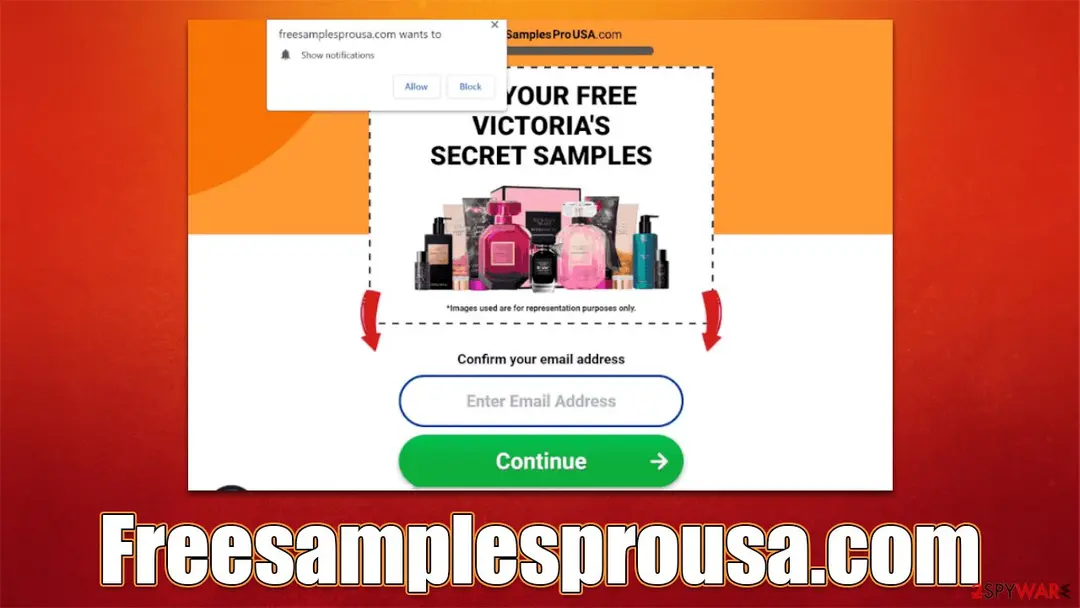
Freesamplesprousa.com e-mail scam: summary
| Distribution | Redirects, adware, or other infections |
|---|---|
| Damage | Installation of PUPs or malware, sensitive information disclosure, financial losses |
| Name | Freesamplesprousa.com |
| Type | Scam, fraud, phishing, redirect |
| Operation | Shows a misleading message that promises Victoria's Secret fragrance samples – users are asked to provide their personal information that can later be misused |
| Symptoms | A phishing e-mail asking you to sign in |
| Removal | Scan the PC with security software to find and remove the malware and anything installed with it. Fortect scans Windows for malware and repairs the system files and settings it damaged. Remove it nowTo use the full-featured product, you have to purchase a license for Fortect. The scan is free. |
Show 7 more facts
| Evidence | 4 write-ups by security sites; details still limited |
|---|---|
| Arrives as | |
| Pretends to be | Microsoft |
| Claim | Your account needs urgent attention |
| Asks for | Your password |
| First seen | 9 May 2022 |
| Facts checked | 6 October 2026 |
How to tell the Freesamplesprousa.com e-mail scam e-mail is fake
From our report of May 2022 · not reviewed since
- You should ensure that your system is adware and malware-free with
Is Freesamplesprousa.com e-mail scam dangerous? What the senders want
From our report of May 2022 · not reviewed since
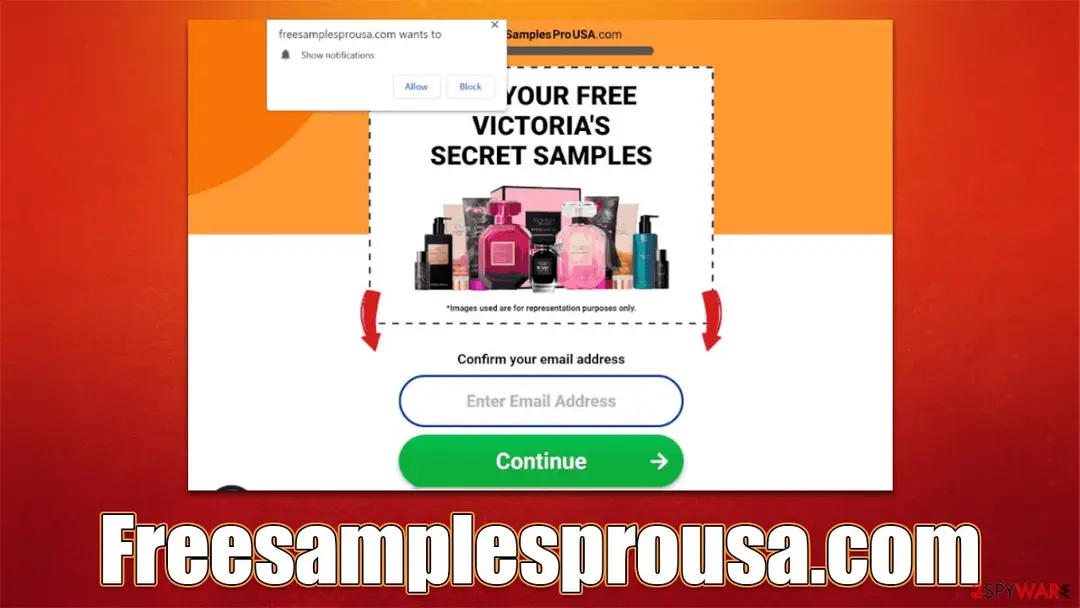
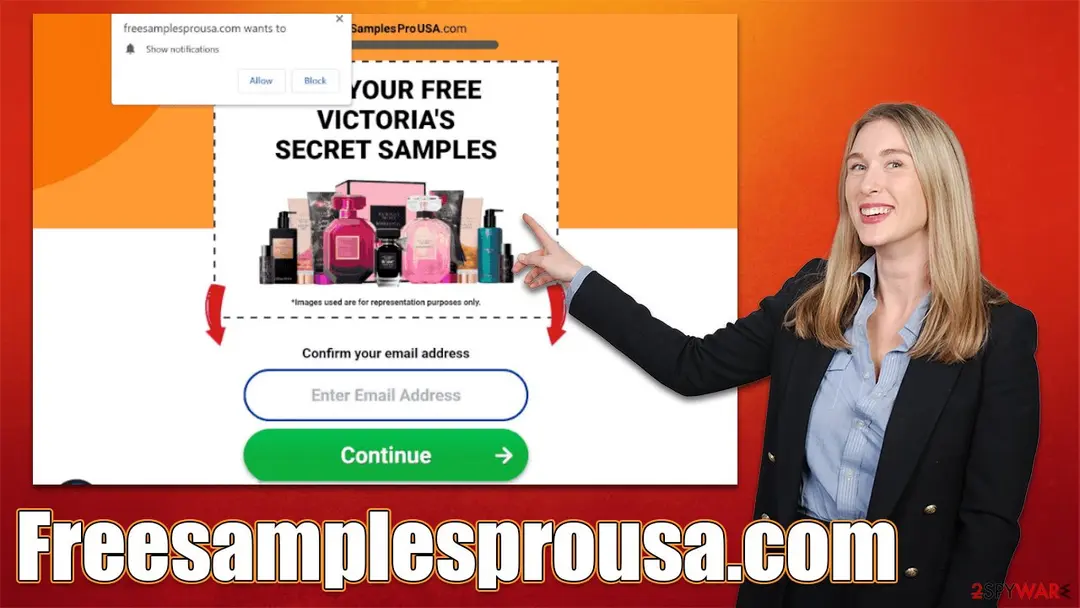
Freesamplesprousa.com is a fake website that promises Victoria's Secret samples in exchange for your personal information
Freesamplesprousa.com is one of the millions of websites created by unfair individuals in order to scam visitors who end up there.
The main goal of crooks is to extort personal user information, including contact information, in order to later target them with other scams. Crooks can also use it for various other malicious reasons, such as selling it to the highest bidder on the underground forums.
Users commonly enter Freesamplesprousa.com by accident after clicking a booby-trapped link on peer-to-peer, illegal video streaming, or similar high-risk websites (adware installed on the device could also sometimes cause users to encounter phishing content online more often). They are then immediately asked if they would like to get Victoria's Secret fragrance samples, allegedly for free.
Please do not interact with the Freesamplesprousa.com scam, as you might not only provide your sensitive information to unknown parties but also end up being redirected to other malicious sites, where you could be tricked into installing malware, subscribing to useless services or push notifications, or exposing even more of your information to hackers.
From our report of May 2022 · not reviewed since
Freesamplesprousa.com analysis
As mentioned, users frequently encounter Freesamplesprousa.com after clicking on a suspicious link somewhere else.
Usually, those who opt to visit websites of dubious nature are more likely to encounter online scams and phishing messages. Thus, if you intentionally access peer-to-peer and similar illegal websites, you should stay away from them in the first place, as they not only encompass malicious links but may also spread ransomware or other dangerous malware.
Once on the page, users are presented with what seems like a good offer - they could get free samples of an expensive brand's perfume. Many people then believe they got very lucky and can get these items for free. Believing in their success, they often do as they are told and enter the required information, which could be an email address or other personal data.
Freesamplesprousa.com website would also ask users to enable push notifications which, if allowed, would start sending some misleading ads and other messages later. We will explain how to deal with this unwanted activity down below. However, you should first perform a few checks and take care of your privacy.
From our report of May 2022 · not reviewed since
Tips if you have interacted with the scam message
Many users often realize that they have accessed a deceptive phishing website.
However, due to little-understood practices these scam sites use, people might immediately get concerned about whether their computer security and personal safety have been compromised.
First of all, if you haven't downloaded and installed anything from Freesamplesprousa.com, you are unlikely to be infected (unless there are software vulnerabilities present on your system - update all software with the latest security patches to mitigate this possible threat).
The second danger here is data disclosure. If you have entered your email, home address, phone number, or other personal information, beware that cybercriminals can use these means of communication to target you with further scams. For example, you are likely to receive phishing emails or spam calls.
What to do after the Freesamplesprousa.com e-mail
If you only received the message and clicked nothing, step 3 is all you need.
If you clicked the link or typed anything on the page it opened, do every step, starting with the password.
Step 1: Change the password you typed on the fake page
If you typed a password on the page the Freesamplesprousa.com message opened, assume the sender has it. Go to the real site by typing its address yourself and change the password there, choosing one you have never used.
Change it anywhere else the same password was used, and sign out all other sessions if the service offers it. Any browser on Windows 11 or Windows 10 will do, as long as you do not follow the e-mail's link.
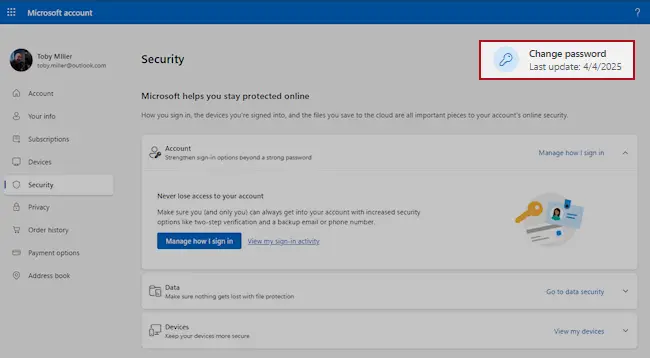
Microsoft account, Security page (account.microsoft.com/security): Change password. Full procedure with screenshots: Turn on two-step verification / secure a hacked account
Step 2: Turn on two-step verification
With two-step verification on, a stolen password alone no longer opens the account, because a sign-in from a new device also needs a code from your phone.
Switch it on for the e-mail account first, then for banking, shopping and social accounts that use that address.
Check the recovery phone, the recovery e-mail and any forwarding rules while you are in the settings, since attackers change them to come back. The pages are the same on Windows 11 and Windows 10.
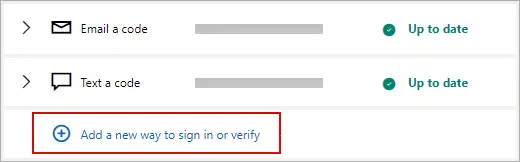
Microsoft account: Manage how I sign in, where two-step verification and the sign-in methods are. Full procedure with screenshots: Turn on two-step verification / secure a hacked account
Step 3: Report the e-mail and delete it
Do not reply and do not click anything else in the message. In Outlook select the e-mail and choose Report > Report phishing; in Gmail open the three-dot menu next to Reply and pick Report phishing.
That trains the filter for everyone on the service, and the message goes to the junk folder. If the e-mail came to a work address, forward it to your IT team as an attachment first.
The steps are the same in the web mail and the mail apps on Windows 11 and Windows 10.
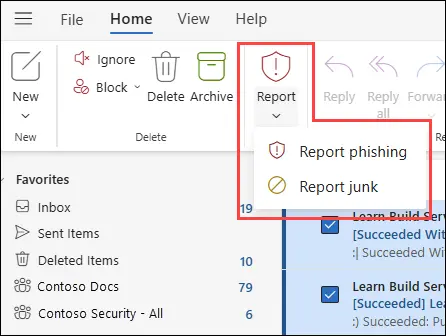
New Outlook for Windows and Outlook on the web: Report > Report phishing. Full procedure with screenshots: Report a phishing e-mail
Step 4: Scan the PC if you opened a file from the message
A fake sign-in page only steals what you type, so most readers can skip this step. If the Freesamplesprousa.com e-mail made you download or open a file, delete it and scan the PC.
In Windows Security > Virus & threat protection > Scan options, run a Full scan and then Microsoft Defender Antivirus (offline scan) > Scan now. The offline scan restarts Windows 11 or Windows 10 and takes about 15 minutes.
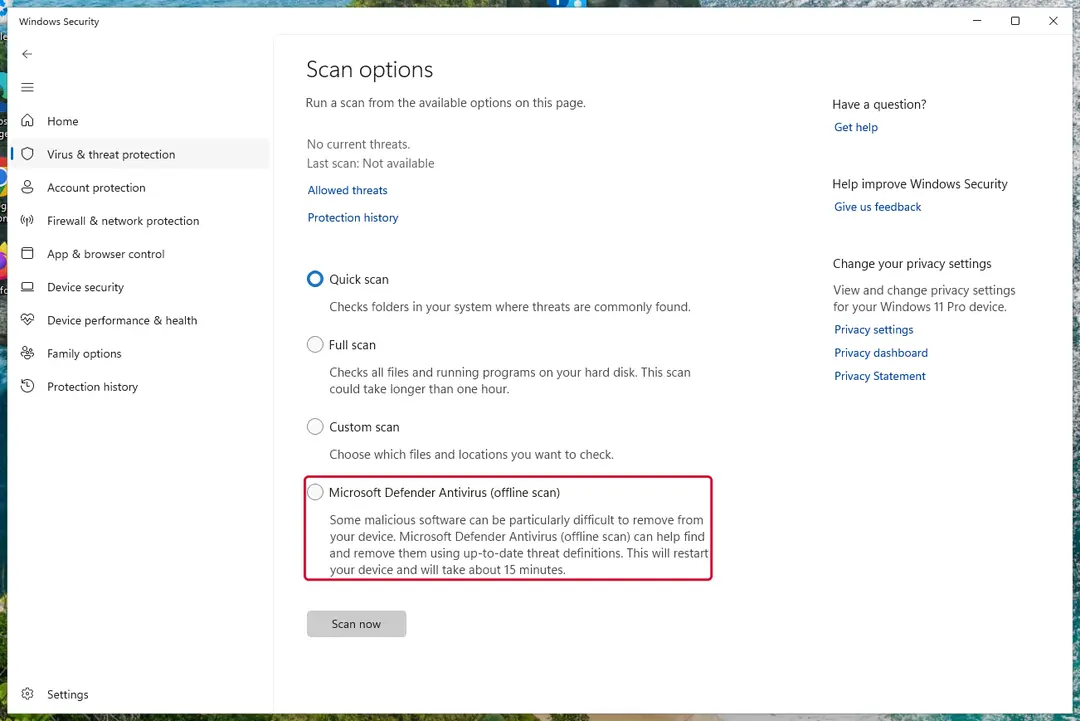
Windows 11: Windows Security > Virus & threat protection > Scan options. Full procedure with screenshots: Run a Microsoft Defender Offline scan
Choose a proper web browser and improve your safety with a VPN tool
Online spying has got momentum in recent years and people are getting more and more interested in how to protect their privacy online.
One of the basic means to add a layer of security - choose the most private and secure web browser. Although web browsers can't grant full privacy protection and security, some of them are much better at sandboxing, HTTPS upgrading, active content blocking, tracking blocking, phishing protection, and similar privacy-oriented features.
However, if you want true anonymity, we suggest you employ a powerful VPN - it can encrypt all the traffic that comes and goes out of your computer, preventing tracking completely.
Lost your files? Use data recovery software
While some files located on any computer are replaceable or useless, others can be extremely valuable.
Family photos, work documents, school projects - these are types of files that we don't want to lose. Unfortunately, there are many ways how unexpected data loss can occur:
- power cuts
- Blue Screen of Death errors
- hardware failures
- crypto-malware attack
- even accidental deletion
To ensure that all the files remain intact, you should prepare regular data backups. You can choose cloud-based or physical copies you could restore from later in case of a disaster. If your backups were lost as well or you never bothered to prepare any, can be your only hope to retrieve your invaluable files.
From our report of May 2022 · not reviewed since
Remove Freesamplesprousa.com redirects
Whenever you encounter a scam message online, the best thing to do is to ignore it and close down the browser tab immediately.
Regardless of whether your machine is affected by adware or malware, you should still make checks just to be sure, especially if you frequent insecure websites.
For example, if you have recently installed a media player and have noticed more ads than usual, you should get rid of it at once.
While moving apps into Trash is how you delete most normal applications, adware tends to create additional files for persistence. Thus, you should look for .plist and other files that could be related to the virus. If you are not sure, skip this step entirely.
To fully remove an unwanted app, you need to access Application Support, LaunchAgents, and LaunchDaemons folders and delete relevant files:
Once done, you should then remove unwanted browser extensions - these can be found within the Settings menu or simply by pressing the "Extensions" button to the right of the URL bar and then selecting "Remove" or "Uninstall."
In order to remove trackers such as cookies, you should clean your browser caches. If you would rather skip this step, you should consider using the repair and maintenance utility that can greatly help you to clean up your machine after PUP or malware infection easily.
MS Edge (Chromium)
After performing all these steps, your computer should be clean. However, if you are still seeing Freesamplesprousa.com ads, you might have enabled push notifications from the website by accident. Security software won't be able to remove these, so you have to access browser settings and block the site manually:
MS Edge (Chromium):
- Enter Control Panel into the Windows search box and hit Enter or click on the search result.
- Under Programs, select Uninstall a program.
- From the list, find the entry of the suspicious program.
- Right-click on the application and select Uninstall.
- If User Account Control shows up, click Yes.
- Wait till the uninstallation process is complete and click OK.
- From the menu bar, select Go > Applications.
- In the Applications folder, look for all related entries.
- Click on the app and drag it to Trash (or right-click and pick Move to Trash)
- Select Go > Go to Folder.
- Enter /Library/Application Support and click Go or press Enter.
- In the Application Support folder, look for any dubious entries and then delete them.
- Now enter /Library/LaunchAgents and /Library/LaunchDaemons folders the same way and terminate all the related .plist files.
- Click the Menu and pick Settings.
- Under Privacy and security, select Clear browsing data.
- Select Browsing history, Cookies and other site data, as well as Cached images and files.
- Click Clear data.
- Click Menu and pick Options.
- Go to Privacy & Security section.
- Click on Clear Data...
- Select Cookies and Site Data, as well as Cached Web Content and press Clear.
- Click on Menu and go to Settings.
- Select Privacy and services.
- Under Clear browsing data, pick Choose what to clear.
- Under Time range, pick All time.
- Select Clear now.
- Click Safari > Clear History...
- From the drop-down menu under Clear, pick all history.
- Confirm with Clear History.
- Open Google Chrome browser and go to Menu > Settings.
- Locate the Privacy and security section and pick Site Settings > Notifications.
- Look at the Allow section and look for a suspicious URL.
- Click the three vertical dots next to it and pick Block. This should remove unwanted notifications from Google Chrome.
- Open Mozilla Firefox and go to Menu > Options.
- Click on Privacy & Security section.
- Under Permissions, you should be able to see Notifications. Click the Settings button next to it.
- In the Settings – Notification Permissions window, click on the drop-down menu by the URL in question.
- Select Block and then click on Save Changes. This should remove unwanted notifications from Mozilla Firefox.
- Open Microsoft Edge, and go to Settings.
- Select Site permissions.
- Go to Notifications on the right.
- Under Allow, you will find the unwanted entry.
- Click on More actions and select Block.
- Click on Safari > Preferences...
- Go to the Websites tab and, under General, select Notifications.
- Select the web address in question, click the drop-down menu and select Deny.
Questions about Freesamplesprousa.com e-mail scam
Could Freesamplesprousa.com be a genuine message?
We checked it, and it is not. Microsoft is only the costume. The message exists to get your password, and real companies handle that inside your account, after you sign in normally, not through links, attachments or phone numbers in a message you did not expect.
Scammers copy logos and footers perfectly, so the design proves nothing. The sender address, the link target and the request are the reliable signs, and all three point to a scam here. Delete it, and if you are worried, check your account directly.
Why does Freesamplesprousa.com say that your account needs urgent attention?
Because that story works. A problem that needs fixing, a deadline and a simple solution make people act before they check.
The claim that your account needs urgent attention is the same for everyone who received Freesamplesprousa.com; it was written once and sent in bulk. Nothing about your own situation triggered it.
If you are unsure, look at the real account or service the normal way, without using the message. The claim will not be there, which settles the question. Then report the message.
What does Freesamplesprousa.com want from me?
In the end, your password. Everything else in Freesamplesprousa.com, from the logo to the deadline, is there to get you to that point without stopping to think. Knowing the goal helps you judge your risk.
If you did not give it, you lost nothing and can delete the message. If you did, the steps in this guide are ordered by what you handed over:
- passwords first
- then card and bank details
- then documents and anything you installed
- ran
Act on the highest item on that list first.
How do I contact the real Microsoft?
Not through anything in Freesamplesprousa.com. Type the official website address into the browser yourself, use the app you already have, or use the phone number printed on your card, contract or a previous genuine invoice.
Search results can be risky too, because scammers buy ads for support numbers. Once you reach the real Microsoft, you can ask whether there is any problem with your account and report the scam message; many companies have a dedicated address for phishing reports on their security page.
Can I trick the scammers or waste their time?
Better not. Replying to Freesamplesprousa.com confirms that your address or number is live and puts it on lists that sell for more. Scammers who are teased sometimes switch to harassment or try to use any detail you reveal, such as your name, employer or location.
Playing along also risks a slip, like opening a link or a file they send. Report the message, block the sender and delete it. Your report does more damage to the operation than a conversation would.
Why did I receive Freesamplesprousa.com?
Scam messages go to millions of addresses and numbers collected from data breaches, public websites and simple guessing. Receiving Freesamplesprousa.com does not mean your PC is infected or that an account of yours was hacked.
If the message includes an old password of yours, it comes from a breach of some website; change that password wherever you still use it. Mark the message as spam or phishing so your provider blocks similar ones. Never reply to ask to be removed from the list: the sender treats a reply as proof that the address works.
I entered my password on the fake page. What should I do?
Change the password on the real site right away, through its own website or app, and sign out of all sessions.
If you use the same password anywhere else, change it there too. Turn on two-step verification with an authenticator app or a passkey. Check the account for changes:
- recovery e-mail
- phone number
- forwarding rules
- recently sent messages
If you can no longer sign in, use the provider's account recovery page. Tell your contacts if the account sent messages in your name.
I opened the message. Is my computer infected?
Opening and reading a message is safe in modern mail apps and browsers; images and text do not install anything by themselves. Your PC is at risk only if you opened an attachment, ran a downloaded file, or followed instructions to paste a command or install a program.
If you did none of that, delete the message and move on. If you did, disconnect from the internet and run a full scan and the Microsoft Defender offline scan. Do not reply to the sender or click links in the message later either.
What is the single best habit against scams like this?
Never act on a message through the message itself. If something claims to be from Microsoft and asks you to sign in, pay, call or open a file, close it and go to the service the way you always do:
- a bookmark
- the app
- the number on your card
Real problems will be visible there. This one habit defeats almost every phishing, invoice, delivery and account-suspension scam, regardless of how convincing the design is, because the scammers can copy the look but not the real account.
Will Fortect remove Freesamplesprousa.com?
Fortect scans Windows for malware and unwanted programs and repairs the system files and settings they change, and its free scan shows what it finds on your PC before you decide anything.
For Freesamplesprousa.com, follow the plan above as well: the browser steps take back permissions and settings that no scanner treats as a threat, and uninstalling the program that brought it removes the source.
Run Microsoft Defender's full scan and, if anything was found, its offline scan as a second opinion. If the symptoms are gone after the plan and both scans are clean, there is nothing more to do.
Sources
- Wikipedia: Peer-to-peer (read October 6, 2026)
- Imperva: Ransomware (read October 6, 2026)
- JFrog: What is a Software Vulnerability? (read October 6, 2026)
- FTC: How to recognize and avoid phishing scams (read October 6, 2026)
- CISA: Recognize and report phishing (read October 6, 2026)