
GlobeImposter 2.0 ransomware virus: what it is and how to remove it
GlobeImposter 2.0 is a file-encrypting virus that is an updated version of Globe Imposter. The previous ransomware is a copycat of Globe ransomware.
Facts checked October 6, 2026. Removal steps tested on Windows 11 (26H2) and checked against Microsoft's and the browser makers' current documentation. Sections marked as our earlier report are the original text: they describe the threat as it was then and have not been reviewed since. The 2026 status, the removal steps and the questions are current.
Automatic
Get a free scan and check if your PC is infected.
Fortect finds malware, unwanted programs and the Windows damage they leave behind, and repairs it in one pass.
A free scan checks for the encryptor still on the PC; it does not decrypt .dragon4444 files.
Do it yourself · free Remove GlobeImposter 2.0 ransomware virus yourself 6 steps, about 18 minutes, no software needed.
Start the steps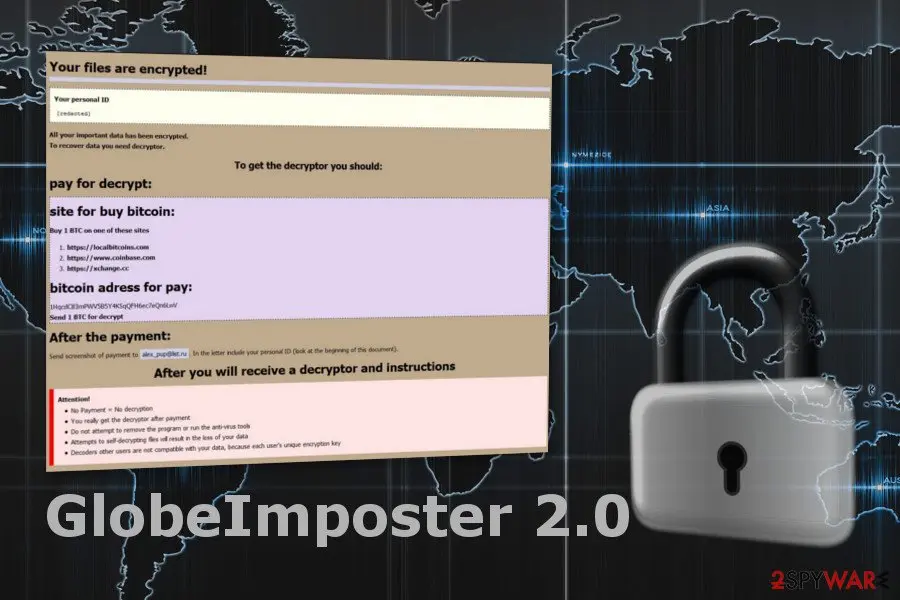
GlobeImposter 2.0 ransomware virus: summary
| .bad; .BAG; .FIX; .FIXI; .legally; .keepcalm; .pizdec; .virginlock[byd@india.com]SON; .[xalienx@india.com]; .725; | .ocean; .rose; .GOTHAM; .HAPP; .write_me_[btc2017@india.com]; .726; .490; .skunk; .crypted! .Dragon4444 |
|---|---|
| Detection names | No Microsoft detection name is known |
| Ransom note | HOW_OPEN_FILES.hta |
| Contact | mattpear@protonmail.com, China.helper@aol.com, alex_pup@list.ru |
| Encrypted file extension | .dragon4444 |
| Decryptor | No free decryptor is known for this variant; check No More Ransom (nomoreransom.org) for updates |
| Removal | Scan the PC with security software to find and remove the malware and anything installed with it. Fortect scans Windows for malware and repairs the system files and settings it damaged. Remove it nowTo use the full-featured product, you have to purchase a license for Fortect. The scan is free. |
Show 11 more facts
| Distribution | Not recorded in the old report |
|---|---|
| Damage | Not recorded in the old report |
| Name | GlobeImposter 2.0 ransomware virus |
| Type | File-encrypting ransomware |
| Symptoms | Files renamed with a new extension and a ransom note left in folders |
| Evidence | 7 write-ups by security sites; no sample analysed yet |
| Encrypted files | .dragon4444 |
| Attacker contacts | mattpear@protonmail.com |
| Free decryptor | No free decryptor is known (checked 6 October 2026) |
| First seen | 11 January 2021 |
| Facts checked | 6 October 2026 |
- File extension:
.dragon4444 - Note file:
HOW_OPEN_FILES.hta - Contact:
mattpear@protonmail.com
From our report of Jan 2021 · not reviewed since
More from our earlier report on GlobeImposter 2.0 ransomware virus
- .{mattpear@protonmail.com}MTP is the latest one.
- The virus can also append extensions such as .rose, .ocean, .pizdec, .Dragon4444 etc.
- Unsafe pages, spam messages, and their infected payload
- Some files can be recovered with the original decryptor
- can help you by detecting malicious content in the infected system
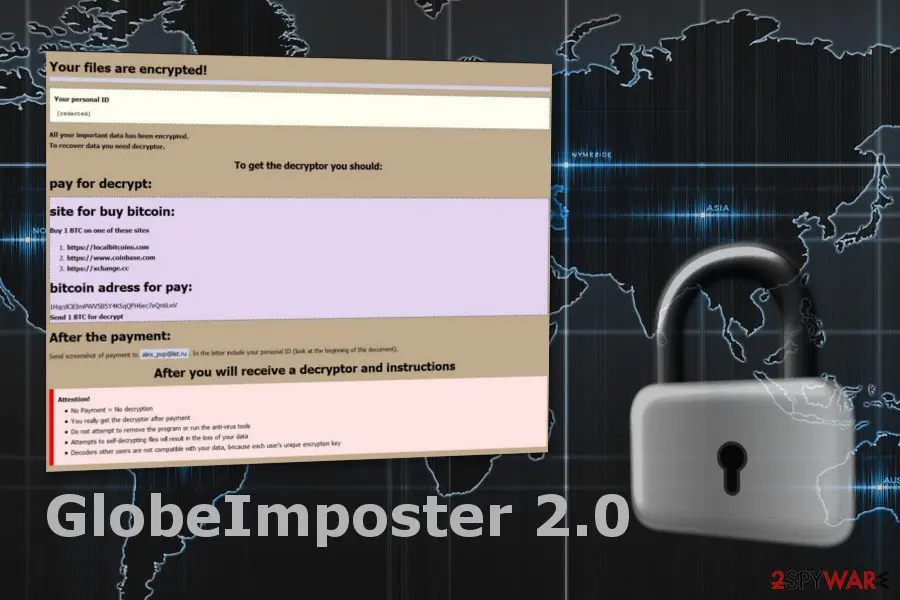
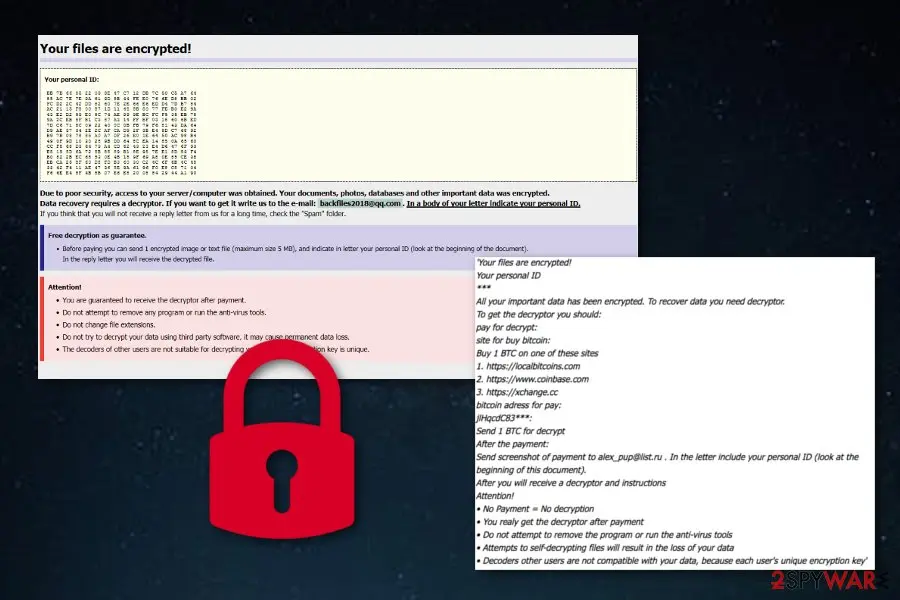
- Your personal ID *** All your important data has been encrypted.
- To get the decryptor you should: pay for decrypt: site for buy bitcoin: Buy 1 BTC on one of these sites 1.
- https://xchange.cc bitcoin adress for pay: jlHqcdC83***: Send 1 BTC for decrypt After the payment: Send screenshot of payment to alex_pup@list.ru .
- In the letter include your personal ID (look at the beginning of this document).
- After you will receive a decryptor and instructions Attention!
- • No Payment = No decryption • You realy get the decryptor after payment • Do not attempt to remove the program or run the anti-virus tools • Attempts to self-decrypting files will result in the loss of your data • Decoders other users are not compatible with your data, because each user's unique encryption key'
How GlobeImposter 2.0 ransomware virus behaves
From our report of Jan 2021 · not reviewed since
GlobeImposter 2.0 ransomware is a dangerous old cryptovirus that keeps spreading in 2021
GlobeImposter 2.0 is a file-encrypting virus that is an updated version of Globe Imposter.
The previous ransomware is a copycat of Globe ransomware. This file-encrypting malware has numerous versions, and the recent one was detected in March 2019. Once installed on the system, GlobeImposter 2.0 virus might bring the cmd.exe file to the system, inject dubious registry keys in the Windows Registry, and starts encrypting all data that is found on the infected computer system.
The most recent variant of this ransomware appends the .{mattpear@protonmail.com}MTP extension to each locked document. It also delivers a ransom message to inform the user about the secret encryption and discuss all matters about the decryption key's price. If you are infected with this dangerous ransomware, you are very likely to receive a message named HOW_OPEN_FILES.hta or how_to_back_files.html.
It is also known for other very active file extensions added to the encrypted files. One of the most widespread was .Dragon4444 file extension that has encrypted thousands of victim files and left them helplessly reading the note saying
The appearance of new versions of GlobeImposter 2.0 is related to the fact that malware researchers immediately crack the code of ransomware and create decryption software. Thus, criminals have nothing else left to do, just to try again. The first poor copy of Globe was quickly beaten by the security team from the Emsisoft .
Experts found the flaw in the virus' code and used it to create a decryption software. The second version of the ransomware continues the work of the predecessor. However, crooks created several more updates for Globe Imposter and they have been spreading throughout the Internet sphere nowadays.
Globe Imposter 2.0 virus aims at 34 file types, including documents, text files, pictures, multimedia, etc. Using AES cryptography, it locks targeted files with one of these files extensions:
The original version of Globe Imposter 2 present data recovery instructions in HOW_OPEN_FILES.hta file which is dropped on the system as soon as encryption process is over. However, other variants might use different names of a ransom note. For instance, the latest version delivers the how_to_back_files.html file.
In the ransom note, crooks demand to pay from 1 to 10 Bitcoin and send a screenshot to the alex_pup@list.ru. However, security experts noticed that cybercriminals use numerous other emails to communicate with the victims. Some of them might be:
The GlobeImposter 2.0 ransomware ransom message looks like this:
However, after GlobeImposter 2.0 ransomware attack, we do not recommend rushing to learn everything about buying and transferring demanded Bitcoins . We clearly understand that paying the ransom may seem like the only possibility to get back all your pictures, photos, audio or movie collections, or other important documents. However, there are many cases when developers of the ransomware took the money and left victims without their files.
In order to save money, you should concentrate on the GlobeImposter 2.0 removal instead of data recovery. The previous version was quickly decrypted; hence, the chances are high that the decrypter for the second variant will be created as well. Meanwhile, you can use alternative recovery methods.
The only safe way to remove GlobeImposter 2.0 virus is to employ professional security software. We highly suggest dedicating this task for . If you cannot install or update the security tool, you have to disable this crypto-malware first. The instructions at the end of the article will show you how to do it.
- keepcalmpls@india.com;
- happydaayz@aol.com;
- strongman@india.com;
- byd@india.com;
- xalienx@india.com;
- 511_made@cyber-wizard.com;
- btc.me@india.com;
- parbergout@keemail.me;
- parbergout@india.com.
From our report of Jan 2021 · not reviewed since
Malicious spam emails are the main ransomware distribution method
The majority of the file-encrypting viruses use the same distribution campaigns, and malicious spam emails stay the number one method.
Many computer users still cannot differentiate between safe and infected emails . Indeed, sometimes cyber criminals manage to create perfect copies of official emails.
However, safe emails rarely end up in the spam folder. What is more, fake emails often lack credentials, have lots of grammar or spelling mistakes, and might be sent from a suspicious email address. The affected emails usually have subject lines or attached documents named as "Payment Receipt," "Invoice," "Voice Message Attached" or "Scanned Image." Thus, always double-check the information before opening these files.
Globe Imposter 2.0, as well as other ransomware viruses, might spread via infected websites, malware-laden ads or exploit kits too. Therefore, you should not visit suspicious and potentially dangerous sites, avoid clicking ads that offer great deals and especially software updates or downloads. Lastly, strengthen your computer's privacy by installing a reliable antivirus program.
The GlobeImposter 2.0 ransomware virus ransom note
YOUR FILES ARE ENCRYPTED !!!
TO DECRYPT, FOLLOW THE INSTRUCTIONS:
To recover data you need decrypt tool.
To get the decrypt tool you should:
1.In the letter include your personal ID! Send me this ID in your first email to me!
2.We can give you free test for decrypt few files (NOT VALUE) and assign the price for decryption all files!
3.After we send you instruction how to pay for decrypt tool and after payment you will receive a decryption tool!
4.We can decrypt few files in quality the evidence that we have the decoder.
DO NOT TRY TO DO SOMETHING WITH YOUR FILES BY YOURSELF YOU WILL BRAKE YOUR DATA !!! ONLY WE ARE CAN HELP YOU! CONTACT US:
China.helper@aol.com
How to remove GlobeImposter 2.0 ransomware virus
Tools you'll need
All of these are free except where noted. Download them on a clean device if the infected PC is offline.
- A USB stick: to keep the ransom note, two or three encrypted files and screenshots off the infected PC.
- Microsoft Defender Offline: built into Windows 11 and Windows 10; scans before Windows starts, so running malware cannot hide.
- Microsoft Safety Scanner: a second, portable scanner with current signatures; each download works for 10 days.
- ID Ransomware: identifies the family from the note and one encrypted file and says whether a decryptor exists.
- No More Ransom: the free decryptors from police and security companies; check it again every few months.
- Fortect (optional): scans Windows for malware and repairs the system files and settings it damaged. The free scan is in the box above.
How to remove GlobeImposter 2.0 ransomware virus and get your files back
Work in this order.
Disconnecting comes first, removal comes before any restore, and nothing here asks you to contact the attackers.
Step 1: Disconnect the PC and unplug backup drives
Unplug the network cable or turn off Wi-Fi, and disconnect USB drives, external disks and network shares, so GlobeImposter 2.0 ransomware virus cannot reach more files. Pause OneDrive, Google Drive or Dropbox sync, because synced folders upload the encrypted copies over the good ones.
Leave the PC on but offline while you read the next steps, since a restart can let the ransomware run again. This applies to Windows 11 and Windows 10 alike.
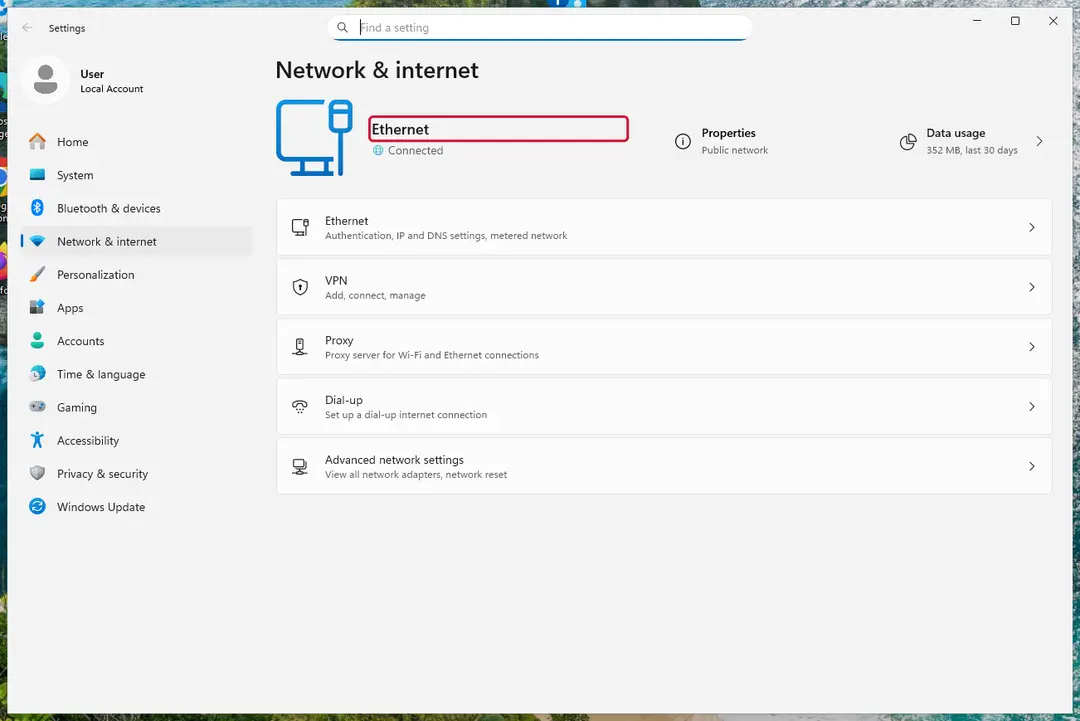
Windows 11: turn off Wi-Fi to take the PC offline. Full procedure with screenshots: Ransomware: first steps, finding a decryptor and recovering files
Step 2: Save the ransom note and confirm the family
Your files now end in
.dragon4444and the instructions are inHOW_OPEN_FILES.hta. Save both to a USB stick, a copy of the note and two small encrypted files, before anything else.On another device, check them with ID Ransomware or Crypto Sheriff: the family name decides which decryptor, if any, can help. Keep the note's ID and contact line for your report.
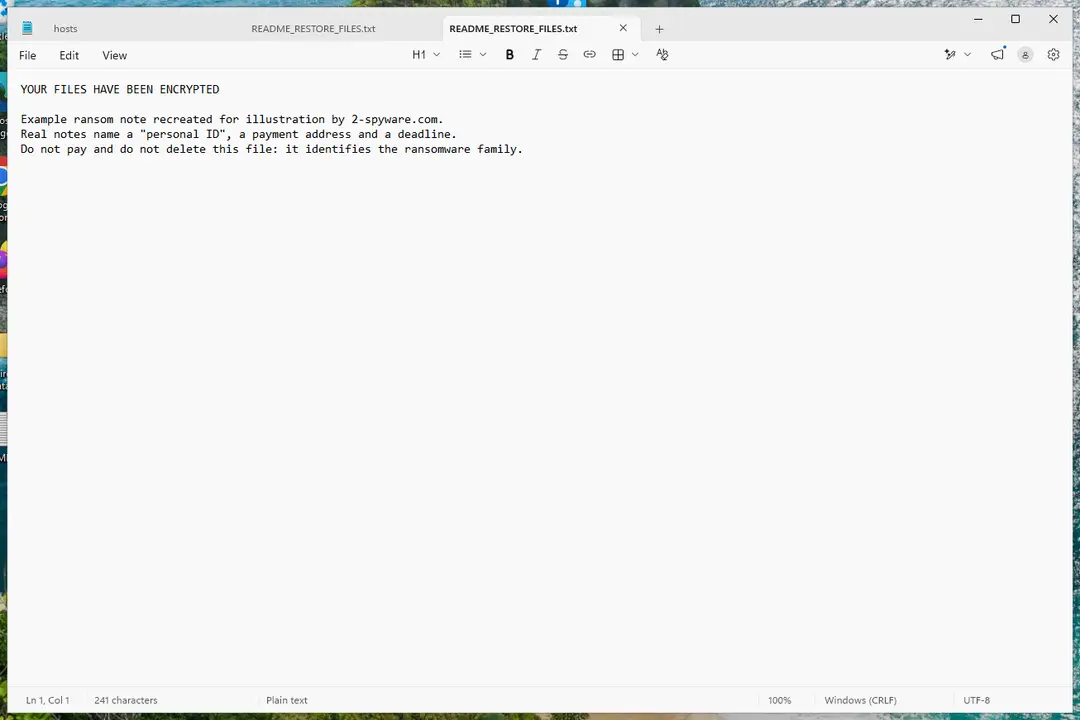
Windows 11: the ransom note and encrypted files to copy for identification. Full procedure with screenshots: Ransomware: first steps, finding a decryptor and recovering files
Step 3: Check for a free decryptor
Our last check found that for GlobeImposter 2.0 ransomware virus, no free decryptor is known (checked 6 October 2026). Look again yourself in the No More Ransom list and the free decryptor pages of Emsisoft, Avast and Kaspersky, which add new families every year.
A decryptor needs the ransomware gone first, or it encrypts the files again. Keep at least one copy of the encrypted files on an external drive, even if no tool works yet.
Full procedure with screenshots: Ransomware: first steps, finding a decryptor and recovering files
Step 4: Remove the ransomware before you restore or decrypt
Removing GlobeImposter 2.0 ransomware virus does not bring the files back, but it has to come first. Start with Defender's Full scan, then the offline scan from the same Scan options page, which checks the disk before Windows loads.
If the scan cannot start, use Safe Mode with Networking. Delete the ransom notes only after you have saved a copy, because removal tools sometimes leave them behind on Windows 11 and Windows 10.
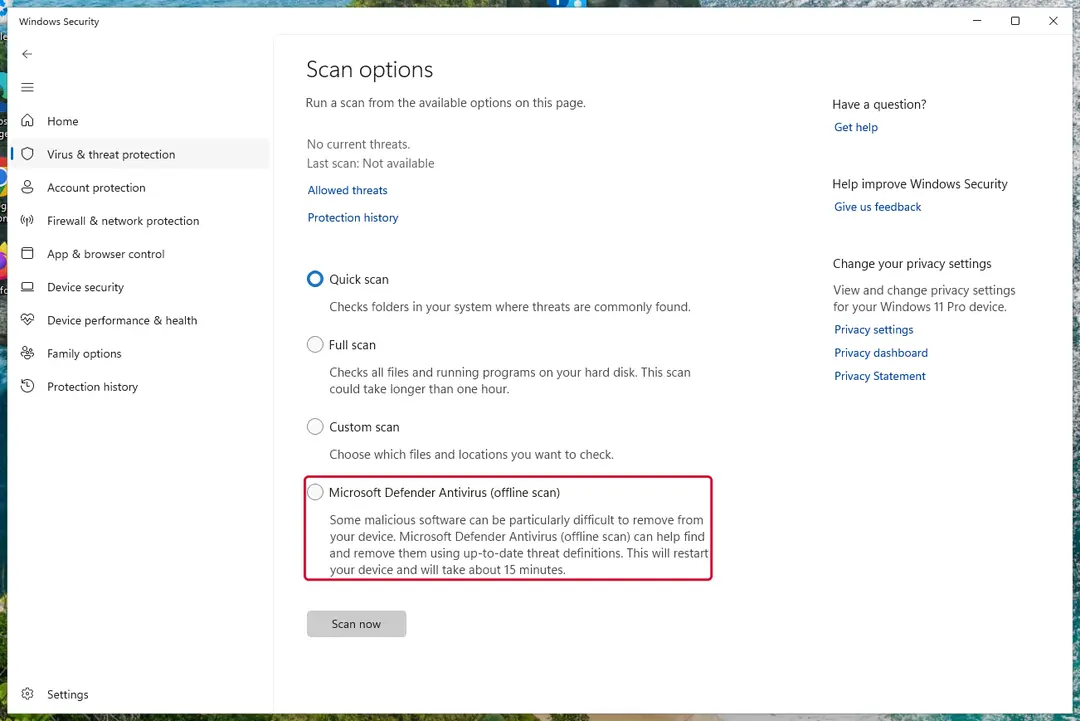
Windows 11: Windows Security > Virus & threat protection > Scan options. Full procedure with screenshots: Run a Microsoft Defender Offline scan
Step 5: Look for shadow copies of the files
Windows keeps shadow copies for restore points and backups, and some ransomware fails to delete them.
vssadmin list shadowsin an administrator Command Prompt tells you at once whether any exist.If they do, right-click the folder that held your files, open Properties > Previous Versions, select a version from before the attack, and click Open to check it before you Restore or copy the files out. Windows 11 and Windows 10 both have the tab.
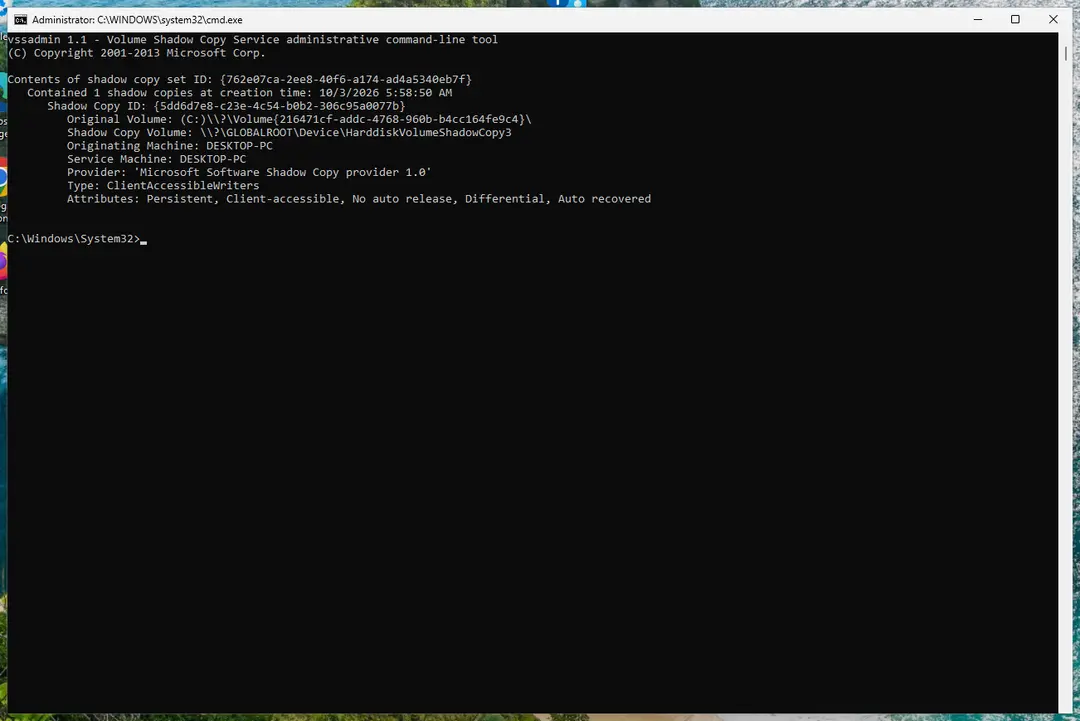
Windows 11: vssadmin list shadows shows whether shadow copies exist. Full procedure with screenshots: Ransomware: first steps, finding a decryptor and recovering files
Step 6: Restore the files from a backup or recover deleted originals
A backup made before the attack is the surest way back. Connect it only once the PC is clean, then restore from File History, Windows Backup, OneDrive's Restore your OneDrive or your own external copies.
Without a backup, try file recovery: the originals that GlobeImposter 2.0 ransomware virus deleted may still be on the disk until something overwrites them. Install nothing new on the drive you want to recover from on the Windows 11 or Windows 10 PC.
Full procedure with screenshots: Recover deleted files (Recycle Bin, backups, OneDrive) On uGetFix
Instructions for each browser and system
The detailed steps for every browser and system this guide covers. Open the one you use.
Manual removal using Safe Mode
Important! →
Manual removal guide might be too complicated for regular computer users. It requires advanced IT knowledge to be performed correctly (if vital system files are removed or damaged, it might result in full Windows compromise), and it also might take hours to complete. Therefore, we highly advise using the automatic method provided above instead.
Step 1. Access Safe Mode with Networking
Manual malware removal should be best performed in the Safe Mode environment.
Windows 7 / Vista / XP
- Click Start > Shutdown > Restart > OK.
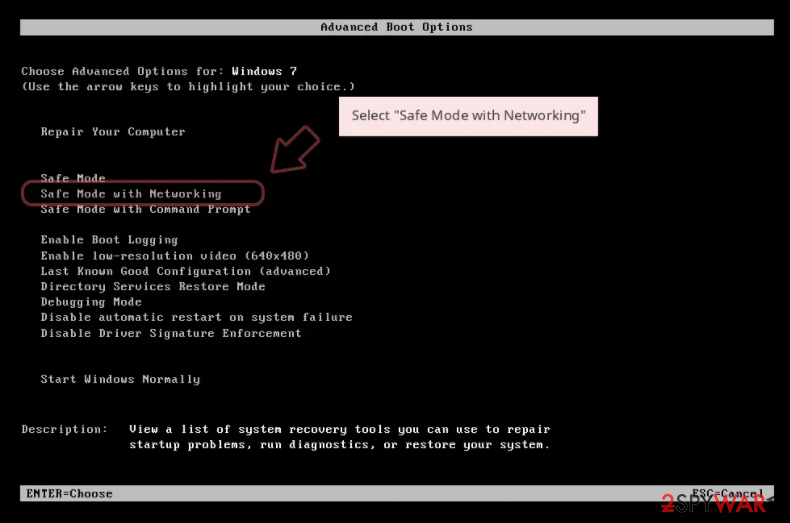
- When your computer becomes active, start pressing F8 button (if that does not work, try F2, F12, Del, etc. - it all depends on your motherboard model) multiple times until you see the Advanced Boot Options window.
- Select Safe Mode with Networking from the list.
Windows 10 / Windows 8
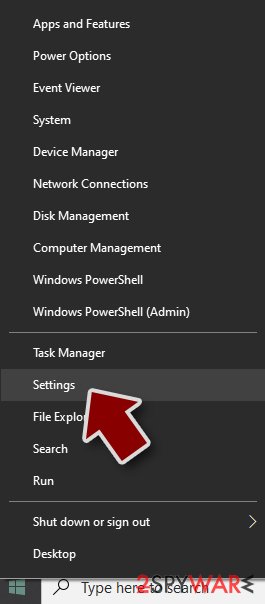
- Right-click on Start button and select Settings.
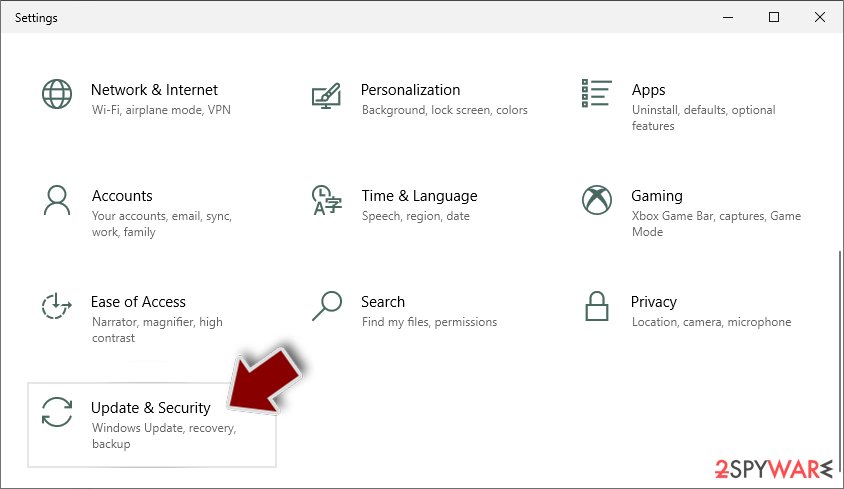
- Scroll down to pick Update & Security.
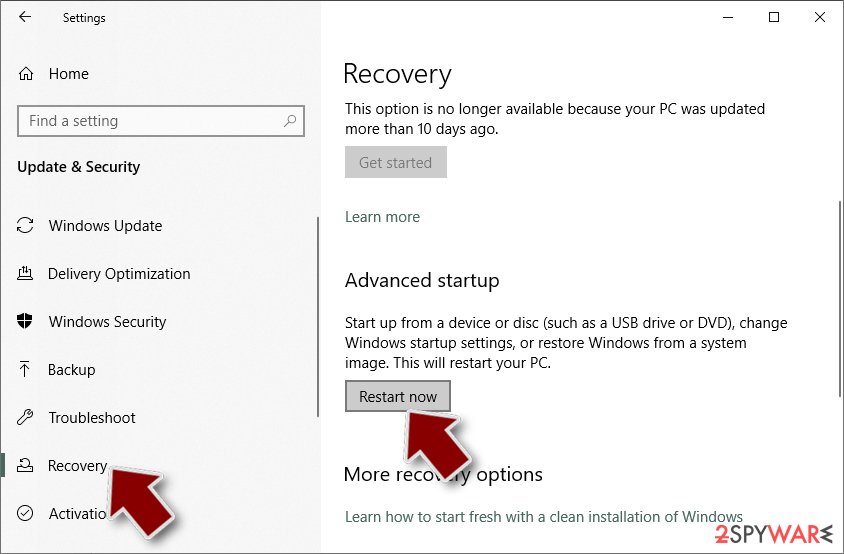
- On the left side of the window, pick Recovery.
- Now scroll down to find Advanced Startup section.
- Click Restart now.
- Select Troubleshoot.
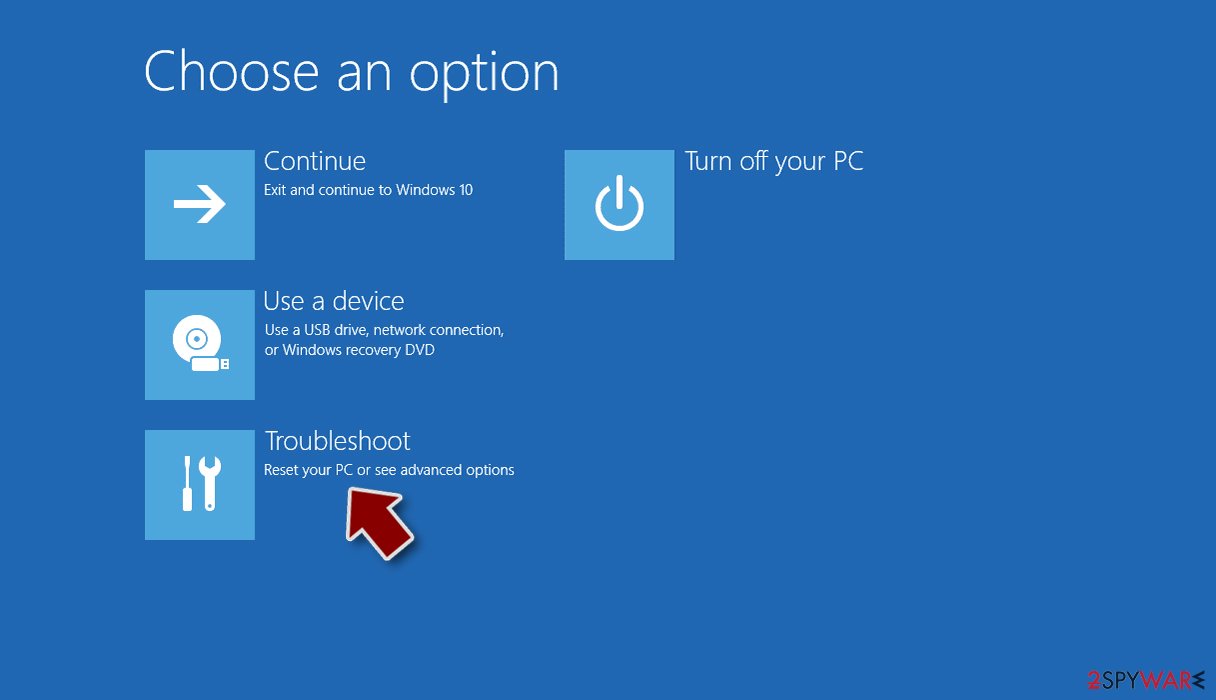
- Go to Advanced options.
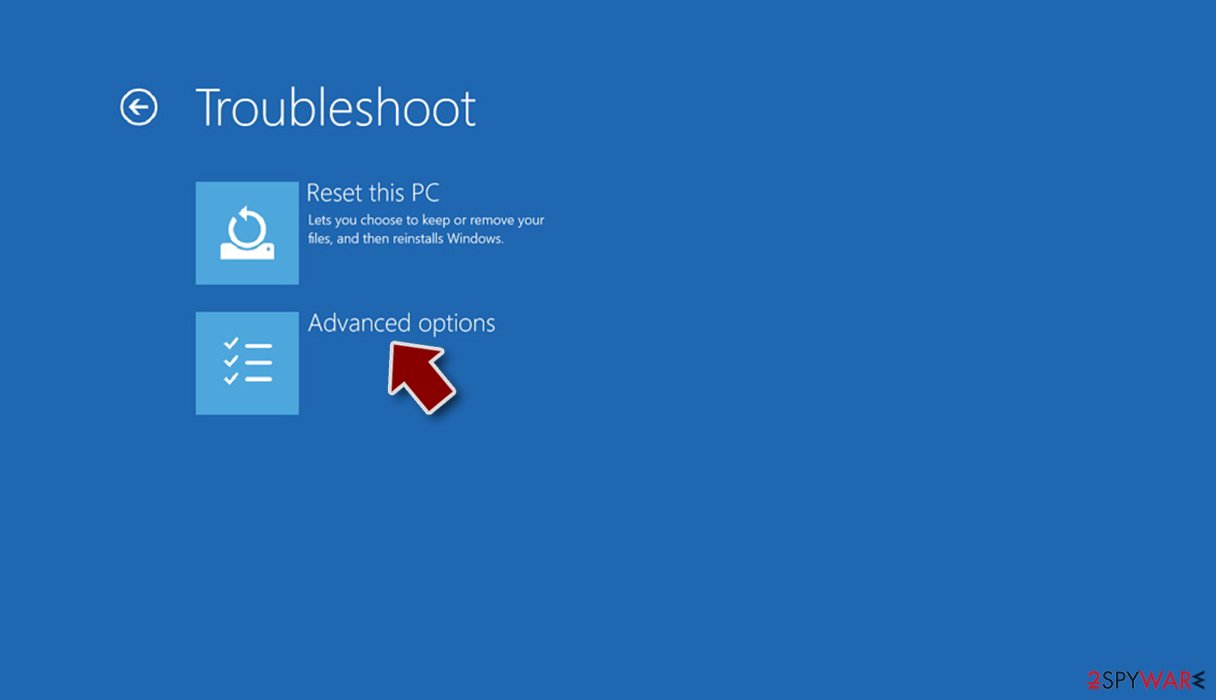
- Select Startup Settings.
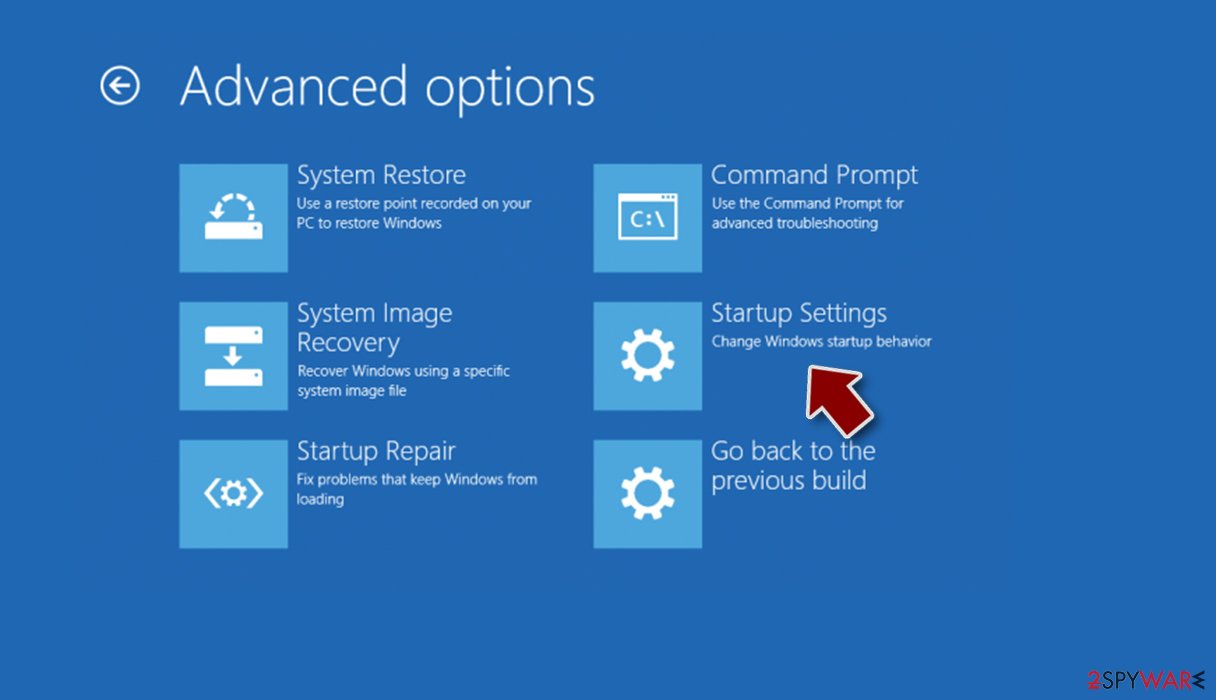
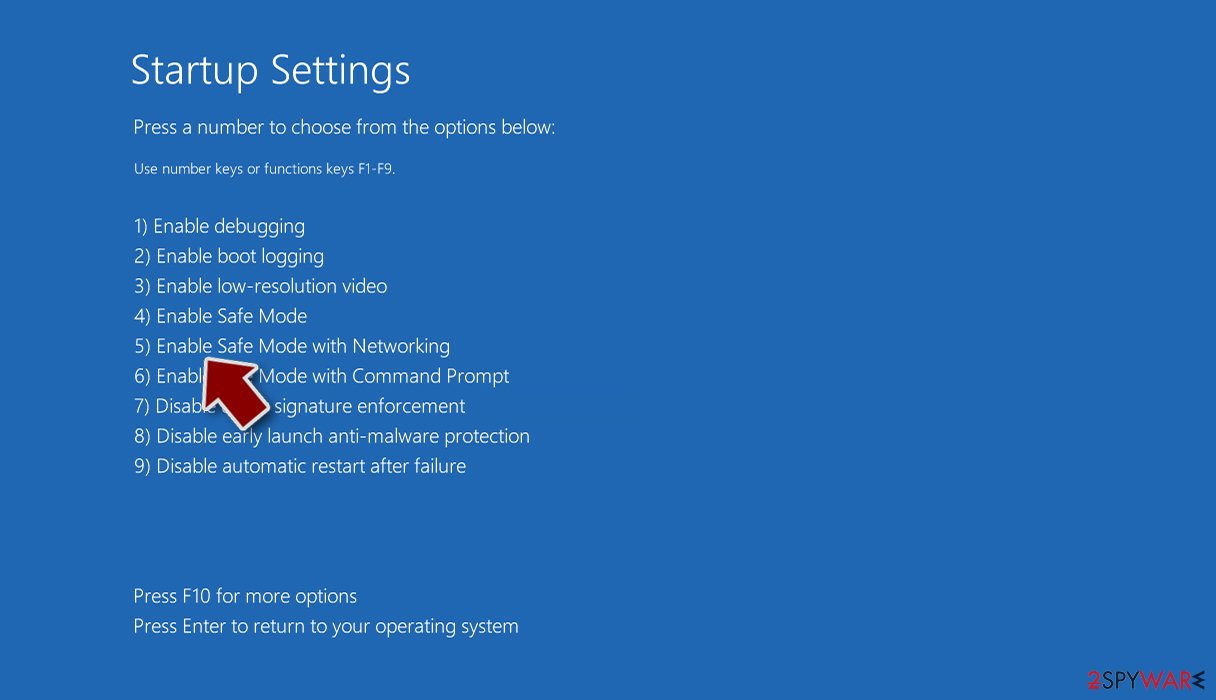
- Press Restart.
- Now press 5 or click 5) Enable Safe Mode with Networking.
Step 2. Shut down suspicious processes
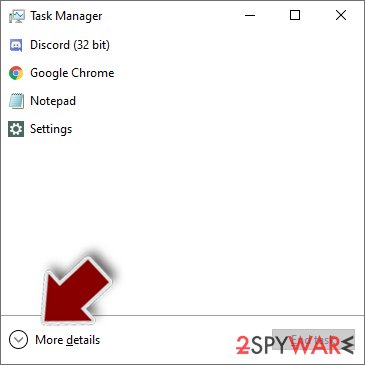
Windows Task Manager is a useful tool that shows all the processes running in the background. If malware is running a process, you need to shut it down:
- Press Ctrl + Shift + Esc on your keyboard to open Windows Task Manager.
- Click on More details.
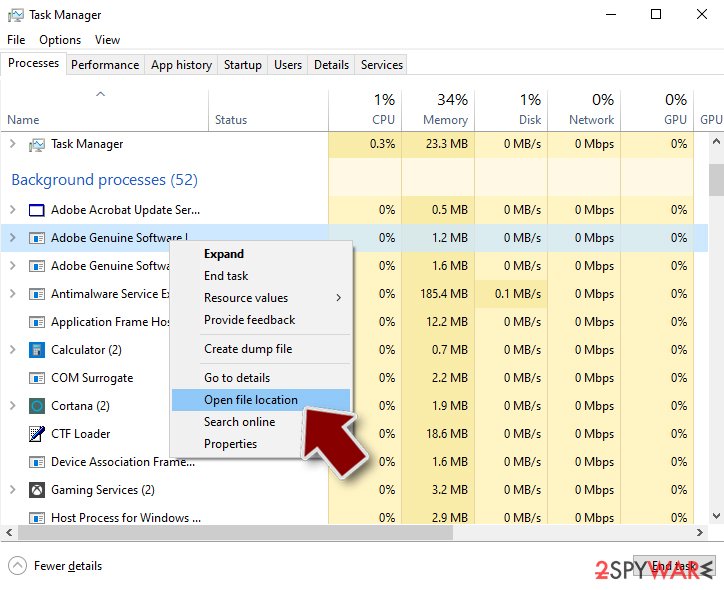
- Scroll down to Background processes section, and look for anything suspicious.
- Right-click and select Open file location.
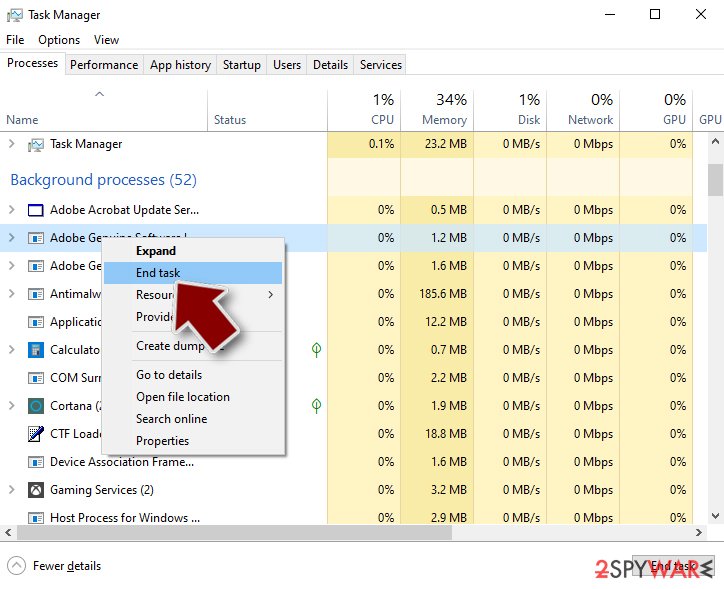
- Go back to the process, right-click and pick End Task.
- Delete the contents of the malicious folder.
Step 3. Check program Startup
- Press Ctrl + Shift + Esc on your keyboard to open Windows Task Manager.
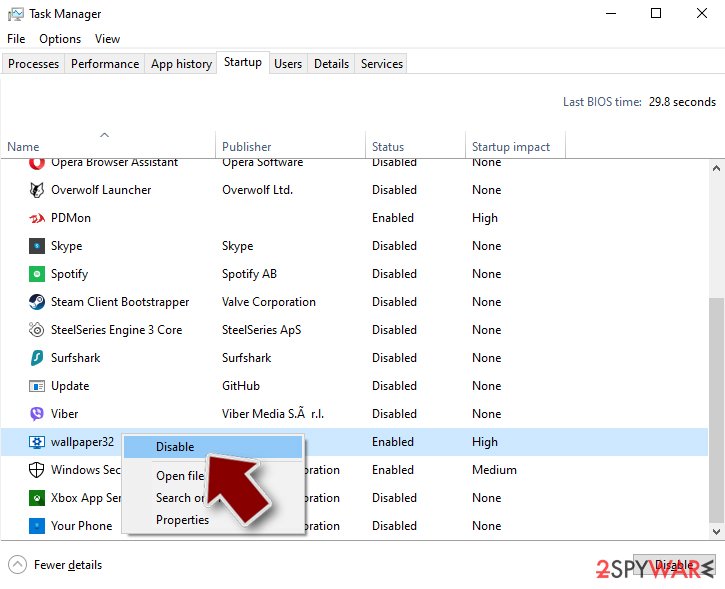
- Go to Startup tab.
- Right-click on the suspicious program and pick Disable.
Step 4. Delete virus files
Malware-related files can be found in various places within your computer. Here are instructions that could help you find them:
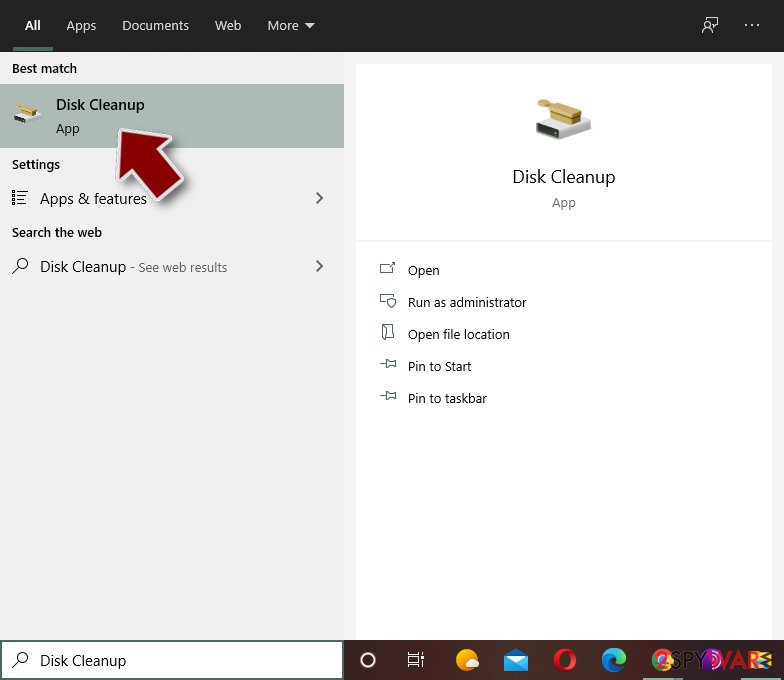
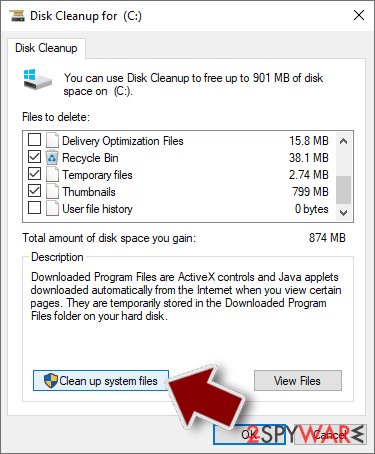
- Type in Disk Cleanup in Windows search and press Enter.
- Select the drive you want to clean (C: is your main drive by default and is likely to be the one that has malicious files in).
- Scroll through the Files to delete list and select the following:
Temporary Internet Files
Downloads
Recycle Bin
Temporary files - Pick Clean up system files.
- You can also look for other malicious files hidden in the following folders (type these entries in Windows Search and press Enter):
%AppData%
%LocalAppData%
%ProgramData%
%WinDir%
After you are finished, reboot the PC in normal mode.
From our report of Jan 2021 · not reviewed since
Delete GlobeImposter 2.0 ransomware automatically
Just like other file-encrypting viruses, this malicious program has to be removed using reputable security software.
These professional tools are capable of identifying and deleting malicious programs effectively. Additionally, they are able to detect all components that might be missed by the human eye.
If you cannot install or run security software, you should reboot the computer to the Safe Mode with Networking. This method helps to disable the virus and perform automatic elimination.
We want to point out that trying to delete malicious components manually may lead to irreparable damage to the system. So, you should clean your PC with reputable software only and remove GlobeImposter 2.0 virus without causing any further harm to your machine.
[GI=method-1]If malware prevents from automatic removal, follow the step below:
[GI=method-2]These steps will help you to initiate automatic removal.
Follow the steps to use this professional tool that might help to restore some of the encrypted files:
Retrieve individual files using Windows Previous Versions feature
If System Restore function has been enabled before the ransomware attack, follow these steps to recover individual files:
ShadowExplorer may help to restore files encrypted by GlobeImposter 2.0 virus
If malware failed to delete Shadow Volume Copies of the targeted files, follow these steps and recover the files:
Try GlobeImposter decryptor
GlobeImposter decryptor might help to restore at least some of the encrypted files too.
Report it and recover your files
Report it
Report the attack even if you do not expect the files back: insurers and banks ask for the report number, and police use the contacts in the note to link cases.
- United States
- FBI IC3 · FTC ReportFraud
- United Kingdom
- Report Fraud (formerly Action Fraud) · NCSC
- Australia
- ReportCyber (ASD)
- EU countries
- Europol: national reporting sites
Give the victim ID, the note and the date the files were encrypted. A business that holds personal data may also have to notify its data protection authority, in the EU within 72 hours.
Make the next attack harmless
GlobeImposter 2.0 ransomware virus could only hurt the files that had no second copy, and the signs (files that end in .dragon4444 and no longer open) showed exactly which ones those were. The 3-2-1 rule fixes that:
- three copies
- two media
- one disconnected
A practical version for a home PC: OneDrive or another cloud backup with version history, plus an external disk that you plug in once a week for File History and then unplug. Test a restore now and then by opening a few files from the backup on another device.
Details, schedules and what not to back up are in our 3-2-1 backup guide for Windows.
Do not let government spy on you
The government has many issues in regards to tracking users' data and spying on citizens, so you should take this into consideration and learn more about shady information gathering practices.
Avoid any unwanted government tracking or spying by going totally anonymous on the internet.
You can choose a different location when you go online and access any material you want without particular content restrictions. You can easily enjoy internet connection without any risks of being hacked by using VPN.
Control the information that can be accessed by government any other unwanted party and surf online without being spied on. Even if you are not involved in illegal activities or trust your selection of services, platforms, be suspicious for your own security and take precautionary measures by using the VPN service.
Backup files for the later use, in case of the malware attack
Computer users can suffer from data losses due to cyber infections or their own faulty doings.
Ransomware can encrypt and hold files hostage, while unforeseen power cuts might cause a loss of important documents. If you have proper up-to-date backups, you can easily recover after such an incident and get back to work. It is also equally important to update backups on a regular basis so that the newest information remains intact - you can set this process to be performed automatically.
When you have the previous version of every important document or project you can avoid frustration and breakdowns. It comes in handy when malware strikes out of nowhere. Use for the data restoration process.
Questions about GlobeImposter 2.0 ransomware virus
Is there a decryptor for .dragon4444 files?
That depends on the family behind the .dragon4444 extension, which this guide cannot confirm yet from the reports alone. Check No More Ransom and ID Ransomware with your ransom note and one encrypted file; they list families with free tools.
If none exists today, keep the encrypted files and a copy of the note on a separate drive, because decryptors are sometimes published months later after flaws are found or servers are seized. Never buy a decryptor from a website that is not the security company that made it.
How do I open .dragon4444 files?
You cannot open them by renaming or by choosing another program. The .dragon4444 ending shows that GlobeImposter 2.0 ransomware virus encrypted the content, and only the matching key can reverse it. Renaming a file back to .docx or .jpg changes nothing except the icon, and it can confuse a future decryptor, so leave the names as they are.
To get the content back, use a backup, an unencrypted copy elsewhere, or a decryptor listed on No More Ransom if one exists for GlobeImposter 2.0 ransomware virus. Store the encrypted files on an external disk until then.
Are ransomware recovery services legitimate?
Some are, but read the offer carefully. Genuine data-recovery firms recover deleted originals from disks or rebuild damaged files, and they say so. Others promise to "decrypt any ransomware" for a fixed price, which is impossible without the key; they quietly pay the attackers and keep a margin, sometimes without telling the victim.
Be especially careful with services that contact you after you post about the attack online. Ask for references, a written method and a no-result-no-fee clause, and check the free tools on No More Ransom first.
Should I pay the ransom?
We advise against it, and so do the FBI, Europol and national cyber agencies. Payment does not guarantee a working tool: some attackers never reply, some tools damage files, and some variants have no decryptor at all. Paying also funds further attacks and can make you a target again.
Before considering payment, try every recovery option in this guide and report the attack. Companies must involve their legal adviser and insurer, because payments to sanctioned groups can be illegal. If files are truly irreplaceable, store the encrypted copies and wait; decryptors sometimes appear later.
How did GlobeImposter 2.0 ransomware virus get on my computer?
The way GlobeImposter 2.0 ransomware virus spreads has not been documented yet, so look at your own recent activity. On home PCs, ransomware most often comes with cracked programs, game cheats, key generators and fake updates, or with an e-mail attachment that was opened.
On business networks, attackers usually log in through Remote Desktop with a stolen or guessed password. Think back to what was downloaded or installed in the days before files that end in .dragon4444 and no longer open, and check the Downloads folder and Installed apps sorted by date. Keep anything suspicious for your report, but do not run it again.
Did GlobeImposter 2.0 ransomware virus steal my files or passwords?
We do not know yet. Nothing published so far shows data theft by GlobeImposter 2.0 ransomware virus, but the only confirmed sign is files that end in .dragon4444 and no longer open, which says nothing about what happened before.
Many current ransomware attacks copy files or run a password stealer first, so it is wise to act as if they did.
From a clean device, change the passwords that were saved in the browsers on this PC, starting with e-mail and banking, sign out of all sessions and turn on two-step verification. Watch bank statements and account activity for the next few weeks.
Is GlobeImposter 2.0 ransomware virus the same as other ransomware with a similar name?
Not necessarily. Ransomware names come from the file extension, the note or a word in the code, so unrelated families often end up with similar names, and one family can appear under several names. The difference matters: a decryptor or advice for one family does not fit another and can damage files.
Compare the ending added to your files and the exact name of the note with the summary table at the top of this guide, then upload the note and one encrypted file to ID Ransomware from a clean device. If the result names another family, follow the guide for that family instead.
What does HOW_OPEN_FILES.hta tell me about the ransomware?
Quite a lot. The file name HOW_OPEN_FILES.hta, the wording, the contact addresses and the format of the personal ID are typical for each family. Uploading the note together with one encrypted file to ID Ransomware or No More Ransom's Crypto Sheriff usually names the family within seconds.
That name decides your options: some families have free decryptors, some can be partially recovered, and some cannot be decrypted at all. The note's claims about stolen data should be taken seriously but not at face value.
My files got .dragon4444 overnight. What happened?
Ransomware often runs at night or when the PC is idle, so the encryption finishes before anyone notices. It usually entered earlier through a cracked program, a fake installer, an e-mail attachment or remote desktop with a weak password.
The .dragon4444 extension marks every file it reached. Start by disconnecting the PC from the network, then identify the family from the ransom note and one encrypted file, check for a decryptor, and look for copies in backups and OneDrive before you consider anything else.
Will Fortect remove GlobeImposter 2.0 ransomware virus?
Fortect scans Windows for malware and unwanted programs and repairs the system files and settings they change, and its free scan shows what it finds on your PC before you decide anything.
For GlobeImposter 2.0 ransomware virus, follow the plan above as well: the browser steps take back permissions and settings that no scanner treats as a threat, and uninstalling the program that brought it removes the source.
Run Microsoft Defender's full scan and, if anything was found, its offline scan as a second opinion. If the symptoms are gone after the plan and both scans are clean, there is nothing more to do.
Sources
- Emsisoft: Emsisoft Decrypter for GlobeImposter (read October 6, 2026)
- Microsoft: Ransomware (read October 6, 2026)
- Return Path Blog: 10 Tips on How to Identify a Phishing or Spoofing Email (read October 6, 2026)
- Wikipedia: Antivirus software (read October 6, 2026)
- CISA: StopRansomware (read October 6, 2026)