
Hreerfdfgo.club ads: what it is and how to remove it
Many users have noticed that their desktops are periodically being flooded with Hreerfdfgo.club ads, and were puzzled by it. The pop-ups show up when they are browsing the web, and even if the browser is running in the background.
Facts checked October 6, 2026. Removal steps tested on Windows 11 (26H2) and checked against Microsoft's and the browser makers' current documentation. Sections marked as our earlier report are the original text: they describe the threat as it was then and have not been reviewed since. The 2026 status, the removal steps and the questions are current.
Automatic
Get a free scan and check if your PC is infected.
Fortect finds malware, unwanted programs and the Windows damage they leave behind, and repairs it in one pass.
If notifications from hreerfdfgo.club led you to download something, a free scan can check the PC for anything that came with it.
Do it yourself · free Remove Hreerfdfgo.club ads yourself 2 steps, about 6 minutes, no software needed.
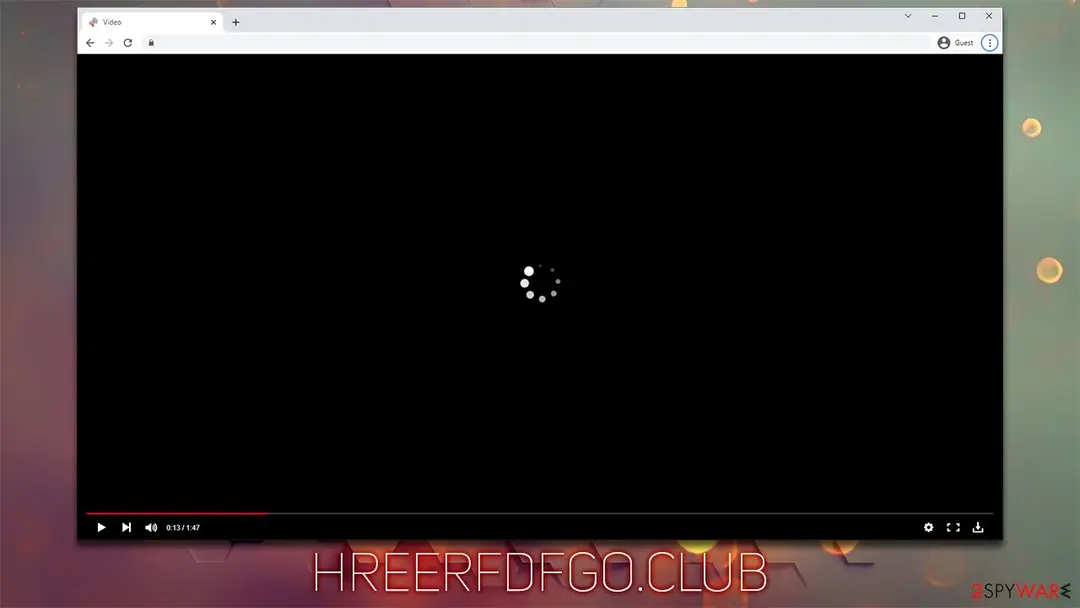
Hreerfdfgo.club ads: summary
| Distribution | Intrusive pop-ups can start showing up at some point after the "Allow" button is pressed within the notification prompt |
|---|---|
| Damage | Ads and links to sites displayed by the website might be dangerous: users might suffer from monetary losses, install malware or potentially unwanted programs on their systems, or disclose their sensitive data to cybercrooks |
| Name | Hreerfdfgo.club |
| Type | Push notifications, ads, pop-ups, scam |
| Symptoms | Pop-up notifications are shown on a desktop at random times |
| Detection names | No Microsoft detection name is known |
| Removal | Scan the PC with security software to find and remove the malware and anything installed with it. Fortect scans Windows for malware and repairs the system files and settings it damaged. Remove it nowTo use the full-featured product, you have to purchase a license for Fortect. The scan is free. |
Show 7 more facts
| Evidence | 4 write-ups by security sites; details still limited |
|---|---|
| Domains | hreerfdfgo.club |
| Ads shown as | Desktop notifications |
| Browsers | Chrome, Edge and Firefox |
| Installed on the PC | Nothing; a browser notification permission only |
| First seen | 7 December 2021 |
| Facts checked | 6 October 2026 |
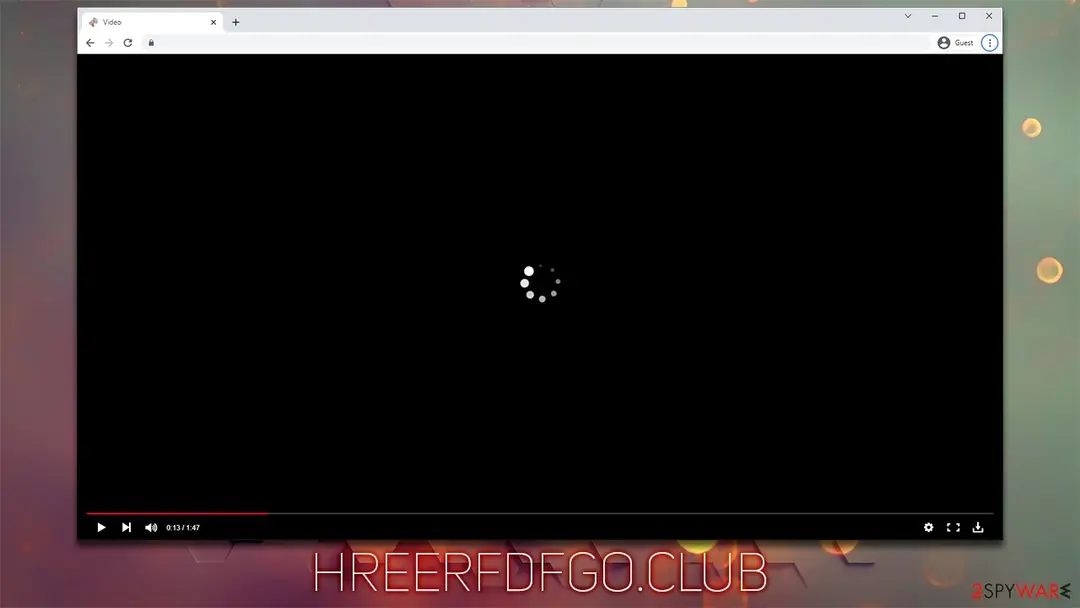
What the Hreerfdfgo.club ads ads look like
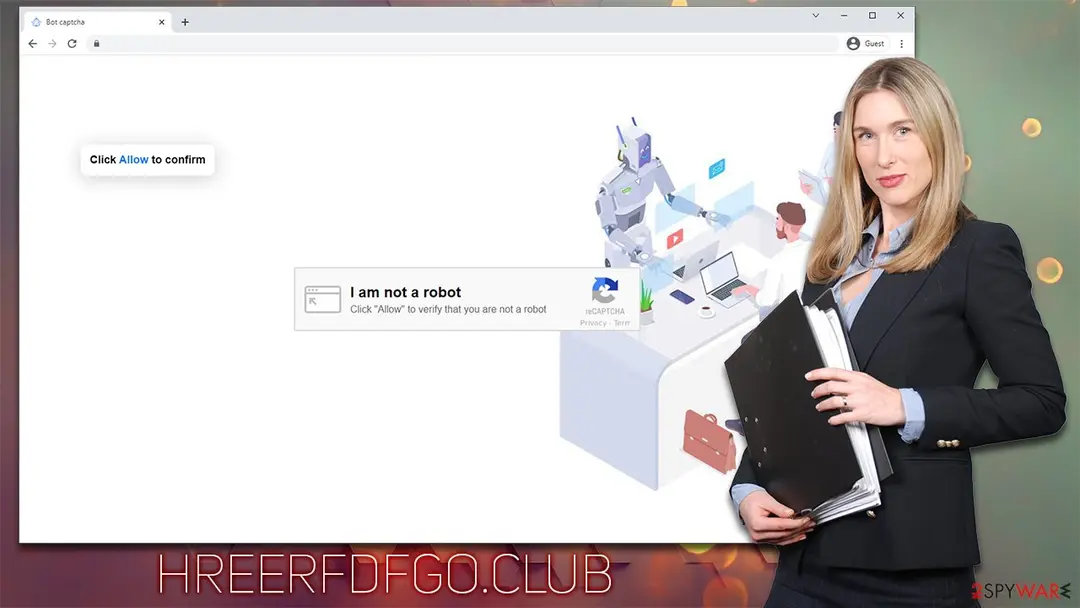
Click Allow if you are not a robot
Is Hreerfdfgo.club ads dangerous?
From our report of Dec 2021 · not reviewed since
Hreerfdfgo.club is a malicious website that shows fake notifications
Many users have noticed that their desktops are periodically being flooded with Hreerfdfgo.club ads, and were puzzled by it.
The pop-ups show up when they are browsing the web, and even if the browser is running in the background. Likewise, even if several other apps are opened, the notifications would be shown on top of all of them, making the activity a rather disruptive phenomenon. What what are these pop-ups, and why are they showing up?
The activity is a part of an elaborate scam engineered by unfair individuals, and users who give into it start experiencing the symptoms of what looks like a virus infection. However, this is not usually the case, as users themselves allow these notifications to be shown to them without knowing much about the consequences of such actions.
In most cases, users are redirected to Hreerfdfgo.club by adware or after they click some fake link on another website. They are commonly caught off guard here, as they end up on a strange page which asks users to click the "Allow" button within the notification prompt. There are plenty of website versions that people might encounter, but most commonly, they are presented with the following statements:
As evident, while some users would immediately sense the deception, others might believe that the presented messages are true. Many people are familiar with captcha and similar verification techniques employed by millions of websites for DDoS attack protection; some might be interested in a proposition to download software or view a movie for free.
However, this is all fake, and Hreerfdfgo.club is nothing but an empty shell that has no content in it. The main purpose of it is to make people subscribe to notifications so that ads can be delivered directly to their screens later. As soon as users agree, nothing really happens instantaneously, and the intrusive activity only shows up later.
This is why so many people are confused about what these ads are and how to remove them. Luckily, as long as you don't click them and explore websites that you are redirected to, they are very easy to eliminate. For more information, please check the paragraphs below.
From our report of Dec 2021 · not reviewed since
How do you end up on Hreerfdfgo.club?
The Internet has over 1.8 billion websites available at any point in time - some are being shut down and others being created every day.
Among those websites available, not all are created to be useful or informative. In fact, some portion of these creations is nothing more than an attempt to scam visitors into doing something they otherwise wouldn't.
While push notification scams are not as dangerous as those that spread malware or exploit software vulnerabilities via invisible background scripts, they are dangerous to an extent nonetheless. It is evident that users would not intentionally compromise their computers, so how do they end up on such websites? There are two possibilities usually:
First of all, we would like to recommend staying away from various high-risk websites, such as illegal video streaming, gambling, pirated software distributors, and similar. These places are dangerous due to the lack of moderation and implementation of security measures against malicious attacks.
Software cracks and similar installers can be infected themselves and result in the infiltration of ransomware, Trojans, rootkits, or other dangerous malware. Likewise, employing tools such as ad-blockers would also reduce the possibility of redirects to malicious websites.
Adware could also be the main reason you are being redirected to Hreerfdfgo.club or similar sites. Potentially unwanted programs and malware are commonly installed without users noticing due to software bundling or other deceptive distribution techniques, so they often are not even aware their devices are infected.
To check your computer for aggressive adware, malware, and other malicious programs, you should check Control Panel on Windows or Applications on Mac and remove anything suspicious. Likewise, remember that extensions could also be causing unwanted web browser activity, so remove those as well.
However, malware and adware might sometimes not display any active windows or not be included in the installed program list. Therefore, it is always recommended to check the system with , , or another powerful anti-malware. After that, you should also clean your web browsers to stop the tracking activities and remove malicious elements that could lead to the return of unwanted ads.
For that, you can refer to the bottom of the article or employ to have it done quicker. Likewise, the app can also fix any issues related to the virus damage that could cause system crashes or errors.
- People are being redirected by adware
- They click on a deceptive link that looks legitimate.
From our report of Dec 2021 · not reviewed since
More from our earlier report on Hreerfdfgo.club
- You can disable notifications via browser settings; in case you experience more ads and redirects to suspicious sites, you should check your system with anti-malware like to remove adware
- Make sure you clean your browsers after you delete PUPs from the system.
- To do that automatically, you can use
Check your browser and PC
- Address:
hreerfdfgo.club
How to remove Hreerfdfgo.club ads
How to stop Hreerfdfgo.club notifications
Do this in every browser you use, and in every profile inside it: each keeps its own list of sites allowed to send notifications.
Nothing has to be uninstalled for the notifications themselves.
Which browser shows the ads?
Step 1: Remove hreerfdfgo.club from Chrome's notification list
Open More (the three dots) > Settings > Privacy and security > Site settings > Notifications, or paste
chrome://settings/content/notificationsinto the address bar.Under Allowed to send notifications, open the menu next to
hreerfdfgo.cluband choose Remove or Block, and do the same for any other address you do not recognise.Next to Not allowed to send notifications, click Add and enter hreerfdfgo.club, so the site cannot ask again. The menus are the same in Chrome on Windows 11 and Windows 10, and each Chrome profile keeps its own list.
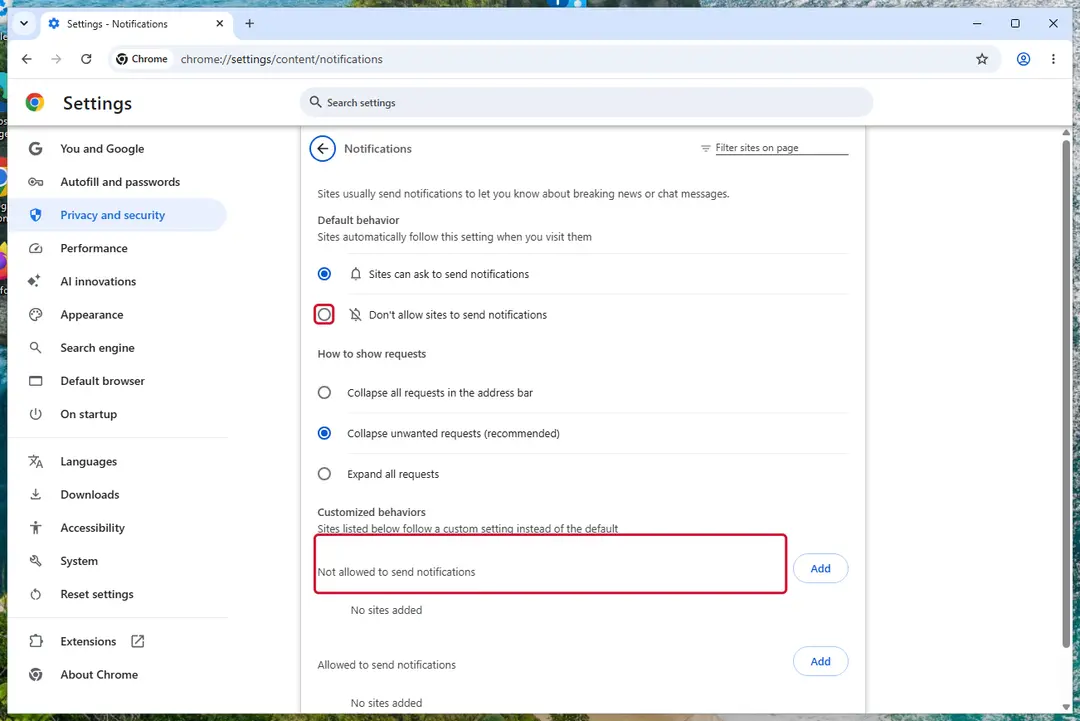
Chrome on Windows 11: Settings > Privacy and security > Site settings > Notifications. Full procedure with screenshots: Stop website notifications and pop-ups
Instructions for Google Chrome
Remove from Google Chrome
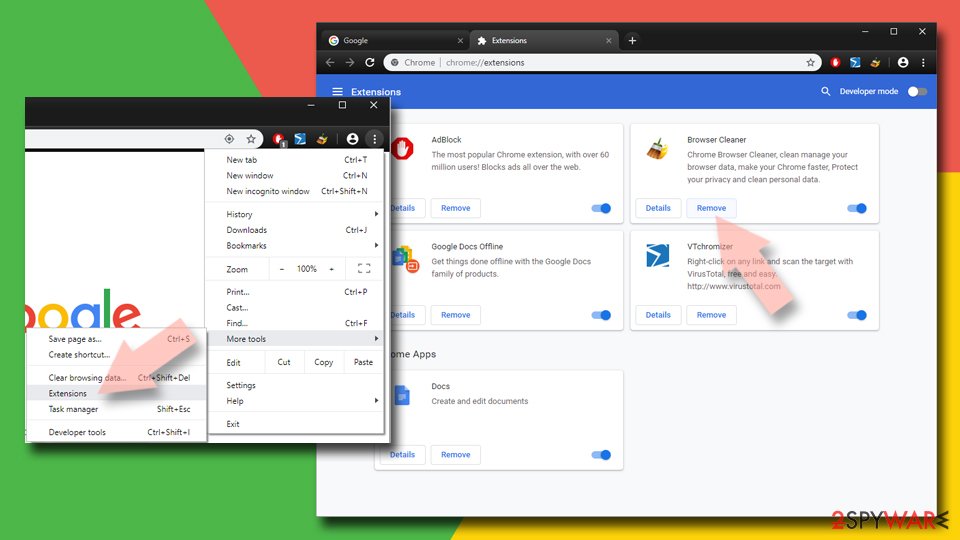
Delete malicious extensions from Google Chrome:
- Open Google Chrome, click on the Menu (three vertical dots at the top-right corner) and select More tools > Extensions.
- In the newly opened window, you will see all the installed extensions. Uninstall all suspicious extensions related to the unwanted program by clicking Remove.
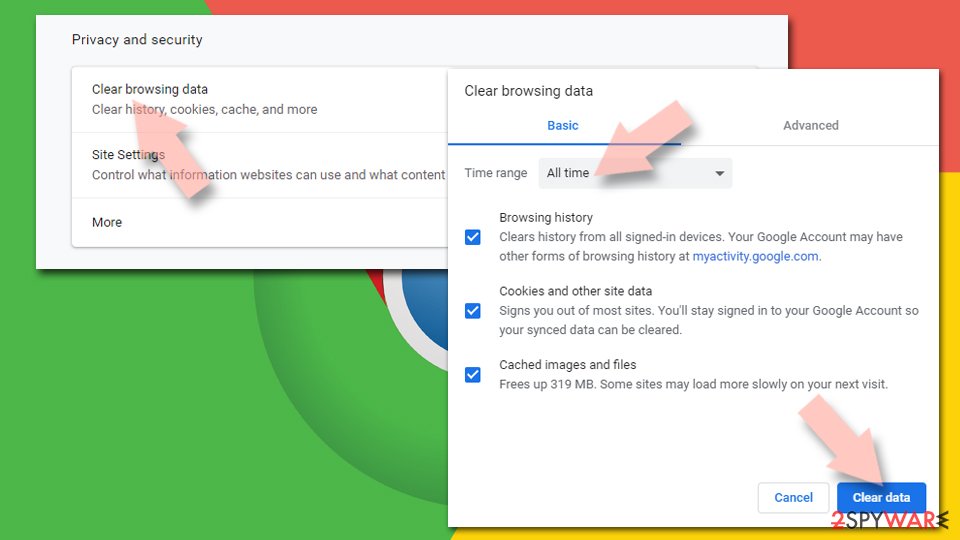
Clear cache and web data from Chrome:
- Click on Menu and pick Settings.
- Under Privacy and security, select Clear browsing data.
- Select Browsing history, Cookies and other site data, as well as Cached images and files.
- Click Clear data.
Change your homepage:
- Click menu and choose Settings.
- Look for a suspicious site in the On startup section.
- Click on Open a specific or set of pages and click on three dots to find the Remove option.
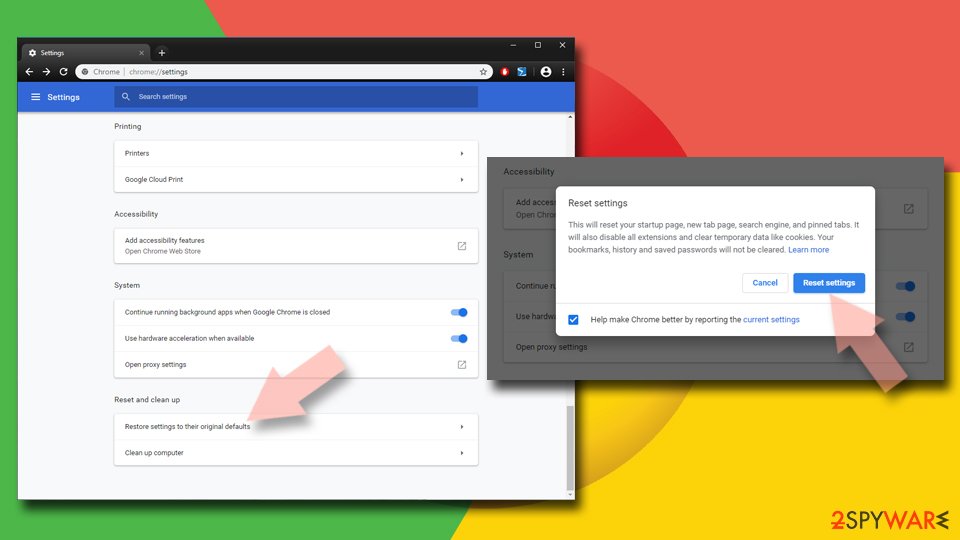
Reset Google Chrome:
If the previous methods did not help you, reset Google Chrome to eliminate all the unwanted components:
- Click on Menu and select Settings.
- In the Settings, scroll down and click Advanced.
- Scroll down and locate Reset and clean up section.
- Now click Restore settings to their original defaults.
- Confirm with Reset settings.
Step 1: Remove hreerfdfgo.club from Edge's notification list
Edge stores its own permission list, separate from Chrome's, and it is often the browser behind these pop-ups on Windows 11 and Windows 10.
Go to Settings > Privacy, search, and services > Site permissions > All permissions > Notifications, or paste
edge://settings/content/notifications. Removehreerfdfgo.clubfrom Allowed, then add it under Not allowed to send notifications. Notifications that show the Edge logo come from this list.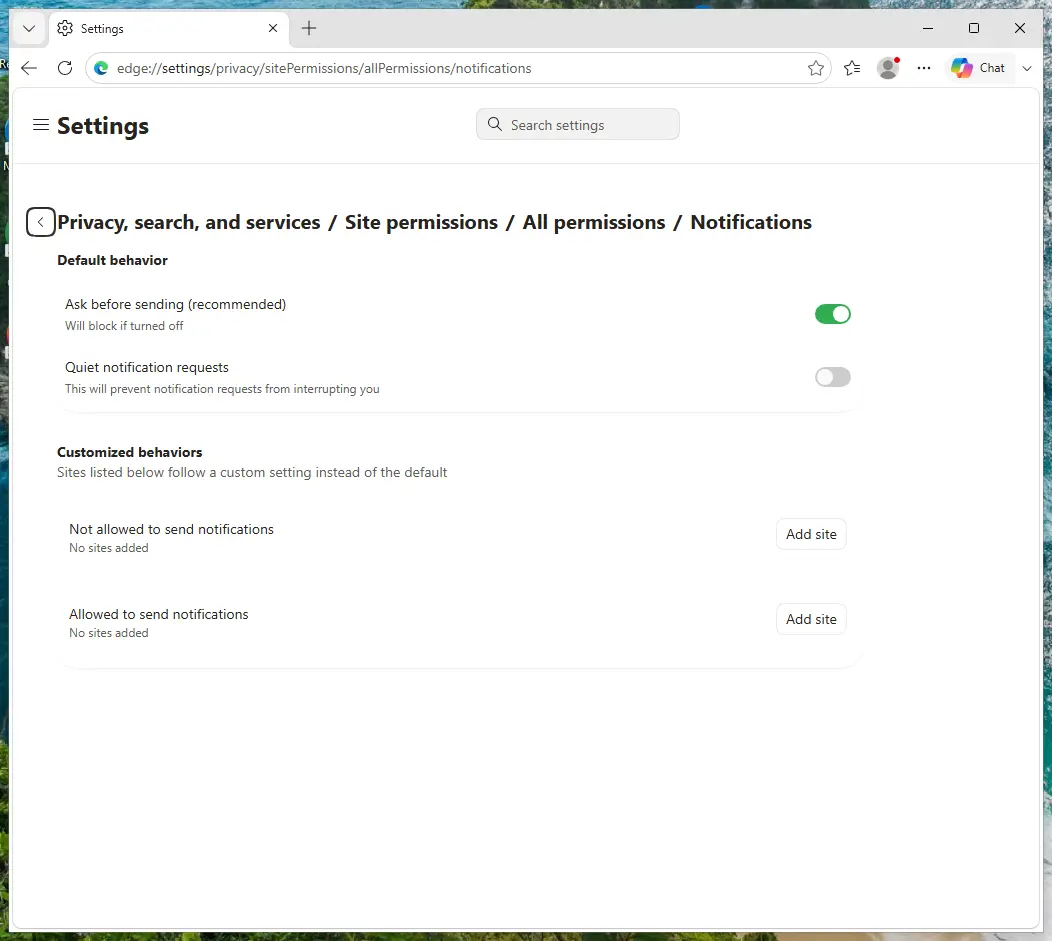
Edge on Windows 11: Site permissions > All permissions > Notifications. Full procedure with screenshots: Stop website notifications and pop-ups
Instructions for Microsoft Edge
Remove from Microsoft Edge
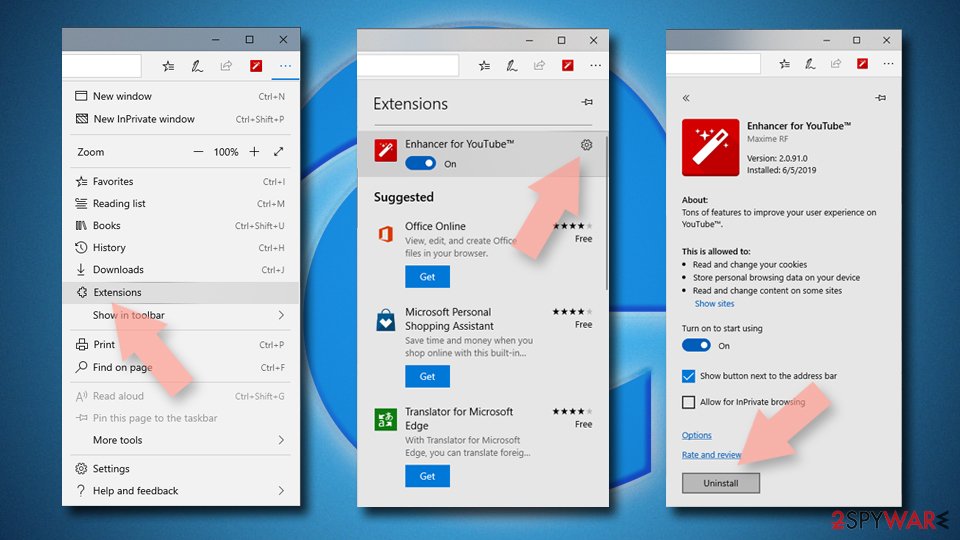
Delete unwanted extensions from MS Edge:
- Select Menu (three horizontal dots at the top-right of the browser window) and pick Extensions.
- From the list, pick the extension and click on the Gear icon.
- Click Remove.
Clear cookies and other browser data:
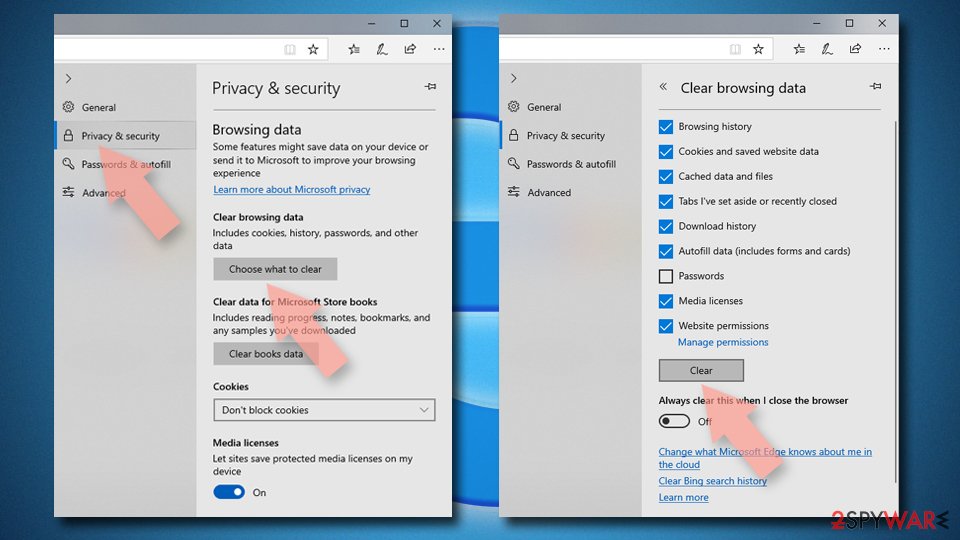
- Click on the Menu (three horizontal dots at the top-right of the browser window) and select Settings > Privacy, search, and services..
- Under Clear browsing data, pick Choose what to clear.
- Select Cookies and other site data and Cached images and files. (apart from passwords, although you might want to include Media licenses as well, if applicable) and click on Clear.
Restore new tab and homepage settings:
- Click the menu icon and choose Settings.
- Then find On startup section.
- Click Remove next to any suspicious startup page.
Reset MS Edge if the above steps did not work:
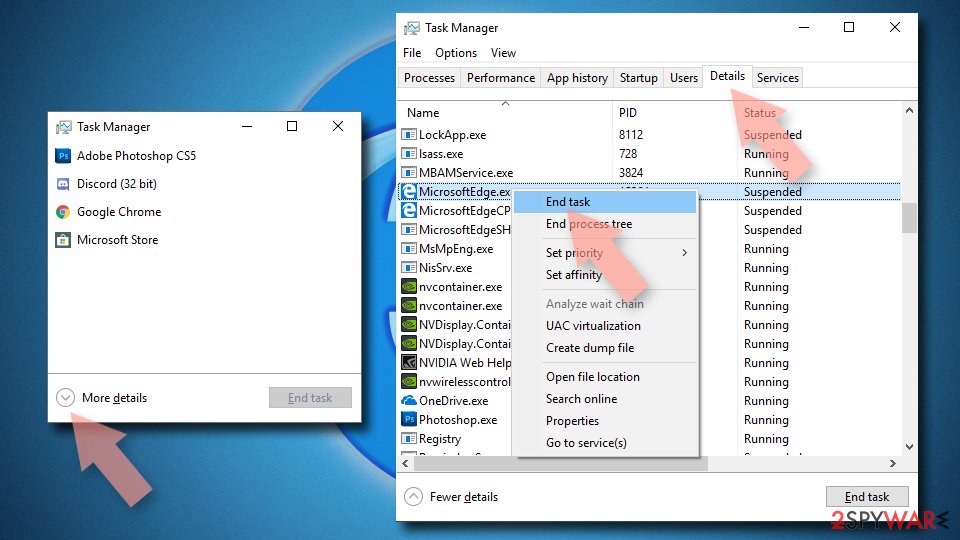
- Press on Ctrl + Shift + Esc to open Task Manager.
- Click on More details arrow at the bottom of the window.
- Select Details tab.
- Now scroll down and locate every entry with Microsoft Edge name in it. Right-click on each of them and select End Task to stop MS Edge from running.
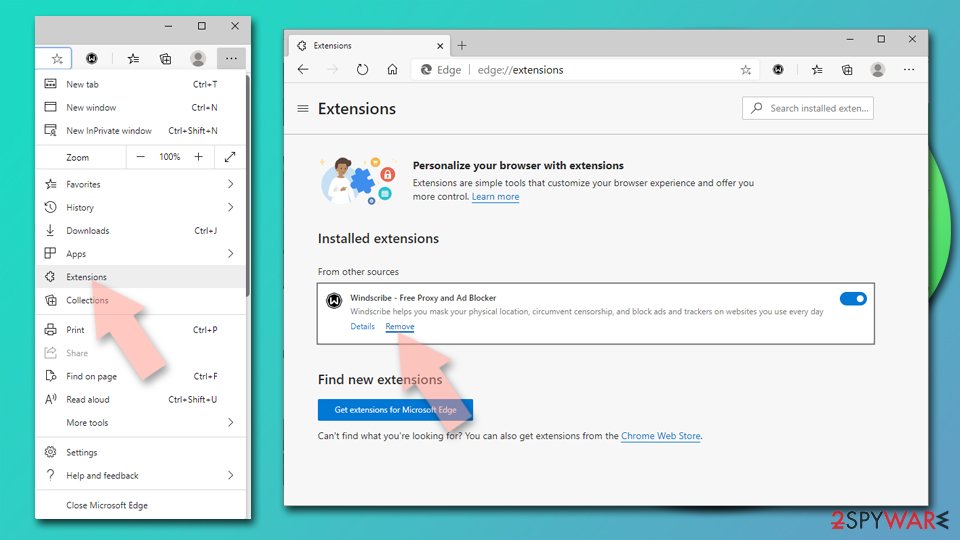
Delete extensions from MS Edge (Chromium):
- Open Edge and click select Settings > Extensions.
- Delete unwanted extensions by clicking Remove.
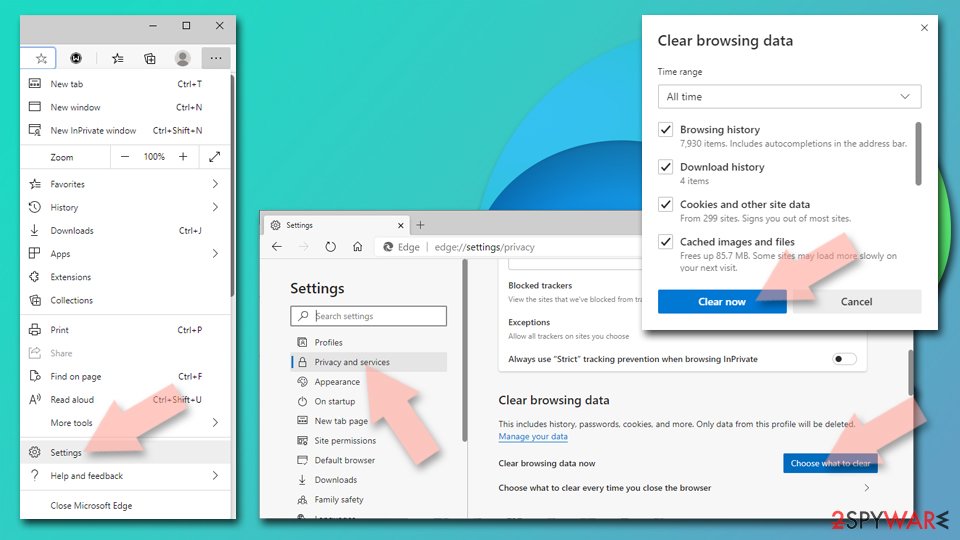
Clear cache and site data:
- Click on Menu and go to Settings.
- Select Privacy, search and services.
- Under Clear browsing data, pick Choose what to clear.
- Under Time range, pick All time.
- Select Clear now.
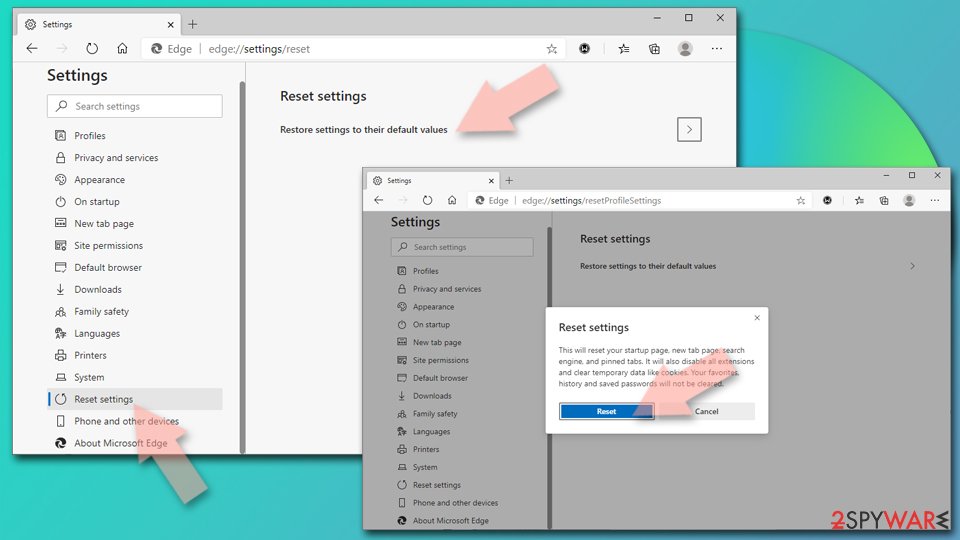
Reset Chromium-based MS Edge:
- Click on Menu and select Settings.
- On the left side, pick Reset settings.
- Select Restore settings to their default values.
- Confirm with Reset.
- This will disable extensions and reset startup pages but will not delete bookmarks, saved passwords, or browsing history.
Step 1: Remove hreerfdfgo.club from Firefox's notification permissions
In Firefox the permission sits in Settings > Permissions and data > Notifications (in older versions Privacy & Security > Notifications > Settings). Select
hreerfdfgo.clubin the list, click Remove Website, and confirm with Save Changes.Firefox only shows these notifications while it is open, so if they stopped after closing Firefox, this is the browser to clean. The steps are the same on Windows 11 and Windows 10.
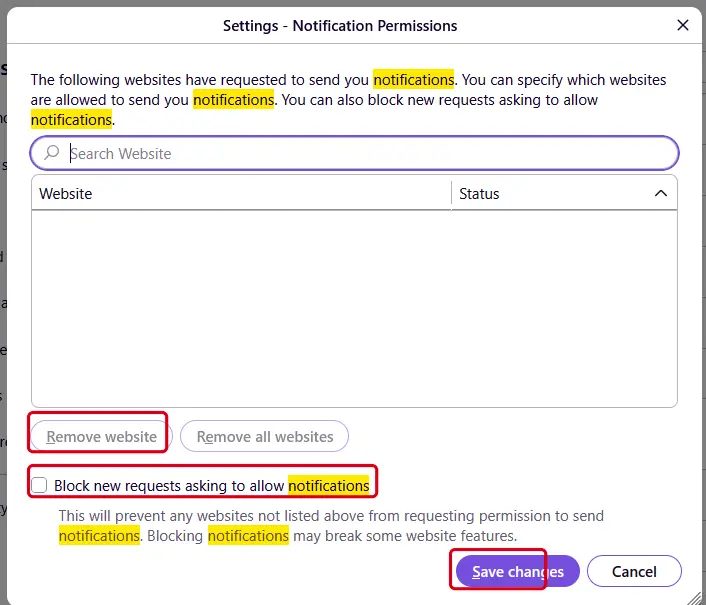
Firefox on Windows 11: the Notification Permissions window. Full procedure with screenshots: Stop website notifications and pop-ups
Instructions for Mozilla Firefox
Remove from Mozilla Firefox (FF)
Remove dangerous extensions:
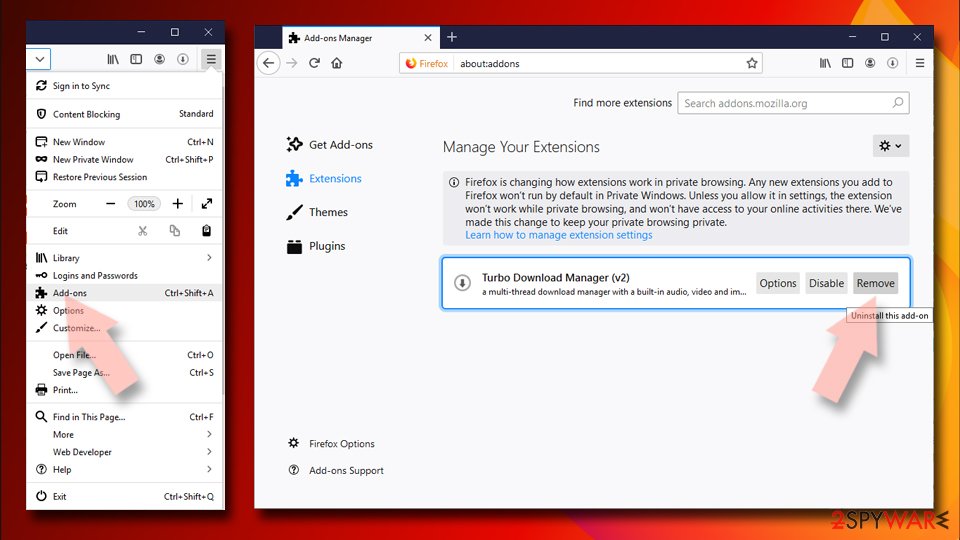
- Open Mozilla Firefox browser and click on the Menu (three horizontal lines at the top-right of the window).
- Select Add-ons.
- In here, select the unwanted extension and click Remove.
Reset the homepage:
- Click three horizontal lines at the top right corner to open the menu.
- Choose Settings.
- Under Home, set your preferred homepage and new tab settings.
Clear cookies and site data:
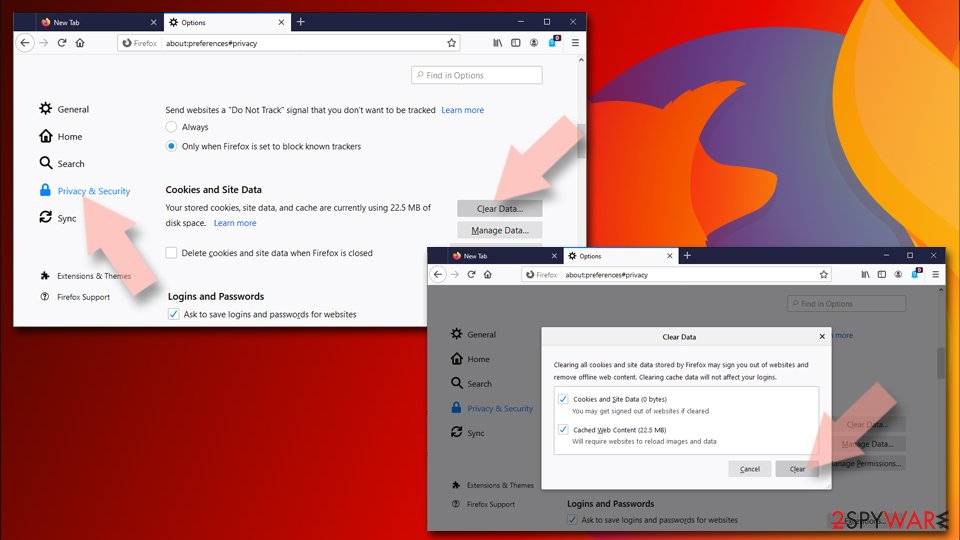
- Click Menu and pick Settings.
- Go to Privacy & Security section.
- Scroll down to locate Cookies and Site Data.
- Click on Clear Data...
- Select Cookies and Site Data and Temporary cached files and pages, then click Clear.
Reset Mozilla Firefox
If clearing the browser as explained above did not help, reset Mozilla Firefox:
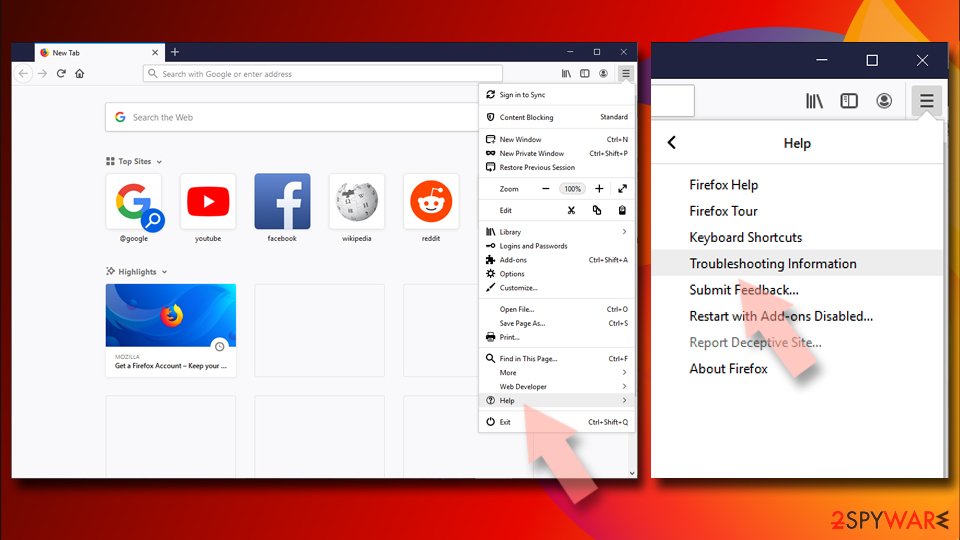
- Open Mozilla Firefox browser and click the Menu.
- Go to Help and then choose Troubleshooting Information.
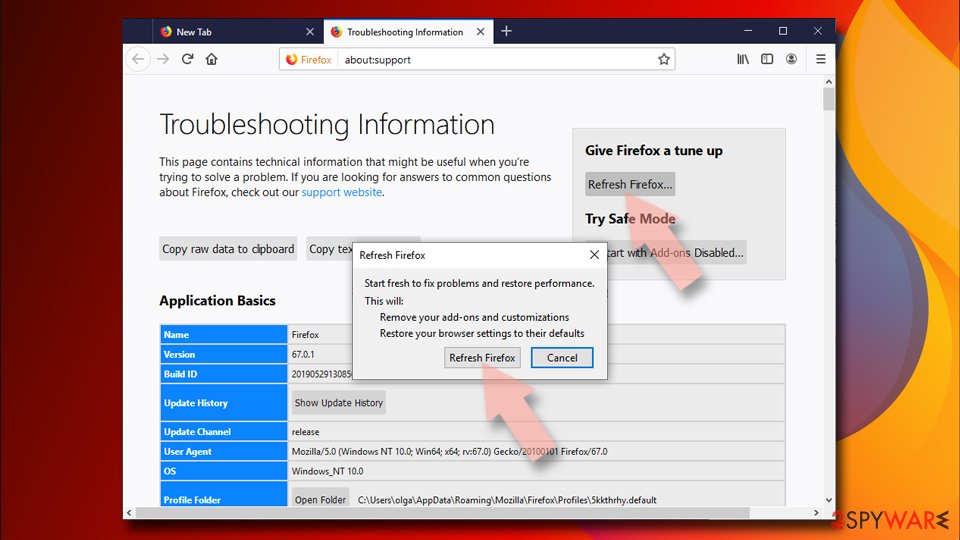
- Under Give Firefox a tune up section, click on Refresh Firefox...
- Once the pop-up shows up, confirm the action by pressing on Refresh Firefox.
Our tested steps are for Windows 11 and 10. For Safari (Mac), use the instructions below.
Instructions for Safari (Mac)
Delete from Safari
Remove dangerous extensions:
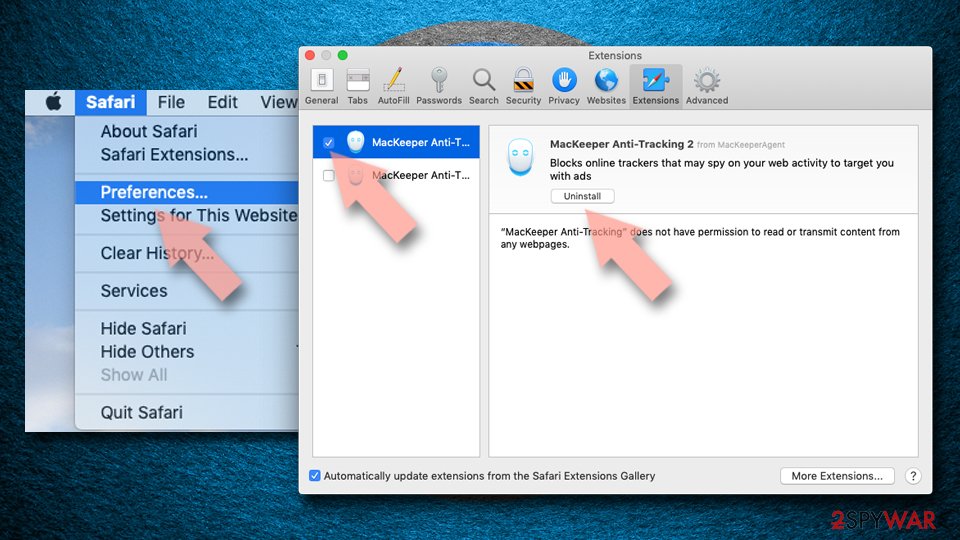
- Open Safari, click Safari in the menu at the top-left of the screen, and select Preferences.
- Go to the Extensions tab, look for any suspicious entries, and click Uninstall to remove them.
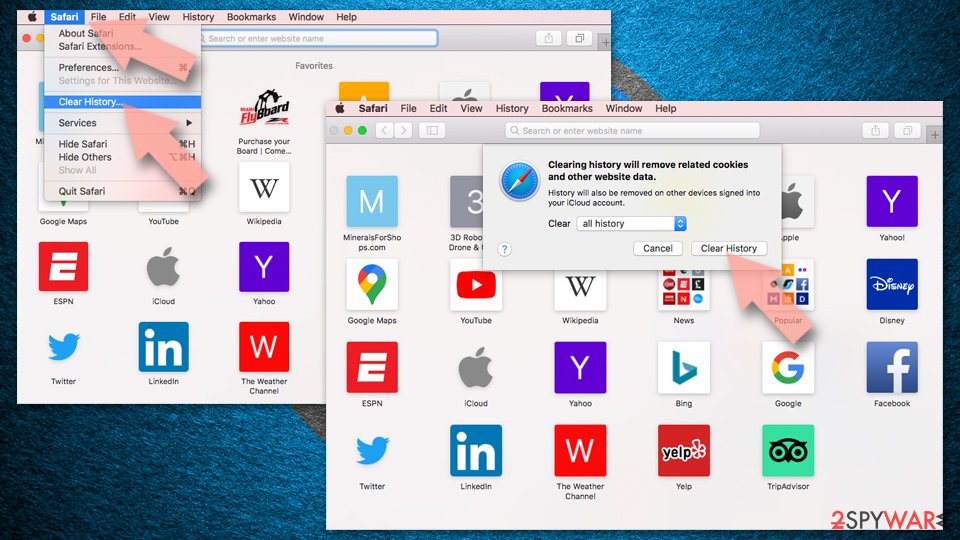
Clear history and website data:
- Click Safari in the menu and pick Clear History.
- Set Clear to all history and confirm with Clear History.
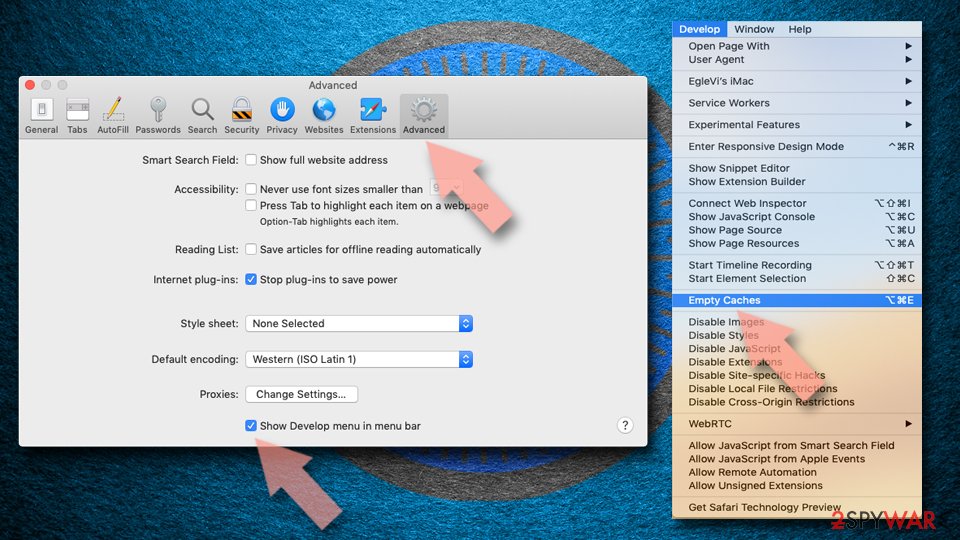
Reset Safari:
- Click Safari in the menu and select Preferences > Advanced.
- Enable Show Develop menu in menu bar.
- From the menu bar, click Develop and select Empty Caches.
Then, whichever browser you use
Step 2: Scan the PC if you downloaded anything from the ads
Most people who only saw the notifications can skip this step. If a notification or the page it opened made you download or run a file, delete the file and run a full scan, then a Microsoft Defender Offline scan.
In Windows 11 and Windows 10 open Windows Security > Virus & threat protection > Scan options, select Microsoft Defender Antivirus (offline scan) and click Scan now. The PC restarts and the scan takes about 15 minutes, so save your work first.
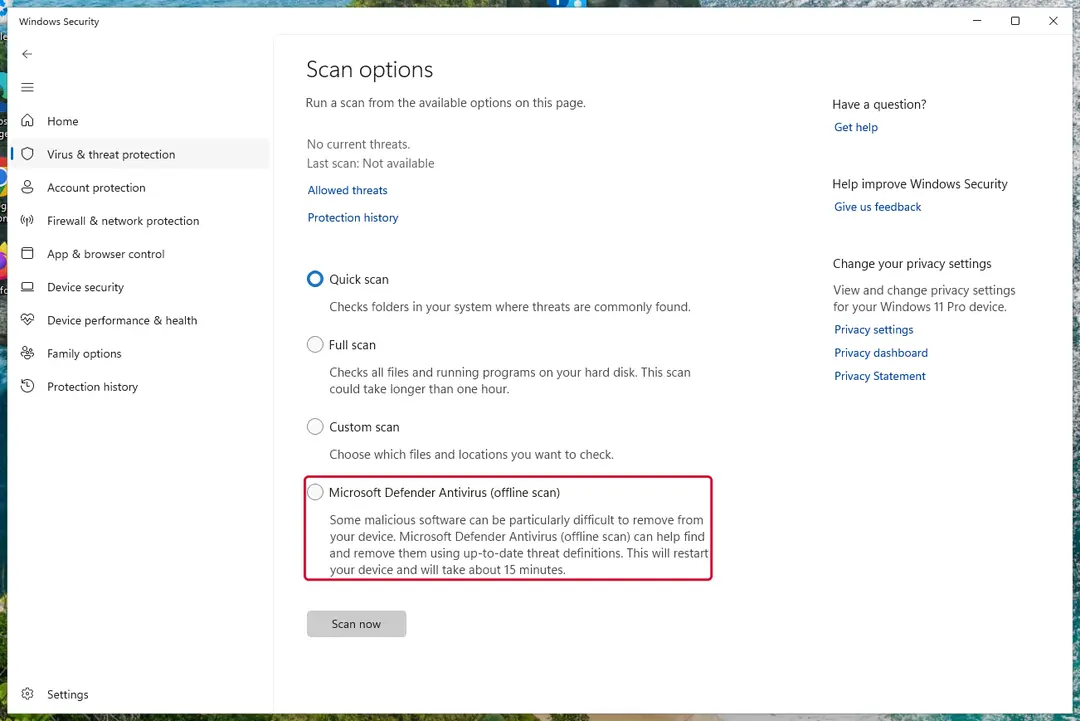
Windows 11: Windows Security > Virus & threat protection > Scan options. Full procedure with screenshots: Run a Microsoft Defender Offline scan
More removal instructions
For programs installed on the PC and older browsers. Open the one you need.
How to stop the intrusive push notifications
Push notifications are not malicious and are just a feature employed by a malicious website to carry misleading and dangerous content.
Thus, anti-malware software is not capable of removing them, as it is essentially a setting that you need to revert yourself.
MS Edge (Chromium):
Note that you could fully disable the display of push notification prompts for all websites - this is an ideal choice for those who don't want to take extra steps
Alternatively, you can also reset your browsers, which would delete all tracking data, and delete all browser extensions, which is especially useful when dealing with persistent threats that are difficult to remove.
- Open Google Chrome browser and go to Menu > Settings.
- Locate the Privacy and security section and pick Site Settings > Notifications.
- Look at the Allow section and look for a suspicious URL.
- Click the three vertical dots next to it and pick Block. This should remove unwanted notifications from Google Chrome.
- Open Mozilla Firefox and go to Menu > Options.
- Click on Privacy & Security section.
- Under Permissions, you should be able to see Notifications. Click the Settings button next to it.
- In the Settings – Notification Permissions window, click on the drop-down menu by the URL in question.
- Select Block and then click on Save Changes. This should remove unwanted notifications from Mozilla Firefox.
- Click on Safari > Preferences...
- Go to the Websites tab and, under General, select Notifications.
- Select the web address in question, click the drop-down menu and select Deny.
- Open Microsoft Edge, and click the Settings and more button (three horizontal dots) at the top-right of the window.
- Select Settings and then go to Advanced.
- Under Website permissions, pick Manage permissions and select the URL in question.
- Toggle the switch to the left to turn notifications off on Microsoft Edge.
- Open Microsoft Edge, and go to Settings.
- Select Site permissions.
- Go to Notifications on the right.
- Under Allow, you will find the unwanted entry.
- Click on More actions and select Block.
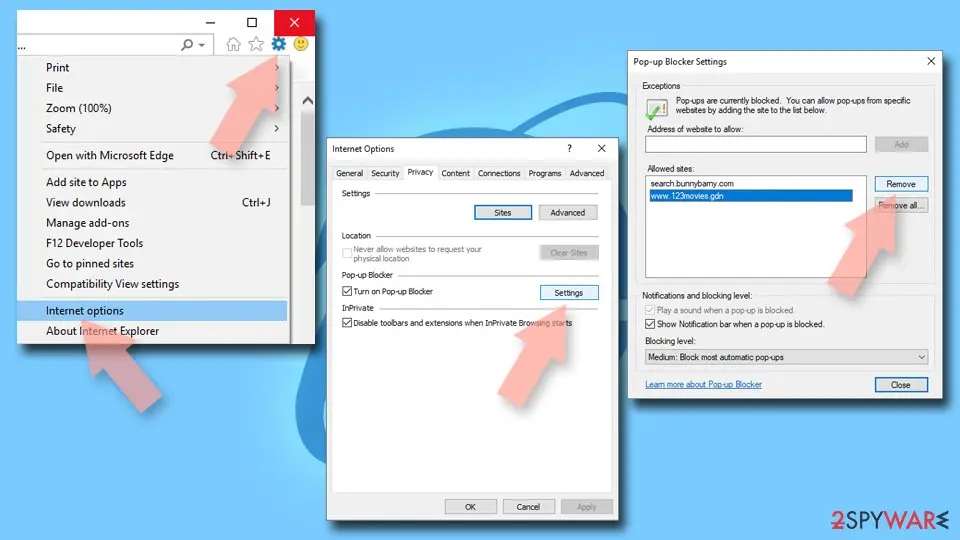
- Open Internet Explorer, and click on the Gear icon at the top-right of the window.
- Select Internet options and go to the Privacy tab.
- In the Pop-up Blocker section, click on Settings.
- Locate web address in question under Allowed sites and pick Remove.
Choose a proper web browser and improve your safety with a VPN tool
Online spying has got momentum in recent years and people are getting more and more interested in how to protect their privacy online.
One of the basic means to add a layer of security - choose the most private and secure web browser. Although web browsers can't grant full privacy protection and security, some of them are much better at sandboxing, HTTPS upgrading, active content blocking, tracking blocking, phishing protection, and similar privacy-oriented features.
However, if you want true anonymity, we suggest you employ a powerful VPN - it can encrypt all the traffic that comes and goes out of your computer, preventing tracking completely.
Lost your files? Use data recovery software
While some files located on any computer are replaceable or useless, others can be extremely valuable.
Family photos, work documents, school projects - these are types of files that we don't want to lose. Unfortunately, there are many ways how unexpected data loss can occur:
- power cuts
- Blue Screen of Death errors
- hardware failures
- crypto-malware attack
- even accidental deletion
To ensure that all the files remain intact, you should prepare regular data backups. You can choose cloud-based or physical copies you could restore from later in case of a disaster. If your backups were lost as well or you never bothered to prepare any, can be your only hope to retrieve your invaluable files.
Questions about Hreerfdfgo.club ads
How do I stop notifications from hreerfdfgo.club?
Remove its permission in the browser. The bottom line of each notification names the browser, so open that browser's notification settings and look under Allowed. Remove hreerfdfgo.club and any other site you do not recognise.
In Chrome and Edge this is under the site settings for notifications; in Firefox it is under Settings, Permissions and data, Notifications. Do this in every browser profile, because each one keeps its own list.
Restart the browser and wait a few minutes. If a message still arrives, read its bottom line again: the sending address can differ from the site you remember, and that is the entry still left in the list.
The hreerfdfgo.club notification said my PC is infected. Is it true?
No. Notifications from hreerfdfgo.club are adverts written to look like system messages. A website cannot scan your files, so it has no way to know whether your PC is infected; it shows the same warning to everyone who allowed its notifications. Real Windows Security messages name Windows Security in the bottom line, not a browser and a website.
If you want to be sure, open Windows Security from the Start menu and run a quick scan there. Then remove hreerfdfgo.club from the browser's notification settings so the fake warnings stop arriving. Do not call any number or buy anything the notification or its page suggests.
What is Hreerfdfgo.club?
Hreerfdfgo.club is a push-notification spam site, a kind of adware. It earns money by showing desktop notifications, and each view, click or redirect pays whoever runs it. It is not something people usually choose; it arrives through a free download, a fake button or a misleading prompt.
Hreerfdfgo.club does not encrypt files or take control of Windows, but its ads are sold to anyone, including scam operators, so they can lead to fake virus warnings and unwanted downloads. The steps in this guide remove it from Windows and from each browser.
Why does hreerfdfgo.club keep showing up?
There are two possible reasons. If it appears as desktop notifications, a browser on this PC was given permission to receive them from hreerfdfgo.club, usually through a misleading prompt. That permission stays until you remove it in the browser's site settings.
If it appears as tabs or redirects, an ad on a site you visit is opening it, or an extension or program on the PC is. Test a private window: if hreerfdfgo.club never appears there, an extension is the likely cause. The plan above covers each case.
Do I have to change settings in every browser?
Only in the browsers that allowed hreerfdfgo.club, but checking all of them takes a minute and is worth it. We saw the notifications in Chrome, Edge and Firefox. Chrome and Edge keep their notification lists under site settings, and Firefox under Privacy & Security > Permissions.
Remove hreerfdfgo.club and any other unfamiliar site from each list, then turn off new notification requests if you do not need them. Remember that every browser profile has its own list, so a second profile can keep the messages coming after you clean the first.
Are the pop-ups I see really from Hreerfdfgo.club?
Compare them with the details in the table above. Hreerfdfgo.club produces desktop notifications, and the clearest sign of it is notifications from hreerfdfgo.club. Other adware looks similar, so check the name of the sending site at the bottom of a notification, the address in the tab that opened, or the newest entries on the extensions page.
If those match, this guide fits. If you see a different name, the same kind of steps apply, but remove the item you actually find rather than guessing.
Can I turn off the pop-ups in Windows settings instead?
You can hide them, but that is not the fix. In Windows 11, Settings > System > Notifications lets you switch off notifications for a whole browser, which silences the spam together with every useful notification from that browser.
The site keeps its permission and can still send messages when you switch them back on. It is better to remove the specific site in the browser's own notification settings and block new requests. That stops the messages at the source and leaves the rest of your notifications working.
My scan found nothing, but the ads continue. Why?
Because the source may not be a file a scanner looks for. Browser notifications are a permission stored in the browser, and many adware extensions are not flagged because they come from an official store.
Some ad-supported programs are only reported if you enable detection of potentially unwanted apps. So a clean scan does not mean the job is done. Check each browser's notification permissions and extension list by hand, and turn on Potentially unwanted app blocking in Windows Security before scanning again.
Is it safe to click Block or Allow on a notification prompt?
Clicking Block is safe; it only tells the browser not to show notifications from that site. Clicking Allow is not dangerous to your files either, but it gives the site a channel to your desktop that spam sites abuse at once.
The prompt itself is part of the browser, so you can trust its buttons. What you cannot trust is the text on the page around it. If a page explains why you must click Allow, choose Block or close the tab.
Will Fortect remove Hreerfdfgo.club?
No program removes Hreerfdfgo.club itself, because there is nothing on the PC to remove: the notifications come through a permission saved in the browser, and only the browser's settings take it away, as the steps above show.
What Fortect can do is check the rest of Windows. Its free scan looks for malware, unwanted programs and damaged system files, which is useful if you clicked the ads, downloaded something from the pages they opened, or are not sure what else changed on the PC.
If the scan finds nothing and the notifications stopped after you removed the permission, this problem is solved. Use Microsoft Defender as a second opinion whenever you have downloaded files from pages like these.
Sources
- Kaspersky: What is Rootkit – Definition and Explanation (read October 6, 2026)
- Google Chrome Help: Use notifications to get alerts (no longer online) (read October 6, 2026)
- FTC: How to recognize, remove and avoid malware (read October 6, 2026)
- Microsoft Learn: Microsoft Defender Offline (read October 6, 2026)
- Microsoft Learn: How Microsoft names malware (read October 6, 2026)