
SearchQuest ads: what it is and how to remove it
SearchQuest is adware that displays pop-up ads and collects browsing data. Published in 2021, it spreads through freeware bundles and installs on system startup.
Facts checked October 5, 2026. Removal steps tested on Windows 11 (26H2) and checked against Microsoft's and the browser makers' current documentation. Sections marked as our earlier report are the original text: they describe the threat as it was then and have not been reviewed since. The 2026 status, the removal steps and the questions are current.
Automatic
Get a free scan and check if your PC is infected.
Fortect finds malware, unwanted programs and the Windows damage they leave behind, and repairs it in one pass.
Programs like SearchQuest usually arrive in groups; a free scan lists the companions that are easy to miss.
Do it yourself · free Remove SearchQuest ads yourself 4 steps, about 12 minutes, no software needed.
Start the steps
SearchQuest ads: summary
| Detection names | No Microsoft detection name is known |
|---|---|
| Distribution | Not recorded in the old report |
| Damage | Not recorded in the old report |
| Name | SearchQuest |
| Type | Adware extension |
| Symptoms | An unknown program in Installed apps |
| Removal | Scan the PC with security software to find and remove the malware and anything installed with it. Fortect scans Windows for malware and repairs the system files and settings it damaged. Remove it nowTo use the full-featured product, you have to purchase a license for Fortect. The scan is free. |
Show 4 more facts
| Evidence | One write-up by a security site; details still limited |
|---|---|
| Program | SearchQuest |
| First seen | 7 January 2021 |
| Facts checked | 5 October 2026 |
Is SearchQuest ads dangerous?
From our report of Jan 2021 · outdated details corrected in October 2026
SearchQuest is an adware that may collect browsing-related information and show annoying ads
SearchQuest is a browser add-on that was attributed in 2021 to the 'adware' and 'potentially unwanted programs' (PUP) categories.
It's developers present this tool as a "utility that makes searching and translating information you find online easy." Unfortunately, this useful functionality may be beaten by the inconveniences that this application may cause.
Once installed, it may install itself on Windows startup, create several registries, and affect all of your web browsers, including Google Chrome, Mozilla Firefox, and Microsoft Edge. This way, it launches along with the system boot and enables advertisements of its sponsors. Consequently, you may start receiving tons of "Ads by SearchQuest", "SearchQuest Ads", "Powered by SearchQuest", and similarly marked advertisements each time when browsing the net.
The main problem is not the annoyance of those ads, but rather risk that they pose to your PC's security. Keep in mind that such and similar advertisements are prepared by unreliable third parties, so there is always a chance that SearchQuest redirects exposes you to questionable or unreliable domains.
In most of the cases, it drops cookies on all web browsers that it manages to find on a computer and starts collecting browsing-related information.
Although it cannot gather information, such as your name, telephone number, credit card details, and similar information without your permission, do not underestimate the fact that it may continuously gather your PC's IP address, location, email address, search terms, clicks, and similar data that may also be used for suspicious purposes. This is one of the reasons why you should remove SearchQuest as soon as possible.
Last, but not least, is the fact that this ad-supported extension may affect your PC's performance in a negative way, so you may start experiencing slowdowns, crashes, and freezes. The best solution to check the system and eliminate various computer risks is a reputable anti-spyware.
Also, some problems can persist even after deleting unwanted components. If you notice that your computer is running slower or is experiencing any other problems, you should use a fixing tool such as .
From our report of Jan 2021 · not reviewed since
Users often install potentially unwanted programs themselves
Unfortunately, very often users are lured by beautiful promises and install adware themselves.
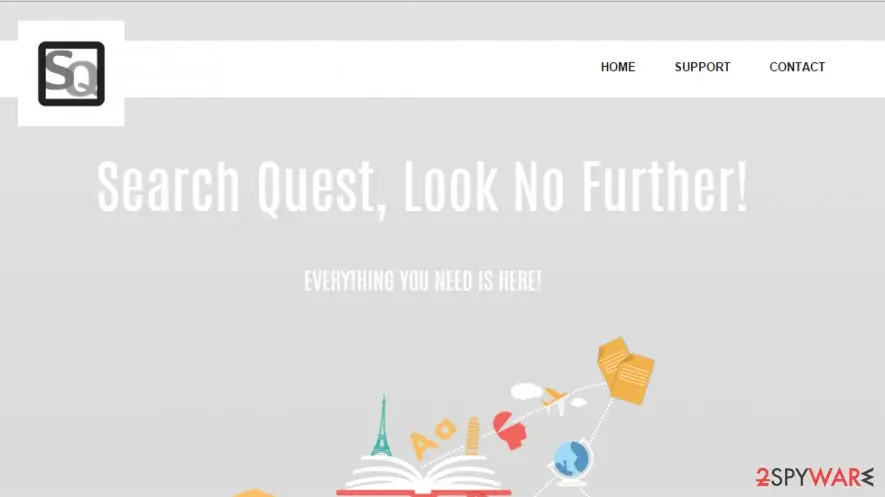
As stated on the official website of SearchQuest,
After reading this on the official domain, users seldom decide to install it. That's why its developers have started applying 'bundling', which is a stealthy distribution with the help of other freeware, which means that it's not necessary to install Search Quest virus as a standalone file.
It may enter PC systems in one pack with various download managers, media players, PDF creators, or other freeware that have been involved in the distribution of this add-on.
Therefore, no matter what kind of freeware you decide to install, always pay an appropriate amount of attention to its installation method. Make sure that you opt for Advanced or Custom installation option and carefully read all the terms. This way, you should spot the list of 'optional downloads' and get the chance to opt-out of them all.
From our report of Jan 2021 · not reviewed since
More from our earlier report on SearchQuest
- On top of that, this adware also poses a risk to your private security.
- Search Quest is free so in order to pay for servers and other expenses we show ads while you browse the internet.
- All of these ads are labeled with a link to uninstall instructions and a logo so you can easily recognize them.
How to remove SearchQuest ads
How to remove the SearchQuest extension
Do the browser steps in every browser and profile on the PC, then check Windows for the program that installed the extension.
Step 1: Remove extensions you did not add
SearchQuest often works through an extension, so go through the extension list of each browser:
chrome://extensionsedge://extensions- Extensions and themes in Firefox
Switch suspicious extensions off one at a time and reload the page where the problem shows, then remove the one that stops it, and any other you did not add.
Remember the other browsers and profiles on the PC. If Remove is missing or greyed out, a policy forces the extension, which the policy step deals with. Windows 11 and Windows 10 show the same pages.
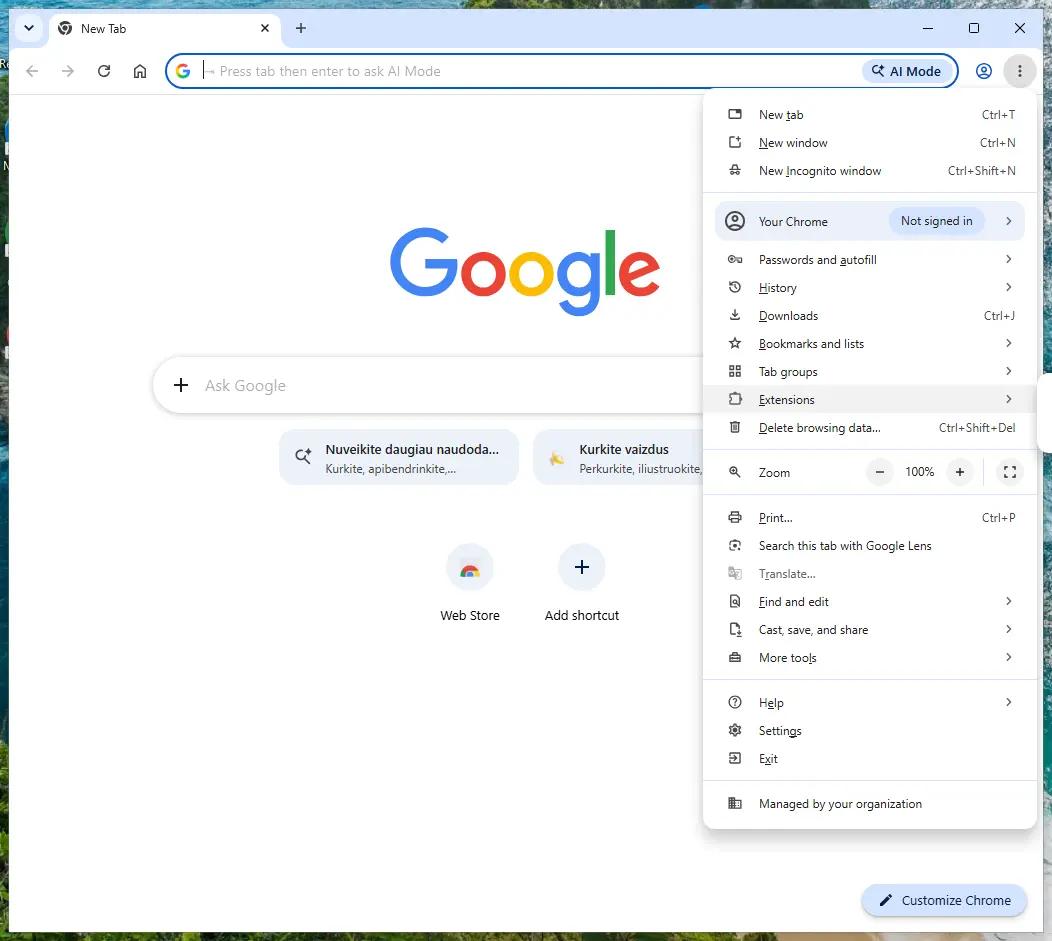
Chrome on Windows 11: More > Extensions > Manage extensions. Full procedure with screenshots: Remove a browser extension
Step 2: Uninstall SearchQuest
Open Settings > Apps > Installed apps in Windows 11, or Settings > Apps > Apps & features in Windows 10. Sort the list by install date and find SearchQuest, then choose Uninstall from the three-dot menu next to it (in Windows 10, click the entry and then Uninstall).
Remove anything else installed on the same day that you do not recognise, because such programs usually arrive together in one installer. If the uninstaller opens a browser page with an offer or a survey, close it: the program is removed either way.
Full procedure with screenshots: Uninstall a program or app in Windows On uGetFix
Step 3: Reset the browser
Finish the browser part with a reset, which puts the search engine, start page, new tab page and site permissions back to their defaults and switches extensions off. Chrome: Settings > Reset settings > Restore settings to their original defaults.
Edge: Settings > Reset settings. Firefox: Help > More troubleshooting information > Refresh Firefox, which also removes its extensions. Your bookmarks and saved passwords are kept, and the menus are the same on Windows 11 and Windows 10.
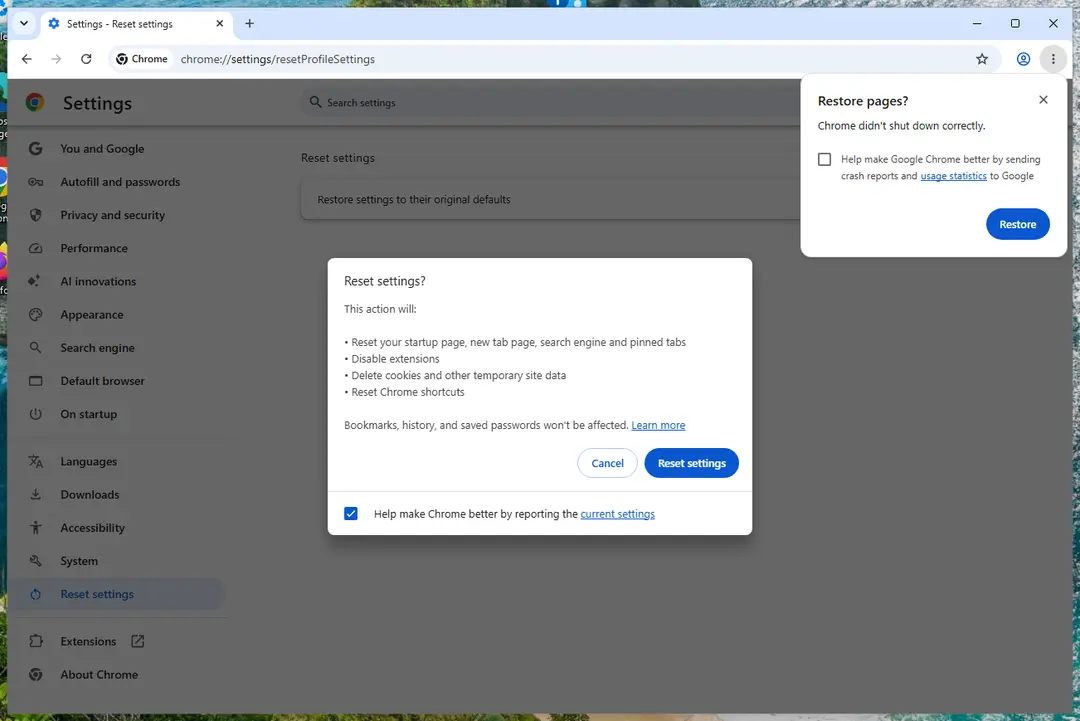
Chrome on Windows 11: Settings > Reset settings. Full procedure with screenshots: Reset a browser and fix a hijacked search engine
Step 4: Scan the PC, then run the offline scan
Open Windows Security > Virus & threat protection > Scan options, run a Full scan and remove everything it finds. Then select Microsoft Defender Antivirus (offline scan) and click Scan now: the PC restarts and scans before Windows loads, which finds files that hide while Windows runs.
Save your work first, because the offline scan takes about 15 minutes. Both scans are built into Windows 11 and Windows 10, and a second scanner from another vendor is a useful extra opinion.

Windows 11: Windows Security > Virus & threat protection > Scan options. Full procedure with screenshots: Run a Microsoft Defender Offline scan
Instructions for each browser and system
The detailed steps for every browser and system this guide covers. Open the one you use.
Uninstall from Windows
Uninstall from Windows 10/8:
- Type Control Panel into the Windows search box and open the result.
- Under Programs, select Uninstall a program.

Uninstall from Windows 7/XP:
- Click on Windows Start > Control Panel (Windows XP users should click on Add/Remove Programs).
- In Control Panel, select Programs > Uninstall a program.

Remove the unwanted program:
- In the Programs and Features window, look for any recently installed suspicious entries, select them, and click Uninstall.
- If User Account Control appears, click Yes to confirm, then complete the removal.

Remove from Google Chrome
Delete malicious extensions from Google Chrome:
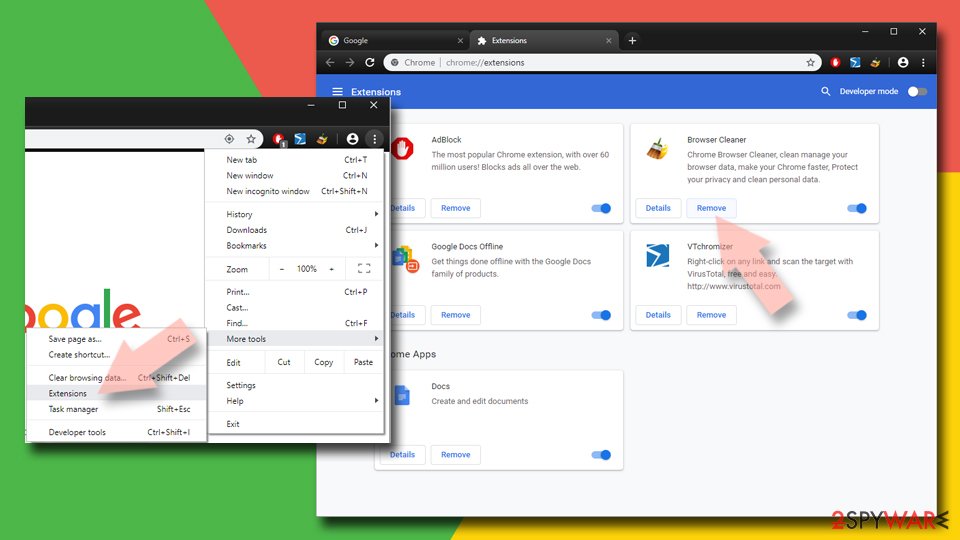
- Open Google Chrome, click on the Menu (three vertical dots at the top-right corner) and select More tools > Extensions.
- In the newly opened window, you will see all the installed extensions. Uninstall all suspicious extensions related to the unwanted program by clicking Remove.
Clear cache and web data from Chrome:
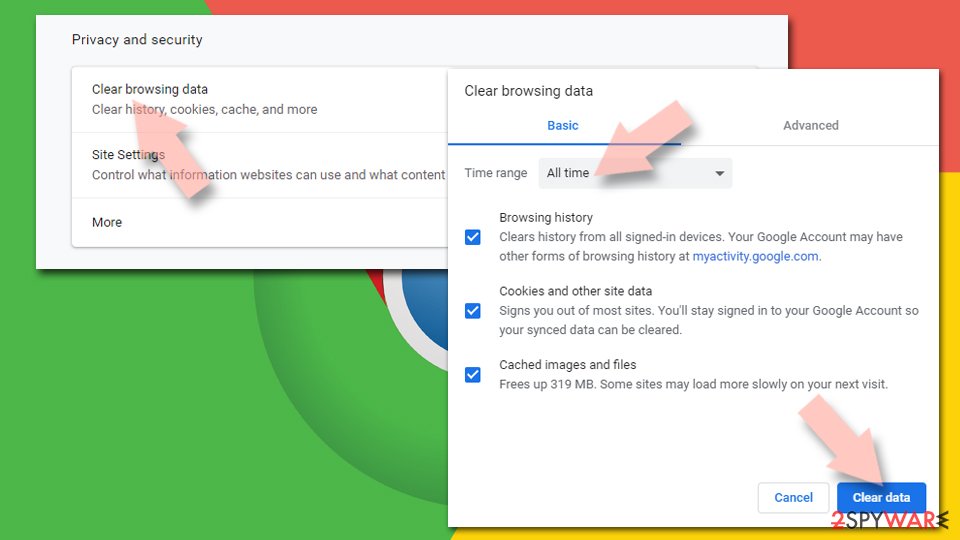
- Click on Menu and pick Settings.
- Under Privacy and security, select Clear browsing data.
- Select Browsing history, Cookies and other site data, as well as Cached images and files.
- Click Clear data.
Change your homepage:
- Click menu and choose Settings.
- Look for a suspicious site in the On startup section.
- Click on Open a specific or set of pages and click on three dots to find the Remove option.
Reset Google Chrome:
If the previous methods did not help you, reset Google Chrome to eliminate all the unwanted components:
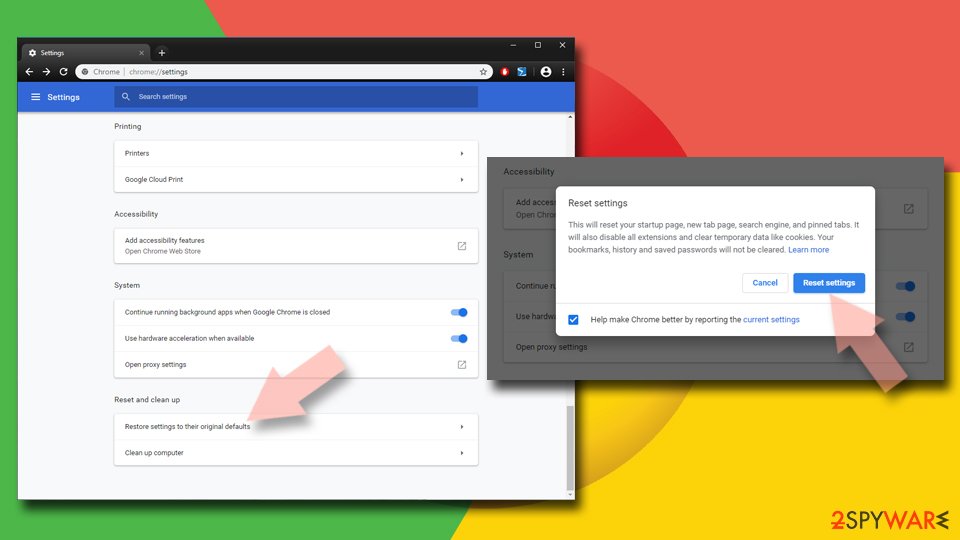
- Click on Menu and select Settings.
- In the Settings, scroll down and click Advanced.
- Scroll down and locate Reset and clean up section.
- Now click Restore settings to their original defaults.
- Confirm with Reset settings.
Remove from Microsoft Edge
Delete unwanted extensions from MS Edge:
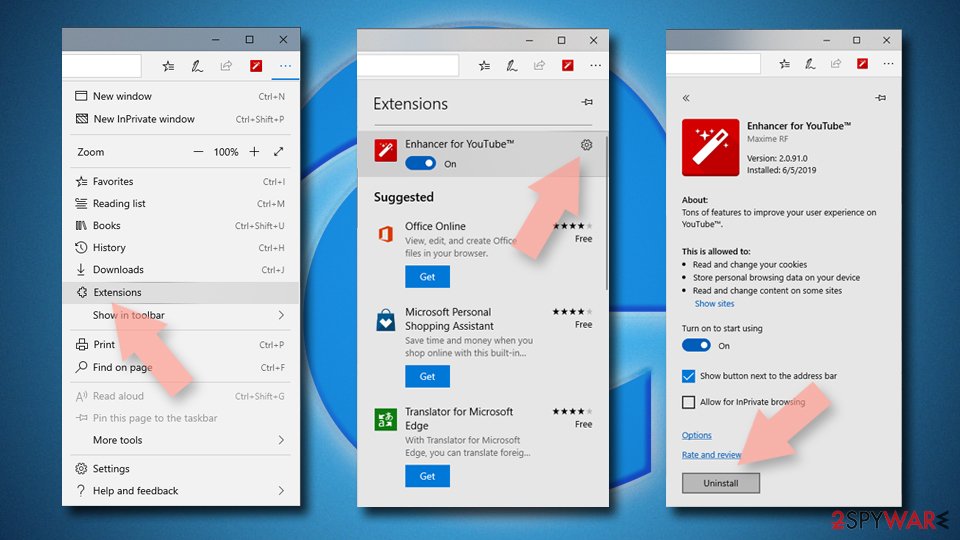
- Select Menu (three horizontal dots at the top-right of the browser window) and pick Extensions.
- From the list, pick the extension and click on the Gear icon.
- Click Remove.
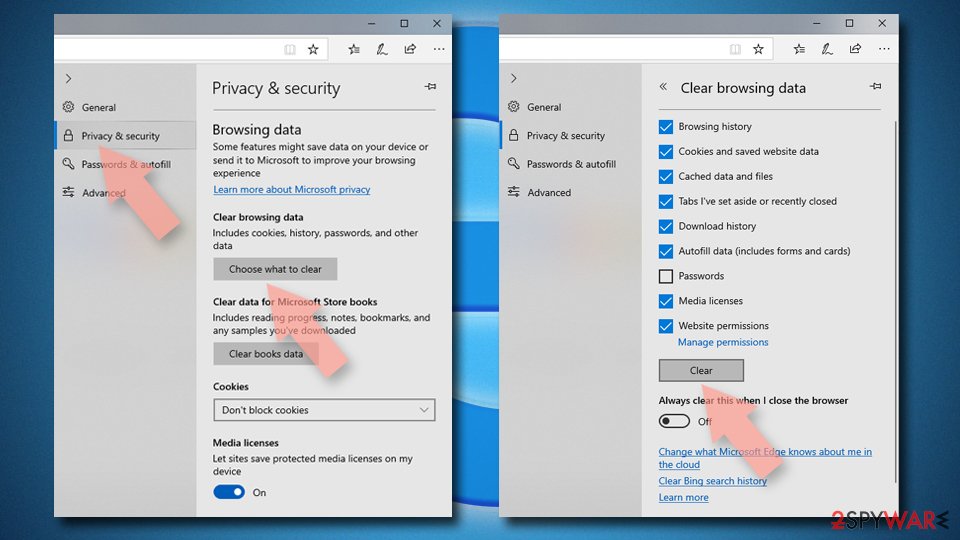
Clear cookies and other browser data:
- Click on the Menu (three horizontal dots at the top-right of the browser window) and select Settings > Privacy, search, and services..
- Under Clear browsing data, pick Choose what to clear.
- Select Cookies and other site data and Cached images and files. (apart from passwords, although you might want to include Media licenses as well, if applicable) and click on Clear.
Restore new tab and homepage settings:
- Click the menu icon and choose Settings.
- Then find On startup section.
- Click Remove next to any suspicious startup page.
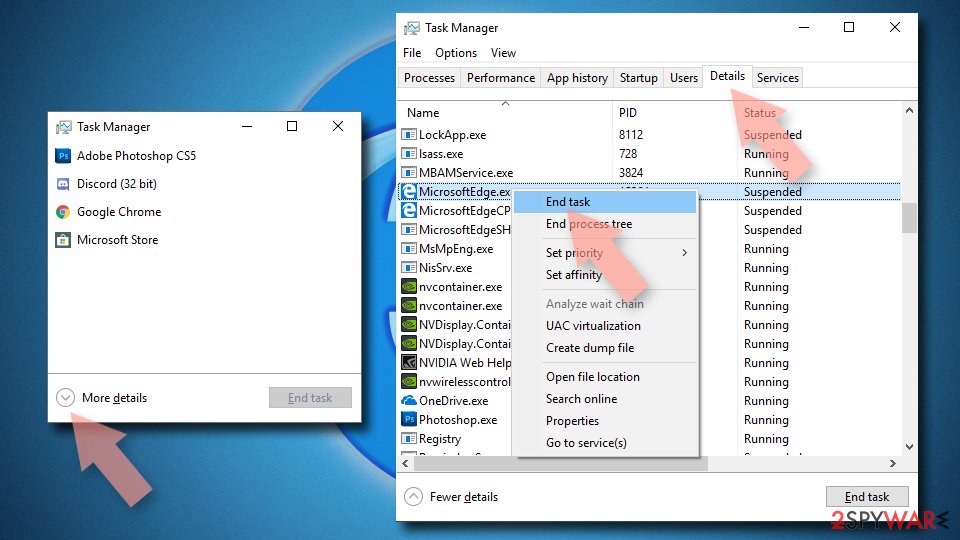
Reset MS Edge if the above steps did not work:
- Press on Ctrl + Shift + Esc to open Task Manager.
- Click on More details arrow at the bottom of the window.
- Select Details tab.
- Now scroll down and locate every entry with Microsoft Edge name in it. Right-click on each of them and select End Task to stop MS Edge from running.
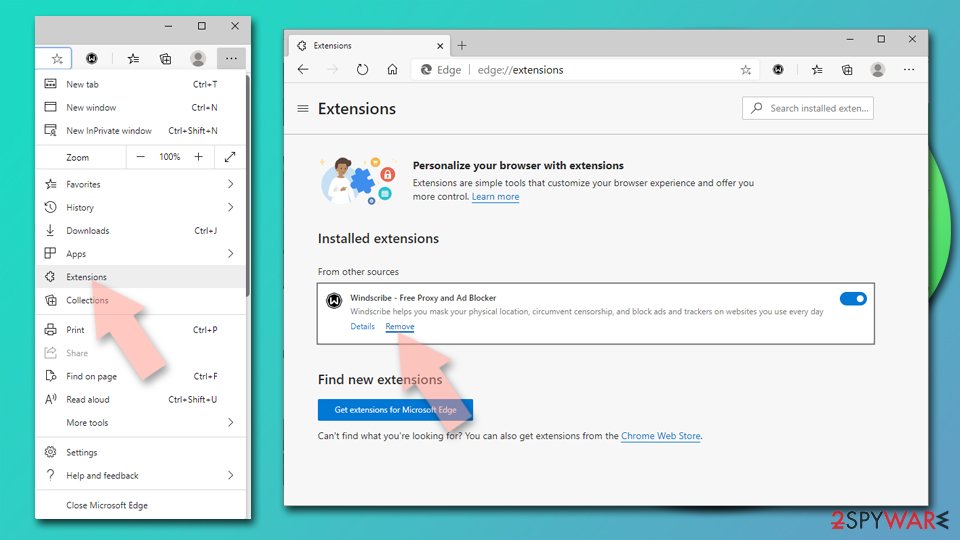
Delete extensions from MS Edge (Chromium):
- Open Edge and click select Settings > Extensions.
- Delete unwanted extensions by clicking Remove.
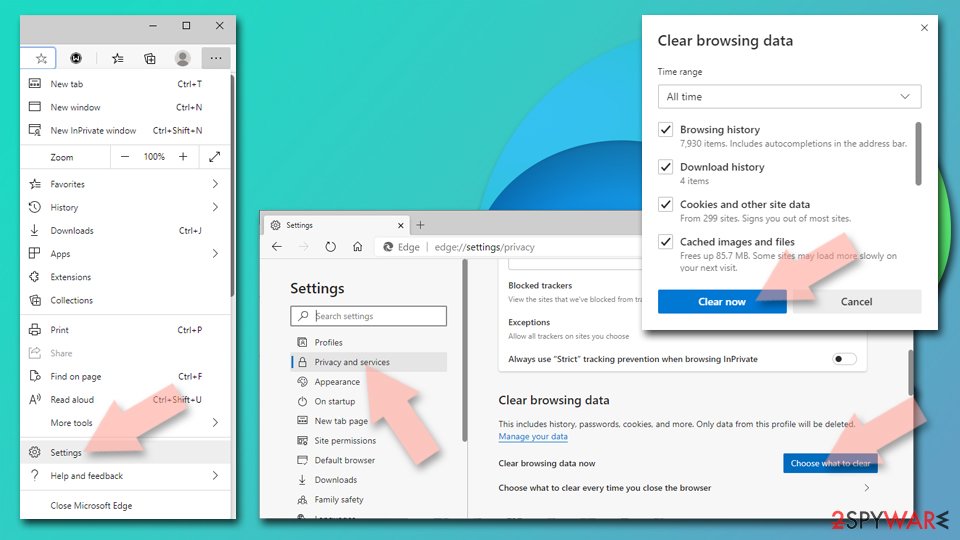
Clear cache and site data:
- Click on Menu and go to Settings.
- Select Privacy, search and services.
- Under Clear browsing data, pick Choose what to clear.
- Under Time range, pick All time.
- Select Clear now.
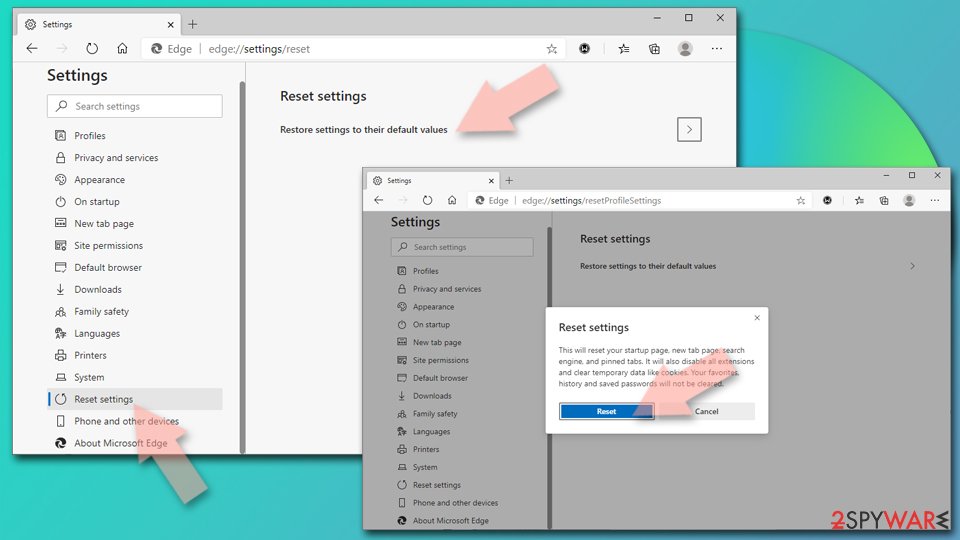
Reset Chromium-based MS Edge:
- Click on Menu and select Settings.
- On the left side, pick Reset settings.
- Select Restore settings to their default values.
- Confirm with Reset.
- This will disable extensions and reset startup pages but will not delete bookmarks, saved passwords, or browsing history.
Remove from Mozilla Firefox (FF)
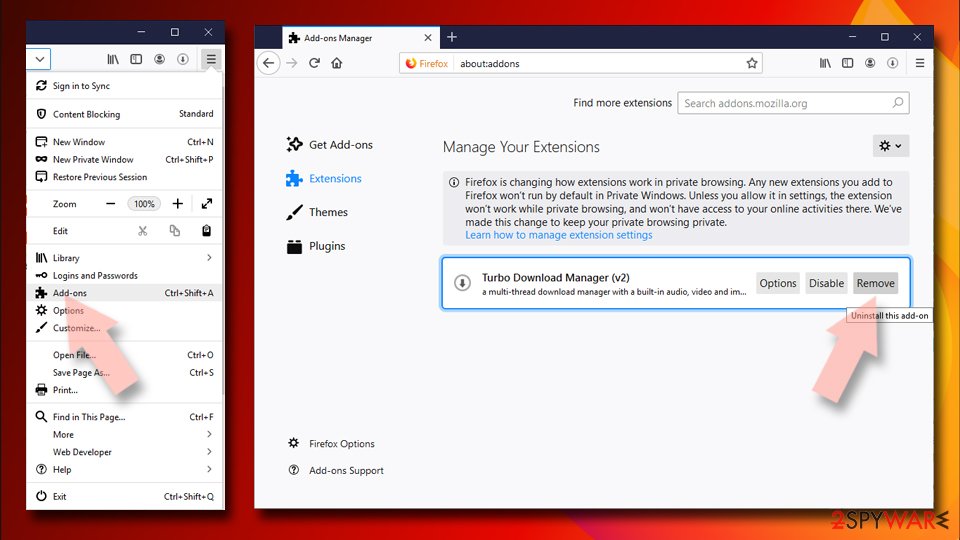
Remove dangerous extensions:
- Open Mozilla Firefox browser and click on the Menu (three horizontal lines at the top-right of the window).
- Select Add-ons.
- In here, select the unwanted extension and click Remove.
Reset the homepage:
- Click three horizontal lines at the top right corner to open the menu.
- Choose Settings.
- Under Home, set your preferred homepage and new tab settings.
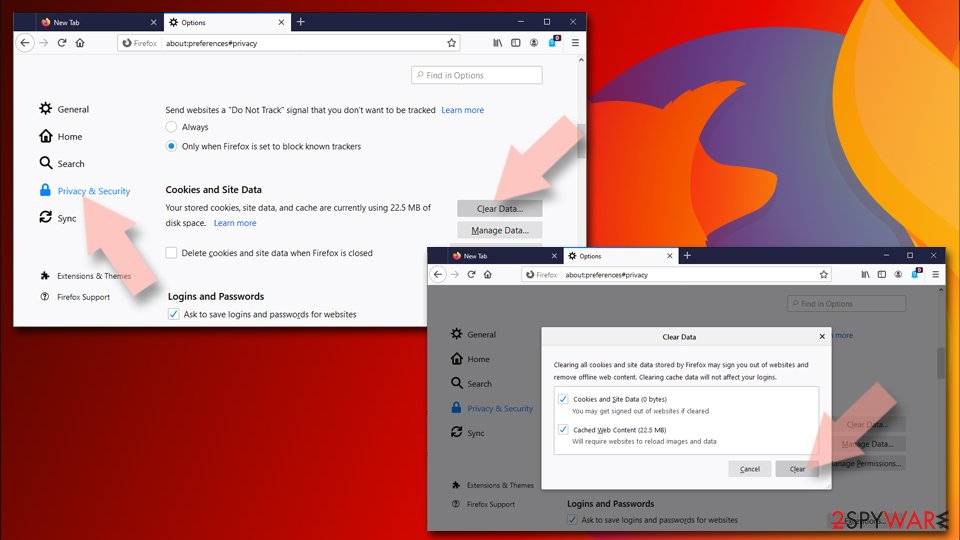
Clear cookies and site data:
- Click Menu and pick Settings.
- Go to Privacy & Security section.
- Scroll down to locate Cookies and Site Data.
- Click on Clear Data...
- Select Cookies and Site Data and Temporary cached files and pages, then click Clear.
Reset Mozilla Firefox
If clearing the browser as explained above did not help, reset Mozilla Firefox:
- Open Mozilla Firefox browser and click the Menu.
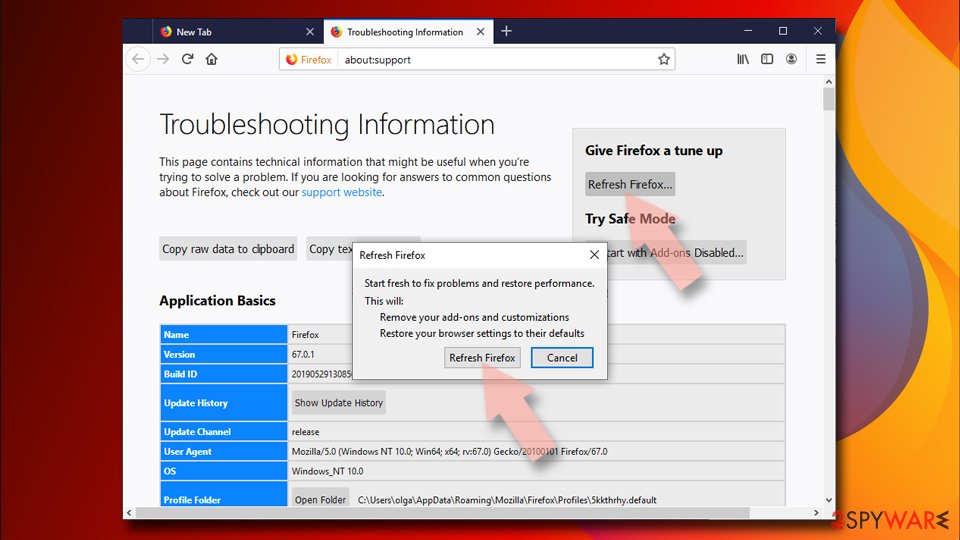
- Go to Help and then choose Troubleshooting Information.
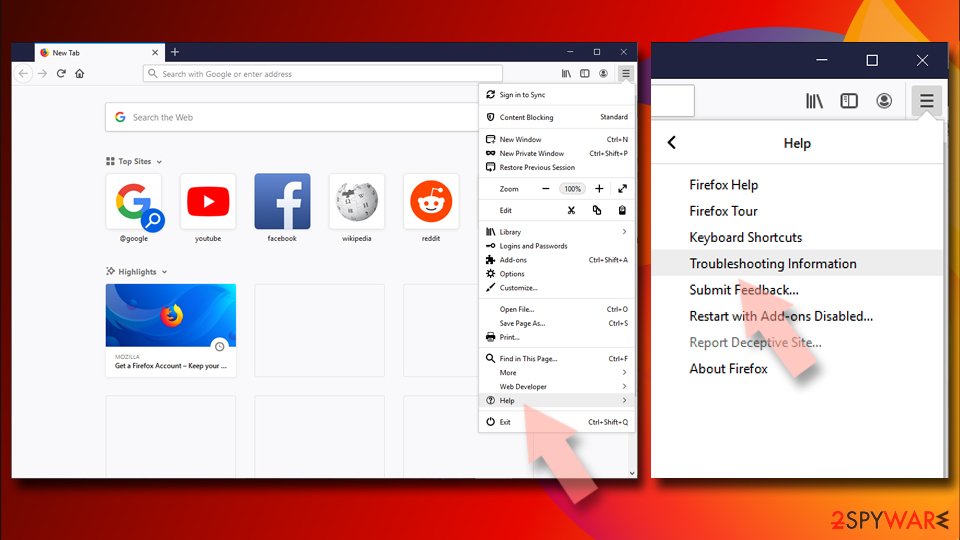
- Under Give Firefox a tune up section, click on Refresh Firefox...
- Once the pop-up shows up, confirm the action by pressing on Refresh Firefox.
Delete from Safari
Remove dangerous extensions:
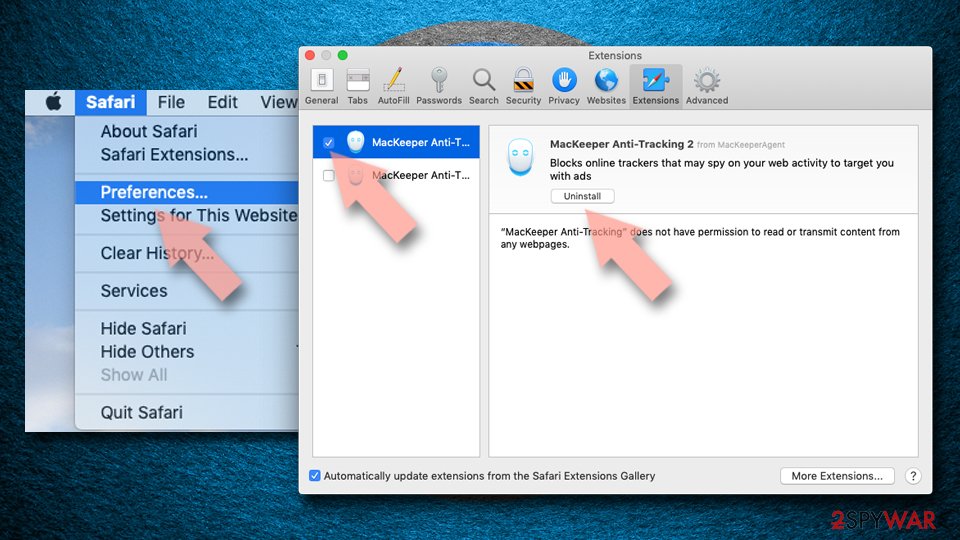
- Open Safari, click Safari in the menu at the top-left of the screen, and select Preferences.
- Go to the Extensions tab, look for any suspicious entries, and click Uninstall to remove them.
Clear history and website data:
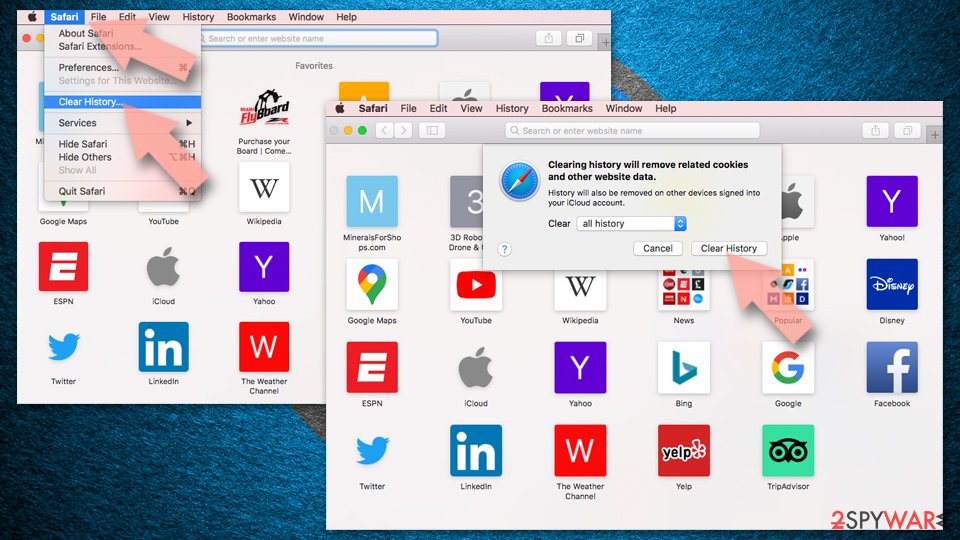
- Click Safari in the menu and pick Clear History.
- Set Clear to all history and confirm with Clear History.
Reset Safari:
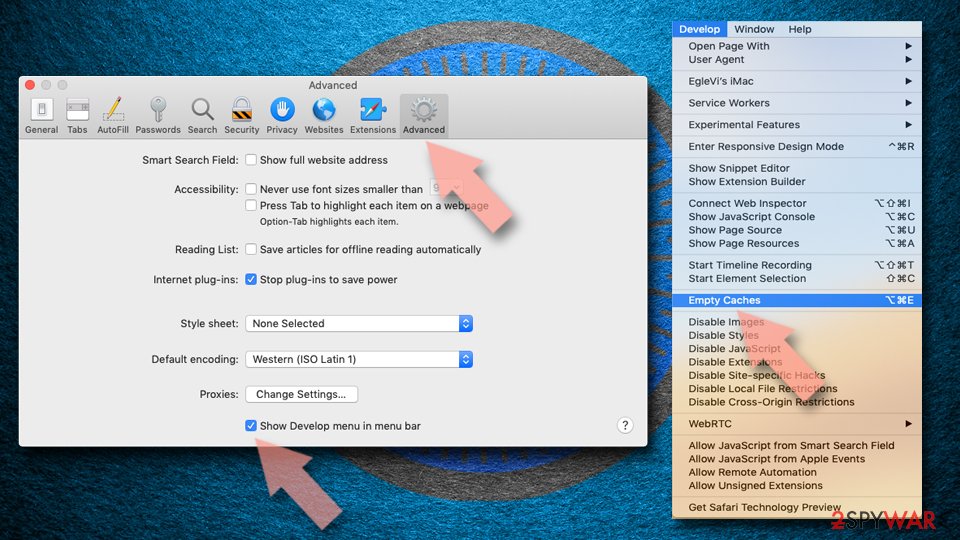
- Click Safari in the menu and select Preferences > Advanced.
- Enable Show Develop menu in menu bar.
- From the menu bar, click Develop and select Empty Caches.
Delete from macOS
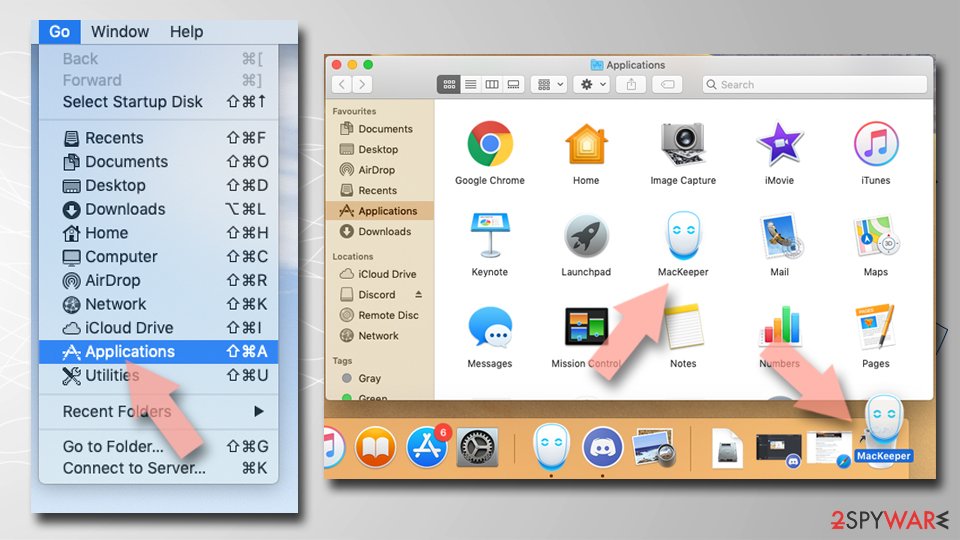
Remove the unwanted application:
- From the menu bar, select Go > Applications.
- In the Applications folder, look for any suspicious entries, then drag them to Trash (or right-click and pick Move to Trash).
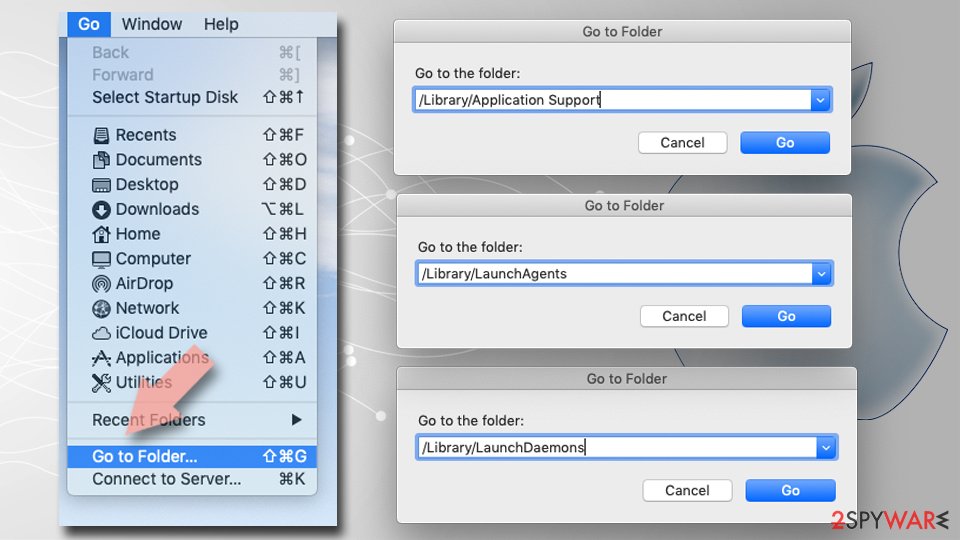
Delete leftover files and folders:
- Select Go > Go to Folder.
- Enter /Library/Application Support and remove any suspicious folders related to the unwanted program.
- Repeat the same check in the /Library/LaunchAgents and /Library/LaunchDaemons folders, deleting any suspicious entries.
- Finally, empty the Trash to permanently remove the leftovers.
Reset Internet Explorer
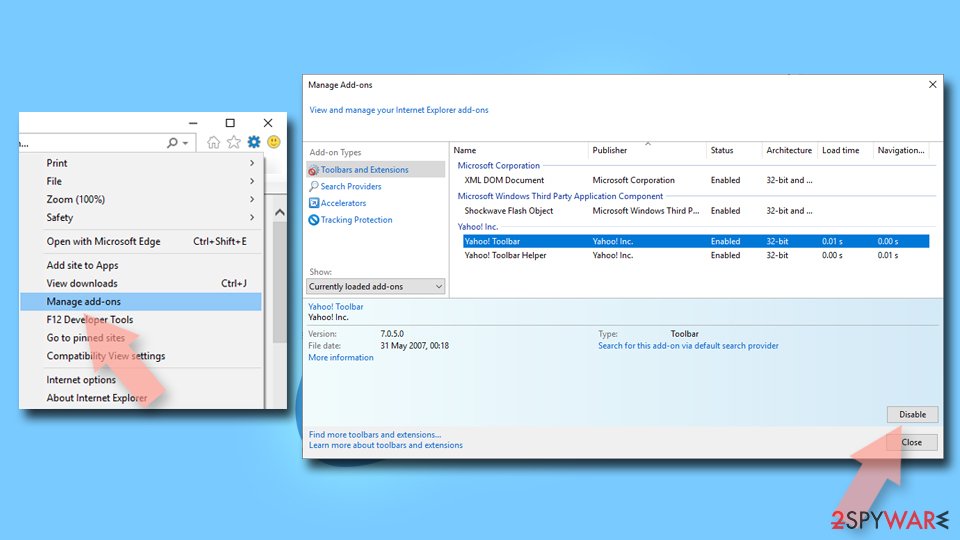
Remove dangerous add-ons:
- Open Internet Explorer, click on the Gear icon (IE menu) on the top-right corner of the browser
- Pick Manage Add-ons.
- You will see a Manage Add-ons window. Here, look for suspicious plugins. Click on these entries and select Disable.
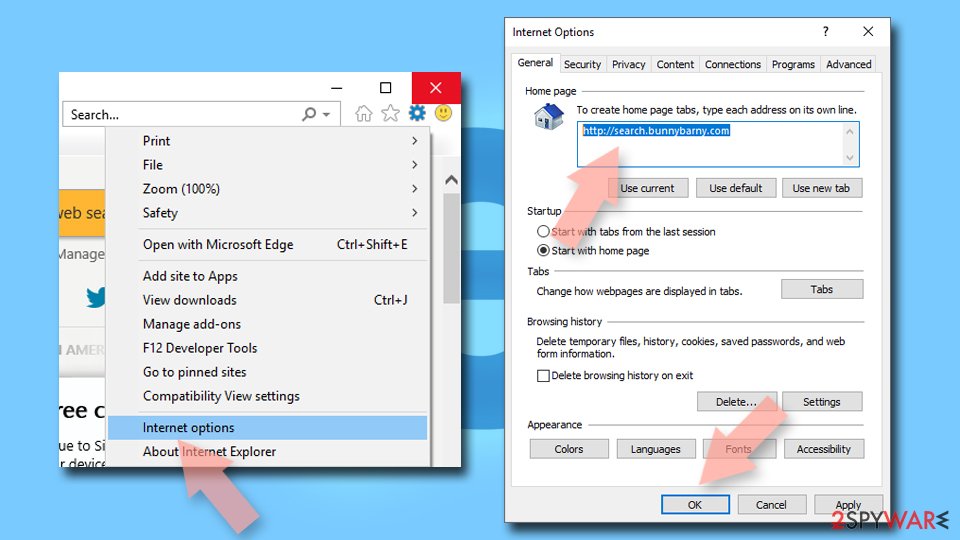
Change your homepage if it was altered:
- Open IE and click on the Gear icon.
- Select Internet Options.
- In the General tab, delete the Home page address and replace it by your preferred one (for example, Google.com).
- Click Apply and then select OK.
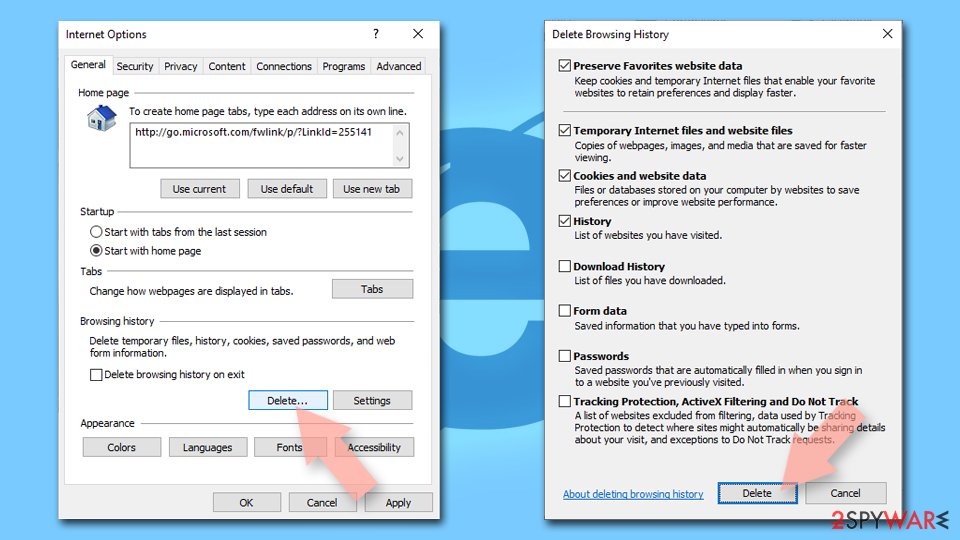
Delete temporary files:
- Press on the Gear icon and select Internet Options.
- Under Browsing history, click Delete...
- Select relevant fields and press Delete.
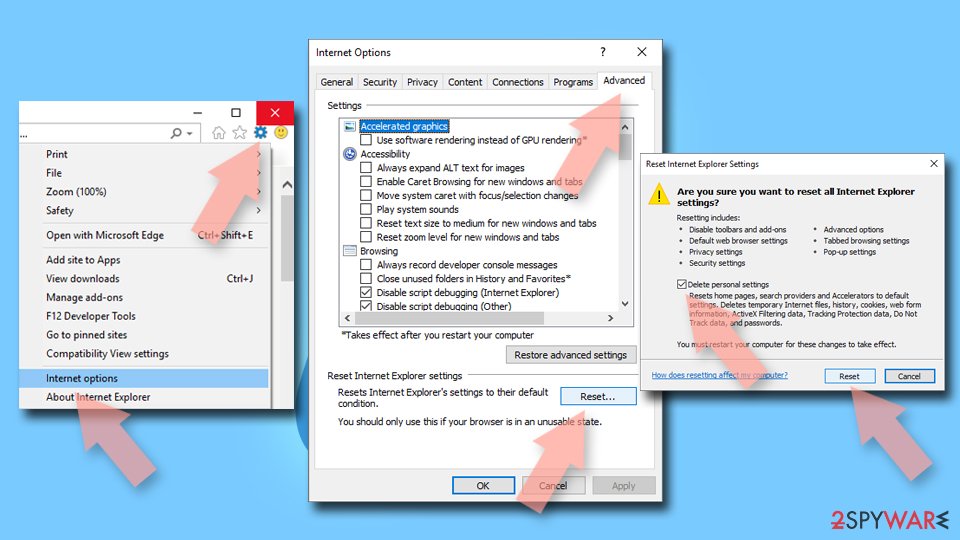
Reset Internet Explorer:
- Click on Gear icon > Internet options and select Advanced tab.
- Select Reset.
- In the new window, check Delete personal settings and select Reset.
Choose a proper web browser and improve your safety with a VPN tool
Online spying has got momentum in recent years and people are getting more and more interested in how to protect their privacy online.
One of the basic means to add a layer of security - choose the most private and secure web browser. Although web browsers can't grant full privacy protection and security, some of them are much better at sandboxing, HTTPS upgrading, active content blocking, tracking blocking, phishing protection, and similar privacy-oriented features.
However, if you want true anonymity, we suggest you employ a powerful VPN - it can encrypt all the traffic that comes and goes out of your computer, preventing tracking completely.
Lost your files? Use data recovery software
While some files located on any computer are replaceable or useless, others can be extremely valuable.
Family photos, work documents, school projects - these are types of files that we don't want to lose. Unfortunately, there are many ways how unexpected data loss can occur:
- power cuts
- Blue Screen of Death errors
- hardware failures
- crypto-malware attack
- even accidental deletion
To ensure that all the files remain intact, you should prepare regular data backups. You can choose cloud-based or physical copies you could restore from later in case of a disaster. If your backups were lost as well or you never bothered to prepare any, can be your only hope to retrieve your invaluable files.
From our report of Jan 2021 · not reviewed since
Remove SearchQuest virus from your system with our help
Constant pop-up ads, a slower system, and other problems can be extremely annoying and interfere with normal computer use.
To avoid such things, it is best to get rid of SearchQuest. Also, be more careful in the future and always install new applications by using the Advanced/Custom installation option.
If you want to remove SearchQuest from the system, you can do it manually and automatically. The best solution is to check your PC with a reputable anti-spyware because this way all potentially unwanted and dangerous programs will be removed.
Questions about SearchQuest ads
What is SearchQuest?
SearchQuest is a browser add-on categorized as adware and a potentially unwanted program released in 2021. Developers present it as a utility making searching and translating information easy, but experts recognize its aggressive advertising nature.
Upon installation, SearchQuest installs itself on Windows startup, creates multiple registry entries, and affects all browsers including Chrome, Firefox, and Internet Explorer. It launches automatically with system boot to enable advertisements from sponsors. Users experience continuous 'Ads by SearchQuest,' 'SearchQuest Ads,' and 'Powered by SearchQuest' advertisements while browsing.
Is SearchQuest a virus?
No, SearchQuest is not a virus but adware classified as a potentially unwanted program. While not technically a virus that damages files, it behaves like malware through aggressive advertising and data collection.
The primary risk comes from unreliable third-party advertisements it displays, which may promote questionable or malicious services. Many users mistakenly believe adware constitutes viruses due to persistent installation and difficult removal. SearchQuest prioritizes showing ads over providing legitimate value, warranting its PUP classification despite lacking direct file-infecting virus characteristics.
How does SearchQuest get installed?
SearchQuest distributes primarily through bundling with freeware where users unwittingly install it while downloading desired software. Developers use bundling as a stealthy distribution method, packing SearchQuest with download managers, media players, PDF creators, and other utilities.
Users installing freeware without selecting Advanced or Custom options automatically agree to install SearchQuest bundled components. The program is less commonly installed from the official SearchQuest website than through bundled distribution. Most users encounter SearchQuest unexpectedly after completing freeware installation without attention to bundled components.
What advertisements does SearchQuest display?
SearchQuest shows constant pop-up ads, banner advertisements, and potentially unreliable third-party sponsored content while you browse. These ads are labeled with SearchQuest branding and uninstall links according to the official website. However, the risk lies in these ads being prepared by unreliable third parties offering questionable or untrustworthy products.
Clicking SearchQuest ads risks exposure to phishing sites, malware downloads, or scam websites. The ads don't represent legitimate products but rather attempts to profit from user clicks. Each ad displayed generates revenue for SearchQuest developers regardless of content legitimacy.
What data does SearchQuest collect?
SearchQuest drops cookies on all browsers it finds and starts collecting browsing-related information continuously. It gathers your IP address, location, email address, search terms, and website click data. Although it cannot access highly sensitive information like credit card numbers without permission, it maintains comprehensive records of your online behavior.
This data is used to create targeted advertisements appearing throughout your browsing. Sharing collected information with unreliable third parties compromises your privacy. The continuous tracking creates detailed profiles of your interests enabling sophisticated ad targeting without your knowledge.
How does SearchQuest affect my computer?
SearchQuest negatively affects computer performance through constant ad injection and registry modifications. You experience slowdowns, crashes, and freezes as system resources are consumed displaying advertisements. The ad-supported extension modifies browser behavior and may prevent normal browsing functionality.
Pop-up ads interrupt your workflow and distract from intended tasks. Performance degradation becomes increasingly noticeable over time as SearchQuest accumulates modifications and cookies. Some problems persist even after attempting deletion because supporting components remain on your system, requiring professional security tool intervention.
How do I remove SearchQuest?
First, uninstall SearchQuest and any bundled applications from your Control Panel's Programs list. Delete the SearchQuest extension from Chrome, Firefox, Internet Explorer, and Edge through browser settings.
Clear cookies and cache from all browsers to remove tracking elements. Reset browsers to default settings. Run full system scans with reputable anti-spyware software to locate and eliminate remaining SearchQuest components and registry entries.
Security software detection and removal is more effective than manual deletion because SearchQuest installs multiple components across your system. Using dedicated tools ensures complete elimination preventing performance issues and ad return.
How can I prevent SearchQuest?
Always select Advanced or Custom installation when installing any freeware rather than clicking through Quick options. Pay careful attention during installation, reading all terms and deselecting bundled applications before proceeding.
Look for optional downloads lists and ensure SearchQuest or similar programs are unchecked before installation completes. Avoid downloading from questionable software providers and third-party distribution sites. Download only from official sources when possible.
Download managers, media players, and PDF creators from reputable vendors to reduce bundled adware risk. Keep security software updated to detect and block SearchQuest before infiltration occurs.
Will Fortect remove SearchQuest?
Fortect scans Windows for malware and unwanted programs and repairs the system files and settings they change, and its free scan shows what it finds on your PC before you decide anything.
For SearchQuest, follow the plan above as well: the browser steps take back permissions and settings that no scanner treats as a threat, and uninstalling the program that brought it removes the source.
Run Microsoft Defender's full scan and, if anything was found, its offline scan as a second opinion. If the symptoms are gone after the plan and both scans are clean, there is nothing more to do.
Sources
- Google Chrome Help: Use notifications to get alerts (no longer online) (read October 5, 2026)
- FTC: How to recognize, remove and avoid malware (read October 5, 2026)
- Microsoft Learn: Microsoft Defender Offline (read October 5, 2026)
- Microsoft Learn: How Microsoft names malware (read October 5, 2026)