
Wwka ransomware: what it is and how to remove it
Wwka ransomware is a file-locking threat belonging to the Djvu ransomware family that encrypts your files with RSA-2048 and demands payment in Bitcoin. First documented in 2021, it appends .wwka extension to files and may be decryptable using free tools.
Facts checked October 5, 2026. Removal steps tested on Windows 11 (26H2) and checked against Microsoft's and the browser makers' current documentation. Sections marked as our earlier report are the original text: they describe the threat as it was then and have not been reviewed since. The 2026 status, the removal steps and the questions are current.
Automatic
Get a free scan and check if your PC is infected.
Fortect finds malware, unwanted programs and the Windows damage they leave behind, and repairs it in one pass.
A free scan checks for the encryptor still on the PC; it does not decrypt .wwka files.
Do it yourself · free Remove Wwka ransomware yourself 6 steps, about 18 minutes, no software needed.
Start the steps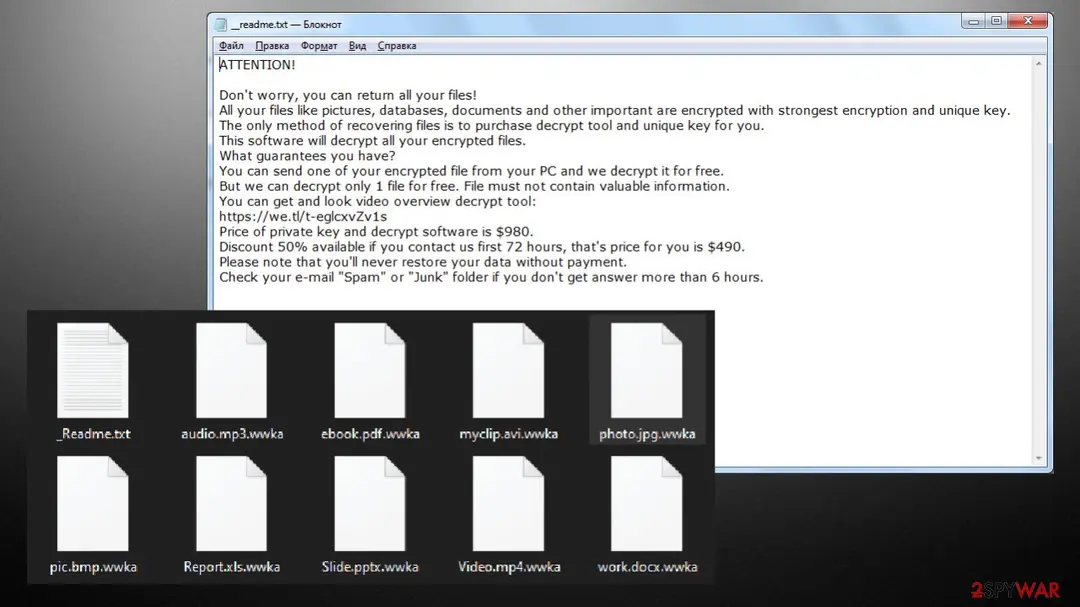
Wwka ransomware: summary
| Distribution | File-sharing platforms, especially most popular torrent websites |
|---|---|
| name | Wwka ransomware |
| Type | Cryptovirus, file-locker |
| Family | Djvu/STOP ransomware |
| Symptoms of infection | Non-system files are inaccessible and renamed; ransom notes scattered throughout the infected machine; can't open security-related websites or launch security software |
| Ransom note | _readme.txt |
| Removal | Scan the PC with security software to find and remove the malware and anything installed with it. Fortect scans Windows for malware and repairs the system files and settings it damaged. Remove it nowTo use the full-featured product, you have to purchase a license for Fortect. The scan is free. |
Show 15 more facts
| Appended file extension | .wwka |
|---|---|
| Data recovery | Use our suggested techniques described in detail in this article |
| Detection names | No Microsoft detection name is known |
| Contact | manager@mailtemp.ch, helpmanager@airmail.cc |
| Encrypted file extension | .wwka |
| Decryptor | No free decryptor is known for this variant; check No More Ransom (nomoreransom.org) for updates |
| Damage | Not recorded in the old report |
| Name | Wwka ransomware |
| Symptoms | Files renamed with a new extension and a ransom note left in folders |
| Evidence | 4 write-ups by security sites; no sample analysed yet |
| Encrypted files | .wwka |
| Attacker contacts | manager@mailtemp.ch |
| Free decryptor | No free decryptor is known (checked 5 October 2026) |
| First seen | 12 July 2021 |
| Facts checked | 5 October 2026 |
- File extension:
.wwka - Note file:
_readme.txt - Contact:
manager@mailtemp.ch
From our report of Jul 2021 · not reviewed since
More from our earlier report on Wwka ransomware
- To safely and completely remove the infection from your computer, you must use a professional anti-malware software
- Ransomware does extensive damage to system files without encrypting them.
How Wwka ransomware behaves
From our report of Jul 2021 · not reviewed since
Wwka ransomware encrypts your files and demands ransom
Wwka ransomware is an infection targeting Windows OS users around the world.
When it infects your computer, all personal files are encrypted with the RSA-2048 coding algorithm and are rendered useless until a specific decryption software is used to unlock them. Unfortunately, a unique key is used for each victim, which makes file recovery without acquiring it rather difficult.
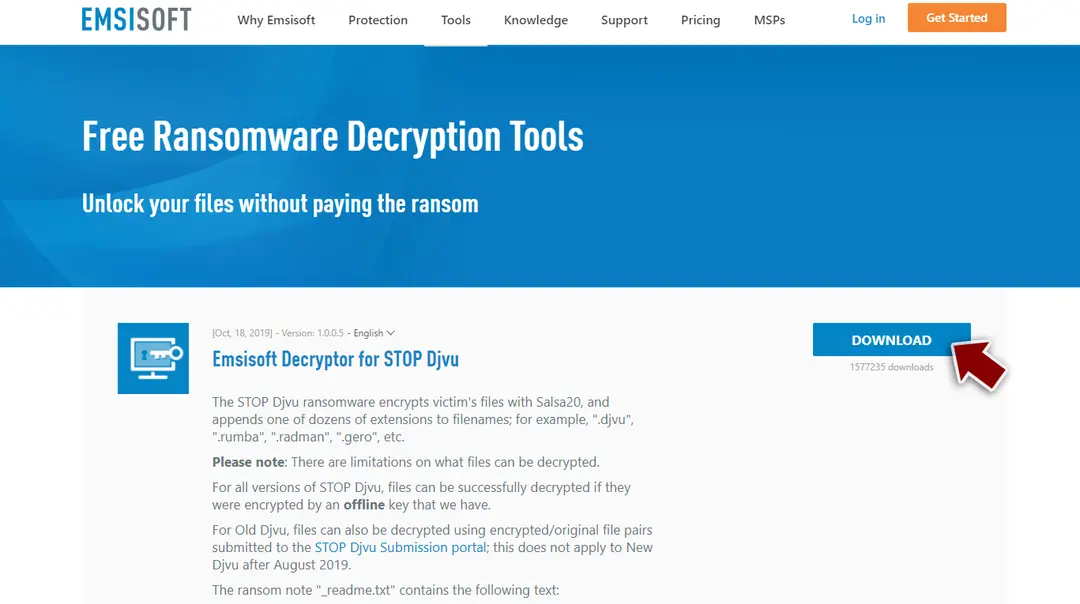
Luckily, since this infection belongs to the Djvu ransomware family, there is a chance that an offline key was used to lock your data, providing an opportunity for a specially-crafted, free Emsisoft decryption tool to work.
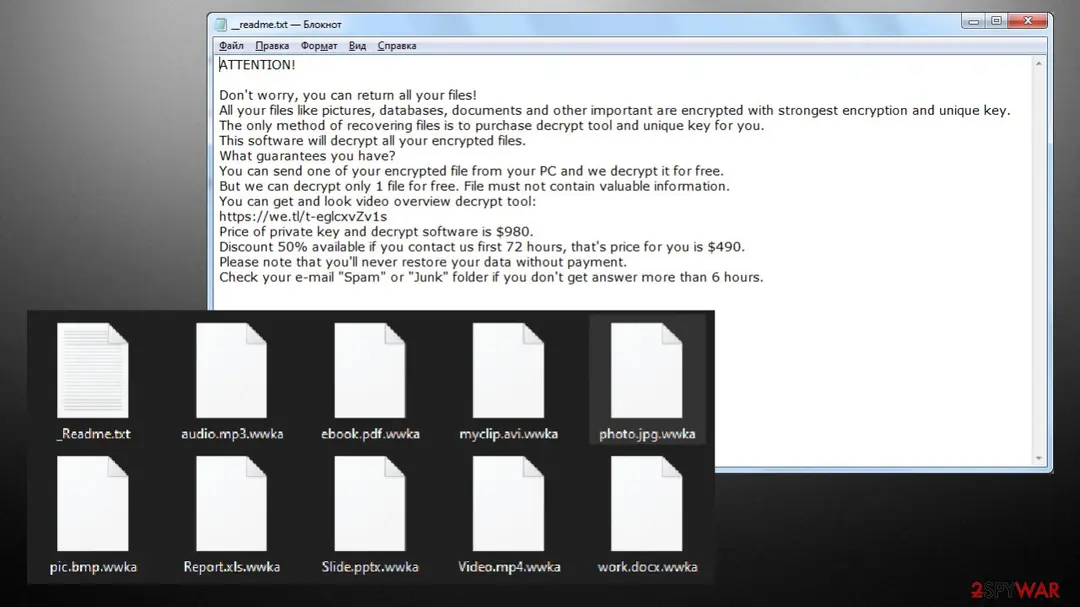
As soon as the data-locking process has transpired, users are presented with a _readme.txt pop-up message. Within the ransom note, the developers are trying to convince you that the only way to recover those files is by purchasing their decryption tool.
The attackers are demanding $980/$490 in Bitcoin. While it might be a lot for some and minuscule for others, paying the crooks should be the last resort.
Instead, several alternative methods might work just fine, and we provide all of them below. But that's the final step of the process. First, we'll provide detailed instructions on removing the file-locking parasite and repairing damaged system sectors.
It's pretty easy to identify whether your device was infected with this ransomware or some other strain. First and foremost, if your personal files, such as pictures, documents, archives, databases, etc., are appended with the .wwka extension, and you should be shown a ransom note.
Besides that, your machine should work just fine, although it does not mean that system files and certain Windows sectors were not affected (the underlying changes malware makes are rarely visible to end-users).
The ransom note does not really differ much from other Djvu variants - cybercriminals do not alter the body text within the file for a while now, as their goals remain the same.
Malware's primary distribution method is via file-sharing platforms, such as torrent websites. You or someone else using your device might have downloaded a software or game crack containing the virus payload file and executed it by thinking that they will illegally unlock some type of software.
That's why we always recommend refraining from using such high-risk portals as they're crawling with various types of malware. But what's done is done. Now all that matters is how you respond to this nightmare of an incident.
You could contact the criminals through the given emails (manager@mailtemp.ch, helpmanager@airmail.cc) and forward them the demanded amount with or without the offered 50% discount, but please note that criminals are criminals for a reason.
You might never receive the promised decryption software, or it might not work. Besides, by succumbing to the assailants' demands, you would only motivate them to attack more innocent people and provide funding to develop new, more devastating ransomware and more effective distribution techniques.
Besides, as we've already mentioned, there are alternative ways to recover your encrypted data. Thus there's no need to contact the criminals or pay the ransom. Instead, remove the virus with the help of the instructions provided below and try out the suggested data recovery options. Of course, if you had backups, you can skip the recovery part.
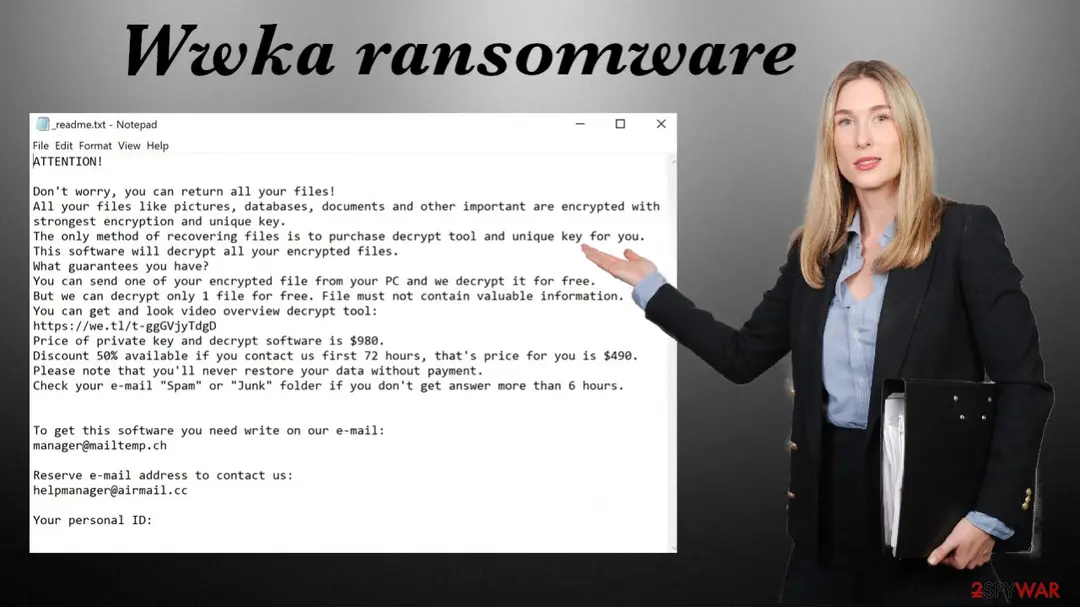
The Wwka ransomware note
ATTENTION!
Don't worry, you can return all your files!
All your files like pictures, databases, documents and other important are encrypted with strongest encryption and unique key.
The only method of recovering files is to purchase decrypt tool and unique key for you.
This software will decrypt all your encrypted files.
What guarantees you have?
You can send one of your encrypted file from your PC and we decrypt it for free.
But we can decrypt only 1 file for free. File must not contain valuable information.
You can get and look video overview decrypt tool:
hxxps://we.tl/t-fhnNOAYC8Z
Price of private key and decrypt software is $980.
Discount 50% available if you contact us first 72 hours, that's price for you is $490.
Please note that you'll never restore your data without payment.
Check your e-mail "Spam" or "Junk" folder if you don't get answer more than 6 hours.
To get this software you need write on our e-mail:
manager@mailtemp.ch
Reserve e-mail address to contact us:
helpmanager@airmail.cc
Your personal ID:
How to remove Wwka ransomware
Tools you'll need
All of these are free except where noted. Download them on a clean device if the infected PC is offline.
- A USB stick: to keep the ransom note, two or three encrypted files and screenshots off the infected PC.
- Microsoft Defender Offline: built into Windows 11 and Windows 10; scans before Windows starts, so running malware cannot hide.
- Microsoft Safety Scanner: a second, portable scanner with current signatures; each download works for 10 days.
- ID Ransomware: identifies the family from the note and one encrypted file and says whether a decryptor exists.
- No More Ransom: the free decryptors from police and security companies; check it again every few months.
- Fortect (optional): scans Windows for malware and repairs the system files and settings it damaged. The free scan is in the box above.
How to remove Wwka ransomware and get your files back
Work in this order.
Disconnecting comes first, removal comes before any restore, and nothing here asks you to contact the attackers.
Step 1: Disconnect the PC and unplug backup drives
Unplug the network cable or turn off Wi-Fi, and disconnect USB drives, external disks and network shares, so Wwka ransomware cannot reach more files. Pause OneDrive, Google Drive or Dropbox sync, because synced folders upload the encrypted copies over the good ones.
Leave the PC on but offline while you read the next steps, since a restart can let the ransomware run again. This applies to Windows 11 and Windows 10 alike.
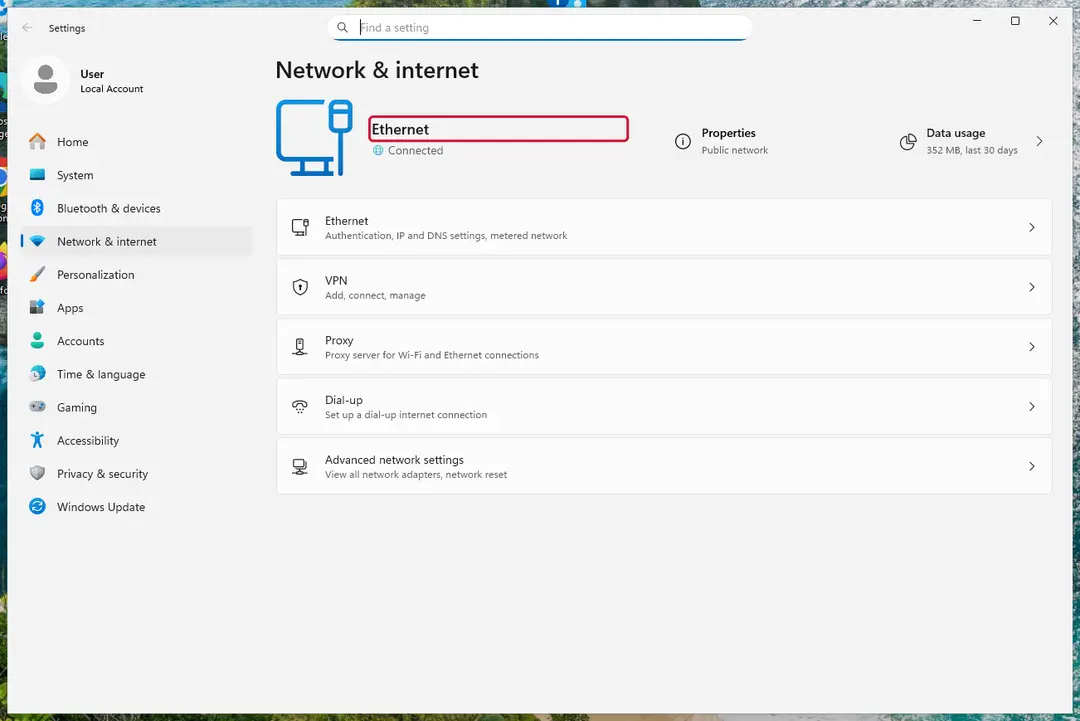
Windows 11: turn off Wi-Fi to take the PC offline. Full procedure with screenshots: Ransomware: first steps, finding a decryptor and recovering files
Step 2: Save the ransom note and confirm the family
Your files now end in
.wwkaand the instructions are in_readme.txt. Save both to a USB stick, a copy of the note and two small encrypted files, before anything else.On another device, check them with ID Ransomware or Crypto Sheriff: the family name decides which decryptor, if any, can help. Keep the note's ID and contact line for your report.
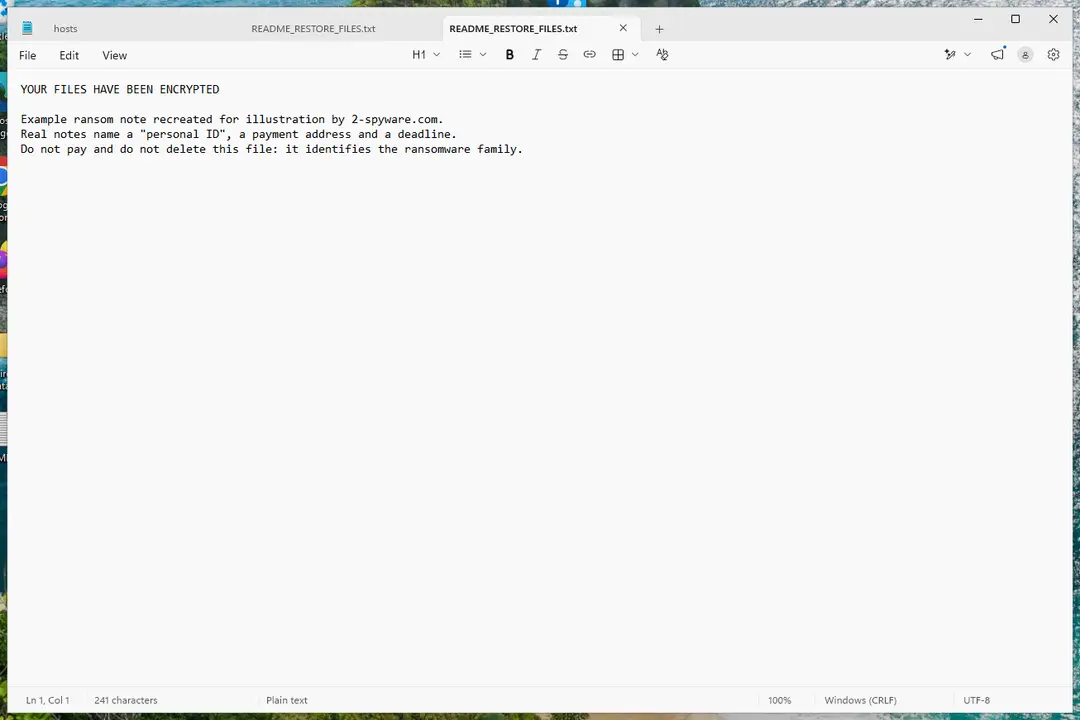
Windows 11: the ransom note and encrypted files to copy for identification. Full procedure with screenshots: Ransomware: first steps, finding a decryptor and recovering files
Step 3: Check for a free decryptor
Our last check found that for Wwka ransomware, no free decryptor is known (checked 5 October 2026). Look again yourself in the No More Ransom list and the free decryptor pages of Emsisoft, Avast and Kaspersky, which add new families every year.
A decryptor needs the ransomware gone first, or it encrypts the files again. Keep at least one copy of the encrypted files on an external drive, even if no tool works yet.
Full procedure with screenshots: Ransomware: first steps, finding a decryptor and recovering files
Step 4: Remove the ransomware before you restore or decrypt
Removing Wwka ransomware does not bring the files back, but it has to come first. Start with Defender's Full scan, then the offline scan from the same Scan options page, which checks the disk before Windows loads.
If the scan cannot start, use Safe Mode with Networking. Delete the ransom notes only after you have saved a copy, because removal tools sometimes leave them behind on Windows 11 and Windows 10.

Windows 11: Windows Security > Virus & threat protection > Scan options. Full procedure with screenshots: Run a Microsoft Defender Offline scan
Step 5: Look for shadow copies of the files
Windows keeps shadow copies for restore points and backups, and some ransomware fails to delete them.
vssadmin list shadowsin an administrator Command Prompt tells you at once whether any exist.If they do, right-click the folder that held your files, open Properties > Previous Versions, select a version from before the attack, and click Open to check it before you Restore or copy the files out. Windows 11 and Windows 10 both have the tab.
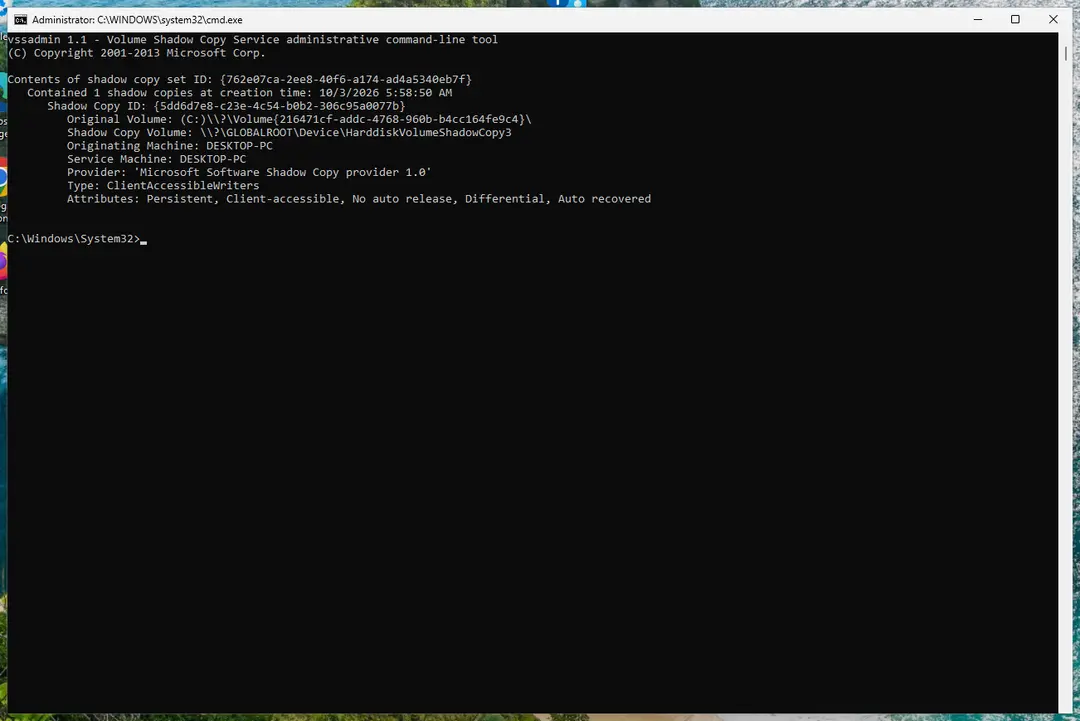
Windows 11: vssadmin list shadows shows whether shadow copies exist. Full procedure with screenshots: Ransomware: first steps, finding a decryptor and recovering files
Step 6: Restore the files from a backup or recover deleted originals
A backup made before the attack is the surest way back. Connect it only once the PC is clean, then restore from File History, Windows Backup, OneDrive's Restore your OneDrive or your own external copies.
Without a backup, try file recovery: the originals that Wwka ransomware deleted may still be on the disk until something overwrites them. Install nothing new on the drive you want to recover from on the Windows 11 or Windows 10 PC.
Full procedure with screenshots: Recover deleted files (Recycle Bin, backups, OneDrive) On uGetFix
From our report of Jul 2021 · not reviewed since
Here's how to remove the virus and repair damaged Windows components
Ransomware infections are a nightmare, and they're getting more and more frequent.
These viruses are spread in various ways, from infected email attachments and RDP attacks to file-sharing platforms. Since we all make mistakes, reliable anti-malware software like the is a must for every computer user.
A proper security tool is your frontline defense against countless computer viruses lurking on the internet. If constantly updated, such software would stop all cyber infections, from ransomware to PUPs, at the doorstep and keep you and your device safe and sound.
It can also be used to remove Wwka ransomware. Therefore we highly recommend downloading either the or the abovementioned software, updating the chosen tools virus definitions database, and performing a full system scan of the infected computer. But before proceeding to removal, copy all encrypted files from the infected machine to a USB, SSD, or another offline storage device.
Either of the suggested tools will automatically detect and isolate the ransomware along with all of its components. When the scan is complete, you will be provided with the choice to remove all of them. Please stick to the recommendations and get rid of all suspicious/malicious files/entries.
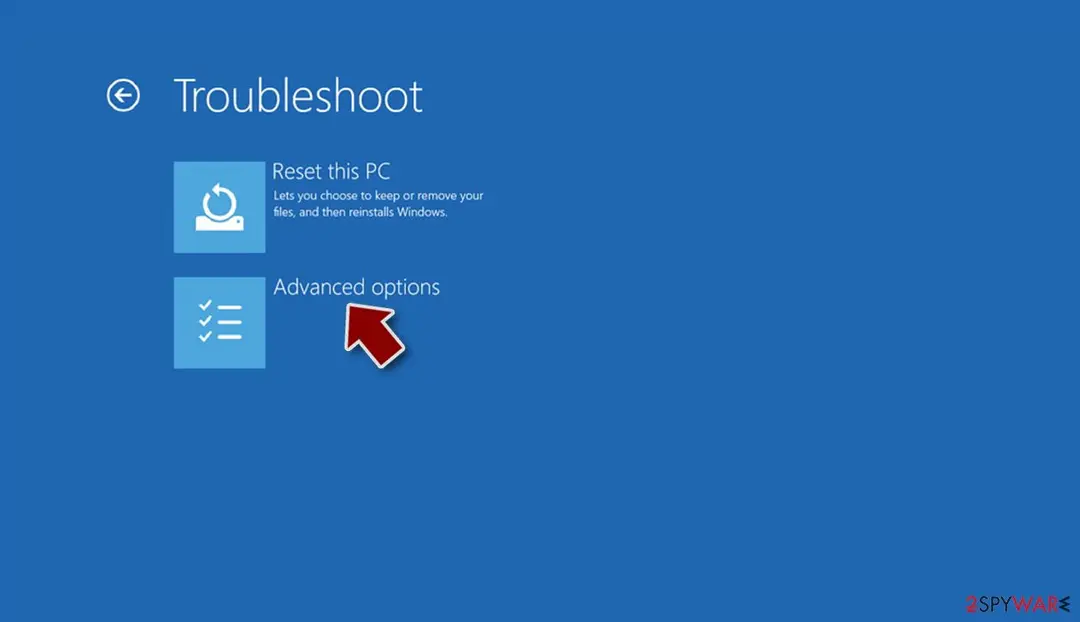
Users have reported that Wwka file virus blocked them from opening their security software. The virus does that to establish persistence. You can overcome this deception by rebooting your infected machine in Safe Mode with Networking, and here's how that's done:
Once you've successfully entered the needed Windows OS mode, you can download the above-mentioned trustworthy security software and proceed with the ransomware removal. To prevent such perils in the future, refrain from using file-sharing platforms and frequently perform full system scans with the AV engine of your choice.
Once the Wwka virus is removed, you need to repair the damage caused to various system files and settings. As we've mentioned before, ransomware does extensive damage to them to establish persistence. It heavily modifies the registry, host file, and other core system directories.
These changes will result in Blue Screens of Death, freezes, complete system failure, or even infection renewal if left unattended. Therefore, after you remove the file-locking parasite, it's essential to repair all of these modifications. Unfortunately, you won't be able to fix all these system issues manually.
By downloading and performing system diagnostics with this software, it will fix the registry, broken DLLs, and other system-related irregularities that would cause system stability, performance, and other issues.
We also vouch for this software, so here's what you need to do to repair the ransomware caused damages:
If you didn't skip any of the aforementioned steps, you have completed the virus removal and repaired all damages caused to the system files and settings. Only now can you safely retrieve your data from backups if such were kept.
If not, proceed to the next chapter, where we present the best data recovery options that we've compiled during our 20 years of helping people get out of sticky situations without losing a dime.
- Right-click on the Start button and select Settings.
- On the left side of the window, pick Recovery.
- Click Restart now.
- Select Troubleshoot.
- Go to Advanced options.
- Select Startup Settings.
- Press Restart.
- Now press 5 or click 5) Enable Safe Mode with Networking.
- Download the application by clicking on the link above
- Click on the ReimageRepair.exe
- If User Account Control (UAC) shows up, select Yes
- Press Install and wait till the program finishes the installation process
- The analysis of your machine will begin immediately
- Once complete, check the results - they will be listed in the Summary
- You can now click on each of the issues and fix them manually
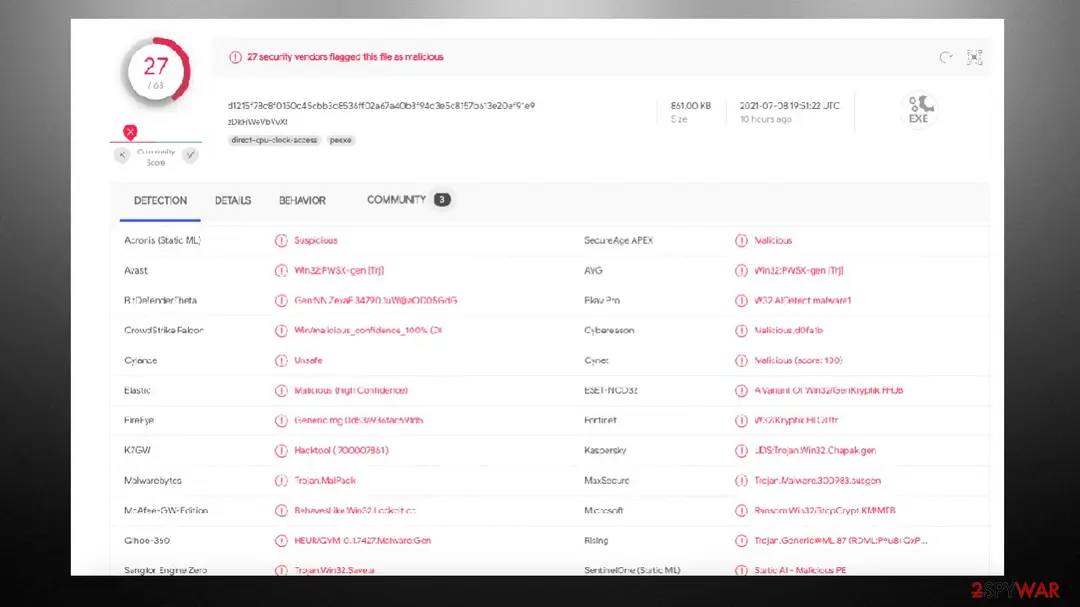
From our report of Jul 2021 · outdated details corrected in October 2026
Best options to recover Djvu ransomware encrypted files
In this part of the article, we present the two best options to recover .wwka files.
Please try the second one only if the first one doesn't work. Not let's begin with the free decryptor from Emsisoft. This company dedicates its time and money to help Djvu family ransomware victims to get their files back without the intervention of the criminals.
The company is doing that because the file-lockers from this lineage account for more than half of all ransomware infections worldwide. It's worth mentioning that the free decryption software won't work for everyone. It will help victims if the ransomware during the infection had problems connecting to the remote assailants' server and encrypted their data with an Offline ID.
No matter what ID was used to lock up your precious files, you have to try this tool out as it's free and have nothing to lose. Please follow the guidelines below and keep your fingers crossed:
Suppose the free software from Emsisoft was able to unlock .wwka files, a prompt with "Decrypted!" will be shown. That's the best-case scenario, as now you can freely use your data again. Please learn from this incident and always use the recommended security software to keep your devices and you safe from various malware.
When the "Error:
- Unable to decrypt the file with ID:" appears
- it means that no one has yet sent needed copies to the company
- so it hasn't cracked the code of this particular ransomware
Arm yourself with patience, and try the free decryptor within a few days.
The worst outcome is when the "This ID appears to be an online ID, decryption is impossible" message appears. That means that, unfortunately, the Emsisoft decryptor is not able to recover encrypted files as an Online ID was used when your files were being encrypted. But don't lose hope, as all is not lost yet.
Our second recommended software could do the trick. But use it only if the last message from the Emsisoft decryptor was delivered. Since there are thousands of different ransomware strains, it is immediately impossible to tell whether third-party software will work for you.
But since it helped numerous ransomware victims, maybe it will also prove useful in your case. Follow this step-by-step guide:
We truly hope that all of these instructions helped you to remove the Wwka file virus, fix your damaged system, and most importantly, recover the encrypted files. The particular ransomware is one of the newer variants in this family, so decryption options are limited. However, you can store some of the virus-affected pieces and restore them later when the additional decryption tool gets released.
In 2021, the online ID forming method kept those files unrecoverable since there was no other option to obtain the needed key without paying the ransom. But that is not the solution.
Especially, when it comes to this well-known family of cryptocurrency extortionists. Make sure to remove the threat properly using or before getting any files recovered or replaced with safe versions from backups. Do not risk getting your files encrypted again.
- After pressing the Download button, a small pop-up at the bottom, titled decrypt_STOPDjvu.exe, should show up - click it.
- If User Account Control (UAC) message shows up, press Yes.
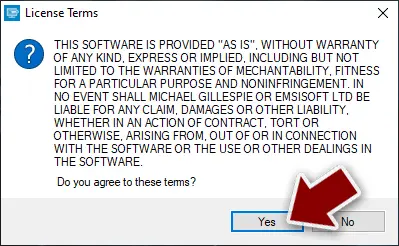
- Agree to License Terms by pressing Yes.
- After Disclaimer shows up, press OK.
- The tool should automatically populate the affected folders, although you can also do it by pressing Add folder at the bottom.
- Press Decrypt.
- Download .
- Double-click the installer to launch it.
- Follow on-screen instructions to install the software.
- As soon as you press Finish, you can use the app.
- Select Everything or pick individual folders where you want the files to be recovered from.
- Press Next.
- At the bottom, enable Deep scan and pick which Disks you want to be scanned.
- Press Scan and wait till it is complete.
- You can now pick which folders/files to recover - don't forget you also have the option to search by the file name!
- Press Recover to retrieve your files.
Report it and recover your files
Report it
Report the attack even if you do not expect the files back: insurers and banks ask for the report number, and police use the contacts in the note to link cases.
- United States
- FBI IC3 · FTC ReportFraud
- United Kingdom
- Report Fraud (formerly Action Fraud) · NCSC
- Australia
- ReportCyber (ASD)
- EU countries
- Europol: national reporting sites
Give the victim ID, the note and the date the files were encrypted. A business that holds personal data may also have to notify its data protection authority, in the EU within 72 hours.
Make the next attack harmless
Wwka ransomware could only hurt the files that had no second copy, and the signs (files that end in .wwka and no longer open) showed exactly which ones those were.
The 3-2-1 rule fixes that:
- three copies
- two media
- one disconnected
A practical version for a home PC: OneDrive or another cloud backup with version history, plus an external disk that you plug in once a week for File History and then unplug. Test a restore now and then by opening a few files from the backup on another device.
Details, schedules and what not to back up are in our 3-2-1 backup guide for Windows.
Do not let government spy on you
The government has many issues in regards to tracking users' data and spying on citizens, so you should take this into consideration and learn more about shady information gathering practices.
Avoid any unwanted government tracking or spying by going totally anonymous on the internet.
You can choose a different location when you go online and access any material you want without particular content restrictions. You can easily enjoy internet connection without any risks of being hacked by using VPN.
Control the information that can be accessed by government any other unwanted party and surf online without being spied on. Even if you are not involved in illegal activities or trust your selection of services, platforms, be suspicious for your own security and take precautionary measures by using the VPN service.
Backup files for the later use, in case of the malware attack
Computer users can suffer from data losses due to cyber infections or their own faulty doings.
Ransomware can encrypt and hold files hostage, while unforeseen power cuts might cause a loss of important documents. If you have proper up-to-date backups, you can easily recover after such an incident and get back to work. It is also equally important to update backups on a regular basis so that the newest information remains intact - you can set this process to be performed automatically.
When you have the previous version of every important document or project you can avoid frustration and breakdowns. It comes in handy when malware strikes out of nowhere. Use for the data restoration process.
Questions about Wwka ransomware
How do I open .wwka files that are encrypted by ransomware?
Encrypted .wwka files cannot be opened with standard programs until decrypted. The 2021 guide explained that Wwka ransomware uses RSA-2048 encryption with unique keys per victim, making standard opening impossible. The only way to recover .wwka files is using the correct decryption tool with the matching key.
A free Emsisoft decryption tool exists because Wwka belongs to the Djvu family and may have used offline keys. If your files were encrypted with an offline key, the free tool can recover them without paying. You cannot open these files through Windows properties or converting them.
Decryption is the only option. Attempting to rename extensions will not restore contents. The decrypted files return to original formats and become usable again.
Is there a decryptor available for Wwka ransomware?
Yes, a free decryption solution may be available. The 2021 guide reported that since Wwka belongs to the Djvu ransomware family, an offline decryption key may have been used.
Emsisoft developed a free decryption tool for Djvu family ransomware that works on Wwka files if the offline key is detected. This free tool requires no payment and can recover your files at no cost.
However, if encryption used an online key unique to you, the free tool cannot help. The tool is available through Emsisoft's website. Test it on one non-critical file first to confirm it works.
The 2021 guide recommended trying the free tool before considering payment. Some antivirus vendors also maintain free decryption utilities for various ransomware families. Your chances of free recovery are real.
Should I pay the ransom?
No. Do not pay the ransom under any circumstances. The 2021 guide strongly warned against paying because criminals cannot be trusted.
The ransom note demands $980 or $490 with 50 percent discount for early contact. However, paying does not guarantee file recovery. Attackers may take your money without sending working software.
Paying funds future ransomware development and attacks against other victims. Criminal organizations use ransom payments to develop more sophisticated malware. The guide emphasized that alternative recovery methods exist without enriching criminals.
Once you pay, criminals may target you again knowing you will pay. Law enforcement agencies worldwide advise against paying ransoms. Try free decryption tools first.
Backups or professional data recovery may help without supporting criminals. Your files may not require payment if encrypted with an offline key available to free tools.
Do paid decryption services or data recovery companies work?
Professional data recovery services offer varying success rates depending on your situation. The 2021 guide noted some legitimate companies assist with ransomware recovery. However, success depends on whether encryption used offline or online keys.
If offline keys were used, try the free Emsisoft tool first before paying. Services charge hundreds or thousands of dollars for recovery attempts. Be cautious of companies claiming 100 percent success or guarantees.
Some contact attackers on your behalf (which you could do free). Before engaging paid services, try free decryption tools and restore from backups if available. Research company reputation carefully.
Do not pay upfront without guarantees. Professional recovery for drive damage is more reliable than ransomware decryption services. Many paid services cannot recover files from online-key ransomware regardless of cost.
How did Wwka ransomware get on my PC?
Wwka ransomware primarily spreads through file-sharing platforms and torrent websites. The 2021 guide reported that users download software or game cracks expecting free versions of licensed programs. Downloads actually contain ransomware payload files.
When executed, malware encrypts all files without warning. Torrent websites are extremely dangerous sources of malware. Users also contract ransomware through email attachments, malicious websites, or unprotected remote desktop protocol attacks.
Infected software installers or fake software updates deliver malware. Unpatched security vulnerabilities allow remote installation. The guide recommended avoiding torrents entirely.
Use only legitimate software sources. Keep Windows updated with security patches. Use strong passwords to prevent RDP attacks.
Enable two-factor authentication where available. Maintain current antivirus software with regular scans. Back up important data offline to prevent total data loss if ransomware strikes.
Was my data stolen by Wwka ransomware?
Wwka ransomware primarily encrypts files for ransom, not data theft. However, your files may have been accessed before encryption.
The 2021 guide noted that ransomware operators often steal data before encrypting. They threaten to release data or sell it if you refuse payment. This dual-extortion strategy pressures victims.
Your personal files, documents, databases, and photos are now on attacker servers and may be sold to other criminals. Personal information online creates privacy risks and identity theft possibilities.
Assume worst-case scenarios and treat data as compromised. Change all passwords from a clean computer immediately. Monitor credit reports for fraudulent activity.
Notify relevant parties (bank, employer) if sensitive information was affected. Be cautious about future phishing attempts using your stolen information. Consider credit monitoring services for long-term protection.
Is Wwka different from other ransomware with a similar name?
Wwka belongs to the Djvu ransomware family and shares characteristics with other Djvu variants.
The 2021 guide noted that the ransom note does not differ from other Djvu members because developers reuse note text. Their goals remain the same: extortion. Each variant has its own file extension:
- .wwka for this variant
- while others use .djvu
- .stop
- .cerber
Encryption uses the same RSA-2048 method across Djvu variants. The free Emsisoft decryption tool works across the entire family. Contact emails vary between variants.
If you encounter another ransomware with similar names, similar decryption tools may also work. The underlying malware behavior is largely identical.
If you have files from multiple variants, one decryption tool may recover all of them. Understanding Wwka as part of Djvu helps locate appropriate recovery solutions.
Will Fortect remove Wwka ransomware?
Fortect scans Windows for malware and unwanted programs and repairs the system files and settings they change, and its free scan shows what it finds on your PC before you decide anything.
For Wwka ransomware, follow the plan above as well: the browser steps take back permissions and settings that no scanner treats as a threat, and uninstalling the program that brought it removes the source.
Run Microsoft Defender's full scan and, if anything was found, its offline scan as a second opinion. If the symptoms are gone after the plan and both scans are clean, there is nothing more to do.
Sources
- Paubox: What Is a Remote Desktop Protocol Attack? (read October 5, 2026)
- Howtogeek: Everything You Need To Know About the Blue Screen of Death (read October 5, 2026)
- Dieviren: Dieviren (read October 5, 2026)
- CISA: StopRansomware (read October 5, 2026)
- No More Ransom (read October 5, 2026)