
b-ok.org: what it is and how to remove it
B-ok.org is a service that offers to search and download digital books. However, just like many similar websites, this one might be distributing copyrighted material.
Facts checked October 7, 2026. Removal steps tested on Windows 11 (26H2) and checked against Microsoft's and the browser makers' current documentation. Sections marked as our earlier report are the original text: they describe the threat as it was then and have not been reviewed since. The 2026 status, the removal steps and the questions are current.
Automatic
Get a free scan and check if your PC is infected.
Fortect finds malware, unwanted programs and the Windows damage they leave behind, and repairs it in one pass.
Programs like b-ok.org usually arrive in groups; a free scan lists the companions that are easy to miss.
Do it yourself · free Remove b-ok.org yourself 4 steps, about 12 minutes, no software needed.
Start the steps
B-ok.org: summary
| Distribution | The site can be visited on purpose or redirected via sponsored ads |
|---|---|
| Name | b-ok.org |
| Type | Book distribution site |
| Dangers | Might expose to copyrighted material, record personal information and expose third-party links |
| Detection names | No Microsoft detection name is known |
| Domain registered | 23 July 2015 (Tucows Domains Inc.), paid until 23 July 2027 |
| Removal | Scan the PC with security software to find and remove the malware and anything installed with it. Fortect scans Windows for malware and repairs the system files and settings it damaged. Remove it nowTo use the full-featured product, you have to purchase a license for Fortect. The scan is free. |
Show 6 more facts
| Damage | Not recorded in the old report |
|---|---|
| Symptoms | An unknown program in Installed apps |
| Evidence | 4 write-ups by security sites; details still limited |
| Program | B-ok.org |
| First seen | 18 February 2020 |
| Facts checked | 7 October 2026 |
b-ok.org in 2026: what we found
b-ok.org no longer opens: when we checked on 6 October 2026, the page did not load.
b-ok.org · desktop Chrome · 6 October 2026
- The addressDoes not open (the page did not load).
- Copies and old permissionsLook-alike addresses may still use the name, and notifications allowed on the site earlier keep coming from its push service until you remove the permission.
Offline The site itself is gone; the steps below remove what it may have left in your browser.
Is b-ok.org safe? Why it is flagged
b-ok.org: what changed since our report
July 2015
The domain is registered
b-ok.orgwas registered on 23 July 2015 through Tucows Domains Inc. and is paid until July 2027.February 2020
Our first report
We described b-ok.org on 18 February 2020 and updated the report on 19 August 2021.
October 2026
Our new check
The address no longer opened.
From our report of Feb 2020 · not reviewed since
More from our earlier report on b-ok.org
- Avoid illegal websites and use security apps like to protect you from malware
- In particular, remember that certain providers may be located in or have facilities that are located a different jurisdiction than either you or us.
- We are not responsible for the privacy practices of other sites and encourage you to read their privacy statements.
From our report of Feb 2020 · not reviewed since
B-ok.org is a site considered possibly dangerous because it can expose users to malicious material
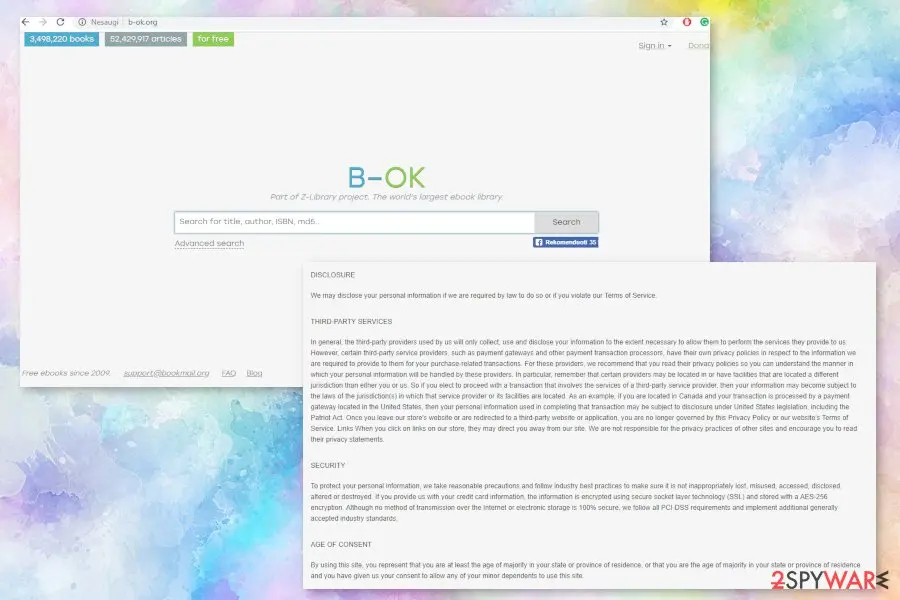
B-ok.org is a service that offers to search and download digital books.
However, just like many similar websites, this one might be distributing copyrighted material. Possessing such content might result in hefty fines or even jail time, although it all depends on the country you live in and laws on copyright.
Nevertheless, according to B-ok.org, users are offered 3.5 million books "for free." However, when purchasing any material from the site, users are exposed to personal information tracking, such as payment data, contact details, name, etc. For that reason, we do not recommend using B-ok.org, B-ok.cc, B-ok.xyz, and similar variations.
The developer claims that the service can offer as many as 3.5 million books and 73.5 million articles for free. Nevertheless, users can also buy a paper book. Once clicked, the link redirects users to a Book Depository online bookseller, which is entirely legitimate. Additionally, users are offered to read the book online in PDF format.
B-ok.org offers a registration service that would allow users to purchase books and perform other actions. However, by doing so, users are forced to expose personal information such as name, address, and email address. Additionally, the site records IP addresses.
Authors warn that various links on the site might link users to third-party domains, which privacy policy of they are not responsible for:
Due to links that B-ok.org services provide, users might land on insecure websites, which may engage in illegal behavior, such as phishing attempts, illegal software, hacked sites, and similar. These redirects may consequently result in malware infection, which should be avoided at all costs.
Talking about malware, we must warn you that the internet is not a safe place, and you should use tools to protect yourself.
While there is no proof that downloaded material from the discussed site can result in cyber infections, it is unknown who and how uploads those files, so it is possible that some of the files may be malicious. For such reason, keep security software (we suggest or ) installed on your device at all times.
How b-ok.org got installed
From our report of Feb 2020 · not reviewed since
Similar to torrent sites, digital book distribution sites may be unsafe due to poor regulations and questionable sources.
Speaking from a security perspective, such sites can insert questionable advertisements, suspicious links, or even host infected files that can be disguised as a legitimate format file.
Therefore, to avoid unwanted software and malware infections, please follow these simple tips prepared by experts:
- Install reputable anti-malware software and keep it up to date;
- Scan every executable or another unknown file with the help of such tools like Virus Total;
- Beware of software bundling: pick Advanced installation settings and remove all the optional components before you finalize the process;
- Use a VPN;
- Update your software regularly
- Use a password manager;
How to uninstall b-ok.org
How to remove b-ok.org
Uninstall it, then remove what keeps it starting with Windows.
Nothing it flagged needs fixing.
Step 1: Uninstall b-ok.org
Open Settings > Apps > Installed apps in Windows 11, or Settings > Apps > Apps & features in Windows 10. Sort the list by install date and find b-ok.org, then choose Uninstall from the three-dot menu next to it (in Windows 10, click the entry and then Uninstall).
Remove anything else installed on the same day that you do not recognise, because such programs usually arrive together in one installer. If the uninstaller opens a browser page with an offer or a survey, close it: the program is removed either way.
Full procedure with screenshots: Uninstall a program or app in Windows On uGetFix
Step 2: Remove it from startup
Whatever b-ok.org installed usually starts with Windows. Open Task Manager with Ctrl + Shift + Esc, go to Startup apps in Windows 11 or the Startup tab in Windows 10, and disable what you do not know, starting with entries that have an empty Publisher column.
Open file location on the right-click menu shows the file, which helps you decide and tells you what to delete later. Disabling is safe: if something you need stops working, switch it back on.
Full procedure with screenshots: Stop apps from opening at startup On uGetFix
Step 3: Delete the folders left behind
What the uninstaller leaves behind is usually in the user folders. Open File Explorer, switch on View > Show > Hidden items (in Windows 10 View > Hidden items), and go through
%LocalAppData%,%AppData%, %ProgramData% and the two Program Files folders.Sort by Date modified and delete folders that appeared together with the problem and belong to no program you use. Folders with random names that hold
.exe,.dll, .js or .ps1 files are the strongest sign.Full procedure with screenshots: Remove what malware leaves behind in Windows
Step 4: Scan the PC, then run the offline scan
Open Windows Security > Virus & threat protection > Scan options, run a Full scan and remove everything it finds. Then select Microsoft Defender Antivirus (offline scan) and click Scan now: the PC restarts and scans before Windows loads, which finds files that hide while Windows runs.
Save your work first, because the offline scan takes about 15 minutes. Both scans are built into Windows 11 and Windows 10, and a second scanner from another vendor is a useful extra opinion.
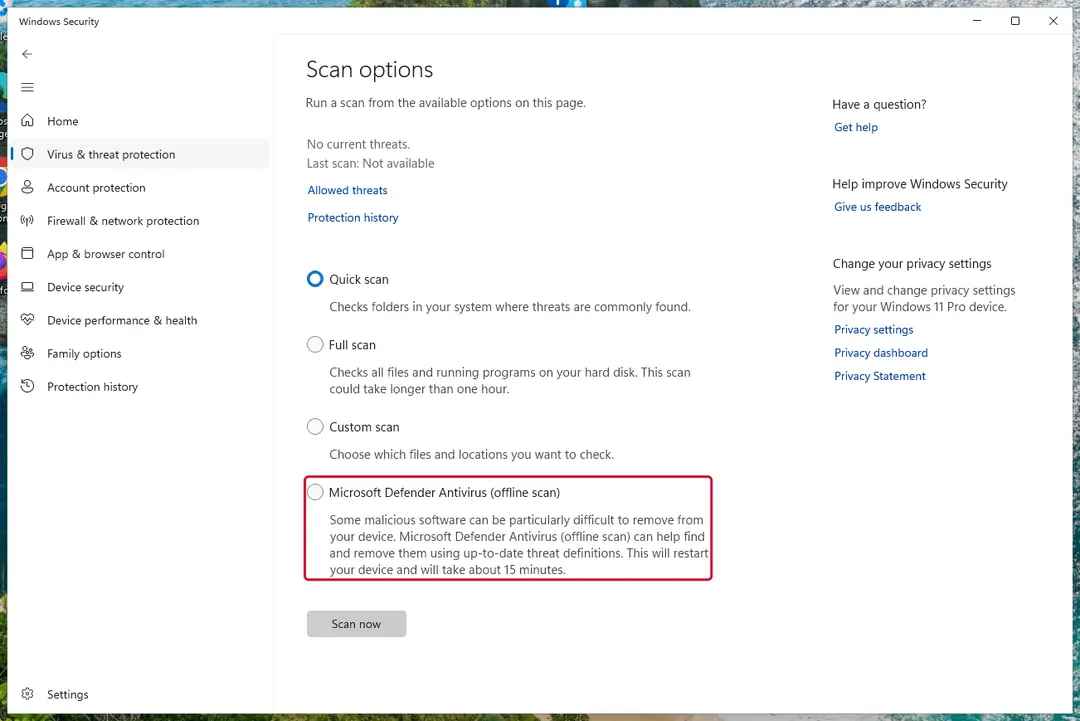
Windows 11: Windows Security > Virus & threat protection > Scan options. Full procedure with screenshots: Run a Microsoft Defender Offline scan
Instructions for each browser and system
The detailed steps for every browser and system this guide covers. Open the one you use.
Manual removal using Safe Mode
Important! →
Manual removal guide might be too complicated for regular computer users. It requires advanced IT knowledge to be performed correctly (if vital system files are removed or damaged, it might result in full Windows compromise), and it also might take hours to complete. Therefore, we highly advise using the automatic method provided above instead.
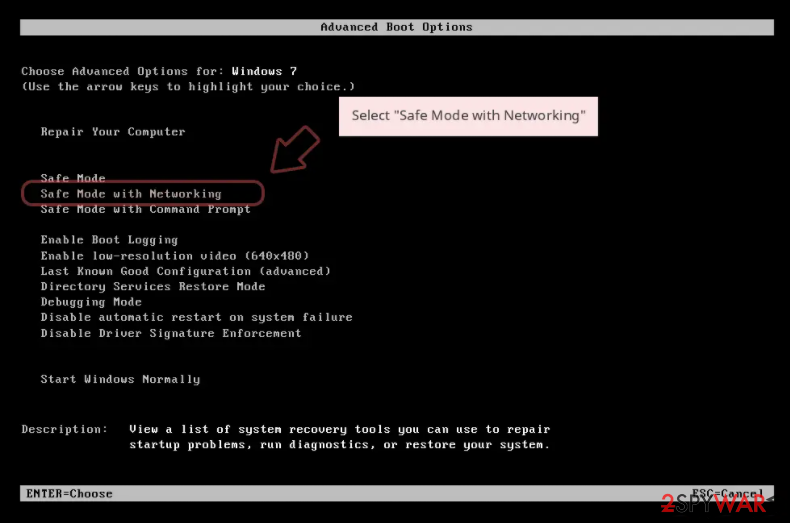
Step 1. Access Safe Mode with Networking
Manual malware removal should be best performed in the Safe Mode environment.
Windows 7 / Vista / XP
- Click Start > Shutdown > Restart > OK.
- When your computer becomes active, start pressing F8 button (if that does not work, try F2, F12, Del, etc. - it all depends on your motherboard model) multiple times until you see the Advanced Boot Options window.
- Select Safe Mode with Networking from the list.
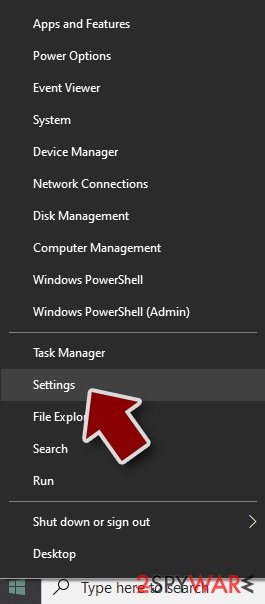
Windows 10 / Windows 8
- Right-click on Start button and select Settings.
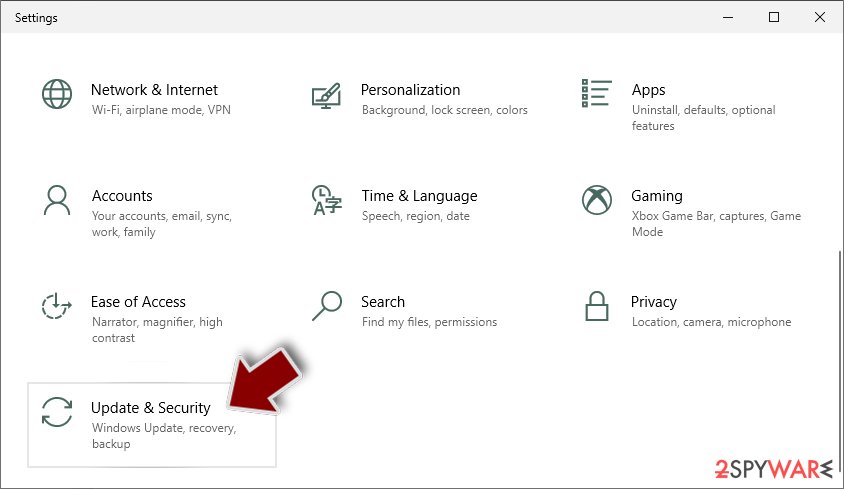
- Scroll down to pick Update & Security.
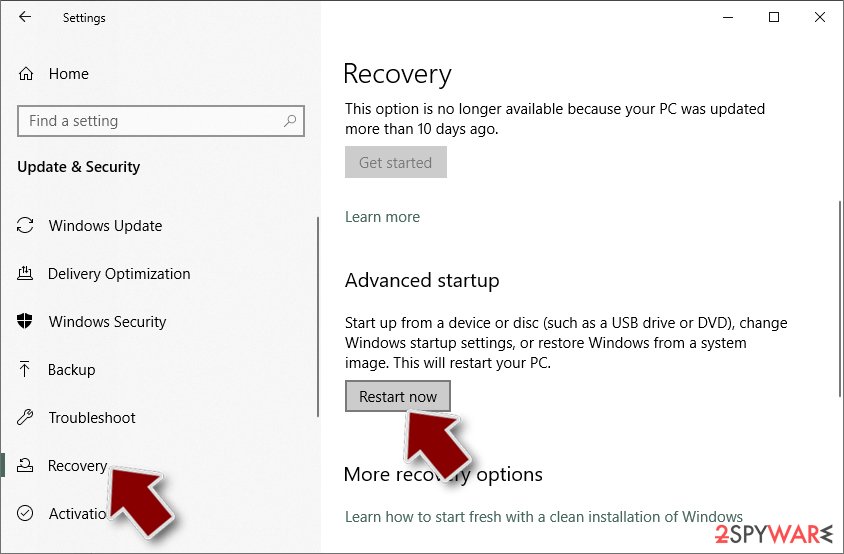
- On the left side of the window, pick Recovery.
- Now scroll down to find Advanced Startup section.
- Click Restart now.
- Select Troubleshoot.
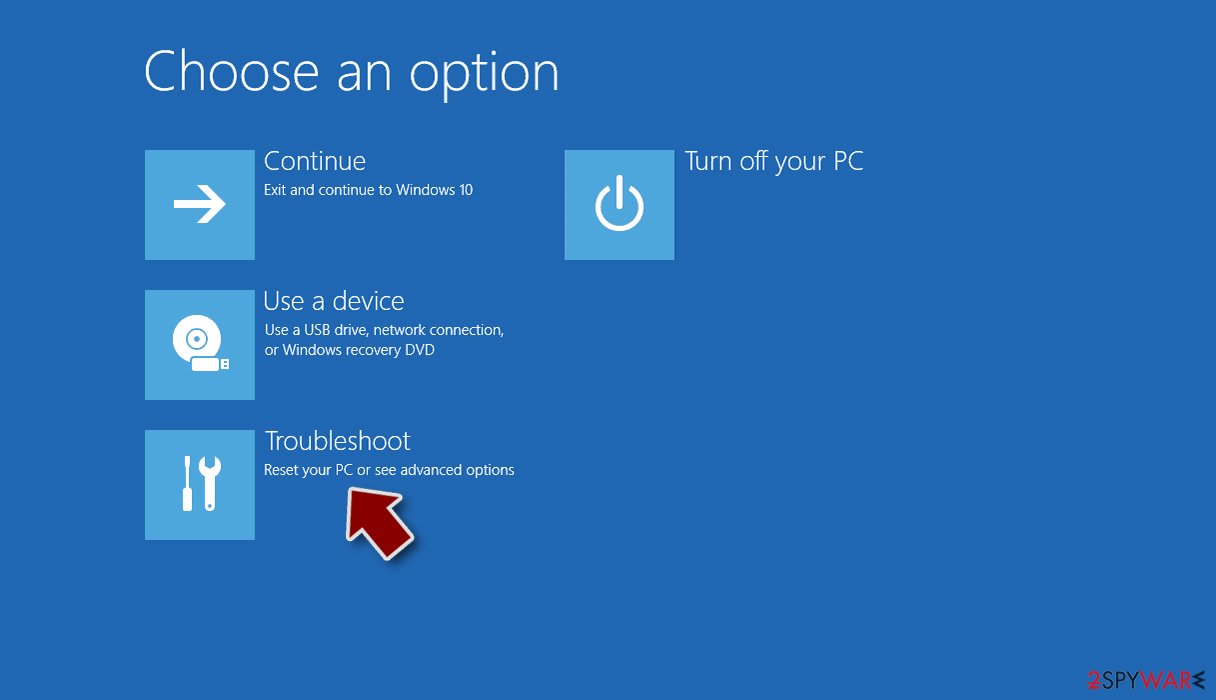
- Go to Advanced options.
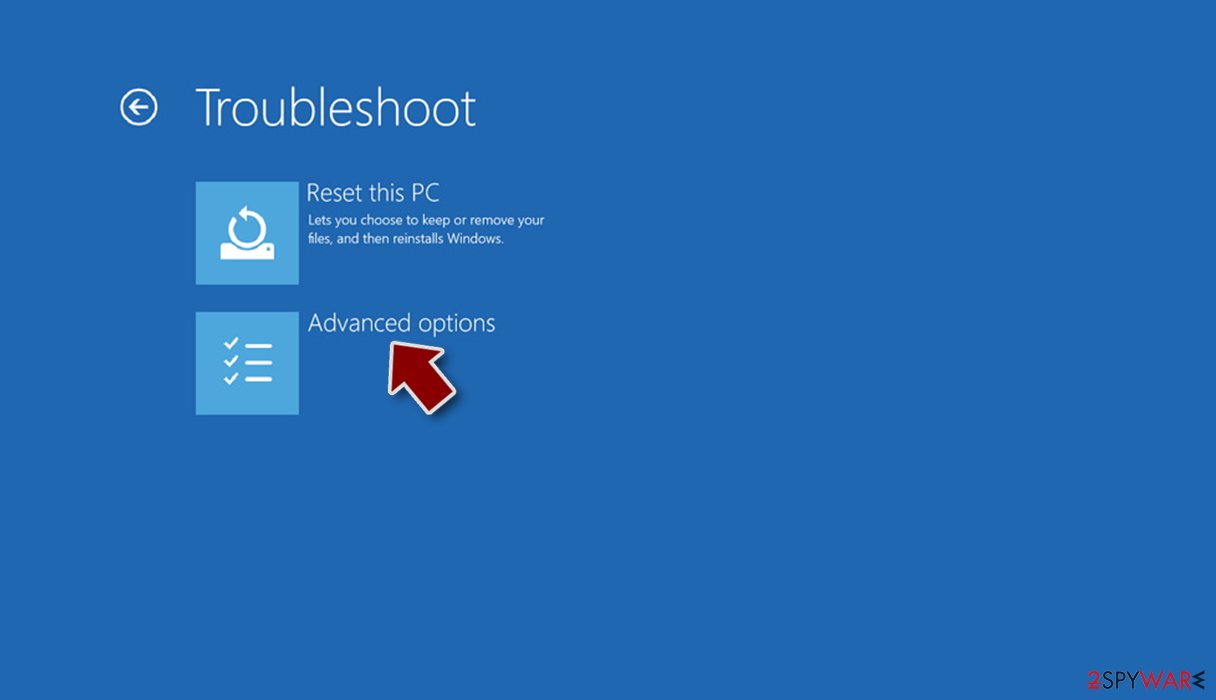
- Select Startup Settings.
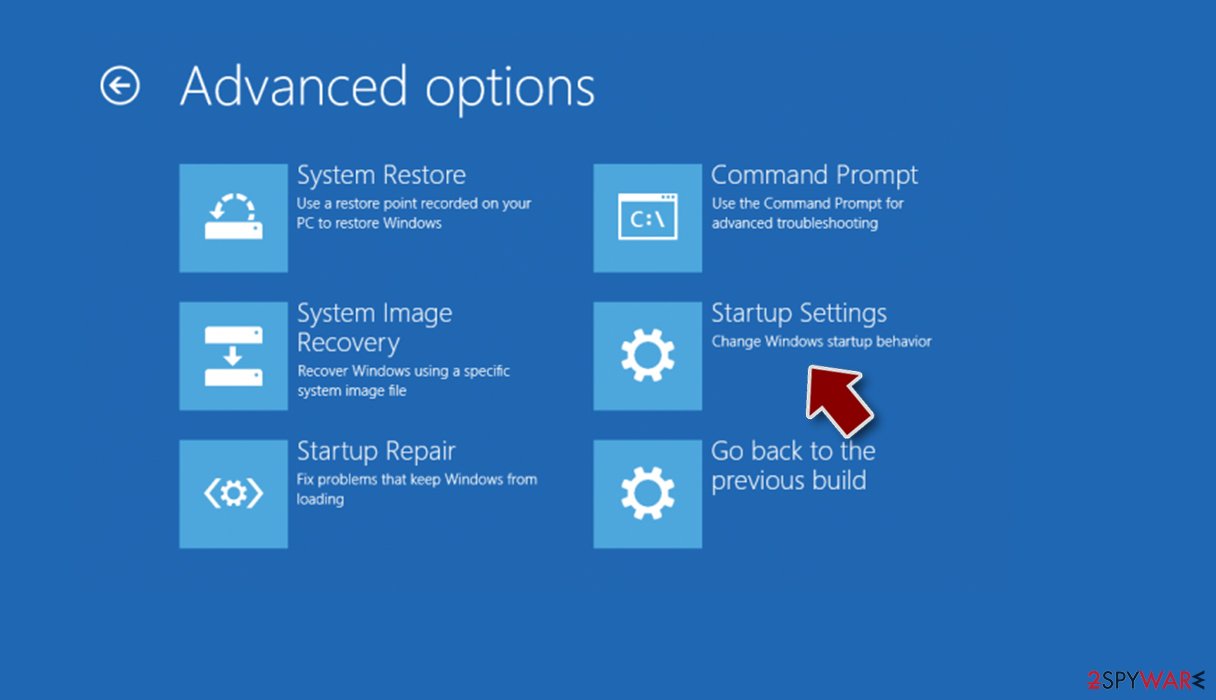
- Press Restart.
- Now press 5 or click 5) Enable Safe Mode with Networking.
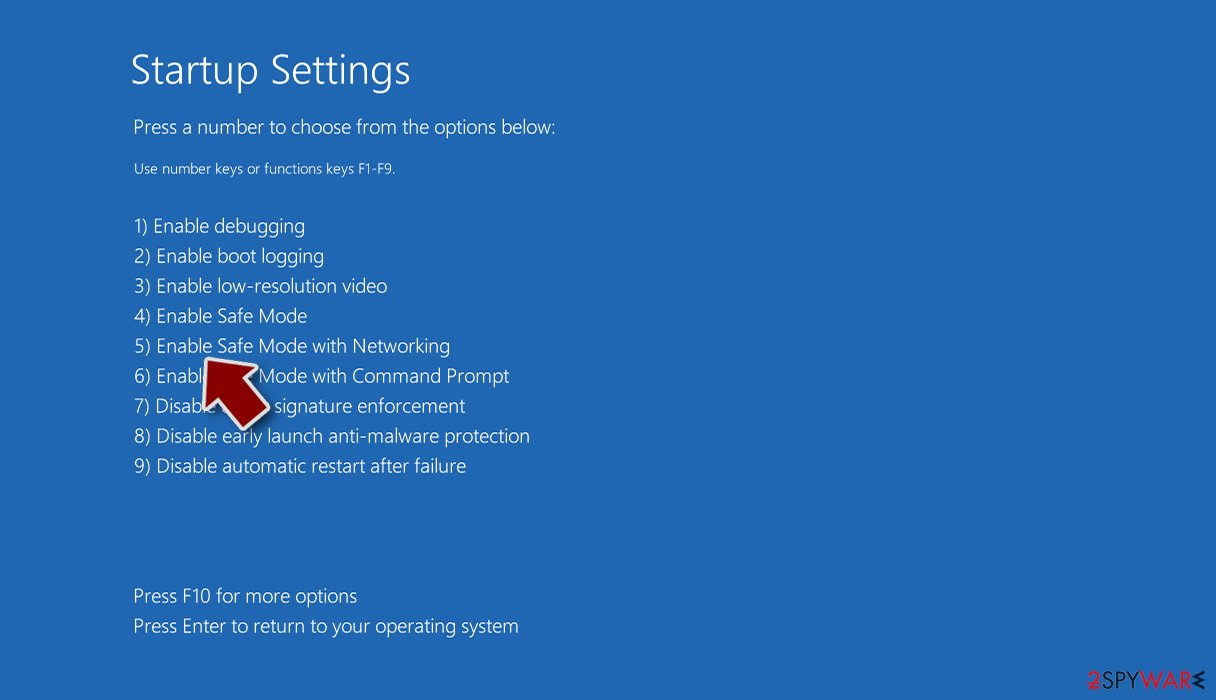
Step 2. Shut down suspicious processes
Windows Task Manager is a useful tool that shows all the processes running in the background. If malware is running a process, you need to shut it down:
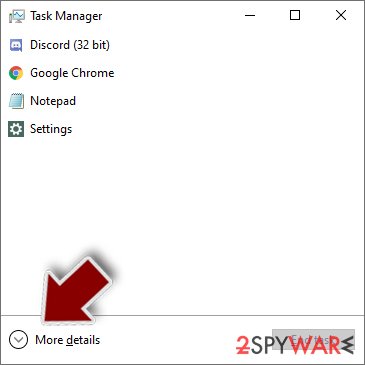
- Press Ctrl + Shift + Esc on your keyboard to open Windows Task Manager.
- Click on More details.
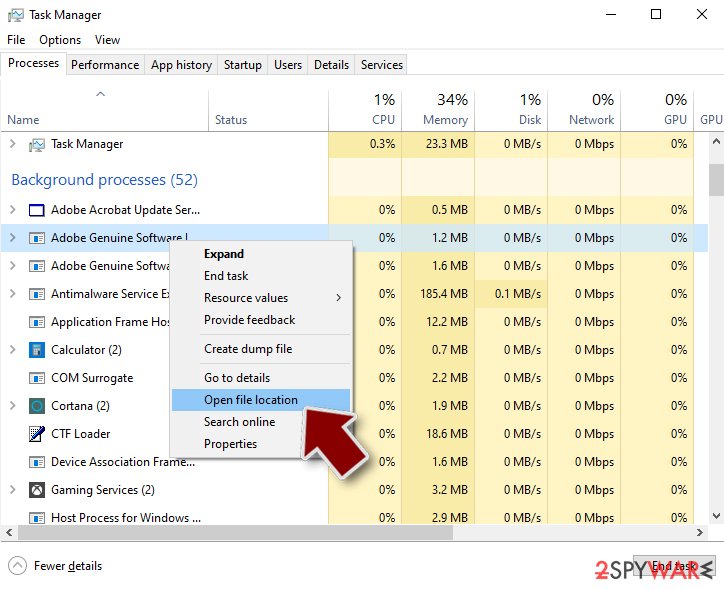
- Scroll down to Background processes section, and look for anything suspicious.
- Right-click and select Open file location.
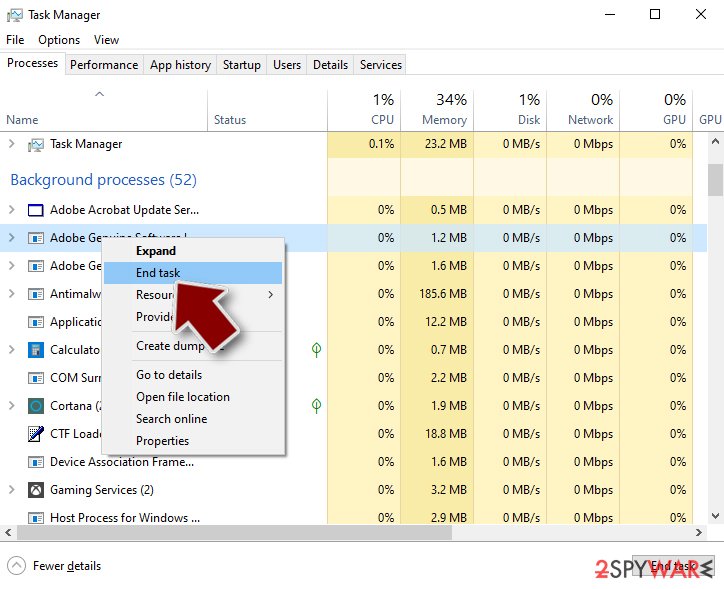
- Go back to the process, right-click and pick End Task.
- Delete the contents of the malicious folder.
Step 3. Check program Startup
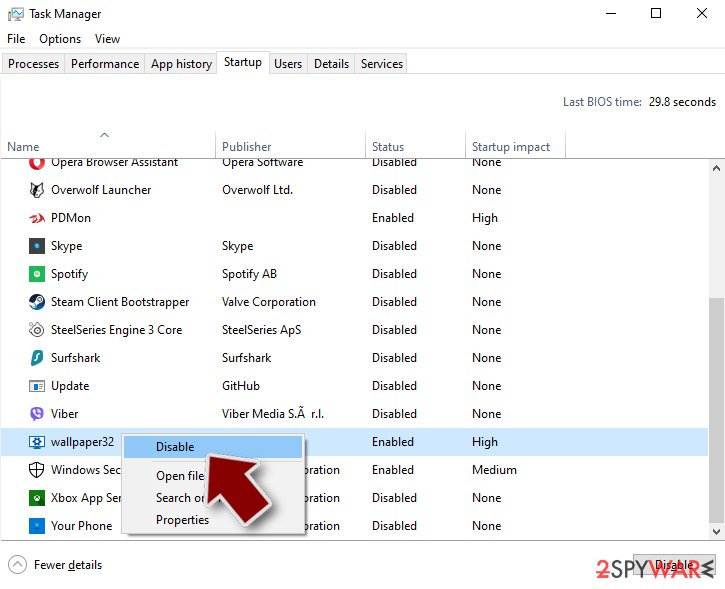
- Press Ctrl + Shift + Esc on your keyboard to open Windows Task Manager.
- Go to Startup tab.
- Right-click on the suspicious program and pick Disable.
Step 4. Delete virus files
Malware-related files can be found in various places within your computer. Here are instructions that could help you find them:
- Type in Disk Cleanup in Windows search and press Enter.
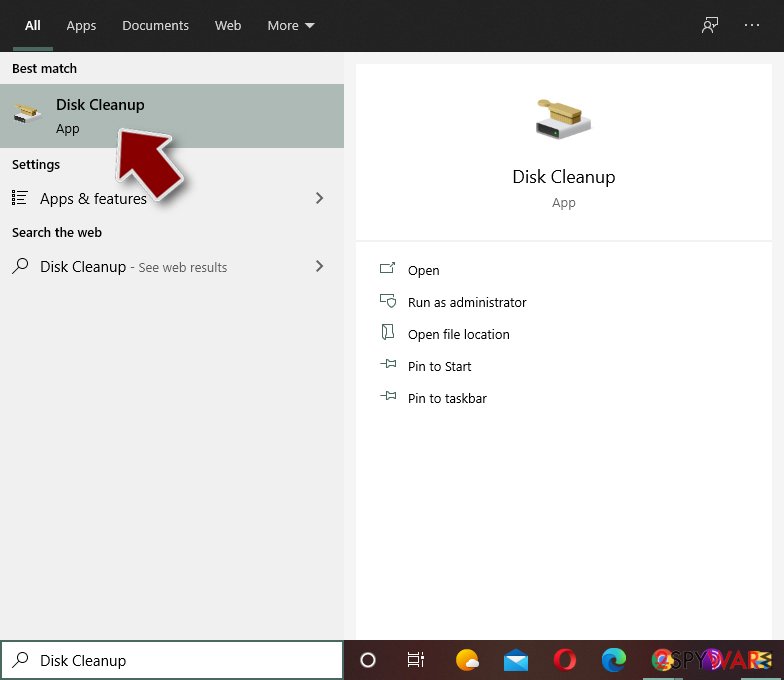
- Select the drive you want to clean (C: is your main drive by default and is likely to be the one that has malicious files in).
- Scroll through the Files to delete list and select the following:
Temporary Internet Files
Downloads
Recycle Bin
Temporary files - Pick Clean up system files.
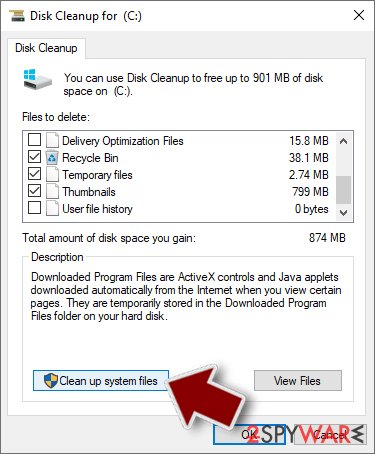
- You can also look for other malicious files hidden in the following folders (type these entries in Windows Search and press Enter):
%AppData%
%LocalAppData%
%ProgramData%
%WinDir%
After you are finished, reboot the PC in normal mode.
Protect your privacy - employ a VPN
There are several ways how to make your online time more private - you can access an incognito tab.
However, there is no secret that even in this mode, you are tracked for advertising purposes. There is a way to add an extra layer of protection and create a completely anonymous web browsing practice with the help of VPN. This software reroutes traffic through different servers, thus leaving your IP address and geolocation in disguise.
Besides, it is based on a strict no-log policy, meaning that no data will be recorded, leaked, and available for both first and third parties. The combination of a secure web browser and VPN will let you browse the Internet without a feeling of being spied or targeted by criminals.
No backups? No problem. Use a data recovery tool
If you wonder how data loss can occur, you should not look any further for answers - human errors, malware attacks, hardware failures, power cuts, natural disasters, or even simple negligence.
In some cases, lost files are extremely important, and many straight out panic when such an unfortunate course of events happen. Due to this, you should always ensure that you prepare proper data backups on a regular basis.
If you were caught by surprise and did not have any backups to restore your files from, not everything is lost. is one of the leading file recovery solutions you can find on the market - it is likely to restore even lost emails or data located on an external device.
From our report of Feb 2020 · not reviewed since
B-ok.org might lead viruses: here's how to delete them
As we mentioned in the previous section of the article, the usage of sites that provide pirated content might lead to cyber infections, such as adware, browser hijackers, or even malware.
You should be especially worried if your PC suffers from crashes or freezes, web browsers redirect to suspicious websites, CPU usage spikes when the computer is idle and similar. None of these symptoms should be ignored, as malware can cause severe damage to the system files, compromise installed applications, steal personal data, and perform other malicious tasks.
Questions about b-ok.org
Is b-ok.org a virus?
Most programs that appear the way b-ok.org did are not viruses in the strict sense. They are potentially unwanted programs:
- real software that arrives bundled with other downloads and then shows offers
- changes browser settings
- starts with Windows
Some are harmless, some are annoying and a few carry adware. What makes it worth removing is that you did not choose it.
Uninstall it from Installed apps and check the startup list and the browsers for anything added the same day. If it refuses to uninstall or returns after a restart, treat it as more serious and run a Microsoft Defender offline scan.
B-ok.org will not uninstall. What can I do?
First restart the PC and try again, because the program may have been running and locked its own files. If the uninstaller is missing or fails, start Windows in Safe Mode, where most third-party programs do not start, and remove b-ok.org from Installed apps there.
If it still refuses, delete its startup entry and its scheduled task, restart, and try once more. A program that actively prevents removal is behaving like malware, so finish with a Microsoft Defender offline scan. Avoid third-party uninstallers offered on search ads; several of them are unwanted programs themselves.
Can Windows block unwanted programs automatically?
Yes, with one setting. Windows Security has Potentially unwanted app blocking under App & browser control > Reputation-based protection settings. Block apps stops flagged programs from installing, and Block downloads works in Microsoft Edge.
On some PCs this was not switched on, which is how programs like b-ok.org got through. It does not catch everything, so read installer screens, choose Custom setup and decline offers. Removing free tools you no longer use also helps, because their updates are a common route for new bundles.
The uninstaller for b-ok.org keeps asking me to stay. Is that normal?
It is a common tactic, not a technical requirement. Uninstallers of unwanted programs often show discounts, warnings that the PC will be at risk, or a choice between "repair" and "remove" designed to confuse.
Choose the option that removes the program completely and decline everything else. If the uninstaller closes without removing anything, end its processes in Task Manager and try again, or use Safe Mode. Check Installed apps afterwards; if b-ok.org is still listed, the uninstall did not finish.
Is b-ok.org harmful?
It is unwelcome rather than destructive, based on what has been reported: B-ok.org in the list of installed apps. Unwanted programs like this slow Windows down, use your connection, show offers or change settings, and they make money for their publisher at your expense. The bigger concern is what arrived with them.
Bundled installers often add two or three programs at once, and some of those change the browser or install updaters that fetch more software later. Remove b-ok.org, then sort Installed apps by date and remove anything else from the same day. A full scan in Windows Security afterwards confirms that nothing more serious came along.
B-ok.org came back after I removed it. Why?
Something reinstalls it:
- another program from the same bundle
- a scheduled task that downloads it again
- a browser extension restored by sync
Look in Installed apps for anything from the same publisher or installed on the same date, and in Task Scheduler for tasks with the program's name or random names.
Remove extensions while signed in to the browser so sync deletes them on every device. Remove everything in one session and restart. If b-ok.org still returns, a full scan and a Microsoft Defender offline scan usually find the part that brings it back.
Why does my antivirus call b-ok.org a PUA or PUP?
These labels mean potentially unwanted application or program. They are used for software that is legal but uses deceptive distribution, aggressive ads, misleading claims or a hard removal. Microsoft's PUA categories include advertising software, bundlers, download managers, torrent clients, marketing software and miners.
A PUA detection is a warning, not proof of infection, and you decide whether to keep b-ok.org. Other vendors use their own labels for the same idea, such as PUP.Optional or not-a-virus. Read more in our guide to potentially unwanted programs.
How do I remove b-ok.org completely?
Work in three steps. First uninstall it from Settings > Apps > Installed apps, together with anything installed on the same day. Second, remove what restarts it: unknown entries under Settings > Apps > Startup and tasks in Task Scheduler with matching names.
Third, clean the browsers: extensions you did not add and changed search settings. Restart and watch for B-ok.org in the list of installed apps; if it does not come back within a day, the removal is complete. If it does, run a Microsoft Defender offline scan, which works before Windows starts and finds helpers that hide while the PC runs.
Is my privacy at risk because of b-ok.org?
A little, not dramatically. Unwanted programs tend to report what you install, which sites you visit or how you use the program back to their publisher. That data is sold or used for ads.
The sign people noticed, B-ok.org in the list of installed apps, is consistent with such a program, and nothing reported suggests access to your files, camera or passwords.
Remove it, delete its leftovers and clear the browser data if it touched the browser. From then on, keep Potentially unwanted app blocking switched on in Windows Security, which stops many of these programs before they install.
Will Fortect remove b-ok.org?
Fortect scans Windows for malware and unwanted programs and repairs the system files and settings they change, and its free scan shows what it finds on your PC before you decide anything.
For b-ok.org, follow the plan above as well: the browser steps take back permissions and settings that no scanner treats as a threat, and uninstalling the program that brought it removes the source.
Run Microsoft Defender's full scan and, if anything was found, its offline scan as a second opinion. If the symptoms are gone after the plan and both scans are clean, there is nothing more to do.
Sources
- Wikipedia: Copyright infringement (read October 7, 2026)
- FTC: How to recognize, remove and avoid malware (read October 7, 2026)
- Microsoft Learn: Microsoft Defender Offline (read October 7, 2026)
- Microsoft Learn: How Microsoft names malware (read October 7, 2026)