
BlueStacks: what it is and how to remove it
BlueStacks is a legitimate Android emulator that allows running mobile apps on Windows and Mac computers. While safe, it consumes heavy system resources causing performance degradation and some users encounter ad-related issues.
Facts checked October 5, 2026. Removal steps tested on Windows 11 (26H2) and checked against Microsoft's and the browser makers' current documentation. Sections marked as our earlier report are the original text: they describe the threat as it was then and have not been reviewed since. The 2026 status, the removal steps and the questions are current.
Automatic
Get a free scan and check if your PC is infected.
Fortect finds malware, unwanted programs and the Windows damage they leave behind, and repairs it in one pass.
Do it yourself · free Remove BlueStacks yourself 2 steps, about 6 minutes, no software needed.
Start the steps
BlueStacks: summary
| Distribution | This is the legitimate application, so it is installed on purpose. It can come from shady distributors or with the help of software bundling, other misleading and deceptive techniques |
|---|---|
| Damage | If the program is running for a while it significantly affects the performance and speed of the machine. The involvement in other services and relation with thrid-parties can mean that data tracking and collecting is the common issue |
| Name | BlueStacks |
| Type | System application |
| Issues | The program runs on computer resources and causes speed or performance problems. If the service is associated with any third-party commercial content creators or advertisers unwanted pop-ups, banners, other material fills the screen |
| Detection names | None: the genuine file is not detected |
| Check the PC | The genuine file needs no removal. Fortect's free scan checks Windows for malware hiding under system file names and for damaged system files. Remove it nowTo use the full-featured product, you have to purchase a license for Fortect. The scan is free. |
Show 6 more facts
| Symptoms | A process with a Windows name running from the wrong folder |
|---|---|
| Evidence | 5 write-ups by security sites; details still limited |
| File name | BlueStacks |
| What it is | Of unknown origin |
| First seen | 8 June 2020 |
| Facts checked | 5 October 2026 |
What the BlueStacks file is
From our report of Jun 2020 · outdated details corrected in October 2026
BlueStacks – the program that creates questionable symptoms and pop-up ads when downloaded via the shady installer
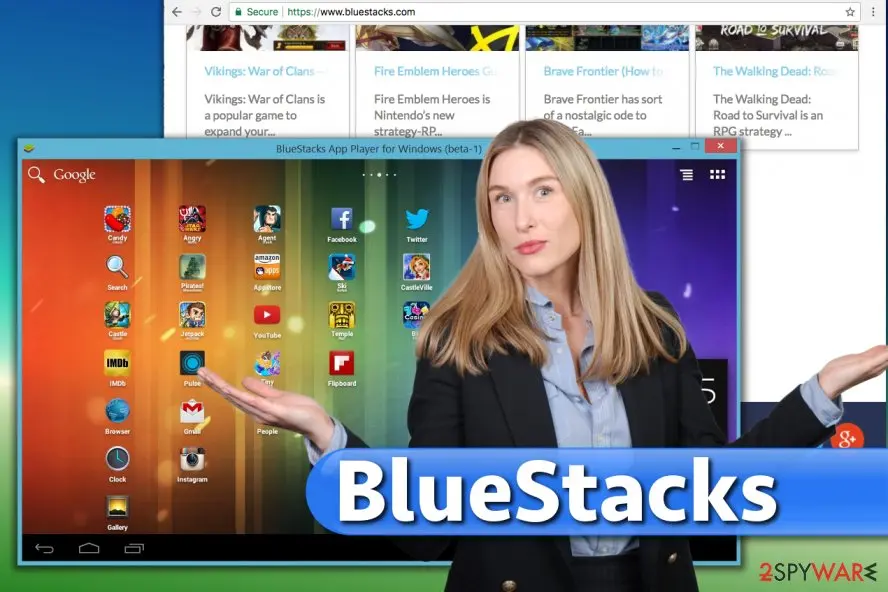
BlueStacks App Player or BlueStacks.com is a questionable application that creates questions because it triggers unwanted behavior and symptoms that possibly resemble a cyber threat or a virus.
These applications related to games, virtual Android devices, and allow you to run apps or games on the computer. The legitimate program is useful because this is a free cross-platform Android Emulator that provides the function of a virtual Android phone on Mac or Windows PC.
BlueStacks App is safe to use and there is no potential harm, but it consumes a lot of memory and RAM, so your device may start running slow and performance significantly suffers. These are the main issues that people complain about because the program itself is not affecting any crucial system features or is damaging to the machine in any way.
BlueStacks is widely known as BlueStacks App Player too. This is the application that allows its users to use favorite mobile apps on computers with Mac or Windows operating system. It enables downloading programs like Angry Birds Space or Documents to Go directly into the computer or to sync them from your phone.
However, there are a lot of discussions about this app on online forums, and most of them are related to the app uninstall problems or ads. This is not the reason to call the program a BlueStacks virus because the application is not malicious or creating significant damage.
We have investigated this software, and we can confirm that it is a trustworthy and safe one. However, many users were annoyed by the ads that this app could produce, although advertising was one of the common content monetization tactics at the time. The important thing is whether you are using the real version of the software or not. If you are concerned, yo should perform the BlueStacks removal.
The real version of the software is produced by BlueStack Systems, Inc. and it should never be called a virus or a potentially unwanted program. Nobody wants to deal with the excessive amount of advertisements, so there is no surprise why people seek ways to remove unpleasant ads once and for all.
You might get tired of BlueStacks ad banner and want to get rid of it; however, you must remember that it is part of the software you downloaded and that without modifying the program's components, most likely you won't be able to disable it.
Besides, you can find a lot of videos and posts about third-party tools that can block ads by rooting the software. This is dangerous, and we DO NOT recommend doing so.
Besides, ad-disabling tools advertised online seem vague and are likely to pose a threat to your computer system, so we strongly recommend bypassing them. If you do not want to use Blue Stacks, you can uninstall it from your computer easily.
It is not a malicious or "virus" app in any way as it does not meet the characteristics of these illegal programs. It is legitimate and safe to use software designed for Windows and Mac operating systems.
However, attempts to delete BlueStacks latest version or earlier one of it might be unsuccessful. Many people have expressed complaints on Microsoft forums, stating that they receive Error 25003 or Error 2318 when trying to uninstall the software.
It appears that all issues go away after trying to remove the software while in Safe Mode, so we highly advise doing that before losing your hope to clean your computer from the described software.
In case you are tired of the described app, or if you simply find it useless, you can remove BlueStacks from Mac or Windows using the guidelines we provided below. They will help you to find files and settings related to the software, wrap all of them up and delete them from the system all at once.

From our report of Jun 2020 · not reviewed since
Problems caused by fake versions of legitimate software
Scammers might be trying to use legitimate program's name to trick you into installing dangerous software pieces.
Be careful and download BlueStacks ONLY from a verified developer - Bluestack Systems, Inc. Avoid using torrent sites and other questionable file-sharing networks because instead of receiving a clean installation file, you can run into a corrupted one and then infect your computer with unknown and shady applications.
Remember that the developer of BlueStacks is trustworthy and it is not responsible for fake downloads available on deceptive websites. Therefore, stay vigilant and avoid visiting shady Internet sources when looking for a clean software installation file.
If you installed a program from an untrustworthy source, do not be surprised if you start to notice the appearance of numerous commercial ads during web browsing sessions. Afterward, loads of pop-up or banner advertisements that provide various vouchers, deals, discounts, services, and so on can become your daily issue. Finally, a decreased speed of the computer system can start bothering you.
Removing suspicious programs from your computer should fix the defined issues instantly.
BlueStacks is a legitimate application that can be downloaded from various Internet sources for free. However, there is likely one source that provides the 100% trustworthy version of the software - it is bluestacks[.]com.
If you decide to choose another page to download the described program, you risk running into quite unfair installers or even software bundles trying to force you to install a couple of hardly trustworthy applications alongside your preferred app.
The program may cause issues with constant commercial content delivery and pop-ups. That shouldn't make you believe that the real version of BlueStacks App Player is untrustworthy or deceptive in any way. It simply means that someone is trying to take advantage of the favorite app and lure people interested in installing it to allow the installation of suspicious components alongside it.
From our report of Jun 2020 · not reviewed since
Install the right program and learn to avoid unwanted modifications of it
Usually, people run into software bundles when they download software from websites that provide thousands of downloads (games, media players, file converters, and similar software).
Some of these sites allow installing programs only via specifically designed software installers that indirectly promote certain third-party programs.
If opening the executive file of the application launched a questionable installation wizard for you, do not forget what's hidden behind Custom/Advanced settings as these options tend to store details about extra software components users are not aware of.
Again, we'd like to remind you that the PUP is not responsible for third-parties that bundle shady components along with the legitimate software and upload such vague downloads onto various shady third-party sites.
Software bundling is widely used because it allows distributing several programs in one pack. However, this technique is one of the reasons why potentially unwanted applications are increasingly getting active and why they manage to infiltrate random computers, says Usunwirusa.pl team.
- You should be very careful during the installation of any free program or shareware. Do not avoid reading Terms and Agreements or Privacy Policy forms because these long lines may change your opinion about the selected program.
- If after reading these documents you still wish to install it, perform this security check - select Advanced or Custom installation mode and deselect all 'additional components' that are traveling alongside your selected freeware. This way, you will install only the program that you want to install, without any additions.
How to check the BlueStacks file
What readers reported about BlueStacks
How to stop BlueStacks ads?. Creepy BlueStacks ads!! I need to remove them, they pop up so randomly that I get scared! Almost had a heart attack last time. How to stop them?
Got redirected with Ads by BlueStacks?. I don't understand what happened with my browser. I constantly get redirected to various websites, and I see Ads by BlueStacks and others variously popping up at my screen. What should I do?
From the comments under our earlier guide; names and contact details removed.
- File:
BlueStacks
From our report of Jun 2020 · not reviewed since
More from our earlier report on BlueStacks
- BlueStacks removal process shouldn't be difficult if the program is not malicious, so you can uninstall the app or run the AV tool to ensure that system is actually virus-free
- Remember to run another tool like , so the system is recovered and affected files get fixed
What to do with BlueStacks
How to check BlueStacks
The genuine file belongs to an installed program.
Check that it is the real one before you remove anything.
Step 1: Check the location and signature of the file
Open Task Manager (Ctrl + Shift + Esc), right-click the process on Processes and choose Open file location. A file that belongs to Windows is in
C:\Windows\System32orC:\Windows\SysWOW64, a program's file in its folder under C:\Program Files.The same name in
%AppData%or%Temp%is an impostor to remove. Right-click the file > Properties > Digital Signatures to see who signed it, which works the same in Windows 11 and Windows 10.Full procedure with screenshots: Run a Microsoft Defender Offline scan
Step 2: Scan the PC, then run the offline scan
A scan finds the parts of BlueStacks that the manual steps cannot see. In Windows Security > Virus & threat protection > Scan options, start a Full scan and quarantine what it reports.
Follow it with Microsoft Defender Antivirus (offline scan) > Scan now, which restarts the PC and checks the disk while Windows and the malware are not running.
It takes about 15 minutes and works the same in Windows 11 and Windows 10. If either scan finds something, run the full scan again after removal until it comes back clean.

Windows 11: Windows Security > Virus & threat protection > Scan options. Full procedure with screenshots: Run a Microsoft Defender Offline scan
Instructions for each browser and system
The detailed steps for every browser and system this guide covers. Open the one you use.
Uninstall from Windows
Uninstall from Windows 10/8:
- Type Control Panel into the Windows search box and open the result.
- Under Programs, select Uninstall a program.

Uninstall from Windows 7/XP:
- Click on Windows Start > Control Panel (Windows XP users should click on Add/Remove Programs).
- In Control Panel, select Programs > Uninstall a program.

Remove the unwanted program:
- In the Programs and Features window, look for any recently installed suspicious entries, select them, and click Uninstall.
- If User Account Control appears, click Yes to confirm, then complete the removal.

Remove from Google Chrome
Delete malicious extensions from Google Chrome:
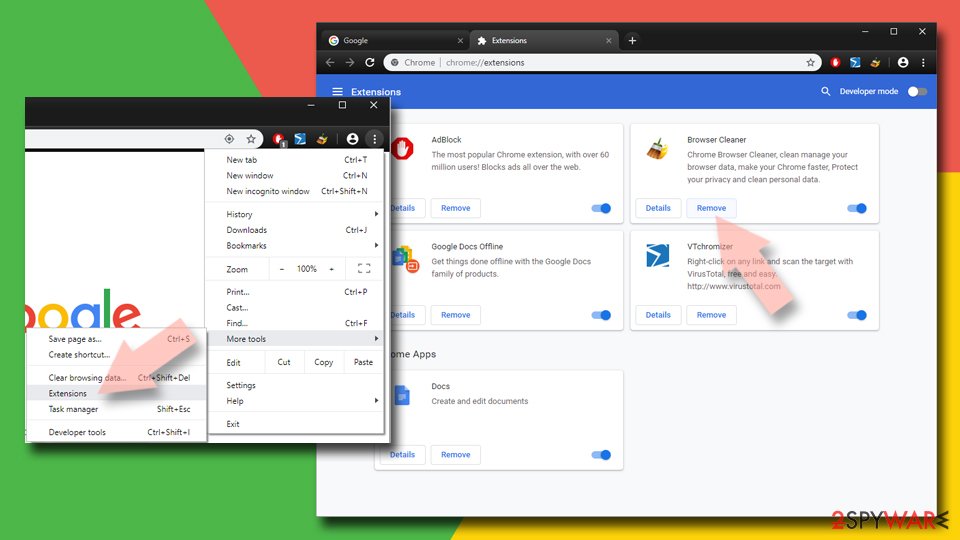
- Open Google Chrome, click on the Menu (three vertical dots at the top-right corner) and select More tools > Extensions.
- In the newly opened window, you will see all the installed extensions. Uninstall all suspicious extensions related to the unwanted program by clicking Remove.
Clear cache and web data from Chrome:
- Click on Menu and pick Settings.
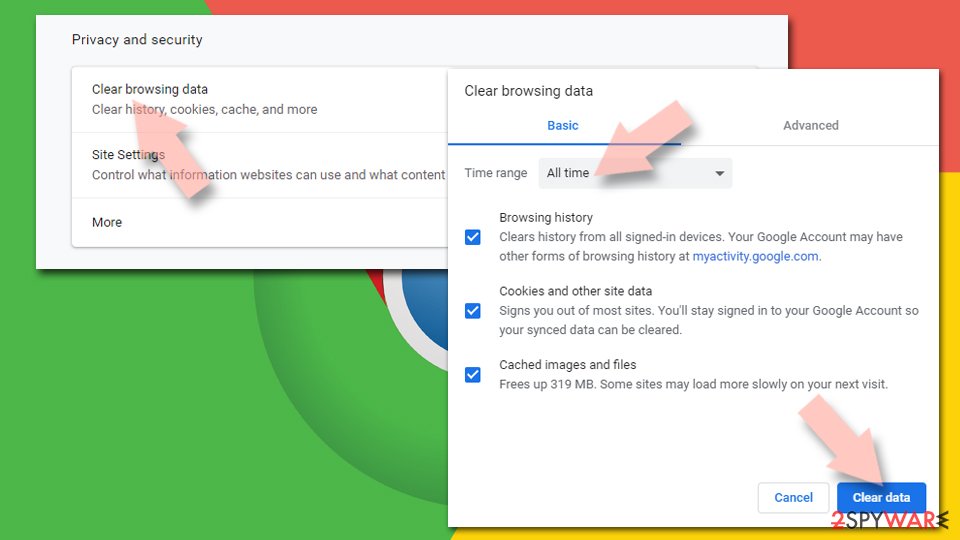
- Under Privacy and security, select Clear browsing data.
- Select Browsing history, Cookies and other site data, as well as Cached images and files.
- Click Clear data.
Change your homepage:
- Click menu and choose Settings.
- Look for a suspicious site in the On startup section.
- Click on Open a specific or set of pages and click on three dots to find the Remove option.
Reset Google Chrome:
If the previous methods did not help you, reset Google Chrome to eliminate all the unwanted components:
- Click on Menu and select Settings.
- In the Settings, scroll down and click Advanced.
- Scroll down and locate Reset and clean up section.
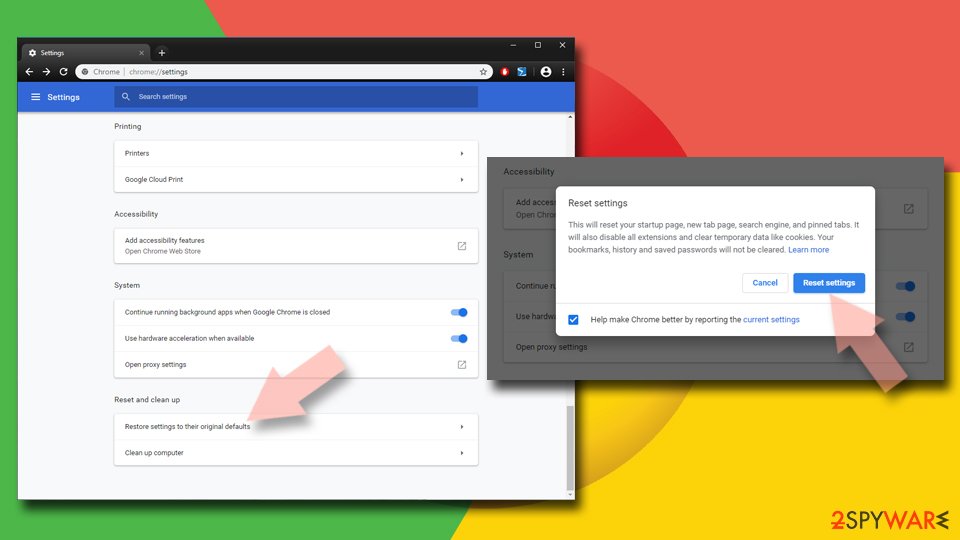
- Now click Restore settings to their original defaults.
- Confirm with Reset settings.
Remove from Microsoft Edge
Delete unwanted extensions from MS Edge:
- Select Menu (three horizontal dots at the top-right of the browser window) and pick Extensions.
- From the list, pick the extension and click on the Gear icon.
- Click Remove.
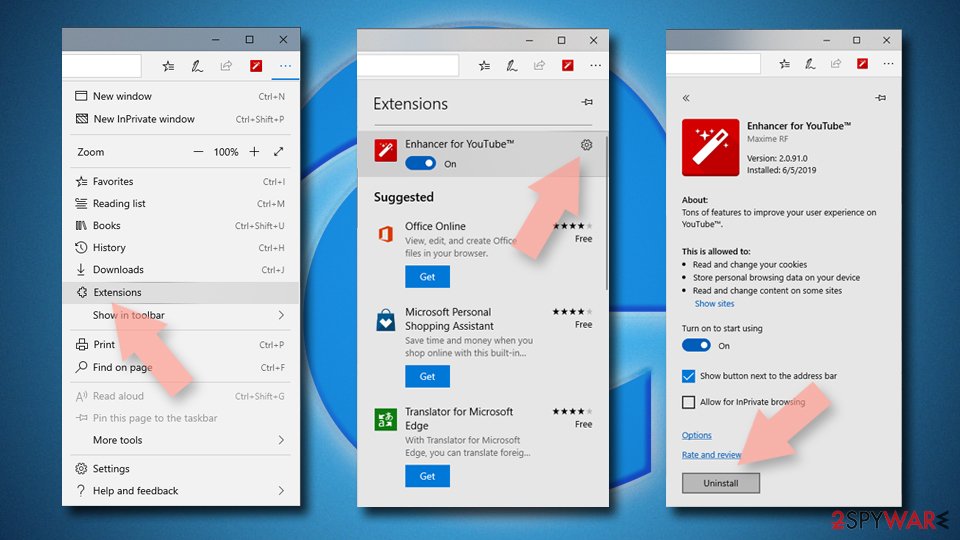
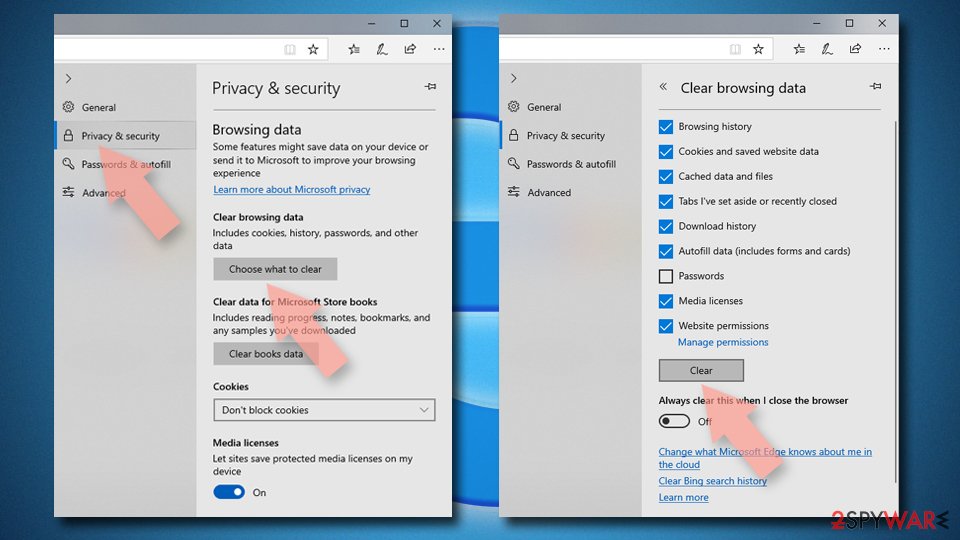
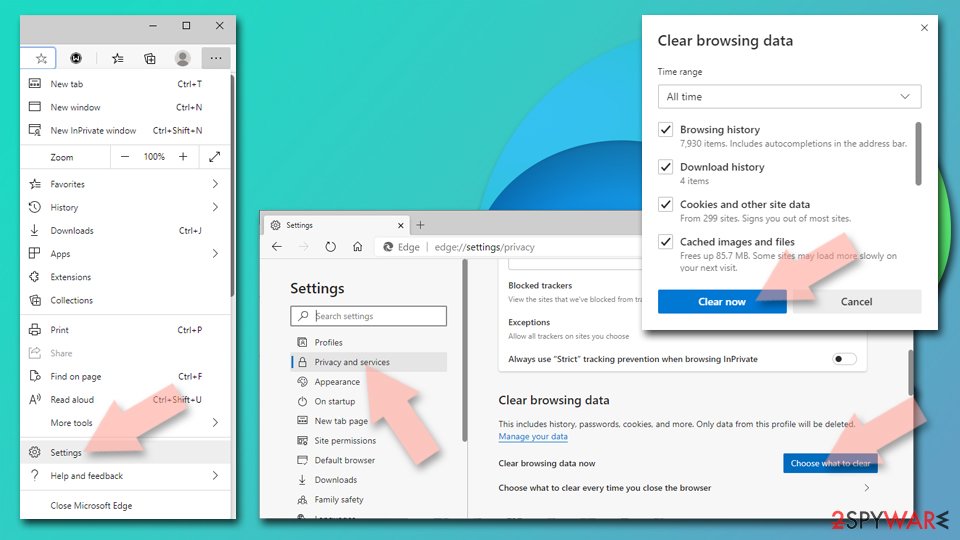
Clear cookies and other browser data:
- Click on the Menu (three horizontal dots at the top-right of the browser window) and select Settings > Privacy, search, and services..
- Under Clear browsing data, pick Choose what to clear.
- Select Cookies and other site data and Cached images and files. (apart from passwords, although you might want to include Media licenses as well, if applicable) and click on Clear.
Restore new tab and homepage settings:
- Click the menu icon and choose Settings.
- Then find On startup section.
- Click Remove next to any suspicious startup page.
Reset MS Edge if the above steps did not work:
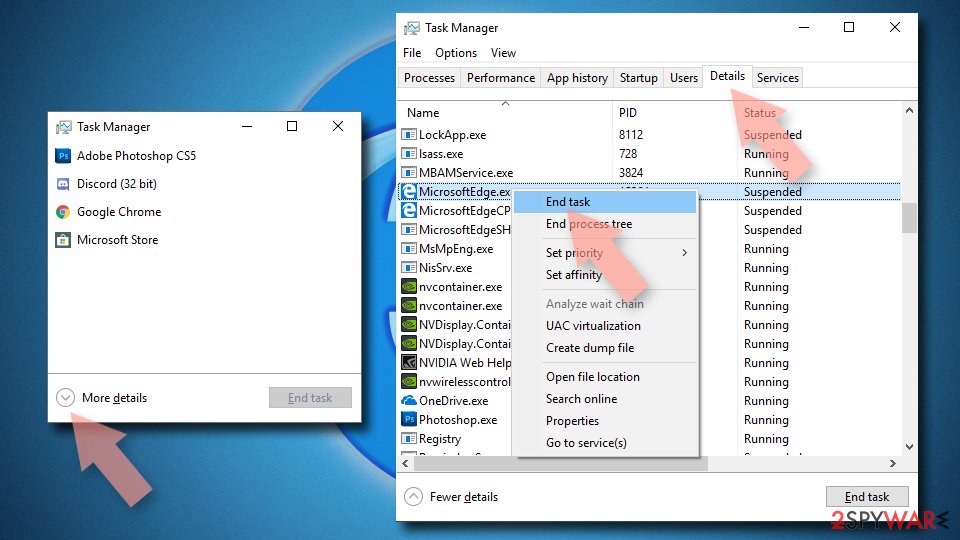
- Press on Ctrl + Shift + Esc to open Task Manager.
- Click on More details arrow at the bottom of the window.
- Select Details tab.
- Now scroll down and locate every entry with Microsoft Edge name in it. Right-click on each of them and select End Task to stop MS Edge from running.
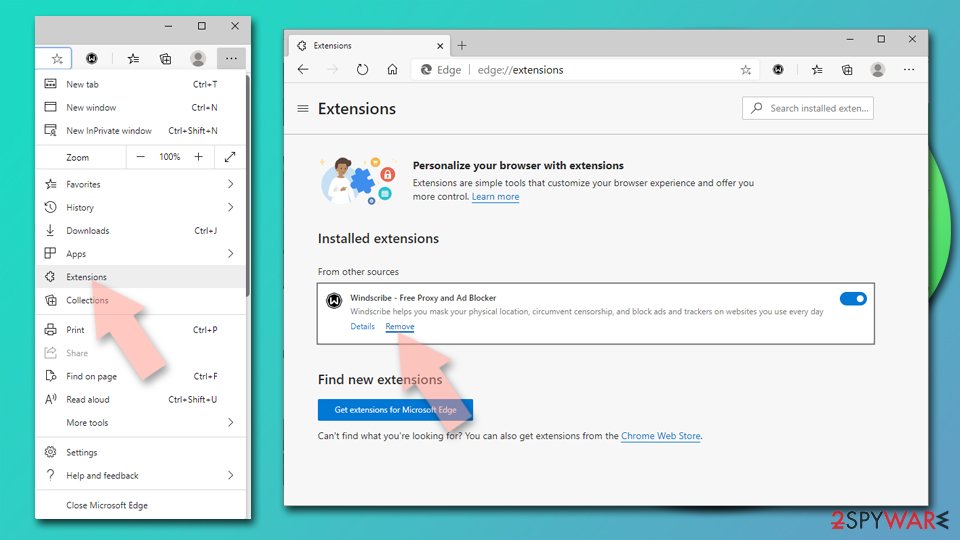
Delete extensions from MS Edge (Chromium):
- Open Edge and click select Settings > Extensions.
- Delete unwanted extensions by clicking Remove.
Clear cache and site data:
- Click on Menu and go to Settings.
- Select Privacy, search and services.
- Under Clear browsing data, pick Choose what to clear.
- Under Time range, pick All time.
- Select Clear now.
Reset Chromium-based MS Edge:
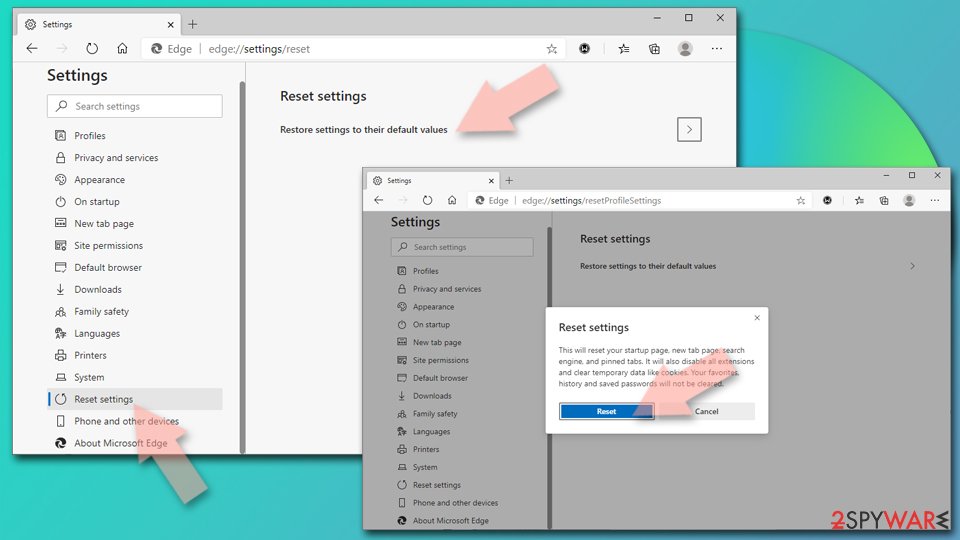
- Click on Menu and select Settings.
- On the left side, pick Reset settings.
- Select Restore settings to their default values.
- Confirm with Reset.
- This will disable extensions and reset startup pages but will not delete bookmarks, saved passwords, or browsing history.
Remove from Mozilla Firefox (FF)
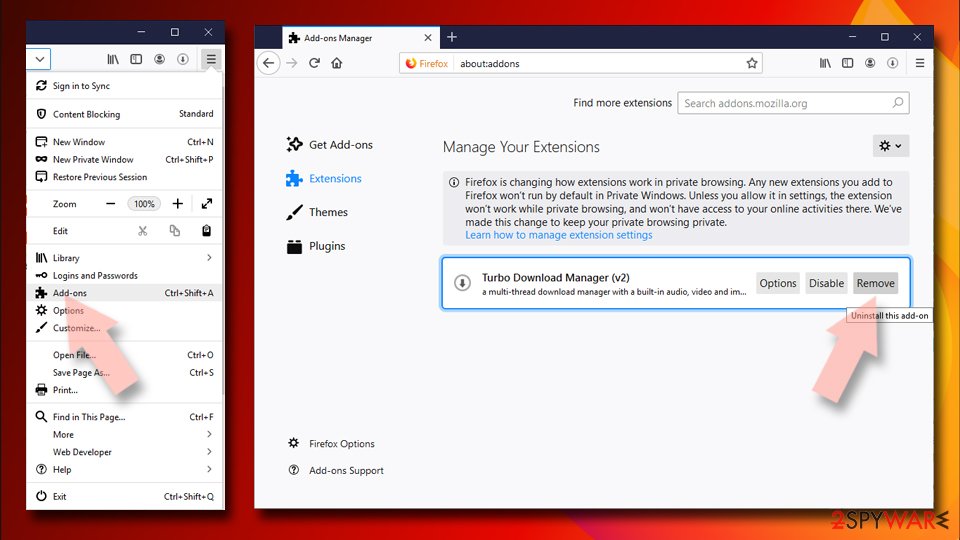
Remove dangerous extensions:
- Open Mozilla Firefox browser and click on the Menu (three horizontal lines at the top-right of the window).
- Select Add-ons.
- In here, select the unwanted extension and click Remove.
Reset the homepage:
- Click three horizontal lines at the top right corner to open the menu.
- Choose Settings.
- Under Home, set your preferred homepage and new tab settings.
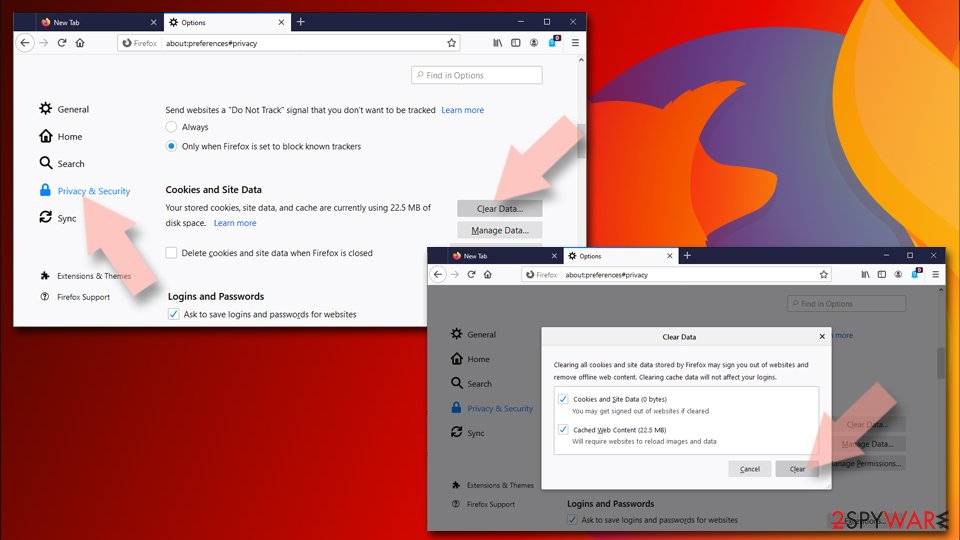
Clear cookies and site data:
- Click Menu and pick Settings.
- Go to Privacy & Security section.
- Scroll down to locate Cookies and Site Data.
- Click on Clear Data...
- Select Cookies and Site Data and Temporary cached files and pages, then click Clear.
Reset Mozilla Firefox
If clearing the browser as explained above did not help, reset Mozilla Firefox:
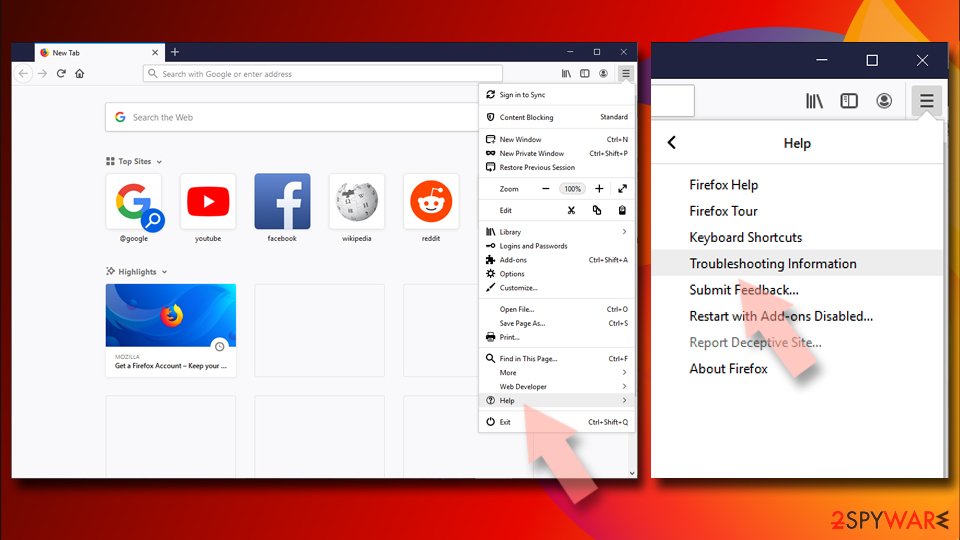
- Open Mozilla Firefox browser and click the Menu.
- Go to Help and then choose Troubleshooting Information.
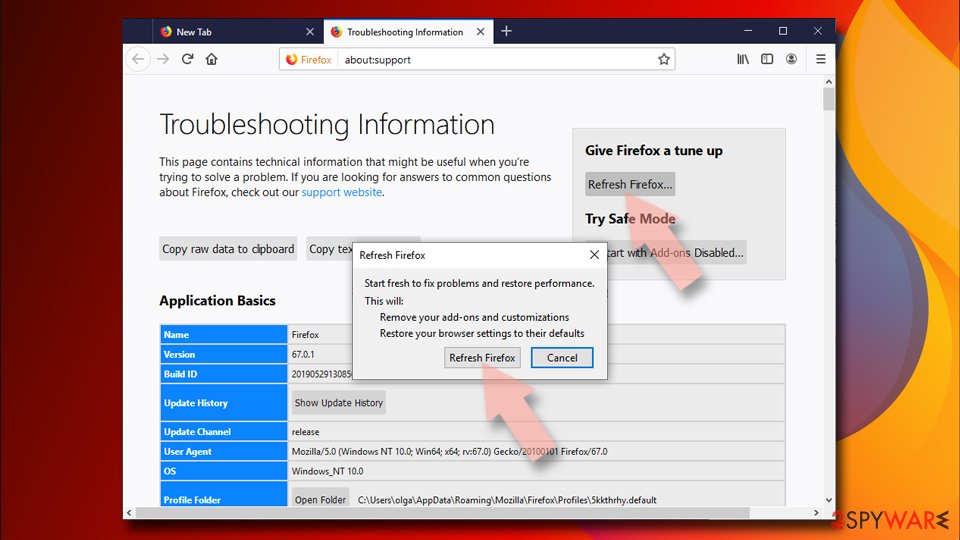
- Under Give Firefox a tune up section, click on Refresh Firefox...
- Once the pop-up shows up, confirm the action by pressing on Refresh Firefox.
Delete from Safari
Remove dangerous extensions:
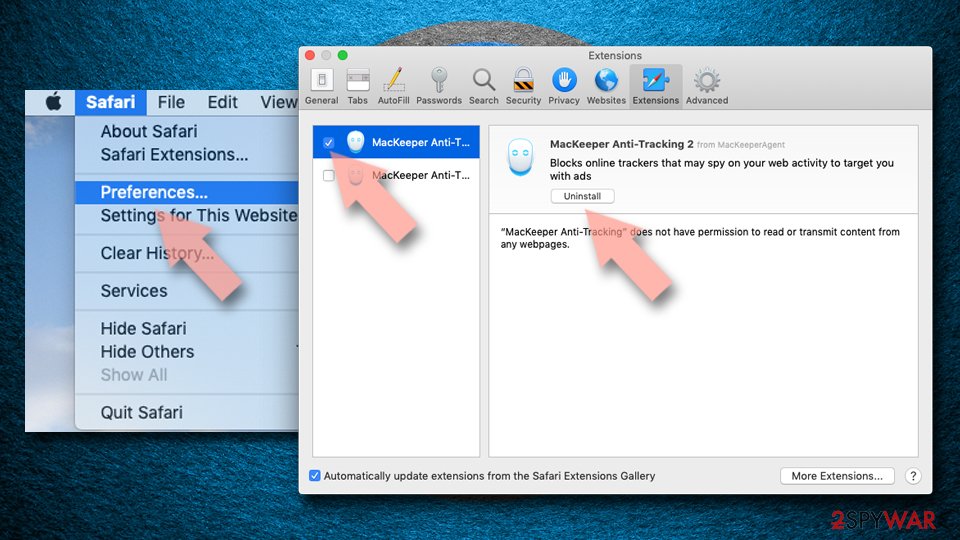
- Open Safari, click Safari in the menu at the top-left of the screen, and select Preferences.
- Go to the Extensions tab, look for any suspicious entries, and click Uninstall to remove them.
Clear history and website data:
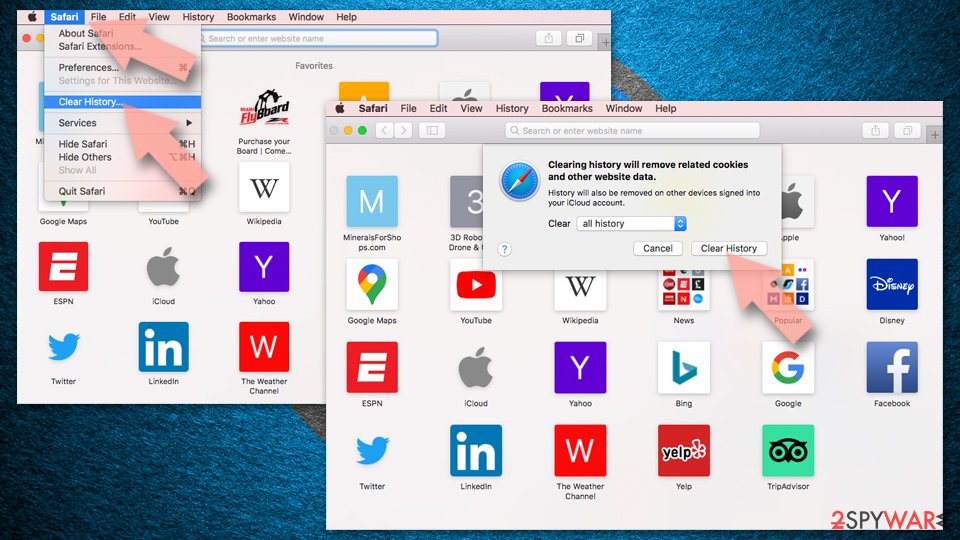
- Click Safari in the menu and pick Clear History.
- Set Clear to all history and confirm with Clear History.
Reset Safari:
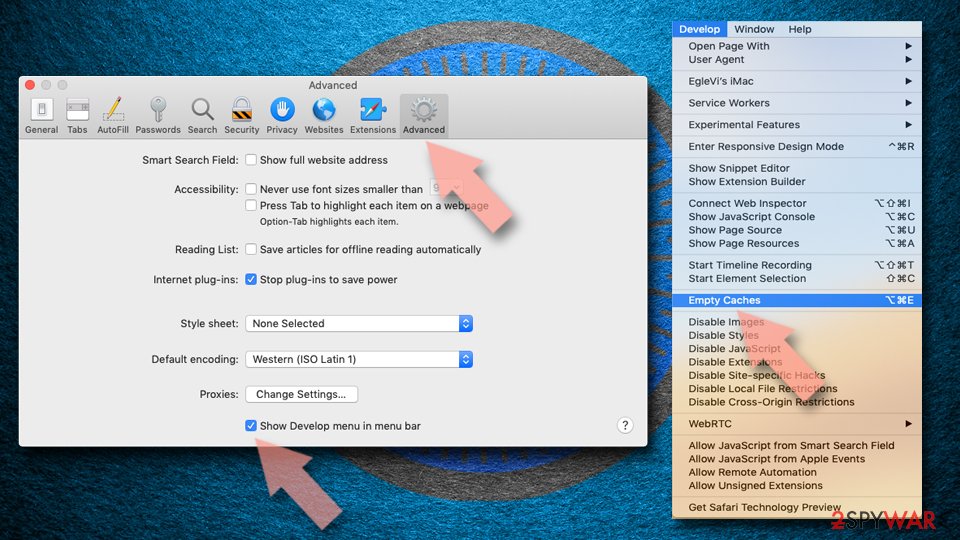
- Click Safari in the menu and select Preferences > Advanced.
- Enable Show Develop menu in menu bar.
- From the menu bar, click Develop and select Empty Caches.
Delete from macOS
Remove the unwanted application:
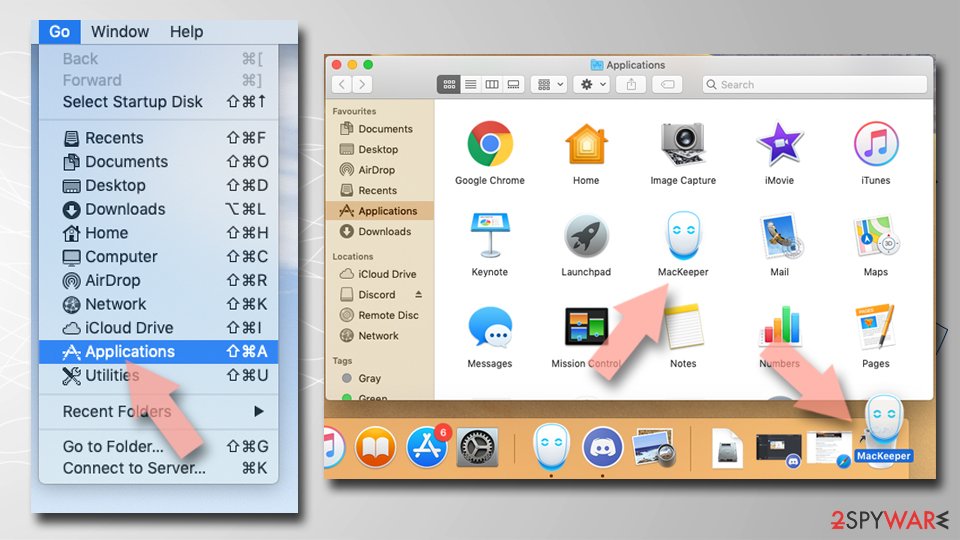
- From the menu bar, select Go > Applications.
- In the Applications folder, look for any suspicious entries, then drag them to Trash (or right-click and pick Move to Trash).
Delete leftover files and folders:
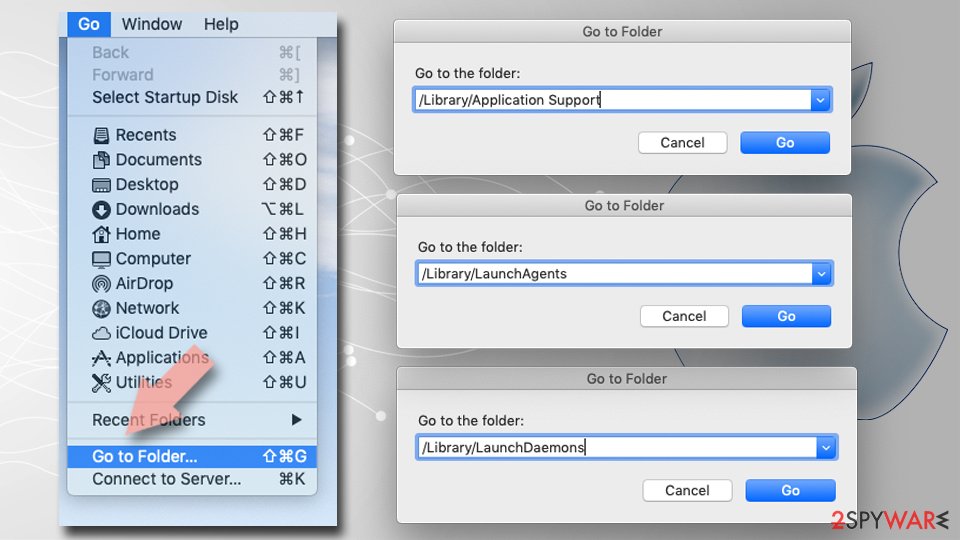
- Select Go > Go to Folder.
- Enter /Library/Application Support and remove any suspicious folders related to the unwanted program.
- Repeat the same check in the /Library/LaunchAgents and /Library/LaunchDaemons folders, deleting any suspicious entries.
- Finally, empty the Trash to permanently remove the leftovers.
Reset Internet Explorer
Remove dangerous add-ons:
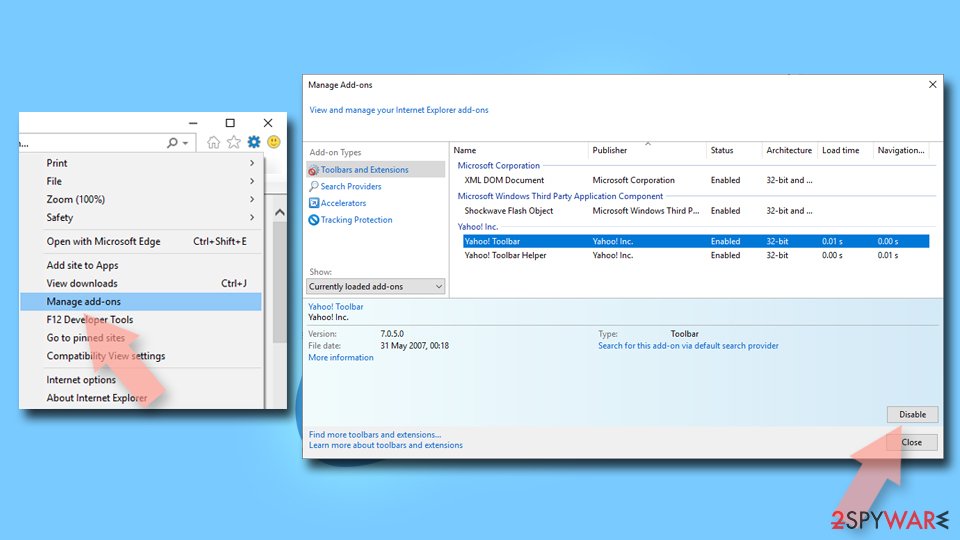
- Open Internet Explorer, click on the Gear icon (IE menu) on the top-right corner of the browser
- Pick Manage Add-ons.
- You will see a Manage Add-ons window. Here, look for suspicious plugins. Click on these entries and select Disable.
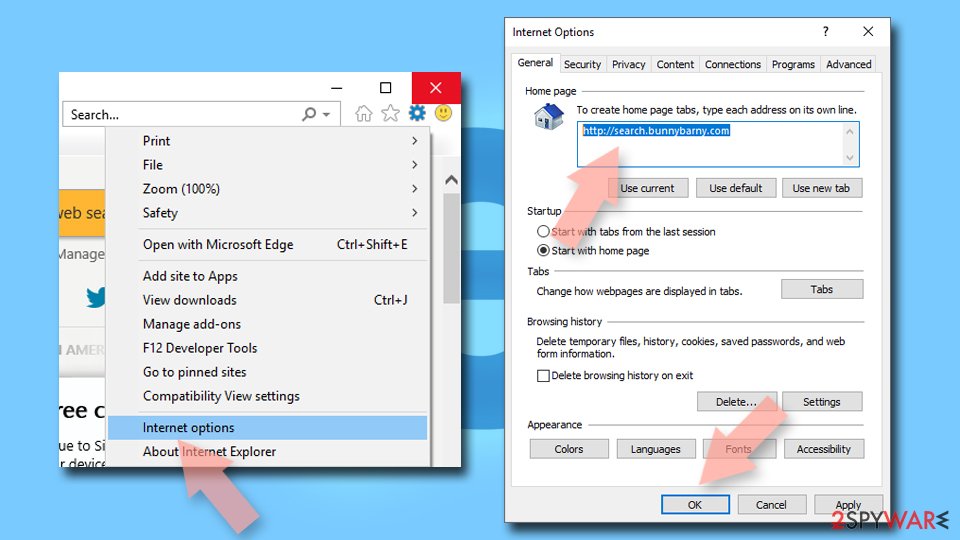
Change your homepage if it was altered:
- Open IE and click on the Gear icon.
- Select Internet Options.
- In the General tab, delete the Home page address and replace it by your preferred one (for example, Google.com).
- Click Apply and then select OK.
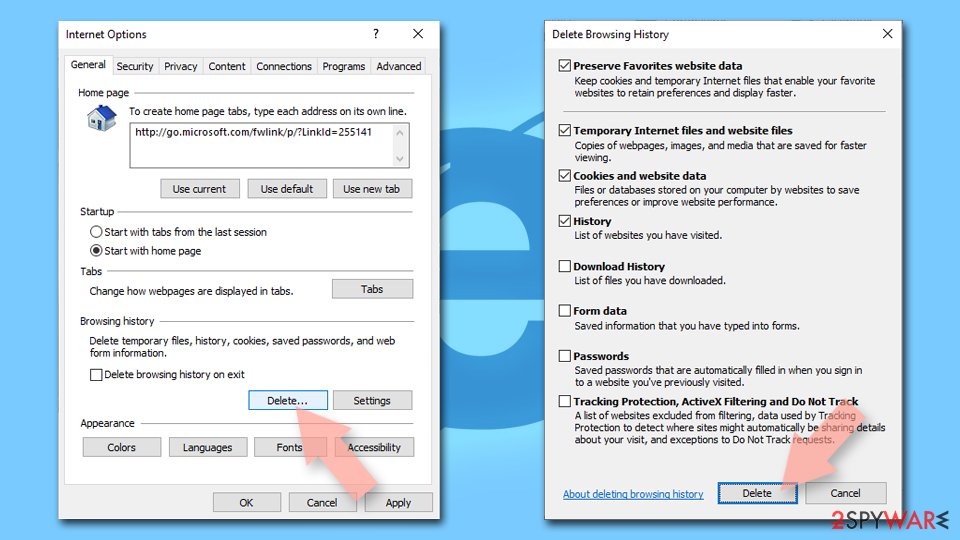
Delete temporary files:
- Press on the Gear icon and select Internet Options.
- Under Browsing history, click Delete...
- Select relevant fields and press Delete.
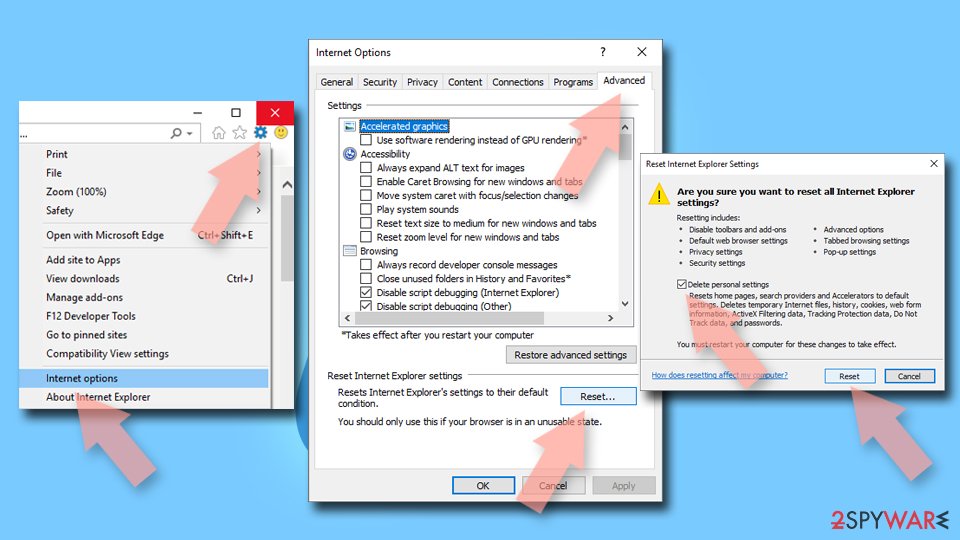
Reset Internet Explorer:
- Click on Gear icon > Internet options and select Advanced tab.
- Select Reset.
- In the new window, check Delete personal settings and select Reset.
Do not let government spy on you
The government has many issues in regards to tracking users' data and spying on citizens, so you should take this into consideration and learn more about shady information gathering practices.
Avoid any unwanted government tracking or spying by going totally anonymous on the internet.
You can choose a different location when you go online and access any material you want without particular content restrictions. You can easily enjoy internet connection without any risks of being hacked by using VPN.
Control the information that can be accessed by government any other unwanted party and surf online without being spied on. Even if you are not involved in illegal activities or trust your selection of services, platforms, be suspicious for your own security and take precautionary measures by using the VPN service.
Backup files for the later use, in case of the malware attack
Computer users can suffer from data losses due to cyber infections or their own faulty doings.
Ransomware can encrypt and hold files hostage, while unforeseen power cuts might cause a loss of important documents. If you have proper up-to-date backups, you can easily recover after such an incident and get back to work. It is also equally important to update backups on a regular basis so that the newest information remains intact - you can set this process to be performed automatically.
When you have the previous version of every important document or project you can avoid frustration and breakdowns. It comes in handy when malware strikes out of nowhere. Use for the data restoration process.
From our report of Jun 2020 · not reviewed since
Explanation on how to delete BlueStacks software from your computer manually
If you no longer want to use the described software, you can easily uninstall it from your computer.
We have provided a simple guide on how to uninstall it from Windows or Mac computers. In some cases, Windows users struggle with manual BlueStacks removal because they do not know a simple trick that allows removing programs easily.
If your attempts to delete the software via Control Panel are unsuccessful, try rebooting the system into Safe Mode with Networking first. You will find a clear and comprehensive explanation of how to boot your PC into this mode below.
First of all, test the method described below to uninstall BlueStacks while in regular computer mode. If this guide fails to help you get rid of the software, follow the extra steps we provide here:
- Press Windows Key + R. Type msconfig into Run prompt and click OK. If you will receive a prompt asking to enter administrator's password to continue, type it in.
- Next, go to Boot tab. Here, select Safe Boot + Networking option. Then hit Apply, then OK.
- Your computer will be restarted in Clean Boot mode. Try uninstalling the software using provided guidelines again. Once you complete the removal process, repeat the 1-2 steps provided below to uncheck the Safe Boot option, and boot your computer back into regular regime again.
Questions about BlueStacks
What is BlueStacks and is it safe?
BlueStacks App Player is a free, cross-platform Android emulator that enables running mobile apps and games on Windows or Mac computers. The legitimate application created by BlueStack Systems, Inc. is safe to use and trustworthy.
However, BlueStacks is notorious for consuming significant system resources including memory and RAM, causing noticeable performance degradation on many computers. The application itself contains no malicious code, but it dramatically impacts device speed and performance. Users often mistakenly believe BlueStacks is malicious because of the performance problems and ad-related issues that arise from installation.
Does BlueStacks come with ads?
Yes, BlueStacks includes advertising through monetization tactics common in free software. Users complain about unwanted pop-ups and banner advertisements appearing during use, particularly from fake versions or installations from shady distributors. The legitimate version from bluestacks.com displays ads, but these are part of normal software monetization.
However, downloading BlueStacks from untrustworthy sources or through bundled freeware often results in ad-heavy versions with aggressive advertising campaigns. Many users seek ad-blocking tools after installation, though modifying the application through rooting poses serious security and stability risks.
Why does BlueStacks slow down my computer?
BlueStacks functions as a full Android emulator requiring substantial computing resources to operate. It reserves significant RAM and processor time to simulate an entire Android operating system on your computer. This resource consumption continues even when BlueStacks runs in the background, causing noticeable system slowdowns and performance degradation.
The emulator becomes particularly problematic on computers with limited RAM or older processors. If your device already runs close to resource capacity, BlueStacks can make normal computing frustratingly slow and cause browser lag, application crashes, and general instability.
How does fake BlueStacks differ from legitimate versions?
Legitimate BlueStacks downloads only from the official developer website bluestacks.com and from verified sources. Fake or modified versions from torrents, shady websites, and third-party installers often contain bundled adware, PUPs, or malware. These compromised installations generate abundant pop-up advertisements claiming various fraudulent offerings.
They may include unwanted toolbars, browser hijackers, or additional malicious programs. Scammers exploit BlueStacks' popularity to distribute malicious software under its trusted name. Always verify you're downloading the official application from the legitimate developer.
What are common BlueStacks installation errors?
Many users encounter Error 25003 or Error 2318 when attempting to uninstall BlueStacks through normal processes, particularly with newer versions. These errors prevent successful removal through the Control Panel uninstall process. The primary cause involves system permissions and software conflicts rather than actual corruption.
Attempting removal in Safe Mode with Networking resolves most uninstallation issues by limiting active processes and preventing interference. After booting into Safe Mode, run the uninstaller again and the removal process typically completes successfully without error codes.
How do I safely uninstall BlueStacks?
The safest removal method involves using the official uninstaller included with the legitimate application. Access your system's Control Panel or Programs list and locate BlueStacks App Player.
Select it and click Uninstall, following the prompts to complete removal. If standard uninstallation fails with error codes, restart your computer in Safe Mode with Networking.
From Safe Mode, attempt uninstallation again using the same process. After removal completes, use anti-malware software to verify no related programs or PUPs remain. Delete any associated files and folders remaining in your system directories.
What precautions prevent BlueStacks problems?
Only download BlueStacks from the verified developer website bluestacks.com to ensure you receive the legitimate application. Avoid torrents and third-party file-sharing networks that may contain corrupted or compromised installations. Be extremely skeptical of fake download websites and shadily advertised software bundles claiming to provide BlueStacks.
Understand that BlueStacks requires substantial resources, so verify your computer has adequate RAM and processor capacity before installation. If you find BlueStacks unnecessary, removing it improves system performance more effectively than attempting to disable ads through dangerous third-party tools.
Is BlueStacks a virus or malware?
The legitimate BlueStacks application from BlueStack Systems, Inc. is not a virus, malware, or potentially unwanted program. It is trustworthy software designed for running Android applications on computers. The application is not responsible for fake downloads and compromised versions available on deceptive websites.
Confusion arises because users experience performance problems that feel malicious and fake versions install alongside malware. To confirm you have legitimate software, download exclusively from the official website and verify the developer. The real version functions normally without security threats, though significant performance impact from resource usage remains unavoidable.
Will Fortect remove BlueStacks?
Fortect scans Windows for malware and unwanted programs and repairs the system files and settings they change, and its free scan shows what it finds on your PC before you decide anything.
For BlueStacks, follow the plan above as well: the browser steps take back permissions and settings that no scanner treats as a threat, and uninstalling the program that brought it removes the source.
Run Microsoft Defender's full scan and, if anything was found, its offline scan as a second opinion. If the symptoms are gone after the plan and both scans are clean, there is nothing more to do.
Sources
- Official Apple Support Communities: Beware bogus Adobe Flash "installers" (read October 5, 2026)
- Usunwirusa: Usunwirusa (read October 5, 2026)
- FTC: How to recognize, remove and avoid malware (read October 5, 2026)
- Microsoft Learn: Microsoft Defender Offline (read October 5, 2026)
- Microsoft Learn: How Microsoft names malware (read October 5, 2026)