

Chumsearch – Mac virus which can affect your web browser and initiate continuous redirects to sponsored domains
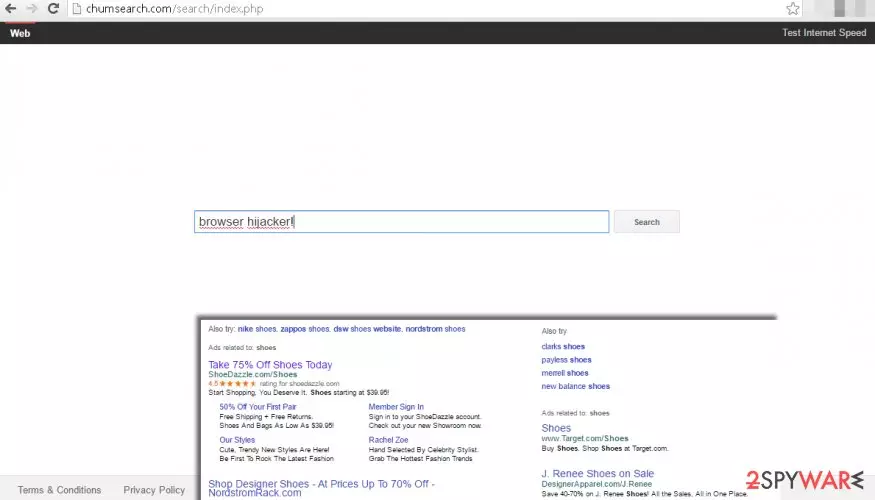
Chumsearch – a browser hijacker which is closely related to other fake search engines, such as Trovigo and Trovi. This potentially unwanted program (PUP) has been actively used to hijack Mac operating systems with the help of MPlayerX, MessageViewer Toolbar, NicePlayer, SearchProtect, ValueApps, and similar freeware. Technically, it is not a virus. It is a potentially unwanted program which relies on bundling while trying to infiltrate target systems. Once it is done, Chumsearch.com attaches itself to Safari, Chrome, IE and other web browsers and starts redirecting its victim to third party websites.
| SUMMARY | |
| Name | Chumsearch |
|---|---|
| Type | Browser hijacker (PUP) |
| Affected systems | Mac OS X (mostly) and Windows |
| Compatible browsers | Google Chrome, Safari, Mozilla Firefox, etc. |
| Symptoms | Altered front page and other browser settings, sponsored links are displayed in search results, intrusive advertisement pops on every site visited, etc. |
| Distribution | Software bundling |
| Elimination | Automatic – perform full system scan with FortectIntego or manual – check for instructions below |
The main purpose of Chumsearch is to generate revenue which is gained with the help of pay-per-click scheme. As soon as this PUP settles down, it starts collecting its victim’s search queries, sites visited, ads clicked and similar information which is typically related to his/hers search sessions. At the moment, Mac OS X is the most affected operating system but Windows users should be also aware about this threat.
Additionally, after getting more knowledge about victim’s search sessions, it starts filling its search results with links leading its victim to sponsored content. The most important thing you should understand is that these links are hardly monitored by people who are hiding behind Chumsearch and there is no guarantee that you won’t find yourself redirected to a malicious domain.
Additional features applied by this search provider are also related to viruses that belong to browser hijacker category. According to the latest analysis, it might install various toolbars, extensions, and plugins behind your back. Additionally, by using this corrupted search engine, you won’t be able to find any relevant information because it includes sponsored links in its search results and prevents users from accessing Google, Bing or other reliable search providers. Apparently, you cannot trust this search engine; you should remove Chumsearch as soon as it appears on your screen.
To prevent redirects to sponsored, as well as malicious, websites, you need to stay away from ads and in-text links brought to you by this virus. You need only one click to find yourself on a site that was created for spreading malware. Instead of trying to avoid using the affected browser and this search engine, make sure you take care of Chumsearch removal. For that, we recommend using FortectIntego.
Moreover, if you decide to keep this search engine on your browser, you can notice redirects to previously mentioned hijackers called Trovigo.com or Trovi.com. This activity might surprise you, but, if you checked the Privacy Policy of Chumsearch.com, you could see these statements about the partnership with these two browser hijackers:


As you can imagine, any reliable search provider wouldn’t collaborate with shady developers. Keep in mind that this hijacker is a serious threat to your computer and your privacy. It might monitor your browsing activity and collect information about your favorite websites or search queries. No one can guarantee that this information won’t be shared with third-parties. We strongly believe that your personal data should be kept in private by eliminating Chumsearch virus from the system.
Protecting the system from browser hijackers
PUPs are distributed alongside other free applications, so it is important to install programs carefully. To avoid adware, browser hijacker, and similar viruses, make sure you double check every freeware before downloading it to the system.
The most important information about additional software added to the free software is provided in program’s installation wizard. When you open it, do not rush the whole procedure and read Terms of Use, Privacy Policy to know what you agree with by installing this program.
The next important step is to adjust the installation settings properly. Now, do you think that “recommended” settings are worth your trust? Definitely not. Usually, they conceal agreements to install additional software, for example, browser hijackers, adware, suspicious add-ons, and plug-ins.
Do not risk and opt for Advanced or Custom installation option and review the components of your download. If you see ANY suspicious offers to install additional software, opt them out without hesitation. Most likely, such software is potentially unwanted one, and you will need to consider resetting your browsers in the future.

Ways to remove Chumsearch from Macbook and similar devices
If infected, we believe that you want to remove this annoying program from your computer. Luckily, it is not a complex computer virus, and you can get rid of this redirect virus quite easily. For that, you need to locate this browser hijacker on your computer and delete it. Additionally, you should reset your browsers one-by-one. If you are new to this procedure, check a detailed Chumsearch removal guide below this post.
If you need an easier way to remove this browser hijacker, apply for spyware/malware removal program. We strongly recommend you to remove Chumsearch automatically, if you are new to viruses and their elimination. Also, security program will protect your computer from other possible infections in the future.
Uninstall from Windows
Uninstall from Windows 10/8:
- Type Control Panel into the Windows search box and open the result.
- Under Programs, select Uninstall a program.


Uninstall from Windows 7/XP:
- Click on Windows Start > Control Panel (Windows XP users should click on Add/Remove Programs).
- In Control Panel, select Programs > Uninstall a program.


Remove the unwanted program:
- In the Programs and Features window, look for any recently installed suspicious entries, select them, and click Uninstall.
- If User Account Control appears, click Yes to confirm, then complete the removal.


Delete from macOS
Remove the unwanted application:
- From the menu bar, select Go > Applications.
- In the Applications folder, look for any suspicious entries, then drag them to Trash (or right-click and pick Move to Trash).


Delete leftover files and folders:
- Select Go > Go to Folder.
- Enter /Library/Application Support and remove any suspicious folders related to the unwanted program.
- Repeat the same check in the /Library/LaunchAgents and /Library/LaunchDaemons folders, deleting any suspicious entries.

- Finally, empty the Trash to permanently remove the leftovers.

Remove from Mozilla Firefox (FF)
Remove dangerous extensions:
- Open Mozilla Firefox browser and click on the Menu (three horizontal lines at the top-right of the window).
- Select Add-ons.
- In here, select the unwanted extension and click Remove.


Reset the homepage:
- Click three horizontal lines at the top right corner to open the menu.
- Choose Settings.
- Under Home, set your preferred homepage and new tab settings.
Clear cookies and site data:
- Click Menu and pick Settings.
- Go to Privacy & Security section.
- Scroll down to locate Cookies and Site Data.
- Click on Clear Data...
- Select Cookies and Site Data and Temporary cached files and pages, then click Clear.


Reset Mozilla Firefox
If clearing the browser as explained above did not help, reset Mozilla Firefox:
- Open Mozilla Firefox browser and click the Menu.
- Go to Help and then choose Troubleshooting Information.

- Under Give Firefox a tune up section, click on Refresh Firefox...
- Once the pop-up shows up, confirm the action by pressing on Refresh Firefox.



Remove from Google Chrome
Delete malicious extensions from Google Chrome:
- Open Google Chrome, click on the Menu (three vertical dots at the top-right corner) and select More tools > Extensions.
- In the newly opened window, you will see all the installed extensions. Uninstall all suspicious extensions related to the unwanted program by clicking Remove.


Clear cache and web data from Chrome:
- Click on Menu and pick Settings.
- Under Privacy and security, select Clear browsing data.
- Select Browsing history, Cookies and other site data, as well as Cached images and files.
- Click Clear data.


Change your homepage:
- Click menu and choose Settings.
- Look for a suspicious site in the On startup section.
- Click on Open a specific or set of pages and click on three dots to find the Remove option.
Reset Google Chrome:
If the previous methods did not help you, reset Google Chrome to eliminate all the unwanted components:
- Click on Menu and select Settings.
- In the Settings, scroll down and click Advanced.
- Scroll down and locate Reset and clean up section.
- Now click Restore settings to their original defaults.
- Confirm with Reset settings.


Delete from Safari
Remove dangerous extensions:
- Open Safari, click Safari in the menu at the top-left of the screen, and select Preferences.
- Go to the Extensions tab, look for any suspicious entries, and click Uninstall to remove them.


Clear history and website data:
- Click Safari in the menu and pick Clear History.
- Set Clear to all history and confirm with Clear History.


Reset Safari:
- Click Safari in the menu and select Preferences > Advanced.
- Enable Show Develop menu in menu bar.
- From the menu bar, click Develop and select Empty Caches.


Did this guide help?
4 comments
Lea
Redirects to fake websites claiming that you have won something... Totally fake search engine!
ciarro
It was quite difficult to remove it, but I managed to do so. Thanks for the advice
Lucas98
annoying! why I cannot get rid of this?!
claudia
oh great. another browser hijacker? why my windows does not have a built-in tool for preventing them?!!