
Driver Update Plus: what it is and how to remove it
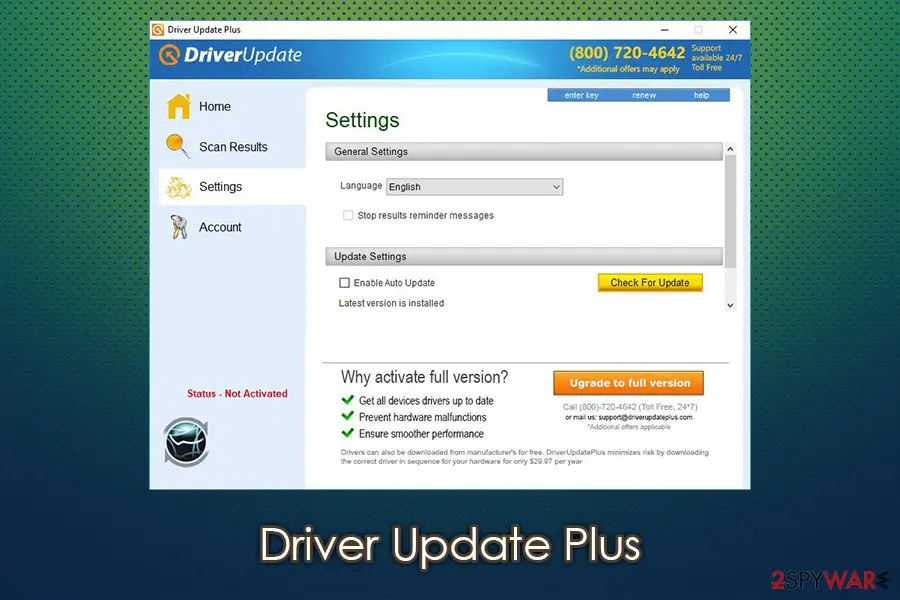
Driver Update Plus is a potentially unwanted application that should not be trusted. The program is allegedly designed to update drivers for Windows operating systems automatically, although it notoriously fails to do so.
Facts checked October 6, 2026. Removal steps tested on Windows 11 (26H2) and checked against Microsoft's and the browser makers' current documentation. Sections marked as our earlier report are the original text: they describe the threat as it was then and have not been reviewed since. The 2026 status, the removal steps and the questions are current.
Automatic
Get a free scan and check if your PC is infected.
Fortect finds malware, unwanted programs and the Windows damage they leave behind, and repairs it in one pass.
If DriverUpdater.exe returns after removal, a full scan can find the entry that brings it back.
Do it yourself · free Remove Driver Update Plus yourself 5 steps, about 15 minutes, no software needed.
Start the steps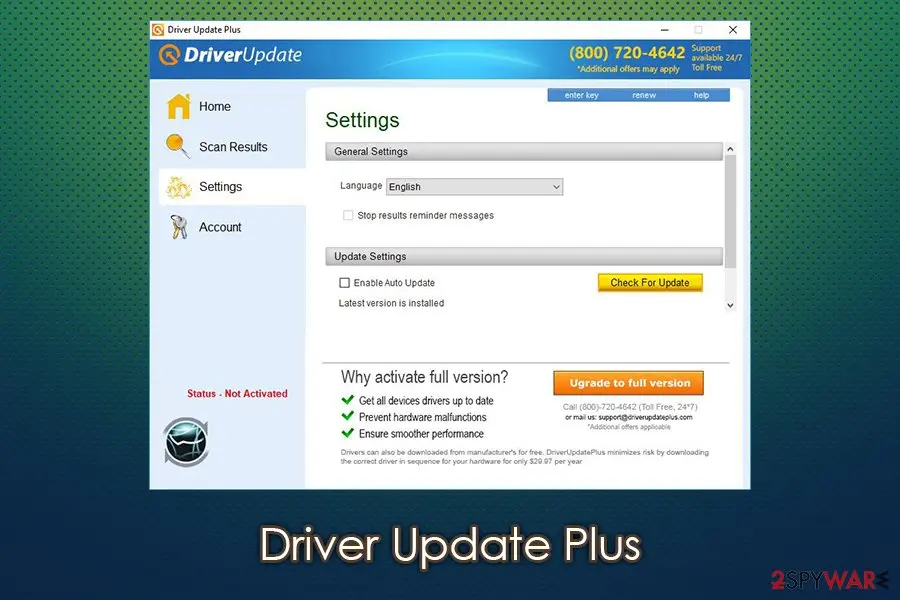
Driver Update Plus: summary
| Damage | Users may lose money after they purchase a full version of Driver Update Plus, as the app will fail to update drivers that are actually needed (the app simply does not work). Also, users may be offered to install other potentially unwanted programs and suffer from increased amount of advertisements |
|---|---|
| Name | Driver Update Plus |
| Type | Potentially unwanted program, rogue driver updater |
| Developer | Energizer Softech PVT LTD |
| Related files | DriverUpdater.exe |
| Infiltration | Potentially unwanted applications are usually distributed via software bundles downloaded from third-party sites, although users might also encounter it when visiting malicious sites that show fake claims about computer's security or lack of mandatory components (online scams) |
| Removal | Scan the PC with security software to find and remove the malware and anything installed with it. Fortect scans Windows for malware and repairs the system files and settings it damaged. Remove it nowTo use the full-featured product, you have to purchase a license for Fortect. The scan is free. |
Show 7 more facts
| Symptoms | Scans reveal that the machine is in trouble due to missing drivers Pop-up ads ask to install the full version of the app The app launches automatically due to a scheduled task set up during the installation When trying to fix found issues, users will be redirected to the payment page |
|---|---|
| Detection names | No Microsoft detection name is known |
| Distribution | Not recorded in the old report |
| Files and processes | DriverUpdater.exe |
| Evidence | 5 write-ups by security sites; details still limited |
| First seen | 21 May 2020 |
| Facts checked | 6 October 2026 |
Is Driver Update Plus a real security program?
- File:
DriverUpdater.exe
From our report of May 2020 · not reviewed since
Driver Update Plus - a dubious application that uses scare tactics to make users purchase its licensed version
Driver Update Plus is a potentially unwanted application that should not be trusted.
The program is allegedly designed to update drivers for Windows operating systems automatically, although it notoriously fails to do so. Additionally, the developers are also using scare tactics in order to make victims believe that their machines are in trouble, despite their actual condition.
Just as many other rogue apps of this kind, Driver Update Plus can be downloaded via a promotion on a random website, although most users notice software installed on their machines without permission. This happens due to deceptive distribution techniques that the app developers use, including software bundles, fake Flash Player updates, and even scam messages encountered on malicious websites.
Drivers are a fundamental part of any Windows operating system, as its software that allows hardware components (such as graphics card, motherboard, network card, etc.) and external input/output devices to operate properly.
The discrepancies come due to the high customization of Windows OS, as parts are developed by different manufacturers and then combined into a single working machine. While some drivers might only cause issues, others will simply render hardware non-functional.
Since users are not very familiar with drivers and why they are needed, the demand for such tools like Driver Update Plus is huge. In general, updaters of this kind are highly discouraged by security and IT experts, as incorrect drivers might completely mess up the operation of an otherwise healthy operating system.
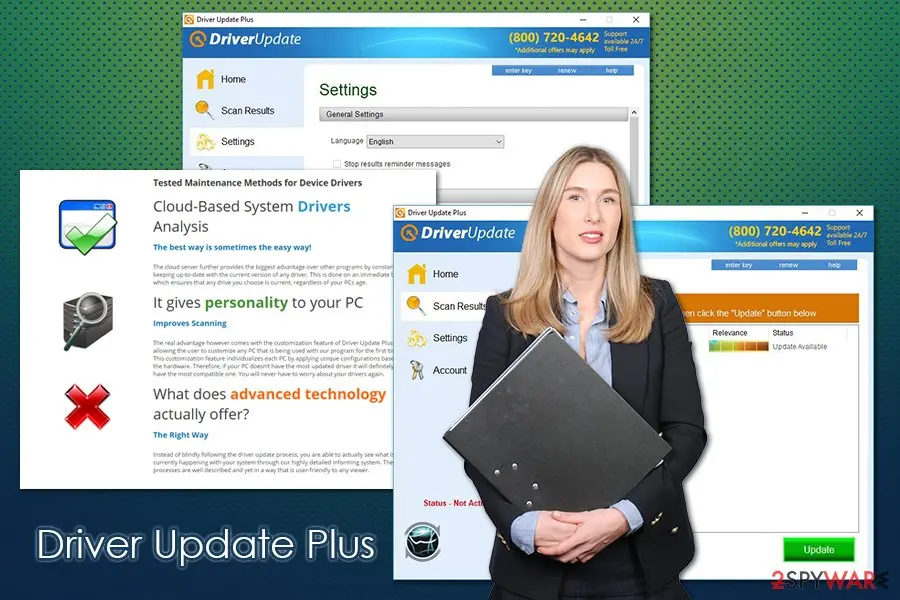
Once inside the system, Driver Update Plus will perform a scan of the system, seemingly checking for the outdated drivers. However, none of these detected issues are trustworthy. If the driver is updated manually, the app will still show users that it needs updating.
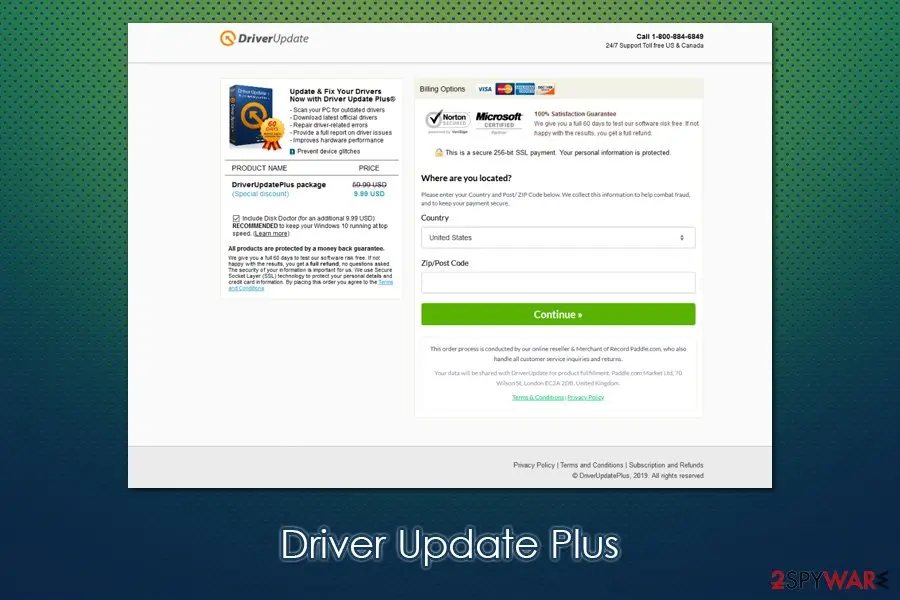
Besides, if users choose to use the app to update drivers, it will lead them directly to the payment page where they will be asked to spend different sums of money (based on their geo-location).
Driver Update Plus does not need to employ web browsers to generate ads and other sponsored content. Instead, it can install and operate on the system directly, meaning that pop-ups, system scan notifications, and upgrade suggestions that this questionable software generates are seen regardless of whether there is a network connection or not.
Besides, those who do not upgrade will be constantly reminded that their system is in danger due to seemingly missing drivers - this behavior can only be stopped with Driver Update Plus removal.
There are many more suspicious behaviors that Driver Update Plus exhibits, including:
Driver Update Plus malware has been developed by an Indian company called Energizer Softech PVT LTD. Interestingly enough, no clearly structured information about other products that this company has produced exists on the web. Nevertheless, after some research, we have discovered that the company is not new to the malware business and has already released a bunch of other questionable applications such as Game Booster, PC Booster, etc.
Thus, it is only natural to presume that Driver Update Plus will not be a miracle either. In fact, the research shows that 66% of all the users that have installed this program on their computers recommend to remove it.
Besides, their opinion can be backed up by the reports of security software developers who claim their products detect DriverUpdater.exe as malware. That is why you should not ignore the appearance of unfamiliar programs on your computer and remove Driver Update Plus ASAP.
Since DriverUpdaterPlus might leave a variety of traces after its termination and proceed to show ads, we also recommend resetting the installed web browsers, such as Google Chrome, Mozilla Firefox, Safari, MS Edge, or another browser and also scan the machine with to check for Windows system damage.
- Uses "high alert" colors (red, orange) in order to make users believe that the issue is critical (even though it is bogus);
- Creates new scheduled tasks without user permission;
- Is impossible to shut down via the system tray, as it only gives an option to open it instead;
- Leaves various components behind after the uninstallation, etc.
From our report of May 2020 · not reviewed since
Fake driver updates and other software is typically downloaded unintentionally
Even if you haven't been looking for a driver updater or any system optimization program whatsoever, it has probably entered your PC by deception.
In other words, the malware creators have added the PUP to the software package of some popular freeware or shareware application, which you have unknowingly downloaded and installed on the computer.
This is not an uncommon way to distribute malware around, so you should be aware that there are many threats that are spread via software bundle packages that can be downloaded from third party sites. In some cases, the accidentally installed software can completely corrupt your system, flood it with ads, result in crashes, and so on.
Thus, don't rush the installation, scan the downloaded software package with an antivirus program, follow the installation steps one-by-one, and always pick Advanced settings instead of Recommended ones. Perhaps you will be lucky enough to prevent something more major than a fraudulent driver updater.
From our report of May 2020 · not reviewed since
More from our earlier report on Driver Update Plus
- The application is known to leave its components behind after its termination.
- The program can negatively impact the system by installing wrong drivers, which could result in errors, crashes, BSODs, and other issues.
- To repair your operating system, use tools like
- Falsely claims that it is partnered with Microsoft and Norton;
How to remove Driver Update Plus
Nothing it reports is real.
These steps remove it and undo a payment if you made one.
Step 1: Do not pay, and undo a payment if you made one
Nothing that Driver Update Plus says it found needs fixing by it. Close its windows and do not enter card details.
If you bought it, contact your bank or card issuer about a dispute and cancel any renewal, keeping the receipt e-mail as evidence. Uninstalling it from Windows 11 or Windows 10 removes the program but leaves the subscription running.
Full procedure with screenshots: What to do after paying a scammer
Step 2: Uninstall programs you did not mean to install
Driver Update Plus rarely comes alone: it is usually installed by, or together with, a free program. In Windows 11 open Settings > Apps > Installed apps, in Windows 10 Settings > Apps > Apps & features, and sort by install date.
Uninstall every entry from the day the trouble began that you did not install on purpose, for example a download manager, a converter or a browser you never chose.
Keep drivers and entries from Microsoft, Intel, AMD, NVIDIA or your PC's maker unless you are sure.
Full procedure with screenshots: Uninstall a program or app in Windows On uGetFix
Step 3: Remove it from startup
Press Ctrl + Shift + Esc to open Task Manager and select Startup apps (Windows 11) or the Startup tab (Windows 10). Disable entries you do not recognise, especially ones with no publisher or with a name that copies a Windows component.
Right-click an entry and choose Open file location to see where it runs from: programs in
%AppData%or%Temp%deserve a closer look. Some entries are not listed there but in the registry Run keys, which the procedure below shows how to check.Full procedure with screenshots: Stop apps from opening at startup On uGetFix
Step 4: Delete the folders left behind
Uninstalling often leaves the program's folders, and some threats reinstall themselves from them.
Press Windows + R, type
%LocalAppData%and press Enter, then do the same for%AppData%and %ProgramData%, and look for folders named after Driver Update Plus, its publisher or created on the day the problem started.Delete those folders, and check
C:\Program FilesandC:\Program Files (x86)too.If Windows says a file is in use, end it in Task Manager or delete the folder after a restart in Safe Mode. The folders are the same in Windows 11 and Windows 10.
Full procedure with screenshots: Remove what malware leaves behind in Windows
Step 5: Scan the PC, then run the offline scan
A scan finds the parts of Driver Update Plus that the manual steps cannot see. In Windows Security > Virus & threat protection > Scan options, start a Full scan and quarantine what it reports.
Follow it with Microsoft Defender Antivirus (offline scan) > Scan now, which restarts the PC and checks the disk while Windows and the malware are not running.
It takes about 15 minutes and works the same in Windows 11 and Windows 10. If either scan finds something, run the full scan again after removal until it comes back clean.
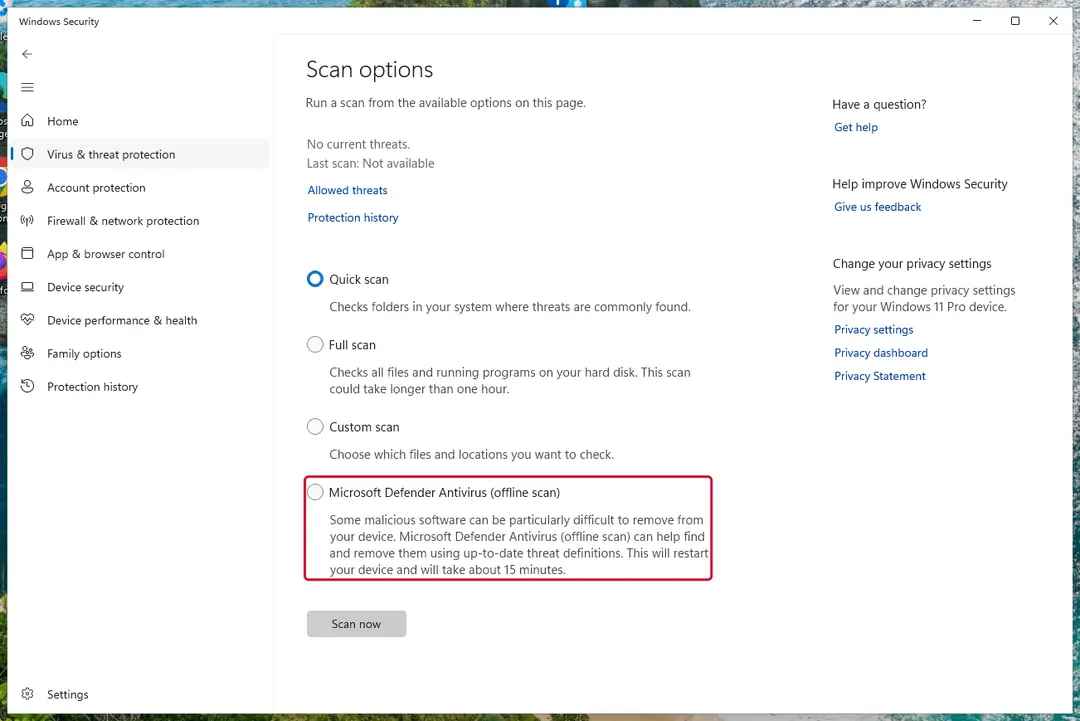
Windows 11: Windows Security > Virus & threat protection > Scan options. Full procedure with screenshots: Run a Microsoft Defender Offline scan
Instructions for each browser and system
The detailed steps for every browser and system this guide covers. Open the one you use.
Uninstall from Windows
Below, we present manual Driver Update Plus removal instructions that you should follow attentively, to get this fraudulent application out of your system.
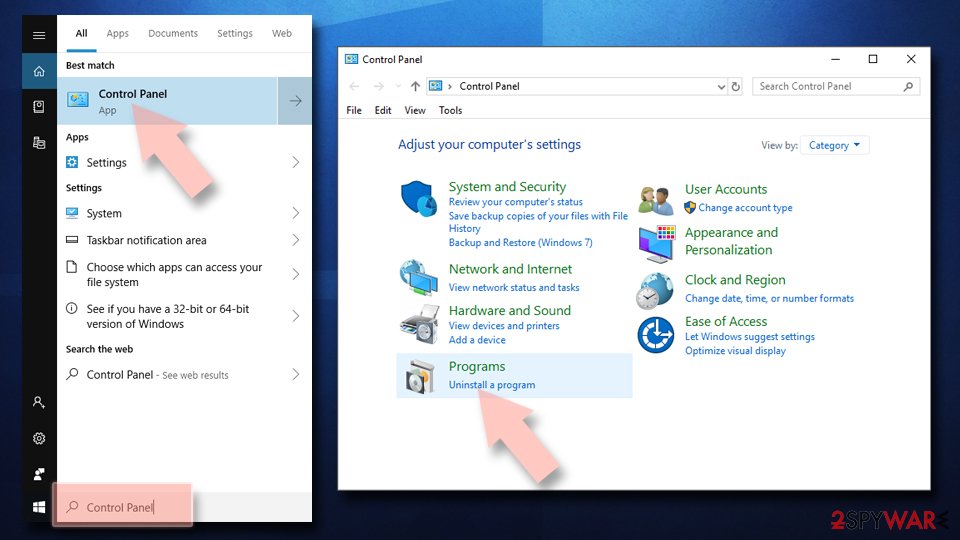
Uninstall from Windows 10/8:
- Type Control Panel into the Windows search box and open the result.
- Under Programs, select Uninstall a program.
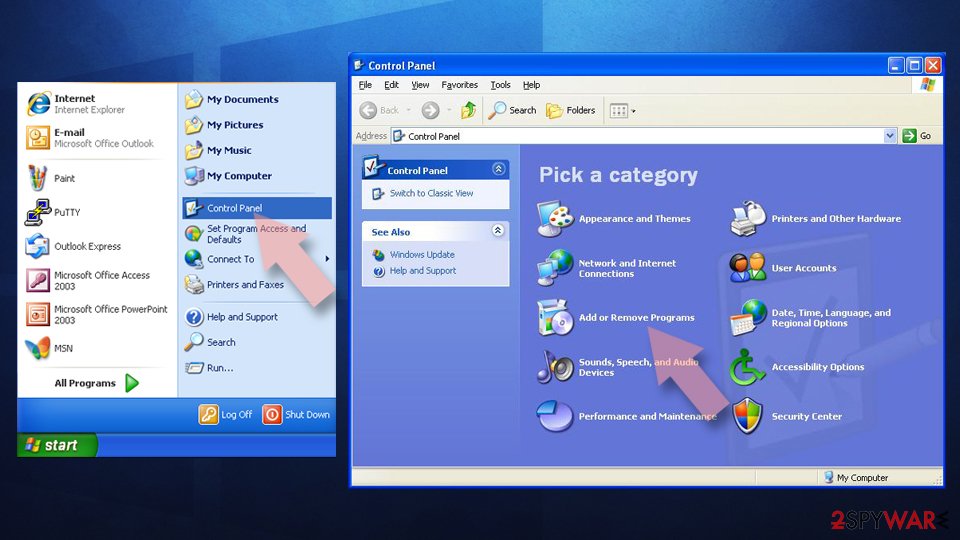
Uninstall from Windows 7/XP:
- Click on Windows Start > Control Panel (Windows XP users should click on Add/Remove Programs).
- In Control Panel, select Programs > Uninstall a program.
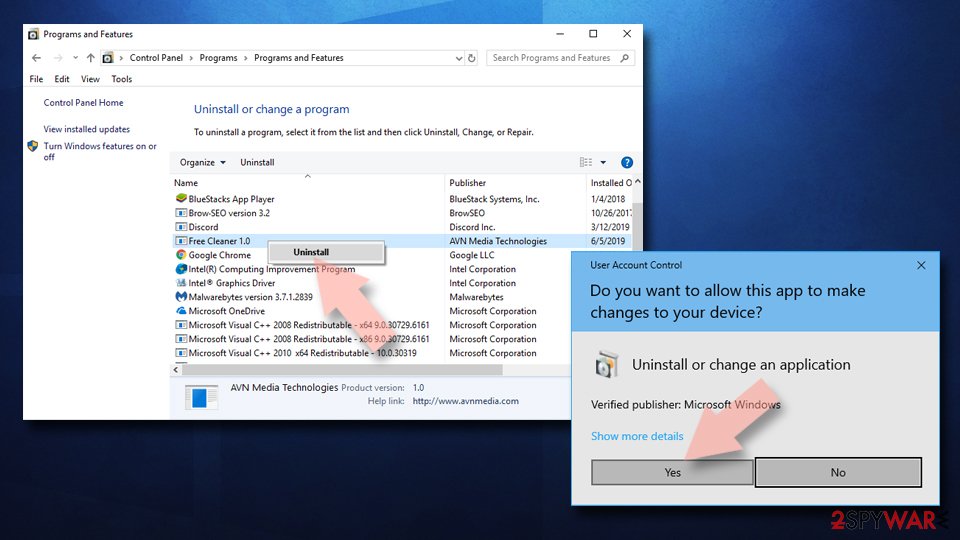
Remove the unwanted program:
- In the Programs and Features window, look for any recently installed suspicious entries, select them, and click Uninstall.
- If User Account Control appears, click Yes to confirm, then complete the removal.
Remove from Google Chrome
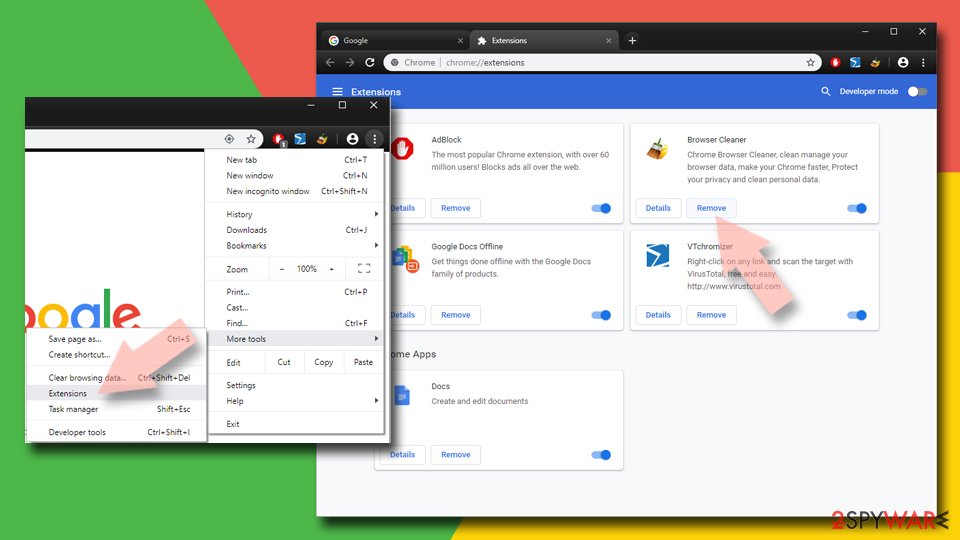
To eliminate all the consequences of Driver Update Plus hijack, make sure you review the extensions and add-ons on your Chrome and delete unfamiliar ones.
Delete malicious extensions from Google Chrome:
- Open Google Chrome, click on the Menu (three vertical dots at the top-right corner) and select More tools > Extensions.
- In the newly opened window, you will see all the installed extensions. Uninstall all suspicious extensions related to the unwanted program by clicking Remove.
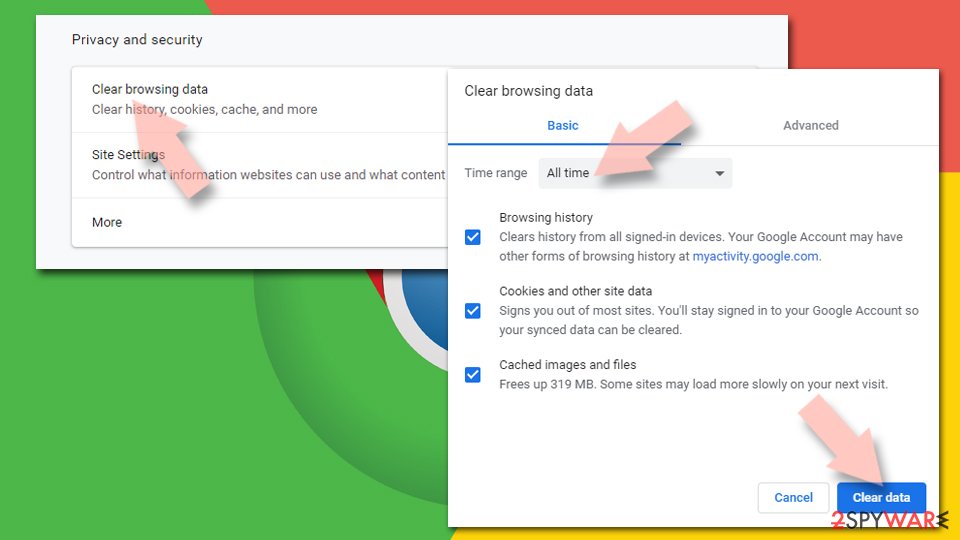
Clear cache and web data from Chrome:
- Click on Menu and pick Settings.
- Under Privacy and security, select Clear browsing data.
- Select Browsing history, Cookies and other site data, as well as Cached images and files.
- Click Clear data.
Change your homepage:
- Click menu and choose Settings.
- Look for a suspicious site in the On startup section.
- Click on Open a specific or set of pages and click on three dots to find the Remove option.
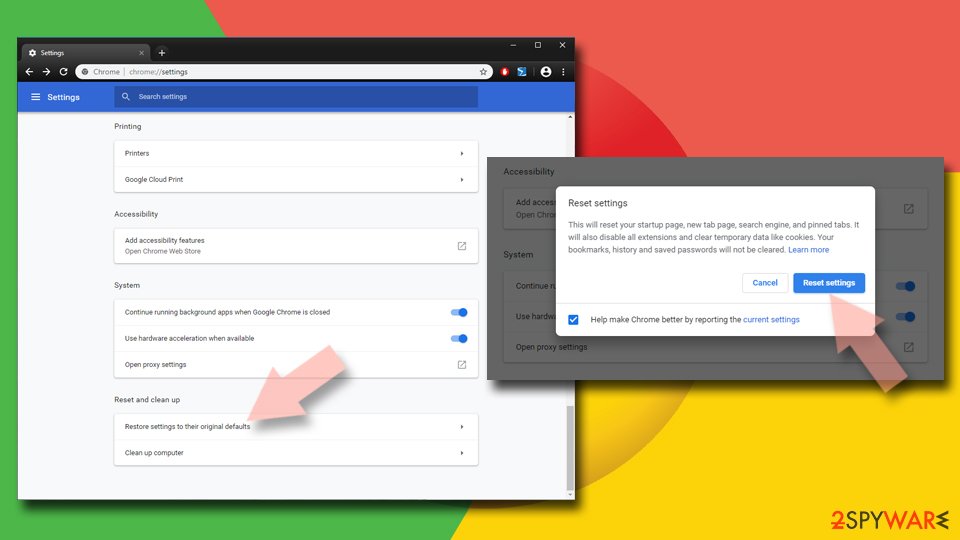
Reset Google Chrome:
If the previous methods did not help you, reset Google Chrome to eliminate all the unwanted components:
- Click on Menu and select Settings.
- In the Settings, scroll down and click Advanced.
- Scroll down and locate Reset and clean up section.
- Now click Restore settings to their original defaults.
- Confirm with Reset settings.
Remove from Microsoft Edge
If after Driver Update Plus appearance on your system, you have been noticing strange new browser extensions and add-ons - eliminate them without hesitation.
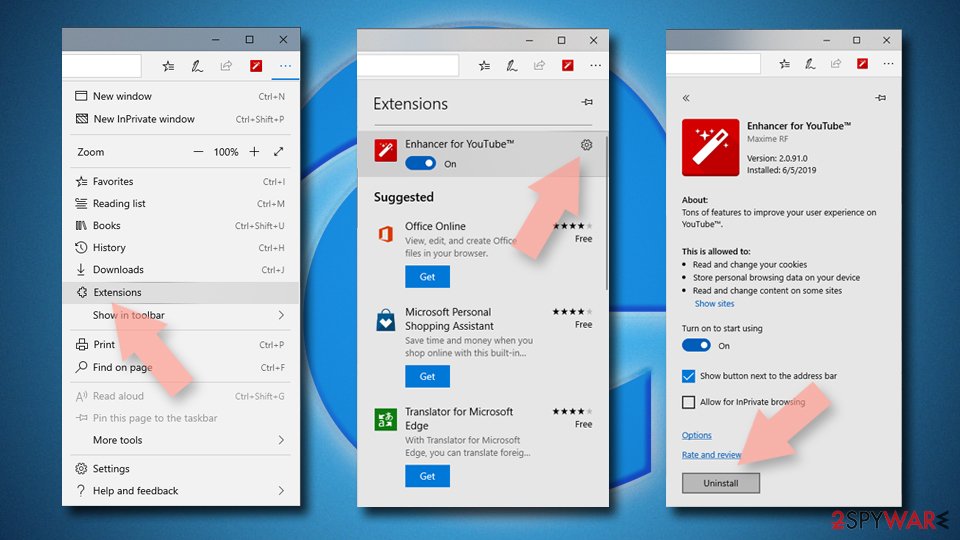
Delete unwanted extensions from MS Edge:
- Select Menu (three horizontal dots at the top-right of the browser window) and pick Extensions.
- From the list, pick the extension and click on the Gear icon.
- Click Remove.
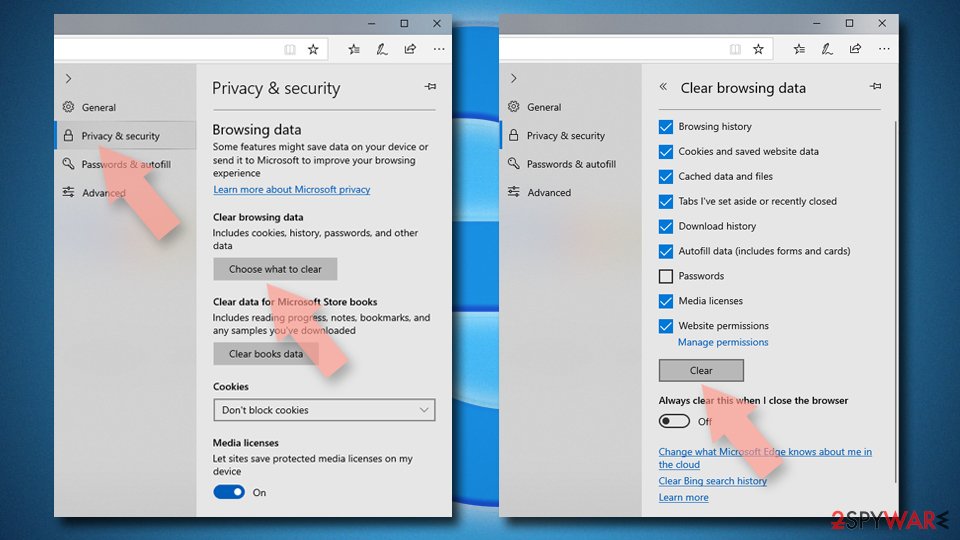
Clear cookies and other browser data:
- Click on the Menu (three horizontal dots at the top-right of the browser window) and select Settings > Privacy, search, and services..
- Under Clear browsing data, pick Choose what to clear.
- Select Cookies and other site data and Cached images and files. (apart from passwords, although you might want to include Media licenses as well, if applicable) and click on Clear.
Restore new tab and homepage settings:
- Click the menu icon and choose Settings.
- Then find On startup section.
- Click Remove next to any suspicious startup page.
Reset MS Edge if the above steps did not work:
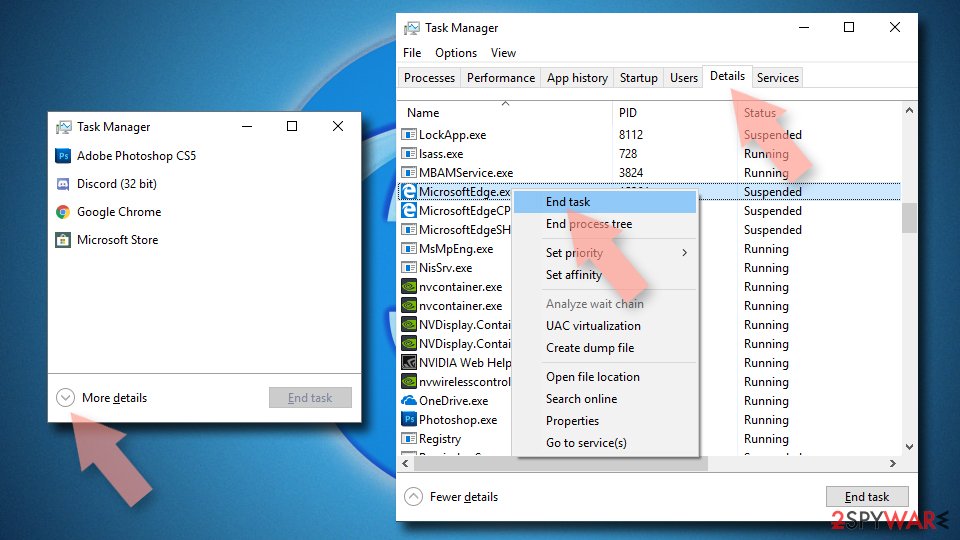
- Press on Ctrl + Shift + Esc to open Task Manager.
- Click on More details arrow at the bottom of the window.
- Select Details tab.
- Now scroll down and locate every entry with Microsoft Edge name in it. Right-click on each of them and select End Task to stop MS Edge from running.
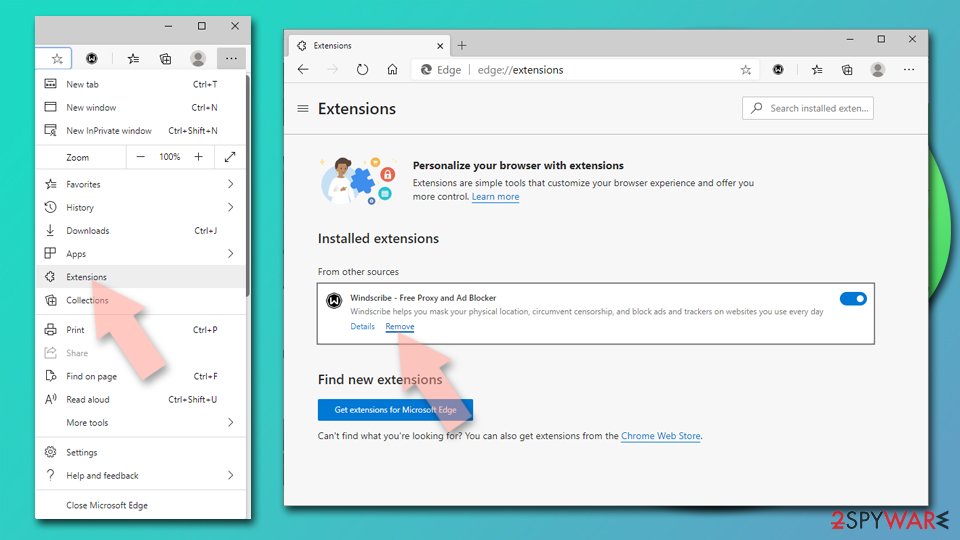
Delete extensions from MS Edge (Chromium):
- Open Edge and click select Settings > Extensions.
- Delete unwanted extensions by clicking Remove.
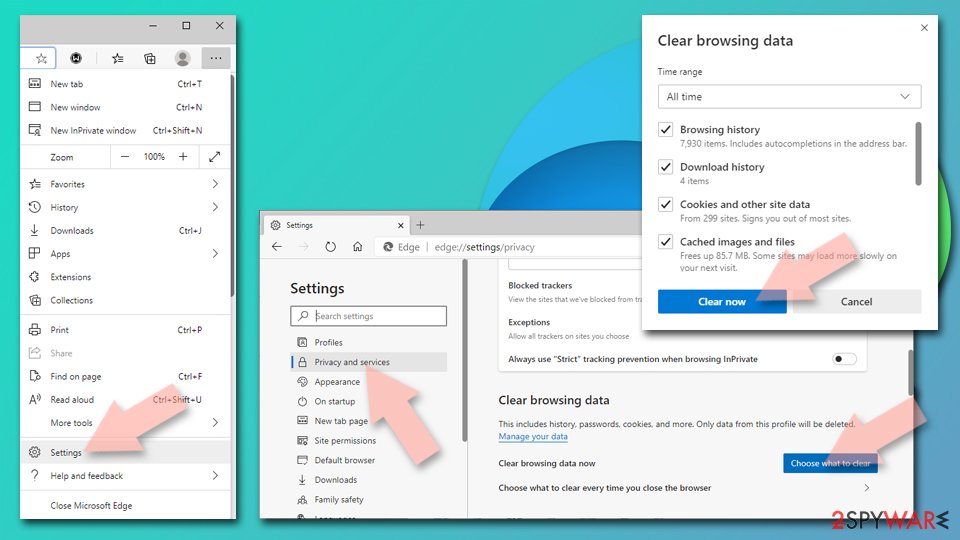
Clear cache and site data:
- Click on Menu and go to Settings.
- Select Privacy, search and services.
- Under Clear browsing data, pick Choose what to clear.
- Under Time range, pick All time.
- Select Clear now.
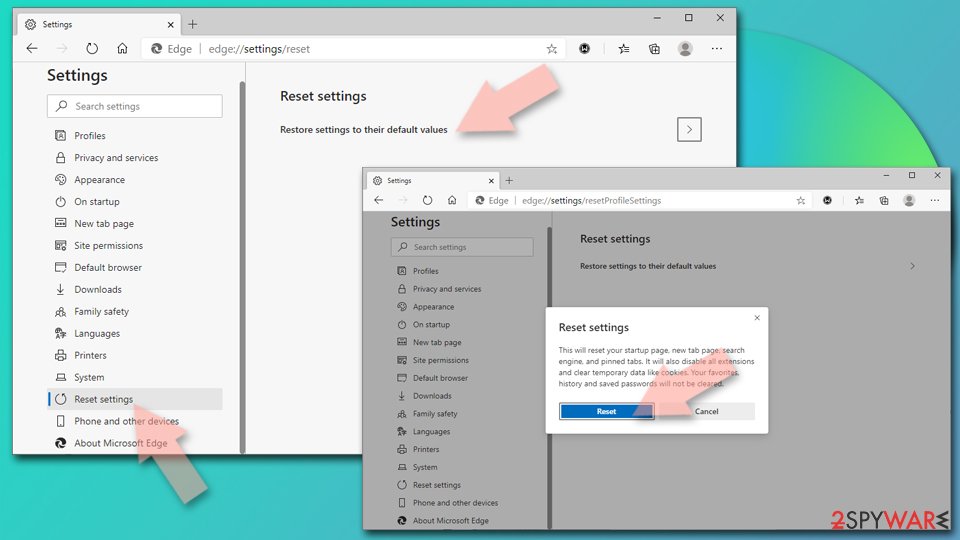
Reset Chromium-based MS Edge:
- Click on Menu and select Settings.
- On the left side, pick Reset settings.
- Select Restore settings to their default values.
- Confirm with Reset.
- This will disable extensions and reset startup pages but will not delete bookmarks, saved passwords, or browsing history.
Remove from Mozilla Firefox (FF)
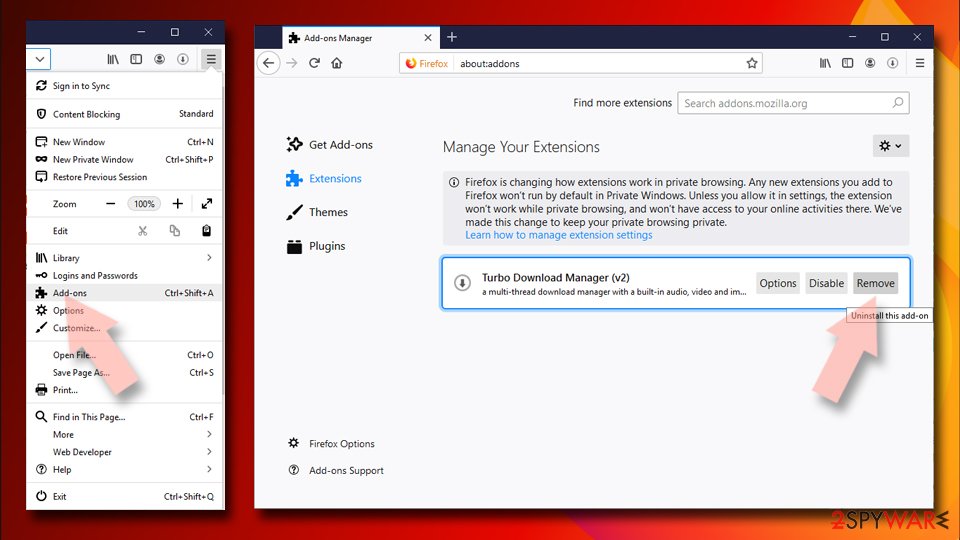
Remove dangerous extensions:
- Open Mozilla Firefox browser and click on the Menu (three horizontal lines at the top-right of the window).
- Select Add-ons.
- In here, select the unwanted extension and click Remove.
Reset the homepage:
- Click three horizontal lines at the top right corner to open the menu.
- Choose Settings.
- Under Home, set your preferred homepage and new tab settings.
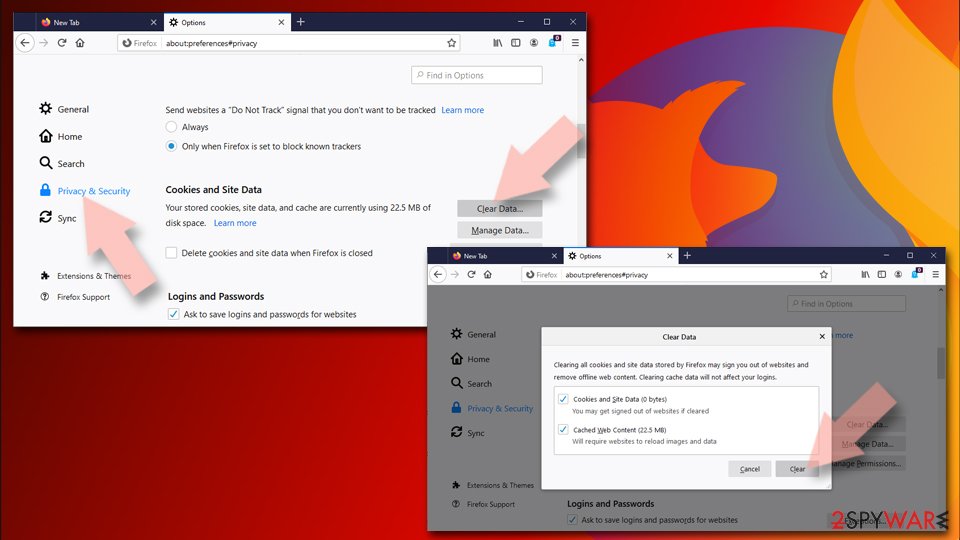
Clear cookies and site data:
- Click Menu and pick Settings.
- Go to Privacy & Security section.
- Scroll down to locate Cookies and Site Data.
- Click on Clear Data...
- Select Cookies and Site Data and Temporary cached files and pages, then click Clear.
Reset Mozilla Firefox
If clearing the browser as explained above did not help, reset Mozilla Firefox:
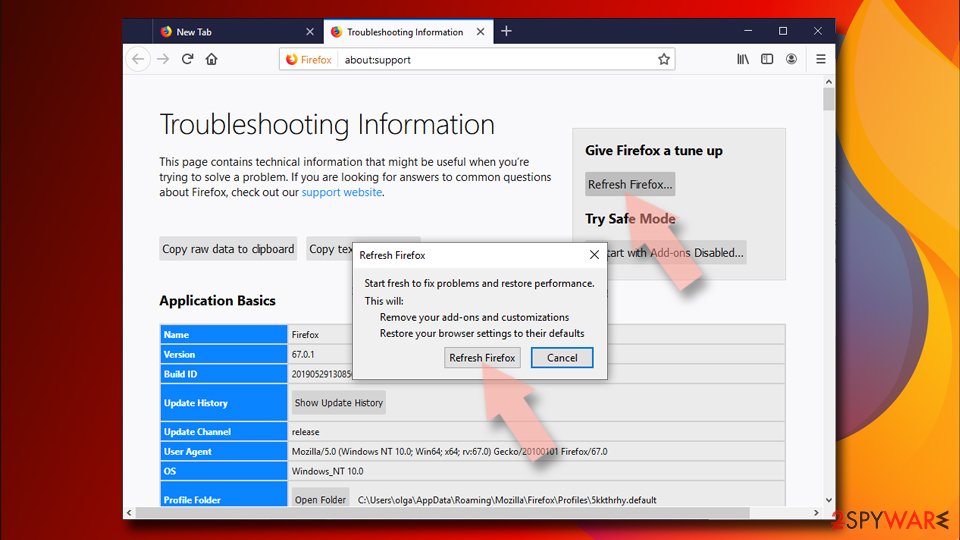
- Open Mozilla Firefox browser and click the Menu.
- Go to Help and then choose Troubleshooting Information.
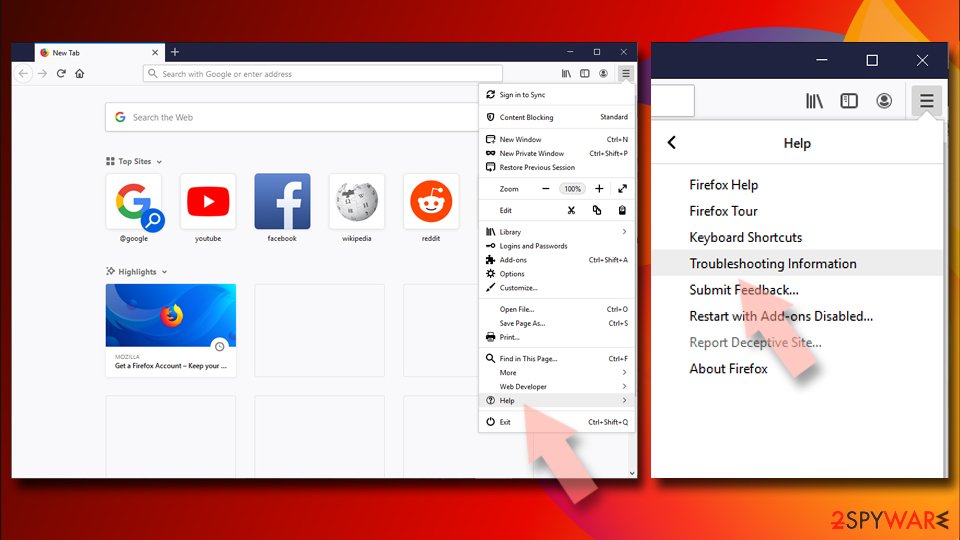
- Under Give Firefox a tune up section, click on Refresh Firefox...
- Once the pop-up shows up, confirm the action by pressing on Refresh Firefox.
Delete from Safari
Remove dangerous extensions:
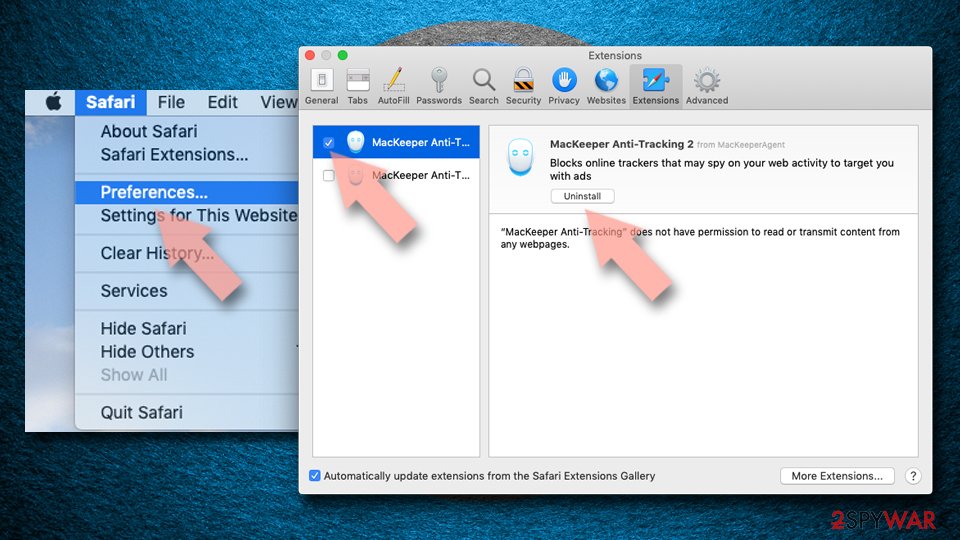
- Open Safari, click Safari in the menu at the top-left of the screen, and select Preferences.
- Go to the Extensions tab, look for any suspicious entries, and click Uninstall to remove them.
Clear history and website data:
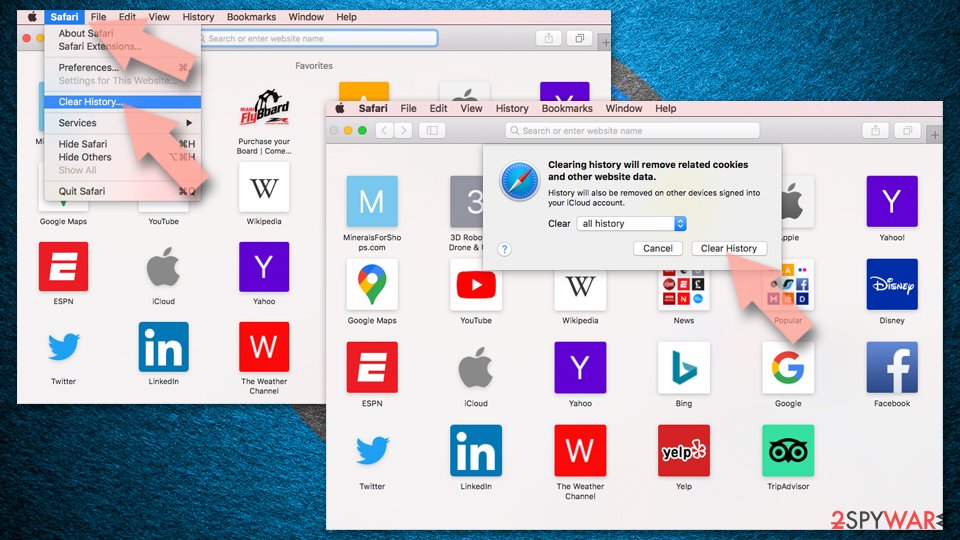
- Click Safari in the menu and pick Clear History.
- Set Clear to all history and confirm with Clear History.
Reset Safari:
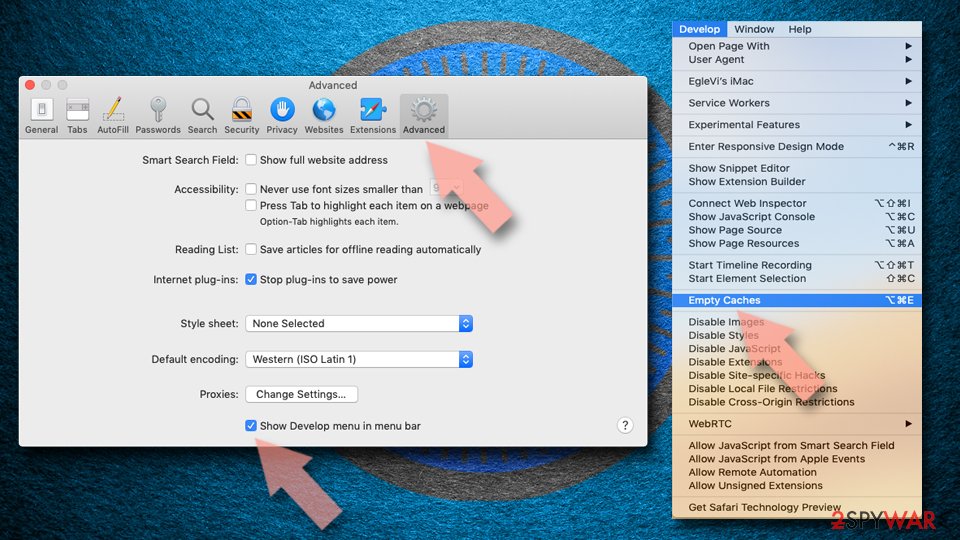
- Click Safari in the menu and select Preferences > Advanced.
- Enable Show Develop menu in menu bar.
- From the menu bar, click Develop and select Empty Caches.
Delete from macOS
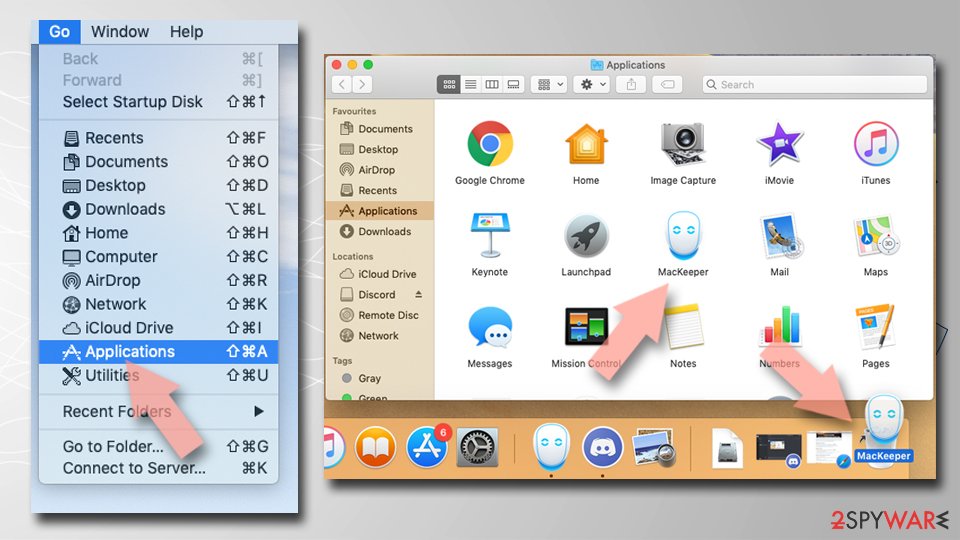
Remove the unwanted application:
- From the menu bar, select Go > Applications.
- In the Applications folder, look for any suspicious entries, then drag them to Trash (or right-click and pick Move to Trash).
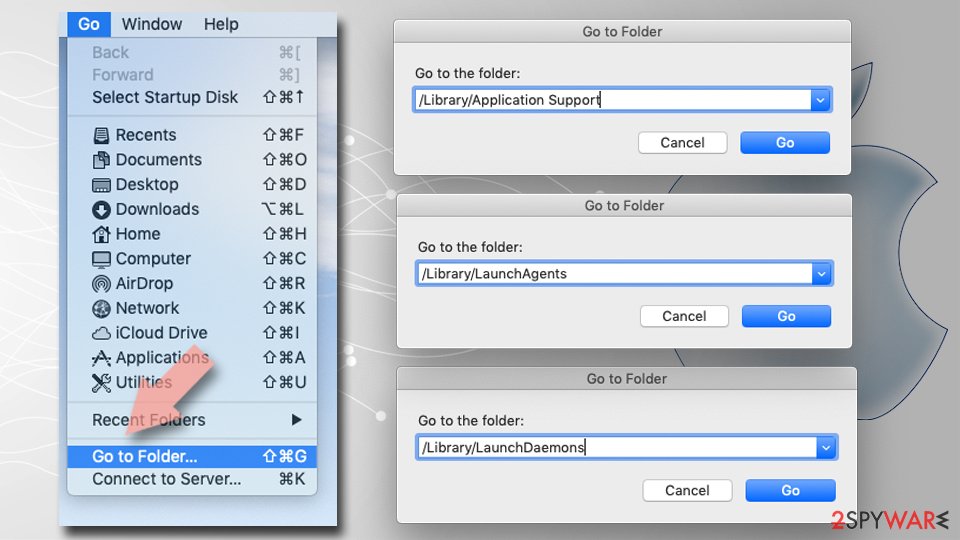
Delete leftover files and folders:
- Select Go > Go to Folder.
- Enter /Library/Application Support and remove any suspicious folders related to the unwanted program.
- Repeat the same check in the /Library/LaunchAgents and /Library/LaunchDaemons folders, deleting any suspicious entries.
- Finally, empty the Trash to permanently remove the leftovers.
Reset Internet Explorer
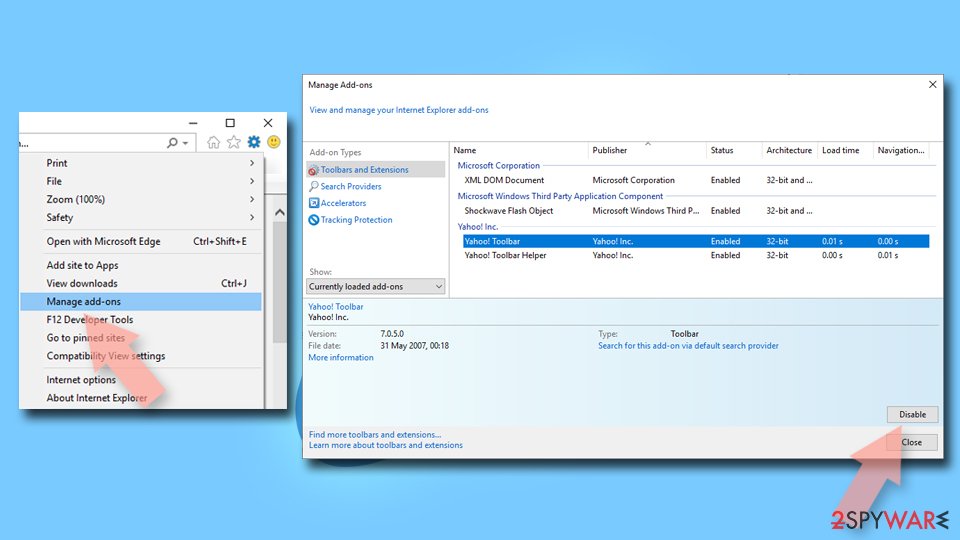
Remove dangerous add-ons:
- Open Internet Explorer, click on the Gear icon (IE menu) on the top-right corner of the browser
- Pick Manage Add-ons.
- You will see a Manage Add-ons window. Here, look for suspicious plugins. Click on these entries and select Disable.
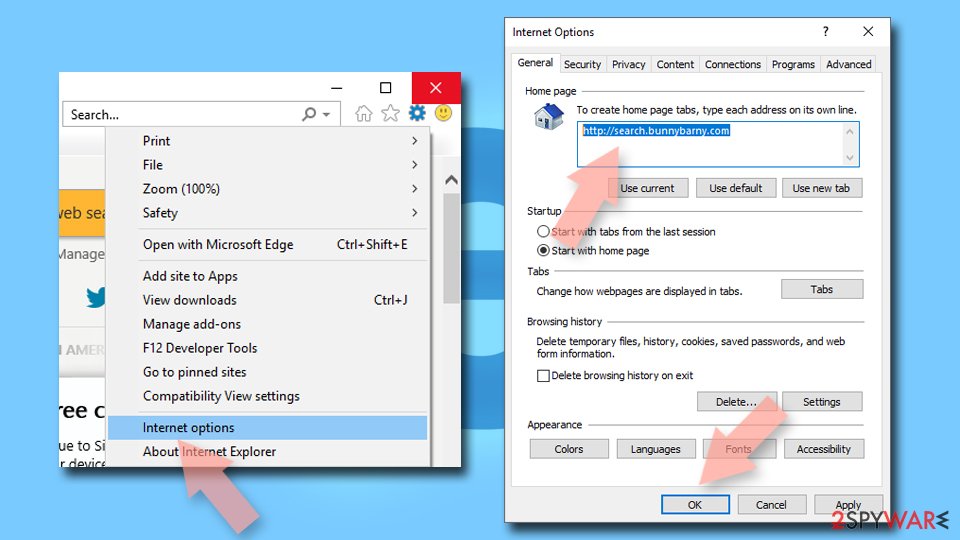
Change your homepage if it was altered:
- Open IE and click on the Gear icon.
- Select Internet Options.
- In the General tab, delete the Home page address and replace it by your preferred one (for example, Google.com).
- Click Apply and then select OK.
Delete temporary files:
- Press on the Gear icon and select Internet Options.
- Under Browsing history, click Delete...
- Select relevant fields and press Delete.
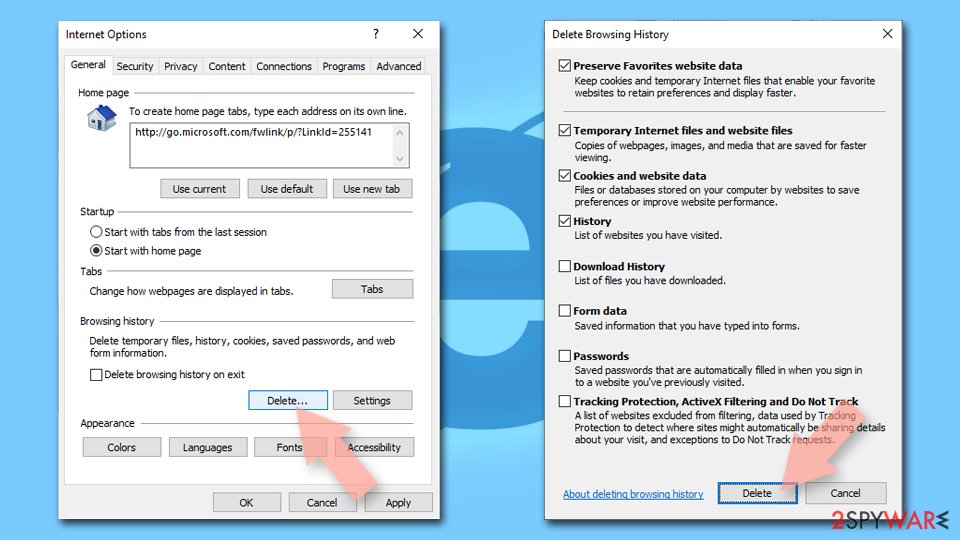
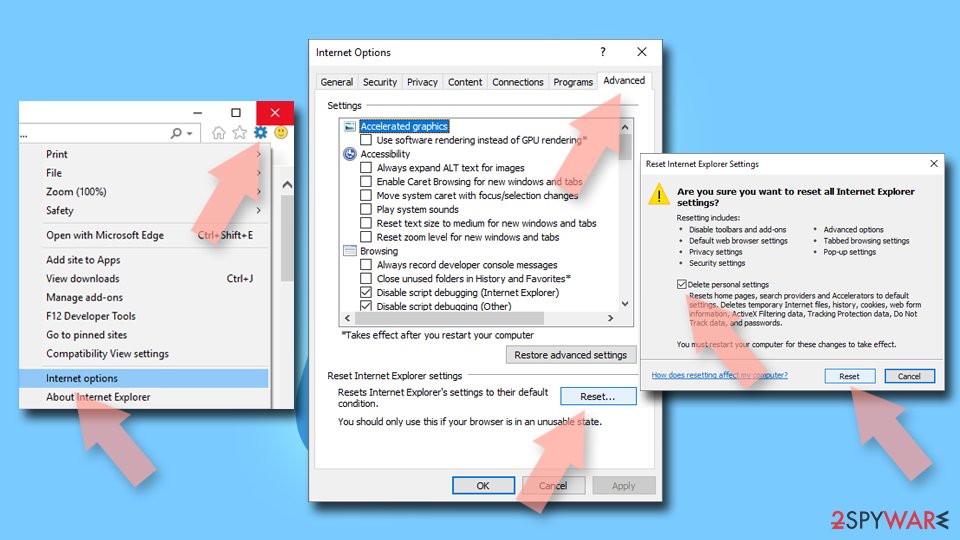
Reset Internet Explorer:
- Click on Gear icon > Internet options and select Advanced tab.
- Select Reset.
- In the new window, check Delete personal settings and select Reset.
Do not let government spy on you
The government has many issues in regards to tracking users' data and spying on citizens, so you should take this into consideration and learn more about shady information gathering practices.
Avoid any unwanted government tracking or spying by going totally anonymous on the internet.
You can choose a different location when you go online and access any material you want without particular content restrictions. You can easily enjoy internet connection without any risks of being hacked by using VPN.
Control the information that can be accessed by government any other unwanted party and surf online without being spied on. Even if you are not involved in illegal activities or trust your selection of services, platforms, be suspicious for your own security and take precautionary measures by using the VPN service.
Backup files for the later use, in case of the malware attack
Computer users can suffer from data losses due to cyber infections or their own faulty doings.
Ransomware can encrypt and hold files hostage, while unforeseen power cuts might cause a loss of important documents. If you have proper up-to-date backups, you can easily recover after such an incident and get back to work. It is also equally important to update backups on a regular basis so that the newest information remains intact - you can set this process to be performed automatically.
When you have the previous version of every important document or project you can avoid frustration and breakdowns. It comes in handy when malware strikes out of nowhere. Use for the data restoration process.
From our report of May 2020 · not reviewed since
Take on Driver Update Plus removal by yourself
If you do not investigate the Driver Update Plus virus a little closer, it sure may seem like a decent application that dwells on the pushy side concerning the pop-ups.
Be careful - this is exactly what the virus creators want you to think. They don't want you to remove Driver Update Plus before they have accomplished their plan and swindled some money from you.
Nevertheless, you should stay resilient to such claims and get rid of this useless program as soon as possible. Thus, for a thorough Driver Update Plus removal, run automatic antivirus scanners on your computer. Besides, such a scan can ensure that no other malicious software is present on your device.
Questions about Driver Update Plus
Is DriverUpdater.exe a virus?
The name DriverUpdater.exe is not enough to say. Malware often uses technical-sounding names, and harmless updaters often use odd ones. Check three things:
- the folder the file runs from
- the Digital Signatures tab in its properties
- the program that starts it (Startup apps, Task Scheduler or services)
A signed file from a company whose product you use is almost certainly fine. An unsigned file in a user folder that no installed program explains should be removed, and the PC scanned with Microsoft Defender in offline mode.
Can I end DriverUpdater.exe in Task Manager?
Ending an unknown process is safe in the sense that Windows will warn you before you close anything critical, and a restart brings back whatever Windows needs. Ending DriverUpdater.exe will not remove it, though: if a task or startup entry launches it, it returns at the next sign-in.
Use ending the process as a test. If something important stops working, it belonged to a program you use. If nothing changes and it comes back by itself, find and disable its starter, delete the file and scan the PC.
Did Driver Update Plus steal my information?
Not by itself, as far as reports show. Programs that display an unfamiliar process called DriverUpdater.exe in Task Manager are built to scare people into paying or calling; they rarely take data on their own.
The risk comes from what you did in response: typing card details into the program, or letting a caller connect to your PC. If you did neither, uninstalling the program is enough. If you did either, treat that information as exposed:
- block the card
- change passwords from another device
- remove any remote-access tool that was installed
Why does Driver Update Plus look so official?
Because copying the design costs nothing and makes people trust it. The program behind an unfamiliar process called DriverUpdater.exe in Task Manager borrows Windows colours, icons and wording, sometimes even the name of a well-known security brand. None of that gives it access to real security information.
A real alert can be checked in seconds: open Windows Security from the Start menu and look at Protection history. If nothing is listed there, the official-looking window is fake, and the program that draws it is what needs to be removed.
Do I need to reinstall Windows to get rid of Driver Update Plus?
Usually not. A thorough clean-up is enough when the offline scan finds nothing afterwards and you do not see an unfamiliar process called DriverUpdater.exe in Task Manager again. A reset is the safer choice if an attacker had remote control, if security tools were switched off, or if detections come back after every clean-up.
Windows 11 can reset itself without a USB stick under Settings > System > Recovery > Reset this PC. Copy documents and photos out first and scan the copies. A reset does not change passwords or undo stolen data, so the account steps still apply.
Is my card safe after buying Driver Update Plus?
Treat it as exposed. The order page belongs to the seller of Driver Update Plus, and you cannot know how the number is stored or shared. Ask your bank for a replacement card, which is usually free, and dispute the original charge as a misrepresented product.
Until the new card arrives, check your account daily for small or foreign transactions. If the bank offers alerts for every card payment, turn them on. Keep the receipt and screenshots, because they support the dispute.
What could the caller do while connected to my PC?
Anything you could do. Callers working with fake alerts like Driver Update Plus typically show you Windows logs as "proof", install their own remote tool for later, and steer you to online banking or a gift card purchase. Some add a password to Windows or lock the PC if you refuse to pay.
Remove every remote access program you did not install yourself, check Settings > Accounts > Other users for new accounts, and change important passwords from a clean device. If you cannot be sure what was changed, a reset of Windows is the safe choice.
Someone called offering a refund for Driver Update Plus. Is it genuine?
Almost certainly not. Refund calls are a well-known second stage of scareware and tech support scams. The caller says you are owed money, asks you to install a remote access program to "process" it, then opens your online banking, makes it look as if too much was refunded and asks you to send the difference back.
Hang up. Real refunds go back to the card or PayPal account you paid with, through your bank or the payment provider, and never need remote access or a gift card.
Will Fortect remove Driver Update Plus?
Fortect scans Windows for malware and unwanted programs and repairs the system files and settings they change, and its free scan shows what it finds on your PC before you decide anything.
For Driver Update Plus, follow the plan above as well: the browser steps take back permissions and settings that no scanner treats as a threat, and uninstalling the program that brought it removes the source.
Run Microsoft Defender's full scan and, if anything was found, its offline scan as a second opinion. If the symptoms are gone after the plan and both scans are clean, there is nothing more to do.
Sources
- How-to-geek IT news site: PUPs Explained: What is a "Potentially Unwanted Program"? (read October 6, 2026)
- Tom's Guide: Adware Attacks Macs with Fake Flash Updates (read October 6, 2026)
- AppEsteem: Deceptor Apps (read October 6, 2026)
- FTC: How to recognize, remove and avoid malware (read October 6, 2026)
- Microsoft Learn: Microsoft Defender Offline (read October 6, 2026)