
Hanstrackr ads: what it is and how to remove it
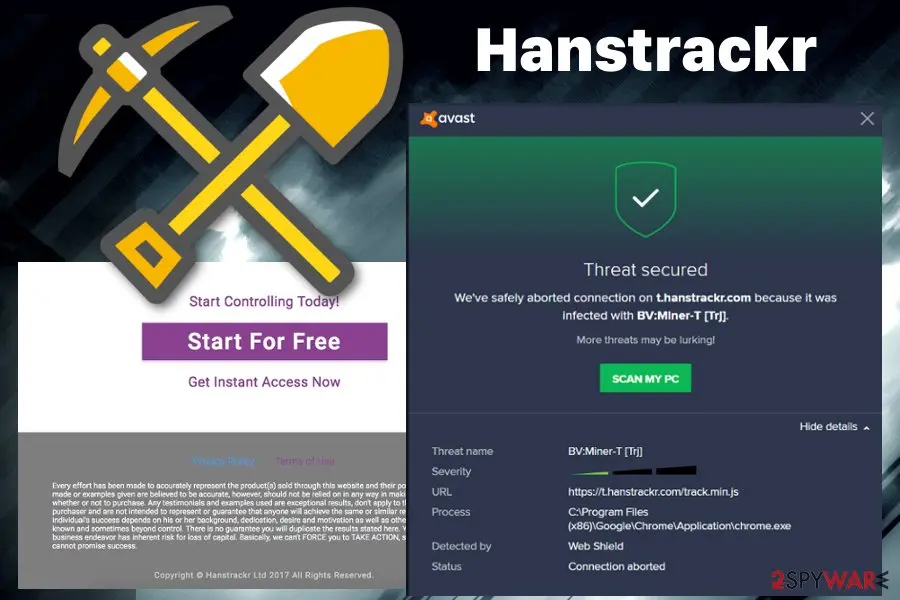
When infected, the virus tries to redirect Google Chrome browser to a rogue site t.hanstrackr.com which offers tracking, managing, and optimization for advertising. It is still not clear whether the domain is hacked or intentionally injected with malware, but, in addition, it launches the Hanstrackr process consuming up to 90% of their CPU.
Facts checked October 7, 2026. Removal steps tested on Windows 11 (26H2) and checked against Microsoft's and the browser makers' current documentation. Sections marked as our earlier report are the original text: they describe the threat as it was then and have not been reviewed since. The 2026 status, the removal steps and the questions are current.
Automatic
Get a free scan and check if your PC is infected.
Fortect finds malware, unwanted programs and the Windows damage they leave behind, and repairs it in one pass.
A scan of the PC is a quick way to confirm that nothing installed is behind the t.hanstrackr.com redirects.
Do it yourself · free Remove Hanstrackr ads yourself 4 steps, about 12 minutes, no software needed.
Start the steps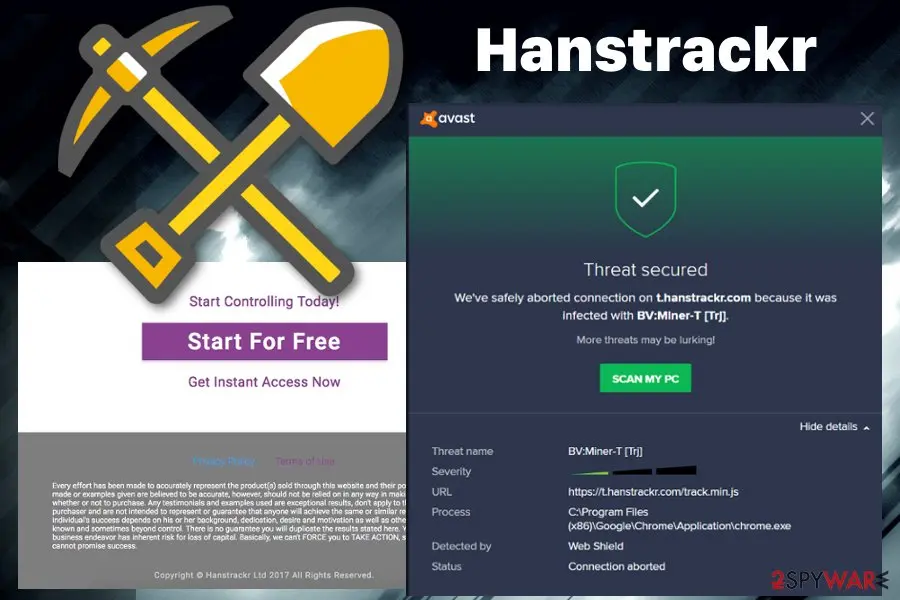
Hanstrackr ads: summary
| Distribution | Infected plugins, deceptive ads, questionable websites |
|---|---|
| Name | Hanstrackr |
| Type | Bitcoin miner/adware |
| Can also be known as | Hanstrackr.com malware |
| Symptoms | Runs in the background, uses computer's resources to mine cryptocurrency |
| Can be detected as | BV:Miner-T[TrJ]; t.hanstrackr.com/track.minjs; t.hanstrackr.com/track.min.js;JS/CoinMiner.D |
| Removal | Scan the PC with security software to find and remove the malware and anything installed with it. Fortect scans Windows for malware and repairs the system files and settings it damaged. Remove it nowTo use the full-featured product, you have to purchase a license for Fortect. The scan is free. |
Show 8 more facts
| Detection names | No Microsoft detection name is known |
|---|---|
| Damage | Not recorded in the old report |
| Evidence | 5 write-ups by security sites; details still limited |
| Domains | t.hanstrackr.com |
| Ads shown as | Redirects through ad pages |
| Browsers | Chrome, Edge and Firefox |
| First seen | 13 November 2018 |
| Facts checked | 7 October 2026 |
Is Hanstrackr ads dangerous?
From our report of Nov 2018 · not reviewed since
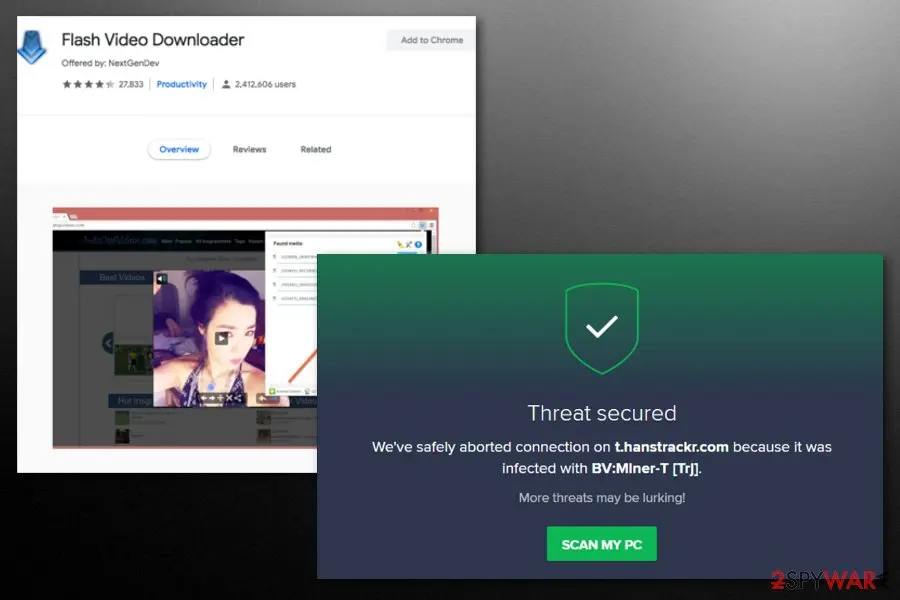
Hanstrackr is a cryptominer that appears in Chrome browser after the installation of "Flash Video Downloader"
When infected, the virus tries to redirect Google Chrome browser to a rogue site t.hanstrackr.com which offers tracking, managing, and optimization for advertising.
It is still not clear whether the domain is hacked or intentionally injected with malware, but, in addition, it launches the Hanstrackr process consuming up to 90% of their CPU. This malware is closely related to plugins like Flash Video Downloader or AdBlocker Pro that can cause initial infiltration of the program.
There are two elements related to Hanstrackr malware:
The first one is adware - a potentially unwanted program that enters PC without user's consent and displays pop-ups, pop-unders, auto-play video and audio ads, etc. This activity substantially reduces the experience of web browsing and sometimes might even prevent users from viewing the content of a legitimate site.
However, the main complaint related to about Hanstrackr is a high usage of computer resources which indicates background processes used for mining cryptocurrency.
Users mostly complain about Hanstrackr flash video downloader issue because many of them noticed this adware-based intruder after the new installation of the video downloader. People also said that removing this Flash Video Downloader from their device and installing it again helps and their anti-virus programs stop displaying alerts about the possible threat.
You can try to disable Hanstrackr running in Chrome, but there is a possibility that it will reappear after rebooting the system. In this case, you should double check your system for potentially unwanted programs and terminate their activity by using anti-malware tools. Having program like this on the system helps avoid cyber infections in the future.
Additionally, adware tends to multiply quickly, and users eventually end up with compromised browsers if the activity is not stopped on time. Therefore, Hanstrackr removal is required to stop this activity entirely.
After the elimination of Hanstrackr virus is complete, researchers suggests scanning your machine using to fix the damage done by the unwanted program. This full system scan significantly improves the speed of your browser and overall performance of the computer.
- adware
- crypto miner
From our report of Nov 2018 · not reviewed since
Be cautions online and avoid adware infiltration
Adware, just as many other potentially unwanted programs, enter machines with the help of software bundling.
Freeware and shareware developers have used this deceptive distribution technique to profit from it. Pay-per-install is a common scheme that is often associated with software bundling.
Even if you have not heard of it, dealing this improper technique is not that hard. The first mistake users make while installing new applications is rushing the installation process, without looking at what they are agreeing to and skipping steps along the way.
The trick here is to be attentive and never rush the installation, pick Advanced/Custom installation settings instead of Recommended/Quick ones and eliminate marks of pre-selected boxes before proceeding to the final step.
Adware can also be distributed with the help of online advertisement when users are promised a powerful functionality of a program that is allegedly useful. Meanwhile, after the installation, users notice weird redirects and increased amount of ads on their browsers. Therefore, never download and install suspicious applications from third-party sites but instead opt for official sources.
From our report of Nov 2018 · not reviewed since
More from our earlier report on Hanstrackr
- Hanstrackr — a cryptocurrency miner that can be associated with different browser extensions and detected by Avast, AVG, and some other antivirus programs as BV:Miner-T and t.hanstrackr.com/track.minjs.
- Use for general system cleaning
How Hanstrackr ads got into your browser
From our report of Nov 2018 · not reviewed since
Hanstrackr crypto mining procedure is considered the main way how this virus acts.
Alternatively known as cryptojacking, , this element is attached to legitimate extensions start causing major disturbances by misusing device's CPU which skyrockets out of nowhere.
Initially, crypto mining is used by some website developers as an alternative to the advertisement, which can benefit the end user as well. However, website author should warn every visitor that such activity is taking place; otherwise, it becomes illegal. Many cybercriminals try to benefit from crypto-mining code, hijacking websites, and extensions, as is the case with Hanstrackr.
To remove Hanstrackr activity, users need to find out which extension is associated with the threat. Users need to enter Task Manager of Google Chrome and check which application is causing problems. We explain the full process in the bottom section of the article.
Check your browser and PC
- Address:
t.hanstrackr.com
How to remove Hanstrackr ads
How to remove the Hanstrackr extension
Do the browser steps in every browser and profile on the PC, then check Windows for the program that installed the extension.
Step 1: Remove extensions you did not add
In Chrome open
chrome://extensions, in Edgeedge://extensions, and in Firefox the menu > Extensions and themes.Remove every extension you do not remember adding, especially search, new tab, coupon, PDF, weather or video downloader add-ons. Check every browser and every profile, because each keeps its own list.
If an extension has no Remove button or comes back, a browser policy holds it (see "Managed by your organization" in the procedure below). The pages are the same on Windows 11 and Windows 10.
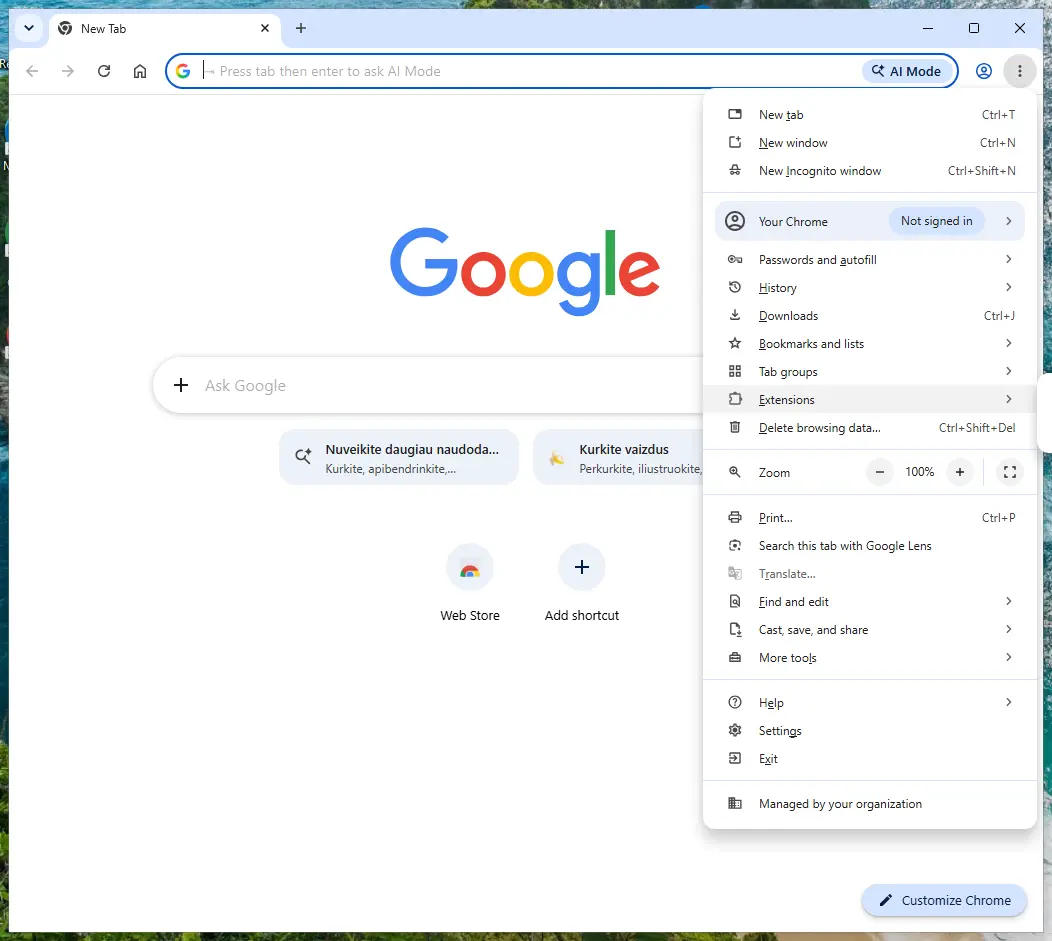
Chrome on Windows 11: More > Extensions > Manage extensions. Full procedure with screenshots: Remove a browser extension
Step 2: Uninstall programs you did not mean to install
Hanstrackr rarely comes alone: it is usually installed by, or together with, a free program. In Windows 11 open Settings > Apps > Installed apps, in Windows 10 Settings > Apps > Apps & features, and sort by install date.
Uninstall every entry from the day the trouble began that you did not install on purpose, for example a download manager, a converter or a browser you never chose.
Keep drivers and entries from Microsoft, Intel, AMD, NVIDIA or your PC's maker unless you are sure.
Full procedure with screenshots: Uninstall a program or app in Windows On uGetFix
Step 3: Reset the browser
A reset removes what the steps above could miss:
- changed start pages
- site permissions
- hidden settings
In Chrome open Settings > Reset settings > Restore settings to their original defaults; in Edge Settings > Reset settings; in Firefox Help > More troubleshooting information > Refresh Firefox.
Tip: Bookmarks and saved passwords stay, while extensions are turned off and the search engine and start page return to the defaults.
Reset every browser on the PC, including Edge, which Windows 11 and Windows 10 always have.
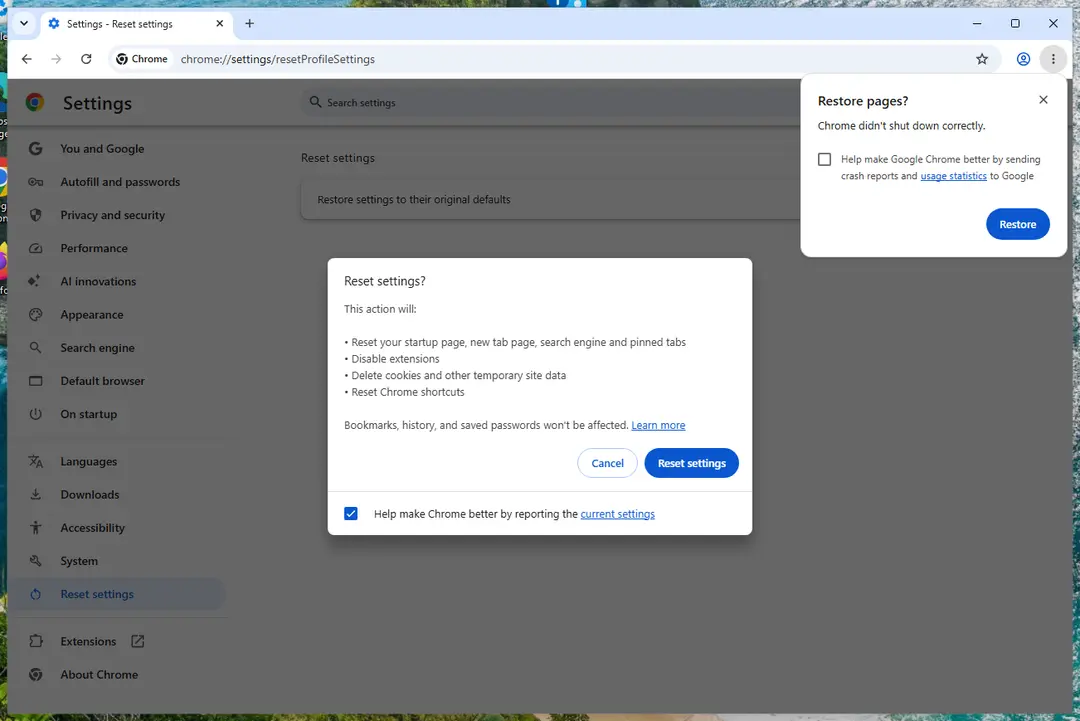
Chrome on Windows 11: Settings > Reset settings. Full procedure with screenshots: Reset a browser and fix a hijacked search engine
Step 4: Scan the PC, then run the offline scan
A scan finds the parts of Hanstrackr that the manual steps cannot see. In Windows Security > Virus & threat protection > Scan options, start a Full scan and quarantine what it reports.
Follow it with Microsoft Defender Antivirus (offline scan) > Scan now, which restarts the PC and checks the disk while Windows and the malware are not running.
It takes about 15 minutes and works the same in Windows 11 and Windows 10. If either scan finds something, run the full scan again after removal until it comes back clean.
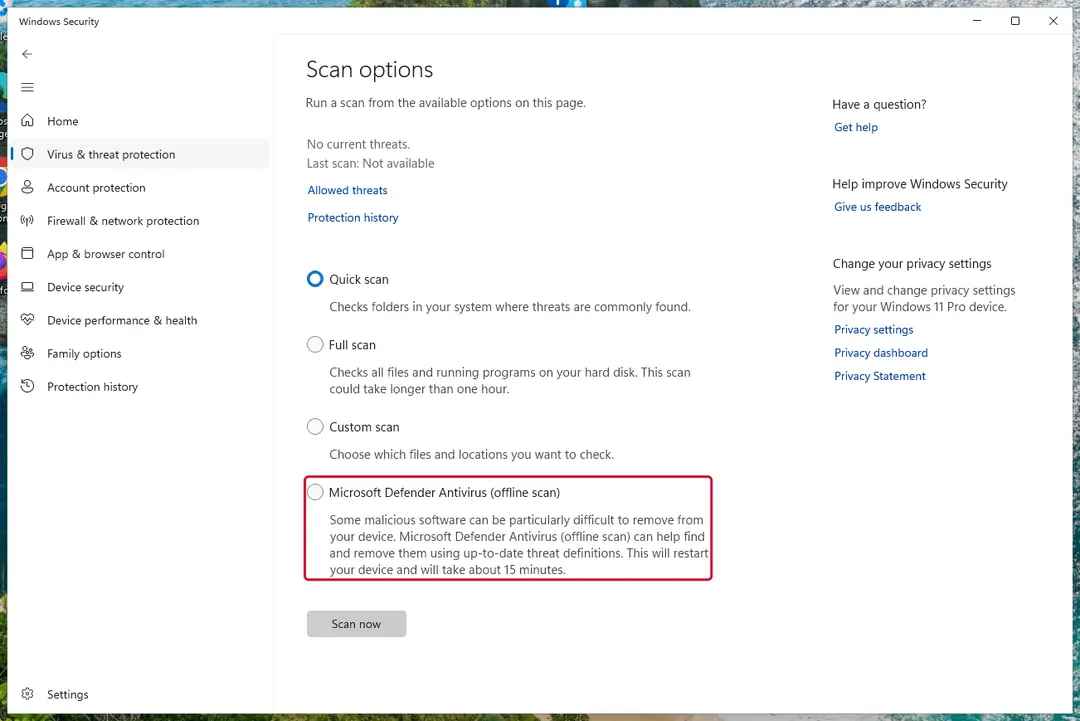
Windows 11: Windows Security > Virus & threat protection > Scan options. Full procedure with screenshots: Run a Microsoft Defender Offline scan
Instructions for each browser and system
The detailed steps for every browser and system this guide covers. Open the one you use.
Uninstall from Windows
To perform Hanstrackr removal, delete Flash Video Downloader, AdBlocker Pro, and similar suspicious entries:
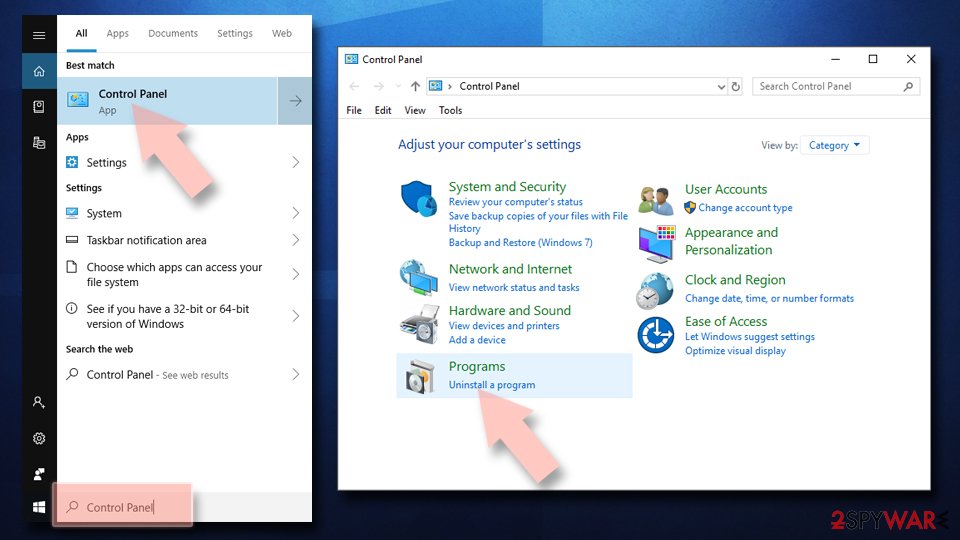
Uninstall from Windows 10/8:
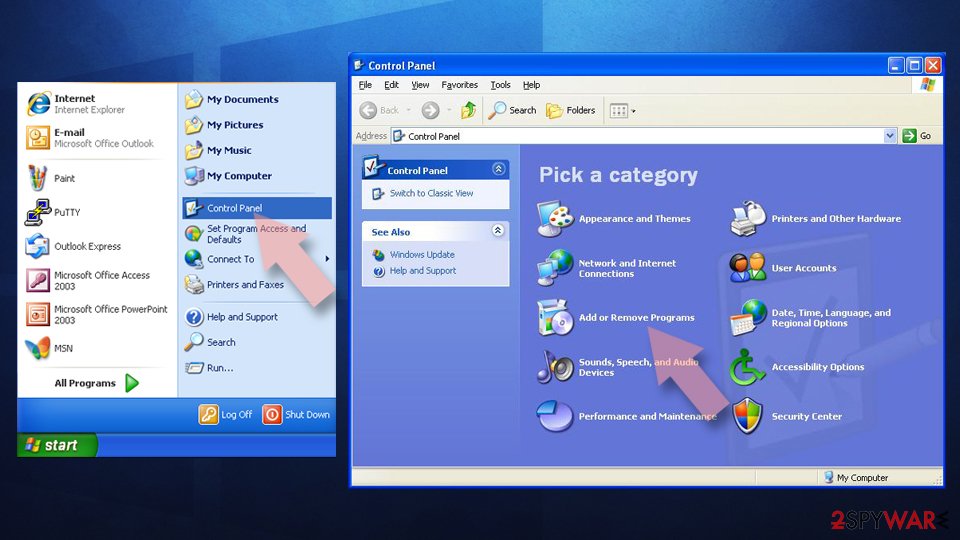
- Type Control Panel into the Windows search box and open the result.
- Under Programs, select Uninstall a program.
Uninstall from Windows 7/XP:
- Click on Windows Start > Control Panel (Windows XP users should click on Add/Remove Programs).
- In Control Panel, select Programs > Uninstall a program.
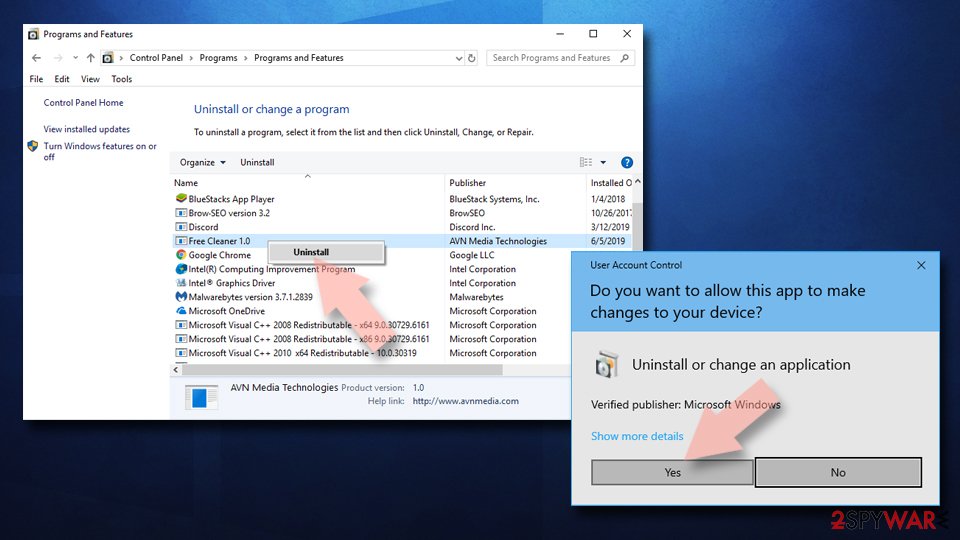
Remove the unwanted program:
- In the Programs and Features window, look for any recently installed suspicious entries, select them, and click Uninstall.
- If User Account Control appears, click Yes to confirm, then complete the removal.
Remove from Google Chrome
Reset Chrome to disable the Hanstrackr running in Chrome:
Delete malicious extensions from Google Chrome:
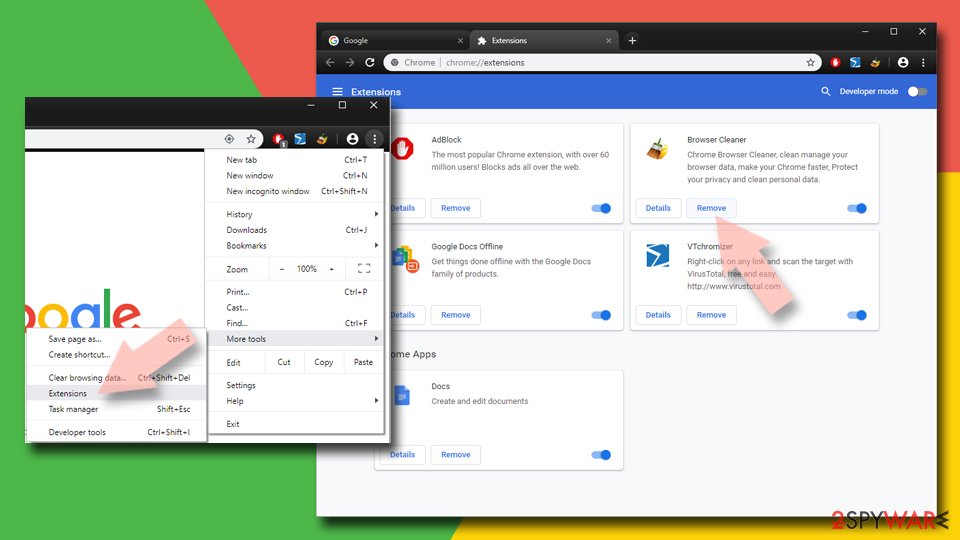
- Open Google Chrome, click on the Menu (three vertical dots at the top-right corner) and select More tools > Extensions.
- In the newly opened window, you will see all the installed extensions. Uninstall all suspicious extensions related to the unwanted program by clicking Remove.
Clear cache and web data from Chrome:
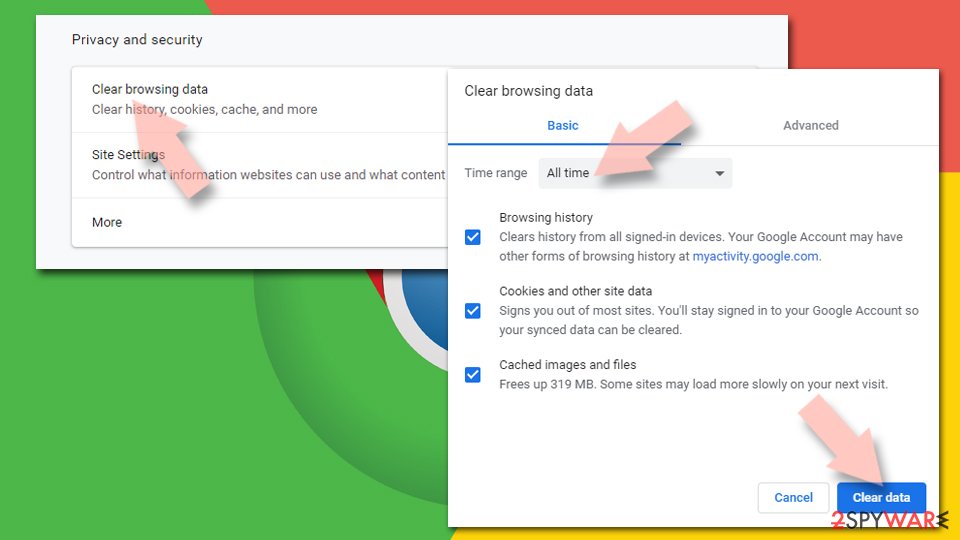
- Click on Menu and pick Settings.
- Under Privacy and security, select Clear browsing data.
- Select Browsing history, Cookies and other site data, as well as Cached images and files.
- Click Clear data.
Change your homepage:
- Click menu and choose Settings.
- Look for a suspicious site in the On startup section.
- Click on Open a specific or set of pages and click on three dots to find the Remove option.
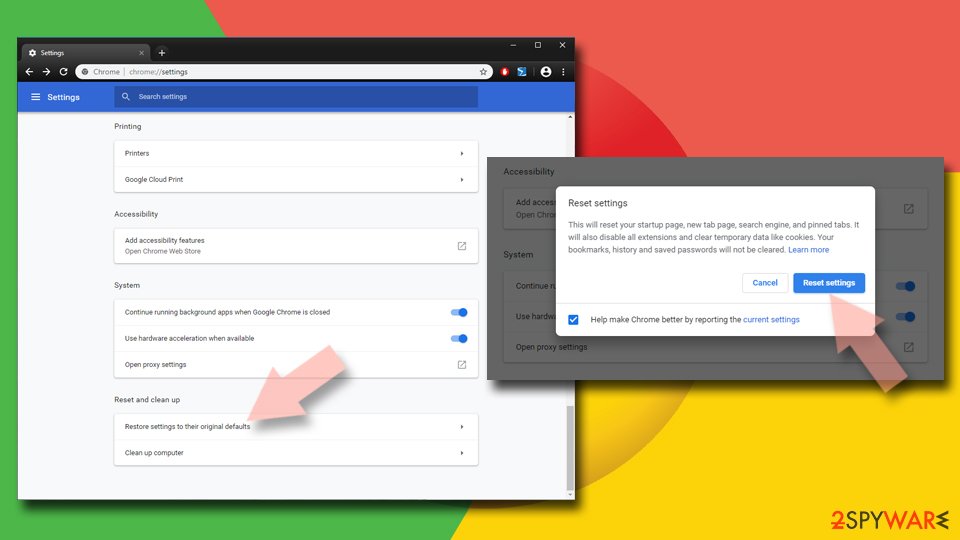
Reset Google Chrome:
If the previous methods did not help you, reset Google Chrome to eliminate all the unwanted components:
- Click on Menu and select Settings.
- In the Settings, scroll down and click Advanced.
- Scroll down and locate Reset and clean up section.
- Now click Restore settings to their original defaults.
- Confirm with Reset settings.
Stream videos without limitations, no matter where you are
There are multiple parties that could find out almost anything about you by checking your online activity.
While this is highly unlikely, advertisers and tech companies are constantly tracking you online. The first step to privacy should be a secure browser that focuses on tracker reduction to a minimum.
Even if you employ a secure browser, you will not be able to access websites that are restricted due to local government laws or other reasons. In other words, you may not be able to stream Disney+ or US-based Netflix in some countries. To bypass these restrictions, you can employ a powerful VPN, which provides dedicated servers for torrenting and streaming, not slowing you down in the process.
Data backups are important - recover your lost files
Ransomware is one of the biggest threats to personal data.
Once it is executed on a machine, it launches a sophisticated encryption algorithm that locks all your files, although it does not destroy them. The most common misconception is that anti-malware software can return files to their previous states. This is not true, however, and data remains locked after the malicious payload is deleted.
While regular data backups are the only secure method to recover your files after a ransomware attack, tools such as can also be effective and restore at least some of your lost data.
From our report of Nov 2018 · not reviewed since
Terminate Hanstrackr and get rid of any suspicious browser extensions
To remove Hanstrackr, users should either perform a full system scan with using security software or follow our detailed guidelines below.
The first method is recommended for those who are not that computer-savvy or prefer a quick solution to PUP termination.
Those who want to perform manual Hanstrackr removal by using our guide should make sure that they follow each step carefully. Otherwise, the components of adware might still be left out and continue to disturb users. After elimination from the operating system, users can then reset each of the installed browsers.
While it is not malware (it is not injected into the computer, neither does it modify any important system settings), but rather a script, there is no Hanstrackr removal tool. You need to find which browser extension is associated with the threat and eliminate it. Follow these steps:
Some users also mentioned that completely resetting the browser helps to stop Hanstrackr mining activities.
- Open Google Chrome and right-click on the top bad of the browser (above tabs)
- Select Task Manager
- Then, click on the CPU column to sort it by the CPU usage
- Check which extension is using an excessive amount of CPU
- Double-click on it, and you will be taken to the extension page
- Remove or disable it to stop the process of cryptojacking
Questions about Hanstrackr ads
Why does my browser keep going to t.hanstrackr.com?
Something is sending it there. On one site only, that site's ads are the cause and leaving the site ends it.
On many different sites, the usual causes are an extension you installed with something else, a site you once allowed to send notifications, or an ad-supported program in Windows that changes how the browser behaves. t.hanstrackr.com itself is only a stop on the way: it records the visit and forwards you to whatever advertiser pays most.
Check the extensions page, then the list of sites allowed to send notifications, then Installed apps sorted by date. Removing the cause stops the redirects; blocking the domain alone usually does not, because the network moves to a new one.
Is it safe that my browser was redirected to t.hanstrackr.com?
Landing on t.hanstrackr.com does not infect the PC by itself. A browser does not run programs from a page without your action. The danger is in the pages that come next:
- some ask you to allow notifications
- some show fake virus warnings
- some offer downloads
- ask for card details
If you only saw those pages and closed them, nothing more is needed than removing whatever caused the redirect. If you allowed notifications, remove that permission.
If you downloaded a file, delete it unopened, or uninstall it if you ran it. If you typed a password or card number on one of the pages, change the password and call your bank.
Why does Hanstrackr show me ads?
Because that is its whole purpose. Hanstrackr is an adware extension, and its operators are paid for every ad it displays and every click it gets. In this case the ads take the form of redirects through ad pages.
They are chosen by ad networks that accept almost any advertiser, which is why so many look like warnings or prizes. The ads are not a sign that your PC is broken or infected with something worse; they are a sign that something on it, or in the browser, has permission to advertise. Removing that permission or program stops them.
Do I have to clean every browser?
Yes, if you use more than one. We saw Hanstrackr in Chrome, Edge and Firefox, and each browser keeps its own extensions, notification permissions and settings. Chrome and Edge share the same extension format, so one installer can add the same adware to both, while Firefox has its own add-ons.
Check every browser on the PC, including ones you rarely open. If you sync a browser with an account, clean it while signed in, so that the removal reaches your other computers rather than the adware returning from them.
How do I know the ads come from Hanstrackr?
Look for redirects to t.hanstrackr.com. That is the trace Hanstrackr leaves, and it shows up as redirects through ad pages. Ads that appear on every site, including ones that never carried ads before, point to something on your PC or in the browser rather than to the sites themselves.
A quick test is a private window, where extensions are off by default: if the ads disappear there, an extension is responsible. If they appear even with the browser closed, the source is a notification permission or a program in Windows.
I clicked on one of the ads. Am I infected?
Probably not. Clicking an ad usually only opens a page, and a page cannot install programs on an up-to-date Windows PC without your help.
You are at risk only if you then downloaded and ran a file, allowed notifications, entered card or login details, or called a phone number shown on the page. Delete any download and run a full and offline scan.
Change passwords you typed, from a clean device. Call your bank if you gave card details. If you called a number or allowed remote access, see the next question.
Why didn't my antivirus catch Hanstrackr?
Many security products do not block adware or notification sites by default, because users often agreed to them, even through a misleading prompt. Notification spam installs nothing at all, so there is no file to detect.
In Windows 11 you can make Microsoft Defender block potentially unwanted apps: open Windows Security > App & browser control > Reputation-based protection settings and turn on Potentially unwanted app blocking. If notifications caused the pop-ups, no scanner will report them; the fix is in the browser's site settings.
An ad showed a phone number and I called it. What now?
The number belongs to scammers, not to Microsoft or an antivirus company. If you only talked, hang up and do not call back. If you let them connect to the PC, disconnect it from the internet, uninstall the remote access program they used, such as AnyDesk, TeamViewer, ScreenConnect or UltraViewer, and run a full and offline scan.
If you paid or gave bank details, call your bank at once on the number printed on your card. Change any passwords you typed while they were connected, and report the call.
Can adware slow down my PC?
Yes. Adware runs in the background, loads ad scripts, opens extra tabs and contacts its servers, all of which use processor time, memory and bandwidth. Ad-heavy extensions also slow down every page, because they inspect and change it before you see it.
The effect is strongest on older PCs and when several adware programs arrived together. After removal, restart the PC and check Task Manager for anything still using a lot of resources that you do not recognise. Speed usually returns to normal once the ads stop.
Will Fortect remove Hanstrackr?
Fortect scans Windows for malware and unwanted programs and repairs the system files and settings they change, and its free scan shows what it finds on your PC before you decide anything.
For Hanstrackr, follow the plan above as well: the browser steps take back permissions and settings that no scanner treats as a threat, and uninstalling the program that brought it removes the source.
Run Microsoft Defender's full scan and, if anything was found, its offline scan as a second opinion. If the symptoms are gone after the plan and both scans are clean, there is nothing more to do.
Sources
- Reddit: Online discussion (read October 7, 2026)
- Google Chrome: hanstrackr.com what is this??? (read October 7, 2026)
- CSOonline: What is cryptojacking? (read October 7, 2026)
- Google Chrome Help: Use notifications to get alerts (no longer online) (read October 7, 2026)
- FTC: How to recognize, remove and avoid malware (read October 7, 2026)