
BV:Miner: what it is and how to remove it
BV:Miner-T is the threat that targets inadequately secured websites and implements cryptocurrency mining by injecting malicious scripts. Various vulnerabilities and outdated versions of programs give the opportunity for hackers to abuse such sites via the Javascript library.
Facts checked October 6, 2026. Removal steps tested on Windows 11 (26H2) and checked against Microsoft's and the browser makers' current documentation. Sections marked as our earlier report are the original text: they describe the threat as it was then and have not been reviewed since. The 2026 status, the removal steps and the questions are current.
Automatic
Get a free scan and check if your PC is infected.
Fortect finds malware, unwanted programs and the Windows damage they leave behind, and repairs it in one pass.
Programs like BV:Miner usually arrive in groups; a free scan lists the companions that are easy to miss.
Do it yourself · free Remove BV:Miner yourself 5 steps, about 15 minutes, no software needed.
Start the steps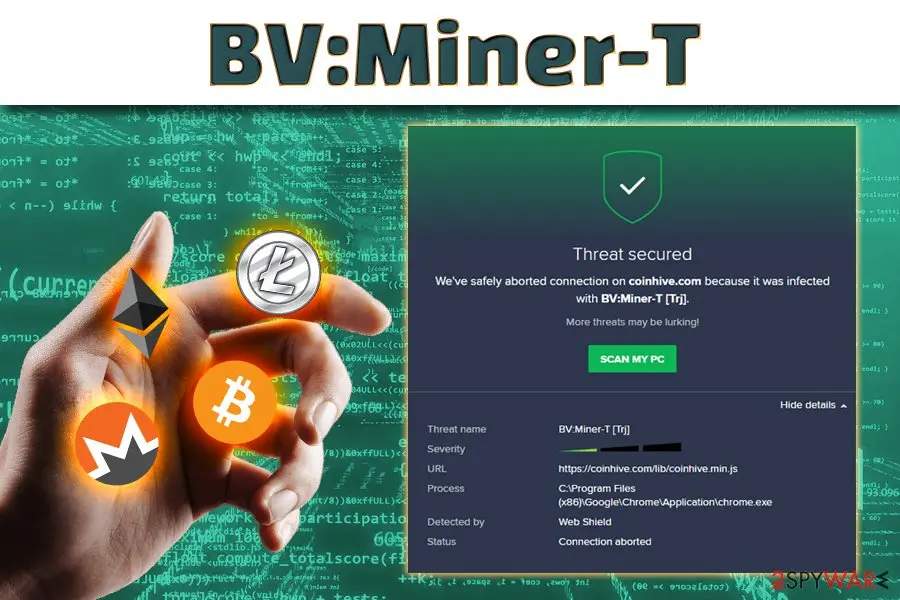
BV:Miner: summary
| Detection names | No Microsoft detection name is known |
|---|---|
| Distribution | Not recorded in the old report |
| Damage | Not recorded in the old report |
| Name | BV:Miner |
| Type | Cryptominer |
| Symptoms | An unknown program in Installed apps |
| Removal | Scan the PC with security software to find and remove the malware and anything installed with it. Fortect scans Windows for malware and repairs the system files and settings it damaged. Remove it nowTo use the full-featured product, you have to purchase a license for Fortect. The scan is free. |
Show 3 more facts
| Evidence | 5 write-ups by security sites; details still limited |
|---|---|
| First seen | 17 December 2019 |
| Facts checked | 6 October 2026 |
What BV:Miner does
From our report of Dec 2019 · not reviewed since
Do not let crooks monetize on behalf of your computer power
In case you do not use security software (which is terrible cybersecurity negligence), or you never encountered such threats as BV:Miner-T, look out for these symptoms:
If you notice any of these, download and install anti-malware software and perform a full system scan immediately. After that, make sure you keep the security application running at all times and update it regularly.
- Increased CPU/GPU activity
- Fans spinning on full power
- The overall slowdown of the machine
- Installed software crashing
- Malfunction of the installed software
- Frequent errors or/and BSoDs
From our report of Dec 2019 · not reviewed since
Stop BV:Miner-T virus activities by cleaning the PC fully
As we already mentioned, the easiest way to remove BV:Miner-T and stop all the suspicious activities is to exit the compromised website and never return to it again.
Beware that even the most trusted websites can be mining digital money without their owners' knowledge. Thus, just because the security certificate is valid, does not mean that the site is entirely safe.
BV:Miner-T removal from your browser can be a success at all times if you use anti-malware software that can detect and block the threat. Beware that, in case the security program was not installed, and you visited several dodgy websites, malware could have slipped into your machine.
Trojans, keyloggers, worms, and such might not give out any symptoms at all and perform malicious actions without users ever noticing. Any BV Miner T virus damage can affect your time on the computer significantly, so make sure to clean all the traces.
[GI=method-1]If you suspect that your PC might be infected with malware, enter Safe Mode with Networking to perform full system scan:
[GI=method-2]Malware can also be disabled using System Restore function:
From our report of Dec 2019 · not reviewed since
More from our earlier report on BV:Miner
- Infected/hacked websites injected with malicious codes that allow hackers to use your machine for processes of cryptocurrency mining
- This threat can affect the machine, speed and even damage important OS files.
- However, the biggest issue is silent background processes and the possibility to get serious malware installed behind your back and without any knowledge
- Increased CPU usage, fans spinning fast, overall slow computer performance, crashes and freezes, suspicious processes running in the background constantly
- Use comprehensive security tools and remove BV:Miner-T from the machine by scanning the PC fully
Is BV:Miner dangerous?
From our report of Dec 2019 · not reviewed since
BV:Miner-T is the threat that targets inadequately secured websites and implements cryptocurrency mining by injecting malicious scripts.
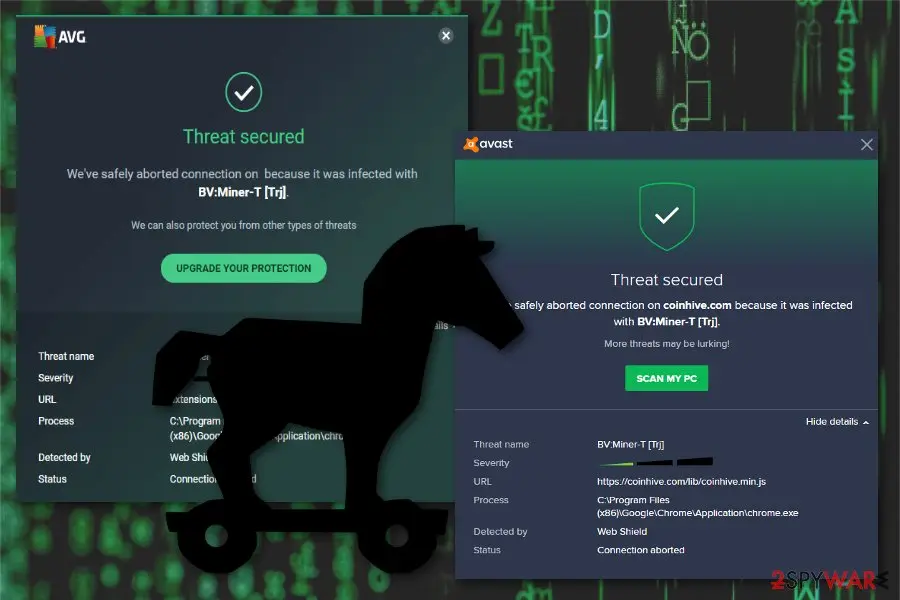
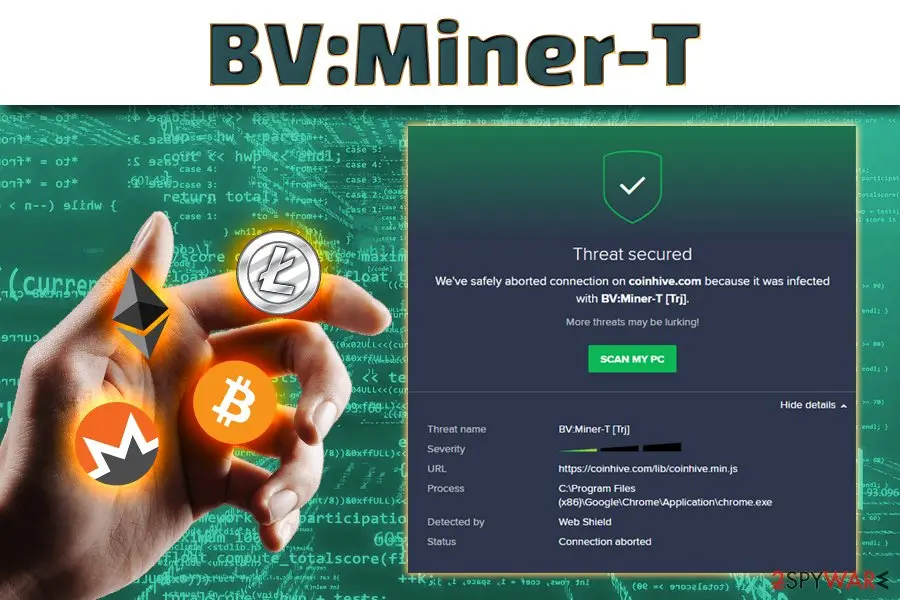
Various vulnerabilities and outdated versions of programs give the opportunity for hackers to abuse such sites via the Javascript library. The particular term is used by AV engines when malicious activity is detected. The pop-up indicates the connection of the particular site to miner/trojan, so you can take action as soon as possible.
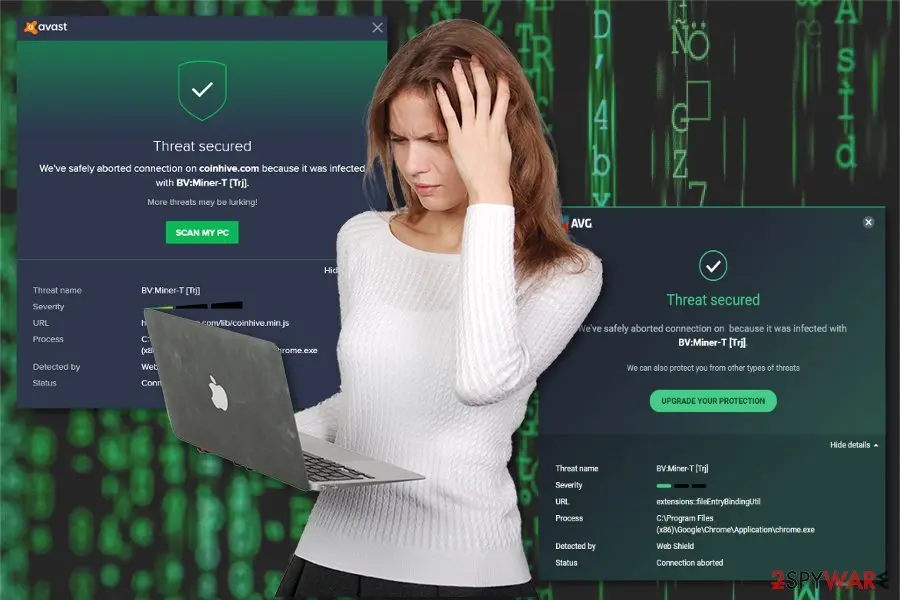
Users online report this often-occurring message with various concerns including the suspicions about particular websites involved and BV:Miner-T scripts. In most cases, there are no issues with the website, and those are legitimate, but your machine may end up used to mine currency without permission if you don't react as soon as possible.
Constant malware indications and notices about virus activity should push you to run a proper scan on the machine with a reputable anti-malware tool. This is how you can get rid of the issues and possible other malware entirely. If BV:Miner-T virus already runs on the PC, it can be removed this way too.
BV:Miner-T is a cryptojacker that works similarly to JS:Miner-c - a malicious code embedded directly into malicious or hacked sites runs a script which allows bad actors to monetize on digital currency mining. Mining crypto is an entirely legitimate process, and many website authors prefer this method of over-serving ads.
Additionally, users don't usually mind to share some of their CPU power in order to avoid annoying pop-ups. However, this process becomes highly illegal if the user is not informed about the process. BV Miner T is a name used by several security applications that prevent users from entering corrupted sites that illegally mine crypto like Bitcoin, Monero, Litecoin, etc.
Cryptocurrency miners have been on the rise, and some of the ransomware authors even shifted their business model. The best example would be XiaoBa ransomware, which switched from Chinese-only targeting malware to global ransomware that utilized crypto mining capabilities.
However,cryptojackers are different. It is not an infection per se, but rather a script that runs on a compromised website, making BV:Miner-T removal as easy as closing down the site. Nevertheless, it is vital to scan your machine if your anti-virus is detecting any type of malware.
You can also do all repair work yourself if you are computer-savvy, but it is not recommended to those who do not have much practice with computing. The only way to remove BV:Miner-T activity is to close down your browser, and never revisit the site. Note that the cryptominer can be activated on any browser, including Google Chrome, Internet Explorer, Mozilla Firefox, Safari, and many others.
There are two ways cyber crooks can make BV Miner T crpytomining successful: they either inject the script into a poorly protected website (even if it is legitimate) or create their own. The first option is more popular, as there is no need to direct traffic. Researchers observed that cybercriminals make use of outdated versions of Drupal software, so take over legitimate websites with malicious JavaScript.
This miner does not make any changes to the system but can damage files and affect the performance this way. Therefore, as long as you use powerful anti-malware software and keep it up to date, you can remove BV:Miner-T activity from your machine without much trouble.
How BV:Miner spreads and got on your PC
From our report of Dec 2019 · not reviewed since
Many coinminers are hidden in such sites like torrent and pirated software distributing pages, file-sharing, porn, gambling, online dating, and similar content.
Crooks know that millions use these types of domains, so utilizing their CPU brings them the maximum amount of profits in Bitcoin, Monero, Ethereum, etc. In the meantime, victims suffer from compromised computer usage, high electricity bills, and hardware wear out.
You should also pay attention to pop-ups, ads, and promotional content that comes to your screen out of nowhere. Clicking on shady commercial content can install toolbars or in-browser material to distract you when the additional trojan script gets loaded on the machine.
Those virus notices are no joke, so you should run your anti-malware tools more often to keep the machine safe and virus-free and cut before the issue appears on the AV report for you.
How to remove BV:Miner
Miners hide when Task Manager opens and add Defender exclusions.
The steps deal with both, then remove the files.
Step 1: Delete scheduled tasks that bring it back
Open Task Scheduler from the Start menu and click Task Scheduler Library. Select each task you do not recognise and read the Actions tab:
- a task that starts a file in
%AppData%or%Temp% - runs
powershellwith a long encoded line - opens a web address belongs to BV:Miner or a similar program
Right-click such a task and choose Delete, and check the subfolders too. Leave tasks from Microsoft, your PC's maker and programs you use. Task Scheduler is the same in Windows 11 and Windows 10.

Windows 11: Task Scheduler Library, the task selected, the Actions tab shows the file it runs. Full procedure with screenshots: Remove what malware leaves behind in Windows
- a task that starts a file in
Step 2: Remove it from startup
Whatever BV:Miner installed usually starts with Windows. Open Task Manager with Ctrl + Shift + Esc, go to Startup apps in Windows 11 or the Startup tab in Windows 10, and disable what you do not know, starting with entries that have an empty Publisher column.
Open file location on the right-click menu shows the file, which helps you decide and tells you what to delete later. Disabling is safe: if something you need stops working, switch it back on.
Full procedure with screenshots: Stop apps from opening at startup On uGetFix
Step 3: Turn Microsoft Defender back on and remove its exclusions
BV:Miner turns protection off or adds exclusions so that Defender ignores it. In Windows Security > Virus & threat protection, open Manage settings and switch Real-time protection, Cloud-delivered protection and Tamper Protection back on.
Then open Add or remove exclusions at the bottom of that page and remove whatever you did not add yourself, for example a folder in
%AppData%or an entire drive. These pages look the same in Windows 11 and Windows 10.Full procedure with screenshots: Turn off Microsoft Defender protection for a moment On uGetFix
Step 4: Delete the folders left behind
What the uninstaller leaves behind is usually in the user folders. Open File Explorer, switch on View > Show > Hidden items (in Windows 10 View > Hidden items), and go through
%LocalAppData%,%AppData%, %ProgramData% and the two Program Files folders.Sort by Date modified and delete folders that appeared together with the problem and belong to no program you use. Folders with random names that hold
.exe,.dll, .js or .ps1 files are the strongest sign.Full procedure with screenshots: Remove what malware leaves behind in Windows
Step 5: Scan the PC, then run the offline scan
Open Windows Security > Virus & threat protection > Scan options, run a Full scan and remove everything it finds. Then select Microsoft Defender Antivirus (offline scan) and click Scan now: the PC restarts and scans before Windows loads, which finds files that hide while Windows runs.
Save your work first, because the offline scan takes about 15 minutes. Both scans are built into Windows 11 and Windows 10, and a second scanner from another vendor is a useful extra opinion.

Windows 11: Windows Security > Virus & threat protection > Scan options. Full procedure with screenshots: Run a Microsoft Defender Offline scan
Instructions for each browser and system
The detailed steps for every browser and system this guide covers. Open the one you use.
Manual removal using Safe Mode
Important! →
Manual removal guide might be too complicated for regular computer users. It requires advanced IT knowledge to be performed correctly (if vital system files are removed or damaged, it might result in full Windows compromise), and it also might take hours to complete. Therefore, we highly advise using the automatic method provided above instead.
Step 1. Access Safe Mode with Networking
Manual malware removal should be best performed in the Safe Mode environment.
Windows 7 / Vista / XP
- Click Start > Shutdown > Restart > OK.
- When your computer becomes active, start pressing F8 button (if that does not work, try F2, F12, Del, etc. - it all depends on your motherboard model) multiple times until you see the Advanced Boot Options window.
- Select Safe Mode with Networking from the list.

Windows 10 / Windows 8
- Right-click on Start button and select Settings.

- Scroll down to pick Update & Security.

- On the left side of the window, pick Recovery.
- Now scroll down to find Advanced Startup section.
- Click Restart now.

- Select Troubleshoot.

- Go to Advanced options.

- Select Startup Settings.

- Press Restart.
- Now press 5 or click 5) Enable Safe Mode with Networking.

Step 2. Shut down suspicious processes
Windows Task Manager is a useful tool that shows all the processes running in the background. If malware is running a process, you need to shut it down:
- Press Ctrl + Shift + Esc on your keyboard to open Windows Task Manager.
- Click on More details.

- Scroll down to Background processes section, and look for anything suspicious.
- Right-click and select Open file location.

- Go back to the process, right-click and pick End Task.

- Delete the contents of the malicious folder.
Step 3. Check program Startup
- Press Ctrl + Shift + Esc on your keyboard to open Windows Task Manager.
- Go to Startup tab.
- Right-click on the suspicious program and pick Disable.

Step 4. Delete virus files
Malware-related files can be found in various places within your computer. Here are instructions that could help you find them:
- Type in Disk Cleanup in Windows search and press Enter.

- Select the drive you want to clean (C: is your main drive by default and is likely to be the one that has malicious files in).
- Scroll through the Files to delete list and select the following:
Temporary Internet Files
Downloads
Recycle Bin
Temporary files - Pick Clean up system files.

- You can also look for other malicious files hidden in the following folders (type these entries in Windows Search and press Enter):
%AppData%
%LocalAppData%
%ProgramData%
%WinDir%
After you are finished, reboot the PC in normal mode.
Choose a proper web browser and improve your safety with a VPN tool
Online spying has got momentum in recent years and people are getting more and more interested in how to protect their privacy online.
One of the basic means to add a layer of security - choose the most private and secure web browser. Although web browsers can't grant full privacy protection and security, some of them are much better at sandboxing, HTTPS upgrading, active content blocking, tracking blocking, phishing protection, and similar privacy-oriented features.
However, if you want true anonymity, we suggest you employ a powerful VPN - it can encrypt all the traffic that comes and goes out of your computer, preventing tracking completely.
Lost your files? Use data recovery software
While some files located on any computer are replaceable or useless, others can be extremely valuable.
Family photos, work documents, school projects - these are types of files that we don't want to lose. Unfortunately, there are many ways how unexpected data loss can occur:
- power cuts
- Blue Screen of Death errors
- hardware failures
- crypto-malware attack
- even accidental deletion
To ensure that all the files remain intact, you should prepare regular data backups. You can choose cloud-based or physical copies you could restore from later in case of a disaster. If your backups were lost as well or you never bothered to prepare any, can be your only hope to retrieve your invaluable files.
Questions about BV:Miner
Is BV:Miner a virus?
Most programs that appear the way BV:Miner did are not viruses in the strict sense. They are potentially unwanted programs:
- real software that arrives bundled with other downloads and then shows offers
- changes browser settings
- starts with Windows
Some are harmless, some are annoying and a few carry adware. What makes it worth removing is that you did not choose it.
Uninstall it from Installed apps and check the startup list and the browsers for anything added the same day. If it refuses to uninstall or returns after a restart, treat it as more serious and run a Microsoft Defender offline scan.
BV:Miner came back after I uninstalled it. Why?
Something else is reinstalling it. Common causes are a second program from the same publisher, a scheduled task that downloads it again, or a browser extension that keeps prompting for it. Sort Installed apps by install date and uninstall each entry from the same day that you did not choose.
Then open Task Scheduler and look in the Task Scheduler Library for tasks with updater-style names that you do not recognise. Check Startup apps in Task Manager too. If BV:Miner still returns, start Windows in Safe Mode, uninstall it there and run a Microsoft Defender offline scan, which looks for loaders that ordinary scans can miss.
Should I reset my PC because of BV:Miner?
Only if the signs point to deeper access. Reset when you see BV:Miner in the list of installed apps again after removal, when Windows Security cannot start or update, when remote access tools you did not install keep appearing, or when you simply cannot trust the PC any more.
Otherwise, the plan in this guide plus an offline scan is enough. If you do reset, choose Remove everything and Cloud download for a fresh copy of Windows, restore only documents and photos, and reinstall programs from their official sites. Change important passwords from the clean system afterwards.
Can I just delete the file Windows Security found?
Let Windows Security handle it instead. When it finds BV:Miner, choose Remove or Quarantine; the scanner also removes related startup entries and tasks that a manual delete would miss. Deleting a running file by hand often fails, and many threats restore themselves from a second copy.
After the removal, run the Microsoft Defender offline scan, which works before Windows starts and catches parts that hide while Windows runs. Then check Task Scheduler for leftovers. Restart afterwards and check that the detection does not return.
The PC is still slow after removing BV:Miner. What now?
Restart the PC first; some changes only take effect after a reboot. Then open Task Manager and check the Processes and Startup apps tabs for anything unfamiliar using the processor, disk or network. If something remains, run the Microsoft Defender offline scan once more.
Slowness can also come from a second infection installed alongside BV:Miner, or from programs that were damaged during the clean-up. If nothing helps, back up your files and reset Windows. Copy only documents and photos before a reset, and scan the copies.
Is BV:Miner a virus?
In everyday language, yes: BV:Miner is malware, a program that runs without your consent. More precisely, the reports point to a cryptominer, based on what people saw: BV:Miner in the list of installed apps. It is not part of Windows and no legitimate program behaves this way while hiding from the user.
It should be removed, and the PC checked for other programs that may have come with it. Because there is no public analysis yet, we cannot list everything it does; the removal plan in this guide is written to cover the usual places this kind of malware uses to start and hide.
How much electricity does a miner use?
It depends on the hardware and how hard the miner runs, so there is no single figure. A miner that keeps a desktop processor or graphics card busy around the clock can noticeably raise a household power bill over a month, and laptops lose battery life fast.
Some miners limit themselves to part of the available power to stay unnoticed, which lowers the cost but also hides the problem longer. Removing it is the only fix. Afterwards, idle use should fall back to a few percent.
What should I do about my accounts?
Treat them as possibly exposed while BV:Miner was active. The reports only describe BV:Miner in the list of installed apps, but there is no analysis yet that rules out data theft, and many infections like this one come bundled with a stealer.
After the clean-up, use a phone or another computer to change your e-mail password first, then banking, shopping and social accounts. End all active sessions in each account's security page and turn on two-step verification with an authenticator app. If you use crypto wallets on the PC, move the funds to a new wallet created on a clean device.
Should I scan my other computers too?
It is a good idea, even for malware that does not spread by itself. The same download, USB stick or loader may have been used on other PCs in the household, and shared folders can carry files between them.
Run a full scan followed by the Microsoft Defender offline scan on each Windows PC that shared drives or files with the infected one. Do not copy programs or installers from the infected PC until it is clean, and change Wi-Fi and router passwords if they were saved on it.
Will Fortect remove BV:Miner?
Fortect scans Windows for malware and unwanted programs and repairs the system files and settings they change, and its free scan shows what it finds on your PC before you decide anything.
For BV:Miner, follow the plan above as well: the browser steps take back permissions and settings that no scanner treats as a threat, and uninstalling the program that brought it removes the source.
Run Microsoft Defender's full scan and, if anything was found, its offline scan as a second opinion. If the symptoms are gone after the plan and both scans are clean, there is nothing more to do.
Sources
- Reddit: BV:Miner-T [Trj] (read October 6, 2026)
- 2-spyware: XiaoBa ransomware shifts into becoming a cryptominer (read October 6, 2026)
- ThreatPost: Cryptojacking Campaign Exploits Drupal Bug, Over 400 Websites Attacked (read October 6, 2026)
- FTC: How to recognize, remove and avoid malware (read October 6, 2026)
- Microsoft Learn: Microsoft Defender Offline (read October 6, 2026)