
Leen ransomware: what it is and how to remove it
Leen ransomware is a severe virus that is capable of encrypting all users' files and demanding a ransom to be paid in order to retrieve data. The malware is a part of Scarab family - a widely spread virus that keeps coming back.
Facts checked October 6, 2026. Removal steps tested on Windows 11 (26H2) and checked against Microsoft's and the browser makers' current documentation. Sections marked as our earlier report are the original text: they describe the threat as it was then and have not been reviewed since. The 2026 status, the removal steps and the questions are current.
Automatic
Get a free scan and check if your PC is infected.
Fortect finds malware, unwanted programs and the Windows damage they leave behind, and repairs it in one pass.
Make sure nothing will rename more files to .leen: an automatic scan checks the PC first.
Do it yourself · free Remove Leen ransomware yourself 6 steps, about 18 minutes, no software needed.
Start the steps
Leen ransomware: summary
| Detection names | No Microsoft detection name is known |
|---|---|
| Ransom note | Not recorded in our earlier report |
| Contact | mr.leen@protonmail.com |
| Encrypted file extension | .leen |
| Decryptor | No free decryptor is known for this variant; check No More Ransom (nomoreransom.org) for updates |
| Distribution | Not recorded in the old report |
| Removal | Scan the PC with security software to find and remove the malware and anything installed with it. Fortect scans Windows for malware and repairs the system files and settings it damaged. Remove it nowTo use the full-featured product, you have to purchase a license for Fortect. The scan is free. |
Show 9 more facts
| Damage | Not recorded in the old report |
|---|---|
| Name | Leen ransomware |
| Type | File-encrypting ransomware |
| Symptoms | Files renamed with a new extension |
| Evidence | 4 write-ups by security sites; details still limited |
| Encrypted files | .leen |
| Free decryptor | No free decryptor is known (checked 6 October 2026) |
| First seen | 25 June 2018 |
| Facts checked | 6 October 2026 |
- File extension:
.leen
From our report of Jun 2018 · not reviewed since
More from our earlier report on Leen ransomware
- Can lead to permanent file destruction
- Spam emails, malicious sites, etc.
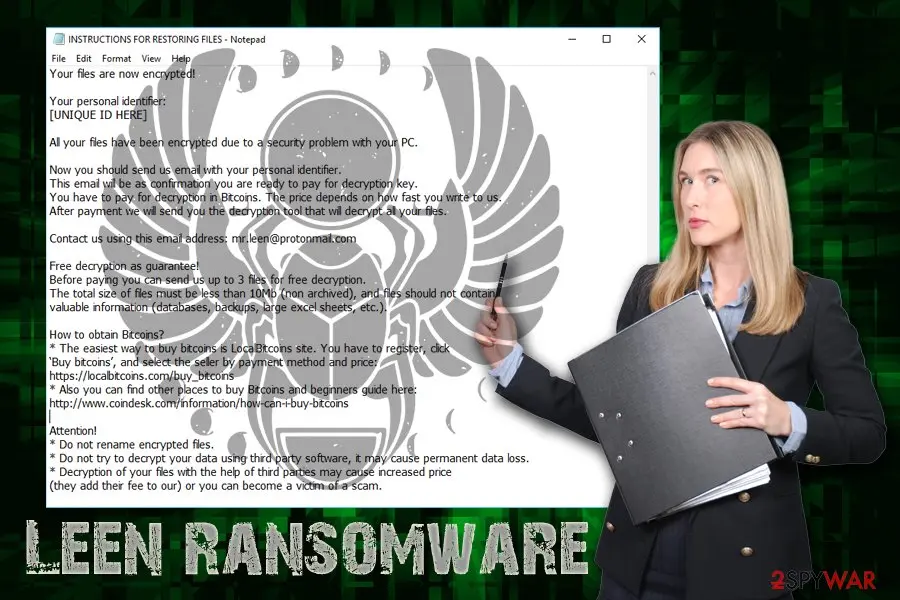
- IF YOU WANT TO GET ALL YOUR FILES BACK, PLEASE READ THIS All your files have been encrypted due to a security problem with your PC.
- Now you should send us email with your personal identifier.
- This email will be as confirmation you are ready to pay for decryption key.
- You have to pay for decryption in Bitcoins.
- The price depends on how fast you write to us.
- After payment we will send you the decryption tool that will decrypt all your files.
- Contact us using this email address: mr.leen@protonmail.com
How Leen ransomware behaves
From our report of Jun 2018 · not reviewed since
Leen ransomware - a sophisticated virus which encrypts users' files and demands ransom for their release
Leen ransomware is a severe virus that is capable of encrypting all users' files and demanding a ransom to be paid in order to retrieve data.
The malware is a part of Scarab family - a widely spread virus that keeps coming back. Thus, security researchers tend to call it Scarab-Leen ransomware. The crypto-virus uses a complicated encryption algorithm to make data unusable and append .leen extension to each of the file.
As soon as that is complete, users can find a ransom note in every folder named INSTRUCTIONS FOR RESTORING FILES.TXT. Cybercrooks demand payment in Bitcoins and ask victims to contact them via mr.leen@protonmail.com.
Just as many other ransomware viruses, Leen spreads via contaminated documents attached to spam emails. As soon as the user clicks on the attachment, the payload gets distributed, and several changes to the system are made. First of all, the malware alters registry entries. Then, it scans the machine for files to encrypt, mainly documents, databases, pictures, video, audio and other personal data.
As soon as files are detected, malware adds .leen extension to each of the files, rendering them unusable. To make it even worse, the crypto-virus deletes shadow volume copies - an automatic backup system that is used by Windows. Nevertheless, the first action after that should not be the contact with cybercriminals, but a full Leen removal from the infected machine.
The ransomware then drops the ransom note into every infected folder, which consists of the following message:
Regardless of what .leen ransomware creators are promising, security experts suggest never to contact them, as they might never send the promised decryptor, even if the payment is processed. Additionally, crooks might send you malicious file that could inject more malware into your PC.
It is true that a different key for every infected computer is needed, and only culprits possess it. Nevertheless, there are alternative methods to recover your files, such as using third-party software or backups.
However, if this kind of crypto-virus has hacked your PC - make sure to find a way to solve this problem without letting cybercriminals gain profit. What you need to do to remove Leen Ransomware is to download and install an anti-malware program, such as or .
From our report of Jun 2018 · not reviewed since
Ransomware-type viruses usually are distributed through spam emails
Spam emails are the most prominent ransomware distribution method.
Other ways how these crypto-viruses are spread:
To avoid system damage, we suggest you take precautions when browsing the internet. Please stay away from spam emails, as they can contain malicious links or attachments inside, which would lead to infection. Additionally, stay away from file-sharing or other questionable sites - repacked or cracked software is often injected with malicious code.
Also, download and keep your antivirus up-to-date as it is an effective tool to keep malware away.
- P2P networks (e.g. torrent sites), these sites usually present ransomware as safe and legitimate software;
- Software downloaded from dubious websites;
- Fake software updates;
- Trojans - they clear the way for ransomware to spread easily;
- Exploit kits can open the way for cybercriminals to inject malware - so, frequent updates are required.
How to remove Leen ransomware
Tools you'll need
All of these are free except where noted. Download them on a clean device if the infected PC is offline.
- A USB stick: to keep the ransom note, two or three encrypted files and screenshots off the infected PC.
- Microsoft Defender Offline: built into Windows 11 and Windows 10; scans before Windows starts, so running malware cannot hide.
- Microsoft Safety Scanner: a second, portable scanner with current signatures; each download works for 10 days.
- ID Ransomware: identifies the family from the note and one encrypted file and says whether a decryptor exists.
- No More Ransom: the free decryptors from police and security companies; check it again every few months.
- Fortect (optional): scans Windows for malware and repairs the system files and settings it damaged. The free scan is in the box above.
How to remove Leen ransomware and get your files back
Work in this order.
Disconnecting comes first, removal comes before any restore, and nothing here asks you to contact the attackers.
Step 1: Disconnect the PC and unplug backup drives
Unplug the network cable or turn off Wi-Fi, and disconnect USB drives, external disks and network shares, so Leen ransomware cannot reach more files. Pause OneDrive, Google Drive or Dropbox sync, because synced folders upload the encrypted copies over the good ones.
Leave the PC on but offline while you read the next steps, since a restart can let the ransomware run again. This applies to Windows 11 and Windows 10 alike.
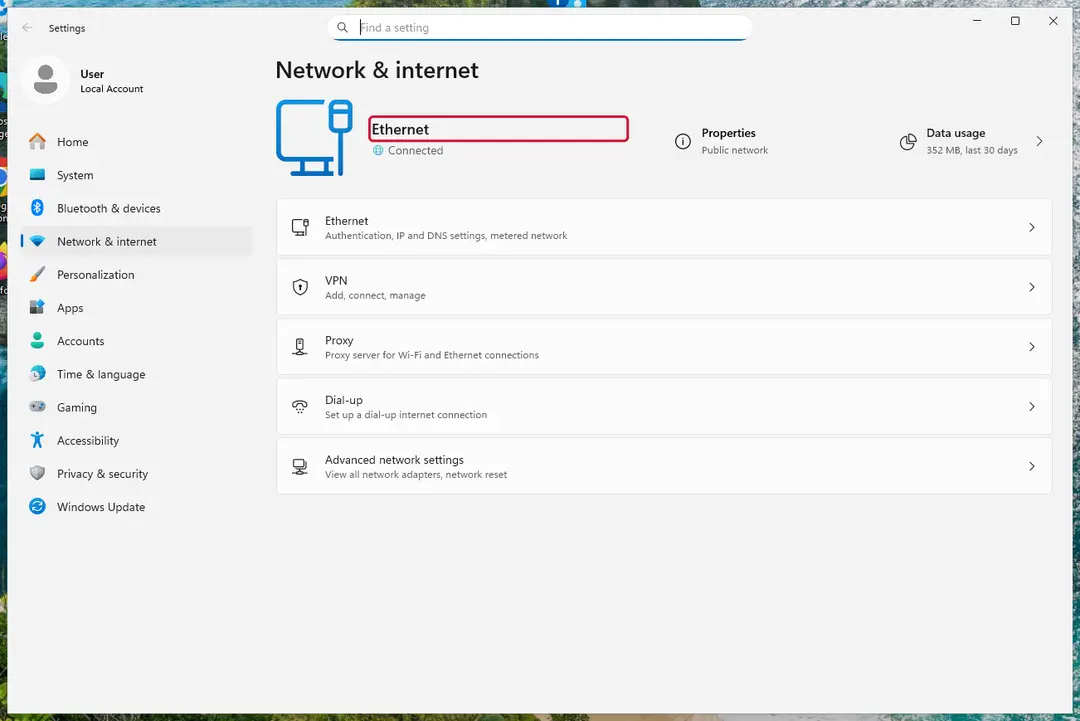
Windows 11: turn off Wi-Fi to take the PC offline. Full procedure with screenshots: Ransomware: first steps, finding a decryptor and recovering files
Step 2: Save the ransom note and identify the family
The name of the family decides whether a free decryptor can help. Copy the ransom note and two small encrypted files to a USB stick, and check them on another device with ID Ransomware or Crypto Sheriff.
Note the extension added to the files, the contact address and the victim ID shown in the note. Keep the originals on the Windows 11 or Windows 10 PC untouched.
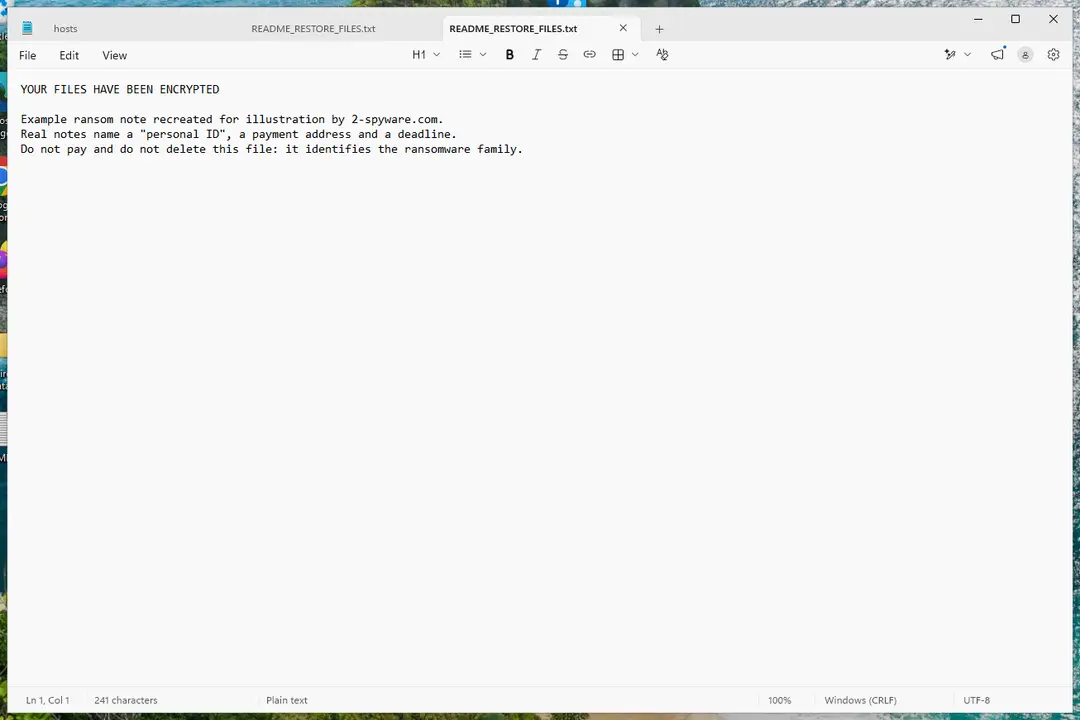
Windows 11: the ransom note and encrypted files to copy for identification. Full procedure with screenshots: Ransomware: first steps, finding a decryptor and recovering files
Step 3: Check for a free decryptor
Our last check found that for Leen ransomware, no free decryptor is known (checked 6 October 2026). Look again yourself in the No More Ransom list and the free decryptor pages of Emsisoft, Avast and Kaspersky, which add new families every year.
A decryptor needs the ransomware gone first, or it encrypts the files again. Keep at least one copy of the encrypted files on an external drive, even if no tool works yet.
Full procedure with screenshots: Ransomware: first steps, finding a decryptor and recovering files
Step 4: Remove the ransomware before you restore or decrypt
Removing Leen ransomware does not bring the files back, but it has to come first. Start with Defender's Full scan, then the offline scan from the same Scan options page, which checks the disk before Windows loads.
If the scan cannot start, use Safe Mode with Networking. Delete the ransom notes only after you have saved a copy, because removal tools sometimes leave them behind on Windows 11 and Windows 10.
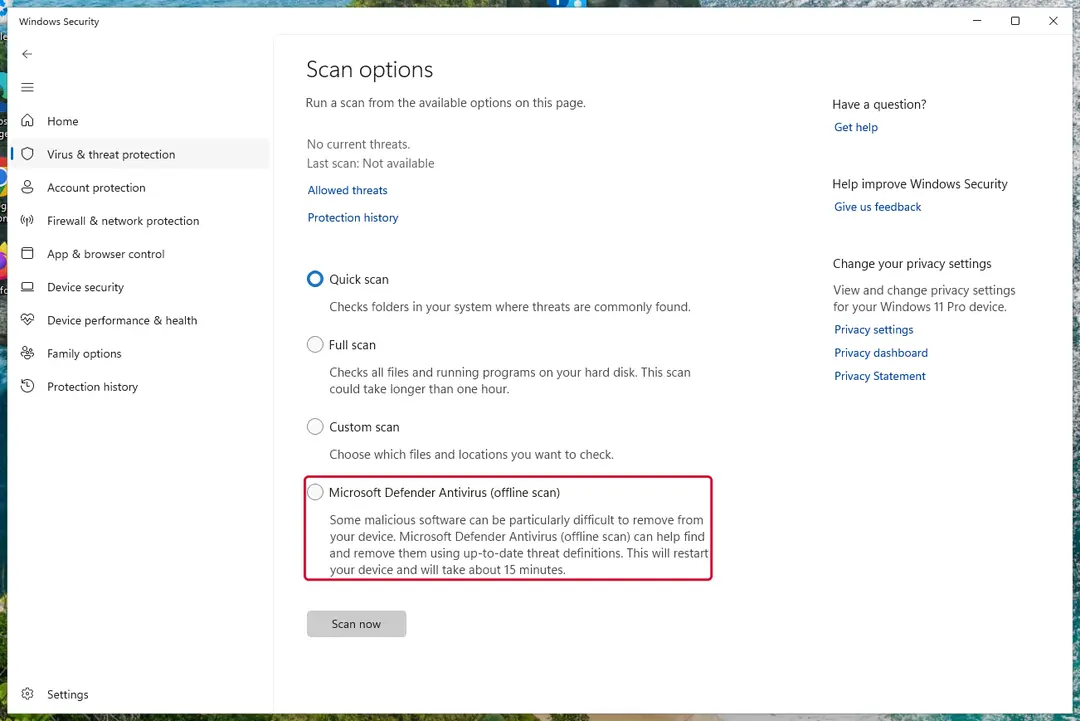
Windows 11: Windows Security > Virus & threat protection > Scan options. Full procedure with screenshots: Run a Microsoft Defender Offline scan
Step 5: Look for shadow copies of the files
Windows keeps shadow copies for restore points and backups, and some ransomware fails to delete them.
vssadmin list shadowsin an administrator Command Prompt tells you at once whether any exist.If they do, right-click the folder that held your files, open Properties > Previous Versions, select a version from before the attack, and click Open to check it before you Restore or copy the files out. Windows 11 and Windows 10 both have the tab.
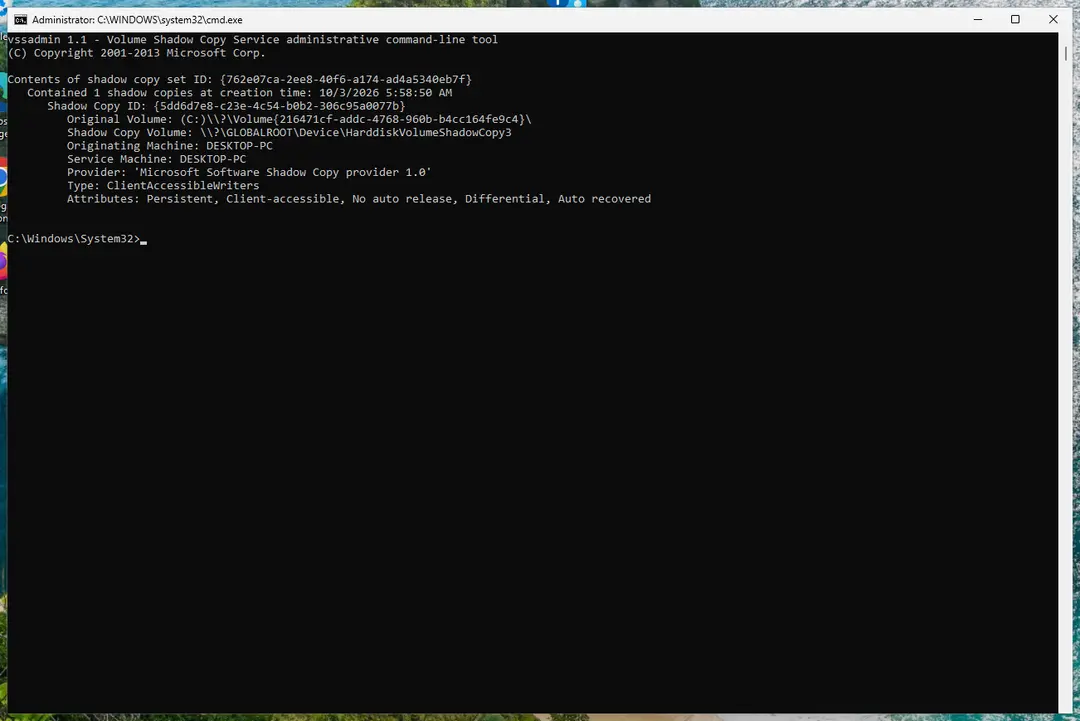
Windows 11: vssadmin list shadows shows whether shadow copies exist. Full procedure with screenshots: Ransomware: first steps, finding a decryptor and recovering files
Step 6: Restore the files from a backup or recover deleted originals
A backup made before the attack is the surest way back. Connect it only once the PC is clean, then restore from File History, Windows Backup, OneDrive's Restore your OneDrive or your own external copies.
Without a backup, try file recovery: the originals that Leen ransomware deleted may still be on the disk until something overwrites them. Install nothing new on the drive you want to recover from on the Windows 11 or Windows 10 PC.
Full procedure with screenshots: Recover deleted files (Recycle Bin, backups, OneDrive) On uGetFix
Instructions for each browser and system
The detailed steps for every browser and system this guide covers. Open the one you use.
Manual removal using Safe Mode
Important! →
Manual removal guide might be too complicated for regular computer users. It requires advanced IT knowledge to be performed correctly (if vital system files are removed or damaged, it might result in full Windows compromise), and it also might take hours to complete. Therefore, we highly advise using the automatic method provided above instead.
Step 1. Access Safe Mode with Networking
Manual malware removal should be best performed in the Safe Mode environment.
Windows 7 / Vista / XP
- Click Start > Shutdown > Restart > OK.
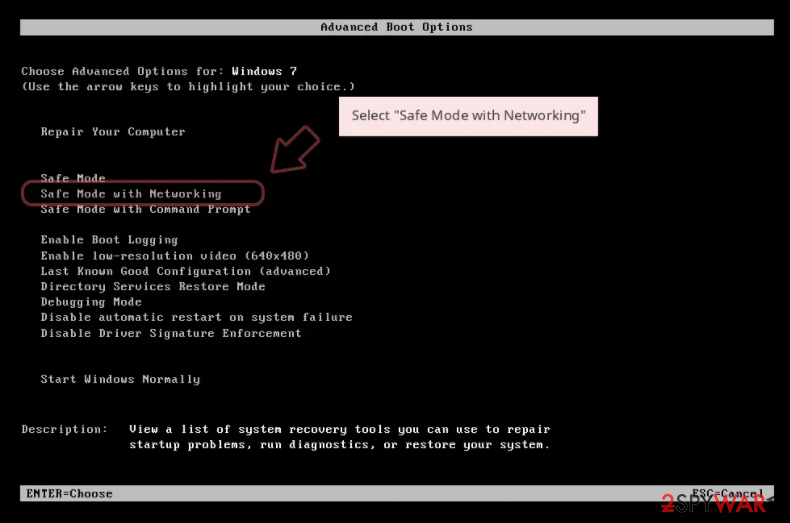
- When your computer becomes active, start pressing F8 button (if that does not work, try F2, F12, Del, etc. - it all depends on your motherboard model) multiple times until you see the Advanced Boot Options window.
- Select Safe Mode with Networking from the list.
Windows 10 / Windows 8
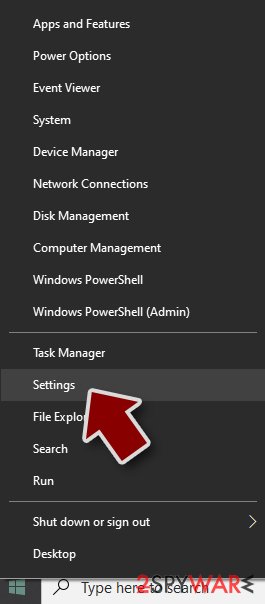
- Right-click on Start button and select Settings.
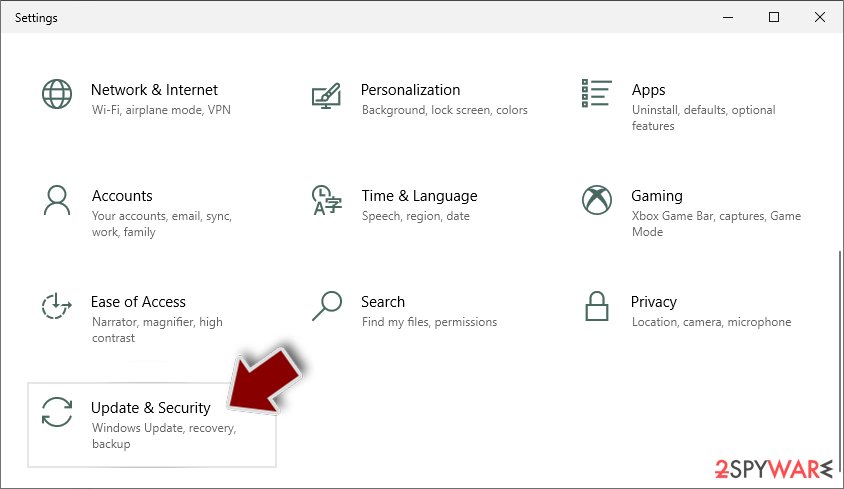
- Scroll down to pick Update & Security.
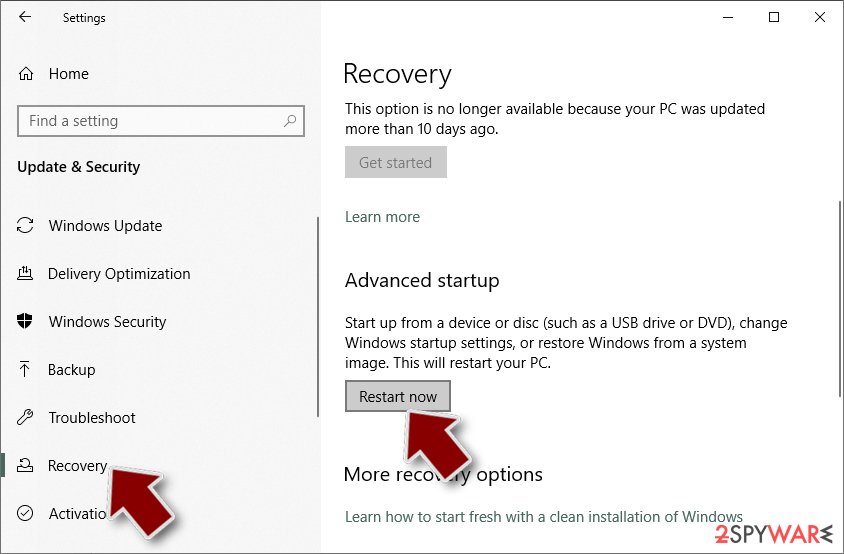
- On the left side of the window, pick Recovery.
- Now scroll down to find Advanced Startup section.
- Click Restart now.
- Select Troubleshoot.
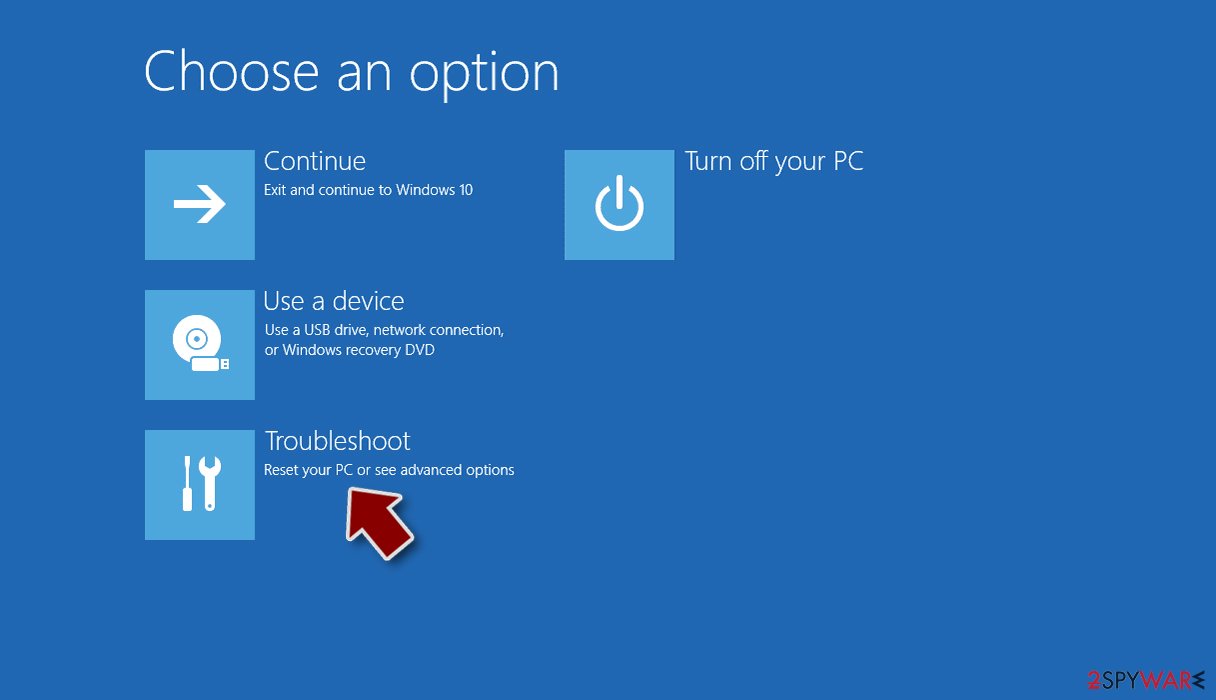
- Go to Advanced options.
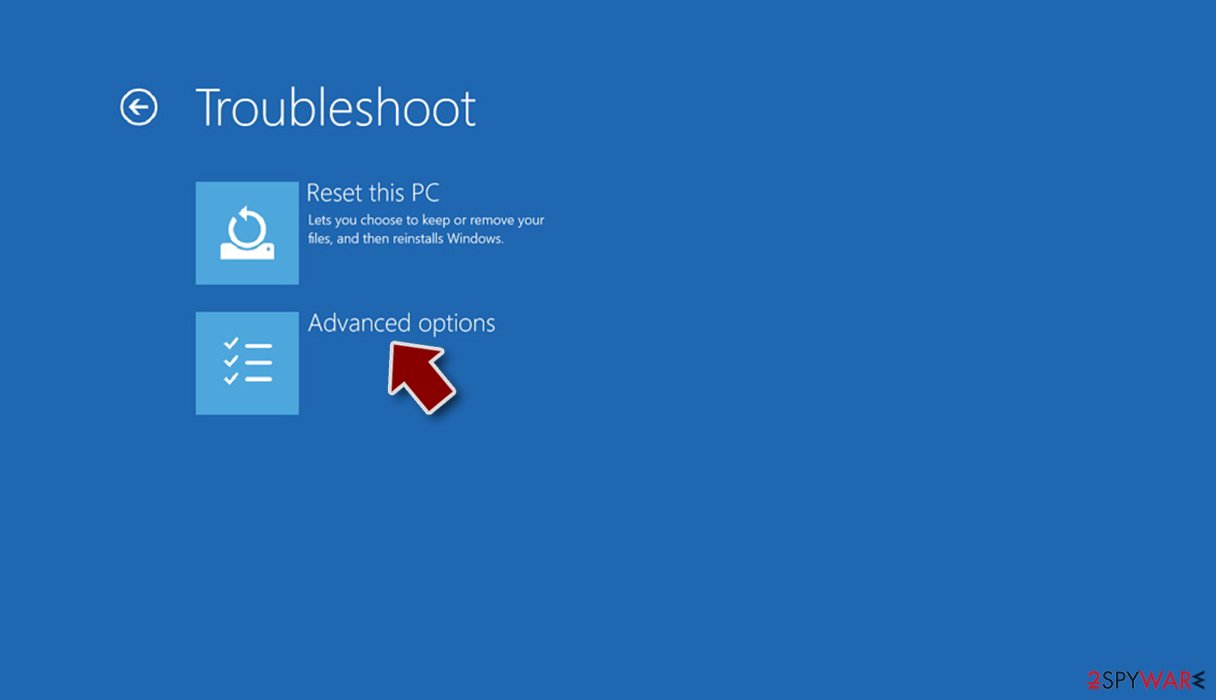
- Select Startup Settings.
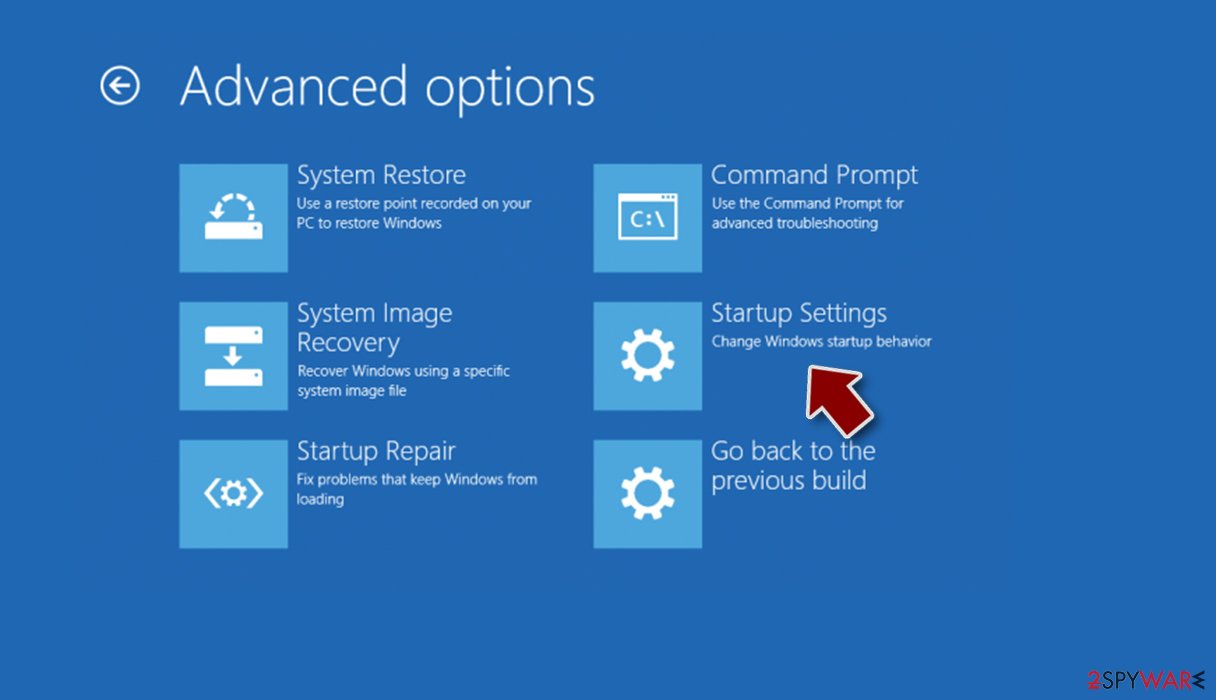
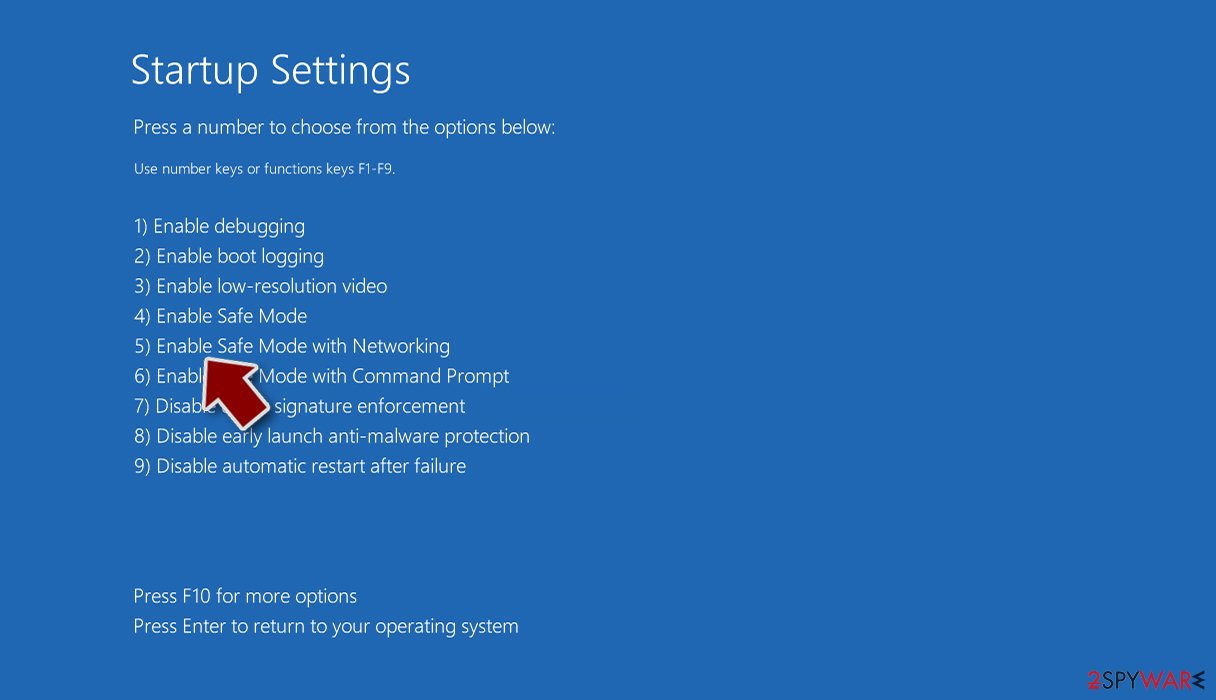
- Press Restart.
- Now press 5 or click 5) Enable Safe Mode with Networking.
Step 2. Shut down suspicious processes
Windows Task Manager is a useful tool that shows all the processes running in the background. If malware is running a process, you need to shut it down:
- Press Ctrl + Shift + Esc on your keyboard to open Windows Task Manager.
- Click on More details.
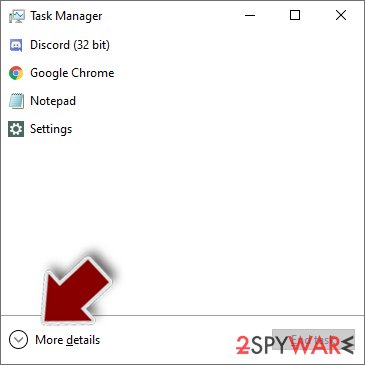
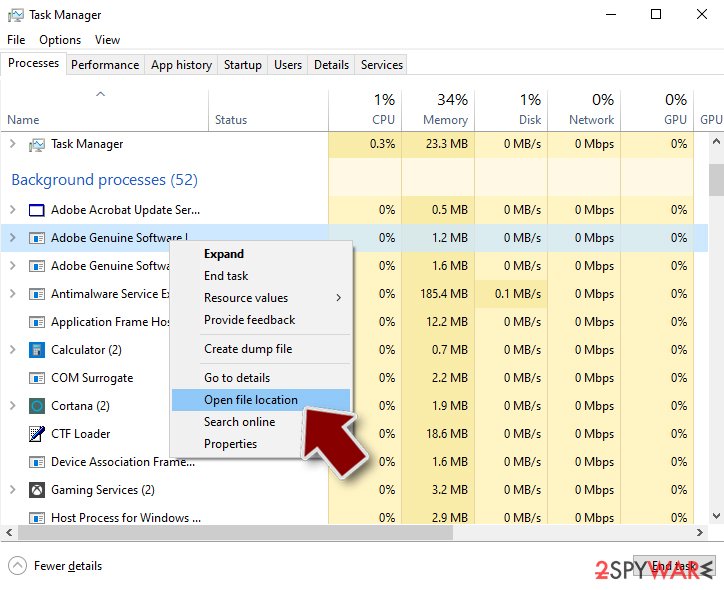
- Scroll down to Background processes section, and look for anything suspicious.
- Right-click and select Open file location.
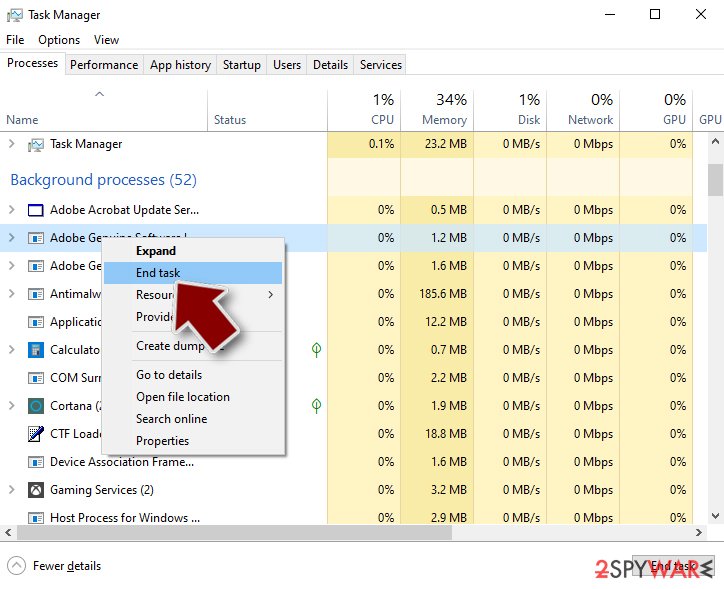
- Go back to the process, right-click and pick End Task.
- Delete the contents of the malicious folder.
Step 3. Check program Startup
- Press Ctrl + Shift + Esc on your keyboard to open Windows Task Manager.
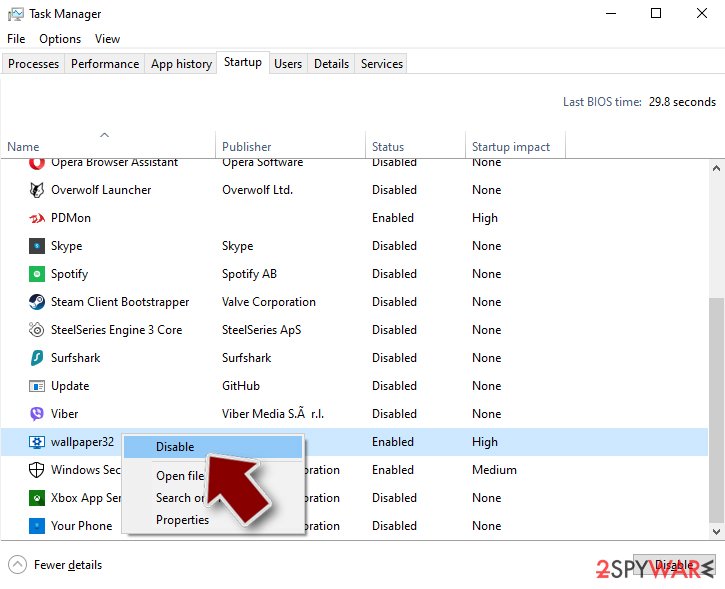
- Go to Startup tab.
- Right-click on the suspicious program and pick Disable.
Step 4. Delete virus files
Malware-related files can be found in various places within your computer. Here are instructions that could help you find them:
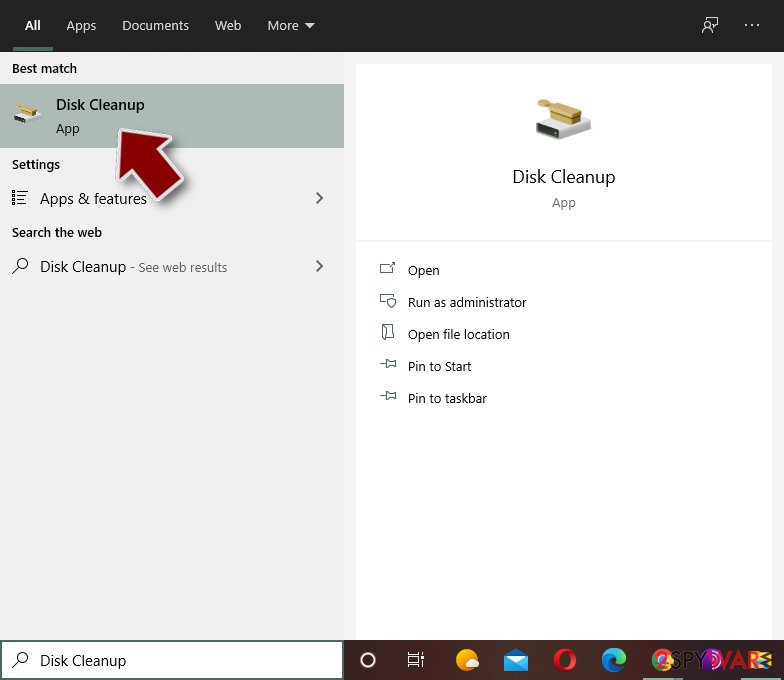
- Type in Disk Cleanup in Windows search and press Enter.
- Select the drive you want to clean (C: is your main drive by default and is likely to be the one that has malicious files in).
- Scroll through the Files to delete list and select the following:
Temporary Internet Files
Downloads
Recycle Bin
Temporary files - Pick Clean up system files.
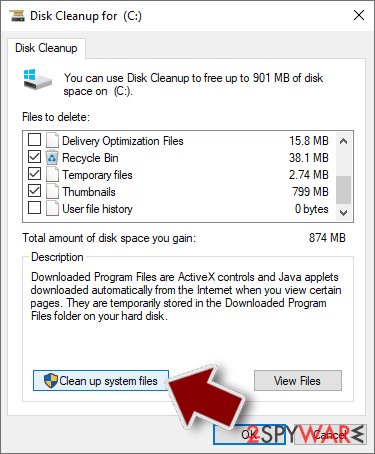
- You can also look for other malicious files hidden in the following folders (type these entries in Windows Search and press Enter):
%AppData%
%LocalAppData%
%ProgramData%
%WinDir%
After you are finished, reboot the PC in normal mode.
From our report of Jun 2018 · not reviewed since
Anti-malware tools will help you to remove Leen ransomware virus
To remove Scarab-Leen ransomware you need to use programs such as , , .
These programs can easily detect malware and make sure that all the traces of it are eliminated. That said, do not attempt manual Leen removal as it can damage your computer even more.
The virus might block your security software. In that case, you should reboot your PC and enter Safe Mode with Networking, as explained below. After that, you can continue with file recovery procedure.
[GI=method-1]To get rid of Leen virus, enter Safe Mode with Networking and perform full system scan:
[GI=method-2]You can eliminate the virus using System Restore function:
This tool has proved to be useful for certain files encrypted by ransomware. Although, there is no guarantee it is going to work.
Try Windows Previous Versions
This method requires you to have System Restore enabled before the virus struck.
Recover your files using ShadowExplorer
Although Leen virus removes shadow volume copies, in some cases it might fail to do that. Thus, try ShadowExplorer to recover your files.
No decryptor is available yet
Report it and recover your files
Report it
Report the attack even if you do not expect the files back: insurers and banks ask for the report number, and police use the contacts in the note to link cases.
- United States
- FBI IC3 · FTC ReportFraud
- United Kingdom
- Report Fraud (formerly Action Fraud) · NCSC
- Australia
- ReportCyber (ASD)
- EU countries
- Europol: national reporting sites
Give the victim ID, the note and the date the files were encrypted. A business that holds personal data may also have to notify its data protection authority, in the EU within 72 hours.
Protect the files you restore
Restore only after the scans are clean and the PC no longer shows files that end in .leen and no longer open; otherwise the restored copies can be damaged again.
Then build a backup that survives the next infection:
- one copy in the cloud with version history
- one on an external drive that is disconnected between backups
- the working copy on the PC
Version history matters because a backup that syncs damaged files overwrites the good ones.
How to do this with the tools built into Windows: the 3-2-1 backup rule on Windows.
Access your website securely from any location
When you work on the domain, site, blog, or different project that requires constant management, content creation, or coding, you may need to connect to the server and content management service more often. The best solution for creating a tighter network could be a dedicated/fixed IP address.
If you make your IP address static and set to your device, you can connect to the CMS from any location and do not create any additional issues for the server or network manager that needs to monitor connections and activities. VPN software providers like can help you with such settings and offer the option to control the online reputation and manage projects easily from any part of the world.
Recover files after data-affecting malware attacks
While much of the data can be accidentally deleted due to various reasons, malware is one of the main culprits that can cause loss of pictures, documents, videos, and other important files.
More serious malware infections lead to significant data loss when your documents, system files, and images get encrypted. In particular, ransomware is is a type of malware that focuses on such functions, so your files become useless without an ability to access them.
Even though there is little to no possibility to recover after file-locking threats, some applications have features for data recovery in the system. In some cases, can also help to recover at least some portion of your data after data-locking virus infection or general cyber infection.
Questions about Leen ransomware
Is there a decryptor for .leen files?
That depends on the family behind the .leen extension, which this guide cannot confirm yet from the reports alone. Check No More Ransom and ID Ransomware with your ransom note and one encrypted file; they list families with free tools.
If none exists today, keep the encrypted files and a copy of the note on a separate drive, because decryptors are sometimes published months later after flaws are found or servers are seized. Never buy a decryptor from a website that is not the security company that made it.
How do I open .leen files?
You cannot open them by renaming or by choosing another program. The .leen ending shows that Leen ransomware encrypted the content, and only the matching key can reverse it. Renaming a file back to .docx or .jpg changes nothing except the icon, and it can confuse a future decryptor, so leave the names as they are.
To get the content back, use a backup, an unencrypted copy elsewhere, or a decryptor listed on No More Ransom if one exists for Leen ransomware. Store the encrypted files on an external disk until then.
How did Leen ransomware get on my computer?
The way Leen ransomware spreads has not been documented yet, so look at your own recent activity. On home PCs, ransomware most often comes with cracked programs, game cheats, key generators and fake updates, or with an e-mail attachment that was opened. On business networks, attackers usually log in through Remote Desktop with a stolen or guessed password.
Think back to what was downloaded or installed in the days before files that end in .leen and no longer open, and check the Downloads folder and Installed apps sorted by date. Keep anything suspicious for your report, but do not run it again.
Should I pay the ransom?
We advise against it, and so do the FBI, Europol and national cyber agencies. Payment does not guarantee a working tool: some attackers never reply, some tools damage files, and some variants have no decryptor at all. Paying also funds further attacks and can make you a target again.
Before considering payment, try every recovery option in this guide and report the attack. Companies must involve their legal adviser and insurer, because payments to sanctioned groups can be illegal. If files are truly irreplaceable, store the encrypted copies and wait; decryptors sometimes appear later.
Can a data-recovery company decrypt my files for a fee?
Only if a decryptor already exists or the company pays the attackers for you. Some "ransomware recovery" services advertise that they can decrypt families with no known flaw; in practice they negotiate with the attackers and add their own fee. Others use the same free tools listed on No More Ransom.
Before you hire anyone, ask in writing how they will recover the files, whether they will contact the attackers and what happens if they fail. A legitimate service answers clearly. If a free decryptor exists for your family, you can run it yourself.
Did Leen ransomware steal my files or passwords?
We do not know yet. Nothing published so far shows data theft by Leen ransomware, but the only confirmed sign is files that end in .leen and no longer open, which says nothing about what happened before. Many current ransomware attacks copy files or run a password stealer first, so it is wise to act as if they did.
From a clean device, change the passwords that were saved in the browsers on this PC, starting with e-mail and banking, sign out of all sessions and turn on two-step verification. Watch bank statements and account activity for the next few weeks.
Is Leen ransomware the same as other ransomware with a similar name?
Not necessarily. Ransomware names come from the file extension, the note or a word in the code, so unrelated families often end up with similar names, and one family can appear under several names. The difference matters: a decryptor or advice for one family does not fit another and can damage files.
Compare the ending added to your files and the exact name of the note with the summary table at the top of this guide, then upload the note and one encrypted file to ID Ransomware from a clean device. If the result names another family, follow the guide for that family instead.
Will .leen spread to my other drives?
It can. Ransomware encrypts every drive and network share it can reach while it runs, so external disks, USB sticks and shared folders connected during the attack may also have files ending in .leen. Disconnect everything now, then check each device from a clean computer.
Do not plug a backup drive into the infected PC until the ransomware has been removed with an offline scan. Cloud folders such as OneDrive sync the encrypted versions, but they keep earlier versions you can usually restore.
Will removing Leen ransomware unlock my .leen files?
No. Removing Leen ransomware stops it from encrypting more files and from starting again, but it does not decrypt the files that already end in .leen. The scanner does not have the attackers' key.
Files come back only from a backup, from copies the ransomware did not reach, such as OneDrive version history, Previous Versions, e-mail attachments or a phone, or with a working decryptor if one exists.
Remove the ransomware first anyway: if you restore files while it is still active, it can encrypt them again. Keep the encrypted files; a decryptor may be published later.
Will Fortect remove Leen ransomware?
Fortect scans Windows for malware and unwanted programs and repairs the system files and settings they change, and its free scan shows what it finds on your PC before you decide anything.
For Leen ransomware, follow the plan above as well: the browser steps take back permissions and settings that no scanner treats as a threat, and uninstalling the program that brought it removes the source.
Run Microsoft Defender's full scan and, if anything was found, its offline scan as a second opinion. If the symptoms are gone after the plan and both scans are clean, there is nothing more to do.
Sources
- UsunWirusa: UsunWirusa (read October 6, 2026)
- CISA: StopRansomware (read October 6, 2026)
- No More Ransom (read October 6, 2026)
- FTC: How to recognize, remove and avoid malware (read October 6, 2026)
- Microsoft Learn: Microsoft Defender Offline (read October 6, 2026)