

Newzsystems.com is a fraudulent website that uses social engineering to mislead users

Newzsystems.com is a fake website created by scammers to make users enable push notifications so that advertisements can be delivered to their desktops. In fact, most people do not even remember this URL until they notice the symptoms of the annoying pop-ups showing up on their screens without warning. The only rule for this activity to materialize is to have a browser running, regardless if it is actively being used or not. This means that push notifications can be shown on top of all other running apps even if users watch a video or play a video game, which is extremely intrusive.
Newzsystems.com ads can also be dangerous – they often show misleading messages about users' computer health and imply that viruses have been found. In other cases, people might be told that they can earn large sums of money quickly or that they are entitled to an expensive gift. Disregard these messages, as the site spreads a long of scams that could result in a personal information disclosure to malicious parties, malware infections, or financial losses.
| Name | Newzsystems.com |
| Type | Push notifications, ads, pop-ups, scam |
| Distribution | Users start seeing intrusive pop-ups at some point after they click the “Allow” button within the site's notification prompt |
| Symptoms | Push notifications that include misleading information links would show up on the desktop at random times |
| Risks | The ads shown within push notifications might include misleading messages and links to malicious websites. If clicked, you might end up infecting your system with malware, disclosing your personal information, or losing money |
| Removal | Access browser settings to block push notifications. By scanning the system with SpyHunterCombo Cleaner, you can quickly check whether or not it is infected with malware or adware |
| Recovery | You can use FortectIntego to remove all the caches from your browsers and repair damaged system components automatically |
What are push notifications and why are they confusing
Push notifications are often misunderstood by users, even though requests to enable them can be found on numerous websites. The feature was first introduced on the Google Chrome browser back in 2015 and since then has been adapted broadly. This is why it is not uncommon to see a push notification prompt showing up upon entering almost any entertainment or news website.
Indeed, this feature can be useful to users and website authors – the former can receive immediate notifications about something they are interested in, and the latter can acquire more traffic to the site. Nonetheless, the reality is quite a bit different, as most users do not wish to be bothered with annoying pop-ups showing on their screens without warning.
According to Mozilla's findings back in 2019, the request to enable push notifications was unaccepted by a whopping 99% of people, while almost half of that chose to actively deny the request by clicking “Block” within the prompt.[1]
The Newzsystems.com scam asks to confirm you are not a robot
There is no way users would deliberately subscribe to push notifications from insecure websites. This is why scammers come up with phishing messages that are meant to convince people otherwise. For example, this message is among the most commonly used within push notification spam pages and can be found on News-rupite.cc, News-hobohe.cc, Global-news-blog.com, and many other similar sites:
Click Allow if you are not a robot

There could be slight variations in wording, and different background pictures of a robot could be used, although the principle remains the same – users are prompted to confirm that they are human. This check is one of the most common phenomena people encounter when browsing (selecting the correct pictures or bypassing captcha texts is a very accustomed practice), so it's not hard to see how they might confuse these two within the Newzsystems.com scam page.
The image and the text within it are dynamic, so users might encounter different requests apart from this one. For example, people might be told that their browsers are preventing a video playback or that they have won an expensive gift, or that they need to confirm their age. All these tricks are often employed by push notification scam sites and should be immediately recognized; keep in mind that the push notification prompt has only one function, regardless of what the background message and image imply.
Removal of unwanted push notifications
If you were tricked by the fake messages to enable push notifications from Newzsystems.com, you shouldn't be worried, as they are quite easy to get rid of. As stated previously, interacting with these ads and links may result in malware infections and other issues, so that's something you shouldn't do.
Whether or not you have clicked any links or downloaded something, we strongly recommend you check your system with SpyHunterCombo Cleaner or MalwarebytesMalwarebytes security software to ensure it hasn't been compromised by adware[2] or other malicious software. Besides, security software is your first line of defense against future attacks by ransomware[3] or other similar threats. After you are clear from infections on your device, you should employ FortectIntego to clean your browser caches and other junk files and fix any damage that could have been caused to system components.
Finally, take care of Newzsystems.com ads removal by accessing browser settings and blocking the website's URL that is causing the problem – follow these steps:
Google Chrome
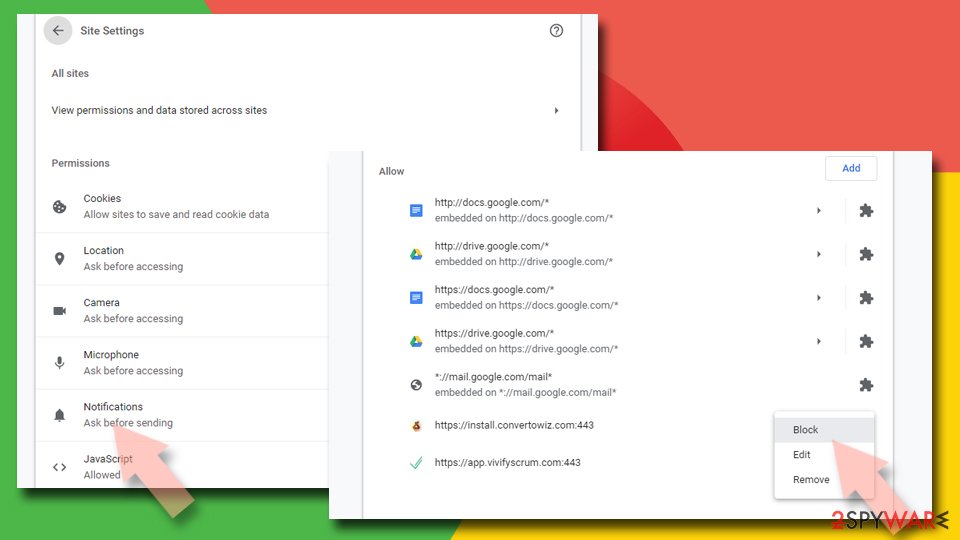
- Open the Google Chrome browser and go to Menu > Settings.
- Scroll down and click on Advanced.
- Locate the Privacy and security section and pick Site Settings > Notifications.
- Look at the Allow section and look for a suspicious URL.
- Click the three vertical dots next to it and pick Block. This should remove unwanted notifications from Google Chrome.

Google Chrome (Android)
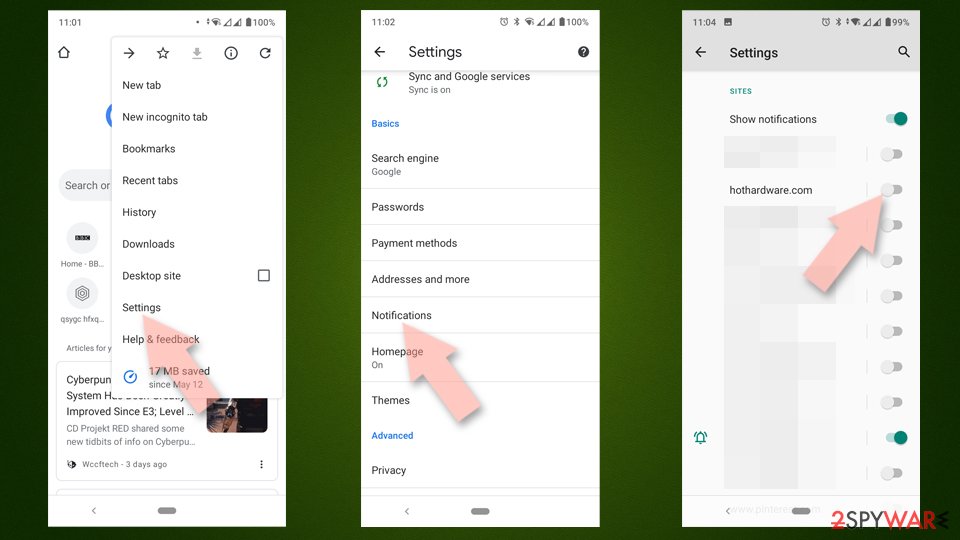
- Open Google Chrome and tap on Settings (three vertical dots).
- Select Notifications.
- Scroll down to the Sites section.
- Locate the unwanted URL and toggle the button to the left (Off position).

Mozilla Firefox
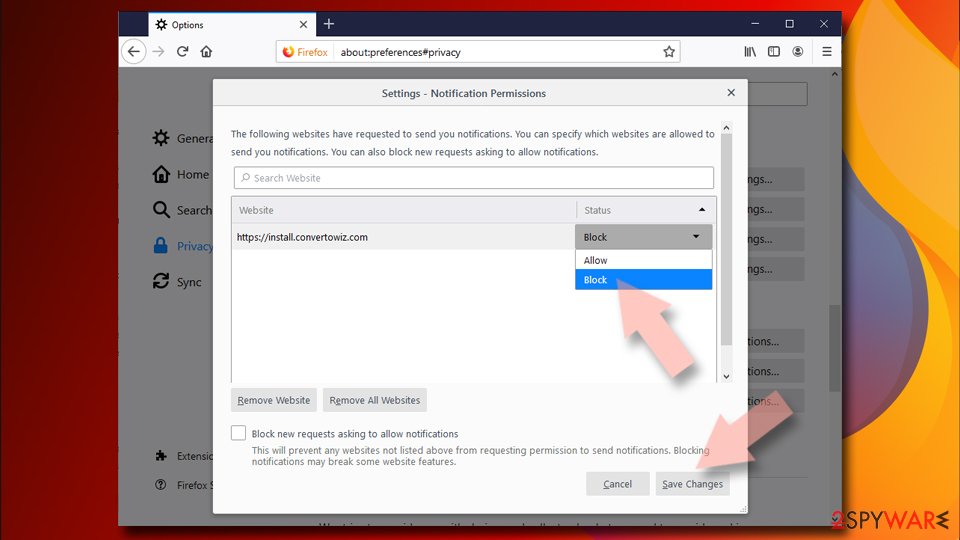
- Open Mozilla Firefox and go to Menu > Options.
- Click on Privacy & Security section.
- Under Permissions, you should be able to see Notifications. Click the Settings button next to it.
- In the Settings – Notification Permissions window, click on the drop-down menu by the URL in question.
- Select Block and then click on Save Changes. This should remove unwanted notifications from Mozilla Firefox.

Safari
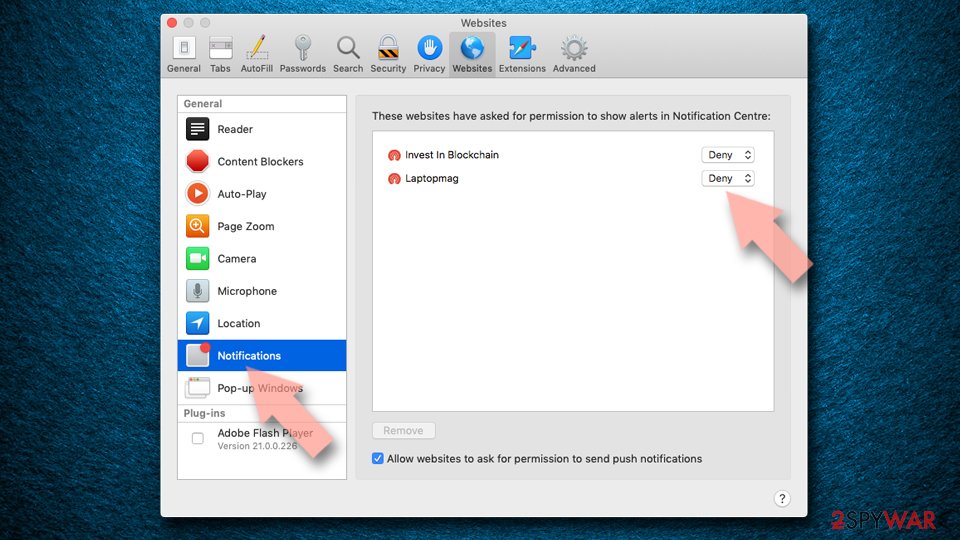
- Click on Safari > Preferences…
- Go to the Websites tab and, under General, select Notifications.
- Select the web address in question, click the drop-down menu and select Deny.

MS Edge
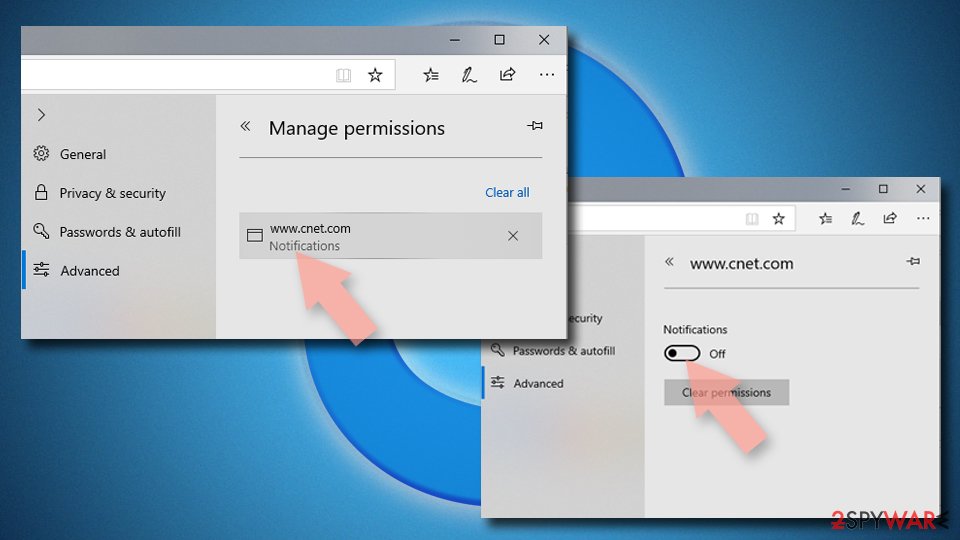
- Open Microsoft Edge, and click the Settings and more button (three horizontal dots) at the top-right of the window.
- Select Settings and then go to Advanced.
- Under Website permissions, pick Manage permissions and select the URL in question.
- Toggle the switch to the left to turn notifications off on Microsoft Edge.

MS Edge (Chromium)
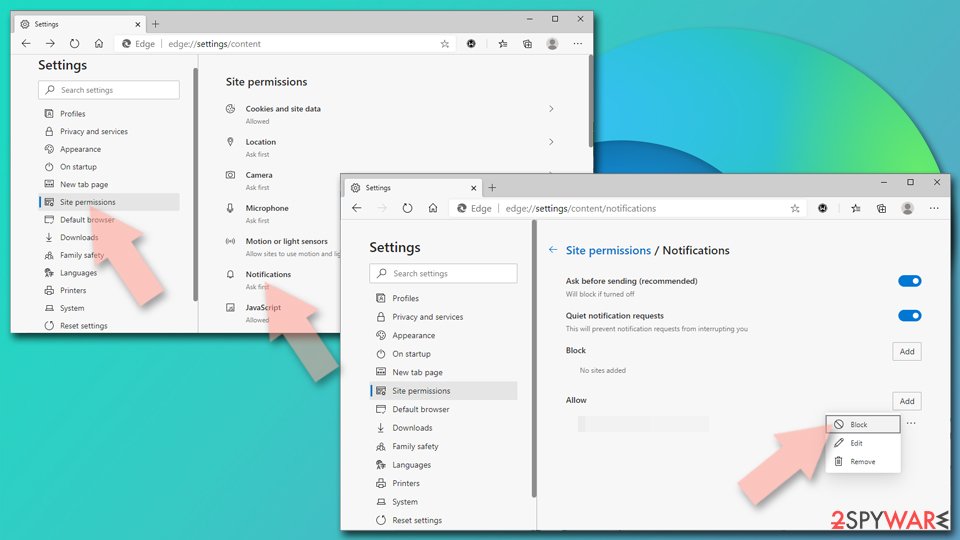
- Open Microsoft Edge, and go to Settings.
- Select Site permissions.
- Go to Notifications on the right.
- Under Allow, you will find the unwanted entry.
- Click on More actions and select Block.

Internet Explorer
- Open Internet Explorer, and click on the Gear icon at the top-right of the window.
- Select Internet options and go to the Privacy tab.
- In the Pop-up Blocker section, click on Settings.
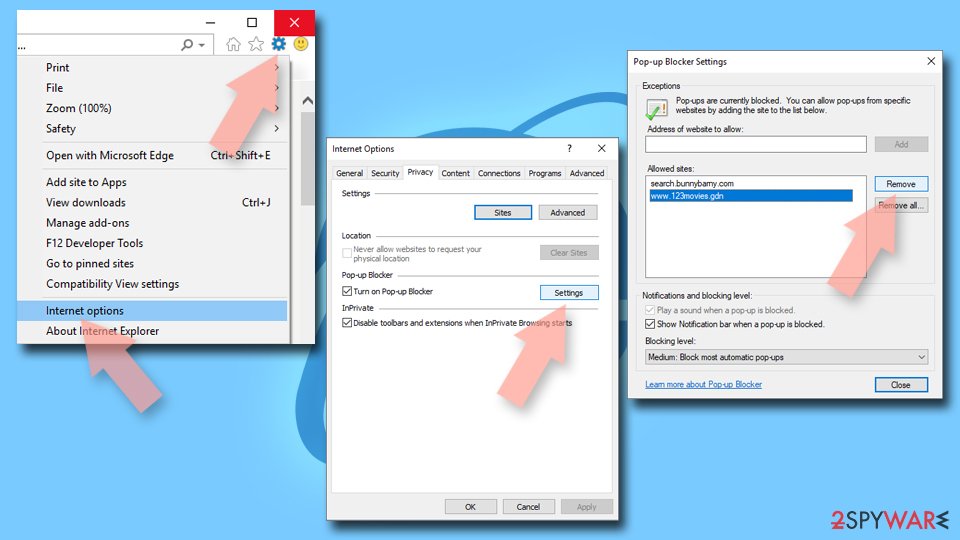
- Locate the web address in question under Allowed sites and pick Remove.

Did this guide help?
Be the first to comment