
Safariosso-aplosso.com ads: what it is and how to remove it
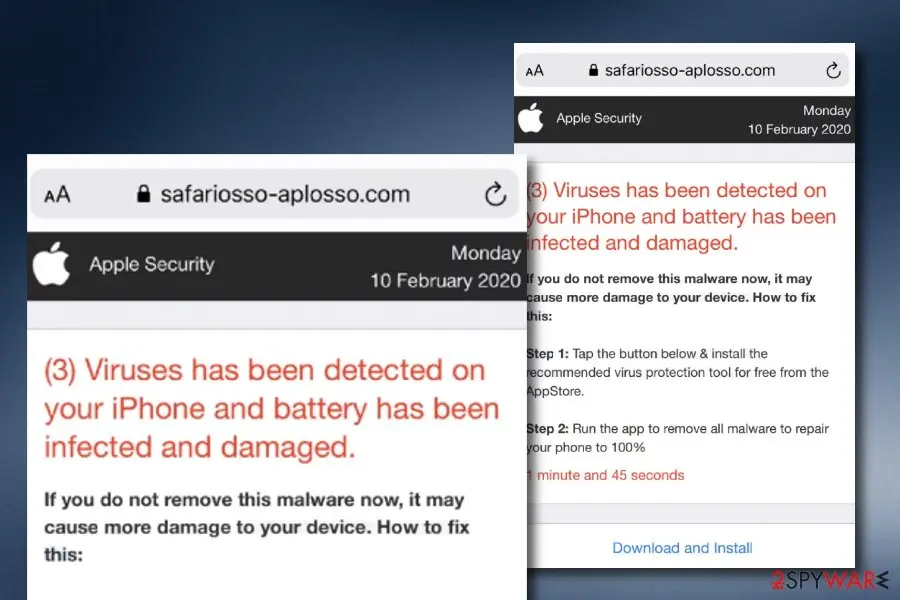
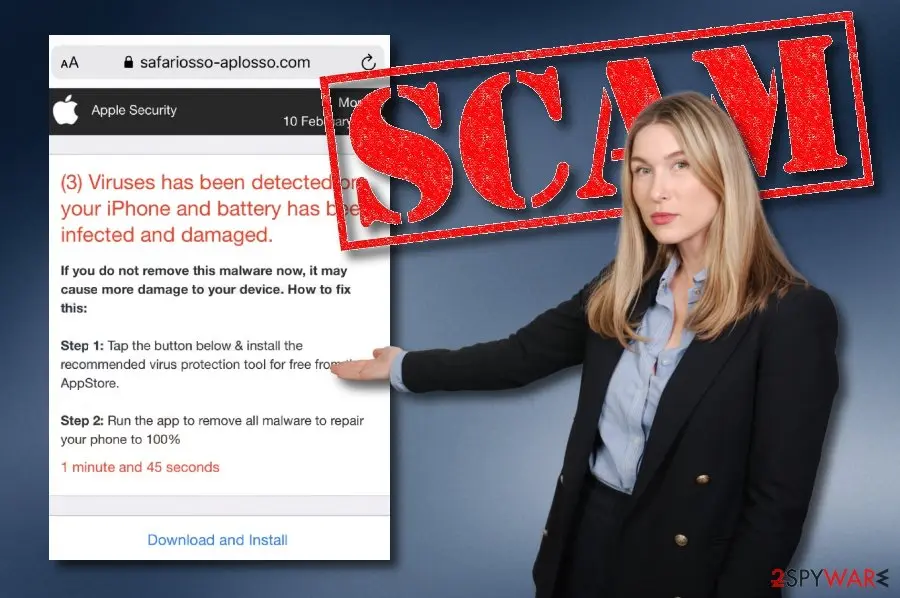
Safariosso-aplosso.com is called a pop-up scam as it randomly shows up on Apple devices and tricks users into believing that their device is infected with malware and needs fixing. Typically, the message claims that three viruses have been found on the iPhone and battery damage has been discovered.
Facts checked October 7, 2026. Removal steps tested on Windows 11 (26H2) and checked against Microsoft's and the browser makers' current documentation. Sections marked as our earlier report are the original text: they describe the threat as it was then and have not been reviewed since. The 2026 status, the removal steps and the questions are current.
Automatic
Get a free scan and check if your PC is infected.
Fortect finds malware, unwanted programs and the Windows damage they leave behind, and repairs it in one pass.
If redirects to safariosso-aplosso.com keep coming back, a free scan can check extensions, programs and browser settings in one pass.
Do it yourself · free Remove Safariosso-aplosso.com ads yourself 4 steps, about 12 minutes, no software needed.
Start the steps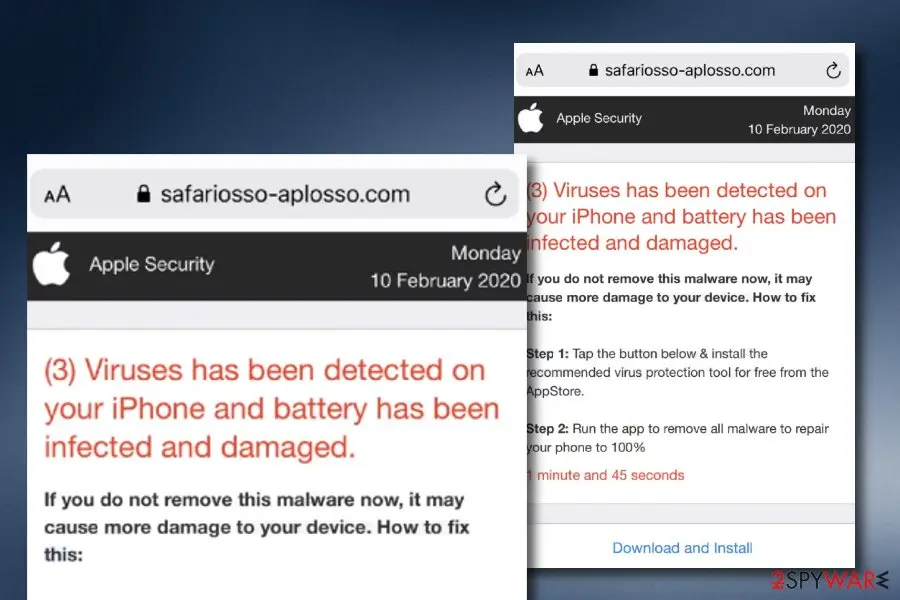
Safariosso-aplosso.com ads: summary
| Damage | The main risk you take when falling for the scam message is spending money on a completely useless security tool that will not bring any true value |
|---|---|
| Name | Safariosso-aplosso.com |
| Type | Pop-up scam |
| Target | This questionable message mostly appears on iPhones but can also invade other Apple devices |
| Version 1 | The main version of this scam claims that your iPhone is infected with three viruses that have caused battery damage and in order to fix all of the problems 100% and delete the malware that has been triggering such activity, the user is encouraged to press the "Download and Install" button and get a rogue security tool from the AppStore |
| Version 2 | There also is another variant of the scam message. It claims that your Internet connection is not safe and in order to protect it, you have to install a trusted VPN from the AppStore by clicking on the below-provided "Download" button |
| Removal | Scan the PC with security software to find and remove the malware and anything installed with it. Fortect scans Windows for malware and repairs the system files and settings it damaged. Remove it nowTo use the full-featured product, you have to purchase a license for Fortect. The scan is free. |
Show 11 more facts
| Cause | If you keep seeing this scam frequently, it might be a sign that a potentially unwanted program such as adware has invaded your device and is provoking the appearance of the scam message |
|---|---|
| Spreading | PUPs are mostly spread with the help of the "software bundling" technique that allows additional installations of rogue products through freeware or shareware downloads |
| Detection names | No Microsoft detection name is known |
| Distribution | Not recorded in the old report |
| Symptoms | Redirects to an unknown domain |
| Evidence | 5 write-ups by security sites; details still limited |
| Domains | safariosso-aplosso.com |
| Ads shown as | Redirects through ad pages |
| Browsers | Chrome, Edge and Firefox |
| First seen | 28 February 2020 |
| Facts checked | 7 October 2026 |
Is Safariosso-aplosso.com ads dangerous?
From our report of Feb 2020 · not reviewed since
More from our earlier report on Safariosso-aplosso.com
- To get rid of the scam permanently, you should terminate the application that has been provoking its appearance.
- If you have discovered any signs of compromisation on your device or machine, you can try repairing the altered areas with the help of software such as
Check your browser and PC
- Address:
safariosso-aplosso.com
How to remove Safariosso-aplosso.com ads
How to remove the Safariosso-aplosso.com extension
Do the browser steps in every browser and profile on the PC, then check Windows for the program that installed the extension.
Step 1: Remove extensions you did not add
Safariosso-aplosso.com often works through an extension, so go through the extension list of each browser:
chrome://extensionsedge://extensions- Extensions and themes in Firefox
Switch suspicious extensions off one at a time and reload the page where the problem shows, then remove the one that stops it, and any other you did not add.
Remember the other browsers and profiles on the PC. If Remove is missing or greyed out, a policy forces the extension, which the policy step deals with. Windows 11 and Windows 10 show the same pages.
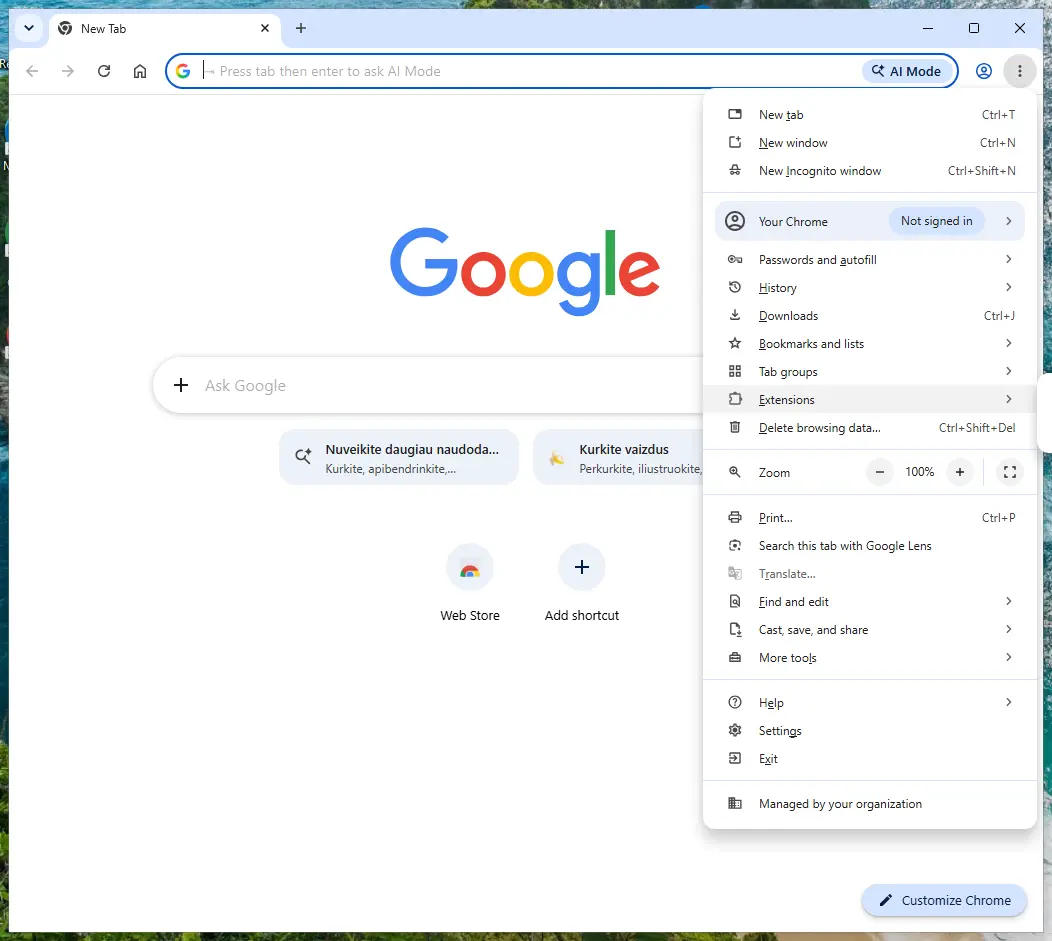
Chrome on Windows 11: More > Extensions > Manage extensions. Full procedure with screenshots: Remove a browser extension
Step 2: Uninstall programs you did not mean to install
Open Settings > Apps > Installed apps in Windows 11, or Settings > Apps > Apps & features in Windows 10, and sort the list by install date. Look at what appeared around the day the problem started and uninstall every program you do not recognise or did not choose.
Free converters, PDF and video tools, "system optimizers" and unknown browsers are the usual carriers of Safariosso-aplosso.com. If a name is unclear, search for it before you remove it, so you do not uninstall a driver or a Windows component.
Full procedure with screenshots: Uninstall a program or app in Windows On uGetFix
Step 3: Reset the browser
Finish the browser part with a reset, which puts the search engine, start page, new tab page and site permissions back to their defaults and switches extensions off. Chrome: Settings > Reset settings > Restore settings to their original defaults.
Edge: Settings > Reset settings. Firefox: Help > More troubleshooting information > Refresh Firefox, which also removes its extensions. Your bookmarks and saved passwords are kept, and the menus are the same on Windows 11 and Windows 10.
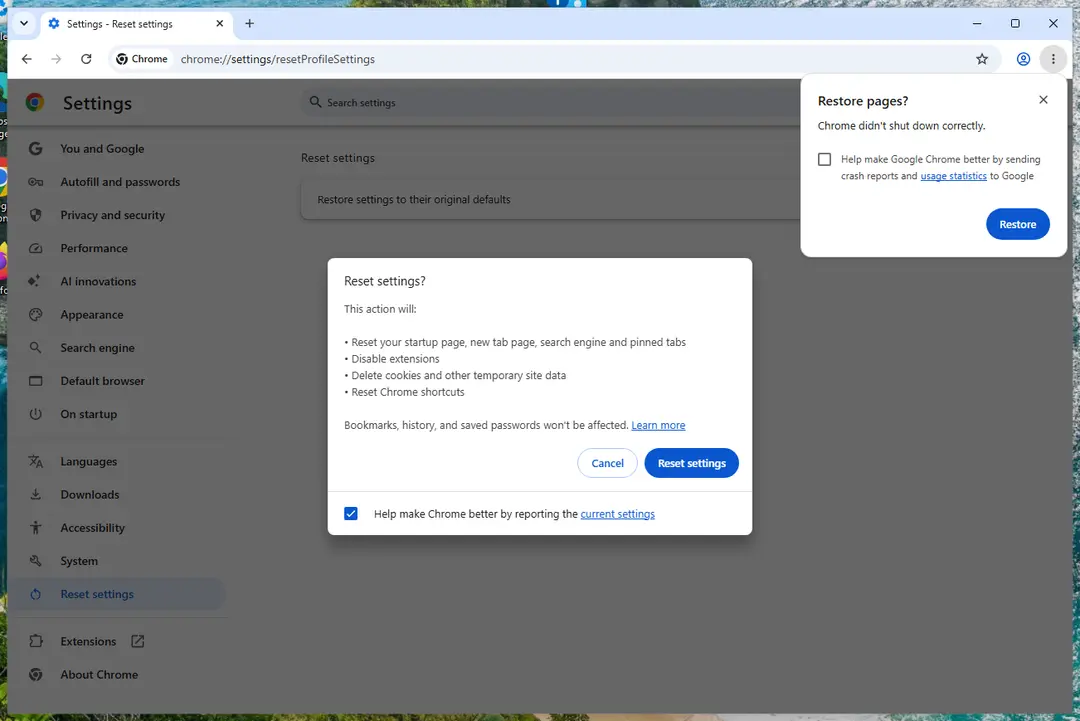
Chrome on Windows 11: Settings > Reset settings. Full procedure with screenshots: Reset a browser and fix a hijacked search engine
Step 4: Scan the PC, then run the offline scan
Open Windows Security > Virus & threat protection > Scan options, run a Full scan and remove everything it finds. Then select Microsoft Defender Antivirus (offline scan) and click Scan now: the PC restarts and scans before Windows loads, which finds files that hide while Windows runs.
Save your work first, because the offline scan takes about 15 minutes. Both scans are built into Windows 11 and Windows 10, and a second scanner from another vendor is a useful extra opinion.
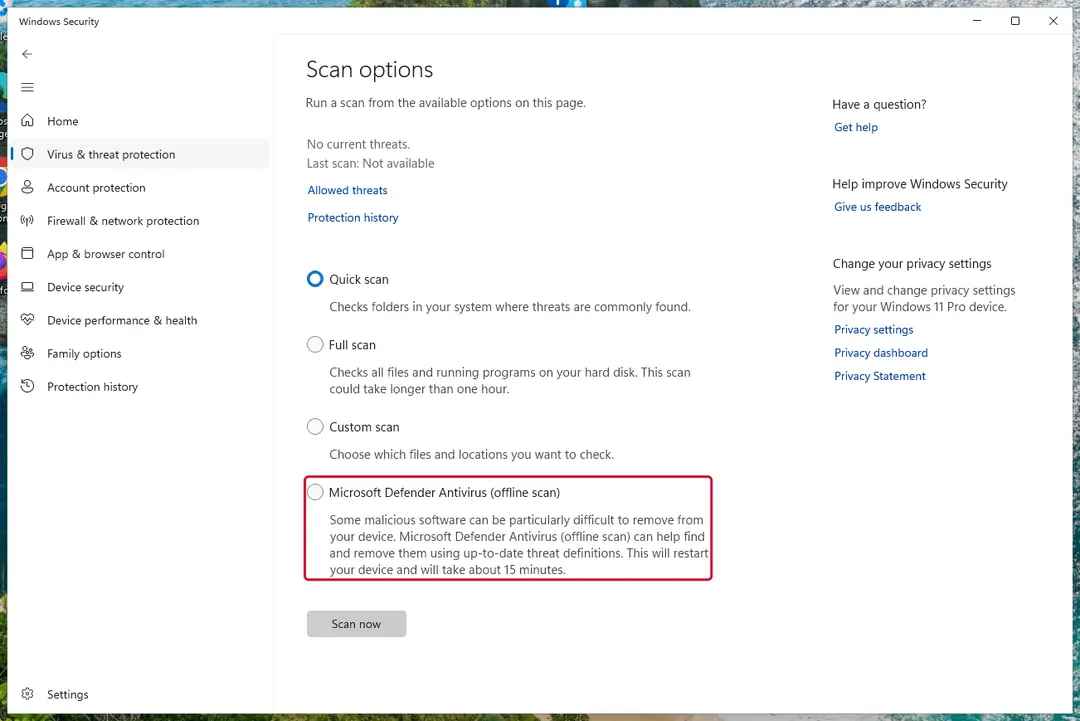
Windows 11: Windows Security > Virus & threat protection > Scan options. Full procedure with screenshots: Run a Microsoft Defender Offline scan
Instructions for each browser and system
The detailed steps for every browser and system this guide covers. Open the one you use.
Remove from Google Chrome
To prevent the scam message from repeatedly appearing on your Google Chrome web browser and interrupting your browsing sessions, apply the following instructing steps:
Delete malicious extensions from Google Chrome:
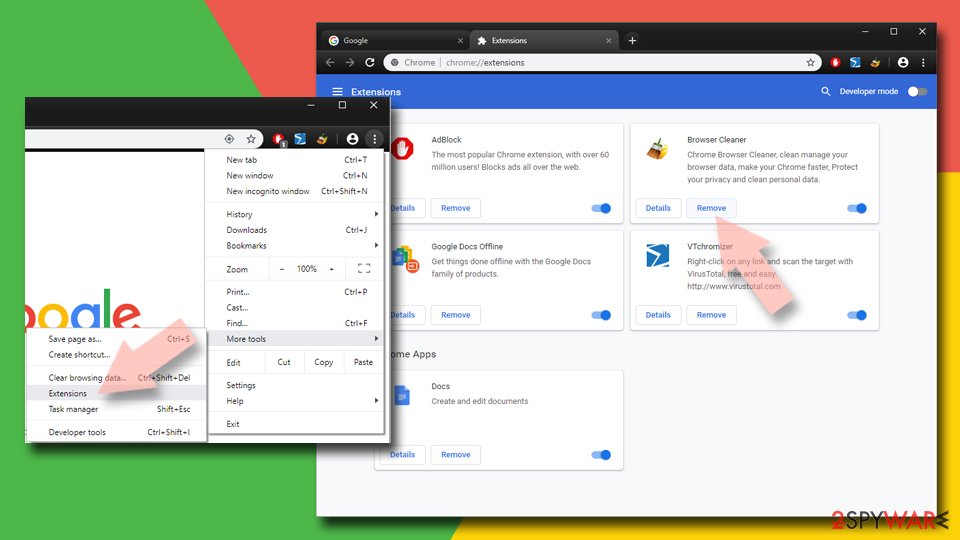
- Open Google Chrome, click on the Menu (three vertical dots at the top-right corner) and select More tools > Extensions.
- In the newly opened window, you will see all the installed extensions. Uninstall all suspicious extensions related to the unwanted program by clicking Remove.
Clear cache and web data from Chrome:
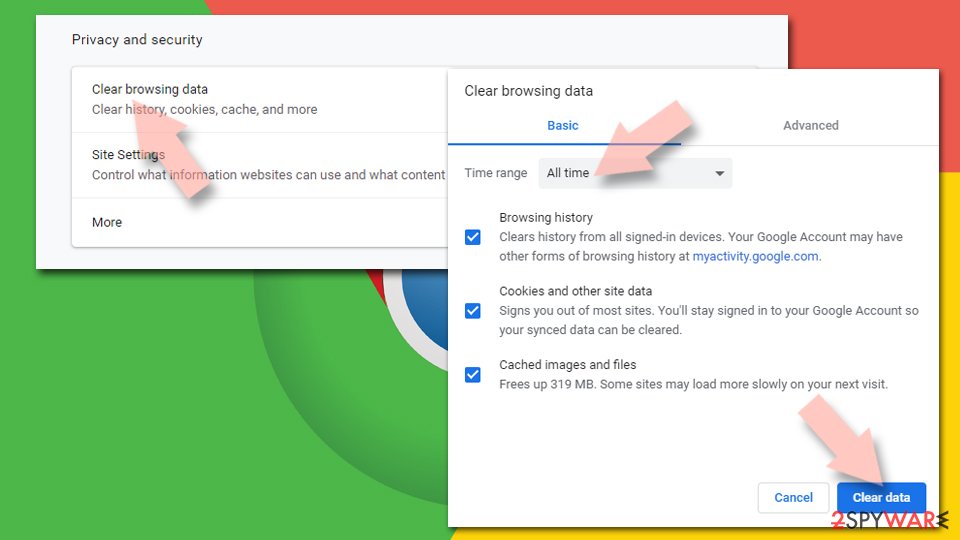
- Click on Menu and pick Settings.
- Under Privacy and security, select Clear browsing data.
- Select Browsing history, Cookies and other site data, as well as Cached images and files.
- Click Clear data.
Change your homepage:
- Click menu and choose Settings.
- Look for a suspicious site in the On startup section.
- Click on Open a specific or set of pages and click on three dots to find the Remove option.
Reset Google Chrome:
If the previous methods did not help you, reset Google Chrome to eliminate all the unwanted components:
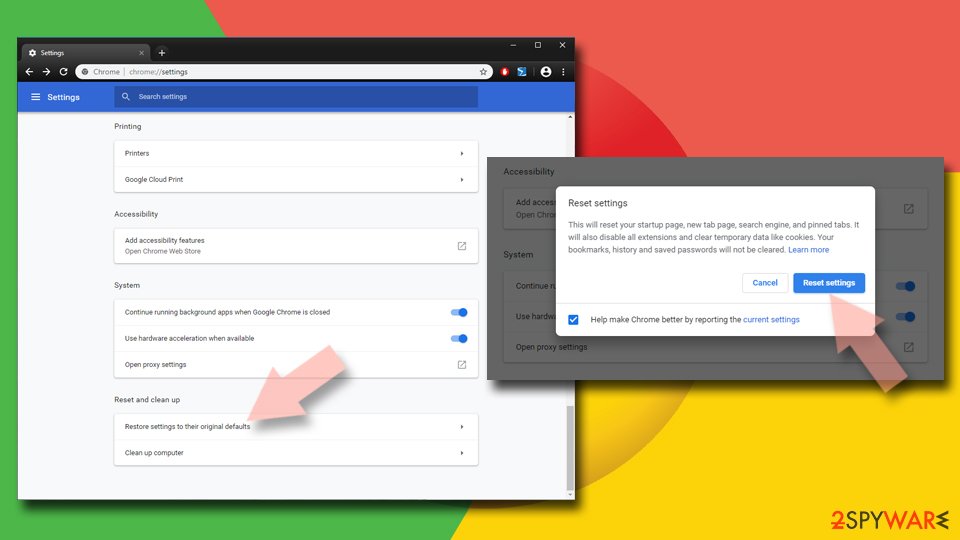
- Click on Menu and select Settings.
- In the Settings, scroll down and click Advanced.
- Scroll down and locate Reset and clean up section.
- Now click Restore settings to their original defaults.
- Confirm with Reset settings.
Remove from Mozilla Firefox (FF)
Remove dangerous extensions:
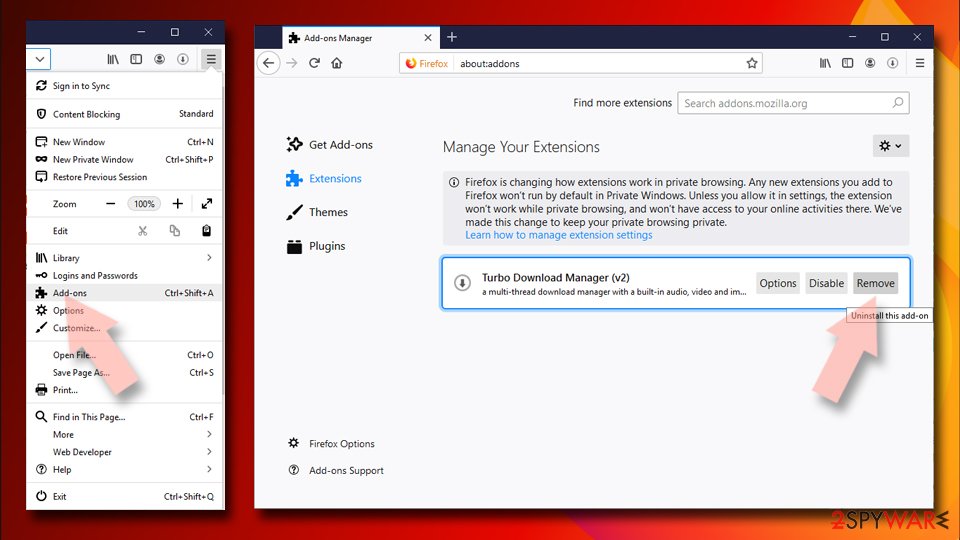
- Open Mozilla Firefox browser and click on the Menu (three horizontal lines at the top-right of the window).
- Select Add-ons.
- In here, select the unwanted extension and click Remove.
Reset the homepage:
- Click three horizontal lines at the top right corner to open the menu.
- Choose Settings.
- Under Home, set your preferred homepage and new tab settings.
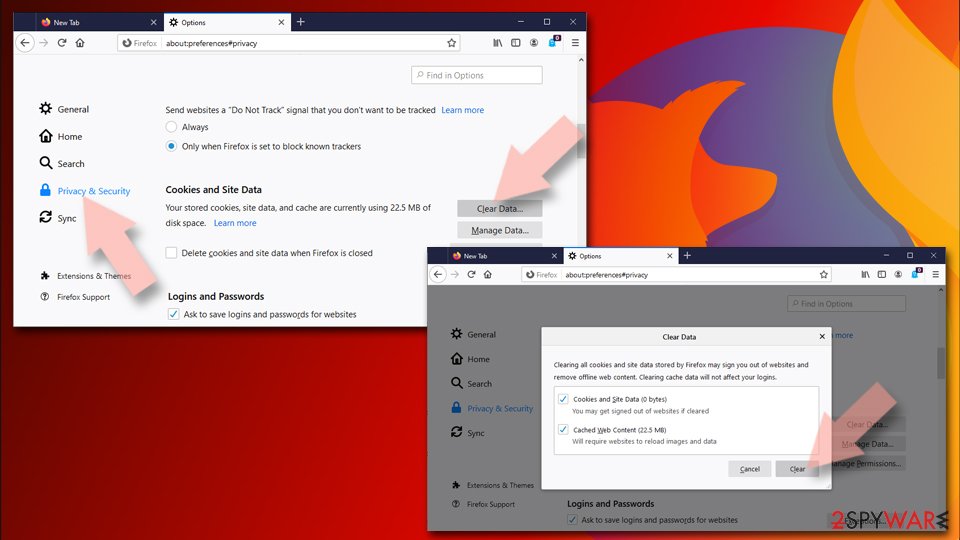
Clear cookies and site data:
- Click Menu and pick Settings.
- Go to Privacy & Security section.
- Scroll down to locate Cookies and Site Data.
- Click on Clear Data...
- Select Cookies and Site Data and Temporary cached files and pages, then click Clear.
Reset Mozilla Firefox
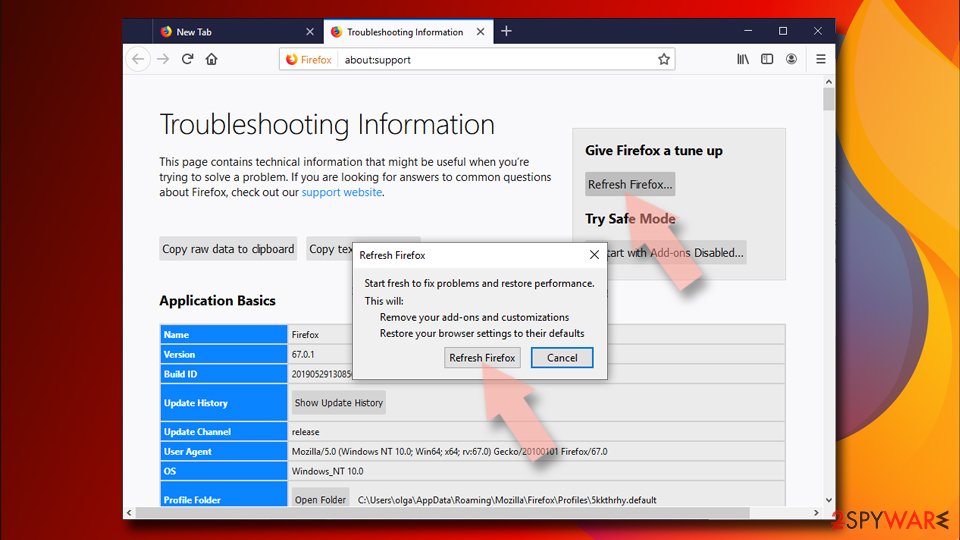
If clearing the browser as explained above did not help, reset Mozilla Firefox:
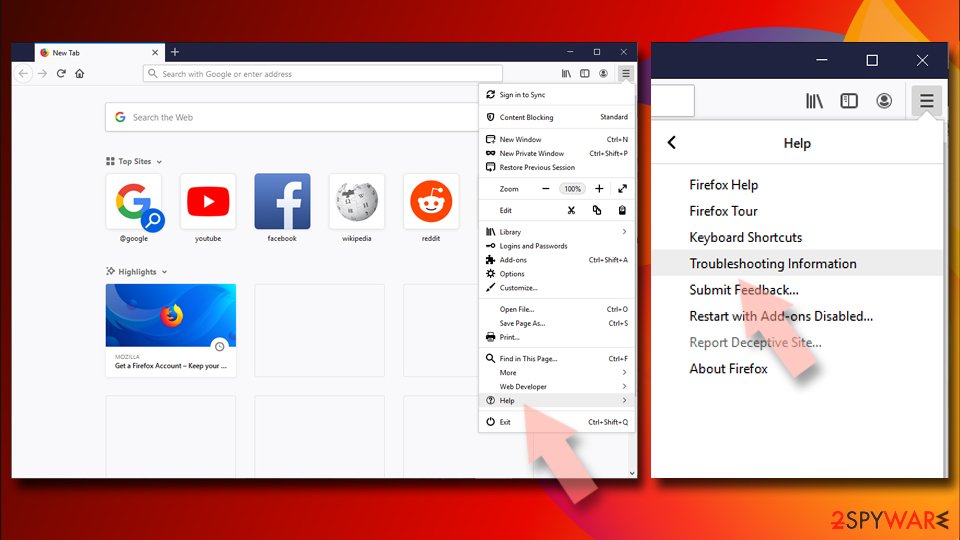
- Open Mozilla Firefox browser and click the Menu.
- Go to Help and then choose Troubleshooting Information.
- Under Give Firefox a tune up section, click on Refresh Firefox...
- Once the pop-up shows up, confirm the action by pressing on Refresh Firefox.
Delete from Safari
To eliminate the cyber threat that is responsible for the scam and terminate all suspicious components from your Safari web browser, you should try using these step-by-step guidelines:
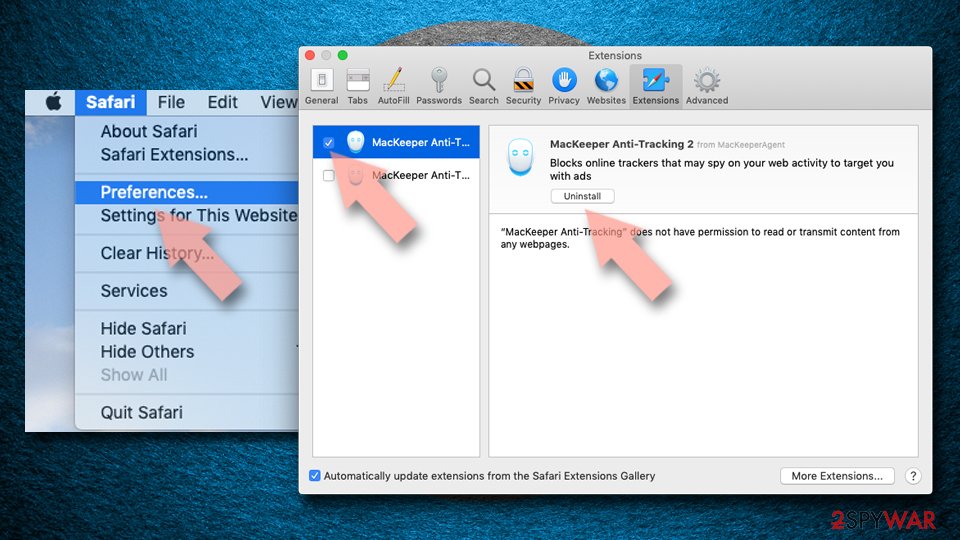
Remove dangerous extensions:
- Open Safari, click Safari in the menu at the top-left of the screen, and select Preferences.
- Go to the Extensions tab, look for any suspicious entries, and click Uninstall to remove them.
Clear history and website data:
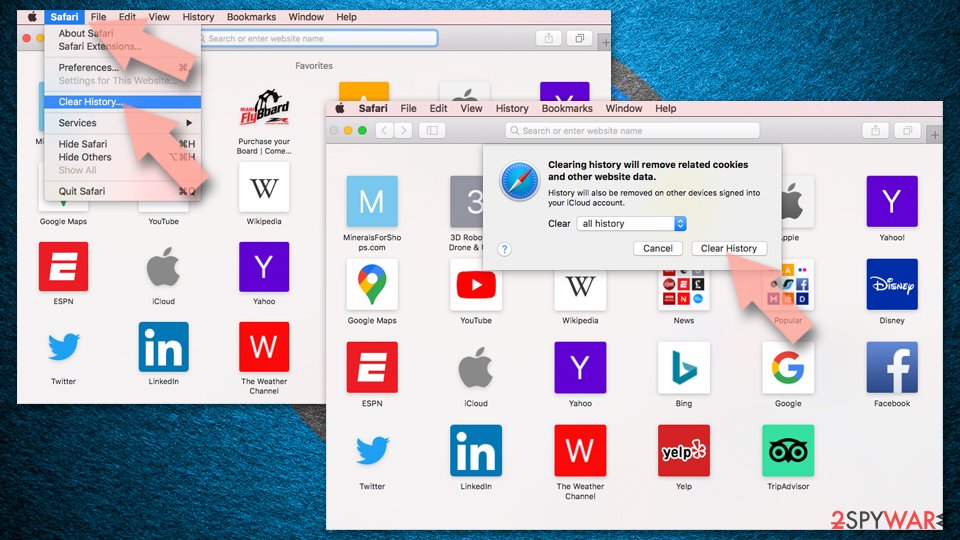
- Click Safari in the menu and pick Clear History.
- Set Clear to all history and confirm with Clear History.
Reset Safari:
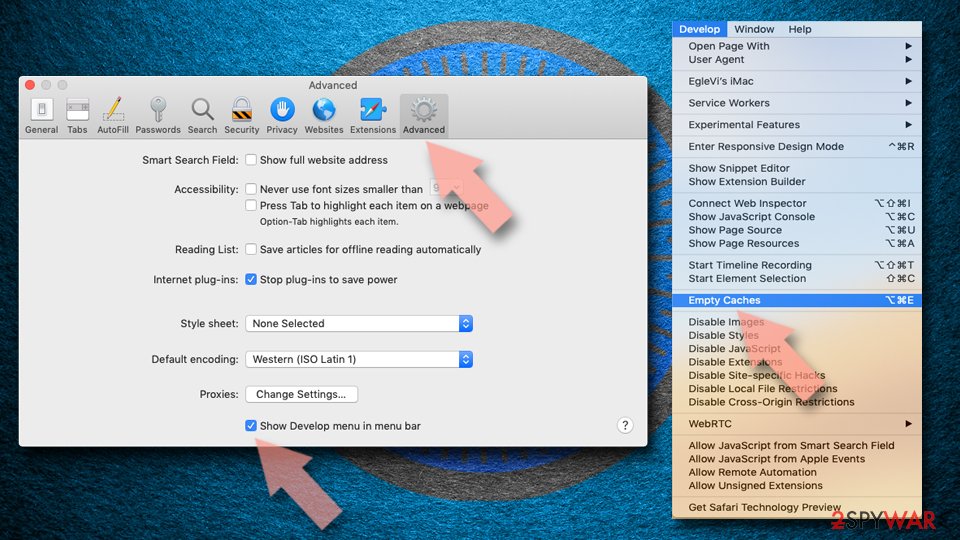
- Click Safari in the menu and select Preferences > Advanced.
- Enable Show Develop menu in menu bar.
- From the menu bar, click Develop and select Empty Caches.
Delete from macOS
To get rid of the potentially unwanted program that has been provoking the appearance of the scam message, you should apply the below-provided instructions for cleaning your Mac computer:
Remove the unwanted application:
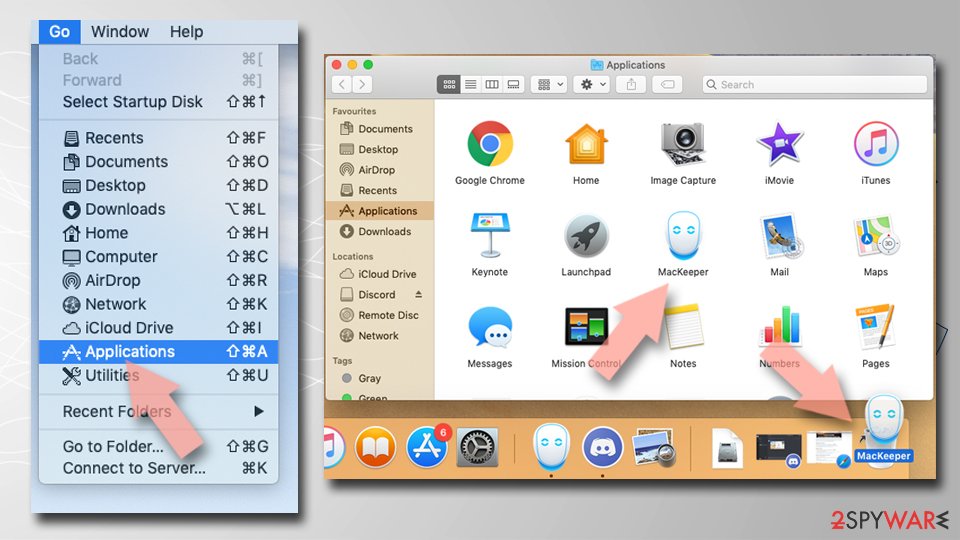
- From the menu bar, select Go > Applications.
- In the Applications folder, look for any suspicious entries, then drag them to Trash (or right-click and pick Move to Trash).
Delete leftover files and folders:
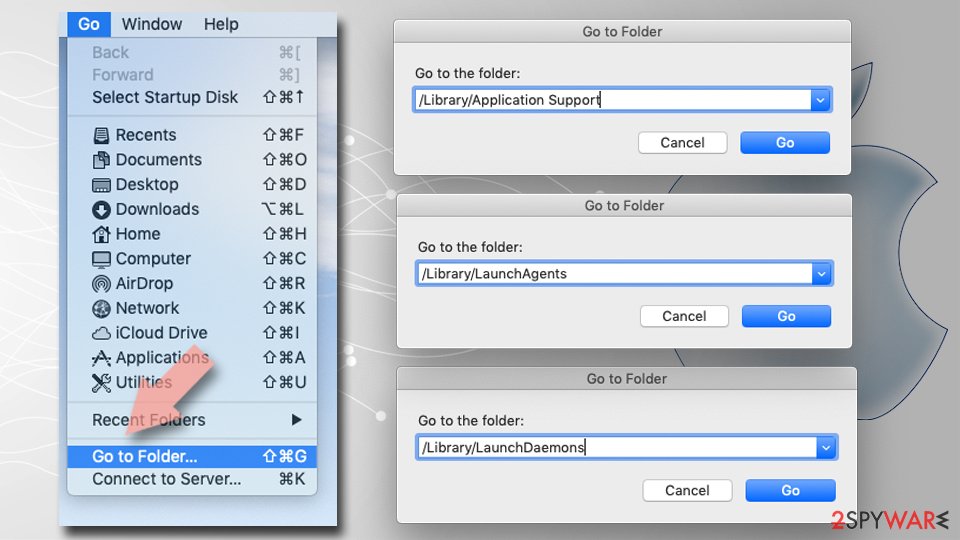
- Select Go > Go to Folder.
- Enter /Library/Application Support and remove any suspicious folders related to the unwanted program.
- Repeat the same check in the /Library/LaunchAgents and /Library/LaunchDaemons folders, deleting any suspicious entries.
- Finally, empty the Trash to permanently remove the leftovers.
Protect your privacy - employ a VPN
There are several ways how to make your online time more private - you can access an incognito tab.
However, there is no secret that even in this mode, you are tracked for advertising purposes. There is a way to add an extra layer of protection and create a completely anonymous web browsing practice with the help of VPN. This software reroutes traffic through different servers, thus leaving your IP address and geolocation in disguise.
Besides, it is based on a strict no-log policy, meaning that no data will be recorded, leaked, and available for both first and third parties. The combination of a secure web browser and VPN will let you browse the Internet without a feeling of being spied or targeted by criminals.
No backups? No problem. Use a data recovery tool
If you wonder how data loss can occur, you should not look any further for answers - human errors, malware attacks, hardware failures, power cuts, natural disasters, or even simple negligence.
In some cases, lost files are extremely important, and many straight out panic when such an unfortunate course of events happen. Due to this, you should always ensure that you prepare proper data backups on a regular basis.
If you were caught by surprise and did not have any backups to restore your files from, not everything is lost. is one of the leading file recovery solutions you can find on the market - it is likely to restore even lost emails or data located on an external device.
From our report of Feb 2020 · not reviewed since
Safariosso-aplosso.com - a pop-up scam faking to be from Apple Security and encouraging users to remove non-existing malware by downloading some type of software from the AppStore
Safariosso-aplosso.com is called a pop-up scam as it randomly shows up on Apple devices and tricks users into believing that their device is infected with malware and needs fixing.
Typically, the message claims that three viruses have been found on the iPhone and battery damage has been discovered. In order to fix things and get rid of the cyber threat, users are encouraged to press the "Download and Install" button that is at the end of the notification and is supposed to bring some type of tool that will deal with the malware and repair the device 100%.
However, this way Safariosso-aplosso.com virus seeks to trick a bigger number of people to download unreliable security products and pay an inadequate price for them. You should not click on the recommended button as you will likely get loaded with a fake system cleaner that will just take space on your device.
Such software is not capable of fixing malware-related problems or doing anything positive on the system. Nevertheless, all the problems that are presented via Safariosso-aplosso.com pop-up scam do not exist.
Safariosso-aplosso.com scam includes two different versions. The first one claims about battery damage and urges to download a security tool to fix everything while the second one announces about unsecured Internet connection and recommends users to get a trusted VPN from the AppStore by clicking on the "Download" button.
Both of these messages provided by Safariosso-aplosso.com are scams and do not include any truth. The main goal of such notifications is to bring income to their developers by promoting suspicious products. By opting for the download process, you might not even be taken to the AppStore but to an unknown third-party shopping source instead.
You should stay away from purchasing any products or services that are provided by Safariosso-aplosso.com as you will likely end up with a useless piece of software. Fake cleaning utilities are created to show misleading system scan results and encourage users to purchase the license key for the advanced variant that is supposed to fix things.
You can meet Safariosso-aplosso.com when you are browsing on unsecured third-party pages but you can also be forced to see this scam regularly if a potentially unwanted program such as adware has installed on your device/machine and made unexpected changes to web browsers such as Google Chrome, Mozilla Firefox, and Safari.
If an adware program is responsible for the appearance of Safariosso-aplosso.com, you are likely to experience other unwanted activities such as advertising during browsing sessions. You might be loaded with questionable offers and deals and encouraged to click on the displayed ads as this brings income from the pay-per-click scheme.
Furthermore, the virus that stands behind Safariosso-aplosso.com can start redirecting you to affiliate domains. This way you can get loaded with even more suspicious offers. However, here you will have to face the risk of landing on a malware-laden directory and getting your mobile phone or another device infected with a dangerous cyber threat.
Additionally, the adware might not only show Safariosso-aplosso.com pop-up scam, intrusive adverts, and redirect to affiliate pages, but it can also start tracking your browsing history, experience, and habits. This way cookies will start recording websites that you visit, hyperlinks you access, saved bookmarks, search queries, your IP, browser type.
Being just a scam and bringing misunderstandings to the user, Safariosso-aplosso.com should be eliminated from the browser. If you allow this pop-up to show up frequently, your web browser might start slowing down and even crashing. This way, constant scam messages will slightly decrease the quality of your online activities.
Safariosso-aplosso.com removal includes getting rid of the app that is forcing this scam to appear. You can detect and eliminate the PUP with the help of reliable antimalware products. Also, you can try cleaning your mobile phone or computer and web browsers with the step-by-step guidelines that have been applied to the end of this article.
If you find the manual instructions too difficult to remove Safariosso-aplosso.com, it is completely fine as you always have the automatic option. When the cyber threat is gone and the scam no longer appears, check for potential PC damage. If you have discovered any corrupted places after the adware attack, try repairing them with software such as .
From our report of Feb 2020 · not reviewed since
Freeware and shareware downloads bring PUPs
Technology experts from Virusai.lt state that potentially unwanted programs are commonly distributed to computers and other devices in packages of shareware and freeware.
This type of deceptive technique has been named "software bundling" and is employed by various third-party developers.
The best way to prevent such secret adware and other PUP installations is to avoid downloading and installing products and services from unsecured third-party sources such as cnet.com, download.com, and softonic.com. Furthermore, always make sure that you are using the Custom or Advanced installation mode as the default one. Here you will be enabled to track all of the incoming downloads and opt-out the unwanted ones.
Additionally, potentially unwanted programs are carried in infectious advertisements, hyperlinks, and fake software updates that get posted on deceptive sources. If your web browser or antimalware software has announced that there is an unsafe website waiting for you ahead, you should stop proceeding to it and close the window instead.
From our report of Feb 2020 · not reviewed since
Get rid of Safariosso-aplosso.com pop-up scam from your iPhone
Regarding the fact that Safariosso-aplosso.com is considered to be an iPhone virus mostly, we have decided to prevent cleaning guidelines for those users who got their Apple devices infected with the threat. If you are receiving intrusive redirects to this scam or other pages, you should start with erasing your web browser history:
However, if Safariosso-aplosso.com has become more intense then usual and you have also been dealing with other activities, finding rogue applications installed, you should complete the following steps:
- Take your iPhone and continue with Settings.
- Select the Safari web browser icon.
- Choose Clear History and Website Data.
- Close the opened window.
- Go to the Settings section.
- Choose General.
- Select Erase All Contents.
From our report of Feb 2020 · not reviewed since
Clean your Mac computer and web browsers from Safariosso-aplosso.com virus
Safariosso-aplosso.com removal from Mac might also be a necessity for those users who employ Apple computers and laptops.
This pop-up scam has the ability to show up on such machines too. If you are such a victim, you should choose the manual or automatical elimination option to get rid of the cause of the pop-up scam and get rid of the scam message itself.
In our opinion, it would be easier for you to remove Safariosso-aplosso.com with the help of antimalware software. However, you can also employ manual step-by-step guidelines that are provided below for cleaning your Mac OS and web browser applications such as Google Chrome, Mozilla Firefox, and Safari.
If you want to make sure that Safariosso-aplosso.com pop-up scam does not repeatedly show up after its elimination, you should terminate every single component that is related to the PUP which has been provoking the scam message to appear.
Questions about Safariosso-aplosso.com ads
How do I stop safariosso-aplosso.com from opening?
Find and remove whatever opens it. Start with the browser's extensions page and remove anything you do not remember adding. Next, open the notification settings and take away permission from sites you do not recognise.
Then check Settings > Apps > Installed apps for programs added around the day the redirects began, and uninstall those. Restart the browser and test a few links after each step.
If safariosso-aplosso.com still appears, reset the browser, which restores the default search engine, start page and permissions without deleting bookmarks or saved passwords. Redirects that survive a reset in every browser point to a program in Windows, and a full scan is the next step.
Did safariosso-aplosso.com install a virus on my PC?
Very unlikely, unless you downloaded and opened something from the pages it led to. Redirect domains such as safariosso-aplosso.com sell your visit to advertisers; they do not need to install anything to make money.
What can be installed is the thing that causes the redirects in the first place, such as an extension or an ad-supported program that came with free software. That is why the checks in this guide look at extensions, notification permissions and Installed apps.
A full scan with Microsoft Defender afterwards gives you a clear answer about the rest of the PC. If the scan is clean and the redirects stop after removing the cause, you are done.
What is Safariosso-aplosso.com?
Safariosso-aplosso.com is an adware extension, a kind of adware. It earns money by showing redirects through ad pages, and each view, click or redirect pays whoever runs it. It is not something people usually choose; it arrives through a free download, a fake button or a misleading prompt.
Safariosso-aplosso.com does not encrypt files or take control of Windows, but its ads are sold to anyone, including scam operators, so they can lead to fake virus warnings and unwanted downloads. The steps in this guide remove it from Windows and from each browser.
Which browsers does Safariosso-aplosso.com affect?
In the cases we checked, Safariosso-aplosso.com showed up in Chrome, Edge and Firefox. That does not rule out others on your PC, since adware installers often target every browser they find, and permissions and extensions sync across computers signed in to the same browser account.
Open each browser you have, go to its extensions page and its notification settings, and remove anything you do not recognise. Profiles count separately: Chrome and Edge can each hold several, and each one needs checking on its own.
Are the pop-ups I see really from Safariosso-aplosso.com?
Compare them with the details in the table above. Safariosso-aplosso.com produces redirects through ad pages, and the clearest sign of it is redirects to safariosso-aplosso.com. Other adware looks similar, so check the name of the sending site at the bottom of a notification, the address in the tab that opened, or the newest entries on the extensions page.
If those match, this guide fits. If you see a different name, the same kind of steps apply, but remove the item you actually find rather than guessing.
Can an adware pop-up infect my PC just by appearing?
No. A pop-up, a notification or a new tab is only a web page or a message. It cannot run programs on Windows by itself, provided the browser and Windows are up to date. Infection needs a step from you:
- running a downloaded file
- installing an extension
- giving a stranger remote access
That is why scam pages work so hard to make you click. Close such pages with the tab's X or by closing the browser, not with buttons inside the page, which may start a download.
Did Safariosso-aplosso.com collect my data?
Adware typically collects what it needs to choose ads:
- the sites you visit
- search terms
- approximate location
- browser and system details
Extensions with permission to read and change data on all websites can technically see everything on those pages, including forms. That is a privacy problem rather than proof of theft.
If you typed card details or passwords while it was active, changing the most important passwords is a reasonable precaution. Clearing cookies after removal ends the tracking sessions it may have started.
Why is my browser so slow since the ads started?
Each page now does extra work. An adware extension reads the page, decides where to put ads, loads them from ad servers and reports your visit, and that happens on every tab. Ad-supported programs add their own background activity.
Removing the extension or program usually makes the browser fast again at once. If it stays slow, open the browser's own task manager with Shift+Esc in Chrome or Edge and look for extensions using a lot of memory or processor time.
I let a "support technician" from an ad connect to my PC. What should I do?
Act quickly but calmly. Disconnect the PC from the internet first, so the connection ends. Uninstall the remote access tool they asked you to install and check Installed apps for anything else added during the call.
Run a Microsoft Defender full scan and offline scan. From another device, change your e-mail and banking passwords and sign out of all sessions.
If you paid by card, bank transfer or gift card, contact your bank or the card issuer immediately, and report the scam to the police. Do not answer if they call back.
Will Fortect remove Safariosso-aplosso.com?
Fortect scans Windows for malware and unwanted programs and repairs the system files and settings they change, and its free scan shows what it finds on your PC before you decide anything.
For Safariosso-aplosso.com, follow the plan above as well: the browser steps take back permissions and settings that no scanner treats as a threat, and uninstalling the program that brought it removes the source.
Run Microsoft Defender's full scan and, if anything was found, its offline scan as a second opinion. If the symptoms are gone after the plan and both scans are clean, there is nothing more to do.
Sources
- Wikipedia: Pay-per-click (read October 7, 2026)
- Virusai: Virusai. (read October 7, 2026)
- Google Chrome Help: Use notifications to get alerts (no longer online) (read October 7, 2026)
- FTC: How to recognize, remove and avoid malware (read October 7, 2026)
- Microsoft Learn: Microsoft Defender Offline (read October 7, 2026)