
Sandgerl.com e-mail scam: how to spot it and what to do
Sandgerl.com is a site made by scammers to trick users into downloading software. The main principle of scam operation is to scare users into believing that their Mac or iOS device has been compromised and that all personal data is accessible to hackers.
Facts checked October 7, 2026. Removal steps tested on Windows 11 (26H2) and checked against Microsoft's and the browser makers' current documentation. Sections marked as our earlier report are the original text: they describe the threat as it was then and have not been reviewed since. The 2026 status, the removal steps and the questions are current.
Automatic
Get a free scan and check if your PC is infected.
Fortect finds malware, unwanted programs and the Windows damage they leave behind, and repairs it in one pass.
Do it yourself · free Remove Sandgerl.com e-mail scam yourself 4 steps, about 12 minutes, no software needed.
Start the steps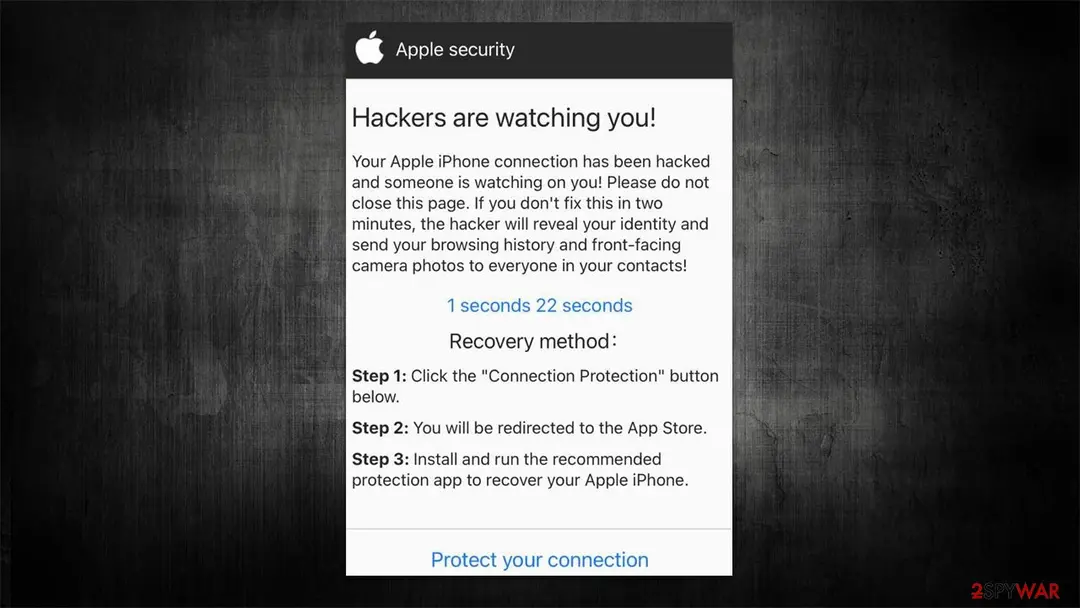
Sandgerl.com e-mail scam: summary
| Distribution | Redirects from other malicious websites, adware |
|---|---|
| Damage | Installation of PUPs or malware, sensitive information disclosure, financial losses |
| Name | Sandgerl.com |
| Type | Scam, phishing, redirect, adware |
| Operation | Claims that the device has been hacked and that surveillance is being performed. If the user would not allegedly "fix" the issue in two minutes, personal photos and other private data would allegedly be sent to all contact lists. |
| Symptoms | A phishing e-mail asking you to sign in |
| Removal | Scan the PC with security software to find and remove the malware and anything installed with it. Fortect scans Windows for malware and repairs the system files and settings it damaged. Remove it nowTo use the full-featured product, you have to purchase a license for Fortect. The scan is free. |
Show 7 more facts
| Evidence | 4 write-ups by security sites; details still limited |
|---|---|
| Arrives as | |
| Pretends to be | A well-known company |
| Claim | Your account needs urgent attention |
| Asks for | Your password |
| First seen | 16 May 2022 |
| Facts checked | 7 October 2026 |
What the Sandgerl.com e-mail scam e-mail looks like
What a phishing e-mail asking you to sign in said
Apple security
Hackers are watching you!
Your Apple iPhone connection has been hacked and someone is watching on you! Please do not close this page. If you don't fix this in two minutes, the hacker will reveal your identity and send your browsing history and front-facing camera photos to everyone in your contacts!
minute seconds
Recovery method:
Step 1: Click the "Connection Protection" button below.
Step 2: You will be redirected to the App Store.
Step 3: Install and run the recommended protection app to recover your Apple iPhone.
Protect your connection
From our report of May 2022 · not reviewed since
How do you get to Sandgerl.com?
Most people would not deliberately risk their online safety, thus they try to stay away from malicious content as much as possible.
However, some users willingly visit high-risk websites despite knowing about the risks they carry. For example, peer-to-peer networks, YouTube video conversion sites, or illegal video streaming platforms are something that people are keen on using because they can acquire access to digital goods for free.
It is a well-known fact that such websites are poorly protected from a security standpoint - they might host malicious advertisements or disguise a malicious downloadable file as some popular app installer. Since users assume the virus detection warning is a false positive, they infect their machines with ransomware or other dangerous malware.
When accessing websites of dubious nature, you also risk being redirected to scam websites such as Sandgerl.com, Prelandappslab.com, Bluestringline.com, Nathanaeldan.pro, and similar. These scams are shown unexpectedly, and users might fall for social engineering tricks used by crooks easier.
How to tell the Sandgerl.com e-mail scam e-mail is fake
From our report of May 2022 · not reviewed since
- You should not interact with the contents shown by a scam website, check your system for adware or malware infections with security software
- The tool can also be used to clean web browsers automatically
Is Sandgerl.com e-mail scam dangerous? What the senders want
From our report of May 2022 · not reviewed since
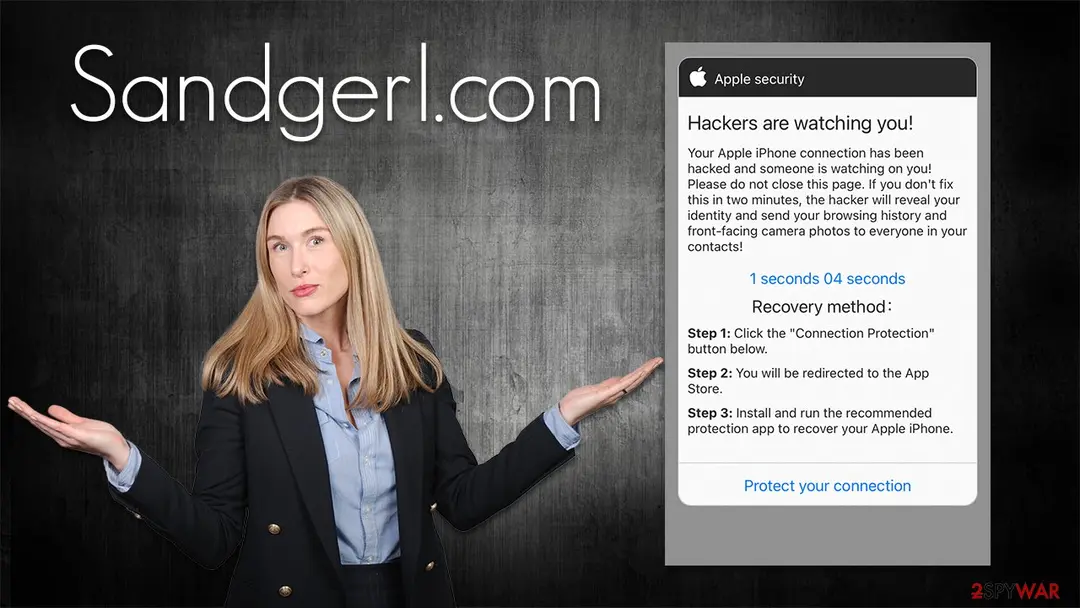
Sandgerl.com is a browser-based scam that attempts to mislead users with fake Apple messages
Sandgerl.com is a site made by scammers to trick users into downloading software.
The main principle of scam operation is to scare users into believing that their Mac or iOS device has been compromised and that all personal data is accessible to hackers. The message threatens to reveal front camera photos and browsing history to everyone on the contact list.
Evidently, all the message says it is fabricated, and no hackers have breached your device. The browser tab showing the Sandgerl.com page should be immediately closed and not interacted with, as you risk installing potentially unwanted or even dangerous software. We also recommend checking the system for adware, as those infected might experience redirects to various phishing websites and be exposed to ads more often.
From our report of May 2022 · not reviewed since
Scam message
Fear is a powerful emotion that is commonly abused by scammers online.
The main goal is to make users scared about their personal safety or make them believe that their computers have been compromised - or both. Extortion messages have been spreading in the form of emails, as users have been receiving fake threats about their camera pictures being shown to social media friend lists.
Without a doubt, the message pushed by Sandgerl.com is fake, and nobody is watching you in the sense that it's explained:
The main goal of cybercriminals is to ensure you download and install promoted software. There are plenty of online scams that use this trick to make people scared so they would download and install applications. This way, crooks receive illegal affiliated revenue while users end up with programs they never needed or wanted. In some cases, the promoted apps might be useless or dangerous, so installing them is highly discouraged.
What to do after the Sandgerl.com e-mail
If you only received the message and clicked nothing, step 3 is all you need.
If you clicked the link or typed anything on the page it opened, do every step, starting with the password.
Step 1: Change the password you typed on the fake page
If you entered a password after clicking the link in the Sandgerl.com message, treat that account as known to the sender.
Open the provider's real site by typing its address yourself, not through any link in the e-mail, and change the password there. Choose a new one you have never used before, and change it on every other account that shared the old one.
Then use the option to sign out of all other sessions or devices, if the provider has one. This works the same in any browser on Windows 11 and Windows 10.
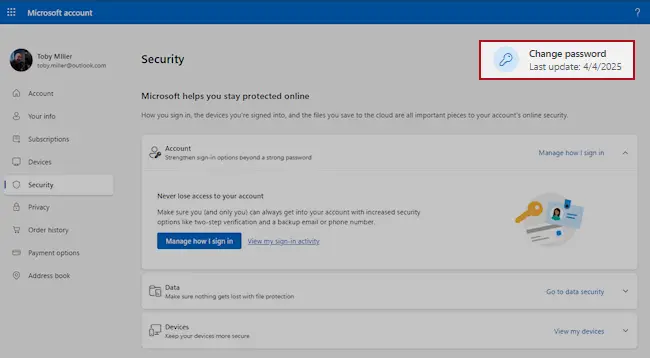
Microsoft account, Security page (account.microsoft.com/security): Change password. Full procedure with screenshots: Turn on two-step verification / secure a hacked account
Step 2: Turn on two-step verification
Two-step verification asks for a code from your phone or an authenticator app whenever someone signs in from a new device. A stolen password alone is then not enough to open the mailbox.
Turn it on in the security settings of the e-mail account first, then for the bank, shop and social accounts that send their reset links to that address.
While you are there, check the recovery e-mail and phone number and the forwarding rules, which attackers sometimes change to keep access. The settings pages look the same on Windows 11 and Windows 10.
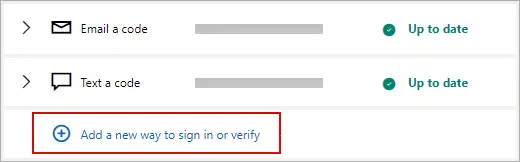
Microsoft account: Manage how I sign in, where two-step verification and the sign-in methods are. Full procedure with screenshots: Turn on two-step verification / secure a hacked account
Step 3: Report the e-mail and delete it
Report the message instead of only deleting it. In Outlook choose Report > Report phishing, in Gmail the three-dot menu > Report phishing; the provider then blocks the same message for other people.
Do not reply and do not click anything else in it. On a work account, forward it to your IT team as an attachment first. Web mail and the mail apps on Windows 11 and Windows 10 offer the same options.
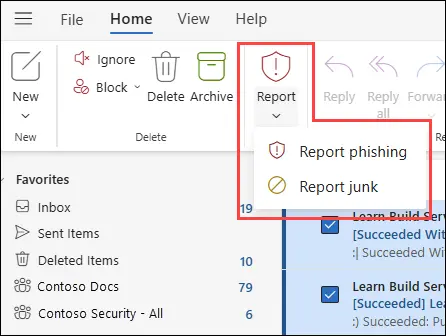
New Outlook for Windows and Outlook on the web: Report > Report phishing. Full procedure with screenshots: Report a phishing e-mail
Step 4: Scan the PC if you opened a file from the message
A page that only asked for a password installs nothing, so most readers can skip this step.
If the Sandgerl.com e-mail or the page it opened made you download or open a file, delete it and run a full scan, then a Microsoft Defender Offline scan.
In Windows 11 and Windows 10 open Windows Security > Virus & threat protection > Scan options, select Microsoft Defender Antivirus (offline scan) and click Scan now. The PC restarts and the scan takes about 15 minutes, so save your work first.

Windows 11: Windows Security > Virus & threat protection > Scan options. Full procedure with screenshots: Run a Microsoft Defender Offline scan
Instructions for each browser and system
The detailed steps for every browser and system this guide covers. Open the one you use.
Remove from Microsoft Edge
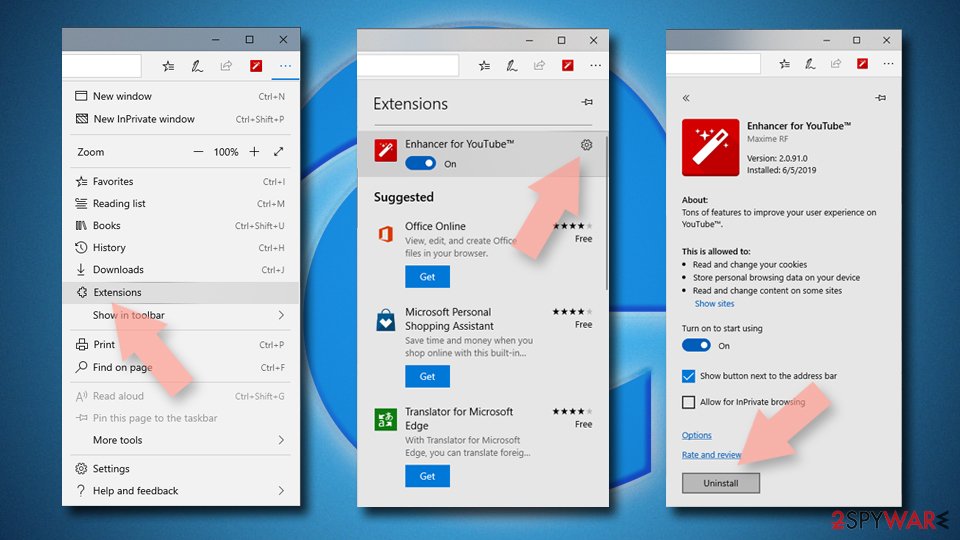
Delete unwanted extensions from MS Edge:
- Select Menu (three horizontal dots at the top-right of the browser window) and pick Extensions.
- From the list, pick the extension and click on the Gear icon.
- Click Remove.
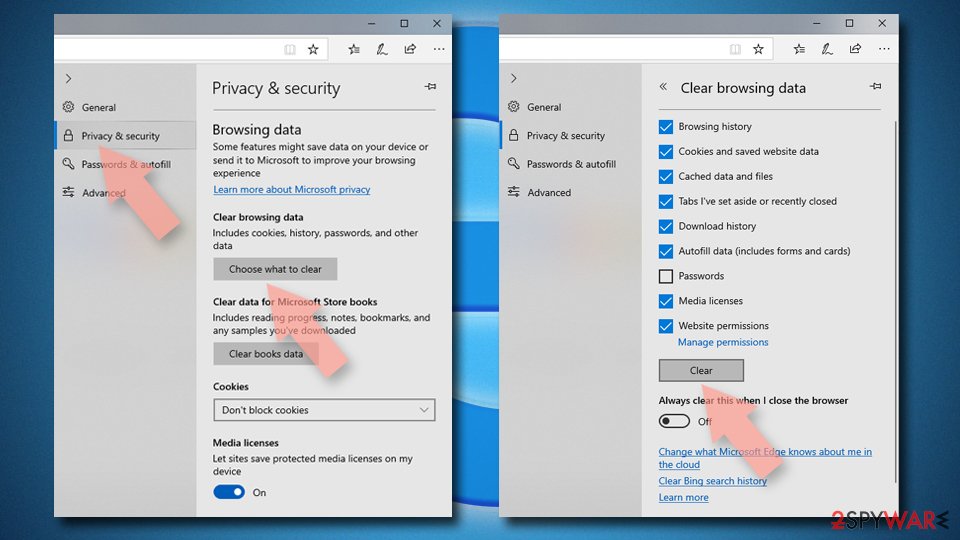
Clear cookies and other browser data:
- Click on the Menu (three horizontal dots at the top-right of the browser window) and select Settings > Privacy, search, and services..
- Under Clear browsing data, pick Choose what to clear.
- Select Cookies and other site data and Cached images and files. (apart from passwords, although you might want to include Media licenses as well, if applicable) and click on Clear.
Restore new tab and homepage settings:
- Click the menu icon and choose Settings.
- Then find On startup section.
- Click Remove next to any suspicious startup page.
Reset MS Edge if the above steps did not work:
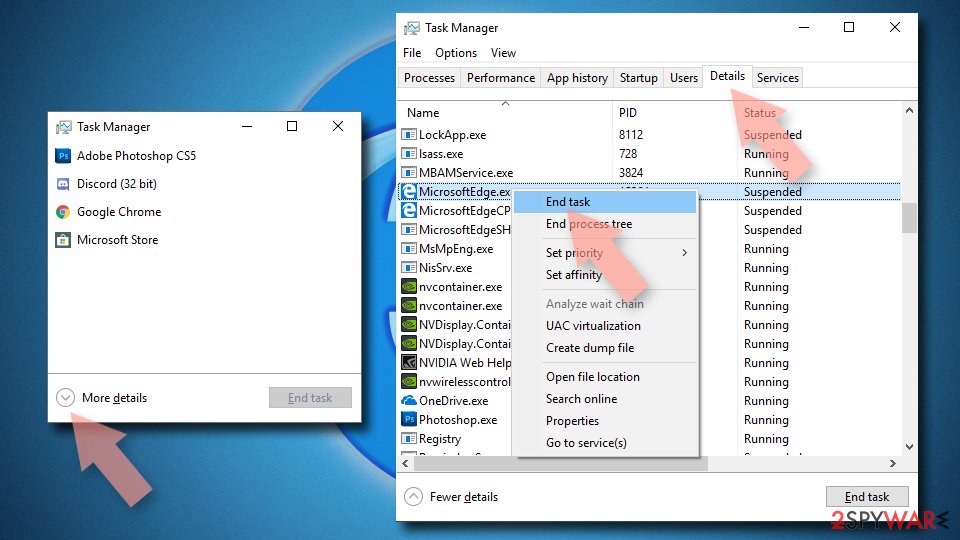
- Press on Ctrl + Shift + Esc to open Task Manager.
- Click on More details arrow at the bottom of the window.
- Select Details tab.
- Now scroll down and locate every entry with Microsoft Edge name in it. Right-click on each of them and select End Task to stop MS Edge from running.
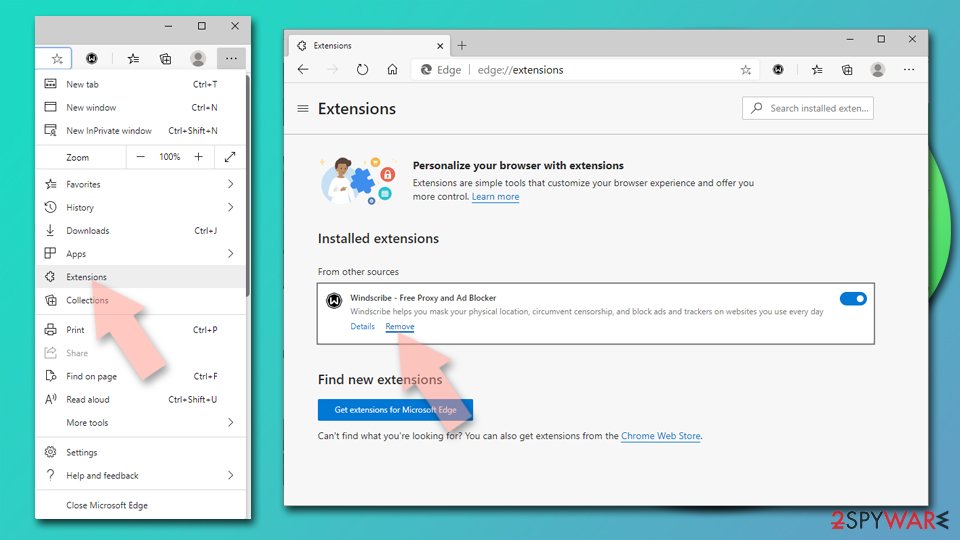
Delete extensions from MS Edge (Chromium):
- Open Edge and click select Settings > Extensions.
- Delete unwanted extensions by clicking Remove.
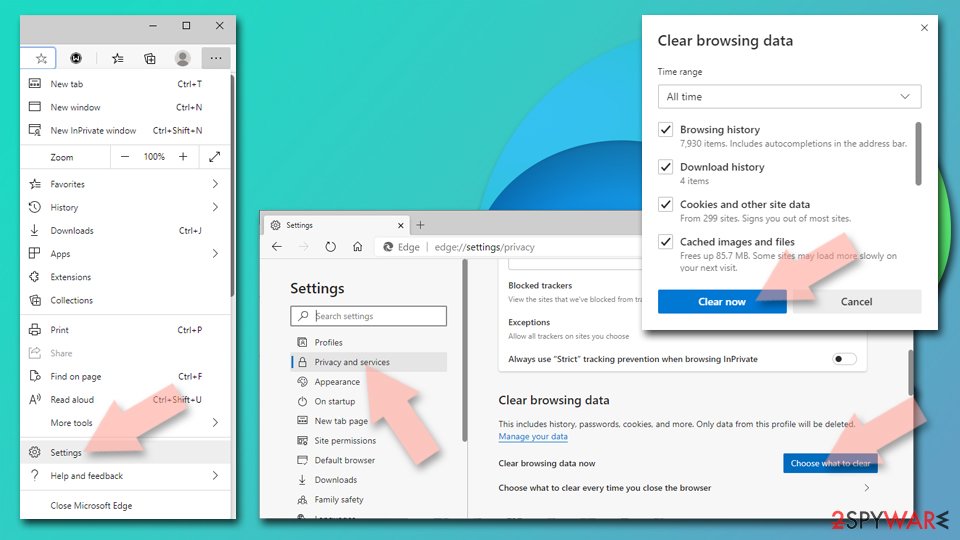
Clear cache and site data:
- Click on Menu and go to Settings.
- Select Privacy, search and services.
- Under Clear browsing data, pick Choose what to clear.
- Under Time range, pick All time.
- Select Clear now.
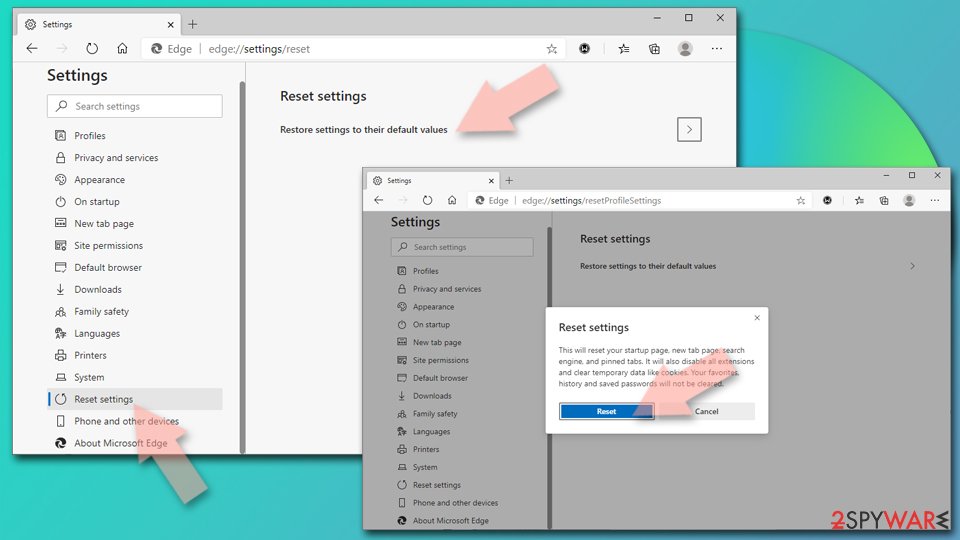
Reset Chromium-based MS Edge:
- Click on Menu and select Settings.
- On the left side, pick Reset settings.
- Select Restore settings to their default values.
- Confirm with Reset.
- This will disable extensions and reset startup pages but will not delete bookmarks, saved passwords, or browsing history.
Remove from Mozilla Firefox (FF)
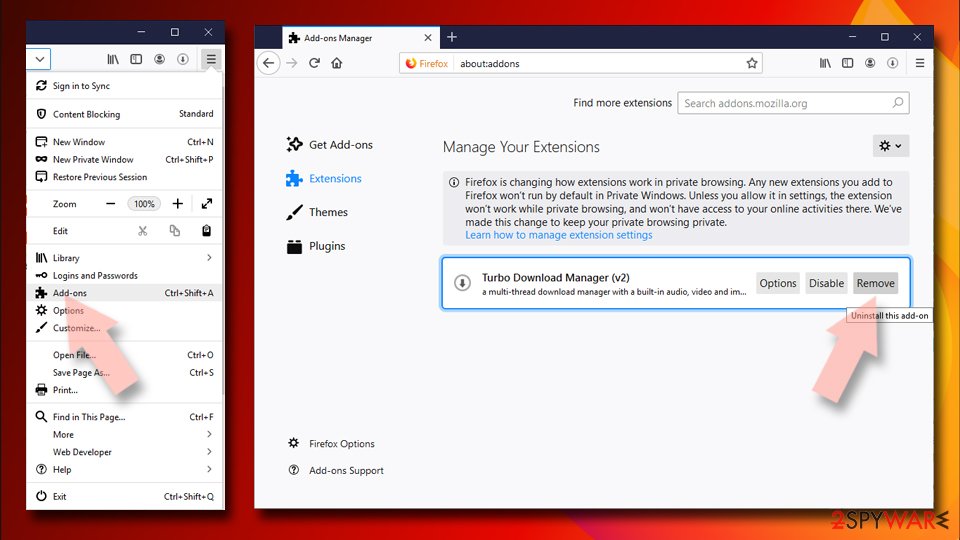
Remove dangerous extensions:
- Open Mozilla Firefox browser and click on the Menu (three horizontal lines at the top-right of the window).
- Select Add-ons.
- In here, select the unwanted extension and click Remove.
Reset the homepage:
- Click three horizontal lines at the top right corner to open the menu.
- Choose Settings.
- Under Home, set your preferred homepage and new tab settings.
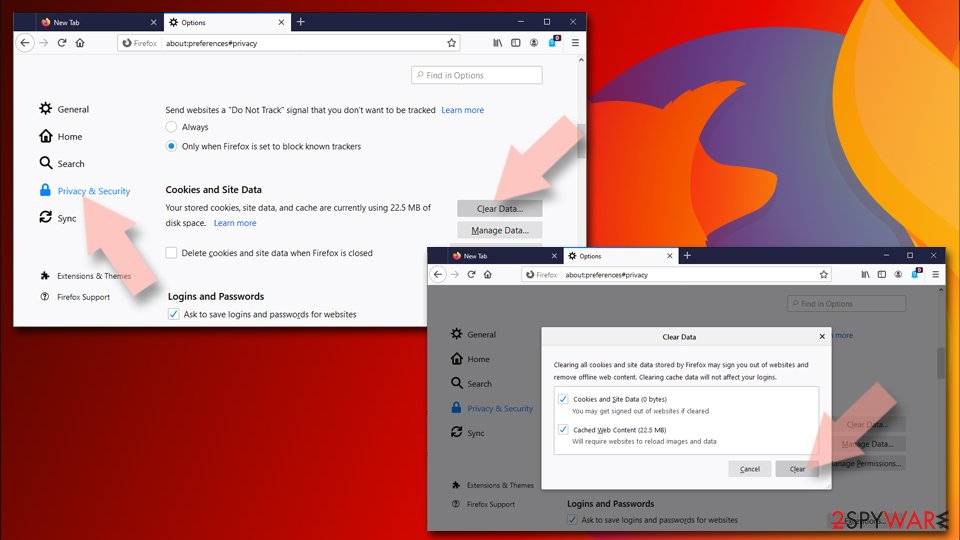
Clear cookies and site data:
- Click Menu and pick Settings.
- Go to Privacy & Security section.
- Scroll down to locate Cookies and Site Data.
- Click on Clear Data...
- Select Cookies and Site Data and Temporary cached files and pages, then click Clear.
Reset Mozilla Firefox
If clearing the browser as explained above did not help, reset Mozilla Firefox:
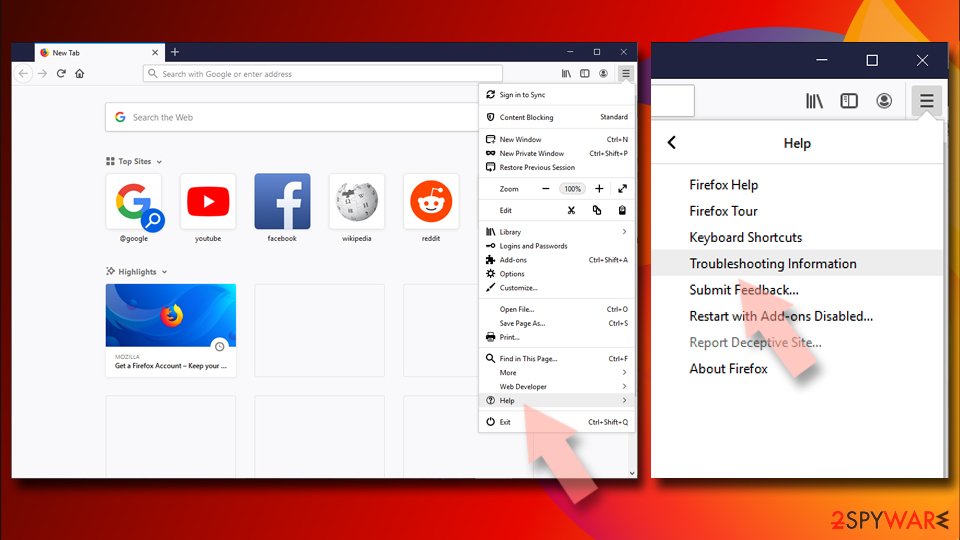
- Open Mozilla Firefox browser and click the Menu.
- Go to Help and then choose Troubleshooting Information.
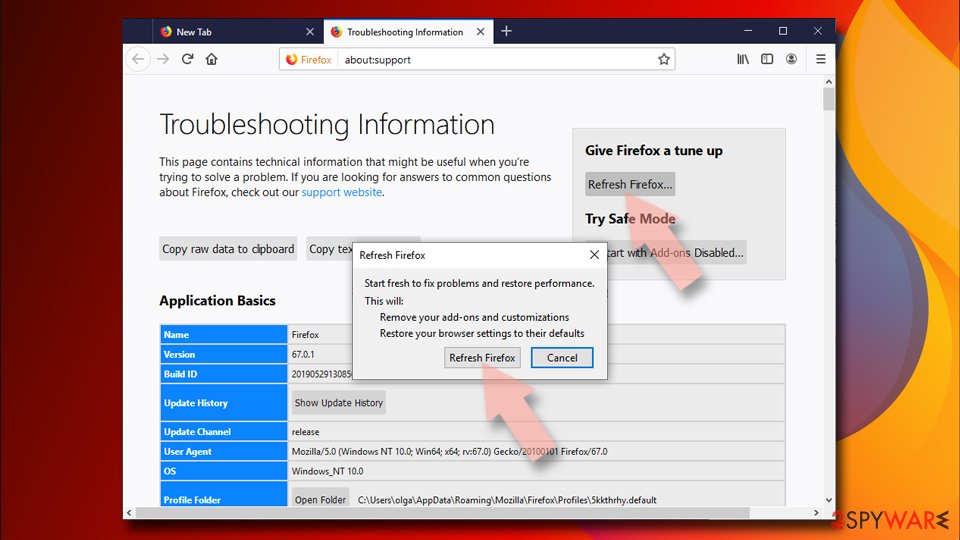
- Under Give Firefox a tune up section, click on Refresh Firefox...
- Once the pop-up shows up, confirm the action by pressing on Refresh Firefox.
Protect your privacy - employ a VPN
There are several ways how to make your online time more private - you can access an incognito tab.
However, there is no secret that even in this mode, you are tracked for advertising purposes. There is a way to add an extra layer of protection and create a completely anonymous web browsing practice with the help of VPN. This software reroutes traffic through different servers, thus leaving your IP address and geolocation in disguise.
Besides, it is based on a strict no-log policy, meaning that no data will be recorded, leaked, and available for both first and third parties. The combination of a secure web browser and VPN will let you browse the Internet without a feeling of being spied or targeted by criminals.
No backups? No problem. Use a data recovery tool
If you wonder how data loss can occur, you should not look any further for answers - human errors, malware attacks, hardware failures, power cuts, natural disasters, or even simple negligence.
In some cases, lost files are extremely important, and many straight out panic when such an unfortunate course of events happen. Due to this, you should always ensure that you prepare proper data backups on a regular basis.
If you were caught by surprise and did not have any backups to restore your files from, not everything is lost. is one of the leading file recovery solutions you can find on the market - it is likely to restore even lost emails or data located on an external device.
From our report of May 2022 · not reviewed since
How to recover from browser-based scams?
First of all, we would like to say once more that you should completely disregard everything said within the scam message - it is shown to any user who happens to visit the page. If you have interacted with the scam, you should immediately take action. For example, if you have downloaded software, you should immediately uninstall it.
If you have disclosed your contact or other personal details, you should remember that scammers might contact you via those known channels and would try to fool you again, potentially making you lose a lot of money, so be wary.
If you have not interacted with the Sandgerl.com scam, we still recommend checking the system for infections, and the easiest way to do this is by scanning it with , , or another powerful anti-malware tool.
1. Check for adware
The first thing to do is shut down all the background processes related to adware. You can do that by accessing Activity Monitor. After that's done, you can then look for apps to remove:
To get rid of the persistence mechanisms from your device, you need to get rid of Login Items and Profiles created by unwanted apps. You can find them as follows:
The PLIST files are small config files, also known as "Properly list." They hold various user settings and hold information about certain applications. In order to remove the virus, you have to find the related PLIST files and remove them.
2. Clean browser caches
Adware and other potentially unwanted or malicious software are known to track user data with the help of cookies and other technologies. Therefore, if you have found potentially unwanted applications on your device, you should take your time to clean them properly.
Clear cookies and other website data from Safari:
Reset Safari if the above-mentioned steps did not help you:
Clear cache and web data from Chrome:
Change your homepage:
Reset Google Chrome
If the previous methods did not help you, reset Google Chrome to eliminate all the unwanted components:
- Open Applications folder
- Select Utilities
- Double-click Activity Monitor
- Here, look for suspicious processes related to adware and use the Force Quit command to shut them down
- Go back to the Applications folder
- Find suspicious apps and move them to Trash.
- Go to Preferences and pick Accounts
- Click Login items and delete everything suspicious
- Next, pick System Preferences > Users & Groups
- Find Profiles and remove unwanted profiles from the list.
- Select Go > Go to Folder.
- Enter /Library/Application Support and click Go or press Enter.
- In the Application Support folder, look for any dubious entries and then delete them.
- Now enter /Library/LaunchAgents and /Library/LaunchDaemons folders the same way and terminate all the related .plist files.
- Click Safari > Preferences...
- In the new window, pick Extensions.
- Select the unwanted extension and select Uninstall.
- Click Safari > Clear History...
- From the drop-down menu under Clear, pick all history.
- Confirm with Clear History.
- Click Safari > Preferences...
- Go to the Advanced tab.
- Tick the Show Develop menu in the menu bar.
- From the menu bar, click Develop, and then select Empty Caches.
- Open Google Chrome, click on the Menu (three vertical dots at the top-right corner) and select More tools > Extensions.
- In the newly opened window, you will see all the installed extensions. Uninstall all the suspicious plugins that might be related to the unwanted program by clicking Remove.
- Click on Menu and pick Settings.
- Under Privacy and security, select Clear browsing data.
- Select Browsing history, Cookies and other site data, as well as Cached images and files.
- Click Clear data.
- Click the menu and choose Settings.
- Look for a suspicious site in the On startup section.
- Click on Open a specific or set of pages and click on three dots to find the Remove option.
- Click on Menu and select Settings.
- Now click Restore settings to their original defaults.
- Confirm with Reset settings.
From our report of May 2022 · not reviewed since
Solution for iOS users
If you are encountering suspicious pop-ups on your iPhone, you can block them via the browser settings.
Your next task is to make sure that your browser data is cleared so that you wouldn't be rerouted to the same malicious pages or that phishing content wouldn't be shown again.
- Open Settings and go to Safari
- Here, look for the following options: Block Pop-ups Fraudulent Website Warning
- Enable them by toggling the switch to the right.
- Go to Safari Settings once again and click Advanced
- Tap the Website Data section
- Select Remove All Website Data.
Questions about Sandgerl.com e-mail scam
Does getting "Hackers are watching you!" mean my account was compromised?
Not by itself. Phishing waves are sent to long lists of addresses collected from old breaches, websites and guessing, and the sender does not know whether you even have the account the message mentions. Getting "Hackers are watching you!" only means your address is on such a list.
It becomes a problem if you sign in through the link. To be sure, open the real service from a bookmark and check recent activity and security alerts. If you see nothing unusual and you did not type your password into the fake page, your account is fine.
How fast do I need to react after signing in on the "Hackers are watching you!" page?
As fast as you can. Stolen passwords are often tried within minutes, and the first thing an attacker usually changes is the recovery e-mail or phone, which locks you out. Change the password from a clean device first, then sign out everywhere and review the recovery settings.
If you are already locked out, use the provider's account recovery form straight away and mention that the page behind "Hackers are watching you!" took your password. Warn your contacts, since a taken-over mailbox is often used to send the same phishing to them.
Is Sandgerl.com really from a well-known company?
No. It is sent by scammers who copy the name and look of a well-known company. The sender address and the links do not belong to it, and the message asks for your password, which a real company does not request through an unexpected message.
If you want to be sure about your account, open the website or app of a well-known company the way you normally do, not through the message, and look for notices there. Then delete the message and report it as phishing. If you already followed its instructions, use the steps in this guide for your case.
Is it true that your account needs urgent attention?
No. The claim that your account needs urgent attention is the hook of Sandgerl.com, invented to give you a reason to act quickly. Scammers pick a story that could plausibly apply to many people, so it may feel relevant to you, but nothing in the message is based on your real accounts or devices.
If the claim concerns a service you use, check it there directly, by opening the website or app yourself. You will find no such problem. Then delete the message and report it as phishing.
What happens if I do what Sandgerl.com asks?
The scammers get your password, and they use it quickly. Passwords are tried on the real service within minutes, cards are charged or added to phone wallets, remote access is used to open your bank, and crypto is moved on at once.
Documents surface later as accounts in your name. If you already did what the message asked, do not wait to see what happens; follow the steps in this guide for your case today. Speed matters more than anything else here.
Will a well-known company refund me if I fell for Sandgerl.com?
A well-known company did not send the message and is not responsible for it, so a refund usually comes from your bank or card issuer, not from the brand. Call the bank first if you paid.
It still helps to tell the real company: they can secure your account, add notes for their fraud team and take down pages that use their name. Contact them through their official website or app only, never through the message or a search ad. Keep the message as evidence.
Should I reply or unsubscribe?
No. A reply confirms that your address is active and read, which leads to more scams. The unsubscribe link in a scam message is part of the scam and may lead to a phishing page. Mark the message as spam or phishing and delete it.
Block the sender if your mail app allows it, though scammers change addresses often. If the scam came by text message, do not reply STOP either. If it came through social media, use the platform's report function and block the account.
Could malware on my computer cause Sandgerl.com?
It can, but it is not the most common cause. Information stealers copy saved passwords and session cookies from browsers, which can lead to an e-mail with the subject "Hackers are watching you!". More often, the password came from a breach or a phishing page.
To be sure, run a full scan in Windows Security and check Installed apps and browser extensions. If anything is found, clean the PC first and change passwords afterwards from a clean device, because changing them on an infected PC lets the malware take the new ones too.
Can just reading Sandgerl.com harm my PC?
No. Reading the e-mail does nothing to the PC. The risk lies in what the message wants you to do: your password. Every one of those needs an action from you, such as a click, a typed password, a payment or a call.
If you stopped at reading, you are fine. Delete it and report it. If you are unsure whether you clicked something, check your browser history for the time you read the message, and act on what you find there.
Will Fortect remove Sandgerl.com?
Fortect scans Windows for malware and unwanted programs and repairs the system files and settings they change, and its free scan shows what it finds on your PC before you decide anything.
For Sandgerl.com, follow the plan above as well: the browser steps take back permissions and settings that no scanner treats as a threat, and uninstalling the program that brought it removes the source.
Run Microsoft Defender's full scan and, if anything was found, its offline scan as a second opinion. If the symptoms are gone after the plan and both scans are clean, there is nothing more to do.
Sources
- Wikipedia: Adware (read October 7, 2026)
- NIST: False Positive (no longer online) (read October 7, 2026)
- Imperva: Ransomware (read October 7, 2026)
- FTC: How to recognize and avoid phishing scams (read October 7, 2026)
- CISA: Recognize and report phishing (read October 7, 2026)