
Sorano Stealer virus: what it is and how to remove it
Sorano Stealer virus is the piece of malware that is offered as a product in underground forums and can appear on the targeted systems out of nowhere when hackers release malicious campaigns. This is the information-stealer virus that gathers information in various ways to get details that may help in later blackmail attacks, or the attacker may sell this information.
Facts checked October 6, 2026. Removal steps tested on Windows 11 (26H2) and checked against Microsoft's and the browser makers' current documentation. Sections marked as our earlier report are the original text: they describe the threat as it was then and have not been reviewed since. The 2026 status, the removal steps and the questions are current.
Automatic
Get a free scan and check if your PC is infected.
Fortect finds malware, unwanted programs and the Windows damage they leave behind, and repairs it in one pass.
An automatic scan can look at Sorano.exe and the other programs installed around the same time.
Do it yourself · free Remove Sorano Stealer virus yourself 3 steps, about 9 minutes, no software needed.
Start the steps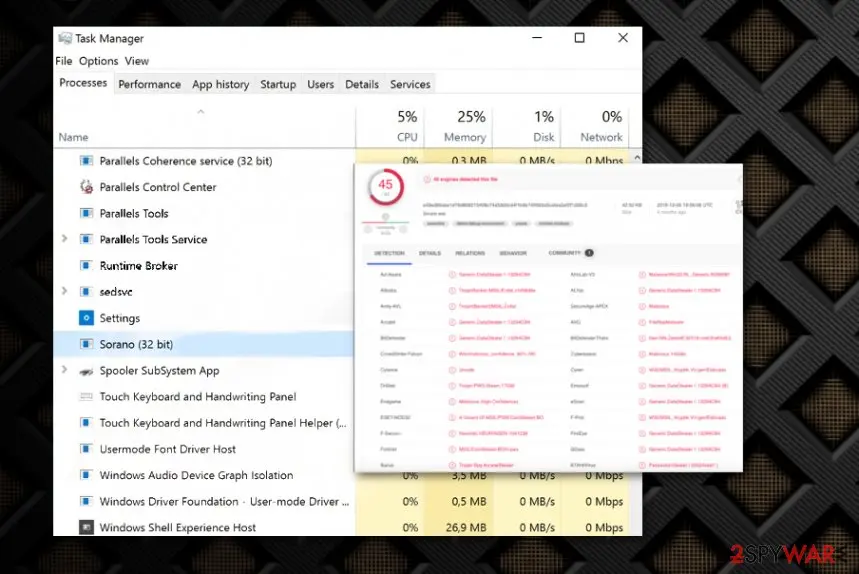
Sorano Stealer virus: summary
| Distribution | Trojans and other more severe malware can land on the machine when the person opens a malicious file attachment from the email or visits hacked site, malicious domain. The infiltration happens silently and cannot be noticed by the user |
|---|---|
| Name | Sorano Stealer virus |
| Type | Information-stealer malware[2] |
| Symptoms | The virus is not displaying any symptoms besides the Sorano.exe file running in the background or other processes that cause high usage of CPU or speed and performance issues. Otherwise, the malware runs in the background without causing any symptoms and can be there unnoticed for a long time |
| Functions | Malware is set to steal data from the machine, gather information from social media platforms, messaging apps, exfiltrate data from sites and use keystroke loggers to steal passwords and logins, banking details |
| Danger | It can use the stolen information for blackmail, sell the information for third-party hackers and use it for money transfers or hacks of the machine itself |
| Removal | Scan the PC with security software to find and remove the malware and anything installed with it. Fortect scans Windows for malware and repairs the system files and settings it damaged. Remove it nowTo use the full-featured product, you have to purchase a license for Fortect. The scan is free. |
Show 6 more facts
| Detection names | No Microsoft detection name is known |
|---|---|
| Damage | Not recorded in the old report |
| Evidence | 5 write-ups by security sites; details still limited |
| File name | Sorano.exe |
| First seen | 10 April 2020 |
| Facts checked | 6 October 2026 |
What Sorano Stealer virus does
From our report of Apr 2020 · not reviewed since
Malware programs run through malicious domains and hacked sites where scripts can get injected
You do not know when or how this malware got on your system because trojans and other malware like this spread around using malicious files and other methods involving scripts of the malware.
Files with malware payload get attached to email notifications and included in the pirated software packages. When the user is not paying enough attention to such details like senders, sources, and additional files, the script is triggered directly on the machine.
If you want to avoid these installations, you need to take a closer look at emails you receive and the details that may become the red flag. Typos, grammar mistakes, and unknown senders should raise questions and encourage you to delete the received email instead of opening the message or downloading the file, clicking the link in the notification.
From our report of Apr 2020 · not reviewed since
More from our earlier report on Sorano Stealer virus
- Sorano Stealer virus removal can be difficult when you are not seeing the threat and any symptoms, so you better get an anti-malware tool that runs on the system fully checking all the parts and can eliminate any traces of this or another intruder
What Sorano Stealer virus collects and where it sends it
From our report of Apr 2020 · not reviewed since
Sorano Stealer virus is the threat that can take data from the machine or make screenshots and send these details to the attacker remotely
Sorano Stealer virus is the piece of malware that is offered as a product in underground forums and can appear on the targeted systems out of nowhere when hackers release malicious campaigns.
This is the information-stealer virus that gathers information in various ways to get details that may help in later blackmail attacks, or the attacker may sell this information. There can by various scenarios after the info-gathering because it depends on the particular goals and modus operand of the cybercriminals.
Some relations with Russian hackers show that this can be the creation of a developer from Russia that makes a big effort to promote and distribute the threat in the wild with the help of such dark web sites and forums.
The source code itself of this stealer is placed on the GitHub data, so anyone with more advanced skills can use this code, modify the functions, and spread it around for specific purposes.
Unfortunately, Sorano Stealer utilizes a popular Russian messaging application to transfer data from the affected system to a remote server that is controlled by the attackers, so there can be many uses for the gathered information. It is not known what data this trojan is after, but there are many valuable details that malware can obtain from the computer directly and use other pieces of malware to get.
Nevertheless, the virus runs in the background without displaying any symptoms or noticeable features, so the user of the affected machine is not aware of the infection until the suspicious process is noticed in Task Manager or the virus creates frustration due to speed and performance issues.
Sorano Stealer virus is the password-stealing virus that can gather banking details, credentials, and other information valuable for the hacker and other third-party attackers. This is the malware that can be purchased, and cybercriminals may buy the full-on trojan to spread for their own purpose of information gathering.
There is a version of this Sorano Stealer that can be obtained without paying but the publicly available version may not be up to date, so criminals still rely on paying the developers for the malicious program.
Analyzing showed that this is a Russian hackers-related threat because it uses Telegram API and is distributed in Russian hacker forums and other sources. This makes the trojan even more dangerous since Russians are known for being notorious and especially malicious.
Sorano Stealer virus acts like a typical malware focused on gathering information, so it can:
Once the Sorano Stealer virus payload is dropped on the system, anything, and everything can be tracked, recorded, and collected. This is a common malware, so crooks can buy the threat to use it as a hacking tool and install the additional malware like ransomware or cryptocurrency miners.
The worst feature of this Sorano Stealer is the fact that anything the trojan is set to do cannot be noticed by the user or quickly eliminated. The malware can run all the needed processes, gather information, and vanish without causing any symptoms. Luckily, some more cautious users can notice issues with the speed and performance of the system went his malware is affecting their device.
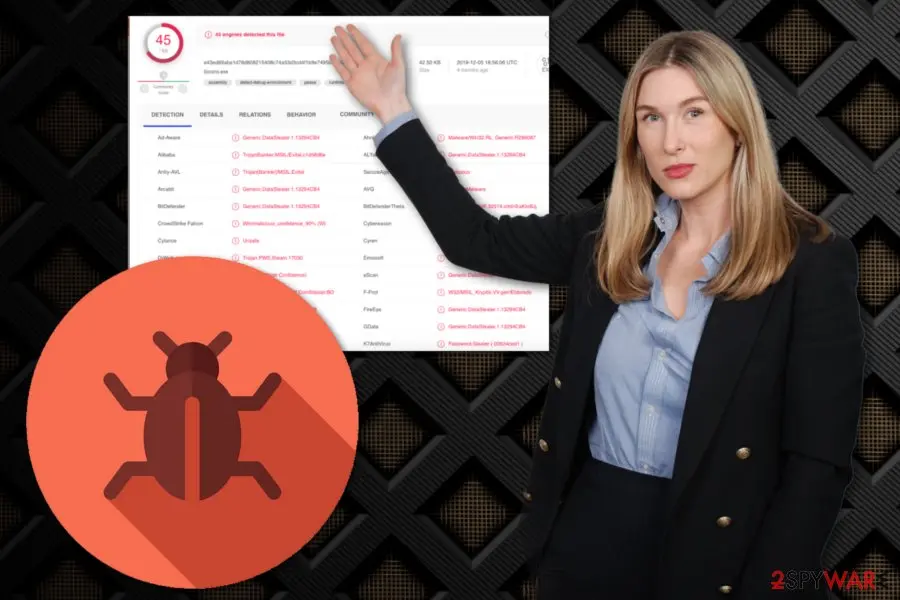
In cush cases, you may react sooner and remove Sorano Stealer virus in time before the disaster. If you spot any changes in the performance, notice the Sorano process running in the background or different file, process on the Task Manager, you need to react as soon as possible and scan the machine using proper AV tools. The detection rate should help you with the proper tool selection.
Sorano Stealer virus removal is an important process that requires anti-malware tools because you need to find and terminate all the related files, programs, and applications that can potentially pose a danger or cause damage to your device. This is a product of cybercriminals you need to remember that and react as if your device has been affected by serious malware.
Since you cannot know how long the Sorano Stealer virus is running in the background, you are not aware of how damaged the system can already be. Anti-malware programs can find malicious software and files that are involved in the malware campaign, but you need additional help from or a similar optimizer software that locates and repair affected files or corrupted functions of the system.
- collect information from Doscird, Steal, telegram sessions;
- take screenshots of the desktop at any point;
- execute commands without permission;
- obtain information from auto-fill forms;
- gather saved passwords;
- steal documents from the desktop directly;
- create processes and payloads that run in the background;
- expose the system to additional malware.
From our report of Apr 2020 · not reviewed since
Sorano Stealer virus termination can be crucial in further infection avoidance
You should consider this malware as a serious danger to your privacy, system, and even security because anything gathered by this virus can lead to blackmail campaigns and damaged machines when the additional virus gets added after the trojan infection.
Make sure to remove Sorano Stealer virus as soon as you notice issues with performance. If you check the system with or more often you may terminate malware before it affects your machine.
Sorano Stealer virus removal is pretty quick if you choose the reliable program and run the full system scan during with AV detection engine can find and indicate any possible intruders for you.
When this is done, you can see all the malicious programs and files, delete them with a few clicks and clean the system. After that, the only procedure left to do is that manages to fix virus damage and repair system files that create issues.
[GI=method-1]Reboot the machine in Safe Mode with Networking and make sure to remove Sorano Stealer virus with anti-malware tool or a security program
[GI=method-2]System Restore is the feature that can help with the affected device because it recovers the state of the computer in a previous state
How to check the PC for Sorano Stealer virus
- File:
Sorano.exe
How to remove Sorano Stealer virus
A stealer usually takes what it wants within minutes and may already be gone.
The scan comes first, then the accounts.
Step 1: Scan the PC, then run the offline scan
A scan finds the parts of Sorano Stealer virus that the manual steps cannot see. In Windows Security > Virus & threat protection > Scan options, start a Full scan and quarantine what it reports.
Follow it with Microsoft Defender Antivirus (offline scan) > Scan now, which restarts the PC and checks the disk while Windows and the malware are not running.
It takes about 15 minutes and works the same in Windows 11 and Windows 10. If either scan finds something, run the full scan again after removal until it comes back clean.
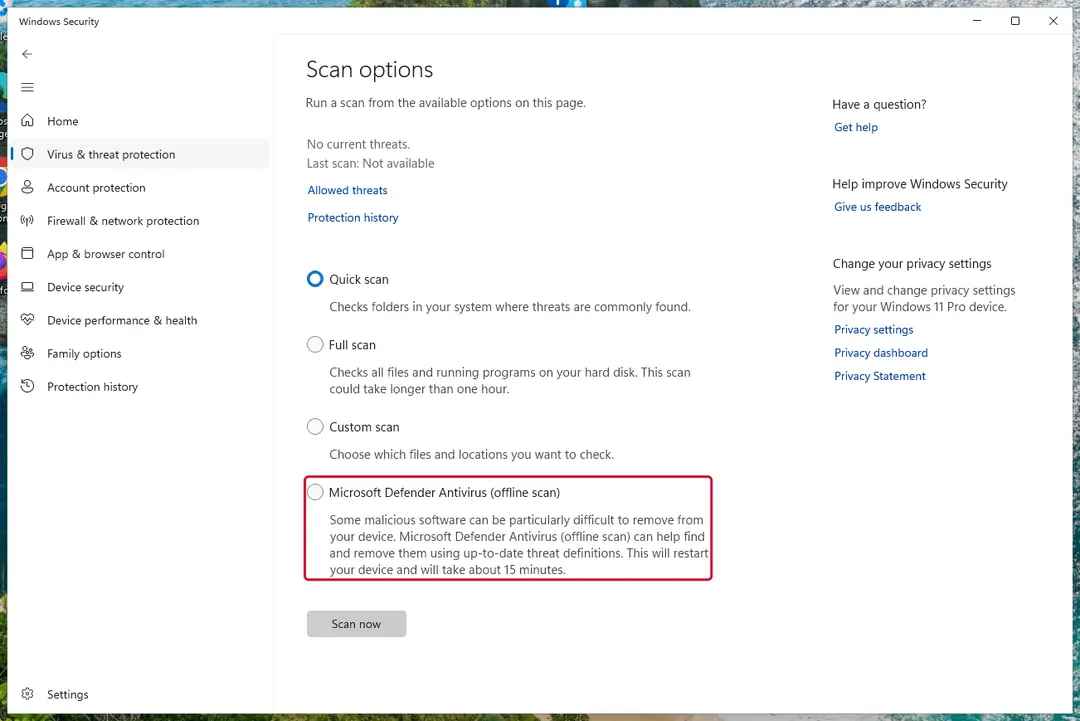
Windows 11: Windows Security > Virus & threat protection > Scan options. Full procedure with screenshots: Run a Microsoft Defender Offline scan
Step 2: Change passwords from another device and sign out other sessions
Sorano Stealer virus can copy saved passwords, cookies and session tokens and send them out in seconds, so cleaning the PC does not undo the theft.
Change your passwords on a device that was never infected, starting with the e-mail account, since every other reset goes through it. On each account, end all other sessions and check the recovery e-mail, phone number and forwarding rules.
Then turn on two-step verification. Sign in on the Windows 11 or Windows 10 PC again only after the offline scan is clean.
Full procedure with screenshots: Turn on two-step verification / secure a hacked account
Step 3: Delete the folders left behind
Uninstalling often leaves the program's folders, and some threats reinstall themselves from them.
Press Windows + R, type
%LocalAppData%and press Enter, then do the same for%AppData%and %ProgramData%, and look for folders named after Sorano Stealer virus, its publisher or created on the day the problem started.Delete those folders, and check
C:\Program FilesandC:\Program Files (x86)too.If Windows says a file is in use, end it in Task Manager or delete the folder after a restart in Safe Mode. The folders are the same in Windows 11 and Windows 10.
Full procedure with screenshots: Remove what malware leaves behind in Windows
Instructions for each browser and system
The detailed steps for every browser and system this guide covers. Open the one you use.
Manual removal using Safe Mode
Important! →
Manual removal guide might be too complicated for regular computer users. It requires advanced IT knowledge to be performed correctly (if vital system files are removed or damaged, it might result in full Windows compromise), and it also might take hours to complete. Therefore, we highly advise using the automatic method provided above instead.
Step 1. Access Safe Mode with Networking
Manual malware removal should be best performed in the Safe Mode environment.
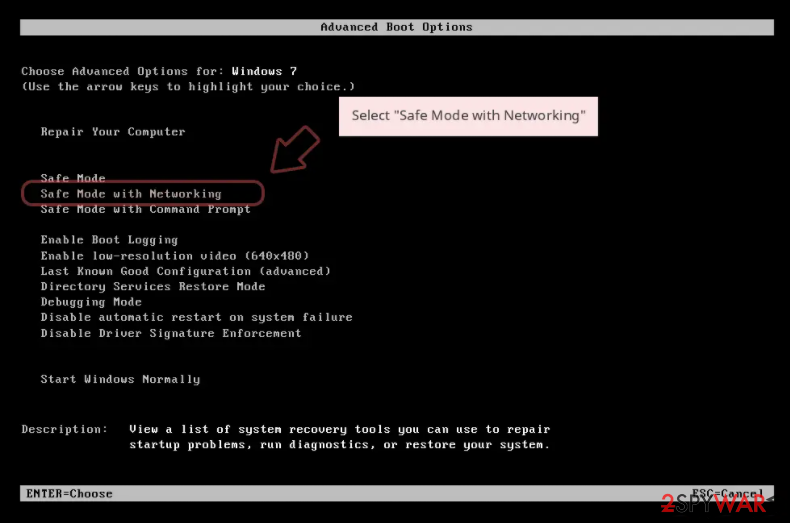
Windows 7 / Vista / XP
- Click Start > Shutdown > Restart > OK.
- When your computer becomes active, start pressing F8 button (if that does not work, try F2, F12, Del, etc. - it all depends on your motherboard model) multiple times until you see the Advanced Boot Options window.
- Select Safe Mode with Networking from the list.
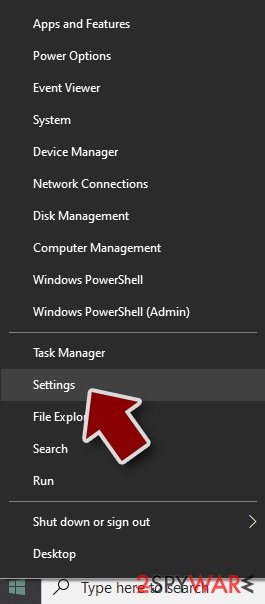
Windows 10 / Windows 8
- Right-click on Start button and select Settings.
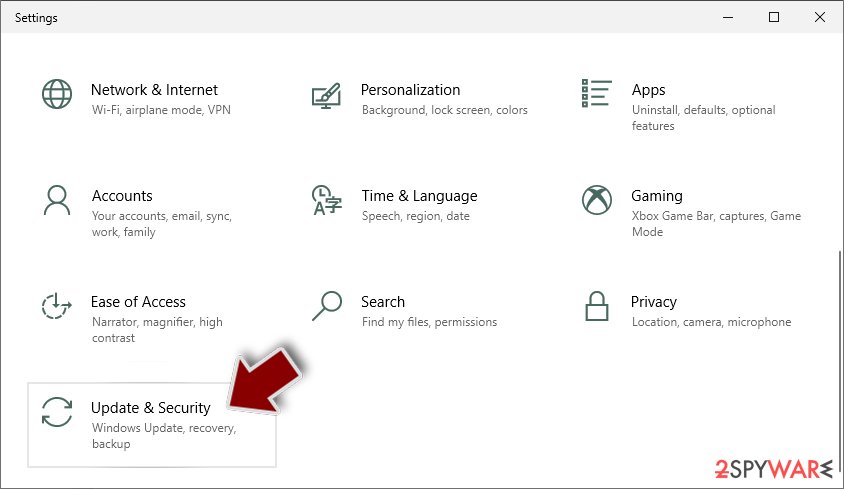
- Scroll down to pick Update & Security.
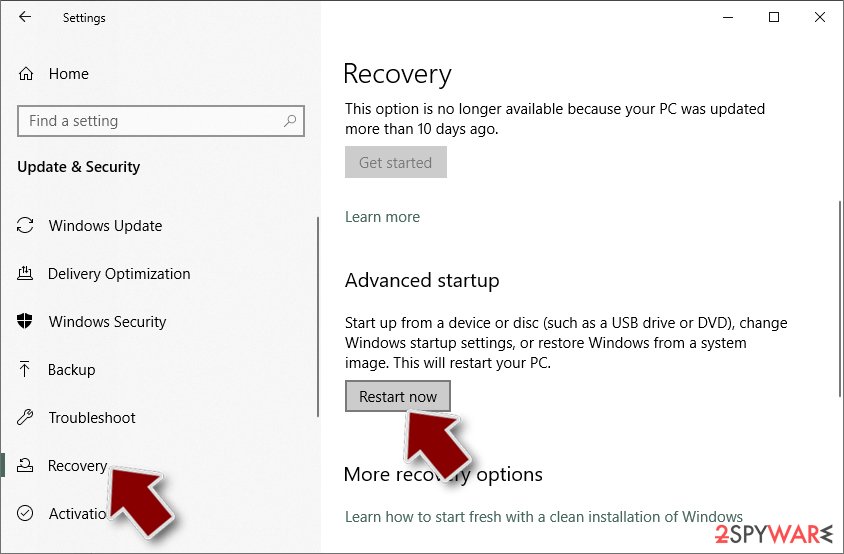
- On the left side of the window, pick Recovery.
- Now scroll down to find Advanced Startup section.
- Click Restart now.
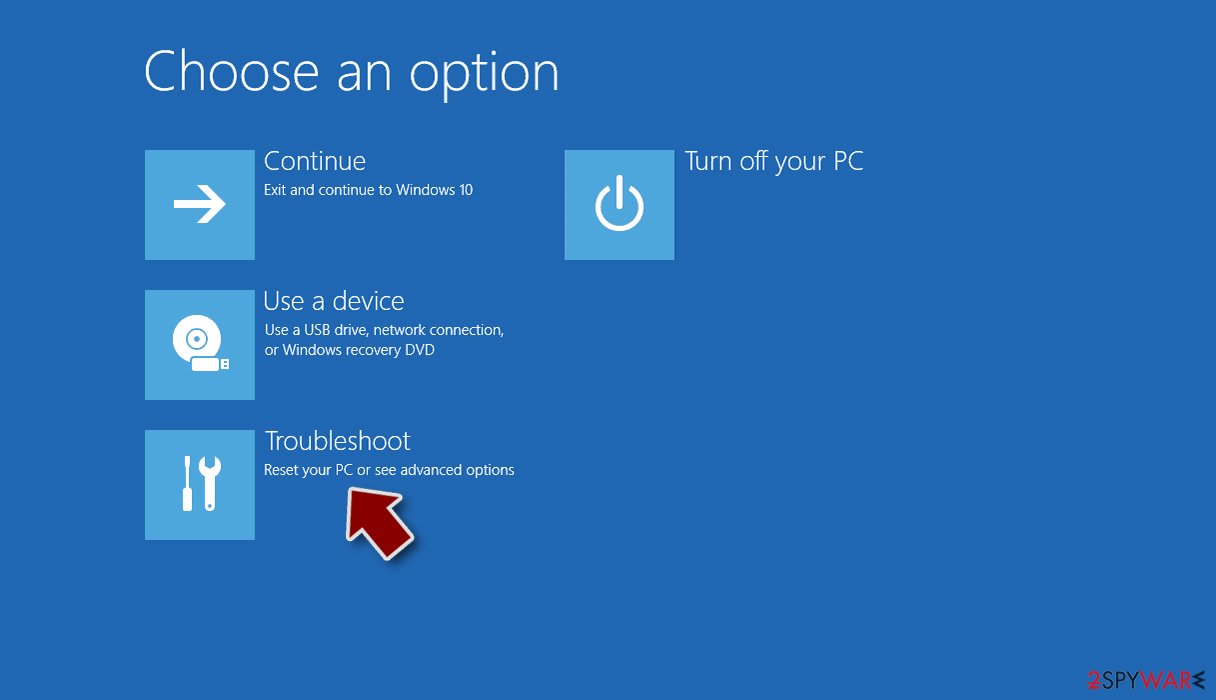
- Select Troubleshoot.
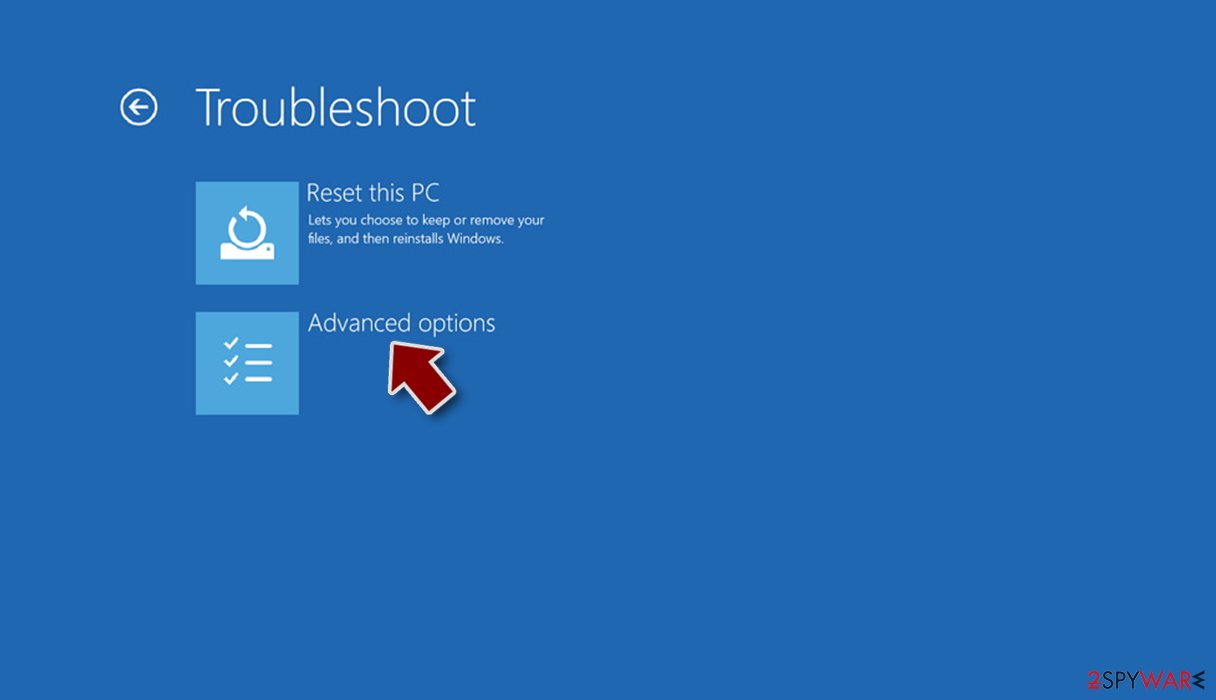
- Go to Advanced options.
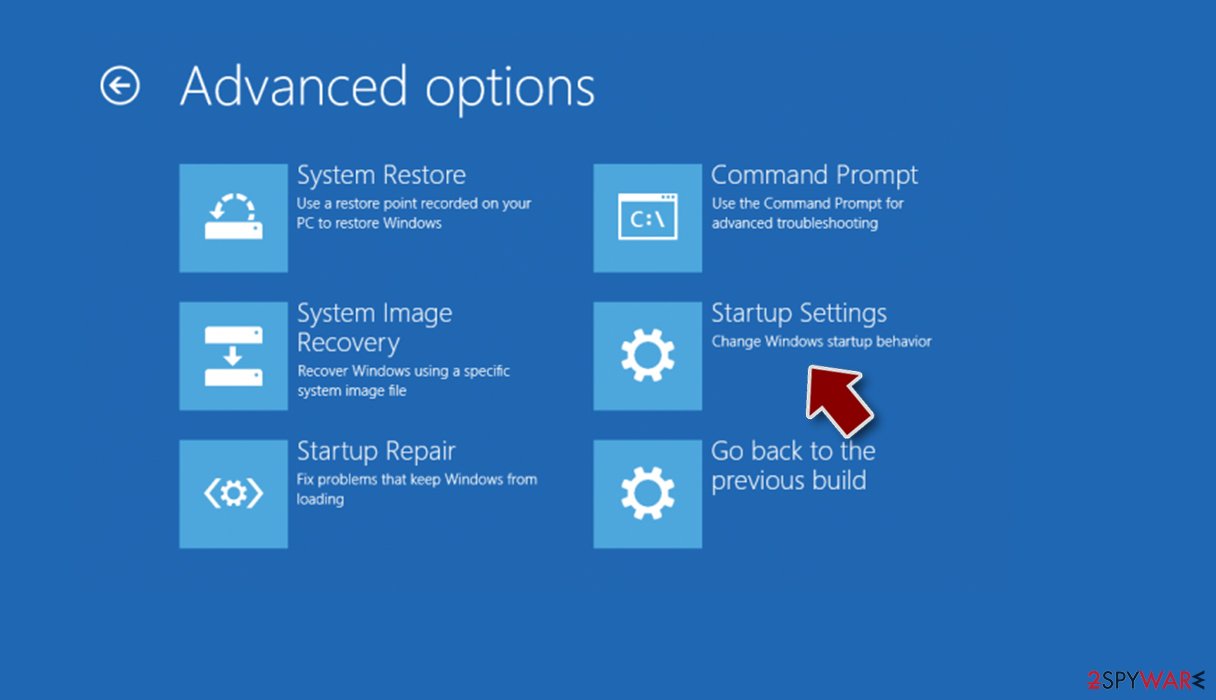
- Select Startup Settings.
- Press Restart.
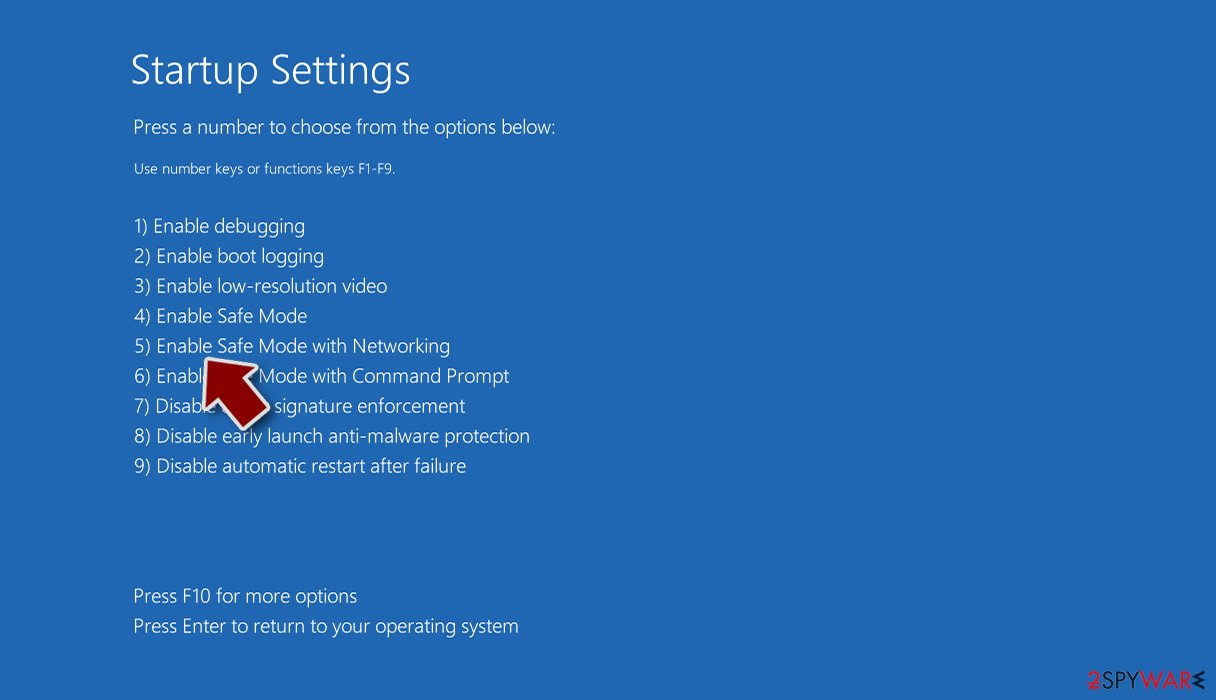
- Now press 5 or click 5) Enable Safe Mode with Networking.
Step 2. Shut down suspicious processes
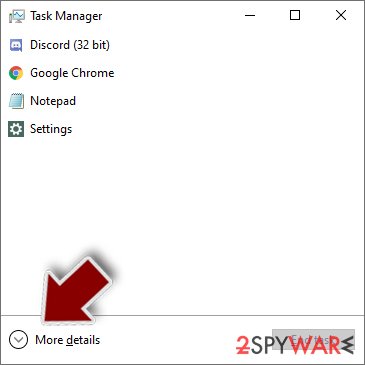
Windows Task Manager is a useful tool that shows all the processes running in the background. If malware is running a process, you need to shut it down:
- Press Ctrl + Shift + Esc on your keyboard to open Windows Task Manager.
- Click on More details.
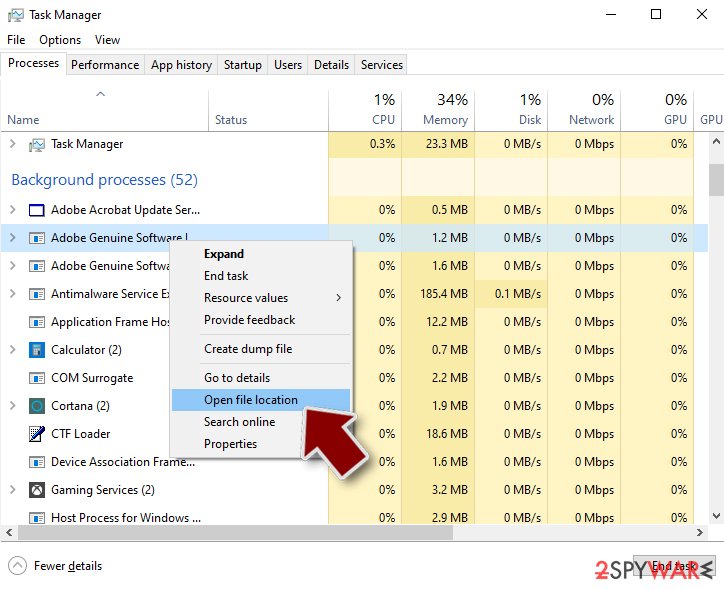
- Scroll down to Background processes section, and look for anything suspicious.
- Right-click and select Open file location.
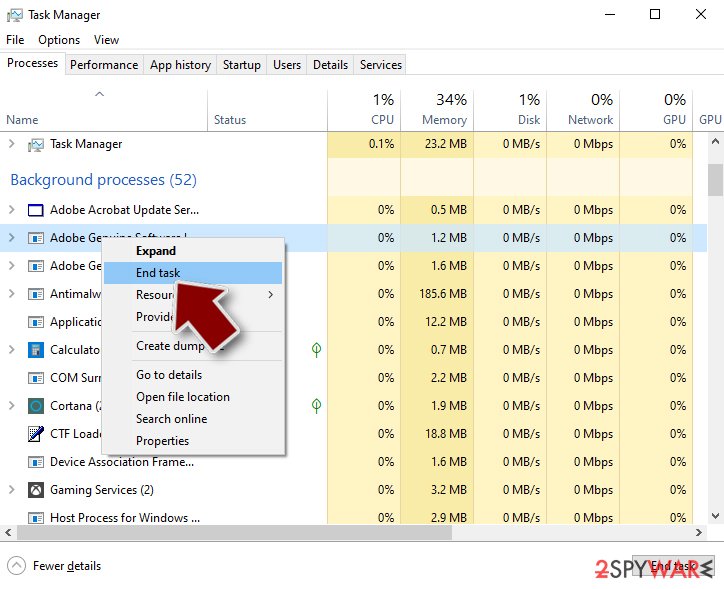
- Go back to the process, right-click and pick End Task.
- Delete the contents of the malicious folder.
Step 3. Check program Startup
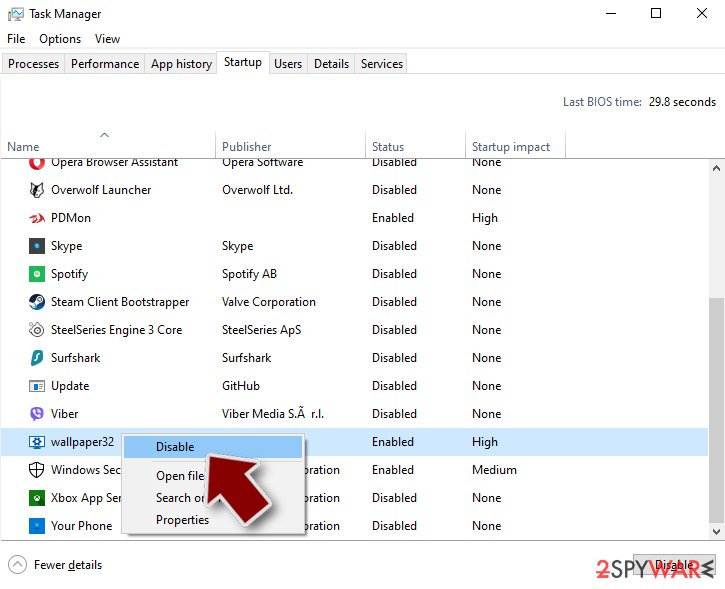
- Press Ctrl + Shift + Esc on your keyboard to open Windows Task Manager.
- Go to Startup tab.
- Right-click on the suspicious program and pick Disable.
Step 4. Delete virus files
Malware-related files can be found in various places within your computer. Here are instructions that could help you find them:
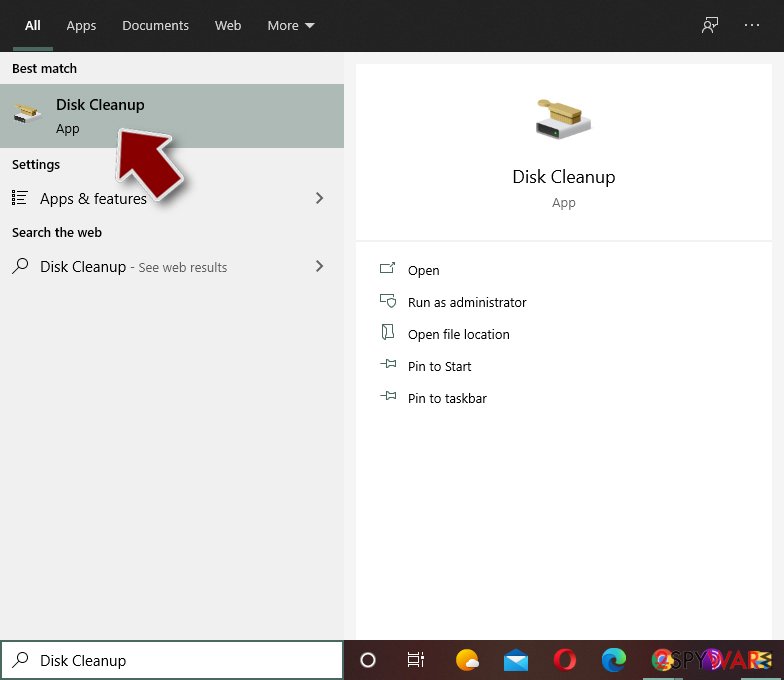
- Type in Disk Cleanup in Windows search and press Enter.
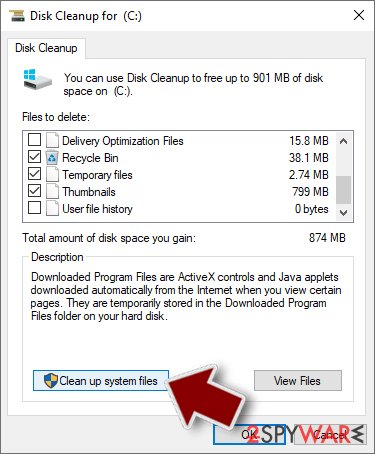
- Select the drive you want to clean (C: is your main drive by default and is likely to be the one that has malicious files in).
- Scroll through the Files to delete list and select the following:
Temporary Internet Files
Downloads
Recycle Bin
Temporary files - Pick Clean up system files.
- You can also look for other malicious files hidden in the following folders (type these entries in Windows Search and press Enter):
%AppData%
%LocalAppData%
%ProgramData%
%WinDir%
After you are finished, reboot the PC in normal mode.
Do not let government spy on you
The government has many issues in regards to tracking users' data and spying on citizens, so you should take this into consideration and learn more about shady information gathering practices.
Avoid any unwanted government tracking or spying by going totally anonymous on the internet.
You can choose a different location when you go online and access any material you want without particular content restrictions. You can easily enjoy internet connection without any risks of being hacked by using VPN.
Control the information that can be accessed by government any other unwanted party and surf online without being spied on. Even if you are not involved in illegal activities or trust your selection of services, platforms, be suspicious for your own security and take precautionary measures by using the VPN service.
Backup files for the later use, in case of the malware attack
Computer users can suffer from data losses due to cyber infections or their own faulty doings.
Ransomware can encrypt and hold files hostage, while unforeseen power cuts might cause a loss of important documents. If you have proper up-to-date backups, you can easily recover after such an incident and get back to work. It is also equally important to update backups on a regular basis so that the newest information remains intact - you can set this process to be performed automatically.
When you have the previous version of every important document or project you can avoid frustration and breakdowns. It comes in handy when malware strikes out of nowhere. Use for the data restoration process.
Questions about Sorano Stealer virus
What is Sorano.exe and why is it running?
Every process is started by something:
- a program you installed
- a Windows service
- a scheduled task
- a startup entry
To learn why Sorano.exe runs, find its file with Open file location in Task Manager, then look for an entry pointing to that file in Settings > Apps > Startup and in Task Scheduler.
Sort Installed apps by date to see what arrived when the process first appeared. Once you know the owner, you can decide whether to keep it, switch it off at startup or uninstall it completely.
Can I delete the Sorano.exe file?
Only after you know what it belongs to. If Sorano.exe is part of a program, uninstall that program through Settings instead, so its services and tasks go too. If it belongs to nothing and is unsigned, end the process, disable whatever starts it and then delete its folder.
Do not delete files from the Windows folder or files signed by Microsoft: those are part of the system, and removing them can stop Windows from starting. When in doubt, run a Microsoft Defender scan first and let it decide.
I deleted Sorano.exe. Am I safe now?
Your PC may be, but your accounts are not yet. Deleting Sorano.exe stops Sorano Stealer virus from running again, if nothing else on the PC restarts it, yet it does nothing about data that was already collected and sent.
Run the offline scan to make sure no other component or second payload remains. Then change passwords from a clean device, sign out of all sessions, move crypto and turn on two-step verification. Those steps, not the deletion, are what protect you from the stolen data.
I have two-step verification. Am I protected?
Partly. Two-step verification stops an attacker who has only your password. But stealers also take session cookies, which represent a login that already passed the second step.
With a cookie, an attacker can open the account until the session expires or you sign out of all devices. So, after an infection, end all sessions as well as changing passwords.
Passkeys and hardware security keys resist phishing better, but a stolen session still needs to be ended. Review trusted devices and remove any you do not recognise.
Nothing has happened yet. Do I still need to change passwords?
Yes. Stolen logs are often sorted and sold before anyone uses them, so the quiet period can last weeks.
The criminals look for the most valuable accounts first, usually crypto, banking and e-mail, and may only reach yours later. Changing passwords and ending sessions now makes the copy worthless whenever it is used.
It takes an evening. Start with e-mail, then money, then everything else saved in the browser, and turn on two-step verification as you go. Watch for login alerts over the following months.
Can I change my passwords on the infected PC?
Not while the spyware may still be running. A keylogger or stealer would capture the new passwords too. Use a phone or another computer that was never infected, or wait until the Microsoft Defender offline scan on this PC comes back clean.
Start with your main e-mail account, because it can reset every other password, then banking and payment accounts. When you return to this PC, sign in to the browser again only after the scans are clean and you have ended old sessions.
Do I need to reinstall Windows to get rid of Sorano Stealer virus?
Usually not. A thorough clean-up is enough when the offline scan finds nothing afterwards and you do not see an unfamiliar process called Sorano.exe in Task Manager again. A reset is the safer choice if an attacker had remote control, if security tools were switched off, or if detections come back after every clean-up.
Windows 11 can reset itself without a USB stick under Settings > System > Recovery > Reset this PC. Copy documents and photos out first and scan the copies. A reset does not change passwords or undo stolen data, so the account steps still apply.
Who should I tell about Sorano Stealer virus?
Start with the companies that can act quickly:
- your bank
- card issuer and payment services if money is involved
- crypto exchanges if coins were moved
- the providers of any account that was taken over
Each has a fraud or account-recovery process. Then file a police or national cybercrime report if you lost money or your identity was misused. If the PC is used for work, tell your employer's IT team, because work accounts and data may be affected as well.
Is Sorano Stealer virus still on my computer?
Possibly, possibly not. Some stealers stay and keep collecting; others delete themselves after one run. The sign you saw, an unfamiliar process called Sorano.exe in Task Manager, only shows that data was used, not where the program is now.
A Microsoft Defender offline scan answers the first question; checking Startup apps, Task Scheduler and the Downloads folder for files from the days before helps too. Either way, the account steps are needed, because stolen passwords and cookies keep working after the program is gone, sometimes for weeks.
Will Fortect remove Sorano Stealer virus?
Fortect scans Windows for malware and unwanted programs and repairs the system files and settings they change, and its free scan shows what it finds on your PC before you decide anything.
For Sorano Stealer virus, follow the plan above as well: the browser steps take back permissions and settings that no scanner treats as a threat, and uninstalling the program that brought it removes the source.
Run Microsoft Defender's full scan and, if anything was found, its offline scan as a second opinion. If the symptoms are gone after the plan and both scans are clean, there is nothing more to do.
Sources
- ZDNet: Docker servers targeted by new Kinsing malware campaign (read October 6, 2026)
- Wikipedia: Malware (read October 6, 2026)
- VirusTotal: Sorano file analysis (read October 6, 2026)
- FTC: How to recognize, remove and avoid malware (read October 6, 2026)
- Microsoft Learn: Microsoft Defender Offline (read October 6, 2026)