
Telamon Cleaner: what it is and how to remove it
Telamon Cleaner is a rogue tool that claims to clean your computer but it only urges to buy its full version if you want to fix all errors. This shady program shows issues without telling what errors were detected during the system scan and how serious these problems are.
Facts checked October 7, 2026. Removal steps tested on Windows 11 (26H2) and checked against Microsoft's and the browser makers' current documentation. Sections marked as our earlier report are the original text: they describe the threat as it was then and have not been reviewed since. The 2026 status, the removal steps and the questions are current.
Automatic
Get a free scan and check if your PC is infected.
Fortect finds malware, unwanted programs and the Windows damage they leave behind, and repairs it in one pass.
If you want to confirm nothing else came with PUA:Win32/Chistilka, a full scan checks the usual places in one pass.
Do it yourself · free Remove Telamon Cleaner yourself 4 steps, about 12 minutes, no software needed.
Start the steps
Telamon Cleaner: summary
| Distribution | This tool can be downloaded from the developers' website, software bundling, deceptive pop-up ads |
|---|---|
| Name | Telamon Cleaner |
| Also known as | PUA:Win32/Chistilka |
| Type | System tools |
| Category | Potentially unwanted program |
| Claims | To clean the system, detect viruses, optimize system |
| Removal | Scan the PC with security software to find and remove the malware and anything installed with it. Fortect scans Windows for malware and repairs the system files and settings it damaged. Remove it nowTo use the full-featured product, you have to purchase a license for Fortect. The scan is free. |
Show 8 more facts
| Developers | LLC "Argo Enterprise" ("Арго Энтерпрайз") |
|---|---|
| Detection names | No Microsoft detection name is known |
| Damage | Not recorded in the old report |
| Symptoms | A Windows Security "Threats found" notification |
| Evidence | 5 write-ups by security sites; details still limited |
| First seen | 13 October 2020 |
| Microsoft Defender name | PUA:Win32/Chistilka |
| Facts checked | 7 October 2026 |
Is Telamon Cleaner safe? Why it is flagged
From our report of Oct 2020 · not reviewed since
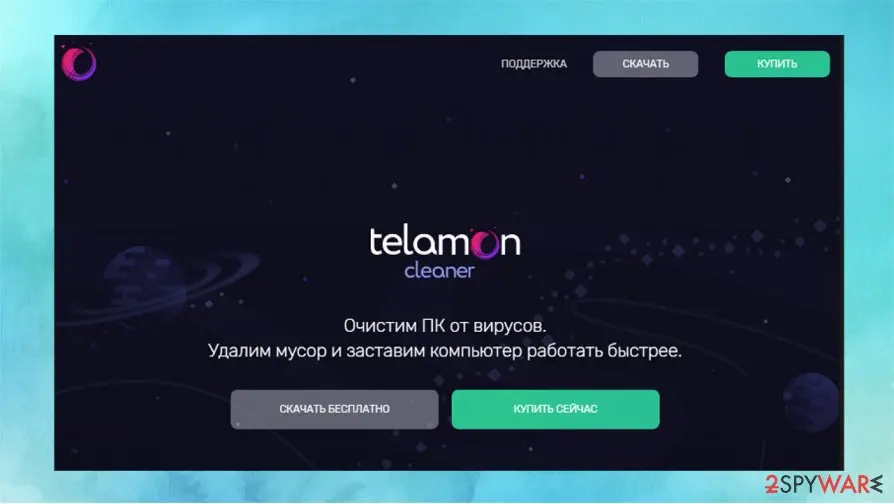
Telamon Cleaner - a suspicious program that is advertised as a handy computer cleaning tool
Telamon Cleaner is a rogue tool that claims to clean your computer but it only urges to buy its full version if you want to fix all errors.
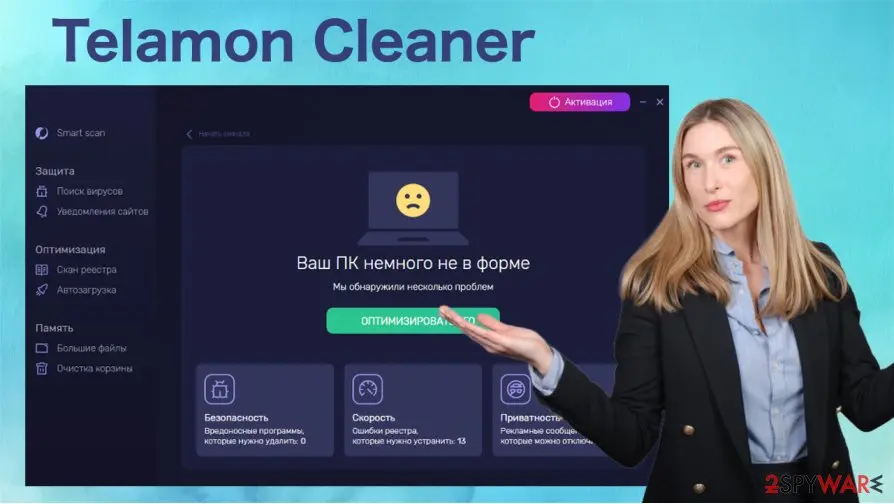
This shady program shows issues without telling what errors were detected during the system scan and how serious these problems are. After the scan, the tool only urges to buy a paid version claiming that this is the only solution to fix the computer.
This tool was developed by Argo Enterprise, a company from Russia. The developers represent Telamon Cleaner as a useful tool to remove junk, make the computer run faster, and even detect viruses. It sounds like a powerful program that combines different maintenance tools. The developers even claim that the trial version is free for 7 days but in reality, you can't fix any issues without paying for the full version.
Telamon Cleaner is categorized as a potentially unwanted program (PUP) because it tries to trick the user into buying this product by claiming that the user's PC is practically broken and he/she need to repair it as soon as possible.
When the user buys the full version, Telamon Cleaner claims to magically solve all errors. However, it is just a deceptive technique that has led hundreds of users to become the victims of a marketing trick.
Moreover, the developers of Telamon Cleaner collects information about the system, technical data, and other information. They even collect such information as your web browser preferences, installed extensions, etc. It is inadvisable to give sensitive information to any potentially unwanted programs because the developers can use this data for their own benefit or sell it to third parties.
According to experts, Telamon Cleaner removal is the best option for all users. This product is not only trying to trick you to buy the full version but also showing fake scan results that should be ignored.
Moreover, potentially unwanted programs often bring other suspicious products to the computer: browser hijackers, other cleaning tools, adware, etc. These potentially unwanted programs can enter the system together with this product because suspicious tools often use bundling to reach people.
The only thing Telamon Cleaner is good at - knowing how to scare the user and trick him/her that their device is barely operational and needs to be cleaned. It only takes up space on your computer and collects information about your whole system, so there is no need to keep it.
When looking for a trustworthy security or cleaning program, you should pay attention to feedback from the users about the software that you want to install. You can find discussions about the products in IT forums or other sources.
Also, try to look at information about the developers and other facts that can be useful to understand if the program is reliable. One thing is clear - such a program like Telamon Cleaner is not worth your time because it uses deceptive methods to enter users' computers.
If you decided to remove Telamon Cleaner, scan the computer with powerful anti-malware software. For example, you can use or . A system scan is necessary because you may find more suspicious programs or even infections in your device.
From our report of Oct 2020 · not reviewed since
More from our earlier report on Telamon Cleaner
- Uninstall Telamon Cleaner manually and clean the computer with a reliable anti-malware software
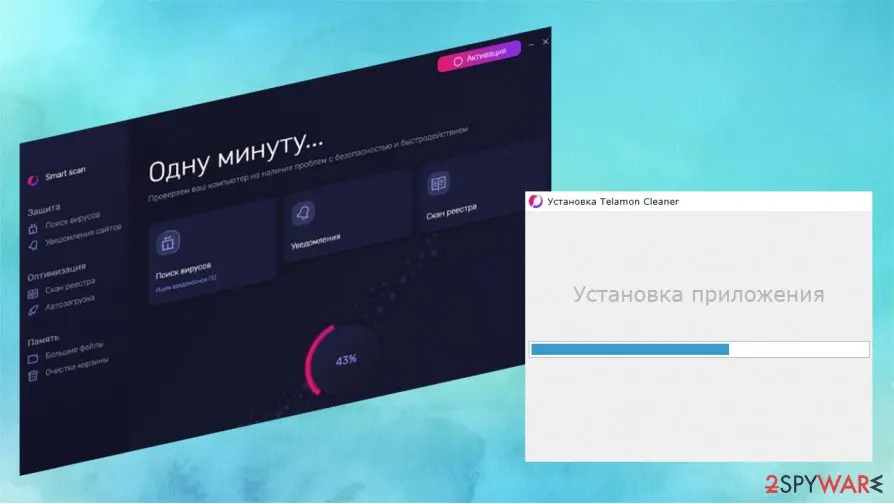
How Telamon Cleaner got installed
From our report of Oct 2020 · not reviewed since
This particular potentially unwanted app is spreading by using various methods.
For example, the PUP has an official website, although it can also enter your computer via online ads or bundling . This usually happens due to inadequate visitor count on the official site, and the developers try to find different ways to place their products on users' devices.
The most common way how PUP arrives at the computer is by downloading free software from torrent websites and other suspicious third-party sources. People do not know that free software is often bundled together with additional apps. Only after the installation users start to notice an application appearing seemingly out of nowhere.
If you want to avoid annoying programs or serious threats, you should choose the "Advanced/Custom" installation and uncheck all additional tools. Or even better - stop downloading free software from suspicious sources because one day you might install such serious infection like ransomware.
Moreover, experts recommend avoiding suspicious pop-up ads that may start to show up during your browsing. If any of these ads offered to fix your computer's problems with "free cleaner", you should ignore it. Otherwise, you may be tricked into downloading a suspicious program to your computer and after that - paying for questionable service.
Check your PC and browser
Microsoft Defender reports Telamon Cleaner as PUA:Win32/Chistilka.
In a Defender name, the part before the colon is the category, the part after it is the platform, and the part after the slash is the family Microsoft assigned. A suffix after ! is an internal Microsoft marker, not a different threat.
Generic labels such as Agent, GenericKD or Malware.AI only say that a file looks malicious, not what it does; our guide to antivirus detection names shows how to read them.
How to uninstall Telamon Cleaner
How to remove Telamon Cleaner
Uninstall it, then remove what keeps it starting with Windows.
Nothing it flagged needs fixing.
Step 1: Uninstall programs you did not mean to install
Telamon Cleaner rarely comes alone: it is usually installed by, or together with, a free program. In Windows 11 open Settings > Apps > Installed apps, in Windows 10 Settings > Apps > Apps & features, and sort by install date.
Uninstall every entry from the day the trouble began that you did not install on purpose, for example a download manager, a converter or a browser you never chose.
Keep drivers and entries from Microsoft, Intel, AMD, NVIDIA or your PC's maker unless you are sure.
Full procedure with screenshots: Uninstall a program or app in Windows On uGetFix
Step 2: Remove it from startup
Press Ctrl + Shift + Esc to open Task Manager and select Startup apps (Windows 11) or the Startup tab (Windows 10). Disable entries you do not recognise, especially ones with no publisher or with a name that copies a Windows component.
Right-click an entry and choose Open file location to see where it runs from: programs in
%AppData%or%Temp%deserve a closer look. Some entries are not listed there but in the registry Run keys, which the procedure below shows how to check.Full procedure with screenshots: Stop apps from opening at startup On uGetFix
Step 3: Delete the folders left behind
Uninstalling often leaves the program's folders, and some threats reinstall themselves from them.
Press Windows + R, type
%LocalAppData%and press Enter, then do the same for%AppData%and %ProgramData%, and look for folders named after Telamon Cleaner, its publisher or created on the day the problem started.Delete those folders, and check
C:\Program FilesandC:\Program Files (x86)too.If Windows says a file is in use, end it in Task Manager or delete the folder after a restart in Safe Mode. The folders are the same in Windows 11 and Windows 10.
Full procedure with screenshots: Remove what malware leaves behind in Windows
Step 4: Scan the PC, then run the offline scan
A scan finds the parts of Telamon Cleaner that the manual steps cannot see. In Windows Security > Virus & threat protection > Scan options, start a Full scan and quarantine what it reports.
Follow it with Microsoft Defender Antivirus (offline scan) > Scan now, which restarts the PC and checks the disk while Windows and the malware are not running.
It takes about 15 minutes and works the same in Windows 11 and Windows 10. If either scan finds something, run the full scan again after removal until it comes back clean.
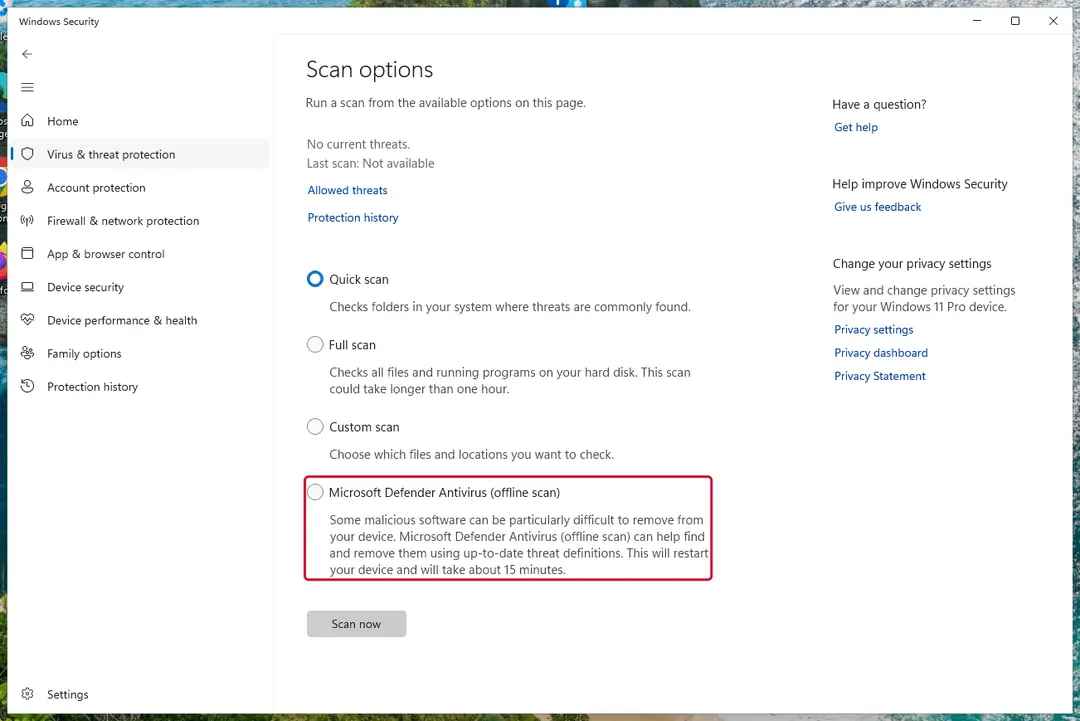
Windows 11: Windows Security > Virus & threat protection > Scan options. Full procedure with screenshots: Run a Microsoft Defender Offline scan
Instructions for each browser and system
The detailed steps for every browser and system this guide covers. Open the one you use.
Uninstall from Windows
To remove Telamon Cleaner manually, you need to follow the steps given below.
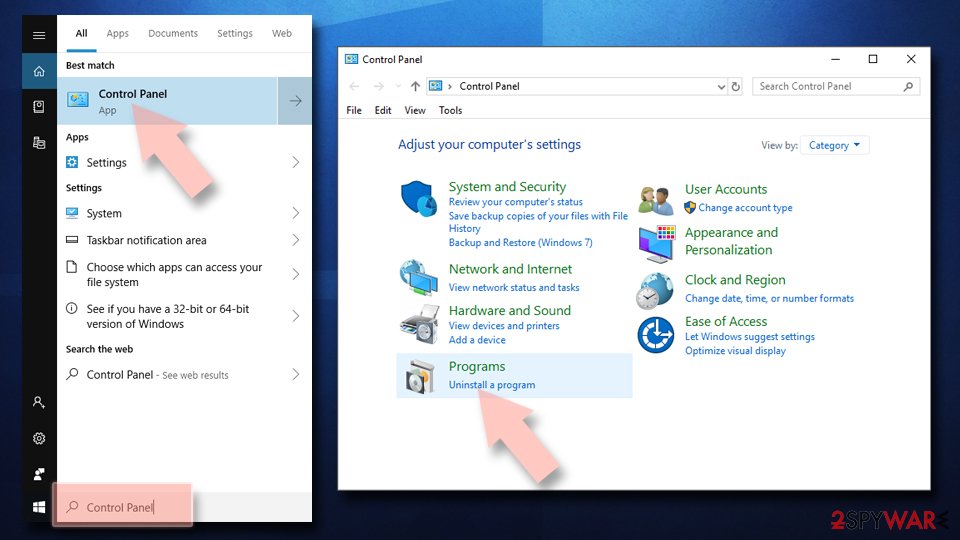
Uninstall from Windows 10/8:
- Type Control Panel into the Windows search box and open the result.
- Under Programs, select Uninstall a program.
Uninstall from Windows 7/XP:
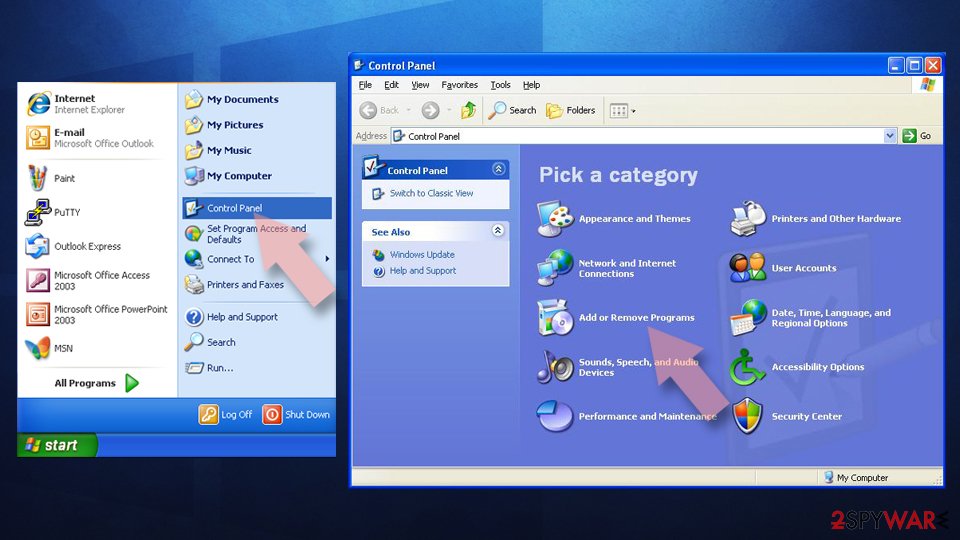
- Click on Windows Start > Control Panel (Windows XP users should click on Add/Remove Programs).
- In Control Panel, select Programs > Uninstall a program.
Remove the unwanted program:
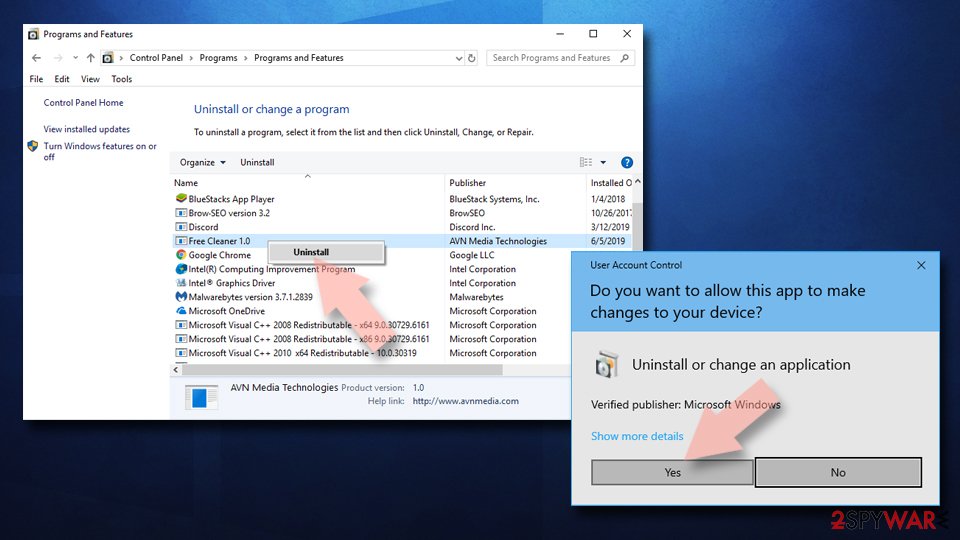
- In the Programs and Features window, look for any recently installed suspicious entries, select them, and click Uninstall.
- If User Account Control appears, click Yes to confirm, then complete the removal.
Choose a proper web browser and improve your safety with a VPN tool
Online spying has got momentum in recent years and people are getting more and more interested in how to protect their privacy online.
One of the basic means to add a layer of security - choose the most private and secure web browser. Although web browsers can't grant full privacy protection and security, some of them are much better at sandboxing, HTTPS upgrading, active content blocking, tracking blocking, phishing protection, and similar privacy-oriented features.
However, if you want true anonymity, we suggest you employ a powerful VPN - it can encrypt all the traffic that comes and goes out of your computer, preventing tracking completely.
Lost your files? Use data recovery software
While some files located on any computer are replaceable or useless, others can be extremely valuable.
Family photos, work documents, school projects - these are types of files that we don't want to lose. Unfortunately, there are many ways how unexpected data loss can occur:
- power cuts
- Blue Screen of Death errors
- hardware failures
- crypto-malware attack
- even accidental deletion
To ensure that all the files remain intact, you should prepare regular data backups. You can choose cloud-based or physical copies you could restore from later in case of a disaster. If your backups were lost as well or you never bothered to prepare any, can be your only hope to retrieve your invaluable files.
From our report of Oct 2020 · not reviewed since
Remove Telamon Cleaner from your computer and use a reliable program instead
We already explained the reasons why you should remove Telamon Cleaner.
Not only it will help to get rid of suspicious notifications about new errors, but it will help to protect your privacy as well. If you want to remove the program from your device, you do not have to call a computer specialist. This potentially unwanted program can be easily uninstalled from the system.
Technically, this tool is not a virus, so you should be able to uninstall it like any other software. But just in case, the manual Telamon Cleaner removal guide is represented below. It will take only a few minutes of your time if you follow the steps below correctly.
For example, use or if you want to make sure that the device is free of suspicious files that may pose harm to the system. This program will fix any issues in your system.
Moreover, remember to always use reliable programs. Suspicious tools from unofficial websites or suspicious ads are not the best option if you wish to avoid potentially unwanted programs or malware.
Questions about Telamon Cleaner
Defender removed PUA:Win32/Chistilka. Am I safe now?
Often yes, but check two things. First, whether the detection was caught on arrival: a file in Downloads or in an archive that Defender quarantined before it ran is the best case.
Second, whether PUA:Win32/Chistilka comes back. If it returns, or if Protection history shows several different detections around the same date, something on the PC keeps producing the file and needs to be found.
Run a full scan and, if anything remains, an offline scan. If the category names a password stealer or a backdoor, change your passwords from another device even if the file is gone.
Can I ignore PUA:Win32/Chistilka if the PC works fine?
No. Many threats are built to leave the PC working normally while they steal passwords, use the processor or wait for instructions. A detection is Defender telling you it saw something malicious, and the absence of symptoms says nothing about its activity.
Check the action in Protection history: if it is anything other than Quarantined or Removed, remove it now. Then run a full scan. If the detection was a single file caught on download and does not return, you can move on; if PUA:Win32/Chistilka reappears, follow the removal steps in this guide.
Is Microsoft Defender enough to remove Telamon Cleaner?
For most home PCs it is a solid first step. Defender detects this threat as PUA:Win32/Chistilka, and a full scan followed by an offline scan covers the places where Telamon Cleaner usually hides. The offline scan runs before Windows starts, so malware that hides while Windows is running cannot interfere: Run a Microsoft Defender Offline scan.
Defender does not undo everything, though. It does not restore browser settings, decrypt files or change passwords that may have been copied, which is why this guide has separate steps for those. If Defender finds the same item again after removal, something else keeps reinstalling it.
How do I stop programs like Telamon Cleaner from installing?
Turn on Potentially unwanted app blocking in Windows Security > App & browser control > Reputation-based protection settings, with both Block apps and Block downloads checked. Download programs from the developer's own site or the Microsoft Store, choose Custom in installers and untick extra offers, and treat large download buttons on file sites as ads.
Apps from the Microsoft Store are checked by Microsoft and uninstall cleanly. Keep real-time protection on, so that bundled offers flagged as unwanted are stopped before they install.
Is Telamon Cleaner a virus?
Not in the strict sense. Nothing reported so far shows Telamon Cleaner copying itself, encrypting files or stealing passwords, which is what security companies mean by a virus.
What people see is the Windows Security detection PUA:Win32/Chistilka, which fits an unwanted program: software that arrives bundled with something else and keeps running without being asked for. Many antivirus programs label such software PUP or PUA rather than malware.
That label does not make it harmless. It still uses your PC and connection, may collect data and is often bundled with other programs, so removing it is the right call. Uninstall it from Installed apps, then check startup items and browser settings for its companions.
Do I need special software to remove Telamon Cleaner?
No. Windows has everything needed:
- Installed apps for the uninstall
- the Startup list and Task Scheduler for what restarts it
- Windows Security for a scan afterwards
The steps in this guide take about fifteen minutes. A dedicated tool is a convenience when you would rather not check each place yourself or when the program keeps coming back.
Whatever you use, finish by confirming that the Windows Security detection PUA:Win32/Chistilka is gone after a restart, and avoid downloading removal tools from pages that promote them through scary warnings.
Does Telamon Cleaner collect my data?
Nobody has analysed Telamon Cleaner yet, so there is no confirmed answer. Programs in this category often collect usage data, browsing history or device details and share them with advertisers, and their privacy policies usually allow it.
The sign reported, the Windows Security detection PUA:Win32/Chistilka, does not by itself show data theft, and nothing points to passwords or files being taken.
If you want to be careful, clear the browser's cookies after removal and review which apps may run in the background. Change passwords only if you also see signs of something more serious, such as unknown sign-ins or messages sent from your accounts.
How do I know if I need Telamon Cleaner?
Ask three questions. Did you install it on purpose? Have you ever opened it?
Does anything you use depend on it? If the answers are no, you do not need it. The sign that brought you here, the Windows Security detection PUA:Win32/Chistilka, suggests it arrived without a clear choice.
Programs bundled with free software rarely do anything their host program needs. Uninstall it, restart, and see whether anything you rely on stops working. If nothing does, which is the usual outcome, you can forget about it.
Does Telamon Cleaner use a lot of resources?
It depends on the program, and no measurements have been published for Telamon Cleaner. The sign reported is the Windows Security detection PUA:Win32/Chistilka. Check for yourself: open Task Manager, find its process and watch the CPU, memory and network columns for a minute while the PC is otherwise idle.
Steady use with nothing open is a strong reason to remove it. Even if it seems light, it may run more processes under other names, so sort Installed apps by date and remove anything else from the same day. Then restart and compare.
Will Fortect remove Telamon Cleaner?
Fortect scans Windows for malware and unwanted programs and repairs the system files and settings they change, and its free scan shows what it finds on your PC before you decide anything.
For Telamon Cleaner, follow the plan above as well: the browser steps take back permissions and settings that no scanner treats as a threat, and uninstalling the program that brought it removes the source.
Run Microsoft Defender's full scan and, if anything was found, its offline scan as a second opinion. If the symptoms are gone after the plan and both scans are clean, there is nothing more to do.
Sources
- How-To Geek: PUPs Explained: What is a "Potentially Unwanted Program"? (read October 7, 2026)
- Telamon Cleaner: Лицензионное соглашение (read October 7, 2026)
- Virusai: Virusai (read October 7, 2026)
- FTC: How to recognize, remove and avoid malware (read October 7, 2026)
- Microsoft Learn: Microsoft Defender Offline (read October 7, 2026)