
TuneUp Pro: what it is and how to remove it
TuneUp Pro is the tool that offers to optimize the performance of your machine with all the cleaning and enhancement features, but this program only can damage the registry. There are many advertisements that promote the program and a full list of functions that developers claim to offer, but this is considered to be a potentially unwanted program that gives no value for the system or the user.
Facts checked October 6, 2026. Removal steps tested on Windows 11 (26H2) and checked against Microsoft's and the browser makers' current documentation. Sections marked as our earlier report are the original text: they describe the threat as it was then and have not been reviewed since. The 2026 status, the removal steps and the questions are current.
Automatic
Get a free scan and check if your PC is infected.
Fortect finds malware, unwanted programs and the Windows damage they leave behind, and repairs it in one pass.
If TuneUp Pro keeps coming back after uninstalling, a scan can find what reinstalls it.
Do it yourself · free Remove TuneUp Pro yourself 5 steps, about 15 minutes, no software needed.
Start the steps
TuneUp Pro: summary
| Distribution | Freeware installations include such apps as extra additions and downloads shady tools automatically behind users' back. Promotional sites and advertisements also distribute such programs |
|---|---|
| Name | TuneUp Pro |
| Type | Rogue system tool |
| Symptoms | The program pretends to scan the machine to find errors and issues, so the list with predetermined problems gets displayed after that with claims that the user needs to install additional software or pay for the licensed version that should fix all computer issues and clean malware |
| Price | The full version costs up to $40 or 425 Swedish Kronas |
| Danger | The tool promotes other software and tricks people into paying for the licensed key of a fake optimizer. Such rogue registry cleaners affect the performance when interferes with system files and programs |
| Removal | Scan the PC with security software to find and remove the malware and anything installed with it. Fortect scans Windows for malware and repairs the system files and settings it damaged. Remove it nowTo use the full-featured product, you have to purchase a license for Fortect. The scan is free. |
Show 6 more facts
| Detection names | No Microsoft detection name is known |
|---|---|
| Damage | Not recorded in the old report |
| Evidence | 4 write-ups by security sites; details still limited |
| Program | TuneUp Pro |
| First seen | 23 January 2020 |
| Facts checked | 6 October 2026 |
Is TuneUp Pro a real security program?
From our report of Jan 2020 · not reviewed since
Tuneup Pro is the rogue registry cleaner that should increase the performance of the PC but only with the licensed version
TuneUp Pro is the tool that offers to optimize the performance of your machine with all the cleaning and enhancement features, but this program only can damage the registry.
There are many advertisements that promote the program and a full list of functions that developers claim to offer, but this is considered to be a potentially unwanted program that gives no value for the system or the user. It should optimize the machine by interfering with Windows registry entries and repair system issues, but even the Microsoft company themselves consider such tools shady.
The main problem with the TuneUp Pro virus is that there no indication that the program actually is cleaning the registry, or the PC has gained any performance boost.
Additionally, there are many more issues with modifying the registry, and such a tool can create more issues instead of fixing problems with junk files. The program should be avoided at least because AV tools detect the program as potentially unwanted or even as a trojan infection.
TuneUp Pro is one of many rogue tools that cannot be easily found on the list of programs, so it is not that easy to uninstall the program manually when you are not the one that installed the PUA. It may resemble other legitimate tools and claim to have any relation or same functions, but do not trust the content that you find on online promotional advertisements.
The first symptoms of this cleaner may be intrusive ads and redirects to sites where this or different program gets promoted. It is related to ad-supported pages and commercial content creators initially, so don't get surprised if you get exposed to various online material that seems suspicious or questionable. TuneUp Pro is created to push the licensed version and trick people into paying for the program.
However, you shouldn't even consider believing the list displayed before you because, in most cases, machines do not need to have these registry cleaners to run smoothly. So TuneUp Pro is only an aggressively advertised potentially unwanted program. Note that the list you receive after the alleged scan is most likely fake.
Tuneup Pro is a PC optimization tool that may cause various activities on your computer, seeking to convince you into buying its licensed version for approx. thirty-five dollars, so it may show many error codes to scare the user. As its developers claim, this program was designed for increasing the system's speed, improving the computer's stability, and keeping it error-free.
In fact, it is truly capable of removing some of the people's unnecessary files, but be sure that it won't improve your system in any way.
Even though it might be downloaded on its official site, in most of cases, it travels bundled with free programs and gets installed without users' knowledge. So you need an automatic tool for Tuneup Pro removal that can terminate all the associated programs once and for all.
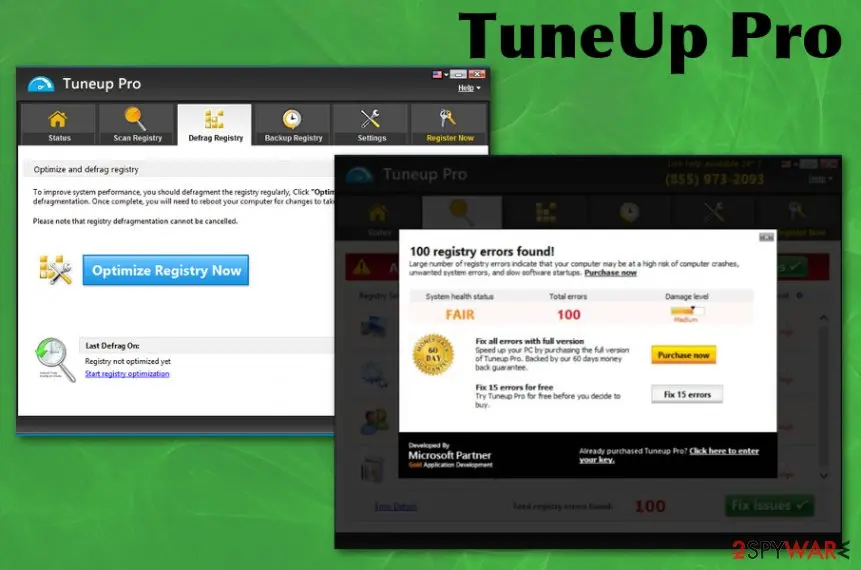
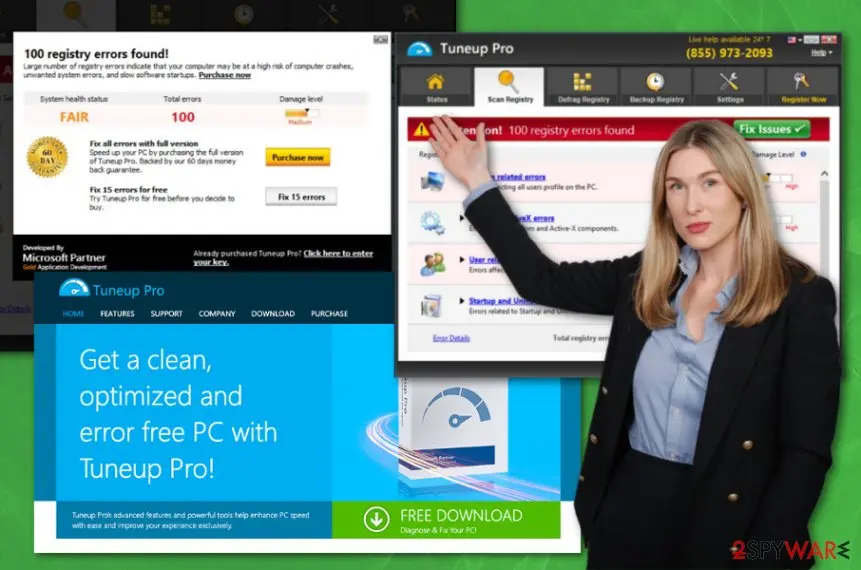
Once installed, it loads its scanners and supposedly looks for the files, bad registry entries, and errors. Later on, it will display you scan results that will include a long list of programs that have to be removed.
While we can't declare that these results are true, you should be very careful what you see because they may be filled with pre-determined results, names of common errors or malware to scare you. All this is to make you more eager to pay for the full Tuneup Pro version that is promoted.
However, there might be some legitimate programs that don't affect PC's speed. Therefore, NEVER trust and do NOT click 'Fix now' or 'Remove' and other buttons. You may damage the machine without even knowing. If you click any of those buttons, you get redirected to a Tune-up Pro purchase website and tricked into buying its licensed version since this is the tool that can repair issues.
If you would do so, you could not only lose your money for a useless program because neither the free version nor the paid variant does the promised things.
You may also reveal your personal information, such as credit card details, bank account, passwords, to a questionable company. Therefore, do not leave it on your computer! If it has already sneaked inside it, take needed actions and remove Tuneup Pro without hesitation.
From our report of Jan 2020 · not reviewed since
More from our earlier report on TuneUp Pro
- TuneUp Pro removal should include the full system scan using anti-malware tools that can detect various PUPs and clean the machine
- Slow performance and disabled system functions can remain to bother you even after the PUA termination, so get a tool like that should optimize the performance and fix virus dagame
How TuneUp Pro got on your PC
From our report of Jan 2020 · not reviewed since
Even though it happens quite often, there are lots of cases when this PC optimizer appeared on the system after downloading various freeware and shareware without paying enough attention.
That's because it has been integrated into various free program installation setups, so when you skip through steps when installing download managers or video streaming software, you get extra apps without notice. This way, they are able to spread PUPs more widely and trick people into buying this dubious program or another supposedly valuable tool.
If you do not want to experience the system's slowdowns and be disrupted by constant scans or pop-up ads, you should be more attentive during the installation of free programs and when choosing the source in the first place. Always select Advanced or Custom installation mode, read everything carefully, and unmark propositions to install additional programs.
How to remove TuneUp Pro
Nothing it reports is real.
These steps remove it and undo a payment if you made one.
Step 1: Do not pay, and undo a payment if you made one
Nothing that TuneUp Pro says it found needs fixing by TuneUp Pro. Close its windows and do not enter card details.
If you bought it, contact your bank or card issuer about a dispute and cancel any renewal, keeping the receipt e-mail as evidence. Uninstalling it from Windows 11 or Windows 10 removes the program but leaves the subscription running.
Full procedure with screenshots: What to do after paying a scammer
Step 2: Uninstall TuneUp Pro
TuneUp Pro is removed like any other program, from the list of installed apps. In Windows 11 that is Settings > Apps > Installed apps, in Windows 10 Settings > Apps > Apps & features, and in both you can also use Control Panel > Programs and Features.
Select TuneUp Pro, click Uninstall and follow the uninstaller to the end. Then look at the entries just above and below it when the list is sorted by date: bundled programs install at the same minute.
Full procedure with screenshots: Uninstall a program or app in Windows On uGetFix
Step 3: Remove it from startup
Press Ctrl + Shift + Esc to open Task Manager and select Startup apps (Windows 11) or the Startup tab (Windows 10). Disable entries you do not recognise, especially ones with no publisher or with a name that copies a Windows component.
Right-click an entry and choose Open file location to see where it runs from: programs in
%AppData%or%Temp%deserve a closer look. Some entries are not listed there but in the registry Run keys, which the procedure below shows how to check.Full procedure with screenshots: Stop apps from opening at startup On uGetFix
Step 4: Delete the folders left behind
Uninstalling often leaves the program's folders, and some threats reinstall themselves from them.
Press Windows + R, type
%LocalAppData%and press Enter, then do the same for%AppData%and %ProgramData%, and look for folders named after TuneUp Pro, its publisher or created on the day the problem started.Delete those folders, and check
C:\Program FilesandC:\Program Files (x86)too.If Windows says a file is in use, end it in Task Manager or delete the folder after a restart in Safe Mode. The folders are the same in Windows 11 and Windows 10.
Full procedure with screenshots: Remove what malware leaves behind in Windows
Step 5: Scan the PC, then run the offline scan
A scan finds the parts of TuneUp Pro that the manual steps cannot see. In Windows Security > Virus & threat protection > Scan options, start a Full scan and quarantine what it reports.
Follow it with Microsoft Defender Antivirus (offline scan) > Scan now, which restarts the PC and checks the disk while Windows and the malware are not running.
It takes about 15 minutes and works the same in Windows 11 and Windows 10. If either scan finds something, run the full scan again after removal until it comes back clean.

Windows 11: Windows Security > Virus & threat protection > Scan options. Full procedure with screenshots: Run a Microsoft Defender Offline scan
Instructions for each browser and system
The detailed steps for every browser and system this guide covers. Open the one you use.
Uninstall from Windows
Uninstall from Windows 10/8:
- Type Control Panel into the Windows search box and open the result.
- Under Programs, select Uninstall a program.

Uninstall from Windows 7/XP:
- Click on Windows Start > Control Panel (Windows XP users should click on Add/Remove Programs).
- In Control Panel, select Programs > Uninstall a program.

Remove the unwanted program:
- In the Programs and Features window, look for any recently installed suspicious entries, select them, and click Uninstall.
- If User Account Control appears, click Yes to confirm, then complete the removal.

Delete from macOS
Remove the unwanted application:
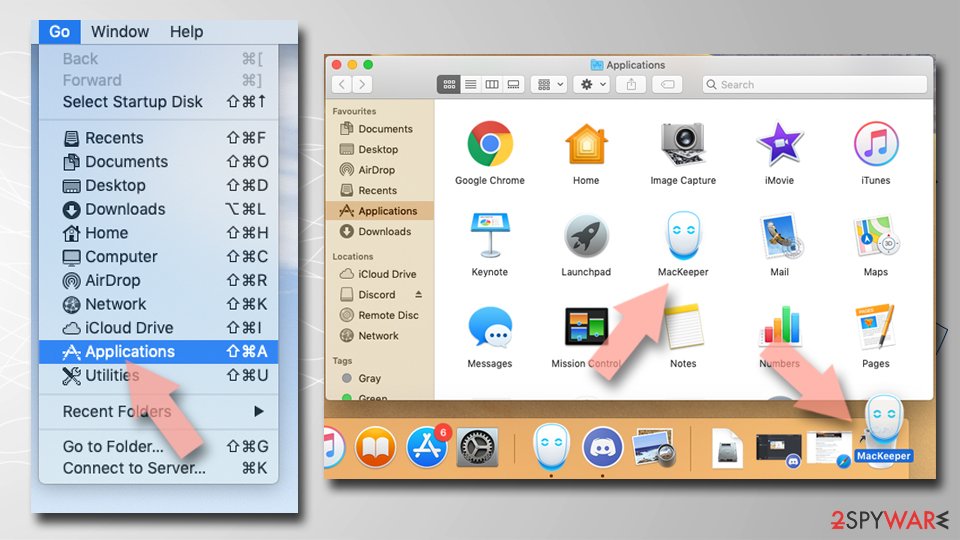
- From the menu bar, select Go > Applications.
- In the Applications folder, look for any suspicious entries, then drag them to Trash (or right-click and pick Move to Trash).
Delete leftover files and folders:
- Select Go > Go to Folder.
- Enter /Library/Application Support and remove any suspicious folders related to the unwanted program.
- Repeat the same check in the /Library/LaunchAgents and /Library/LaunchDaemons folders, deleting any suspicious entries.
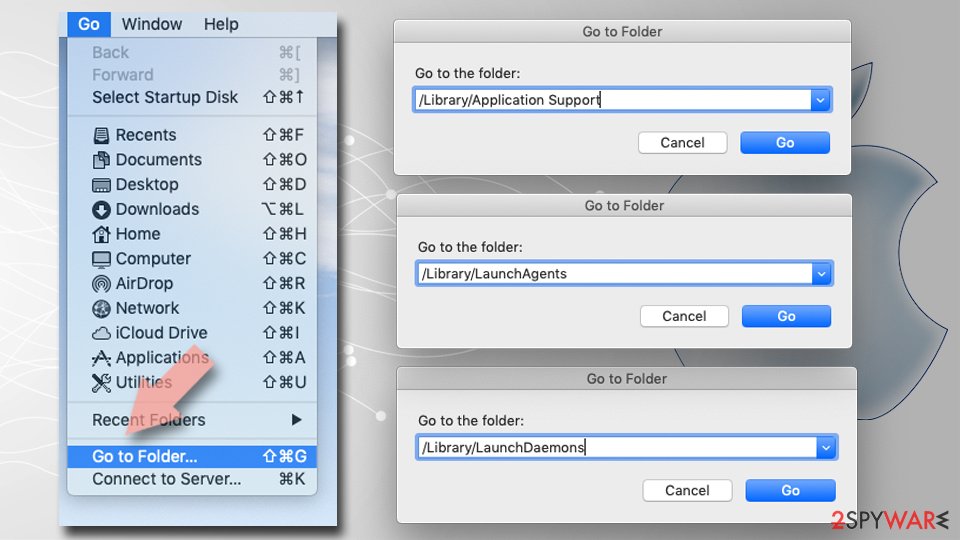
- Finally, empty the Trash to permanently remove the leftovers.
Do not let government spy on you
The government has many issues in regards to tracking users' data and spying on citizens, so you should take this into consideration and learn more about shady information gathering practices.
Avoid any unwanted government tracking or spying by going totally anonymous on the internet.
You can choose a different location when you go online and access any material you want without particular content restrictions. You can easily enjoy internet connection without any risks of being hacked by using VPN.
Control the information that can be accessed by government any other unwanted party and surf online without being spied on. Even if you are not involved in illegal activities or trust your selection of services, platforms, be suspicious for your own security and take precautionary measures by using the VPN service.
Backup files for the later use, in case of the malware attack
Computer users can suffer from data losses due to cyber infections or their own faulty doings.
Ransomware can encrypt and hold files hostage, while unforeseen power cuts might cause a loss of important documents. If you have proper up-to-date backups, you can easily recover after such an incident and get back to work. It is also equally important to update backups on a regular basis so that the newest information remains intact - you can set this process to be performed automatically.
When you have the previous version of every important document or project you can avoid frustration and breakdowns. It comes in handy when malware strikes out of nowhere. Use for the data restoration process.
From our report of Jan 2020 · not reviewed since
Tips for Tuneup Pro virus removal
If this rogue PC optimizer has already infiltrated your system behind your back, you may face difficulties in removing it as it protects itself from removal, and you may not find its uninstaller. Besides, it is known that Tuneup Pro virus often installs other programs alongside, so you may need to remove both of them.
It is recommended using a reputable anti-spyware when trying to remove Tuneup Pro from the system as it may hide from you in various places. Besides, this will help you not only delete this program but will also help you to get rid of other potentially unwanted programs that might be hiding in your PC system.
Registry cleaners can delete needed files and program drivers that diminish the performance.
Questions about TuneUp Pro
Is TuneUp Pro a virus?
Most programs that appear the way TuneUp Pro did are not viruses in the strict sense. They are potentially unwanted programs:
- real software that arrives bundled with other downloads and then shows offers
- changes browser settings
- starts with Windows
Some are harmless, some are annoying and a few carry adware. What makes it worth removing is that you did not choose it.
Uninstall it from Installed apps and check the startup list and the browsers for anything added the same day. If it refuses to uninstall or returns after a restart, treat it as more serious and run a Microsoft Defender offline scan.
How do I stop programs like TuneUp Pro from being installed again?
Most unwanted programs arrive through installers, so the fix is in how you install software. Download programs from their official sites or the Microsoft Store, not from download portals or ads above search results. During setup, choose Custom or Advanced installation and untick every extra offer, including browsers, toolbars and optimizers.
Decline update prompts that appear inside other programs unless you know them. In Windows Security, turn on reputation-based protection and potentially unwanted app blocking. These steps would most likely have stopped TuneUp Pro before it reached the app list.
TuneUp Pro will not uninstall. What can I do?
Close it in Task Manager first, then uninstall it from Settings > Apps > Installed apps (in Windows 10, Apps & features). If it blocks this or restarts itself, start Windows in Safe Mode, where third-party programs do not start automatically, and uninstall from there.
Afterwards run a Microsoft Defender offline scan and delete any leftover folder named after TuneUp Pro in C:\Program Files or %AppData%. If nothing works, Windows can be reset while keeping your personal files, which removes the program together with any settings it changed.
Did TuneUp Pro steal my information?
Not by itself, as far as reports show. Programs that display tuneUp Pro in the list of installed apps are built to scare people into paying or calling; they rarely take data on their own.
The risk comes from what you did in response: typing card details into the program, or letting a caller connect to your PC. If you did neither, uninstalling the program is enough. If you did either, treat that information as exposed:
- block the card
- change passwords from another device
- remove any remote-access tool that was installed
Do I need to reinstall Windows to get rid of TuneUp Pro?
Usually not. A thorough clean-up is enough when the offline scan finds nothing afterwards and you do not see tuneUp Pro in the list of installed apps again. A reset is the safer choice if an attacker had remote control, if security tools were switched off, or if detections come back after every clean-up.
Windows 11 can reset itself without a USB stick under Settings > System > Recovery > Reset this PC. Copy documents and photos out first and scan the copies. A reset does not change passwords or undo stolen data, so the account steps still apply.
Is Windows Security enough to protect me from programs like TuneUp Pro?
For most home users, yes, especially with Potentially unwanted app blocking turned on in Windows Security > App & browser control > Reputation-based protection settings. That setting blocks many scareware installers before they run.
No security tool stops every scam, though, because programs like TuneUp Pro are usually installed by the user after a frightening message. The habit that helps most is simple: ignore any website or pop-up that claims to have scanned your PC, and never call a number shown in a warning.
Why does TuneUp Pro look so official?
Because copying the design costs nothing and makes people trust it. The program behind tuneUp Pro in the list of installed apps borrows Windows colours, icons and wording, sometimes even the name of a well-known security brand. None of that gives it access to real security information.
A real alert can be checked in seconds: open Windows Security from the Start menu and look at Protection history. If nothing is listed there, the official-looking window is fake, and the program that draws it is what needs to be removed.
Is TuneUp Pro an antivirus?
No. It looks like one, with a shield, a scan and a list of threats, but TuneUp Pro is a rogue antivirus: its scans are designed to find something every time, and every fix leads to a payment page.
A real antivirus detects the same threats consistently, removes them without asking for money first and does not block other security tools. Windows 11 and Windows 10 already include Microsoft Defender in Windows Security, which is enough for most home users. Remove TuneUp Pro and keep Defender on.
Is my card safe after buying TuneUp Pro?
Treat it as exposed. The order page belongs to the seller of TuneUp Pro, and you cannot know how the number is stored or shared. Ask your bank for a replacement card, which is usually free, and dispute the original charge as a misrepresented product.
Until the new card arrives, check your account daily for small or foreign transactions. If the bank offers alerts for every card payment, turn them on. Keep the receipt and screenshots, because they support the dispute.
Will Fortect remove TuneUp Pro?
Fortect scans Windows for malware and unwanted programs and repairs the system files and settings they change, and its free scan shows what it finds on your PC before you decide anything.
For TuneUp Pro, follow the plan above as well: the browser steps take back permissions and settings that no scanner treats as a threat, and uninstalling the program that brought it removes the source.
Run Microsoft Defender's full scan and, if anything was found, its offline scan as a second opinion. If the symptoms are gone after the plan and both scans are clean, there is nothing more to do.
Sources
- Microsoft: Microsoft support policy for the use of registry cleaning utilities (read October 6, 2026)
- VirusTotal: Detection rate of the rogue tool (read October 6, 2026)
- Answers: How to remove TuneUp Pro? (read October 6, 2026)
- FTC: How to recognize, remove and avoid malware (read October 6, 2026)
- Microsoft Learn: Microsoft Defender Offline (read October 6, 2026)