
Allow-space.com ads: what it is and how to remove it
Allow-space.com is the adware that has no other purpose just to reroute online traffic of the infected system and cause frustration for the user when the internet speed goes slow due to all those intrusive redirects and pop-up ads. It redirects visitors to untrustworthy sites and leads to some questionable content that triggers more of those intrusive ads and redirects.
Facts checked October 6, 2026. Removal steps tested on Windows 11 (26H2) and checked against Microsoft's and the browser makers' current documentation. Sections marked as our earlier report are the original text: they describe the threat as it was then and have not been reviewed since. The 2026 status, the removal steps and the questions are current.
Automatic
Get a free scan and check if your PC is infected.
Fortect finds malware, unwanted programs and the Windows damage they leave behind, and repairs it in one pass.
If redirects to allow-space.com keep coming back, a free scan can check extensions, programs and browser settings in one pass.
Do it yourself · free Remove Allow-space.com ads yourself 3 steps, about 9 minutes, no software needed.
Start the steps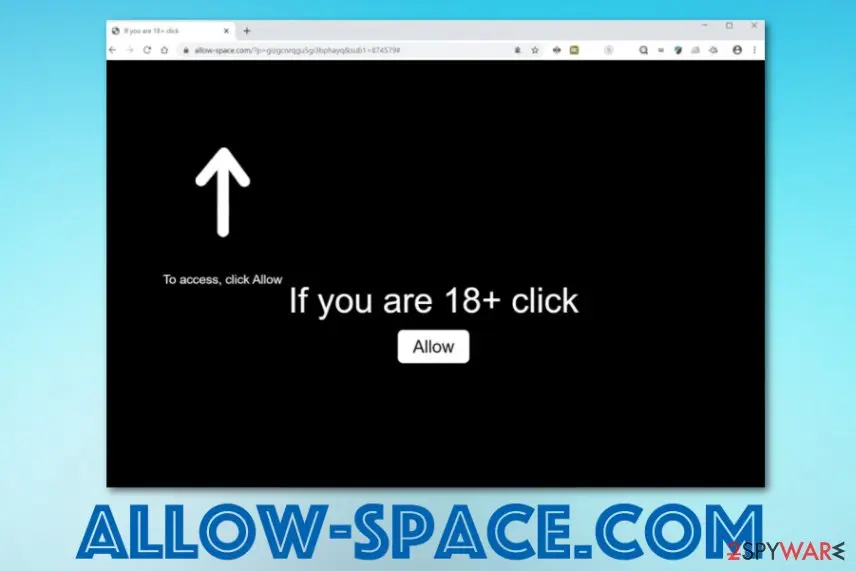
Allow-space.com ads: summary
| Distribution | Freeware installations when PUPs get pre-bundled alongside the popular software lead to these cyber infections because users skip through important steps of the procedure and automatically allows all the applications to get downloaded |
|---|---|
| Name | Allow-space.com |
| Type | Adware/ redirect virus |
| Category | Potentially unwanted program |
| Symptoms | Advertisements start appearing on the screen put of nowhere and manage to trigger redirects to shady sites, questionable services and deliver banners, pop-ups, other types of advertising material to sites that normally has no commercial content |
| Danger | The PUP can easily install browser-based applications and other tools on the machine without your permission or knowledge, so your device gets more affected than you think over time. Also, advertisers can track, collect, and misuse information regarding your online habits and preferences. These activities may even lead to privacy issues or identity theft[1] |
| Removal | Scan the PC with security software to find and remove the malware and anything installed with it. Fortect scans Windows for malware and repairs the system files and settings it damaged. Remove it nowTo use the full-featured product, you have to purchase a license for Fortect. The scan is free. |
Show 8 more facts
| Detection names | No Microsoft detection name is known |
|---|---|
| Damage | Not recorded in the old report |
| Evidence | 4 write-ups by security sites; details still limited |
| Domains | allow-space.com |
| Ads shown as | Redirects through ad pages |
| Browsers | Chrome, Edge and Firefox |
| First seen | 27 March 2020 |
| Facts checked | 6 October 2026 |
Is Allow-space.com ads dangerous?
From our report of Mar 2020 · not reviewed since
Allow-space.com is the redirecting domain that promotes other services and questionable online applications
Allow-space.com is the adware that has no other purpose just to reroute online traffic of the infected system and cause frustration for the user when the internet speed goes slow due to all those intrusive redirects and pop-up ads.
It redirects visitors to untrustworthy sites and leads to some questionable content that triggers more of those intrusive ads and redirects. The primary purpose of this potentially unwanted application is to get installed on the machine and affect web browser procedures by exposing the user to related pages and commercial content developed by a sponsor or the same PUP creators.
Unfortunately, PUP is the intruder that controls all the behavior and intrusive activities, so you cannot easily exit the website and hope that infection is terminated. It is possible that such applications are related to malicious advertisers and install additional tools to track you online, so system scan is the only way to go.
Allow-space.com virus is the name given for this PUP by frustrated users because of the advertisements coming to the screen and exposing people to possibly dangerous or merely dubious content. Ads and redirects caused by this intruder can promote various programs and tools or software. People often fall for those claims about functionality and useful features, so purchases get made, and users get a more persistent and annoying cyber infection.
There is no guarantee that Allow-space.com redirects cannot lead you to a really harmful site or domain that distributes malware around the globe. Once the redirect gets you from this site to another page or pop-up, the PUP developer is not responsible for the outcome. In most cases, sites have a privacy policy section and state these details there.
Also, adware-related pages like Allow-space.com should note users about tracking and data-sharing issues. However, experts can note that ad-supported sites, pretty much always involve ad-tracking functionalities.
Unfortunately, for you as a cyber threat victim, we should recommend getting rid of the PUP as soon as possible. The sooner you remove Allow-space.com, the better because the potentially unwanted program has not much time to interfere with settings and functions of your machine this way. However, the procedure takes time and preparation.
Allow-space.com removal can provide great results when you use proper anti-malware tools and run the full check on the affected machine. By doing so, you ensure that all the programs and tools added by the initial intruder can be found and terminated automatically.
You can save time this way and use it all for manual double-cheks or the procedures when you remove extensions and reset Google Chrome, Mozilla Firefox, Safari to default. You can find a few tips for these procedures below the article. Remember that the main aim of the Allow-space.com intruder is generating revenue, views, and page visits.
This is a tool that opens deceptive ads and loads tons of those pages on the screen to trick you into allowing notifications with the help of clickbait. It is designed to deceive visitors into allowing those notifications with claims about verification forms, additional content enabling, and so on, so people click on the needed button.
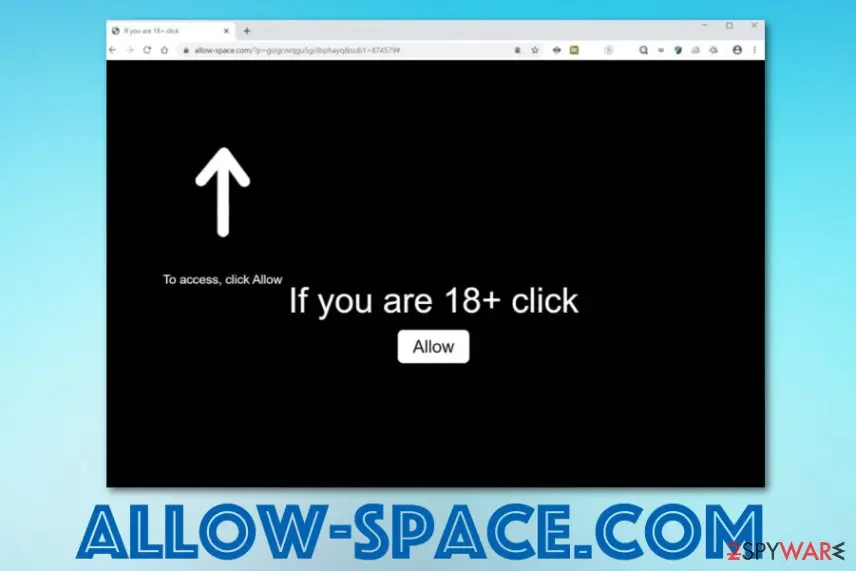
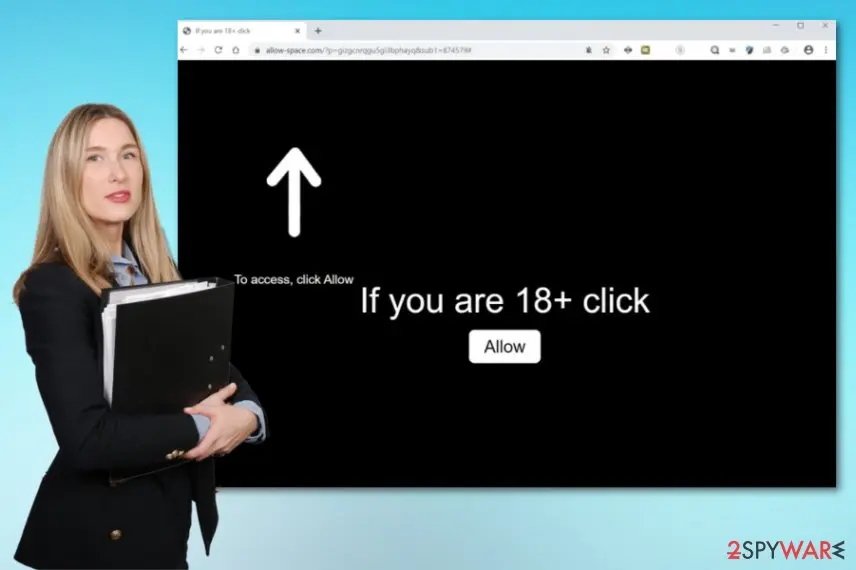
The example of the pop-up that is shown on this site:
If you click on anything that Allow-space.com shows on the screen, the subscription is automatically added, and push notifications start coming to the desktop directly, even when the web browser is closed and not active. These pop-ups also include links to foreign-language news sites, advertising services, and other sites that may promote software for you.
Try to avoid clicking on anything related to Ads by Allow-space.com and close the browser pages, content that shows up on your screen. You can ensure that you got exposed to ass little of these roque sites as possible, so there is less risk of getting exposed to serious malware-distributing pages.
If you end up on any of these pages, you cannot notice the installation of a dangerous program, so when dealing with these stealthy intruders it is important to get professional anti-malware tools and clean the machine and to run a double-check for any leftovers.
Allow-space.com may alter windows registry entries or affect system files, so get a system optimization program or a PC repair application like that can help you with such virus damage.
From our report of Mar 2020 · not reviewed since
More from our earlier report on Allow-space.com
- To remove Allow-space.com properly, you should go for the anti-malware program or security tool, so various places of the machine get checked and scanned
- Since potentially unwanted program manages to load itself on the computer behind your back it can also alter settings and preferences in the background without causing any symptoms or requiring for permissions.
- Get a tool like and run it on the device so all system files can get repaired if needed
How Allow-space.com ads got into your browser
From our report of Mar 2020 · not reviewed since
When it comes to PUPs like this adware, programs are bundled with free applications that people want to download.
In most cases, when users choose unreliable sources or skip through steps of installations they get all the packed applications downloaded and installed at once. However, you may not even notice the drop of the shady application or additional files.
Fortunately, you can avoid these installations entirely with a few easy steps and building a habit of caution. We shouldn't stress how important is to select a reliable program provider and choose where to browse but people still surf on dangerous sites and download programs from torrent, pirating services, and free domains.
If you don't go for official provider sites, reliable application stores or paid software download domains, you should at least go for Advanced or Custom installation options, so you are presented with the full list of programs that are included in the bundled and choose particular apps that get installed. You have full control this way.
Check your browser and PC
- Address:
allow-space.com
How to remove Allow-space.com ads
How to stop the Allow-space.com redirects
Work in this order and test a few links after each step, so you know which one was the cause.
Step 1: Check the browser's extensions
A browser that keeps landing on
allow-space.comby itself usually has an add-on doing it. Open the extension list (chrome://extensions, edge://extensions, or Extensions and themes in the Firefox menu) and remove anything you do not remember installing.Coupon, PDF, new tab, search and video downloader add-ons are the usual suspects. Do this in every browser on the Windows 11 or Windows 10 PC.
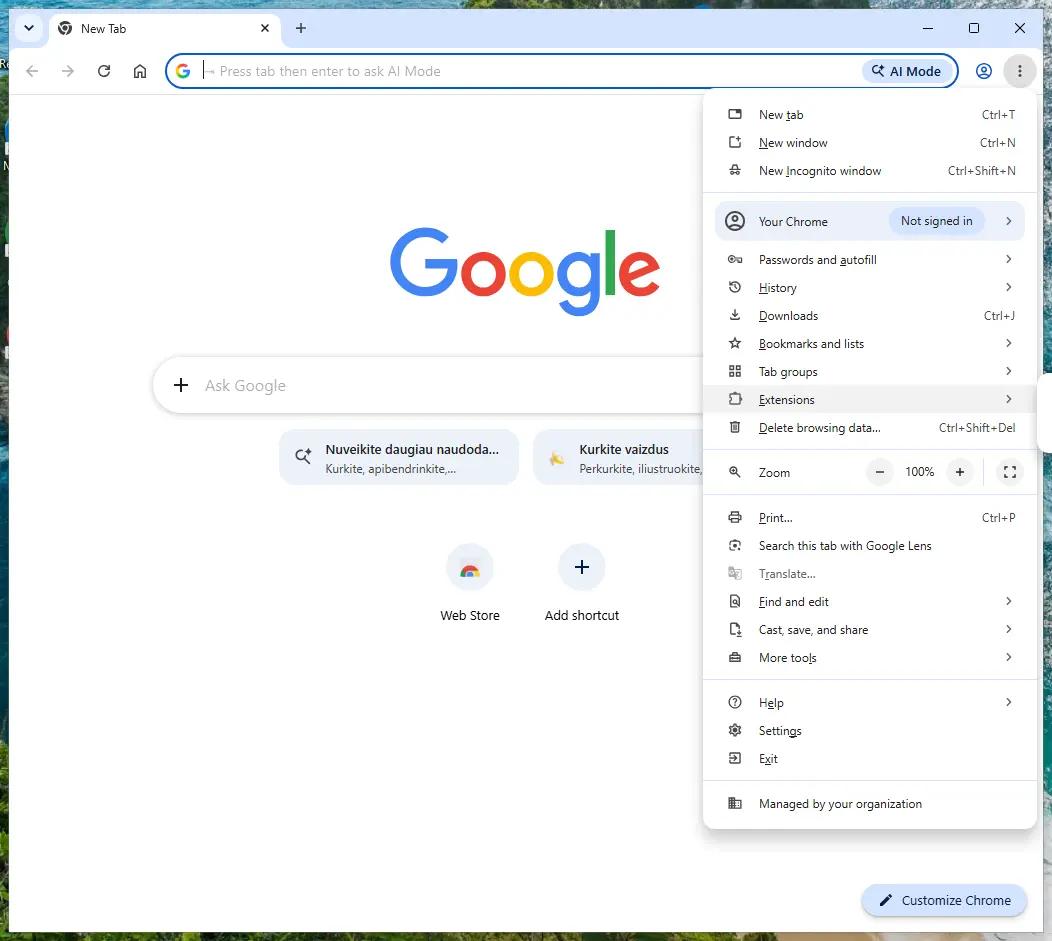
Chrome on Windows 11: More > Extensions > Manage extensions. Full procedure with screenshots: Remove a browser extension
Step 2: Reset the browser if the redirects continue
When
allow-space.comkeeps opening after the extensions are cleaned, reset the browser to its defaults. Chrome: Settings > Reset settings > Restore settings to their original defaults; Edge: Settings > Reset settings; Firefox: Help > More troubleshooting information > Refresh Firefox.A reset keeps bookmarks and saved passwords but clears site permissions, the start page and the search engine.
If every browser still redirects afterwards, the cause is a program in Windows 11 or Windows 10: check Settings > Apps > Installed apps for anything you did not install.
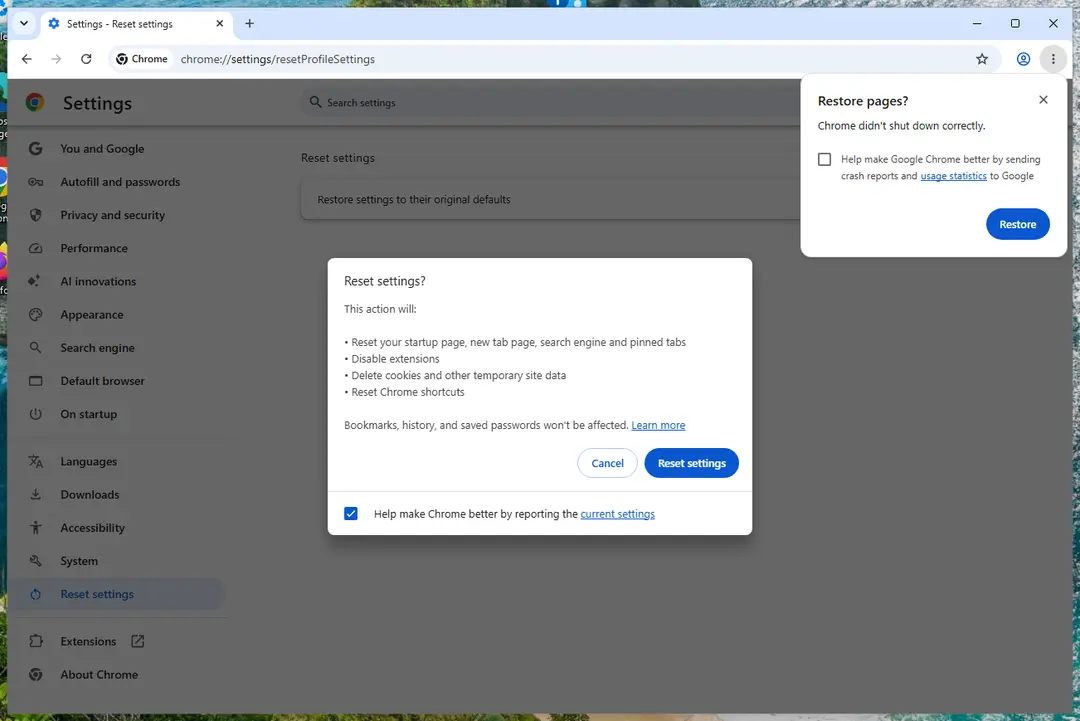
Chrome on Windows 11: Settings > Reset settings. Full procedure with screenshots: Reset a browser and fix a hijacked search engine
Step 3: Scan the PC if you downloaded anything from the ads
Most people who only saw the notifications can skip this step. If a notification or the page it opened made you download or run a file, delete the file and run a full scan, then a Microsoft Defender Offline scan.
In Windows 11 and Windows 10 open Windows Security > Virus & threat protection > Scan options, select Microsoft Defender Antivirus (offline scan) and click Scan now. The PC restarts and the scan takes about 15 minutes, so save your work first.

Windows 11: Windows Security > Virus & threat protection > Scan options. Full procedure with screenshots: Run a Microsoft Defender Offline scan
Instructions for each browser and system
The detailed steps for every browser and system this guide covers. Open the one you use.
Uninstall from Windows
Make the system fully clean again by following these steps. Eliminating Allow-space.com is important for the security of your device
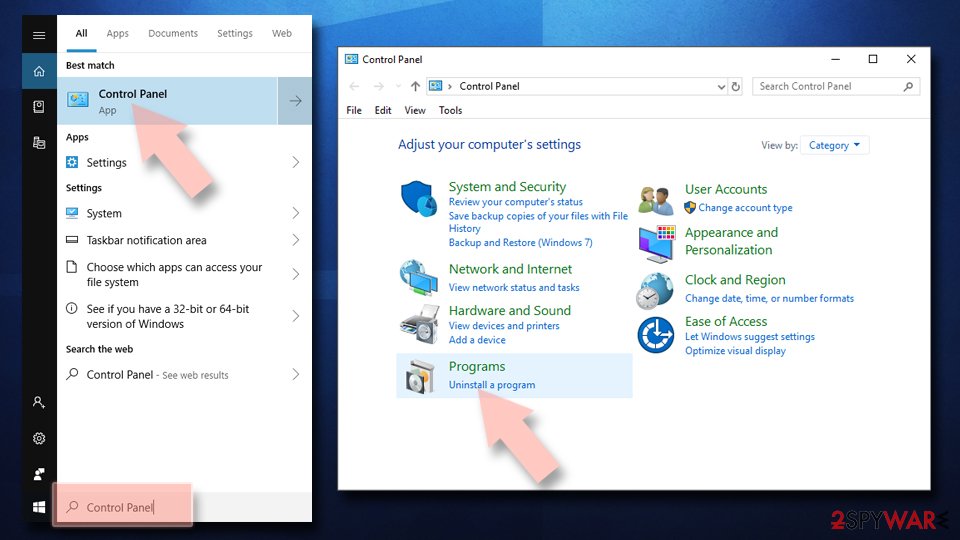
Uninstall from Windows 10/8:
- Type Control Panel into the Windows search box and open the result.
- Under Programs, select Uninstall a program.
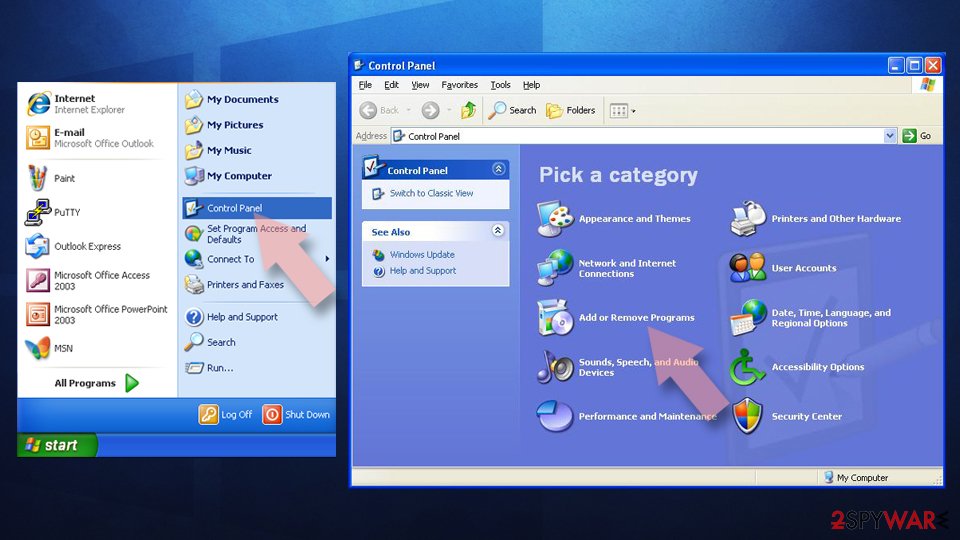
Uninstall from Windows 7/XP:
- Click on Windows Start > Control Panel (Windows XP users should click on Add/Remove Programs).
- In Control Panel, select Programs > Uninstall a program.
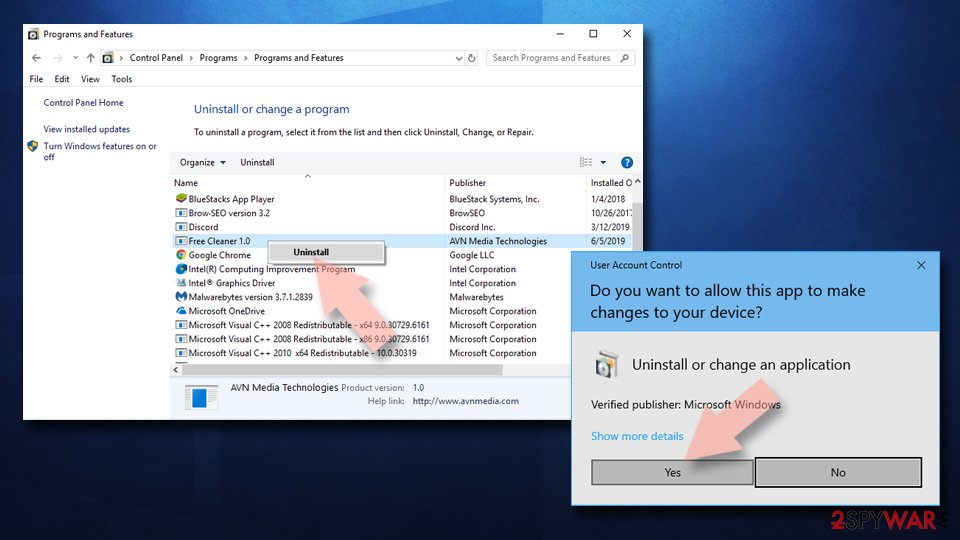
Remove the unwanted program:
- In the Programs and Features window, look for any recently installed suspicious entries, select them, and click Uninstall.
- If User Account Control appears, click Yes to confirm, then complete the removal.
Remove from Google Chrome
The browser may get affected by all the additional applications and addons or extensions, so remove them manually or reset the Chrome do default and reverse all the changes
Delete malicious extensions from Google Chrome:
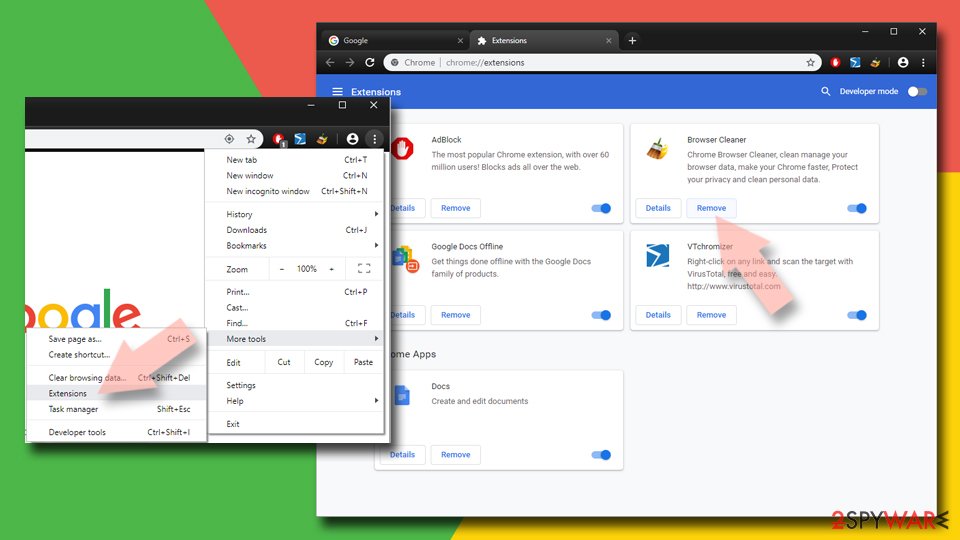
- Open Google Chrome, click on the Menu (three vertical dots at the top-right corner) and select More tools > Extensions.
- In the newly opened window, you will see all the installed extensions. Uninstall all suspicious extensions related to the unwanted program by clicking Remove.
Clear cache and web data from Chrome:
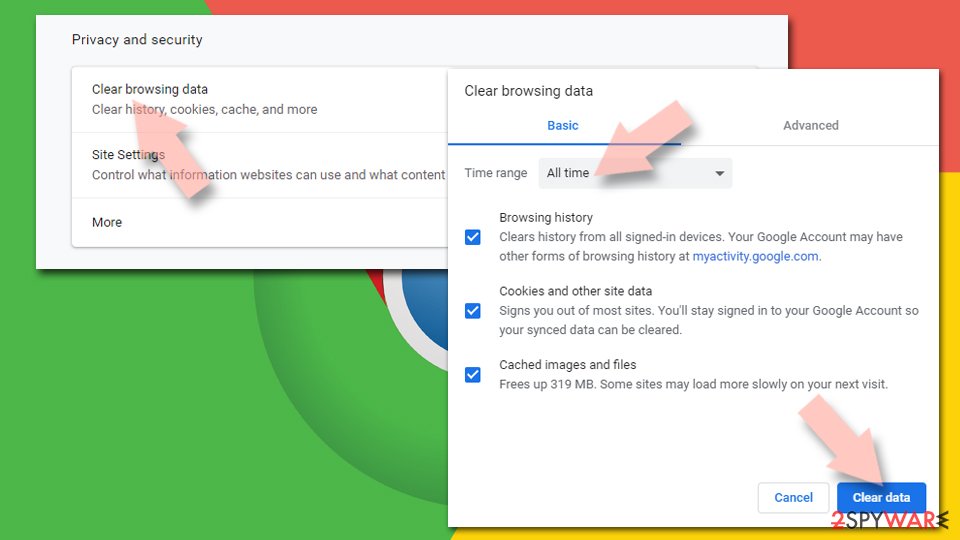
- Click on Menu and pick Settings.
- Under Privacy and security, select Clear browsing data.
- Select Browsing history, Cookies and other site data, as well as Cached images and files.
- Click Clear data.
Change your homepage:
- Click menu and choose Settings.
- Look for a suspicious site in the On startup section.
- Click on Open a specific or set of pages and click on three dots to find the Remove option.
Reset Google Chrome:
If the previous methods did not help you, reset Google Chrome to eliminate all the unwanted components:
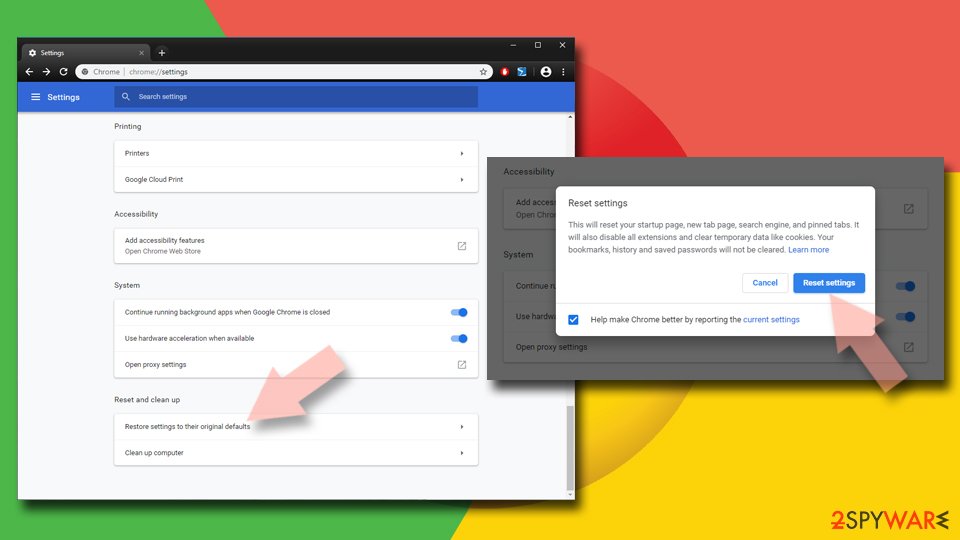
- Click on Menu and select Settings.
- In the Settings, scroll down and click Advanced.
- Scroll down and locate Reset and clean up section.
- Now click Restore settings to their original defaults.
- Confirm with Reset settings.
Remove from Microsoft Edge
Delete unwanted extensions from MS Edge:
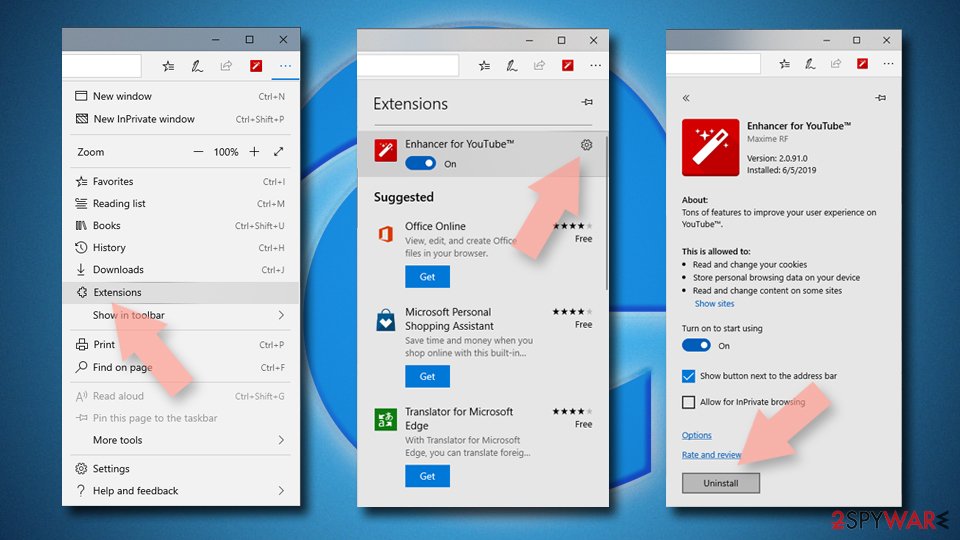
- Select Menu (three horizontal dots at the top-right of the browser window) and pick Extensions.
- From the list, pick the extension and click on the Gear icon.
- Click Remove.
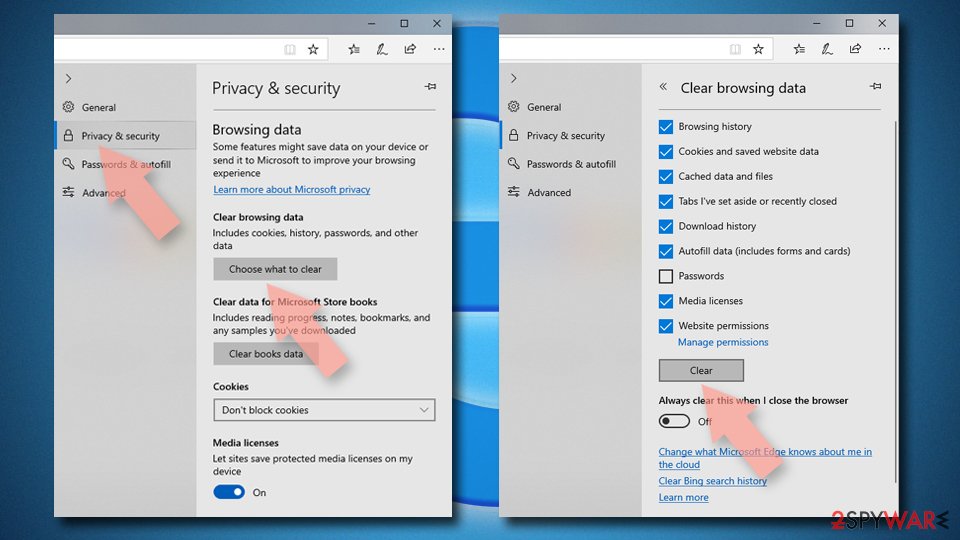
Clear cookies and other browser data:
- Click on the Menu (three horizontal dots at the top-right of the browser window) and select Settings > Privacy, search, and services..
- Under Clear browsing data, pick Choose what to clear.
- Select Cookies and other site data and Cached images and files. (apart from passwords, although you might want to include Media licenses as well, if applicable) and click on Clear.
Restore new tab and homepage settings:
- Click the menu icon and choose Settings.
- Then find On startup section.
- Click Remove next to any suspicious startup page.
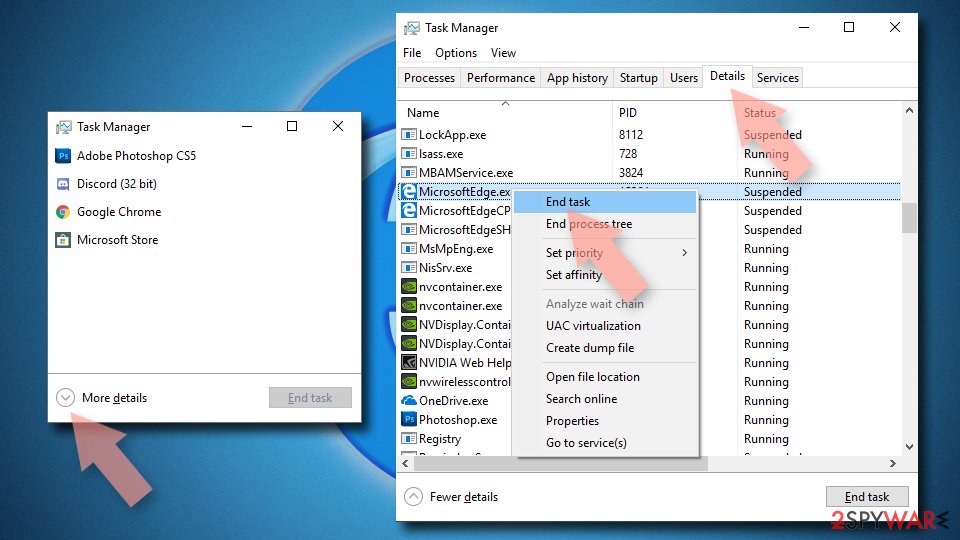
Reset MS Edge if the above steps did not work:
- Press on Ctrl + Shift + Esc to open Task Manager.
- Click on More details arrow at the bottom of the window.
- Select Details tab.
- Now scroll down and locate every entry with Microsoft Edge name in it. Right-click on each of them and select End Task to stop MS Edge from running.
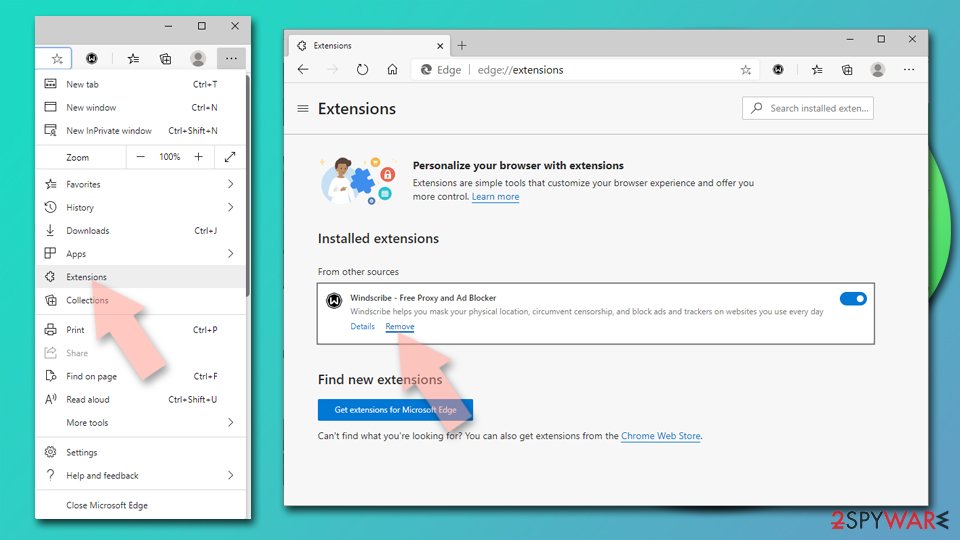
Delete extensions from MS Edge (Chromium):
- Open Edge and click select Settings > Extensions.
- Delete unwanted extensions by clicking Remove.
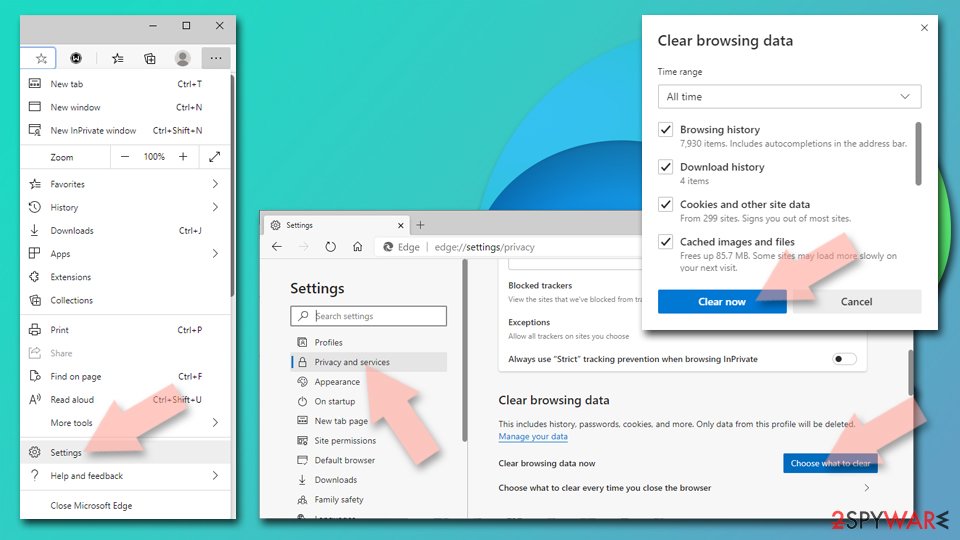
Clear cache and site data:
- Click on Menu and go to Settings.
- Select Privacy, search and services.
- Under Clear browsing data, pick Choose what to clear.
- Under Time range, pick All time.
- Select Clear now.
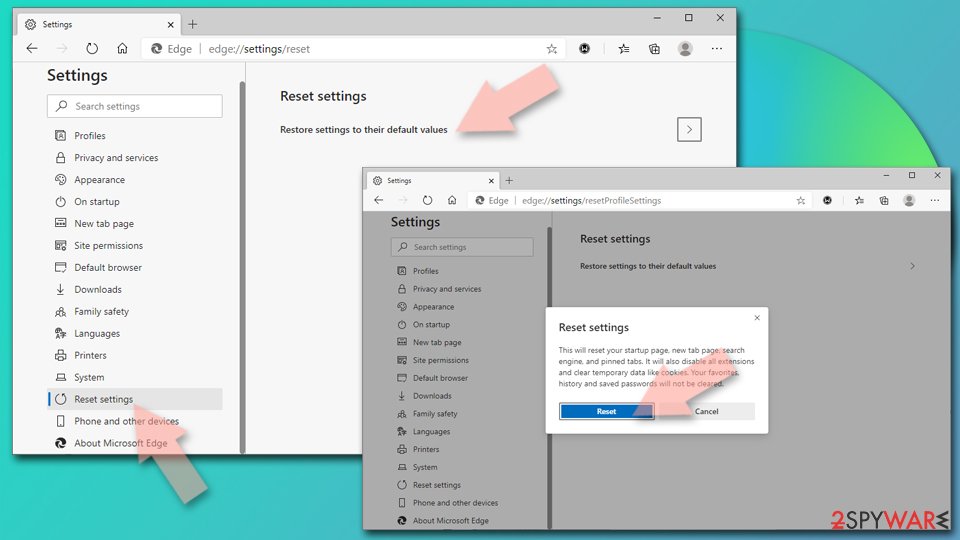
Reset Chromium-based MS Edge:
- Click on Menu and select Settings.
- On the left side, pick Reset settings.
- Select Restore settings to their default values.
- Confirm with Reset.
- This will disable extensions and reset startup pages but will not delete bookmarks, saved passwords, or browsing history.
Remove from Mozilla Firefox (FF)
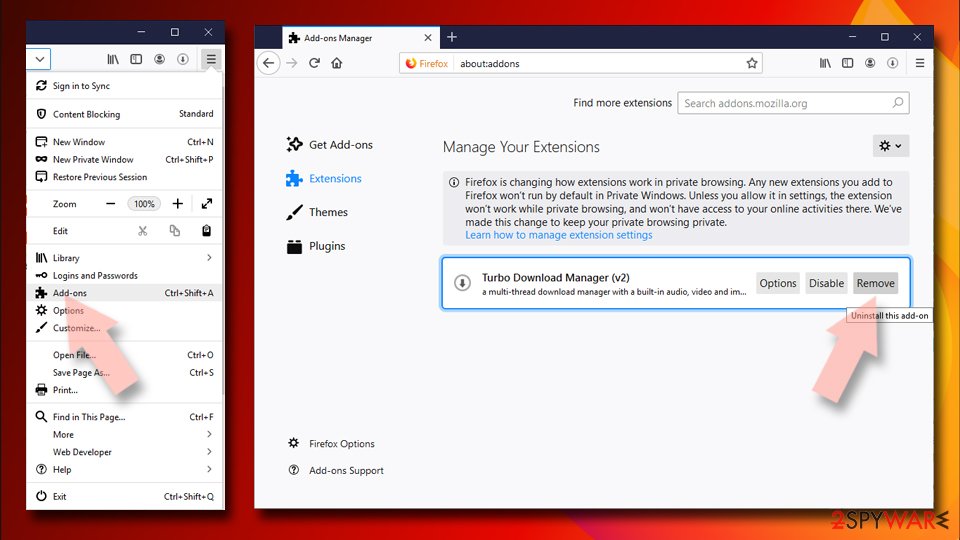
Remove dangerous extensions:
- Open Mozilla Firefox browser and click on the Menu (three horizontal lines at the top-right of the window).
- Select Add-ons.
- In here, select the unwanted extension and click Remove.
Reset the homepage:
- Click three horizontal lines at the top right corner to open the menu.
- Choose Settings.
- Under Home, set your preferred homepage and new tab settings.
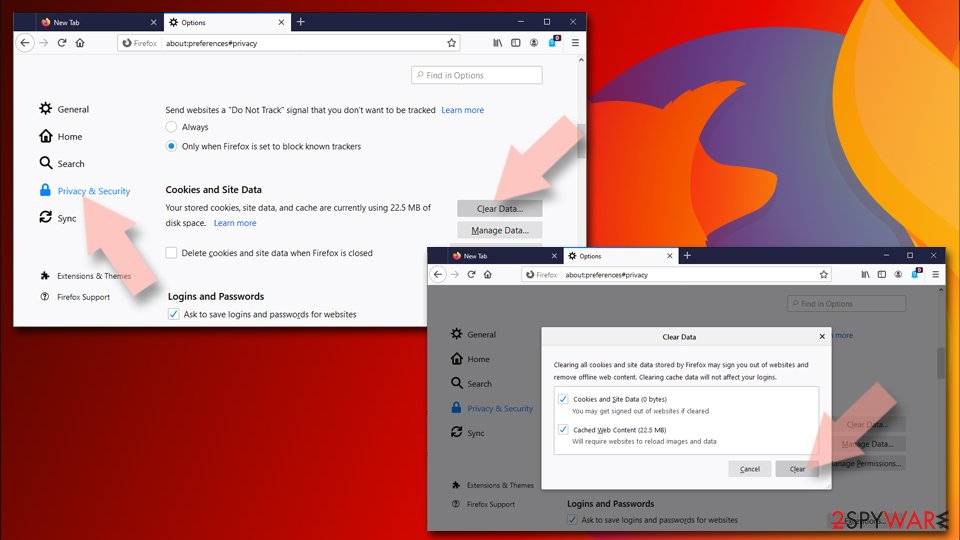
Clear cookies and site data:
- Click Menu and pick Settings.
- Go to Privacy & Security section.
- Scroll down to locate Cookies and Site Data.
- Click on Clear Data...
- Select Cookies and Site Data and Temporary cached files and pages, then click Clear.
Reset Mozilla Firefox
If clearing the browser as explained above did not help, reset Mozilla Firefox:
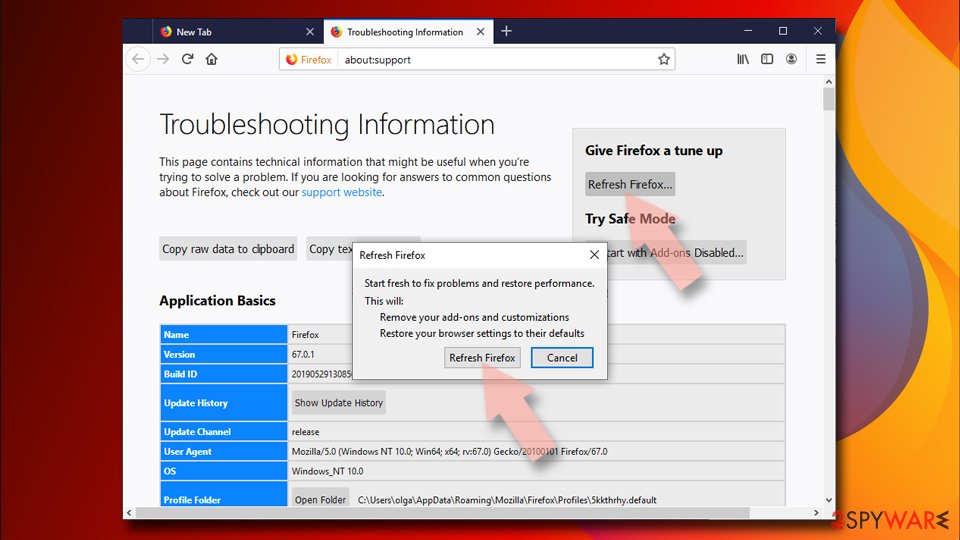
- Open Mozilla Firefox browser and click the Menu.
- Go to Help and then choose Troubleshooting Information.
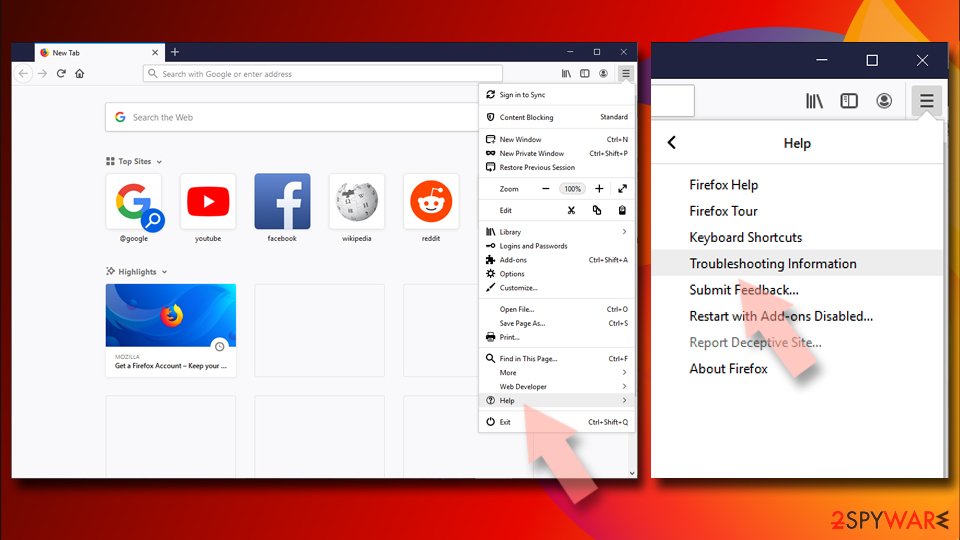
- Under Give Firefox a tune up section, click on Refresh Firefox...
- Once the pop-up shows up, confirm the action by pressing on Refresh Firefox.
Delete from Safari
Remove dangerous extensions:
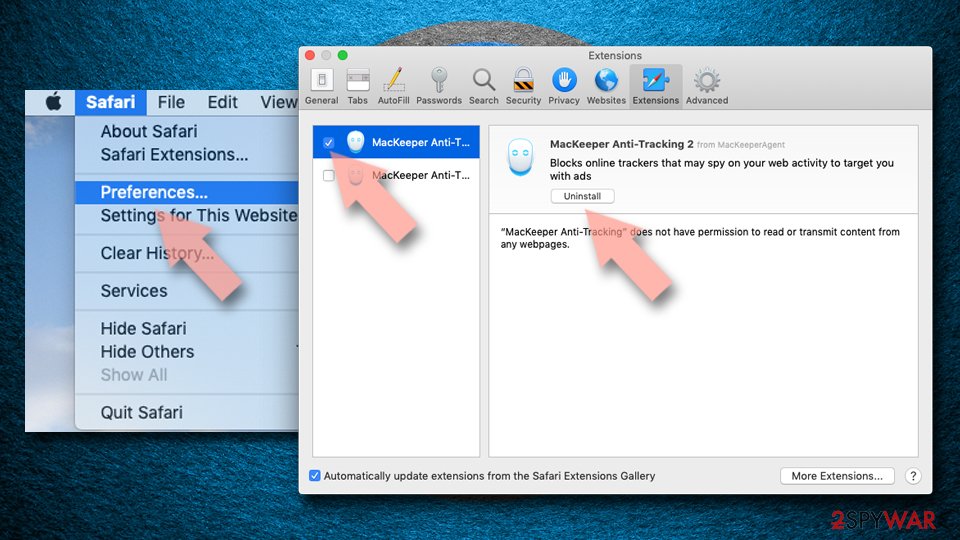
- Open Safari, click Safari in the menu at the top-left of the screen, and select Preferences.
- Go to the Extensions tab, look for any suspicious entries, and click Uninstall to remove them.
Clear history and website data:
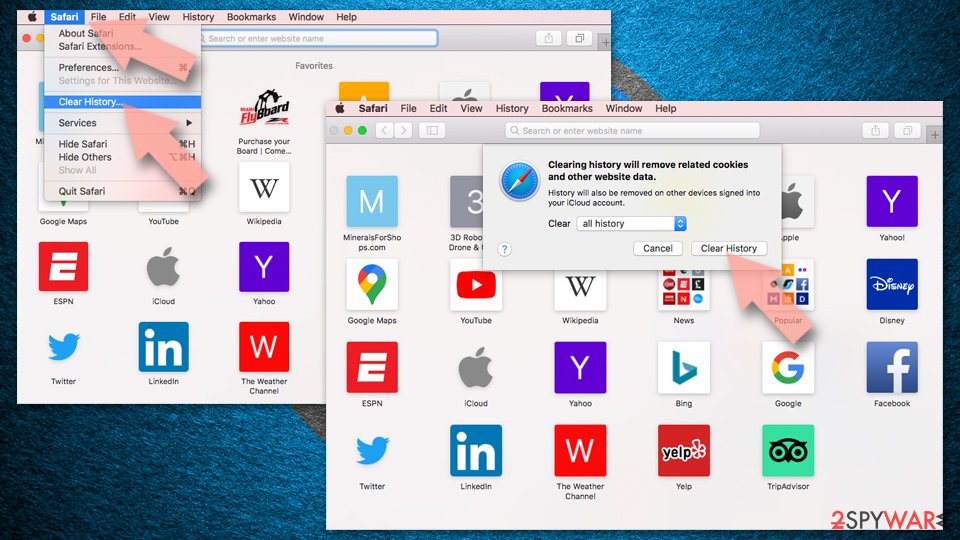
- Click Safari in the menu and pick Clear History.
- Set Clear to all history and confirm with Clear History.
Reset Safari:
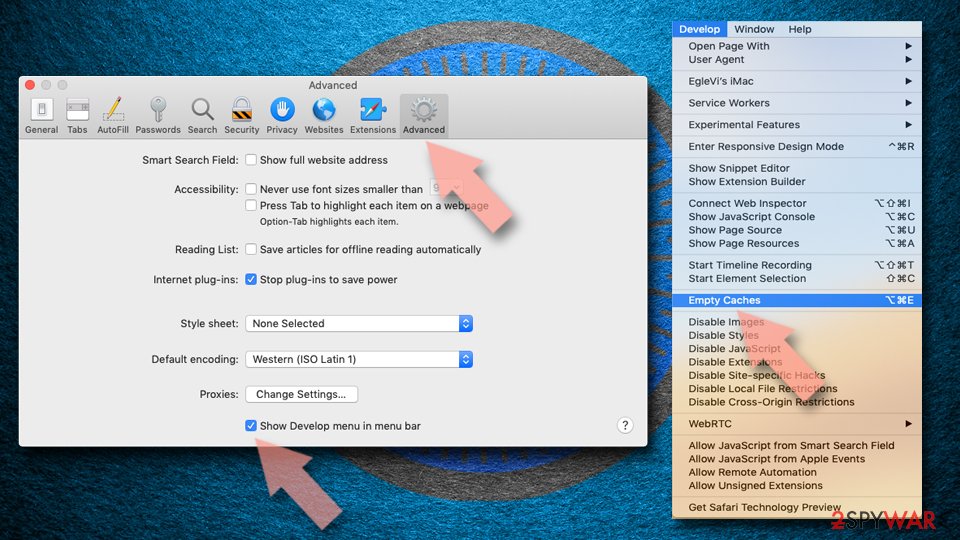
- Click Safari in the menu and select Preferences > Advanced.
- Enable Show Develop menu in menu bar.
- From the menu bar, click Develop and select Empty Caches.
Delete from macOS
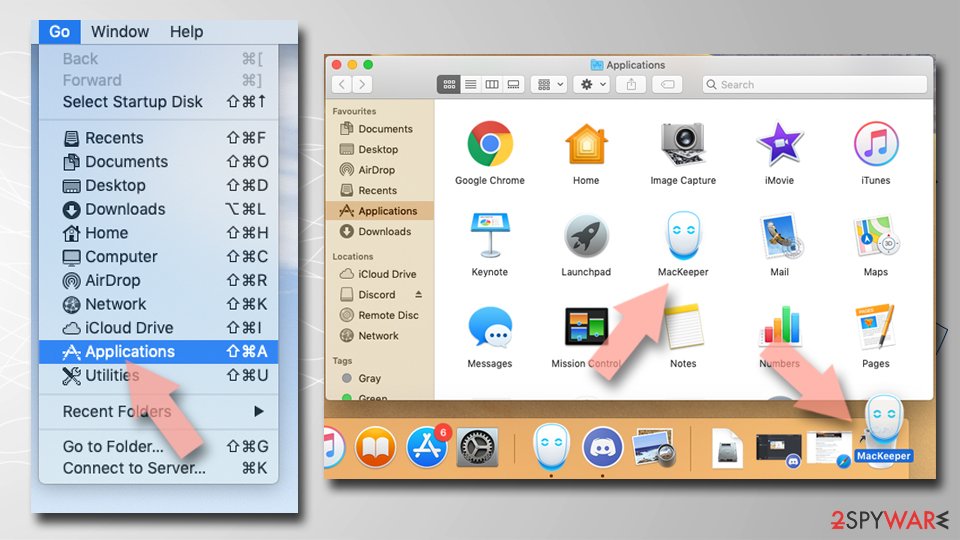
Remove the unwanted application:
- From the menu bar, select Go > Applications.
- In the Applications folder, look for any suspicious entries, then drag them to Trash (or right-click and pick Move to Trash).
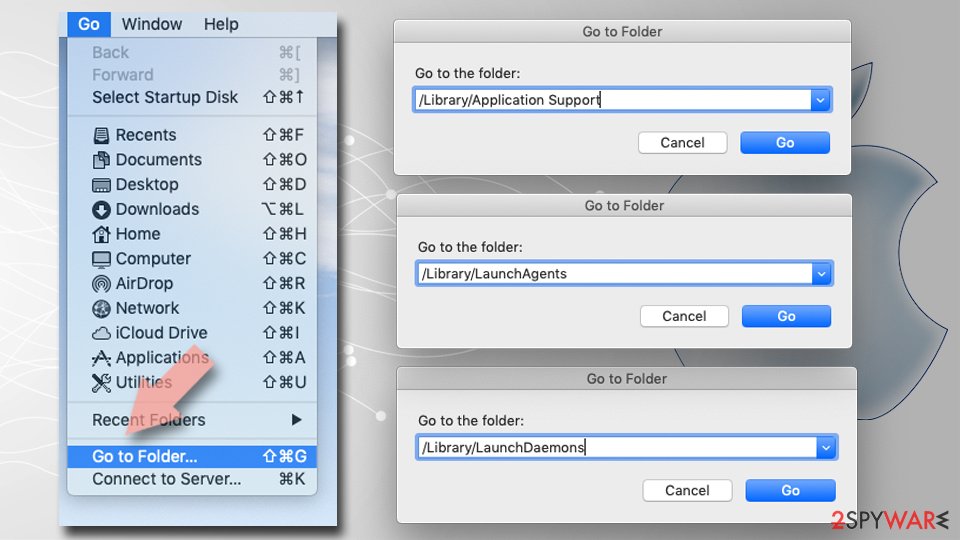
Delete leftover files and folders:
- Select Go > Go to Folder.
- Enter /Library/Application Support and remove any suspicious folders related to the unwanted program.
- Repeat the same check in the /Library/LaunchAgents and /Library/LaunchDaemons folders, deleting any suspicious entries.
- Finally, empty the Trash to permanently remove the leftovers.
Reset Internet Explorer
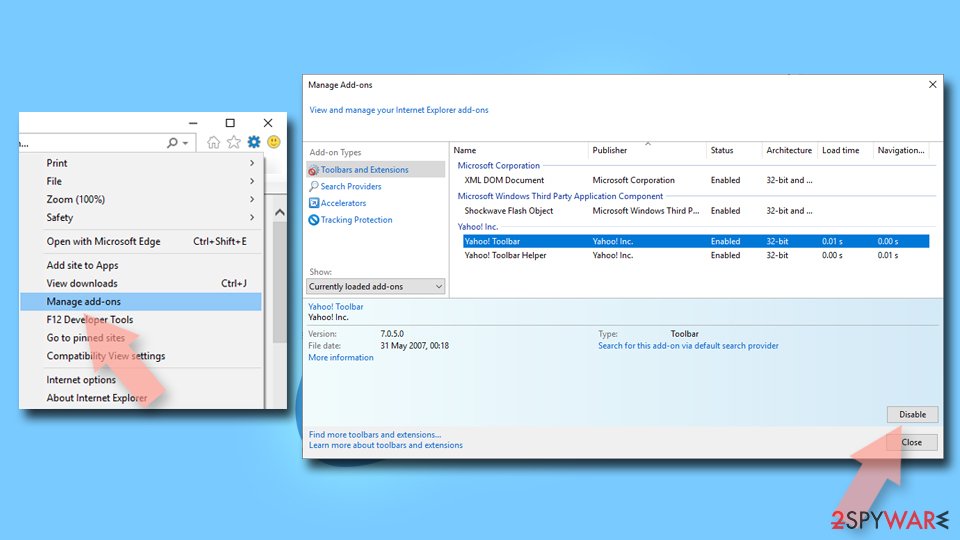
Remove dangerous add-ons:
- Open Internet Explorer, click on the Gear icon (IE menu) on the top-right corner of the browser
- Pick Manage Add-ons.
- You will see a Manage Add-ons window. Here, look for suspicious plugins. Click on these entries and select Disable.
Change your homepage if it was altered:
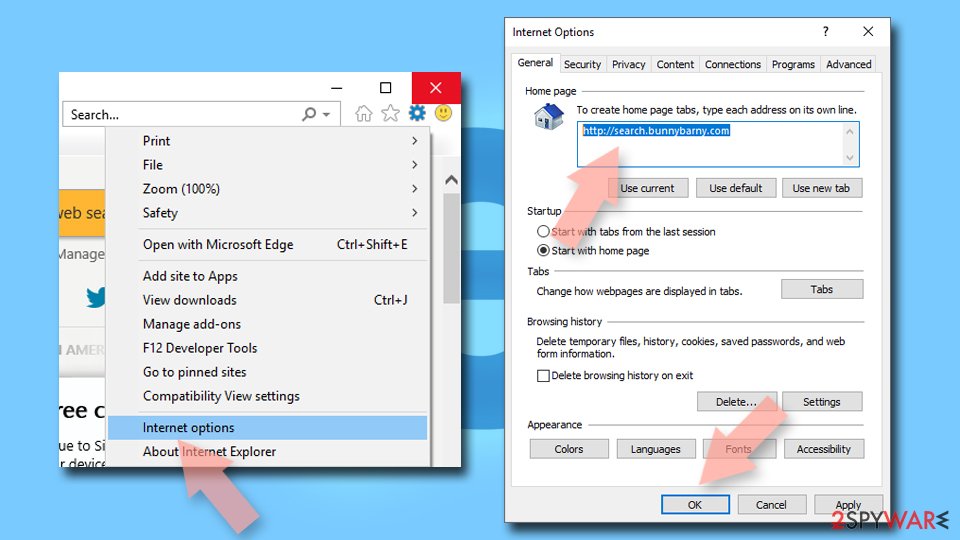
- Open IE and click on the Gear icon.
- Select Internet Options.
- In the General tab, delete the Home page address and replace it by your preferred one (for example, Google.com).
- Click Apply and then select OK.
Delete temporary files:
- Press on the Gear icon and select Internet Options.
- Under Browsing history, click Delete...
- Select relevant fields and press Delete.
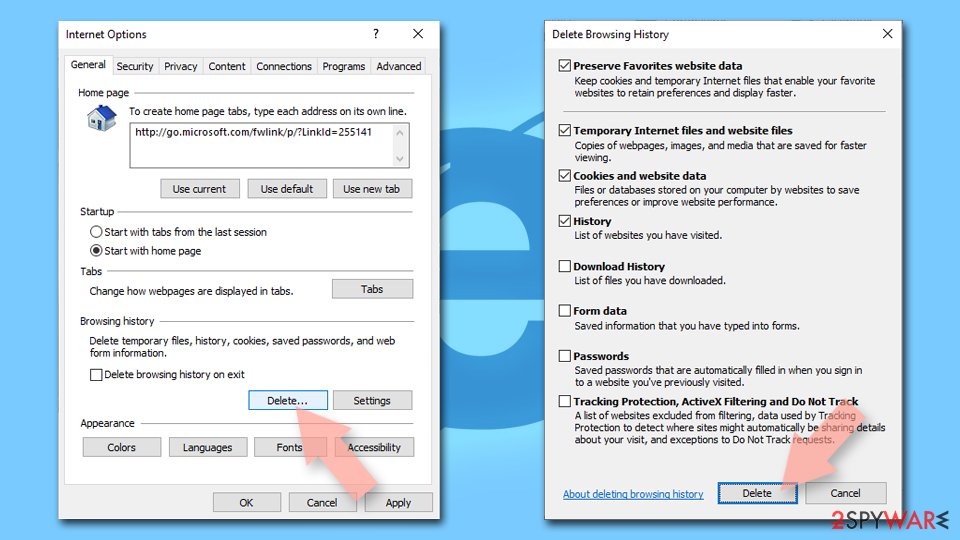
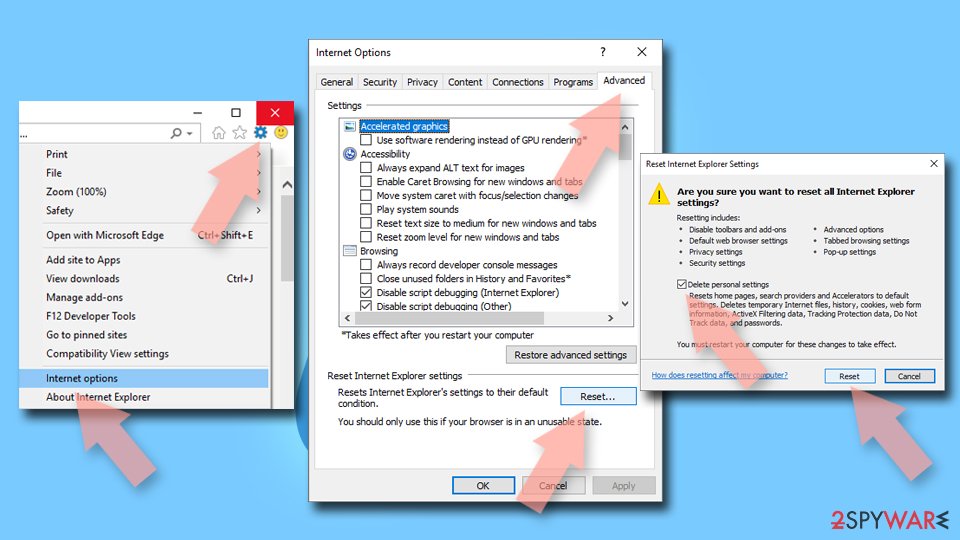
Reset Internet Explorer:
- Click on Gear icon > Internet options and select Advanced tab.
- Select Reset.
- In the new window, check Delete personal settings and select Reset.
Do not let government spy on you
The government has many issues in regards to tracking users' data and spying on citizens, so you should take this into consideration and learn more about shady information gathering practices.
Avoid any unwanted government tracking or spying by going totally anonymous on the internet.
You can choose a different location when you go online and access any material you want without particular content restrictions. You can easily enjoy internet connection without any risks of being hacked by using VPN.
Control the information that can be accessed by government any other unwanted party and surf online without being spied on. Even if you are not involved in illegal activities or trust your selection of services, platforms, be suspicious for your own security and take precautionary measures by using the VPN service.
Backup files for the later use, in case of the malware attack
Computer users can suffer from data losses due to cyber infections or their own faulty doings.
Ransomware can encrypt and hold files hostage, while unforeseen power cuts might cause a loss of important documents. If you have proper up-to-date backups, you can easily recover after such an incident and get back to work. It is also equally important to update backups on a regular basis so that the newest information remains intact - you can set this process to be performed automatically.
When you have the previous version of every important document or project you can avoid frustration and breakdowns. It comes in handy when malware strikes out of nowhere. Use for the data restoration process.
From our report of Mar 2020 · not reviewed since
Remove anything related to Allow-space.com virus, including browser-based applications and tools
You may need to rely on more advanced tools for Allow-space.com removal because manually uninstalling is not the best option.
There is no particular program that could be found and removed to end those annoying redirecting processes. Get the anti-malware tool and run it on the system, so all shady programs get detected and deleted.
Of course, you can remove Allow-space.com itself from the browser bu cleaning related extensions and apps, but this is the result of PUP infection, so you need to clean the computer system and terminate the main adware program. Below we have a few options for security tools and a guide that shows how to completely eliminate the browser-based threats.
Questions about Allow-space.com ads
How do I stop allow-space.com from opening?
Find and remove whatever opens it. Start with the browser's extensions page and remove anything you do not remember adding. Next, open the notification settings and take away permission from sites you do not recognise.
Then check Settings > Apps > Installed apps for programs added around the day the redirects began, and uninstall those. Restart the browser and test a few links after each step.
If allow-space.com still appears, reset the browser, which restores the default search engine, start page and permissions without deleting bookmarks or saved passwords. Redirects that survive a reset in every browser point to a program in Windows, and a full scan is the next step.
Did allow-space.com install a virus on my PC?
Very unlikely, unless you downloaded and opened something from the pages it led to. Redirect domains such as allow-space.com sell your visit to advertisers; they do not need to install anything to make money.
What can be installed is the thing that causes the redirects in the first place, such as an extension or an ad-supported program that came with free software. That is why the checks in this guide look at extensions, notification permissions and Installed apps.
A full scan with Microsoft Defender afterwards gives you a clear answer about the rest of the PC. If the scan is clean and the redirects stop after removing the cause, you are done.
What is Allow-space.com?
Allow-space.com is an ad redirect domain, a kind of adware. It earns money by showing redirects through ad pages, and each view, click or redirect pays whoever runs it. It is not something people usually choose; it arrives through a free download, a fake button or a misleading prompt.
Allow-space.com does not encrypt files or take control of Windows, but its ads are sold to anyone, including scam operators, so they can lead to fake virus warnings and unwanted downloads. The steps in this guide remove it from Windows and from each browser.
Why does allow-space.com keep showing up?
There are two possible reasons. If it appears as desktop notifications, a browser on this PC was given permission to receive them from allow-space.com, usually through a misleading prompt. That permission stays until you remove it in the browser's site settings.
If it appears as tabs or redirects, an ad on a site you visit is opening it, or an extension or program on the PC is. Test a private window: if allow-space.com never appears there, an extension is the likely cause. The plan above covers each case.
Which browsers does Allow-space.com affect?
In the cases we checked, Allow-space.com showed up in Chrome, Edge and Firefox. That does not rule out others on your PC, since adware installers often target every browser they find, and permissions and extensions sync across computers signed in to the same browser account.
Open each browser you have, go to its extensions page and its notification settings, and remove anything you do not recognise. Profiles count separately: Chrome and Edge can each hold several, and each one needs checking on its own.
Are the pop-ups I see really from Allow-space.com?
Compare them with the details in the table above. Allow-space.com produces redirects through ad pages, and the clearest sign of it is redirects to allow-space.com. Other adware looks similar, so check the name of the sending site at the bottom of a notification, the address in the tab that opened, or the newest entries on the extensions page.
If those match, this guide fits. If you see a different name, the same kind of steps apply, but remove the item you actually find rather than guessing.
Did Allow-space.com collect my data?
Adware typically collects what it needs to choose ads:
- the sites you visit
- search terms
- approximate location
- browser and system details
Extensions with permission to read and change data on all websites can technically see everything on those pages, including forms. That is a privacy problem rather than proof of theft.
If you typed card details or passwords while it was active, changing the most important passwords is a reasonable precaution. Clearing cookies after removal ends the tracking sessions it may have started.
I let a "support technician" from an ad connect to my PC. What should I do?
Act quickly but calmly. Disconnect the PC from the internet first, so the connection ends. Uninstall the remote access tool they asked you to install and check Installed apps for anything else added during the call.
Run a Microsoft Defender full scan and offline scan. From another device, change your e-mail and banking passwords and sign out of all sessions.
If you paid by card, bank transfer or gift card, contact your bank or the card issuer immediately, and report the scam to the police. Do not answer if they call back.
Why is my browser so slow since the ads started?
Each page now does extra work. An adware extension reads the page, decides where to put ads, loads them from ad servers and reports your visit, and that happens on every tab. Ad-supported programs add their own background activity.
Removing the extension or program usually makes the browser fast again at once. If it stays slow, open the browser's own task manager with Shift+Esc in Chrome or Edge and look for extensions using a lot of memory or processor time.
Will Fortect remove Allow-space.com?
Fortect scans Windows for malware and unwanted programs and repairs the system files and settings they change, and its free scan shows what it finds on your PC before you decide anything.
For Allow-space.com, follow the plan above as well: the browser steps take back permissions and settings that no scanner treats as a threat, and uninstalling the program that brought it removes the source.
Run Microsoft Defender's full scan and, if anything was found, its offline scan as a second opinion. If the symptoms are gone after the plan and both scans are clean, there is nothing more to do.
Sources
- CNBC: The latest ways identity thieves are targeting you — and what to do if you are a victim (read October 6, 2026)
- Wikipedia: Clickbait (read October 6, 2026)
- Google Chrome Help: Use notifications to get alerts (no longer online) (read October 6, 2026)
- FTC: How to recognize, remove and avoid malware (read October 6, 2026)
- Microsoft Learn: Microsoft Defender Offline (read October 6, 2026)