

Hisqueost.xyz shows you pop-up ads instead of sports updates

Hisqueost.xyz is one of the thousands of websites that depend on you clicking the “Allow” button to make money. That button lets a website start sending you push notifications. Everything would be fine if this website would not lie about what type of content you will receive. On the website, it says “Get The Latest Sports Updates From Around The World” with an arrow next to it pointing in the top left corner of the browser. That is where a prompt saying “Hisqueost.xyz wants to send push notifications” appears with “Allow” and “Block” options.
What happens instead, is that the page starts spamming users with pop-up ads from various sources. They can come from legitimate advertisers as well as scammers because the authors of the page do not filter and monitor what ads are sent through their domain. They do not care about your privacy or safety, all they want is for as many people as possible to infect themselves with these pop-ups and generate clicks because that is what they are paid for.
| NAME | Hisqueost.xyz |
| TYPE | Push notification spam; adware |
| SYMPTOMS | Pop-up ads start appearing in the corner of the screen causing inconvenience |
| DISTRIBUTION | Shady websites, deceptive advertising, freeware installations |
| DANGERS | Links embedded in push notifications can lead to dangerous pages where users are at risk of suffering from financial losses, downloading PUPs or malware |
| ELIMINATION | You can block push notifications via browser settings; remove adware by deploying anti-malware tools |
| FURTHER STEPS | Use FortectIntego to get rid of any remaining damage and improve the machine's performance |
Risks associated with push notifications
Because the authors of this page do not blacklist shady ads, you might be receiving ads from untrustworthy sources. Nowadays fraudsters use clever social engineering techniques to execute their online scams. They can vary from fake software updates to fake giveaways and paid surveys. Links embedded in the notification prompts can lead to dangerous websites where users are at risk of being exploited by providing their personal information or downloading PUPs[1] and malware.
Another thing that you should be aware of is that all of these questionable websites can use cookies[2] to track your browsing activity. That could be your IP address, search queries you make, websites you visit, links you click on, and purchases you make. All of this data is stored in your machine and can result in a significant performance decrease. That is why we recommend having a maintenance tool like FortectIntego in your system that could take care of such issues automatically. This tool will clear your browsers as well as fix various system errors, registry issues, corrupted files, and even BSODs.

Users rarely find Hisqueost.xyz or other pages similar to it – Luckywinner-web1.com, Hdvideosnet.com, and Abcweathercast.xyz in their search results. They get redirected by their browser because of adware, or because they were browsing through shady sites full of deceptive ads and sneaky redirects and were not careful.
For example, illegal streaming platforms have fake “Download” buttons[3] that are actually ads that are opened in a new tab. Users can also encounter this when clicking on a play button. This website specifically targets sports fans, so it is unclear on what type of sites it is distributed so people would be interested enough to actually agree to receive notifications about sport.
But now you can understand how the scheme works and avoid it in the future. We would recommend staying away from questionable sites completely that open up unexpectedly and do not seem to have much content in them. What you can also look for is the Privacy Policy. As you can see in the picture above is the Privacy Policy of the page. It is barely readable and seems to be copied and pasted from a random site. That is a sign that should make you think twice about the legitimacy of the page.
Start the removal
Push notifications are based on a subscription model, so they can receive them only if they want to. That is why only manual removal is possible – you need to disable the notifications via browser settings. Follow the guide below if you do not know how to perform that:
Google Chrome (desktop):
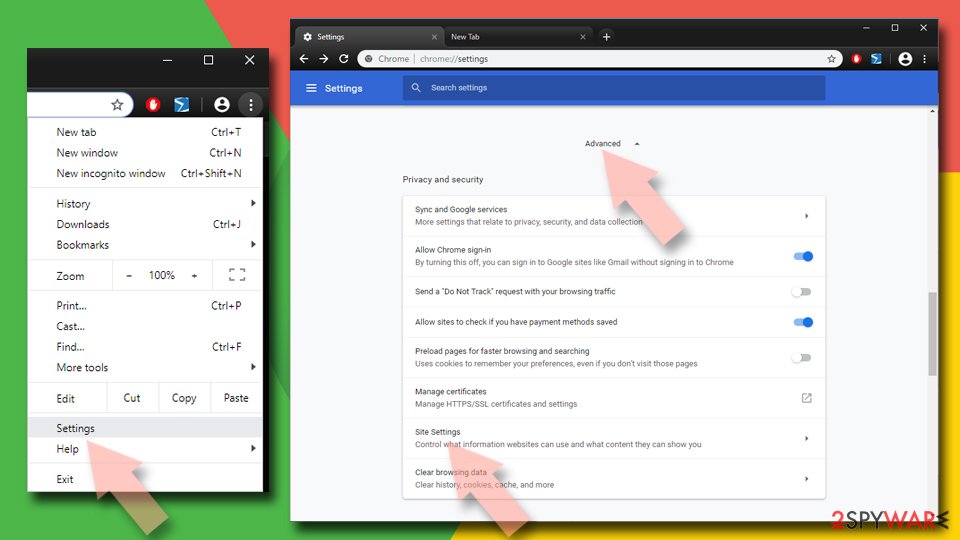
- Open Google Chrome browser and go to Menu > Settings.
- Scroll down and click on Advanced.
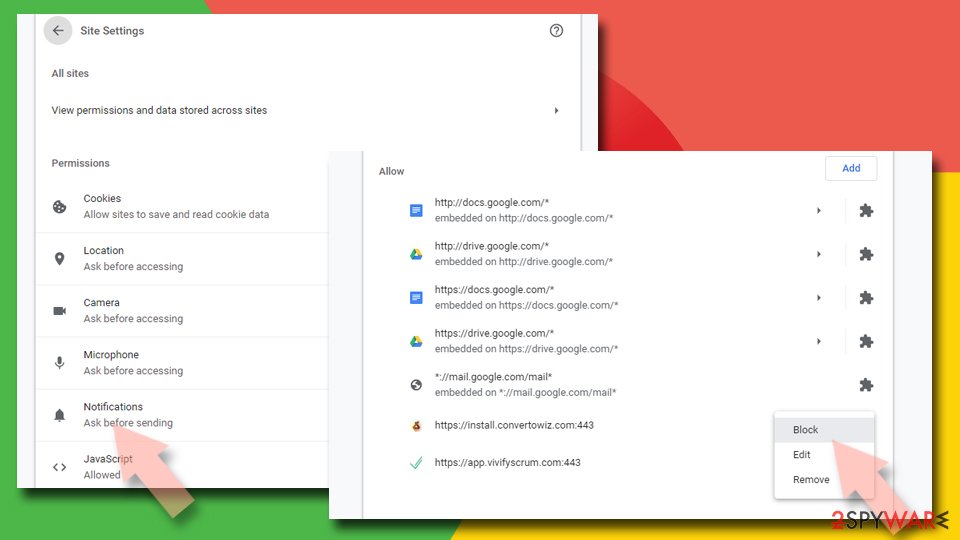
- Locate the Privacy and security section and pick Site Settings > Notifications.
- Look at the Allow section and look for a suspicious URL.
- Click the three vertical dots next to it and pick Block. This should remove unwanted notifications from Google Chrome.


Google Chrome (Android):
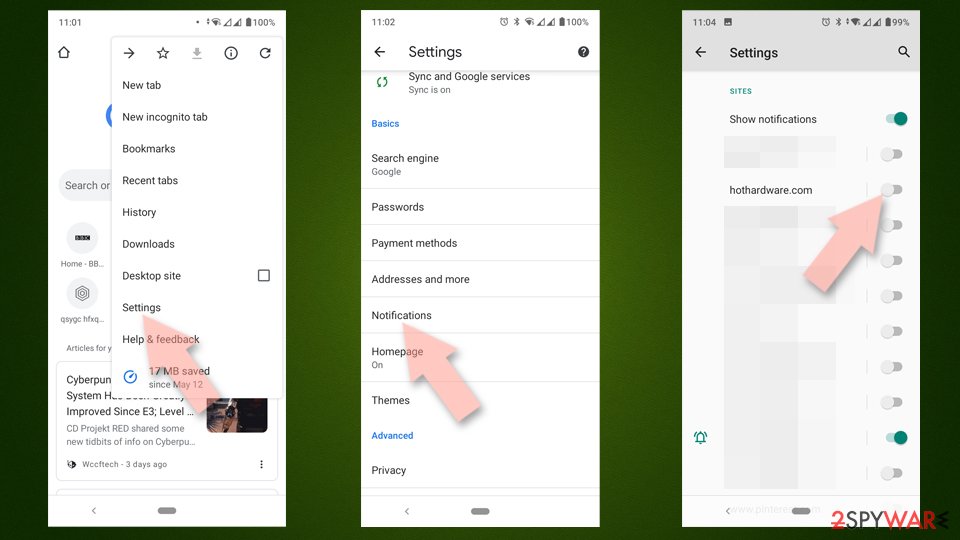
- Open Google Chrome and tap on Settings (three vertical dots).
- Select Notifications.
- Scroll down to Sites section.
- Locate the unwanted URL and toggle the button to the left (Off setting).

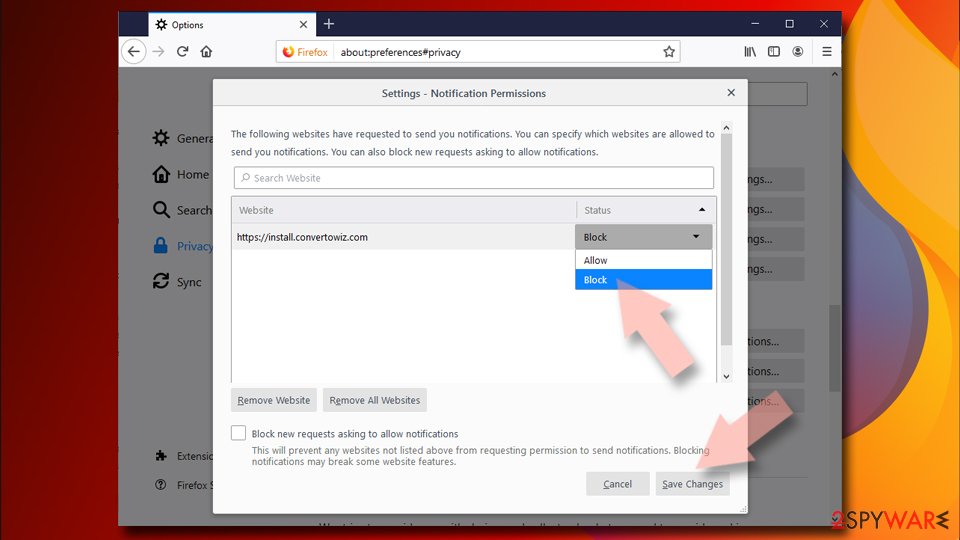
Mozilla Firefox:
- Open Mozilla Firefox and go to Menu > Options.
- Click on Privacy & Security section.
- Under Permissions, you should be able to see Notifications. Click Settings button next to it.
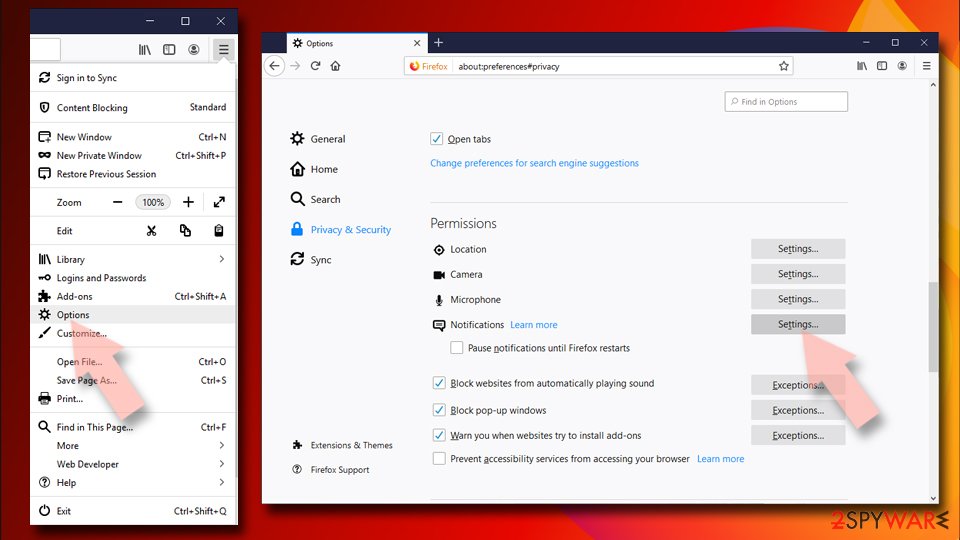
- In the Settings – Notification Permissions window, click on the drop-down menu by the URL in question.
- Select Block and then click on Save Changes. This should remove unwanted notifications from Mozilla Firefox.


Safari:
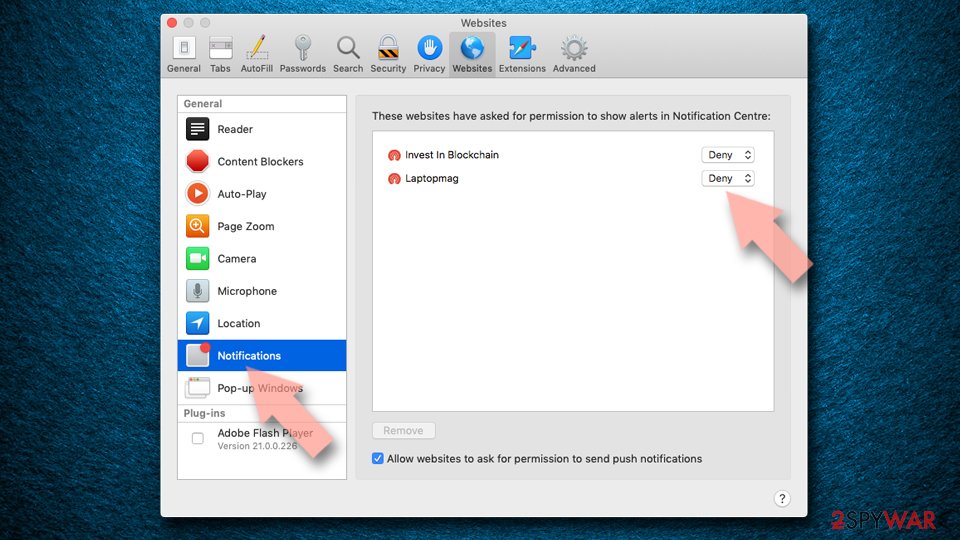
- Click on Safari > Preferences…
- Go to Websites tab and, under General, select Notifications.
- Select the web address in question, click the drop-down menu and select Deny.

MS Edge:
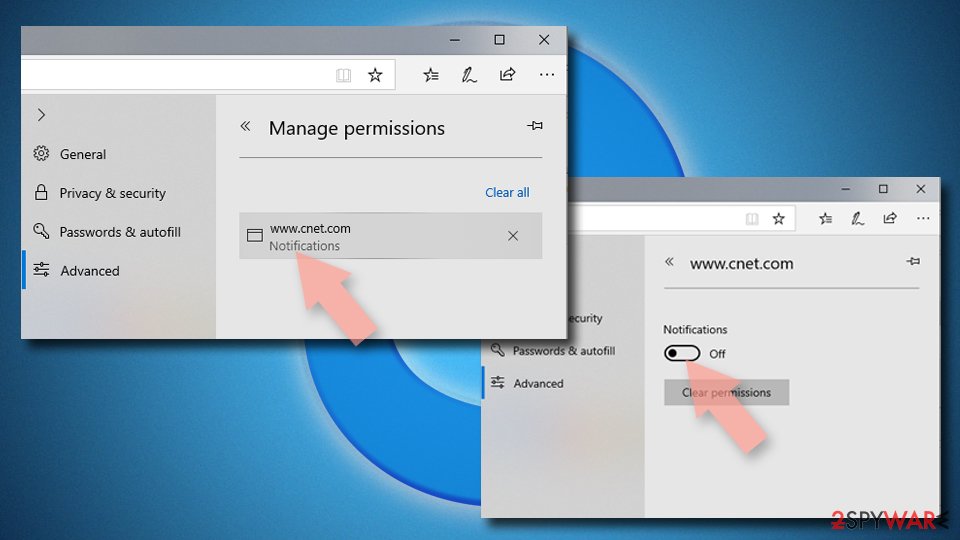
- Open Microsoft Edge, and click the Settings and more button (three horizontal dots) at the top-right of the window.
- Select Settings and then go to Advanced.
- Under Website permissions, pick Manage permissions and select the URL in question.
- Toggle the switch to the left to turn notifications off on Microsoft Edge.

MS Edge (Chromium):
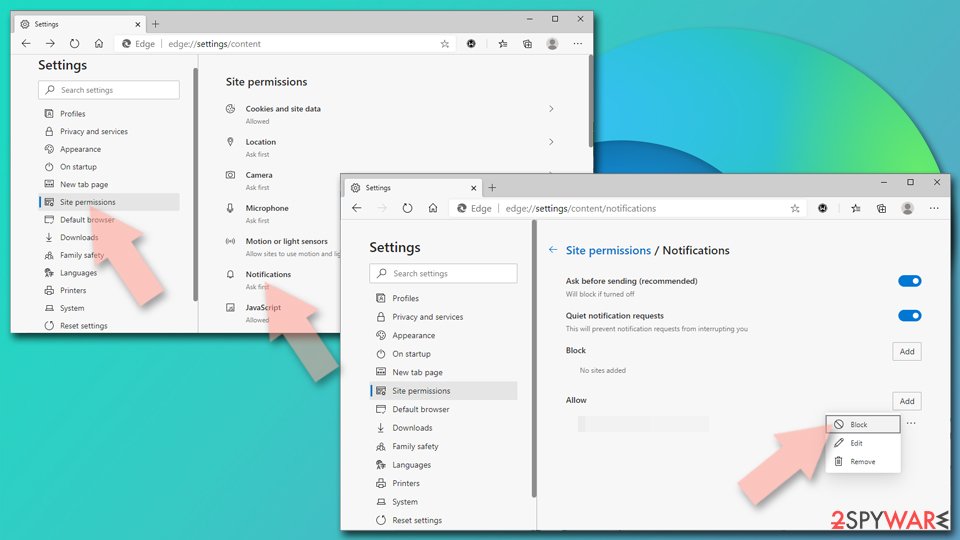
- Open Microsoft Edge, and go to Settings.
- Select Site permissions.
- Go to Notifications on the right.
- Under Allow, you will find the unwanted entry.
- Click on More actions and select Block.

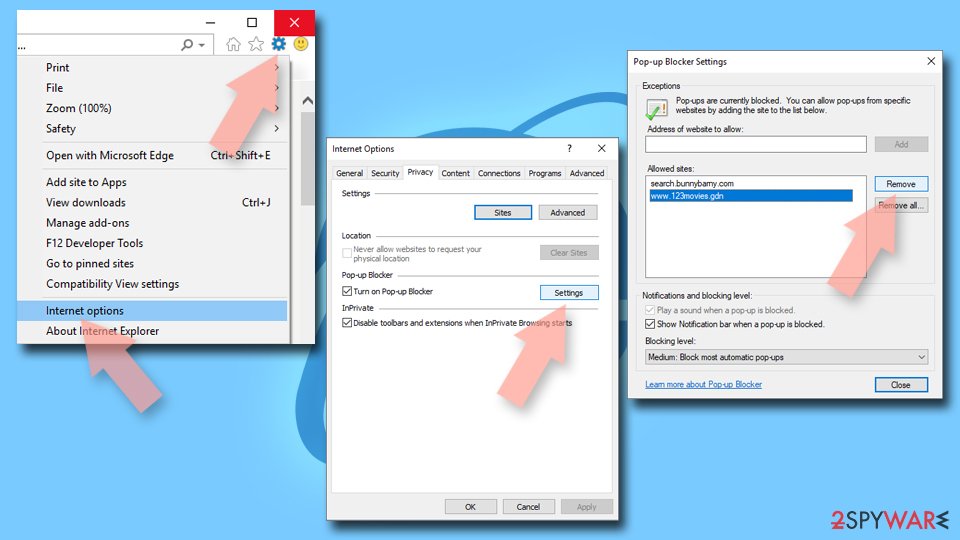
Internet Explorer:
- Open Internet Explorer, and click on the Gear icon at the top-right on the window.
- Select Internet options and go to Privacy tab.
- In the Pop-up Blocker section, click on Settings.
- Locate web address in question under Allowed sites and pick Remove.

Scan your system for potentially unwanted programs
In some instances, users get redirected to pages like this by their browser itself and not because they clicked on a random link. That is a sign of an adware infection. If you experience an increased amount of commercial content like banners, surveys, giveaways, and constant redirects to weird pages you might have it. It would be best if you just used professional security software to scan your machine. We always suggest our readers use anti-malware tools like SpyHunterCombo Cleaner or MalwarebytesMalwarebytes to scan their PCs.
Adware performs tasks in the background without the users' knowledge. Because there is no way of knowing which specific app is causing this annoying behavior, manual removal can be difficult. These tools can detect suspicious programs that are active in the background and eliminate them completely with all the related files.
Users install PUPs together with freeware from unofficial sites. Follow these steps during the installation process to avoid that:
- Always choose “Custom” or “Advanced” installation methods
- Read the Terms of Use and Privacy Policy
- Look at the file list and untick the boxes next to the names that seem to be completely separate apps
Manual guides on PUP removal for Windows and Mac machines are at the end of this article.
Uninstall from Windows
Uninstall from Windows 10/8:
- Type Control Panel into the Windows search box and open the result.
- Under Programs, select Uninstall a program.


Uninstall from Windows 7/XP:
- Click on Windows Start > Control Panel (Windows XP users should click on Add/Remove Programs).
- In Control Panel, select Programs > Uninstall a program.


Remove the unwanted program:
- In the Programs and Features window, look for any recently installed suspicious entries, select them, and click Uninstall.
- If User Account Control appears, click Yes to confirm, then complete the removal.


Delete from macOS
Remove the unwanted application:
- From the menu bar, select Go > Applications.
- In the Applications folder, look for any suspicious entries, then drag them to Trash (or right-click and pick Move to Trash).


Delete leftover files and folders:
- Select Go > Go to Folder.
- Enter /Library/Application Support and remove any suspicious folders related to the unwanted program.
- Repeat the same check in the /Library/LaunchAgents and /Library/LaunchDaemons folders, deleting any suspicious entries.

- Finally, empty the Trash to permanently remove the leftovers.

Did this guide help?
Be the first to comment