
Memz virus: what it is and how to remove it
Memz is a destructive trojan that displays meme animations and overwrites the Master Boot Record, potentially rendering Windows unbootable. Remove it with antivirus in Safe Mode and repair using Windows recovery media.
Facts checked October 9, 2026. Removal steps tested on Windows 11 (26H2) and checked against Microsoft's and the browser makers' current documentation. Sections marked as our earlier report are the original text: they describe the threat as it was then and have not been reviewed since. The 2026 status, the removal steps and the questions are current.
Automatic
Get a free scan and check if your PC is infected.
Fortect finds malware, unwanted programs and the Windows damage they leave behind, and repairs it in one pass.
Programs like Memz virus usually arrive in groups; a free scan lists the companions that are easy to miss.
Do it yourself · free Remove Memz virus yourself 5 steps, about 15 minutes, no software needed.
Start the steps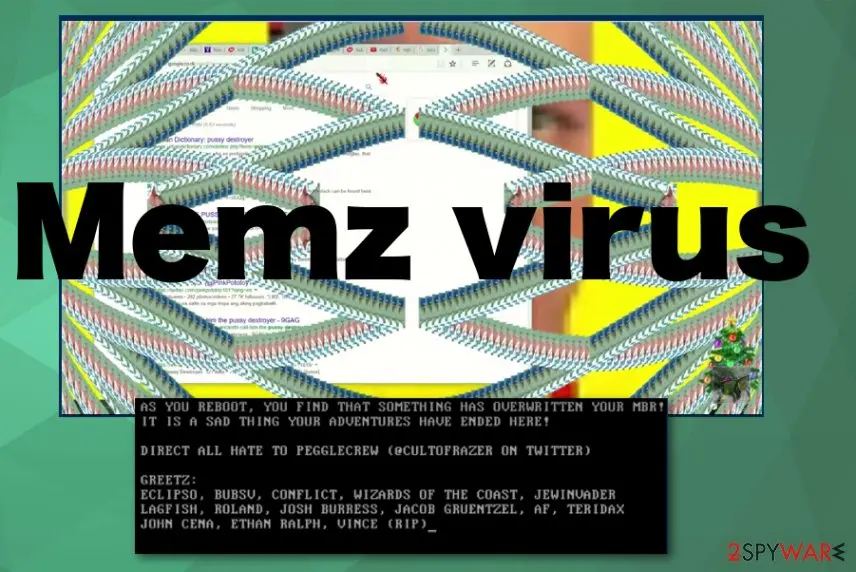
Memz virus: summary
| Distribution | Spam emails, infected files, other malware |
|---|---|
| Name | Memz virus |
| Type | Trojan |
| Originally created | As custom viewer-made malware by the YouTuber danooct1 |
| Main danger | It can wipe all the data from the machine permanently |
| Symptoms | Launches various processes, delivers pop-ups, crashes the system, and shows internet meme pictures, jokes. Launches system reboot and alter system changes |
| Removal | Scan the PC with security software to find and remove the malware and anything installed with it. Fortect scans Windows for malware and repairs the system files and settings it damaged. Remove it nowTo use the full-featured product, you have to purchase a license for Fortect. The scan is free. |
Show 5 more facts
| Detection names | No Microsoft detection name is known |
|---|---|
| Damage | Not recorded in the old report |
| Evidence | 4 write-ups by security sites; details still limited |
| First seen | 19 November 2020 |
| Facts checked | 5 October 2026 |
What Memz virus does on an infected PC
Memez virus, the phrase the MEMZ are real and the rainbow cat virus explained
Memez virus is a common misspelling of Memz, the destructive trojan this guide covers.
Searches for memez, memz virus and memz trojan all point to the same program. It was made by the YouTuber danooct1 as viewer requested malware, then copies spread online. If a file or a video calls itself memez, treat it as the same threat and follow the removal steps above.
The MEMZ are real is a phrase people search after watching videos of the trojan. We found no reliable source for where the exact wording comes from. Our reading is that it is a comment or video title from people asking whether Memz is a real program. The answer is yes: Memz is real working malware, and running it can overwrite the boot record and leave Windows unable to start.
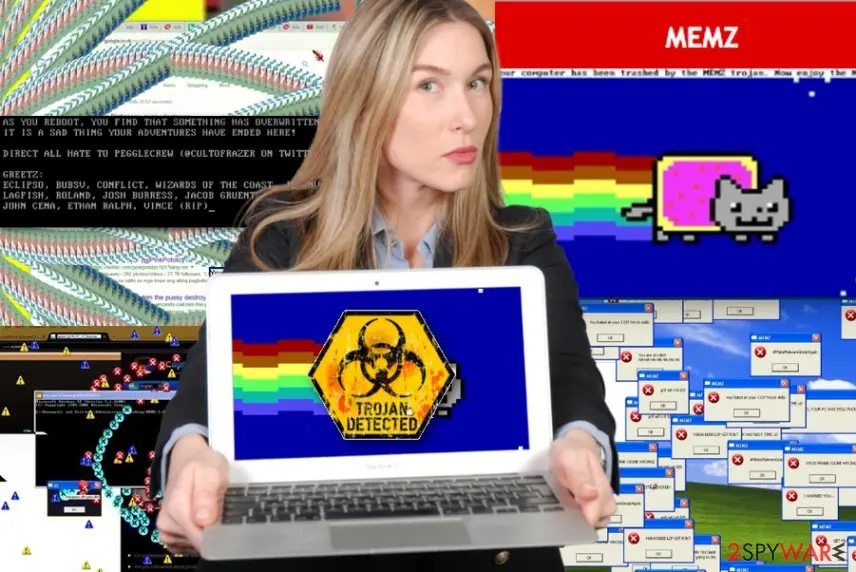
Rainbow cat virus is the name many people give Memz because of what it shows at the end. After the boot record is overwritten, the computer no longer loads Windows and instead plays the Nyan Cat meme, a cartoon cat with a rainbow trail. If you see that animation at startup, Windows itself is not running. Use Windows recovery media and the repair steps in this guide.
To check any such name yourself, do not download a file just to test it. Search the exact file name together with a security vendor name, scan it with your antivirus, and look at Windows Security, Protection history for a detection. A file sold as a joke, a prank or a meme tool that asks for administrator rights deserves the same caution as any unknown program.
From our report of Nov 2020 · not reviewed since
Memz virus is the custom-made trojan that overwrites Windows boot sequence with Nyan Cat meme animation
Memz virus is the trojan originally created by Leurak as viewer-made malware for the YouTuber Danooct1 that is distributed freely online.
Due to this spreading on the internet and destructive activity, it gained fame and popularity. This is a dangerous malware that runs many payloads and executes them one after the other.
Although it shows internet memes this trojan is not a joke and can damage the machine because the more recent version of Memz trojan is especially destructive and once launched on a physical device it rewrites the operating system without the possibility to reverse these changes.
This is a trojan that can make significant changes in the infected machine and even access or steal data stored on the computer. Such malware can install additional programs on the PC after the initial infiltration.
There are at least two versions of MEMZ trojan: one harmless version, which people use for fun. This one delivers memes and doesn't run any malicious payloads.
The second malware version is the one that affects the Master Boot Record by overwriting the first 64 KB of data of the hard drive and can cause serious damage to the operating system. If you have encountered Memz virus, you should take all the measures in order to delete the infection and restore the Windows system back to normal.
Memz virus was intended for fun, but malicious actors got a hold of the script and managed to distribute many more variants online. The initial malware had multiple warnings when the executable was about to be opened, but many users ignored them and allowed their machines to be infected anyways. Now trojan is distributed on the internet for various reasons and can be exceptionally malicious and damaging.
Memz trojan uses highly complex and unique payloads and activates them all one by one in a row. The first scripts are not that damaging, but the malware runs a few programs to make changes on the system and ensure the persistence. However, the final payload is the most harmful because it can lead to permanent damage and make the machine completely unusable.
Once installed, Memz virus has only a few symptoms that the infected users might notice:
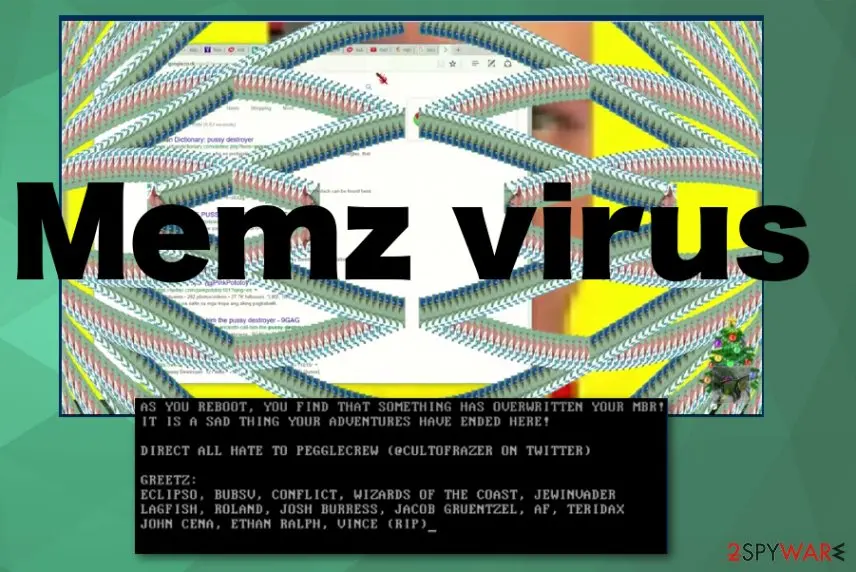
Memz trojan manages to damage the computer or spread more malware on the already infected machine. It causes screen colors inverting every second, various web browser windows opening and closing, creating the tunnel effect and triggering reboots of the machine.
In other words, if you are among the unlucky ones who are infected with it, you will not be able to operate your properly until you remove Memz virus from the system.
Once the virus made needed changes and infected the machine, you can encounter countless pop-ups appearing on the screen with internet memes or random pictures. While Memz virus can take over your desktop with all flashing and popping content, the more harmful feature which allows the infection to overwrite the data on the hard disk. Your Master Boot Record can get affected by this trojan.
When the machine cannot run the operating system, Memz virus delivers this message:
Memz virus even shows animation and plays sounds of the meme. This trojan compromises the machine and disrupts the system, but it also can install ransomware or other cyber threats and run additional programs or scripts. For that reason, you should react as soon as possible to terminate the trojan before it is too late.
You should remove Memz virus from the machine once you encounter any malware infection indicating symptoms and clean the machine using anti-malware tools. This is the best solution for any of the trojan versions.
However, the destructive trojan variant overwrites the first 64 KB of the boot drive, so you need to use bootable recovery media like Windows installation disk. This way, you may recover the system, as experts may recommend.
In other instances, employ an automatic anti-malware tool, such as or , and scan the device entirely for the proper Memz virus removal. Keep in mind that if you open the Task Manager for the process, your computer will immediately crash, causing even more issues.
So you should reboot the PC into Safe Mode and then perform a full system scan from there - we explain how below. After you delete the malware, you should also employ to fix any post-infection damage that Windows could have suffered in the process.
- automatic web search results for disturbing things;
- programs or applications opened and closed out of nowhere;
- mouse cursor changing and moving;
- weird errors, system crashes.
From our report of Nov 2020 · not reviewed since
Terminate the Memz trojan and clean the damage, other programs, and files
Since the malware categorizes as a trojan, it shows up on the machine out of nowhere and can run various processes besides the typical system changes and features that can be noticed by the victim. No matter which version of this trojan you got the full Memz virus removal is crucial for the system.
Make sure to remove Memz virus as soon as possible so damage can be avoided and the computer becomes virus-free again. We would recommend using professional anti-malware tools and rely on trustworthy sources to get the programs. Rely on , or for malware elimination, and later scan the computer with powerful recovery software, such as - it would fix system lag, errors, or crashes due to damaged system files.
[GI=method-1]You may need some additional help to remove Memz trojan completely, so rely on Safe Mode with Networking and then try to scan the machine with anti-malware
[GI=method-2]System Restore feature might help to reverse the changes this trojan has made
From our report of Nov 2020 · not reviewed since
More from our earlier report on Memz virus
- Rely on security software or anti-malware tool and remove MEMZ virus
- Trojans can seriously damage any Windows system files, so it can start crashing or returning errors.
How Memz virus got on your PC
From our report of Nov 2020 · outdated details corrected in October 2026
In most cases, threats like this malware get on the system from emails via infected files or background scripts loaded from fake updates/malicious websites.
In 2020, those emails could pose as messages from customer support or shipping services because such emails were frequent when people shopped online.
Unfortunately, the common type and names of well-known companies or services help to trick users into opening the email and the file attached that contains malicious macros or direct virus payload. The only thing the user needs to do to launch the trojan or ransomware is to open the downloaded file on the machine.
However, such malicious threats can be delivered by the malicious actors themselves because criminals managed to deliver it online for free on various platforms and dark web forums. So victims may become affected during more targeted attacks. Keep paying close attention to emails and content you visit, click on, and get exposed to online to avoid cyber infections in the future.
How to remove Memz virus
A loader's job is to install other malware, so treat the PC as infected with more than one program until the scans are clean.
Step 1: Delete scheduled tasks that bring it back
Programs like Memz virus add a scheduled task so they return after an uninstall or reopen a page at every sign-in. Start Task Scheduler, open Task Scheduler Library and sort by Last Run Time to see what ran recently.
On the Actions tab, a program in a user folder, a script or a web address is a warning sign; right-click such a task and choose Delete.
Tasks with names copying Google, Edge or Windows updaters but pointing to an odd folder are typical. The tool looks the same in Windows 11 and Windows 10.

Windows 11: Task Scheduler Library, the task selected, the Actions tab shows the file it runs. Full procedure with screenshots: Remove what malware leaves behind in Windows
Step 2: Remove it from startup
Press Ctrl + Shift + Esc to open Task Manager and select Startup apps (Windows 11) or the Startup tab (Windows 10). Disable entries you do not recognise, especially ones with no publisher or with a name that copies a Windows component.
Right-click an entry and choose Open file location to see where it runs from: programs in
%AppData%or%Temp%deserve a closer look. Some entries are not listed there but in the registry Run keys, which the procedure below shows how to check.Full procedure with screenshots: Stop apps from opening at startup On uGetFix
Step 3: Delete the folders left behind
Uninstalling often leaves the program's folders, and some threats reinstall themselves from them.
Press Windows + R, type
%LocalAppData%and press Enter, then do the same for%AppData%and %ProgramData%, and look for folders named after Memz virus, its publisher or created on the day the problem started.Delete those folders, and check
C:\Program FilesandC:\Program Files (x86)too.If Windows says a file is in use, end it in Task Manager or delete the folder after a restart in Safe Mode. The folders are the same in Windows 11 and Windows 10.
Full procedure with screenshots: Remove what malware leaves behind in Windows
Step 4: Scan the PC, then run the offline scan
A scan finds the parts of Memz virus that the manual steps cannot see. In Windows Security > Virus & threat protection > Scan options, start a Full scan and quarantine what it reports.
Follow it with Microsoft Defender Antivirus (offline scan) > Scan now, which restarts the PC and checks the disk while Windows and the malware are not running.
It takes about 15 minutes and works the same in Windows 11 and Windows 10. If either scan finds something, run the full scan again after removal until it comes back clean.

Windows 11: Windows Security > Virus & threat protection > Scan options. Full procedure with screenshots: Run a Microsoft Defender Offline scan
Step 5: Change passwords from another device and sign out other sessions
Memz virus can copy saved passwords, cookies and session tokens and send them out in seconds, so cleaning the PC does not undo the theft.
Change your passwords on a device that was never infected, starting with the e-mail account, since every other reset goes through it. On each account, end all other sessions and check the recovery e-mail, phone number and forwarding rules.
Then turn on two-step verification. Sign in on the Windows 11 or Windows 10 PC again only after the offline scan is clean.
Full procedure with screenshots: Turn on two-step verification / secure a hacked account
Instructions for each browser and system
The detailed steps for every browser and system this guide covers. Open the one you use.
Manual removal using Safe Mode
Important! →
Manual removal guide might be too complicated for regular computer users. It requires advanced IT knowledge to be performed correctly (if vital system files are removed or damaged, it might result in full Windows compromise), and it also might take hours to complete. Therefore, we highly advise using the automatic method provided above instead.
Step 1. Access Safe Mode with Networking
Manual malware removal should be best performed in the Safe Mode environment.
Windows 7 / Vista / XP
- Click Start > Shutdown > Restart > OK.
- When your computer becomes active, start pressing F8 button (if that does not work, try F2, F12, Del, etc. - it all depends on your motherboard model) multiple times until you see the Advanced Boot Options window.
- Select Safe Mode with Networking from the list.

Windows 10 / Windows 8
- Right-click on Start button and select Settings.

- Scroll down to pick Update & Security.

- On the left side of the window, pick Recovery.
- Now scroll down to find Advanced Startup section.
- Click Restart now.

- Select Troubleshoot.

- Go to Advanced options.

- Select Startup Settings.

- Press Restart.
- Now press 5 or click 5) Enable Safe Mode with Networking.

Step 2. Shut down suspicious processes
Windows Task Manager is a useful tool that shows all the processes running in the background. If malware is running a process, you need to shut it down:
- Press Ctrl + Shift + Esc on your keyboard to open Windows Task Manager.
- Click on More details.

- Scroll down to Background processes section, and look for anything suspicious.
- Right-click and select Open file location.

- Go back to the process, right-click and pick End Task.

- Delete the contents of the malicious folder.
Step 3. Check program Startup
- Press Ctrl + Shift + Esc on your keyboard to open Windows Task Manager.
- Go to Startup tab.
- Right-click on the suspicious program and pick Disable.

Step 4. Delete virus files
Malware-related files can be found in various places within your computer. Here are instructions that could help you find them:
- Type in Disk Cleanup in Windows search and press Enter.

- Select the drive you want to clean (C: is your main drive by default and is likely to be the one that has malicious files in).
- Scroll through the Files to delete list and select the following:
Temporary Internet Files
Downloads
Recycle Bin
Temporary files - Pick Clean up system files.

- You can also look for other malicious files hidden in the following folders (type these entries in Windows Search and press Enter):
%AppData%
%LocalAppData%
%ProgramData%
%WinDir%
After you are finished, reboot the PC in normal mode.
After removal: passwords, accounts and prevention
Accounts come next
Because the PC showed memz virus in the list of installed apps, a sign of a program that could read browser data, the clean-up is only half of the work.
The other half happens in your online accounts.
Change passwords from a clean device, beginning with e-mail; sign out of all sessions; check forwarding rules and recovery phone numbers; and turn on two-step verification with an authenticator app or a passkey. Ask your bank to replace cards saved in the browser.
Why the order matters and what to check in each account: secure your accounts after malware.
Choose a proper web browser and improve your safety with a VPN tool
Online spying has got momentum in recent years and people are getting more and more interested in how to protect their privacy online.
One of the basic means to add a layer of security - choose the most private and secure web browser. Although web browsers can't grant full privacy protection and security, some of them are much better at sandboxing, HTTPS upgrading, active content blocking, tracking blocking, phishing protection, and similar privacy-oriented features.
However, if you want true anonymity, we suggest you employ a powerful VPN - it can encrypt all the traffic that comes and goes out of your computer, preventing tracking completely.
Lost your files? Use data recovery software
While some files located on any computer are replaceable or useless, others can be extremely valuable.
Family photos, work documents, school projects - these are types of files that we don't want to lose. Unfortunately, there are many ways how unexpected data loss can occur:
- power cuts
- Blue Screen of Death errors
- hardware failures
- crypto-malware attack
- even accidental deletion
To ensure that all the files remain intact, you should prepare regular data backups. You can choose cloud-based or physical copies you could restore from later in case of a disaster. If your backups were lost as well or you never bothered to prepare any, can be your only hope to retrieve your invaluable files.
Questions about Memz virus
What is Memz virus?
Memz is a custom-made trojan originally created by Leurak as viewer-made malware for YouTuber Danooct1. It was intended as entertainment and works by overwriting the Windows boot sequence with Nyan Cat meme animation.
However, the malware was widely distributed online and more destructive variants were created. The dangerous version rewrites the Master Boot Record (MBR), permanently damaging the hard drive and making the operating system unbootable. Modern Memz variants are exceptionally destructive and not a joke.
Is Memz just a harmless prank or is it actually dangerous?
Memz is dangerous and destructive, not a harmless prank. While the original version showed memes without significant damage, modern Memz variants can permanently overwrite the first 64 KB of your hard drive, destroying the Master Boot Record.
This makes your computer completely unable to boot and operating system recovery nearly impossible without specialized tools or a Windows installation disk. Memz can also install additional malware, steal data, and execute multiple destructive payloads. Never download or run Memz intentionally.
What happens when Memz virus infects my computer?
Upon infection, Memz launches multiple payloads sequentially, each performing different malicious actions. Initial scripts make system changes to ensure persistence.
The malware displays internet memes and pop-ups, inverts screen colors, opens and closes program windows randomly, moves the mouse cursor unpredictably, and crashes applications. The most destructive payload overwrites the boot sector, making the system unbootable.
The final message reads: 'Your computer has been trashed by the MEMZ Trojan. Now enjoy the Nyan cat.' The trojan may also install ransomware or other malware.
Can Memz permanently destroy my computer?
Yes. The destructive Memz variant can permanently damage your computer by overwriting the Master Boot Record, making Windows unable to boot. After infection, your computer may only display the Nyan Cat animation instead of starting the operating system.
Permanent damage means data may be irrecoverable without professional data recovery services or backup restoration. The two versions of Memz differ significantly—the harmless version causes display effects, while the destructive version causes permanent hardware-level damage requiring a Windows installation disk or Linux recovery media to fix.
How does Memz virus get on a computer?
Memz spreads primarily through spam emails containing malicious attachments or infected files. Victims receive emails posing as shipping notifications or customer support messages with executable attachments. Opening the downloaded file launches the trojan.
Memz also spreads through malicious websites, infected files from peer-to-peer networks, and dark web forums where malicious actors distribute it for free. The initial versions included warnings when opened, but many users ignored them and allowed infection. Modern variants spread more silently.
How do I remove Memz virus?
First, reboot your computer into Safe Mode with Networking to prevent Memz from interfering with antivirus scanning. Use reputable anti-malware software to perform a full system scan and remove all Memz-related processes and files. Important: do not open Task Manager while infected, as Memz will immediately crash the system.
After removal, use system repair tools to fix any Windows corruption caused by the trojan. If your computer cannot boot due to MBR damage, boot from a Windows installation disk or recovery media to repair the boot sector.
What if my computer won't boot after Memz infection?
If your computer cannot start due to Memz overwriting the Master Boot Record, you need a Windows installation disk or bootable recovery media to repair it. Insert the disk, boot from it, and access repair options.
You can also try using a bootable Linux USB drive to access and backup files before attempting Windows recovery. In severe cases, professional data recovery services may be needed to recover your data. Prevention is essential—never download or run suspicious files, especially those claiming to be Memz or trojan executables.
Why was Memz originally created and distributed online?
Memz was created by Leurak as custom malware for content creator Danooct1, designed to demonstrate how malware works through entertaining meme displays. The creation was initially intended as entertainment rather than a serious threat.
However, once released online, malicious actors obtained the code, modified it to be more destructive, and distributed it freely on the internet. The original playful intent was exploited for actual harm, turning Memz from a novelty into a genuinely dangerous trojan that can cause permanent system damage.
Will Fortect remove Memz virus?
Fortect scans Windows for malware and unwanted programs and repairs the system files and settings they change, and its free scan shows what it finds on your PC before you decide anything.
For Memz virus, follow the plan above as well: the browser steps take back permissions and settings that no scanner treats as a threat, and uninstalling the program that brought it removes the source.
Run Microsoft Defender's full scan and, if anything was found, its offline scan as a second opinion. If the symptoms are gone after the plan and both scans are clean, there is nothing more to do.
Sources
- Naswers: In response to the MEMZ trojan incidents. (read October 5, 2026)
- FTC: How to recognize, remove and avoid malware (read October 5, 2026)
- Microsoft Learn: Microsoft Defender Offline (read October 5, 2026)
- Microsoft Learn: How Microsoft names malware (read October 5, 2026)