

Ponuadema.com is a fraudulent website that asks if you're not a robot only to insert ads into your desktop later
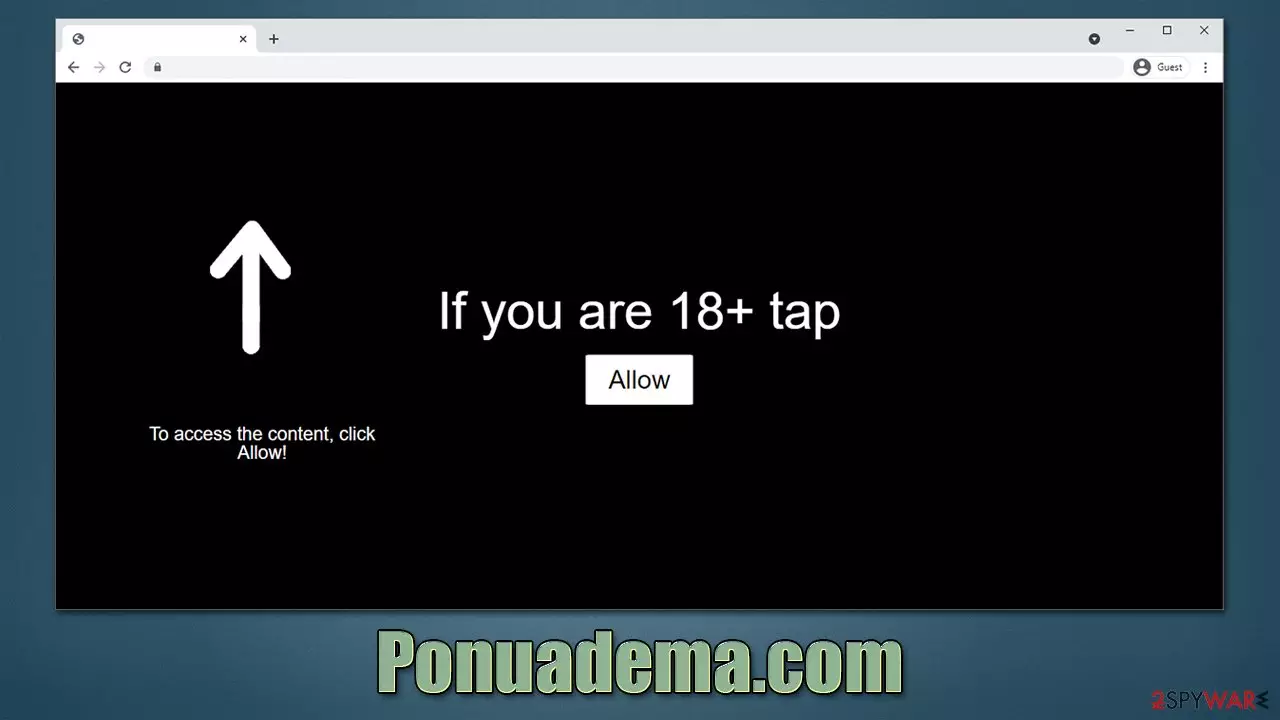
Ponuadema.com is a bogus website that scammers have set up to trick people into enabling push notifications so that they may receive adverts on their desktops. The majority of individuals don't even recall this URL until they start experiencing the symptoms of the obnoxious pop-ups that appear on their screens without prior notice.
Whether the browser is being used actively or not, having one open is the only requirement for this action to take place. This has the incredibly invasive effect of allowing push notifications to be shown over all other active apps, even when users watch a movie or play a game.
It's advisable to avoid clicking on Ponuadema.com ads since they may be deceptive or even harmful. Users may encounter get-rich-quick scams,[1] receive alerts about allegedly discovered malware or be tricked into thinking they've won valuable gifts. If you fall for deception, you risk downloading potentially harmful software or malware, wasting money, or giving fraudsters access to your personal data.
| Name | Ponuadema.com |
| Type | Redirect, scam, malicious website, adware |
| Symptoms | Pop-ups show up regularly on the screen – these ads often include inappropriate, scam, phishing, or other similar content |
| Distribution | Any time a user clicks the “Allow” button in the notification prompt, the website may start to display advertisements via the push notification feature |
| Risks | Shown pop-ups incorporate fake notices and push scams. Links can also lead to websites filled with malware |
| Removal | To prevent you from receiving alerts, go to your browser settings and adjust the permissions for the website – more on that below. We also recommend scanning your PC with SpyHunterCombo Cleaner security software to ensure it is free of adware |
| Other tips | If you do not clean your browser from cookies and other web data, you see the unwanted ads return or data continue being tracked. Stop it with FortectIntego |
How push notification scams trick users
Users wouldn't purposefully sign up for push alerts from a bogus website like Ponuadema.com since it disrupts their normal browsing and jeopardizes their security and privacy. The scammers are well aware of this, so they create false claims that are intended to make the push notification request appear to be something completely different.
One of the main reasons why Ponuadema.com may be successful in convincing users to subscribe is because they are often redirected there unexpectedly. Even people who are paying attention to what is going on might fall for social engineering scams used by crooks.
They want users to think that the “Allow” button in the push notification question is intended for something else, like an age check or a human verification check. Visit one of the push notification scam sites, and you can see one of the following message samples, although this may change from person to person:
- Click “Allow” to verify that you are not a robot
- Click “Allow” to win the prize and get it in our shop!
- Press “Allow” to watch the video
- If you are 18+, click Allow
- Click “Allow” to start downloading, etc.

Although it could appear to be a straightforward verification like the captchas that several visitors experience on different websites every day, this is not the case. In other instances, fraudsters try to trick visitors into thinking that the page has some kind of hidden information while in reality, anyone who interacts with it will just be sent to another malicious website, like Testserverlp.pro or Topeakvisits.com.
How to get rid of Ponuadema.com ads
If Ponuadema.com misled you into enabling push notifications, don't worry; they are quite simple to disable. You shouldn't engage with these advertising and links since, as previously said, doing so might lead to malware infestations and other problems. We highly advise you do a system scan using SpyHunterCombo Cleaner or MalwarebytesMalwarebytes security software to make sure your computer hasn't been infected with adware[2] or other malicious software, whether or not you've clicked any links or downloaded anything.
Additionally, security software is your first line of protection against potential ransomware intrusions and other dangers of a similar nature. Once your device is free of malware, you should utilize FortectIntego to clear your browser's caches and other junk files and repair any possible system component damage. The app can clean cookies[3] and other web data that are used by third parties for tracking purposes as well.
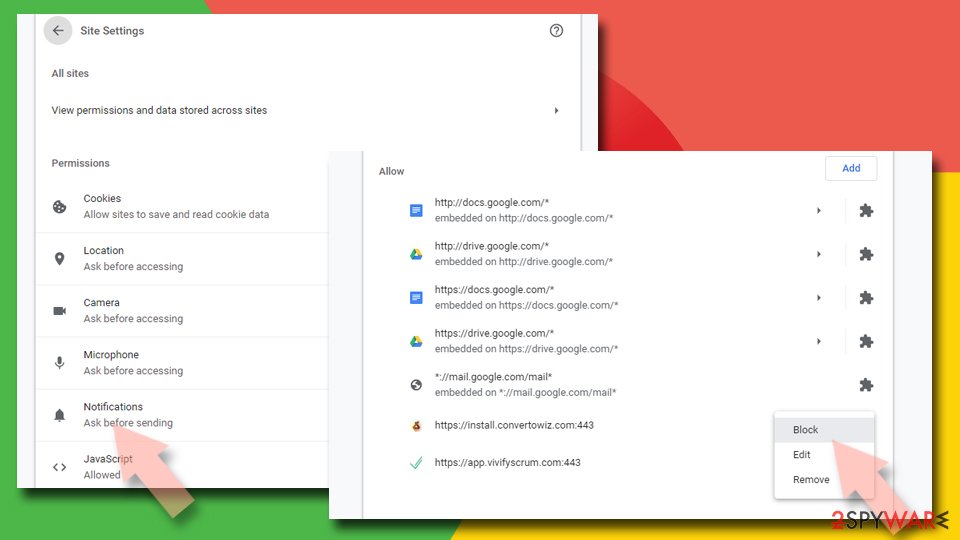
To remove annoying ads from Ponuadema.com, you have to access browser settings and block the website's URL that sends these requests. If you need help with this, please follow these steps:
Google Chrome
- Open the Google Chrome browser and go to Menu > Settings.
- Scroll down and click on Advanced.
- Locate the Privacy and security section and pick Site Settings > Notifications.
- Look at the Allow section and look for a suspicious URL.
- Click the three vertical dots next to it and pick Block. This should remove unwanted notifications from Google Chrome.

Google Chrome (Android)
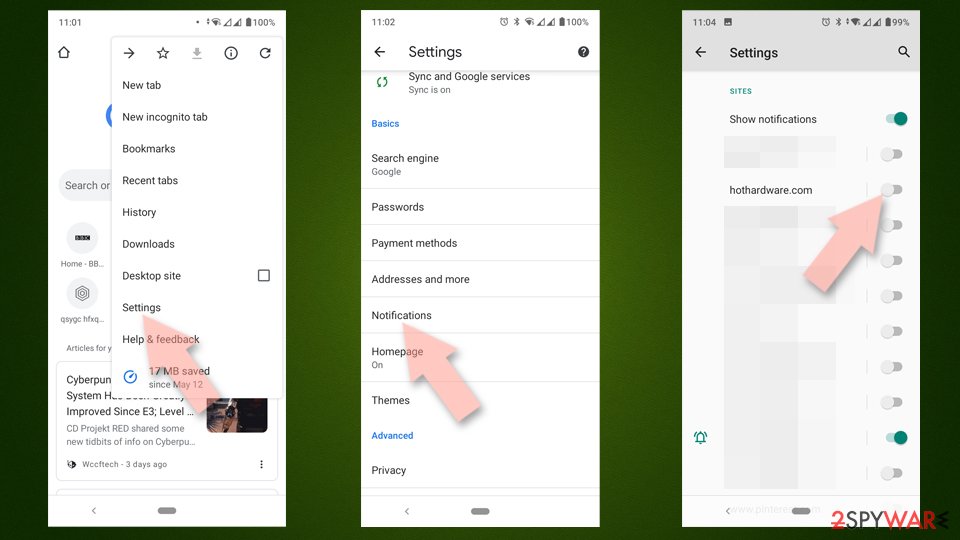
- Open Google Chrome and tap on Settings (three vertical dots).
- Select Notifications.
- Scroll down to the Sites section.
- Locate the unwanted URL and toggle the button to the left (Off position).

Mozilla Firefox
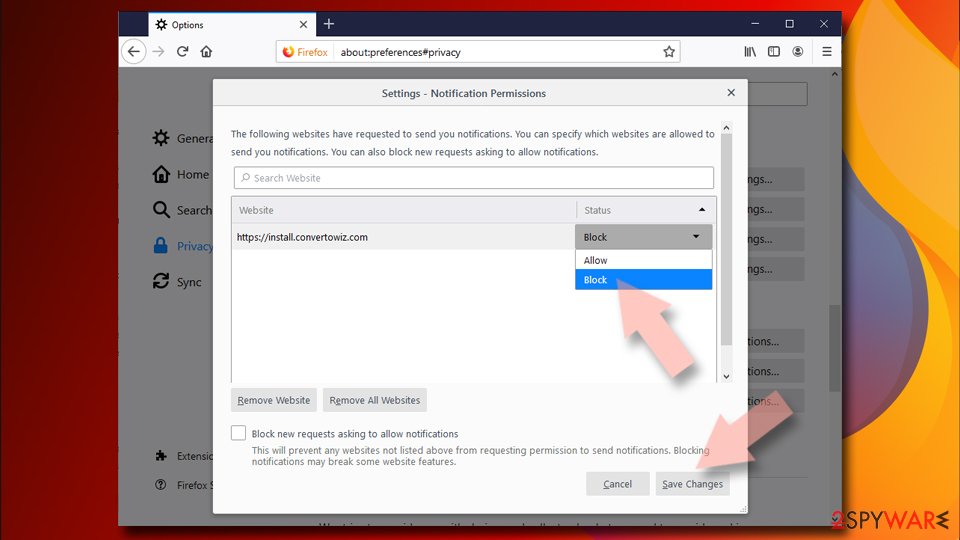
- Open Mozilla Firefox and go to Menu > Options.
- Click on Privacy & Security section.
- Under Permissions, you should be able to see Notifications. Click the Settings button next to it.
- In the Settings – Notification Permissions window, click on the drop-down menu by the URL in question.
- Select Block and then click on Save Changes. This should remove unwanted notifications from Mozilla Firefox.

Safari
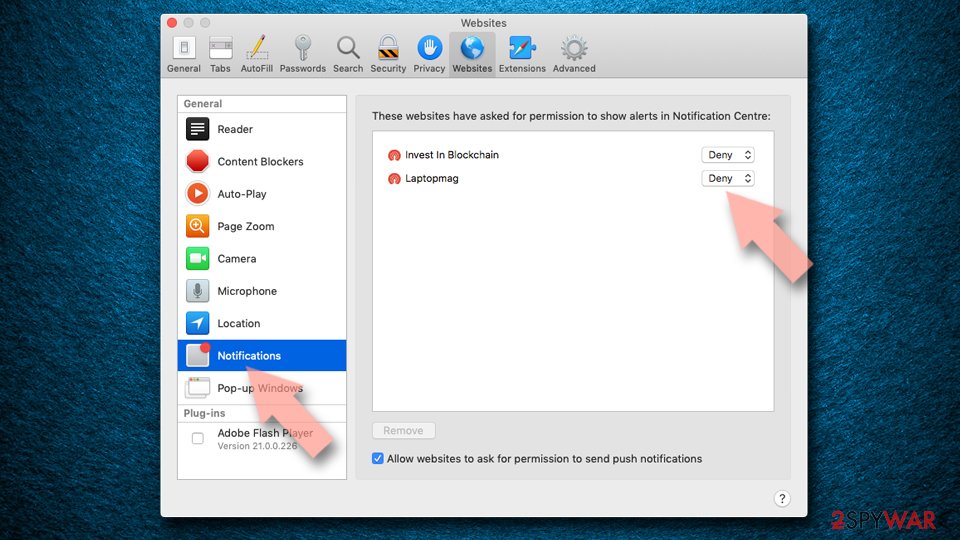
- Click on Safari > Preferences…
- Go to the Websites tab and, under General, select Notifications.
- Select the web address in question, click the drop-down menu and select Deny.

MS Edge
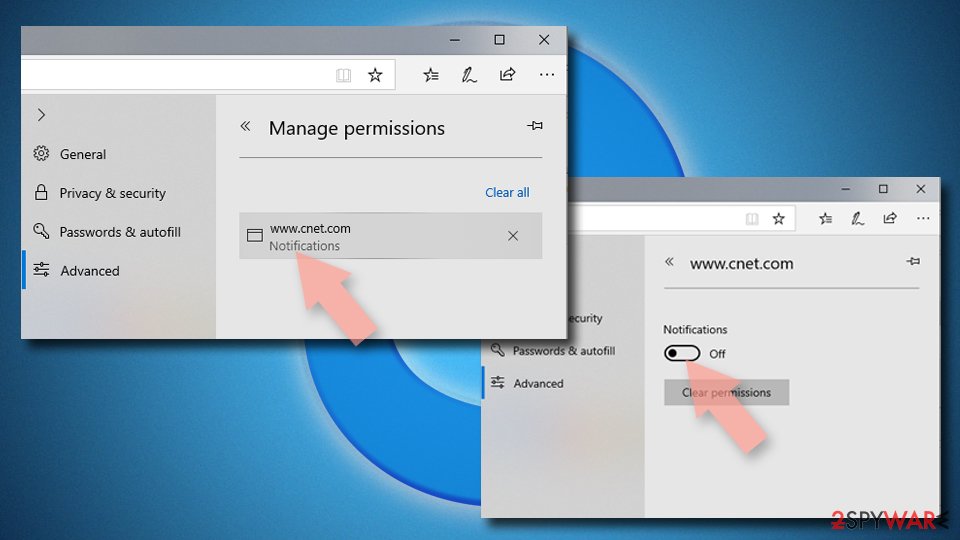
- Open Microsoft Edge, and click the Settings and more button (three horizontal dots) at the top-right of the window.
- Select Settings and then go to Advanced.
- Under Website permissions, pick Manage permissions and select the URL in question.
- Toggle the switch to the left to turn notifications off on Microsoft Edge.

MS Edge (Chromium)
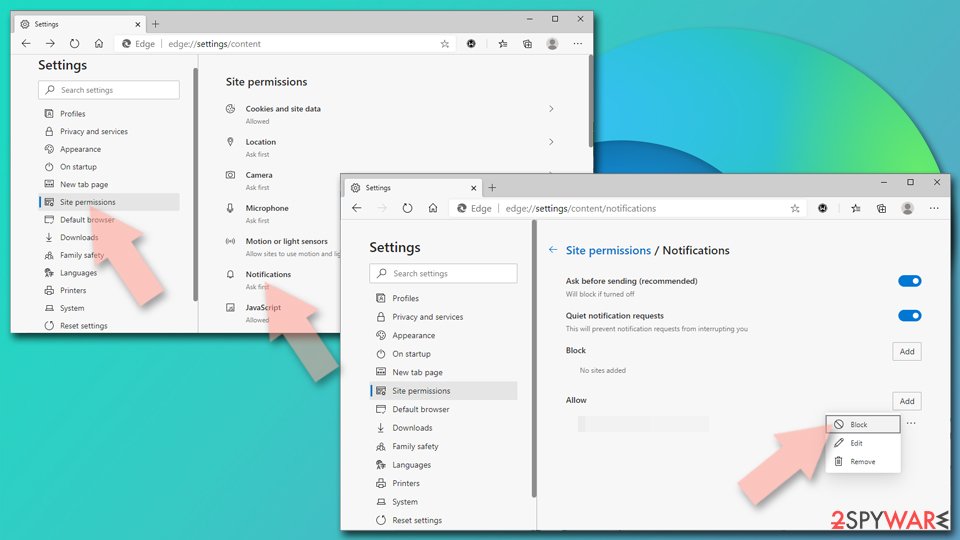
- Open Microsoft Edge, and go to Settings.
- Select Site permissions.
- Go to Notifications on the right.
- Under Allow, you will find the unwanted entry.
- Click on More actions and select Block.

Internet Explorer
- Open Internet Explorer, and click on the Gear icon at the top-right of the window.
- Select Internet options and go to the Privacy tab.
- In the Pop-up Blocker section, click on Settings.
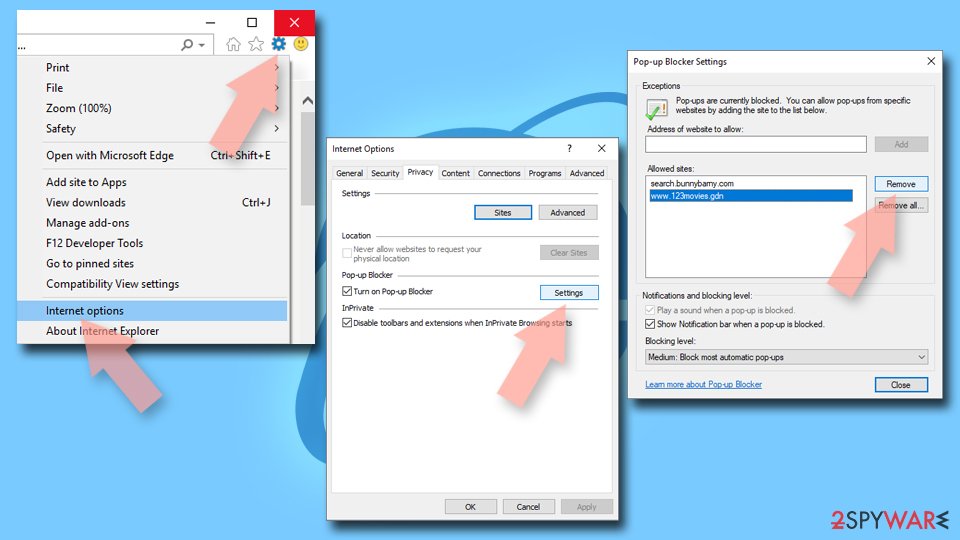
- Locate the web address in question under Allowed sites and pick Remove.

Did this guide help?
Be the first to comment