
Qbit Mac Optimizer: what it is and how to remove it
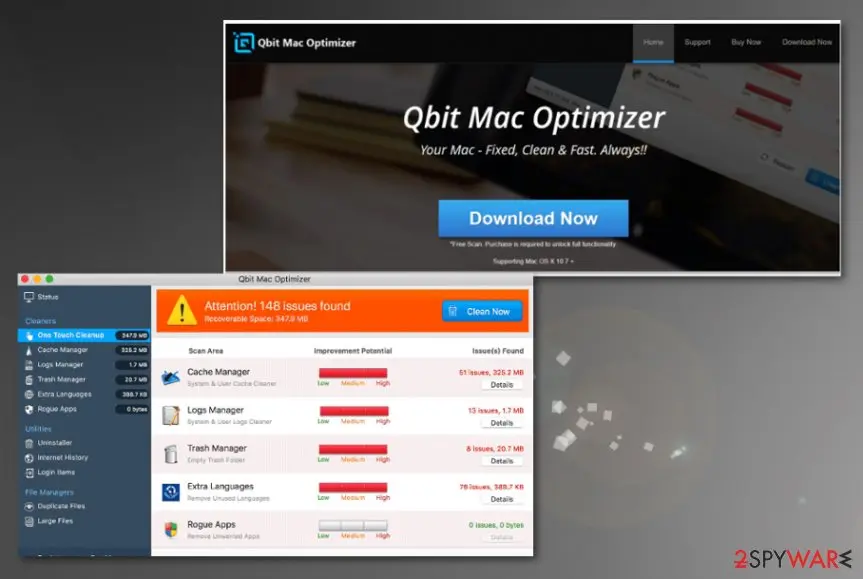
Qbit Mac Optimizer - an application that displays a questionable list of errors, junk files, malware, and trash to trick people into believing their devices have issues. However, this particular program cannot fix anything that gets displayed after the alleged scan results, so victims are encouraged to purchase the license key for the full version of this program.
Facts checked October 7, 2026. Removal steps checked against Apple's current documentation and the security vendors' reports. We have not run the malware on a Mac. Sections marked as our earlier report are the original text: they describe the threat as it was then and have not been reviewed since. The 2026 status, the removal steps and the questions are current.
Automatic
Get a free scan and check if your Mac is infected.
Fortect for Mac scans for malware and unwanted programs, and its free scan shows what it finds before you decide anything.
An automatic scan checks installed programs, startup items and browser extensions for anything that came with Qbit Mac Optimizer.
Do it yourself · free Remove Qbit Mac Optimizer yourself 7 steps, about 21 minutes, no software needed.
Start the steps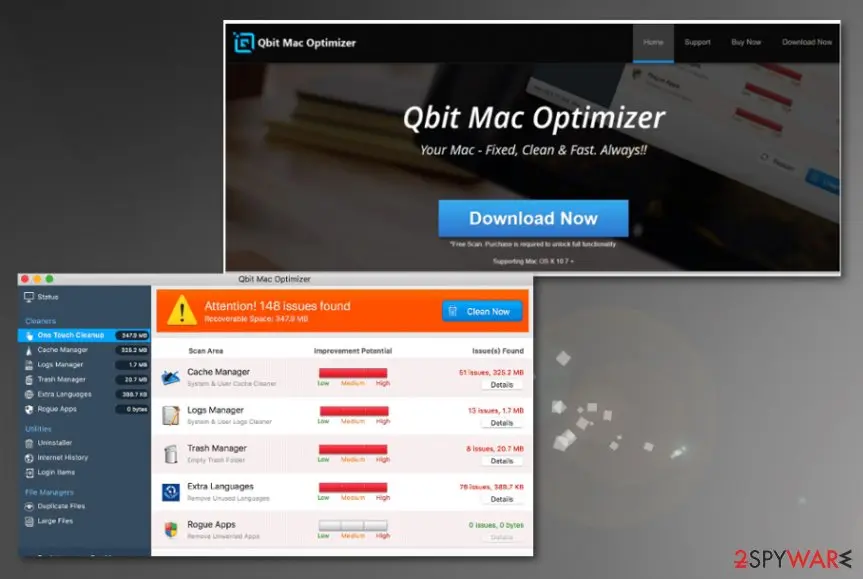
Qbit Mac Optimizer: summary
| Distribution | Freeware installations include additional programs like this and load them automatically on the machine during the initial download. People can install such apps themselves from deceptive sites and promotional advertisements |
|---|---|
| Name | Qbit Mac Optimizer |
| Type | Rogue system tool/ Mac virus |
| Symptoms | This program pretends to scan the machine, so it can show pre-determined results filled with false issues, errors, and system issues. It then suggests installing an additional program that should fix those issues, but the full version of the tool costs money and does nothing besides cleaning the list empty |
| Danger | Neither the free nor the full version of this program can eliminate any system issues or malware. But these apps often interfere with startup entries and preferences that can be damaging. Also, purchase offers swindles money from victims for useless software |
| Tactics | Social engineering technique allows scammers to trick people into believing that their device needs help, so they are more eager to pay for the questionable application |
| Removal | Scan the Mac with security software to find the malware and anything installed with it. Fortect for Mac scans for malware and unwanted programs. Remove it nowTo use the full-featured product, you have to purchase a license for Fortect. The scan is free. |
Show 6 more facts
| Detection names | No Microsoft detection name is known |
|---|---|
| Damage | Not recorded in the old report |
| Evidence | 4 write-ups by security sites; details still limited |
| Program | Qbit Mac Optimizer |
| First seen | 30 January 2020 |
| Facts checked | 7 October 2026 |
Is Qbit Mac Optimizer a real security program?
From our report of Jan 2020 · not reviewed since
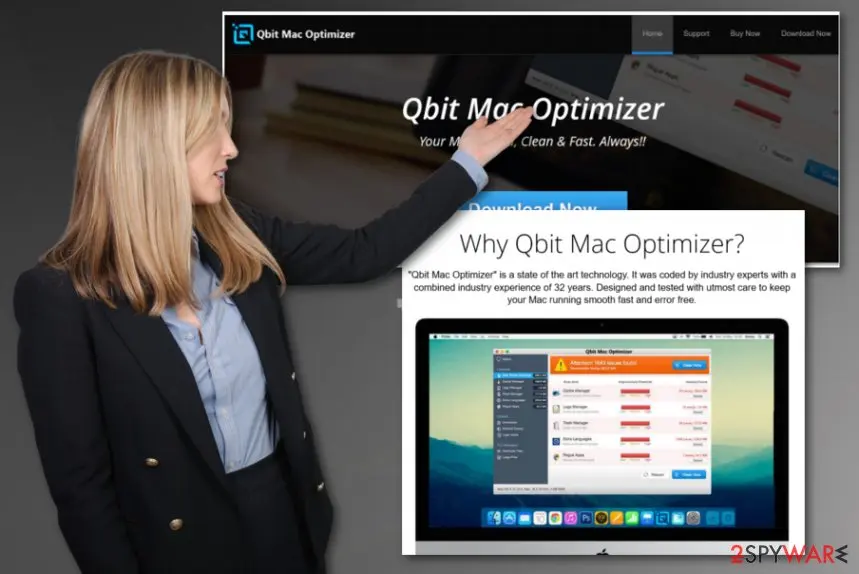
Qbit Mac Optimizer is the free system optimizer for macOS devices that should enable computers to run smoother and faster
Qbit Mac Optimizer - an application that displays a questionable list of errors, junk files, malware, and trash to trick people into believing their devices have issues.
However, this particular program cannot fix anything that gets displayed after the alleged scan results, so victims are encouraged to purchase the license key for the full version of this program.
Unfortunately, neither the free app, not the paid program can give valuable results for the user. This program falls into the category of potentially unwanted programs because it has no features, in reality, that the developer has claimed to offer.
Qbit Mac Optimizer virus is the program related to advertisers and other PUP creators, so it focuses on showing a free scan feature and claiming to find the number of issues, particular malware, and system errors.
This is to attract people and have the opportunity of pushing other products, related programs, and applications. This is the program that provides false results, so it cannot fix any of those issues. In most cases, devices have no such problems that the application may claim to find.
Qbit Mac Optimizer itself and the paid version of the program cannot perform anything besides clearing the pre-determined list of issues, junk files, trash, or altering startup settings and registry entries. The latter is not the best thing for the system of your machine because interference with crucial settings of the device can cause further damage and affect the performance more than the PUP infection itself.
Note that this application may occur on the screen way after the initial infiltration if you were not the one who installed the Qbit Mac Optimizer rogue tool manually. There are some people that can fall for all the claims and promotional content seen online and get the tool as a good addition to their machine.
There is no reason to install such tools because system optimizers that claim to do it all are worthless, in most cases. Especially when programs like QbitMacOptimizer are geared towards macOS machines that don't need additional performance improving software in the first place.
Whether you got the tool on purpose yourself, or the PUA got installed behind your back, remove Qbit Mac Optimizer from your machine as soon as possible to help your device run smoother and faster without the additional background processes and cyber threats.
It may seem a lot of work to perform a proper Qbit Mac Optimizer removal, but it is easier than you may think when you get a professional anti-malware tool for help. Antivirus detection engines can find potentially malicious files and programs and remove all those traces from your device without affecting any functions.
Unfortunately, it is not that easy to uninstall the tool when it found its own way on the machine and changed particular settings or functions to keep the persistence. This is why experts always recommend terminating such programs with automatic tools. This is the way to find all the affected or damaged system files and repair virus damage that keeps the machine from running smoothly.
Qbit Mac Optimizer may claim about malware and potentially dangerous programs but is not a proper anti-malware tool that could find such intruders and delete them from the machine. Nevertheless, the tool itself can be detected as malicious by various AV detection tools. That should raise questions immediately and encourage you to terminate the tool as soon as possible.
Unfortunately, such PUP infections and misleading, deceptive content that Qbit Mac Optimizer delivers to users can lead to scams of a bigger scale. When you agree to pay for the license of the program, your banking credentials may be collected with the help of keyloggers and used in targeted scams or fraud campaigns, so get rid of the rogue program as soon as you can.
From our report of Jan 2020 · not reviewed since
Additional programs from freeware installation packages are no good
You should always check the legitimacy of the source you go for your software, especially when it is an online site that promotes and distributes various programs.
There is no reason to trust anything that can be gotten for free blindly, especially programs and software that comes on your device.
Product bundling is the technique that various PUP developers tend to adopt, so their shady programs get delivered alongside freeware applications, and machines get infected by various PUPs at once. You need to go for Advanced or Custom options to avoid such infiltrations. By doing, so you can see the full list of shady programs and de-select unwanted additions completely.
From our report of Jan 2020 · not reviewed since
More from our earlier report on Qbit Mac Optimizer
- Qbit Mac Optimizer removal gives best results when it involves anti-malware programs and full system check that allows deleting all potential threats
- You should go through some settings and additional places on the machine that may get affected by the rogue tool.
- But the best way to repair such virus damage is by using a cleaner like
How to remove Qbit Mac Optimizer
How to remove Qbit Mac Optimizer from a Mac
Start with the passwords and crypto, from another device: a stealer copies them in seconds.
Then clean the Mac, or erase it.
Step 1: Change passwords from another device first
If you pasted a command into Terminal or opened a downloaded file from Qbit Mac Optimizer, assume the passwords saved in the browsers and in Keychain on this Mac are known to the attacker.
From a phone or a clean computer, change the e-mail password first, then banking, shopping, social and work accounts, and sign out of all other sessions on each one.
Move any cryptocurrency to a new wallet created on a clean device, because a seed phrase that was stored on this Mac is compromised. Do this before cleaning the Mac: cleaning does not undo the theft.
Full procedure with screenshots: Turn on two-step verification / secure a hacked account
Step 2: Quit what is running that you do not recognize
Open Activity Monitor (in Applications > Utilities, or search for it with Command + Space).
In the CPU or Network tab, look for a process you did not install or whose name is random, select it, click the stop button (the octagon with an X) and choose Quit or Force Quit.
Note the name first: you will look for the same name in the next steps. Malware that comes back after a restart is handled in the next two steps.
Step 3: Remove unknown login items and background items
Open System Settings > General > Login Items & Extensions. Under Open at Login and Allow in the Background, switch off or remove anything you do not recognize, especially items whose developer is shown as an unknown name or that appeared on the day you ran the command.
Then open Finder, choose Go > Go to Folder and check
~/Library/LaunchAgents,/Library/LaunchAgentsand /Library/LaunchDaemons for property list (.plist) files you did not add. Drag suspicious ones to the Bin, then restart the Mac.Step 4: Delete apps and downloads you did not intend to install
Open the Applications folder and your Downloads folder. Drag any app you did not install, and any disk image (
.dmg), installer (.pkg) or archive (.zip) that came from Qbit Mac Optimizer or a site you do not trust, to the Bin, then empty the Bin.Also check
~/Library/Application Supportfor a folder with the same name as the app you removed.Step 5: Check the browsers for extensions and changed settings
In Safari open Settings > Extensions and General (homepage). In Chrome open
chrome://extensions, in Firefoxabout:addons.Remove any extension you did not add, and reset the homepage and search engine if they changed. Browsers hold saved passwords and cookies, which is why the password step comes first.
Step 6: If it was an infostealer, erase and reinstall macOS
Stealers copy data and often leave persistence you cannot be sure you found.
The only complete fix is to back up your personal files only (documents, photos, not apps or settings), then open System Settings > General > Transfer or Reset > Erase All Content and Settings, or use macOS Recovery to erase the disk and reinstall macOS, as Apple describes in its support articles.
Restore only your files afterwards, and install apps again from their official sources.
Step 7: Report it and watch your accounts
Report the site and the command to the authorities in your country, and tell your bank if any card was saved in a browser or in Keychain.
Over the next weeks watch your e-mail, bank and exchange accounts for sign-ins and transfers you did not make. Keep the notes you made, such as the process names and the file dates, in case a bank or the police ask for them.
Full procedure with screenshots: Report a cyber attack or scam to the authorities
Instructions for each browser and system
The detailed steps for every browser and system this guide covers. Open the one you use.
Delete from macOS
Terminate the program and make sure to clean the system from any suspicious applications with this guide:
Remove the unwanted application:
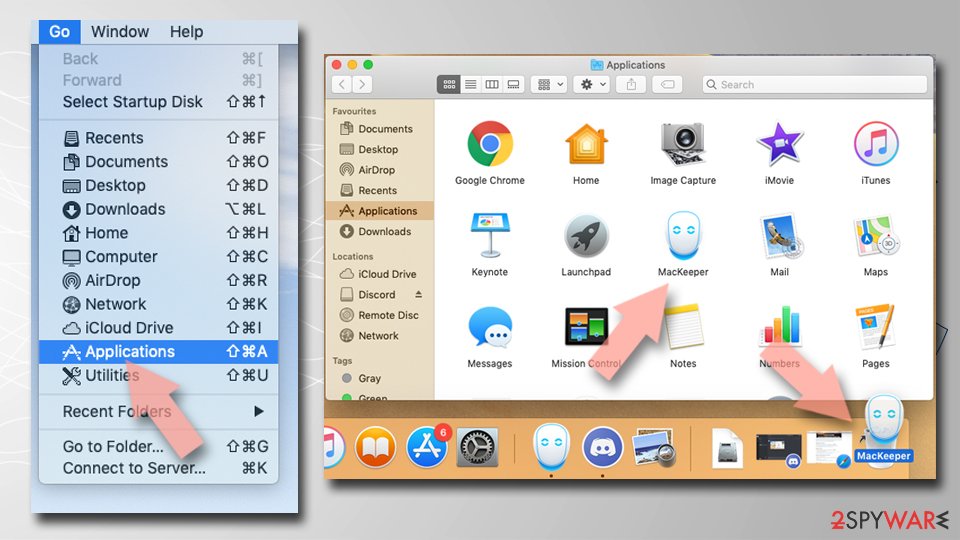
- From the menu bar, select Go > Applications.
- In the Applications folder, look for any suspicious entries, then drag them to Trash (or right-click and pick Move to Trash).
Delete leftover files and folders:
- Select Go > Go to Folder.
- Enter /Library/Application Support and remove any suspicious folders related to the unwanted program.
- Repeat the same check in the /Library/LaunchAgents and /Library/LaunchDaemons folders, deleting any suspicious entries.
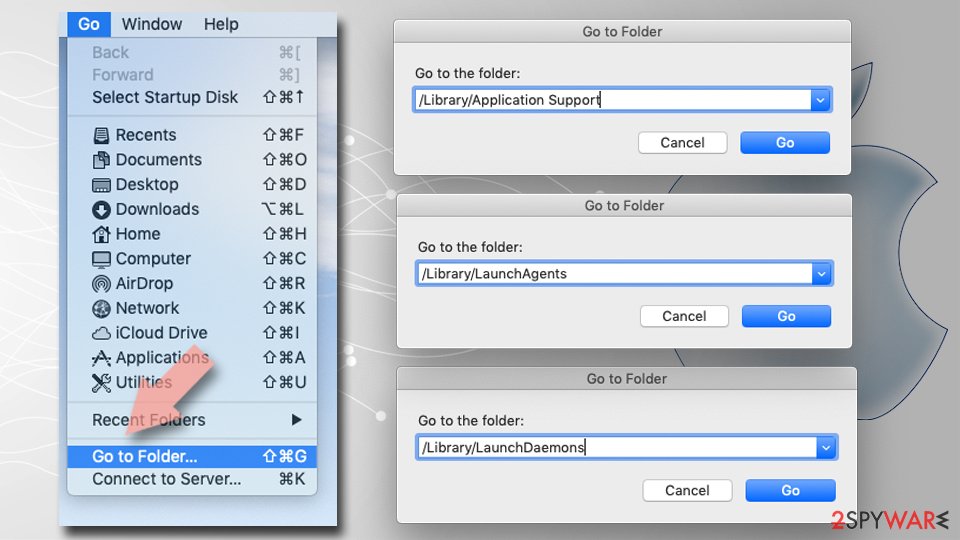
- Finally, empty the Trash to permanently remove the leftovers.
Choose a proper web browser and improve your safety with a VPN tool
Online spying has got momentum in recent years and people are getting more and more interested in how to protect their privacy online.
One of the basic means to add a layer of security - choose the most private and secure web browser. Although web browsers can't grant full privacy protection and security, some of them are much better at sandboxing, HTTPS upgrading, active content blocking, tracking blocking, phishing protection, and similar privacy-oriented features.
However, if you want true anonymity, we suggest you employ a powerful VPN - it can encrypt all the traffic that comes and goes out of your computer, preventing tracking completely.
Lost your files? Use data recovery software
While some files located on any computer are replaceable or useless, others can be extremely valuable.
Family photos, work documents, school projects - these are types of files that we don't want to lose. Unfortunately, there are many ways how unexpected data loss can occur:
- power cuts
- Blue Screen of Death errors
- hardware failures
- crypto-malware attack
- even accidental deletion
To ensure that all the files remain intact, you should prepare regular data backups. You can choose cloud-based or physical copies you could restore from later in case of a disaster. If your backups were lost as well or you never bothered to prepare any, can be your only hope to retrieve your invaluable files.
From our report of Jan 2020 · not reviewed since
Get rid of the shady Qbit Mac Optimizer and improve the performance
You already heard that this rogue tool is not malicious, but can freely run in the background of the machine and cause unwanted symptoms related to performance and speed of the computer. Additionally, when the program is on the machine it can install other programs besides adding those startup files that control the persistence of Qbit Mac Optimizer virus.
All the related applications, files, browser-based programs, and altered settings man make the Qbit Mac Optimizer removal difficult because you need to get rid of all the associated content to fully eliminate this shady tool. This is why it is recommended to get a professional anti-malware program to scan the machine.
However, when you remove Qbit Mac Optimizer from the machine remember those potential changes and damage this program could have caused already. To fix those issues, you may need an additional system program that can for real improve the performance and repair needed files.
Questions about Qbit Mac Optimizer
What is Qbit Mac Optimizer and why is it on my PC?
Qbit Mac Optimizer is a program that was installed on the PC, most likely together with something else you downloaded. Free software sites and many installers add extra programs on setup pages with pre-ticked boxes, so the extra install looks like your choice even though nobody read the page.
Check the install date in Settings, Apps, Installed apps: the program you installed that day is the probable carrier. If you do not need Qbit Mac Optimizer, uninstall it. If it belongs to your hardware or to a program you use, search its exact name and publisher first, because drivers and their tools can have unfamiliar names.
How do I stop programs like Qbit Mac Optimizer from being installed again?
Most unwanted programs arrive through installers, so the fix is in how you install software. Download programs from their official sites or the Microsoft Store, not from download portals or ads above search results. During setup, choose Custom or Advanced installation and untick every extra offer, including browsers, toolbars and optimizers.
Decline update prompts that appear inside other programs unless you know them. In Windows Security, turn on reputation-based protection and potentially unwanted app blocking. These steps would most likely have stopped Qbit Mac Optimizer before it reached the app list.
Should I reset my PC because of Qbit Mac Optimizer?
Only if the signs point to deeper access. Reset when you see qbit Mac Optimizer in the list of installed apps again after removal, when Windows Security cannot start or update, when remote access tools you did not install keep appearing, or when you simply cannot trust the PC any more.
Otherwise, the plan in this guide plus an offline scan is enough. If you do reset, choose Remove everything and Cloud download for a fresh copy of Windows, restore only documents and photos, and reinstall programs from their official sites. Change important passwords from the clean system afterwards.
Do I need to buy antivirus after removing Qbit Mac Optimizer?
No. Windows 11 and Windows 10 include Microsoft Defender in Windows Security, which provides real-time protection, scheduled scans, the offline scan and protection against unwanted apps at no cost. Keep it switched on and updated, and turn on Reputation-based protection under App & browser control.
If you prefer a third-party product, buy it from the vendor's own site after reading independent test results, never from a pop-up or a phone call. The lesson of Qbit Mac Optimizer is that security offers which arrive unasked are the ones to avoid.
Qbit Mac Optimizer has no uninstaller. How do I get rid of it?
Some scareware does not register an uninstaller, or its uninstaller only opens another sales page. In that case, end the program in Task Manager, then go to Task Manager > Startup apps, right-click its entry and choose Open file location to find its folder. Disable the startup entry, restart in Safe Mode and delete the folder.
Check Task Scheduler for tasks with the same name. Finally, run the Microsoft Defender offline scan, which removes remaining files that Microsoft knows about. Restart afterwards and check that nothing named after Qbit Mac Optimizer starts again.
What is Qbit Mac Optimizer?
Qbit Mac Optimizer is fake security software, sometimes called a rogue antivirus or scareware. The program, Qbit Mac Optimizer, shows invented or exaggerated problems to make you pay for a licence, and some versions send you to phone "support".
It does not protect the PC, and the threats it lists are not a reason to pay. Fake security programs usually arrive through fake virus warnings on websites, extra offers in free installers or ads for faster PCs. Uninstall it and use the free protection built into Windows instead.
Is Qbit Mac Optimizer a real Windows warning?
No. Real Windows Security notifications appear in the notification area and in the Windows Security app, use Microsoft's design and never ask you to call a phone number or pay to fix anything. What people report is qbit Mac Optimizer in the list of installed apps, drawn by a program that copies the look of a system message.
Open Windows Security from the Start menu to see the real status of your PC. If it shows no threats while the window keeps appearing, the window itself is the problem, and the plan in this guide removes the program that shows it.
I let a technician connect to my PC because of Qbit Mac Optimizer. Is it safe now?
Not until you check. While connected, the caller could install other programs, create a user account or look at saved passwords. Disconnect from the internet, uninstall the remote access program and anything else installed during the call, and run a full scan and the Microsoft Defender offline scan.
From another device, change your e-mail and banking passwords and turn on two-step verification. If the caller opened your online banking, call the bank today. A reset of Windows is the safest option if you cannot tell what was done.
I entered my card number in Qbit Mac Optimizer. What should I do?
Call your card issuer using the number on the back of the card, report the purchase as fraud and ask for a new card. Ask them to block further charges from the same merchant. Watch your statements for small test charges, which often come before larger ones.
If you used a password on the order page or the same e-mail for the purchase, change that password and expect phishing e-mails that mention the purchase. Your bank can also tell you whether the merchant is linked to other fraud reports.
Will Fortect remove Qbit Mac Optimizer?
Fortect for Mac scans for malware and unwanted programs, and its free scan shows what it finds on your Mac before you decide anything.
For Qbit Mac Optimizer, follow the plan on this page as well: removing a launch item or an app is done in macOS itself, and a scanner cannot undo what was typed or entered on the infected Mac, such as saved passwords that were copied.
Change your passwords from another device first, and if the page tells you to erase the Mac, a scan is not a substitute. The free scan costs nothing and the full-featured product needs a license.
Sources
- Dieviren: Dieviren (read October 7, 2026)
- VirusTotal: Detection rate of the rogue tool (read October 7, 2026)
- Wikipedia: Rogue security software (read October 7, 2026)
- FTC: How to recognize, remove and avoid malware (read October 7, 2026)
- Microsoft Learn: Microsoft Defender Offline (read October 7, 2026)