
Sendinc email virus: how to spot it and what to do
Sendinc email virus - malware delivering email campaign that sends emails to infect computers and deliver data-stealing Trojan. This scam is used by cybercriminals as a method to spread Emotet malware.
Facts checked October 6, 2026. Removal steps tested on Windows 11 (26H2) and checked against Microsoft's and the browser makers' current documentation. Sections marked as our earlier report are the original text: they describe the threat as it was then and have not been reviewed since. The 2026 status, the removal steps and the questions are current.
Automatic
Get a free scan and check if your PC is infected.
Fortect finds malware, unwanted programs and the Windows damage they leave behind, and repairs it in one pass.
Do it yourself · free Remove Sendinc email virus yourself 4 steps, about 12 minutes, no software needed.
Start the steps
Sendinc email virus: summary
| Distribution | Social engineering tactics can trick users into opening shady emails and leaked information from various breaches get used, in particular, email addresses later used in these campaigns |
|---|---|
| Name | Sendinc email virus |
| Type | Email scam campaign |
| Tactics | Poses as an encrypted email from a known contact, but the content needs to be enabled separately |
| Delivers | Emotet malware gets installed on the machine once the encrypted email is opened and file attached to the notification downloaded on the computer. The malicious script gets triggered by clicking on the Open Encrypted Email button |
| Symptoms | The email message appears stating about an encrypted email that needs to be opened. The message states that Sendinc is the service that is managing the email encryption, but in reality, the content is malicious and you enable the malware installation instead of opening the email message |
| Removal | Scan the PC with security software to find and remove the malware and anything installed with it. Fortect scans Windows for malware and repairs the system files and settings it damaged. Remove it nowTo use the full-featured product, you have to purchase a license for Fortect. The scan is free. |
Show 8 more facts
| Main danger | Emotet trojan is a data-stealing malware that can obtain passwords, banking data, and lead to identity theft or money loss. The infected machine can also become a target of remote hacker attacks |
|---|---|
| Evidence | 4 write-ups by security sites; details still limited |
| Arrives as | |
| Pretends to be | Microsoft |
| Claim | Your account needs urgent attention |
| Asks for | Your password |
| First seen | 14 October 2019 |
| Facts checked | 6 October 2026 |
What the Sendinc email virus e-mail looks like
From our report of Oct 2019 · not reviewed since
Sendinc email virus - malware delivering email campaign that sends emails to infect computers and deliver data-stealing Trojan.
This scam is used by cybercriminals as a method to spread Emotet malware. The Trojan is distributed through spam emails containing documents as file attachments. The purpose of this infiltration is to steal your personal data and drop other malware onto your computer. Although this email scam is not the only one of its kind, there are some unique features in every scam campaign.
In this case, the malicious email is sent with Sendic's (Send Technology) email service, hence the particular name. During the attack, malicious actors pose as the legitimate service to fake the secureness of the notification and make people more willing to open the attachment.
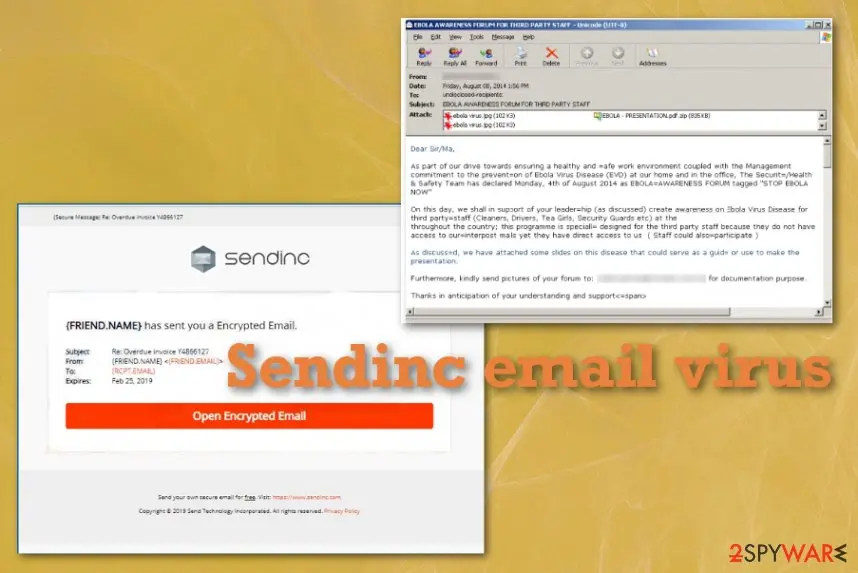
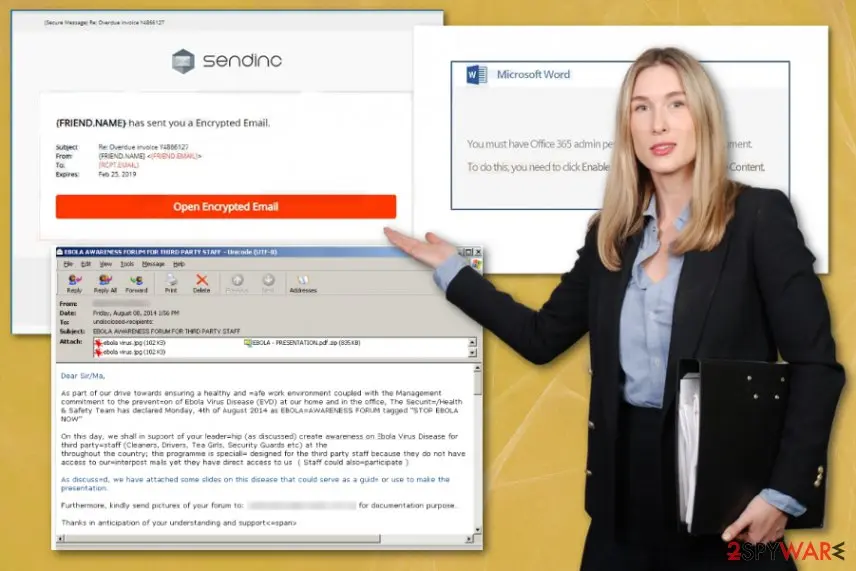
The Sendinc email virus campaign works because the person receives a message about the encrypted email sent from a friend. However, to see the content of the email itself, the target needs to press the Open Encrypted Email button and enable the content.
When the button gets clicked, and the encrypted email gets opened, the Microsoft Office document is downloaded on the machine. By enabling the suggested content, the victim instead installs the Emotet malware on the machine.
Sendinc email virus is the campaign that delivers Emotet trojan which is known for stealing valuable data and malware that can lead to serious issues with your machine. This infection is used to collect personal information like logins, passwords, banking credentials, data stored on the machine. Such behavior can easily lead to financial troubles, other malware programs installed behind your back.
During Sendinc invoice campaign your device may get additional files, malicious scripts, and programs loaded on the PC, so the performance suffers significantly. Stolen information can lead to issues with your privacy or even identity theft if personal information gets misused by malicious actors or third-party criminals. Victims can later suffer from secondary scams and targeted attacks.
Sendinc email virus can load ransomware, miners, any other malicious software that aims to help cybercriminals make money. These malicious people are mainly focused on getting profits from their victims, so your belongings are not important to them. These malware creators do not hesitate before taking anything that is valuable from your system, so you should react to this infection as soon as possible.
Since this is a campaign used to deliver malware, you should remove Sendinc email virus with automatic tools that can detect and eliminate all kinds of malware, including trojans and even the smallest PUPs.
Anti-malware creators online offer various variants of such software, so you need to choose the program compatible with your OS. We can recommend to scan the machine with and clean all the useless files, suspicious programs, virus damage with this program.
Emotet trojan itself is a serious program that affects your device significantly, especially if you leave it running for a while in the background, where it can launch all the additional processes and programs. Make sure to perform Sendinc email virus removal once you encounter any of those symptoms. You can cut the malware in advance this way.
It is possible that you are not completely sure how long Sendinc email virus or trojan is running in the background if you got the malicious email before the suspicious behavior started. You need to thoroughly check the machine to see what damage has already been done. You need to repair all that if you want to use the device normally again.
The biggest issue is all the additional Sendinc email virus processes, and malicious scripts dropped on the system. You need to terminate all the intruders and change altered settings. If you avoid doing so, the machine gets permanently damaged, and you may lose your valuable information.
Stay away from Sendinc invoice virus or any other shady email campaign when the sender seems suspicious, files get attached to the random shipping notification or financial information email. There is a bigger issue when malicious actors misuse names like Send Technology, DHL, eBay, and so on.
So try to check the email before opening or delete it once received immediately. Experts always talk about such risks and possible damage regarding not enough attention paid to suspicious emails.
How to tell the Sendinc email virus e-mail is fake
From our report of Oct 2019 · not reviewed since
- Get the anti-malware program like to remove Sendinc email virus and all the traces of the trojans installed without your knowledge
Is Sendinc email virus dangerous? What the senders want
From our report of Oct 2019 · not reviewed since
Complex infections come from crafted emails with malicious scripts
There are tons of different methods that get used as vectors for malware delivery, email scams are one of the more employed for serious intruders like trojans, malware, and crypto-extortion based ransomware because these campaigns allow spreading the malware quickly.
The email spreading this trojan appears with a particular button that once clicked on triggers malicious macros on the Microsoft document and loads malicious script on the machine immediately. The attachment downloads and installs the malware automatically and infects the device with more serious viruses later on since the access is already gained.
Such malicious email campaigns can pose as various services, companies, and even your friends from the contact list because malware creators aim to trick you into clicking and opening their malware-laden content. Stay away from notifications with names of services and companies you don't use at the time. Delete any suspicious emails immediately after receiving to avoid cyber infections.
What to do after the Sendinc email virus e-mail
If you only received the message and clicked nothing, step 3 is all you need.
If you clicked the link or typed anything on the page it opened, do every step, starting with the password.
Step 1: Change the password you typed on the fake page
If you entered a password after clicking the link in the Sendinc email virus message, treat that account as known to the sender.
Open the provider's real site by typing its address yourself, not through any link in the e-mail, and change the password there. Choose a new one you have never used before, and change it on every other account that shared the old one.
Then use the option to sign out of all other sessions or devices, if the provider has one. This works the same in any browser on Windows 11 and Windows 10.
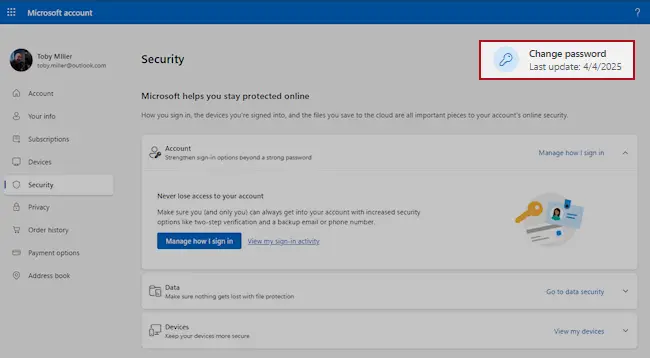
Microsoft account, Security page (account.microsoft.com/security): Change password. Full procedure with screenshots: Turn on two-step verification / secure a hacked account
Step 2: Turn on two-step verification
Two-step verification asks for a code from your phone or an authenticator app whenever someone signs in from a new device. A stolen password alone is then not enough to open the mailbox.
Turn it on in the security settings of the e-mail account first, then for the bank, shop and social accounts that send their reset links to that address.
While you are there, check the recovery e-mail and phone number and the forwarding rules, which attackers sometimes change to keep access. The settings pages look the same on Windows 11 and Windows 10.
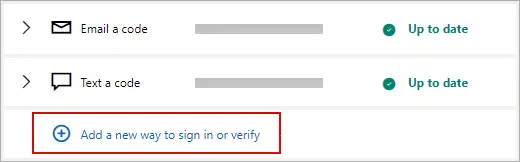
Microsoft account: Manage how I sign in, where two-step verification and the sign-in methods are. Full procedure with screenshots: Turn on two-step verification / secure a hacked account
Step 3: Report the e-mail and delete it
Report the message instead of only deleting it. In Outlook choose Report > Report phishing, in Gmail the three-dot menu > Report phishing; the provider then blocks the same message for other people.
Do not reply and do not click anything else in it. On a work account, forward it to your IT team as an attachment first. Web mail and the mail apps on Windows 11 and Windows 10 offer the same options.
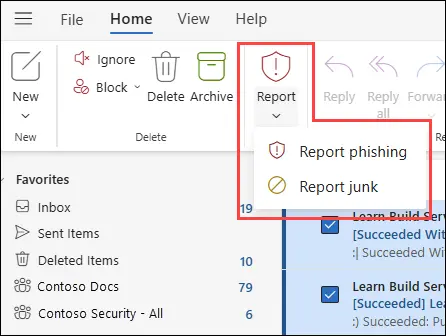
New Outlook for Windows and Outlook on the web: Report > Report phishing. Full procedure with screenshots: Report a phishing e-mail
Step 4: Scan the PC if you opened a file from the message
A page that only asked for a password installs nothing, so most readers can skip this step.
If the Sendinc email virus e-mail or the page it opened made you download or open a file, delete it and run a full scan, then a Microsoft Defender Offline scan.
In Windows 11 and Windows 10 open Windows Security > Virus & threat protection > Scan options, select Microsoft Defender Antivirus (offline scan) and click Scan now. The PC restarts and the scan takes about 15 minutes, so save your work first.

Windows 11: Windows Security > Virus & threat protection > Scan options. Full procedure with screenshots: Run a Microsoft Defender Offline scan
Instructions for each browser and system
The detailed steps for every browser and system this guide covers. Open the one you use.
Manual removal using Safe Mode
Important! →
Manual removal guide might be too complicated for regular computer users. It requires advanced IT knowledge to be performed correctly (if vital system files are removed or damaged, it might result in full Windows compromise), and it also might take hours to complete. Therefore, we highly advise using the automatic method provided above instead.
Step 1. Access Safe Mode with Networking
Manual malware removal should be best performed in the Safe Mode environment.
Windows 7 / Vista / XP
- Click Start > Shutdown > Restart > OK.
- When your computer becomes active, start pressing F8 button (if that does not work, try F2, F12, Del, etc. - it all depends on your motherboard model) multiple times until you see the Advanced Boot Options window.
- Select Safe Mode with Networking from the list.

Windows 10 / Windows 8
- Right-click on Start button and select Settings.

- Scroll down to pick Update & Security.

- On the left side of the window, pick Recovery.
- Now scroll down to find Advanced Startup section.
- Click Restart now.

- Select Troubleshoot.

- Go to Advanced options.

- Select Startup Settings.

- Press Restart.
- Now press 5 or click 5) Enable Safe Mode with Networking.

Step 2. Shut down suspicious processes
Windows Task Manager is a useful tool that shows all the processes running in the background. If malware is running a process, you need to shut it down:
- Press Ctrl + Shift + Esc on your keyboard to open Windows Task Manager.
- Click on More details.

- Scroll down to Background processes section, and look for anything suspicious.
- Right-click and select Open file location.

- Go back to the process, right-click and pick End Task.

- Delete the contents of the malicious folder.
Step 3. Check program Startup
- Press Ctrl + Shift + Esc on your keyboard to open Windows Task Manager.
- Go to Startup tab.
- Right-click on the suspicious program and pick Disable.

Step 4. Delete virus files
Malware-related files can be found in various places within your computer. Here are instructions that could help you find them:
- Type in Disk Cleanup in Windows search and press Enter.

- Select the drive you want to clean (C: is your main drive by default and is likely to be the one that has malicious files in).
- Scroll through the Files to delete list and select the following:
Temporary Internet Files
Downloads
Recycle Bin
Temporary files - Pick Clean up system files.

- You can also look for other malicious files hidden in the following folders (type these entries in Windows Search and press Enter):
%AppData%
%LocalAppData%
%ProgramData%
%WinDir%
After you are finished, reboot the PC in normal mode.
Protect your privacy - employ a VPN
There are several ways how to make your online time more private - you can access an incognito tab.
However, there is no secret that even in this mode, you are tracked for advertising purposes. There is a way to add an extra layer of protection and create a completely anonymous web browsing practice with the help of VPN. This software reroutes traffic through different servers, thus leaving your IP address and geolocation in disguise.
Besides, it is based on a strict no-log policy, meaning that no data will be recorded, leaked, and available for both first and third parties. The combination of a secure web browser and VPN will let you browse the Internet without a feeling of being spied or targeted by criminals.
No backups? No problem. Use a data recovery tool
If you wonder how data loss can occur, you should not look any further for answers - human errors, malware attacks, hardware failures, power cuts, natural disasters, or even simple negligence.
In some cases, lost files are extremely important, and many straight out panic when such an unfortunate course of events happen. Due to this, you should always ensure that you prepare proper data backups on a regular basis.
If you were caught by surprise and did not have any backups to restore your files from, not everything is lost. is one of the leading file recovery solutions you can find on the market - it is likely to restore even lost emails or data located on an external device.
From our report of Oct 2019 · not reviewed since
Terminate Sendinc invoice virus and get rid of the malware installed via this campaign
You need to remember and take into consideration that this email campaign is only a vector used to spread malicious software around.
The email itself is not a virus it is a malware delivering tool. This is why you need to get a proper anti-malware tool and perform an automatic Sendinc email virus removal using the program.
By scanning the machine thoroughly, you can remove Sendinc email virus, Emotet trojan, end other malicious processes, and clean the damage left behind by these intruders. It is the best solution for cyber infection because the automatic system check indicates all possible threats and risks. Rely on , , and pay close attention.
[GI=method-1]You should go for a Safe Mode with Networking reboot and then get rid of the trojan and other traces of malware
[GI=method-2]System restore feature can help with virus removal because this method allows recovering to a previous state when the virus was not active on the device
Questions about Sendinc email virus
Is Sendinc email virus really from Microsoft?
No. It is sent by scammers who copy the name and look of Microsoft. The sender address and the links do not belong to it, and the message asks for your password, which a real company does not request through an unexpected message.
If you want to be sure about your account, open the website or app of Microsoft the way you normally do, not through the message, and look for notices there. Then delete the message and report it as phishing. If you already followed its instructions, use the steps in this guide for your case.
Is it true that your account needs urgent attention?
No. The claim that your account needs urgent attention is the hook of Sendinc email virus, invented to give you a reason to act quickly. Scammers pick a story that could plausibly apply to many people, so it may feel relevant to you, but nothing in the message is based on your real accounts or devices.
If the claim concerns a service you use, check it there directly, by opening the website or app yourself. You will find no such problem. Then delete the message and report it as phishing.
What happens if I do what Sendinc email virus asks?
The scammers get your password, and they use it quickly. Passwords are tried on the real service within minutes, cards are charged or added to phone wallets, remote access is used to open your bank, and crypto is moved on at once.
Documents surface later as accounts in your name. If you already did what the message asked, do not wait to see what happens; follow the steps in this guide for your case today. Speed matters more than anything else here.
Will Microsoft refund me if I fell for Sendinc email virus?
Microsoft did not send the message and is not responsible for it, so a refund usually comes from your bank or card issuer, not from the brand. Call the bank first if you paid.
It still helps to tell the real company: they can secure your account, add notes for their fraud team and take down pages that use their name. Contact them through their official website or app only, never through the message or a search ad. Keep the message as evidence.
How do I report Sendinc email virus to my mail provider?
Use the built-in button. In Outlook, select the message and choose Report > Report phishing. In Gmail, open the message, click the three-dot menu and choose Report phishing.
Scam text messages can be forwarded to your carrier's spam number, which is 7726 in the US and the UK.
On social networks, use the report option on the message or the profile. Reporting trains the filters that protect you and other users, and it takes a few seconds. Then delete the message.
Should I reply or unsubscribe?
No. A reply confirms that your address is active and read, which leads to more scams. The unsubscribe link in a scam message is part of the scam and may lead to a phishing page. Mark the message as spam or phishing and delete it.
Block the sender if your mail app allows it, though scammers change addresses often. If the scam came by text message, do not reply STOP either. If it came through social media, use the platform's report function and block the account.
How quickly do scammers use a phished password?
Often within minutes. Phishing kits send each password to the operators as soon as it is typed, and many test it automatically on the real service. Some kits also pass the two-step code through in real time.
That is why the first hour matters: change the password, end all sessions and check that the recovery details are still yours. If nothing has changed by then, you were probably fast enough, but keep watching for login alerts and password-reset e-mails for a few weeks.
How can I spot messages like Sendinc email virus in future?
Check the sender's actual address, not only the name. Hover over links before clicking and compare the domain with the real one. Be suspicious of urgency, threats, prizes, unexpected invoices and requests for passwords, codes, card data or crypto.
Do not call phone numbers from unexpected messages; use the number on the official site or your card. When in doubt, go to the service directly through its app or a bookmark. Phishing protection and two-step verification limit the damage when a scam gets through.
Can just reading Sendinc email virus harm my PC?
No. Reading the e-mail does nothing to the PC. The risk lies in what the message wants you to do: your password. Every one of those needs an action from you, such as a click, a typed password, a payment or a call.
If you stopped at reading, you are fine. Delete it and report it. If you are unsure whether you clicked something, check your browser history for the time you read the message, and act on what you find there.
Will Fortect remove Sendinc email virus?
Fortect scans Windows for malware and unwanted programs and repairs the system files and settings they change, and its free scan shows what it finds on your PC before you decide anything.
For Sendinc email virus, follow the plan above as well: the browser steps take back permissions and settings that no scanner treats as a threat, and uninstalling the program that brought it removes the source.
Run Microsoft Defender's full scan and, if anything was found, its offline scan as a second opinion. If the symptoms are gone after the plan and both scans are clean, there is nothing more to do.
Sources
- Cnet: Sendinc Email Encryption for Outlook (read October 6, 2026)
- Losvirus: Losvirus (read October 6, 2026)
- FTC: How to recognize and avoid phishing scams (read October 6, 2026)
- CISA: Recognize and report phishing (read October 6, 2026)
- Microsoft Support: Protect yourself from phishing (read October 6, 2026)