
Super File Manager ads: what it is and how to remove it
Super File Manager is a doubtful "full-featured file manager" for Android devices developed by Onegogo. Based on its distribution ("bundling") and intrusive behavior (intrusive ads, resistance to removal), it has been included in the potentially unwanted program (PUP) and adware categories.
Facts checked October 7, 2026. Removal steps tested on Windows 11 (26H2) and checked against Microsoft's and the browser makers' current documentation. Sections marked as our earlier report are the original text: they describe the threat as it was then and have not been reviewed since. The 2026 status, the removal steps and the questions are current.
Automatic
Get a free scan and check if your PC is infected.
Fortect finds malware, unwanted programs and the Windows damage they leave behind, and repairs it in one pass.
If Super File Manager keeps coming back after uninstalling, a scan can find what reinstalls it.
Do it yourself · free Remove Super File Manager ads yourself 4 steps, about 12 minutes, no software needed.
Start the steps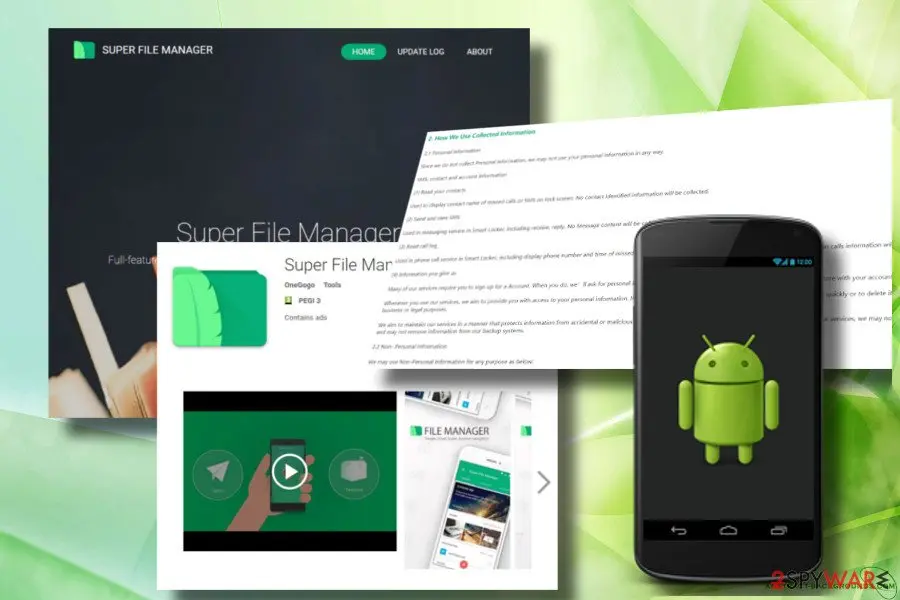
Super File Manager ads: summary
| Distribution | Freeware bundling, is suspected to be spreading as a pre-installed app of no brand Chinese Android smartphones |
|---|---|
| Name | Super File Manager |
| Type | PUP, adware |
| Symptoms | Regular Super File Manager ads, Android's slowdowns, inability to remove Super File Manager and related programs |
| Targeted system | Android |
| Detection names | No Microsoft detection name is known |
| Removal | Scan the PC with security software to find and remove the malware and anything installed with it. Fortect scans Windows for malware and repairs the system files and settings it damaged. Remove it nowTo use the full-featured product, you have to purchase a license for Fortect. The scan is free. |
Show 5 more facts
| Damage | Not recorded in the old report |
|---|---|
| Evidence | 6 write-ups by security sites; details still limited |
| Program | Super File Manager |
| First seen | 29 March 2018 |
| Facts checked | 7 October 2026 |
Is Super File Manager ads dangerous?
From our report of Mar 2018 · not reviewed since
Super File Manager is a PUP that attacks Android users with intrusive ads
Super File Manager is a doubtful "full-featured file manager" for Android devices developed by Onegogo.
Based on its distribution ("bundling") and intrusive behavior (intrusive ads, resistance to removal), it has been included in the potentially unwanted program (PUP) and adware categories.
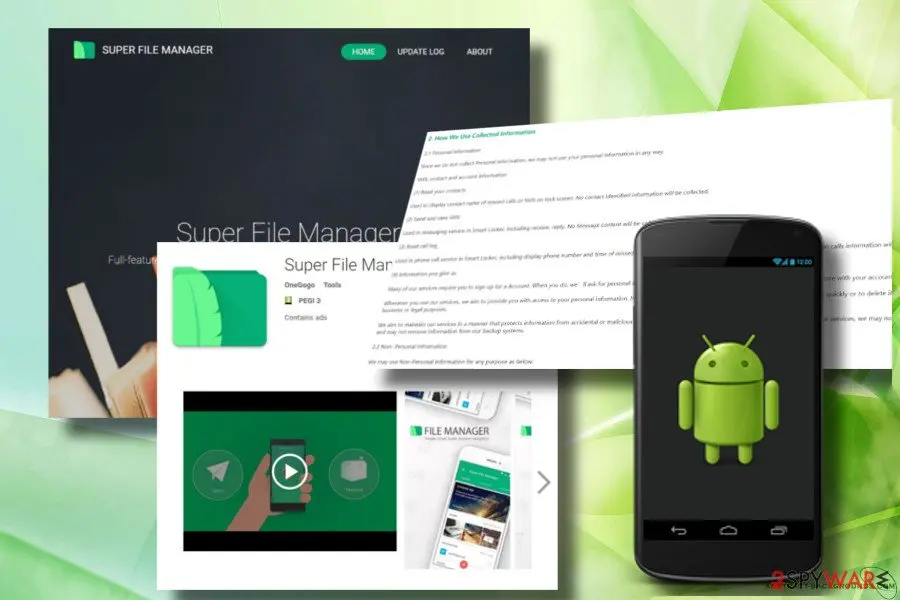
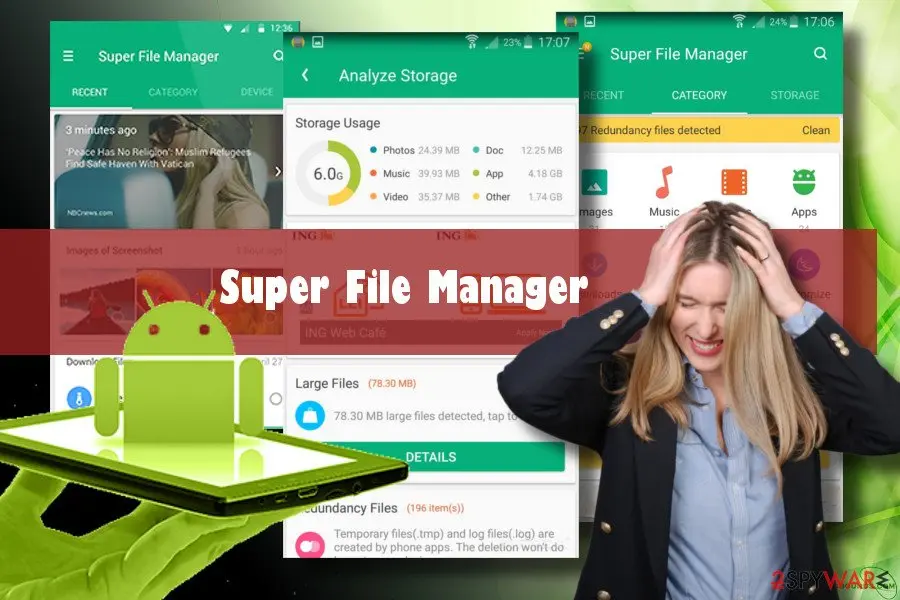
Without an in-depth analysis of the Super File Manager adware, the app might seem useful and reliable. It is available at superfilemanager[.]com and Google Play Store as a high-ranked file manager.
It boasts being able to sort files in categories, allows viewing files by type, enables fast file transferring across multiple platforms, and so on. However, the file manager is often dubbed Super File Manager virus, and there's firm ground for that. One of the Android users reported:
Experts warn that Super File Manager virus is not a reliable application. It is usually distributed via freeware and install "Doctor Clean," "Super Locker," and other potentially unwanted programs alongside. According to people's reports, all these apps are alike regarding design and performance. Each of them is or may be used for promoting APUS apps.
Besides, cybersecurity experts warn that the Super File Manager malware can be pre-installed in some of the infamous Chinese Android smartphones.
People who found this manager installed out of nowhere and cannot initiate Super File Manager removal because it keeps reinstalling should check the list of installed apps and look for suspicious entries like "fqad." Apps developed by Cheetah Mobile or DU Security Labs can indicate the presence of malware either.
Experts warn that apps that keep coming back after removal are a sign of Android virus. Adups malware scandal should also be taken into account when Adup android models (5.x Lollipop, 6.x Marshmallow or 7.x) have been infected by spyware and other malware.
However, Super File Manager removal might not be sufficient to clean up Android thoroughly. You may need to try a factory reset to delete inbuilt malware and eliminate unwanted apps from the system. In some cases, people may need a firmware re-flash.
Here's a fraction of the Privacy Policy provided by Onegogo:
Additionally, the app can read:
Typically, Android malware can be eliminated manually via Apps.
Super File Manager removal might fail because other malware remains on the system and reactivates a manager's remnants. If you opt for trying to fix your Android manually, we'll provide a step-by-step tutorial at the end of this article.
- SMS, contact and account information;
- Read your contacts;
- Send and view SMS (No Message content collected);
- Read call log;
From our report of Mar 2018 · not reviewed since
Android malware relies on bundling
This particular rogue file manager is known for spreading via software bundles.
It's currently unknown what particular programs are carrying this tool.
To block its entrance via freeware, you must read the terms of installation and select Advanced or Custom installation option if an option is provided.
However, it's important to stress the fact that Androids, especially no brand Androids manufacturer in China can come with malware pre-installed. In this case, you may need to flash the firmware or at least reset factory settings.
From our report of Mar 2018 · not reviewed since
More from our earlier report on Super File Manager
- I don't know when it started, but my phone keeps installing this apps after I uninstall it "Super File Manager" and there are more apps.
- I have downloaded one thing from an unknown source.
- Maybe this caused the "virus."
- We may provide links to third-party Web sites, such as Facebook, as a service to our users.
- The Site may also carry advertisements from other companies.
- Personal Information includes your geographic location information, names, physical addresses, email addresses, telephone, fax, SSN, information stored within your devices and other information you transmit or receive using an Application, the Service and the Site which identifies you or another person.
How to remove Super File Manager ads
How to remove the Super File Manager extension
Do the browser steps in every browser and profile on the PC, then check Windows for the program that installed the extension.
Step 1: Remove extensions you did not add
Super File Manager often works through an extension, so go through the extension list of each browser:
chrome://extensionsedge://extensions- Extensions and themes in Firefox
Switch suspicious extensions off one at a time and reload the page where the problem shows, then remove the one that stops it, and any other you did not add.
Remember the other browsers and profiles on the PC. If Remove is missing or greyed out, a policy forces the extension, which the policy step deals with. Windows 11 and Windows 10 show the same pages.
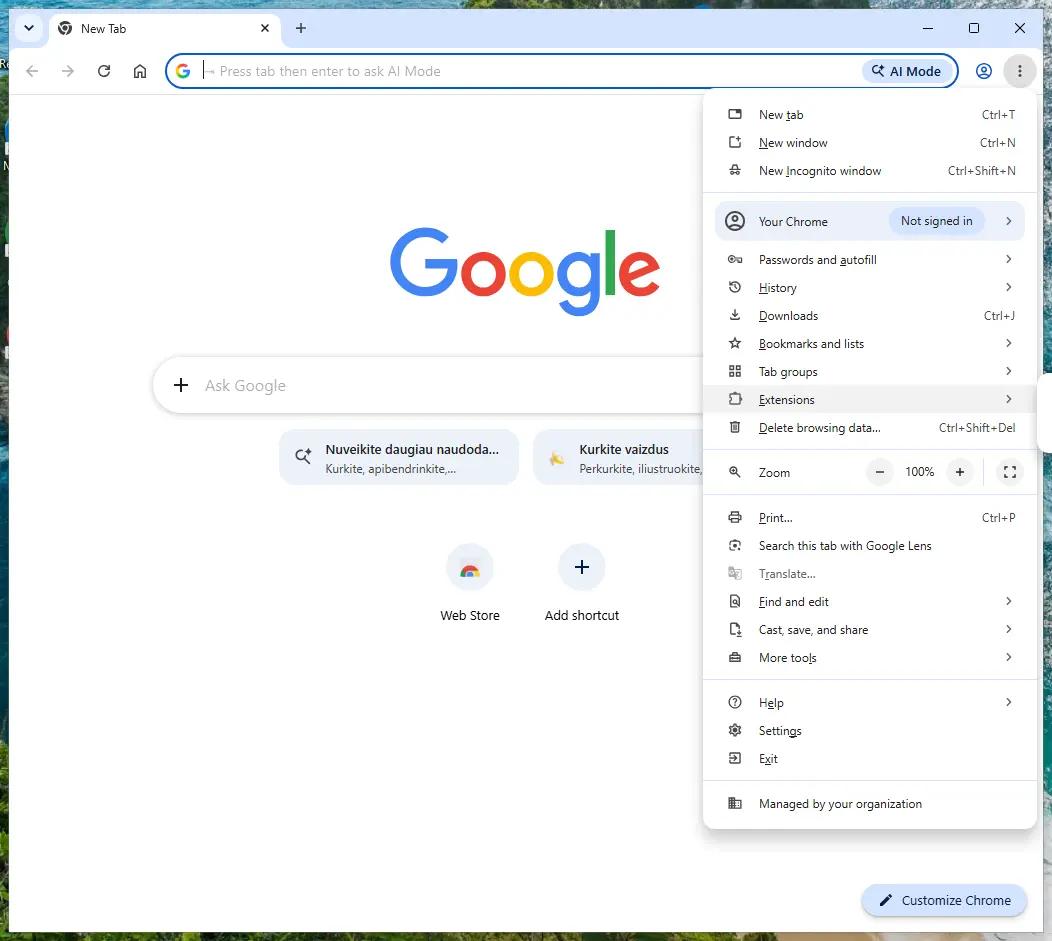
Chrome on Windows 11: More > Extensions > Manage extensions. Full procedure with screenshots: Remove a browser extension
Step 2: Uninstall Super File Manager
Open Settings > Apps > Installed apps in Windows 11, or Settings > Apps > Apps & features in Windows 10.
Sort the list by install date and find Super File Manager, then choose Uninstall from the three-dot menu next to it (in Windows 10, click the entry and then Uninstall).
Remove anything else installed on the same day that you do not recognise, because such programs usually arrive together in one installer. If the uninstaller opens a browser page with an offer or a survey, close it: the program is removed either way.
Full procedure with screenshots: Uninstall a program or app in Windows On uGetFix
Step 3: Reset the browser
Finish the browser part with a reset, which puts the search engine, start page, new tab page and site permissions back to their defaults and switches extensions off. Chrome: Settings > Reset settings > Restore settings to their original defaults.
Edge: Settings > Reset settings. Firefox: Help > More troubleshooting information > Refresh Firefox, which also removes its extensions. Your bookmarks and saved passwords are kept, and the menus are the same on Windows 11 and Windows 10.
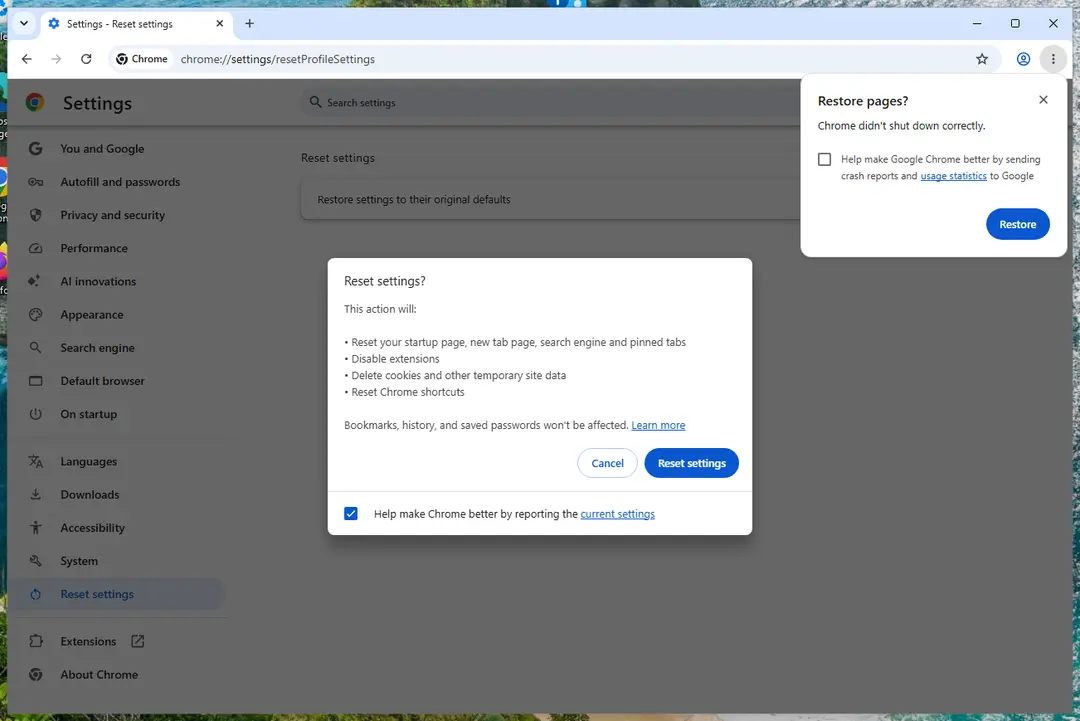
Chrome on Windows 11: Settings > Reset settings. Full procedure with screenshots: Reset a browser and fix a hijacked search engine
Step 4: Scan the PC, then run the offline scan
Open Windows Security > Virus & threat protection > Scan options, run a Full scan and remove everything it finds. Then select Microsoft Defender Antivirus (offline scan) and click Scan now: the PC restarts and scans before Windows loads, which finds files that hide while Windows runs.
Save your work first, because the offline scan takes about 15 minutes. Both scans are built into Windows 11 and Windows 10, and a second scanner from another vendor is a useful extra opinion.

Windows 11: Windows Security > Virus & threat protection > Scan options. Full procedure with screenshots: Run a Microsoft Defender Offline scan
Do not let government spy on you
The government has many issues in regards to tracking users' data and spying on citizens, so you should take this into consideration and learn more about shady information gathering practices.
Avoid any unwanted government tracking or spying by going totally anonymous on the internet.
You can choose a different location when you go online and access any material you want without particular content restrictions. You can easily enjoy internet connection without any risks of being hacked by using VPN.
Control the information that can be accessed by government any other unwanted party and surf online without being spied on. Even if you are not involved in illegal activities or trust your selection of services, platforms, be suspicious for your own security and take precautionary measures by using the VPN service.
Backup files for the later use, in case of the malware attack
Computer users can suffer from data losses due to cyber infections or their own faulty doings.
Ransomware can encrypt and hold files hostage, while unforeseen power cuts might cause a loss of important documents. If you have proper up-to-date backups, you can easily recover after such an incident and get back to work. It is also equally important to update backups on a regular basis so that the newest information remains intact - you can set this process to be performed automatically.
When you have the previous version of every important document or project you can avoid frustration and breakdowns. It comes in handy when malware strikes out of nowhere. Use for the data restoration process.
From our report of Mar 2018 · not reviewed since
Learn how to remove Super File Manager virus from Android
It's currently unknown whether Onegogo offers an adapted version of Super File Manager for Windows PCs and Macs, but just in case you would get attacked by an altered version of this manager on a different platform, you can rely on tool for help.
To find out whether Super File Manager virus came to the system as bloatware (preinstalled), you should try to perform these steps:
Do the same with Doctor Clean, Super Locker, and other unknown or suspicious applications.
- Open Settings on your Android.
- Navigate to Apps Settings or Apps section.
- NOTE: Other phone users might need to follow this path: Settings > Device > Apps.
- In the list of installed apps, locate Super File Manager and tap on it.
- Click Disable button on the Application info (or App info) window.
- To confirm the selection, click Disable button again.
- Finally, click OK.
From our report of Mar 2018 · not reviewed since
Factory reset your phone from the settings menu
- Tap the Settings icon on the home screen.
- Tap Reset options and select Erase all data (factory reset).
- Enter your PIN and tap Continue.
- Finally, tap Erase and wait for the process is being executed.
From our report of Mar 2018 · not reviewed since
Factory Reset guide for Samsung Galaxy A8+ users
If after all, you cannot get rid of Super File Manager, you may need help from the experienced technician that could flash your Android.
- Tap the Settings icon on the home screen.
- Select Restart and press Factory data reset.
- Enter your PIN and press Next.
- Finally, select Delete all to start resetting.
Questions about Super File Manager ads
Is Super File Manager a virus?
Most programs that appear the way Super File Manager did are not viruses in the strict sense. They are potentially unwanted programs:
- real software that arrives bundled with other downloads and then shows offers
- changes browser settings
- starts with Windows
Some are harmless, some are annoying and a few carry adware. What makes it worth removing is that you did not choose it.
Uninstall it from Installed apps and check the startup list and the browsers for anything added the same day. If it refuses to uninstall or returns after a restart, treat it as more serious and run a Microsoft Defender offline scan.
Super File Manager will not uninstall. What can I do?
First restart the PC and try again, because the program may have been running and locked its own files. If the uninstaller is missing or fails, start Windows in Safe Mode, where most third-party programs do not start, and remove Super File Manager from Installed apps there.
If it still refuses, delete its startup entry and its scheduled task, restart, and try once more. A program that actively prevents removal is behaving like malware, so finish with a Microsoft Defender offline scan. Avoid third-party uninstallers offered on search ads; several of them are unwanted programs themselves.
I let a "support technician" from an ad connect to my PC. What should I do?
Act quickly but calmly. Disconnect the PC from the internet first, so the connection ends. Uninstall the remote access tool they asked you to install and check Installed apps for anything else added during the call.
Run a Microsoft Defender full scan and offline scan. From another device, change your e-mail and banking passwords and sign out of all sessions.
If you paid by card, bank transfer or gift card, contact your bank or the card issuer immediately, and report the scam to the police. Do not answer if they call back.
My scan found nothing, but the ads continue. Why?
Because the source may not be a file a scanner looks for. Browser notifications are a permission stored in the browser, and many adware extensions are not flagged because they come from an official store.
Some ad-supported programs are only reported if you enable detection of potentially unwanted apps. So a clean scan does not mean the job is done. Check each browser's notification permissions and extension list by hand, and turn on Potentially unwanted app blocking in Windows Security before scanning again.
Can an adware pop-up infect my PC just by appearing?
No. A pop-up, a notification or a new tab is only a web page or a message. It cannot run programs on Windows by itself, provided the browser and Windows are up to date. Infection needs a step from you:
- running a downloaded file
- installing an extension
- giving a stranger remote access
That is why scam pages work so hard to make you click. Close such pages with the tab's X or by closing the browser, not with buttons inside the page, which may start a download.
Why is my browser so slow since the ads started?
Each page now does extra work. An adware extension reads the page, decides where to put ads, loads them from ad servers and reports your visit, and that happens on every tab. Ad-supported programs add their own background activity.
Removing the extension or program usually makes the browser fast again at once. If it stays slow, open the browser's own task manager with Shift+Esc in Chrome or Edge and look for extensions using a lot of memory or processor time.
Did Super File Manager collect my data?
Adware typically collects what it needs to choose ads:
- the sites you visit
- search terms
- approximate location
- browser and system details
Extensions with permission to read and change data on all websites can technically see everything on those pages, including forms. That is a privacy problem rather than proof of theft.
If you typed card details or passwords while it was active, changing the most important passwords is a reasonable precaution. Clearing cookies after removal ends the tracking sessions it may have started.
Do I need to reset my browser after removing Super File Manager?
A reset is a good last step, because it undoes settings that the program changed. A reset restores the home page, new tab page and default search engine, and turns off extensions.
It does not delete your bookmarks or saved passwords in the main browsers. Add back only the extensions you trust, one at a time.
Will Fortect remove Super File Manager?
Fortect scans Windows for malware and unwanted programs and repairs the system files and settings they change, and its free scan shows what it finds on your PC before you decide anything.
For Super File Manager, follow the plan above as well: the browser steps take back permissions and settings that no scanner treats as a threat, and uninstalling the program that brought it removes the source.
Run Microsoft Defender's full scan and, if anything was found, its offline scan as a second opinion. If the symptoms are gone after the plan and both scans are clean, there is nothing more to do.
Sources
- ZDNet: Android malware found inside apps downloaded 500,000 times (read October 7, 2026)
- The hacker news: Pre-installed Backdoor On 700 Million Android Phones Sending Users' Data To China (read October 7, 2026)
- Digital Trends: How to keep yourself safe from Chinese spyware on budget Android phones (read October 7, 2026)
- Google Chrome Help: Use notifications to get alerts (no longer online) (read October 7, 2026)
- FTC: How to recognize, remove and avoid malware (read October 7, 2026)