
SymDaemon: what it is and how to remove it
SymDaemon is the antivirus software Symantec-related process that creates issues with the machine because it is always running on the device. Many users have been complaining about the issue online.
Facts checked October 6, 2026. Removal steps tested on Windows 11 (26H2) and checked against Microsoft's and the browser makers' current documentation. Sections marked as our earlier report are the original text: they describe the threat as it was then and have not been reviewed since. The 2026 status, the removal steps and the questions are current.
Automatic
Get a free scan and check if your PC is infected.
Fortect finds malware, unwanted programs and the Windows damage they leave behind, and repairs it in one pass.
If you are not sure which SymDaemon is genuine, a free scan of the PC compares them for you.
Do it yourself · free Remove SymDaemon yourself 4 steps, about 12 minutes, no software needed.
Start the steps
SymDaemon: summary
| Distribution | Antivirus software is installed by the user, so these files are loaded during the installation. However, a possibly harmful program may get promoted on deceptive sites, advertisements and get directly loaded on the machine without your permission or even knowledge. Rogue software and files can get added from spam emails or during the insecure installations involving software bundles |
|---|---|
| Name | SymDaemon |
| Type | Background process/ possible macOS intruder |
| Issues | The file creates problems with speed and performance by running in the background and using high resources like memory and CPU |
| Danger | The program can be associated with potentially dangerous programs or injected with malicious scripts and affect the machine even further with harmless behavior |
| Detection names | No Microsoft detection name is known |
| Removal | Scan the PC with security software to find and remove the malware and anything installed with it. Fortect scans Windows for malware and repairs the system files and settings it damaged. Remove it nowTo use the full-featured product, you have to purchase a license for Fortect. The scan is free. |
Show 7 more facts
| Damage | Not recorded in the old report |
|---|---|
| Symptoms | A process with a Windows name running from the wrong folder |
| Evidence | 4 write-ups by security sites; details still limited |
| File name | SymDaemon |
| What it is | Of unknown origin |
| First seen | 6 March 2020 |
| Facts checked | 6 October 2026 |
What the SymDaemon file is
From our report of Mar 2020 · not reviewed since
Choose the applications wisely
The internet is full of potential risks and possible infections, and you can easily get affected by the cyber intruder or an attacker if you don't pay enough attention to details and red flags, First of all, surfing on dubious advertising sites can lead you to not only annoying pages, but also expose to malicious content.
Cybercriminals get more and more creative and sneaky, so even the legitimate and safe looking page or software might be associated or even contain dangerous material.
You should go through the EULA or Privacy Policy of the site that provides you the wanted program and make sure to choose Advanced or Custom options no matter how trustworthy the source seems. Freeware installations can cause even more serious malware infiltrations, so keep an eye for suspicious programs and check the system with AV tools more often.
How to check the SymDaemon file
- File:
SymDaemon
From our report of Mar 2020 · not reviewed since
More from our earlier report on SymDaemon
- SymDaemon removal process should thorough because any left files can still trigger the same issues, so get an additional anti-malware tool to clean all viruses
- To help with performance, in general, you can run the optimization software or cleaner tool like that may fix virus damage and repair system files that get damaged by the threat, or the intruder
Where SymDaemon comes from
From our report of Mar 2020 · not reviewed since
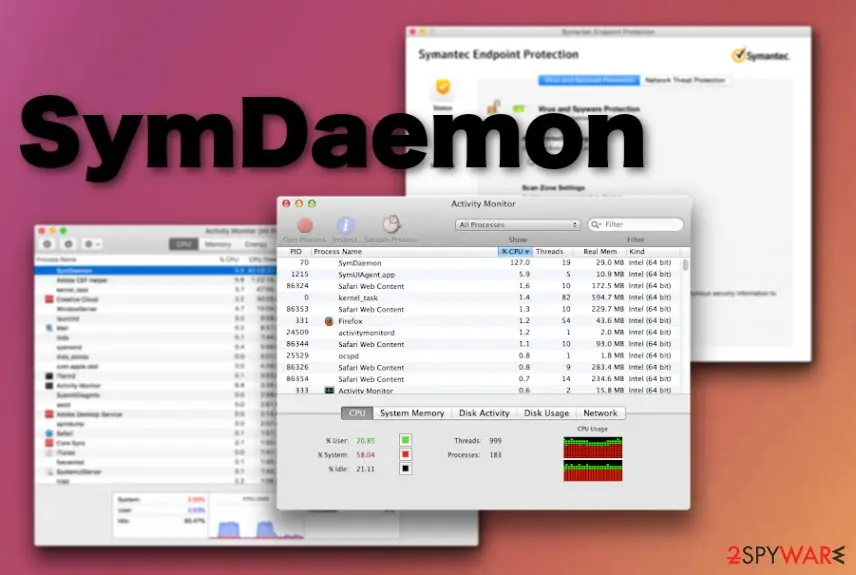
SymDaemon is the antivirus software Symantec-related process that creates issues with the machine because it is always running on the device.
Many users have been complaining about the issue online. Most of the reports state about the high usage of CPU and memory which both affect the speed and temperature of the affected machine.
You may not experience any other symptoms of the said questionable process, but Activity Monitor shows this file taking over 90% CPU or even more. Some users stated that previous updates of the security software included the patch for the issue, but more complaints surfaced again.
SymDaemon virus is not the proper term for the background process issues, but sometimes common files related to popular software or processes that are found in the background already get misused for malicious purposes. This file may be designed to compromise your Mac device and hijack processes or infect the system with additional malware, so be aware and check the state of security with anti-malware tools.
SymDaemon process issues can consume high amounts of CPU on your Mac, and this behavior significantly affects the speed of OS and can even lead to crashes or freezes. This can be caused by a compressed file that is related to Symantec Endpoint Protection for Mac devices.
It is possible to end these issues regarding the SymDaemon process by disabling compressed file scanning where it is unnecessary. Also, some improvements may be made with a newer version of the security tool for Mac or the update. However, that only works when the issue is caused by legitimate software and its bugs or corrupted files.
When SymDaemon.bundle is the app that gets installed on the machine with malicious purposes and characteristics more typical for PUPs or cyber threats, you may face more problems than high CPU usage. When the program is possibly malicious it can harm your computer, but this is not a serious virus that could cause unrepairable things.
This process can be a program considered to be unwanted and intrusive when it affects online traffic and browsing activities. In such cases, you need to remove SymDaemon and go for some serious cleaning procedures with anti-malware tools or more powerful security programs. Typically, potentially unwanted programs can lead to unpleasant issues and interfere with browsing online the most.
For example, if SymDaemon PUP gets on the machine it can change preferences on your browser and set the default search engine, new tab, homepage settings to sponsored or affiliated pages. Dubious content fills your browser and screen, so you cannot access commonly visited pages and content that you want to see.
Such pop-ups and redirects create more risk of getting cyber infections. SymDaemon process raises all the questions and concerns, experts recommend getting rid of this program once it causes any issues. Especially, when macOS has other programs available for security and optimization purposes. Nevertheless, macOS computers are not immune to malware, so you need to check the system thoroughly.
SymDaemon removal might be quick and successful if you use the proper AV tool for this procedure but remember about the possible corrupted files issue and other associated processes that can trigger speed or performance problems. For such solutions, get a tool like and run it on the machine for the proper virus damage check. Such a program can indicate, find, and fix damaged or affected files and settings.
Malware may get distributed silently and sites that promote various programs that seem legitimate or safe, in reality, distributes shady PUPs or use pay-per-click schemes to ensure that application developer earns a maximum profit. If SymDaemon appears to be an adware-type intruder or process created for such purposes, you may encounter tons of ads and redirects besides the shady background process.
Potentially unwanted programs, that SymDaemon process can be related to, forces main browsers to promote certain sites and send you to pages where the material is possibly dangerous, so you accidentally click on some dubious advertisements and get exposed to trojans and other viruses. Keep this in mind whenever you encounter a shady redirect or pop-up.
What to do with SymDaemon
How to remove SymDaemon
It is usually a leftover of an unwanted program.
Uninstall the program, then delete what remains.
Step 1: Uninstall programs you did not mean to install
SymDaemon rarely comes alone: it is usually installed by, or together with, a free program. In Windows 11 open Settings > Apps > Installed apps, in Windows 10 Settings > Apps > Apps & features, and sort by install date.
Uninstall every entry from the day the trouble began that you did not install on purpose, for example a download manager, a converter or a browser you never chose.
Keep drivers and entries from Microsoft, Intel, AMD, NVIDIA or your PC's maker unless you are sure.
Full procedure with screenshots: Uninstall a program or app in Windows On uGetFix
Step 2: Delete the folders left behind
Uninstalling often leaves the program's folders, and some threats reinstall themselves from them.
Press Windows + R, type
%LocalAppData%and press Enter, then do the same for%AppData%and %ProgramData%, and look for folders named after SymDaemon, its publisher or created on the day the problem started. Delete those folders, and check C:\Program Files and C:\Program Files (x86) too.If Windows says a file is in use, end it in Task Manager or delete the folder after a restart in Safe Mode. The folders are the same in Windows 11 and Windows 10.
Full procedure with screenshots: Remove what malware leaves behind in Windows
Step 3: Remove it from startup
Press Ctrl + Shift + Esc to open Task Manager and select Startup apps (Windows 11) or the Startup tab (Windows 10). Disable entries you do not recognise, especially ones with no publisher or with a name that copies a Windows component.
Right-click an entry and choose Open file location to see where it runs from: programs in
%AppData%or%Temp%deserve a closer look. Some entries are not listed there but in the registry Run keys, which the procedure below shows how to check.Full procedure with screenshots: Stop apps from opening at startup On uGetFix
Step 4: Scan the PC, then run the offline scan
A scan finds the parts of SymDaemon that the manual steps cannot see. In Windows Security > Virus & threat protection > Scan options, start a Full scan and quarantine what it reports.
Follow it with Microsoft Defender Antivirus (offline scan) > Scan now, which restarts the PC and checks the disk while Windows and the malware are not running.
It takes about 15 minutes and works the same in Windows 11 and Windows 10. If either scan finds something, run the full scan again after removal until it comes back clean.
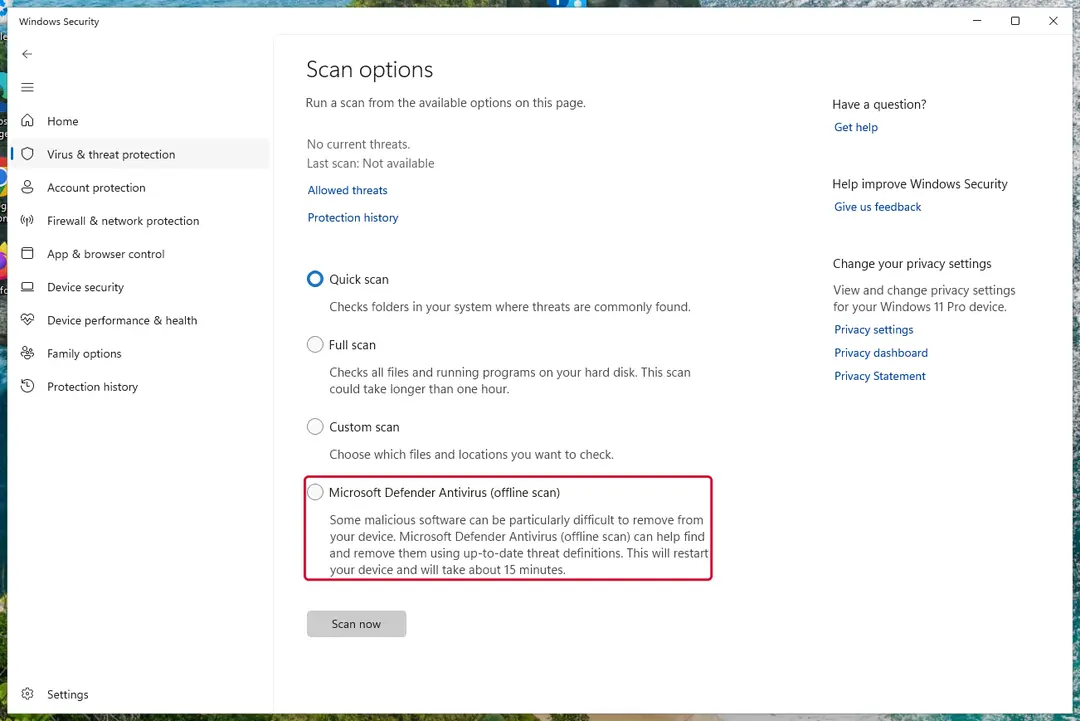
Windows 11: Windows Security > Virus & threat protection > Scan options. Full procedure with screenshots: Run a Microsoft Defender Offline scan
Instructions for each browser and system
The detailed steps for every browser and system this guide covers. Open the one you use.
Remove from Google Chrome
Clean the browser from additionally installed threats
Delete malicious extensions from Google Chrome:
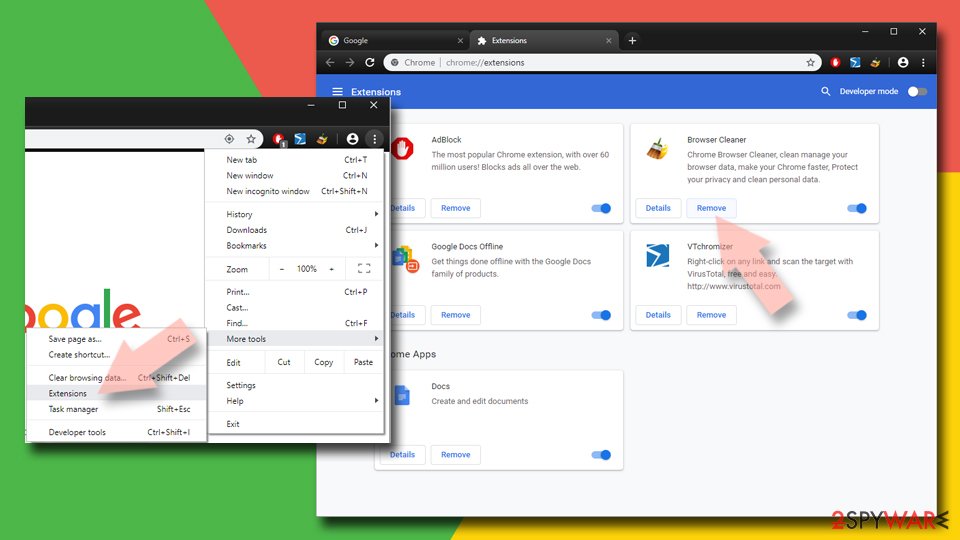
- Open Google Chrome, click on the Menu (three vertical dots at the top-right corner) and select More tools > Extensions.
- In the newly opened window, you will see all the installed extensions. Uninstall all suspicious extensions related to the unwanted program by clicking Remove.
Clear cache and web data from Chrome:
- Click on Menu and pick Settings.
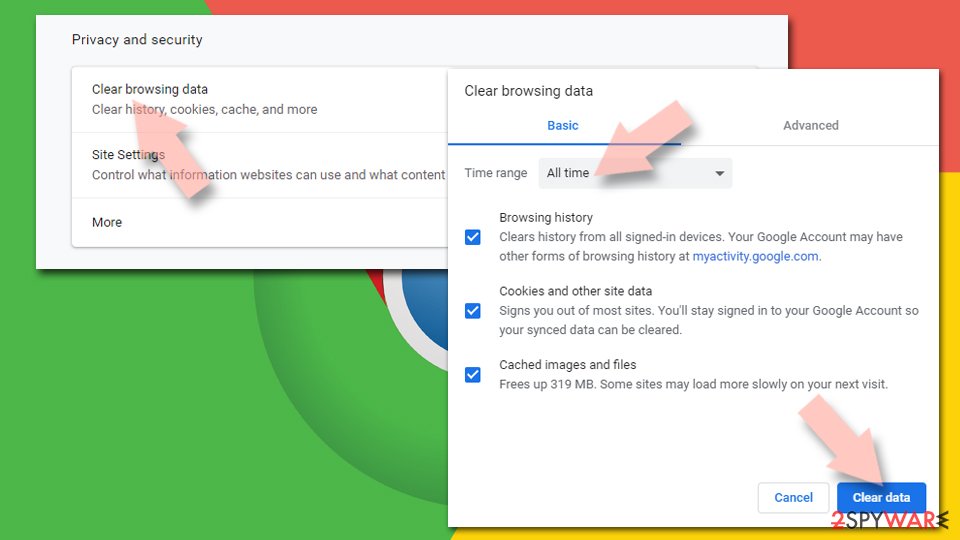
- Under Privacy and security, select Clear browsing data.
- Select Browsing history, Cookies and other site data, as well as Cached images and files.
- Click Clear data.
Change your homepage:
- Click menu and choose Settings.
- Look for a suspicious site in the On startup section.
- Click on Open a specific or set of pages and click on three dots to find the Remove option.
Reset Google Chrome:
If the previous methods did not help you, reset Google Chrome to eliminate all the unwanted components:
- Click on Menu and select Settings.
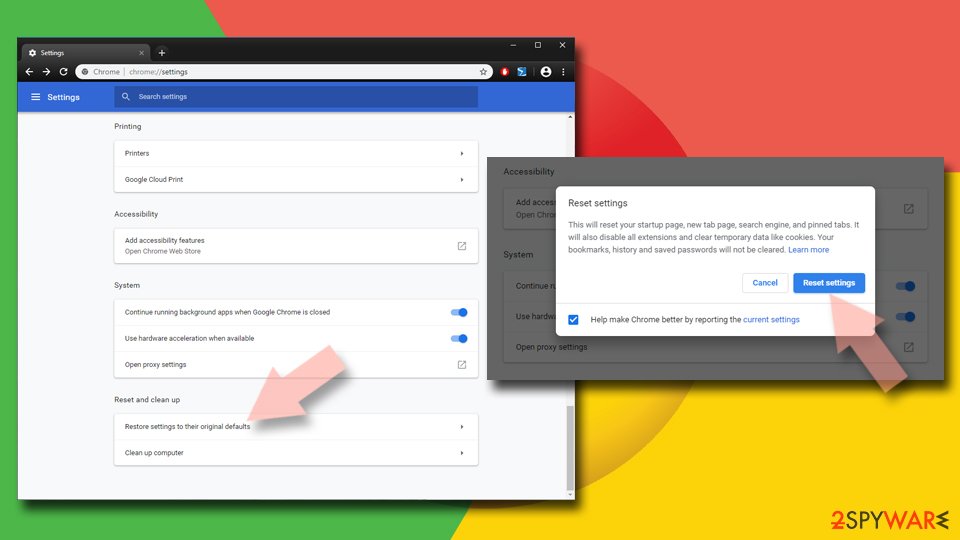
- In the Settings, scroll down and click Advanced.
- Scroll down and locate Reset and clean up section.
- Now click Restore settings to their original defaults.
- Confirm with Reset settings.
Remove from Mozilla Firefox (FF)
Remove dangerous extensions:
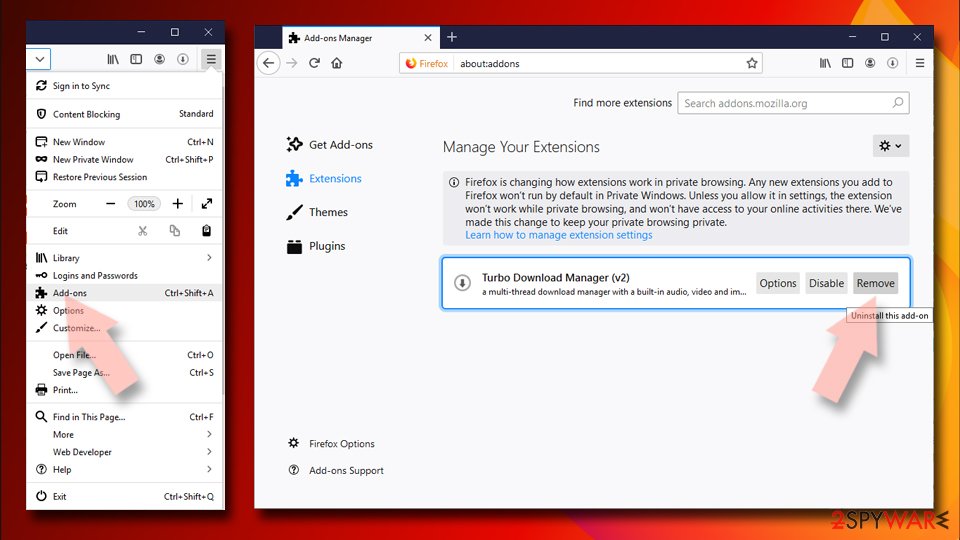
- Open Mozilla Firefox browser and click on the Menu (three horizontal lines at the top-right of the window).
- Select Add-ons.
- In here, select the unwanted extension and click Remove.
Reset the homepage:
- Click three horizontal lines at the top right corner to open the menu.
- Choose Settings.
- Under Home, set your preferred homepage and new tab settings.
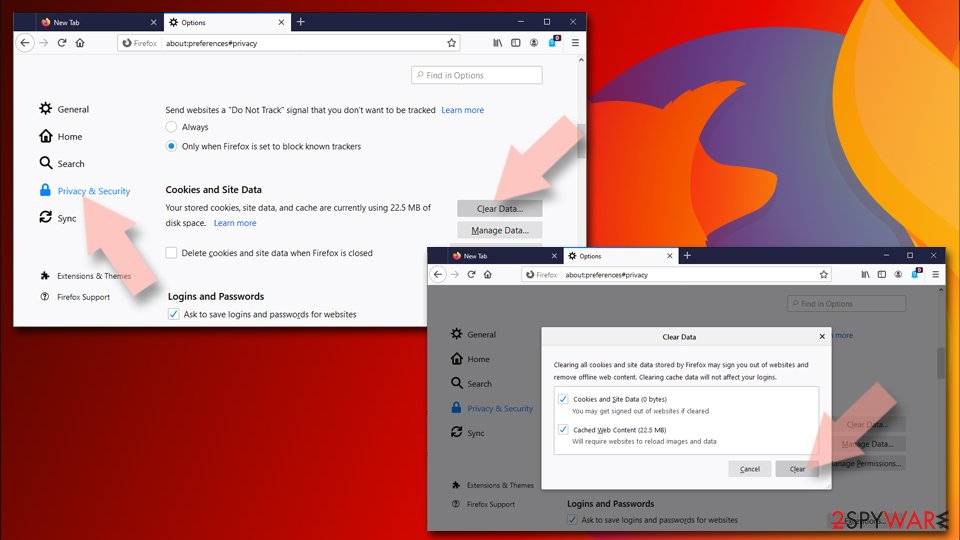
Clear cookies and site data:
- Click Menu and pick Settings.
- Go to Privacy & Security section.
- Scroll down to locate Cookies and Site Data.
- Click on Clear Data...
- Select Cookies and Site Data and Temporary cached files and pages, then click Clear.
Reset Mozilla Firefox
If clearing the browser as explained above did not help, reset Mozilla Firefox:
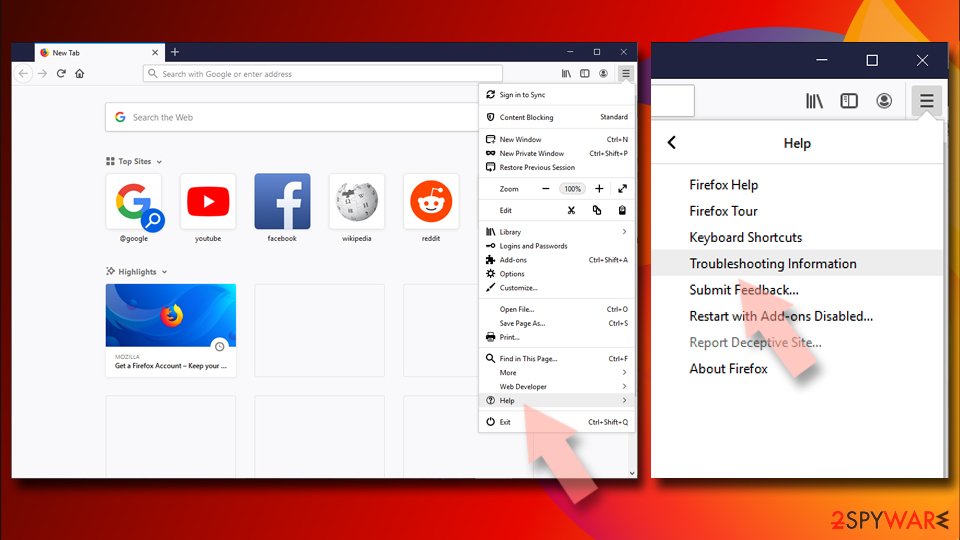
- Open Mozilla Firefox browser and click the Menu.
- Go to Help and then choose Troubleshooting Information.
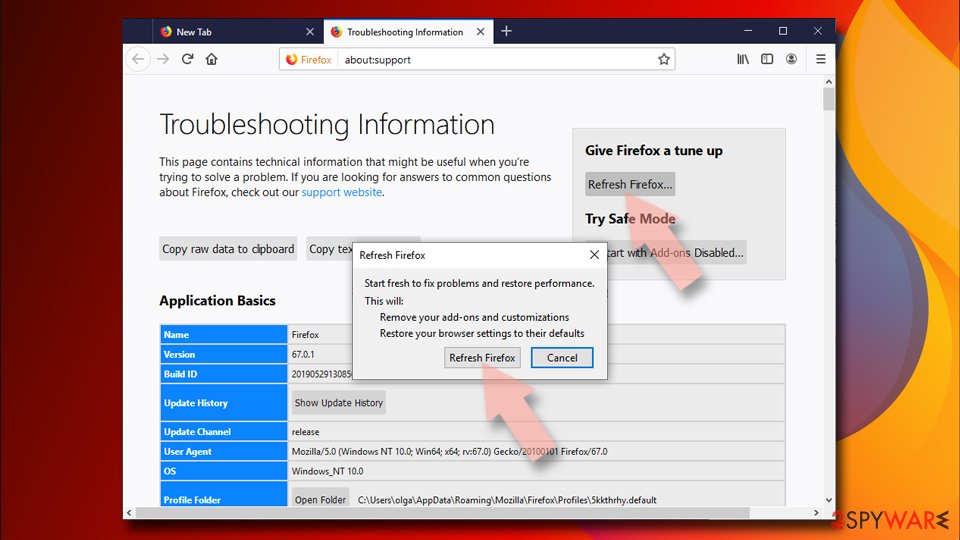
- Under Give Firefox a tune up section, click on Refresh Firefox...
- Once the pop-up shows up, confirm the action by pressing on Refresh Firefox.
Delete from Safari
Have you experiences issues with web browsers? If so, get rid of these issues related to SymDaemon by resetting it to default
Remove dangerous extensions:
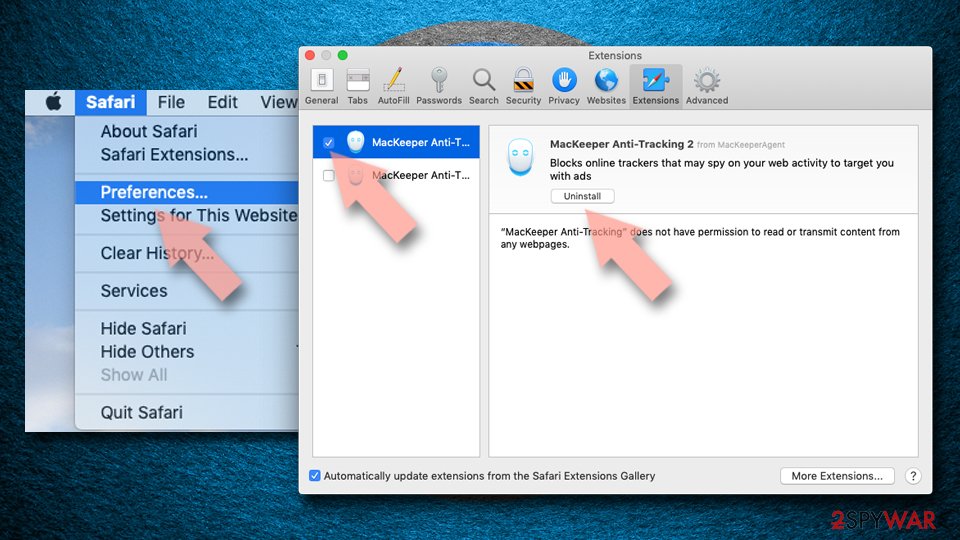
- Open Safari, click Safari in the menu at the top-left of the screen, and select Preferences.
- Go to the Extensions tab, look for any suspicious entries, and click Uninstall to remove them.
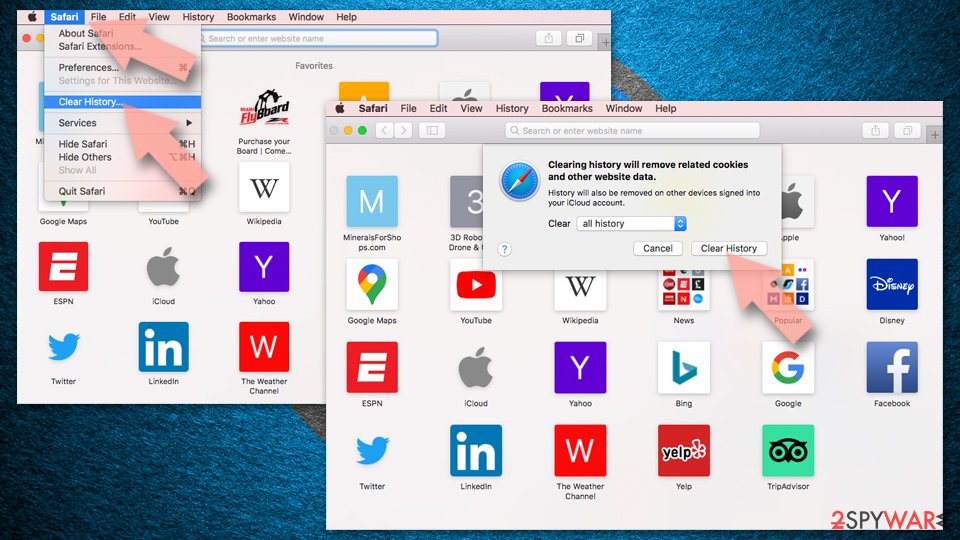
Clear history and website data:
- Click Safari in the menu and pick Clear History.
- Set Clear to all history and confirm with Clear History.
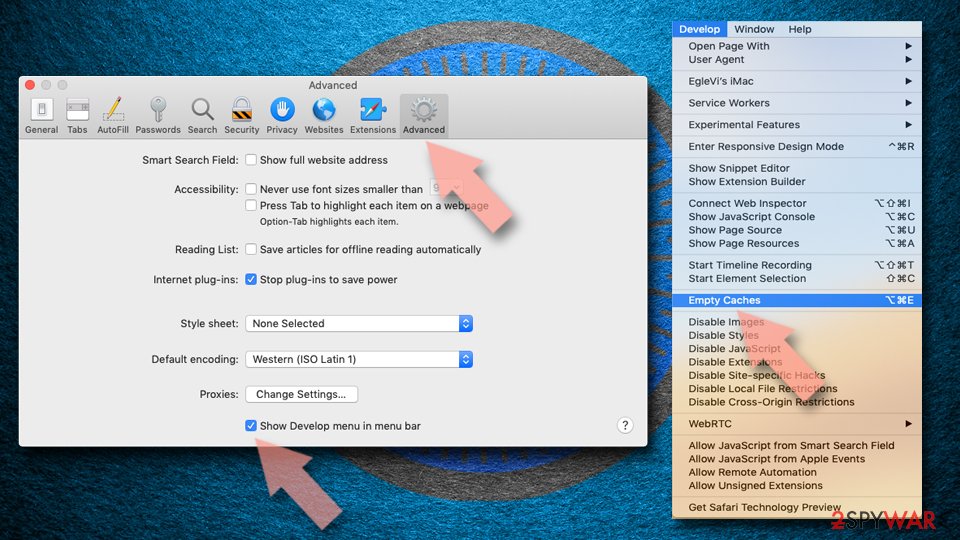
Reset Safari:
- Click Safari in the menu and select Preferences > Advanced.
- Enable Show Develop menu in menu bar.
- From the menu bar, click Develop and select Empty Caches.
Delete from macOS
You may need to check for PUPs or different intruders running on your device, so you can remove SymDaemon and other possible threats
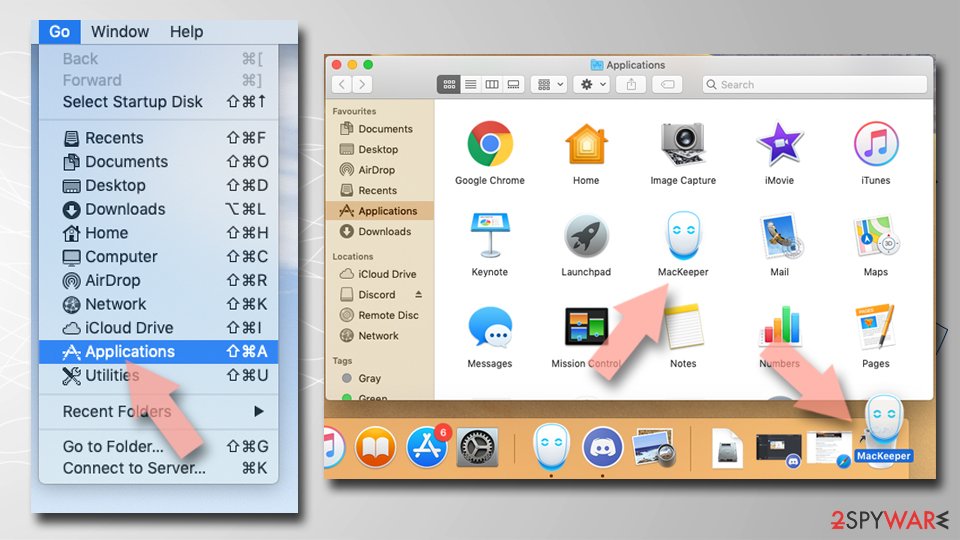
Remove the unwanted application:
- From the menu bar, select Go > Applications.
- In the Applications folder, look for any suspicious entries, then drag them to Trash (or right-click and pick Move to Trash).
Delete leftover files and folders:
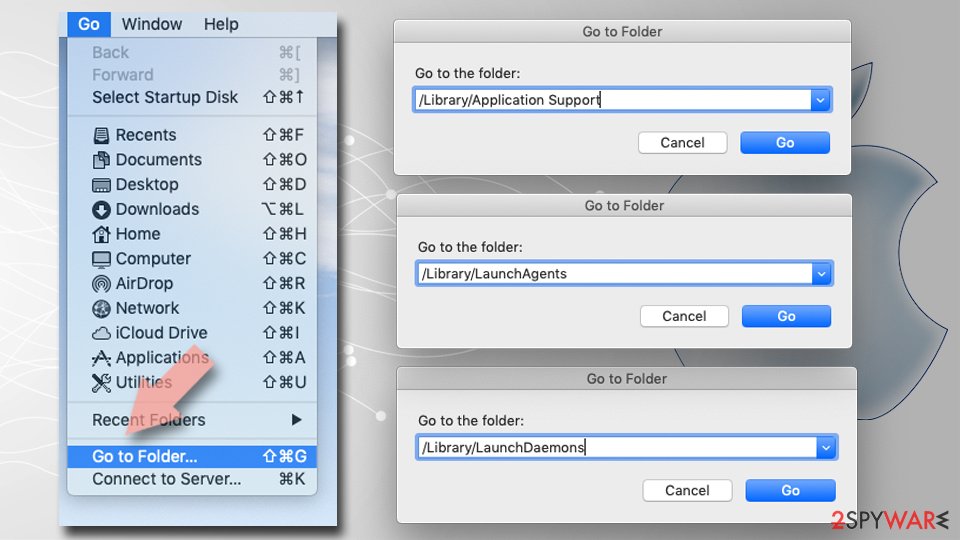
- Select Go > Go to Folder.
- Enter /Library/Application Support and remove any suspicious folders related to the unwanted program.
- Repeat the same check in the /Library/LaunchAgents and /Library/LaunchDaemons folders, deleting any suspicious entries.
- Finally, empty the Trash to permanently remove the leftovers.
Protect your privacy - employ a VPN
There are several ways how to make your online time more private - you can access an incognito tab.
However, there is no secret that even in this mode, you are tracked for advertising purposes. There is a way to add an extra layer of protection and create a completely anonymous web browsing practice with the help of VPN. This software reroutes traffic through different servers, thus leaving your IP address and geolocation in disguise.
Besides, it is based on a strict no-log policy, meaning that no data will be recorded, leaked, and available for both first and third parties. The combination of a secure web browser and VPN will let you browse the Internet without a feeling of being spied or targeted by criminals.
No backups? No problem. Use a data recovery tool
If you wonder how data loss can occur, you should not look any further for answers - human errors, malware attacks, hardware failures, power cuts, natural disasters, or even simple negligence.
In some cases, lost files are extremely important, and many straight out panic when such an unfortunate course of events happen. Due to this, you should always ensure that you prepare proper data backups on a regular basis.
If you were caught by surprise and did not have any backups to restore your files from, not everything is lost. is one of the leading file recovery solutions you can find on the market - it is likely to restore even lost emails or data located on an external device.
From our report of Mar 2020 · not reviewed since
Forget about SymDaemon issues by eliminating possibly corrupted files and unwanted applications
SymDaemon virus is not the correct term to describe this issue with the process running in the background.
It uses high CPU because the software has bugs and the program itself is having problems on the macOS. Symantec is known for causing such issues, unfortunately, so removing the program will free the space and eliminate these issues.
To remove SymDaemon, you may need a proper uninstallation program or file that is called RemoveSymantecmacFiles. This is the way to get rid of the program without causing additional problems on your computer. Without associated files, the process should no longer occur in Activity Monitor.
However, you may need a different SymDaemon removal when PUPs are involved, and the issue with the background process is caused by the cyber infection. In such a case, you need to get a professional anti-malware tool and run it on the system. By allowing the AV tool to check your device, you can delete the intruder and end redirects or different symptoms completely.
Questions about SymDaemon
How can I tell if SymDaemon is fake?
Look at the folder and the signature. The genuine SymDaemon lives in C:\Windows or C:\Windows\System32 and carries Microsoft's digital signature. A copy elsewhere, with no signature or an unknown signer, is fake.
Other hints are a command line that points to a user folder, a process that pauses when Task Manager opens, and a scheduled task with an odd name pointing to the same file. If any of these match, treat the copy as malware:
- disable what starts it
- delete its folder
- run an offline scan
Why can't I delete the SymDaemon file?
Windows will not delete a file that is running, and malware disguised as SymDaemon often runs a second watcher that relaunches it at once. Disable its scheduled task and startup entry first, then restart and delete the folder before anything else opens.
If that still fails, start Windows in Safe Mode, where third-party startup items do not load, and delete it there. The Microsoft Defender Offline scan is the simplest route: it works before Windows starts, so the file is not locked.
How did SymDaemon get onto my PC?
Files like SymDaemon, which is of unknown origin, usually arrive with a free program whose installer added extra offers that were ticked by default. They can also stay behind after you uninstall such a program, because the uninstaller removes the main part only.
Sort Installed apps by date and look at what was installed around the time the file appeared; that is usually the source. Next time, choose Custom or Advanced in installers and untick additional software. Read each screen before clicking Next.
Why does SymDaemon use so much CPU?
Usually it is doing work for Windows or another program:
- updates
- indexing
- scanning
- a stuck task
Wait a few minutes after start-up, then check again. If high use continues, restart the PC, install pending updates and check the related program. If the busy copy runs from an unusual folder, high CPU can be a cryptominer using the name.
The Details tab in Task Manager shows which copy is busy; for a system process, right-click it and choose Go to service(s) to see the services behind it.
Why are there several SymDaemon processes?
Windows and many programs run separate instances for different tasks, tabs or users, so several copies in Task Manager can be normal. Right-click each one and choose Open file location: they should all point to the same genuine folder.
Many copies alone are not a sign of infection. A copy that points to another folder, or one with no publisher on the Details tab, is the one to check further. If the count keeps growing, a program may be starting new instances in a loop.
What happens if I remove SymDaemon?
If it is unwanted, nothing you need will change:
- the process stops
- any slowdown or pop-ups linked to it end
- Windows keeps working
If it belonged to a program you use, that program may show an error and need reinstalling from its official site.
The sign reported, A copy of SymDaemon running from outside the Windows folder, suggests the first case, but check the publisher in the file's Properties before deleting. Keeping a copy in a zipped folder for a day is a cautious option if you are unsure.
Is a single scan enough to trust SymDaemon?
For a genuine file in its normal folder with a valid signature, yes: a clean scan confirms what the location and signature already told you. For a file in an odd folder or without a signature, a clean result is less reassuring, because new malware is not always detected at once.
In that case update Windows Security, scan again a day later and keep an eye on the file. If it comes back after deletion or uses CPU while the PC is idle, treat it as malicious.
Can I stop SymDaemon from starting?
If it belongs to Windows, not safely. If it belongs to a third-party program, yes, in Task Manager > Startup apps or in the program's own settings, if you do not need its background features.
If it is malware or a leftover, remove it instead; disabling startup alone leaves it on the disk. Before changing anything, find out what the file is for. If you only want a faster start, the Startup impact column in Task Manager shows which entries slow it most.
Why does SymDaemon have a strange name?
Random or look-alike names help unwanted files avoid attention. A name that resembles a Windows component sounds trustworthy, and a random one changes from PC to PC so it cannot be searched easily. The observation here is A copy of SymDaemon running from outside the Windows folder.
Judge the file by where it is and who signed it, not by its name: Windows files sit in C:\Windows and carry Microsoft's signature, and anything else that imitates them deserves removal. When in doubt, a full scan in Windows Security settles it.
Will Fortect remove SymDaemon?
Fortect scans Windows for malware and unwanted programs and repairs the system files and settings they change, and its free scan shows what it finds on your PC before you decide anything.
For SymDaemon, follow the plan above as well: the browser steps take back permissions and settings that no scanner treats as a threat, and uninstalling the program that brought it removes the source.
Run Microsoft Defender's full scan and, if anything was found, its offline scan as a second opinion. If the symptoms are gone after the plan and both scans are clean, there is nothing more to do.
Sources
- Reddit: SymDaemon is heating up my CPU, is there a way to stop it? (read October 6, 2026)
- FTC: How to recognize, remove and avoid malware (read October 6, 2026)
- Microsoft Learn: Microsoft Defender Offline (read October 6, 2026)
- Microsoft Learn: How Microsoft names malware (read October 6, 2026)