
Advanced Password Manager: what it is and how to remove it
Advanced Password Manager is a potentially unwanted program that usually arrives into the PC with the help of a deceptive marketing campaign called software bundling. The application was crafted by a popular PUP developer PCVARK, responsible for such creations as Mac Auto Fixer, Similar Photo Cleaner, and Advanced Mac Cleaner.
Facts checked October 7, 2026. Removal steps tested on Windows 11 (26H2) and checked against Microsoft's and the browser makers' current documentation. Sections marked as our earlier report are the original text: they describe the threat as it was then and have not been reviewed since. The 2026 status, the removal steps and the questions are current.
Automatic
Get a free scan and check if your PC is infected.
Fortect finds malware, unwanted programs and the Windows damage they leave behind, and repairs it in one pass.
An automatic scan checks installed programs, startup items and browser extensions for anything that came with Advanced Password Manager.
Do it yourself · free Remove Advanced Password Manager yourself 4 steps, about 12 minutes, no software needed.
Start the steps
Advanced Password Manager: summary
| Detection names | No Microsoft detection name is known |
|---|---|
| Distribution | Not recorded in the old report |
| Damage | Not recorded in the old report |
| Name | Advanced Password Manager |
| Type | System optimizer |
| Symptoms | An unknown program in Installed apps |
| Removal | Scan the PC with security software to find and remove the malware and anything installed with it. Fortect scans Windows for malware and repairs the system files and settings it damaged. Remove it nowTo use the full-featured product, you have to purchase a license for Fortect. The scan is free. |
Show 4 more facts
| Evidence | 6 write-ups by security sites; details still limited |
|---|---|
| Program | Advanced Password Manager |
| First seen | 10 September 2021 |
| Facts checked | 7 October 2026 |
Is Advanced Password Manager safe? Why it is flagged
From our report of Sep 2021 · not reviewed since
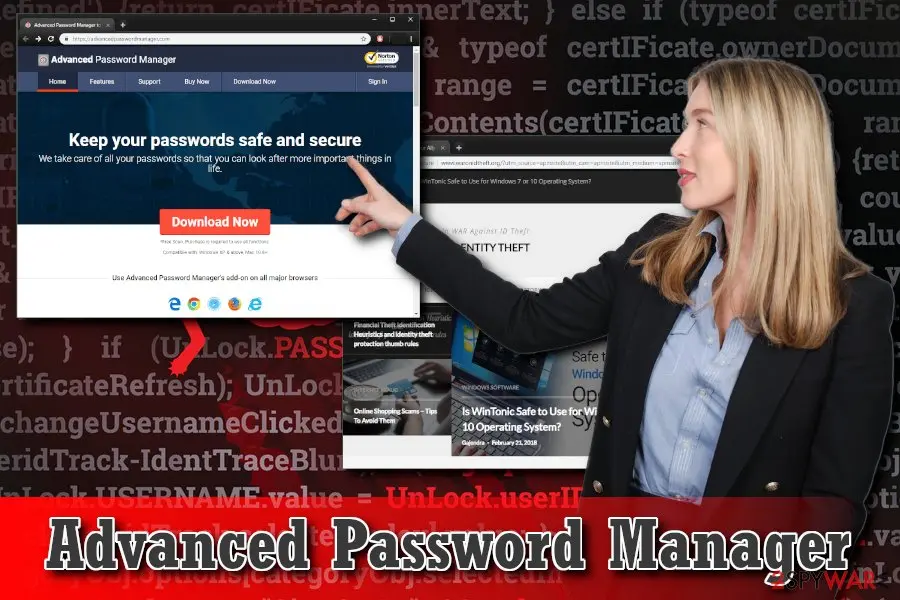
Advanced Password Manager is the intruder that can affect the security of your system instead of improving that
Advanced Password Manager is a potentially unwanted program that usually arrives into the PC with the help of a deceptive marketing campaign called software bundling.
The application was crafted by a popular PUP developer PCVARK, responsible for such creations as Mac Auto Fixer, Similar Photo Cleaner, and Advanced Mac Cleaner. While password managing applications are almost essential for the security of all personal accounts, some programs are less trustworthy, and Advanced Password Manager is one of them.
Additionally, the application is often linked to multiple adware campaigns that prevent users from browsing the internet without interruptions on Google Chrome, Internet Explorer, Safari, Mozilla Firefox or Opera web browsers and spam them with pop-up ads, in-text links, flashing windows, etc.
While some users might stumble upon the app when looking for a password managing program, in most cases they see the Advanced Password Manager appearing on their systems seemingly out of nowhere. However, it is not the case. Users most likely installed the PUA together with other freeware application without even realizing it. Because of this, the app falls into the potentially unwanted program category.
Software bundling is a controversial marketing technique that is used by even reputable companies to popularize their products. However, in most cases, bundled apps are worthless and might also bring harm to the end-user. Therefore, Advanced Password Manager removal should be a priority.
As soon as the program is established, it performs an unauthorized scan immediately, flashing numerous privacy issues, such as endangered:
Users will most likely see hundreds of such items displayed by the Advanced Password Manager, claiming that all of the information is endangered.
As soon as they want to "fix" these issues, they are redirected to a registration page, where they find out that the service is not free. It is a common way to extort users' money illegally, and, unfortunately, those who agree to pay are liable for consequences themselves.
Looking at comments on Microsoft web store, the app shares a pretty bad reputation among users. One of the unsatisfied users claimed that thebintruder engaged in what looked like a tech support scam:
Additionally, users complained about consistent pop-up windows prompting users to buy a full version of the app, as well as certain problems with Advanced Password Manager uninstallation. It is not uncommon for potentially unwanted programs to take over the installed browsers (typically MS Edge) and also redirect them to sponsored websites.
Therefore, users should carefully uninstall the shady program from the Control Panel and then reset each of the installed browsers as explained below. As an extra precaution measure, a system scan using anti-virus software should be executed.
Additionally, Advanced Password Manager might raise some security issues. The application and the official website collect both personal and anonymous information about users which is later used for marketing purposes. Additionally, the program uses third-party eCommerce websites, which are recently known to be attacked by hacker groups like Magecart.
There are thousands of rogue apps created, including SweepTools PC Cleaner, SystemKeeperPro, and many others. They operate the same scheme in the hopes of merely scamming trusting customers. Therefore, those who value their privacy and do not wish to be tricked should remove the virus.
- Passwords;
- Credit Card details;
- Profiles/phone numbers;
- Social Security numbers.
From our report of Sep 2021 · not reviewed since
Freeware bundles lead to installs of rogue software
It is not a secret that many users are guilty of not paying much attention to the installation procedure of freeware.
However, this is the main PUP distribution method, and users should learn to install applications correctly.
First of all, using reputable sources is mandatory because downloading insecure files from file-sharing networks might be dangerous, and even result in malware infections. Therefore, experts recommend only trusting official websites when it comes to freeware.
Additionally, during the installation, users should not rush the process and read through the Terms of Service and EULA carefully. When prompted, they should always opt for Advanced, or Custom installation settings instead of Recommended/Quick ones and eliminate all tick marks that are pre-selected. Only then users should proceed with the installation of the desired application.
From our report of Sep 2021 · not reviewed since
More from our earlier report on Advanced Password Manager
- Software bundling, multiple sites on the internet (including official site)
- Unauthorized scans of the machine
- don't get this--its a scam during the installation they took over my computer and sent me to a computer expert who said my computer was in bad shape and he wanted to completely fix it for 500.
- He also had control of my computer and refused to return control for over a hour while hw tried to convince me to let him fix it.
- I would not recommend this program to anyone !!!!!!!
How to uninstall Advanced Password Manager
How to remove Advanced Password Manager
Uninstall it, then remove what keeps it starting with Windows.
Nothing it flagged needs fixing.
Step 1: Uninstall Advanced Password Manager
Open Settings > Apps > Installed apps in Windows 11, or Settings > Apps > Apps & features in Windows 10.
Sort the list by install date and find Advanced Password Manager, then choose Uninstall from the three-dot menu next to it (in Windows 10, click the entry and then Uninstall).
Remove anything else installed on the same day that you do not recognise, because such programs usually arrive together in one installer. If the uninstaller opens a browser page with an offer or a survey, close it: the program is removed either way.
Full procedure with screenshots: Uninstall a program or app in Windows On uGetFix
Step 2: Remove it from startup
Whatever Advanced Password Manager installed usually starts with Windows.
Open Task Manager with Ctrl + Shift + Esc, go to Startup apps in Windows 11 or the Startup tab in Windows 10, and disable what you do not know, starting with entries that have an empty Publisher column.
Open file location on the right-click menu shows the file, which helps you decide and tells you what to delete later. Disabling is safe: if something you need stops working, switch it back on.
Full procedure with screenshots: Stop apps from opening at startup On uGetFix
Step 3: Delete the folders left behind
What the uninstaller leaves behind is usually in the user folders. Open File Explorer, switch on View > Show > Hidden items (in Windows 10 View > Hidden items), and go through
%LocalAppData%,%AppData%, %ProgramData% and the two Program Files folders.Sort by Date modified and delete folders that appeared together with the problem and belong to no program you use. Folders with random names that hold
.exe,.dll, .js or .ps1 files are the strongest sign.Full procedure with screenshots: Remove what malware leaves behind in Windows
Step 4: Scan the PC, then run the offline scan
Open Windows Security > Virus & threat protection > Scan options, run a Full scan and remove everything it finds. Then select Microsoft Defender Antivirus (offline scan) and click Scan now: the PC restarts and scans before Windows loads, which finds files that hide while Windows runs.
Save your work first, because the offline scan takes about 15 minutes. Both scans are built into Windows 11 and Windows 10, and a second scanner from another vendor is a useful extra opinion.
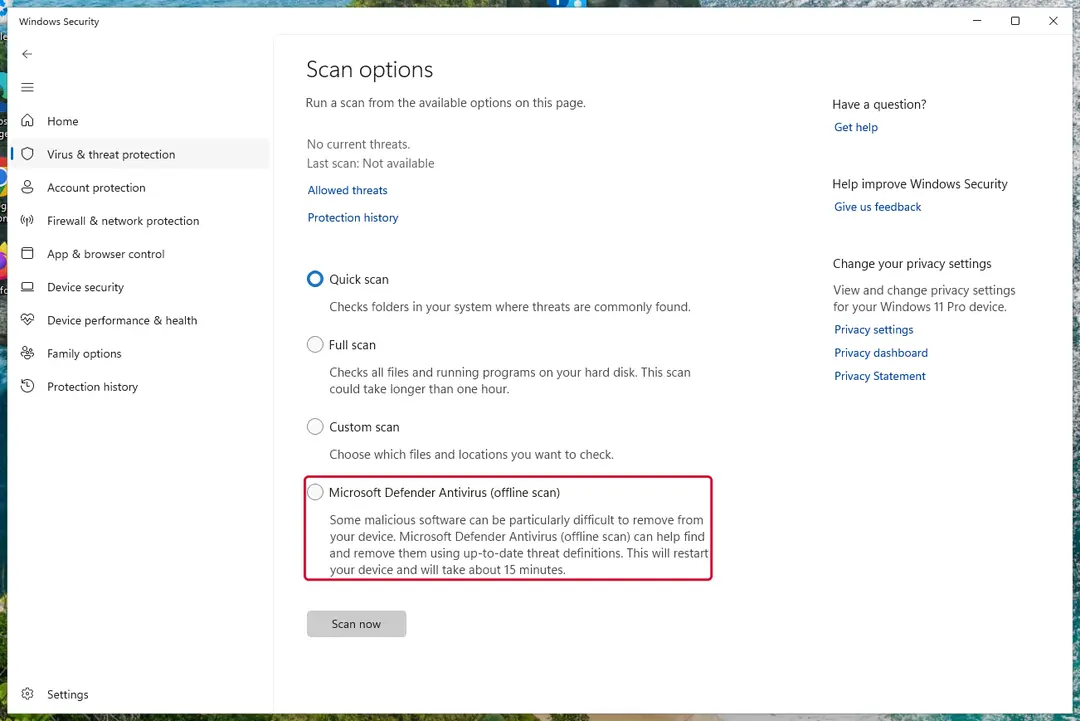
Windows 11: Windows Security > Virus & threat protection > Scan options. Full procedure with screenshots: Run a Microsoft Defender Offline scan
Instructions for each browser and system
The detailed steps for every browser and system this guide covers. Open the one you use.
Uninstall from Windows
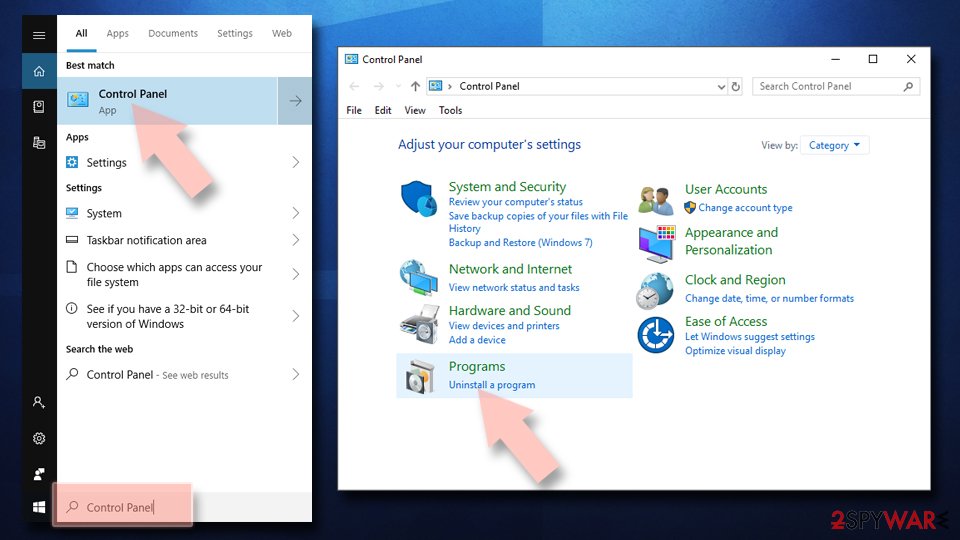
Uninstall from Windows 10/8:
- Type Control Panel into the Windows search box and open the result.
- Under Programs, select Uninstall a program.
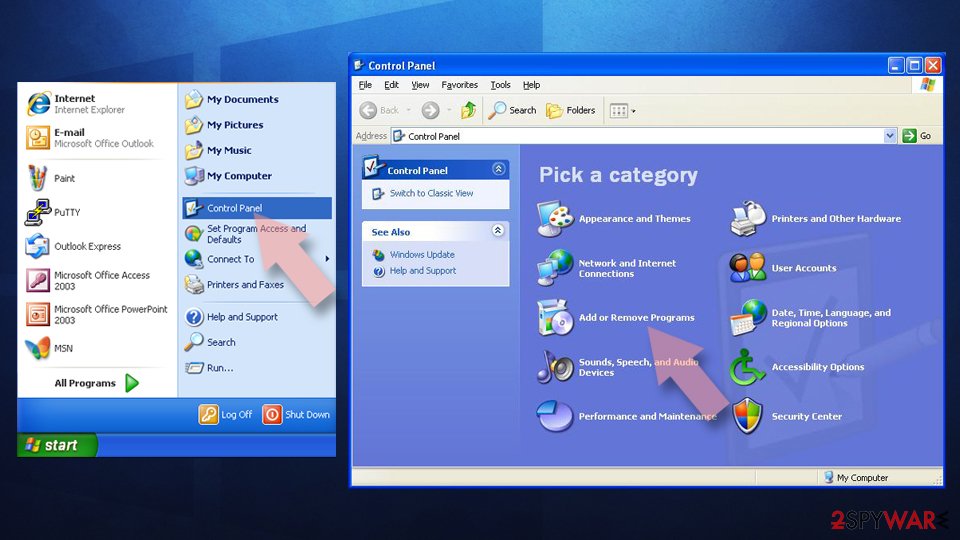
Uninstall from Windows 7/XP:
- Click on Windows Start > Control Panel (Windows XP users should click on Add/Remove Programs).
- In Control Panel, select Programs > Uninstall a program.
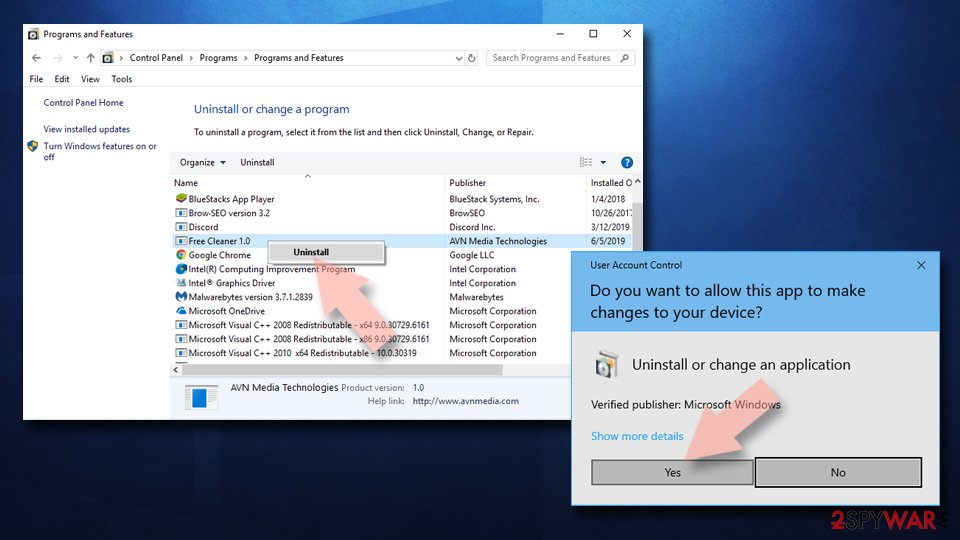
Remove the unwanted program:
- In the Programs and Features window, look for any recently installed suspicious entries, select them, and click Uninstall.
- If User Account Control appears, click Yes to confirm, then complete the removal.
Delete from macOS
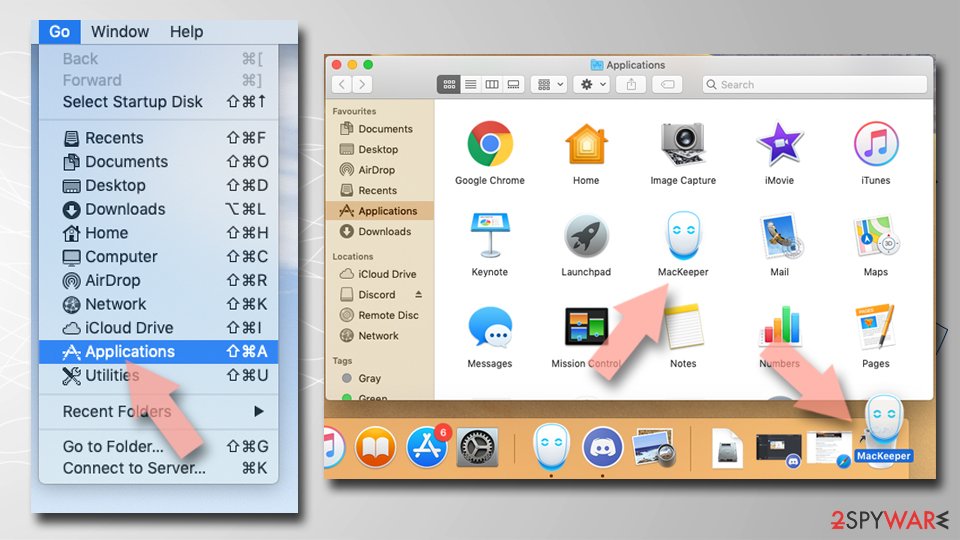
Remove the unwanted application:
- From the menu bar, select Go > Applications.
- In the Applications folder, look for any suspicious entries, then drag them to Trash (or right-click and pick Move to Trash).
Delete leftover files and folders:
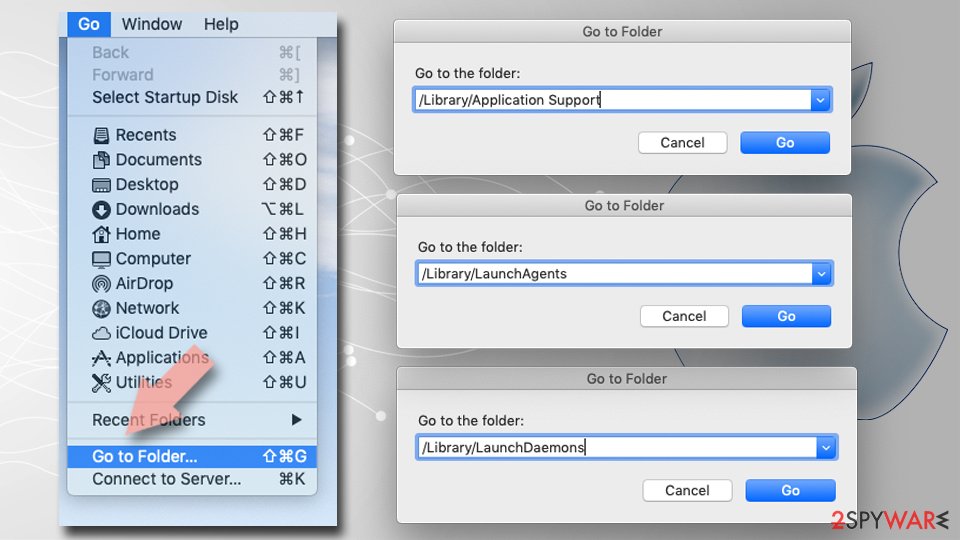
- Select Go > Go to Folder.
- Enter /Library/Application Support and remove any suspicious folders related to the unwanted program.
- Repeat the same check in the /Library/LaunchAgents and /Library/LaunchDaemons folders, deleting any suspicious entries.
- Finally, empty the Trash to permanently remove the leftovers.
Protect your privacy - employ a VPN
There are several ways how to make your online time more private - you can access an incognito tab.
However, there is no secret that even in this mode, you are tracked for advertising purposes. There is a way to add an extra layer of protection and create a completely anonymous web browsing practice with the help of VPN. This software reroutes traffic through different servers, thus leaving your IP address and geolocation in disguise.
Besides, it is based on a strict no-log policy, meaning that no data will be recorded, leaked, and available for both first and third parties. The combination of a secure web browser and VPN will let you browse the Internet without a feeling of being spied or targeted by criminals.
No backups? No problem. Use a data recovery tool
If you wonder how data loss can occur, you should not look any further for answers - human errors, malware attacks, hardware failures, power cuts, natural disasters, or even simple negligence.
In some cases, lost files are extremely important, and many straight out panic when such an unfortunate course of events happen. Due to this, you should always ensure that you prepare proper data backups on a regular basis.
If you were caught by surprise and did not have any backups to restore your files from, not everything is lost. is one of the leading file recovery solutions you can find on the market - it is likely to restore even lost emails or data located on an external device.
From our report of Sep 2021 · not reviewed since
Advanced Password Manager removal requires the reset of installed web browsers
As we already mentioned, internet security is crucial when it comes to modern society.
Password managers are great tools that can help you protect online privacy and save you from such dangers as identity theft or stolen money from your bank account. However, there are also many crooks who want to gain your money in unfair ways, and Advanced Password Manager is a tool used for such purposes.
Make sure you read them carefully and follow them in the correct order.
After Advanced Password Manager removal, you should scan your machine with reputable security software to fix the damage done by the potentially unwanted application, which might include corrupt Registry entries, unwanted scheduled tasks, and similar system settings.
Questions about Advanced Password Manager
Can I safely uninstall Advanced Password Manager?
If you did not install Advanced Password Manager yourself and it is not part of your hardware or a program you rely on, yes. Uninstalling an unwanted program does not harm Windows.
Before you do, search the exact name and publisher to be sure it is not a driver tool, a printer utility or a game launcher with an odd name. Then remove it from Settings, Apps, Installed apps.
Ignore any offers or warnings in its uninstaller about losing protection or performance. Afterwards check Startup apps and your browsers for leftovers, and restart once to confirm that it does not reinstall itself.
How do I stop programs like Advanced Password Manager from being installed again?
Most unwanted programs arrive through installers, so the fix is in how you install software. Download programs from their official sites or the Microsoft Store, not from download portals or ads above search results. During setup, choose Custom or Advanced installation and untick every extra offer, including browsers, toolbars and optimizers.
Decline update prompts that appear inside other programs unless you know them. In Windows Security, turn on reputation-based protection and potentially unwanted app blocking. These steps would most likely have stopped Advanced Password Manager before it reached the app list.
The uninstaller for Advanced Password Manager keeps asking me to stay. Is that normal?
It is a common tactic, not a technical requirement. Uninstallers of unwanted programs often show discounts, warnings that the PC will be at risk, or a choice between "repair" and "remove" designed to confuse. Choose the option that removes the program completely and decline everything else.
If the uninstaller closes without removing anything, end its processes in Task Manager and try again, or use Safe Mode. Check Installed apps afterwards; if Advanced Password Manager is still listed, the uninstall did not finish.
Can I use Advanced Password Manager safely?
Yes, if you installed it on purpose and control its settings. Download it only from the publisher's own site, never through a bundle or a portal. After installing, disable automatic start, offers and telemetry, and check that it did not change your search engine or add extensions.
Watch for renewals if you bought a licence, and turn on PUA blocking in Windows Security so that anything it tries to add during updates is stopped. If Advanced Password Manager keeps pushing payments or offers, it is not worth the trouble.
Do I need special software to remove Advanced Password Manager?
No. Windows has everything needed:
- Installed apps for the uninstall
- the Startup list and Task Scheduler for what restarts it
- Windows Security for a scan afterwards
The steps in this guide take about fifteen minutes. A dedicated tool is a convenience when you would rather not check each place yourself or when the program keeps coming back.
Whatever you use, finish by confirming that advanced Password Manager in the list of installed apps is gone after a restart, and avoid downloading removal tools from pages that promote them through scary warnings.
Is it safe to remove Advanced Password Manager?
Yes. Removing an unwanted program does not damage Windows, because programs like this are not part of the system. Before uninstalling, make sure it is not something you rely on: if the publisher is a company you know and you use the program, keep it.
If not, uninstall it from Installed apps, restart and check that advanced Password Manager in the list of installed apps is gone. If something you need stops working afterwards, reinstall that program from its official website, choosing the custom installation so that the unwanted extra is not added again.
Is Advanced Password Manager why my PC is slow?
It can be one reason. Programs of this kind often start with Windows, run updaters in the background and keep a process open all the time.
The sign reported, advanced Password Manager in the list of installed apps, means at least one such program is active. Open Task Manager, sort by CPU, memory and network, and see whether Advanced Password Manager or a related process is near the top.
If it is, removing it will help. If not, the slowdown has another cause, but removing a program you never chose is still worth doing. A restart after removal shows the difference best.
Can Advanced Password Manager see my passwords?
There is no report of that. Unwanted programs make money from ads, offers, data about your browsing or the use of your connection, not from stealing passwords, and the sign reported here is advanced Password Manager in the list of installed apps.
That said, a bundle can contain more than one program, and you cannot be sure what else ran on the day it arrived. After removing Advanced Password Manager, run a full scan in Windows Security.
If it finds a password stealer or a trojan, change your passwords from another device. If the scan is clean and you see no unknown sign-ins, there is no need to change them.
Is Advanced Password Manager a virus?
Not in the strict sense. Nothing reported so far shows Advanced Password Manager copying itself, encrypting files or stealing passwords, which is what security companies mean by a virus.
What people see is advanced Password Manager in the list of installed apps, which fits an unwanted program: software that arrives bundled with something else and keeps running without being asked for. Many antivirus programs label such software PUP or PUA rather than malware.
That label does not make it harmless. It still uses your PC and connection, may collect data and is often bundled with other programs, so removing it is the right call. Uninstall it from Installed apps, then check startup items and browser settings for its companions.
Will Fortect remove Advanced Password Manager?
Fortect scans Windows for malware and unwanted programs and repairs the system files and settings they change, and its free scan shows what it finds on your PC before you decide anything.
For Advanced Password Manager, follow the plan above as well: the browser steps take back permissions and settings that no scanner treats as a threat, and uninstalling the program that brought it removes the source.
Run Microsoft Defender's full scan and, if anything was found, its offline scan as a second opinion. If the symptoms are gone after the plan and both scans are clean, there is nothing more to do.
Sources
- How-to Geek: PUPs Explained: What is a "Potentially Unwanted Program"? (read October 7, 2026)
- 2-spyware: Magecart strikes again: targets Shopper Approved eCommerce websites (read October 7, 2026)
- LesVirus: LesVirus (read October 7, 2026)
- FTC: How to recognize, remove and avoid malware (read October 7, 2026)
- Microsoft Learn: Microsoft Defender Offline (read October 7, 2026)