

Backupvpn.com is the infection that creates redirects and shows messages about possible cyber threats on the machine to trick users
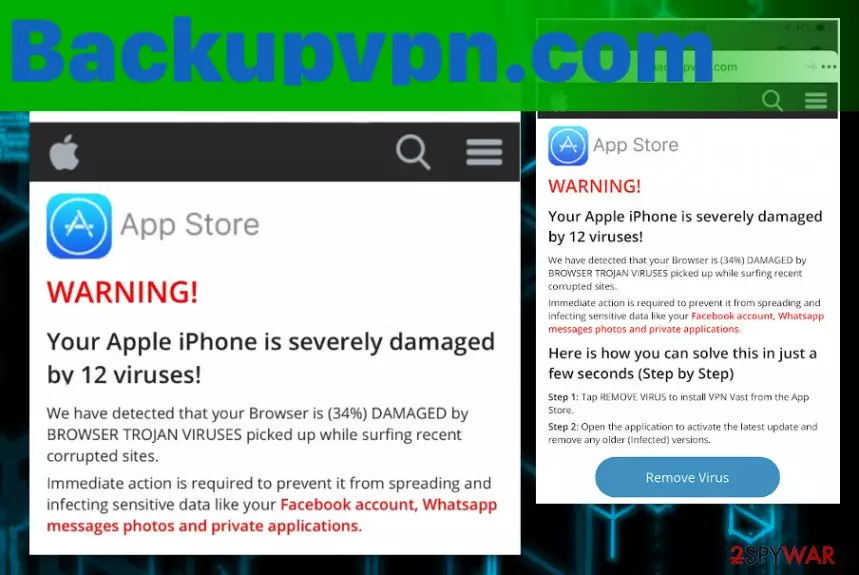
Backupvpn.com is the potentially unwanted program that shows fake alerts to infiltrate the computer and create further system damage. This is an intruder that can be added to a category of adware or pop-up redirect virus because it focuses on redirecting your online traffic and showing intrusive commercial content on the machine so affiliated pages and sponsored domains get views and visits. The main device that gets targeted by this PUP is iPhone, so mobile users should be especially cautious when such alerts about damage or viruses come up on the screen, even though many Apple clients think that this is a virus-free OS.[1] iPhone virus is a real threat of many forms, so don't ignore such messages.
This PUP is the only threat that poses a risk on the machine. Besides Backupvpn.com virus, your device is clear and safe. However, calling the provided number, contacting these scammers any other way or downloading the promoted software, visiting pages filled with malware can lead to infiltration of more severe malware.
| Name | Backupvpn.com |
|---|---|
| Type | Adware |
| Category | Potentially unwanted program[2] |
| Targets | iPhone users and other Apple devices |
| Claims | That your machine is infected and can get damaged by viruses |
| Symptoms | Shows fake alerts, causes redirects to commercial pages, delivers suspicious material |
| Distribution | Questionable pages, PUP-filled sites, shady installers |
| Elimination | Get anti-malware tool like FortectIntego and remove Backupvpn.com |
Backupvpn.com is the adware that causes commercial content material filling-up the screen in the form of pop-ups, banners, or online traffic redirects. This is the main function of typical adware, but in addition to this functionality, this PUP shows fake system alerts with scary messages and delivers more dangerous applications.
The error that Backupvpn.com shows even states that this warning comes from Apple or the App Store. Then this alert continues to claim particular threats and risks that got detected on the machine. Scareware-based message claims that your social media details are at risk and your device can get damaged by these viruses.
Backupvpn.com virus delivers the following message to trick users into installing promoted software:
“Your Apple iPhone is severely damaged by 12 viruses”
The adware pop-up also claims that you can solve the issue by following the suggested steps that include installing the application and removing malware automatically. Unfortunately, Backupvpn.com is the PUP, and those alerts also push intrusive and useless programs that cannot remove any malware. Also, your device has no malware besides this adware.

Although those alerts say that a trojan damages your browser and your Facebook account or messages, photos, and other private information can be accessed, your data is safe. At least personal information on social media platforms. Since there are no trojans, there is no risk to your sensitive data, but PUP collects other information about you, unfortunately.
When talking about PUPs and cyber infections of this type, experts[3] always note that these applications can track and collect data regarding your online preferences and activity, including browsing the history, most viewed items and visited pages. Backupvpn.com is no exception because this intruder is related to PUP developers and even scammers.
Remove Backupvpn.com as soon as possible since this application can access data about your preferences, and then use those details in malvertising campaigns geared towards you. This way, adware reaches more people and victimizes other online users.
Clean the machine thoroughly be installing FortectIntego and performing Backupvpn.com removal during a scan of the machine. Tools like that can scan your device and indicate security issues, errors, and PUPs luring on the computer. Then, you only need to follow the steps suggested in the program and eliminate all possible intruders.
Additionally, since this is a commonly found PUP, Backupvpn.com can install programs or tools without your knowledge or permission behind your back. So you should check all the web browsers for shady content and reset them to default if needed. For that, we have a few tips below the article.

Malicious pages deliver adware and other cyber intruders to various devices
There is no immune device or operating system. Your mobile devices and a personal computer or even networks of machines can get infected by various types of malware. There is no indication, in particular when the potentially unwanted program gets on the system because it happens behind your back.
In most cases, these applications come from malware-laden pages, pop-ups, advertising material, and similar domains. Various content can get installed when you click on shady pop-ups and pages when they appear out of nowhere. Also, cyber infections occur during insecure freeware installations when software gets bundled with viruses.
Go for reliable sources when you get the software, applications, or even updates. This is one of the methods of helping to avoid PUP infiltrations. Another one is Advanced or Custom options during the primary installation process because these options allow seeing the full list of programs that may be intrusive or even malicious.
Backupvpn.com virus removal guide and tips for iPhone users
When it comes to threats like this, you need to note that there is a big possibility that adware or hijacker installs programs besides the initial intruder and can even add various material to the browser directly. You cannot notice this behavior, especially when it happens on your mobile device. This reason makes it even more crucial to remove Backupvpn.com using reliable system cleaning tools.
The automatic Backupvpn.com removal requires professional anti-malware tools and a full system scan that allows to detect and remove all possible threats, including such domains and malicious pages or directly installed PUP.
If you got this Backupvpn.com virus in your iPhone, you may need to reset it by following these steps:
- Locate to Settings.
- Go to General.
- Select Erase all contents.
Delete from macOS
Remove the unwanted application:
- From the menu bar, select Go > Applications.
- In the Applications folder, look for any suspicious entries, then drag them to Trash (or right-click and pick Move to Trash).


Delete leftover files and folders:
- Select Go > Go to Folder.
- Enter /Library/Application Support and remove any suspicious folders related to the unwanted program.
- Repeat the same check in the /Library/LaunchAgents and /Library/LaunchDaemons folders, deleting any suspicious entries.

- Finally, empty the Trash to permanently remove the leftovers.

Remove from Mozilla Firefox (FF)
Remove dangerous extensions:
- Open Mozilla Firefox browser and click on the Menu (three horizontal lines at the top-right of the window).
- Select Add-ons.
- In here, select the unwanted extension and click Remove.


Reset the homepage:
- Click three horizontal lines at the top right corner to open the menu.
- Choose Settings.
- Under Home, set your preferred homepage and new tab settings.
Clear cookies and site data:
- Click Menu and pick Settings.
- Go to Privacy & Security section.
- Scroll down to locate Cookies and Site Data.
- Click on Clear Data...
- Select Cookies and Site Data and Temporary cached files and pages, then click Clear.


Reset Mozilla Firefox
If clearing the browser as explained above did not help, reset Mozilla Firefox:
- Open Mozilla Firefox browser and click the Menu.
- Go to Help and then choose Troubleshooting Information.

- Under Give Firefox a tune up section, click on Refresh Firefox...
- Once the pop-up shows up, confirm the action by pressing on Refresh Firefox.



Remove from Google Chrome
Delete malicious extensions from Google Chrome:
- Open Google Chrome, click on the Menu (three vertical dots at the top-right corner) and select More tools > Extensions.
- In the newly opened window, you will see all the installed extensions. Uninstall all suspicious extensions related to the unwanted program by clicking Remove.


Clear cache and web data from Chrome:
- Click on Menu and pick Settings.
- Under Privacy and security, select Clear browsing data.
- Select Browsing history, Cookies and other site data, as well as Cached images and files.
- Click Clear data.


Change your homepage:
- Click menu and choose Settings.
- Look for a suspicious site in the On startup section.
- Click on Open a specific or set of pages and click on three dots to find the Remove option.
Reset Google Chrome:
If the previous methods did not help you, reset Google Chrome to eliminate all the unwanted components:
- Click on Menu and select Settings.
- In the Settings, scroll down and click Advanced.
- Scroll down and locate Reset and clean up section.
- Now click Restore settings to their original defaults.
- Confirm with Reset settings.


Delete from Safari
Remove dangerous extensions:
- Open Safari, click Safari in the menu at the top-left of the screen, and select Preferences.
- Go to the Extensions tab, look for any suspicious entries, and click Uninstall to remove them.


Clear history and website data:
- Click Safari in the menu and pick Clear History.
- Set Clear to all history and confirm with Clear History.


Reset Safari:
- Click Safari in the menu and select Preferences > Advanced.
- Enable Show Develop menu in menu bar.
- From the menu bar, click Develop and select Empty Caches.


Did this guide help?
Be the first to comment