

Cdn.rawgit.com is an application that causes disturbance to your web browsing
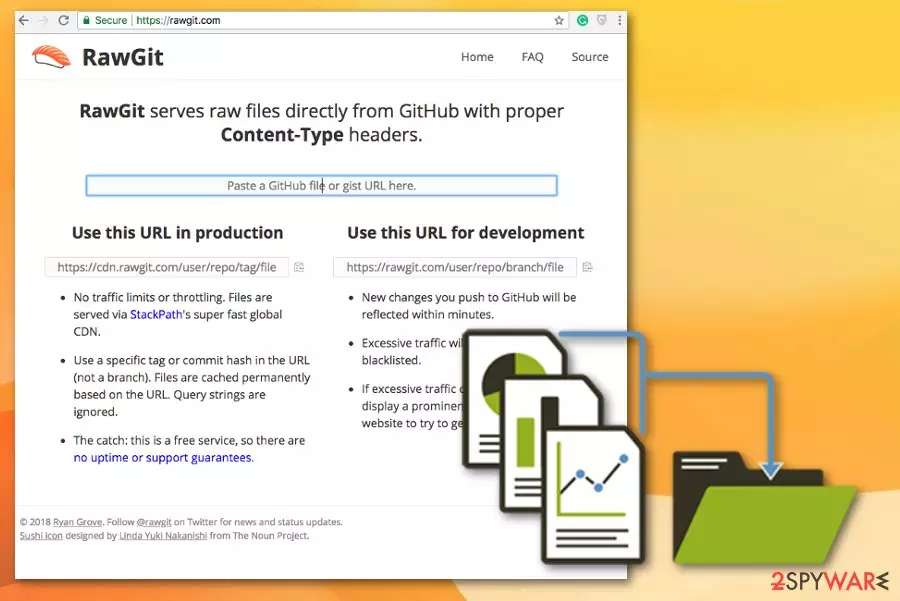
| Name | Cdn.rawgit.com |
|---|---|
| Type | Browser hijacker/ adware |
| Symptoms | Delivers intrusive ads, hijacks web browser |
| Distribution | Software bundles, deceptive ads, malicious websites |
| Affected OS | Mac |
| Elimination | Use FortectIntego to clean your system |
Cdn.rawgit.com virus causes a lot of problems to your daily web browsing sessions, and the activity should not be tolerated. By delivering intrusive commercial content, the browser hijacker creates traffic to sponsored websites. This activity ensures that affiliated sites generate pay-per-click revenue for the advertiser.
Cdn.rawgit.com website is considered as a phishing domain. The site looks pretty useful, and developers claim that CND URL development is improving the performance of your browser and device also that this way content is delivered much faster.
Cdn.rawgit.com removal should be done quickly because this program causes a lot of issues and as a typical PUP[2] it collects various information about you and your preferences. This browser hijacker is responsible for:
- diminished performance of the device;
- disturbed browsing sessions by fake alerts and ads;
- various programs disabled or not working properly;
- altered web searching results;
- redirects to dangerous websites.
You need to remove Cdn.rawgit.com with reputable security software like FortectIntego because the browser hijacker may install additional applications on your device. In some cases, these additional components are difficult to get rid of, as they do not have the uninstallation executable available.

Software bundles conceal additional components
During freeware installations, you may also get various additional browser plug-ins, add-ons or even programs, tools that disturb your day-to-day browsing online. This happens because you are not paying enough attention when installing software and its updates.
You need to choose Advanced or Custom options during the process, so you can choose which programs to install and which additional applications to de-select. Also, these unwanted apps can come to your system from deceptive ads or websites when you unwillingly allow installing them. So pay more attention to the uninstallation process.
Remove Cdn.rawgit.com and unwanted activity
To adequately clean the system you should rely on reputable sources and employ professional tools like the ones we suggest below. These anti-malware programs scan the device thoroughly and indicate which applications can be removed from the system. These tools can also help with Cdn.rawgit.com removal.
Alternatively, you can remove Cdn.rawgit.com from your device manually – we provide step-by-step instructions below. Although this method is not as effective as an automatic one, it achieves the same goal. However, experts warn that manual elimination requires some basic computer knowledge.[3]
Delete from macOS
Remove the unwanted application:
- From the menu bar, select Go > Applications.
- In the Applications folder, look for any suspicious entries, then drag them to Trash (or right-click and pick Move to Trash).


Delete leftover files and folders:
- Select Go > Go to Folder.
- Enter /Library/Application Support and remove any suspicious folders related to the unwanted program.
- Repeat the same check in the /Library/LaunchAgents and /Library/LaunchDaemons folders, deleting any suspicious entries.

- Finally, empty the Trash to permanently remove the leftovers.

Remove from Mozilla Firefox (FF)
Remove dangerous extensions:
- Open Mozilla Firefox browser and click on the Menu (three horizontal lines at the top-right of the window).
- Select Add-ons.
- In here, select the unwanted extension and click Remove.


Reset the homepage:
- Click three horizontal lines at the top right corner to open the menu.
- Choose Settings.
- Under Home, set your preferred homepage and new tab settings.
Clear cookies and site data:
- Click Menu and pick Settings.
- Go to Privacy & Security section.
- Scroll down to locate Cookies and Site Data.
- Click on Clear Data...
- Select Cookies and Site Data and Temporary cached files and pages, then click Clear.


Reset Mozilla Firefox
If clearing the browser as explained above did not help, reset Mozilla Firefox:
- Open Mozilla Firefox browser and click the Menu.
- Go to Help and then choose Troubleshooting Information.

- Under Give Firefox a tune up section, click on Refresh Firefox...
- Once the pop-up shows up, confirm the action by pressing on Refresh Firefox.



Remove from Google Chrome
Delete malicious extensions from Google Chrome:
- Open Google Chrome, click on the Menu (three vertical dots at the top-right corner) and select More tools > Extensions.
- In the newly opened window, you will see all the installed extensions. Uninstall all suspicious extensions related to the unwanted program by clicking Remove.


Clear cache and web data from Chrome:
- Click on Menu and pick Settings.
- Under Privacy and security, select Clear browsing data.
- Select Browsing history, Cookies and other site data, as well as Cached images and files.
- Click Clear data.


Change your homepage:
- Click menu and choose Settings.
- Look for a suspicious site in the On startup section.
- Click on Open a specific or set of pages and click on three dots to find the Remove option.
Reset Google Chrome:
If the previous methods did not help you, reset Google Chrome to eliminate all the unwanted components:
- Click on Menu and select Settings.
- In the Settings, scroll down and click Advanced.
- Scroll down and locate Reset and clean up section.
- Now click Restore settings to their original defaults.
- Confirm with Reset settings.


Delete from Safari
Remove dangerous extensions:
- Open Safari, click Safari in the menu at the top-left of the screen, and select Preferences.
- Go to the Extensions tab, look for any suspicious entries, and click Uninstall to remove them.


Clear history and website data:
- Click Safari in the menu and pick Clear History.
- Set Clear to all history and confirm with Clear History.


Reset Safari:
- Click Safari in the menu and select Preferences > Advanced.
- Enable Show Develop menu in menu bar.
- From the menu bar, click Develop and select Empty Caches.


Did this guide help?
Be the first to comment