

DisplayUpdate is the ad-supported program that belongs to Pirrit family of adware programs
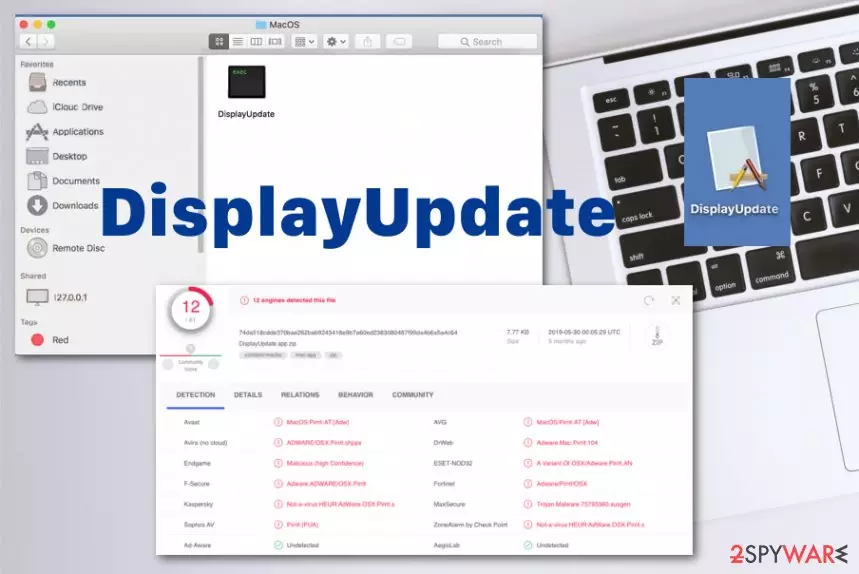
You should note that DisplayUpdate virus not only promotes other different applications but can also install those PUAs directly on the machine without asking for any permission. It is possible that a pop-up with permission to control or access data appears on the screen, but that happens after the initial infiltration of MacPerfromance or any other shady PUP.
| Name | DisplayUpdate |
|---|---|
| Type | Adware |
| Category | Mac malware |
| Symptoms | Appears loaded on the system out of nowhere and causes issues with the speed, performance, general browsing online because delivers pop-ups and redirects to affiliated pages and promotional websites. |
| Danger | The program runs in the background and cannot be easily found to remove. PUP also promotes and installs applications directly on the machine. As any other browser-based threat, this macOS application tracks and collects details about your preferences and can possibly share that data with third-party advertisers |
| Distribution | Insecure freeware installations, shady sites, deceptive techniques, and torrent pages get employed for PUA distribution |
| Elimination | You should employ antivirus program and remove DisplayUpdate completely from the machine during an automatic scan |
DisplayUpdate works mainly as a browser extension and is a consequence of adware-type infection that landed on the machine from an insecure freeware installation setup or due to the third-party website surfing. This is an ad-supported program, so it is typical to encounter tons of intrusive pop-ups, banners, and other content that is not originating from the website.
Since it is a tool that connects advertisers and online users, DisplayUpdate encourages to download applications, promotes them on the pop-ups and separate sites where the victim can even get tricked into installing the shady application when constant redirects show up on the screen.
When DisplayUpdate gets on the machine, you may encounter:
- ads that appear on the browser comes from suspicious sources;
- downloads, updates, installation suggestions appear on the screen;
- redirects keep you from accessing wanted content and even interferes with online searches;
- programs get installed on the machine without any permission required;
- startup preferences and browsing settings get altered.
You should remove DisplayUpdate as soon as you notice anything like this because once the PUP comes it interferes with more processes than you can see or fix. The more time you give it on the device tough the more it can change or even damage. So stop thinking that macOS is a virus-free system and get another security tool to run a scan with.

So you should think about a proper DisplayUpdate removal based on the ad-tracking issues and possibility that your data gets tracked and collected when you visit certain pages and websites. This issue is serious because recorded details about your browsing history, online preferences, most viewed sites, and searched items can be used in later advertising campaigns.
Experts[3] always state that keeping the program like DisplayUpdate that is intrusive and related to commercial content can lead to privacy problems or even identity theft when some personal details like names or emails get leaked. However, you can eliminate the suspicious program if you run a full scan using the anti-malware program. Run FortectIntego to double-check and see if there are any traces of the PUP that can interfere with the system further. 
Freeware bundling encourages unwanted adware downloads
Typical browser-based threats can spread around the system via deceptive methods like promotional advertisements and fake download sites. Potentially unwanted programs are not valuable or useful because the purpose of these intruders is to control the traffic, show affiliated content, and push other similar applications.
Other intruders can easily open the system for tools, apps, and adware or browser hijackers that focus on damaging the machine. You can avoid freeware installations of you go for official sources and providers for your tools and programs. Also, choosing Advanced or Custom options for your installations can give the opportunity of de-selecting the unwanted applications from the list.
Avoid DisplayUpdate virus infection repetition and clean the system fully with a proper program
You can find particular functions and processes using the features of your machine. This is the way that helps to remove DisplayUpdate symptoms and eliminate the possible frustration. However, there is a possibility that PUP renews all the behavior and runs on the machine without any termination.
So we recommend getting a proper anti-malware tool that can run a scan and perform an automatic DisplayUpdate removal that cleans the system from all the PUPs, including the browser extensions and add-ons that may bother you. You should also eliminate suspicious content manually from Google Chrome, Safari, or Mozilla Firefox by checking the guide below.
Delete from macOS
Remove the unwanted application:
- From the menu bar, select Go > Applications.
- In the Applications folder, look for any suspicious entries, then drag them to Trash (or right-click and pick Move to Trash).


Delete leftover files and folders:
- Select Go > Go to Folder.
- Enter /Library/Application Support and remove any suspicious folders related to the unwanted program.
- Repeat the same check in the /Library/LaunchAgents and /Library/LaunchDaemons folders, deleting any suspicious entries.

- Finally, empty the Trash to permanently remove the leftovers.

Remove from Mozilla Firefox (FF)
Remove dangerous extensions:
- Open Mozilla Firefox browser and click on the Menu (three horizontal lines at the top-right of the window).
- Select Add-ons.
- In here, select the unwanted extension and click Remove.


Reset the homepage:
- Click three horizontal lines at the top right corner to open the menu.
- Choose Settings.
- Under Home, set your preferred homepage and new tab settings.
Clear cookies and site data:
- Click Menu and pick Settings.
- Go to Privacy & Security section.
- Scroll down to locate Cookies and Site Data.
- Click on Clear Data...
- Select Cookies and Site Data and Temporary cached files and pages, then click Clear.


Reset Mozilla Firefox
If clearing the browser as explained above did not help, reset Mozilla Firefox:
- Open Mozilla Firefox browser and click the Menu.
- Go to Help and then choose Troubleshooting Information.

- Under Give Firefox a tune up section, click on Refresh Firefox...
- Once the pop-up shows up, confirm the action by pressing on Refresh Firefox.



Remove from Google Chrome
Delete malicious extensions from Google Chrome:
- Open Google Chrome, click on the Menu (three vertical dots at the top-right corner) and select More tools > Extensions.
- In the newly opened window, you will see all the installed extensions. Uninstall all suspicious extensions related to the unwanted program by clicking Remove.


Clear cache and web data from Chrome:
- Click on Menu and pick Settings.
- Under Privacy and security, select Clear browsing data.
- Select Browsing history, Cookies and other site data, as well as Cached images and files.
- Click Clear data.


Change your homepage:
- Click menu and choose Settings.
- Look for a suspicious site in the On startup section.
- Click on Open a specific or set of pages and click on three dots to find the Remove option.
Reset Google Chrome:
If the previous methods did not help you, reset Google Chrome to eliminate all the unwanted components:
- Click on Menu and select Settings.
- In the Settings, scroll down and click Advanced.
- Scroll down and locate Reset and clean up section.
- Now click Restore settings to their original defaults.
- Confirm with Reset settings.


Delete from Safari
Remove dangerous extensions:
- Open Safari, click Safari in the menu at the top-left of the screen, and select Preferences.
- Go to the Extensions tab, look for any suspicious entries, and click Uninstall to remove them.


Clear history and website data:
- Click Safari in the menu and pick Clear History.
- Set Clear to all history and confirm with Clear History.


Reset Safari:
- Click Safari in the menu and select Preferences > Advanced.
- Enable Show Develop menu in menu bar.
- From the menu bar, click Develop and select Empty Caches.


Did this guide help?
Be the first to comment